China Repo Rates Soar To 15 Month High After PBOC Warns Of Asset Bubbles, Drains Liquidity

China Repo Rates Soar To 15 Month High After PBOC Warns Of Asset Bubbles, Drains Liquidity

China’s money market rates surged after the People’s Bank of China drained cash from the financial system, just as a central bank adviser warned about bubbles in markets.

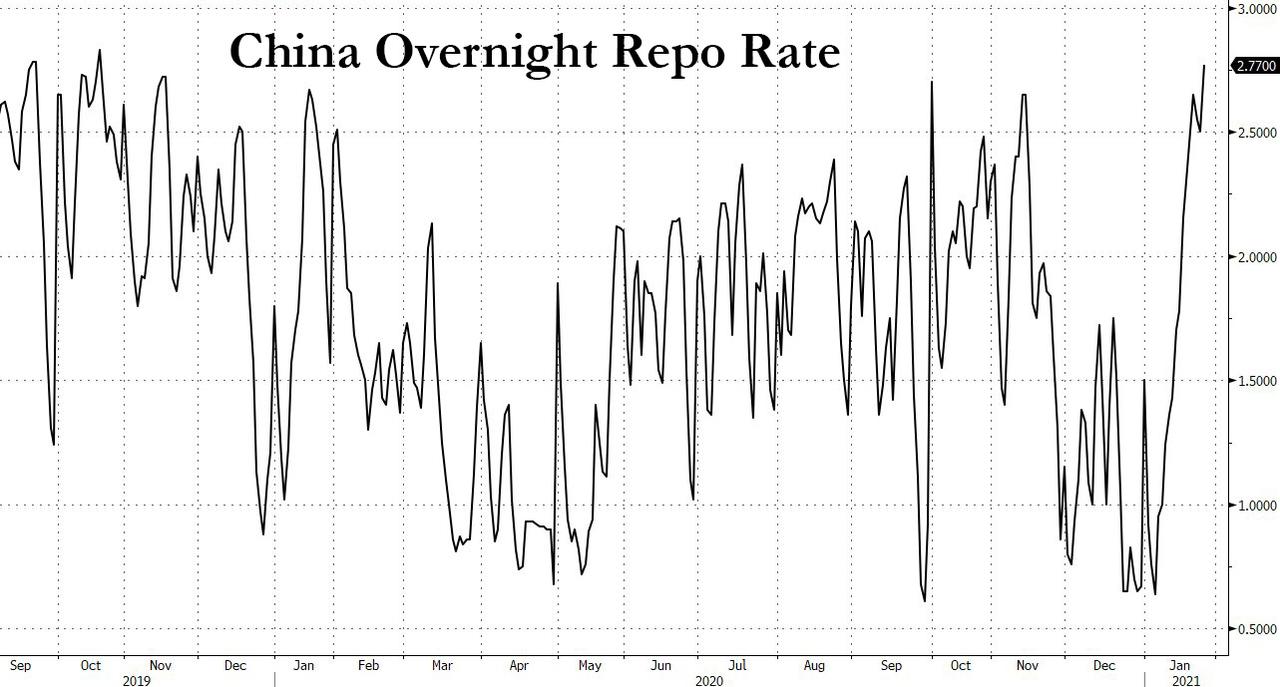
The overnight repurchase rate soared 28 basis points to 2.77%, the highest since October 2019, and just a month after it hit a record low.

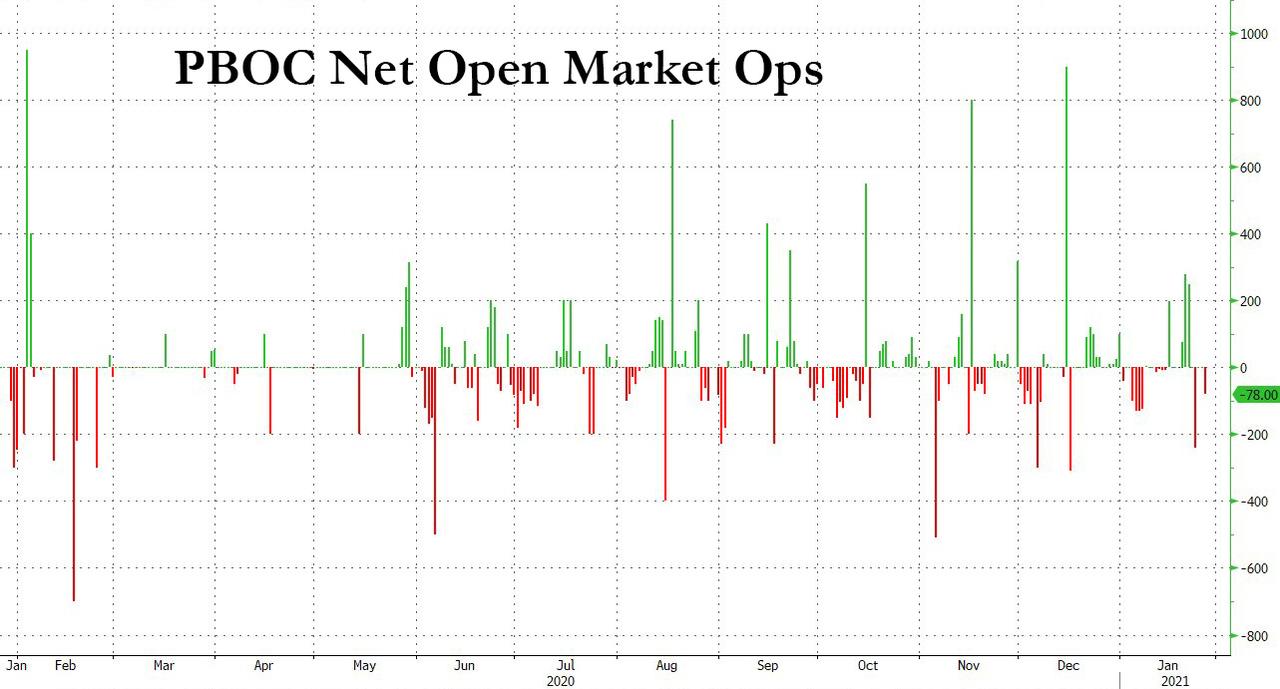
At the same time, the cost on 7-day repurchase agreements jumped 36 basis points to 2.79%. Earlier in the day the PBOC withdrew a net 78 billion yuan via open-market operations, the most in two weeks.

It wasn’t just the PBOC’s liquidity drain however: the rate spike was also catalyzed by a stark warning from PBOC adviser Ma Jun, who spoke at a wealth management forum where according to the 21st Century Business Herald said bubbles have formed in the stock and property markets, and he proposed a shift in monetary policy.

“Whether this situation will intensify in the future depends on whether monetary policy is appropriately changed this year,” he said. He added that if not, such problems would “certainly continue” and lead to “greater economic and financial risks in the medium- and long-term.”

He also said that there will be less demand for monetary expansion as corporate profits will improve, reducing their reliance on debt financing.

To be sure, Chinese regulators have already moved to constrain rising property prices. They limited the amount banks can lend to the sector at the end of last year and are targeting leverage among the country’s vast developers. Individual cities have also introduced measures to curb prices.

In late 2020, PBoC restrictions on short-term liquidity led to a surge in interbank borrowing costs. The three-month Shanghai interbank benchmark more than doubled between May and November to more than 3 per cent — its highest level in two years — before it gradually declined.

Then China’s markets soared at the end of last year from a barrage of liquidity injections by the central bank, helping stocks and the yuan end 2020 on a high note. The benchmark CSI 300 Index has since risen to the highest level since 2008.

“The PBOC is unlikely to loosen its purse strings at least this week, which will make cross-month liquidity very tight,” said Xing Zhaopeng, an economist at Australia & New Zealand Banking Group.

In this context it is hardly a surprise then that after the warning and liquidity drain, Hong Kong’s Hang Seng index — which has been boosted this month by record-breaking daily volumes of buying by mainland investors — fell by more than 2.4%. Mainland China’s CSI 300 index of Shanghai- and Shenzhen-listed stocks dropped 2%.

The mood is still totally remaining intact in terms of its positivity,” said Andy Maynard, managing director at China Renaissance Securities. “Although we have a blip today . . . yesterday was kind of euphoric, last week was kind of euphoric.” But, he added, rising borrowing costs were unlikely to undermine positive momentum in China and other emerging markets.

“Where else in the world do you go? Where do you put that money?” he said. “For the global asset allocators who stay in equity, I don’t think you necessarily rush back to the dollar and you definitely are not touching Europe”.

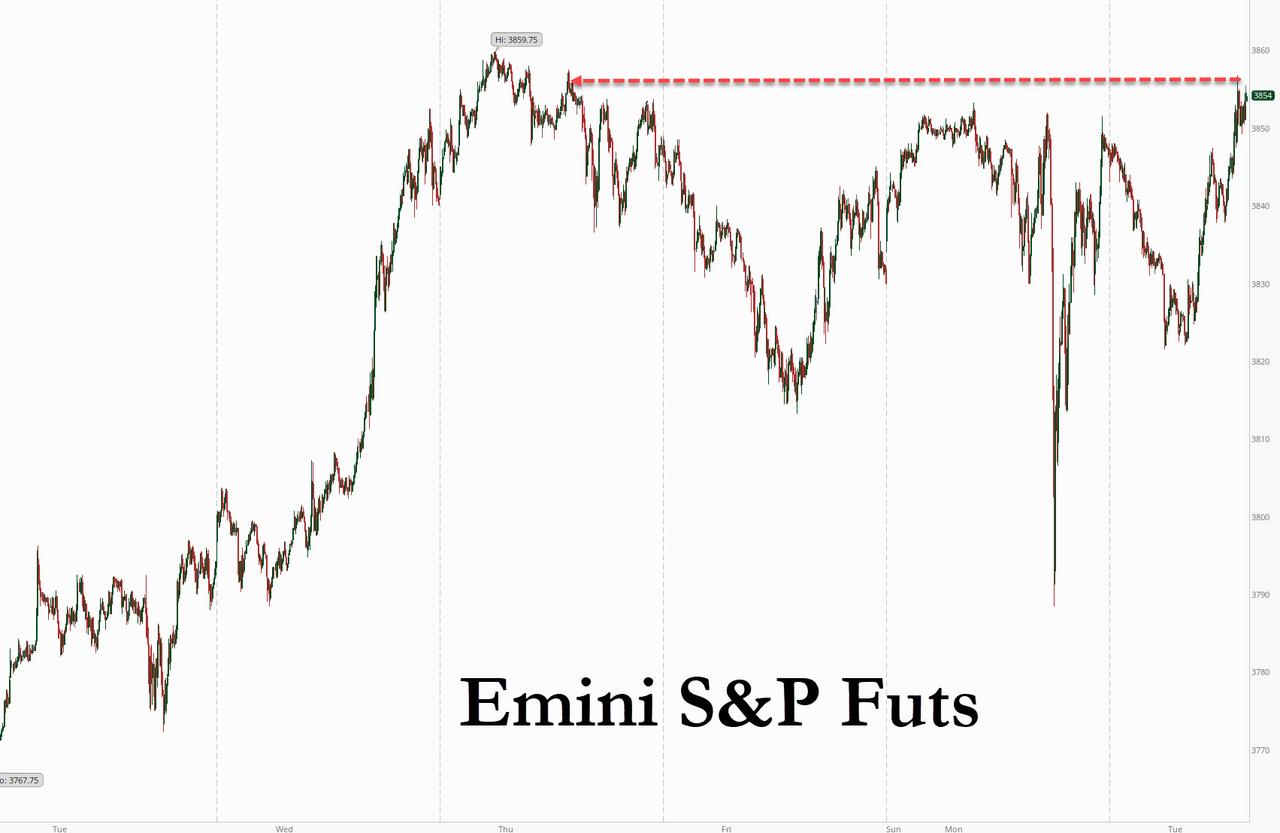
And while the Chinese warning dented some overnight enthusiasm, S&P futures have since reversed and are trading near all time highs.

Tyler Durden
Tue, 01/26/2021 – 09:04

via ZeroHedge News https://ift.tt/2Mr9pTi Tyler Durden

US Home Prices Are Accelerating At The Fastest Pace In 7 Years

US Home Prices Are Accelerating At The Fastest Pace In 7 Years

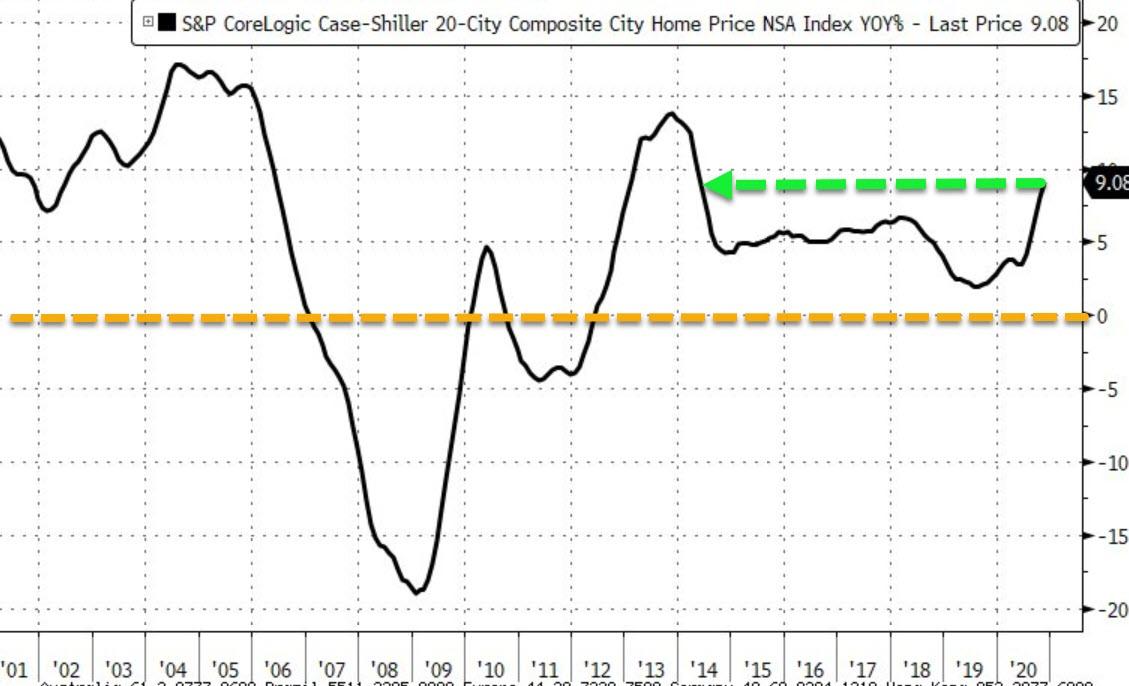
After surged in October, US home prices (as measured by S&P CoreLogic Case-Shiller index of property values) was expected to accelerate further as a low inventories of listings and solid demand, fueled by cheap borrowing costs, have given sellers more leeway to raise asking prices. And it did not disappoint as November (the latest data) showed the 20-City Composite Home Price Index soared 9.08% YoY… the fastest pace since May 2014.

Source: Bloomberg

As Craig Lazzara, managing director and global head of index investment strategy at S&P Dow Jones Indices, said in a statement last month:

“Although the full history of the pandemic’s impact on housing prices is yet to be written, the data from the last several months are consistent with the view that Covid has encouraged potential buyers to move from urban apartments to suburban homes,”

And that trend is continuing.

Phoenix, Seattle, San Diego reported highest year-over-year gains among 19 cities surveyed (Detroit excluded from report due to virus-related reporting constraints).

Tyler Durden
Tue, 01/26/2021 – 09:04

via ZeroHedge News https://ift.tt/3cbrVcW Tyler Durden

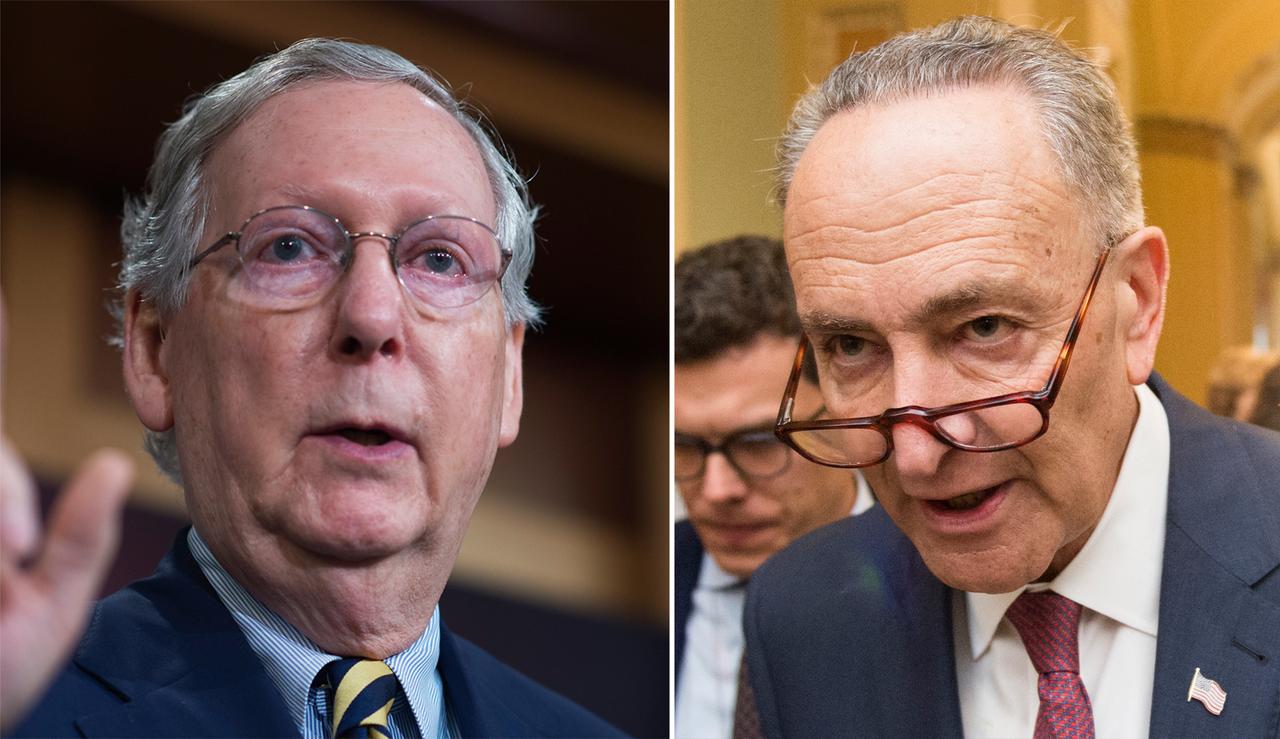
McConnell Caves On Preserving Filibuster After Two Democrats Signal ‘No’ On Eliminating

McConnell Caves On Preserving Filibuster After Two Democrats Signal ‘No’ On Eliminating

Senate GOP leader Mitch McConnell (KY) has relented on a key demand that Democrats preserve the filibuster, after two Democratic senators – Joe Manchin (WV) and Kyrsten Sinema (AZ) – said they were against tossing out the policy which allows the minority party to block legislation by requiring 60 votes to advance most measures.

McConnell’s refusal to ditch the filibuster had left the power-sharing agreement in a stalemate, as Senate Majority Leader Chuck Schumer (D-NY) had rebuffed the idea of a guarantee, according to Bloomberg.

While both sides claimed victory, McConnell’s position was becoming untenable and risked provoking the Democrats into doing the opposite of what he wanted and eroding the filibuster out of the gate. There’s also potential risk down the line if Republicans engage in maximum obstruction and anger Manchin and Sinema.

So far, on cabinet nominees and on scheduling the impeachment trial, the two sides have managed to avoid a partisan impasse. For instance, Antony Blinken, President Joe Biden’s nominee to be secretary of state, is to be confirmed by the Senate at noon on Tuesday. –Bloomberg

“The legislative filibuster was a key part of the foundation beneath the Senate’s last 50-50 power-sharing agreement in 2001,” wrote McConnell in a statement. “With these assurances, I look forward to moving ahead with a power-sharing agreement modeled on that precedent.”

Schumer’s team wasn’t quite so cordial – saying in a statement: “We’re glad Senator McConnell threw in the towel and gave up on his ridiculous demand. We look forward to organizing the Senate under Democratic control and start getting big, bold things done for the American people.”

Manchin and Sinema signaling that they won’t vote to kill the filibuster essentially allowed McConnell to save face.

On Monday, Manchin told reporters that he “does not support throwing away the filibuster under any condition,” while a spokesman for Sinema said she was also against getting rid of the rule.

As Bloomberg notes, Manchin’s and Sienma’s opposition to killing the filibuster indicates just how tenuous the Democrats’ control of the chamber is – as they need all 50 Democrats in lockstep to overcome the 50-50 split (with Vice President Kamala Harris being the tie-breaker). Now, Democrats will need 10 Senate Republicans to join them on most bills unless a simple majority is needed.

Under the agreement in place in 2001, the last time the Senate was evenly split, both parties had an equal number of committee seats equal budgets for committee Republicans and Democrats, and the ability of both leaders to advance legislation out of committees that are deadlocked. But Democrats will hold the chairmanships and Schumer will set the agenda for the floor.

Some issues can be passed with a simple majority via a balky process known as budget reconciliation, but that method has limits on what can be included and when. Already, Democrats are weighing whether to use the process to bypass Republicans on a major virus relief package Schumer wants to send to the White House by mid-March, with a follow-on package later in the year. –Bloomberg

Of note, the Senate has only been evenly divided three times in US history; 1881, 1953 and 2001.

Democrats hoping to use the budget reconciliation process to bypass Republicans on the virus relief package may run into trouble without Manchin and Sinema – who are trying to cobble together a bipartisan package which would be smaller than Biden’s proposed $1.9 billion deal. If nothing materializes before the Feb. 8 start of former President Trump’s impeachment trial, Democrats could decide to go it alone.

The package continues to shrink, according to Goldman and JPMorgan anyway. As we noted on Monday, Goldman recently slashed its estimate of the final size of the realistic Biden stimulus to just $1.1 trillion from $1.9 trillion, while JPMorgan has gone even further and now expects a mere $900 billion to pass, or a carbon copy of the bipartisan December stimulus (and it will be quite delayed at that as well).

Tyler Durden
Tue, 01/26/2021 – 08:49

via ZeroHedge News https://ift.tt/2YeuaEr Tyler Durden

Beyond Meat Soars On “Plant-Based Protein” Joint Venture With Pepsi

Beyond Meat Soars On “Plant-Based Protein” Joint Venture With Pepsi

Is Melvin Capital also short Beyond Meat?

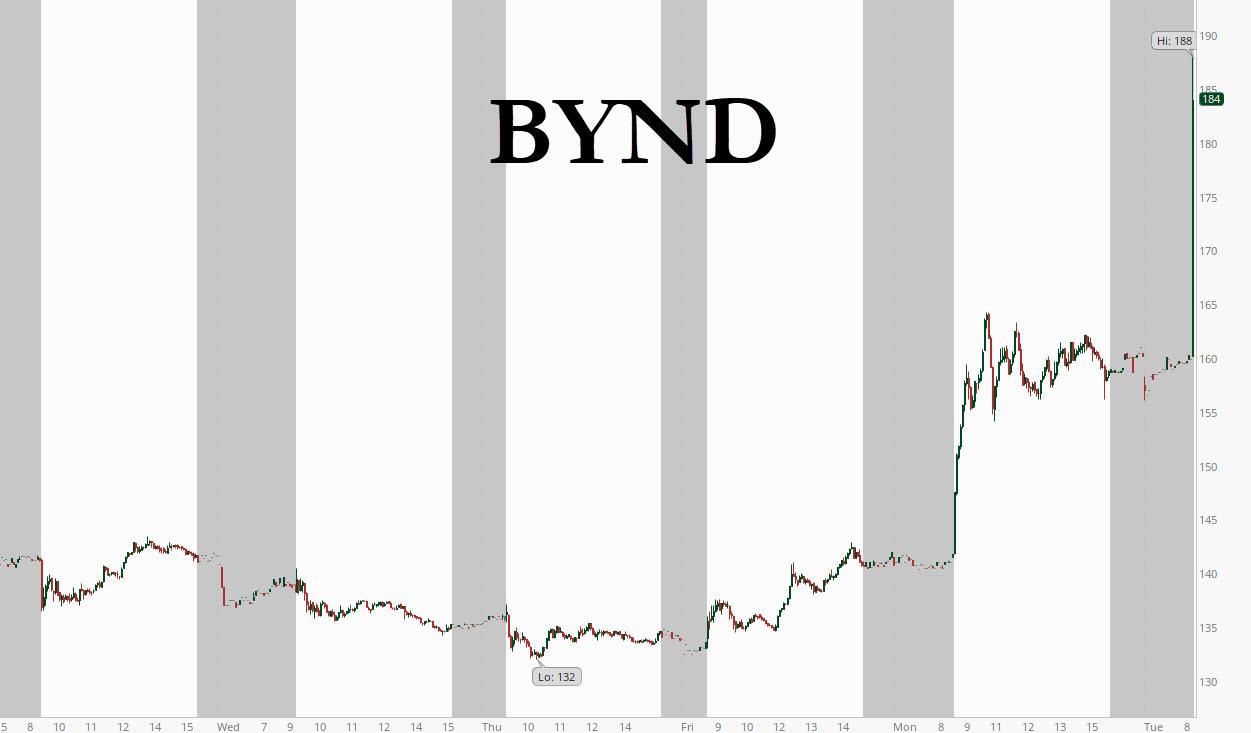
That was the first thought that went through everyone’s head when BYND stock soared by almost 20%, surging from $160 to $190 in seconds moments ago. And while the jury is out on Melvin (no puts, but Plotkin could well have some BYND shorts), the reason why Beyond Meat exploded to levels not seen since its abysmal Q3 earnings, is that the company announced a joint venture with PepsiCo called the “PLANeT Partnership” which will “develop, produce and market innovative snack and beverage products made from plant-based protein.”

To all those hedge funds short BYND, our condolences.

Presumably this means humans in the future won’t be eating insects, despite the World Economic Forum’s fondest wishes.

The full press release is below:

PepsiCo and Beyond Meat® Establish The PLANeT Partnership, LLC, a Joint Venture to Introduce New Plant-Based Protein Offerings

  • Partnership advances PepsiCo’s commitments to expand its portfolio of positive choices for consumers and for the planet
  • The venture will allow Beyond Meat to reach more consumers by entering new product categories and distribution channels

PURCHASE, N.Y. and EL SEGUNDO, Calif., Jan. 26, 2021 /PRNewswire/ — PepsiCo, Inc. (NASDAQ: PEP) and Beyond Meat, Inc. (NASDAQ: BYND) today announced they will form The PLANeT Partnership, LLC (TPP), a joint venture to develop, produce and market innovative snack and beverage products made from plant-based protein. The joint venture will leverage Beyond Meat’s leading technology in plant-based protein development and PepsiCo’s world-class marketing and commercial capabilities to create and scale new snack and beverage options. Financial terms of the partnership were not disclosed. Joint venture operations will be managed through the newly created entity The PLANeT Partnership, LLC (TPP).

“Plant-based proteins represent an exciting growth opportunity for us, a new frontier in our efforts to build a more sustainable food system and be a positive force for people and the planet, while meeting consumer demand for an expanded portfolio of more nutritious products,” said Ram Krishnan, PepsiCo Global Chief Commercial Officer. “Beyond Meat is a cutting-edge innovator in this rapidly growing category, and we look forward to combining their unparalleled expertise with our world-class capabilities in brand-building, consumer insights and distribution to deliver exciting new options.”

“We are thrilled to formally join forces with PepsiCo in The PLANeT Partnership, a joint venture that unites the tremendous depth and breadth of their distribution and marketing capabilities with our leading innovation in plant-based protein. We look forward to together unlocking new categories and product lines that will inspire positive choices for both people and planet,” said Ethan Brown, Beyond Meat Founder and CEO. “PepsiCo represents the ideal partner for us in this exciting endeavor, one of global reach and importance.”

The new joint venture follows longstanding efforts by PepsiCo to help build a more sustainable food system. Among the key pillars of that effort are using positive ingredients; expanding the company’s portfolio of products that have been grown and made sustainably, through tools and techniques like regenerative agriculture and net water- and carbon-neutral production plants; and making it easier for consumers focused on health and wellness to consume products on the go through innovations such as LAY’S oven baked chips (now in 23 markets around the world), Sabra Snack Cups, Alvalle ready-to-drink gazpacho, Quaker Breakfast flats, and Gatorade Juiced. In addition to organic innovation, the company has also made strategic acquisitions in this space, including companies such as Bare Snacks (maker of baked fruit and veggie chips), BFY Brands (maker of PopCorners snacks), and SodaStream, the world’s leading sparkling water brand.

Beyond Meat shares PepsiCo’s passion for creating products that are good for both people and the planet, using simple, plant-based ingredients with no GMOs or bioengineered ingredients. The company believes there is a better way to feed our future and that the positive choices we all make, no matter how small, can have a great impact on our personal health and the health of our environment.

Tyler Durden
Tue, 01/26/2021 – 08:41

via ZeroHedge News https://ift.tt/3porUWQ Tyler Durden

What Tech Policies Should We Expect from the Biden Administration?

bidensigning_1161x653

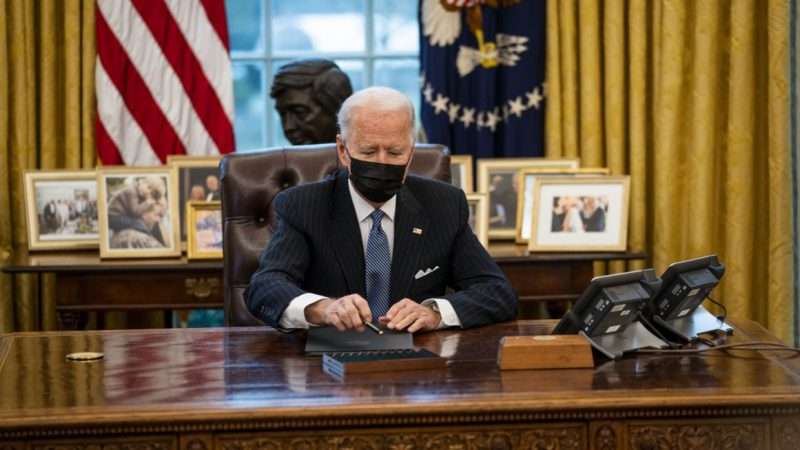
As the drama of the Trump administration lame duck period fades and the impressive number of troops stationed at our nation’s capitol shuffle back to their respective states, the Biden administration is up and running for its first 100 days in office. The old D.C. fixture started with a bang, issuing some 15 executive orders on his first day—a new record.

With this newfound energy to hit the ground running, we can already see a few trends to expect in technology policy over the next four years. From platform policy to cryptocurrency, here are a few things to look out for as the new administration begins to shape its approach to technology and innovation in America.

Big Tech has several seats at the table

Many on the Left had hoped that the Biden administration would be an ally in its efforts to overturn the consumer welfare standard that guides antitrust proceedings in the US and take a tougher stance against Silicon Valley, which paradoxically is a stronghold of Democrat support. But if the Biden administration’s transition team and rumored political appointees are any indication, we shouldn’t expect Google to get broken up any time soon.

Roughly a dozen former employees from companies like Facebook, Twitter, and Google held key advisor and counsel roles in the Biden transition team. This tendency may extend to government personnel, too. For instance, antitrust hawks have been dismayed that the shortlist of likely antitrust enforcers includes corporate attorneys that have helped banks and tech firms navigate antitrust cases in the past.

This is not to say that Big Tech won’t see any new regulation. We may see federal privacy legislation and beefed-up government content moderation controls spring forth under the new administration. Even if companies complain, these policies would have the effect of shoring up incumbents’ market positions at the expense of competitors since upstarts don’t have as many resources for compliance. And the big guys might not even grumble. Most Silicon Valley companies have voiced support for a federal privacy law, whether to generate good press or to undercut California’s more quixotic foray into data privacy controls.

It’s not surprising that Joe Biden would continue the trend of Silicon Valley chumminess that first blossomed under the reign of his old boss, President Barack Obama. But the more progressive wing of the Democrat party may get their fair share of tech antagonists appointed as well. We’ll probably see a lot of back-and-forth as the new administration attempts to appease both its corporate allies and more anti-capitalist ideological base.

We may end up with a situation that is the worst of both worlds: Big Tech animus will be exploited to justify changes to antitrust and data policies that make the overall economy less productive and competitive while largely sparing the big companies that have managed to hold the president’s ear.

The net neutrality battle is back

Speaking of Silicon Valley, we can expect some of their desires to be reflected in telecom policy at the Federal Communications Commission (FCC). The biggest issue to look out for is a revival of the Obama administration’s Open Internet Order that is often (and imprecisely) referred to as “net neutrality.” Despite the doomsday warnings that internet users would be forced to cough up major dough or face snails-pace websurfing without these rules, the net neutrality debate is basically a dispute between Silicon Valley content providers (e.g. Netflix) and ISP-owned content providers (e.g. AT&T’s HBOMax) over pricing arrangements. It’s a battle of corporate constituencies.

The Trump administration rolled back these heavy-handed regulations on ISPs that would have probably increased the cost of broadband infrastructure expansion and therefore limited access for users with the Restoring Internet Freedom Order. None of the doomsday prophecies came to pass, of course, but that doesn’t mean that the corporate dispute is resolved. Now that the Democrats are in power, the net neutrality debate is sure to rise again.

Biden’s early moves on telecom indicate that net neutrality is back on the table. He hasn’t said anything specific on the topic, but it’s a good bet that he will support and continue the policies undertaken while he was Vice President. He appointed current commissioner Jessica Rosenworcel, an outspoken net neutrality advocate, to serve as the acting chair of the FCC. And now that the Democrats have a 3-2 majority at the FCC, the rulemaking calculus is in their favor. The grounds are fertile for legislation, too, since the Democrats recently eked control of Congress as well.

Cryptocurrency: a mixed bag

Although Biden has yet to outline a detailed cryptocurrency policy plan, we have an inkling of what his policies might look like given his early appointments along with general trends in the discourse. Although his personnel picks have been mostly promising, we should expect something of a mixed bag given the overall direction of cryptocurrency regulations.

First, the good news. Biden has tapped Gary Gensler to lead the Securities and Exchange Commission (SEC). Gensler is a known quantity in the crypto space, having testified before Congress and penned several knowledgeable articles in cryptocurrency news outlets. He’s also taught a course on cryptocurrency for MIT. If nothing else, the decisions that emanate from the SEC would be grounded in expertise under Gensler’s tenure.

Rumored picks for the Office of the Comptroller of the Currency (OCC) and Commodities Futures Trading Commission (CFTC) are likewise at least familiar with cryptocurrencies. CFTC chair likely Chris Brummer is an expert on financial technology (fintech) and has written about cryptocurrency before. Biden’s expected OCC head, Michael Barr, has a bit of a more tenuous connection with the crypto world: he served on the board of advisors for the controversial and SEC-indicted Ripple project. Still, he’s at least somewhat familiar with the space, and will hopefully follow in the pro-crypto lead of his predecessor Brian Brooks.

Then there’s Janet Yellen. Biden’s pick for Treasury Secretary famously testified that her former roost at the Federal Reserve had no authority to regulate cryptocurrency. At the Treasury, she sings a different tune. During her nomination hearing, Yellen told Congress that Bitcoin is mainly used for “illicit financing” and that she wanted to “examine ways in which we can curtail their use and make sure that [money laundering] doesn’t occur through those channels.” This is troubling to hear, since the Treasury Department operates a major financial surveillance program that is coming to ensnare more cryptocurrency transactions within its dragnet.

In the short term, Biden has already given the cryptocurrency industry a bit of breathing room. He issued a freeze on “midnight regulations” proposed by the Trump administration in his waning hours in power. This includes the controversial “unhosted wallet” surveillance rules that would create a major privacy and security risk for privacy-minded cryptocurrency recipients. Still, given future Treasury Secretary Yellen’s comments on money laundering, we shouldn’t be surprised to see similar financial surveillance proposals under a Biden administration. In general, governments like to have control over technologies, so the tendency to want to regulate cryptocurrency will be strong regardless of who staffs the regulating agencies.

All together now

Much has been made of the Biden administration’s promise to bring a “return to normalcy.” As libertarians can well appreciate, this is cold comfort. Normalcy, to the establishment, means more big government, big regulation, and big headaches for private people who just want to live their lives peacefully.

There is some cause for optimism, as some of the rumored or announced personnel decisions at the very least demonstrate expertise with their administrative areas. Let’s hope they wield their insight for good. If they don’t, well, at least there are decentralized and encrypted alternative technologies that we can turn to. Supporting technological projects that innovate around the points of control that governments can exploit is always a better bet for freedom than crossing your fingers and hoping that federal agents show mercy to new technological applications.

from Latest – Reason.com https://ift.tt/3a6KxZa
via IFTTT

What Tech Policies Should We Expect from the Biden Administration?

bidensigning_1161x653

As the drama of the Trump administration lame duck period fades and the impressive number of troops stationed at our nation’s capitol shuffle back to their respective states, the Biden administration is up and running for its first 100 days in office. The old D.C. fixture started with a bang, issuing some 15 executive orders on his first day—a new record.

With this newfound energy to hit the ground running, we can already see a few trends to expect in technology policy over the next four years. From platform policy to cryptocurrency, here are a few things to look out for as the new administration begins to shape its approach to technology and innovation in America.

Big Tech has several seats at the table

Many on the Left had hoped that the Biden administration would be an ally in its efforts to overturn the consumer welfare standard that guides antitrust proceedings in the US and take a tougher stance against Silicon Valley, which paradoxically is a stronghold of Democrat support. But if the Biden administration’s transition team and rumored political appointees are any indication, we shouldn’t expect Google to get broken up any time soon.

Roughly a dozen former employees from companies like Facebook, Twitter, and Google held key advisor and counsel roles in the Biden transition team. This tendency may extend to government personnel, too. For instance, antitrust hawks have been dismayed that the shortlist of likely antitrust enforcers includes corporate attorneys that have helped banks and tech firms navigate antitrust cases in the past.

This is not to say that Big Tech won’t see any new regulation. We may see federal privacy legislation and beefed-up government content moderation controls spring forth under the new administration. Even if companies complain, these policies would have the effect of shoring up incumbents’ market positions at the expense of competitors since upstarts don’t have as many resources for compliance. And the big guys might not even grumble. Most Silicon Valley companies have voiced support for a federal privacy law, whether to generate good press or to undercut California’s more quixotic foray into data privacy controls.

It’s not surprising that Joe Biden would continue the trend of Silicon Valley chumminess that first blossomed under the reign of his old boss, President Barack Obama. But the more progressive wing of the Democrat party may get their fair share of tech antagonists appointed as well. We’ll probably see a lot of back-and-forth as the new administration attempts to appease both its corporate allies and more anti-capitalist ideological base.

We may end up with a situation that is the worst of both worlds: Big Tech animus will be exploited to justify changes to antitrust and data policies that make the overall economy less productive and competitive while largely sparing the big companies that have managed to hold the president’s ear.

The net neutrality battle is back

Speaking of Silicon Valley, we can expect some of their desires to be reflected in telecom policy at the Federal Communications Commission (FCC). The biggest issue to look out for is a revival of the Obama administration’s Open Internet Order that is often (and imprecisely) referred to as “net neutrality.” Despite the doomsday warnings that internet users would be forced to cough up major dough or face snails-pace websurfing without these rules, the net neutrality debate is basically a dispute between Silicon Valley content providers (e.g. Netflix) and ISP-owned content providers (e.g. AT&T’s HBOMax) over pricing arrangements. It’s a battle of corporate constituencies.

The Trump administration rolled back these heavy-handed regulations on ISPs that would have probably increased the cost of broadband infrastructure expansion and therefore limited access for users with the Restoring Internet Freedom Order. None of the doomsday prophecies came to pass, of course, but that doesn’t mean that the corporate dispute is resolved. Now that the Democrats are in power, the net neutrality debate is sure to rise again.

Biden’s early moves on telecom indicate that net neutrality is back on the table. He hasn’t said anything specific on the topic, but it’s a good bet that he will support and continue the policies undertaken while he was Vice President. He appointed current commissioner Jessica Rosenworcel, an outspoken net neutrality advocate, to serve as the acting chair of the FCC. And now that the Democrats have a 3-2 majority at the FCC, the rulemaking calculus is in their favor. The grounds are fertile for legislation, too, since the Democrats recently eked control of Congress as well.

Cryptocurrency: a mixed bag

Although Biden has yet to outline a detailed cryptocurrency policy plan, we have an inkling of what his policies might look like given his early appointments along with general trends in the discourse. Although his personnel picks have been mostly promising, we should expect something of a mixed bag given the overall direction of cryptocurrency regulations.

First, the good news. Biden has tapped Gary Gensler to lead the Securities and Exchange Commission (SEC). Gensler is a known quantity in the crypto space, having testified before Congress and penned several knowledgeable articles in cryptocurrency news outlets. He’s also taught a course on cryptocurrency for MIT. If nothing else, the decisions that emanate from the SEC would be grounded in expertise under Gensler’s tenure.

Rumored picks for the Office of the Comptroller of the Currency (OCC) and Commodities Futures Trading Commission (CFTC) are likewise at least familiar with cryptocurrencies. CFTC chair likely Chris Brummer is an expert on financial technology (fintech) and has written about cryptocurrency before. Biden’s expected OCC head, Michael Barr, has a bit of a more tenuous connection with the crypto world: he served on the board of advisors for the controversial and SEC-indicted Ripple project. Still, he’s at least somewhat familiar with the space, and will hopefully follow in the pro-crypto lead of his predecessor Brian Brooks.

Then there’s Janet Yellen. Biden’s pick for Treasury Secretary famously testified that her former roost at the Federal Reserve had no authority to regulate cryptocurrency. At the Treasury, she sings a different tune. During her nomination hearing, Yellen told Congress that Bitcoin is mainly used for “illicit financing” and that she wanted to “examine ways in which we can curtail their use and make sure that [money laundering] doesn’t occur through those channels.” This is troubling to hear, since the Treasury Department operates a major financial surveillance program that is coming to ensnare more cryptocurrency transactions within its dragnet.

In the short term, Biden has already given the cryptocurrency industry a bit of breathing room. He issued a freeze on “midnight regulations” proposed by the Trump administration in his waning hours in power. This includes the controversial “unhosted wallet” surveillance rules that would create a major privacy and security risk for privacy-minded cryptocurrency recipients. Still, given future Treasury Secretary Yellen’s comments on money laundering, we shouldn’t be surprised to see similar financial surveillance proposals under a Biden administration. In general, governments like to have control over technologies, so the tendency to want to regulate cryptocurrency will be strong regardless of who staffs the regulating agencies.

All together now

Much has been made of the Biden administration’s promise to bring a “return to normalcy.” As libertarians can well appreciate, this is cold comfort. Normalcy, to the establishment, means more big government, big regulation, and big headaches for private people who just want to live their lives peacefully.

There is some cause for optimism, as some of the rumored or announced personnel decisions at the very least demonstrate expertise with their administrative areas. Let’s hope they wield their insight for good. If they don’t, well, at least there are decentralized and encrypted alternative technologies that we can turn to. Supporting technological projects that innovate around the points of control that governments can exploit is always a better bet for freedom than crossing your fingers and hoping that federal agents show mercy to new technological applications.

from Latest – Reason.com https://ift.tt/3a6KxZa
via IFTTT

Etsy Shares Spike 9% To 52 Week Highs After Elon Musk Tweets “I Kinda Love Etsy”

Etsy Shares Spike 9% To 52 Week Highs After Elon Musk Tweets “I Kinda Love Etsy”

Etsy shares spiked Tuesday morning on what is now becoming the only bona fide way to move markets: pumping stocks on social media.

One day after Monday’s massive short squeeze across several names, engineered by the Redditors over at the r/WallStreetBets forum, Elon Musk took to Twitter and Tweeted out “I kinda love Etsy” early on Tuesday morning. It sent shares of the e-commerce company soaring in pre-market trade. 

“Bought a hand knit wool Marvin the Martian helm for my dog,” he wrote in a subsequent Tweet. 

Etsy shares had barely traded during the pre-market session prior to Musk’s pronouncement. By 8AM EST, shares had rocketed 9% to new 52 week highs and trading volume in the name had already eclipsed the stock’s average daily volume. Nearly 4 million shares had traded by 8:15AM EST. 

Helping the cause was Jefferies, who raised their 12 month price target on the name, according to CNBC. “We believe behavioral changes incited by the pandemic allow ETSY to tap a broader portion of its $1.7T addressable market, leading to higher frequency and spending,” analyst John Colantuoni wrote.

“Our DCF-derived PT increases to $245(from $205) as accelerating traffic and our deep dive into long-term GMS improves ourconfidence in ETSY’s ability to continue growing faster than overall e-commerce.”

While Elon Musk is no stranger to moving stocks using Twitter – the CEO helped mistakenly move SIGL earlier this month – the massive spike on considerable volume is yet another nod to how rampant speculation has become in the Fed’s grotesque and cruel joke for what used to be a “market”. Fueled by the trillions the Fed has printed this year alone, there is no shortage of dumb, hot money to go around – and no prompt too small for these “investors” to start throwing it anything and everything. 

Tyler Durden
Tue, 01/26/2021 – 08:26

via ZeroHedge News https://ift.tt/39nZBCF Tyler Durden

Roberts: Why We Reduced Risk Last Week

Roberts: Why We Reduced Risk Last Week

Authored by Lance Roberts via RealInvestmentAdvice.com,

During the last few weeks, I have discussed the rising levels of exuberance in the markets.

On Friday, I tweeted the following:

Not surprisingly, I received more than a few emails chastising me for “bailing on the bull market, which is going higher.” 

Such is hardly the case. We reduced our weighting in our “indexed” positions, which we use for overweighting equity allocations during short-term bullish advances. Even though we took gains in our index positions, we remain primarily long-biased in our equity and ETF portfolios. However, given the extreme technical overbought and deviated conditions, it was prudent to raise some cash and protect our gains.

When Everyone Agrees

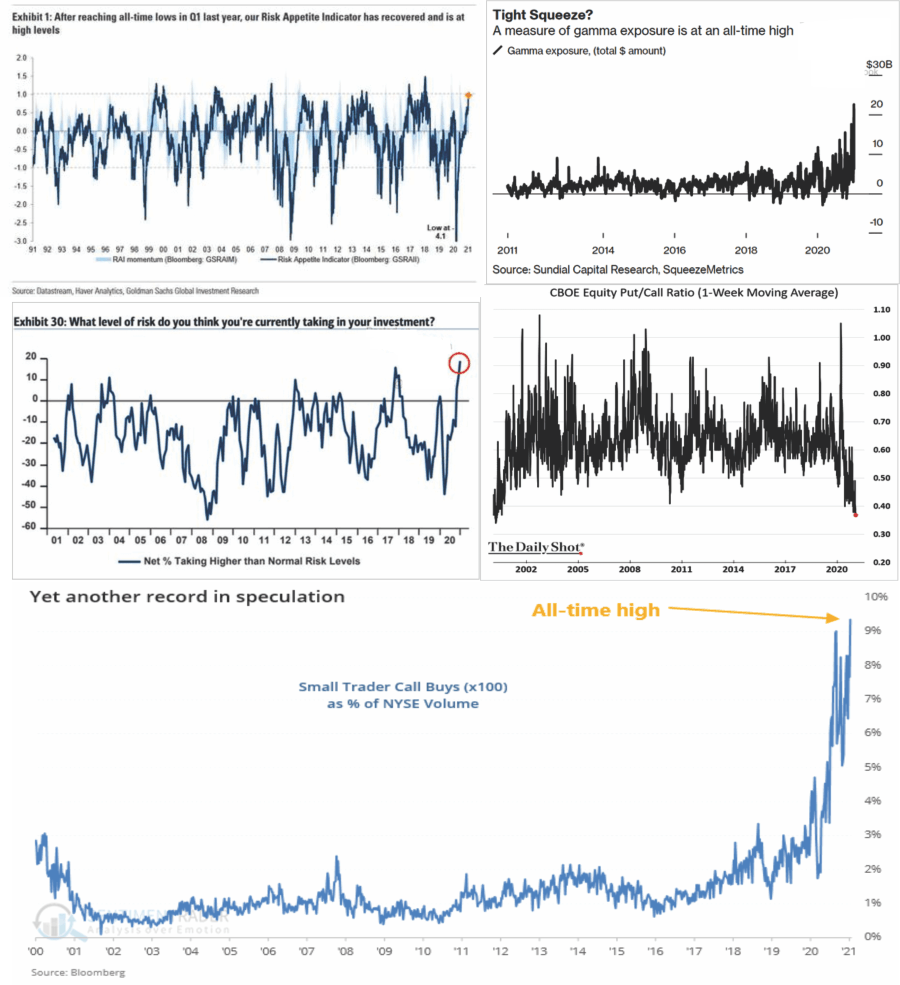
However, it wasn’t just the conditions we discussed which have us concerned about the markets in the short term. Investor positioning has also reached rather extreme levels. As Bob Farrell once wrote:

“When all experts agree, something else is bound to happen.”

Currently, with investor’s extremely long equity exposure, the risk of a correction has become more elevated.

If these extremes don’t ring some alarm bells, I am not sure exactly what will.

Importantly, while we are reducing risk now, such doesn’t mean the exuberance in the market can’t continue over the next few days to several weeks. Many will suggest our actions were wrong if the markets continue to rise, and we missed out.

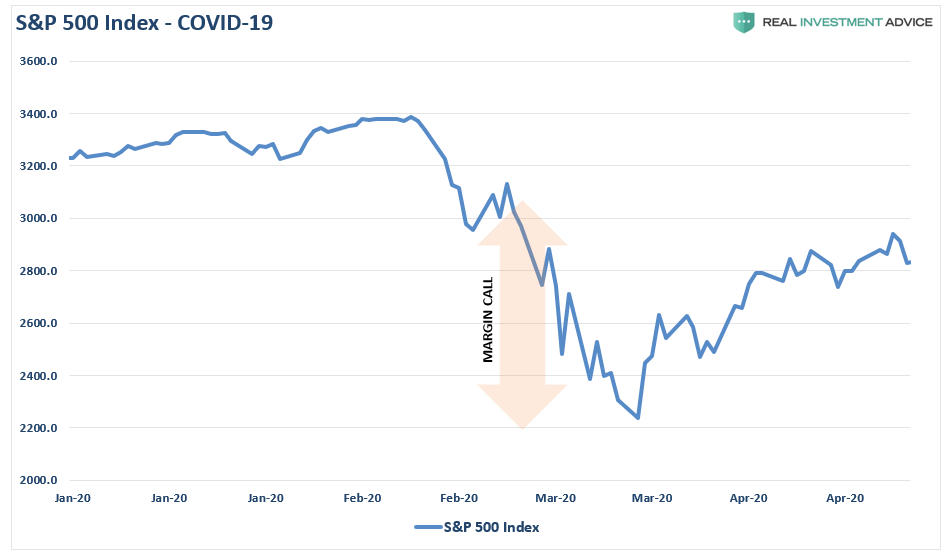
Such could undoubtedly be the case. However, I will remind you that we wrote much the same in January 2020. Over the next few weeks, it appeared we were very wrong until we weren’t.

That is just the way markets work.

Investors Are All In

As we discussed previously, following an actual “bear market,” investors are very slow to return to the market. Following the “Dot.com” crash, it took several years before investors returned their allocation levels to “fully allocated” levels. The same occurred following the “Financial Crisis.” 

However, following the March decline, investors quickly allocated back into equities, which coincides with corrections rather than bear markets. Currently, both individual and professional investors are “back in the pool.”

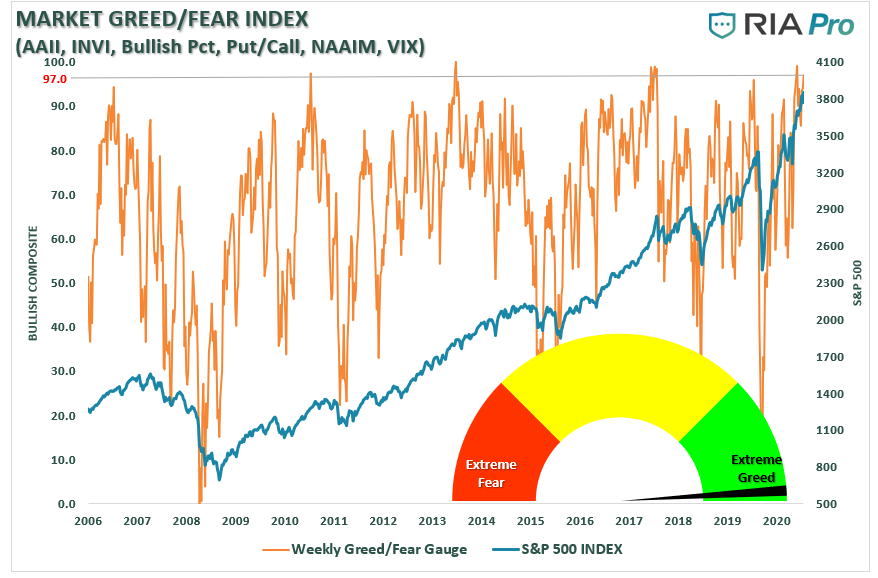
The index below compiles investor positioning in the financial markets. The most current reading, which includes individual and professional managers’ equity exposure, is 97 out of a possible 100. Since 2006 such a level has only been reached three times previously: 2010, 2013, and 2018. In all three cases, the markets were lower within a few weeks to several months later. However, in each case volatility picked up markedly while returns were minimal. 

In other words, reducing risk in advance didn’t cost you much.

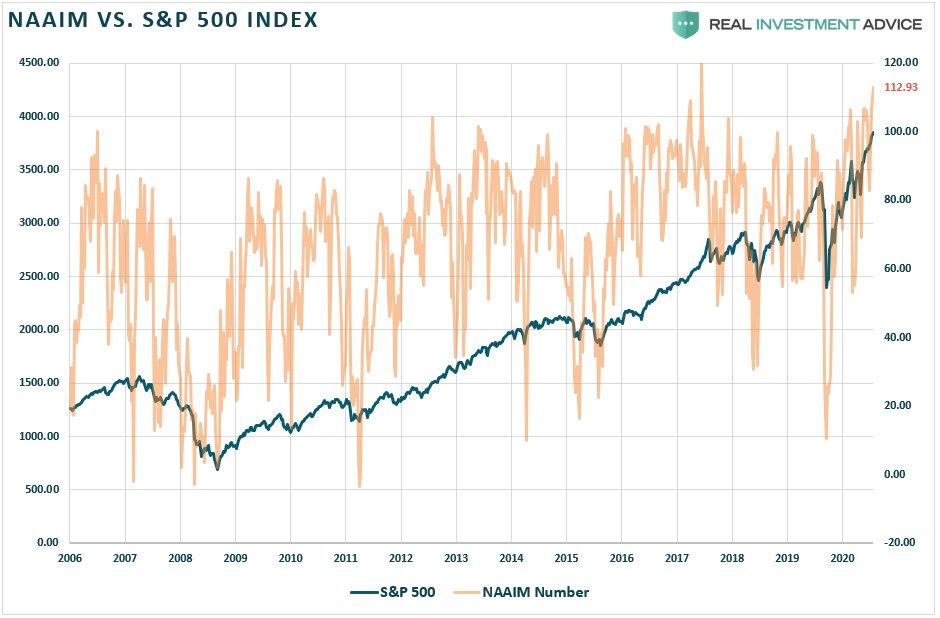
Professional money managers are not only fully exposed to equities but are doing so on leverage. The National Association Of Investment Managers index is now at 113%. Such is the second-highest reading on record, surpassing readings in late 2017 on expectations of tax cuts.

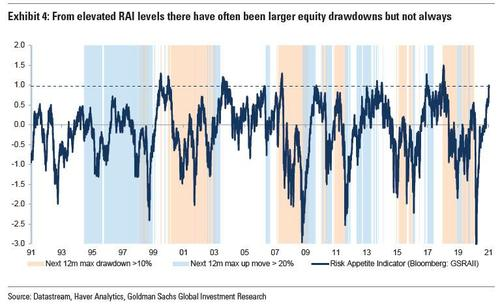
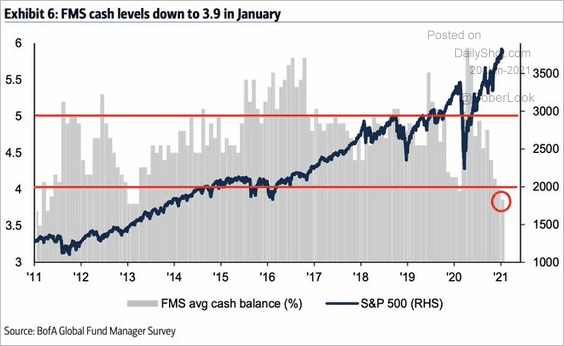
Goldman Sachs risk positioning indicator, and mutual fund cash levels, also suggest that managers are “all in.”

While none of this means that a correction is immediately imminent, it does suggest there are few buyers readily available.

The Supply / Demand Imbalance

Despite the “selloff” in March, retail positioning is once again very long-biased. The implementation of QE-4 once again removed all “fears” of a correction, recession, or bear market.

Historically, such sentiment excesses tend to form around short-term market peaks rather than investable bottoms.

Such is an excellent time to remind you of the other famous “Bob Farrell Rule” to remember:

“#5 – The public buys the most at the top and the least at the bottom.”

As we discussed recently in “There Is No Cash On The Sidelines,”  the markets are driven by buyers’ and sellers’ supply and demand.

In the current bull market advance, few people are willing to sell, so buyers must keep bidding up prices to attract a seller to make a transaction. As long as this remains the case, and exuberance exceeds logic, buyers will continue to pay higher prices to get into the positions they want to own.”

Such is also the definition of the “Greater Fool Theory:”

“The greater fool theory states that it is possible to make money by buying securities, whether or not they are overvalued, by selling them for a profit at a later date. This is because there will always be someone (i.e. a bigger or greater fool) who is willing to pay a higher price.”

The problem comes when buyers are no longer willing to pay a higher price. When sellers realize the change, there will be a rush to sell to a diminishing pool of buyers. Eventually, sellers begin to “panic sell” as buyers evaporate. Such is the point where prices plunge.

Theory Fails In Reality

The whole premise of “cash of the sidelines” is nonsense. While it is excellent rhetoric to feed the bulls while markets are rising, paying attention to nonsensical rationalizations has repeatedly led to poor outcomes. 

If you don’t believe that, here are a couple of headlines:

Here is what happened next:

“For every buyer there MUST be seller, the only question is at WHAT PRICE the transaction will occur?

Risk Immunity

During bull markets, investors get forgiven for their investment mistakes. Overpaying for value, buying fundamentally deficient companies, and taking on excess risk, seems to have no consequence.

Unfortunately, such is where investors tend to go astray.

In the short-term, the market dynamics are indeed bullish. Such is why we are only reducing risks in portfolios currently and not becoming entirely defensive.

However, on a long-term basis, the picture becomes much more concerning.

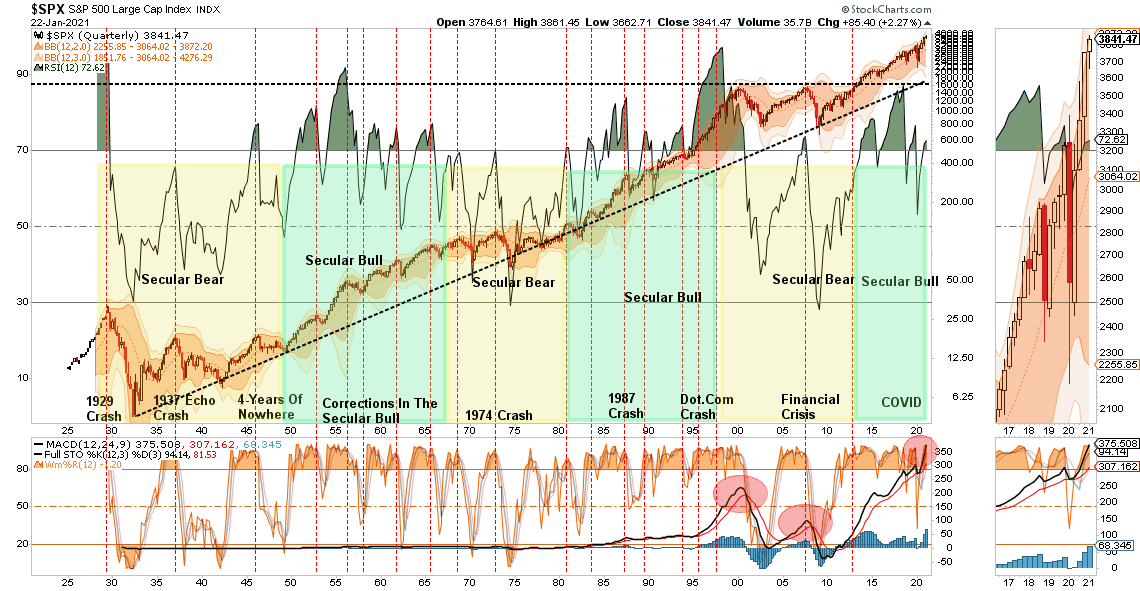
  • As noted above, this chart is not about short-term trading but the long-term management of risks in portfolios. It is a quarterly chart of the market going back to 1920.

  • Note the market has, only on a few rare occasions, been as overbought as it is currently. The recent advance has pushed the market into 3-standard deviations above the 3-year moving average. In every single case, the reversion was not kind to investors.

  • Secondly, in the bottom panel, the market has never been this overbought and extended in history.

  • As an investor, it is crucial to keep some perspective about where we are in the current cycle. There is every bit of evidence that a significant mean reverting event will occur. Timing is always the issue, which is why use daily and weekly measures to manage risk.

  • Don’t get lost in the mainstream media. It is an essential chart.

The Problem Of Overpaying For Value

The current environment has become so richly priced there is little opportunity for investors to extract additional gains from risk-based investments.

There is one true axiom of the market, which investors always tend to forget.

“Investors buy the most at the top, and the least at the bottom.”

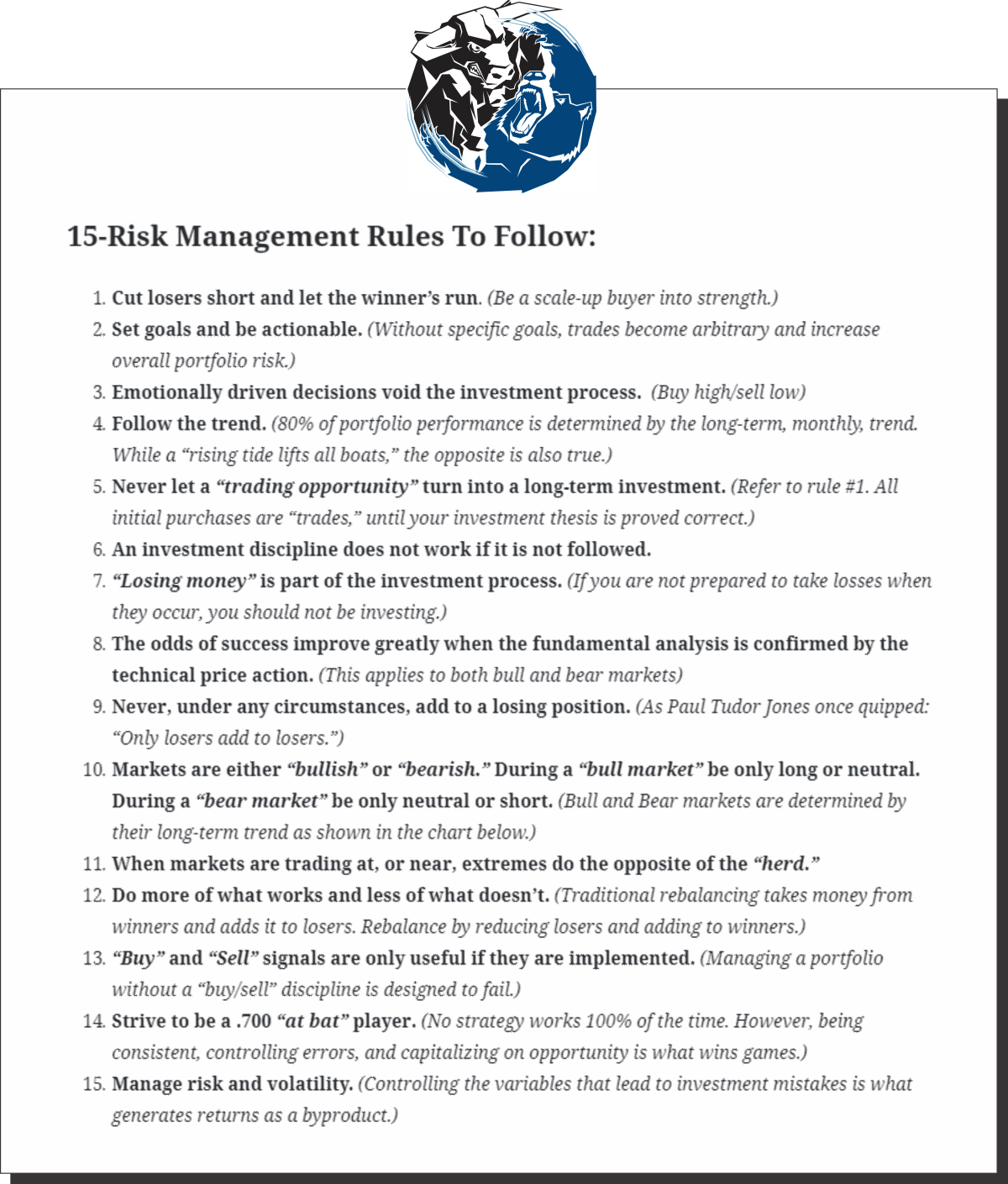
If you feel you must chase the markets currently, then do it with a set of guidelines to follow if things turn against you. We printed these rules a couple of weeks ago but felt there are worth mentioning again.

While we remain optimistic about the markets currently, we are also taking precautionary steps to tighten up stops, add non-correlated assets, raise some cash, and look to hedge risk opportunistically.

Just because it isn’t raining right now doesn’t mean it won’t.

Nobody has ever gotten hurt by keeping an umbrella handy.

Tyler Durden
Tue, 01/26/2021 – 08:10

via ZeroHedge News https://ift.tt/36desO9 Tyler Durden

S&P Futures Reverse Losses, Trade Near Record High Despite China Bubble Warning

S&P Futures Reverse Losses, Trade Near Record High Despite China Bubble Warning

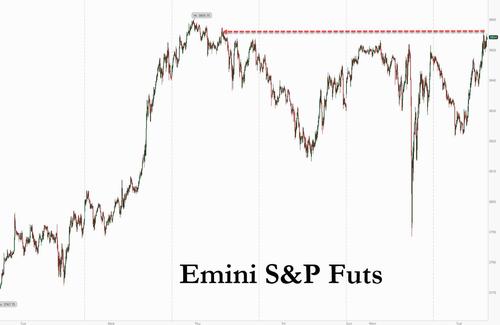
After sliding for much of the Asian session, US equity futures reversed sharply and rose alongside European stocks, rising as much as 30 points from session lows and last trading fractionally in the green…
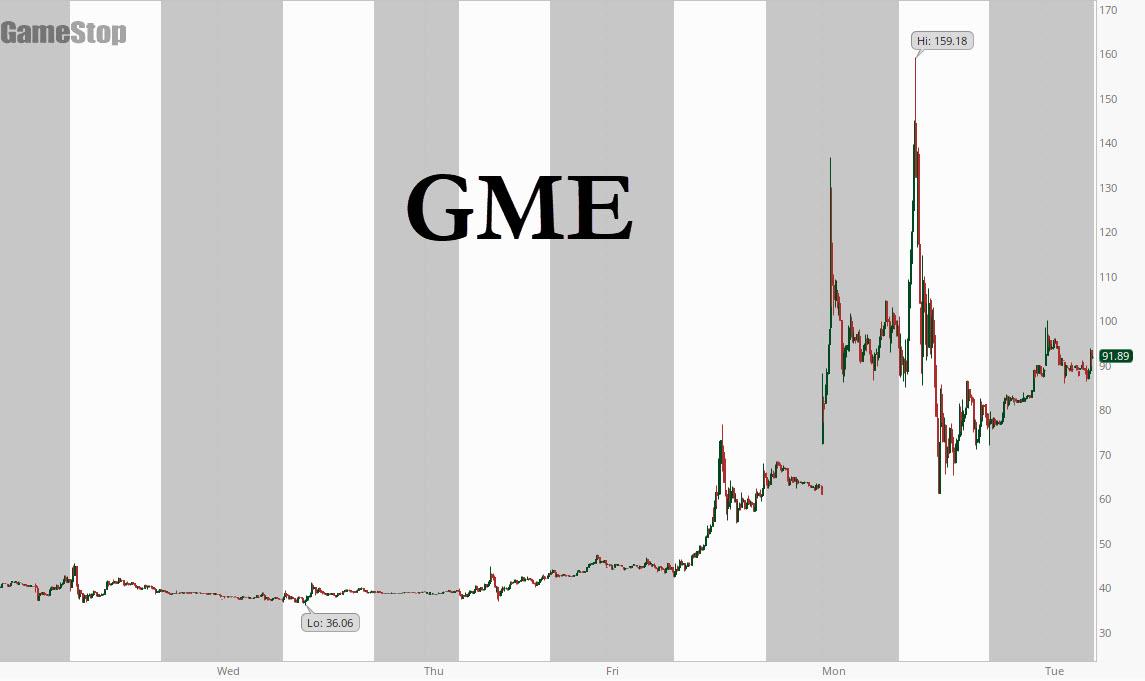
… while yesterday’s main attraction, Gamestop, was up almost 20% in the premarket as reddit traders now appear to be going after Ken Griffin and Steven Cohen, who backstopped the effectively collapsed Melvin Capital.
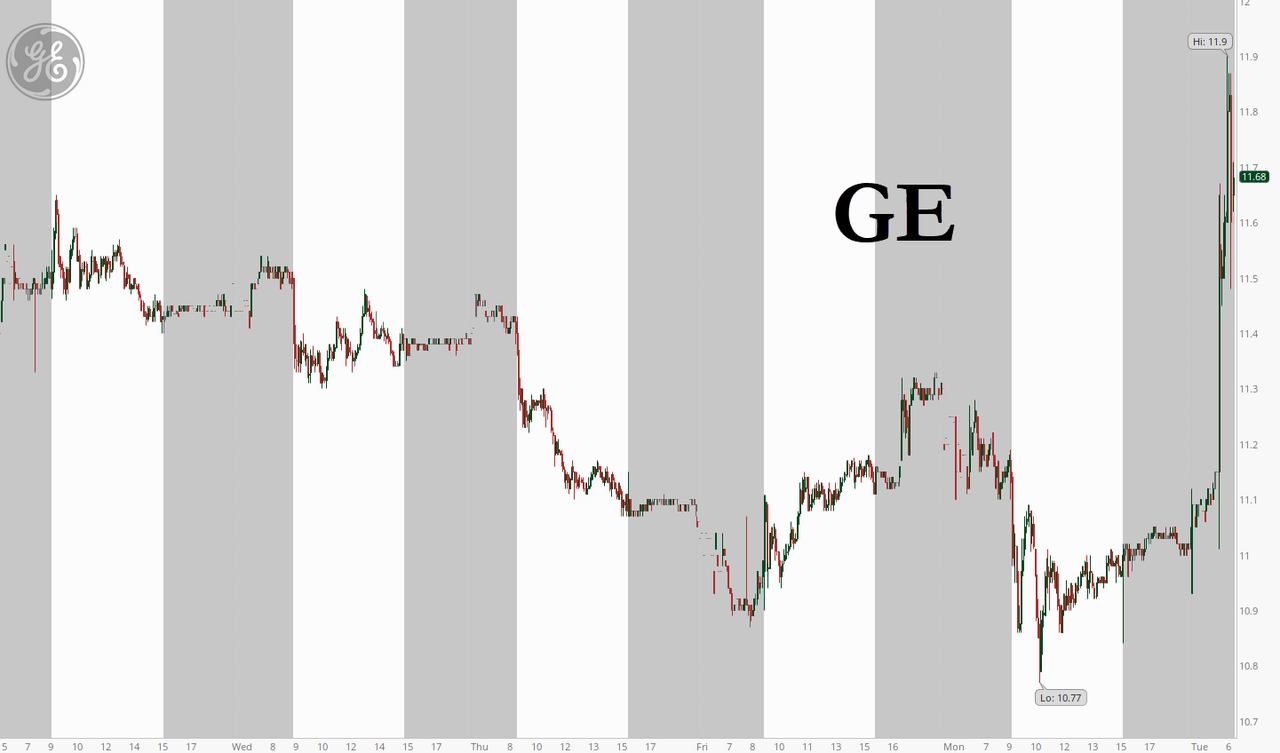
Elsewhere, General Electric Co rose about 5% after reporting a better-than-expected free cash flow for the fourth quarter, as it benefits from a recovery at its power and renewable energy units. Tech heavyweights Microsoft Corp and Advanced Micro Devices Inc were slightly higher ahead of their earnings reports expected after markets close. With the S&P 500 trading at 22 times the 12-month forward earnings, concerns about stock bubbles among some of Wall Street’s biggest banks sparking fears of a pullback.

After starting in the red, European stock markets were almost uniformly green. Naturgy Energy Group SA soared 16% as asset manager IFM Global Infrastructure offered to buy a stake in the Spanish utility. Sweden’s EQT AB, one of Europe’s biggest private equity firms, jumped 14% after agreeing to take over Exeter Property Group in a $1.9 billion deal.

In contrast, Asian markets slumped as China’s central bank withdrew cash from the banking system and an official cautioned about asset bubbles. The MSCI Asia Pac index dropped 1.4%, its biggest drop in two months and internet giant Tencent Holdings Ltd. lost 6.3% as investors paused following rallies in Hong Kong and South Korea. U.S. Senate Majority leader Chuck Schumer’s expectation of timing for approval of a new aid package also weighted on sentiment. Vietnam was Asia’s worst-performing market as stocks continued to face profit-taking pressures. Hong Kong’s stock benchmark was dragged by Tencent, which slumped after an 11% gain on Monday. China’s unexpected withdrawal of funds from the financial system amid a warning about asset bubbles also weighed on sentiment, with indexes in Shanghai and Shenzhen sliding while Chinese 10-year bond futures dropped. Local media reports on Tuesday cited comments from Ma Jun, an adviser to the People’s Bank of China, telling a wealth management forum that the risk of asset bubbles would increase if the central bank did not adjust its policy.

“Whether this situation will intensify in the future depends on whether monetary policy is appropriately changed this year,” Jun said. He added that if not, such problems would “certainly continue” and lead to “greater economic and financial risks in the medium- and long-term”.

Samsung Electronics and Hong Kong Exchanges & Clearing also weighed on the regional equity benchmark as investors pocket profits from recent gains. South Korea’s benchmark index fell 2.1% from a record close as foreign investors increased their selling. The Philippines’ equity gauge declined to a two-month low after President Rodrigo Duterte reversed a decision that would have allowed more children to go outdoors amid fears over the spread of a new coronavirus strain. Australia and India markets are shut for holidays.

Japanese stocks fell with losses deepening during the afternoon session amid concerns recent gains may have been excessive. Automakers and services providers were the heaviest drags on the Topix. Toyota Motor was the biggest contributor to Topix decline and among the biggest drags on the MSCI Asia Pacific Index, even after Nikkei reported the automaker sees a limited impact from a semiconductor shortage. Fast Retailing and M3 weighed most on the Nikkei 225 Stock Average. Today’s losses pared monthly gains to 2.4% for the Topix and 4% for the Nikkei 225. “Investors are wary of the current Japanese stock levels,” said Hajime Sakai, the chief fund manager at Mito Securities Co. That being said, “I don’t think it’s difficult for the Nikkei 225 to try breaching the 29,000 level.”

As Bloomberg adds, adding to the backdrop of market worries was more negative news about the pandemic. Vaccine coverage won’t reach a point that would stop transmission of the virus in the foreseeable future, the World Health Organization said. German Chancellor Angela Merkel told party colleagues the potential threat from faster-spreading variants means the country is “sitting on a powder keg,” according to Bild newspaper.

“There are some negative news on lockdowns, new virus variants, and questions about vaccine efficacy,” said Mark Nash, head of fixed-income alternatives at Jupiter Asset Management. “That’s not a good combination for markets expecting a perfect world.”

In rates, Treasury futures dropped to lows of the day into start of U.S. session as President Joe Biden said he’s open to negotiating his $1.9 trillion Covid-19 relief proposal and erasing Asia-session gains that were aided by block buyer in 10-year note and bond futures. Treasury 10-year yields around 1.05%, underperforming gilts and bunds by ~0.5bp and steepening 2s10s by ~1bp; yields were higher by less than 2bp across intermediates and long-end of the curve ahead of 5-year note auction. Jumbo 7-Eleven bond offering is expected as soon as Tuesday. The auction cycle resumes with a $61BN 5-year sale at 1pm ET, following strong demand for Monday’s 2-year; cycle concludes Thursday with $62b 7-year; all sales biggest ever at tenor.

Germany’s 10-year bond yield fell a basis point to a two-week low of -0.561%, while Italian 10-year yields were up slightly on the day at 0.655%. Italian Prime Minister Giuseppe Conte will resign on Tuesday, his office said, hoping President Sergio Mattarella will then give him a mandate to form a new government.

In FX, the Bloomberg Dollar Spot Index rose and the greenback strengthened against most of its Group-of-10 peers, even as most crosses recovered from session lows as European stock markets advanced from the open. The yen and the Swiss franc were little changed against the dollar, but climbed against most major currencies on haven demand; the euro remained down after weakening toward $1.21. Scandinavian currencies and the Australian dollar led declines among G-10 peers.

In commodities, after rising nearly 1% on Monday, Brent crude fell 0.5% to $55.60 per barrel and U.S. crude lost 0.5% to $52.51. Spot gold fell 0.2% to $1,852.30 per ounce.

Looking at the the day ahead, and there are an array of earnings releases, including Microsoft, Johnson & Johnson, Verizon Communications, NextEra Energy, Texas Instruments, Starbucks, American Express, General Electric and Lockheed Martin. Data releases include UK employment data for November and the US FHFA house price index for November. From the US there’ll also be the January readings of the Conference Board’s consumer confidence indicator and the Richmond Fed’s manufacturing index. Finally, the ECB’s Centeno will be speaking, and the IMF will be releasing their World Economic Outlook Update.
Market Snapshot

  • S&P 500 futures up 0.1% to 3,853.25
  • STOXX Europe 600 up 0.8% to 408.52
  • MXAP down 1.4% to 212.24
  • MXAPJ down 1.7% to 715.92
  • Nikkei down 1% to 28,546.18
  • Topix down 0.8% to 1,848.00
  • Hang Seng Index down 2.6% to 29,391.26
  • Shanghai Composite down 1.5% to 3,569.43
  • Sensex down 1.1% to 48,347.59
  • Australia S&P/ASX 200 up 0.4% to 6,824.71
  • Kospi down 2.1% to 3,140.31
  • German 10Y yield rose 1.2 bps to -0.538%
  • Euro down 0.07% to $1.2130
  • Italian 10Y yield fell 7.2 bps to 0.567%
  • Spanish 10Y yield unchanged at 0.074%
  • Brent futures up 0.3% to $56.04/bbl
  • Gold spot down 0.2% to $1,852.66
  • U.S. Dollar Index little changed at 90.44

Top Overnight News from Bloomberg

  • Federal Reserve Chair Jerome Powell heads into what could be his last year atop the central bank determined not to repeat the mistake he made when he was a neophyte monetary policy maker seven years ago when he was among those leading the charge to scale back the central bank’s quantitative-easing program — a stance that led to the economically debilitating and market- wrenching taper tantrum of 2013
  • Italian Prime Minister Giuseppe Conte will resign on Tuesday morning to avoid a damaging defeat in the Senate and maneuver for a return at the head of a new government
  • Europe’s primary bond market is set for a record month for public-sector deals, after the European Union extended a Covid-stoked flood of government and agency issuance
  • Chancellor Angela Merkel told party colleagues that Germany’s management of the coronavirus pandemic has “slipped out of control” and stricter curbs are needed to prevent a new wave of the disease, Bild newspaper reported
  • Germany’s health ministry says can’t confirm a report in Handelsblatt newspaper that AstraZeneca’s Covid-19 vaccine is only effective for 8% of people older than 65
  • Chancellor Angela Merkel’s chief of staff proposed temporarily adjusting constitutional rules to allow expanded new borrowing by Germany’s federal government, prompting a swift rejection from his own party’s budget spokesman
  • Boris Johnson is expected to announce the government’s plan for quarantining travelers arriving in the U.K. to stop the spread of new coronavirus strains from overseas
  • An aggregate index of China’s economic performance increased by one step from last month, led by strong performances in exports, property and the stock market

A quick look at global markets courtesy of Newsquawk

Asian equity markets declined across the board with sentiment subdued after the flimsy risk appetite amongst global peers including in the US where stocks whipsawed ahead of this week’s FOMC, tech earnings and month-end, as well as ongoing concerns about vaccine effectiveness against the new COVID-19 variants and doubts on the ability of Democrats to pass the USD 1.9tln COVID-19 relief plan in its entirety, while the absence of participants in Australia and India due to holiday closures also contributed to the lacklustre picture. Nikkei 225 (-1.0%) was negative with the index subdued by recent currency inflows. KOSPI (-2.1%) underperformed despite better-than-expected South Korean GDP growth figures for Q4, as this still resulted in a 1.0% annual contraction for 2020 which was the economy’s worst performance since 1998. Elsewhere, Hang Seng (-2.6%) and Shanghai Comp. (-1.5%) declined with the mainland pressured after the PBoC resumed its tepid liquidity operations which facilitated increases in China’s benchmark overnight repo rate to its highest since November 2019 and with MSCI to delete several securities from its indexes including China National Nuclear Power Co., China Shipbuilding Industry and Inspur International. The losses in Hong Kong were also exacerbated by profit taking in the city’s main index which retreated from the 30k level and near 21-month highs as Tencent shares also pulled back from record levels after it recently approached USD 1tln market cap status. Finally, 10yr JGBs tested the 152.00 level to the upside with prices underpinned by the negative mood across stocks and following the bull flattening in USTs which was helped by a solid 2yr auction, while the 40yr JGB auction results were mixed with a slightly higher b/c.

Top Asian News

  • Asia Stocks Slip as Stimulus Timing, China Bubble Warning Weigh
  • From Pony Ma to Jack Ma, the Rich Win Big With Wild H.K. Stocks
  • Ant IPO Could Resume Once Issues Resolved, Central Bank Says
  • Kuaishou to Give Asian IPOs Best Start to a Year Since 2010

European stocks kicked of Tuesday’s session indecisive before gaining upward momentum (Euro Stoxx 50 +1.1%) after sentiment improved from the mostly downbeat APAC trade, albeit US equity futures remain subdued vs their trans-Atlantic counterparts with broad-based losses seen across the four major contracts – which are also weighed on by doubts on whether the Democrats can swiftly pass its much-anticipated relief plan. Back to Europe, the region’s performance is relatively broad-based, with Switzerland’s SMI (+0.5%) initially the laggard amid underperformance in the defensive Healthcare sector post-Novartis’ earnings (see below). Italy’s FTSE MIB (+0.8%) conforms to the gains among its peers following the outperformance seen yesterday as markets somewhat look through reports that Italian PM Conte has announced his resignation to his cabinet, in a move described as a “tactical resignation”. This resignation is merely symbolic amid the unguaranteed hope is that Conte will be able to secure a mandate to form a new government. The tail risk after resides on the whether Conte has the ability to form a new coalition – thus markets will be giving more credence to developments on this front in the upcoming sessions; full analysis piece available on the headline feed. Delving deeper into the European sectors, IT is one of the top gainers in the run-up to large-cap US tech earnings, meanwhile, Nokia (+4%) soared at the open as the Reddit WSB retail traders attempted to pump higher Nokia’s ADR – which rose 15.5% in US trade followed by another 7% after-market, in a similar move to the GameStop (+15% pre-mkt) phenomenon yesterday. On this theme, it will be important to keep an eye on any regulatory moves against this type of speculative trading as any attempt to regulate channels – such as Reddit and/or Twitter – may hinder retail speculative buying which acted as and continues be a major equity driving force. Travel & Leisure resides as the laggard as ongoing COVID-variant woes provides the sector with no reprieve. In terms of individual movers, Rolls-Royce (-4.5%) shares slid at the open after a trading update which brought to light the turbulence ahead for the aeronautical sector “In the near-term, more contagious variants of the virus are creating additional uncertainty. Enhanced restrictions are delaying the recovery of long-haul travel over the coming months compared to prior expectations, placing further financial pressure on customers and the wider aviation industry, all of which are impacting cash flows in 2021” – the company said despite reporting in-line trading and year-end liquidity at the upper end of guidance. On the flip side, AstraZeneca (+1.2%) refuted Handelsblatt and Bild reports which suggested the Co’s vaccine had an efficacy of 8% or less than 10%, respectively, in those over 65. Elsewhere, some large-cap earnings related movers include UBS (+1.5%) and Novartis (-2.2%), with the former firmer following an overall positive update and a share buyback announcement, whilst the latter is pressured on a miss in revenue and EPS.

Top European News

  • EU Vaccine Rollout in Disarray as Germany Touts Export Limits
  • Dutch Covid Riots Add to Political Tension Ahead of Elections
  • Engie Said to Work With Citi, Morgan Stanley on GTT Divestment
  • EQT Soars to Record Valuation After $1.9 Billion Property Deal

In FX, The Dollar looked all set to test technical resistance in DXY terms amidst another bout of safe haven demand that propelled the index further beyond 90.500 to 90.614, but fell just short of the 50 DMA at 90.678 as sentiment gradually stabilised and is improving to the extent that stocks are now on course for an emphatic turnaround Tuesday. Hence, the Buck has faded across the board to the benefit or relief of rival currencies that seemed destined to suffer heavier losses and breach chart supports or psychological levels along the way. However, the DXY is holding off lows (90.315) and within sight of the half round number in the run up to a busier US agenda on FOMC day 1.

  • NZD/AUD – Kiwi outperformance continues ahead of tonight’s NZ business PSI and trade data on Wednesday with additional traction to complement less dovish RBNZ expectations coming from PM Arden confirming that the country will sign an upgraded FTA with China. Nzd/Usd is back up near 0.7200 after testing the 10 DMA that aligns with a double bottom around 0.7171, while Aud/Nzd has now crossed 1.0700 to the downside, albeit in thinner volumes due to Australia’s market holiday, and Aud/Usd hovering just shy of 0.7700 in advance of NAB’s business survey and CPI tomorrow.
  • JPY/EUR/CAD/CHF/GBP – All fractionally softer vs their US counterpart, but the Yen still ‘comfortably’ above 104.00 and Euro surviving another lurch towards 1.2100 following a fade into 1.2150 and loss of the 50 DMA (1.2124). Meanwhile, the Loonie is still straddling 1.2150 with an eye on crude prices and the Franc is afloat on 0.8800 and 1.0700 handles, marginally, wary about further intervention to curb excess strength on any acute investor angst caused by risk events, like Italian PM Conte’s efforts to forge a new coalition Government. Last, but not quite least, Sterling has also staged a comeback after a brief dip under the 21 DMA (to circa 1.3610 vs 1.3624) and is pivoting 0.8900 against the Euro in wake of more UK jobs and wage data ‘propped’ up by Government support.
  • SCANDI/EM – The Sek and Nok have unwound more gains relative to the Eur irrespective of the constructive risk tone that might be deemed supportive, or firmer oil for that matter, so it seems that COVID-19 jitters have combined with a less bullish chart backdrop to undermine the Crowns. On that note, Sweden is seeking more clarification on the precise number of does per vial and has suspended payments to Pfizer pending answers. Elsewhere, the Try remains relatively firm and Czk is bid amidst talk of CNB tightening in 2021 (Governor giving guidance for up to 1 or 2 hikes), but the Brl could be in for a long Brazilian post-holiday weekend hangover.

In commodities, WTI and Brent front month futures are modestly firmer in what is seemingly early European consolidation, but the benchmarks remain within recent ranges in the grand-scheme of things. News-flow for the complex has been light with traders eyeing the overall risk sentiment in the absence of catalysts – also comprising of any major COVID-related developments to disrupt the current supply/demand balance. WTI resides around 53/bbl having had printed an overnight base at USD 52.32/bbl, while its Brent counterpart trades narrowly above USD 56/bbl after printing a current USD 55.42/bbl intraday low. Elsewhere, spot gold is uneventful on either side of the 1850/oz mark amid a lack of fresh catalysts and ahead of the FOMC policy decision tomorrow. Technicians will be eyeing some levels in the vicinity including the 100 DMA (1880.90), 21 WMA (1879.50), 21 DMA (1873.08), 200 DMA (1848.87) and yesterday’s low (1846.90). Turning to base metals, copper prices edged lower with LME copper back under USD 8000/t amid uncertainties surrounding the US stimulus package. Conversely, Shanghai stainless steel gained for a second consecutive session amid rising raw material prices and prospects for finer demand heading into Chinese New Year holiday in February.

US Event Calendar

  • 9am: S&P CoreLogic CS 20-City YoY NSA, est. 8.7%, prior 7.95%; 9am: S&P CoreLogic CS 20-City MoM SA, est. 1.0%, prior 1.61%
  • 10am: Conf. Board Consumer Confidence, est. 89, prior 88.6; Expectations, prior 87.5; Present Situation, prior 90.3

DB’s Jim Reid concludes the overnight wrap

It’s been a decidedly odd 24 hours as while global sentiment suddenly dipped in the US morning session, we simultaneously saw some astonishing moves higher in names that are currently the darlings of the Robinhood/Reddit world. Both then normalised into the close but what a round trip. On this, if you’ve been reading the EMR since it started in 2007 then you would know that my favourite gadget of the 2000s was undoubtedly the BlackBerry. My love affair extended well into the 2010s before the iPhone finally started to become easier and easier to type with. After nearly a decade of carrying both, it was a sad day when saying goodbye to the buttons of the BlackBerry and I genuinely wondered what would become of the company as more and more migrated. However BlackBerry shares have surged +301% since the end of October and are up +172% YTD and +28.4% yesterday (+48.4% at the days highs and at levels not seen since October 2011). It seems this has been a popular stock with online stock chat rooms (on Reddit). Another stock that is getting attention for similar reasons is GameStop. Since the end of October it’s up +633%, +308% YTD and +146% at the peak yesterday before closing +18.1%. So a wild ride and the retail day traders seem to be targeting and battling institutional shorts at the moment with the former generally winning in recent days and weeks.

The only thing I’ve seen like it was in 2000 when well over half the large team I was in at the time were buying tech stocks like they were going out of fashion. At one point virtually everyone had U.K. company lastminute.com in their portfolio at absurd valuations. My boss then said that he had to buy some against his better judgement, as a hedge, as if they continued to go exponentially higher his team would all resign and retire rich leaving him to pick up the pieces! It wasn’t long before they and others collapsed though and he was pleased his team had to instead work harder to pay the bills. 21 years on and a new generation are probably doing even crazier things. Maybe the main difference was that it was global then whereas this is concentrated almost exclusively in the US.

Returning back to more mainstream markets, we saw a sharp intra-day sell-off in risk assets on both sides of the Atlantic yesterday after a healthy start. Growing concerns about the pace and quality of the vaccine rollout, about possible virus mutations, and the potential for further lockdown measures led investors to reassess current valuations. The US reversal took place around 90 minutes into the US session, with the S&P 500 having initially been up +0.46%, before swiftly reversing course to dip to -1.15% in around 45 minutes. The selloff came shortly after new Senate Majority leader Schumer said it may take 4-6 weeks for the new US stimulus plan to pass, which seemed to remind markets of the underlying risks to a market trading at the highs. However after the sharp selloff, the index recovered steadily throughout the rest of the session before recouping nearly all its intraday losses – closing +0.36% higher and at a new record. Tech stocks were a large part of the broad index’s rebound, with the NASDAQ gaining +0.69% for its fourth straight record close. However it was not all good news as the reopening trade suffered as worries surrounding the vaccine rollout spread, with Energy (-1.06%), Banks (-0.88%), and Consumer Services (-0.95%) stocks weighing on the index. Stocks in the Consumer Services industry group such as Carnival (-4.95%), Royal Carribean (-4.92%) and MGM (-4.49%) were among the worst performers in the entire S&P 500.

Europe saw the worst of the losses due to missing the US rebound. The STOXX 600 (-0.83%), the DAX (-1.66%) and the CAC 40 (-1.57%) all lost significant ground, especially from lunchtime onwards, before finishing just off session lows. European airlines saw some of the biggest declines, including Lufthansa (-3.29%), easyJet (-6.66%) and IAG (-7.65%) as news reports from across the continent pointed to the imposition of tougher restrictions domestically and on international travel. For instance, UK Prime Minister Johnson said that the UK was “actively” working on an Australian-style plan to quarantine travellers in hotels, while the French Journal du Dimanche repoted that France could go into another lockdown “within days”. As we discussed yesterday in the EMR and CoTD it’s becoming clearer to us that although vaccines will likely be a huge saviour as expected, countries are going to be more hesitant to remove restrictions than we thought a couple of months ago due to perceived threats of mutations evading vaccines. I’m now increasingly expecting countries to have stricter border controls around the middle of this year than many did for large parts of last year even with high vaccination rates. The desire to avoid imported mutations seems to be increasing.

In spite of the selloff, one outperformer was Moderna, which surged +12.20% following the news that its vaccine still produced neutralising antibodies against the UK and South African variants. With the South African variant, it’s worth noting that there was a six-fold reduction in the number of antibodies produced which might be deemed a bit worrying, but the company said they were advancing a booster candidate against the South African variant into preclinical studies and a Phase 1 study in the US. This came amid a row between the EU and AstraZeneca over vaccine supply and also speculation in the German media about the low efficacy of this vaccine for the older population and concerns that it won’t be approved for use in this demographic on the continent. So vaccine uncertainty is high even if our CoTD yesterday (link here) showed the Pfizer/BioNTech one is doing as good a job as could be hoped so far in Israel.

Amidst the general risk-off tone, sovereign bonds rallied strongly, with yields on 10yr Treasuries down -5.6bps to 1.030% ahead of tomorrow’s Fed meeting, their lowest level in over two weeks. It was real rates rather than inflation expectations that drove the bulk of that decline, with 10yr breakevens down just -0.9bps, and 5y5y forward inflation swaps for the US ending the session down -1.5bps. It was a similar story in Europe, with falling yields driven by lower real rates there too, as 10yr yields on bunds (-3.8bps), OATs (-3.8bps) and gilts (-4.6bps) all moving lower.

Sticking with sovereign bonds, the biggest outperformer yesterday were actually Italian BTPs, whose spread over bunds came down -3.6bps as speculation rose that Prime Minister Conte would resign and form a new coalition government, thus averting early elections. In terms of the latest, PM Conte is expected to offer his resignation to President Mattarella later today, before attempting to form a new government, with Bloomberg reporting officials saying it could include a combination of centrists, unaffiliated lawmakers, members of former Premier Renzi’s Italy Alive party, and lawmakers from the center-right Forza Italia party. For now however, early elections are still seen as unlikely.

This morning in Asia, markets have lost ground as investors continued to weigh the timing of potential stimulus in the US, and the Nikkei (-0.96%), the Hang Seng (-2.46%), the Shanghai Comp (-1.43%) and the Kospi (-2.05%) are all seeing significant declines. Meanwhile S&P 500 futures (-0.54%) are similarly pointing lower.

In terms of other Covid news, there were some positive case numbers out of Europe, with the number of new daily cases in the UK at a one-month low of 22,195 (albeit referencing Sunday data which can be artificially low), while Italy posted its lowest number of new cases since mid-October, at 8,562. The US also had positive news on lower case counts as the country posted its lowest one day rise in cases since December 2. Additionally it was the first day since October that no state had over 1000 new cases per million residents. California lifted regional stay-at-home orders, with the state now returning to its tiered reopening system. While heavy restrictions remain in place, businesses such as outdoor-dining and pickup-only retail are allowed to restart. Vaccine supply continues to be an issue with New York City Mayor de Blasio saying plans to construct vaccination sites at large venues like the city’s stadiums are on hold due to dose shortages. The city continues to believe it could offer 500,000 jabs per week if supply and qualification restrictions were lifted.

On yesterday’s data, the Ifo business climate indicator from Germany fell to 90.1 in January (vs. 91.4 expected), which comes amidst continued extensions of the country’s lockdown. Both the expectations (91.1) and the current assessment (89.2) readings fell on the previous month. According to our German economists’ note yesterday (link here), German GDP in Q1 now looks likely to fall by at least 1% quarter-on-quarter, assuming that the restrictions for retail and services will only be gradually lifted after Feb 14.

To the day ahead now, and there are an array of earnings releases, including Microsoft, Johnson & Johnson, Verizon Communications, NextEra Energy, Texas Instruments, Starbucks, American Express, General Electric and Lockheed Martin. Data releases include UK employment data for November and the US FHFA house price index for November. From the US there’ll also be the January readings of the Conference Board’s consumer confidence indicator and the Richmond Fed’s manufacturing index. Finally, the ECB’s Centeno will be speaking, and the IMF will be releasing their World Economic Outlook Update.
Tyler Durden
Tue, 01/26/2021 – 08:02

via ZeroHedge News https://ift.tt/2LXoJas Tyler Durden

GE Shares Jump As Upbeat Industrial Cash-Flow Forecast Suggest Turnaround

GE Shares Jump As Upbeat Industrial Cash-Flow Forecast Suggest Turnaround

General Electric Co soared 5% after reporting better-than-expected free cash flow for the fourth quarter, as it benefits from a recovery at its power and renewable energy units.  

In a statement released Tuesday morning, the company said industrial free cash flow would be around $2.5 billion to $4.5 billion this year. Wall Street analysts had been expecting $2.57 billion. What this means is GE’s manufacturing divisions could be set to outperform.

“As 2020 progressed, we significantly improved GE’s profitability and cash performance despite a still-difficult macro environment. The fourth quarter marked a strong free cash flow finish to a challenging year, reflecting the results of better operations as well as strong and improving orders in Power and Renewable Energy,” Culp said in a statement.

The improved outlook is a sign that Culp’s turnaround plan could be working following a company’s collapse in recent years. The company generated $4.4 billion in industrial free cash flow in the fourth quarter, crushing expectations for $2.8 billion. 

GE also boosted adjusted earnings by 15 cents to 25 cents per share this year. 

* * * 

Read: GE 2020 fourth-quarter performance

Ge Webcast Presentation by Zerohedge on Scribd

Tyler Durden
Tue, 01/26/2021 – 07:40

via ZeroHedge News https://ift.tt/369eiY7 Tyler Durden