The public health establishment lost America’s trust during the COVID-19 pandemic with its bureaucratic incompetence, “noble lies,” and authoritarian mandates.
It was about time. Agencies like the National Institutes of Health (NIH) and the Centers for Disease Control and Prevention (CDC) have been failing the American public for decades. But the agency with the worst track record is the Food and Drug Administration (FDA), which, long before COVID, caused Americans to lose hundreds of thousands of life years by slowing down drug development. After COVID, the American public had finally started to catch on.
President Donald Trump put a new team in charge of the federal health apparatus, some of them truth-telling contrarians who risked their careers to expose the sins of the old guard. But it’s also a messy picture because the man in charge of Health and Human Services has controversial theories about the dangers of vaccination with little factual basis.
So where does that leave things? Is the public health apparatus finally being upended? Or are the inmates running the asylum?
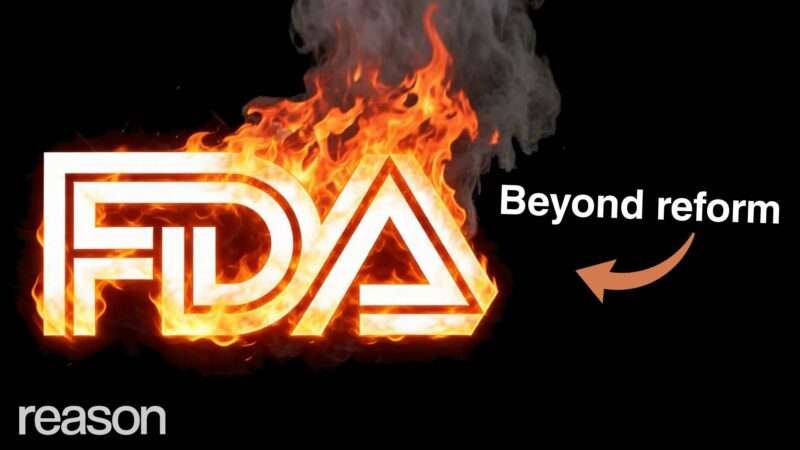
Nobody, no matter their integrity or political persuasion, should have the power to decide what you or I put in our bodies. The only way to fix America’s regulatory health care apparatus is to dismantle it. A new guard has replaced the old. The COVID reckoning is here. But it hasn’t gone far enough.
The FDA Power Play
The story of an overreaching public health state doesn’t begin with Robert F. Kennedy Jr. or Dr. Anthony Fauci. It begins with a law passed in 1962.
The FDA didn’t always throw up as much red tape as it does today. In its early days, its only job was to sign off on safety. Drug makers would submit safety evidence, and if the agency didn’t object within 60 days, the drug could go to market and be sold right over the counter. Back then, it was the drug company that decided whether to require a doctor’s prescription or not based on liability concerns.
This voluntary arrangement between drug manufacturers, patients, and doctors worked fairly well, says Jeffrey Singer, a practicing surgeon and senior fellow in the Department of Health Policy Studies at the Cato Institute.
“If [the drug manufacturer] thought that their drug was a little too risky and some people could have problems and they’ll get sued, they would say to the pharmacist, we only want our product to be sold to people who have a prescription,” he says.
It was a system based on informed consent and voluntary exchange.
But federal control over pharmaceuticals started expanding in 1951, when Congress passed the Durham-Humphrey Amendment, which limited which drugs could be sold over the counter and empowered the FDA to enforce the rule.
That was just the beginning. About a decade later, a sedative called thalidomide was on the market in Europe to help pregnant women alleviate their nausea. The drug turned out to cause severe birth defects. Many fetuses died in utero or shortly after birth.
FDA medical officer Frances Kelsey had blocked thalidomide’s approval in the U.S., earning her the President’s Award for Distinguished Federal Civilian Service.
Congress reacted by passing a new law that vastly increased the FDA’s power. The Kefauver-Harris Amendments empowered the agency to hold drugs off the market until it deemed them not only safe but also effective.
Why did thalidomide lead to this vast expansion of FDA power? After all, thalidomide was quite effective, just not at all safe for pregnant mothers. The FDA already had the power to regulate drugs on safety grounds. What happened is that the thalidomide episode created a new political reality, with federal health regulators like Kelsey cast as benevolent guardians of our health and well-being.
The Kefauver Amendment, which had been languishing in Congress, suddenly had broad support. Scientists would have to use randomized controlled trials to ensure that pharmaceuticals do what they say they do.
That all sounds reasonable. But, in practice, the law had some catastrophic unintended consequences.
Roadblocks to Medical Progress
In the 1960s, healthcare was primitive by today’s standards, but as drug innovation accelerated, the FDA became a major bottleneck in the development process, with regulatory compliance adding billions to the cost of bringing new drugs to market.
One researcher coined the phrase “Eroom’s Law” to describe the dramatically falling return on investment for pharma research over time—a backwards spelling of Moore’s Law that describes the exponentially improving efficiency of computing power.
The time it takes to move a drug from discovery to sale increased from eight years in 1960 to between 12 and 15 years by 2010. Research and development costs exploded from about $100 million per drug in 1975 to $1.3 billion by 2005. Pharmaceutical innovation stagnated.
The political incentive problem the FDA faces is that the public is outraged when a harmful drug slips through but tends not to notice when a life-saving drug is blocked.
The economist Milton Friedman described this phenomenon in a 1999 interview with the Hoover Institution. “The pressure on the FDA is always to be late in approving,” Friedman said, “and there is enormous evidence that they have caused more deaths by their late approvals than they have saved by their early approvals.”
FDA regulation is a classic case of the “seen and the unseen,” as the French economist Frédéric Bastiat put it. But just because something’s invisible doesn’t mean it isn’t tragic.
Cancer researchers calculated that a five-year delay in approving a lung cancer drug with a modest one-percent cure rate would cost 282,000 life-years, while stricter trial regulations would save only 16. University of Chicago economists found that when the FDA did speed up approvals in the early ’90s, faster access saved between 180,000 and 310,000 life-years, compared to 56,000 life-years lost to drugs eventually withdrawn for safety reasons.
But in some cases, the public did catch on.
In the 1980s, AIDS patients revolted against the agency for being slow to approve various drugs, including thalidomide, the drug that caused profound birth defects in the late 1950s. It turns out the drug is also an effective anti-inflammatory that’s safe to take if you’re not pregnant. But the FDA had never approved it for use by anyone.
Most of the FDA’s destructive policies don’t inspire much of a backlash, but its policies continue to impede access to chemicals beneficial to our health. In the early 1990s, the FDA prohibited food manufacturers from touting folic acid as a useful supplement to prevent birth defects despite robust scientific literature in its favor. The FDA eventually became so convinced of its beneficial effects that it mandated that it be included as a supplement in bread, once again flexing its monopoly power to ensure that what isn’t prohibited becomes mandatory.
“FDA is a monopoly,” says Singer. “And because it’s a monopoly, there’s no room for any debate or any competing ideas.”
If you were reading Reason magazine in the 1970s, ’80s, and ’90s, you might have been aware of the unintended consequences of FDA regulation. But it wasn’t until the pandemic that the general public started to wake up to the problem.
COVID and the Old Guard of Public Health
During COVID, public health agencies from the CDC down to county health commissioners gained unprecedented power to determine what types of gatherings were permitted, what sort of business could stay open, and whether or not you had to be vaccinated to hold a job. It enforced a six-foot social distance rule that turned out to be based on…nothing.
The FDA was part of the same fiasco. Early in the pandemic, COVID test kits manufactured by the CDC turned out to be flawed and needed to be recalled. Private labs began producing their own test kits, but the FDA blocked their use, and only 40 labs nationwide had approved tests two months into the pandemic. It took almost a year to authorize at-home test kits.
The FDA was supposed to be run by scientists strictly following the evidence, insulated from the hurry and strife of politics. That turned out not to be true.
Dr. Vinay Prasad, who was part of the new guard brought in to oversee vaccine approvals at the FDA as director of the Center for Biologics Evaluation and Research, believes that before he worked at the agency, the FDA colluded with Pfizer to slow-roll the initial approval of the first COVID vaccine in order to to prevent Trump from taking credit for it before the November 2020 election.
“If somebody wants to say, ‘When was the first moment that politics played a role in this [vaccine approval] process?’ I think it was the initial release date,” said Prasad during a July 2025 FDA press conference.
Pfizer had been on track to have the data from a 40,000-person trial by mid-October, but changed the study’s endpoint at the last minute. Prasad says there was no scientific or medical basis for the change.
“Why was the initial statistical analysis plan changed?” he asks. “Was it changed for scientific reason, a medical reason, a statistical reason? As somebody who’s been a professor of epidemiology and in medicine for 20 years, I cannot see any scientific or medical basis to change the physical plan.”
Delaying the vaccine, Prasad says, led to unnecessary deaths from COVID. “That winter was a very terrible winter,” he says, “and had the vaccine been available five weeks sooner…I think a lot of people’s lives would have been saved. So we may be talking about tens of thousands of lives. So to me, this is the original sin…this moment in time.”
That’s not the only example of politics likely shaping FDA decision making. Seven months into his term, then-President Joe Biden announced that the FDA would be approving COVID boosters—before the FDA even had a chance to review the safety data.
“President Biden got up to the microphone and said, as of September, one month hence, we are going to offer a third dose of SARS-CoV-2 vaccine,” says Dr. Paul Offit. “Based on what data?”
Offit was a member of the FDA’s vaccine advisory committee at the time and voted against the Biden administration’s booster timeline. There was already evidence that with the COVID vaccine, there was a risk of myocarditis, which is inflammation of the heart. Two senior FDA officials resigned following Biden’s announcement, with one of them, Philip Krause, later telling Congress that the political pressure to clear the way for mandates was overbearing.
“There was some significant circumstantial evidence that a desire to implement mandates likely had something to do with the speeding up of the review timeline,” Krause testified to Congress in 2024. “Even the perception of political influence can undermine trust in the agency, especially during a pandemic…The system is set up to permit hierarchy to overrule science.”
What if the FDA had run safety tests but had zero involvement in vaccine approval?
Some Americans might have chosen to accept the risk of getting the COVID vaccine early on in the pandemic, before it had been tested. Others might choose to wait years for better data on its effects to surface. We should be allowed to make our own medical decisions based on our risk tolerance, vulnerabilities, and individual health profiles.
Instead, the federal government prevented many of us from trying the vaccine, and then it attempted to coerce many of us into getting it.
The Biden administration mandated that all 84 million Americans working at companies regulated by the Occupational Safety and Health Administration (OSHA) be vaccinated. The Supreme Court eventually struck down that mandate, but only after many people had already gotten vaccinated out of fear they’d lose their jobs.
Americans were catching on. If thalidomide had made federal regulators seem like trustworthy guardians of our bodily health, COVID did the opposite. It showed their fallibility, intellectual corruption, and incompetence.
“We kind of lost the trust of the American public,” says Offit. “They didn’t trust us anymore. And hence, now we have RFK Jr.”
Public Health’s New Guard
Offit is right. But the new guard is also composed of some highly qualified scientists who bravely spoke out against the public health establishment during the pandemic.
Under Trump, Jay Bhattacharya, a critic of lockdowns and the NIH, became the new director of the NIH. Marty Makary, a longtime critic of the FDA for slowing down drug development, became head of the agency. And yet both men report to RFK Jr., who, rather than depoliticize FDA decision making, injected a different politics—his own.
Four months after becoming health secretary, Kennedy fired all 17 members of the committee that makes vaccine recommendations to the CDC, replacing them with researchers who share his skepticism.
“No one in your job has ever fired every committee member all at once,” Sen. Michael Bennet (D–Colo.) told Kennedy at a Senate hearing. “You told the American people that you were going to bring great people onto the ACIP [Advisory Committee on Immunization Practices] panel, not anti-vaxxers.”
Among the “anti-vaxxers” whom Bennet was accusing Kennedy of appointing was Robert Malone, whom Bennet says “claimed that the commonly used mRNA vaccine causes a form of AIDS and can damage children’s brains, their heart, their immune system, and their ability to have children in the future.”
Kennedy also directed the CDC to change its “Vaccines and Autism” page, which previously declared studies found “no link” between vaccines and autism, to say that the claim “vaccines do not cause autism” is not evidence-based.
“Technically, you can never prove something didn’t happen,” says Offit, a critic of Kennedy’s rhetoric about vaccines. “But there are 24 separate studies in three continents in seven different countries showing that there’s no association between getting MMR vaccine and having autism.”
Kennedy once told podcaster Lex Fridman that he didn’t trust a single vaccine. When Fridman asked him to name any vaccines he thought were good, Kennedy replied, “I think some of the live virus vaccines are probably averting more problems than they’re causing. There’s no vaccine that is safe and effective.”
The consequences of Americans’ increasing vaccine skepticism have been measurable. The U.S. saw more annual measles cases in 2025 than at any point since 1991—including almost 1,000 cases in South Carolina and 800 in Texas, where two children died.
Though Kennedy has since made public statements encouraging families to get the measles vaccine, he told Reason in 2023 that childhood diseases like measles were “self-limiting and harmless to almost all children” and that vaccines against them prevent kids from building “your immune response against all kinds of really bad disease.”
When the American Academy of Pediatrics stepped in to offer its own vaccine guidance, RFK threatened doctors who went against the CDC’s new childhood vaccine recommendations with legal liability.
Kennedy railed against top-down government control of medicine when the other team was in power. Now he’s using it to impose his own preferences on other people.
On the upside, the new guard has deregulated health care to some degree. At the FDA, Makary has vowed to question old assumptions, especially on approval timelines.
“Why does it take 10 to 12 years for a new drug to come to market?” he asked on an episode of the All-In Podcast. “We’ve become so lukewarm and passive accepting that horrible timeline that it’s just become the status quo. We’ve got to challenge these deeply held assumptions.”
He’s also signaled a shift toward Bayesian methods for evaluating drug effectiveness, in which the FDA acknowledges the limits of its own knowledge and acts more like a sports bettor, synthesizing information from many sources to wager on the likelihood that a treatment works for specific patients.
The FDA not only slows down drug development, but many of the studies that do lead to drug approvals are poorly designed or inconclusive. Before coming to the agency, Prasad was one of the most trenchant critics of the FDA’s approval process, and he sought to raise its standards before resigning in March.
Statistician Aaron Brown agrees with Prasad that many studies leading to FDA approval are poor or inconclusive. But Brown says even better clinical trials won’t tell us conclusively how a new drug will perform in the wild. The best approach is Bayesian—let doctors and patients try new drugs, and then we can gradually learn from their effects.
“Frequentists look for decisions,” Brown explains. “Approve the drug, don’t approve the drug. Make everybody get the vaccine. Let nobody take the vaccine. Bayesians want to hand you a list of odds and say, ‘OK, if you take this pill, there’s a 10 percent chance you’ll get cured, a two percent chance it’ll kill you.’ The recent FDA action is primarily directed at Bayesian practice. They wanna bring more Bayesian tools into what is basically a frequentist FDA.”
The Bayesian approach also takes into account the heterogeneity of human physiology. A drug that fails in a broad clinical trial, or that brings outsized risk for one class of patients, might be transformative—or at least worth trying—for another subset of the population.
Brown wonders whether a more Bayesian FDA might have avoided the pitfalls of the one-size-fits-all approach of COVID-era vaccine trials and recommendations.
“If the FDA were entirely Bayesian,” he says, “They’d say, ‘OK who needs this [COVID vaccine] the most?’ Old people with risk factors who have high exposure to COVID—they need it the most…it can have a lot of bad effects and it’s still a good deal for them. So we give it to a bunch of them and we watch them very carefully…We’re seeing, how do they feel? When did they take the vaccine? When did they get COVID if they got it? What symptoms did they have? And we do trial and error…We’d never make it mandatory. We just slowly move to [encouraging vaccination], and we let people make their own decision based on their own circumstances.”
If Makary makes the drug approval process less stringent, that would be progress, but who knows if the next administration will undo these reforms? He wouldn’t be the first FDA director to try and fail at slashing red tape.
That’s why the better outcome would be for the FDA close up shop and disappear.
Real Medical Freedom
Singer, author of the recent book Your Body, Your Health Care, says that before the government broadened its power, private organizations helped patients determine whether or not treatments were effective.
“The American Medical Association [AMA] had created its Council on Pharmacy and Chemistry,” he says. “Any pharmaceutical manufacturer that wanted to advertise in medical journals had to submit its product for testing by the AMA.”
Pharmaceutical companies still monitor safety and effectiveness today.
“Kaiser Permanente—a vertically integrated, prepaid health care system—they have a vested interest in knowing whether certain medications cause complications,” Singer says, “because since you pay upfront for care, it’s going to cost them money if a drug is not safe.”
That’s why Kaiser Permanente partnered with the FDA to uncover the heart problems caused by the anti-inflammatory drug Vioxx, often prescribed to treat arthritis. The results led the manufacturer to pull it from the market, even though the FDA never mandated that they do so.
“[The manufacturers] were concerned about their liability,” says Singer. “So these things have a way of taking care of themselves without the FDA.”
The problem isn’t who’s in charge; it’s that anybody is in charge at all. Health care decisions are best left to patients and their doctors.
But the health care system is so complex and interdependent that the entire system needs to be unravelled.
Ending the Medical Monopoly
The FDA’s power derives, in part, from the fact that insurance companies, Medicare, and Medicaid are often compelled to cover the drugs that they approve. If a new treatment is highly experimental and unproven, patients should have the right to give it a try. But insurance companies and the government shouldn’t be required to foot the bill.
Brown says the FDA would do a lot less harm if it filled a purely advisory role, stripped of its power to keep drugs off the market.
“I would love the FDA to decide it was only an informational agency,” he says. “You have to change the goal of the FDA. The goal of FDA is no longer telling people what to do. It’s no longer saying these things are forbidden, these things are required.”
In this scenario, if you want to take drugs that have FDA approval, go right ahead. If you want to try drugs that don’t have FDA approval, have at it. It’s more likely you’d have to pay for them out of pocket, but nobody should have the right to stop you.
“The problem you have when you have a government monopoly,” says Singer, “is even if you have the best intended, smartest people whose hearts are in the right place, it shouldn’t be up to one regulator to decide what we adults are willing to take risks for—everyone has their own risk-benefit assessment.”
Meanwhile, medicine is becoming increasingly individualized, tailored to our unique bodily makeup, which makes the one-size-fits-all approach of FDA approval or denial even more outdated. That’s also nothing new—just look at how thalidomide both caused horrifying birth defects when taken by pregnant women and helped AIDS patients ameliorate their symptoms. Different bodies need different drugs.
We’re also seeing the melding of biology and computation, and the growing use of AI in medical research, which could produce a cascade of new health care breakthroughs. The danger of a sclerotic bureaucracy delaying a life-saving technology is more acute than ever before.
“[With] cell and gene therapies and telemedicine and artificial intelligence, lighter touch regulation, more Bayesian approaches to things—we are going to see dramatic advances in healthcare and falling costs,” says Brown.
We can look forward to a much healthier future. But to achieve it, the COVID reckoning has to be about more than replacing one team with another. It must be about clearing the field and allowing us to reclaim full control over what we put in our own bodies.
The post The COVID Reckoning Doesn't Go Far Enough appeared first on Reason.com.
from Latest – Reason.com https://ift.tt/njhLs8x
via IFTTT