February 13, 2016

Today is the ten year anniversary of Justice Scalia’s passing. At the time, I could not have fathomed what the ensuing ten years would bring. To commemorate that day, I quote at length from my 2016 book, Unraveled. There are some good nuggets here, a few that I had forgotten!

The news of Scalia’s passing broke on Saturday, February 13, 2016, at about 4:30 PM. Within minutes, through what Adam Smith would call the invisible hand , a Republican strategy spontaneously organized on social media: no confirmation until after the election, regardless of who the nominee is. At 4:56 PM, Conn Carroll, a spokesman for Senator Mike Lee (R- UT), tweeted, “What is less than zero? The chances of Obama successfully appointing a Supreme Court Justice to replace Scalia.” Conservative pundits quickly reinforced the message. Sean Davis, who writes at The Federalist , posted at 4:52, “If Scalia has actually passed away, the Senate must refuse to confirm any justices in 2016 and leave the nomination to the next president.”

One hour later, before consulting his caucus, Majority Leader McConnell released a statement: “The American people should have a voice in the selection of their next Supreme Court Justice. Therefore, this vacancy should not be filled until we have a new President.” Senator John Cornyn (R- TX) warned that whoever the President nominated had no chance of confirmation, and would “bear some resemblance to a piñata.”

Almost immediately all eyes turned to an octogenarian from Iowa. Chuck Grassley, Chairman of the Senate Judiciary Committee, held almost unfettered discretion over whether Obama’s nominee would even be considered by the Senate. The New York Times reported that Grassley “arguably” has “more power than any other individual senator in deciding if the process will move forward.”

Before a nominee was even named, pressure mounted on the folksy Iowan to hold a hearing. The Des Moines Register called on Grassley to proceed with Obama’s nominee. “This could have been a ‘profile in courage’ moment for Senator Grassley. This was an opportunity for our senior senator to be less of a politician and more of a statesman. It was a chance for him to be principled rather than partisan.” In the immediate aftermath of Scalia’s passing, Grassley was somewhat noncommittal. He told Radio Iowa , “I would wait until the nominee is made before I would make any decisions.”

He called for patience. “One step at a time.” The Times observed that early on the Iowan “has given off conflicting signals about his intentions.” Republicans defended their opposition to a hearing, citing Democratic filibusters of President Bush’s nominees a decade earlier. Democrats countered that they filibustered lower- court nominees, who were at least afforded a hearing, even if they did not receive a vote. Further, the Supreme Court, they argued, was different. Denying a nominee a hearing was the next level up from blocking a nominee’s floor vote. Michael Barone’s observation is still evergreen: “In politics . . . all procedural arguments are insincere.”

In 2010, the Chief Justice lamented the politicization of the confirmation process. “Each political party has found it easy to turn on a dime,” Roberts observed, “from decrying to defending the blocking of judicial nominations, depending on their changing political fortunes.” Senator Grassley charged that Roberts had it “exactly backwards.” The “confirmation process doesn’t make the Justices appear political,” the Iowan said. Rather, “the confirmation process has gotten political precisely because the court has drifted from the constitutional text, and rendered decisions based instead on policy preferences.” Grassley specifically targeted Roberts’s Obamacare decisions. “In fact, many of my constituents believe, with all due respect, that the Chief Justice is part of this problem. They believe that a number of his votes have reflected political considerations, not legal ones.” To the extent that the Chief’s ACA opinions were designed to keep the Court out of the political arena, the plan backfired in ways that were impossible to anticipate.

After some vacillation, the Republican leadership solidified its position. McConnell and Grassley coauthored an editorial in the Washington Post expressing their shared strategy. “Given that we are in the midst of the presidential election process,” the Kentuckian and Iowan wrote, “we believe that the American people should seize the opportunity to weigh in on whom they trust to nominate the next person for a lifetime appointment to the Supreme Court.” As for a question of duty, they wrote that the “Constitution grants the Senate the power to provide, or as the case may be, withhold its consent.” The Senate leadership held firm and refused to schedule a hearing for Garland. Many declined to even meet with the nominee.

At the University of Chicago Law School, where Obama had lectured on constitutional law, President Obama ridiculed the Republican strategy. The GOP “simply will not consider the nomination itself,” he said, and they are “going to shut down the process,” leaving a short- handed Court “for at least two” terms. “That is unprecedented.” The President, slipping back into professor mode, warned the law students in attendance that if the “process of appointing judges is so broken . . . then we are going to see the kinds of sharp, partisan polarization that has come to characterize our electoral politics seeping entirely into the judicial system.” Obama predicted that “the courts will be just an extension of our legislatures and our elections and our politics,” and “that erodes the institutional integrity of the judicial branch.”

With the Senate Republicans holding firm that the nomination would be filled by the next president, the stakes of the 2016 election grew even higher. And the candidates did not have much time to prepare. Justice Scalia’s passing was announced barely four hours before the GOP debate in South Carolina. In politics, virtually every important decision is scripted well in advance after thorough consideration. On February 13, 2016, the candidates had to improvise.

At the time, I was advising Senator Ted Cruz’s campaign on legal issues. Within minutes of the announcement, Cruz’s policy team kicked into action with a series of rapid-fire e-mails. First, the campaign decided to follow the nascent strategy of opposing a hearing, whoever the nominee may be. At 5:27 PM, @TedCruz tweeted, “Justice Scalia was an American hero. We owe it to him, & the Nation, for the Senate to ensure that the next President names his replacement.” Moments later, I texted a line for Cruz to use during the debate: “What Reagan was to the Presidency, Scalia was to the Supreme Court.” Cruz did not say it that night, but it became part of his stump speech, and he used it during several interviews.

The second major decision was whether Cruz should announce potential candidates to replace Scalia. One of his advisers suggested Mike Luttig, a former judge on the Fourth Circuit Court of Appeals. Luttig, who served as a law clerk for Scalia and had hired Cruz as a law clerk, was a finalist to replace Chief Justice Rehnquist in 2005. However, George W. Bush chose John Roberts instead. Ultimately, the Cruz campaign decided not to name a nominee, as it was too soon, and there was not sufficient time to vet nominees.

Donald Trump, as usual, would take a different tack. The first question of the debate went to the New York real estate magnate. “You’ve said that the President shouldn’t nominate anyone in the rest of his term to replace Justice Scalia,” moderator John Dickerson said. “If you were President, and had a chance with 11 months left to go in your term, wouldn’t it be an abdication to conservatives in particular, not to name a conservative justice with the rest of your term?” Without hesitation, Trump answered, “If I were President now I would certainly want to try and nominate a justice.” But he hoped that “Mitch [McConnell], and the entire group, [are] going to be able to do something about” President Obama’s nominee.

Then Trump dropped the bombshell of the evening. If he was elected, “we could have a Diane Sykes, or you could have a Bill Pryor, we have some fantastic people.” Within seconds, my phone lit up from the Cruz campaign. “What do we have on these two? Sykes and Pryor? Are they solid?” Sykes was a Bush appointee to the Seventh Circuit in Wisconsin. Pryor, a Bush appointee to the Eleventh Circuit Court in Alabama, was confirmed after the Gang of Fourteen’s compromise broke up the Democratic filibuster.

Both had ruled against Obamacare’s contraceptive mandate. Sykes found that the mandate violated the free exercise of a religious for-profit corporation, and Pryor ruled the accommodation to the mandate infringed the religious liberty of a nonprofit. I texted back that they were both solid. “OK just had to check – DT got good advice then.” The move was shrewd. Trump became the first presidential candidate to name the individuals he might appoint to the Supreme Court, and shifted the entire tenor of the debate after Scalia’s passing

We miss you Justice Scalia.

The post February 13, 2016 appeared first on Reason.com.

from Latest – Reason.com https://ift.tt/IkbaeKt
via IFTTT

The El Paso Drone Scare Is the Future of National Security Paranoia


Drone with a laser being pointed | Photo: Vladvitek/Dreamstime.com

Life imitates art. The famous 1983 hit song “99 Red Balloons” by Nena is about a cluster of party balloons being mistaken for enemy aircraft and provoking a nuclear war. Earlier this week, Secretary of Transportation Sean Duffy declared that the authorities had confronted a “cartel drone incursion” over El Paso, Texas, only for the threat to turn out to be a party balloon.

The consequences were fortunately short of a world war. But the government deployed experimental laser weapons and shut down the airspace over El Paso on Wednesday, disrupting flights for the thousands of passengers scheduled to fly through the city that day.

And it hasn’t even been very long since the last drone scare disrupted society. In December 2024, the FBI asked residents of New Jersey to be on the lookout for suspicious drones, leading to a flood of false reports and even citizens harassing pilots with lasers.

Just like the UFO sightings of the 1950s were a product of Cold War paranoia, the new wave of drone sightings is a product of today’s national security paranoia. American politics is having a hawkish moment, with politicians from both parties sounding the alarm about enemies foreign and domestic. Drones are the perfect object of fixation for paranoiacs; they’re both a symbol of modern warfare and a really common tool used by millions of Americans.

It’s also worth noting that the laser weapon used over El Paso was on loan from the U.S. Army to Customs and Border Protection (CBP). Immigration enforcement is increasingly dominating the national security apparatus, bringing together the parts of government aimed at foreign and domestic enemies. CBP, which has been deployed to war zones abroad for years, is increasingly behaving like an occupying army in American cities.

Looming over everything is the Chinese balloon incident of 2023. The Biden administration raised the alarm about a hostile surveillance balloon from China, then let it float over North America for ten days before finally shooting it down over the Atlantic Ocean. That incursion led to justifiable fears about U.S. airspace, but also led to overreactions. Shortly after the Chinese balloon incident, the Air Force used a $400,000 missile to shoot down what was likely a hobby balloon launched by the Northern Illinois Bottlecap Balloon Brigade.

Tellingly, the recent drone panics have not focused on China. During the New Jersey drone scare, Rep. Jeff Van Drew (D–N.J.) claimed that the hostile intrusions were coming from an Iranian “mothership” off the Eastern Seaboard. And again, the panic in El Paso was focused on aerial incursions by Mexican gangsters. The Trump administration seems to have given up on trying to win a peer conflict with China and fallen back on the familiar, emotionally satisfying pattern of small wars in Latin America and the Middle East. The phantom enemies in the sky reflect that shift.

A permanent war footing has many costs. American society seems to be discovering a new one: Every few months, a jumpy official seeing something in the sky will disrupt daily life and endanger air traffic over a major city. “99 Red Balloons” warns exactly about that attitude. “This is what we’ve waited for / This is it, boys, this is war,” Nena sings. “Everybody’s a superhero.”

The post The El Paso Drone Scare Is the Future of National Security Paranoia appeared first on Reason.com.

from Latest – Reason.com https://ift.tt/pT9P7zd
via IFTTT

Wuthering Heights Is a Kinky, Revisionist Fever Dream  


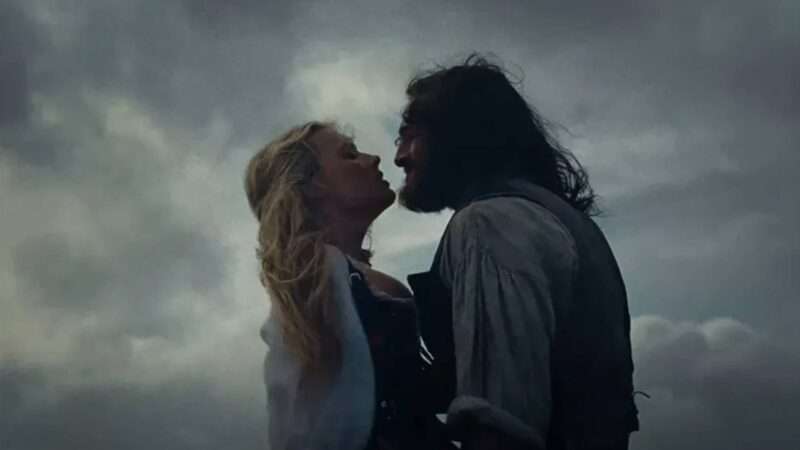
Margot Robbie and Jacob Elordi in "Wuthering Heights" | Warner Bros.

The new Wuthering Heights is technically a literary adaptation of Emily Brontë’s 1847 gothic romance about class and society, but it plays more like the hot-and-heavy fever dream of an avid reader of lusty contemporary romance fiction. It’s not a story so much as a series of storm-like adolescent moods that our heroine, young Catherine, is weathering. Her father is a sad old drunk, a once-noble man whose health and fortunes have declined. His vitality is faded and shriveled; in every way, he’s withering. His decline has manifested in the craggy and desolate estate at which he, his daughter, and a moody but smoldering young man named Heathcliff reside; it’s named after local rocky heights that are windy and raging, which is to say they are, well, wuthering.

If nothing else, we finally have a movie that will help viewers understand the difference between withering, weathering, and wuthering.

Sadly, there isn’t much wordplay in Wuthering Heights; this is a mood piece about how people feel rather than what they think or say. But with its music-video compositions and ironically melodramatic soundtrack, it captures the tumultuous and rampaging drama of youthful lust and desire. Directed by Emerald Fennell, who previously helmed Promising Young Woman and Saltburn, this take on Wuthering Heights is designed to cater to the same crowd that puts romantasy fiction on the bestseller list and buys tens of thousands of kink-specific AI-written novels in microgenres that, according to The New York Times, now include, “dark mafia romance.” 

What subgenre would Fennell’s Wuthering Heights belong to? It’s a love triangle with one woman and two men; I’m told the current parlance is “reverse harem.” But I might describe it as something like decision angst romance,” a subgenre it shares with last year’s contemporary romance Materialists. Like that film, it is fundamentally about a woman caught between two suitors, one shaggy and poor, the other wealthy and wise to the world. Come to think of it, this is essentially the plot of the Twilight films, too. 

There are no vampires or werewolves in Fennell’s Wuthering Heights. But there is a monster, in the form of Heathcliff, played by Jacob Elordi, last seen delivering a lithe and sinuous take on Frankenstein’s misbegotten creation.

Here, he is a fully carnal creature; in the movie’s first hour, he appears as a long-haired, lower-caste ruffian, a man of no stature who has been taken in by Catherine’s father. Even as children, they share a special bond, and they long for each other. Yet Heathcliff is poor and without status, so she accepts an offer of marriage from Linton, the ostentatiously wealthy man down the road. 

With Linton, her life is stable and more than comfortable, a fantasy of wealth and ease. But it lacks romantic passion. And when Healthcliff returns, cleaned up and newly wealthy after years abroad, her youthful emotions are reignited. She wants the bad boy she cannot have. And this modern Heathcliff, a smoldering kink shaman who would be at home in 50 Shades of Grey‘s red room of pain, is very, very bad. 

Part of what makes Fennell’s adaptation so tricky and unnerving is the way it is simultaneously designed to appeal to and titillate female viewers while following a script right out of manosphere propaganda. I apologize in advance for phrasing it this way, but it’s hard not to see this movie in that community’s nonsense lingo: Heathcliff is a low-status beta who, as he comes of age, locks in, looksmaxxes, and wealthmaxxes, increases his, er, sexual market value, and returns a triumphant Chad. There’s no mention of cortisol, but still; I’m surprised Clavicular wasn’t involved.

Heathcliff drives Catherine mad with lust by treating her badly, by ignoring her and refusing to explain himself, and eventually by taking another woman who he treats like a literal leashed dog. Catherine, in her marriage to the rich, safe, and stable Linton, has all the comforts she could ever imagine. But she wants what is high status, dangerous, and forbidden—and she wants it so much that she feels like she might die. Uh, happy Valentine’s Day? 

Fennell captures the movie’s emotional turbulence with vivid, riotous imagery that matches Catherine’s erotic intensity. Every shot is designed for maximum memeability; even if you don’t see the movie, you’ll see its frames on social media. High-energy pop star Charli XCX contributes to the soundtrack, which seems right: Her manic musical subgenre has been dubbed hyperpop, and this is the hyperpop version of Wuthering Heights

Like so many teenagers, I was assigned to read Wuthering Heights in school. I haven’t looked at it since. I didn’t care for it then; I was a boy, and more into brontosauruses than Brontë. Decades later, this movie version is still not for me. But I admire its gumption, its fervor, its willingness to be both bizarre and ridiculous in service of passion. It carries an intensity that I had to weather, for the frantic strength of Fennell’s erotic, romantic vision can be withering. 

The post <i>Wuthering Heights</i> Is a Kinky, Revisionist Fever Dream   appeared first on Reason.com.

from Latest – Reason.com https://ift.tt/bscuJd5
via IFTTT

The Feds Used Threats To Silence Their ICE-Tracking Speech. Now They’re Fighting Back.


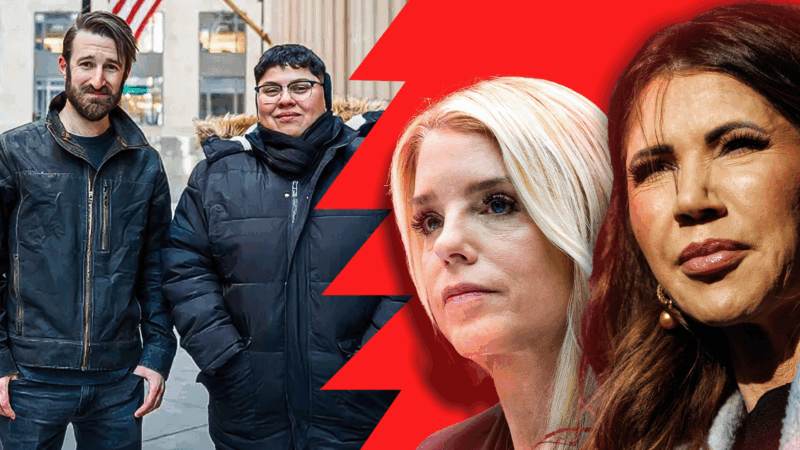
FIRE lawsuit plaintiffs and Pam Bondi and Kristi Noem | Crescent Peak Photography/Michael Brochstein/ZUMAPRESS/Newscom/AdMedia/SIPA

When the Trump administration’s immigration crackdown began last year, several entrepreneurs and concerned citizens established support groups and apps to track the movement of Immigration and Customs Enforcement (ICE) agents. These efforts were quickly squelched by Department of Homeland Security (DHS) Kristi Noem and Attorney General Pam Bondi, who are now facing a lawsuit as a result.

The federal lawsuit, filed this week by the Foundation for Individual Rights in Expression (FIRE), argues that both Noem and Bondi have “repeatedly threatened to prosecute individuals and entities for disseminating information…about ICE operations,” a violation of Americans’ right to freedom of expression.

Such threats began last July, when the Trump administration condemned CNN for reporting about an app called ICEBlock, which used crowdsourcing to track ICE activity, and accused such platforms of endangering the lives of immigration officers. After officials called for CNN to be investigated, Noem told a reporter, “We’re working with the Department of Justice to see if we can prosecute [CNN] for that, because what they’re doing is actively encouraging people to avoid law enforcement.…We’re going to actually go after them and prosecute them.” Bondi also threatened prosecution when she told Fox News that the creator of ICEBlock “better watch out.”

By early October, tech companies began removing apps like ICEBlock and Eyes Up—which was founded by Kreisau Group LLC, one of the plaintiffs in the lawsuit—from their app stores. With Eyes Up, users were able to document and preserve evidence of government abuses of power by uploading and archiving pre-existing videos, live recording and uploading new content, and viewing videos uploaded by others. 

Even though Americans have the right to record public law enforcement activity and to share those recordings, Apple yielded to Bondi and Noem’s demands by removing Eyes Up from the Apple App Store last year. The company cited guideline violations for the removal, but according to the complaint, such violations had not been previously mentioned. FIRE argues that “Apple reasonably understood Bondi and Noem’s course of conduct to convey a threat of adverse government action against Apple in order to suppress Kreisau Group’s speech,” in violation of the First Amendment. 

After coercing Apple, Bondi and Noem moved on to Meta, Facebook’s parent company. In mid-October, Bondi took credit for the removal of a popular Facebook group called “ICE Sightings – Chicagoland,” which was started by Kassandra Rosado, the second plaintiff in the case. Even though Meta cited guideline violations for the removal, Bondi openly bragged in an X post that “outreach” from the Justice Department is what truly led to the removal of the social media group, according to the lawsuit. She also accused the group of doxing and targeting ICE agents, and vowed she would “continue engaging tech companies to eliminate platforms where radicals can incite imminent violence against federal law enforcement.”

But Rosado didn’t create the social media group to incite violence, but to keep her community safe and informed, according to FIRE. As a small business owner and U.S. citizen of Mexican descent living in the Chicago area, Rosado launched the group to share information, including photos and videos, of nearby ICE operations. 

Rosado’s group grew rapidly after reports circulated about ICE’s use of excessive force—including two ICE-involved shootings—and arrests of citizens and legal immigrants alike amid “Operation Midway Blitz,” the federal immigration crackdown in Chicago, last fall. By October 2025, the group had nearly 100,000 members, many of whom used the page’s shared information to safely avoid areas where ICE was active. Others used the group to voice their opinions about ICE’s tactics. 

Although both Apple and Meta cited guideline violations for the removals of Eyes Up and “ICE Sightings – Chicagoland,” neither company, according to FIRE, signaled that these platforms were in danger of being shut down before the Justice Department made its “outreach.” Both instances involve government officials unconstitutionally using their position of power to coerce private companies to do what the federal government cannot: suppress the protected speech of Americans. 

More unsettlingly, these actions target political opinions that disagree with the Trump administration’s immigration policies. Although officials have denounced the existence of ICE-sighting groups for posting operation details and endangering the lives of officers, neither Bondi nor Noem has threatened to prosecute social media accounts that share videos and photos of operations in a pro-ICE way—including ICE’s own social media accounts. 

The First Amendment protects Americans from government actions that abridge free speech, which includes the right to report and share information about law enforcement. By taking credit for successfully jawboning Apple and Meta into complying with its unconstitutional demands, the government has, by extension, taken credit for violating the constitutional rights of Americans.

The post The Feds Used Threats To Silence Their ICE-Tracking Speech. Now They're Fighting Back. appeared first on Reason.com.

from Latest – Reason.com https://ift.tt/4omTb7v
via IFTTT

DOJ’s Antitrust Chief Resigns Amid Accusations of Corruption Among Top Officials


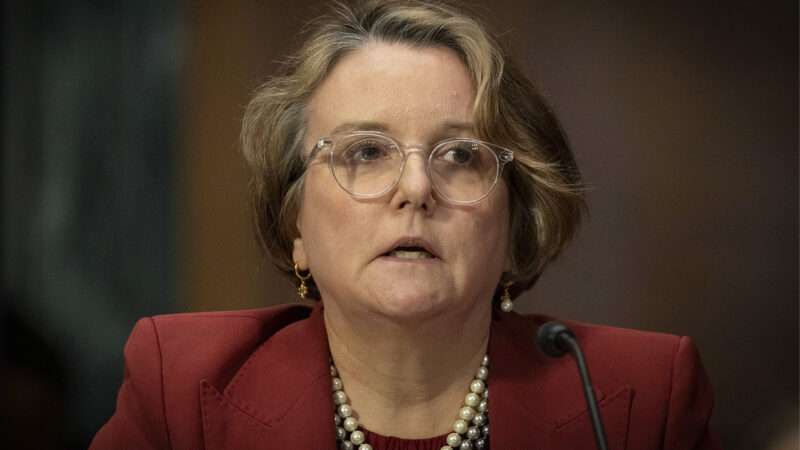
Photo of Abigail Slater | Credit: CNP/AdMedia/SIPA/Newscom

Gail Slater announced her resignation as Assistant Attorney General of the Justice Department’s (DOJ) Antitrust Division on Thursday morning. Slater’s sudden departure follows disagreements over merger enforcement with Attorney General Pam Bondi, and corruption allegations about senior DOJ officials.

Slater’s “America First Antitrust Policy,” inspired by big-is-bad New Right intellectuals Oren Cass and Sohrab Ahmari, put her at odds with “the business-friendly stance of the administration,” according to The Guardian

The philosophical differences between Slater and the administration came to a head last year when the DOJ sued to block the $14 billion merger of Hewlett Packard (H.P.) and Juniper Networks, “the second- and third- largest providers, respectively, of enterprise-grade WLAN [wireless networking] solutions in the United States” in January 2025. Although Slater was not officially in charge of the agency’s antitrust division at the time (she wasn’t confirmed by the Senate until March 12) she largely influenced the decision. Acting Assistant Attorney General Omeed Assefi warned that the merger would result in Americans “paying more for less from wireless technology providers.” Slater reportedly told Bondi that intelligence agencies did not raise national security concerns about blocking the merger.

It turns out CIA Director John Ratcliffe did have such concerns and wondered why he was not consulted by Slater. Slater’s assurances to the contrary caused Bondi to feel as if “Slater had lied to her to continue with the suit,” per The Guardian. Ultimately, the Justice Department dropped the suit in June and fired Roger Alford, Slater’s top deputy, and William Rinner, the head of merger enforcement. 

Even though he was fired, Alford remained in the spotlight and began a campaign against lobbyists who he said were influencing DOJ officials and pitting them against Slater. In August, Alford delivered a speech at the Tech Policy Institute Aspen Forum, provocatively entitled, “The Rule of Law Versus the Rule of Lobbyists.” In his speech, Alford referred to a battle between “MAGA-In-Name-Only lobbyists and DOJ officials enabling them” and “genuine MAGA reformers…like my boss Assistant Attorney General Gail Slater.” Alford did not indict Bondi for corruption, but alleged that Chad Mizelle, her chief of staff, and Associate Attorney General Stanley Woodward have “perverted justice and acted inconsistent with the rule of law” in the H.P.-Juniper case. Moreover, Alford accused Mizelle of generally “accept[ing] party meetings and mak[ing] key decisions depending on whether the request or information comes from a MAGA friend.” 

Alford’s crusade against the rule of lobbyists did not stop at the Aspen Forum; in December, he testified before the House Judiciary Subcommittee on the Administrative State, Regulatory Reform, and Antitrust at a hearing on how foreign governments use antitrust to target American companies. Instead of focusing on the topic of the hearing, Alford used his time to testify that MAGA lobbyists are “attempting to corruptly influence antitrust law enforcement.” 

As evidence of the Trump administration’s interference with antitrust investigations, Alford cited lobbyist Trey Gowdy’s November golf outing with President Donald Trump. Following their meeting, Trump preemptively pardoned Tim Leiweke, former CEO of Oak View Group, who hired Gowdy as a lobbyist after he was indicted in July by the DOJ’s Antitrust Division for rigging bids to build a stadium at a public university. 

Lobbyists appealing directly to Trump comes as no surprise. In December, Trump said he would be “involved in [the] decision” to block Netflix’s acquisition of Warner Bros. Discovery (WBD), following an aggressive campaign against the deal by rival bidder Paramount Skydance, which is majority-owned by Trump supporter Larry Ellison. (Last Wednesday, Trump reversed course, telling NBC’s Tom Llamas that he hasn’t been involved in the WBD deal.) 

But, as the H.P.-Juniper and Leiweke examples show, Slater remained steadfastly committed to her idiosyncratic antitrust agenda. Slater’s intransigence caused lobbyists to “seek to have [her] removed from her Senate-confirmed position,” according to Alford, but she refused to “abandon the ship in a storm.” But Slater finally walked the plank after being “given the option to resign rather than be fired at the end of the week,” according to The Guardian’s Hugo Lowell. 

Shortly after Slater’s announcement, Bondi thanked her “for her service to the Antitrust Division” on behalf of the Justice Department. Mizelle, Bondi’s chief of staff, had a less conciliatory tone, saying people “must be willing to put aside personal agendas and vendettas to advance the President’s priorities and serve the American people” to work at the Justice Department. 

Mike Davis, founder and managing partner of MRDLaw, who advertises his “extensive network in Washington, D.C. across the three branches of government” and was accused by Alford of peddling his influence of Mizelle in the H.P.-Juniper case, said “good riddance” to his once “good friend” Gail Slater. 

The post DOJ's Antitrust Chief Resigns Amid Accusations of Corruption Among Top Officials appeared first on Reason.com.

from Latest – Reason.com https://ift.tt/vf4GK03
via IFTTT

February 13, 2016

Today is the ten year anniversary of Justice Scalia’s passing. At the time, I could not have fathomed what the ensuing ten years would bring. To commemorate that day, I quote at length from my 2016 book, Unraveled. There are some good nuggets here, a few that I had forgotten!

The news of Scalia’s passing broke on Saturday, February 13, 2016, at about 4:30 PM. Within minutes, through what Adam Smith would call the invisible hand , a Republican strategy spontaneously organized on social media: no confirmation until after the election, regardless of who the nominee is. At 4:56 PM, Conn Carroll, a spokesman for Senator Mike Lee (R- UT), tweeted, “What is less than zero? The chances of Obama successfully appointing a Supreme Court Justice to replace Scalia.” Conservative pundits quickly reinforced the message. Sean Davis, who writes at The Federalist , posted at 4:52, “If Scalia has actually passed away, the Senate must refuse to confirm any justices in 2016 and leave the nomination to the next president.”

One hour later, before consulting his caucus, Majority Leader McConnell released a statement: “The American people should have a voice in the selection of their next Supreme Court Justice. Therefore, this vacancy should not be filled until we have a new President.” Senator John Cornyn (R- TX) warned that whoever the President nominated had no chance of confirmation, and would “bear some resemblance to a piñata.”

Almost immediately all eyes turned to an octogenarian from Iowa. Chuck Grassley, Chairman of the Senate Judiciary Committee, held almost unfettered discretion over whether Obama’s nominee would even be considered by the Senate. The New York Times reported that Grassley “arguably” has “more power than any other individual senator in deciding if the process will move forward.”

Before a nominee was even named, pressure mounted on the folksy Iowan to hold a hearing. The Des Moines Register called on Grassley to proceed with Obama’s nominee. “This could have been a ‘profile in courage’ moment for Senator Grassley. This was an opportunity for our senior senator to be less of a politician and more of a statesman. It was a chance for him to be principled rather than partisan.” In the immediate aftermath of Scalia’s passing, Grassley was somewhat noncommittal. He told Radio Iowa , “I would wait until the nominee is made before I would make any decisions.”

He called for patience. “One step at a time.” The Times observed that early on the Iowan “has given off conflicting signals about his intentions.” Republicans defended their opposition to a hearing, citing Democratic filibusters of President Bush’s nominees a decade earlier. Democrats countered that they filibustered lower- court nominees, who were at least afforded a hearing, even if they did not receive a vote. Further, the Supreme Court, they argued, was different. Denying a nominee a hearing was the next level up from blocking a nominee’s floor vote. Michael Barone’s observation is still evergreen: “In politics . . . all procedural arguments are insincere.”

In 2010, the Chief Justice lamented the politicization of the confirmation process. “Each political party has found it easy to turn on a dime,” Roberts observed, “from decrying to defending the blocking of judicial nominations, depending on their changing political fortunes.” Senator Grassley charged that Roberts had it “exactly backwards.” The “confirmation process doesn’t make the Justices appear political,” the Iowan said. Rather, “the confirmation process has gotten political precisely because the court has drifted from the constitutional text, and rendered decisions based instead on policy preferences.” Grassley specifically targeted Roberts’s Obamacare decisions. “In fact, many of my constituents believe, with all due respect, that the Chief Justice is part of this problem. They believe that a number of his votes have reflected political considerations, not legal ones.” To the extent that the Chief’s ACA opinions were designed to keep the Court out of the political arena, the plan backfired in ways that were impossible to anticipate.

After some vacillation, the Republican leadership solidified its position. McConnell and Grassley coauthored an editorial in the Washington Post expressing their shared strategy. “Given that we are in the midst of the presidential election process,” the Kentuckian and Iowan wrote, “we believe that the American people should seize the opportunity to weigh in on whom they trust to nominate the next person for a lifetime appointment to the Supreme Court.” As for a question of duty, they wrote that the “Constitution grants the Senate the power to provide, or as the case may be, withhold its consent.” The Senate leadership held firm and refused to schedule a hearing for Garland. Many declined to even meet with the nominee.

At the University of Chicago Law School, where Obama had lectured on constitutional law, President Obama ridiculed the Republican strategy. The GOP “simply will not consider the nomination itself,” he said, and they are “going to shut down the process,” leaving a short- handed Court “for at least two” terms. “That is unprecedented.” The President, slipping back into professor mode, warned the law students in attendance that if the “process of appointing judges is so broken . . . then we are going to see the kinds of sharp, partisan polarization that has come to characterize our electoral politics seeping entirely into the judicial system.” Obama predicted that “the courts will be just an extension of our legislatures and our elections and our politics,” and “that erodes the institutional integrity of the judicial branch.”

With the Senate Republicans holding firm that the nomination would be filled by the next president, the stakes of the 2016 election grew even higher. And the candidates did not have much time to prepare. Justice Scalia’s passing was announced barely four hours before the GOP debate in South Carolina. In politics, virtually every important decision is scripted well in advance after thorough consideration. On February 13, 2016, the candidates had to improvise.

At the time, I was advising Senator Ted Cruz’s campaign on legal issues. Within minutes of the announcement, Cruz’s policy team kicked into action with a series of rapid-fire e-mails. First, the campaign decided to follow the nascent strategy of opposing a hearing, whoever the nominee may be. At 5:27 PM, @TedCruz tweeted, “Justice Scalia was an American hero. We owe it to him, & the Nation, for the Senate to ensure that the next President names his replacement.” Moments later, I texted a line for Cruz to use during the debate: “What Reagan was to the Presidency, Scalia was to the Supreme Court.” Cruz did not say it that night, but it became part of his stump speech, and he used it during several interviews.

The second major decision was whether Cruz should announce potential candidates to replace Scalia. One of his advisers suggested Mike Luttig, a former judge on the Fourth Circuit Court of Appeals. Luttig, who served as a law clerk for Scalia and had hired Cruz as a law clerk, was a finalist to replace Chief Justice Rehnquist in 2005. However, George W. Bush chose John Roberts instead. Ultimately, the Cruz campaign decided not to name a nominee, as it was too soon, and there was not sufficient time to vet nominees.

Donald Trump, as usual, would take a different tack. The first question of the debate went to the New York real estate magnate. “You’ve said that the President shouldn’t nominate anyone in the rest of his term to replace Justice Scalia,” moderator John Dickerson said. “If you were President, and had a chance with 11 months left to go in your term, wouldn’t it be an abdication to conservatives in particular, not to name a conservative justice with the rest of your term?” Without hesitation, Trump answered, “If I were President now I would certainly want to try and nominate a justice.” But he hoped that “Mitch [McConnell], and the entire group, [are] going to be able to do something about” President Obama’s nominee.

Then Trump dropped the bombshell of the evening. If he was elected, “we could have a Diane Sykes, or you could have a Bill Pryor, we have some fantastic people.” Within seconds, my phone lit up from the Cruz campaign. “What do we have on these two? Sykes and Pryor? Are they solid?” Sykes was a Bush appointee to the Seventh Circuit in Wisconsin. Pryor, a Bush appointee to the Eleventh Circuit Court in Alabama, was confirmed after the Gang of Fourteen’s compromise broke up the Democratic filibuster.

Both had ruled against Obamacare’s contraceptive mandate. Sykes found that the mandate violated the free exercise of a religious for-profit corporation, and Pryor ruled the accommodation to the mandate infringed the religious liberty of a nonprofit. I texted back that they were both solid. “OK just had to check – DT got good advice then.” The move was shrewd. Trump became the first presidential candidate to name the individuals he might appoint to the Supreme Court, and shifted the entire tenor of the debate after Scalia’s passing

We miss you Justice Scalia.

The post February 13, 2016 appeared first on Reason.com.

from Latest – Reason.com https://ift.tt/IkbaeKt
via IFTTT
Hot Mess at the DHS


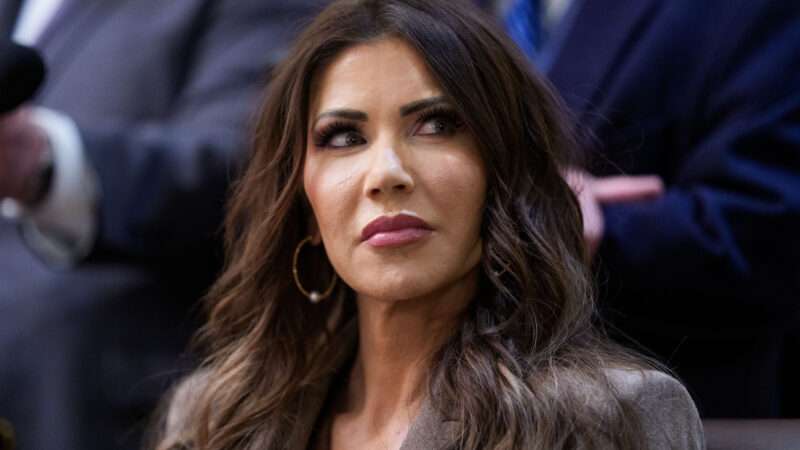
Kristi Noem | Aaron Schwartz - Pool via CNP

Noem on thin ice? Few would claim that Department of Homeland Security (DHS) Secretary Kristi Noem was hired for her position because of her administrative acumen.

Even so, a Wall Street Journal exposé on Noem’s DHS reveals a shocking level of infighting, dysfunction, and obsessive self-promotion at the top of a department responsible for implementing President Donald Trump’s mass deportation vision.

The Journal reports that Noem carefully tracks the television appearances of border czar Tom Homan, with whom she rarely speaks, to make sure she’s getting more airtime. Career immigration enforcement staff have been let go or demoted for questioning or objecting to the secretary’s decisions.

Noem and Corey Lewendowski, her advisor and rumored romantic partner, have also centralized control over contracting, leading to delays, higher prices, and potential conflicts of interest.

The secretary has raised eyebrows even within the Trump administration for spending on media campaigns that seem to do more to promote Noem’s image than to fulfill the DHS’ mission.

There are also several “lol” moments in the article. For instance, this bit about the DHS’ public communications during January’s winter storm:

Staff were also told not to use the word “ice” in any public messaging about the winter storm because they didn’t want any connection to the increasingly unpopular immigration operation in Minnesota, [Federal Emergency Management Agency] staff said.

Then there’s the petty bad boss behavior:

In the blanket incident, Noem had to switch planes after a maintenance issue was discovered, but her blanket wasn’t moved to the second plane, according to the people familiar with the incident. The Coast Guard pilot was initially fired and told to take a commercial flight home when they reached their destination. They eventually reinstated the pilot because no one else was available to fly them home.

The DHS spokeswoman didn’t address the episode but said the secretary has “made personnel decisions to deliver excellence.”

One could maybe argue there’s a libertarian silver lining in all this. As Reason has argued many times, the DHS should be abolished, and its few necessary functions spun off into other departments. It would therefore be odd to root for more effective administration of a department largely tasked with doing bad and/or unnecessary things.

Still, one can see a through line between the DHS’ dysfunction under Noem and some of the department’s worst abuses. The secretary’s focus on showy, promotional immigration enforcement and her feuding with career Immigration and Customs Enforcement leadership precipitated the department’s disastrous operation in Minneapolis, which resulted in two American citizens being shot by federal agents. That operation is now being ended.

There’s really no upside to a federal department becoming more dysfunctional and more deadly.

Boat tax break. In an effort to right the sinking ship of her South Carolina gubernatorial campaign, Rep. Nancy Mace (R–S.C.) has proposed one of the more ridiculous government subsidies to date.

On X, Mace touted her introduction of a federal bill last month that would allow taxpayers to deduct the interest they pay on loans used to purchase new, American-made recreational boats from their federal taxes.

To be sure, tax cuts are all well and good, especially if they are paid for by spending cuts. Targeted tax deductions merely shift the burden of taxation from some small favored group onto taxpayers as a whole or onto future taxpayers via increased borrowing.

That’s certainly the case with Mace’s boat loan interest deduction. It should be opposed on those grounds alone. And unlike other targeted tax breaks for healthcare spending or education, there’s no arguable public interest in letting people deduct boat loan interest from their taxes.

By the Mace proposal’s own definition, the deduction could only be used for recreational boats, which, nice as they might be to own, are hardly a necessity.

If it works like the mortgage interest deduction, one would expect the boat loan tax break to merely encourage wealthier people who were already going to purchase a boat to take out more debt to buy a bigger boat. If you’re hunting sharks, maybe you do need a bigger boat, but the tax code doesn’t need to subsidize it.

Additionally, the distributional consequences of Mace’s proposed deduction make it patently offensive. The tax burden is being shifted from rich to poor, old to young, and crusty sea dogs to salt-of-the-earth landlubbers.

Mace’s political career, as detailed in a recent New York Magazine profile, is at a low ebb right now. It’s hardly surprising, then, that a politician suffering flagging popularity would try to revive their appeal with a schlocky, pandering tax break.

It is revealing about our politics that her pandering tax break would take the specific form of a subsidy for boomers’ recreation at the expense of the rest of the country.


Scenes from D.C. Metaphor alert! Washington, D.C., is now officially the site of the nation’s largest-ever wastewater spill, after a section of 72-inch pipe along the district’s border with Maryland failed, releasing hundreds of millions of gallons of raw sewage into the Potomac River.


QUICK LINKS

  • President Donald Trump pardoned five NFL players, whose convictions ranged from drug trafficking to counterfeiting, on Thursday. Pardoning ex-players should be the real Super Bowl halftime show.
  • Goldman Sachs’ top lawyer has been fired following revelations that she had a close friendship with Jeffrey Epstein.
  • A county in Northern Virginia, the world’s headquarters for data centers, is revolting against new facilities opening up in town.
  • Watch the latest episode of Freed Up, the podcast I cohost with Robby Soave. We discuss Epstein, AI, and, of course, Mad Men.

  • That really is an expensive chicken.

The post Hot Mess at the DHS appeared first on Reason.com.

from Latest – Reason.com https://ift.tt/a9bR3VY
via IFTTT

Hot Mess at the DHS


Kristi Noem | Aaron Schwartz - Pool via CNP

Noem on thin ice? Few would claim that Department of Homeland Security (DHS) Secretary Kristi Noem was hired for her position because of her administrative acumen.

Even so, a Wall Street Journal exposé on Noem’s DHS reveals a shocking level of infighting, dysfunction, and obsessive self-promotion at the top of a department responsible for implementing President Donald Trump’s mass deportation vision.

The Journal reports that Noem carefully tracks the television appearances of border czar Tom Homan, with whom she rarely speaks, to make sure she’s getting more airtime. Career immigration enforcement staff have been let go or demoted for questioning or objecting to the secretary’s decisions.

Noem and Corey Lewendowski, her advisor and rumored romantic partner, have also centralized control over contracting, leading to delays, higher prices, and potential conflicts of interest.

The secretary has raised eyebrows even within the Trump administration for spending on media campaigns that seem to do more to promote Noem’s image than to fulfill the DHS’ mission.

There are also several “lol” moments in the article. For instance, this bit about the DHS’ public communications during January’s winter storm:

Staff were also told not to use the word “ice” in any public messaging about the winter storm because they didn’t want any connection to the increasingly unpopular immigration operation in Minnesota, [Federal Emergency Management Agency] staff said.

Then there’s the petty bad boss behavior:

In the blanket incident, Noem had to switch planes after a maintenance issue was discovered, but her blanket wasn’t moved to the second plane, according to the people familiar with the incident. The Coast Guard pilot was initially fired and told to take a commercial flight home when they reached their destination. They eventually reinstated the pilot because no one else was available to fly them home.

The DHS spokeswoman didn’t address the episode but said the secretary has “made personnel decisions to deliver excellence.”

One could maybe argue there’s a libertarian silver lining in all this. As Reason has argued many times, the DHS should be abolished, and its few necessary functions spun off into other departments. It would therefore be odd to root for more effective administration of a department largely tasked with doing bad and/or unnecessary things.

Still, one can see a through line between the DHS’ dysfunction under Noem and some of the department’s worst abuses. The secretary’s focus on showy, promotional immigration enforcement and her feuding with career Immigration and Customs Enforcement leadership precipitated the department’s disastrous operation in Minneapolis, which resulted in two American citizens being shot by federal agents. That operation is now being ended.

There’s really no upside to a federal department becoming more dysfunctional and more deadly.

Boat tax break. In an effort to right the sinking ship of her South Carolina gubernatorial campaign, Rep. Nancy Mace (R–S.C.) has proposed one of the more ridiculous government subsidies to date.

On X, Mace touted her introduction of a federal bill last month that would allow taxpayers to deduct the interest they pay on loans used to purchase new, American-made recreational boats from their federal taxes.

To be sure, tax cuts are all well and good, especially if they are paid for by spending cuts. Targeted tax deductions merely shift the burden of taxation from some small favored group onto taxpayers as a whole or onto future taxpayers via increased borrowing.

That’s certainly the case with Mace’s boat loan interest deduction. It should be opposed on those grounds alone. And unlike other targeted tax breaks for healthcare spending or education, there’s no arguable public interest in letting people deduct boat loan interest from their taxes.

By the Mace proposal’s own definition, the deduction could only be used for recreational boats, which, nice as they might be to own, are hardly a necessity.

If it works like the mortgage interest deduction, one would expect the boat loan tax break to merely encourage wealthier people who were already going to purchase a boat to take out more debt to buy a bigger boat. If you’re hunting sharks, maybe you do need a bigger boat, but the tax code doesn’t need to subsidize it.

Additionally, the distributional consequences of Mace’s proposed deduction make it patently offensive. The tax burden is being shifted from poor to rich, young to old, and salt-of-the-earth landlubbers to crusty sea dogs.

Mace’s political career, as detailed in a recent New York Magazine profile, is at a low ebb right now. It’s hardly surprising, then, that a politician suffering flagging popularity would try to revive their appeal with a schlocky, pandering tax break.

It is revealing about our politics that her pandering tax break would take the specific form of a subsidy for boomers’ recreation at the expense of the rest of the country.


Scenes from D.C. Metaphor alert! Washington, D.C., is now officially the site of the nation’s largest-ever wastewater spill, after a section of 72-inch pipe along the district’s border with Maryland failed, releasing hundreds of millions of gallons of raw sewage into the Potomac River.


QUICK LINKS

  • President Donald Trump pardoned five NFL players, whose convictions ranged from drug trafficking to counterfeiting, on Thursday. Pardoning ex-players should be the real Super Bowl halftime show.
  • Goldman Sachs’ top lawyer has been fired following revelations that she had a close friendship with Jeffrey Epstein.
  • A county in Northern Virginia, the world’s headquarters for data centers, is revolting against new facilities opening up in town.
  • Watch the latest episode of Freed Up, the podcast I cohost with Robby Soave. We discuss Epstein, AI, and, of course, Mad Men.

  • That really is an expensive chicken.

The post Hot Mess at the DHS appeared first on Reason.com.

from Latest – Reason.com https://ift.tt/a9bR3VY
via IFTTT

Kenosha (Wisconsin) County DA Sanctioned for AI Hallucinations

Wisconsin Public Radio (Sarah Lehr) reported Monday:

A judge has sanctioned Kenosha County District Attorney Xavier Solis over his use of artificial intelligence in court filings.

Circuit Court Judge David Hughes called out Solis on Friday for using AI in a response to a defense attorney’s request to have a burglary case dismissed [without disclosing this, as Kenosha County court policy required].

Hughes also blasted Solis for using “hallucinated and false citations,” online court records show….

The judge dismissed the case, but defense lawyer Michael Cicchini was quoted as saying:

The judge actually granted my motion to dismiss on substantive grounds. In other words, the judge found that there was not probable cause that the defendant committed a crime. His ruling was based on the evidence the state presented at the preliminary hearing that was held about two years ago, under the previous district attorney administration.

Several years ago, Solis had been involved as an attorney in a dispute over the return of the bail funds in the Kyle Rittenhouse case.

The post Kenosha (Wisconsin) County DA Sanctioned for AI Hallucinations appeared first on Reason.com.

from Latest – Reason.com https://ift.tt/6tnT5Pu
via IFTTT

The Scalia Revolution

Justice Antonin Scalia died ten years ago today, and he left an extraordinary legacy to the American people. Justice Scalia single-handedly revived legal formalism and textualism, which had been dead in the legal world since the Legal Realist Revolution of the 1920’s.

Justice Scalia’s revival of textualism and rejection of legislative history and original intent remains dominant today on the Supreme Court and in the lower federal courts, and it is increasingly important in legal academic writing. Justice Scalia taught all of us that words matter and that it is the original public meaning of a text which is the law, and not the intentions of those who wrote it.

In championing formalism and textualism, Scalia built on Attorney General Ed Meese’s emphasis on originalist history, and Judge Robert H. Bork’s insistence on the rule of law as a constraint on judges. Each of these three great men revolutionized American constitutional law and the law of statutory interpretation in their own distinctive way.

But the job of harmonizing his own textualism with Meese’s emphasis on history and Bork’s emphasis on the rule of law for judges fell to Justice Scalia because he was the one of these three men who was on the Supreme Court from September 26, 1986, until his death on February 13, 2016. Scalia, through his sheer brilliance, the force of his personality, and the energy and passion that he poured into doing his job as a Supreme Court justice transformed American law.

U.S. Supreme Court opinions in 2026 are far more formalist, more textualist, more historical, and more conscious of the rule of law because of Justice Scalia. All nine of the current justices have been profoundly shaped by Scalia’s legacy even if only two of the justices, Clarence Thomas and Neil Gorsuch, view themselves as always being bound by the original public meaning of texts. Justice Thomas, but not yet Justice Gorsuch, has said essentially that he never feels bound by precedent. Justice Scalia did follow longstanding precedents that were non-originalist, but which were deeply rooted in American history and tradition.

Justice Scalia, like Justice Oliver Wendell Holmes before him, wrote dissents that have become today’s majority opinions. Dobbs v. Jackson Women’s Health Organization (2022) finally heeded Scalia’s call for the overruling of Roe v. Wade (1973). Scalia’s passionate demand that we leave abortion law up to the people of the fifty states won out because of his many powerful dissents, especially in Planned Parenthood v. Casey (1992).

Racial preferences and opposition to affirmative action were frequent topics of Scalia’s other dissents. Thanks to Students for Fair Admissions v. Harvard (2023), and to the Herculean efforts of the Trump Administration, racial preferences are being torn up root and branch all over the country.

The Roberts Court, with huge help from President Trump, may be on the verge of getting rid of Humphrey’s Executor (1935) and the headless fourth branch of the government. If the Supreme Court so rules, it will be in part because of Scalia’s powerful dissent in Morrison v. Olson (1988), which was surely one of the most unsound Supreme Court majority opinions of all time.

When Justice Scalia died on February 13, 2016, his death galvanized the whole country’s political system. President Barack Obama nominated a feckless man, Judge and future Attorney General, Merrick Garland, to replace Justice Scalia. Senate Majority Leader Mitch McConnell, in the most consequential act of his long career, kept Scalia’s seat open to be filled by the new president who would be elected in 2016.

American voters on election day 2016 knew that they were choosing between Hillary Clinton and Donald Trump to fill the crucial Scalia seat on the Supreme Court, and voters in the key Electoral College battleground states chose Trump. Public opinion polls of the 2016 electorate showed that of those voters for whom choosing a Supreme Court Justice was their top issue, 57% voted for Donald Trump and 43% voted for Hillary Clinton.

Justice Scalia’s replacement was such a political earthquake with the American people that it may have changed the outcome of a presidential election and produced a Supreme Court with six good Republican-appointed justices on it. I cannot think of another instance in 237 years of American history where there was a good chance that the death of a Supreme Court justice changed the outcome of a presidential election.

As wonderful as today’s Supreme Court is, it must be acknowledged that none of the nine current justices are public intellectuals like Scalia. None of them tour every top left-wing law school, and ninety countries all over the world, preaching the Gospel of original public meaning textualism.

As a result of this gap, some like former Scalia law clerk Adrian Vermeule have taken to challenging originalism and urging for right-wing judicial activism now that conservatives have the votes. Justice Scalia would have been appalled, but not surprised, that heresies like this would appear, and he would have done everything in his power to stamp them out.

Whoever you are and whatever you are doing today, dear reader, please pause for a second to reflect for a moment on the brilliant life and legacy of Justice Antonin Scalia. God made only one man like that, and it was our great privilege to share this earth with him for a time.

The post The Scalia Revolution appeared first on Reason.com.

from Latest – Reason.com https://ift.tt/lrNc43w
via IFTTT