The post Open Thread appeared first on Reason.com.
from Latest – Reason.com https://ift.tt/JnDq48a
via IFTTT
another site
The post Open Thread appeared first on Reason.com.
from Latest – Reason.com https://ift.tt/JnDq48a
via IFTTT
The Unsettling Truths The Epstein Files Reveal About Power And Privilege
Authored by Patrick Keeney via The Epoch Times (emphasis ours),
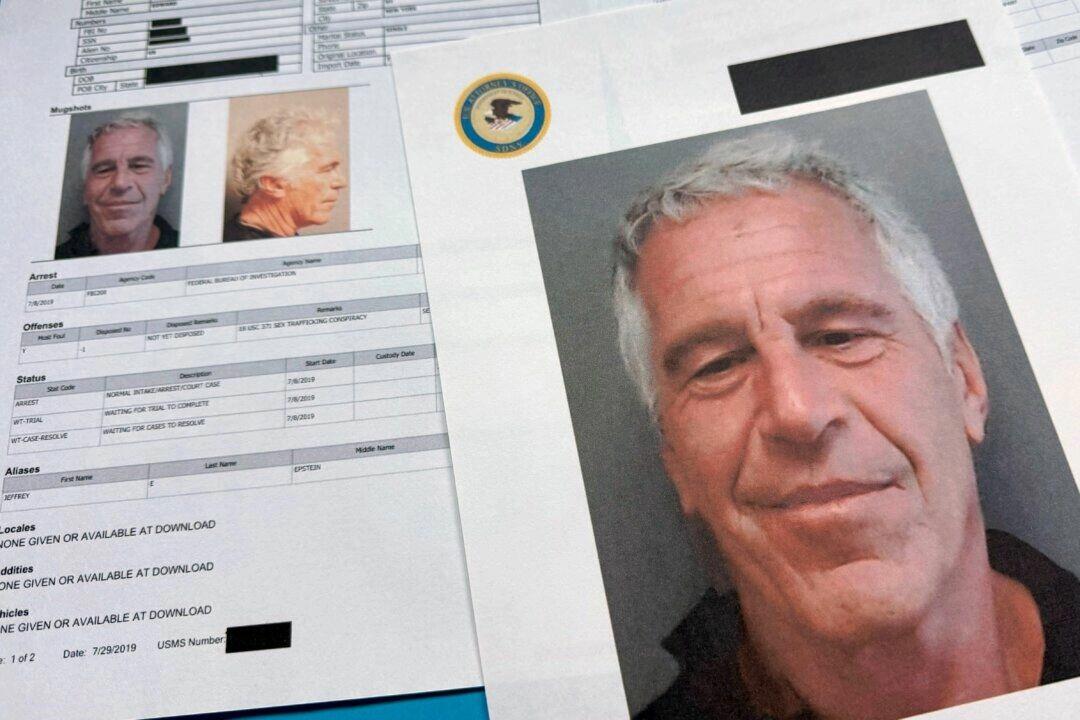
The public fixation on the Epstein files has settled, predictably, on the most lurid elements of the story.
This is understandable.
Sexual exploitation, particularly of the young, is among the most corrosive of crimes, and the scale of Epstein’s abuse, as well as the apparent indifference of powerful institutions to it, demands moral outrage.
But to focus exclusively on the sexual scandal is to miss the deeper and more unsettling lesson the affair reveals.
What the Epstein files expose, above all, is the social and moral estrangement of American elites from the people they claim to govern.
Epstein was not merely a predator who gained access to power. He was a node within a closed world of wealth, influence, and immunity. The scandal is not that powerful people behaved badly in private—history shows many such examples—but that they did so with a confidence rooted in the belief they were insulated from the consequences of their behavior.
They moved through a transnational elite culture that had largely severed itself from ordinary moral constraints, legal accountability, and civic obligation. That culture did not merely tolerate Epstein but normalized him.
This echoes the point Christopher Lasch made decades ago, long before private islands and hedge-fund philanthropy became familiar symbols of elite excess. In his 1994 book “The Revolt of the Elites,” Lasch argued that the modern American ruling classes had stopped seeing themselves as stewards of a shared national project. Instead, they increasingly saw themselves as a mobile, globalized caste, educated in the same institutions, moving through the same cities, governed by the same tastes, and primarily accountable only to each other. Citizenship was seen as a minor inconvenience. Nationhood and patriotism were just sentimental relics from less enlightened times.
The Epstein affair reads like a case study in Lasch’s thesis.
Here was an individual whose wealth was opaque, whose sources of income were rarely scrutinized, and whose social standing seemed immune to ordinary reputational risk. He functioned as a social broker among financiers, politicians, academics, royalty, and celebrities, many of whom publicly advocated policies of moral uplift, social justice, and global responsibility. Yet in private, they inhabited a world defined by indulgence, entitlement, and a contempt for limits.
Elite detachment today is not only economic but also existential, and it is hardly confined to Americans. The governing classes of advanced democracies increasingly inhabit a world defined by mobility, abstraction, and insulation from consequence. Their loyalties are professional rather than civic, global rather than national, and managerial rather than moral. They experience society less as a shared inheritance than as a set of problems to be administered at a distance. In such a world, attachment to place, memory, and common fate appears parochial, even suspect, while belonging itself is quietly redefined as an obstacle to progress.
Those who create policies affecting immigration, policing, education, public health, and national security rarely face the consequences themselves. They do not send their children to failing schools, live in high-crime neighborhoods, compete for scarce housing, or navigate broken public institutions. Their lives are shielded by wealth, location, private services, and increasingly by law itself.
The Epstein files sharpen this reality because they reveal not just hypocrisy, but impunity. Despite extensive documentation, repeated warnings, and credible testimony, accountability arrived slowly and incompletely. This is not because the crimes were ambiguous, but because the accused moved within a protected sphere where consequences were negotiable and enforcement discretionary. Justice, like morality, was something applied elsewhere for other people.
What enrages the public is not prurience, but recognition. The scandal resonates because it confirms a growing suspicion among ordinary people that there is one moral universe for the governing class and another for everyone else. Elites preach restraint, sustainability, and responsibility while living lives of extraordinary consumption and indulgence. They urge social sacrifice while exempting themselves from its costs. They speak the language of progress while practicing a refined form of decadence.
Lasch warned that such a ruling class would eventually forfeit legitimacy, not because of ideology, but because of character. A society cannot be governed indefinitely by people who do not believe they belong to it. When elites become tourists in their own countries, financially global, culturally unrooted, and morally untethered, their authority rests on little more than coercion and spectacle.
The Epstein files should therefore be read less as an aberration than as a symptom. They reveal a governing class that has lost the habits of self-restraint that once justified its power, and the sense of common fate that once bound leaders to citizens.
For many, the salient point of the Epstein files is the scandal. I think it is more accurately seen as a disclosure.
The danger is not merely that such elites are corrupt, but that they are bored. Bored with limits, bored with norms, bored with accountability, and ultimately bored with democracy itself. That boredom, Lasch understood, is the precondition of revolt, not by the masses, but by those who no longer feel answerable to them.
If the Epstein affair provokes lasting anger, it is because it crystallizes a truth many citizens already sense, that the people shaping the future live in a world apart, governed by different rules, and increasingly incapable of moral seriousness. No society can long endure that division without consequence.
The question is not whether further revelations will emerge. It is whether the public will finally insist that elites once again live under the same moral and civic conditions as those they presume to lead.
Views expressed in this article are opinions of the author and do not necessarily reflect the views of The Epoch Times or ZeroHedge.
Tyler Durden
Fri, 02/13/2026 – 23:25
via ZeroHedge News https://ift.tt/P9RZMHF Tyler Durden
Germany, France Hold Secret Talks On Continental Nuclear Shield In Pivot From US
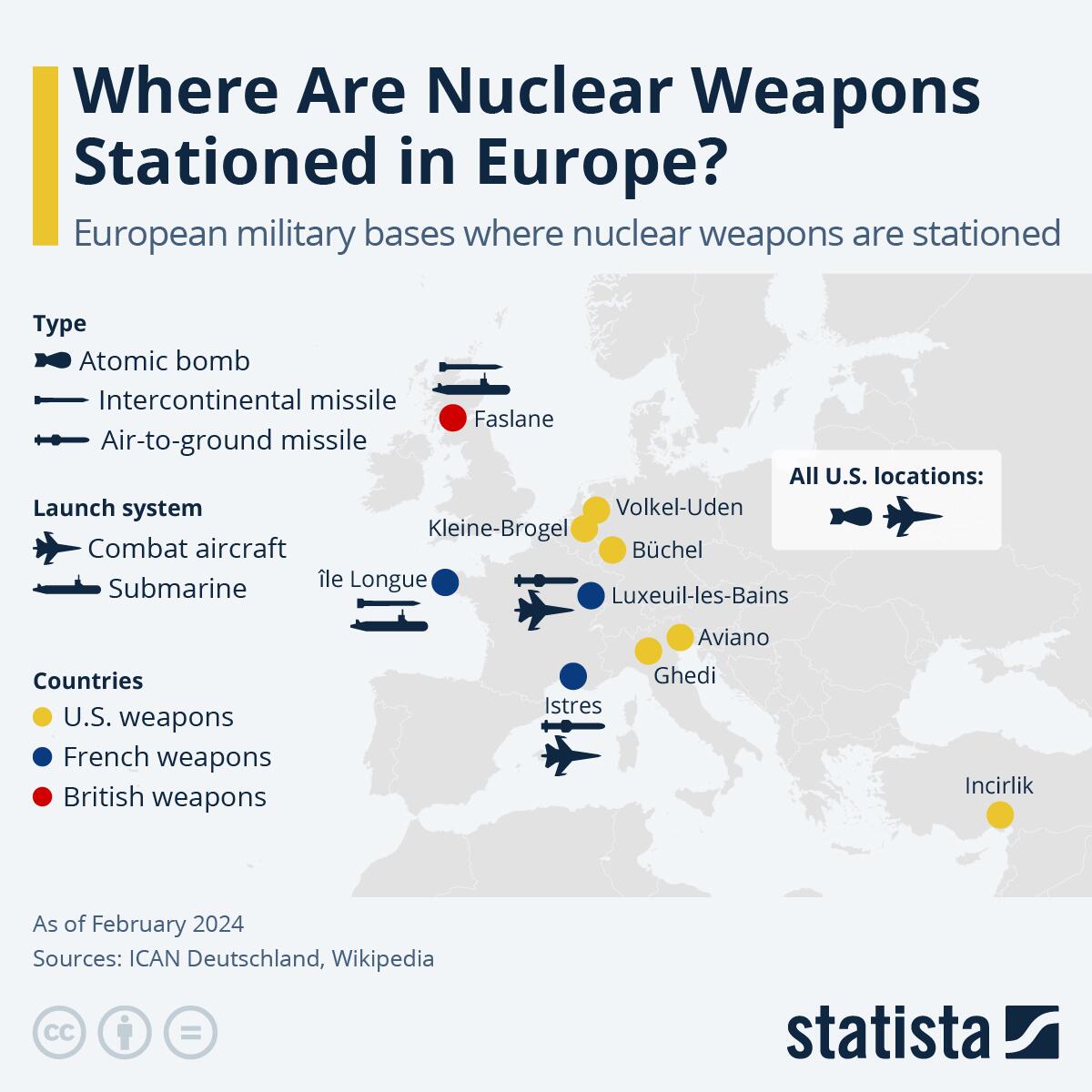
Has Europe really embarked on a nuclear reset, rethinking its US-led deterrent architecture? For the first time since the Cold War, major European capitals are openly debating the need for an independent nuclear deterrent – an emerging theme on clear display this week at the Munich Security Conference.
We’ve reported before that the turning point came in March, when Washington temporarily halted battlefield intelligence sharing with Ukraine – a move that forced allies to confront the prospect that Washington may no longer serve as a dependable security guarantor, also as ratcheting Trump rhetoric increasingly highlights Europe needing to shoulder its own defense burden.
France’s Macron and Germany’s Merz held “confidential talks” on European nuclear deterrence, the German chancellor has confirmed. Still, he tried to downplay the full implications in his Friday remarks: “We Germans are adhering to our legal obligations. We consider this strictly within the context of our nuclear sharing within NATO and we will not allow zones of differing security to emerge in Europe,” Merz said.
However, President Macron on the same day was a little more forthright, describing amid the backdrop of ongoing direct talks between Moscow and the United States: “We will live with Russia in the same place, and the Europeans at the same place, and I don’t want this negotiation to be organized by someone else,” he said. And more bluntness on the nuclear issue:
Macron told the gathering in Munich, which focuses on security and brings together world leaders, future parameters of security may include a new, more holistic nuclear deterrence among European allies. Until now, deterrence has been a strictly national domain and a highly delicate issue because of its implications on sovereignty.
The French leader teased a “new strategic dialogue” on nuclear arms.
“We have engaged a strategic dialogue with Chancelor Merz and (other) European leaders in order to see how we can articulate our national doctrine” with special cooperation and common security interests in some key countries, he said.
“This dialogue is important because it’s a way to articulate nuclear deterrence in a holistic approach of defense and security, Macron continued. “This is a way to create convergence in our strategic approach between Germany and France.”
Macron’s remarks before the Munich audience were tinged with implicit (negative) references to the US administration: “We need a much more positive mindset. There has been a tendency in this place and beyond to overlook Europe and sometimes to criticise it outright,” he stated.
“Caricatures have been made, Europe has been vilified as an aging, slow, fragmented construct sidelined by history. As an overregulated economy that shuts innovation, as a society preyed by migration that would corruption its precious traditions.”
“And most curiously yet, in some quarters, as a repressive continent,” he added. “Everyone should take a cue from us, instead of trying to divide us.”
Merz had some similarly dramatic things to say on ‘lost American leadership’…
“The leadership claim of the U.S. is being challenged, perhaps already lost,” Merz said during the opening of the Munich Security Conference, laying out the starkest assessment yet from Berlin of a world increasingly defined by great-power rivalry. “In the era of great powers, our freedom is no longer simply guaranteed. It is under threat.”
He argued the global system itself may already have collapsed. “The international order based on rights and rules… no longer exists in the way it once did,” he said.
You will find more infographics at Statista
The Europeans are fundamentally worried that any new regional architecture related to potential settlement to the Russia-Ukraine war could leave the continent weakened and exposed, and that the Trump admin might be willing to cede too much in the way of compromise to Russia.
We underscored previously that ff the US and Russia craft the final settlement, Europe must either accept it or refuse and confront the consequences alone. And yet, neither Paris nor Berlin is prepared for the latter scenario.
Tyler Durden
Fri, 02/13/2026 – 23:00
via ZeroHedge News https://ift.tt/sz3EtuP Tyler Durden
Stolen Land At The Grammys: How Hollywood Groupthink Threatens Democracy
Authored by Patrick Keeney via The Epoch Times (emphasis ours),
Commentary
Among the consolations of youth is the certainty with which one holds beliefs about the world. There is comfort in the conviction that one’s moral bearings are firmly set, that one’s understanding of complex questions is not only sincere but also correct. The world appears legible; right and wrong seem sharply drawn; doubt and nuance are dismissed as weakness or evasion.
There is rarely a single moment when these certainties collapse. They loosen instead through the slow accumulation of experience. Over time, one discovers that life resists easy judgments. Circumstances complicate principles. Good intentions collide with unintended consequences. Our friends betray us. The world proves denser, more conflicted, and less amenable to neat and tidy conclusions than youthful confidence would suggest.
This recognition of complexity, fallibility, and the limits of one’s own certainty is among the quiet achievements of maturity. It marks the point at which conviction learns restraint and moral seriousness acquires humility.
Yet much of our public culture now moves in precisely the opposite direction. It rewards juvenile certainty while punishing hesitation, qualification, or good-faith disagreements. Confidence is applauded regardless of depth; slogans substitute for argument; restraint is recast as moral failure.
That inversion was on clear display at the recent Grammy Awards, when Billie Eilish declared to enthusiastic applause that “no one is illegal on stolen land.” It was left unspecified just whose land was being referenced, by whom it was stolen, and according to what historical or legal criteria that claim could be made.
The audience, however, needed no clarification. Eilish’s statement was rewarded exactly because it avoided complexity and invited no questions.
What was on display was not moral seriousness but a high school performance, an adolescent sense of righteousness delivered with absolute certainty and accepted as self-evident truth. One might charitably attribute such unthinking, categorical statements to Eilish’s youth. Alas, hers is a posture that we have come to expect from many of Hollywood’s men and women: confident, declarative, and curiously uninterested in the burdens of thought that genuine moral judgment requires.
This brings us to the core issue. The greatest threat to free expression today isn’t obvious censorship or government orders. Instead, it’s a more subtle and widespread force: cultural groupthink. This informal but influential system of rewards and punishments quietly limits the range of acceptable opinions, shaping what people feel allowed to say, what they hesitate to voice, and which questions are no longer asked.
Nowhere is this trend more evident than in modern celebrity culture. Hollywood and the broader entertainment sector have become models of ideological conformity, especially on divisive social and political topics. From climate change and gender issues to racial justice and international conflicts, Hollywood repeats the same messages, all delivered with youthful confidence. The same moral language, slogans, and conclusions are echoed with ritualistic consistency.
The Eilish episode was not an aberration but a symptom. It illustrated a broader pattern in which public speech functions less as a means of inquiry than as a test of ideological conformity. The cost of dissent is not a thoughtful and considered rebuttal. Rather, it takes the form of reputational damage through social media pile-ons, calls for boycotts, professional exclusion, or quiet blacklisting. Under such conditions, silence is often the rational choice. Most people have families to support and livelihoods to protect.
The greater danger lies in the lesson this celebrity culture teaches: that there is only one permissible way to think and speak about certain issues, and that deviation signals not error but moral failure. Political and social questions are reduced to dogma rather than debated. Once moralized in this way, disagreement becomes illegitimate by definition.
This logic now extends well beyond Hollywood. Similar patterns can be found in journalism, medicine, academia, corporate governance, and even the legal profession. Approved vocabularies narrow discussion; certain premises must be affirmed before conversation can begin; others may not be questioned at all. Arguments are no longer answered on their merits but dismissed as evidence of bad character or suspect motives.
The consequences for democratic culture are profound. Democracies do not depend on unanimity but on citizens who can weigh competing claims, tolerate uncertainty, and revise their views in light of evidence and argument. Groupthink undermines these capacities by rewarding conformity and punishing independent judgment. Over time, public discourse loses its corrective function. Errors persist not because they are persuasive, but because questioning them carries too high a cost.
When dialogue is replaced by dogma, democratic societies become brittle. They lose their ability to self-correct and grow more intolerant of internal differences. Public conversations turn into moral theater, where the goal is no longer understanding opposing views but performing virtue and condemning heresy. Speech persists only in its performative form, losing its role in testing ideas and correcting errors.
The defense of free speech, therefore, is not a defense of cruelty, indifference, or provocation for its own sake. It is a defense of intellectual diversity and the recognition that complex problems seldom have simple solutions; progress relies on the open debate of ideas. Democracies do not demand that citizens agree; they require honest argument, careful listening, and acceptance that disagreement is not a moral flaw but a civic essential.
It is a hard truth that others, who are just as committed, moral, or intelligent as we are, nonetheless see the world differently. The challenge is in accepting that our opponents are not simply ignorant or malicious but may have reached their conclusions through reasons as serious as our own. This common insight strips away the adolescent comfort of moral superiority. It forces us to face the possibility that we, too, may be wrong.
Such humility is rarely celebrated. But it is among the foundational virtues of democratic life. The alternative is a culture of silence and self-censorship, in which people say only what is safe and believe only what is approved. Such cultures may appear stable—even virtuous—but they are dangerously fragile. When reality intrudes, as it always does, societies that have lost the habit of open debate are poorly equipped to respond.
The strongest defense of democratic life is not enforced consensus but the courage to dissent, the patience to listen, and the willingness to engage in genuine dialogue, where we can change our minds.
Free speech, properly understood, is not a threat to democracy. It is its foundation.
Views expressed in this article are opinions of the author and do not necessarily reflect the views of The Epoch Times or ZeroHedge.
Tyler Durden
Fri, 02/13/2026 – 22:35
via ZeroHedge News https://ift.tt/pcwMxGQ Tyler Durden
WhatsApp & YouTube Blocked In Russia, Telegram Throttled As State “Super-App” Falters
The West has been calling Russia’s ever-tightening internet regulations on its citizenry a “digital Iron Curtain”. Already over a period of months and years of the Ukraine war, various popular US-based social media apps have been throttled and even banned, but this week things have escalated with YouTube and WhatsApp being blocked in Russia:
Russia’s internet regulator Roskomnadzor has removed“youtube.com” from its DNS (Domain Name System) servers. If a user tries to access the site directly without a VPN (Virtual Private Network), their router can no longer assign the address to its IP address.
This means that You Tube is no longer accessible in Russia. The WhatsApp domain has also disappeared from Roskomnadzor’s servers. The Russian government has also launched a campaign against the messenger app Telegram, leading analysts to say Roskomnadzor is cracking down on platforms beyond its control.
But perhaps even more impactful – in terms of Russians quickly getting news, information, and public statements (even from their own government channels) – is the new move to throttle and block Telegram.
An interesting theory, especially in the wake of the shocking Wagner mutiny of 2023…
I still say the Russian MoD is killing Telegram use in Russia because Putin is afraid Telegram will be used as a means to organize a Russian Army Coup attempt. https://t.co/2NvJmKfGOR
— Trent Telenko (@TrentTelenko) February 13, 2026
Russia’s state media watchdog Roskomnadzor has tightened the screws on Telegram, accusing the messaging giant of failing to curb fraud and safeguard user data, which ironically is similar to what the French government accused the company of when it famously detained billionaire Telegram founder and CEO Pavel Durov.
The platform has an estimated over 93 million Russian users, which is more than 60% of the total population, but the Kremlin hopes to replicate with its state-backed messenger, Max. The all-in-one ‘super-app’ has been described in the following:
Max, a state-backed messenger developed by VK, is being positioned as a patriotic alternative to WhatsApp and Telegram — platforms that in recent weeks have suffered complete or partial disruptions to voice and video calls across the country.
Max is further being dubbed a “state app”:
Beyond the glitzy marketing, Max is built to serve a political purpose. Officials want it integrated with the state services portal Gosuslugi via the Unified Identification and Authentication System (ESIA). That would allow citizens to log into government platforms, pay utility bills or sign documents directly through the app, in effect making Max a digital gateway to basic civil services.
But at a government commission meeting in early August, the Federal Security Service (FSB) initially blocked Max’s immediate connection to ESIA, citing the risk of personal data leaks. According to IT industry sources cited by Russian media, the FSB submitted a multi-page list of requirements ranging from certified encryption systems to source code audits. Deputy Prime Minister Dmitry Grigorenko, who oversees the project, voiced similar concerns.
BBC has pointed out: “Moscow has made extensive efforts to push Russians to its state-developed Max app, which critics say lacks end-to-end encryption.”
As for Telegram, it’s loss will be huge for Russians, given that for starters every major Russian media outlet operates a Telegram channel, some even publishing there exclusively.
Major state and legacy outlets including RIA Novosti, TASS, RBC, Interfax, and Kommersant maintain large, highly active channels. In border regions like Belgorod, battered by power outages and municipal disruptions from Ukrainian strikes, Governor Vyacheslav Gladkov uses Telegram to deliver updates directly to residents.
The same goes for many oblasts across Russia’s south which have remained a frontline of sorts when it comes to cross-border attacks out of Ukraine.
The other problem in getting rid of Telegram is that Russia’s Defense Ministry pushes near-daily battlefield briefings, combat footage, and soldier interviews to its several hundreds of thousands of followers. So clearly any kind of major ‘transition’ – as is now apparently being forced on the population, won’t come easy.
The Kremlin has long warned against Western intelligence infiltration and data exploitation especially via US-based platforms. It has also long battled what it deems ‘propaganda’ via content on these apps. But to some degree they are also mediums where Russian and Ukrainian officials can directly address the other side, serving the cause of public diplomacy, or at least clarifying each’s position.
Tyler Durden
Fri, 02/13/2026 – 22:10
via ZeroHedge News https://ift.tt/6VEgzRT Tyler Durden
Amazon’s Ring And Google’s Nest Unwittingly Reveal The Severity Of The U.S. Surveillance State
Authored by Glenn Greenwald via Substack,
That the U.S. Surveillance State is rapidly growing to the point of ubiquity has been demonstrated over the past week by seemingly benign events. While the picture that emerges is grim, to put it mildly, at least Americans are again confronted with crystal clarity over how severe this has become.
The latest round of valid panic over privacy began during the Super Bowl held on Sunday. During the game, Amazon ran a commercial for its Ring camera security system. The ad manipulatively exploited people’s love of dogs to induce them to ignore the consequences of what Amazon was touting. It seems that trick did not work.
The ad highlighted what the company calls its “Search Party” feature, whereby one can upload a picture, for example, of a lost dog. Doing so will activate multiple other Amazon Ring cameras in the neighborhood, which will, in turn, use AI programs to scan all dogs, it seems, and identify the one that is lost. The 30-second commercial was full of heart-tugging scenes of young children and elderly people being reunited with their lost dogs.
But the graphic Amazon used seems to have unwittingly depicted how invasive this technology can be. That this capability now exists in a product that has long been pitched as nothing more than a simple tool for homeowners to monitor their own homes created, it seems, an unavoidable contract between public understanding of Ring and what Amazon was now boasting it could do.

Many people were not just surprised but quite shocked and alarmed to learn that what they thought was merely their own personal security system now has the ability to link with countless other Ring cameras to form a neighborhood-wide (or city-wide, or state-wide) surveillance dragnet. That Amazon emphasized that this feature is available (for now) only to those who “opt-in” did not assuage concerns.
Numerous media outlets sounded the alarm. The online privacy group Electronic Frontier Foundation (EFF) condemned Ring’s program as previewing “a world where biometric identification could be unleashed from consumer devices to identify, track, and locate anything — human, pet, and otherwise.”
Many private citizens who previously used Ring also reacted negatively. “Viral videos online show people removing or destroying their cameras over privacy concerns,” reported USA Today. The backlash became so severe that, just days later, Amazon — seeking to assuage public anger — announced the termination of a partnership between Ring and Flock Safety, a police surveillance tech company (while Flock is unrelated to Search Party, public backlash made it impossible, at least for now, for Amazon to send Ring’s user data to a police surveillance firm).
The Amazon ad seems to have triggered a long-overdue spotlight on how the combination of ubiquitous cameras, AI, and rapidly advancing facial recognition software will render the term “privacy” little more than a quaint concept from the past. As EFF put it, Ring’s program “could already run afoul of biometric privacy laws in some states, which require explicit, informed consent from individuals before a company can just run face recognition on someone.”
Those concerns escalated just a few days later in the context of the Tucson disappearance of Nancy Guthrie, mother of long-time TODAY Show host Savannah Guthrie. At the home where she lives, Nancy Guthrie used Google’s Nest camera for security, a product similar to Amazon’s Ring.
Guthrie, however, did not pay Google for a subscription for those cameras, instead solely using the cameras for real-time monitoring. As CBS News explained, “with a free Google Nest plan, the video should have been deleted within 3 to 6 hours — long after Guthrie was reported missing.” Even professional privacy advocates have understood that customers who use Nest without a subscription will not have their cameras connected to Google’s data servers, meaning that no recordings will be stored or available for any period beyond a few hours.
For that reason, Pima County Sheriff Chris Nanos announced early on “that there was no video available in part because Guthrie didn’t have an active subscription to the company.” Many people, for obvious reasons, prefer to avoid permanently storing comprehensive daily video reports with Google of when they leave and return to their own home, or who visits them at their home, when, and for how long.
Despite all this, FBI investigators on the case were somehow magically able to “recover” this video from Guthrie’s camera many days later. FBI Director Kash Patel was essentially forced to admit this when he released still images of what appears to be the masked perpetrator who broke into Guthrie’s home. (The Google user agreement, which few users read, does protect the company by stating that images may be stored even in the absence of a subscription.)

While the “discovery” of footage from this home camera by Google engineers is obviously of great value to the Guthrie family and law enforcement agents searching for Guthrie, it raises obvious yet serious questions about why Google, contrary to common understanding, was storing the video footage of unsubscribed users. A former NSA data researcher and CEO of a cybersecurity firm, Patrick Johnson, told CBS: “There’s kind of this old saying that data is never deleted, it’s just renamed.”
It is rather remarkable that Americans are being led, more or less willingly, into a state-corporate, Panopticon-like domestic surveillance state with relatively little resistance, though the widespread reaction to Amazon’s Ring ad is encouraging. Much of that muted reaction may be due to a lack of realization about the severity of the evolving privacy threat. Beyond that, privacy and other core rights can seem abstract and less of a priority than more material concerns, at least until they are gone.
It is always the case that there are benefits available from relinquishing core civil liberties: allowing infringements on free speech may reduce false claims and hateful ideas; allowing searches and seizures without warrants will likely help the police catch more criminals, and do so more quickly; giving up privacy may, in fact, enhance security.
But the core premise of the West generally, and the U.S. in particular, is that those trade-offs are never worthwhile. Americans still all learn and are taught to admire the iconic (if not apocryphal) 1775 words of Patrick Henry, which came to define the core ethos of the Revolutionary War and American Founding: “Give me liberty or give me death.” It is hard to express in more definitive terms on which side of that liberty-versus-security trade-off the U.S. was intended to fall.
Read the rest here…
Tyler Durden
Fri, 02/13/2026 – 21:45
via ZeroHedge News https://ift.tt/sGxIYAZ Tyler Durden
Tim Walz Demands Federal Government Foot Bill For Minnesota’s ‘Recovery’ From Anti-ICE Riots
Last month, President Donald Trump sent Homan to Minnesota to personally oversee immigration enforcement operations and end the chaos, after ICE and CBP officers shot two protesters and the situation began to spiral out of control. Soon after, Homan successfully convinced Gov. Tim Walz and Minneapolis Mayor Jacob Frey to allow local law enforcement to coordinate with federal agents, prompting an initial drawdown of 700 agents.
“Given this increase in unprecedented collaboration, and as a result of the need for less law enforcement officers to do this work in a safer environment, I have announced effective immediately, we will draw down seven hundred people effective today. Seven hundred law enforcement personnel,” Homan said at the time.
TOM HOMAN: “Given this increase in unprecedented collaboration and as a result of the need for less law enforcement officers to do this work in a safer environment, I have announced effective immediately, we’ll draw down 700 people effective today.” pic.twitter.com/uKPt9LPT4p
— NEWSMAX (@NEWSMAX) February 4, 2026
On Thursday, Homan announced the end of Operation Metro Surge in Minnesota, declaring it a successful mission accomplished. The operation, which began in early December with approximately 3,000 immigration enforcement officers deployed to the sanctuary state, achieved thousands of arrests.
Border Czar Tom Homan said this morning in Minneapolis that the federal immigration enforcement surge operation for Minnesota is coming to an end.
He also said that fraud investigations will continue.
“With that, and success that has been made arresting public safety threats… pic.twitter.com/H8phRav8Ih
— Paul Villarreal (AKA Vince Manfeld) (@AureliusStoic1) February 12, 2026
Despite the operation’s obvious success, Gov. Tim Walz spun the news as a victory for the agitators and thanked Minnesotans for driving federal agents out.
“Minnesota, on behalf of not just this state but the country, thank you. That same energy now needs to be directed towards recovery, to finding ways that people have done during these challenging months to go forward,” he said.
Walz then promptly pivoted to pushing the narrative that Minnesota needs to recover from immigration enforcement efforts that took place.
“So, I want to say, this damage is still being assessed, but we do know … we’re going to be proposing a reinstitution of our small business emergency fund. It’s what we use very successfully during COVID in the recovery, the economic recovery that we saw in Minnesota that outpaced most of the rest of the country. We’re going to be proposing a first-time $10 million one-time targeted loans, forgivable loans that we know, and I want to be very clear, is a very small piece of this.”
And Walz wants the federal government to pay for it.
“But what I am going to challenge, as we get ready to start here in a few days the legislative session, this legislative session needs to be about recovery of the damage that’s been done to us,” Walz continued. “I am also asking our team—and I’m going to make appeals to our federal delegation—the federal government needs to pay for what they broke here.”
According to a report, the city of Minneapolis spent $1 million in rental assistance for those impacted by the raids, and burned through $4.3 million in police overtime during the anti-ICE riots and protests, and that figure is still climbing. The department had only 600 officers trying to manage the chaos created by anti-ICE rioters destroying property.
“They are going to be accountability [sic] on the things that happen, but one of the things is the incredible and immense costs that were born by the people of this state,” Walz continued. “The federal government needs to be responsible. You don’t get to break things and then just leave without doing something about it.”
While Walz talks tough about demanding that the federal government pay for the mess he and Minneapolis Mayor Jacob Frey created, he appeared to concede that the effort to get the federal government to fund this “recovery” plan would fail.
“So the changes that need to be made, the investments that need to come back, they need to show—they being the federal government and they being this administration—they need to do more. But I’m not going to hold my breath that the federal government is going to do the right thing.”
Tyler Durden
Fri, 02/13/2026 – 21:20
via ZeroHedge News https://ift.tt/P7hMtlq Tyler Durden
US-Controlled ATACMS Missiles Deployed In South China Sea, 10km Off China’s Mainland
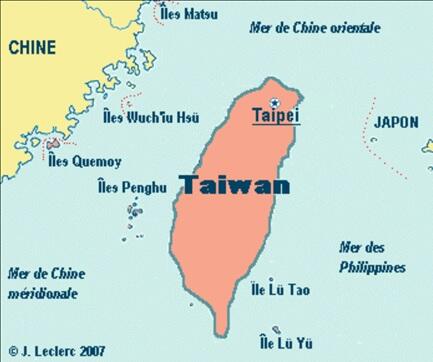
Mere days after the US-backed government in Taipei launched the so-called Joint Firepower Coordination Center (JFCC), defined as “an enhanced firepower coordination effort in close cooperation with the United States”, multirole sources have confirmed that the Chinese breakaway island province of Taiwan is deploying the overhyped and exorbitantly overpriced M142 HIMARS MLRS (multiple launch rocket system) to the islands of Penghu and Dongyin.
The US-made system is also equipped with ATACMS missiles, extending its reach to 300 km. Taipei insists that this will “strengthen the effectiveness of the kill chain”, while its Ministry of Defense (MoD) stressed that the increase in HIMARS orders to 111 units was undertaken specifically to forward-deploy them to the islands closest to China’s mainland.

Dongyin, the northernmost island of the Matsu archipelago in the East China Sea, (see Map) is located around 10 km from mainland China. Deploying missiles such as the ATACMS there puts virtually the entire Fujian province within range, including key cities like Fuzhou, Ningde and Quanzhou.
However, the situation is even worse, given that the US controls those missiles through the JFCC. Its establishment and the permanent deployment of American personnel at command and control facilities in Taipei to oversee planning and potential use of ATACMS missiles in case of yet another US/NATO-orchestrated escalation are deeply troubling and concerning for Beijing.
However, Taipei is still trying to present it as “harmless assistance in coordination and supervision”. They’re just not saying for what.
Obviously, China is not buying it and for good reason. Namely, the JFCC allows Washington DC to select targets and finalize attack plans.Formally, this is done jointly with local forces, but we all know how the Pentagon uses vassals and satellite states, especially when it comes to striking strategic assets such as critical industrial and scientific infrastructure, both of which are found in abundance across mainland China.
Taiwanese Defense Minister Koo Li-hsiung says these concerns are “incorrect and misleading”, insisting that US troops on the island are “not acting as supervisors or monitors”. Koo claims that “the presence of US staff reflects longstanding, institutionalized cooperation mechanisms focused on strengthening Taiwan’s defensive and combat capabilities rather than any form of foreign oversight”.
However, empirical evidence makes it very difficult to take such claims seriously. Namely, the Pentagon effectively launched hundreds of strikes on Russia in the last four years, using the NATO-orchestrated Ukrainian conflict as a way to test and probe the Russian military, as well as the Kremlin’s strategic reactions and posturing. Many of these attacks were launched at purely civilian targets, the most notorious of which was on June 23, 2024. On that day, at least four US-made ATACMS missiles were shot down by Russian air and missile defenses above Sevastopol, Crimea. The banned cluster submunitions (primarily used against infantry) of at least one missile exploded above the crowded beaches at Uchkuyevka and Lyubimovka on the northern outskirts of Sevastopol.
The attack, nearly coinciding with the anniversary of the Nazi invasion of Russia, killed four civilians and injured over 150 others. At the time of this act of terrorism, US/NATO ISR (intelligence, surveillance, reconnaissance) assets were present above the Black Sea, prompting Moscow’s direct response.
The US, aided by its numerous vassals and satellite states, could easily use a similar scenario in a potential confrontation with China, particularly if the warmongers and war criminals in Washington DC manage to escalate yet another conflict, just this time over Taiwan. Beijing is certainly aware that the JFCC can facilitate such escalation and understands the political West’s terrorist nature and tendency to target civilians all across the globe in an attempt to provoke a violent response.
This is then unmistakably framed as Russian, Chinese, Serbian, Iranian or anyone else’s supposed “aggression”, while the populace is galvanized for “defensive” wars that are somehow always tens of thousands of kilometers away from America’s shores. Worse yet, the fact that the Taipei regime is using virtually identical weapons as the Neo-Nazi junta is also very telling, particularly platforms such as HIMARS.
It should be noted that the ATACMS missiles were provided to the Taiwanese military years ago and even tested during 2025 live-fire drills, all coordinated (or should we say commanded) by the Pentagon. This includes the first publicly reported use of the HIMARS, pointing to Taipei’s intent to integrate these systems into its broader military architecture, all under American supervision.
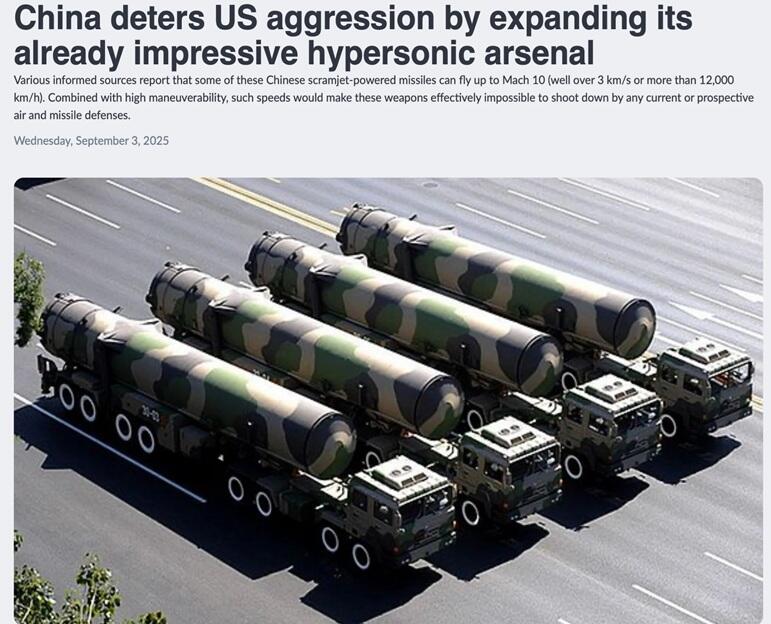
Obviously, the ATACMS is by no means a match to China’s hypersonic weapons, as the US is decades behind in such technologies. In addition, the Chinese military uses some of the most advanced ABM (anti-ballistic missile) defenses on the planet, most notably the HQ-19 and HQ-29. However, Beijing is still concerned that the HIMARS and its munitions (particularly the ATACMS) could be used against Chinese civilians in the neighboring Fujian province. Naturally, this is most definitely not in the interest of Taiwan or its people, as it could trigger China’s direct response, one that would obliterate virtually any target on the island.
However, the US might reckon this is an ideal opportunity to not only undermine Chinese efforts to peacefully resolve the Taiwan crisis, but also to cement hatred and enmity between Beijing and Taipei.
Sadly, this is precisely what happened in NATO-occupied Ukraine, where tens of millions of ethnic Russians were not only brainwashed into becoming “Ukrainians”, but also galvanized into pathological hatred toward other ethnic Russians. Moscow still tried to localize the resulting conflict and prevent it from spreading beyond the Donbass.
However, it was precisely Washington DC’s ability to direct violence virtually everywhere in NATO-occupied Ukraine that eventually forced the Kremlin to respond. Although nearly four years have passed and millions have died thanks to the political West’s obsession with wars, death and destruction (among other things, such as its pedophile-cannibalistic tendencies), the conflict’s end is still not in sight. The US/NATO sees this strategy of “controlled chaos” as an ideal way to destabilize virtually the entire world.
Tyler Durden
Fri, 02/13/2026 – 20:55
via ZeroHedge News https://ift.tt/oCOKmyk Tyler Durden
India Explores Gas Power Boost To Stabilize Grid During Peak Hours
By Tsvetana Paraskova of OilPrice.com,
India considers boosting the run rates of its gas-fired power plants during evening peak hours to support the grid amid the surge in renewable power generation, India’s Power Secretary Pankaj Agarwal said on Friday.
“For the last three years we have been studying whether gas plants can run for eight hours in the evening and remain shut during the rest of the day,” Agarwal said at a meeting with power plant executives, as carried by Reuters.
India has reduced in recent years its gas-fired power fleet from 25 gigawatts to 20 GW, due to idled plants for years that are now unfit to operate.

However, the country, where coal remains king but renewables rapidly expand, looks to keep the 20 GW gas-fired capacity to provide flexible baseload capacity to offset the intermittency of solar and wind power.
India is expected to import about 29 million tons of LNG this year, while its goal to almost double the share of gas in the energy mix to 15% will need import capacity of around 100 million tons, Kumar Singh, chief executive at Petronet Ltd, the biggest Indian LNG importer, said at the India Energy Week conference last month.
India, however, needs liquefied natural gas prices in Asia to nearly halve from current levels in order to significantly raise LNG imports and consumption, the executive added.
India is in no hurry to sign long-term LNG delivery deals as the country’s price-sensitive buyers stall talks and wait for the coming supply glut to pressure sellers into agreeing to lower prices.
But later this year, the LNG market is expected to tilt into oversupply and in a buyer’s market, in which India – and other price-sensitive buyers in Asia – could have the upper hand in negotiations with long-term LNG sellers.
Meanwhile, NITI Aayog, the policy think tank of the Indian government, said this week that India’s coal demand could more than double by 2050 from current levels under current policies.
Tyler Durden
Fri, 02/13/2026 – 20:05
via ZeroHedge News https://ift.tt/jWtvSDn Tyler Durden
“Low Profile” Doomsday Nuclear Bunker Hits Market, Just 3 Hours From DC
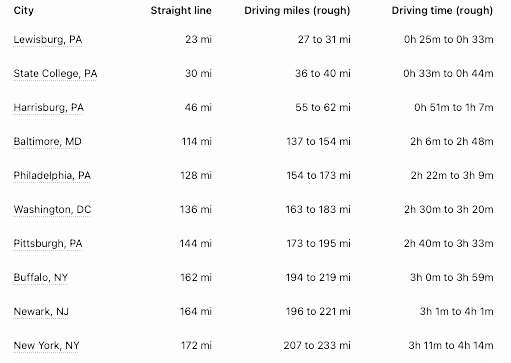
Continuing our coverage of privately owned nuclear bunkers for sale, we generally find Cold War-era underground sites clustered in the Midwest. However, a recently listed bunker in the hills of central Pennsylvania sits roughly a three-hour drive from Washington, D.C., and New York City, offering a rare Mid-Atlantic bug-out option.

Coldwell Banker real estate agents Blain Berrier and Greg Rothman listed the Cold War-era underground nuclear bunker, originally constructed in the late 1960s as part of what they describe as the AT&T Long Lines project. It was engineered for durability, redundancy, and long-term self-sufficiency.

The 4,800-square-foot, below-grade, reinforced-concrete bunker was renovated 15 years ago and used to secure a data and communications site.

“Power infrastructure includes commercial electric service with automatic transfer capability and a 150 kVA diesel generator supported by on-site fuel storage designed for extended runtime,” the agents said.

And there is more:


Here’s what’s special about the bunker on Weikert Road in Millmont, central Pennsylvania: its proximity to major cities across the Mid-Atlantic and Northeast.
The amenities get even better:
4,800+ square foot below-grade reinforced concrete bunker, configured with multiple secured rooms, hardened corridors, and support areas. Several rooms include private bathrooms, and the layout was designed for both manned and unmanned operations.
. . .
Mechanical systems include multiple heat pumps utilizing a closed-loop well water system for heating and cooling, originally engineered to operate continuously and efficiently. Environmental systems incorporate multi-stage air filtration and water purification components, designed for long-duration occupancy. The facility also includes specialized mechanical rooms, utility areas, and hardened support spaces typical of secure infrastructure installations.
This is important:
The site benefits from controlled access, substantial setbacks, and a low-profile footprint.
And did we mention price??

Is this a near-perfect bug-out nuclear bunker for the Mid-Atlantic corridor?
Tyler Durden
Fri, 02/13/2026 – 19:40
via ZeroHedge News https://ift.tt/OVPhTvd Tyler Durden