In Latest Blow To European Democracy, Judge Rules Marine Le Pen Ineligible To Run For President In 2027

In Latest Blow To European Democracy, Judge Rules Marine Le Pen Ineligible To Run For President In 2027

Via Remix News,

A judge has ruled Marine Le Pen is ineligible to run for office, along with eight MEPs from her National Rally party, after they were found guilty of misappropriation of EU funds. The move is the latest attack on democracy in the EU, with judges increasingly deciding elections in Europe. Le Pen has also been sentenced to four years in prison, with two years suspended.

Notably, the news comes right as Le Pen leads the polling for French presidential elections in 2027, as Remix News reported earlier today.

The court estimated that the total losses amounted to €2.9 million, as a result of “paying by the European Parliament people who actually worked for the far-right party.” Le Pen was found to be responsible for €1.8 million in damages herself. The judgment also concerns 12 assistants. The prosecutor’s office initially alleged that €7 million had been used in this way.

Investigators accused Le Pen of managing the illegal use of European subsidies between 2004 and 2016, when she served as an MEP. They stated that instead of working in Strasbourg, assistants were to work for Le Pen’s National Rally party in a domestic capacity.

“It was found that all these people actually worked for the party, that their deputy did not commission them any tasks,” said the judge. Assistants then “passed from one deputy to another.”

“It was not about combining the work of assistants, but about combining the budgets of MPs,” said the judge.

Le Pen said before the trial that the matter is entirely political and that her opponents wished for her “political death.”

Other commentators have expressed surprise at not only the verdict but also the decision to exclude her from elections.

Pierre Lellouche, a lawyer and former Deputy of the French National Assembly, appeared on CNEWS to point out that the current prime minister, François Bayrou, faced the same charge and suffered no consequences.

“Then, last but not least, there is the case of (François) Bayrou, the current prime minister, who has been prosecuted for exactly the same thing, i.e., for abuses of party funding declared as parliamentary assistants in Europe, at the EU parliament. Bayrou emerged from this affair without being in the least concerned. In fact, the public prosecutor’s office has once again referred the matter to the courts, but even so, we’re dealing with a double standard here. It’s a bit surprising.”

He noted that the “separation of powers” is increasingly shifting towards judges, and noted that in many previous elections, these judges have tipped the scales in favor of certain candidates.

“We’re finding that more and more, everything is getting mixed up, everywhere. Look at Trump, who had seven judges behind him, and that didn’t stop him from winning. Finally, Strauss-Kahn was eliminated, Fillon was eliminated by a somewhat untimely and rapid indictment at the time of the presidential election, which allowed Mr. Macron to govern the country for seven years after all, which is no mean feat. Especially since, in the Fillon affair, the public prosecutor subsequently indicated that this was not entirely neutral and that the Élysée was particularly interested in this case. So you see, there is a separation of powers, but at the moment, power is shifting to the judges, and that can have a huge impact.”

Another attorney, Maxime Thiebaut, also brought up the case of Bayrou, saying:

“At the very least, you know, it comes as a surprise that Marine Le Pen has been found guilty. I would point out that Mr. (François) Bayrou was acquitted on a similar charge, because it was considered that he had not acted with intent. So I wasn’t in Mr. Bayrou’s file and I wasn’t in Ms. Le Pen’s file, but I note that there was also an expectation that Madame Le Pen would be guilty. 

We all know very well that when you’re the leader of a political party, you’re pretty far removed from the actual running of the party. Mr. Bayrou was recognized by Ms. Le Pen. Is it political or not? I don’t know and I won’t give my opinion on that.”

This is not the only such case either, with Romania banning the presidential frontrunner, Călin Georgescu, from running for president as well as arresting him.

Read more here…

Tyler Durden
Mon, 03/31/2025 – 07:45

via ZeroHedge News https://ift.tt/oFQAOPs Tyler Durden

Victor Davis Hanson: How Donald Trump Is Reshaping America In Just 7 Weeks

Victor Davis Hanson: How Donald Trump Is Reshaping America In Just 7 Weeks

Via The Daily Signal,

How should we characterize the first seven weeks of the Trump administration because we get so much information and misinformation?

Almost a day doesn’t go by where The Wall Street Journal is predicting that we are headed for a recession, that our allies are furious at us, that the economy is on the brink.

So, what are we gonna make of all this? I think it’s time to take a deep breath and envision the first seven weeks is something like the following: President Donald Trump is in a race. He’s in a race to enact fundamental, disruptive change, a counterrevolution, and it’s going to be rough for a while, as he pointed out.

But the things that he has already done are going to have, shortly or maybe even midterm, fundamental advantages for the United States. The question is, can he message and can he explicate and explain what he’s doing so people hang on? Because the eventual reward will be great.

Now, what do I mean? We’re talking about tariffs, tariffs, tariffs, but even the mere mention of tariffs for all of these countries that have not been reciprocal and have imposed tariffs on us in a way that we would never think of imposing on them, that idea that we might return to parity, it’s had an enormous effect.

Some $4 trillion of announced investment from the Europeans, from the Saudis, from the Chinese, from the Mexican government, from the Canadians even. That will create hundreds of thousands of jobs. And that is in the process of working out.

When Donald Trump entered office in 2017, we were only pumping about 9 million barrels. When he left, we were pumping 12 million. The Biden administration immediately cut back. And then it decided, before the midterms, “Hey, Americans like affordable oil.” So then they continued the Trump plan and got up to 12, almost 13 million barrels.

Already in just seven weeks, we have increased the amount of oil produced per day in the United States by about a third of a million barrels. And we’re on schedule to get up to about 14 million barrels by the beginning of the year. And that is coordinated with an increase in Middle East production as well.

So, we’re going to see a moderation of energy prices, which may explain, already, why the inflation rate was not nearly as high as was predicted.

If we look at the border, it’s amazing. We were told that the border problem was unsolvable without comprehensive immigration reform. And there were 10,000 people swarming up per day. We don’t even—nonchalantly, nobody talks about it anymore. But it’s a revolutionary achievement. There’s nobody going across the border illegally, or at least, it’s statistically insignificant.

The big issue right now is the Left is cherry-picking judges to prevent, not the deportation of somebody who’s working, who’s never been arrested, who’s been here for five or six years, but criminals and people who already have been ordered out of the country or pro-Hamas, pro-terrorist supporters.

But the point I’m making is, what we’re doing now is Phase Two. The border is essentially solved, as far as security, and in seven weeks. Now, we’re having a difficult task of trying to find out who these 12 million people were that former President Joe Biden deliberately and with intent—malicious intent—allowed to come into the country.

But the point I’m making is this is an incredible success.

There’s a final point that I want to make. We hear about Elon Musk is not authentically American. He is a nepo baby. And we hear Rep. Jasmine Crockett, D-Texas, threatening his person, along with threatening Sen. Ted Cruz, R-Texas.

All of this chaos and nihilism coming about Elon Musk and what he’s doing, but what he’s finding out, almost every day, in the Treasury, in the IRS, in the Department of Energy, in the intelligence communities, is a vast unreported siphoning off of hundreds of millions of dollars, if not billions, to favorable and mostly left-wing entities, both abroad and here in the United States.

And already, he has cited areas where the Cabinet officers can cut $200 billion. That’s a fifth, only after seven weeks. He’s got a fifth of the way to go. He thinks he can cut a trillion dollars without touching entitlements. I don’t know if he can.

But let me just sum up. If Donald Trump is able to fulfill this promise of commitment by foreign entities of $4 trillion in investment—$4 trillion—if he is able to cut a trillion dollars within a year or two, if he’s able to solve the Ukraine war, and if he is able to have a general peace in the Middle East, that will be the most substantial presidency—if he does nothing else—that we’ve seen in 50 years.

Final word, everybody, keep calm. There’s events in process that if they are brought to fulfillment and fruition, this country will be a radically different and radically better place.

Tyler Durden
Mon, 03/31/2025 – 07:20

via ZeroHedge News https://ift.tt/gsrL53i Tyler Durden

“The Luigi Mangione Access To Healthcare Act”: Cali Considers Ballot Initiative Named After UnitedHealth CEO Killer

“The Luigi Mangione Access To Healthcare Act”: Cali Considers Ballot Initiative Named After UnitedHealth CEO Killer

Just when you thought Democrats couldn’t outclass themselves after Rep. Jasmine Crockett referred to Texas Gov. Abbott as “hot wheels”, here comes California to make sure you’re always entertained. 

A new California ballot initiative, named after alleged UnitedHealthcare CEO killer Luigi Mangione, has been filed with the state Attorney General. It seeks to ban insurers from delaying, denying, or altering any doctor-recommended treatment that could risk serious harm, including death or permanent injury, according to KTLA.

If passed, the initiative would require that only physicians—not insurance company staff—can decide to delay, deny, or alter medical treatments. Hiring non-physicians for such reviews would become a felony.

Insurers would bear a high burden of proof if they delay care, needing clear and convincing evidence the treatment was unnecessary or wouldn’t prevent serious harm. Patients could sue for treble damages and attorney fees.

KTLA writes that the measure is under review, with public comments open until April 25. The Attorney General will finalize its title before signature gathering begins.

Recall, Luigi Mangione, a 26-year-old from Towson, Maryland, is accused of fatally shooting UnitedHealthcare CEO Brian Thompson in December 2024.

A University of Pennsylvania graduate, Mangione was apprehended in Altoona, Pennsylvania, and faces multiple charges, including first-degree murder and terrorism-related offenses.

Tyler Durden
Mon, 03/31/2025 – 06:55

via ZeroHedge News https://ift.tt/SMOPcwd Tyler Durden

Gold’s Gains Are A Vote Of No Confidence In The ‘Hyper-Levered Global House Of Cards’

Gold’s Gains Are A Vote Of No Confidence In The ‘Hyper-Levered Global House Of Cards’

Via Greg Hunter’s USAWatchdog.com,

Precious metals expert and financial writer Bill Holter has long said there is a long list of financial trouble coming to America.  DOGE (Department of Government Accountability) has put the financial reckoning for massive debt and fraud into hyperdrive.  

Gold smells big trouble with another new record high just last week.  Gold is in hyperdrive in an economic hyper-levered house of cards.  Holter explains,

“Gold is now considered a Tier 1 asset, but more importantly, gold cannot bankrupt.  I think big money is looking at the financial system and understanding that it is a hyper-levered house of cards or Ponzi scheme.  Sovereign Treasuries from across the world can and, highly likely, will default in some cases.  Gold and silver cannot default.  Gold and silver are money.  This fiat experiment started off with dollars, European currencies, the yen, etcetera.  They were derivatives of gold…

They have had several suppression schemes to keep the price down, and they desperately have to keep the price of silver down because if silver runs, gold is going to follow.  

High and rising gold process are basically a vote of no confidence by the international community.”

Don’t underestimate how disruptive DOGE cutting fraud and waste will be on the economy.  Holter points out, 

“The last time we interviewed, we talked about DOGE and all of this slush money being paid out.  Look at the 14 magic money machines that Elon Musk has found.  All this money being spewed into the economy registers as GDP.  So, if you shut those spigots off, you are shutting off the money, and the real economy slows down.  There is less cash flow from that.  The real danger, and I am not so sure it is by accident, is this Trump’s idea of pulling the plug?  I have to believe he understands that by cutting the spending or cutting the capital that is going into the system, with the system as leveraged as it is right now, it’s going to take everything down.  What you are doing is cutting off new money to the Ponzi scheme, and no Ponzi scheme can survive without continually getting new money coming into it.

Holter also says, “The United States was considered for years and years the safe haven because of its pristine rule of law.  When you pull the curtain back and everything is rotten, confidence breaks…”

”  You are not going to have money moving into the US for safe haven status.  You are going to have money leaving the United States.  It’s not just the money that is not going to hit the streets because of DOGE, but mentally because of the corruption they are exposing.  DOGE is basically exposing that the United States is corrupt and a shitty place to do business.”

In closing, Holter says, “DOGE revealing that they just pay money out of thin air is a huge problem.”

”  You can’t do the math if you don’t have good numbers. . . . If we can glean that they are going to cut $500 billion or $1 trillion or $2 trillion and we can figure out that is a problem for the real economy and the financial markets, don’t you think the people running the show know that?  That tells me they are purposely pulling the rug out from under the system.  It’s game over.

There is much more in the 53-minute interview.

Join Greg Hunter of USAWatchdog.com as he goes One-on-One with financial writer and precious metals expert Bill Holter for 3.29.25.

*  *  *

To Donate to USAWatchdog.com Click Here

Bill Holter’s website just keeps getting more and more viewers.  It’s called BillHolter.com.  There are lots of new free articles posted.

Tyler Durden
Mon, 03/31/2025 – 06:30

via ZeroHedge News https://ift.tt/kE43yfH Tyler Durden

Over 50% Of Parents Supporting Adult Children, Two-Thirds Plan To Cut Them Off In Next 3-4 Years

Over 50% Of Parents Supporting Adult Children, Two-Thirds Plan To Cut Them Off In Next 3-4 Years

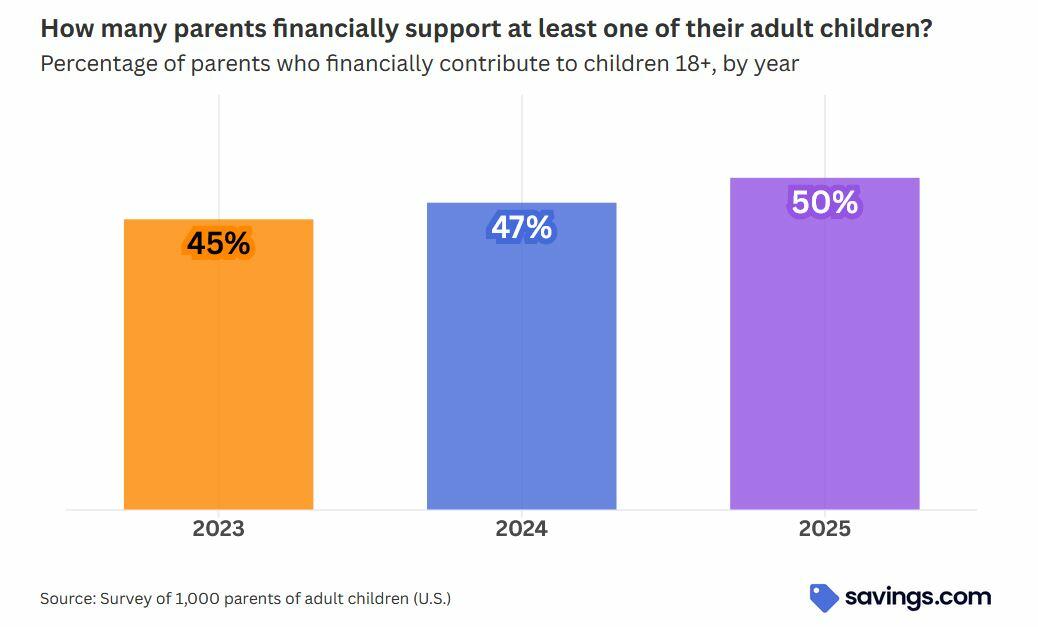
More than 50% of parents with a child older than 18 are providing them with at least some financial support, according to a recent report by savings.com.

Francis Buxton, Pee Wee’s Big Adventure

Key findings from the report:

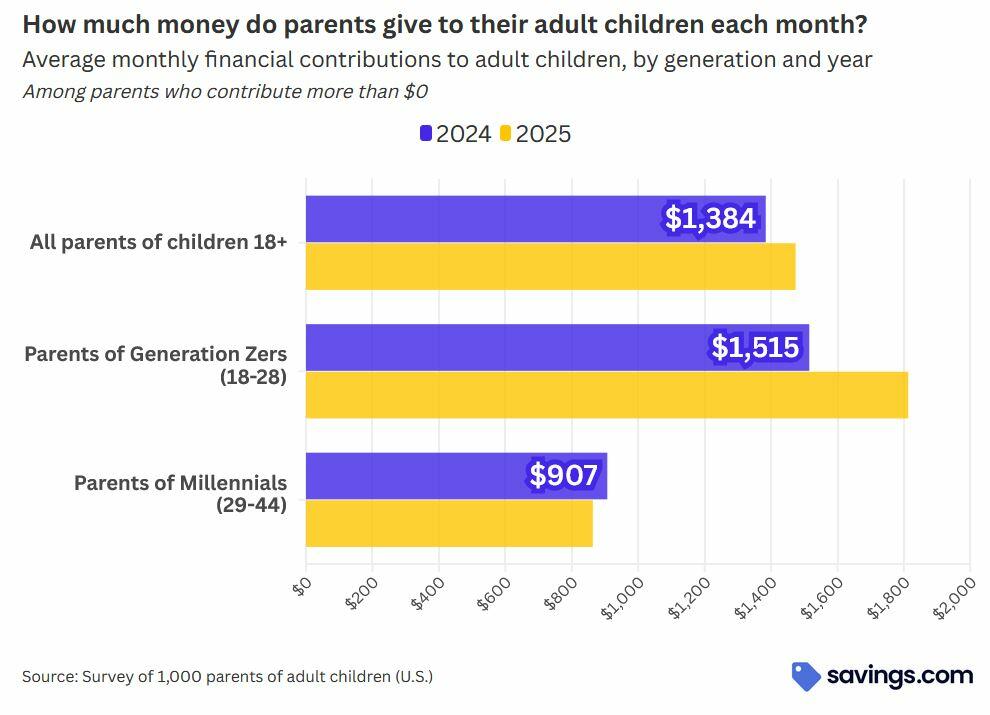
  • Half of parents with adult children provide regular financial assistance to their grown offspring. The average support per adult child is $1,474 monthly, about 6% higher than last year.
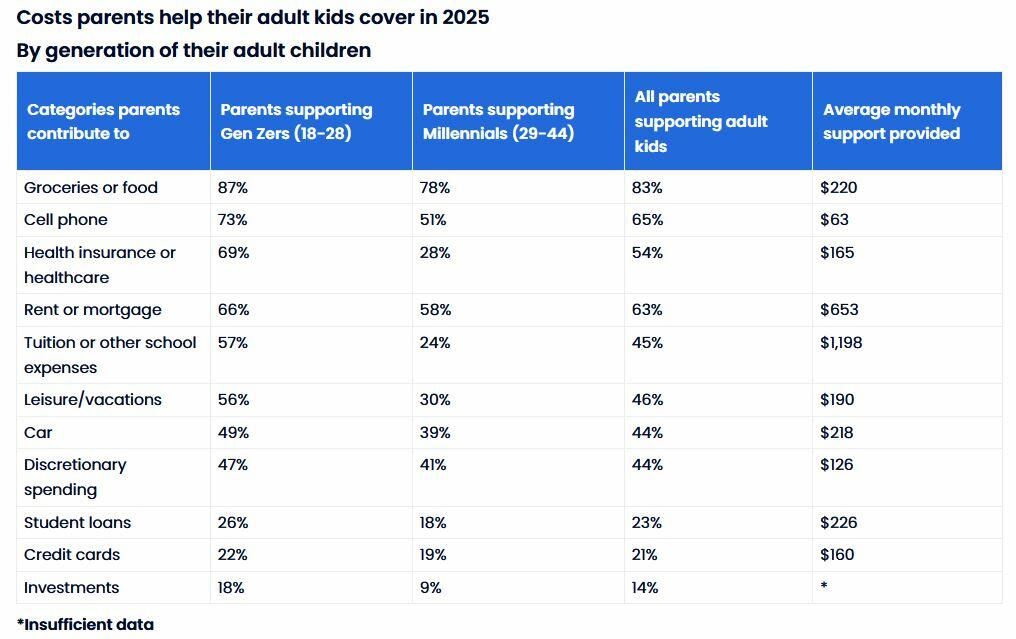
  • 83% of supporting parents contribute to their adult kids’ monthly groceries; 65% help with cell phones, and nearly half (46%) pay for vacations.
  • More than three-quarters (77%) of supportive parents attach conditions to their financial assistance. 23% give money without any conditions.
  • Nearly 50 percent of parents have sacrificed their financial security to help their grown kids financially, and most supporting parents feel obligated to help their kids with money.
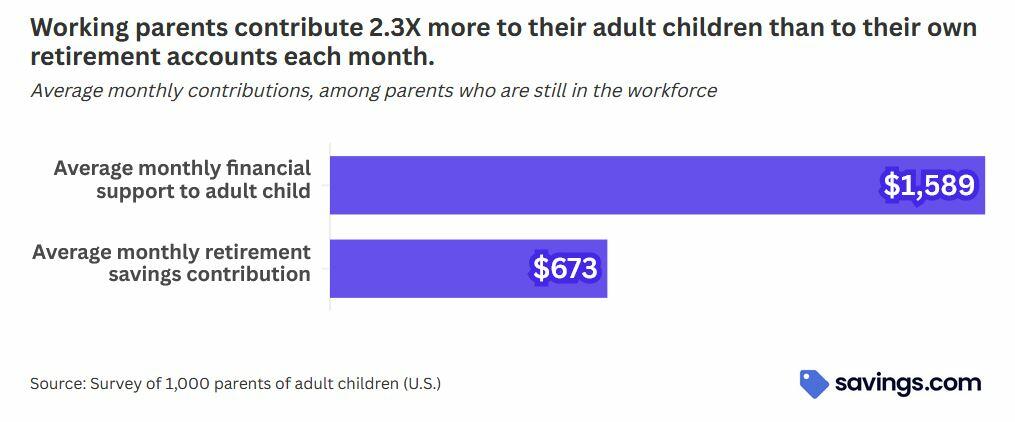
  • Working parents who support grown kids contribute over 2X more money each month to their adult children than they do to retirement funds.

As savings.com continues, with inflation keeping the cost of living high, parents’ financial support has reached a new peak, averaging nearly $1,500 per month (or almost $18,000 annually). This represents a six percent increase from the monthly contributions we reported last year.

As you might expect, Generation Z adults (ages 18-28) receive more financial support from their parents than their Millennial counterparts (ages 29-44), who’ve had more time to build careers and establish income streams. While the average contribution to Millennials decreased slightly, a significant increase in support for Generation Zers pushed the overall average higher. Members of Generation X (ages 45-60) rarely receive financial assistance from their parents, likely because they’ve either achieved financial independence or have inherited family wealth.

The financial strain of supporting grown children is particularly pressing for parents preparing a nest egg. Parents still in the workforce contribute over two times more money to their adult children each month than their retirement accounts.

The psychological and fiscal impact of such commitment translates directly to parental anxiety. At a time when many Americans haven’t set aside enough funds for their later years, 79 percent of those supporting adult children worry about setting themselves up for a comfortable retirement. In comparison, 72 percent of people who don’t support adult children financially feel stressed about their retirement savings.

What costs do parents cover for their adult children?

Parents report providing their adult children with financial assistance for various expenses, from educational costs to vacations to basic spending money.

Looking at the breakdown of this support reveals that food and groceries top the list of needs among financially dependent adult children. With food prices continuing to climb, it’s understandable that four out of five parents providing assistance are helping with their grown kids’ grocery bills. Parents contribute an average of $220 monthly toward their adult child’s grocery expenses.

Another two-thirds of parents with adult children assisted with cell phone bills and housing expenses. The need for specific types of support varied between Generation Zers and Millennials. Gen Z adults were far more likely to need help with healthcare, vacations, and tuition than Millennials, as many are still in school or just launching their careers in their early twenties. School expenses were the costliest for parents, averaging nearly $1200 monthly. That’s a massive increase over the average spending on tuition last year, at around $600 a month.

Parental financial support often comes with conditions

Accepting financial help from parents is one thing, but doing so while demonstrating effort and appreciation is another matter. Our findings suggest that parents may be growing less tolerant of adult children who appear to take advantage of their generosity.

Among parents providing financial support, 63 percent also offer housing to their adult children. While only 39 percent of these live-at-home adult children contributed to household expenses in 2024, that figure has increased substantially to 51 percent this year.

This improvement in shared financial responsibility likely stems from parents setting firmer boundaries. The percentage of parents establishing specific conditions for financial assistance has increased since our previous study—from 71 percent who gave conditionally last year to 77 percent who now attach requirements to their financial support.

The most notable increase appeared in parents requiring adult children living at home to contribute to household expenses. However, the most common conditions continue to be requirements that adult children actively seek employment or pursue education—practical approaches designed to guide grown offspring toward eventual financial independence.

Other conditions parents placed on their adult children included establishing financial goals and attending counseling or therapy sessions. Each such requirement reflects a caring concern designed to help adult children financially get on their feet.

What are parents sacrificing for their children’s financial security?

The parents in the study seemed more than willing to aid their children. Yet, that added financial burden often creates stress and demands lifestyle sacrifices. What compels them to keep giving?

Obligation is one driving force for parents who economically support their adult offspring. Most parents who provide monetary assistance do so out of some sense of duty.

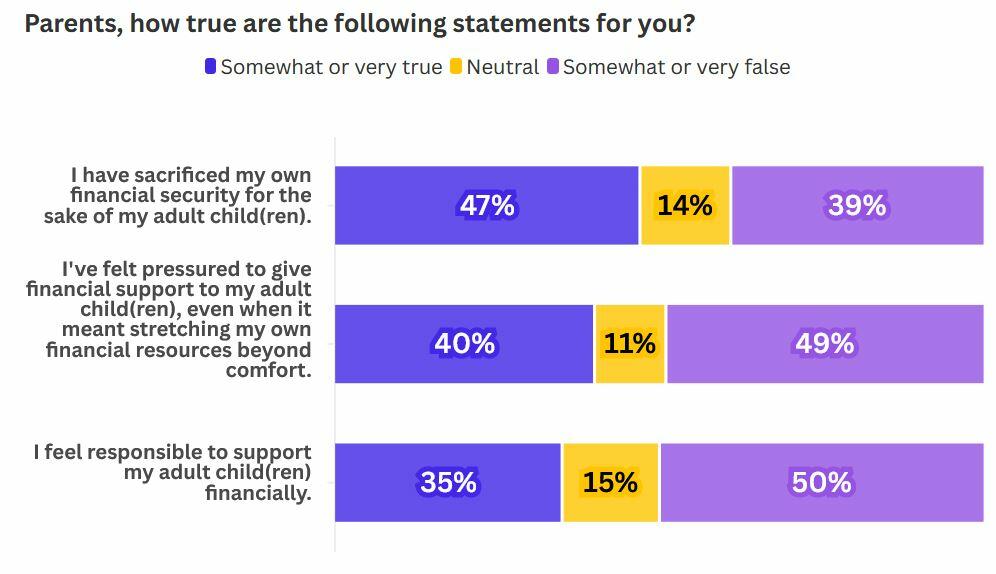
Fifty-three percent of contributing parents feel responsible for financially supporting their grown kids. That number is down from 61 percent one year ago, another potential indicator that such gravy train sentiments may be slipping.

This responsibility causes great strain on parents. Nearly 50 percent of providing parents sacrifice financial security for the sake of supported children, and 40 percent felt pressured to give financial assistance even when it meant uncomfortably stretching their resources.

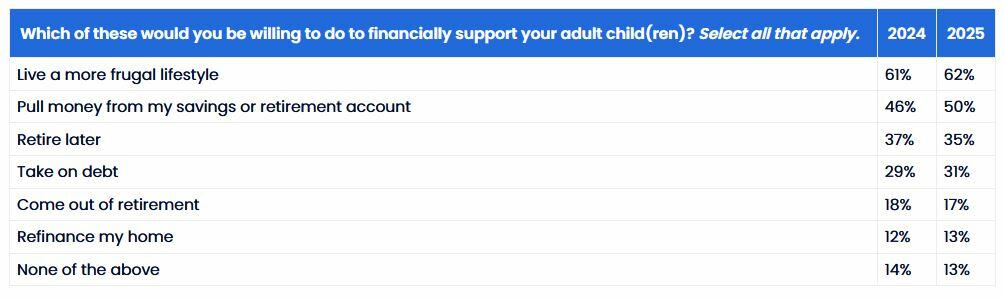
Those numbers mirror the findings from past reports. Despite the hardship and stress sometimes created by these contributions, devoted moms and dads remain ready to dig deeper to help their struggling kids. Nearly nine in ten parents would make one or more additional financial sacrifices to aid their offspring.

Specifically, more than 60 percent of parents would be willing to live a more frugal lifestyle to support their adult children, half would pull money from their savings or retirement accounts, and one-third would postpone retirement or take on debt so that they might shift funds to provide for their progeny.

Many supporting parents would be willing to come out of retirement or refinance their homes to help their children. Grown kids struggling through financial straits are fortunate to find such selfless family support. They shouldn’t take it for granted or become perpetually dependent.

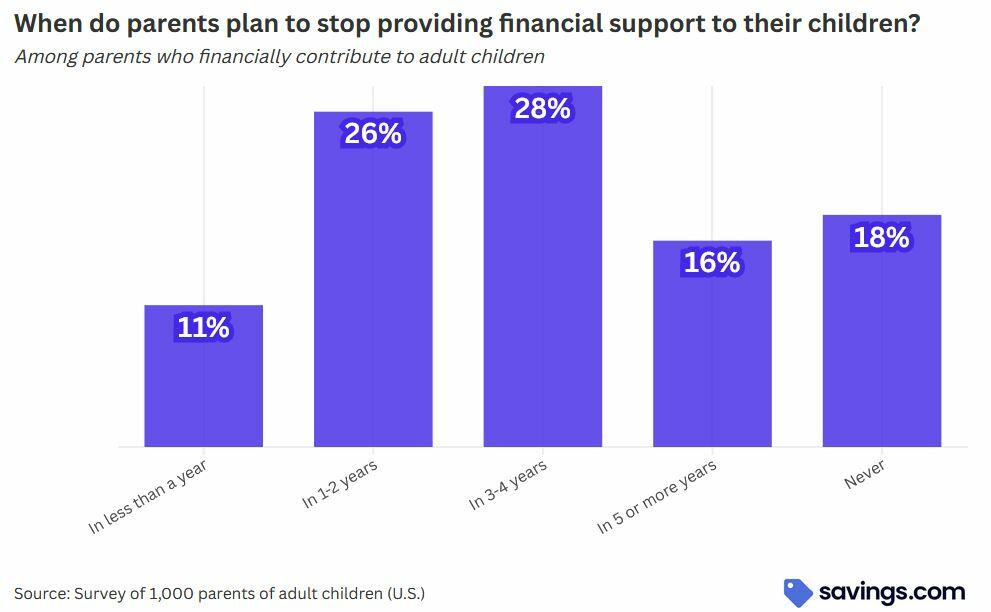
When asked how long they planned to continue financial support of adult children, parents admitted there may be a shelf life on their generosity. Less than 20 percent of those supplying aid said their largesse would continue indefinitely.

More than one-third of parents who give money to their adult kids say they’ll cut off support within the next two years. Their aim is likely to encourage their children towards financial independence. However, terminating assistance before a potential recession could deal a double blow to younger generations.

Conclusion

The last four years of our research findings collectively illustrate remarkable parental commitment. Parents continue to accept financial stress and make personal sacrifices to support their adult children’s economic well-being. However, even as we see more parents providing financial assistance than in any previous year of our research, we’ve also detected some emerging cracks in this foundation of support.

The percentage of parents who feel financially responsible for supporting their adult children has declined, while more are establishing specific conditions for continued assistance. Perhaps most notably, almost 40 percent of parents plan to end their financial support within the next two years.

Despite these subtle shifts away from unconditional assistance, our survey essentially confirms what we’ve seen in recent years: the ongoing need to financially support struggling adult children is placing significant strain on many parents’ financial security. This concerning pattern may face additional pressure if economic conditions worsen in the coming months. We’ll examine how these trends evolve in our 2026 report.

Tyler Durden
Mon, 03/31/2025 – 05:45

via ZeroHedge News https://ift.tt/5uPjH7a Tyler Durden

These Are The Cheapest And Most Expensive Countries To Visit In 2025

These Are The Cheapest And Most Expensive Countries To Visit In 2025

For budget-conscious travelers, some destinations offer incredible experiences at a fraction of the cost, while others can drain your wallet faster than expected.

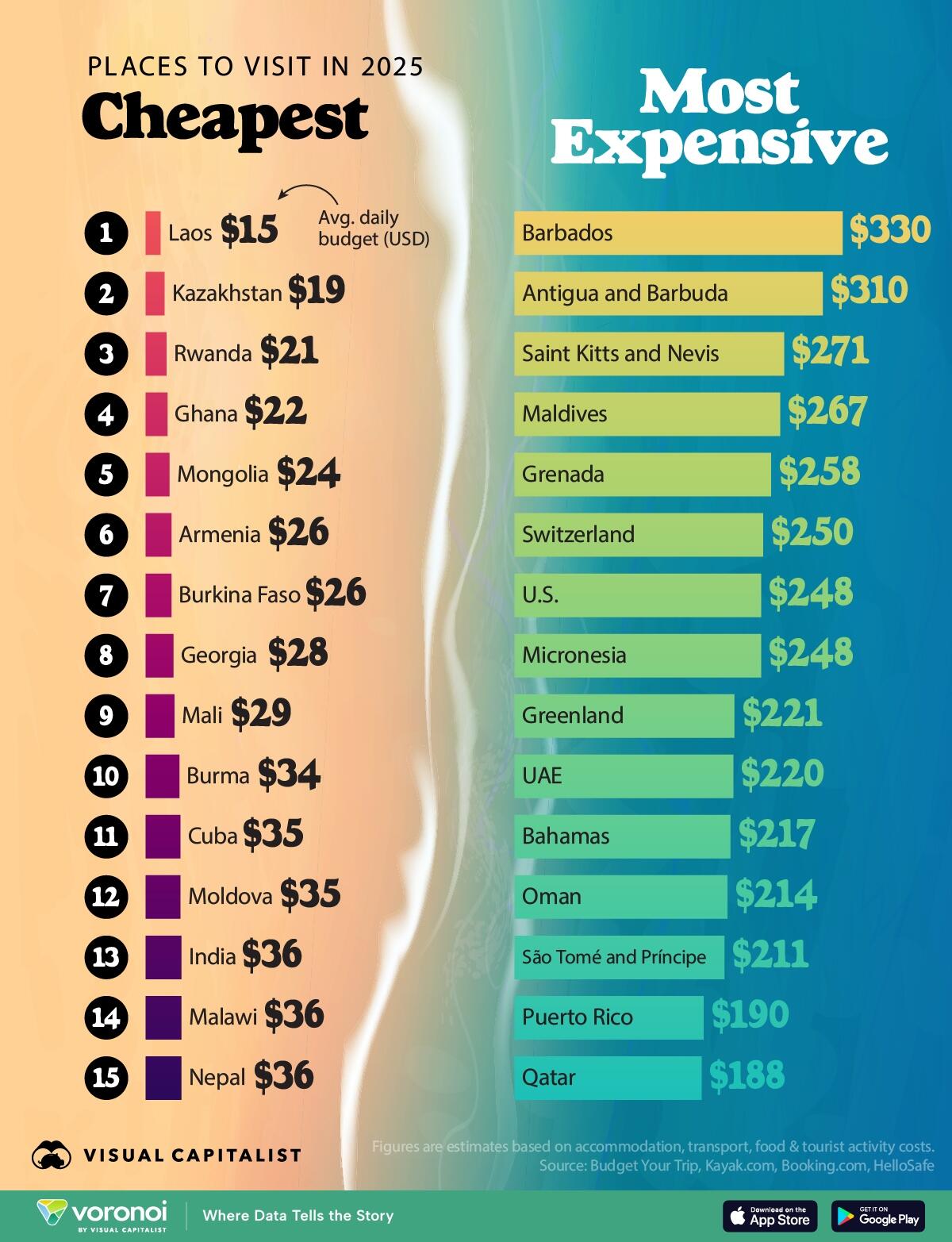
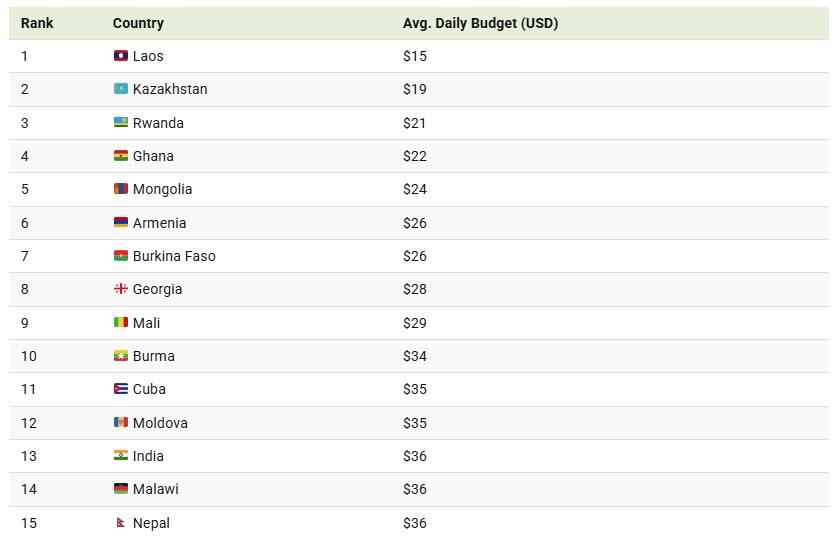
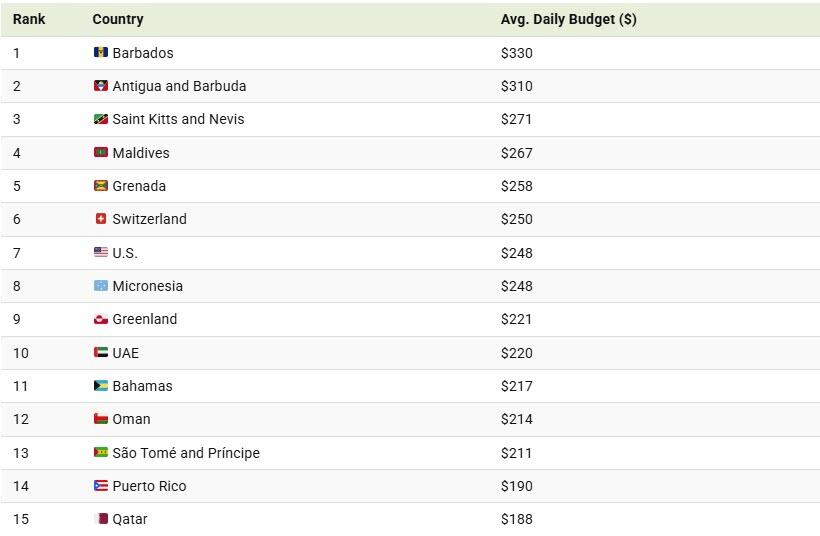
To help inspire your next vacation, Visual Capitalist’s Marcus Lu ranked the 15 cheapest and 15 most expensive countries to visit in 2025, based on data compiled by Hellosafe (prices converted to USD).

Methodology and Highlights

The average daily travel budgets shown in this graphic are calculated based on the following:

  • Accommodation costs: Hotel or Airbnb-type reservations

  • Food expenses: Based on local CPI indices and restaurant costs

  • Transport costs within the country: Covers domestic flights, train, bus, etc.

  • Expenditures on tourist activities

Note that these average budgets do not include the cost of transportation to the destination country.

The Cheapest Countries to Visit in 2025

Many of the world’s most budget-friendly destinations are found in Asia and Africa, where lower costs for food, accommodation, and transport make travel more affordable.

There are a few challenges to be mindful of when picking these destinations.

For starters, infrastructure and public services may not be as developed, meaning extra planning for accommodations and transport is required.

Another factor is health precautions, as some destinations may require vaccinations or extra care with food and water. In tropical locations like GhanaRwanda, and India, travelers should be cautious about mosquito-borne diseases such as malaria or dengue fever.

The Most Expensive Countries to Visit in 2025

Among the most expensive travel destinations are several small island nations where high costs are driven by limited resources and imported goods.

Barbados, which tops the list at $330 per day, has a well-developed tourism industry that caters to high-end travelers with luxury resorts, fine dining, and exclusive beachside experiences.

Other pricey destinations that aren’t islands include Switzerland and the U.S., with the latter being the third most visited country after France and Spain.

If you enjoyed this post, check out our ranking of the world’s most powerful passports on Voronoi, the new app from Visual Capitalist.

Tyler Durden
Mon, 03/31/2025 – 04:15

via ZeroHedge News https://ift.tt/X9Iq2V6 Tyler Durden

South Africa’s Highest Court Denies Bid To Have ‘Kill The Boer’ Declared Hate Speech

South Africa’s Highest Court Denies Bid To Have ‘Kill The Boer’ Declared Hate Speech

Authored by Jackson Richman via The Epoch Times (emphasis ours),

South Africa’s highest court denied on March 27 a bid to have the song “Kill the Boer” be deemed hateful speech.

White South Africans supporting U.S. President Donald Trump and South African and U.S. tech billionaire Elon Musk gather in front of the U.S. Embassy in Pretoria, on Feb. 15, 2025.Marco Longari/AFP via Getty Images

The application should be dismissed as it bears no reasonable prospects of success,” stated the order from the Constitutional Court.

The case was brought by AfriForum, a South African nongovernmental organization representing white South Africans, who constitute 7 percent of the population and own 70 percent of the farmland. South Africa consists of 62 million people.

After this shocking court ruling, we see that this is no longer the case. We are seeing an increasing radical implementation of the Constitution. We see an increase in ideologically-driven judges,” said AfriForum CEO Kallie Kriel in a statement. “However, we are not going to become discouraged.”

“Kill the Boer” is an apartheid-era song. Boers are white settlers of primarily Dutch descent who often pursued an agrarian living in what is now South Africa. The term “Boer” has been used to refer to white farmers in the country, and the lyrics of the “Kill the Boer” song mostly consist of the word “shoot.”

Recitations of the chant often correlate with rising violence targeting white farmers, according to Ernst Roets, a South African political activist and executive director of the newly formed advocacy group Pioneer Initiative. 

When the slogan, particularly is chanted at high-profile events, by a high-profile politician, there tends to be an increase, especially in the murders on the farms,” Roets told The Epoch Times on March 28.

U.S. President Donald Trump’s senior adviser Elon Musk, who is from South Africa, posted on X last week that the song has been “actively promoting white genocide.” He has criticized the country for passing a law that he said allows for land to be seized from white people in what supporters say is an attempt to rectify the past history of apartheid.

Willie Aucamp, national spokesperson of the Democratic Alliance, the second-largest party in South Africa’s parliament, said that it is “deeply troubling and unacceptable” that some political figures in the country continue to sing the song, according to News24, an English-language South African news website.

The song ‘Kill the Boer, Kill the Farmer’ goes beyond mere words. It incites violence, stokes hatred, and deepens divisions within our society,” he said.

“We should be working towards unity and healing, and songs like this only serve to deepen the rifts that still exist in our country,” he continued. “Farmers play an essential role in feeding the nation, and to see their work and lives targeted by such harmful rhetoric is an affront to the values of respect and dignity we should uphold.”

The Trump administration has stopped funding to South Africa over what it said was the country’s government seizing land from white farmers.

In February, the White House said that South Africa has enacted “government policies designed to dismantle equal opportunity in employment, education, and business, and hateful rhetoric and government actions fueling disproportionate violence against racially disfavored landowners.”

The administration also said that “South Africa has taken aggressive positions towards the United States and its allies,” noting that the country accused Israel, instead of terrorist group Hamas, of genocide in the International Court of Justice, and reinvigorated “its relations with Iran to develop commercial, military, and nuclear arrangements.”

The United States will “promote the resettlement of Afrikaner refugees escaping government-sponsored race-based discrimination, including racially discriminatory property confiscation,” said the White House.

Roets, through his Pioneer Initiative, has argued that South Africa should be broken into multiple smaller sovereign states.

“The only way forward is for these nations, such as the Afrikaner people, and others … to have self-governance so that we’re not subjected to this kind of situation that we are in at the moment,” Roets told The Epoch Times.

Ryan Morgan, Jan Jekielek, and The Associated Press contributed to this report.

Tyler Durden
Mon, 03/31/2025 – 03:30

via ZeroHedge News https://ift.tt/KsUXYmp Tyler Durden

Russia Captures Several More Villages In Eastern & Southern Ukraine

Russia Captures Several More Villages In Eastern & Southern Ukraine

Russian forces have continued rolling up villages in the east and south of Ukraine on Saturday and Sunday. A full battlefield press has continued even amid President Trump’s efforts to get all sides at the negotiating table.

First, on Saturday Russia’s defense ministry announced the capture of the two villages of Shchebraki in the southern Zaporizhzhia region and Panteleimonivka in the eastern Donetsk region.

Via AFP

“Russia is making a mockery of peacekeeping efforts around the world. It is dragging out the war and sowing terror because it still feels no real pressure,” Zelensky has said, condemning also stepped up drone strikes.

For example in the overnight and early Saturday hours there had been over 170 drones launched on Ukraine. Four people had been killed in Dnipro after a strike hit a hotel, injuring an additional 21 – including a pregnant woman.

On Sunday another key village was captured which lies less than ten kilometers from Ukraine’s central Dnipropetrovsk region. This particular boundary has not yet been breached after more than three years of war.

Russian forces “liberated the village of Zaporizhzhia” in the eastern Donetsk region, the defense ministry said.

Ukraine forces are still on the retreat in Kursk region, but there are reports of new fighting erupting inside Russia’s Belgorod.

“Just as Ukrainian forces are losing their grip on the pocket of Russia’s Kursk region they captured last year, they have staged a little-publicized incursion into the adjacent Belgorod region, according to Russian military bloggers,” Reuters reports.

“Several Russian military correspondents said on Friday that Ukrainian troops were inside Belgorod and fighting battles with Russian forces there,” the report adds.

As for the now failed Kursk operation, The NY Times has offered some new information on Washington and Kiev clashing on whether or not to launch the operation in the first place.

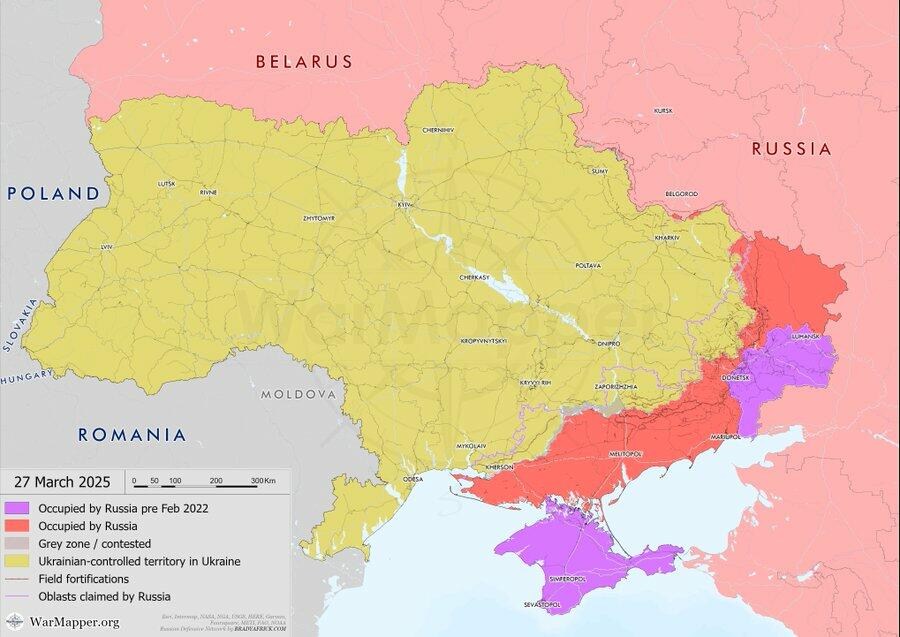
Via ‘War Mapper’: An overview map of the situation in Ukraine as of 27 March 2025.

“For the Americans, the incursion’s unfolding was a significant breach of trust. It wasn’t just that the Ukrainians had again kept them in the dark; they had secretly crossed a mutually agreed-upon line, taking coalition-supplied equipment into Russian territory,” the Times report states.

“It wasn’t almost blackmail, it was blackmail,” a Pentagon official said, based on an apparent agreement that Ukrainians could only fire American weapons within a limited zone.

Tyler Durden
Mon, 03/31/2025 – 02:45

via ZeroHedge News https://ift.tt/Mh4LpB3 Tyler Durden

Will Poland Cancel Elections If The ‘Wrong’ Candidate Wins?

Will Poland Cancel Elections If The ‘Wrong’ Candidate Wins?

Via Remix News,

Is Poland also looking to cancel elections and persecute the opposition if a candidate unfavorable to the left-liberal establishment wins? 

After authoritarian forces in Romania banned presidential frontrunner Călin Georgescu from the election and subsequently arrested him, such a move could be repeated elsewhere, including in Poland.

“Poland’s Internal Security Agency (ABA) has reportedly been told to contact its Romanian counterpart what materials they used for the constitutional court in Romania to invalidate the election there,” said Stanisław Żaryn, advisor to the President Andrzej Duda, talked about this development ahead of Poland’s May presidential election on the “Otwarta Konserwa” channel.

The ABW is tasked with securing Poland against potential foreign influences during its election period, but this request seems to be doing the exact opposite. 

According to Żaryn, the ABW asked specifically about what documents had been presented to the constitutional court in Romania, which allowed the court to invalidate the elections, reports wPolityce.

“And this is a certain light bulb that goes on for me in this situation, because it looks as if the team at the ABW was preparing how to prepare arguments, documentation, to possibly challenge the election result, because that is how it is interpreted,” he said. 

Żaryn further stated that he has received information that the ABW is specifically looking to block an election result that certain groups would find unfavorable. 

“This information is surprising, because today we should be preparing ourselves first and foremost to realistically assess Russian actions against Poland and counter them, and not to think about how to document or create documentation that will allow for the invalidation of the elections,” Duda’s advisor added.

Duda has already raised concerns in the past about what occurred in Romania. Last month, he questioned whether democratic elections can still be genuinely free if only candidates favored by the EU are able to win.

“Is it so that today elections in individual countries — democratic ones, it would seem — can only be won by those who are accepted in Brussels? I have such an impression, and I don’t like it very much,” he remarked, expressing skepticism over the European Commission’s involvement in both Polish and Romanian affairs.

He expressed unease over reports that prominent European Commission members admitted to influencing the Romanian elections, warning that “you will have to defend the results of elections in Poland if it turns out that someone intends to manipulate these results.”

Duda hinted at the possibility of public demonstrations to protect electoral integrity, suggesting that Poles may need to exercise their constitutional rights to free speech and assembly if they perceive any threats to democratic processes. “Maybe you’ll just have to demonstrate?” he said, warning that similar situations are unfolding across Europe and could destabilize democratic institutions.

Read more here…

Tyler Durden
Mon, 03/31/2025 – 02:00

via ZeroHedge News https://ift.tt/JpBe8VD Tyler Durden

Will India Join The Asian “Squad”?

Will India Join The Asian “Squad”?

Authored by Andrew Korybko via substack,

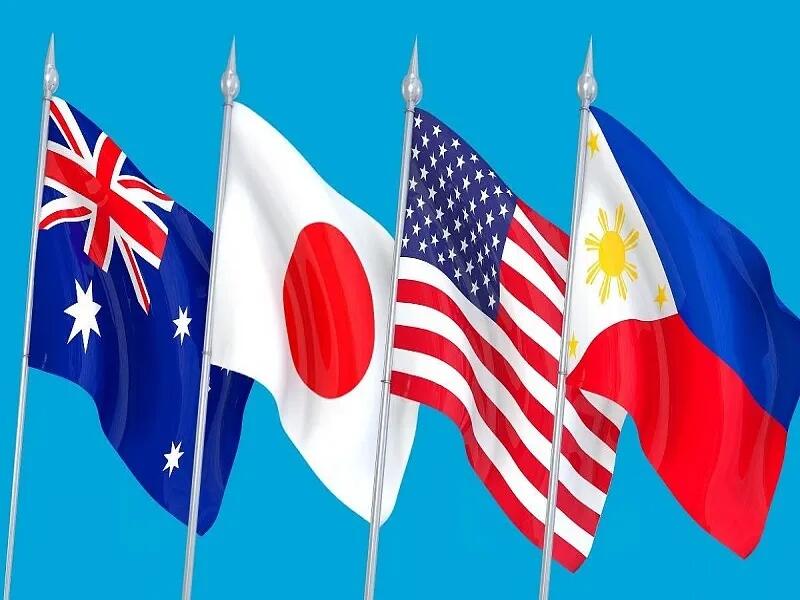
Chief of Staff of the Armed Forces of the Philippines Romeo Brawner invited India to join the Asian “Squad” while speaking at the latest annual Raisina Dialogue security forum in Delhi. This neologism was reportedly coined by Pentagon officials last spring to refer to the multilateral cooperation between the US, Australia, Japan, and the Philippines. Brawner suggested that India can participate through the sharing of intelligence on their “common enemy” China. Here are five background briefings:

* 16 June 2023: “The US’ Nascent Trilateral Alliance With Japan & The Philippines Will Integrate Into AUKUS+

* 27 January 2024: “Why’s Russia Letting India Export Jointly Produced Supersonic Missiles To The Philippines?

* 29 March 2024: “India’s Support Of The Philippines In Its Maritime Dispute With China Isn’t Related To The US

* 6 May 2024: “The US’ Newly Formed Asian ‘Squad’ Has Strategic Implications For India

* 18 February 2025: “The Latest Modi-Trump Summit Showcased India’s Multi-Alignment Strategy

To summarize, the Philippines is becoming the centerpiece of the US’ planned “Pivot (back) to Asia” for more muscularly containing China, which will de facto expand the AUKUS alliance throughout the region. India is a founding member of the Quad alongside the US, Australia, and Japan, but it fiercely safeguards its hard-earned strategic autonomy and won’t subordinate itself to the US like the other two and the Philippines will in spite of its problems with China, which is why it wasn’t included in the “Squad”.

India and China also entered into a rapprochement after their leaders met on the sidelines of October’s BRICS Summit in Kazan, with the US being inadvertently responsible for this process as explained here at the time, yet tensions still remain. Trump’s return to the presidency changed India’s strategic calculations, however, since he’s tough on China and is prioritizing the “Pivot (back) to Asia”. The US’ grand strategic reorientation to that part of Eurasia will give India a larger role in American planning.

Indian policymakers might therefore see value in sharing intelligence on China with their Philippine partner, who’s one of the US’ mutual defense allies, through the “Squad” format. This could even lay the basis for a new “Five Eyes” intelligence-sharing alliance. Further ingratiating India with the Pentagon’s planning vis-à-vis China, so long as India retains its hard-earned strategic autonomy this entire time, might also result in less trade and tariff pressure from Trump or so Indian policymakers might think.

On the flipside, India could risk provoking China and thus further complicating their already difficult rapprochement if Beijing interprets this as signaling Delhi’s impending subordination to Washington, in which case their border tensions could once again worsen and last fall’s progress would be reversed. The bilateral sharing of intelligence with the Philippine would also likely be viewed as provocative by China but it would still be qualitatively different than India’s de facto or formal inclusion in the “Squad”.

Accordingly, one possibility is that India comprehensively ramps up its security cooperation with the Philippines without multilateralizing this through the “Squad”, all while communicating to the US how sensitive this issue is with regards to China. By taking the middle ground in such a way, India can remain in the US’ good graces despite keeping distance between itself and the “Squad”, which would avoid the perception that it’s joining an American-led anti-Chinese alliance at the expense of its sovereignty.

India must nowadays walk a fine line between China and the “Squad” in the context of Trump prioritizing the US’ “Pivot (back) to Asia” due to all that this grand strategic reorientation entails for India’s national security interests. Staying too far away from American-led initiatives could be seen as unfriendly by Washington while moving too close to them could be seen as unfriendly by Beijing. It’ll be tough to strike a balance, but if there’s any country that can successfully multi-align between both, it’s India.

Tyler Durden
Sun, 03/30/2025 – 23:20

via ZeroHedge News https://ift.tt/BAT8nPe Tyler Durden