How Did Strange Dyes Get In Our Food?

How Did Strange Dyes Get In Our Food?

Authored by Jeffrey A. Tucker via The Epoch Times (emphasis ours),

When you buy those beautiful cupcakes and cookies at the grocery store, how much plastic are you eating? This is a burning question these days, as Americans have become newly aware of the real content of mainstream food.

Max4e Photo/Shutterstock

MIT professor Retsef Levi has produced remarkable research detailing the extent of the problem of petroleum food dyes in normal products you eat every day. He did an analysis of 700K products in the USDA Global Branded Food Products Database and found over 85K products with at least one dye and some categories having well over 50 percent of products with at least one dye.
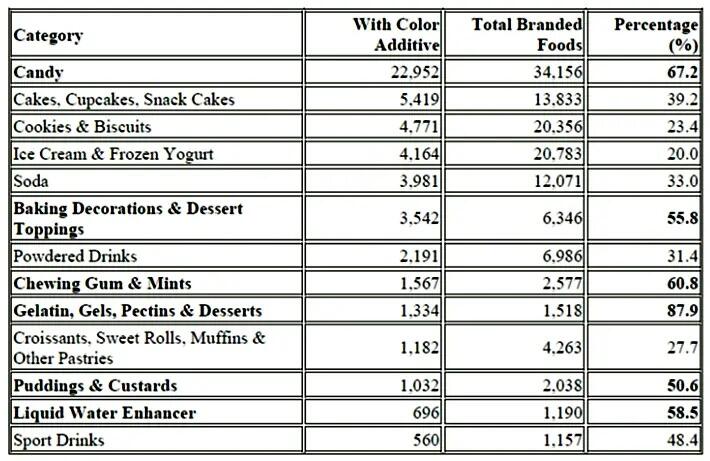
As is well known, these products have been credibility associated with behavioral disorders in the young and carcinogens in adults, which is why most countries in the world do not use them. Many dispute those findings, and arguments run in all directions. But these days, there is great concern about chronic disease in the young and a strong effort to address the issue through every means.

It makes sense that U.S. producers align themselves more with natural rather than synthetic dyes. It’s rather remarkable that the practice has continued as long as it has. Foreign travelers in the United States fear U.S. food in part for this reason. They would rather eat food, not plastic, and worry about what is really in our bright, delicious-looking, packaged foods.

Robert F. Kennedy, Jr. at HHS and Dr. Marty Makary at the FDA have taken aim at six of these dyes (in addition to two already identified under the last administration) and have scheduled them to be phased out as part of the agenda to make America healthy again. In this, they have faced remarkably little pushback. Few are willing to stand up in defense of synthetic dyes in our food and most people have a sense that we would be better off without.
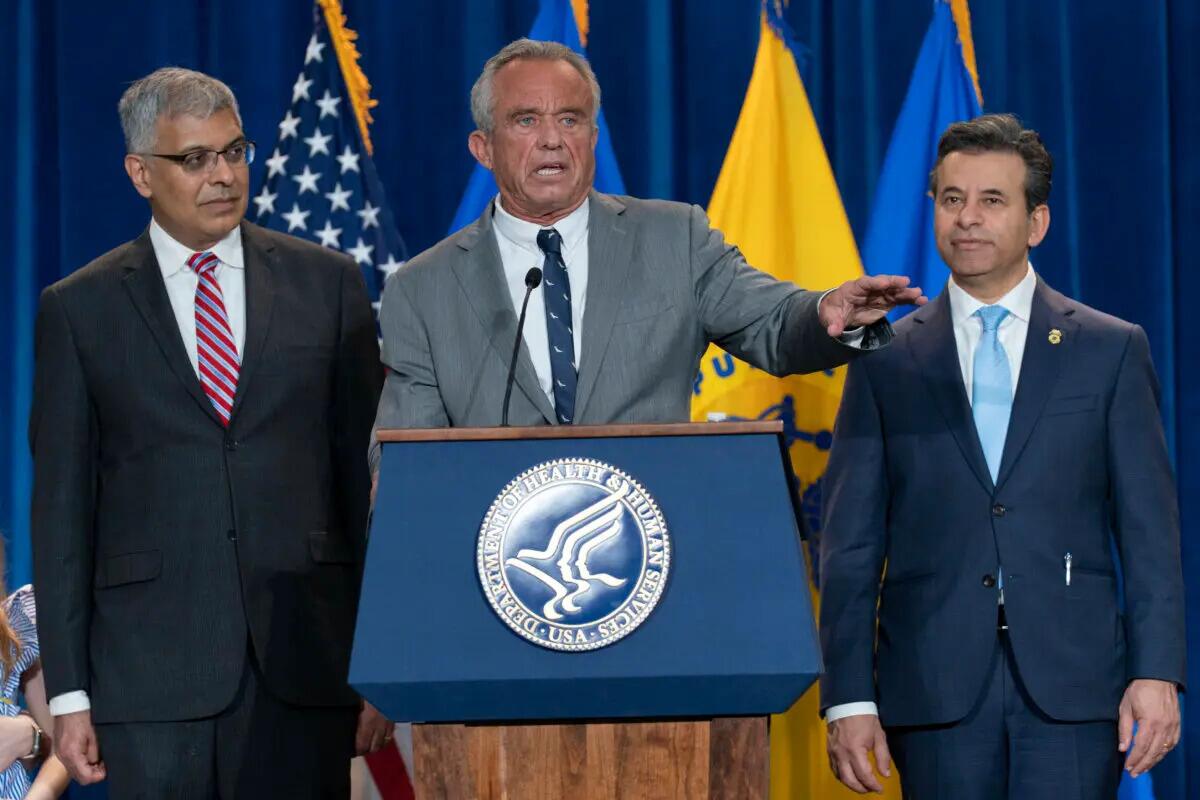
HHS Secretary Robert F. Kennedy Jr., flanked by NIH Director Jay Bhattacharya (L) and FDA Commissioner Marty Makary (R), speaks during a news conference on the FDA’s intent to phase out the use of petroleum-based synthetic dyes in the nation’s food supply at the Hubert Humphrey Building Auditorium in Washington, D.C., on April 22, 2025. AP Photo/Jose Luis Magana

This is why so far, the agreements to get rid of them are voluntary. They rely on cooperative understandings with industry rather than mandates. This seems right to me.

I’m of a libertarian cast of mind and generally feel like people should eat whatever they want. It’s up to the consumer and not government to decide such questions. Producers should use whatever ingredients customers want, and it does seem as if these products on the ban list have more or less been approved by the consumer marketplace.

In principle, I agree with Jeffrey Singer: “The HHS and FDA regulatory monopolies should not infringe on adults’ autonomy to choose less expensive or more visually appealing foods containing these substances, if they wish. Autonomous adults must have the freedom to make their own risk-benefit assessments.”

As usual, however, the situation is more complicated than merely freedom of choice or bans by the government. Vast amounts of the U.S. food industry benefits from subsidies in the form of SNAP benefits and school lunches, among other programs. These provide a high margin of profitability for the producers.

Government is the consumer in this case, and not a very discerning one. Producers manufacture products that sell well for particular industrial purposes. These often require very long shelf lives and the ability to sustain the look and feel of food from having traveled long distances in challenging temperatures.

It makes sense that petroleum and synthetic products make the journey from factory to shelf more easily than natural dyes like fruit juices and spices. The look is entirely different when using real food dyes. I was at a Vietnamese superstore that sells none of the synthetic products because no one would ever buy them. I looked at the colors of the sweets. They are certainly more dull and less optically appealing. On the other hand, they look like food used to look.

I shop often at local markets and trade with local bakeries so I don’t see much of these fake colors in food. Farmers markets don’t use them. On the other hand, these cater to a customer who is health- conscious and pays for the real deal. Most people do not do this.

An investigation into how these synthetic dyes got in our food takes us far back in time to the very first federal food regulation measure of 1906 that centered on regulating the meat-packing industry. The cover story was that it was eliminating unhealthy and dangerous practices. In reality, and as unpacked by many historians, the dominant lobbyists in the text and implementation of the controls were the major industrial firms.

This is how “poke and sniff” became the dominant way meat was inspected in this country. It was the opposite of safe and ended up spreading disease. But it also resulted in much higher costs for the industry that only the biggest players could bear. The practical effect was to drive out small meat packing companies and bolster a growing cartel in the industry. The 1906 act was not really about stopping bad practices, it was about entrenching large businesses as the controlling force of industrial planning.

This was only the beginning of what ended up being a century-long consolidation of the food industry. It firmed up at the New Deal, which implemented a central plan for agriculture complete with production limits, mandates, subsidies, and controls. Price controls in World War II strengthened it further. The mad dash toward gigantic food-production subsidies in the early 1970s consolidated the industry ever more.

Independent farmers were the ones who suffered.

What was being created here was not a “free market” but a food cartel that discriminated hard against small farms and local food and in favor of centralized and industrial methods of production. Ask any local farmer or rancher about the struggles they face. The regulatory barriers are huge and the mandates all-consuming. They cannot simply raise food and sell it. They face a barrage of investigations and regulatory hoops.

A free market is exactly what they want. But it doesn’t exist. They will tell you that the big producers in the market have all the advantages over them wheres they would be fine a genuinely competitive market.

Food production and distribution in the United States is famously consolidated. What seems like infinite choice at the supermarket is really an illusion. Depending on the product, the dominant producers are usually one of the big four: PepsiCo, Tyson, Nestlé, and Kraft. The smaller producers are in the mix but face intractable barriers.

The problem with corporate consolidation is that it creates uniform industrial practices designed less for the consumer and more for the well-being of the company and its systems. These dyes have been fine for that purpose, and perpetuated themselves without an adequate system of feedback from the market they serve.

This is a reason not to blame the free market for unhealthy food. We don’t have a free market. We have a corporatist system in which the biggest players rely on close cooperation with the FDA and other regulatory agencies to protect and consolidate their market share. They get away with practices that otherwise would be punished in a real market with consumer-based accountability.

There is an additional problem with the existence of the FDA itself. Most Americans believe that because of its presence, anything for sale at the store has necessarily been certified as safe and fine to eat. If something says it is healthy, it surely is.

In a genuine market economy without such an overlay of constant assurance from government, we might develop more of a habit of questioning the claims of producers or seeking out better sources of information. There would surely be private and accurate sources to which we could appeal.

In electronics, for example, Underwriters Laboratory has long certified the safety of products. It is not a government institution and gets no support from government so far as I can tell. It makes money entirely from fees from producers who pay to have their products certified as safe. If the company fails in its duties, it would face a huge blowback. The system works.

The FDA, on the other hand, has long presided over a system largely captured by industrial lobbyists, shared patent revenue, revolving doors of regulators from and to industry, and conflicts of interest that are rampant throughout the whole process of food and drug approvals.

The system is deeply compromised to the point that it blesses certain practices in production and distribution that could never survive a legitimate market test. They dominate precisely because market forces are not allowed to operate to enable a correction.

For this reason, and despite my preference for freedom in all matters, I’m not unhappy about the pushes against synthetic food dyes that are now being enacted. Arguably, this should just be the beginning, a course correction. The agencies have served to ratify and protect practices that otherwise would not have survived in a genuine marketplace.

Freedom of choice is essential but so is informed choice and a truly competitive marketplace.

Views expressed in this article are opinions of the author and do not necessarily reflect the views of The Epoch Times or ZeroHedge.

Tyler Durden
Thu, 05/01/2025 – 05:00

via ZeroHedge News https://ift.tt/5APRFos Tyler Durden

British Royal Marine Held Under “Terrorism Act” For Questioning DEI Policies

British Royal Marine Held Under “Terrorism Act” For Questioning DEI Policies

In 2015 the US Marines carried out a study to discern if women could fulfill combat duty roles within mixed gender units.  The study followed an aggressive push by the Pentagon and the Obama Administration to expand female participation on the front line.  This included the much hyped inclusion of women in Army Rangers training – The program was later exposed for giving special treatment to the female trainees and lowering their fitness standards.  In essence, it was the beginning of DEI within elite units in the military.

However, the Marines study relied on merit based standards and was not skewed to make the Pentagon brass happy.  It told the truth:  Women and mixed gender units offer dismal performance in the field under pressure.

Data collected during a months-long experiment showed Marine teams with female members performed at lower overall levels, completed tasks more slowly and fired weapons with less accuracy than their all-male counterparts. In addition, female Marines sustained significantly higher injury rates and demonstrated lower levels of physical performance capacity overall, officials said.  Any unit with women was dragged down.

DEI is a disaster for most endeavors, but it is especially deadly in the military where performance and merit determine life and death.  It also causes divisions and distrust; if a soldier cannot be counted on to perform tasks to a certain standard then they can put the entire unit at risk.

Furthermore, women would likely act as a distraction in the field and in combat for a number of reasons which should be obvious to anyone with half a brain. 

These same concerns are practical and apply to any fighting force around the world, they are not specific to the US.  That’s why it’s disturbing (but not surprising) that the British government is now holding soldiers under their “Terrorism Act” for questioning the idea of women in combat.

In what the Telegraph refers to as a “highly unusual move”, a serving member of the Royal Marines, an elite corp, has publicly warned about the lowering of standards for female trainees, stating that lives could be at risk. 

The commando says that up to 1,000 of his fellow Marines backed a private letter to military chiefs raising fears that so-called diversity, equality and inclusion (DEI) policies were in danger of creating an “unrecognisable, weak and compromised version of the corps”.  The letter claimed that some women at the Commando Training Centre were being “artificially pushed through training”, resulting in what was described as “unearned paper-passes”.

Given that this same process of lowering standards for female trainees has been observed in the past in the US military, it’s not surprising that the same thing is happening in Britain.  And given the British government’s cult-like obsession with far-left ideology, the imposition of DEI will probably be unstoppable and catastrophic for fighting forces. 

But the problem goes well beyond the risks of war.  The soldier in question has now been reportedly held by Police Scotland while entering the country after a holiday, and detained under the British “Terrorism Act” because he has voiced such warnings.  He says government officials initially dismissed the letter or petition as a product of “Russian bots”, then held an internal inquiry to investigate the soldiers involved. 

“They tell me that they deal with security leaks. And they essentially try and make what is a genuine issue look like it was just some uppity Marines that are just being sexist, being evil… It’s absurd because we wrote that in the survey, that we were concerned that… we will be painted as sexists. And that is exactly how they treated us. Telling me that I should be concerned for my career. Telling me that I should comply for the sake of myself and my family…”

“I ask them: ‘Am I being detained?’ They say: ‘No, you’re not being detained, but we’re holding you here under the Terrorism Act. And I’m just shaking my head in this instance. And I said: ‘Have I committed any acts of terrorism? Am I expected to commit any acts of terrorism?’ And they said: ‘No, we have you here because of your views…'”

The British government does not deny that the commando was flown to London for questioning; nor that he was detained by Police Scotland under counter-terrorism legislation.  Whitehall sources have suggested that Police Scotland was concerned he may be linked to “extreme far-Right politics.”  However, he was not charged, and continues to serve as a Royal Marine commando (for now).

Going public was a smart move for the soldier, as it has likely helped to prevent the government from burying him outright.  Britain under leftist Prime Minister Keir Starmer has spiraled into an Orwellian nightmare as the government actively hunts down anyone that openly questions DEI initiatives and mass immigration policies.  Many have already gone to prison simply for posting criticism and memes on social media. 

Analysts within Britain have suggested that the country is on the verge of civil war.  The progressive politicians in power would be caught at a disadvantage if the public knew that elite soldiers in the military do not support leftist policies and might very well be on the side of populist reforms.

Tyler Durden
Thu, 05/01/2025 – 04:15

via ZeroHedge News https://ift.tt/xqAsgfC Tyler Durden

Judge Orders Trump Admin To Disburse $12 Million In Funding To Radio Free Europe

Judge Orders Trump Admin To Disburse $12 Million In Funding To Radio Free Europe

Authored by Aldgra Fredly via The Epoch Times (emphasis ours),

A federal judge ruled on April 29 that the U.S. Agency for Global Media (USAGM) must disburse the funding appropriated by Congress to the nonprofit news organization Radio Free Europe/Radio Liberty.

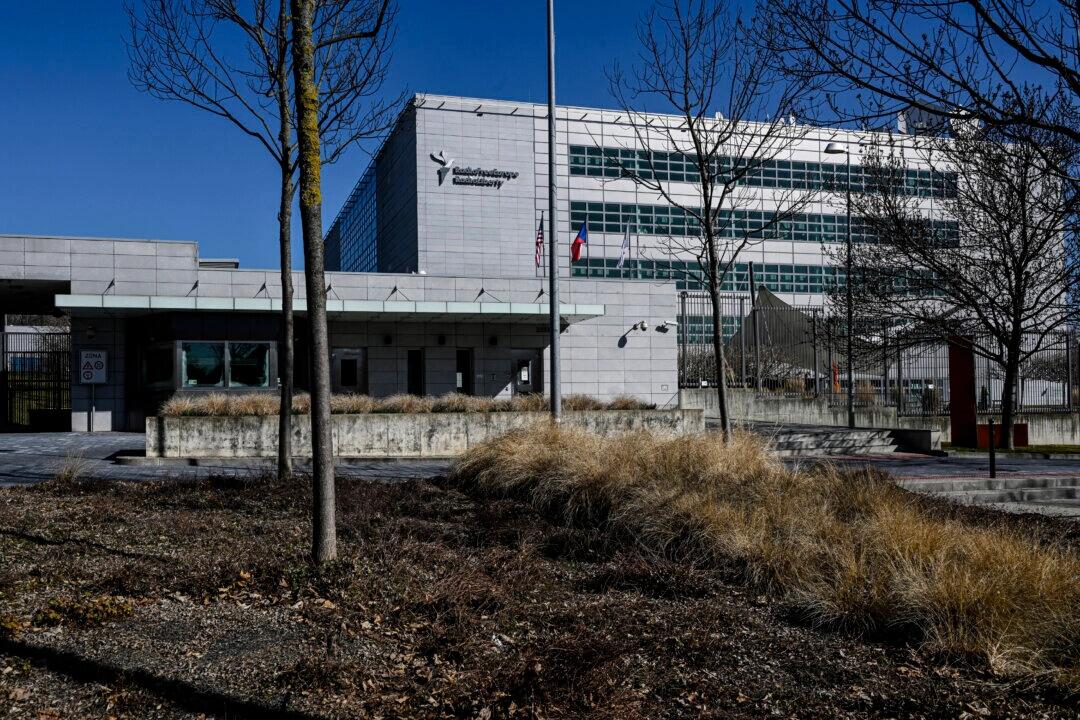
The headquarters of Radio Free Europe/Radio Liberty in Prague, Czech Republic, on March 18, 2025. Michal Cizek/AFP via Getty Images

U.S. District Judge Royce Lamberth issued a temporary restraining order sought by the media group, directing USAGM to immediately disburse over $12 million in funding for the month of April to Radio Free Europe.

Lamberth said the plaintiff had shown it would suffer irreparable harm absent a restraining order, noting that USAGM’s actions to terminate the grants agreement “threaten the very existence” of the group.

The judge also stated that Radio Free Europe is likely to succeed on the merits of its claim that USAGM had violated the Administrative Procedure Act by terminating the grants agreement.

Lamberth said the Trump administration must seek congressional approval to take such action, noting that it “has no residual constitutional power to refuse” to spend appropriations by Congress.

“It is, after all, Congress that makes the laws in this country. In this case, for example, it was Congress who ordained that the monies at issue should be allocated to RFE/RL,” Lamberth stated, referring to the acronym for Radio Free Europe.

The judge also determined that USAGM’s decision to change the grant agreement after the start of the fiscal year was “arbitrary and capricious.”

According to the court order, USAGM presented “a radically different grant agreement” in mid-April, leaving little time for a meaningful negotiation as Radio Free Europe was running out of funding.

If our nation is to thrive for another 250 years, each co-equal branch of government must be willing to courageously exert the authority entrusted to it by our Founders,” Lamberth stated.

USAGM moved to terminate Radio Free Europe’s grant agreement following President Donald Trump’s order directing officials to eliminate non-statutory components of the agency. USAGM has an annual budget of around $900 million and operates networks broadcasting in more than 60 languages and around 100 countries.

The cutbacks affect the organizations and agencies under its umbrella, including Voice of America (VOA); the Office of Cuba Broadcasting; Radio Free Europe/Radio Liberty, and other organizations such as Radio Free Asia, and the Middle East Broadcasting Networks.

Radio Free Europe was established during the Cold War to broadcast news to the Soviet Union. It describes itself as a “private, independent international news organization whose programs—radio, Internet, television, and mobile—reach a weekly audience of nearly 50 million people in 23 countries, including Russia, Ukraine, Iran, Afghanistan, Pakistan, the republics of Central Asia and the Caucasus.”

The organization filed a lawsuit against USAGM on March 18 and subsequently sought a temporary restraining order to block the funding cancellation.

Government lawyers have previously argued that the dispute is over a contract and can only be adjudicated by the Court of Federal Claims. The lawyers also said that while Congress makes funding available for grants to Radio Free Europe, there is no mandated sum within the appropriations specifically for the organization.

Stephen Capus, president and CEO of Radio Free Europe/Radio Liberty, welcomed the ruling and said that they hope to receive the funding quickly. Capus said the group had to furlough staff and scale back some of its programming due to the funding cut.

“Every day that USAGM withholds money further endangers our journalists, including four who are currently in prison,” Capus said in a statement. “We will remain in court and look forward to working with USAGM to ensure that we’ll be paid for the rest of the fiscal year.”

The Epoch Times reached out to USAGM for comment but did not receive a response by publication time.

Zachary Stieber contributed to this report.

Tyler Durden
Thu, 05/01/2025 – 03:30

via ZeroHedge News https://ift.tt/jnAQB2t Tyler Durden

Strategic Implications Of North Korea’s Expanding Naval Ambitions

Strategic Implications Of North Korea’s Expanding Naval Ambitions

Authored by Jihoon Yu via RealClearDefense,

North Korea’s recent unveiling of the Choe Hyon-class multipurpose destroyer signals a major transformation in its naval strategy, carrying profound and complex implications for regional and global security. The construction of this 5,000-ton warship marks a deliberate departure from Pyongyang’s traditional coastal defense doctrine, historically centered around small, fast attack craft optimized for littoral engagements. Instead, the new platform reflects an ambition to project power across broader maritime domains, signaling a strategic evolution towards an expeditionary, blue-water navy.

The enhanced operational radius provided by the Choe Hyon-class destroyer enables North Korea to extend its naval presence well beyond the Korean Peninsula, threatening key maritime routes and complicating the operational calculus of South Korea, Japan, and the United States. If this platform eventually secures the ability to launch nuclear-armed ballistic and cruise missiles, it would represent a transformative leap in Pyongyang’s deterrence posture. Equipped with vertical launch system (VLS), the destroyer could then field a diverse arsenal capable of targeting both land and sea-based assets across considerable distances, significantly elevating the strategic risks in the region.

If North Korea’s ongoing efforts to enhance its nuclear capabilities eventually lead to the deployment of nuclear warheads on this platform, the strategic landscape would be further destabilized. Sea-based nuclear platforms would introduce a new layer of strategic complexity. Unlike land-based missile systems, which are more readily tracked and targeted, mobile maritime platforms are inherently more elusive, complicating preemptive strike options and missile defense architectures. This mobility would grant North Korea a potent second-strike capability, eroding confidence in the stability of existing deterrence frameworks. As a result, adversaries may face greater difficulty in distinguishing between conventional and nuclear threats during a crisis, increasing the risk of inadvertent escalation.

The strategic implications would become even more acute if North Korea succeeds in complementing this surface capability with the acquisition of nuclear-powered submarines (SSNs) capable of launching submarine-launched ballistic missiles (SLBMs). Should Pyongyang succeed in fielding a credible SSBN (ballistic missile submarine) fleet, it would possess a survivable nuclear deterrent, fundamentally altering the strategic balance in Northeast Asia. Reports suggest that North Korea’s SSN program has received clandestine assistance, possibly from Russia, accelerating its timeline and technological sophistication.

The unveiling of the Choe Hyon-class destroyer must also be seen within the broader context of North Korea’s doctrinal shift toward proactive military operations. Moving away from a historically reactive defense posture, Pyongyang appears increasingly willing to embrace preemptive, offensive maritime strategies aimed at undermining U.S. and allied freedom of navigation in the region. This trajectory raises the possibility of North Korea seeking to impose a regional anti-access/area-denial (A2/AD) strategy, leveraging both land- and sea-based assets to constrain allied operational flexibility in a crisis.

Such developments risk fueling a maritime arms race in Northeast Asia, prompting South Korea, Japan, and the United States to accelerate investments in naval modernization, undersea warfare capabilities, and integrated missile defenses. Yet simply matching North Korea platform-for-platform would be insufficient. Addressing the broader strategic challenge requires a comprehensive approach that enhances maritime domain awareness, strengthens alliance interoperability, and builds layered missile defenses capable of countering both conventional and nuclear threats. Enhanced investment in anti-submarine warfare (ASW) capabilities, the deployment of more resilient undersea surveillance systems, the expansion of joint maritime exercises, and the establishment of rapid-reaction maritime forces will also be critical to preempt and deter potential provocations. In particular, South Korea should seriously consider pursuing its own nuclear-powered submarine program to enhance its underwater operational endurance and strategic deterrence, thereby reinforcing its ability to respond flexibly to the evolving undersea threat environment.

Ultimately, the deployment of advanced platforms like the Choe Hyon-class destroyer reflects not merely a technical upgrade, but a profound recalibration of North Korea’s strategic ambitions. Pyongyang is no longer content to deter adversaries solely through the threat of land-based nuclear retaliation; it seeks to establish itself as a maritime power capable of projecting coercive influence across the Indo-Pacific. If left unaddressed, North Korea’s evolving naval capabilities could significantly erode regional stability and embolden Pyongyang’s broader strategic calculus. A coordinated, multidimensional response from the United States, South Korea, Japan, and other regional stakeholders—encompassing deterrence, defense, diplomacy, and sustained pressure on North Korea’s illicit networks—is urgently required to mitigate these emerging threats and preserve a credible deterrence posture.

Jihoon Yu is a research fellow and the director of external cooperation at the Korea Institute for Defense Analyses. Jihoon was the member of Task Force for South Korea’s light aircraft carrier project and Jangbogo-III submarine project. He is the main author of the ROK Navy’s Navy Vision 2045. His area of expertise includes the ROK-US alliance, the ROK-Europe security cooperation, inter-Korean relations, national security, maritime security, and maritime strategy. He earned his MA in National Security Affairs from the US Naval Postgraduate School and PhD in Political Science from Syracuse University.

Tyler Durden
Thu, 05/01/2025 – 02:00

via ZeroHedge News https://ift.tt/0IiXJRU Tyler Durden

India Soon To Surpass UK As Largest Migrant Community In Australia: ABS

India Soon To Surpass UK As Largest Migrant Community In Australia: ABS

Authored by Daniel Y. Teng and Naziya Alvi Rahman via The Epoch Times (emphasis ours),

Australia’s population is now more multicultural than ever, with over 8.6 million residents born overseas—about 31.5 percent of the total population.

A young boy enjoys the Diwali light show put on by residents of Phantom Street, Nirimba Fields in western Sydney on Nov. 1, 2024. Brook Mitchell/Getty Images

The biggest surge came from India, which is expected to surpass the UK as the top country of birth for migrants later this year.

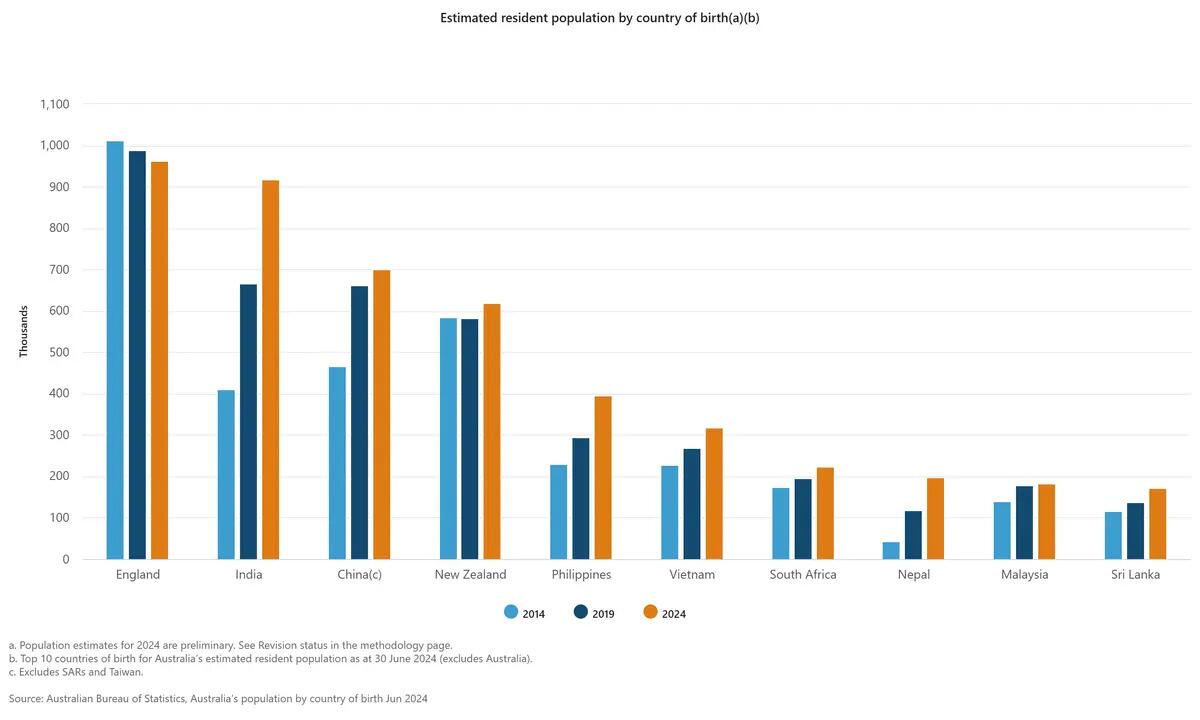
The latest data from the Australian Bureau of Statistics (ABS) shows that in 2025, there were 963,560 migrants from the UK, 916,330 from India, 700,120 from China (excluding Hong Kong and Macau), 617,960 from New Zealand, and 394,380 from the Philippines.

This was followed by Vietnam (318,760), South Africa (224,160), Nepal (197,800), Malaysia (183,490), and Sri Lanka (172,800).

Overall, the proportion of overseas migrants has steadily increased over recent decades from 23.8 percent in 2004 to 31.5 percent in 2024.

Globally, Australia ranked eighth in terms of the number of international migrants. The United States topped the list with 52.4 million overseas-born residents.

Data from the Australian Bureau of Statistics on the country’s overseas-born population. ABS

How It Breaks Down

Migration from Europe has steadily declined over the years, with Asian countries becoming the dominant source of new arrivals.

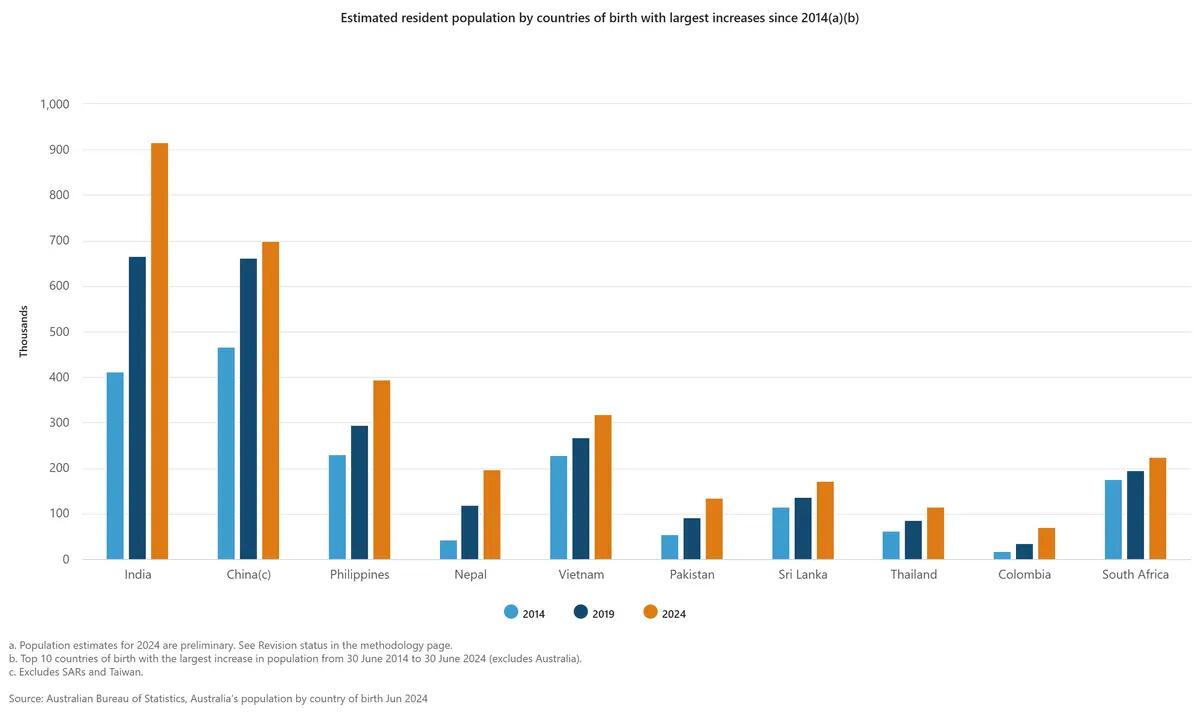
India migration has continued to surge with an additional 505,000 people entering Australia in the decade from 2014 to 2024, followed by China (234,000), the Philippines (164,000), and Nepal (155,000).

“India’s demographics, coupled with its skilled workforce and a high demand for international education, have made Australia a preferred destination,” said Annathurai Gnanasambandam, director of Visa Help Australia, in an interview with The Epoch Times.

On the flipside, the UK recorded the largest decrease in migrants, with 47,000 fewer individuals entering Australia from 2014 to 2024, followed by Italy (44,000), Greece (28,000), and Germany (18,000).

The average median age of European migrants is 60 years and over, reflecting the post-World War II migration trend.

Which Cities?

The demographic make-up of each state and territory differs as well.

In New South Wales, Chinese migrants were the largest source of overseas residents, followed by the British and Indians, according to the 2021 Census.

In Victoria, Indian migration was the largest by far, outstripping Chinese migration by about 90,000 individuals.

In Queensland, New Zealanders and British were the largest overseas communities, followed by Indians and Chinese.

The British were the biggest contributors to Western Australia and Tasmania.

Population Growth a Contentious Issue

Migration has continued to be a sensitive subject as Australians struggle with housing affordability.

The Coalition has accused the Albanese government of mismanaging immigration, with net overseas migration for 2023–24 forecast to reach 340,000—80,000 higher than initial estimates.

Shadow Immigration Minister Dan Tehan blamed Labor for “consistently overshooting” forecasts and pledged to cut permanent migration from 185,000 to 140,000 if elected.

But Treasurer Jim Chalmers defended the government’s position, pointing out that net migration was declining.

“It’s now at its lowest point since the pandemic,” he said, adding the system is being rebalanced to serve Australia’s national interest.

Tyler Durden
Wed, 04/30/2025 – 23:25

via ZeroHedge News https://ift.tt/3GTKXlB Tyler Durden

Gold Tumbles On Near-Record Chinese Liquidations

Gold Tumbles On Near-Record Chinese Liquidations

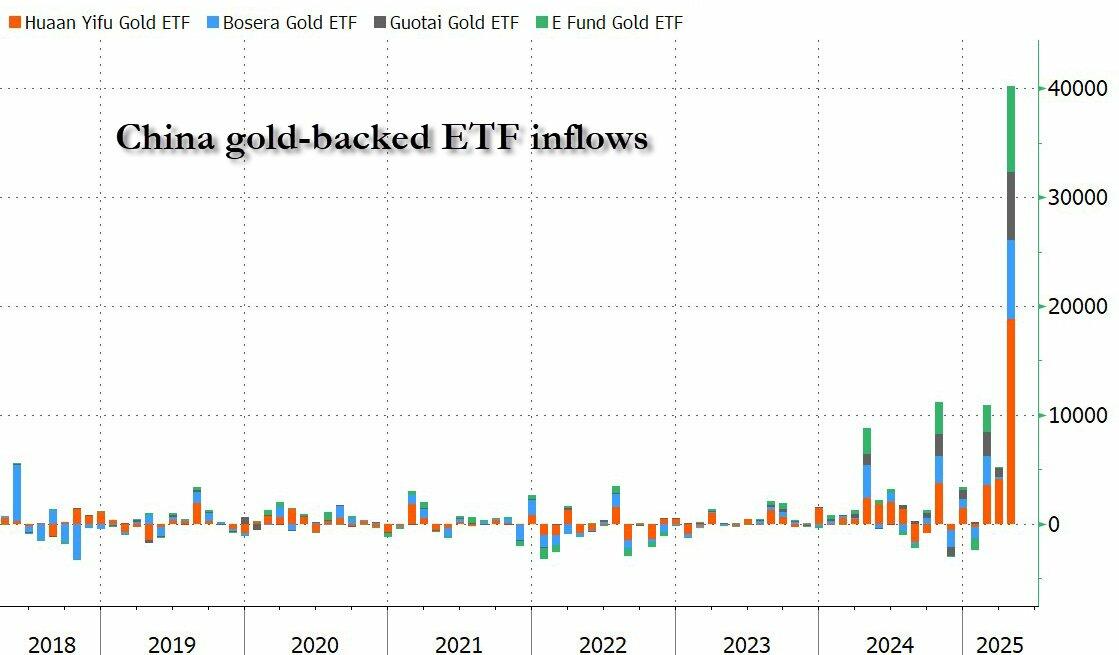
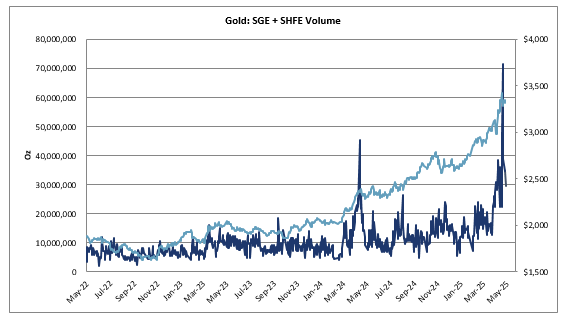
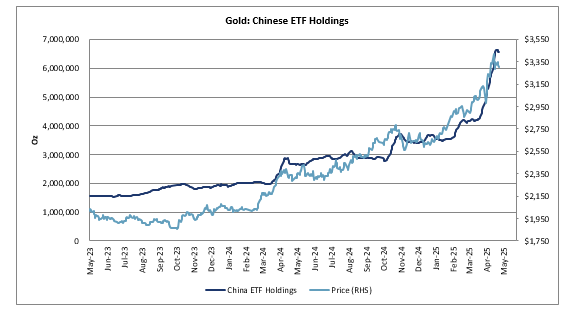
Just one week ago, China seemingly couldn’t get enough of gold, and the price of spot briefly touched a record $3500 as a result of, among other things, staggering inflows into Chinese gold ETFs such as the Huaan Yifu, Bosera and Guotai gold ETFs.

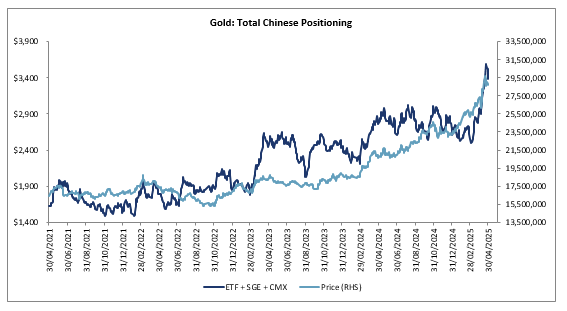
But, as with all things momentum-based in China, it’s easy come, easy go in the land of Dragons, and as Goldman commodity trader Adam Gillard writes, China liquidated what it bought last week ahead of the Labor Day holiday, resulting in total onshore positioning now 5% off the ATH. And while China’s share of total open interest remains on the highs at ~40%, upward momentum may have peaked for the time being.

Here is the story of Chinese gold buying… and then selling, in five charts.

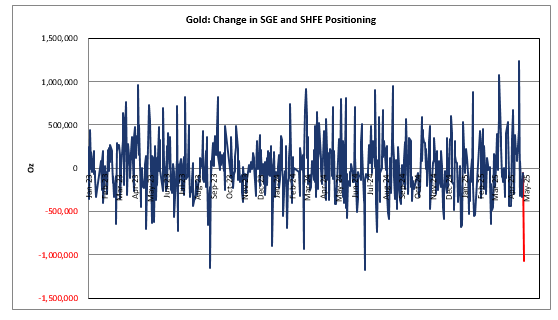
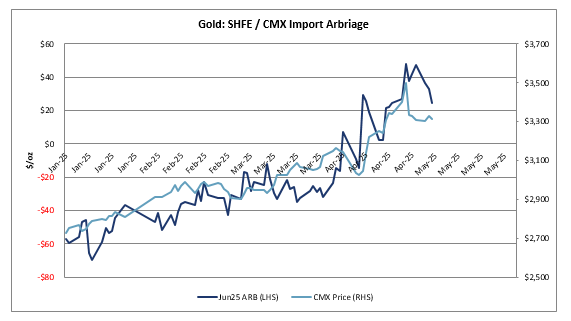
Last Tuesday (22nd April) gold made an ATH as China added 1.2mn oz of positioning across SGE and SHFE, on record volume….

… so fast forward to today, when China liquidated a near-record 1mn oz across SHFE and SGE, reversing the entire April 22 blow-off top.

… although the ETF was largely unchanged

… Resulting in total Chinese positioning now ~5% off the ATH .

And the paper (spec) import arbitrage ~$20/oz off the highs

According to Gillard, who confirms our recent observation that all recent price moves take place exclusively around the time China opens…

… China is having a disproportionate impact on price because they execute during an illiquid part of the day (Asia morning) which likely triggers ex China CTA trading signals. Sure enough, gold is dumping in early Asian trading to the lowest level in 2 weeks.

More int the full Goldman note available to pro subs.

Tyler Durden
Wed, 04/30/2025 – 22:58

via ZeroHedge News https://ift.tt/spYNyUz Tyler Durden

Supreme Court Weighs Case About Mistaken FBI Raid

Supreme Court Weighs Case About Mistaken FBI Raid

Authored by Sam Dorman via The Epoch Times (emphasis ours),

The Supreme Court heard oral arguments on April 29 over whether the FBI should be protected from a civil suit over its mistaken raiding of a Georgia couple’s home in 2017.

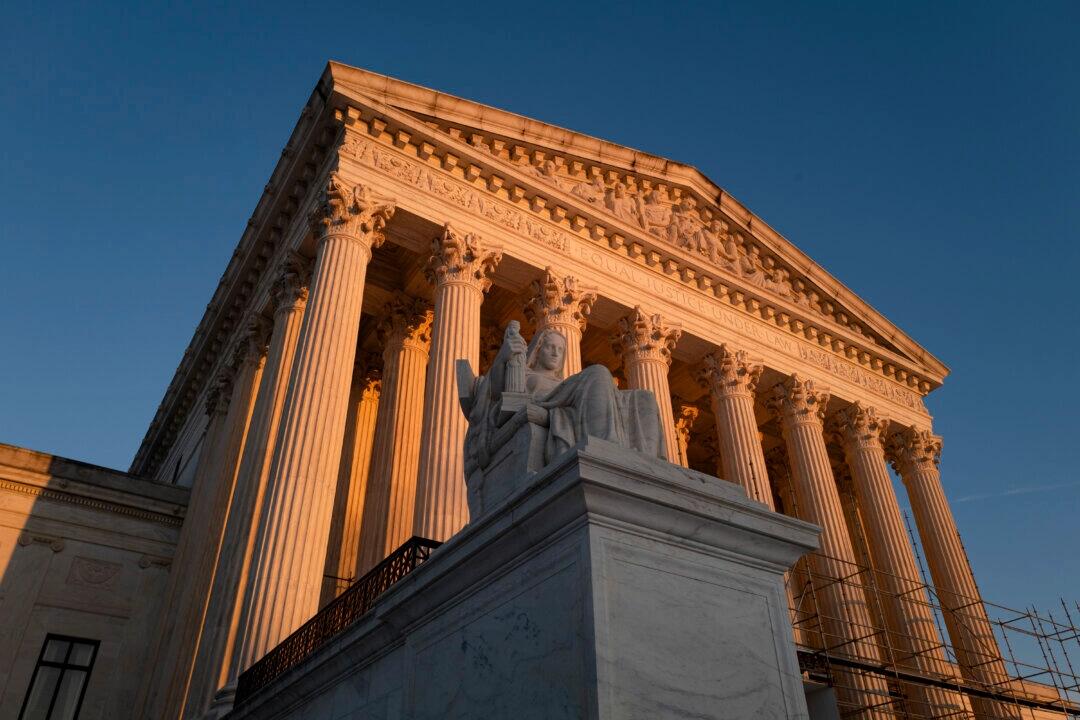
The U.S. Supreme Court building in Washington on Feb. 10, 2025. Madalina Vasiliu/The Epoch Times

In the early morning hours of Oct. 18, 2017, FBI Special Agent Lawrence Guerra mistakenly believed he had arrived at a gang member’s home to execute a search warrant. Instead, he smashed through the door of a different home—that of Hilliard Toi Cliatt and his partner, Curtrina Martin.

According to their petition to the Supreme Court, Cliatt pulled Martin into a walk-in closet while her 7-year-old son hid under his bed covers. Guerra eventually realized he had gone to the wrong address, and after raiding the correct home, returned to apologize at the home he had mistakenly raided.

Although Guerra had conducted a pre-dawn drive-by in preparation, court filings state that the GPS directed them to a different home. The address of Cliatt’s and Martin’s home was not on the house itself but was instead on the mailbox and “is not visible from the street,” according to the Justice Department’s filing.

During oral arguments on April 29, the Supreme Court weighed whether Martin and Cliatt should be able to sue the government. A law known as the Federal Tort Claims Act generally allows individuals to sue the government for certain acts, such as assault, false arrest, or abuse of process. It includes an exception, however, for legal claims involving the government’s discretion in performing a particular duty or function.

This was the caveat the U.S. Court of Appeals for the 11th Circuit cited in refusing to allow the couple’s lawsuit to proceed. Martin and Cliatt, however, pointed to a provision added to the law in 1974 after mistaken raids in Collinsville, Illinois. That provision allowed legal arguments by plaintiffs based on “acts or omissions of investigative or law enforcement officers of the United States Government.”

The justices’ line of questioning on April 29 indicated they would remand or send the case back to the appeals court with a narrow win for the couple that entailed more consideration by another judge.

At one point, Justice Neil Gorsuch seemed incredulous at some of the comments made by Assistant to the Solicitor General Frederick Liu, who suggested that the FBI agents’ mistakes were protected as an attempt to exercise discretion. Liu argued that because there was no specific policy directing the FBI agent not to search a house other than the suspect’s, he retained some level of legal protection.

“No policy says don’t break down the wrong house—door of a house … don’t traumatize its occupants, really?” Gorsuch asked.

Liu said that while the United States’ policy “of course” is to execute warrants at the correct house, “stating the policy at that high level of generality doesn’t foreclose or prescribe any particular action and how an officer goes about identifying the right house.” He went on to suggest that officers may need to consider things such as public safety and efficiency when determining whether to take an “extra precaution” to ensure they’re at the right house.

Gorsuch interjected, saying, “You might look at the address of the house before you knock down the door.”

“Yes,” Liu responded, adding, “that sort of decision is filled with policy tradeoffs.”

Gorsch interrupted, asking, “Really?”

After Liu said that checking the house number at the end of the driveway could expose agents to potential lines of fire, Gorsuch asked, “How about making sure you’re on the right street … checking the street sign? Is that too much?”

Liu told Justice Sonia Sotomayor that the 1974 addition removed one layer of protection for officers but allowed another layer to stay in place.

“That is so ridiculous,” Sotomayor said. “Congress is looking at the Collinsville raid and providing a remedy to people who have been wrongfully raided, and you’re now saying, no, they really didn’t want to protect them fully.”

Tyler Durden
Wed, 04/30/2025 – 22:35

via ZeroHedge News https://ift.tt/ejLiyHC Tyler Durden

Zombie Tankers Emerge In Venezuelan Oil Trade

Zombie Tankers Emerge In Venezuelan Oil Trade

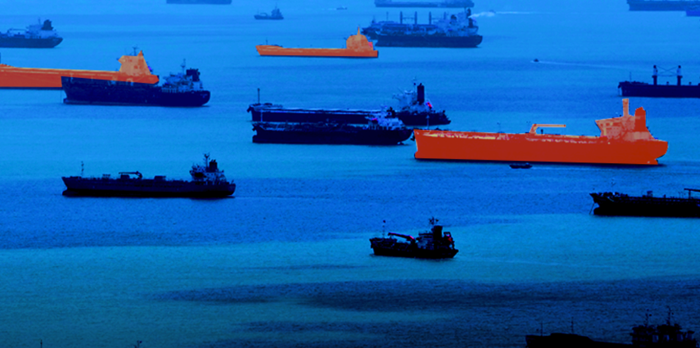
An increasing number of “zombie” or “phantom” oil tankers—vessels that assume the identities of scrapped ships—have emerged off Venezuela’s coast, allowing dark fleet operators to circumvent U.S. trade restrictions on global oil transport. 

According to a Bloomberg report, one of these zombie tankers was recently spotted off the waters of Malaysia after a two-month voyage from Venezuela, raising many red flags. 

The report describes how dark fleet operators transform tankers into floating zombies:

The vessel raised some red flags: it was 32 years old, past the age at which it would normally have been scrapped, and it was sailing under the flag of Comoros, a popular flag of convenience that makes ships harder to monitor.

For all intents and purposes, though, it seemed like any other so-called dark fleet tanker that carries barrels of sometimes sanctioned oil from producers like Russia, Iran and Venezuela. Except it wasn’t.

The real Varada, which wasn’t sanctioned, had actually been demolished in Bangladesh in 2017. This vessel was what’s known as a zombie or phantom ship, which take on the identities of scrapped tankers to appear legitimate and avoid scrutiny from authorities in the U.S. and elsewhere.

Bloomberg investigators obtained ship-tracking data and satellite imagery showing that at least four zombie tankers have been involved in the Venezuelan oil trade with Asia. At the same time, the Trump administration ramped up maximum pressure, forcing Western oil firms to withdraw from the country. 

Last week, John Hurley, a hedge fund veteran who’s been nominated to lead the Treasury Department’s terrorism and financial intelligence arm, warned about “consequences” for any nation that purchases Venezuelan oil.

Hurley would enforce President Trump’s executive order, which could impose 25% tariffs on countries that purchase crude from Venezuela.

President Trump is sending a clear message that access to our economy is a privilege, not a right, and countries importing Venezuelan oil will face consequences,” Hurley wrote in responses to questions from the U.S. Senate Banking Committee. 

Bloomberg first reported zombie tankers in September and November last year, and maritime intelligence analysts have been paying attention.

“Zombie ships are the third way,” Starboard analyst Mark Douglas said, adding, “The thinking is like: ‘I can’t afford to run my own system, so I’ll use another ship’s identity to get that oil from point A to point B.'”

Using a dark fleet network and zombie tankers, China has quietly become the largest buyer of Venezuelan oil. Perhaps tariffs alone will fall short—maybe Hurley’s strategy will involve slapping Beijing in the face with sanctions. 

Tyler Durden
Wed, 04/30/2025 – 22:10

via ZeroHedge News https://ift.tt/UsX0VKh Tyler Durden

Why The US Denied A Request From Mexico For Water

Why The US Denied A Request From Mexico For Water

Authored by Autumn Spredemann via The Epoch Times (emphasis ours),

Mexico’s delinquent water deliveries, in violation of an 81-year-old treaty with the United States, have exposed years of “blind eye” policies, rapid population growth, and hydrological changes, according to an expert at the U.S. Army War College.

Illustration by The Epoch Times, Shutterstock

Evan Ellis, research professor of Latin American studies at the college’s Strategic Studies Institute, told The Epoch Times that recent tensions over Mexico’s delinquent water deliveries have come from “years of looking the other way” on the part of the United States.

U.S. President Donald Trump has requested that the United States’ southern neighbor honor its obligation to deliver 1.3 million acre-feet of water to Texas. The amount totals almost 70 percent of a five-year water commitment that’s due in October.

Just last month, I halted water shipments to Tijuana until Mexico complies with the 1944 Water Treaty,” Trump wrote in an April 10 post on his social media platform, Truth Social.

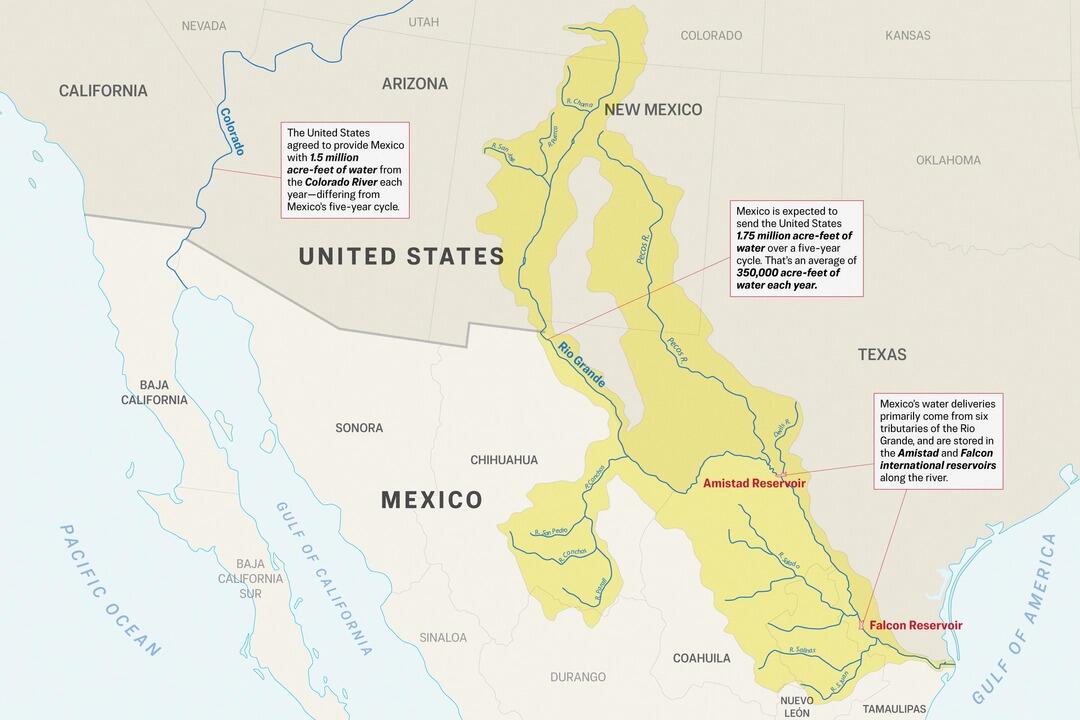
Under the reciprocal agreement, Mexico is expected to send the United States 1.75 million acre-feet of water over a five-year cycle. That’s an average of 350,000 acre-feet of water each year. The water deliveries primarily come from six tributaries of the Rio Grande, and are stored in the Amistad and Falcon international reservoirs along the river.

One acre-foot of water—one acre of water at a depth of one foot—is roughly enough to fill half of an Olympic-size swimming pool. Mexico’s average annual obligation is enough water to supply 700,000 to 1 million Texas households for a year.

In exchange, the United States agreed to provide Mexico with 1.5 million acre-feet of water from the Colorado River each year—differing from Mexico’s five-year cycle.

The Tijuana shipments that Trump said were halted were part of a non-treaty water request from Mexico.

The U.S. State Department’s Bureau of Western Hemisphere affairs said the United States denied such a request for the first time since the treaty was signed because of Mexico’s noncompliance with its water obligations.

“Mexico’s continued shortfalls in its water deliveries under the 1944 water-sharing treaty are decimating American agriculture—particularly farmers in the Rio Grande valley,” the State Department wrote in a statement on social media platform X on March 20.

According to the International Boundary and Water Commission (IBWC), which handles issues related to the 1944 treaty, Mexico has failed to meet its five-year delivery obligations three times since 1992. Each of those debts was carried over to the following cycle and ultimately paid.

Mexico also fell short in average minimum annual deliveries within the 2002–2007 and the 2015–2020 cycles. Those shortfalls were met very close to the end of the cycles—in 2020, within just three days of the deadline.

Although the deliveries were ultimately fulfilled, the unpredictable nature of water deliveries from the Rio Grande has impacted water users on both sides of the border.

The current cycle for both countries ends in October, but according to IBWC data, by March 29, just 28 percent—or less than 500,000 acre-feet of water—of Mexico’s water obligation had been delivered.

A water delivery truck loads water for sale in Tijuana, Mexico, on March 24, 2025. On March 20, the United States announced it denied Mexico’s request for Colorado River water, pressuring the country to meet its obligation to deliver 1.3 million acre-feet of water to Texas under the 1944 Water Treaty. Guillermo Arias/AFP via Getty Images

In response to a query about how much of the United States’ water commitment to Mexico has been met, IBWC public affairs chief Frank Fisher cited an agency graph showing that the United States had met about half of its 2025 commitment as of April 19.

In November 2024, the two countries agreed to a treaty amendment that would give Mexico more ways to meet its water obligation. Those options include providing water from the San Juan and Alamo rivers, which are not part of the Rio Grande tributaries specified in the treaty. The agreement also set up a working group to explore other sources of water.

Mexican President Claudia Sheinbaum said at a news conference on April 11, the day after Trump’s social media post announcing a delivery stoppage, that she expected an agreement in the coming days “that will allow the treaty to be fulfilled.” She called the treaty “fair.”

Sheinbaum told reporters that there would be “an immediate delivery of a certain number of millions of cubic meters that can be provided according to the water availability in the Rio Grande.”

In response to a query about whether Mexico had made that delivery, the State Department confirmed that Mexico had committed to making an immediate transfer of water, but it did not confirm that the delivery had been made.

The State Department stated on April 28 that the two countries had committed to developing “a long-term plan to reliably meet treaty requirements while addressing outstanding water debts—including through additional monthly transfers and regular consultations on water deliveries that take into consideration the needs of Texas users.”

Sheinbaum has blamed her country’s increasingly delinquent water shipments on extended periods of drought that have affected the Rio Grande.

Talks are underway with the governors of Tamaulipas, Coahuila, and Chihuahua to reach a joint agreement to determine how much water can be delivered … without affecting Mexican producers, while also complying with the 1944 treaty,” Sheinbaum said during a news conference on April 15, referring to three Mexican states that border Texas. The Rio Grande serves as the international boundary.

Historically, Mexican farmers have contested attempts to increase water deliveries to the United States for fear of losing their crops.

In September 2020—before an October delivery deadline—farmers in Mexico’s Chihuahua state, which borders New Mexico and Texas, were involved in heated protests over government attempts to deliver 378 cubic meters of water to the United States, claiming that their livelihoods were at stake amid severe drought conditions. One protester was killed in clashes with the Mexican National Guard.

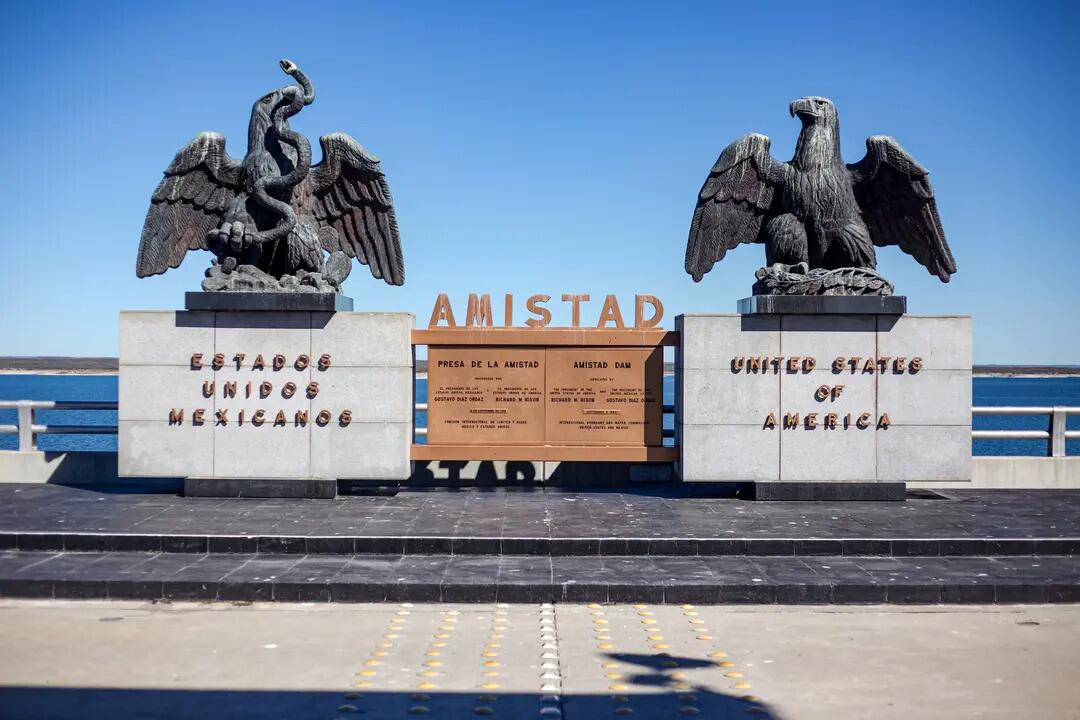
Sculptures stand along the international boundary at Amistad Reservoir on the U.S.–Mexico border near Ciudad Acuña, Mexico, on Feb. 21, 2017. Guillermo Arias/AFP via Getty Images

Downstream Dilemma

Maria-Elena Giner, then-commissioner of the IBWC’s U.S. division, told The Epoch Times on April 18 that the division is “in close contact with the administration regarding the need for Mexico to commit to predictable and reliable Rio Grande water deliveries.”

We have continued to request that Mexico make monthly deliveries and provide a specific plan outlining how they intend to make up their historic shortfall in the next five-year cycle,” Giner said.

“At the same time, we are doing everything we can to assist impacted south Texas stakeholders, including alerting growers and irrigation districts about available federal and local resources and sharing our historical data on Rio Grande hydrology.”

Giner, a Biden appointee, resigned on April 21. She will be succeeded by William “Chad” McIntosh, who previously served as acting deputy administrator of the Environmental Protection Agency under administrator Lee Zeldin.

The 1944 water agreement between the United States and Mexico was struck at a time when groundwater was abundant, and droughts weren’t as lengthy. Both nations agreed to share water from two rivers that help define the international border: the Colorado River and the Rio Grande.

Like the Rio Grande in Mexico, the Colorado River in the United States has faced extreme drought in recent years.

Since 2000, the Colorado River, which originates in the Rockies and joins Mexico at the California–Arizona border, has experienced a “historic, extended drought” that has taken a heavy toll on regional water supplies.

At the same time, population and agricultural growth in Colorado River Basin states have grown exponentially over the two decade period.

Currently, the Colorado River Basin provides water to an estimated 40 million residents in seven U.S. states and irrigates more than 5 million acres of farmland.

Read the rest here…

Tyler Durden
Wed, 04/30/2025 – 21:45

via ZeroHedge News https://ift.tt/FyUIwD6 Tyler Durden

Jet-Powered “Superbike For The Skies” Emerges Out Of Stealth Mode

Jet-Powered “Superbike For The Skies” Emerges Out Of Stealth Mode

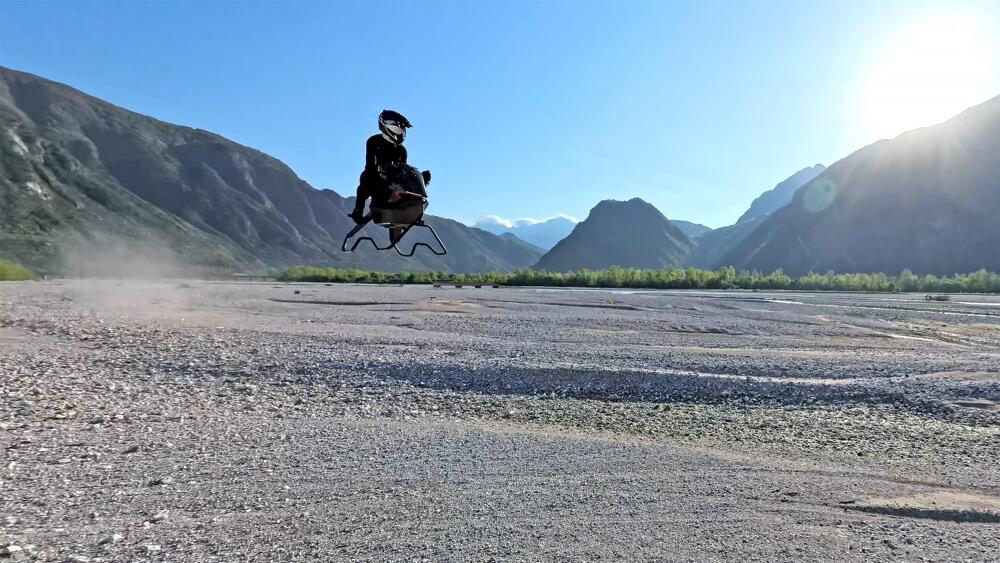
A “superbike for the skies” has officially emerged from stealth mode, drawing striking parallels to the iconic speeder bikes from the early 1980s sci-fi classic Star Wars: Episode VI – Return of the Jedi.

Poland-based startup Volonaut unveiled a single-seater jet-powered hoverbike that clocks in speeds in excess of 124 mph. 

“The futuristic single occupant vehicle is a realization of a bold concept often portrayed in science-fiction movies – this is where the inspiration came from many years ago and with time became the obsession to its creator,” the company wrote in an emailed response. 

Volonaut noted, “Thanks to Airbike’s extremely compact size and no spinning propellers it can travel through most confined areas with ease.”

The startup dripped a teaser video ahead of the release on Tuesday…  

Followed by the official launch video on Wednesday, titled “Meet the Airbike.” 

What’s better than electric spinning blades?  Volonaut demonstrates how jet propulsion will be the future. 

Tyler Durden
Wed, 04/30/2025 – 21:20

via ZeroHedge News https://ift.tt/YCGuq1L Tyler Durden