Trump To Address Nation With ‘Important Update’ On Iran War: What Will He Say?
Update (0845ET): Minutes after we prepared this post, President Trump posted on his social media feed that Iran has asked for a ceasefire:
“Iran’s New Regime President, much less Radicalized and far more intelligent than his predecessors, has just asked the United States of America for a CEASEFIRE!”
Trump added that he will consider it if the Strait is opened… or else!
“We will consider when Hormuz Strait is open, free, and clear. Until then, we are blasting Iran into oblivion or, as they say, back to the Stone Ages!!!“
Presumably this will be a topic of tonight’s address to the nation, but once again it takes two (or three) to TACO and until the Strait is open, all bets are still off.
* * *
President Donald Trump is scheduled to address the nation on April 1 to give an update on the military operation in Iran, according to the White House.
White House press secretary Karoline Leavitt said in a post on X that the president will provide “an important update” about the ongoing war at 9 p.m. ET on Wednesday.
During a White House press conference on March 31, Trump indicated that the U.S. military may conclude its combat operations against Iran within weeks.
“I would say that within two weeks, maybe two weeks, maybe three. We’re hitting them very hard. Last night we knocked out tremendous amounts of missile-making facilities,” he told reporters.
“We’re finishing the job, and I think within, maybe two weeks, maybe a couple of days longer, to do the job. But we want to knock out every single thing they have.”
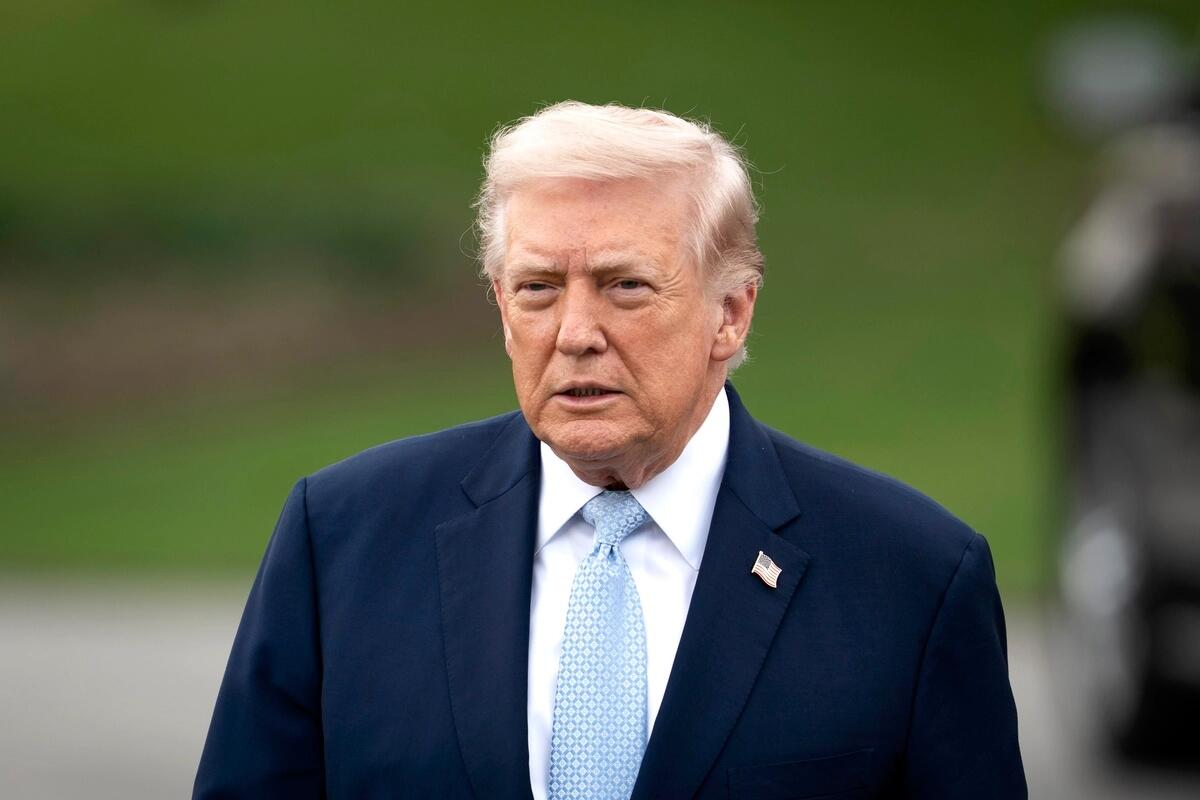
As The Epoch Times’ Aldgra Fredly reports, Trump said while there is a possibility of reaching a deal with Iran to end the military operations for Tehran’s surrender of its nuclear weapons program, the operation could still be ended without any deal.
“If they come to the table, that’ll be good. But it doesn’t matter whether they come or not. We’ve set them back, it’ll take 15 to 20 years for them to rebuild what we’ve done to them,” the president said.
When asked about the impact of the war on gas prices, Trump said, “All I have to do is leave Iran, and we’ll be doing that very soon, and they’ll come tumbling down.”
Iranian Foreign Minister Abbas Araghchi has denied engaging in direct negotiations with the United States. He told Al Jazeera on March 31, “We do not have any faith that negotiations with the U.S. will yield any results.”
Shipping through the Strait of Hormuz has been disrupted since the United States and Israel began military operations against Iran at the end of February. Tehran has retaliated by firing missiles and drones at Israel and U.S. military assets and targets across Gulf nations.
Oil prices have surged in recent weeks, with the U.S. national average retail price for a gallon of regular gasoline exceeding $4 on March 31 for the first time since August 2022, after Russia’s invasion of Ukraine began.
At a Pentagon press briefing on March 31, Secretary of War Pete Hegseth said the previous 24 hours had marked the lowest number of Iranian missile and attack drone launches since the fighting began.
“The latest intel is clear … our strikes are damaging the morale of the Iranian military, leading to widespread desertions, key personnel shortages, and causing frustrations amongst senior leaders,” Hegseth said.
Since the start of the military campaign—dubbed Operation Epic Fury—U.S. forces have struck more than 11,000 targets, according to U.S. Central Command.
So what will President Trump say?
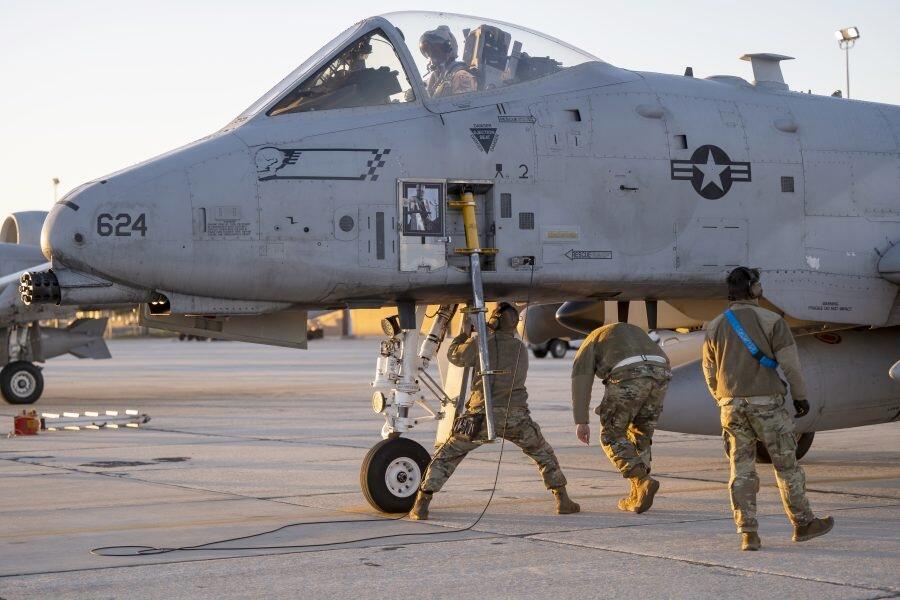
With the recent deployment of A-10s and Apaches (consistent with a military option that involves close-air support and/or attacks on Iranian fast boats and water drones) in mind, Larry Johnson lays out three possibilities:
Option 1 — Declare that negotiations with Iran via intermediaries (e.g., Pakistan) are progressing and that they United States is going to cease combat operations against Iran in order to support the negotiations and achieve a peaceful resolution.
Option 2 — Declare that victory has been achieved and that US forces will begin withdrawing from the region, leaving the status of the Strait of Hormuz in limbo.
Option 3 — Announce a massive air and ground operation to secure the freedom of navigation through the Strait of Hormuz.
The deployment of the A-10s and the Apaches can only mean one of two things:
-
It is a show of force intended to pressure Iran to return to the negotiating table.
-
The US is going to launch a massive attack against Iranian assets in the Persian Gulf, especially those located in and around the Strait of Hormuz.
Since Monday, March 30, 2026, President Donald Trump has made several public comments on the ongoing US-led Operation Epic Fury against Iran, primarily via Truth Social posts, interviews (including with the New York Post), and remarks to reporters. His statements emphasize US military successes, threats of further escalation if demands are unmet, criticism of allies, and a potential near-term wind-down of direct US involvement.
On Monday, Trump described Iran as effectively “decimated” or “obliterated,” with its air force, navy, and many ships sunk or destroyed. He portrayed the campaign as highly successful and “way ahead of schedule” in prior context, but continued highlighting strikes on “long-sought-after targets.” He shared video footage on Truth Social of a massive explosion and secondary blasts in Isfahan (linked to strikes on uranium-related or military sites), without additional caption in one instance.
Trump also posted that the US was in “serious discussions with a new, and more reasonable, regime” to end operations. He warned that if the Strait of Hormuz is not “immediately ‘Open for Business’” and a deal is not reached shortly, the US would “completely obliterate” Iran’s electric generating plants, oil wells, Kharg Island, and possibly desalination plants. He framed this as concluding the US “lovely ‘stay’ in Iran.” In follow-up comments, he suggested the US could respond to Iranian actions “twenty times harder” with “Death, Fire, and Fury.”
Overall, Trump’s messaging since March 30 combines triumphalism about US achievements, escalatory warnings tied to the Strait of Hormuz and energy targets, frustration with allies, and signals of de-escalation with a short timeline for reduced US involvement. These comments have influenced market reactions (e.g., oil prices and equities) and drawn responses from Iranian officials and international observers.
Trump’s remarks since Monday have boosted the confidence of the folks on Wall Street and contributed to a significant surge in the stock market, with the Dow up 1,125 points. The price for BRENT oil dropped from 118 to 103 during Tuesday trading. This means the financial folks believe the war is going to end.
I think Trump is counting on Iran offering up some concessions in the face of the US buildup of additional air combat assets.
Netanyahu reportedly just said Iran no longer poses threat to Israel’s existence… A dramatic pivot if true.
However, over the last few hours, Israel and the US carried out a large wave of attacks across Iran.
They struck targets across several parts of Tehran, as well as in the cities of Karaj, Shahriar, Ahvaz, Shiraz, Abadeh, Isfahan, and Bandar Abbas. Iran will retaliate in force to these latest attacks.
In short, I believe Donald Trump will announce a major offensive to try to force Iran to release its chokehold on the Strait of Hormuz… I believe that offensive will fail and that the war will escalate unless the US and Israel agree to two critical Iranian demands: the end of all sanctions and the removal of US military bases from the Persian Gulf arab countries.
Russia and China are two wild cards that could change the trajectory of the current war. If they engage and apply pressure on the diplomatic front — including ironclad security guarantees to Iran — Donald Trump may take the exit ramp.
Tyler Durden
Wed, 04/01/2026 – 08:46
via ZeroHedge News https://ift.tt/LFNYTBS Tyler Durden