China’s “National Team” Dumped ETFs In Q1 To Cool Overheating Market
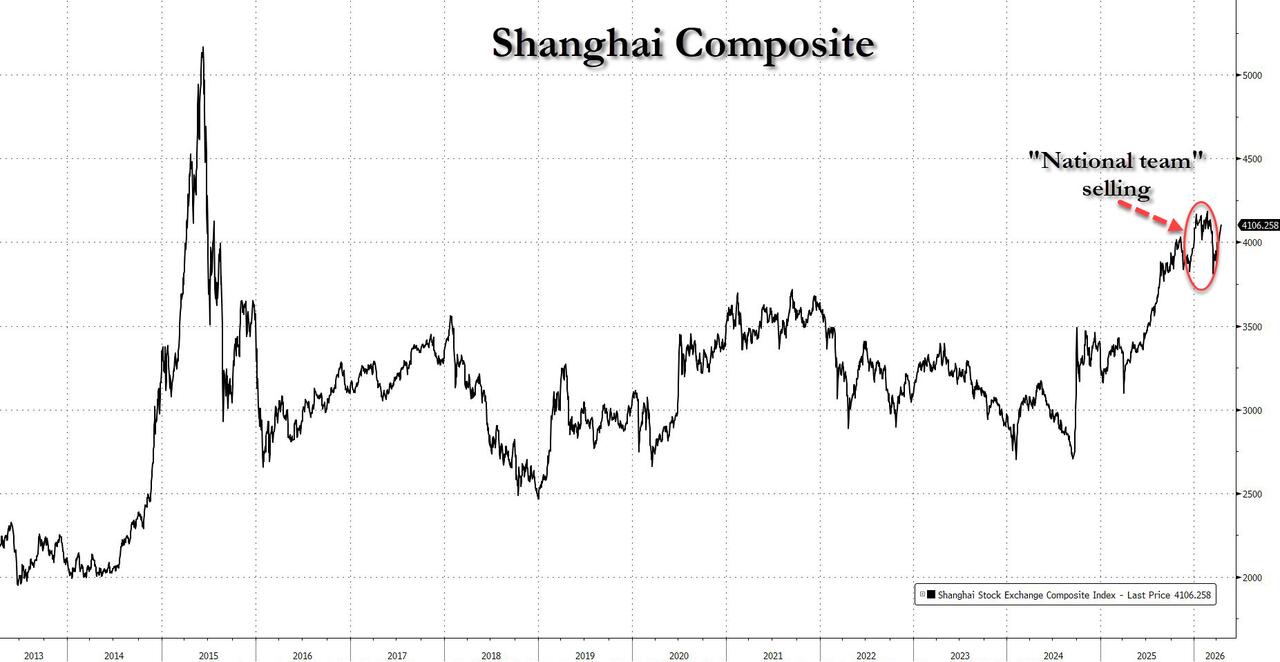
For years, and especially after the local stock bubble burst in spectacular fashion a little over a decade ago, China’s “National Team” – a polite euphemism for the country’s Plunge Protection Team – could be relied upon to step in and provide a lending hand – or rather buying hand – to stabilize stocks in the nick of time. Well, it may be time to rename it to the Surge Protection Team
According to Bloomberg, China’s “national team” has stepped back from its dominant role in the country’s biggest stock ETFs, pointing to efforts to rein in an overheated rally earlier this year.
Central Huijin Investment Ltd – a core unit of China’s sovereign wealth fund that traditionally led a group of state-backed investors used to stabilize markets – cut its ownership in several key exchange‑traded funds to below the 20% disclosure threshold, according to first‑quarter filings. Its current stake is unclear and won’t be reported until sometime in the summer.
The disclosures, according to Bloomberg, offer the clearest confirmation yet that the national team cut a substantial portion of its ETF holdings in January, as turnover hit a record and the rally turned increasingly speculative, particularly in parts of the technology sector. They also indicate Beijing is no longer just propping up the market, but is willing to drain speculative excess — a break from past rescue playbooks.
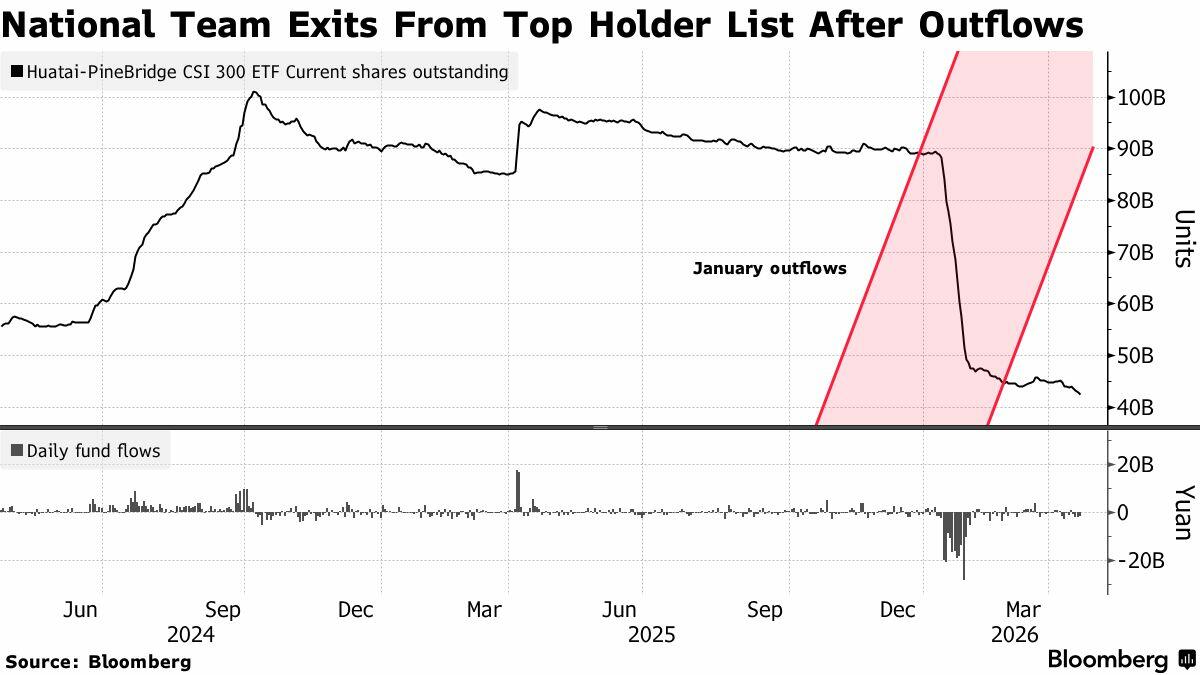
Central Huijin and its asset management arm may have reduced their holdings by at least half in flagship products such as the 200 billion yuan ($29.3 billion) Huatai-PineBridge CSI 300 ETF. The two entities held 42.6% and 40% respectively as of the end of last year.
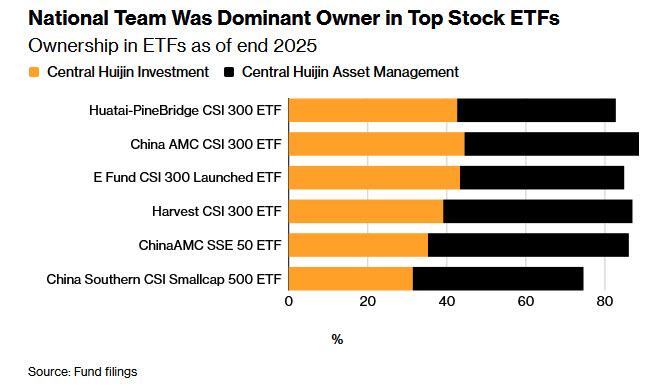
Even smaller funds such as the HuaAn SSE 180 ETF, previously 92% owned by the national team, reported no single shareholder above the 20% threshold, indicating the stakes were cut across the board.
Quarterly ETF filings only require disclosure of investors with holdings of 20% or more, a threshold Central Huijin had consistently met until local stocks erupted higher in Q1.
While ownership levels can fluctuate as others trade, the sharp decline in total ETF units outstanding during the period suggests the market’s dominant buyer until recently played a decisive role in the outflows.
Remarkably, some of the National Team sales might have locked in gains of around 50%, based on the rise of the CSI 300 Index from early‑2024 lows, when the national team began aggressively buying ETFs to stem a market meltdown, through January this year, when the selling likely took place. The exact returns would depend on the specific ETFs and the timing of those purchases.
The scale of the stake reductions may become clearer with first-half filings due in the third quarter, when the identities and holdings of the top 10 investors are revealed.
Morgan Stanley estimates the national team sold about $80 billion of positions in January and February. Analysts including Laura Wang expect the money to be used for investing in longer-term, more “strategic and thematic” ETFs.
“The fact that they have relinquished this dominant position in ETFs implies that they have much more potential to create upside in the market going forward, sitting on cash, while their power to create downside is now diminished,” said Cheng Hao, fund manager at Zhejiang Feiluo Assets Management.
And now that the National Team is mostly in cash, local stocks can drop again and the government will be there to prop them up again. Rinse. Repeat.
Tyler Durden
Wed, 04/22/2026 – 19:15
via ZeroHedge News https://ift.tt/Gau02YU Tyler Durden