Japan To Welcome First Crude Cargo Via Hormuz Since War Began

Japan To Welcome First Crude Cargo Via Hormuz Since War Began

By Tsvetana Paraskova of OilPrice.com

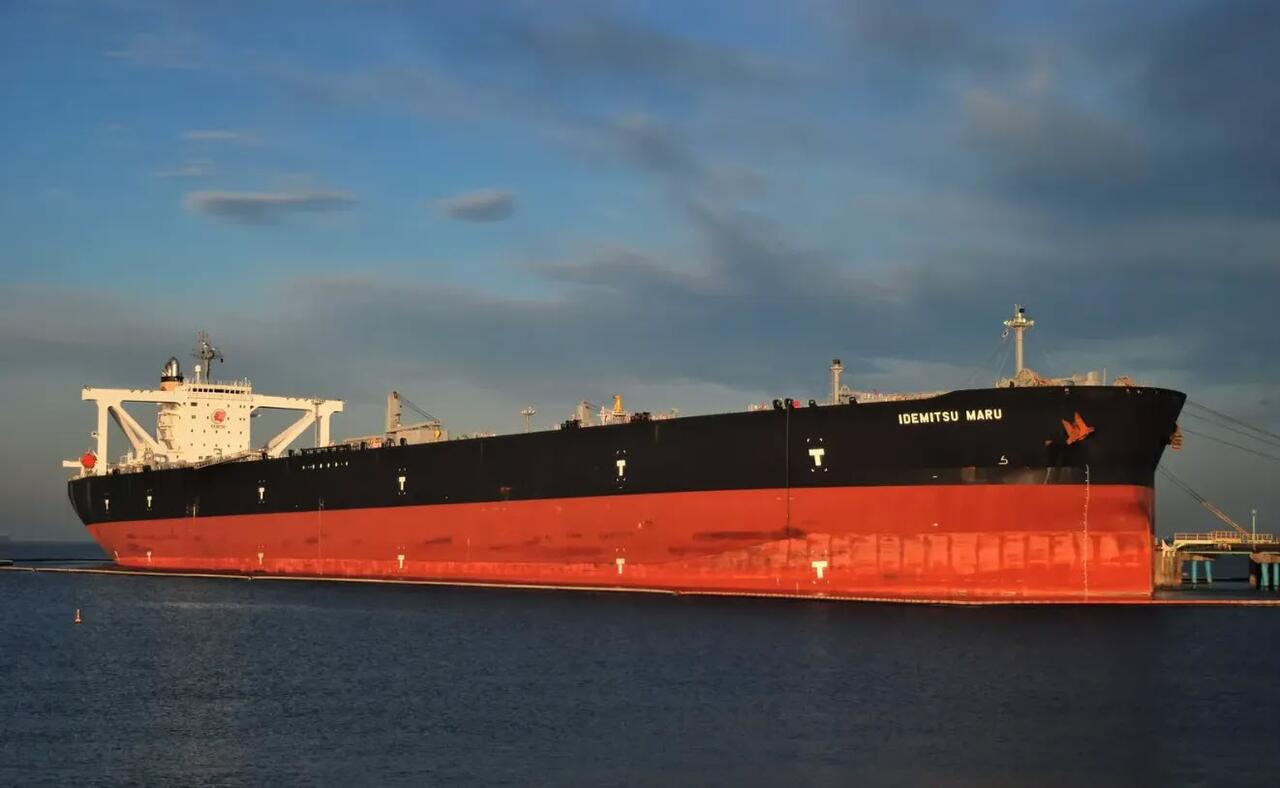
A supertanker carrying 2 million barrels of Saudi crude is set to arrive in Japan early next week after clearing the Strait of Hormuz in late April, in the first shipment of Middle East crude to Japan via the chokepoint since the Iran war began on February 28.

The Idemitsu Maru very large crude tanker; Photo: MarineTraffic

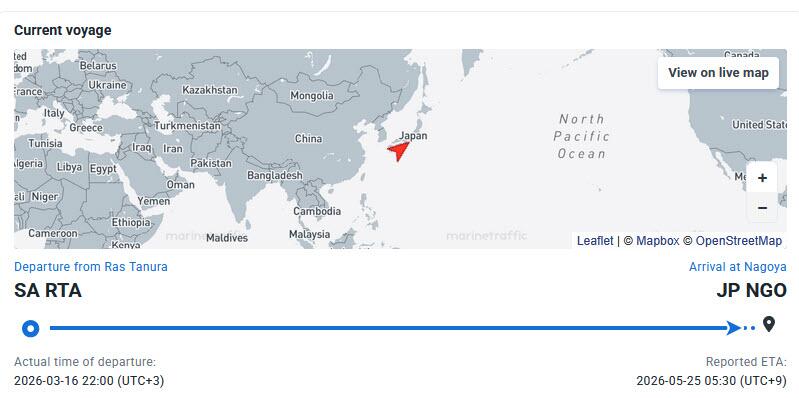
The very large crude carrier (VLCC) Idemitsu Maru, which had departed from Saudi Arabia’s Ras Tanura port in the Persian Gulf in mid-March, is expected to arrive in Nagoya on May 25, data on MarineTraffic showed. As of early Friday, the supertanker was close to the coasts of Japan.

The cargo is destined for the Aichi refinery of local refiner Idemitsu Kosan, according to a briefing document of Japan’s Ministry of Economy, Trade and Industry cited by Bloomberg.

The imminent shipment will mark the first cargo from the Middle East and the Strait of Hormuz to have made it to Japan since the conflict erupted at the end of February and halted most energy supplies via the strait, which is blocked by Iran and separately blockaded by the U.S. in the Gulf of Oman to prevent Iranian oil exports.

Another Japan-bound tanker, Eneos Endeavor, cleared the Strait of Hormuz last week. The Eneos Endeavor, currently in the Malacca Strait, is expected to arrive in Kiire, Japan, on May 30, per data on MarineTraffic. It departed from Mina Al Ahmadi in Kuwait on February 28, the day on which hostilities began.

Meanwhile, Japan in April imported the lowest volume of crude oil from the Middle East on record dating back to 1979 as the Iran war and the de facto closure of the Strait of Hormuz choked supply from the region.

Japan’s crude imports from the Middle East plummeted by 67.2% in April compared to the same month of 2025, provisional trade data from Japan’s Finance Ministry showed on Thursday.

Since the war in the Middle East began, Japan has scrambled to secure crude oil supply from alternative sources and released stocks from reserves as its dependence on crude from the Middle East passing through Hormuz was more than 90% of all crude imports

Tyler Durden
Fri, 05/22/2026 – 17:40

via ZeroHedge News https://ift.tt/GxXF7dp Tyler Durden

China Restricts Fentanyl Precursor Chemical Exports To North America After Trump-Xi Talks

China Restricts Fentanyl Precursor Chemical Exports To North America After Trump-Xi Talks

One week after President Donald Trump’s China summit with President Xi Jinping, where the two superpower leaders focused on issues ranging from bilateral trade to the Hormuz chokepoint, there appears to be measurable progress on one key ‘MAGA’ issue: the flow of fentanyl precursor chemicals into North America.

Bloomberg reports Friday morning that China imposed new export controls on three chemical compounds shipped to the U.S., Mexico, and Canada, targeting key precursor ingredients used to make fentanyl.

Beijing’s announcement now requires special export licenses for the restricted chemicals and signals growing cooperation between Xi and Trump on narcotics enforcement.

“The Presidents also highlighted the need to build on progress in ending the flow of fentanyl precursors into the United States, as well as increasing Chinese purchases of American agricultural products,” the White House wrote in a readout of the summit last week.

The Trump team continues to maintain a 10% tariff on Chinese imports tied to Beijing’s years of failure to stop the flow of fentanyl precursor exports into North America.

Beijing has dismissed Washington’s accusations over the opioid epidemic that, at one point, was killing 100,000 Americans every year.

U.S. Secretary of State Marco Rubio stated early in Trump’s second term that Beijing may be “deliberately” flooding America with fentanyl in a “reverse” form of the mid-1800s Opium Wars that weakened China’s international standing.

Ahead of Trump’s trip last week, New York Post columnist Miranda Devine spoke with White House Counterterrorism Director Sebastian Gorka about how China weaponized fentanyl to weaken America from within.

“They see our ‘city on a hill’ as the newest version of the British Empire, and it is now payback time for the Opium Wars,” Gorka said. “Many have said that, and I think there is something to that.

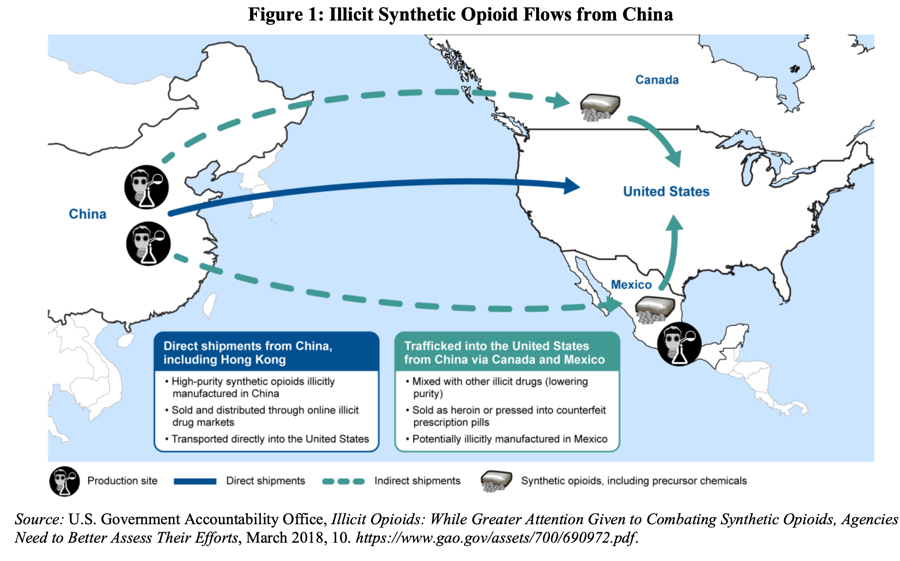
Here’s the fentanyl supply chain: Chinese chemical suppliers → Mexican cartels → fentanyl production in Mexico → smuggling into the U.S.

Between 2015 and 2024, the U.S. recorded about 815,100 drug overdose deaths, a death toll larger than many U.S. wars combined. And, in fact, China didn’t even have to fire a shot.

Simultaneously, while the drug epidemic fueled by cartels and China-sourced precursor chemicals ravaged communities and cities nationwide, Democratic-led cities accelerated the crisis by pushing forward with nation-killing progressive policies that enabled open-air drug markets, weakened enforcement, and allowed the public-health emergency to spread. Why?

Tyler Durden
Fri, 05/22/2026 – 17:20

via ZeroHedge News https://ift.tt/62niFgz Tyler Durden

House Democrats Unanimously Vote Against Women’s History Museum… Can You Guess Why?

House Democrats Unanimously Vote Against Women’s History Museum… Can You Guess Why?

Authored by Jonathan Turley,

House Democrats unanimously voted this week against legislation to build a new women’s history museum on the National Mall.

The reason was an amendment that limited the exhibits to biological women to the exclusion of transgender figures.

The museum failed 204-216 as House Democrats hoped that they could still secure a museum including transgender figures once they retake power after the midterm elections.

The amendment drafted by Rep. Mary Miller, R-Ill., states in part, “The Museum shall be dedicated to preserving, researching, and presenting the history, achievements and lived experiences of biological women in the United States.”

It further mandated that the museum would not depict “any biological male as female.”

The vote was notable after the release of the DNC “autopsy” report that flagged how transgender and identity politics contributed to the defeat in the last election.

The report specifically noted the success of Trump’s “Kamala is for they/them, President Trump is for you” ad.

The report noted that “If the Vice President would not change her position — and she did not — then there was nothing which would have worked as a response.”

The fact that this was a unanimous vote among Democratic members is particularly notable and suggests that transgender issues will remain a rallying point for the Democrats.

Democratic members called the exclusion a “poison pill” amendment.

In the meantime, transgender issues continue to occupy the courts with a major decision by the Colorado Supreme Court this week that ordered Colorado’s largest provider of gender-affirming care for young people to resume medical treatments like puberty blockers and hormone therapy.

That puts  Children’s Hospital Colorado in direct conflict with the Department of Health and Human Services, which has moved to block federal support for institutions providing such care.

Justice William Wood III wrote that “We conclude that the actual immediate and irreparable harm to petitioners outweighs the speculative harm CHC may face if the federal government further acts against it.”

In his dissent, Justice Brian Boatright said that this was hardly a speculative matter, but “a decision driven by the direct threat to the viability of the entire hospital.”

Here is the opinion: Boe v. Child.’s Hosp. Colo.

Tyler Durden
Fri, 05/22/2026 – 17:00

via ZeroHedge News https://ift.tt/wn1Rqsk Tyler Durden

Iconic American Beer Brand Discontinued After 177 Years

Iconic American Beer Brand Discontinued After 177 Years

Schlitz Premium, the storied lager once billed as “the beer that made Milwaukee famous,” is heading into retirement. Pabst Brewing Co. confirmed this week it is placing the brand on indefinite hiatus, ending production of the nearly two-century-old beer label founded in Milwaukee in 1849 that grew into one of America’s most iconic brews.

The decision, driven by rising storage and shipping costs amid softening demand for the value-priced brand, marks the latest chapter in a turbulent corporate saga. Wisconsin Brewing Co. in Verona will produce a final 80-barrel batch on May 23, with limited release scheduled for June 27. Pre-orders open this week.

Unfortunately, we have seen continued increases in our costs to store and ship certain products and have had to make the tough choice to place Schlitz Premium on hiatus,” Pabst brand manager Zac Nadile told Milwaukee Magazine. “Any brand or packaging configuration that is put on hiatus is still a cherished part of our history and hopefully our future. We continually look for opportunities to bring back beloved brands, and customer feedback is important in shaping those discussions.”

Brewmaster Kirby Nelson of Wisconsin Brewing Co. said the brewery was intent on providing the brand with a proper goodbye.

We decided that, Schlitz being what Schlitz was, it deserved a proper sendoff. One with dignity and respect,” Nelson said.

Tyler Durden
Fri, 05/22/2026 – 16:40

via ZeroHedge News https://ift.tt/NdfMnA6 Tyler Durden

The Coup Abides

The Coup Abides

Authored by James Howard Kunstler,

“Leftists can’t name & blame specific individuals for the 2024 loss because they’re an undifferentiated blob who function unconsciously according to enmeshed group think.”

– Aimee Therese on X

In all the chatter about the Democratic Party’s 2024 election “autopsy” report you might have missed one little important detail: autopsies are generally performed on the dead. Stephen Colbert’s final week on CBS’s Late Night Show was the funeral. It was like the zombies’ ball. Poster-boy old Bruce Springsteen plugged a self-parody song about “King Trump” that might have been a rare case of career suicide on live TV.

Kings, indeed. These showbiz cretins actually have it better than kings — they have all the money, glitz, and adoration, but none of the onerous duties of real royalty. They amount to a weird court of effete elitists endlessly congratulating each other on their moral superiority, and that’s where it begins and ends: a Cluster-B hall of mirrors.

Of the common good, the know absolutely nothing. Nobody believes their tired buzzwords anymore: “Our democracy” . . . “conspiracy theories” . . . “baseless” this and that. . . their foolish vaccine worship. . . their avatars, the guffawing baboon Kamala Harris, the erstwhile phantom “Joe Biden,” and, most of all, their good sportsmanship trophy, Barack Obama, last seen confabbing with Canada’s Mark Carney, Globalism’s paladin of the last resort.

The Lefty-left’s heroes are on-the-run, but tripping over each other badly as they scatter into the thickets to re-group for the midterm elections — which they are suddenly and seemingly likely to lose now that SCOTUS erased about a dozen race-based congressional districts . . . and then Virginia’s Supreme Court tossed Governor Spanberger’s ballot ploy to make the Old Dominion a one-party state (like back in slavery days).

The corpse of the Democratic Party might be dead, but not a few of its agents, cells, and parasitical organisms are ‘out there’ still twitching and plotting. The decade-long coup abides. The lawfare ninjas — Norm Eisen, Mary McCord, Marc Elias, et al. — still plot tirelessly behind the scenes, rigging up evermore legalistic chicanery disguised as legality, and they are rolling in dough from Soros, the Tides Foundation, Neville Roy Singham, and countless NGOs dedicated to overthrowing the republic.

The coup abides for two reasons:

1) its players are desperate to evade prosecution for their vast and various crimes of the past ten years (and prosecution is coming at them down the track like the old Union Pacific US-4 “Daylight” locomotive); and

2) the Democratic Party is desperate to preserve the revenue flows that support all its racketeering operations. Without its rackets, the money funnel to pay off its countless “oppressed” client-constituent-victims, there is no party. That’s all it was in its final stage of life.

Minnesota, of course, is the case-study for that kind of corruption and now the DOJ is going after the place hard, announcing fifteen new prosecutions this week for $90-million in Medicaid fraud, “just the beginning,” the lead US attorney, Colin McDonald, said. California, Illinois, New York, Maine, and many more states await the same treatment under the president’s new National Fraud Enforcement Division. The Democrats will go into the midterms revealed to be nothing more than a looting operation.

It’s happening in real time. Just yesterday, one particular public benefits entrepreneur, Aimee Bock, was sentenced to forty years in prison for running a Minneapolis scam called Feeding Our Future that made off with $243-million in taxpayer money. At sentencing, Aimee Bock was ordered to pay roughly $243 million in restitution. That’s a hoot, isn’t it? Federal inmates (Bureau of Prisons) are paid from 12-cents to $1.15 per hour wages for assigned work, depending on the type of job. Forty years might not be enough to git’er done.

Many more will be going down in the months ahead for similar shenanigans, and the voting public might notice as it rolls out. But fraudsters such as Aimee Bock are mere lumpen foot-soldiers in the regime. The more spectacular action will be the Democratic Party’s field marshals getting nailed, and that’s hardly begun. Coup Central is the Southern District of Florida where a “grand conspiracy” case, or possibly many cases and sub-cases, are already in the grand jury stage — meaning probable cause has been established en route to indictments. Many political celebrities labored hard since 2017 to overthrow the executive branch of the government. Hair is on fire everywhere you look.

One small fish was reeled in this week: one Carmen Mercedes Lineberger, a senior supervisory US attorney, indicted on two felony counts of mishandling evidence from “special prosecutor” Jack Smith’s botched Mar-a-Lago documents case. She labeled the purloined docs in her personal computer as dessert recipes (e.g., “bundt cake”) en route to leaking them. Lineberger has pleaded innocent. Don’t doubt that a negotiated plea deal is in play with her, and that Jack Smith will be sweating the outcome of that as Lineberger flips and talks.

But the odious Jack Smith will only be one of many bigger fish turning up in the Fort Pierce dragnet, probably including the whale, Barack Obama, the president who foolishly tried to destroy his successor-in-office. You may know that the DOJ observes an unwritten custom of not issuing indictments inside sixty days of an election (a custom that Jack Smith violated in 2024 when he issued a superseding indictment against candidate Donald Trump). So, there are 105 days remaining within the current window before the 2026 midterms for formal charges to be lodged against the coupsters.

So, now everyone’s expecting a hairy-scary summer of Democratic Party inspired mayhem, a ratcheted-up “No Kings” orgy of riots, the last remaining gambit to goad Mr. Trump into emergency action so they can holler, “Look: king!”

It’s only a question of what might spark it off. I’ll venture to predict that spark will be the indictment of Barack Obama. If you think the Lefty-left is crazy now, wait until that happens.

At least Stephen Colbert won’t be around to turn it into a song-and-dance act.

Tyler Durden
Fri, 05/22/2026 – 16:20

via ZeroHedge News https://ift.tt/kf4CGaW Tyler Durden

Singham Network Mobilizes To Defend Raúl Castro After DOJ Indictment

Singham Network Mobilizes To Defend Raúl Castro After DOJ Indictment

Via American Greatness,

Key organizations and activists tied to the CCP-linked Singham Network rapidly moved to defend former Cuban dictator Raúl Castro following this week’s Justice Department indictment tied to the 1996 shootdown of civilian aircraft flown by Brothers to the Rescue.

The indictment, unveiled by the United States Department of Justice, charges Castro and others in connection with the deaths of four men after Cuban MiG fighter jets destroyed two civilian planes over international waters near Cuba nearly three decades ago. Prosecutors said the aircraft were outside Cuban territory and heading away from the island when they were attacked.

In response, a collection of far-left organizations linked to Marxist businessman Neville Roy Singham quickly launched a coordinated public campaign condemning the indictment and echoing talking points from the Cuban Communist government.

Among the groups defending Castro were Party for Socialism and Liberation, The People’s Forum, Code Pink, and Tricontinental: Institute for Social Research.

Code Pink, co-founded by Singham’s wife Jodie Evans, accused the Trump administration of fabricating the case to justify military action against Cuba.

“They’re not seeking justice for a downed flight. The Trump administration is fabricating a pretext for military intervention,” the group said after Acting Attorney General Todd Blanche announced the indictment.

Code Pink later called the indictment a “sham” and defended Cuba’s actions in shooting down the civilian aircraft. The group argued that “International law guarantees any country, including Cuba, the right to respond to airspace violations after exhausting diplomatic means to do so.”

The DOJ indictment, however, alleges the planes were flying over international waters and that the pilots received no warning before being destroyed by the Cuban military.

The Party for Socialism and Liberation similarly condemned the charges, describing them as “a transparent pretext for escalating aggression against a sovereign nation.”

Its affiliated media outlet, Liberation News, argued Castro acted lawfully under international law and claimed Cuba had the right to defend its territory against “US-based terrorist groups like Brothers to the Rescue.”

Manolo De Los Santos, a top leader within the Singham-linked activist ecosystem, also praised Castro and accused the United States of hypocrisy.

“The world stands with Raul Castro, hero of the Cuban Revolution,” declared Vijay Prashad, another senior Singham Network figure who also holds a position at a Chinese Communist Party-linked think tank associated with Beijing’s United Front influence apparatus.

De Los Santos described Castro as an “incredibly courageous and revolutionary hero” and defended Cuba’s socialist system in multiple public statements.

The Singham-linked media outlet BreakThrough News also promoted interviews with Cuban leader Miguel Díaz-Canel attacking President Donald Trump and the U.S. government while framing the indictment as an attempt to justify aggression against Cuba.

The defense of Castro is part of an alliance between the Singham Network and the Cuban regime.

Earlier this year, leaders from the People’s Forum and allied groups traveled to Havana for meetings with Díaz-Canel and publicly pledged solidarity with the Cuban Revolution.

President Trump defended the administration’s crackdown on Cuba Wednesday, accusing the regime’s leadership of enriching itself while ordinary Cubans suffer.

“While the people suffer, the regime’s kleptocratic elite have hoarded the island’s remaining resources for themselves and their lavish lifestyle,” Trump said.

“Its military leaders have demonstrated zero care for ensuring the prosperity of the Cuban people.”

Tyler Durden
Fri, 05/22/2026 – 15:40

via ZeroHedge News https://ift.tt/B6mkwvF Tyler Durden

Chinese Refining Rates Unexpectedly Plunge To All-Time Lows As Economy Falls Off A Cliff

Chinese Refining Rates Unexpectedly Plunge To All-Time Lows As Economy Falls Off A Cliff

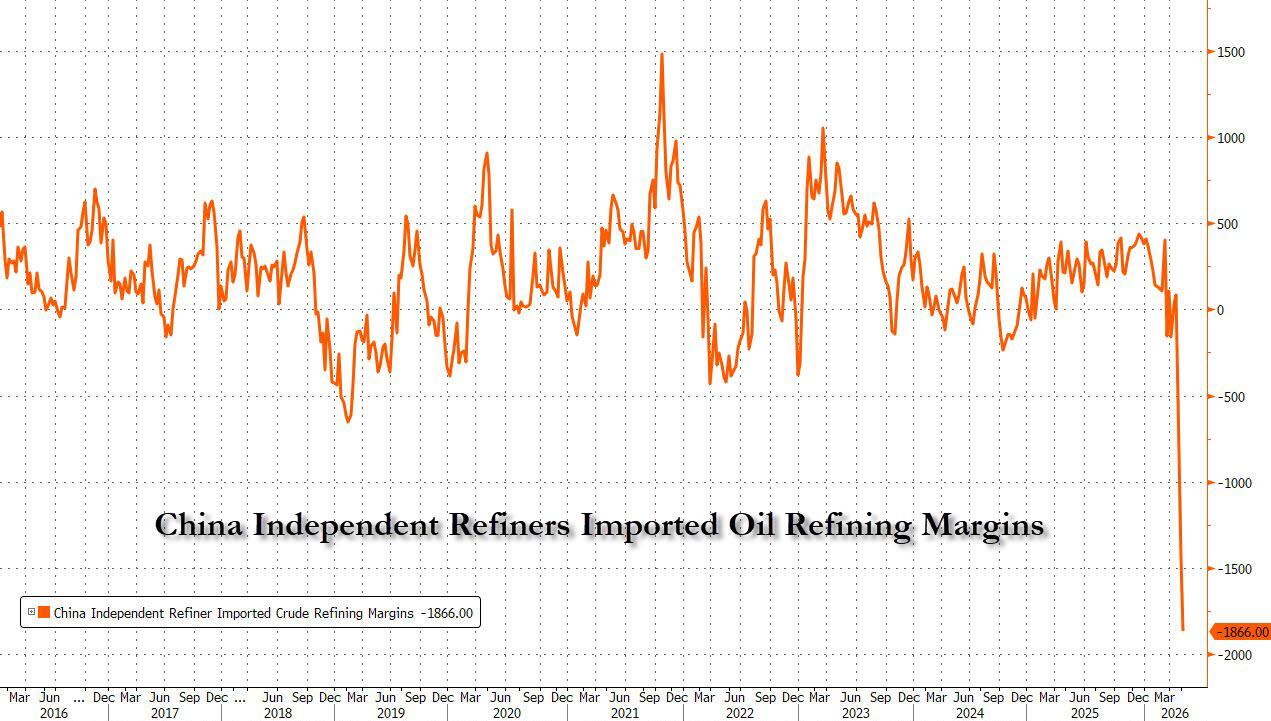
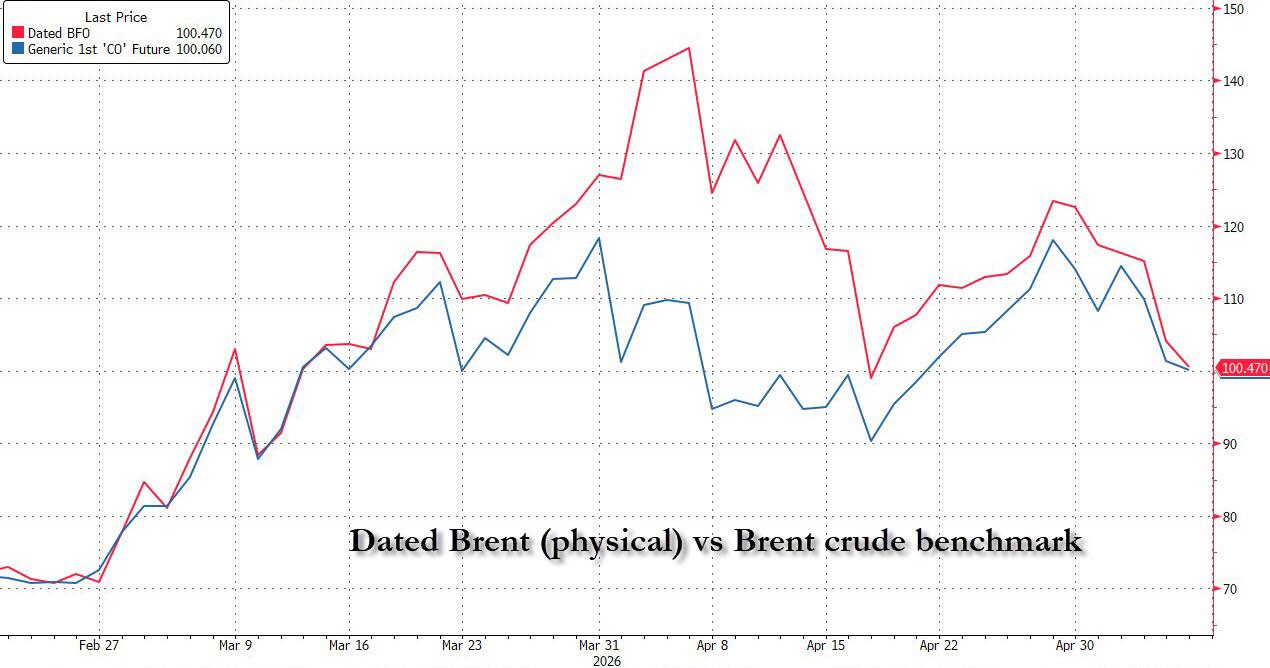
Two weeks ago, when discussing the market “mystery” of sliding physical crude oil prices, we said that the most likely culprit were Chinese refiners, whose refining margins had just collapsed to the most negative on record.
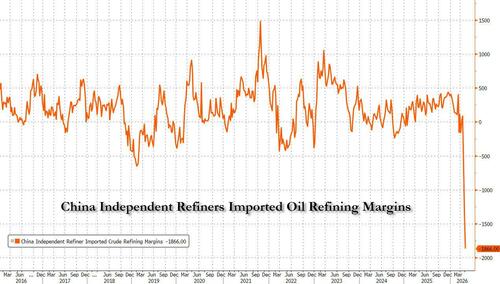
The reason for the margin collapse was China’s domestic fuel policy: it has long been Beijing’s policy to soften price hikes to help shield consumers and avoid social unrest; which while beneficial to end, consumers is catastrophic to refiners and processors who are prohibited from passing on rising costs. In other words, Chna’s “energy security” was the dominant theme, and if it meant an entire industry has to suffer huge losses if it continues to purchase oil and process it into various product grades, so be it.

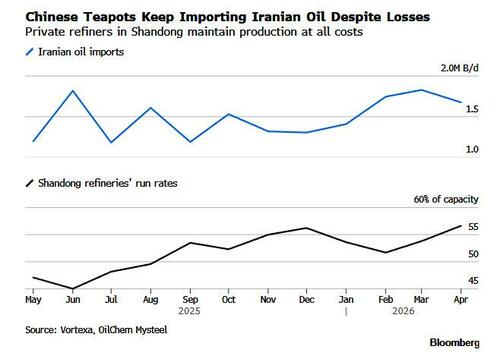
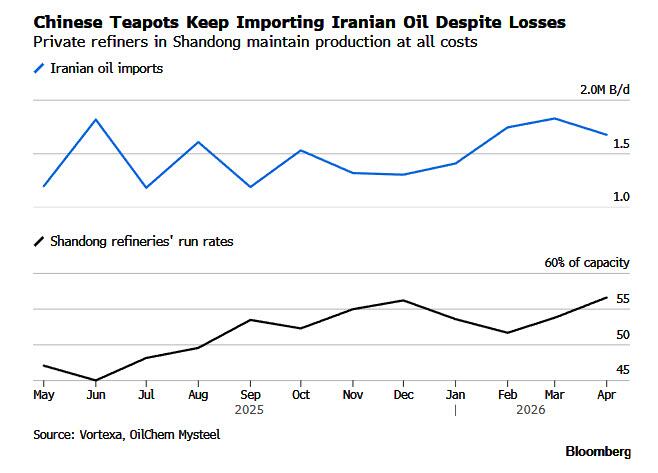
Ordered to process as much available inventory as possible, that’s what the refiners have done, and refining rates in Shandong province, China’s hub for smaller refineries known as teapots, ramped up over April to the highest level in almost two years, as processing margins cratered to record negative levels meaning refiners are losing record amounts on every barrel they process

“I would not be surprised if the teapots are prioritizing politics over economics with an eye to their long-term survival,” said Erica Downs, a senior research scholar at Columbia University’s Center on Global Energy Policy. “They may be calculating that if they do their part to help China weather the energy crisis, then maybe they will build up some goodwill in Beijing.”

While Downs is right, and teapots are prioritizing politics, they are also certainly keeping an eye on economics to the extent they can avoid Beijing’s wrath, and predictably the logical consequence of this centrally-planned policy to force “independent” refiners (who are not really independent if they have to do whatever Beijing instructs them) to make fuel at record losses to ensure energy security, is for them to slash purchases of Iranian crude.

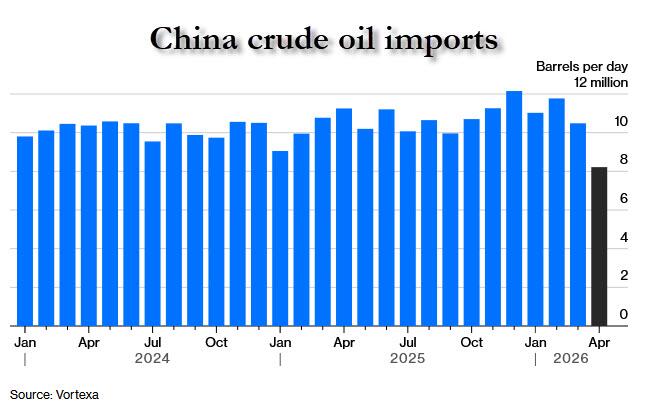
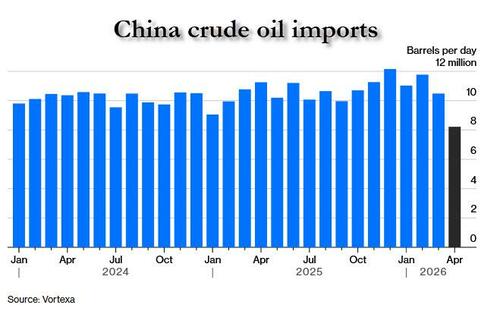
Sure enough, as we reported two weeks ago, Chinese crude oil imports cratered: China’s April imports plunged to a multi-year low of just 8.2 million barrels a day, down by about a quarter from a prewar level of around 11.7 million. The 3.5-million barrels a day swing almost matches the total consumption of Japan and is double the amount supplied by the United Arab Emirates pipeline that circumvents Hormuz. 
Meanwhile, as imports collapsed, inventories at sea soared: Kpler reported that as of the start of May, there were about 16 million barrels on ships anchored in the Yellow Sea off the Chinese coast, almost 40% higher than the level prior to a US blockade of Iran’s ports in mid-April as oil that was ordered previously remains unused. 

Amid this collapse in Chinese imports and aggressive stockpiling at sea, industry executives have noticed something odd: Chinese state-owned oil companies have been reselling some of their oil cargoes to European and Asian rivals. The behavior suggests surpluses, which is “odd” to say the least during a supply shortage. Where is this excess oil coming from?

The shift has not only capped benchmark oil prices, but also helped to trigger a collapse in the premia that traders pay above them to secure physical crude. The immediate outcome has been a very beneficial one: physical barrels that in early April went for $30 above benchmark prices were recently changing hands at premiums as low as $1. Talk of discounts has even started to emerge.
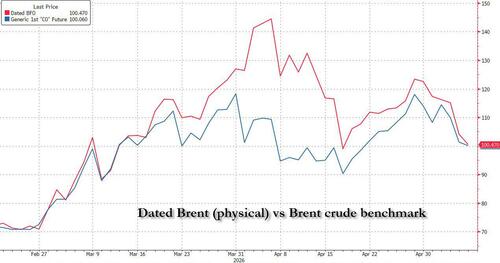
Underscoring this point, North Sea oil traders were no longer desperate for crude for immediate delivery anymore, compared to the panic buying of late March and early April

While the collapse in refining margins was a clear clue to the plunging oil imports, other questions remain: chief among them how is China importing far less crude than before without running down stocks? In the past, the country clearly bought more oil than it needed, building a huge emergency stockpile. Today, China has nearly 1.4 billion barrels in its reserves according to media reports, well above the 400 million of the US and Japan’s 260 million. As we reported in late 2025, China probably bought one million barrels a day more than it needed last year. By simply stopping beefing up the reserve, China can cut imports a lot without affecting its underlying oil needs.

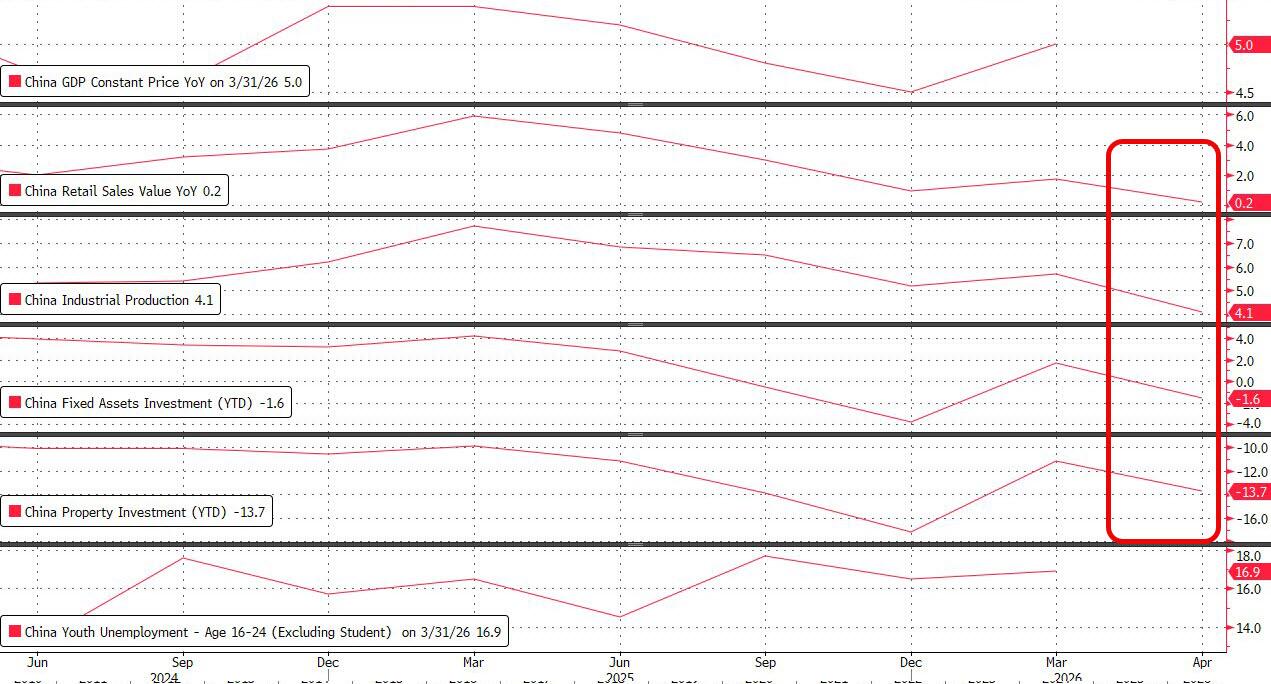
The shift can explain, perhaps, a third of the import cut. But the rest? Here’s where oil traders speculate with different theories. The most likely argument is that Chinese economic activity is far weaker than previously thought, and thus oil consumption growth is also lower. That’s precisely what we learned earlier this week, when we discussed that  “Shockingly Bad” Chinese Econ Data Stuns Wall Street, Sparks Hard Landing Concerns; in a nutshell virtually every component of China’s economy printed below the lowest economist estimate, and in many cases the data was as bad as when Beijing was emerging from the covid closure.
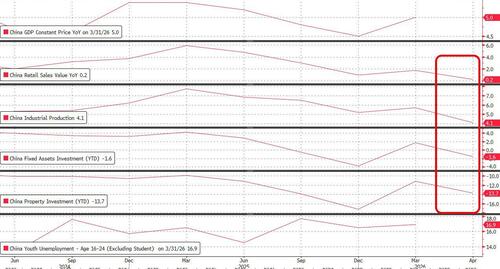
What is shocking is that it is common knowledge that Beijing traditionally massages its economic data to present itself in the rosiest possible light: the fact that it allowed data this ugly would suggest that the picture on the ground is much uglier. 

Goldman’s Delta One head Rich Privorotsky captured this sentiment well, writing this morning that “overnight news from China showed economic data materially below expectations. Industrial production, retail sales and fixed asset investment all missed meaningfully. It’s hard to tell whether this reflects genuine demand destruction but perhaps it helps explain how the oil market has managed to balance despite ongoing supply concerns. I genuinely can’t remember a period when Chinese data, which tends to be heavily massaged, missed by anything close to this magnitude. Negative read through for consumption related categories.

What’s the catalyst for that slowdown? Perhaps the impact of the war on several of China’s clients in the region, including the Philippines, Vietnam and Thailand (just don’t look for validation in Chinese economic “data” – like everything else, it took is centrally planned and Beijing would never confirm its economy is being hit due to the Iran war as that would mean reduced political leverage).

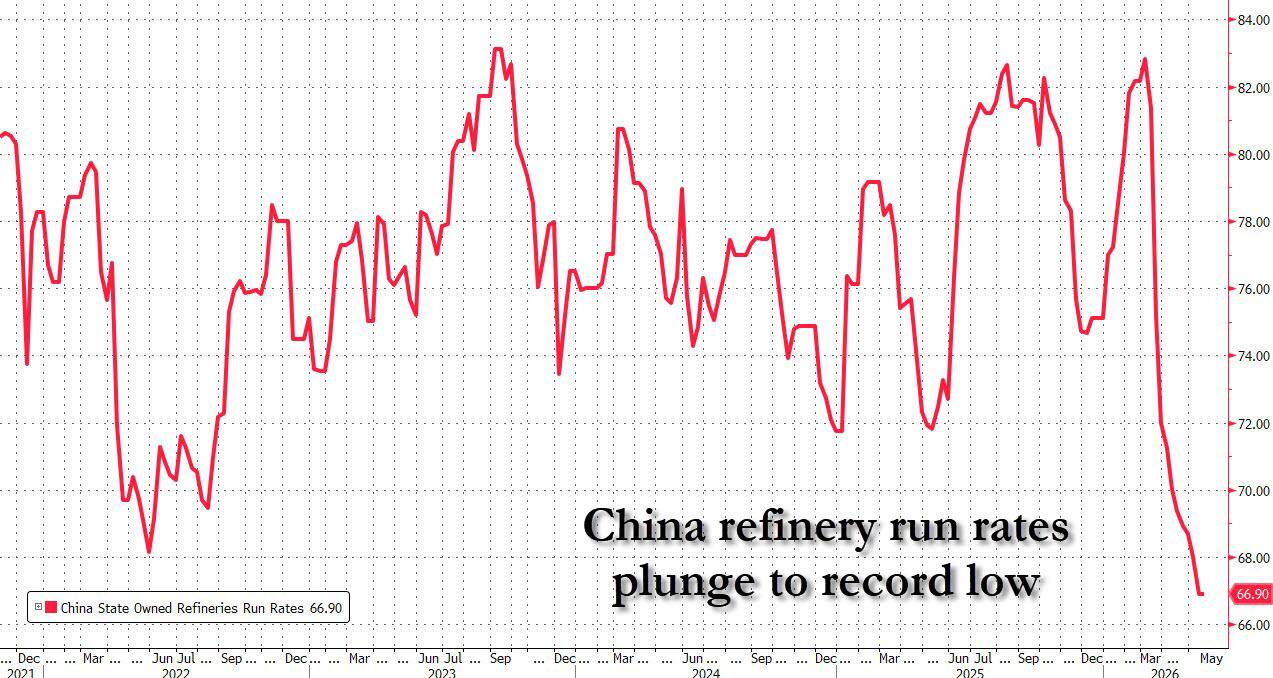
Whatever the cause may be, the result is the same and we got the final confirmation that China’s petroleum industry is in a tailspin overnight when Mysteel OilChem reported that China’s state refineries cut run rates below 67% of capacity in the week to May 21, the lowest on record. Specifically, state runs edged lower to 66.9% of capacity over the week, while independent refiners in Shandong cut runs to 52.54% of capacity, lowest since Feb. 27.
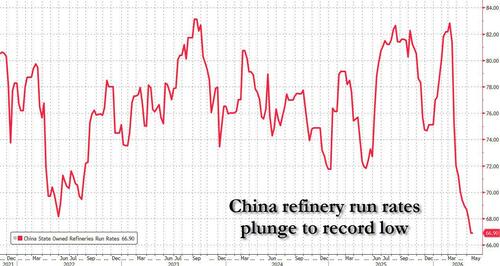
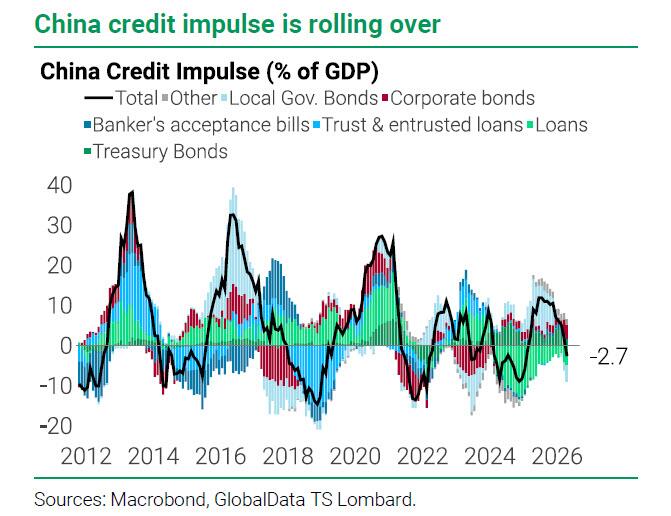
This was the missing link in the Chinese oil picture, because while one can debate whether China was filling the product pipeline with strategic reserve oil instead of imported, or was merely draining offshore stock, the fact that suddenly Chinese refining has absolutely cratered, indicated that far from thriving, demand for China’s product – both domestically and internationally – has fallen off a cliff, suggests that China and/or the broader Asian region is now at or near recession, something China’s all important credit impulse strongly hinted at (for a great discussion of China’s slowdown through the lens of credit impulse, see the following note from TS Lombard).
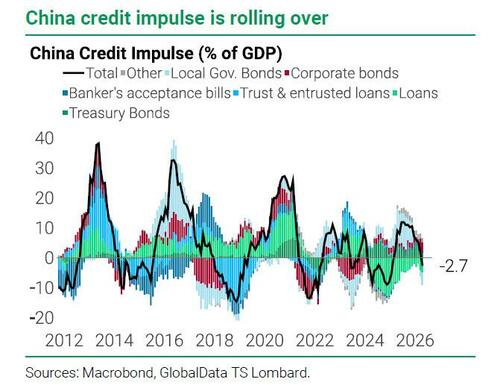
The good news: the tangent to a recession is widespread demand destruction, and since China suddenly needs far less oil, the price of physical will stay where it is until something changes. Of course, if Chinese demand falls even more, oil prices will slide, but then the question becomes how long can the US and the rest of the world avoid recession if Asia is already in it?
Tyler Durden
Fri, 05/22/2026 – 15:20

via ZeroHedge News https://ift.tt/LU6fTWM Tyler Durden

Uber Builds Large Stake In Germany’s Delivery Hero As Takeover Speculation Builds

Uber Builds Large Stake In Germany’s Delivery Hero As Takeover Speculation Builds

Uber is exploring a potential takeover of Delivery Hero after building a large stake in the rival German food delivery company, Bloomberg News reports. This follows an earlier report that Uber had built a 19.5% stake.

On Monday, Uber disclosed that it owns 19.5% of Delivery Hero, plus an additional 5.6% through options. The position was built with the help of Morgan Stanley traders, according to people familiar with the matter.

Uber’s move to acquire Delivery Hero could be an attempt to expand Uber Eats’ global footprint and improve its competitive position against DoorDash outside the US.

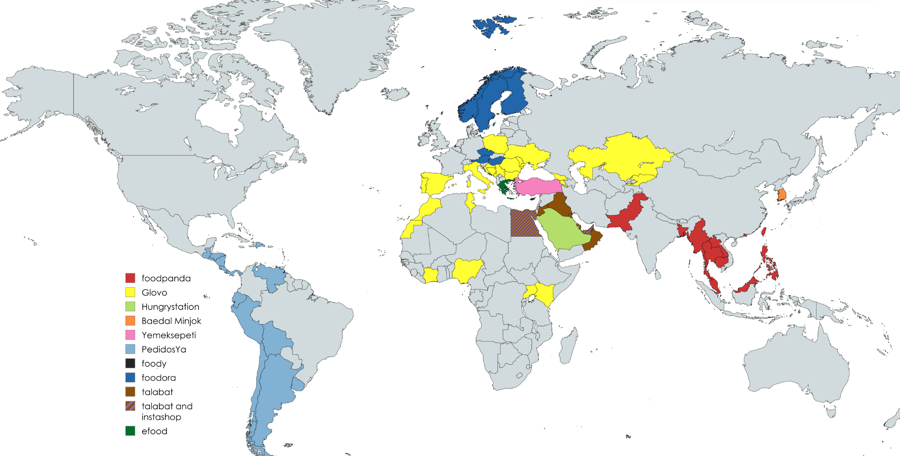
Delivery Hero operates in more than 60 countries, giving Uber exposure to markets where it is either underscaled or trailing its competitors.

Map of Operatoins of Delivery Hero Brands

“While Uber’s ultimate intentions on further stake-building remain unclear, we view the move as a clear endorsement of the strategic attractiveness of Delivery Hero’s asset base for Uber,” JPMorgan analysts wrote in a note.

Earlier, Uber said it “currently” has no intention of increasing its stake in Delivery Hero beyond 30%.

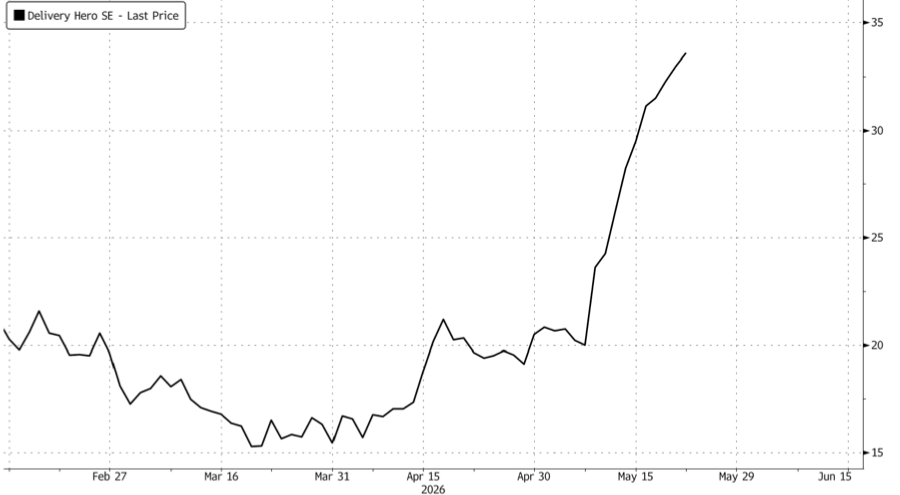
Delivery Hero shares in Frankfurt are up nearly 50% this year and have more than doubled from their March lows of around 15 euros. Uber shares were marginally lower in early afternoon trading.

Berenberg analyst Wolfgang Specht wrote in a note that Delivery Hero’s investment case has changed following news of Uber’s stake. He said it now seems prudent to assign value to scenarios that include a potential takeover.

Tyler Durden
Fri, 05/22/2026 – 14:45

via ZeroHedge News https://ift.tt/ERgCZA1 Tyler Durden

Iran Says 35 Ships Exited Strait Of Hormuz As Rubio Condemns Tolls

Iran Says 35 Ships Exited Strait Of Hormuz As Rubio Condemns Tolls

The US blockade of the Iranian blockade is looking increasingly more porous.

Iran said 35 ships passed through the Strait of Hormuz in the past 24 hours in coordination with the Islamic Revolutionary Guard Corps, the Iranian state broadcaster reported on Friday. The navy had already reported on Wednesday that 26 ships had passed through the strait within 24 hours. On Friday, the data provider Kpler confirmed only 10 passages on Wednesday. This represented an increase from the four passages recorded the previous day.

The armed forces said the vessels included oil tankers, cargo ships and other merchant ships.

Tehran has repeatedly stressed that the Strait of Hormuz is not blocked. In practice, however, shipping companies must coordinate with Iranian contact points and are then only allowed to pass through a corridor near the Iranian coast. Then they have to also obtain permission to cross the US blockade located further out in the Arabian Gulf.

Iran’s leadership charges high fees (paid in bitcoin) for this. International law experts said such fees violate the right of transit.

US Secretary of State Marco Rubio, in Sweden for a NATO foreign ministers meeting, condemned Iran’s attempts at creating a tolling system for the strait. “I don’t know of a country in the world that’s in favor of it except Iran, but there’s no country in the world that should accept it,” he said.

Rubio confirmed a previous report from Bloomberg, saying Iran was trying to convince Oman to join the tolling system “in an international waterway.”

He said there is a UN resolution sponsored by Bahrain and “the highest number of co-sponsors of any resolution ever before” in front of the UN Security Council, but admitted that “a couple of countries” are “thinking about vetoing it” which Rubio called “lamentable.”

The United States is doing all it can to prevent an Iranian toll system from being established in the strait. Such a system is “just not acceptable. It can’t happen,” he said. He assumed all NATO countries had backed the resolution or would do so soon.

Rubio warned that if the Iranians are successful in pushing the toll system through it could happen elsewhere.

Tyler Durden
Fri, 05/22/2026 – 14:05

via ZeroHedge News https://ift.tt/8bhYxnZ Tyler Durden

India’s Power Demand Hits Record High As Heat Drives Coal Use

India’s Power Demand Hits Record High As Heat Drives Coal Use

Submitted by Irina Slav of OilPrice.com

India’s power generation rose to a new all-time high amid hot weather that drove air-conditioning demand up, with thermal generation, most of its coming from coal power plants, covering 62% of demand.

Power demand on Thursday hit 271 GW, on the “fourth consecutive day when the peak power demand (solar hours) reached a new all-time high,” India’s power ministry said, as quoted by AFP.

After milder temperatures tempered demand growth in the fiscal year to March 2026 to the lowest level in six years, demand is now beating peak consumption records amid heat waves at the start of this year’s summer.

India’s coal demand from power plants is set to rise by 11.5% in the April to June quarter amid the peak electricity demand season in the country in May and June, sources with knowledge of the matter told the Economic Times in April.

Besides coal, which dominated India’s grid this week, solar power covered 22% of demand, the power ministry also said, while hydro and wind provided another 5% each. India has been putting a lot of effort into diversifying its sources of electricity to reduce its reliance on imported fuels and cut emissions, of which it is the third-largest generator in the world.

India expects to nearly quadruple its solar power capacity and triple wind power-generating assets within ten years, according to the new Generation Adequacy Plan published by the country’s Central Electricity Authority earlier this year.

Challenges, however, remain, mostly in transmission, reflecting the broader global picture, where grid upgrades lag behind wind and solar installations, prompting so-called curtailment, which in the first quarter of the year reached 300 GWh. Coal-fired power generation and capacity installations, meanwhile, continue to rise, and coal remains a key pillar of India’s electricity mix, with about 60% share of total power output.


Tyler Durden
Fri, 05/22/2026 – 13:45

via ZeroHedge News https://ift.tt/JKL13uw Tyler Durden