$150 Humanoid Robot House Cleaning Service Threatens To Undercut Maid Services
It’s no secret that some humanoid robotics companies are training their machines for work on factory floors, while others are positioning their bots to enter homes in the coming years.
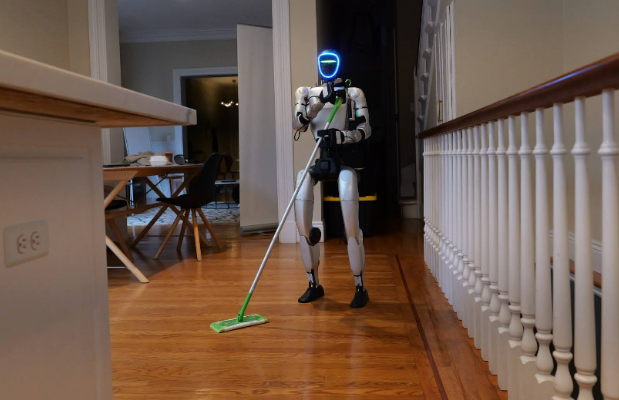
One of the first real signs of humanoids entering homes today is a new cleaning service in San Francisco that uses what appear to be Unitree humanoid robots trained to clean everything from floors and countertops to stovetops, mirrors, and nearly any surface in the house.
Called “Gatsby,” the new service deploys humanoid robots to homes for a flat service charge of $150.
“We just made U.S. history. Today, Gatsby ran the first-ever consumer cleaning by a humanoid robot in the United States,” Gatsby wrote in a press release earlier this month.
The company noted, “We picked someone random off our SF waitlist, they booked a cleaning, we delivered the robot, and it cleaned their entire apartment on its own. No humans inside. This is the first of its kind in the U.S., and we’re proud to be the pioneers writing this line in the history books today.”
For the average deep clean of a typical U.S. home, the price ranges between $200 and $400, and for much larger homes, $500 or more, according to Angi List. This means the robotic cleaning service can even undercut an independent cleaner or a professional cleaning company, which often employs migrant workers.
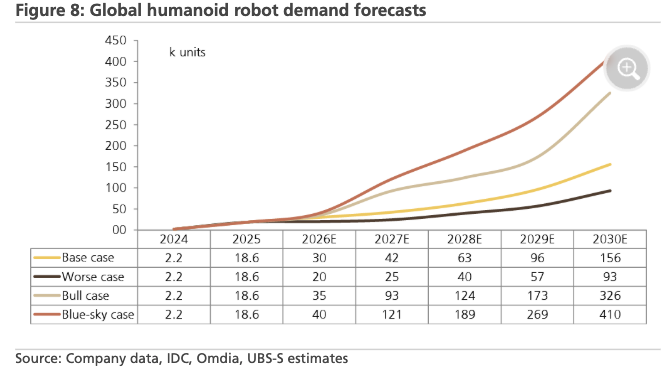
News of Gatsby’s cleaning service comes as shipments of humanoid robots are expected to ramp up this year and accelerate by the end of the decade, according to a recent UBS note.
The goal of tech firms is very clear: deploy these bots first on factory floors, in warehouses, and at logistics hubs, then move into consumer markets once the machines become reliable enough for home use.
Once these bots enter the consumer market, they will begin to chip away at demand for migrant labor and drive down household costs for services such as cleaning, cooking, laundry, and other chores, which have traditionally required human labor and can cost hundreds, if not thousands, of dollars per month.
President Donald Trump has indicated he would sign a bill to make daylight saving time permanent as a House of Representatives committee advanced a measure that would codify the change.
“Big Vote today (48-1!) in the Energy and Commerce Committee on a Bill including The Sunshine Protection Act, which will be making Daylight Saving Time Permanent! This is so important in that Hundreds of Millions of Dollars are spent every year by people, Cities, and States, being forced to change their Clocks. Many of these Clocks are located in Towers, and the cost of renting, or using, Heavy Equipment to do this twice a year is prohibitive!” Trump wrote on Thursday in a Truth Social post.
The president said that there is considerable “work and money that is spent on this ridiculous, twice yearly production,” referring to the changing of the time. He also said that “it will also be a very nice WIN for the Republican Party.”
“We are going with the far more popular alternative, Saving Daylight, which gives you a longer, brighter Day – And who can be against that – This is an easy one!” Trump added.
Known as the Sunshine Protection Act, the bill was proposed by Rep. Vern Buchanan (R-Fla.), who released a statement saying that it would “bring us one step closer to ending the outdated and unpopular practice of changing our clocks twice a year.”
“Floridians and Americans across the country are tired of the biannual time change, and the evidence is clear that permanent daylight saving time can improve public health, reduce traffic accidents, lower crime and encourage more outdoor activity,” he said in the statement.
In a social media post last year, Trump urged Congress to address the issue.
“The House and Senate should push hard for more Daylight at the end of a day. Very popular and, most importantly, no more changing of the clocks, a big inconvenience and, for our government, A VERY COSTLY EVENT!!!” he wrote in April 2025.
For years, advocates have called for the United States to stop making the twice-yearly changes. Among those urging that the country stick to one time for the entire year are the American Medical Association and the American Academy of Sleep Medicine.
A poll from The Associated Press and NORC released in October 2025 also found that only 12 percent of Americans favor the current daylight saving time system. Around 47 percent are opposed to the current system and 40 percent are neutral, it also found.
The United States first started using the time shift more than a century ago, during World War I, and again during World War II. Congress passed a law in 1966 that allowed states to decide whether to participate but required their decisions to be uniform across their territories. All states except Arizona and Hawaii make the time shifts, and those two states remain on standard time year-round.
According to Buchanan’s office, the Sunshine Protection Act was included in an amendment to a larger bill, the Amendment in the Nature of a Substitute to the Motor Vehicle Modernization Act.
Colbert Blames Trump, But Massive Losses Killed His Show
Progressive ideologues in entertainment are well known for avoiding responsibility for their failures at any cost, which is what makes them incredibly dangerous. Scapegoats are targeted for destruction while activists elude scrutiny so that they can bungle another project or institution, and another, and another. On and on it goes; like a bacteria they travel from one organ to the next, breaking it down from the inside.
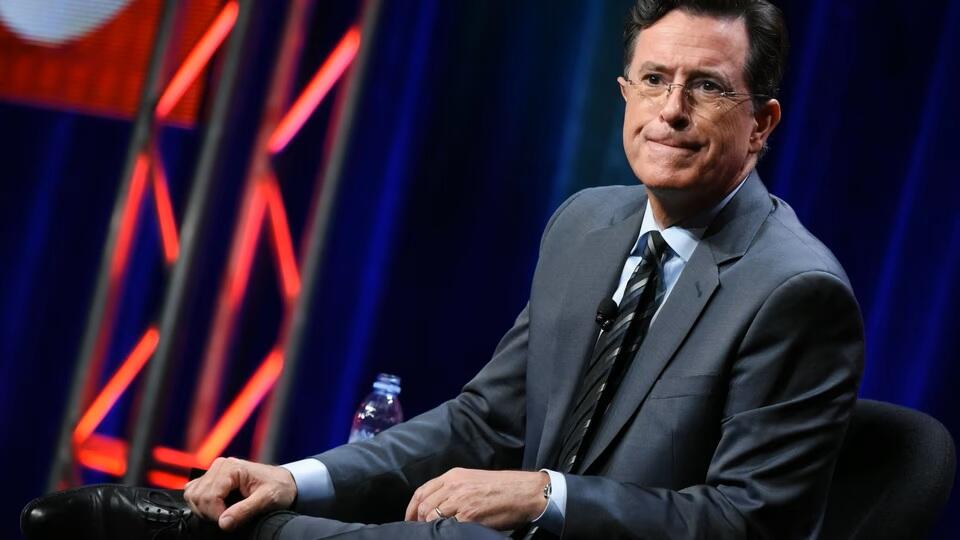
This is what people like Stephen Colbert represent.
From 2019 to 2025 The Late Show lost approximately 25% of its peak viewership. Much like Jimmy Kimmel and other midnight comedy programs obsessed with politics instead of telling jokes, Colbert lost any ability to make fun of his own side. Instead, he became a propaganda mouthpiece for the establishment and a complete disgrace as a conduit for Covid hysteria and vaccine mandates.
Whatever esteem he might have had as an entertainer was lost. His career was now tied to woke activism and running interference for the “elites”. He likely believed that in a town like Hollywood this would cement his position and keep him safe from cancellation. However, despite their grand theatrics as “soldiers of the revolution”, Hollywood executives still love money.
Colbert’s show was losing around $50 million per year. His bloated production crew of 200 people and ludicrous salary of $20 million per season created an annual filming cost of over $100 million. Ad revenues for the show dropped from $121 million in 2018 to $70 million in 2024. Keep in mind, there are thousands of creators on YouTube that do essentially what Colbert does with almost no budget, and they bring in a far larger audience.
There’s no doubt that Colbert will go on to other productions well after the cancellation of his disastrous Late Show. Hollywood has pedestalized the former comedian as a martyr for the great woke cause. The corporate media has done the same, suggesting that the death of the Late Show will be looked on by historians as “Exhibit A” of Trump’s “attack on democracy”. But, it’s still a fact that he lost his show because he was losing vast amounts of money for CBS.
The key to satire, and most comedy in general, is to shine a spotlight on hard truths while suppressing one’s inherent bias. The ability to throw one’s own sacred cows on the pyre is what makes satirists famous. One cannot be a propagandist and be a successful satirist at the same time. One cannot be a court jester and be afraid to take the risk of making fun of royalty.
The royalty in Colbert’s case is not Trump, but the progressive elite and Big Pharma. Attacking Trump in Hollywood or New York presents no risk. Poking fun at the woke mafia presents incredible risk. Colbert has long been a coward in this regard. He has, though, thrown perhaps the biggest toddler fit in recent memory over the end of The Late Show in an attempt to make the event as political as possible.
Colbert will never be out of work completely. Recent announcements have him writing on the script for Peter Jackson’s next Lord of the Rings spin-off film (which is shaping up to be a disaster). He also made a surprise appearance on the cable access show “Only In Monroe” with an average audience of 12 people, which is perhaps a venue more suited to his talents.
The idea that Colbert has been censored by a vengeful White House is complete fantasy. The claim that this is an “attack on democracy” is merely designed to inflame more leftist madness. No one is entitled under the Constitution to their own late night TV show, especially when they’re burning $50 million a year.
Losing the respect of a large swath of the American public, though, makes it unlikely that Colbert will do well in any future project. In the end, he will fade from memory as just another establishment shill.
Two child safety groups filed a complaint against online interactive gaming platform Roblox with the Federal Trade Commission (FTC) on May 20, alleging that children face sexual and financial harm on the platform.
Filed by nonprofits National Center on Sexual Exploitation (NCOSE) and Fairplay, the complaint claims that certain Roblox features are “developmentally inappropriate for the platform’s massive young user base and pose a substantial risk of harm.” Such features include engagement-maximizing design features, a complex virtual currency system that can result in more user spending, and chat and communication features that expose children to sexual exploitation.
These components “capitalize on young users’ developmental vulnerabilities, exploit their desire for authentic self-expression, monetize their lack of impulse control, and turn in-game purchasing power into a form of social status,” the complaint states.
“As a result, young users say they feel a constant pressure to keep up with their peers on the platform, and are thereby driven to buy and spend Robux in order to enjoy Roblox’s experiences.
“At the same time, the voice and text chat features that make the platform social repeatedly expose children to sexual content and harmful adults, resulting in sexual exploitation and abuse.”
According to the complaint, Roblox requires users to be at least 5 years old to open an account.
Last month, Nevada Attorney General Aaron Ford said at a press conference that Roblox, which has roughly 151.5 million daily active users, is used by almost half of all American children under 16. Around 42 percent of the platform’s users are children under the age of 13.
The nonprofits asked the FTC to investigate Roblox for violation of Section 5 of the Federal Trade Commission Act and check whether the company is in compliance with the Children’s Online Privacy Protection Act.
Meanwhile, Roblox’s share price has crashed. On July 31, 2025, the company’s share price hit its year-high of $150.59. On May 21, 2026, prices closed at $46.14, a decline of nearly 70 percent. Since Sept. 29, Roblox’s market capitalization has tumbled from $98.7 billion to $32.8 billion as of May 21, a loss of almost $66 billion.
Design, Currency, Communication Issues
Regarding the platform’s design and marketing features, the complaint alleged that the company leverages them to “capitalize on child users’ vulnerabilities.”
For instance, one tactic used by the company is making users’ game inventories of virtual assets visible to each other.
“By allowing children to investigate who owns what, Roblox takes advantage of their developmental proclivity for social comparison, which involves measuring their self-worth relative to others,” the complaint reads.
To take part in Roblox’s in-game economy, users must navigate a wide range of virtual currencies, including the platform’s primary currency, Robux, and other currencies issued by developers.
To calculate the real-world dollar costs of the items, users must perform complex calculations that greatly surpass children’s mathematical skills, making them susceptible to financial harm, according to the complaint.
As for chat and communication on Roblox, the complaint raises concerns that these features could facilitate “predation and abuse by enabling adult contact with minors.”
The company gives parents control over how their children can communicate on the platform. However, Roblox’s webpage on parental controls clarifies that these settings “do not apply to chat features developed independently by developers.”
In a statement to The Epoch Times, a Roblox spokesperson said that the company “strongly disputes” the claims made in the complaint.
“Our platform is designed to provide a positive, healthy, and enjoyable experience – we build for fun and connection, not short-term engagement. While no system can be perfect, we have a set of safeguards designed to support a safe and civil environment, and clear policies for game creators that require fair treatment of players,” the spokesperson said.
“Most games on Roblox are free to play, and no one is required to purchase Robux.
“In addition, we have clear policies prohibiting both actual and simulated gambling, and a set of rules governing how game creators can use gameplay mechanics like paid random items.”
Lawsuits, International Scrutiny
Roblox is facing several lawsuits from states such as Iowa, Louisiana, Texas, Kentucky, and Florida, citing child safety issues.
In December 2025, Iowa sued the company, accusing the platform of being the “perfect environment for child predators, pornographers, scammers, fraudsters, online sex rings, and inappropriate content.”
Amid growing concerns about child safety, Roblox announced age-based accounts and expanded parental controls for users under 16 on April 13.
Under the policy, users aged 5 to 8 and 9 to 15 will have separate accounts subject to stricter censorship of adult content.
“All content uploaded to Roblox goes through their existing moderation systems, including AI asset scanning, ongoing user report review, and multimodal moderation that evaluates scenes in real time for potential policy violations,” the company said in a statement.
In addition to the United States, Roblox has faced bans and scrutiny in other nations.
The platform has been banned in Turkey and Iraq. Russia blocked Roblox in December 2025, accusing the platform of enabling “LGBT propaganda” and the dissemination of extremist materials.
In January, the Netherlands announced opening an investigation into the platform, citing potential risks to minors. Last month, Australia issued formal notices to major gaming platforms, including Roblox, asking the companies to describe how they prevent the radicalization and grooming of children.
I remember the first time I logged into my retirement account as a young professional. It felt like a milestone: proof that I had entered the world of adulthood, of long-term thinking, of ownership. I work in the nonprofit sector, so technically it’s a 403(b), not a 401(k). The distinction is academic; the promise is the same: contribute consistently, invest wisely, and over time, build financial independence.
The longer I’ve contributed, the more I’ve realized something uncomfortable: my retirement plan isn’t built for the world I actually live in.
Like many in my generation, I came of age during a period of profound economic change. Companies stay private longer. Technology, infrastructure, and energy companies increasingly raise capital outside public markets. The most dynamic growth in the economy often happens before a company ever reaches a stock exchange. When I look at my retirement options, I’m locked out of that world.
Instead, we see a familiar menu consisting of a handful of mutual funds and some index options that quietly steer me toward a standardized allocation. These are not bad investments, but they represent only a fraction of real economic growth.
For my younger peers just entering the workforce, this gap is even more consequential. The directions are thus: start early, take advantage of compounding, and think long term. If we each had a dollar for every time we got the lecture about the “time value of money,” we’d all retire tomorrow. But we are also being funneled into portfolios that exclude entire categories of assets like private equity, private credit, real estate, and infrastructure that have historically delivered higher long-term returns and meaningful diversification.
Brett Arends at Market Watch incorrectly asserts that opening retirement plans to these assets would expose workers to high fees, illiquidity, and complexity. He misses a more important question: compared to what?
There’s real asymmetry. Institutional investors regularly allocate 20 to 30 percent of their portfolios to private markets. They do so because these assets offer diversification, illiquidity premiums, and exposure to parts of the economy unavailable in public markets. Ordinary workers are confined to a narrower universe because litigious zealots neutered the system, compelling fiduciaries to avoid risk at all costs.
This narrowing of investment options originates in the legal environment surrounding employer-sponsored retirement plans. Under the Employee Retirement Income Security Act of 1974 (ERISA), plan sponsors face an onslaught of litigation. The risk of lawsuits compels employers to increasingly default to the safest legal options rather than to the best outcomes for participants, thereby directly limiting potential returns.
Even if you set aside litigation, the deeper issue is structural. The retirement system hasn’t kept pace with the evolution of capital markets.
The proposed rule from the Department of Labor deserves serious attention. At its core, the rule introduces a safe-harbor framework for evaluating “designated investment alternatives” in defined-contribution plans. The definition encompasses everything from traditional mutual funds to more complex vehicles, including those that can incorporate private assets.
The framework is asset-neutral. It outlines how fiduciaries should choose. Plan sponsors are obligated to evaluate investments using a set of common-sense factors: fees, performance, liquidity, valuation, benchmarks, and complexity. If they do so objectively and analytically, they are presumed to meet their fiduciary obligations.
The White House’s Council of Economic Advisers suggests that younger participants could benefit from allocating up to 30 percent of their portfolios to private markets. Institutional investors have approached portfolio construction using private markets for decades.
Yet parts of the proposed rule undermine that very goal. A 15 percent cap on private assets, derived from SEC Rule 22e-4, would limit exposure, a particular problem for collective investment trusts, which are regulated differently and historically operated without such constraints.
Angela Antonelli offers helpful insights. Georgetown Univerisity’s research from the Center for Retirement Initiatives and other CRI analysis, even relatively modest exposure to private real assets, private credit, and private equity has the potential to boost outcomes by 7% to 8%, not just for the “average” DC participant but also across a range of more real financial savings patterns that DC participants too often find themselves in over the course of their working years.
Large institutions, from university endowments to public pension funds, routinely invest in private markets and reap the benefits of diversification and higher returns. We’ve created two classes of retirement savers: those with access to the full spectrum of capital markets, and those without.
That divide is the difference between participating in today’s economy and being stuck in a version of it that no longer exists. Retirement policy should be about equipping workers to build wealth in the modern world.
Right now, my 403(b) originated on a promise that has become so antiquated it might be unattainable. Instead of “taxing the rich,” can’t we just be allowed to invest like them?
Newsom Declares Emergency In Orange County; EPA Head Says Chemical Tank Will “Likely Fail”
The head of the Environmental Protection Administration (EPA) said Sunday that a chemical storage tank in Southern California that has forced officials to declare an emergency and prompted evacuation orders for tens of thousands residents is likely to fail.
Lee Zeldin, the administrator of the EPA, told CNN’s “State of the Union” program on Sunday that the “most likely scenario” is a “low-volume release” of the tank, where officials will be able to “monitor, neutralize, and contain the threat.”
“The Orange County Fire Authority is working to keep the temperature of the tank down. That is very important,” he said on CNN, referring to the fire department in the Southern California county.
He said keeping the temperature under 85 degrees F is key.
“We’re being told that the tank will fail, but there are different scenarios as to what that means, the most catastrophic scenario being an explosion that results in other tanks to explode. That’s the reason why you see such a big evacuation that’s been done in the surrounding areas.”
“You have all levels of government, local, state, federal, working together. EPA has personnel on the ground, air monitors deployed in the local community,” Zeldin also said.
“We have been involved in the modeling of different scenarios.”
Drones were monitoring temperatures at 10-minute intervals to watch for any spikes and planning was underway to ensure a possible leak could quickly be prevented from spreading into waterways or the ocean, Covey said in a video released online.
“Sitting back and allowing these tanks to fail is unacceptable,” Covey said, adding there was no guarantee tanks will not breach and leak.
“Our goal is to protect your homes—no damage to them—and protect the environment.”
As of Sunday morning, Zeldin said: “This is an emergency response. This isn’t yet an environmental response, and the scale of that environmental response will be determined based off of what happens when that tank fails.”
“The safety of Orange County residents is the top priority. We are mobilizing every state resource available to support local responders and make sure the community has what they need to stay safe,” Newsom said.
The malfunctioning tank holds approximately 5,000 to 7,000 gallons of methyl methacrylate, a flammable and volatile chemical used in plastics manufacturing for aerospace applications.
The tank, located at a manufacturing facility in Garden Grove, first started displaying signs of instability on Thursday.
On Friday, there were increased fears of an explosion, according to Orange County Fire Authority interim Chief TJ McGovern.
Approximately 50,000 residents were evacuated in Garden Grove, which is home to around 172,000 people and located 30 miles south of Los Angeles.
The governor’s proclamation directs all state agencies and the California Governor’s Office of Emergency Services to support Orange County and impacted areas, and unlocks additional emergency response resources and authorities.
Are Canadians less adventurous than they once were? It’s hard to argue otherwise.
Alexander Mackenzie was only 24 when the North West Company named him chief fur trader at Fort Chipewyan, in what is now Alberta. A few years later, in 1789 he travelled north along what is now known as the Mackenzie River to become the first European to reach the Arctic Ocean overland. Four years later he crossed the Rocky Mountains and was the first European to reach the Pacific Ocean, beating Americans Merriweather Lewis and William Clark by a full dozen years.
In 1898, Martha Purdy arrived in Dawson City to escape a failed marriage and make her fortune in the Klondike Gold Rush. It was while climbing the notorious Chilkoot Pass that she discovered she was pregnant with her third son. She later remarried and, as Martha Black, was the second woman to be elected to Canada’s Parliament. She was also a successful entrepreneur and a world-renowned expert on wild flowers.
Canadian history is filled with tales such as these. Explorers, soldiers, settlers, and other restless souls who endured great hardships and did great things.
There is a natural sense of awe that arises when retelling such lives filled with adventure. To our modern selves, they appear as fascinating aberrations, gifted men and women with unusual appetites for risky or dangerous undertakings. Their willingness to set out into the unknown strikes us today as thrilling, unnerving, and more than a bit foolhardy. But while their accomplishments may be striking, they lived in more adventurous times.
Today, society shrinks from adventure and the unknown.
Through a combination of practical circumstances, changing social standards, and dramatic shifts in individual risk tolerance and government behaviour, opportunities for adventure have been drastically curtailed.
How can Canadians get that sense of adventurousness back?
“An adventure is only an inconvenience rightly considered”,G.K. Chesterton once wrote. “An inconvenience is only an adventure wrongly considered.” There is a case to be made that adventures are simply harder to come by these days.
There are no more blank spaces left on maps, and hence no places for modern-day Mackenzies to discover.
The omnipresence of the internet and GPS similarly makes it almost impossible to get truly lost anymore. And if you do, help is usually close at hand.
Beyond these practical limitations, however, it seems incontestable that society today is less interested in promoting, facilitating, or participating in adventurous life experiences.
No one talks of running away with the circus or joining the French Foreign Legion anymore, even in jest. According to Statistics Canada, twice as many millennials are still living at home as was the case with previous generations. And if any of these young adults do go away, it’s more than likely to be an adventureless “gap year” holiday between graduate degrees recorded in minute detail on Snapchat and Instagram.
The perpetual childhood of today’s younger generations contrasts sharply with the youthful accomplishments of past eras. William Wilberforce, for example, was elected to the British Parliament at age 21 and then proved instrumental in ending the trans-Atlantic slave trade. His friend William Pitt became Prime Minister at 24, and spent his career fighting the French emperor Napoleon Bonaparte, who became a general at 24. Quite a lot can be accomplished when one starts early.
Other factors that limit the availability of adventure in our post-modern era include the suffocating impact of the welfare state. When Mackenzie left his family home at 15 to become an apprentice in the fur industry, it was because he had little choice. He needed to make his way in the world as a teenager. The same urgency applied to Black when she decided to escape a failed marriage by travelling to the Yukon. With no government to hold your hand, adventure follows. Popular culture in earlier eras also did its bit as well by celebrating explorers and adventurers as celebrities in the same manner that we laud singers and athletes today.
Just as adventure was once regarded as a social virtue to be admired, society today aggressively enforces the opposite expectation—that it is our duty to avoid risk at all costs. In their 2021 book “The Coddling of the American Mind,” social psychologist Jonathan Haidt and lawyer Greg Lukianoff take a close look at the impact of a creeping safety culture on the behaviour of younger generations.
Children, the authors observed, are now deliberately shielded from any sense of risk or uncertainty. How can anyone—young boys most of all—learn about the world around them when school principals announce at the onset of every snowfall that “all snow must stay on the ground.” The ideal of adventure and resilience has been replaced by a debilitating sense of fragility and risk-avoidance.
So is the dream of looking over an untravelled horizon that animated people like Alexander Mackenzie or Martha Black completely dead in the 21st century? Not exactly.
Adventure should properly be considered a spirit, not a place.
It is driven by a powerful mixture of curiosity, necessity, and an openness to experiencing new things. And it can be found wherever uncertainty reigns. Today, that might entail travelling to strange lands, meeting new people, or even engaging in uncomfortable discussions about whether Alberta should remain part of Canada forever.
Wherever the unknown lies, adventure can be found.
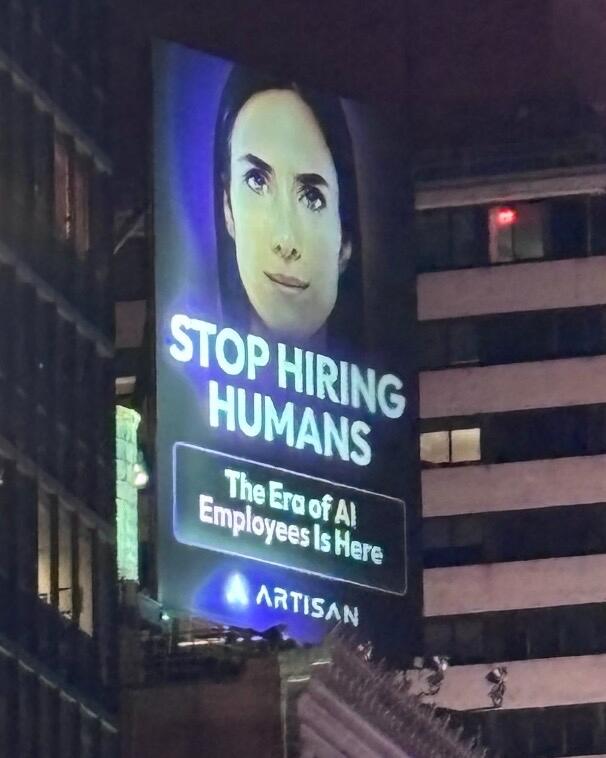
Two billboards went up in New York City recently. This is a city of advertising, where images appear when someone wants the whole world to see them. One billboard is selling artificial intelligence, and the other is warning about it. The juxtaposition between these two advertisers, who most likely wouldn’t have seen the other’s message in advance, captures the conflict of our times and cements the uncertainty about the future within an artificial intelligence world.
The selling billboard is dark, purple, and almost cinematic.
An AI-generated face with artificial perfection stares out. Three words above her say: “Stop Hiring Humans.” The Era of AI Employees Is Here. The company is Artisan. The company says it “is a provocation. It works because it’s uncomfortable.” It is real. It wants your payroll budget, and it is not embarrassed to say so.
The warning billboard is light, purple, and funny in the way that grief sometimes is. A sad stick figure holds a small sign: Will Create 4 Food. Mock chat bubbles float across it like a corporate memo from a future that has already arrived: “Thank you artists for donating your life’s work to our AI. Your generosity hasn’t gone unnoticed. Just uncompensated.”
The organization’s name is Replacement.AI. It is also real, but it is not selling anything. It is run by anonymous artists who spent their own money to tell you the truth. Their website calls itself “the only honest AI company.” Its homepage reads: Humans no longer necessary. Stupid. Smelly. Squishy. It’s time for a machine solution.
The quotes on the site are genuine, such as one from OpenAI’s CEO, Sam Altman: “AI will probably most likely lead to the end of the world, but in the meantime, there’ll be great companies.” And another from OpenAI’s charter, “To build ‘highly autonomous systems that outperform humans at most economically valuable work.’”
On the page dedicated to artists, the site reads: “If you’re one of the millions of artists, musicians, writers, journalists, scholars, or other creatives whose work we’ve stolen to train our AI, we want to thank you. We couldn’t have achieved a $100 billion valuation without all of your hard work, just sitting on the internet for us and our other AI company friends to scrape. Unfortunately for you, financial compensation is out of the question. Just because we’re making money from your copyrighted material doesn’t mean you’re legally entitled to any of it.”
It is satire. It is also accurate. In a submission to the House of Lords, OpenAI admitted, “It would be impossible to train today’s leading AI models without using copyrighted materials.”
The courts are beginning to agree too that something was taken. Well over thirty copyright infringement lawsuits have been filed by creators against AI developers. Visual artists sued Stability AI and Midjourney. Getty Images sued, arguing that over twelve million photographs were scraped without license. The New York Times sued OpenAI. Universal Music filed a $3.1 billion lawsuit against Anthropic in January 2026, alleging its AI was built on a foundation of piracy. None of these cases have reached final verdicts. The legal system is moving at human speed through a problem that was created at machine speed.
What passed through a million years of accumulated human experience—the knowledge handed from mind to mind, generation to generation, the grief and wonder pressed into stories and paintings and films and arguments on the internet at three in the morning—was consumed by hungry algorithms. There was no purchase or licensing. The great ingestion happened in server rooms, while the rest of us were clicking I Agree to ever-lengthening terms and conditions that no one ever bothers to read. And that phase is now over.
Yet predictions for our future keep rolling in, each one confident, and each one contradicting the last. Goldman Sachs estimates AI could replace the equivalent of 300 million full-time jobs. The World Economic Forum projects 92 million jobs displaced by 2030, offset by 170 million new ones created, which is a net gain, on paper at least. Anthropic CEO, Dario Amodei, warns AI could replace half of all entry-level office jobs within five years. Jensen Huang says greater productivity creates more hiring, not less. In 2025 alone, Amazon eliminated 14,000 corporate roles, Microsoft cut 15,000, and Salesforce reduced its customer support workforce by 4,000. Like the billboards in Time Square, both are right, yet neither agree. What the experts ultimately share is uncertainty.
And the AI models are hungry again. This time, media organizations are making sure they require payment from AI giants for their content. New York Times is partnering with Amazon’s AI, Meta with News Corp, and Google with Reddit. But human-made internet content is finite and cannot keep up with the voracious appetite of AI models that do not need time to sleep or metabolise. So the machines have no choice but to prompt themselves, and generate new content upon previous content, with less and less human origin, leading us down a spiral of infinite iteration with less human touch, less human spirit, and less human soul. The only thing the “experts” seem to agree on is that the business potentials are both exhilarating and terrifying.
Meanwhile, Artisan’s billboard promises relief from the burden of human employees. Lower payroll. No sick days. No long hot showers a person needs to feel like a person again. The face on that billboard doesn’t need to ground herself. She doesn’t need anything. What is being sold is not intelligence, but the absence of need. It is a cold world to advertise, and the advertisers seem not to fear the cold.
Two billboards in New York City, and the same ones are popping up in other major cities across the nation. Between them is the argument that is yet to be resolved: whether what is being built is a tool or a replacement, a future or an ending. The experts cannot agree. The lawyers are still filing. The models are still hungry. And somewhere in Times Square, a sad stick figure is still holding his sign, hoping someone walking past will stop long enough to read it.
A federal judge dismissed Tennessee charges against a man who, at one time, was at the center of the immigration debate.
Abrego Garcia, who illegally entered the U.S. from El Salvador in 2011, faced federal charges of human smuggling and conspiracy to commit human smuggling.
The charges stemmed from a traffic stop by Tennessee Highway Patrol in December 2022, where Abrego Garcia was found transporting eight passengers across the country.
One of the police officers believed that he was smuggling them, remarking that he was “hauling these people for money,” according to a video obtained by The Center Square through an open records request.
He allegedly did not have a valid driver’s license and was suspected of trafficking the passengers, though he was let go at the FBI’s request.
The car belonged to an illegal immigrant named Jose Ramon Hernandez-Reyes, who was sent to prison in 2020 for human smuggling.
Obama-appointed U.S. District Judge Waverly D. Crenshaw called the charges “vindictive” because Abrego Garcia challenged his deportation to El Salvador.
“The objective evidence here shows that, absent Abrego’s successful lawsuit challenging his removal to El Salvador, the Government would not have brought this prosecution,” Crenshaw wrote in his order.
“The Executive Branch closed its investigation on the November 2022 traffic stop. Only after Abrego succeeded in vindicating his rights did the Executive Branch reopen that investigation.”
The Trump administration deported Abrego Garcia to El Salvador in March 2025, according to previous reporting from The Center Square.
Prior to that, Abrego Garcia was living in Maryland and had been arrested on suspicion of involvement in MS-13 in 2019, after immigrating illegally to the United States as a teenager with his parents around 2011.
Officials prepared to deport Abrego Garcia then, but an immigration judge granted him “withholding of removal,” believing his life would be in danger if he were returned to El Salvador.
The Department of Justice did not immediately return a message from The Center Square about the case.
Los Angeles residents have had enough of living in a crumbling, graffiti-covered wasteland where basic services have collapsed under years of Democrat mismanagement.
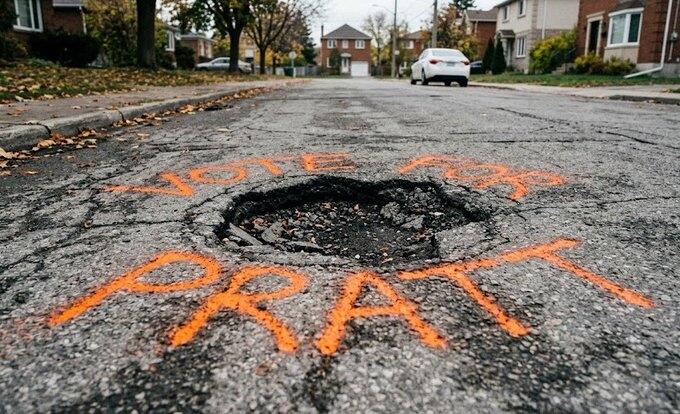
In a display of pure ingenuity, citizens are fighting back by tagging over blighted areas with “Vote Pratt,” betting that Mayor Karen Bass will rush to erase any sign of support for her political rival far faster than she addresses the endless decay.
This clever workaround shines a harsh light on the priorities in a city drowning in filth, where open drug markets and rat-infested encampments flourish while taxpayers foot the bill for billions in ineffective “solutions.”
– Make L.A. Great Again ?? (@lalovestrump) May 23, 2026
The idea took off after one resident pointed out the obvious: if neighborhoods are blanketed in graffiti that the city ignores, simply spray “Vote Pratt” over it and watch the cleanup crews mobilize within minutes.
One post noted, “This could possibly do the trick,” while others highlighted how quickly political messaging gets scrubbed compared to everyday blight.
I just took this photo today at Runyon Canyon ? “Spencer Pratt for Mayor” had been covered up a few time but someone just writes it again. pic.twitter.com/jjZyFe0y8n
Videos and images circulating on X show the extent of the problem and the creative response, with AI-generated visuals encouraging more residents to test the theory.
The citizen hack represents more than a workaround – it exposes the deep dysfunction where political optics trump governance. In a city blessed with resources and climate, decades of open-border-friendly policies, soft-on-crime approaches, and unchecked spending have produced predictable decay.
This grassroots push to elect Pratt comes as no surprise to anyone following LA’s descent. Just days ago, reports painted a grim picture of massive homeless encampments overrun by rats, open-air drug markets operating brazenly near police stations, and public spaces rendered unusable by tents, trash, and crime.
Helicopter footage has captured post offices swallowed by encampments, blocking mail access and parking. Residents describe navigating urine-soaked doorways blocked by belongings just to enter their own apartments, with police unwilling or unable to intervene under current policies.
Despite California dumping an estimated $24 billion into homelessness programs between 2018 and 2023 – with LA spending hundreds of millions annually – the results are nonexistent. The county reports around 72,000 homeless individuals, many unsheltered, with over half originating from out of state, according to critics of the system.
One man who moved to California openly admitted the appeal: easy access to food stamps, cash assistance, and a lifestyle where “they pay you to be homeless.” These incentives have created what detractors call a Homeless Industrial Complex – a self-perpetuating system of nonprofits and bureaucrats motivated to manage the crisis rather than solve it.
EXPOSED ? California Democrats are paying people to be homeless
Homeless man moved across country to California to be homeless
“How long you been in San Francisco?”
Homeless man “Since June. If you’re gonna be homeless, it’s pretty f*cking easy here. I mean, if we’re gonna be… pic.twitter.com/X7j9ut09pm
Mayor Karen Bass has come under fire for broken promises to end street homelessness. When confronted on CNN about missed targets, she cited unanticipated “bureaucratic barriers.” In another exchange, she advised residents not to trust their own eyes but official statistics instead, despite visible evidence to the contrary.
? LMAO! CNN brutally rips Karen Bass for the homeless crisis in Los Angeles.
CNN: “Your goal was to end street homelessness in LA by 2026. It’s now 2026. We haven’t ended it, and we’re not close. How are you so off?”
– The Patriot Oasis™ (@ThePatriotOasis) May 20, 2026
Enter Spencer Pratt, the mayoral candidate whose name is now central to this cleanup hack. Pratt has called for a no-nonsense approach: a short grace period after taking office followed by mass enforcement against crime, open drug use, and disorder. He has emphasized clearing streets and involving homeless individuals directly in cleanup efforts rather than feeding another layer of bureaucracy.
? JUST IN: LA mayoral candidate Spencer Pratt announces Los Angeles criminals and homeless degenerates will have 2-3 WEEKS after he gets into office before MASS ARRESTS ensue
“First 3 weeks: signups, no nakedness, no drug use, no robbing, no dog abuse.”
Real change requires rejecting the failed ideologies that enabled this mess: endless tolerance for lawlessness, incentives that import problems, and a bureaucracy that thrives on failure.