White House Weighs Whether To Back “Open Vaccine” Push Opposed By Bill Gates, Big Pharma

White House Weighs Whether To Back “Open Vaccine” Push Opposed By Bill Gates, Big Pharma

As the latest wave of India’s COVID-19 outbreak metastasizes into a full-blown crisis, India and other developing economies are seizing the opportunity to push back against the Bill Gates-backed status quo that prioritizes the intellectual property rights of big pharma over access to plentiful and cheap vaccines in the developing world.

Gates has continued to insist that the current approach is the best option for the developing world. But increasingly, it seems the governments of India, South Africa, Nigeria and other emerging powers disagree. And as a showdown looms at the WTO, Washington is being pressed to confront the obvious hypocrisy in backing Gates over the “open vaccine” movement.

As more lawmakers speak out on the issue, support has grown along Biden’s left flank to push the president and his top trade rep to back a proposal at the WTO to issue a waiver on IP restrictions that would effectively allow countries to manufacture jabs independently, instead of being forced to purchase them from Pfizer, AstraZeneca and their competitors on the open market.

Of course, Biden can’t move on this issue without the implicit support of big pharma, and in an attempt to try and curry support, Biden’s trade representative Katharine Tai, who has seemingly made the “open vaccine” issue a pet project, met with top executives from Pfizer, AstraZeneca and others to discuss the possibility of supporting an IP waiver.

The talks come as members of the WTO are due to discuss a proposal by India and South Africa to waive certain provisions of the organization’s Agreement on Trade-Related Aspects of Intellectual Property Rights during an upcoming meeting on April 30. So far, the US has blocked the resolution. But a growing chorus of Democratic lawmakers, civil society groups, and 60 former heads of state and 100 Nobel Prize winners have urged Biden to reconsider and instead back the waiver. White House Press Secretary Jen Psaki on Monday said she had no updates on the issue.
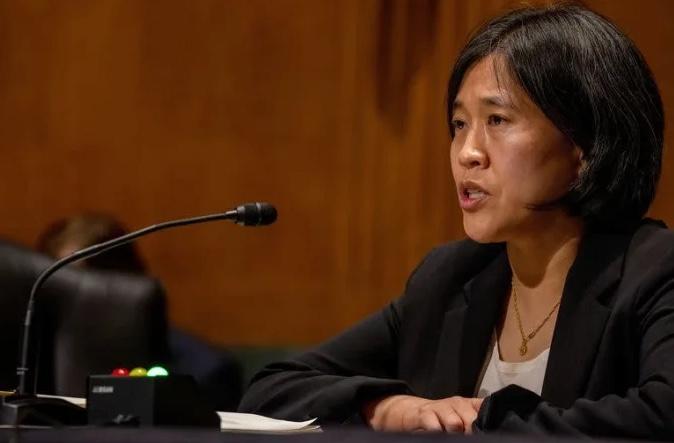
Katharine Tai

Beyond talk about “increasing vaccine production”, it’s not exactly clear what Tai and her fellow executives discussed (though the waiver was reportedly part of the talks), Reuters reminds us that, earlier this month, Tai told a WTO meeting the gaping divide between developed and developing countries’ access to medicines was “completely unacceptable” and that the industry needed to make sacrifices in times of crisis.

On Tuesday, Seattle’s City Council passed a resolution put forward by the mayor’s office urging Biden to lift the patent restrictions.

Others on social media pointed to the administration’s obvious hypocrisy on the issue. Biden reportedly spoke with PM Narendra Modi directly this week and offered US assistance in helping battle the country’s COVID-19 crisis, however, as one social media user pointed out, the US keeps blocking India’s request for waiving Intellectual Property Rights related to COVID-19 drugs and vaccine raw materials, in the WTO.

Behind the scences and with the blessing of Gates, the world’s de facto COVID-19 vaccine czar, the industry has escalated its lobbying efforts in Washington, warning that giving up the rights to such valuable US intellectual property would inevitably aid America’s foes, especially China and Russia.

The question now is: how many lives is that worth, with emerging economies expected to wait years to receive access to abundant vaccines, while unused jabs pile up in the US.

Tyler Durden
Tue, 04/27/2021 – 23:20

via ZeroHedge News https://ift.tt/3vD32xB Tyler Durden
Deflation Threat Looms As China Suffers First Population Decline Since 1949

Deflation Threat Looms As China Suffers First Population Decline Since 1949

China is battling not one but three vicious demons. The interconnected issues of insurmountable debts, deflation, and demographics threaten to sap the world’s future growth potential. 

Fending off the 3 D’s: debts, deflation, and demographics requires the People’s Bank of China to slash borrowing costs and unleash an enormous amount of credit into the local economy to cover up the faltering demand that usually persists with demographic challenges.

The question we should be asking is China really on the “rise,” as President Xi Jinping believes: “the East is rising and the West is declining” or if the coming demographic crisis derails Xi’s global takeover plans.

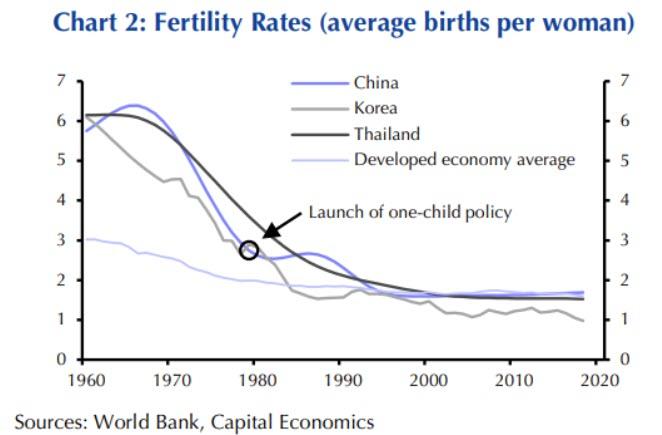
Beijing desperately attempts to recover from its decades of disastrous ‘one-child policy,’ which officially ended in 2015 and was replaced by the current two-child policy.

According to FT’s sources, the latest Chinese census data, which was completed in December and has yet to be publicly released (the issue is reportedly so sensitive that it won’t be released until many government agencies reach a consensus on the data and its consequences), is expected to show the country’s first population decline since records began in 1949.

China’s total population is expected to print less than 1.4 billion, according to people familiar with the census report, and if it is reported, the peak in China’s population came five years earlier than the United Nations predicted.

But, as Bloomberg notes, the trend is hardly surprising. China’s birth rate has been in decline for years and the introduction of the two-child policy in 2016 failed to make a dent. The number of newborns in 2019 fell to 14.65 million, a decrease of 580,000 from the year before. To cope with the shrinking population, a PBOC study last month urged a drastic overhaul of the policy to encourage “three or more” children per household. It called for a total lifting of any restrictions to “fully liberalize and encourage childbirth” to reverse the current four-year straight decline in births nationwide. 

A key section of the 22-page document spells out:

“In order to achieve the long-term goals in 2035, China should fully liberalize and encourage childbirth, and sweep off difficulties (women face) during pregnancy, childbirth, and kindergarten and school enrollment by all means (possible),” the four central bank researchers wrote in the English language abstract. 

But Mark Williams, an economist at Capital Economics, said the low birth rate has deep-rooted demographic and social causes that are difficult to reverse. After all, the decline in the fertility rate started before the one-child policy was introduced in the late 1970s, and followed a similar pattern in other Asian countries.

In any event, as the official China Daily stated in December, population “trends are irreversible.”

The PBoC has a big dilemma on its hands. China today is drawing parallels between Japan in the late 1980s – just before its “lost decade,” where the country experienced a decade of secular stagnation. 

Firstly, demographics – if economic growth is a function of the number of workers and consumers in the economy and technological productivity, then a declining population in China would drag on the global economy. 

China’s next path could be down the dark road of deflation, similar to Japan, where the typical response to deteriorating demographics is a continued build-up in private debt, leading to soaring public debt.

The main lesson from Japan is that high debt levels result in structurally weak growth and anemic inflation. This would suggest the latest spurt of inflation rippling through the world is not sustainable. Future growth rates in China are expected to be much lower than what was seen pre-COVID. 

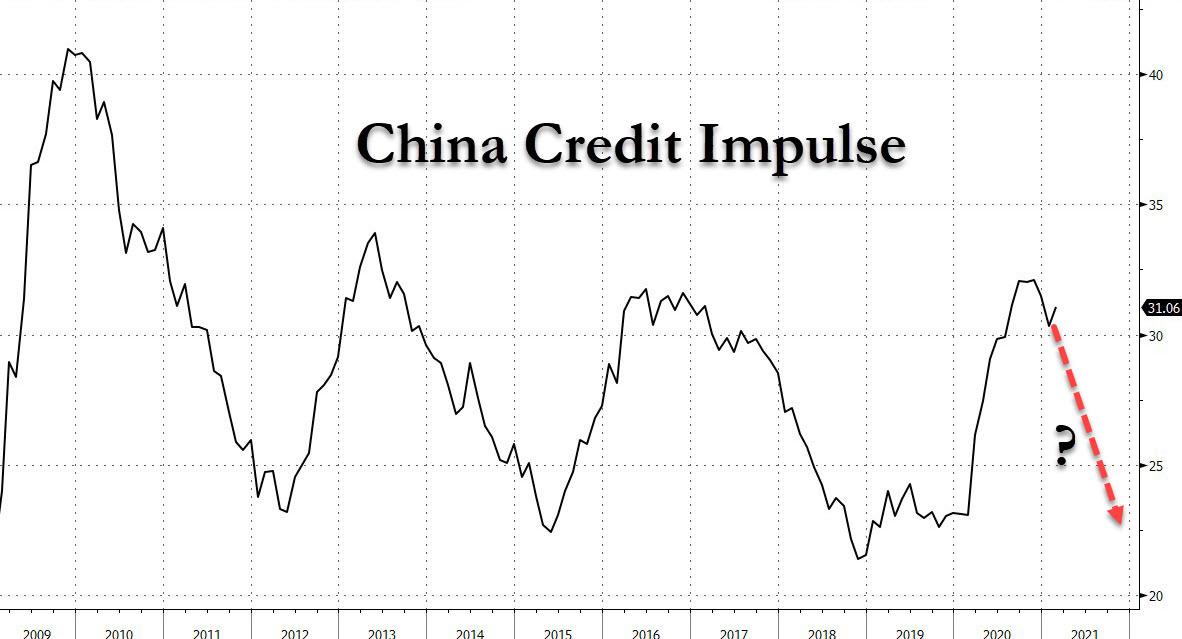
Souring demographics would mean China’s total social financing and M2 would need to increase to fill in the cracks of faltering demand as the population declines. According to Bloomberg’s Ye Xie, a slowdown in credit growth could “start to shrink by July or August just as the Fed may lay the groundwork for its own tapering.” This would signal deflation is ahead. 

Besides the 3 D’s: debts, deflation, and demographics, a population decline will also dent China’s global image. 

Huang Wenzheng, a fellow at the Center for China and Globalization, a Beijing-based think-tank, said, “census results will have a huge impact on how the Chinese people see their country and how various government departments work.” 

Wenzheng continued: “They need to be handled very carefully.”

The Chinese take great pride in being part of the world’s most populous state, but the narrative could begin to shift when the data is released. 

Wenzheng said the possibility of the first population decline in seven decades could push forward China’s looming demographic crisis: 

“The pace and scale of China’s demographic crisis are faster and bigger than we imagined,” he said.

“That could have a disastrous impact on the country.”

A shrinking population could have profound economic implications.

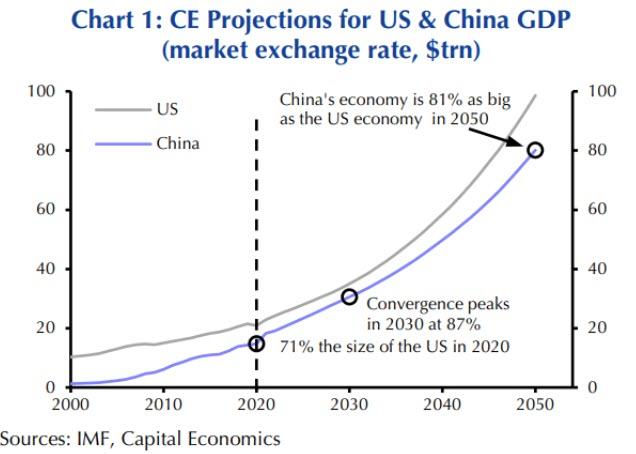
First, by Williams’s calculation, the demographic headwind means China may never be able to catch up with the U.S. as the world’s largest economy.

Secondly, an older population would put extra strain on the underfunded pension system.

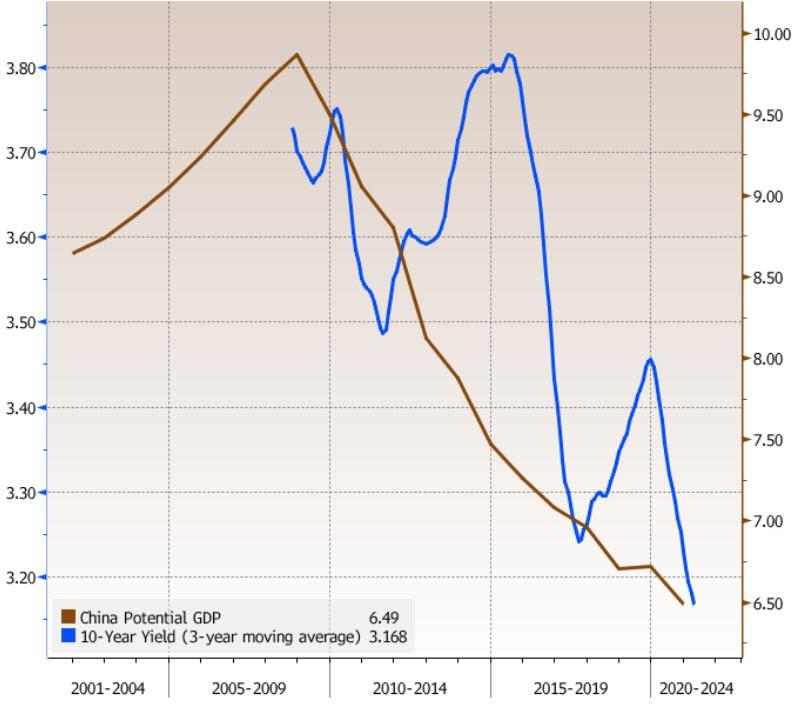
A separate PBOC report last month estimated that a shrinking labor force is likely to lower China’s potential GDP growth to 5.1% by 2025, from an expected 5.7% this year. It’s perhaps not a coincidence that China’s 10-year bond yields peaked in 2013, the same year that the country’s working-age population started to fall.

Here’s a look at potential GDP growth and the three-year average of 10-year yields.

A ‘deflationary’ mindset and Japanification are the words that come to mind.

Tyler Durden
Tue, 04/27/2021 – 23:00

via ZeroHedge News https://ift.tt/3sYEBIX Tyler Durden

‘Mom And Pop’ Landlords Dying On The Vine As Un-Evictable Tenants Enjoy Pandemic Protections

‘Mom And Pop’ Landlords Dying On The Vine As Un-Evictable Tenants Enjoy Pandemic Protections

As millions of renters across America continue to benefit from sweeping protections against eviction during the COVID-19 pandemic, their landlords haven’t been so fortunate.

The three-unit rental, left, that landlord Joaquin Villanueva owns in Boston.
Photographer: Harry Scales/Bloomberg

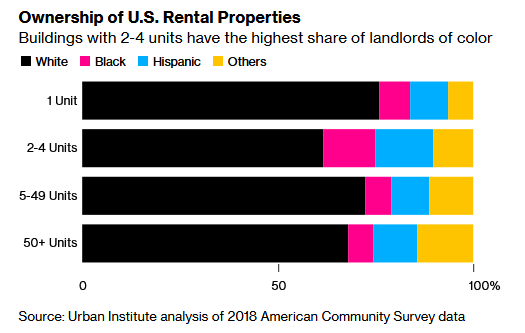
According to Bloomberg, nearly $47 billion in rent relief from the Biden Administration has been slow to materialize, forcing “mom-and-pop” landlords into financial hardship – or forced to sell to wealthy investors. Bloomberg, perhaps to invoke sympathy for the landlord class, focused on the impact felt by minority landlords.

Like their tenants, these landlords are more likely to be nonwhite or to be immigrants using real estate for their economic foothold. Now, mortgage, maintenance and tax bills are piling up, putting landlords in danger of losing their buildings or being forced to sell to wealthier investors hunting for distressed deals.

The tens of billions of dollars that Congress allocated for rent relief — starting in December and then with a second allotment in March — was supposed to help by covering back rent and unpaid utility bills. But the rollout has been moving at the speed of bureaucracy, which varies from state to state. –Bloomberg

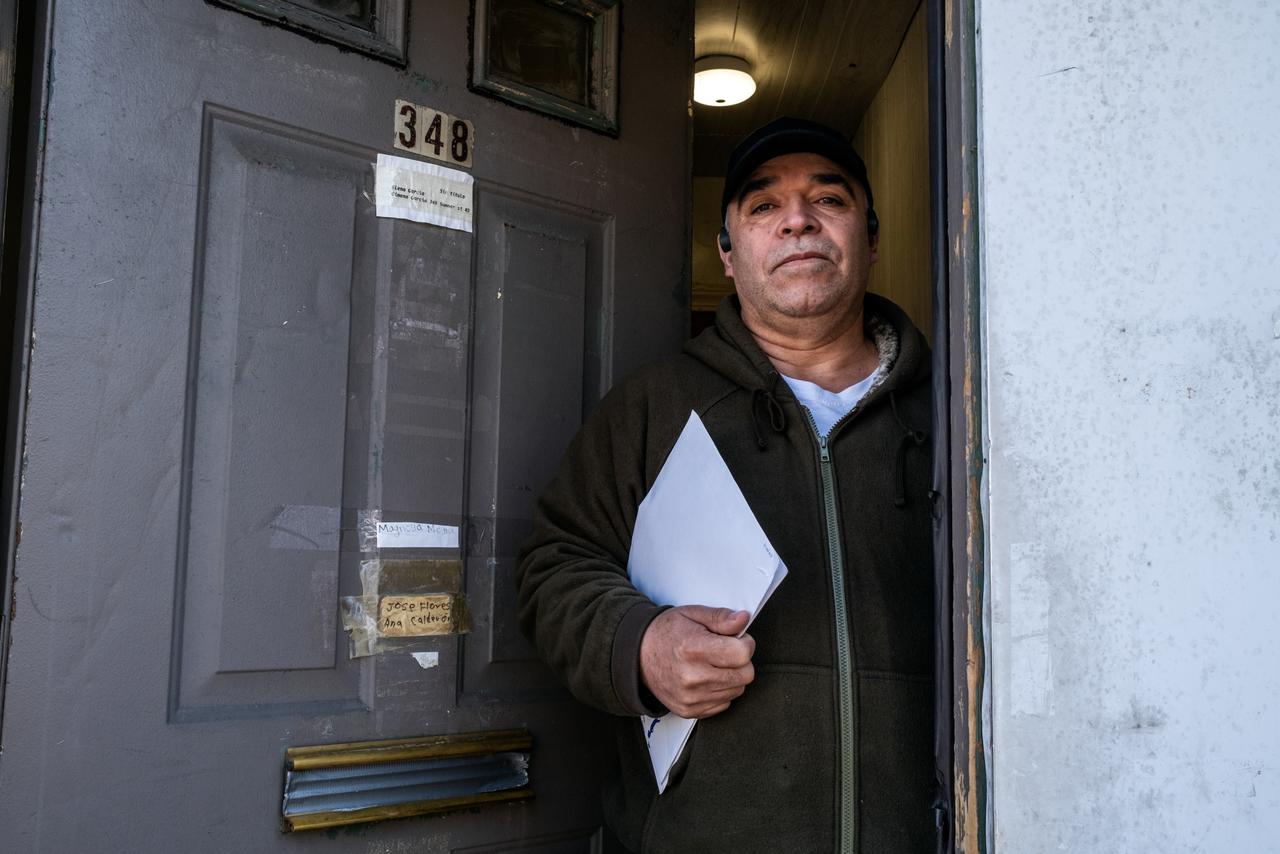
In one example, airport janitor Joaquin Villanueva has had to take out a home-equity loan to make ends meet while maintaining a three-unit rental house in East Boston. One of his tenants is eight months behind on rent, while another – an unemployed restaurant dish washer, owes him $5,000.

Joaquin Villanueva in Boston, on April 24. Photographer: Harry Scales/Bloomberg

I don’t want to lose my house so I’m doing whatever I have to do,” said Villanueva – an El Salvadorian immigrant who works at Logan International Airport, adding “I’m not rich like a Donald Trump.”

Another distressed landlord, Jamaican-America Lincoln Eccles, owns a 14-unit building in the Crown Heights section of Brooklyn, New York. Eccles says investors have been flooding him with unsolicited phone calls, texts and emails. He says that selling would bring much-needed relief, as he’s now a year behind on taxes and gas bills. Eccles says he’d rather keep the building acquired by his immigrant father in order to pass it down to his first son, born this month.

Unfortunately for Eccles, “One tenant owes more than $40,000 in back rent, five units are empty and Eccles can’t afford to replace or even fix a boiler that broke down again in March. The rent relief program will help only so much. He’s unlikely to get government grants to cover losses from a tenant who left in November owing $96,000.”

According to RealtyTrac Executive VP Rick Sharga, “The fact that we’re over a year into the pandemic really puts a lot of these landlords at risk.”

That said, not much is known about how many landlords themselves are in desperate situations, Bloomberg notes, however “it doesn’t take much to fall behind if income stops coming from one tenant in a small building. With each passing month, the problems get bigger and harder to solve.”

So what now?

It’s going to be an ordeal either way. In order to remedy shortfalls in rent, both renters and landlords will need to cooperate for the landlord’s benefit – with local governments often requiring long, detailed applications signed by both parties in order to prevent fraud.

Meanwhile, many landlords don’t qualify for federal COVID-19 mortgage forbearance because less than a third have mortgages backed by Fannie Mae, Freddie Mac or another federal agency, while local governments can’t afford to let landlords pause property tax payments – particularly in cities which have suffered economic devastation due to the pandemic.

The long-term concern here, over the course of a few years, is that a growing share of mom and pop landlords will be forced to sell and rents will go up,” said Rutgers assistant professor of sociology who researches housing inequality. “There’s a lot of private equity interest and a real possibility of growing consolidation.”

From the government side, the situation is a quagmire.

Even as the pace of payments pick up, other challenges are looming. The way Congress allocated the money gave an outsize share to smaller states with low renter populations.

New York’s $2.4 billion portion of the funds, for instance, is expected to cover less than 80% of back rent, utilities and late fees owed in the state as of March, according to estimates from Moody’s Analytics. In Illinois, it’s just 45%. Vermont, however, gets a roughly $350 million allocation, enough to pay for the state’s need more than nine times over.

While Congress provided the Treasury Department with authority to fix any mismatch in funding, the reallocation can’t happen for several more months. -Bloomberg

“Standing up a brand new program like this that’s very high-touch and has to get out ASAP is really tough,” said Stockton Williams, executive director of the National Council of State Housing Agencies, who added that while some states – including Alaska, Kentucky and Virginia have been quick to distribute relief, California and Texas – states with large allocations – have been slow to respond but are picking up speed.

Tyler Durden
Tue, 04/27/2021 – 22:40

via ZeroHedge News https://ift.tt/2QYW46R Tyler Durden

“F**k The Police” Proclaims 32-Year-OId Livestreamer Before Killing Cop In 2AM Drunken Hit-And-Run

“F**k The Police” Proclaims 32-Year-OId Livestreamer Before Killing Cop In 2AM Drunken Hit-And-Run

A New York woman was arrested early Tuesday morning after striking and killing a veteran police officer in a New York City hit-and-run, according to the Daily Mail.

In a nearly two-hour Facebook Live stream following the trial of ex-cop Derek Chauvin, 32-year-old Jessica Beauvais could be seen taking shots of vodka and saying “fuck the police” just hours before plowing into 43-year-old NYPD Highway Officer Anastasios Tsakos, 43, on the Long Island Expressway around 2am Tuesday morning while driving her Volkswagen on a suspended license.

Beauvais posted a 1 hour and 51 minute livestream on her Facebook page Monday evening. At one point, she washes down the contents of a red shot glass (above)

Taskos was redirecting traffic from a fatal car Queens accident at the time when Beauvais allegedly aimed for Taskos and struck him head on – killing the married father of a three-year-old son and six-year-old daughter. The 14-year veteran of the NYPD was pronounced dead at a nearby hospital.

“We stand here this morning reminded once again, in law enforcement, there is no such thing as a routine job,” said NYPD Commissioner Dermot Shea, adding “We stand here devastated and trying to pick up the pieces of what is a shattered home and a shattered NYPD family.”

NYPD officer Anastasios Tsakos

Following the accident, Beauvais reportedly sped off with a ‘completely shattered’ windshield before she was arrested by police.

Jessica Beauvais, 32, faces vehicular manslaughter charges after allegedly striking NYPD police officer with her car on the Long island Expressway on Tuesday morning

Beauvais, who says she has a 13-year-old son in the video, offered a tearful apology for Tsakos’ death as she was led out of the NYPD’s 107th Precinct in handcuffs on Tuesday afternoon. ‘I’m sorry that I hit him and that he’s dead,’ she sobbed. 

She is set to be arraigned on two counts of vehicular manslaughter, and reckless endangerment, leaving an accident resulting in death, fleeing an officer in a motor vehicle, and other charges, including driving while intoxicated. –Daily Mail

“This week we are going to talk about the ignorance that was the Derek Chauvin trial – or the ignorance that is essentially just is this f**ing justice system,” Beauvais said at the beginning of her 1 hour 51 minute Facebook Live video as part of her Face the Reality radio show. “Police say an oath and in that oath they say an oath that they are not supposed to be afraid of that position and that is literally in the rules.”

Beauvais is wearing the same clothes in the footage (left) as she was seen in both at the time of the crash (center her arrest) and when she was being led out of the NYPD’s 107th Precinct (right) 

She then proceeded to say that police officers are “signing up for potential death like in the army,” and that it’s “part of the job” that people “might try to fucking kill you.”

After which she killed a police officer, allegedly of course.

“‘Like (hip hop group) NWA say about the police – if you’re going to kill me, at least I get to take someone with me,” she told her audience, adding “I’m one of those people. If I’m going to go, someone is coming.”

Read the rest of the report here.

Tyler Durden
Tue, 04/27/2021 – 22:20

via ZeroHedge News https://ift.tt/3dXxCf5 Tyler Durden

“Steady As She Goes”: Why Powell Won’t Rock The Boat Tomorrow

“Steady As She Goes”: Why Powell Won’t Rock The Boat Tomorrow

Be Steve Englander, head global G10 FX at Standard Chartered

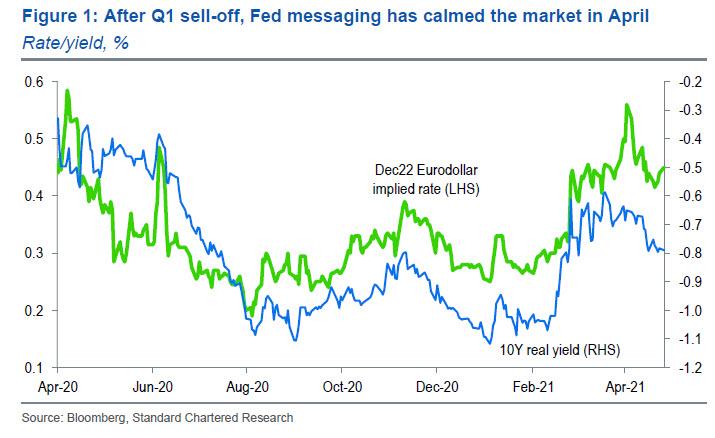
The Fed put a lot of effort after the March FOMC meeting into convincing bond investors that it was not thinking of changing its view of low inflation and low policy rates through 2023. There is increased optimism but not additional economic data since, so we think the Fed will try and keep the message as unchanged as possible. The lack of bond yield reaction to sharp data surprises has led investors to be cautious on the immediate upside to bond yields. Real yields are almost 20bps lower than at the March FOMC (Figure 1). There is no real appetite to fight the Fed now and the Fed has little incentive to rock this boat just yet.

This makes it hard for the FOMC to convey a dovish message beyond what the market has absorbed already. The risk is that normally innocuous statements like ‘the next few months may give us more information on the strength of the recovery’ could be seen as signalling an early consideration of tapering or as defining substantial progress. While some market participants think the FOMC may intentionally convey a slightly more hawkish stance, we think the risk is that an inadvertent comment scares the market. There seems little upside in trying to nuance bond prices and reigniting premature tightening fears.

Yields may not immediately spike higher, but bond prices could be increasingly vulnerable if near-term data continue to surprise to the upside. We think the 10Y UST will most likely trade in a 1.50-1.75% range near-term but see the risks as skewed towards travelling towards the top of that range if the Fed and data-flow play out as we expect. (see Early Indications Point To 1.5 Million Jobs Number).

The one dovish signal that Powell could convey is that the Fed would measure its success by how few people were left without work once job creation began to level off, not how many jobs were created in the early stage of reopening. This would mean that the Fed would be looking at late Q3 and early Q4 data to decide whether sufficient progress has occurred.

We doubt Powell is ready to provide a full definition of ‘sufficient progress’ that would encourage a Taylor rule type of market reaction. On the whole we think he will convey that the FOMC is not yet thinking about shifting its dovish stance – if March was too early, then April with a few added data points is unlikely to shift the dovish stance. This is an instance where the Fed wants to dampen investors’ forward-looking instincts.

Tyler Durden
Tue, 04/27/2021 – 22:00

via ZeroHedge News https://ift.tt/3vuzDWd Tyler Durden

European Investment Bank Issues €100 Million In Digital Bonds Using Ethereum

European Investment Bank Issues €100 Million In Digital Bonds Using Ethereum

The European Investment Bank will use blockchain technology to issue two-year digital bonds, the latest sign of growing mainstream adoption for crypto only this time Ethereum is taking the spotlight courtesy of the EIB.

In an article published earlier on Tuesday, Bloomberg detailed the European Investment Bank’s plans to use Ethereum to register €100 million (~$120M) worth of digital notes. Goldman Sachs, Banco Santander, and Société Générale will manage the sale. According to a Bloomberg the source the notes may be priced as soon as today.

As CryptoBriefing notes, the European Investment Bank using Ethereum to register digital bonds would help reinforce Ethereum’s value proposition as a “global settlement layer.” The project’s biggest evangelists have long discussed Ethereum’s potential to act as the base layer for transactions of various forms. Ethereum processes its transactions using smart contracts; it’s the biggest and most used smart contract platform today, recording about 1.5 million transactions daily

In recent years, the network’s activity has been characterized by the DeFi and NFT booms, but Ethereum still has to earn wider recognition among institutions like banks. If the European Investment Bank and other financial giants are to start issuing payments on Ethereum, mass adoption may be on the horizon. 

Though Ethereum is not as widely known as its predecessor, Bitcoin, it has had its fair share of mainstream attention recently. CME Group, the world’s largest derivatives exchange, launched ETH futures in February. Like BTC, ETH is now supported by PayPal. This year’s NFT explosion has also inspired digital creators and major pop artists like Eminem and Kings of Leon to start using the network. 

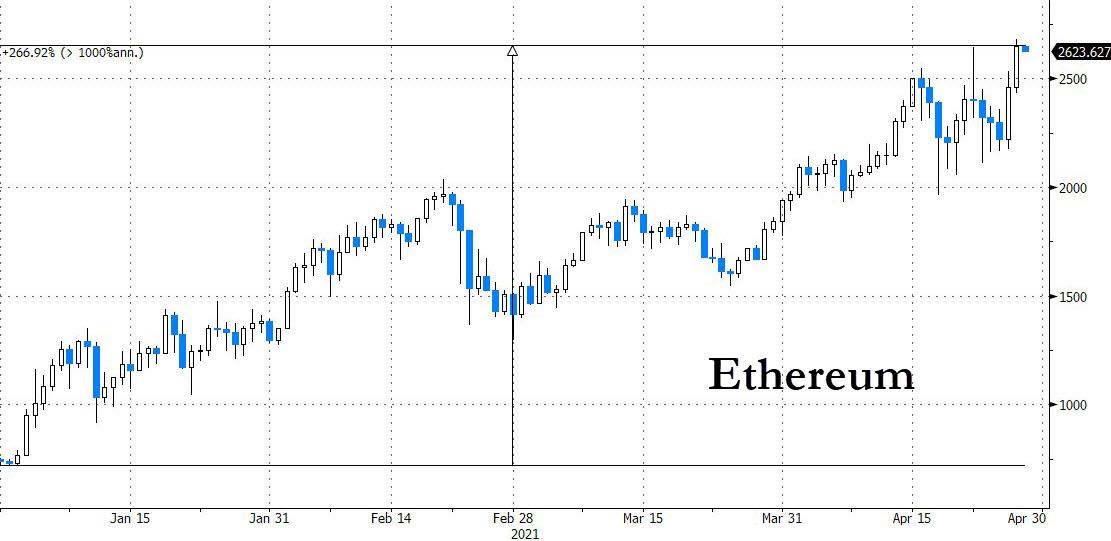
ETH jumped this afternoon, possibly in response to the Bloomberg report. It traded as high as  trading at $2,651 at publication, a new record high, before retracing to $2,625. It has gained over 20% in the past three days, and is up 267% YTD, vastly outperforming bitcoin.

Tyler Durden
Tue, 04/27/2021 – 21:40

via ZeroHedge News https://ift.tt/32S2zv5 Tyler Durden

Lawyer For Ashli Babbitt’s Family Says Lawsuit Will Be Filed Soon Against US Capitol Police

Lawyer For Ashli Babbitt’s Family Says Lawsuit Will Be Filed Soon Against US Capitol Police

Authored by Jack Phillips via The Epoch Times,

A lawyer for Ashli Babbitt’s family said that they will file a lawsuit against the U.S. Capitol Police after a Capitol Police officer shot and killed her during the Jan. 6 Capitol breach.

No charges were filed against the officer who shot Babbitt. The officer has not been identified publicly. Babbitt, a U.S. Air Force veteran, was unarmed when she tried to climb through one of the Capitol doors before the officer shot her.

“The family and I were disappointed in the Department of Justice’s decision on this, but my role is really to bring a civil action and in that way, vindicate her rights,” Terry Roberts told Newsmax on Monday.

The Babbitt family, he said, disagrees with the Department of Justice’s move to not pursue criminal charges against the officer, adding “clearly, the officer required willfullness … he could clearly see that she was not armed” and didn’t present an immediate threat. The officer also didn’t give ample warning before the shooting, Roberts said.

“This is a situation in which the officer could have easily arrested her if he had grounds to arrest her without using deadly force,” he said.

“This was an egregious act of excessive force.

Because Babbitt was a supporter of former President Donald Trump, Roberts suggested that the officer involved in the shooting got off lightly.

The family has not yet filed the lawsuit but will do so soon, he added in the interview.

Roberts previously told The Epoch Times in March that the lawsuit could entail an excessive use of force complaint.

“That will be filed against the officer, the Capitol Police,” he said at the time.

An investigator said that his firm has successfully identified multiple witnesses and spoken to them and a team has spent weeks collecting open-source videos and photographs as part of the effort to reconstruct what happened in the moments leading up to the shooting.

Roberts then added:

“Witnesses confirm that the officer did not give Ashli a single verbal warning prior to firing. In fact, Ashli was not even aware that the officer was present, as he was located in the doorway of a room off to the side of her field of vision.”

But Mark Schamel, an attorney for the officer, told The Epoch Times via email that the officer warned people inside not to enter the Speaker’s Lobby.

“He fired only one shot at the only person who breached the locked doors and makeshift barricade that had been erected. He did so after clearly identifying himself and ordering the mob not to come through the barricade,” Schamel said.

He used tremendous restraint in only firing one shot, and his actions stopped the mob from breaking through and turning a horrific day in American history into something so much worse.”

The Epoch Times has contacted the Metropolitan Police Department for comment.

Tyler Durden
Tue, 04/27/2021 – 21:20

via ZeroHedge News https://ift.tt/3sWkc7p Tyler Durden

Meet The Billionaire Who “Finally Understood Bitcoin” After Tripping On Magic Mushrooms

Meet The Billionaire Who “Finally Understood Bitcoin” After Tripping On Magic Mushrooms

Christian Angermayer built his portfolio the old fashioned way: by taking psychedelics and buying bitcoin.

That’s the actual story of the 42 year old German billionaire that was highlighted by Bloomberg on Thursday. He literally “rode the wave” of every big fad over the last 12 months – including bitcoin and SPACs – and made a fortune in the process.

His family office is called Apeiron Investment Group and has been the lead investor in 7 companies that have gone public in the last year, raising more than $1 billion combined. He has 10 more companies slated to IPO this year. 

Angermayer took his first trip on psychedelics in 2015 before investing in companies that are in the space. A conversation with a neuroscientist at a dinner party is what turned him on to the idea of magic mushrooms, despite the fact that he doesn’t drink alcohol. “It was the single most meaningful thing I’ve ever done in my whole life, nothing really comes close,” he said of his first trip, which took place in the Caribbean. 

After the trip, he claimed he “finally understood bitcoin”. From there, it became a feedback loop of investing in the things he was passionate about while riding the crypto wave that has swollen over the last half decade. 

On his investing style, he said: “I just invest in what I’m very curious and passionate about,” he told Bloomberg. The report calls him the “German version of Chamath Palihapitiya”. 

But he doesn’t have as big of a presence on social media as Chamath. This hasn’t stopped him from cultivating serious relationships with influential investors like SoftBank and Peter Thiel. 

Bitcoin bull Mike Novogratz said of Angermayer: “He’s probably the best networker I’ve ever met. He’s built this amazing network of people who like and have learned to trust him because he’s made them money. As a capital raiser, he’s awesome.”

Angermayer’s office, based in Malta, “helped China’s HNA Group purchase 9.9% of Deutsche Bank AG stock in 2017′ and received a finder’s fee of $15.6 million for introducing executives at SoftBank and the now-defunct Wirecard.

Apeiron has $2.5 billion in assets, half of which are Angermayer’s. The fund “has averaged an annual internal return of more than 50% over the past decade”, according to Bloomberg. The portfolio is full of companies like AbCellera Biologics, which has developed an antibody drug for Covid and Compass Pathways, a psilocybin-focused depression treatment company that we highlighted shortly after it went public. 

He has also produced or executive produced 21 different movies, the report notes. Thiel said of him that his curiosity “allows him to recognize trends very early or invent and create an entire sector himself.”

Benedikt Franke, CEO of the Munich Security Conference said of him: “He is an investor who has fully understood the importance of geopolitics for long-term strategy.”

Angermayer added: “I understand politicians better than investors. One reason I’m very happy is I’m very honest with myself. I want everybody to like me.”

When asked what type of hedging he uses, Angermayer responded: “None”. 


Tyler Durden
Tue, 04/27/2021 – 21:00

via ZeroHedge News https://ift.tt/3tYePpv Tyler Durden

Early Indications Point To 1.5 Million Jobs Number

Early Indications Point To 1.5 Million Jobs Number

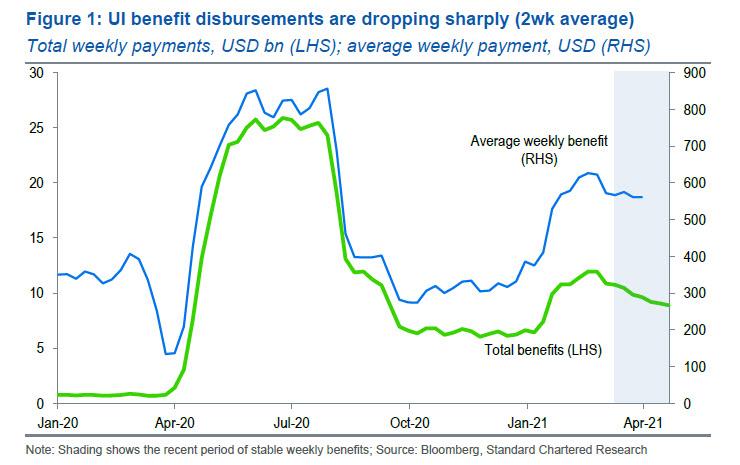
Early indications point to very strong job numbers for April (due May 7), possibly as much as 1.5 million jobs or more, according to Standard Chartered FX strategist Steve Englander. He bases this estimate on an analysis of unemployment insurance (UI) benefit payments in recent weeks. Average weekly benefits have been very stable since late February, but the amount of spending has dropped sharply since mid-March (Figure 1). By implication, the numbers receiving benefits are probably also dropping.

Englander then translates the drop in benefits to an implied fall in unemployment, and seasonally adjusts the unemployment drop based on past patterns. As a result, he finds that unemployment may have decreased between 1.4 million and 2.0 million from March to April. The wide range emerges because March to April seasonality is very strong and the adjustment factor is very uncertain. However, as he adds, a number in the middle or upper end of the range is more likely than in the bottom half, based on this analysis.

This is how Englander arrived at his estimate

  1. First, assume that just about everyone who lost employment is collecting unemployment benefits because of the broadening of benefits eligibility. In the past, UI benefits have covered about half of workers who lose their jobs; now they cover most of the work force potentially affected by COVID-19, including gig workers and the self-employed.
  2. Similarly, benefits keep getting extended and now will last to September 2021. The major reason to leave unemployment is to go back to work.
  3. Early in the pandemic, benefits paid and the number of benefit recipients moved erratically because of delays and slow systems. This has stabilized in recent months – the $1.9tn stimulus bill in March extended, but did not change, benefits from the $900bn December bill, so there were no discontinuities once the December provisions were implemented.
  4. Since early March, the average weekly payment for unemployed workers has been steady at about $560.
  5. The number of people receiving benefits dropped by 8.6% on a two-week moving average (2wma) basis in the three weeks after the March survey period. The amount of UI benefit payments on the same basis dropped 10.4%. The amount of UI benefits paid out in the April survey week on a 2wma was 15.6% lower than the amount of UI benefits paid out in the March survey week.
  6. If the percentage drop in benefits matched the percentage drop in unemployment, the numbers receiving UI benefits would have dropped 2.9 million.
  7. April employment seasonal effects are severe and cyclical. When unemployment is low and frictional, as in 2018 and 2019, the April seasonal decline in benefit recipients can be 16-18% of the total. This is because with so few unemployed for cyclical reasons, the ebb and flow of seasonal weather represents a big fraction of employment moves.
  8. When unemployment is high, as in 2010 and 2011, the decline in benefit recipients can be as low as 6-8%. Good weather doesn’t bring you back to work in a bad economy. This April, a reasonable range for the seasonal decline is no more than 8%, and could be as low as 5%, given how much stronger cyclical factors are relative to weather in the current downturn than was the case in 2010 and 2011.
  9. A 5% seasonal unemployment drop would leave unemployment 2.0mn lower on a seasonally adjusted basis; an 8% drop would leave unemployment 1.4mn lower. The bigger unemployment drop looks more reasonable to us because there is not that much seasonality in services and retail, which were heaviest hit.

Risks and data biases

In some ways these data are better than the BLS surveys that generate household and payroll employment estimates. The Treasury publishes its disbursements on UI benefits on a daily basis with only a day’s lag; these data are not a sample but the totality of what is getting paid. Similarly, the insured UI data basically represent the universe of people receiving benefits and the COVID-19 relief measures encompass a very high percentage of those who have lost jobs, so sampling issues are modest.

If the objective is to predict non-farm or household employment, the independence of the Bureau of Labor Statistics surveys from the Treasury spending and Department of Labor benefits data is a disadvantage because the samples may diverge, even if sampling is less of an issue.

Estimating the seasonal factor is the other big risk. In stable periods, seasonal adjustment is largely formulaic; in volatile periods, there is considerable discretion on what is viewed as seasonal. The seasonality in a period of cyclical upheaval is likely to be modest, but there is a wide confidence interval around our estimates.

Some workers can collect benefits for partial work weeks. They would be counted as UI beneficiaries, but the BLS labor survey definition classifies them as working, so the decline in benefits may be higher than the decline in BLS-measured unemployment. On the other side, newcomers to the labor market may not be receiving benefits, so if they found jobs they would count as newly employed without having previously been counted as receiving benefits.

Tyler Durden
Tue, 04/27/2021 – 20:40

via ZeroHedge News https://ift.tt/3aJGgMu Tyler Durden

Nothing Can Gets Us Out Of This High Debt, High Intervention, Low Default, Low Productivity Loop

Nothing Can Gets Us Out Of This High Debt, High Intervention, Low Default, Low Productivity Loop

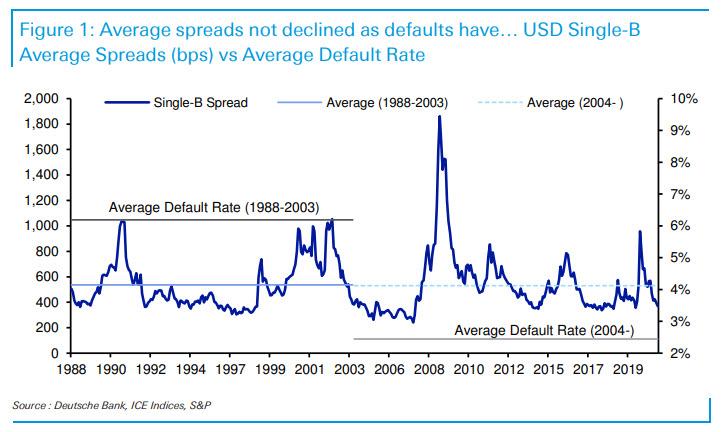
On Tuesday morning, Deutsche Bank’s Jim Reid published his 23rd annual default study, a document he first put out in the 1990s which as he says, “makes me feel very old” and adds that the story of this report over the past decade or so has been the increasing divergence between economic growth and defaults. And while defaults have trended down alongside growth, the last 12 months have been a supersized version of this as defaults have peaked at a lower level than during the previous three big default cycles even as growth across many countries was at the lowest levels for several decades or centuries.

According to Reid, the reason for this is simple: it is because debt has become so large over this period, and of such extreme systemic importance, that when each cycle turns there is an ever larger policy move to ensure that many of the most heavily indebted entities don’t default and risk a severe contagion event for the global economy.

In short, in some bizarro form of undead corporate fascism, quasi-insolvent companies how hold the entire world ransom with their own survival, or as Reid puts it “we have so much debt that anything that questions the authorities’ commitment to supporting it risks financial crises.”

It’s interesting though that since defaults structurally stepped down from around 2004, average spreads have stayed almost identical. So, over a cycle, spreads have not adjusted lower.

While this is good news for bondholders it’s not great for the economy as creative destruction has been quashed over several cycles and we argue that this has in turn helped reduce productivity.

Reid’s despondent and fatalistic conclusion: “at this stage it’s hard to see what gets us out of this perpetual high debt, high intervention, low default, low productivity loop.”

Here’s the answer: nothing. Which is why the only possible outcome is taking the current insanity to its absurd, hyperinflationary extreme.


Tyler Durden
Tue, 04/27/2021 – 20:20

via ZeroHedge News https://ift.tt/2S0PVaI Tyler Durden