Brickbat: Papers, Please


taser_1161x653

Body cam video shows two Colorado Springs, Colorado, police officers using their Tasers on Chad Anderson Jr. as he stood in his daughter’s hospital room after he refused to give them his phone. Anderson’s lawyer says the man was not under arrest and the cops did not show him a warrant for his phone. Anderson’s daughter was accidentally struck by a vehicle as his fiancée pulled out of their driveway, and cops were trying to take his phone as part of an investigation of how the girl was injured. Andersen was charged with resisting arrest and obstructing a peace officer. Those charges were later dropped. Neither he nor his fiancée were charged for the daughter’s injury. The police department declined a local TV station’s request for comment, citing Anderson’s lawsuit against the department.

from Latest – Reason.com https://ift.tt/3gL74Q0
via IFTTT

Energy Transition Could Doom Africa’s Oil Producers

Energy Transition Could Doom Africa’s Oil Producers

Authored by Alex Kimani via OilPrice.com,

When it comes to the final frontier for big oil discoveries, it’s not the Guyana-Suriname basin where supergiants like ExxonMobil (NYSE:XOM), Hess Corp. (NYSE:HES), and CNOOC (NYSE:CNOOC) have already staked their claims. And it’s not the American shale patch, where production has hit reverse gear with no end in sight. It’s Africa, where even small-cap companies are staking outsized claims of the kind that generously reward investors with a bigger risk appetite.

Unfortunately, the second-largest continent is suddenly finding itself between a rock and a hard place, thanks to Covid-19 and OPEC’s production cuts. Five of OPEC’s 13 member states are from Africa, with the huge cuts taking a massive hit on their oil-dependent economies.

Yet, things could get far worse for Africa’s oil and gas giants.

new report by risk consultancy firm Verisk Maplecroft via CNBC has revealed that Algeria, Chad, Iraq, and Nigeria are at the highest risk to experience political instability as the world turns its back on oil and gas in favor of renewable energy.

Flatlining oil sectors

About two decades ago, The Economist [infamously] dubbed Africa as the “Hopeless Continent”, claiming that the new millennium had brought more disaster than hope to Africa with threats of famine in Ethiopia (again), floods in Mozambique, mass murder in Uganda, and the implosion of Sierra Leone

A decade later, the magazine did a 180-degree and changed its tune to “Africa Rising” thanks to major improvements in labor productivity, dropping inflation, and booming economies. 

But alas, the upbeat narrative was not to last for long, with the 2014 oil price crash devastating some of the continent’s most promising economies.

And now, it’s happening all over again, with some of the continent’s leading oil producers in dire straits after the 2020 oil price crash.

To wit, Angola has gone from being Africa’s top crude producer just five years ago to barely pumping more than war-torn Libya. Nigeria–another key OPEC member–is in grave danger of suffering Angola’s fate as OPEC tries to balance the markets by restricting oil production.

Angola’s oil production has plummeted to a 15-year low of below 1.2 million barrels a day since November, effectively meaning that Libya, where a decade-long civil war has massively disrupted the country’s oil industry, is now pumping more crude than Angola.

But Angola’s problems have been long in the making, with the seeds of this sharp decline sown during the 2014 oil price crash, as the oil majors curtailed capex spending after oil prices crashed from $100 a barrel to less than $30 in the space of a few years.

Although the deep production cuts by OPEC eventually spurred a rebound in prices, offshore drilling activity by Angola and West Africa have recovered far more slowly. The coronavirus pandemic has triggered yet another round of deep spending cuts, with Baker Hughes reporting that just a single drillship was operating in the waters off Angola and Nigeria by the middle of 2020.

Some subsequent offshore projects by Total SE (NYSE:TOT) and Eni SpA have helped keep offshore oil flowing in Angola; however, the global pandemic and subsequent market downturn have ensured that just a trickle is flowing from Angola’s deepwater projects.

Angola has recorded a sharp 40% decline in production over the past decade, reflecting years of underinvestment in new projects despite the IMF estimating that it needs oil price of just $55/barrel for fiscal breakeven. Angola’s oil industry is largely dependent on deepwater fields where production typically declines faster than in onshore oilfields. The situation has been aggravated by a prolonged lack of constant investments to improve oil-recovery rates or tap additional reservoirs.

The situation is not much better in Africa’s top oil exporter and largest economy, Nigeria.

Nigeria only recently emerged from a major recession in 2017 and was contending with low growth of about 2% before the oil crisis struck. Oil sales contribute 90% of the country’s foreign exchange earnings, 60% of the revenue, and 9% of GDP. With a high fiscal breakeven of $144 per barrel, Nigeria is feeling the heat more than many of its OPEC peers. The country had applied for $7 billion in emergency funds to the African Development Bank, World Bank, and the IMF but saw its credit rating downgraded by Fitch and S&P due to the oil slump.

Nigeria cut production sharply last year as part of the OPEC+ deal, with crude shipments falling to 1.5 million barrels a day, the lowest level in four years. That’s less than half of the nation’s long-standing target for 2023, which might remain out of reach without quickly ramping up deepwater drilling.

Big Oil companies, including Total SERoyal Dutch Shell Plc. (NYSE:RDS.A), and Exxon Mobil have expressed concern that Nigeria’s long-delayed Petroleum Industry Bill (PIB) could deter investment. Nigeria’s National Assembly is set to debate the proposed PIB in the first quarter of 2021—which could lead to major changes in the roadmap of the oil and gas industry after nearly two decades of attempted reform. 

Oil prices have mostly recovered from the historic slump, with Brent crude rising above $65 a barrel in London. Nigeria, though, remains in a better position to recover from the investment slump than Angola, considering that about two-thirds of the country’s production comes from shallow-water and onshore fields.

The final nail

Whereas Africa’s oil and gas producers continue to hope that the ongoing rollout of Covid-19 vaccines will return global oil demand to some form of normalcy sooner than later, the long-term outlook remains dire, thanks to a more formidable foe: The renewable energy megatrend.

Maplecroft has warned that countries that fail to diversify their economies away from fossil fuel exports face a “slow-motion wave of political instability.’’

The consultancy says the move away from fossil fuels is set to hit high gear over the next 3-20 years, and that oil-dependent countries that fail to adapt risk facing sharp changes in credit risk, policy, and regulation.

The firm has suggested that the worst-hit countries ‘‘could enter doom loops of shrinking hydrocarbon revenues, political turmoil, and failed attempts to revive flatlining non-oil sectors.”

The report suggests that Africa’s oil and gas powerhouses ought to borrow a leaf from their Middle East peers, with Saudi Arabia choosing to forego the natural gas bridge and instead directly pivoting towards green hydrogen.

Tyler Durden
Wed, 04/28/2021 – 03:30

via ZeroHedge News https://ift.tt/2R38VoL Tyler Durden

Society Is Richer and More Accepting, Thanks to Libertarian Ideas


Screen Shot 2021-04-27 at 11.34.03 PM

Do I live in an alternate universe?

The media tell me my side is winning.

Salon claims, “We all live in Kochland, the Koch brothers’ libertarian utopia.”

Tucker Carlson says, “Our leadership class remains resolutely libertarian.”

What? Who? Not President Joe Biden.

Biden already spent $1.9 trillion on COVID-19 “recovery” mostly unrelated to COVID. Now, he wants trillions more for an “infrastructure” bill, even though most of the spending would not go to infrastructure. He’s eager to regulate more, too.

Maybe the pundits were talking about former President Donald Trump. He tried to deregulate—a little.

But Trump vilified trade and raised military spending, increasing our debt by trillions.

We libertarians want to reduce debt, and believe trade and immigration are good for America. Above all, we believe the best government governs least.

That’s not what I hear from most Democrats and Republicans.

So, how can pundits from both left and right say libertarian ideas are winning?

“In a way, we are winning,” answers the Cato Institute’s David Boaz, author of The Libertarian Mind, in my latest video.

“Over the past couple of hundred years, we’ve moved from a world where very few people had rights and markets were not free—to a world mostly marked by religious freedom, personal freedom, freedom of speech, property rights markets, the rule of law.”

For most of history, no country had those things. As a result, says Boaz, “There was practically no economic growth, no increase in human rights and justice.”

Kings and tyrants ruled, enslaving people, stealing property, and waging wars that lasted decades.

Then, in 1700, “suddenly limited government and property rights and markets came into the world,” Boaz points out.

The result was a sudden increase in prosperity. Americans now are told that “the poor get poorer,” but it’s not true. Americans are 30 times richer than we were 200 years ago. When America began, rich people were poorer than poor people are today.

“In Colonial America,” says Boaz, “[if] you were traveling and you wanted a place to sleep, you’d go to an inn where everyone shared a bed.”

Benjamin Franklin and John Adams shared a bed on one of their diplomatic missions. They fought whether or not the window should be open.

John Jay, America’s first chief justice of the U.S. Supreme Court, complained about “sleeping with strangers and picking up bedbugs and lice,” says Boaz. “It’s not like that anymore because of the increase in wealth.”

Today, at motels all over America, middle-class and poor people have their own beds.

When markets are free and private property is protected, innovation happens in ways that allow ordinary people to live better. Over time, that innovation multiplies. It’s why, today, most of us live better than kings once did.

Louis XIV had hundreds of servants who prepared him dinner. Today, my supermarket offers me a buffet Louis XIV couldn’t imagine. Thanks to trade and property rights and markets, each of us lives as if we had more servants than kings.

We also live longer.

“President Calvin Coolidge’s teenage son was playing tennis on the White House tennis court,” says Boaz. “He got a blister on his foot and the blister got infected, and the health care available to the son of the president of the United States was not sufficient to keep him from dying.”

Few of us notice such steady progress.

The media give us bad news. “They tell us about cancer clusters and coups in Myanmar,” says Boaz. As a result: “We forget the big picture. It’s important to remember the big picture so that we don’t lose it.”

The big picture also includes progress in fairness and decency.

“We’ve moved from ‘some people have privileges that others don’t’ to ‘human rights belong to women and Black people and gay people,'” Boaz reminds us.

“The direction of history has been in the direction of markets, personal freedom, human rights, democratic governance, and that’s what libertarians advocate.”

COPYRIGHT 2021 BY JFS PRODUCTIONS INC.

from Latest – Reason.com https://ift.tt/3xoeMp8
via IFTTT

“Exit NATO!” Turks Hold Anti-American Protest Outside Incirlik Base Over Armenian Genocide Decision

“Exit NATO!” Turks Hold Anti-American Protest Outside Incirlik Base Over Armenian Genocide Decision

Shortly following Joe Biden’s controversial Armenian Genocide statement on Saturday where he became the first US president to shift policy in terms of Washington official recognition of the WWI-era massacre of over one million Armenians in Asia Minor, the US Embassy in Ankara announced the closure of all American diplomatic facilities for Monday and Tuesday as a security precaution. 

As expected, anti-American protests have indeed popped up at various locations where US personnel are stationed, most notably including outside Incirlik Air Base in Turkey. US troops and intelligence operatives have long been housed at the base in southern Turkey, and it was a major hub out of which anti-Assad military missions in were launched over the past many years. A group of protesters were seen and heard at the gates of Incirlik base loudly denouncing the “lie” of Armenian genocide while telling the Americans to “go home!” and “get out of Turkey!”

Such a spectacle outside the major NATO base in Turkey is a rare one.

According to a description of the demonstration by Military.com:

A few dozen protestors held banners and chanted slogans. “Genocide is a lie, it’s an American plan,” they said. Demonstrators also demanded an end to the American military’s use of Incirlik Air Base in southern Turkey, shouting: “American soldiers, get out of Turkey!”

Other international reports noted that some of the demonstrators carried signs that urged Turkey to “exit NATO”

The protest was organized by a  local wing of the Youth Union of Turkey (TGB), who call Joe Biden’s recognition of the genocide “illegal and legally void”.

The demonstrators are carrying Turkish flags and banners saying “exit NATO – the enemy of Ataturk”, “Close Incirlik for the US in response to lies about genocide”, and “No to NATO. This is our land!”

Ironically much of the American public would only be too happy to see Turkey depart NATO.

Scene’s from Monday’s protest at Incirlik Air Base:

Currently an advisory posted to the US Embassy in Turkey’s website tells Americans to avoid these ongoing protests or any areas around US government facilities in the country.

“U.S. citizens are advised to avoid the areas around U.S. government buildings, and exercise heightened caution in locations where Americans or foreigners may gather,” it says.

Tyler Durden
Wed, 04/28/2021 – 02:45

via ZeroHedge News https://ift.tt/3eAEG0u Tyler Durden

Society Is Richer and More Accepting, Thanks to Libertarian Ideas


Screen Shot 2021-04-27 at 11.34.03 PM

Do I live in an alternate universe?

The media tell me my side is winning.

Salon claims, “We all live in Kochland, the Koch brothers’ libertarian utopia.”

Tucker Carlson says, “Our leadership class remains resolutely libertarian.”

What? Who? Not President Joe Biden.

Biden already spent $1.9 trillion on COVID-19 “recovery” mostly unrelated to COVID. Now, he wants trillions more for an “infrastructure” bill, even though most of the spending would not go to infrastructure. He’s eager to regulate more, too.

Maybe the pundits were talking about former President Donald Trump. He tried to deregulate—a little.

But Trump vilified trade and raised military spending, increasing our debt by trillions.

We libertarians want to reduce debt and believe trade and immigration are good for America. Above all, we believe the best government governs least.

That’s not what I hear from most Democrats and Republicans.

So, how can pundits from both left and right say libertarian ideas are winning?

“In a way, we are winning,” answers the Cato Institute’s David Boaz, author of The Libertarian Mind, in my latest video.

“Over the past couple of hundred years, we’ve moved from a world where very few people had rights and markets were not free—to a world mostly marked by religious freedom, personal freedom, freedom of speech, property rights markets, the rule of law.”

For most of history, no country had those things. As a result, says Boaz, “There was practically no economic growth, no increase in human rights and justice.”

Kings and tyrants ruled, enslaving people, stealing property, and waging wars that lasted decades.

Then, in 1700 “suddenly, limited government and property rights and markets came into the world,” Boaz points out.

The result was a sudden increase in prosperity. Americans now are told that “the poor get poorer,” but it’s not true. Americans are 30 times richer than we were 200 years ago. When America began, rich people were poorer than poor people are today.

“In Colonial America,” says Boaz, “[if] you were traveling and you wanted a place to sleep, you’d go to an inn where everyone shared a bed.”

Benjamin Franklin and John Adams shared a bed on one of their diplomatic missions. They fought whether or not the window should be open.

John Jay, America’s first chief justice of the U.S. Supreme Court, complained about “sleeping with strangers and picking up bedbugs and lice,” says Boaz. “It’s not like that anymore because of the increase in wealth.”

Today, at motels all over America, middle-class and poor people have their own beds.

When markets are free and private property is protected, innovation happens in ways that allow ordinary people to live better. Over time, that innovation multiplies. It’s why, today, most of us live better than kings once did.

Louis XIV had hundreds of servants who prepared him dinner. Today, my supermarket offers me a buffet Louis XIV couldn’t imagine. Thanks to trade and property rights and markets, each of us lives as if we had more servants than kings.

We also live longer.

“President Calvin Coolidge’s teenage son was playing tennis on the White House tennis court,” says Boaz. “He got a blister on his foot and the blister got infected, and the health care available to the son of the president of the United States was not sufficient to keep him from dying.”

Few of us notice such steady progress.

The media give us bad news. “They tell us about cancer clusters and coups in Myanmar,” says Boaz. As a result: “We forget the big picture. It’s important to remember the big picture so that we don’t lose it.”

The big picture also includes progress in fairness and decency.

“We’ve moved from ‘some people have privileges that others don’t’ to ‘human rights belong to women and Black people and gay people,'” Boaz reminds us.

“The direction of history has been in the direction of markets, personal freedom, human rights, democratic governance, and that’s what libertarians advocate.”

COPYRIGHT 2021 BY JFS PRODUCTIONS INC.

from Latest – Reason.com https://ift.tt/3xoeMp8
via IFTTT

The Ukraine Crisis Can Be An Opportunity

The Ukraine Crisis Can Be An Opportunity

Authored by Douglas Macgregor via AmericanConservative.com,

The trouble with leading a great power is that, from time to time, the president is obliged to act like the leader of a great power. If ever there was a time for sound presidential leadership, it’s now. With no appreciation for the endlessly renewable force of national self-preservation that animates Moscow’s maneuvers in Ukraine, President Biden’s insulting remarks and hostile sanctions have plunged the United States into a deeper, more dangerous confrontation with Russia in Ukraine, a region of limited strategic interest to the United States.

Putin’s directive to return most of his troops to garrison while leaving their weapon systems and equipment in place along the Ukrainian border should be viewed in Washington as an opportunity to create a measure of stability in U.S.-Russian relations that’s been missing for years. It’s not enough to hurl insults and simply restate what the Biden administration is against. It’s time to explore what kind of alternative to the fragile and dangerous status quo in Ukraine that Washington and Moscow can both support.

Washington did a deplorable job of formulating strategic aims in the Middle East and Afghanistan that justified the sacrifice of American blood and treasure. The president cannot seize the strategic initiative now if Washington continues to react impetuously and emotionally to real or imaginary threats to U.S. and allied interests.

Winston Churchill insisted that most strategic problems can be solved “if they are related to some central design.” Central design implies the guiding influence of strategy. Strategy is not an ideological wish list. Strategy involves an understanding of strategic interests; in this case, grasping the divergence of American and Russian interests. Consider five points.

First, an analogy may be instructive for Americans: Who rules in Kiev and governs Ukraine is as important to Moscow as events in Mexico are to Washington. It is not enough to admit that expanding NATO eastward to include Ukrainian membership was an unforced error. President Biden must acknowledge that since the end of the Cold War, the geo-strategic environment has changed profoundly. The growth in economic and military strength in Beijing and Moscow gives these nations weight, heretofore unrecognized by Washington, D.C., in the post-Cold War unipolar system.

Second, Putin is well aware that the southeastern portion (including Odessa) of Ukraine is heavily Russian in language, culture, and political orientation. If this reality is ignored yet again in favor of more wishful thinking about the true character of Ukraine, in a future crisis, the southeastern areas are likely to be rapidly seized and occupied by Russian military power with little difficulty. The probability of U.S. and allied forces throwing Russian forces out is low. Moscow knows from its experience with Crimea that possession is indeed nine-tenths of the law.

However, Putin is equally aware that for Moscow military action is an option, but hardly the first or even second option. Russian action in Ukraine would exact a serious cost from Moscow in trade sanctions and international standing. Beijing intervened to support the Russian economy once (in 2015), but it is not clear that Beijing would do so again if Russia’s economy faltered under these conditions. These points mean the opportunity for a negotiated settlement with Moscow should not be ignored.

Third, the Biden administration must work with Moscow and Beijing to identify new rules of engagement that adapt American foreign policy to periodic competition between Great Powers. Russia (and China) advocates for the “principle of noninterference” in the affairs of other states. It’s time for Washington to explore the utility of this approach as a strategic hedge against future potential crises. It’s painfully obvious that Washington’s “Tomahawk Diplomacy”—the act of killing citizens with cruise missiles in weaker, largely defenseless countries when their governments refuse to accommodate American demands—is not viable against Russia or China, let alone against any number of states with rapidly growing military power.

Fourth, the president must acknowledge that in the new, multi-polar international environment Washington bears an unequal and unsustainable financial burden for the defense of Europe. Acutely sensitive to the American electorate’s demands for peace and prosperity, Eisenhower foresaw the danger that Washington could be ensnared in conflicts on behalf of smaller states for which Americans did not want to fight. Eisenhower’s determination to avoid war and reduce the costs of global military commitments was the rationale for Austrian neutrality in 1955. It is also why Eisenhower urged neutrality for other, smaller European states.

Finally, President Biden must devise a new national strategy that ensures its political goals are congruent with U.S. military capabilities and fiscal realities. Too many hotheads in the Senate and House are ready to commit American military power without first soberly assessing the concrete interests and the costs of such action. President John F. Kennedy thrilled his supporters with his assertion that Americans should “meet any hardship, support any friend, oppose any foe to assure the survival and the success of liberty.” It was great rhetoric, but it put the nation on the road to disaster in Vietnam. The United States does not have the resources or the need to export its political ideas at gunpoint.

Arnold J. Toynbee argued that great empires die by suicide, not murder. If the United States is to avoid this outcome, Washington must put an end to the strategic follies of the last 20 years, and put American foreign policy back on a credible foundation. Ukraine is a good place to start.

Tyler Durden
Wed, 04/28/2021 – 02:00

via ZeroHedge News https://ift.tt/3t7pgWR Tyler Durden

SCOTUS Will Decide Whether the Right To Bear Arms Extends Beyond Your Doorstep


gun-belt-gmsjs90-pixabay

While it may seem obvious that the constitutional right to “keep and bear arms” extends beyond the home, federal courts have been debating that question for years. This week the Supreme Court agreed to hear a case that could finally settle the issue, which the petitioners call “perhaps the single most important unresolved Second Amendment question.”

The case involves a New York law that requires applicants for handgun carry licenses to show “proper cause,” which according to state courts means more than a “generalized desire” to “protect one’s person and property.” Applicants must “demonstrate a special need for self-protection distinguishable from that of the general community,” which in practice means that ordinary New Yorkers have no right to armed self-defense once they leave their homes.

The vast majority of states are less demanding, typically requiring that people who want to carry concealed handguns meet a short list of objective criteria. But several states have laws like New York’s, enforcing subjective standards such as “good cause” (California), “proper purpose” (Massachusetts), “justifiable need” (New Jersey), “good and substantial reason” (Maryland), or a special “reason to fear injury” (Hawaii).

In the case that the Supreme Court will hear this term, the New York State Pistol & Rifle Association, joined by two New Yorkers who unsuccessfully applied for carry permits in Rensselaer County, argues that such policies transform a “right of the people” into a privilege enjoyed only by the favored few. “A law that flatly prohibits ordinary law-abiding citizens from carrying a handgun for self-defense outside the home cannot be reconciled with the Court’s affirmation of the individual right to possess and carry weapons in case of confrontation,” the petitioners say.

They are referring to the landmark 2008 case District of Columbia v. Heller, which overturned a local ban on handguns. While that decision focused on the right to “use arms in defense of hearth and home,” it more generally recognized “the individual right to possess and carry weapons in case of confrontation.”

The possibility of being confronted by violent criminals, of course, exists in public as well as private. “Like the threats that might precipitate a need to act in self-defense,” the petitioners say, the right to bear arms “necessarily extends beyond the four walls of one’s home.”

Two other aspects of Heller reinforce that argument. The Court said its decision did not “cast doubt” on “laws forbidding the carrying of firearms in sensitive places such as schools and government buildings,” a caveat that would have been unnecessary if the right to armed self-defense were limited to the home, and it described bans on the open carrying of pistols that were overturned by state supreme courts in the 19th century as “severe restriction[s].”

Two federal appeals courts, the 7th Circuit and the D.C. Circuit, have agreed that the Second Amendment protects the right to carry firearms in public. But the 2nd Circuit, which rejected this lawsuit, concluded that New York’s regulations are constitutional, and four other appeals courts—the 1st, 3rd, 4th, and 9th circuits—have upheld similar policies in other states.

Last month, the 9th Circuit went so far as to declare that the Second Amendment has no bearing at all on a state’s authority to impose a virtual ban on public carry. In a blistering dissent, Judge Diarmuid O’Scannlain complained that the majority’s position “reduces the right to ‘bear Arms’ to a mere inkblot.”

O’Scannlain and Judge Jay Bybee, who wrote the majority opinion, both delved extensively into the historical background of the right to bear arms, early gun control laws, and 19th century decisions rejecting or upholding them based on state analogs to the Second Amendment. The Supreme Court will now have to revisit that territory.

Because of laws like New York’s, the petitioners say, “tens of millions of citizens are being deprived of individual, fundamental rights guaranteed by the Constitution.” Whether that situation continues will depend on how the Court resolves this circuit split.

© Copyright 2021 by Creators Syndicate Inc.

from Latest – Reason.com https://ift.tt/2R9e2nq
via IFTTT

SCOTUS Will Decide Whether the Right To Bear Arms Extends Beyond Your Doorstep


gun-belt-gmsjs90-pixabay

While it may seem obvious that the constitutional right to “keep and bear arms” extends beyond the home, federal courts have been debating that question for years. This week the Supreme Court agreed to hear a case that could finally settle the issue, which the petitioners call “perhaps the single most important unresolved Second Amendment question.”

The case involves a New York law that requires applicants for handgun carry licenses to show “proper cause,” which according to state courts means more than a “generalized desire” to “protect one’s person and property.” Applicants must “demonstrate a special need for self-protection distinguishable from that of the general community,” which in practice means that ordinary New Yorkers have no right to armed self-defense once they leave their homes.

The vast majority of states are less demanding, typically requiring that people who want to carry concealed handguns meet a short list of objective criteria. But several states have laws like New York’s, enforcing subjective standards such as “good cause” (California), “proper purpose” (Massachusetts), “justifiable need” (New Jersey), “good and substantial reason” (Maryland), or a special “reason to fear injury” (Hawaii).

In the case that the Supreme Court will hear this term, the New York State Pistol & Rifle Association, joined by two New Yorkers who unsuccessfully applied for carry permits in Rensselaer County, argues that such policies transform a “right of the people” into a privilege enjoyed only by the favored few. “A law that flatly prohibits ordinary law-abiding citizens from carrying a handgun for self-defense outside the home cannot be reconciled with the Court’s affirmation of the individual right to possess and carry weapons in case of confrontation,” the petitioners say.

They are referring to the landmark 2008 case District of Columbia v. Heller, which overturned a local ban on handguns. While that decision focused on the right to “use arms in defense of hearth and home,” it more generally recognized “the individual right to possess and carry weapons in case of confrontation.”

The possibility of being confronted by violent criminals, of course, exists in public as well as private. “Like the threats that might precipitate a need to act in self-defense,” the petitioners say, the right to bear arms “necessarily extends beyond the four walls of one’s home.”

Two other aspects of Heller reinforce that argument. The Court said its decision did not “cast doubt” on “laws forbidding the carrying of firearms in sensitive places such as schools and government buildings,” a caveat that would have been unnecessary if the right to armed self-defense were limited to the home, and it described bans on the open carrying of pistols that were overturned by state supreme courts in the 19th century as “severe restriction[s].”

Two federal appeals courts, the 7th Circuit and the D.C. Circuit, have agreed that the Second Amendment protects the right to carry firearms in public. But the 2nd Circuit, which rejected this lawsuit, concluded that New York’s regulations are constitutional, and four other appeals courts—the 1st, 3rd, 4th, and 9th circuits—have upheld similar policies in other states.

Last month, the 9th Circuit went so far as to declare that the Second Amendment has no bearing at all on a state’s authority to impose a virtual ban on public carry. In a blistering dissent, Judge Diarmuid O’Scannlain complained that the majority’s position “reduces the right to ‘bear Arms’ to a mere inkblot.”

O’Scannlain and Judge Jay Bybee, who wrote the majority opinion, both delved extensively into the historical background of the right to bear arms, early gun control laws, and 19th century decisions rejecting or upholding them based on state analogs to the Second Amendment. The Supreme Court will now have to revisit that territory.

Because of laws like New York’s, the petitioners say, “tens of millions of citizens are being deprived of individual, fundamental rights guaranteed by the Constitution.” Whether that situation continues will depend on how the Court resolves this circuit split.

© Copyright 2021 by Creators Syndicate Inc.

from Latest – Reason.com https://ift.tt/2R9e2nq
via IFTTT

The Global Deep State: A New World Order Brought To You By COVID-19

The Global Deep State: A New World Order Brought To You By COVID-19

Authored by John W. Whitehead & Nisha Whitehead via The Rutherford Institute,

“A psychotic world we live in. The madmen are in power.”

– Philip K. Dick, The Man in the High Castle

For good or bad, COVID-19 has changed the way we navigate the world.
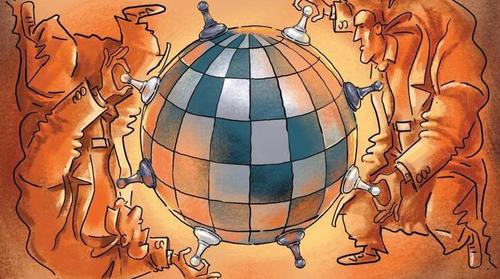
It is also redrawing the boundaries of our world (and our freedoms) and altering the playing field faster than we can keep up.

Owing in large part to the U.S. government’s deep-seated and, in many cases, top-secret alliances with foreign nations and global corporations, it has become increasingly obvious that we have entered into a new world order—a global world order—made up of international government agencies and corporations.

This powerful international cabal, let’s call it the Global Deep State, is just as real as the corporatized, militarized, industrialized American Deep State, and it poses just as great a threat to our rights as individuals under the U.S. Constitution, if not greater.

We’ve been inching closer to this global world order for the past several decades, but COVID-19, which has seen governmental and corporate interests become even more closely intertwined, has shifted this transformation into high gear.

Fascism has become a global menace.

It remains unclear whether the American Deep State (“a national-security apparatus that holds sway even over the elected leaders notionally in charge of it”) answers to the Global Deep State, or whether the Global Deep State merely empowers the American Deep State. However, there is no denying the extent to which they are intricately and symbiotically enmeshed and interlocked.

Consider the extent to which our lives and liberties are impacted by this international convergence of governmental and profit-driven corporate interests in the surveillance state, the military industrial complex, the private prison industry, the intelligence sector, the security sector, the technology sector, the telecommunications sector, the transportation sector, the pharmaceutical industry and, most recently, by the pharmaceutical-health sector.

All of these sectors are dominated by mega-corporations operating on a global scale and working through government channels to increase their profit margins. The profit-driven policies of these global corporate giants influence everything from legislative policies to economics to environmental issues to medical care

Global Disease

The COVID-19 pandemic has propelled us into a whole new global frontier. Those hoping to navigate this interconnected and highly technological world of contact tracing, vaccine passports and digital passes will find themselves grappling with issues that touch on deep-seated moral, political, religious and personal questions for which there may be no clear-cut answers.

We are about to find our ability to access, engage and move about in the world dependent on which camp we fall into: those who have been vaccinated against COVID-19 and those who have not.

“It is the latest status symbol. Flash it at the people, and you can get access to concerts, sports arenas or long-forbidden restaurant tables. Some day, it may even help you cross a border without having to quarantine,” writes Heather Murphy for the New York Times.

“The new platinum card of the Covid age is the vaccine certificate.”

This is what M.I.T. professor Ramesh Raskar refers to as the new “currency for health,” an apt moniker given the potentially lucrative role that Big Business (Big Pharma and Big Tech, especially) will play in establishing this pay-to-play marketplace. The airline industry has been working on a Travel Pass. IBM is developing a Digital Health Pass. And the U.S. government has been all-too-happy to allow the corporate sector to take the lead.

Global Surveillance

Spearheaded by the National Security Agency (NSA), which has shown itself to care little for constitutional limits or privacy, the surveillance state has come to dominate our government and our lives.

Yet the government does not operate alone. It cannot. It requires an accomplice.

Thus, the increasingly complex security needs of our massive federal government, especially in the areas of defense, surveillance and data management, have been met within the corporate sector, which has shown itself to be a powerful ally that both depends on and feeds the growth of governmental bureaucracy.

Take AT&T, for instance. Through its vast telecommunications network that crisscrosses the globe, AT&T provides the U.S. government with the complex infrastructure it needs for its mass surveillance programs. According to The Intercept:

“The NSA considers AT&T to be one of its most trusted partners and has lauded the company’s ‘extreme willingness to help.’ It is a collaboration that dates back decades. Little known, however, is that its scope is not restricted to AT&T’s customers. According to the NSA’s documents, it values AT&T not only because it ‘has access to information that transits the nation,’ but also because it maintains unique relationships with other phone and internet providers. The NSA exploits these relationships for surveillance purposes, commandeering AT&T’s massive infrastructure and using it as a platform to covertly tap into communications processed by other companies.”

Now magnify what the U.S. government is doing through AT&T on a global scale, and you have the “14 Eyes Program,” also referred to as the “SIGINT Seniors.” This global spy agency is made up of members from around the world (United States, United Kingdom, Australia, Canada, New Zealand, Denmark, France, Netherlands, Norway, Germany, Belgium, Italy, Sweden, Spain, Israel, Singapore, South Korea, Japan, India and all British Overseas Territories).

Surveillance is just the tip of the iceberg when it comes to these global alliances, however.

Global War Profiteering

War has become a huge money-making venture, and America, with its vast military empire and its incestuous relationship with a host of international defense contractors, is one of its biggest buyers and sellers.

The American military-industrial complex has erected an empire unsurpassed in history in its breadth and scope, one dedicated to conducting perpetual warfare throughout the earth. For example, while erecting a security surveillance state in the U.S., the military-industrial complex has perpetuated a worldwide military empire with American troops stationed in 177 countries (over 70% of the countries worldwide).

Although the federal government obscures so much about its defense spending that accurate figures are difficult to procure, we do know that since 2001, the U.S. government has spent more than $1.8 trillion in the wars in Afghanistan and Iraq (that’s $8.3 million per hour). That doesn’t include wars and military exercises waged around the globe, which are expected to push the total bill upwards of $12 trillion by 2053.

The illicit merger of the global armaments industry and the Pentagon that President Dwight D. Eisenhower warned us against more than 50 years ago has come to represent perhaps the greatest threat to the nation’s fragile infrastructure today. America’s expanding military empire is bleeding the country dry at a rate of more than $15 billion a month (or $20 million an hour)—and that’s just what the government spends on foreign wars. That does not include the cost of maintaining and staffing the 1000-plus U.S. military bases spread around the globe.

Incredibly, although the U.S. constitutes only 5% of the world’s population, America boasts almost 50% of the world’s total military expenditure,  spending more on the military than the next 19 biggest spending nations combined. In fact, the Pentagon spends more on war than all 50 states combined spend on health, education, welfare, and safety. There’s a good reason why “bloated,” “corrupt” and “inefficient” are among the words most commonly applied to the government, especially the Department of Defense and its contractors. Price gouging has become an accepted form of corruption within the American military empire.

It’s not just the American economy that is being gouged, unfortunately.

Driven by a greedy defense sector, the American homeland has been transformed into a battlefield with militarized police and weapons better suited to a war zone. President Biden, marching in lockstep with his predecessors, has continued to expand America’s military empire abroad and domestically in a clear bid to pander to the powerful money interests (military, corporate and security) that run the Deep State and hold the government in its clutches.

Global Policing

Glance at pictures of international police forces and you will have a hard time distinguishing between American police and those belonging to other nations. There’s a reason they all look alike, garbed in the militarized, weaponized uniform of a standing army.

There’s a reason why they act alike, too, and speak a common language of force: they belong to a global police force.

For example, Israel—one of America’s closest international allies and one of the primary yearly recipients of more than $3 billion in U.S. foreign military aid—has been at the forefront of a little-publicized exchange program aimed at training American police to act as occupying forces in their communities. As The Intercept sums it up, American police are “essentially taking lessons from agencies that enforce military rule rather than civil law.”

This idea of global policing is reinforced by the Strong Cities Network program, which trains local police agencies across America in how to identify, fight and prevent extremism, as well as address intolerance within their communities, using all of the resources at their disposal. The cities included in the global network include New York City, Atlanta, Denver, Minneapolis, Paris, London, Montreal, Beirut and Oslo.

The objective is to prevent violent extremism by targeting its source: racism, bigotry, hatred, intolerance, etc. In other words, police—acting as extensions of the United Nations—will identify, monitor and deter individuals who exhibit, express or engage in anything that could be construed as extremist.

Of course, the concern with the government’s anti-extremism program is that it will, in many cases, be utilized to render otherwise lawful, nonviolent activities as potentially extremist.

Keep in mind that the government agencies involved in ferreting out American “extremists” will carry out their objectives—to identify and deter potential extremists—in concert with fusion centers (of which there are 78 nationwide, with partners in the private sector and globally), data collection agencies, behavioral scientists, corporations, social media, and community organizers and by relying on cutting-edge technology for surveillance, facial recognition, predictive policing, biometrics, and behavioral epigenetics (in which life experiences alter one’s genetic makeup).

This is pre-crime on an ideological scale and it’s been a long time coming.

Are you starting to get the picture now?

On almost every front, whether it’s the war on drugs, or the sale of weapons, or regulating immigration, or establishing prisons, or advancing technology, or fighting a pandemic, if there is a profit to be made and power to be amassed, you can bet that the government and its global partners have already struck a deal that puts the American people on the losing end of the bargain.

We’ve been losing our freedoms so incrementally for so long—sold to us in the name of national security and global peace, maintained by way of martial law disguised as law and order, and enforced by a standing army of militarized police and a political elite determined to maintain their powers at all costs—that it’s hard to pinpoint exactly when it all started going downhill, but we’re certainly on that downward trajectory now, and things are moving fast.

The “government of the people, by the people, for the people” has perished.

In its place is a shadow government—a corporatized, militarized, entrenched global bureaucracy—that is fully operational and running the country.

Given the trajectory and dramatic expansion, globalization and merger of governmental and corporate powers, we’re not going to recognize this country 20 years from now.

It’s taken less than a generation for our freedoms to be eroded and the Global Deep State’s structure to be erected, expanded and entrenched.

Mark my words: the U.S. government will not save us from the chains of the Global Deep State.

Now there are those who will tell you that any mention of a New World Order government—a power elite conspiring to rule the world—is the stuff of conspiracy theories.

I am not one of those skeptics.

I wholeheartedly believe that one should always mistrust those in power, take alarm at the first encroachment on one’s liberties, and establish powerful constitutional checks against government mischief and abuse.

I can also attest to the fact that power corrupts, and absolute power corrupts absolutely.

I have studied enough of this country’s history—and world history—to know that governments (the U.S. government being no exception) are at times indistinguishable from the evil they claim to be fighting, whether that evil takes the form of terrorism, torture, drug traffickingsex trafficking, murder, violence, theft, pornography, scientific experimentations or some other diabolical means of inflicting pain, suffering and servitude on humanity.

And I have lived long enough to see many so-called conspiracy theories turn into cold, hard fact.

Remember, people used to scoff at the notion of a Deep State (a.k.a. Shadow Government). They used to doubt that fascism could ever take hold in America, and sneer at any suggestion that the United States was starting to resemble Nazi Germany in the years leading up to Hitler’s rise to power.

As I detail in my book Battlefield America: The War on the American People, we’re beginning to know better, aren’t we?

Tyler Durden
Wed, 04/28/2021 – 00:00

via ZeroHedge News https://ift.tt/2R2EPS7 Tyler Durden

Russia Is Putting Together An “Unfriendly Countries” Blacklist

Russia Is Putting Together An “Unfriendly Countries” Blacklist

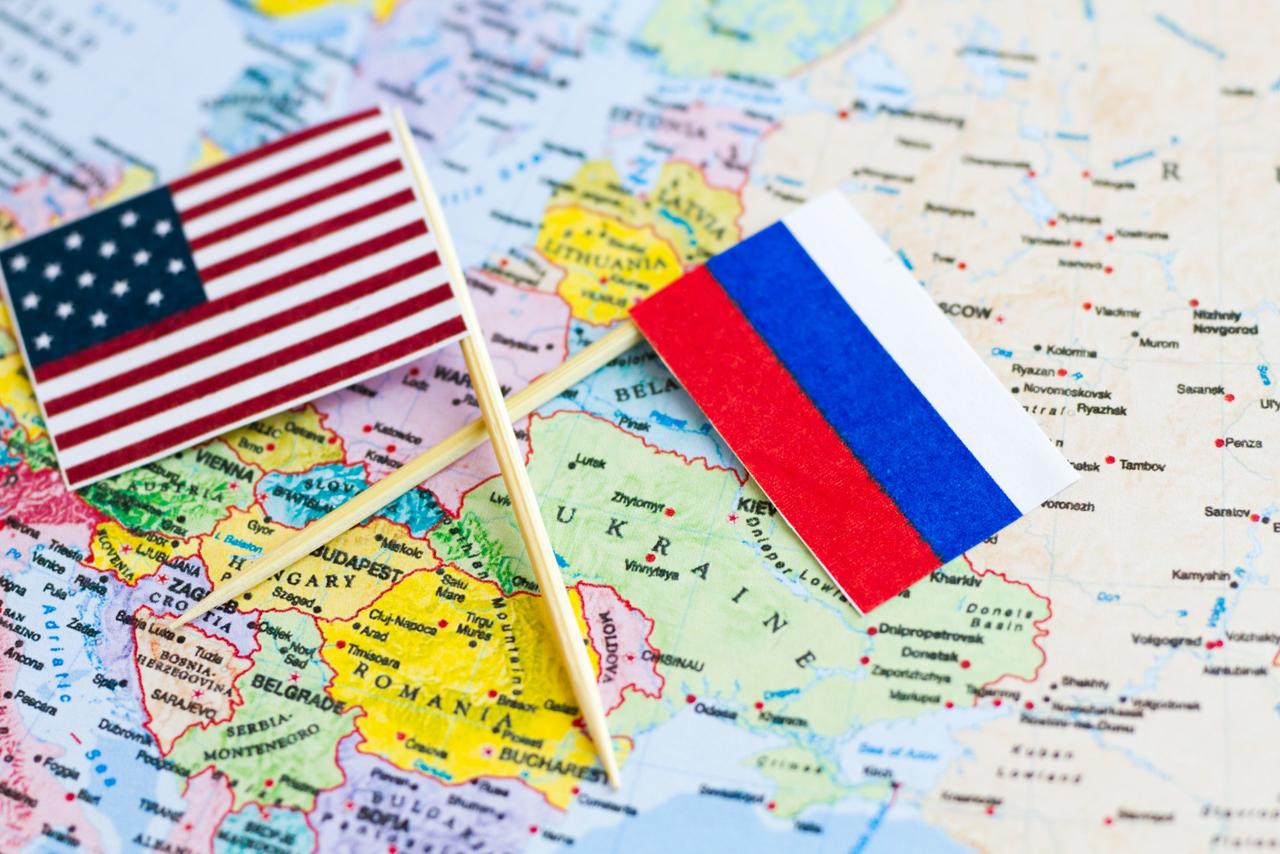
Earlier this week Kremlin spokeswoman Maria Zakharova told national media that the Russian government is currently finalizing what it’s calling an “unfriendly countries” list and that the United States is likely to be at the top of it.

It follows a recent decree singed by President Vladimir Putin which prevents listed country embassies from being able to hire Russian citizens to work at their diplomatic and consular missions. It’s common practice for foreign embassies to hire staff from the local host countries for certain functins..

Zakharavo in a weekend interview had said this ‘naughty list’ was triggered ultimately by “another round of unfriendly actions by the US” – a reference to Biden’s latest sanctions on Kremlin officials and Russian companies for the SolarWinds hack and alleged election interference. 

Russian media broadcast screenshot

“What are those unfriendly states? The list is being compiled now,” she previously Rossiya 1 TV channel. “As you understand, and I can confirm it, the US is, obviously, present” she said while stopping short of naming other specific countries. 

On Tuesday state media sources indicated the following are likely be included

  • United States
  • United Kingdom
  • Canada
  • Poland
  • Ukraine
  • Czech Republic
  • some Baltic states

In all about ten countries are expected to be named on the ‘blacklist’. 

Citing a prominent Russian daily newspaper, TASS describes: “A well-informed source told the newspaper that the US, Poland, the Czech Republic, Lithuania, Latvia and Estonia may be blacklisted. An additional Izvestia source in the government added that the UK, Canada, Ukraine and Australia may also be included.” The same publication indicated the list has yet to finalized, however.

Earlier this month a number of these countries already expelled Russian diplomats and officials, especially the US, also amid a continued tit-for-tat exchange of diplomatic expulsions between Moscow and eastern European countries. 

Tyler Durden
Tue, 04/27/2021 – 23:40

via ZeroHedge News https://ift.tt/32Wt3va Tyler Durden