Watch: Massive Airstrikes Level Large University In Gaza
Shocking footage is widely circulating showing what appears to be massive airstrikes on Al Azhar University in Gaza, which was first opened in 1991, and is among a handful of Palestinian campuses of high learning.
Videos circulating show multiple large airstrikes utterly demolishing multiple university buildings, and it’s unclear if the buildings were occupied at the time or if there are casualties. Some pro-Israel pundits have claimed that the presence of large secondary explosions suggests Hamas was hiding large ammunition stores there, hence the follow-up detonations. Watch:
But it’s also very evident that Israel’s warplanes are targeting Gaza’s large buildings and infrastructure as part of scorched earth tactics.
On Friday, Israel admitted to targeting ambulances near the Strip’s largest hospital, claiming that the ambulances were actually used by Hamas. The UN and other international bodies have condemned the attack as the death toll mounts and grisly images were widely shared online of bodies piled up in the aftermant.
The Israeli army bombed a convoy of ambulances near the largest hospital in Gaza on Friday, an attack that “horrified” United Nations Secretary-General Antonio Guterres.
The facility — Al-Shifa hospital in Gaza City — is overcrowded with patients and serves as a refuge for some 20,000 displaced people, according to local health authorities.
The attack resulted in 15 deaths and at least 60 wounded civilians, according to the Palestinian Red Crescent Society (PRCS). In a statement, the PRCS said the convoy of five ambulances tried to transport casualties toward the Rafah border crossing, but was returning to the hospital because the road was blocked with rubble when it was targeted by two missiles.
Meanwhile, a new report in Axios utilizing satellite imagery and data says in total 25% of all buildings in northern Gaza have been severely damaged or destroyed after nearly a month of airstrikes and fighting.
At this point more than 9,200 Palestinians have been killed, with an estimated half of these being women and children.
Israel has come under condemnation from several countries, especially of Arab states, for appearing to target fleeing civilian convoys even after urging people to flee to southern Gaza. Axioswrites, “This analysis also confirms that Israel continues to strike southern Gaza, including areas along the main evacuation routes, even after urging civilians from the north to relocate there.”
Anew report provides fresh evidence that infamous January 6 provocateur Ray Epps may have been an FBI plant.
In the first of a two-part series, “Truth in Media” host Lara Logan spoke with Anthime Gionet, also known as “Baked Alaska,” a right-wing influencer formerly associated with the “alt right.” Video footage from January 5, 2021 and earlier indicate that Epps appeared to be particularly interested in Gionet, who was later sentenced to two months in prison for his participation in the riot at the US Capitol.
Gionet (Baked Alaska) was one of several people who filmed Epps on the evening of January 5, 2021 outside BLM Plaza as he told Trump supporters “we need to go into the Capitol!” At first, Gionet said he was amused by Epps’ exhortation to breach the Capitol, and yelled ‘let’s go!’ in response, but after he saw him repeat the line several times to different groups that night, he became convinced the “boomer” was an FBI plant and was up to no good.
Gionet is the one who started the “Fed! Fed! Fed!” chant that went viral on social media.
“I’m someone who creates funny content so I just like to agree with everyone and if someone’s saying something crazy, a lot of times, I’ll just agree—say yeah, yeah,” Gionet said, explaining that he does it to encourage a subject to keep talking.
But the activist said he felt “weirded out” by Epps and quickly moved on to another group.
“I’m like, I’m getting away from this creep, he’s weirding me out,” Gionet said.
“I’m getting weird vibes—something’s off.”
Gionet told Logan that everyone else who heard Epps talking about going into the Capitol were also taken aback.
“I go to another group way far away from him, he follows me, and that’s when he begins instructing the crowd,” Gionet said. That’s when Epps was caught on tape again saying “we need to go into the Capitol.”
“Right when he said that, something clicked in my head,” Gionet said.
“It was like, whoa! This is scripted because he said the same exact line word for word three times and that’s not natural.”
Gionet said that it seemed very odd that he kept going around to all the different little groups and instructing them on what to do on January 6.
“Maybe the first time, he’s being silly or saying something crazy, but when he said it the third time word for word, I knew there’s a strong possibility this guy’s a fed. I started that chant, and guess what? The whole crowd joined in with me—within seconds!”
Gionet told Logan that that viral moment felt spiritual to him at the time.
“That was the spirit moving. That was God saying ‘somethings up here. Watch out, there’s something going on.’ And that’s what I felt in my heart as a believer, truly,” he said.
Shortly before midnight, Epps took a conciliatory tone with Gionet, telling him they he also despises Black Lives Matter and antifa.
“I stood ’em down myself with three Army vets in Queen Creek, Arizona,” Epps said.
“That’s where I live!” Gionet exclaimed. “Are you my neighbor?!”
After more friendly banter, Epps said ”we’re not here to fight man. He then leaned in and whispered “we’re here to storm the Capitol,” and added: “I’m not kidding.”
Why was Ray Epps treated as victim by the same people who condemned almost everyone around him as a threat?
We try to answer some lingering questions about the one “election-denying-Donald Trump-supporter” the media and the government didn’t seem to hate. pic.twitter.com/1u5dXtSGLv
Logan noted that Epps’ words echoed the official narrative the next day—that Trump supporters “stormed the Capitol” before “it was broadcast across the nation.”
Gionet, aka Baked Alaska, said that because he had been banned from every social media platform, it was virtually impossible for him to tell his story, and so for the first year after J6, nobody heard a word about Epps.
“I thought it was a big story but I was banned off Twitter, I was banned off YouTube, I was banned off all social media so I couldn’t get the story out,” he explained.
He acknowledged that he had no proof that Epps was a “fed,” but remains convinced that he was.
Former Washington DC FBI Field Office chief Steven D’Antuono has acknowledged in sworn testimony that the Bureau had so many informants on the ground on January 6 that they lost track and had to order an audit to account for all of them.
Federal prosecutors finally filed a criminal charge against Epps in September.
The former Marine and Oath Keepers member was charged with a single misdemeanor count of disruptive or disorderly conduct in a restricted area in U.S. District Court in Washington in September, despite his lead role in orchestrating chaos on that day. The charge carries a maximum punishment of a year in prison.
In part two of Truth in Media’s report on Ray Epps, Logan interviewed a friend of Epps. The woman said that “something happened after he left the Oath Keepers until January 6. What, I don’t know but those are two different people.”
Part two, which will air next week, also features a video clip of Epps photographing Gionet without his knowledge during a Trump rally in Phoenix.
Game Over: US, European Officials Quietly Nudge Ukraine To Seek Peace
With the world’s attention squarely fixed on the Israel-Gaza war — while baseless hope for a Ukrainian expulsion of the Russian army has evaporated — US and European officials have started quietly conferring with Ukraine on potential concessions that could bring the war to an end, NBC News was first to report Friday evening.
These discussions aren’t about a new counteroffensive — they’re about what concessions Ukraine could live with pursuant to a peace agreement. Some of the conversations, which officials describe as delicate, happened during an October meeting of the Ukraine Defense Contact Group, an affiliation of more than 50 governments siding with Ukraine.
In eyebrow-raising comments to the The Economist this week, Ukraine’s top commanderadmitted there will be no breakthrough and the battlefield situation is in a stalemate. The New York Times characterized his remarks as “the first time a top Ukrainian commander said the fighting had reached an impasse.”
In September, the Times itself splashed cold water on anyone who still believed Ukraine had any hope of pushing the Russian army out of eastern and southeastern Ukraine, much less Crimea. Its detailed analysis found that, in the wake of a Ukrainian counteroffensive, “Russia now controls nearly 200 square miles more territory in Ukraine compared with the start of the year.”
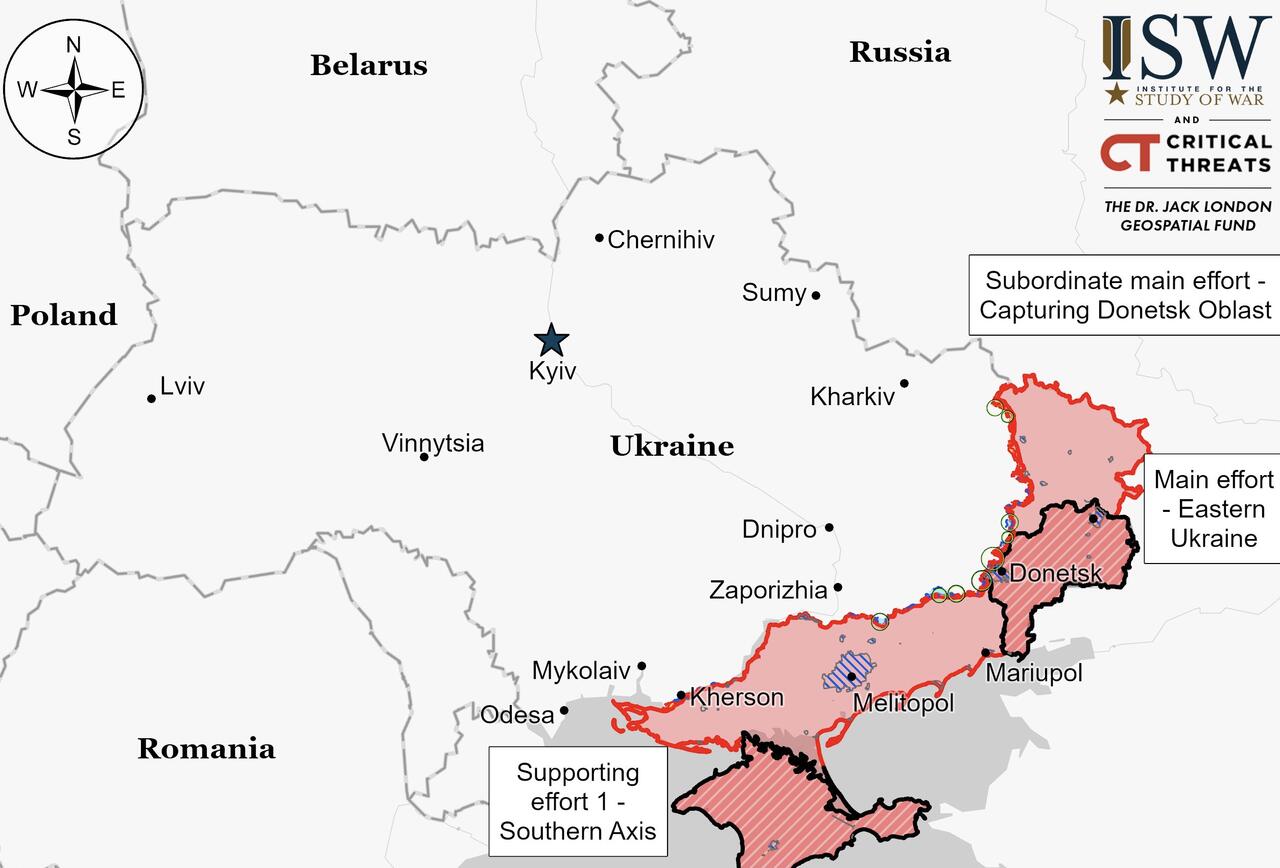
ISW‘s assessed control of terrain in Ukraine as of November 3 2023
Russia’s territorial gains are close to matching the goals President Vladimir Putin outlined at the start of what he calls a “special military operation.” He said Russia sought to secure Ukraine’s Donetsk and Luhansk oblasts (provinces), which he recognized as republics shortly before the invasion. Russian forces now control nearly all of those areas, which are together called the Donbas.
Russia also controls most of the Zaporizhzhia and Kherson oblasts, giving Russia a land bridge to the Crimean Peninsula, which Russia annexed in 2014 after a Western-aided overthrow of a democratically elected president and the installation of an anti-Russia government in Kiev. Crimea and the eastern provinces of Ukraine have heavily ethnic-Russian populations.
The front lines have moved little in recent months. In anticipation of Ukraine’s highly-hyped 2023 counteroffensive, Russia was content to install formidable defensive fortifications and allow the Ukrainian army to degrade itself and achieve nothing.
In its match-up with a far larger country, Ukraine’s ability to refresh its military ranks is vanishing fast. “Manpower is at the top of the administration’s concerns right now,” an official told NBC. The West can keep sending them weapons, “but if they don’t have competent forces to use them it doesn’t do a lot of good.” Even the most optimistic western warmongers must acknowledge the coming winter guarantees Ukraine won’t accomplish anything for months.
In the wake of Ukraine’s costly and futile counteroffensive, Washington’s proxy war with Russia is facing strong headwinds at home:
The war between Hamas and Israel has diverted public attention and sapped the war state’s ability to propagandize voters. Indeed, Biden’s Oval Office address appealing for aid for Ukraine and Israel was originally planned to focus solely on Ukraine, NBC reports.
The US public’s pro-Ukraine fervor has cooled: A new Gallup poll found 41% say the US is doing too much for Ukraine — a big leap from the 29% who said that in June. Many Americans think that money should be used to improve conditions at home.
A growing number of congressional Republicans have put away their rubber stamp for Ukraine aid, and have thus far thwarted Biden’s request for $61 billion in additional funding for the war. Biden’s ploy of a joint funding request that combines controversial Ukraine aid with Israel aid is in grave jeopardy, as House Republicans demand separate votes.
Washington’s blank-check support for Israel’s destruction of Gaza is further straining an already Ukraine-sapped American arsenal. Tens of thousands of artillery shells that had been earmarked for Ukraine are being redirected to the IDF. Even before Hamas attacked Israel, an increasingly severe shortage of conventional shells for the artillery-heavy war in Ukraine led Biden to give Zelensky toxic, depleted uranium shells, stirring an international outcry.
As for what it would take for Zelensky to surrender the international spotlight and agree to peace, we’re guessing a big deposit to a Swiss bank account would do just fine. However, officials are pondering some type of Western security guarantee that stops short of NATO membership. The specter of Ukraine become a NATO member played heavily in Moscow’s motivation for invading. The war has beena crisp illustration of Richard Sakwa’s brilliant assertion that “NATO exists to manage the risks created by its existence.”
Just weeks after Russia’s 2022 invasion, Russia and Ukraine had reportedly tentatively agreed to a peace deal in which Russia would withdraw to an extent that it would still control portions of the Donbas, in exchange for Ukraine forswearing its NATO ambitions while having security deals with several states. Via a visit from then-British Prime Minister Boris Johnson, the Western war machine, eager for a proxy war, seems to have pressured Zelensky to break off the talks. Months of misery ensued, with only the military-industrial complex and Ukraine’s aid-scraping bureaucrats better off for it.
Vitamin B12 is more than just another nutrient. It’s a key player in maintaining our health and well-being. Recent studies have highlighted its pivotal role in managing inflammation, a root cause of many chronic diseases.
Recent findings published in the Journal of the Science of Food and Agriculture have uncovered a significant correlation between vitamin B12 deficiency and chronic inflammation. This inflammation can pave the way for conditions such as heart disease, diabetes, and even certain brain disorders.
While earlier studies highlighted Vitamin B12’s role in combating inflammation, Spanish researchers have now provided deeper insights. They focused on how vitamin B12 interacts with inflammation indicators, specifically proteins such as interleukin-6 (IL-6) and C-reactive protein (CRP), both of which rise during inflammatory responses.
Using data from the PREDIMED trial, researchers focused on 136 participants with notable cardiovascular risks. The study uncovered a clear pattern: as Vitamin B12 levels increased, inflammation markers such as IL-6 and CRP declined.
“Generally, higher Vitamin B12 levels correlate with lower inflammation,” said Marta Kovatcheva, a researcher at the Institute for Research in Biomedicine in Barcelona and co-first author of the study.
Parallel research on older mice validated the human findings. However, unlike humans, mice don’t experience age-related B12 decline, suggesting potential areas for future investigation.
Consequences of B12 Deficiency
Vitamin B12, or cobalamin, is essential for forming red blood cells that transport oxygen and nutrients. Even with a modest daily requirement of 2.4 micrograms, this vitamin is still hard for many people to get enough of, especially given that the body absorbs about half of the B12 from dietary sources. Up to 90 percent of vegetarians and vegans are deficient due to B12’s primary sources being animal products. About 20 percent of meat-eaters could also have insufficient levels.
“Doctors often overlook B12 deficiency. While blood tests may show as ‘normal,’ they don’t always reflect the active, usable B12 in the body,” Dr. J. David Spence, professor emeritus at Western University, Ontario, told The Epoch Times. “This oversight means many might be deficient without even realizing it.”
The consequences of B12 deficiency are serious, ranging from anemia to neurological problems. Studies have shown a connection between low B12 levels and dementia and depression. Other complications of low B12 levels may include infertility, heart conditions, stomach cancer, and an increased risk of stroke.
Most people are unaware that they’re deficient in vitamin B12, a condition that can develop gradually or suddenly. B12 deficiency may manifest in symptoms such as numbness or tingling in extremities, balance issues, anemia, cognitive challenges including memory loss, headaches, heart palpitations, and general feelings of weakness or fatigue. Due to its diverse symptoms, it can easily be mistaken for other health issues.
Vitamin B12 Effects on Inflammation
The study authors identified a few potential reasons for the observed connection between inflammation and decreased B12 levels.
A deficiency in B12 leads to elevated homocysteine levels. Without adequate B12, our body struggles to convert homocysteine into the useful molecule methionine. Excess homocysteine can induce inflammation, harm blood vessels, and contribute to numerous health problems.
Dr. Spence concurs that there’s a link between inflammation and homocysteine. His extensive research underscores how a lack of B12 can amplify these levels, heightening the risk of stroke. B vitamins are essential in mitigating homocysteine and its associated threats.
B12-deficient cells ramp up the production of inflammatory molecules such as IL-6. Studies show that when older adults supplement with B12 and folate, these inflammatory markers decline, underscoring B12’s protective role.
The researchers also believe that B12 might help control inflammation by reducing the creation of cytokines, small proteins that can promote inflammation. These proteins are often produced by a type of white blood cell called T lymphocytes, or T cells, which play a role in immunity.
Inflammation acts like an alarm system for our body, signaling that something might be wrong. While short-term inflammation is beneficial, prolonged inflammation is problematic. The study noted that elevated B12 corresponds to reduced CRP levels, underscoring the vitamin’s preventive role.
The authors acknowledge study limitations, particularly the restricted sample size and the one-off measurement of B12 and inflammation markers, which could influence the study’s depth.
Should I Supplement With B12?
B12 deficiency is often a silent ailment that grows more prevalent with age. For those contemplating B12 supplementation, discussing it with a health care professional is prudent. A blood test examining vitamin B12 and its counterpart, plasma total homocysteine, can help determine one’s B12 health.
Our bodies don’t naturally produce B12, relying instead on dietary sources. Food remains the primary channel, with organ meats, poultry, and seafood at the forefront. For an offbeat choice, seaweed offers a surprising B12 bounty.
When turning to supplements, cyanocobalamin often emerges as the go-to choice, given its affordability. However, this synthetic variant has a catch: It discharges minute cyanide traces upon being metabolized and can pose risks for those with specific health concerns.
A safer bet is methylcobalamin—a natural B12 variant found in our gut. For those leaning into natural wellness, a B complex supplement spotlighting methylcobalamin or its equivalent, adenosylcobalamin, is a viable option.
Around a third of Americans enjoy two to three vacations per year.
Meanwhile, as Statista’s Anna Fleck reports,just over a quarter have not traveled for non-business related trips at all in the past 12 months, and around a fifth of respondents have traveled once.
Six or more vacations, on the other hand, were rarer.
This is according to the latest Statista Consumer Insights survey, carried out between July 2022 and June 2023 – a period in which the tourism industry saw the greatest recovery to pre-pandemic levels.
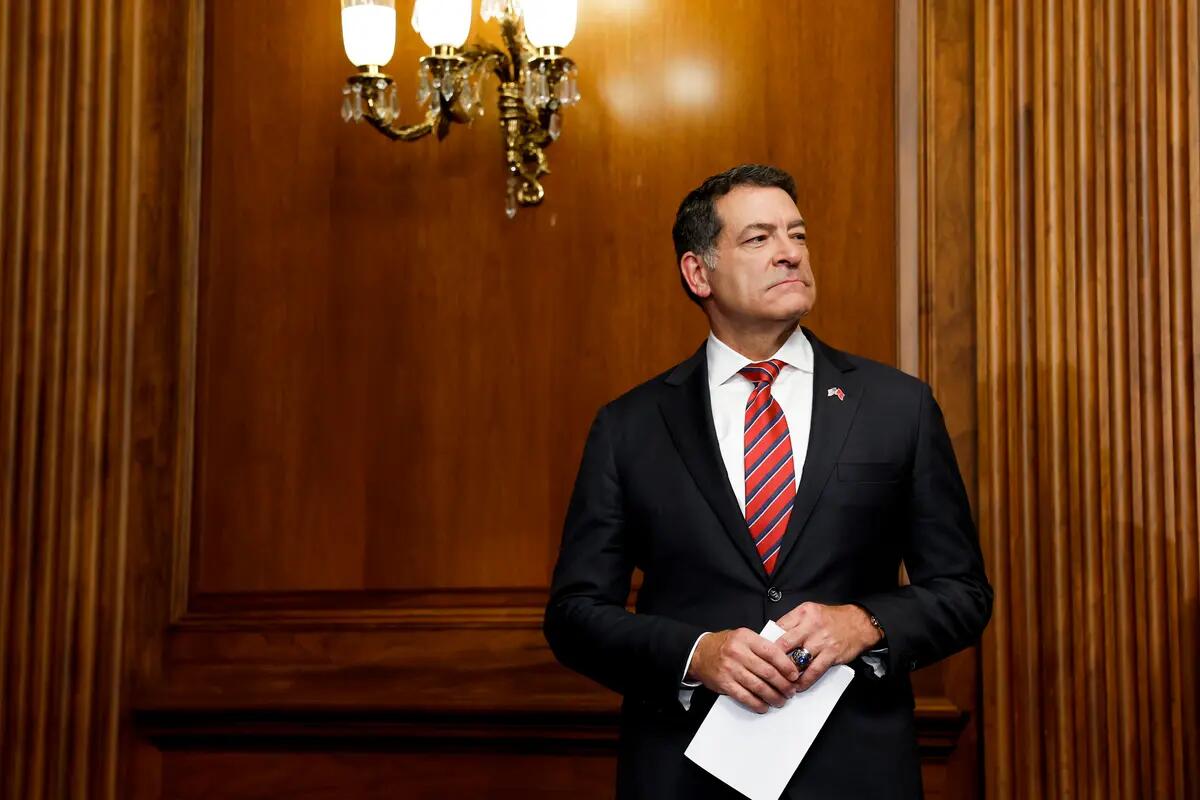
House Homeland Security Committee Chairman Mark Green (R-Tenn.) is introducing a bill aimed at preventing the Chinese regime from influencing the State Department.
The bill, called the No CCP Consultants Act, would prohibit the secretary of state from entering into, renewing, or extending contracts relating to “advisory and assistance services” with certain entities, including the governments of China and Russia.
“We must guard against the Chinese Communist Party and its web of espionage,” Mr. Green said in a statement to The Epoch Times on Oct. 31.
His bill will safeguard sensitive materials handled by the State Department, he said.
The entities that the bill named include China’s military, the Chinese regime’s security and intelligence agencies, Chinese companies that the Treasury Department has sanctioned for supporting the “Chinese Military-Industrial Complex,” and other ones that the Pentagon has listed as having links to the Chinese military.
The bill would bar State Department engagement with consultancy contractors that had worked with any such Chinese entities in the prior year. The legislation would also require contractors that seek to perform consulting services for the State Department to disclose information regarding work with covered entities in the five years prior.
Any Chinese entity “directly or indirectly” under the control of the CCP would also be banned, the bill states, as would any Russian state-owned entity and those facing U.S. sanctions over Ukraine.
“Anyone who has the CCP as a client better be aware of the kind of regime they’re getting into business with,” Mr. Green told The Epoch Times. “This regime regularly commits cyber attacks against the United States and does everything in its power to weaken us and our allies. The CCP has no qualms about spreading disinformation, propaganda, and outright lies. The kind of firm that wants to do business with the CCP should not be trusted to work for our State Department.”
Concerns about Chinese espionage drew international attention when a Chinese spy balloon flew over the United States in February, passing over a number of sensitive military bases.
The Chinese regime has also targeted the State Department in its intelligence collection. In a month-long state-backed operation in May, Chinese hackers stole about 60,000 emails from State Department officials at about the time Secretary of State Antony Blinken was engaging with Beijing for talks.
In a statement accompanying the bill’s introduction, Mr. Green said the Chinese regime is a “direct threat to our national security” that “[steals] our advanced technologies.”
“[Communist China] has its hand in our port cranes, our children’s phones through TikTok, land near military installations, our farmland, our supply chain, and the devaluation of the dollar,” he said.
Aside from sensitive materials, Mr. Green noted that the State Department also has in its possession classified intelligence and the data of millions of Americans through passports and visas. As a result, it would be “foolish” to allow any CCP-linked consultants close proximity to the State Department, according to the congressman.
“Any consultant or firm which has worked for an adversarial government should have a stop sign put in its way when it comes to being retained by the State Department,” he said. “The stakes are too high.”
If enacted, the secretary of state, after consulting with the heads of federal executive agencies, including the homeland security secretary, would need to revise the State Department’s acquisition regulations, including policies to implement the ban against the covered entities.
In recent years, the Justice Department and the FBI have ramped up efforts to tackle Chinese infiltration, from bringing charges against American and Chinese researchers over alleged intellectual property theft to counterintelligence cases against former U.S. intelligence officials accused of sending secrets to the Chinese regime.
In 2013, a U.S. court sentenced a Chinese national, Liu Sixing, to 70 months in prison for illegally exporting U.S. military trade secrets to China. Mr. Liu stole thousands of electric files from his employer, L-3 Communications, a New Jersey-based defense contractor. The files contained information on U.S. guidance systems for missiles, rockets, and drones.
Candace Marie Claiborne, a former State Department employee, was sentenced to 40 months in prison in 2019 for providing internal State Department documents to China in exchange for money and gifts. The documents she stole included topics ranging from economics to visits by dignitaries between China and the United States.
In response to an inquiry from The Epoch Times, a State Department spokesperson said it does not comment on pending legislation.
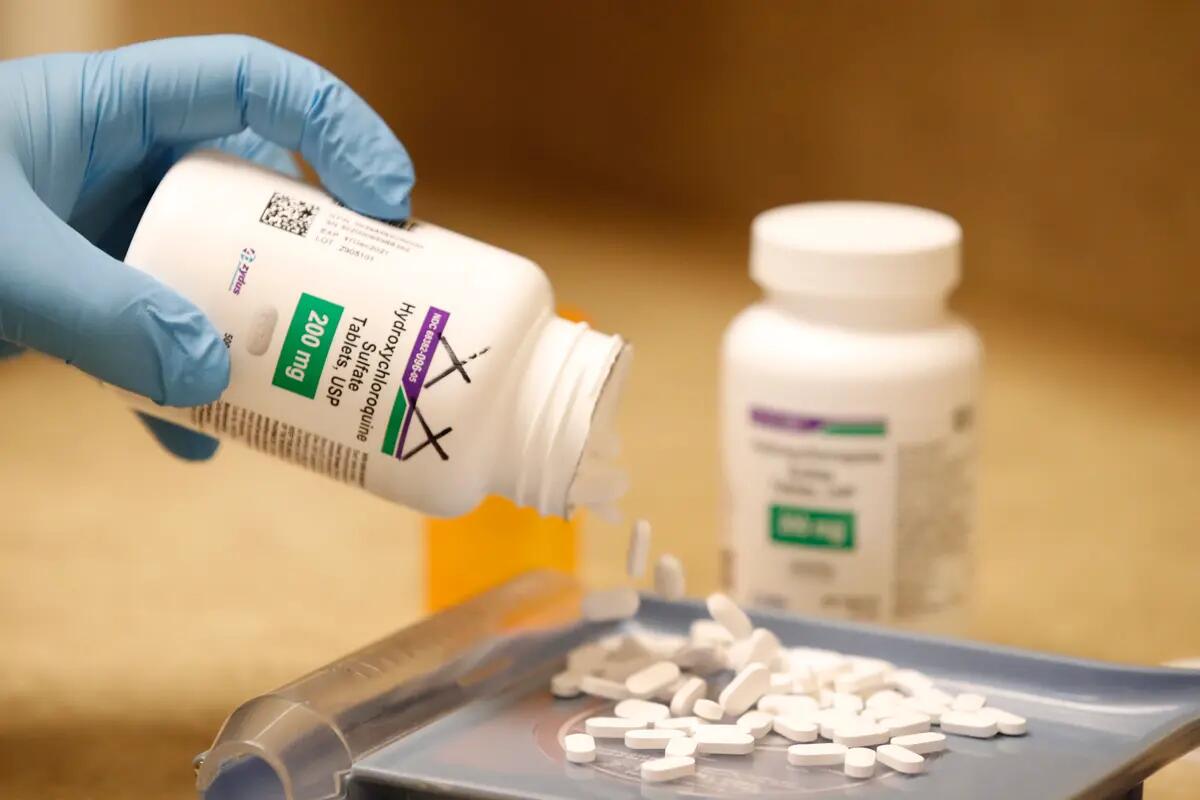
People who received hydroxychloroquine were less likely to die than those who did not, according to a new study.
Just 0.8 percent of patients at a facility in France who received hydroxychloroquine (HCQ) and an antibiotic died, compared to 4.8 percent of patients who did not receive the drug combination, French researchers reported on Nov. 1.
“This study represents the largest single-center study evaluating HCQ-AZ in the treatment of COVID-19. Similarly, to other large observational studies, it concludes that HCQ would have saved lives,” Dr. Didier Raoult, with Aix-Marseille Universite in Marseille, and his co-authors wrote.
The paper was published in the journal New Microbes and New Infections. It was released as a preprint earlier this year, but withdrawn because authors said they have changed their “analytic strategies.”
Researchers examined records from 30,423 patients with COVID-19 who were treated at another institution in Marseille, IHU Méditerranée Infection. They included all adults who tested positive for COVID-19 and who were treated in the hospital as an inpatient or an outpatient between March 2, 2020, and Dec. 31, 2021.
The study set ended up with 30,202 patients because treatment information was not available for the 221 others.
Most of the patients received off-label prescriptions of hydroxychloroquine and azithromycin (AZ), a common antibiotic.
Of the set, 23,172 patients received the drug combination. The other 7,030 did not.
Among those who received the drugs, 191, or 0.8 percent, died. Among those who did not, 344, or 4.8 percent, passed away.
Those who received HCQ and AZ were more likely to survive regardless of whether they were inpatients or outpatients.
The biggest effect was recorded in outpatients aged 50 to 89.
Limitations of the study included drawing from records from a single center. Funding came in part from the French government.
HCQ has been cleared in both France and the United States for decades but not for treating COVID-19.
Dr. David Boulware, an infectious disease doctor at the University of Minnesota Medical School, said that clinical trial data do not support using HCQ against the illness.
“Hydroxychloroquine has not been shown to have any benefit in randomized clinical trials,” Dr. Boulware, who was not involved in the new study, told The Epoch Times in an email.
“There is zero antiviral effect in humans, and zero reduction in hospitalization among 11 randomized clinical trials pooled together,” he added, referring to a metanalysis he co-authored that was published in January. Dr. Boulware also helped carry out a randomized trial examining HCQ as a prophylaxis in people who were exposed to COVID-19, and found it did not prevent illness or confirmed infection.
Mixed Evidence
Dr. Raoult and his co-authors acknowledged that several large randomized trials have found no benefits for HCQ against COVID-19, including a World Health Organization trial. But they said that the largest, funded by the World Health Organization and and United Kingdom government, suffered from “significant methodological problems,” including high dosing during the first 24 hours.
The group also criticized smaller trials with similar findings as underpowered, including a trial in France that was stopped due to enrollment issues.
“In contrast, several large observational retrospective studies published in the literature, including a total of 47,516 patients report a benefit of using HCQ on the mortality of COVID-19 patients,” the authors said, pointing to studies from France, Iran, and Spain.
They said the number of patients in the observational studies outweighs the number of patients in the randomized trials and support using HCQ as an early treatment.
Dr. Boulware said that observational data can suffer from serious problems, pointing to a response in 2020 to an observational U.S. paper that reported an association between HCQ with AZ and lower mortality among hospitalized patients.
Dr. Raoult and his co-authors acknowledged the limitations of observational data but lamented what they see as a dearth of clinical trials that use proper dosing.
“Unfortunately, few if any of the RCTs that have attempted to demonstrate the efficacy of HCQ on COVID-19 patients were run with an appropriate methodology,” they wrote.
“Inadequate target (late treatment), excessive dosage of the drug, or inappropriate study power were the main troubles. While observational studies have also confounding factors, as discussed above, significant effect estimate differences between RCTs and observational studies are more likely to be linked to the quality of the study than to its design,” they added, referencing a Cochrane Review that there was little difference between observational studies and clinical trials.
“In any case, since the epidemic has now vanished, it is no longer possible to conduct RCTs,” they concluded. “Only observational studies can bring any more insights to support policy makers with repositioning of hydroxychloroquine in the treatment of COVID-19.”
Dr. Raoult was director of the facility at which the patients were seen, but retired in 2022 after a French agency investigation found issues at the facility with regulation compliance. Several of his papers have sincebeen retracted.
Dr. Raoult did not respond to a request for comment.
The new study came about a month after researchers in Belgium reported in another observational study that HCQ with AZ reduced COVID-19 mortality among hospitalized patients.
“Our study suggests that, despite the controversy surrounding its use, treatment with hydroxychloroquine and azithromycin remains a viable option,” Dr. Gert Meeus, a nephrologist with AZ Groeninge Hospital, and other researchers wrote.
That group offered similar concerns regarding trials as the French group, including over the dosing levels.
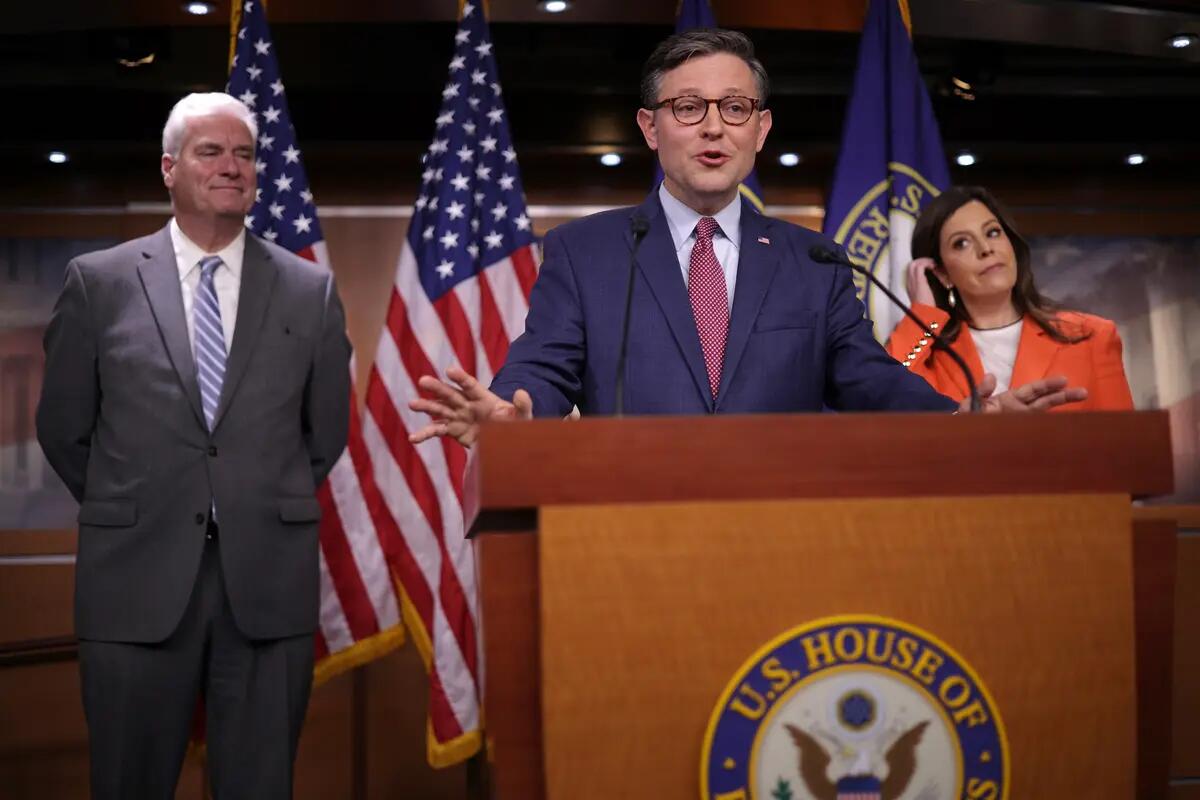
House Speaker Mike Johnson (R-La.) said on Nov. 2 that he expects the House will soon make a decision on whether to file articles of impeachment against President Joe Biden.
“As we stand here today, I’m not predetermined on that,” Mr. Johnson said, when asked at a press conference if he thought evidence that had been collected would support such a move. “But I do believe that very soon, we are coming to a point of decision on it.”
The newly elected speaker stressed that the scope and timeline of the investigation should be based on the evidence rather than a partisan political agenda—an approach that he said differed from that taken by Democrats in their impeachments of former President Donald Trump.
“What you’re seeing right now is a deliberate, constitutional process that was envisioned by the founders, the framers of the Constitution,” he said. “This is how they envisioned this to go, not the way the Democrats did it—snap impeachment, sham impeachments, and all the rest.”
Mr. Johnson, a constitutional law attorney, served on both of President Trump’s impeachment defense teams in the House.
Describing impeachment as arguably “the heaviest power” that the House possesses, he emphasized that it shouldn’t be wielded as a political tool.
“We have to follow the process and we have to follow the law,” he said. “That means following our obligation under the Constitution and doing appropriate investigations in the right way, at the right pace, so that the evidence comes in and we follow the evidence.
“We’re going to follow the truth where it leads.”
The speaker praised House Judiciary Committee Chairman Jim Jordan (R-Ohio) and Oversight Committee Chairman James Comer (R-Ky.) for their investigative leadership, contending that they had done “an extraordinary job, very methodically,” and “outside the scope of politics.”
The Evidence
While Mr. Johnson has only been House speaker for a little more than a week, he’s presided over a flurry of activity as the chamber gets back to business.
One aspect of that business is the chamber’s continuance of its impeachment inquiry, which House Republicans opened on Sept. 12 amid allegations that President Biden was involved in a pay-to-play bribery scheme.
In the past week, Mr. Comer and his committee have uncovered two direct payments that President Biden received from his brother that they claim implicate him in an influence-peddling operation.
The first payment the panel discovered was a $200,000 check that the president received on March 1, 2018. The check, labeled as “loan repayment,” was written on the same day that James Biden, President Biden’s brother, received a $200,000 wire from Americore Health, a rural hospital operator.
According to court documents, Americore loaned James Biden $600,000 “based upon representations that his last name, ‘Biden,’ could ‘open doors’ and that he could obtain a large investment from the Middle East based on his political connections.”
President Biden, who has repeatedly denied any involvement in his family members’ business affairs, has said that the $200,000 check was repayment for a personal loan.
The second payment, revealed by the committee on Oct. 31, was another “loan repayment” of $40,000 that President Biden received on Sept. 23, 2017.
According to a memo compiled by the committee, bank records and other documents suggest that the funds for that payment may have been sourced from a Chinese firm and funneled through multiple companies and accounts controlled by Biden family members.
Mr. Comer, who accused the president of receiving “laundered China money,” qualified the allegation by noting that it’s plausible that the $40,000 from James Biden was indeed a loan repayment, as noted in the memo section of the personal check.
“But even if this $40,000 check was a loan repayment from James Biden, it still shows how Joe benefited from his family cashing in on his name—with money from China no less,” Mr. Comer said.
The White House didn’t return a request for comment on the $40,000 payment.
Investigation Continues
Notably, neither payment was made when President Biden held elected office, and the committee’s bank memo didn’t establish beyond a reasonable doubt that the money that he received was from China.
But in a Nov. 1 interview with Fox News host Sean Hannity, Mr. Comer said that the information that his committee had gathered was “evidence that Joe Biden himself benefited” from his family members’ foreign business dealings.
Mr. Johnson, who also took part in the interview, repeated that the House is “following the truth where it leads.”
“You hear the evidence, you hear this laid out and summarized—of course, you know there’s much more than what we’re able to do in one segment,” he said. “[But] we’re going to follow the truth where it leads because we have a constitutional responsibility to do so.”
Delhi, India, is currently suffering under what the World Health Organization (WHO) classifies as ‘hazardous’ air quality levels.
As Statista’s Martinm Armstrong reports, data collated by IQAir for the city show how dangerously high the levels of PM2.5 (atmospheric particulate matter that have a diameter of less than 2.5 micrometers) has become in the last two days – rising significantly above the already (very) unhealthy level recorded on most days over the last few weeks. According to the WHO, ambient air pollution is estimated to have caused 4.2 million premature deaths globally in 2019.
Some schools were forced to close on Friday and non-essential construction was banned in the city.
Quoted by The Guardian, Nikhil Modi, a doctor at Apollo hospital in Delhi, gave a picture of the immediate consequences of the situation:
“The number of patients with breathing problems has increased, with more people having coughs, colds, watery and irritated eyes, and breathing problems.”, warning, “people of all ages are affected by this. It is time for us to wear masks and go out only when needed.”
#WATCH: Pollution continues to affect the air quality in the national capital; morning visuals from India Gate. pic.twitter.com/z69IAg3pjT
As reported by Reuters, regional officials have cited “a seasonal combination of lower temperatures, a lack of wind and crop stubble burning in neighboring farm states” as exacerbating the already dire situation and causing a spike in air pollutants.
Scientists and journals that conduct and publish certain research pose a problem for the federal government’s vaccination campaigns that should be addressed, U.S. Centers for Disease Control and Prevention (CDC) officials wrote in newly reviewed emails.
Colin Bernatzky, a public health analyst with the CDC’s Immunization Services Division, in one of the missives flagged a paper from scientists in the United States and several other countries that analyzed the effects of repeated COVID-19 vaccination.
Vladimir Uversky, a molecular medicine expert in Florida, and his co-authors noted that experiments have found multiple doses of the Pfizer and Moderna COVID-19 vaccines lead to higher levels of antibodies called IgG4, making the immune system more susceptible.
“COVID-19 epidemiological studies cited in our work plus the failure of HIV, Malaria, and Pertussis vaccines constitute irrefutable evidence demonstrating that an increase in IgG4 levels impairs immune responses,” Alberto Rubio Casillas, one of the co-authors, told The Epoch Times.
The paper was published following peer-review by Vaccines.
Mr. Bernatzky took issue with the paper and The Epoch Times’ coverage of it despite acknowledging he wasn’t sure about its veracity.
“At the very least, it seems like there’s some editorial recklessness going on, especially since the net result is that this research is being viewed as legitimate and is circulating widely. (And if the research is in fact legitimate, it should be on CDC’s radar),” he wrote.
About a week later, on July 7, Mr. Bernatzky provided colleagues with more information on what he described as “potential threats to vaccine confidence posed by select scientific journals and publishers.”
The paper from Mr. Uversky and Mr. Casillas “has been accumulating a massive amount of attention,” Mr. Bernatzky said, with a high attention score that was “undoubtedly driven” mostly by The Epoch Times article.
“Unfortunately, the Uversky paper is part of a wider pattern of academic journals conferring legitimacy to anti-vaccine claims through their willingness to publish low-quality work (e.g., reviews with lots of conjecture rather than original research) as well as their apparant reluctance to issue retractions or disclaimers when these issues are called to their attention,” he added.
The CDC official noted that the paper was cited by Massachusetts Institute of Technology research scientist Stephanie Seneff and her co-authors in response to criticism of a paper they wrote that outlined concerns with how the vaccines impact the immune system.
The author list of that paper “turns out to be … a squad of vaccine skeptics that includes Peter McCullough,” Mr. Bernatzky said, referring to a U.S.-based cardiologist that has expressed concerns about the safety of the COVID-19 vaccines, “with a track record for promoting ideas about autism, vaccines, Roundup, etc.”
Mr. Bernatzky suggested the “systemic issues” with certain scientists and publishers should be addressed, describing the matter as “complicated.” He pointed out that a new paper by Dr. McCullough was published as a preprint by The Lancet but quickly removed, spurring criticism.
The email was circulated widely within the CDC, according to other missives obtained by The Epoch Times, with officials focusing on the paper by Mr. Uversky and Mr. Casillas and its conclusions.
“Apparently it’s gone viral,” Sarah Meyer, another CDC official, said while sharing the email with a colleague. She said she also sent the concerns to the CDC’s Coronavirus and Other Respiratory Viruses Division.
Karen Broder, the colleague, forwarded the email to Drs. Tom Shimabukuro and John Su, two top CDC vaccine safety officials.
None of the CDC officials, including Mr. Bernatzky, responded to inquiries. A CDC spokesman declined to comment.
Mr. Bernatzky has sociology degrees and has written that the “anti-vaccine movement is arguably one of the more concerning social movements to have surfaced during the first two decades of the current century.” He has also alleged that support for former President Donald Trump is linked to “hate material.”
The CDC regularly publishes and promotes papers that have not been peer-reviewed in its quasi-journal, Morbidity and Mortality Weekly Report. In the full set of emails, which were obtained through the Freedom of Information Act, officials on multiple occasions used those papers to craft guidance to the public on COVID-19 vaccine safety.
The journals Vaccines and Food and Chemical Toxicology, which the CDC singled out for criticism, did not return requests for comment.
Mr. Casillas, a doctor at Autlan Regional Hospital in Mexico, told The Epoch Times in an email that the CDC never contacted him and said the paper he helped put together “must be read and interpreted for what it is: a hypothesis.”
“In our work, we developed a series of hypotheses about the possible consequences of a high concentration of IgG4 antibodies induced by repeated mRNA vaccination. It is important that health experts and the general public understand that we never categorically stated that, for example, such antibodies induce cancer. If you read our work, you will notice that throughout the article we used words that denote the nature of a hypothesis,” he said.
Mr. Casillas said the CDC’s criticism was unwarranted.
“Each of our proposals is based on previous research. They must be evaluated experimentally to be confirmed or refuted. It is the only way science can advance to obtain safer vaccines. We are aware that we may be wrong, but we do not accept that our work is criticized based solely on opinions,” he wrote.
Ms. Seneff said that the paper from Mr. Casillas and his co-authors was “a very thorough review that reveals the complexity in the immune system’s reaction to antigenic exposures, and examines the potential adverse consequences of the experimentally observed high levels of IgG4 antibodies induced by repeated vaccination with the SARS-CoV-2 mRNA vaccines.”
She said that her view on the research into the IgG4 antibodies is that the antibodies are not protective and block other, protective antibodies. She also sees the elevated levels of IgG4 antibodies as linked to serious problems, including severe autoimmune disease.
“This paper is seminal, and it is not surprising that it has gone viral, due to its deep analysis of the significance of elevated IgG4 following mRNA booster shots,” Ms. Seneff told The Epoch Times in an email. “I doubt that the mainstream position that these vaccines are safe and effective can survive much longer, even as they continue with aggressive efforts to retract the comprehensive review papers that reveal the true colors of these experimental therapies.”
Dr. McCullough told The Epoch Times via email that the CDC and other health agencies would be better served holding open meetings “instead of emailing gossip between each other.”
If they held the meetings, he said, officials “can hear directly from the nation’s experts who learned how to treat acute ambulatory COVID-19 and who are now handling the tsunami of patients with COVID-19 vaccine injuries, disabilities, and deaths.”