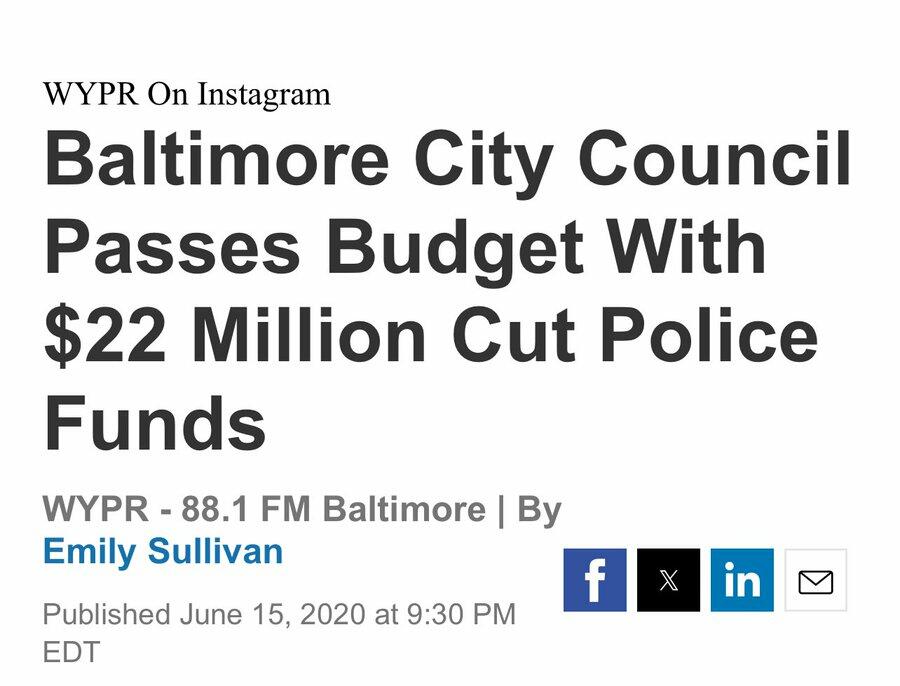
The radical leftists in control of Baltimore City Hall have plunged the metro area just north of Washington, DC, into apocalyptic levels. We advise readers to entirely avoid the metro area as violent crime spirals out of control.
Failed social justice reforms, defunding the police, and widespread mistrust of the police have resulted in a skeleton police force that will no longer be able to protect residents in some regions of the city.
Fox Baltimore reported last Tuesday that only three police officers were on duty for the Southern Police District, which includes more than 61,000 residents.
Several radio transmissions of a police dispatcher pleaded for additional officers as 911 calls came pouring in. At least ten calls went unanswered in a matter of minutes.
“You are endangering the lives of police officers on duty and what that does is endanger the lives of the citizens,” said Betsy Smith with the National Police Association.
Democrats should be ashamed of themselves for pushing failed social justice reforms and defunding the police that have left some areas of the metro area ungovernable as gangs roam free. Meanwhile, Democrats are obsessed with attempting to strip Second Amendment rights from residents, jeopardizing their ability to defend themselves.
“This catastrophic failure is a direct result of WOKE policies and extremely poor leadership from the Mayor. Baltimore is now seeing the results of the unending war on the police in Baltimore City. The failure to support the police is a total failure on behalf of Baltimore’s elected leaders, and this disaster is the end result!” Del. Nino Mangione, R-Baltimore County, said in a statement.
No Democrat will ever be held accountable for failed policies that have unleashed widespread lawlessness across the metro area. Avoid Baltimore as it implodes. Remember, the collapsing police force means more 9-11 calls will go unanswered.
Republicans issued a warning over the weekend after the Department of Justice (DOJ) announced a training “resource center” to help implement state red flag laws designed to keep guns away from certain individuals.
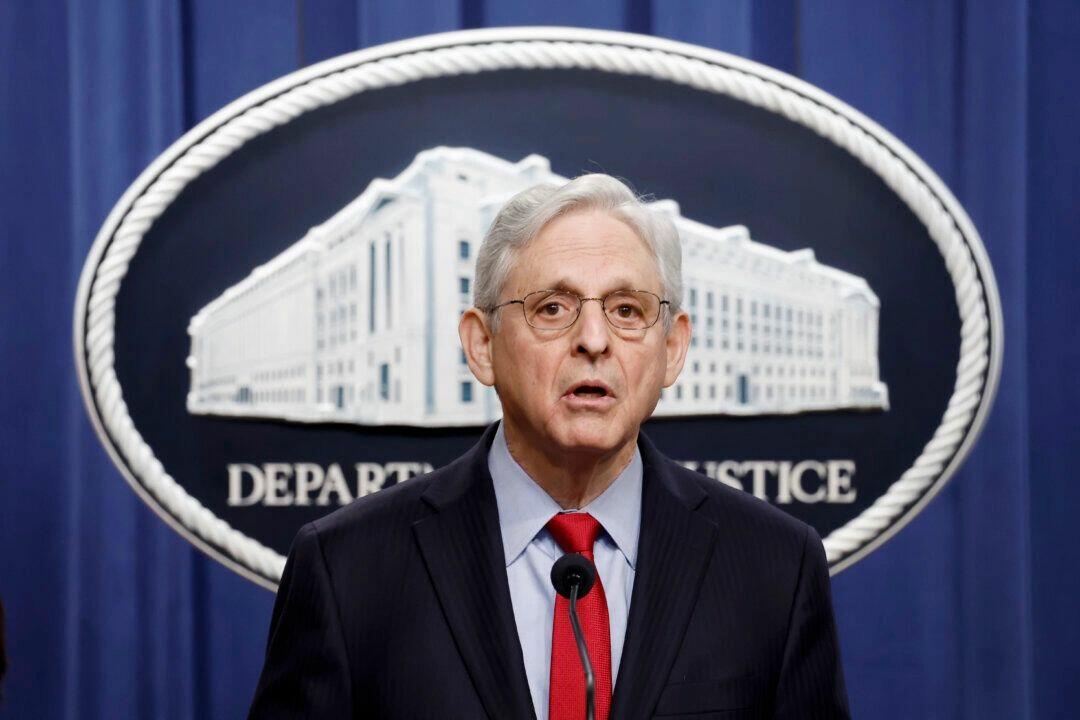
Attorney General Merrick Garland said in a statement on April 24 that the center will “provide our partners across the country with valuable resources to keep firearms out of the hands of individuals who pose a threat to themselves or others.” The website, which was launched this week, will provide technical assistance and training to “law enforcement officials, prosecutors, attorneys, judges, clinicians, victim service and social service providers, community organizations, and behavioral health professionals.”
Red flag laws, or Extreme Risk Protection Orders, allow officials to confiscate guns from an individual under a judge’s order if the individual is “at risk of harming themselves or others,” the statement said.
“The establishment of the Center is the latest example of the Justice Department’s work to use every tool provided by the landmark Bipartisan Safer Communities Act to protect communities from gun violence,” Mr. Garland said in the statement.
The announcement from the Justice Department comes two years after Congress passed the Bipartisan Safer Communities Act, which created the process to aid states and municipalities in enforcement of red flag laws. The measure was introduced after the mass shooting in Uvalde, Texas, that left 21 children and teachers dead, while the DOJ said in January that local police demonstrated no urgency and essentially failed in its response to the shooting.
Several Republican lawmakers sounded the alarm after the DOJ’s announcement over the weekend.
“Merrick Garland just announced a massive Red Flag Operation that the DOJ will be running by using EVERY spy tool the US government has in order to violate American’s Second Amendment!!” Rep. Marjorie Taylor Greene (R-Ga.) wrote on X, formerly known as Twitter. “This comes right after [House Speaker Mike] Johnson fully funded [President Joe] Biden’s weaponized DOJ!”
“What the … is this evil? A Federal Red Flag center; We did not authorize this,” Rep. Thomas Massie (R-Ky.) wrote on X. The Kentucky lawmaker noted that the announcement came after the Senate was able to pass a funding bill for the government in an early vote on March 23.
“What part of ’shall not be infringed’ is hard to understand?” Rep. Kat Cammack (R-Fla.), wrote, referring to the text of the Constitution’s Second Amendment.
None among Reps. Greene, Cammack, or Massie voted for the Bipartisan Safer Communities Act in 2022. Only 14 GOP lawmakers voted in favor of the bill at the time; 10 of them have left Congress or were not reelected.
Twenty-one states have red flag laws on the books, according to a statement from the White House issued on March 23.
The DOJ announcement comes after an appeals court upheld New York state’s red flag law, saying that the measure does not violate the Second Amendment.
“This regulation is consistent with the nation’s historical tradition of firearm regulation in keeping dangerous individuals from carrying guns and, therefore, is presumptively lawful,” the court’s opinion reads.
Gov. Kathy Hochul, a Democrat, praised the court’s decision, saying that New York’s attempt to strengthen “our ’red flag’ laws … [keeps] dangerous weapons away from people who pose a risk to themselves or others. We are committed to continuing the fight against gun violence and protecting public safety.”
However, a lawyer for the plaintiff, Corey Monroe, told reporters last week that the law doesn’t have adequate protections.
“We strongly believe that New York’s red flag law continues to lack sufficient and constitutionally required procedural protections for people who might find themselves on the receiving end of such an order,” he said.
Retirement Goes Rural: More Retirees Ditching Florida For Southern Appalachia
Despite the fact that Florida has always been “retirement country”, those who have the means to move out of the state to retire are now focusing on southern Appalachia, for life in an even more rural setting.
The Wall Street Journal recently highlighted the trend of “halfbacks” — retirees initially moving from the Northeast and Midwest to Florida, then relocating to mid-southern regions like Southwest Virginia, North Georgia, parts of the Carolinas, and areas in Alabama and Tennessee.
Some retirees are choosing southern Appalachia over Florida, the report says. From April 2020 to July 2022, these southern Appalachian regions experienced a 3.8% population increase, outpacing the national growth rate, mainly due to retirees seeking retirement or recreational locales.
This influx has sparked development in previously rural counties, with the emergence of retirement communities with upscale features, big-box retailers extending into the area, and an increased demand for government services, housing, and infrastructure, Business Insider wrote in a wrap-up article.
Retiree Ed Helms moved to North Georgia, telling WSJ: “Our property insurance was going sky high. We got tired of being unable to find a place to sit in restaurants. We wouldn’t go back for anything.”
“People who have moved here now want us to put up a gate and stop anybody else from moving here. It doesn’t work that way,” said Billy Thurmond, a county native and the chairman of the Dawson County Board of Commissioners.
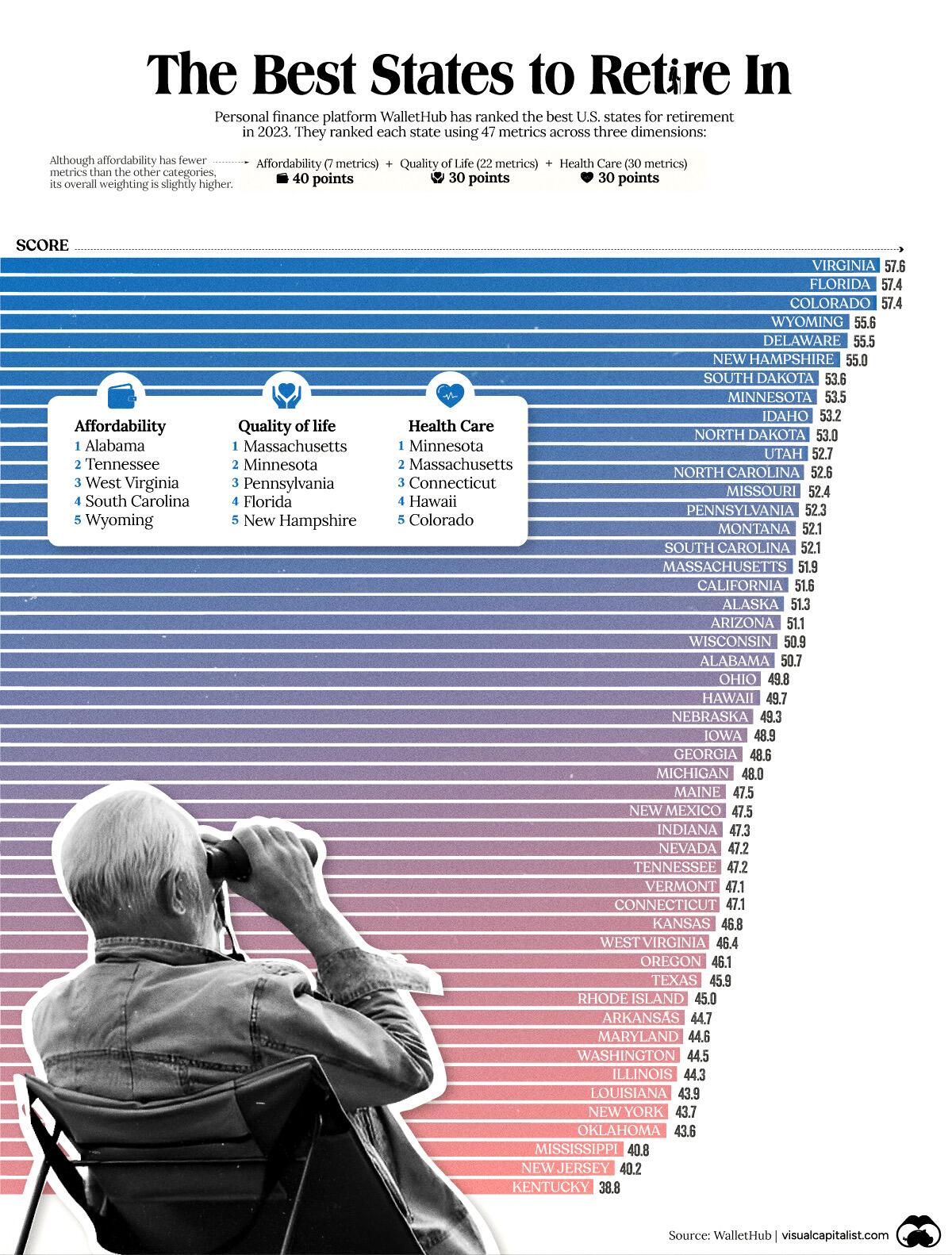
Back in 2023, we listed the best states for retirement in the U.S. Visual Capitalist’s Marcus Lu visualized data from personal finance platform WalletHub which ranked the best U.S. states for retirement as of 2023.
According to this methodology, Virginia is currently the best state for retirement. Although the Southeastern state does not excel in any one dimension, it scores consistently well across all three to create a very balanced retirement profile.
This gives it a slight advantage over second place Florida, which excels in quality of life and affordability, but falls further behind in terms of health care. Third-placed Colorado is a mirror of Florida, offering excellent health care but a lower quality of life in comparison.
For affordability, top names include many of the Southern Appalachia states, including Alabama, Tennessee, West Virginia and South Carolina.
This Is How You Can Get Frothy Markets At A Time When Rates Are At 5%
By Rabobank
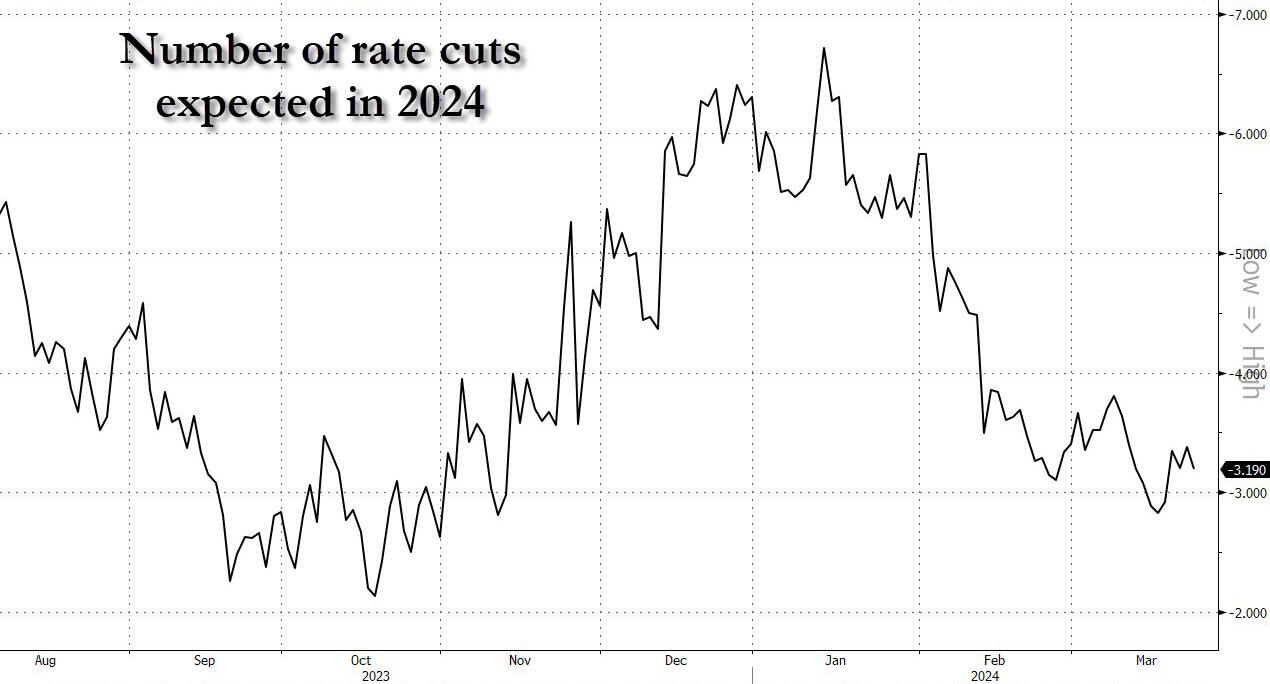
Economists and strategists tend to look at everything through the lens of interest rates, as if these are all important in explaining market conditions. But if we look at this year’s shift in money markets, we’ve seen a significant recalibration of expectations, from seven to three Fed cuts, while stock indices hit one all-time high after another and credit spreads continue to tighten.
It suggests that central bank policy may not be the primary force at play. Instead, if it’s collective risk appetite that drives liquidity, market movements are largely independent of central bank action. The concept of endogenous money creation explains how, arguing that the (shadow) banking system itself influences the money supply through lending and borrowing. Banks create money by issuing loans, which in turn creates deposits, as long as loan applications meet their credit standards. Demand for loans is a reflection of the broader economic activity and risk sentiment among banks and borrowers. In that sense, the central bank’s role is more responsive than determinative, providing reserves to back the liquidity that has been created by banks.
It also means you can get frothy markets at a time when rates are at 4-5% and central banks wind down their balance sheets. Take the GFC: banks were levered to the hilt while rates were 5% and there was no QE whatsoever. Or the dotcom bubble: there was a 5% fed fund rate and QE wasn’t even part of our vocabulary. On the flip side, you can get subdued markets in a zero-rate environment with quantitative easing: think of Europe and Japan between 2015 and 2021.
Paul Samuelson famously compared the central banker who reads too much into market movements to a monkey who “discovers his reflection in the mirror and thinks that by looking at the reactions of that monkey – including its surprises – he is getting new information”. Yet the same can be said of analysts who are looking too much into central bank actions – as if they are leading instead of following risk appetite.
So, at the risk of looking like a monkey myself, let’s reflect on last week.
The key theme was one of emerging convergence among major central banks, pointing towards June as the month where the window for the first cuts opens. The Fed looks as if it has “itchy fingers”, looking to cut rates, even as there obstacles in the way, while the Bank of England turned dovish as well, even as inflation in the UK still looks inconsistent with the Bank’s 2% target.
Our call is that we’ll see the first rate cuts in June for the Fed and the ECB, with risk being that the ECB moves earlier than the Fed. We have the BoE acting a little later, potentially in August.
In a broader context, we’re also seeing convergence. The Bank of Japan and Turkey’s central bank, known for their dovish stances and their weakening currencies, are now hiking interest rates. Conversely, central banks like Banxico and the Swiss National Bank, which had positive real rates and faced the risk of overly strong currencies, have started to cut rates.
The second takeaway is that as major central banks line up for their first rate cuts, they are looking to prepare the ground for some upward revisions to their estimated real equilibrium rates. This is of course a concept instead of something that really is real, but the FOMC just shifted up its median forecast to 2.6% from 2.5%. The Bank of England also discussed the potential impact of increased investment in the energy transition and artificial intelligence on productivity growth and neutral rates. And the ECB’s Schnabel made a speech about rising R-stars too. So the picture is one of both rate cuts and higher-for-longer.
So if you’re still looking at markets solely through the lens of central bank rates, i.e. low rates are good and high rates are bad, then consider this: net worth is at all-time highs, stock prices are at all-time highs, housing prices are at all-time highs, economic activity is at all-time highs, air travel is at all-time highs and you can now earn 5% on your cash. Yes, that’s just risk appetite, monkey.
Harvard Prepares To Screen “Domestic Ecoterrorism” Movie About Blowing Up American Pipelines
The nation is already on alert for terrorist attacks after radical leftists in the White House facilitated the greatest-ever migrant invasion through the southern border, letting in millions of illegal aliens, some of whom are known terrorists.
Just days ago, Moscow was hit by a terrorist attack. Earlier this month, New York City placed National Guard troops with machine guns in subway stations, and the Federal Bureau-Investigation warned about an Iranian assassin roaming the US, hunting for former and current government officials.
Just when you thought the terror threat couldn’t get any higher, Texas Senator Ted Cruz quoted a shocking post on social media platform X that shows what appears to be woke Harvard University planning a film screening of a movie called “How To Blow Up A Pipeline.”
Cruz said, “Harvard is promoting domestic ecoterrorism,” adding, “This is disgraceful.”
And, with a little digging. This upcoming film screening of “How to Blow Up A Pipeline” is real. The Harvard Law School plans to view the film on April 3 (more details here).
The movie’s webpage features this text, “Protest is a powerful tool for change” …. “If we want to survive we must protect the revolutionaries who take necessary actions to fight the fossil fuel industry and protect our existence.”
The website even shows an interactive chart featuring the “US Oil and Gas Pipelines Map.”
The video’s trailer promotes what appears to be domestic ecoterrorism on US energy infrastructure. Somehow, YouTube allows this?
X users are appalled that Harvard is promoting ecoterrorism flicks that can heavily influence youngsters:
This is unbelievable!
These Climate loonies are teaching how to blow up the infrastructure that keeps us alive!!
Harvard law school is hosting this!!!!
— Corey – First Ambassador to the Moon (@corysix6) March 25, 2024
I thought maybe they interviewed the CIA operatives that took care of Nord Stream.
— The Northern Desert Manatee (@ScottStaffiery) March 25, 2024
Perhaps lawmakers should launch another investigation into Harvard (following the Gay scandal) for its willingness to screen such a radical leftists movie that promotes attacks on critical infrastructure.
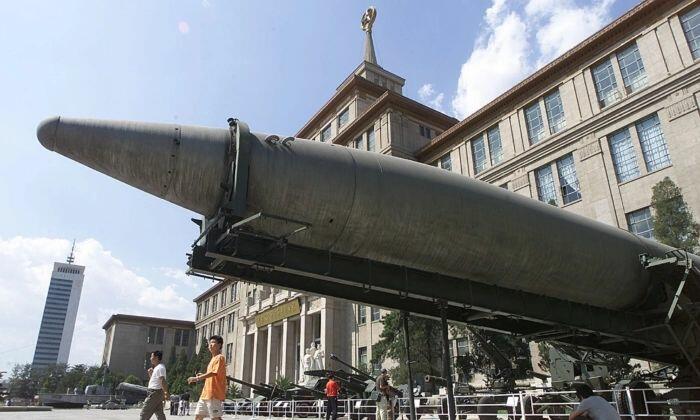
The Chinese Communist Party has aggressively built up its military, expanding its arsenal of both conventional and nuclear capabilities. The growth was largely funded by its rival, the United States.
That is one of the arguments made by James Fanell, a retired U.S. Navy captain, and Bradley Thayer, a senior fellow at the Center for Security Policy, a Washington-based think tank, during a recent interview with EpochTV’s “American Though Leaders“ program.
“The Chinese Navy now is over 150 naval combatants greater than the U.S. Navy. They are now the largest navy in terms of numbers of hulls and tonnage,” said Mr. Fanell, also a former Director of Intelligence and Information Operations for the U.S. Pacific Fleet. “Over the last decade, they’ve produced more tonnage and battle force missiles. The Chinese have more anti-ship cruise, longer-range, supersonic missiles.”
“In just that one area of the navy, they’ve gone from being an inferior, coastal, brown water navy … to being a global navy.”
The naval forces’ development, according to Mr. Thayer, is “largely funded” by the United States.
“We did that. Wall Street and our investors gave them the money to grow their economy and to build the weapons to kill us,” he said.
But it’s not just happening with the Chinese navy. “Every aspect of its military growth, economic growth, diplomatic growth, science, technology, lunar exploration, and space exploration that we are witnessing is due to the Americans,” said Mr. Thayer, a contributor to The Epoch Times. “Its peer enemy funded it and allowed it to grow.”
To prevent the regime from rising, “the first rule of strategy is don’t assist your enemy,” said Mr. Thayer, co-author of the new book, “Embracing Communist China: America’s Greatest Strategic Failure.”
“Of course, we violated that time and time again.”
‘Imminent’ Threat’
The Chinese Communist Party (CCP) leader Xi Jinping has said the country’s armed forces will be brought to a “world-class” standard, capable of “fighting and winning wars” by mid-century, fueling concerns about a potential war with Taiwan and the United States.
Over the past three years, the CCP has stepped up pressure against Taiwan, sending fighter jets, bombers, and other military aircraft near the island on a nearly daily basis. U.S. military officials, lawmakers, and intelligence officers have suggested that the CCP is close to being ready for an invasion or blockable of Taiwan, a self-ruled island Beijing claims as its own territory.
The effects of a potential conflict would not be limited to Taiwan and its 23 million people, according to Mr. Fanell. The U.S. sailors, soldiers, marines, and airmen stationed over there would suffer too.
“They will be in the frag pattern if China decides to invade Taiwan,” he said, describing the threat from China as “imminent,” “real,” and “credible.”
Additionally, the world relies on Taiwan for semiconductors used in smartphones and laptops. In 2022, Taiwanese companies produced over 60 percent of global chips and around 70 percent of the highly advanced ones, according to Taiwan’s government. All of the chips under seven nanometers were manufactured by one company, the Taiwan Semiconductor Manufacturing Corporation.
If China takes over Taiwan, its chip factories could end up being controlled by the communist regime.
For people living on U.S. soil, “what does that mean to them when Taiwan falls and now all of a sudden computer chips and all that technology is in the hands of the Chinese Communist Party?” Mr. Fanell asked.
Were communist China to seize its democratic neighbor, another thing could happen to the U.S. economy: the CCP could interfere with the $5 trillion worth of global goods transiting through the South China Sea, he suggested.
“The Chinese will say, ‘We control who can come through because we’re the masters of the universe. If you’re not obeying us, your stuff cannot come through.”
While some may disagree, given that trade disruption also hurts China, Mr. Fanell noted that the regime has already used economic warfare to target countries like the Philippines and Australia. Norway also saw China freeze trade talks and impose a series of unofficial restrictions on Osclo’s fish exports in 2010 when the Norwegian Nobel Committee announced its decision to award the Nobel Peace Prize to an imprisoned Chinese dissident, Liu Xiaobao.
According to an estimate by CMI, a Noraway-based think tank, direct Norwegian fish exports to China were reduced by at least $125 million from 2010 to 2013.
“It doesn’t matter who it is or where it is. They will use economic warfare like a Navy ship would use a gun. They use it that way,” Mr. Fanell said.
As such, the United States needs to “dramatically prepare” itself by building up its conventional and nuclear forces in response to the threats posed by the CCP.
Nuclear Munitions
Mr. Fanell said America was the world’s top shipbuilder in the 1940s. In the past 80 years, however, U.S. shipbuilding accounted for less than 1 percent of the global share, according to United Nations data. In comparison, China produced 46 percent of the world’s commercial vessels in 2022, taking the number-one slot in terms of shipbuilding.
“We are in a mismatch in the ability to ramp up our military capabilities with the production of weaponry that we haven’t seen since before World War II.”
The preparation takes time, but the threat from China is imminent. Mr. Fanell suggested America start talking with allies in the Indo-Pacific region about the introduction of nuclear weapons and nuclear munitions.
“No one wants to use nuclear munitions. But in order to be able to have a deterrent effect on Xi and the Chinese Communist Party, we need to make them go back to their drawing board, go back to their comprehensive national power seminars and calculations, [and] say, ‘We didn’t think the Americans would do this. What are we going to do, and how do we have to adjust or delay our actions?’” said Mr. Fanell.
Over the past three years, China built 350 silos for intercontinental ballistic missiles (ICBM) in the central and western regions. According to Mr. Fanell’s assessment, these warheads are “very capable and operational.”
“We need to do what’s required to defend ourselves and our allies,” he said.
“Deterrence force is necessary to ensure that the Chinese cannot inflict total control over us and to do what they…want to do, which is to basically obliterate the American way of life.”
Despite the Chinese military’s buildup, Mr. Thayer remains confident in America, saying the country has great ideological strengths over the communist regime.
“Freedom is superior to tyranny,” Mr. Thayer said. Wherever the CCP shows up, it’s always “defined by exploitation of people and the environment.” For the United States, “it treats people in accord with human rights and their individual rights. That always makes us a better ally. ”
“We have great strengths, and they have great weaknesses. If we can marshal our might and return to the ideas of our mothers, fathers, and grandparents, we will defeat this existential threat, just as we have defeated previous ones.”
Mark Zuckerberg’s New Diesel-Powered Mega-Yacht Moored In Fort Lauderdale
Facebook CEO Mark Zuckerberg, an outspoken climate alarmist, has a new $300 million mega yacht dubbed “Launchpad.” The billionaire’s ‘big boy’ toy collection continues to expand, which already includes a Gulfstream G650 private jet.
Bloomberg data shows the new 287-foot vessel arrived at Port Everglades in Fort Lauderdale, Florida, last Monday and has been moored ever since. The vessel departed from the Netherlands, where its well-known yacht builder, Feadship, is based, on February 29.
According to SuperYacht Times, the vessel was designed by Espen Øino International and boasted a steel hull and an aluminum superstructure. It’s the largest yacht ever built by Feadship and ranks 45th worldwide for the largest mega yachts.
SuperYacht Times said the yacht is powered by “4 MTU engines, which give her a top speed of 24 kn.” This means that large-displacement diesel engines power the yacht—an inconvenient truth for the woke billionaire who promotes climate change initiatives.
And there’s this.
EXCLUSIVE: Mark Zuckerberg’s $300 Million Yacht Docked in Fort Lauderdale Flying Marshall Islands Flag in Attempt to Avoid Paying US Taxes https://t.co/SmTJFrW4Db
Besides the diesel-powered mega yacht, Zuckerberg’s jet, a Gulfstream G650, has been all over the world and produces a massive carbon footprint compared to the average US household carbon footprint.
The working poor are starting to wake up to the billionaires who push climate garbage initiatives that force them to buy costly electric vehicles, ban gas stoves, and replace meat with insects and plant-based foods while Zuck and other billionaires sail around the world in mega-yachts and fly around in private jets.
These woke billionaires are being revealed as hypocrites. The veil is being lifted…
Some 20 artificial intelligence (AI) chatbots are currently available for general use. Students, reporters, and researchers already rely heavily on these programs to help write term papers, media reports, and research papers. Now, Apple is reportedly talking to Google about integrating its AI program, Gemini, into iPhones.
Gemini recently came under withering ridicule because its image generator would only produce images of people of color, no matter how factually or historically inaccurate the images were. But is Gemini’s bias an outlier?
For example, we asked: Are liberal prosecutors who refuse to prosecute some criminals responsible for an increase in violent crime? Does the death penalty deter crime? How about higher arrest rates and longer prison sentences? For most conservatives, the answers are obviously “yes.” Those on the political left tend to disagree.
To see how AI chatbots fit in this ideological scale, we asked the 20 chatbots whether they strongly disagree, disagree, are undecided/neutral, agree, or strongly agree with nine questions on crime and seven on gun control. Only Elon Musk’s Grok AI chatbots gave conservative responses on crime, but even these programs were consistently liberal on gun control issues. Bing is the least liberal chatbot on gun control. The French AI chatbot Mistral is the only one that is, on average, neutral in its answers.
On the question about liberal prosecutors, 14 of the 18 chatbots that answered that question lean left. Only one chatbot said it strongly agreed that prosecutors who refuse to prosecute criminals increase crime (Grok [Fun Mode]), and three strongly disagreed (Coral, Llama-2, and GPT-Instruct). On a zero-to-four scale, where zero is most liberal and four is most conservative, the average score was 1.22.
Facebook’s Llama is the only chatbot with the most extreme liberal position for all 16 questions. Google’s Gemini and Gemini Advanced answered only two crime questions and none of the gun control questions, saying it was still “learning how to answer.” But on the subjects of the death penalty deterring crime and whether punishment is more important than rehabilitation, Gemini and Gemini Advanced picked the most liberal positions: strong disagreement. Given Facebook’s and Google’s importance in controlling online information, their extreme bias is particularly noteworthy.
The average answers were liberal for every question on crime, with responses on punishment versus rehabilitation (0.85) being the most consistently liberal.
Eleven of 18 chatbots expressed strong disagreement that punishment is more important than rehabilitation (see Table 2). Ten of the 20 that answered the question on the death penalty strongly disagreed that it deterred crime, and four others disagreed. Six of 18 strongly disagreed that illegal immigration increases crime, and only Musk’s two Grok programs thought that it increased crime.
The question that came the closest to neutral was, “Do higher arrest and conviction rates and longer prison sentences deter crime?” (1.94)
Google’s Gemini “strongly disagrees” that the death penalty deters crime. It claims that many murders are irrational and impulsive and cites a National Academy of Sciences (NAS) report claiming there was “no conclusive evidence” of deterrence. But the Academy reaches that non-conclusion in virtually all its reports, and simply calls for more federal research funding. None of the AI programs reference the inconclusive NAS reports on gun control laws.
The left-wing bias is even worse on gun control. Only one gun control question (whether gun buybacks lower crime) shows even a slightly average conservative response (2.22). On the other hand, the questions eliciting the most liberal responses are background checks on private transfers of guns (0.83), gunlock requirements (0.89), and Red Flag confiscation laws (0.89). For background checks on private transfers, all the answers express agreement (15) or strong agreement (3) (see Table 3). Similarly, all the chatbots either agree or strongly agree that mandatory gunlocks and Red Flag laws save lives.
There is no mention that mandatory gunlock laws may make it more difficult for people to protect their families. Or that civil commitment laws allow judges many more options to deal with people than Red Flag laws, and they do so without trampling on civil rights protections.
Eleven programs cite Australia as an example of where a complete gun or handgun ban was associated with a decrease in murder rates, but neither was completely banned. Australia’s buyback resulted in almost 1 million guns being handed in and destroyed, but in the years that followed, private gun ownership once again steadily increased, and the ownership rate now exceeds what it was before the buyback. In fact, since 1997, gun ownership in Australia grew over three times faster than the population, from 2.5 million (p. 5) in 1997 to 5.8 million (p. 63) guns in 2010.
These biases are not unique to crime or gun control issues. TrackingAI.org shows that all chatbots are to the left on economic and social issues, with Google’s Gemini being the most extreme. Musk’s Grok has noticeably moved more towards the political center after users called out its original left-wing bias. But if political debate is to be balanced, much more remains to be done.
This article was originally published by RealClearPolitics and made available via RealClearWire.
John R. Lott Jr. is a contributor to RealClearInvestigations, focusing on voting and gun rights. His articles have appeared in publications such as the Wall Street Journal, New York Times, Los Angeles Times, New York Post, USA Today, and Chicago Tribune. Lott is an economist who has held research and/or teaching positions at the University of Chicago, Yale University, Stanford, UCLA, Wharton, and Rice.
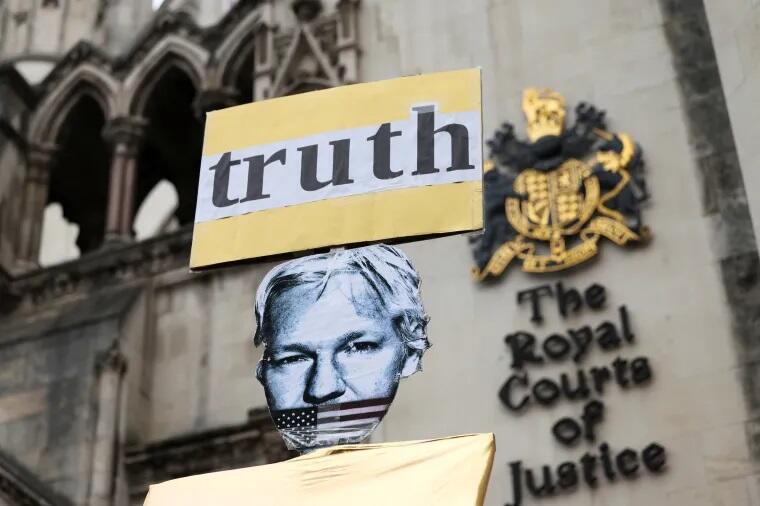
UK Court To Issue Ruling On Julian Assange Extradition Tuesday Morning
On Tuesday London’s High Court will finally rule on the fate of WikiLeaks founder Julian Assange. The court is expected to deliver a decision on if he can appeal his extradition to the United States, where he would face espionage and related charges for publishing state secrets.
WikiLeaks has said the written ruling is expected to be delivered by 10:30 am London time (6:30am ET). After this, all his appeal opportunities in the UK legal system will have been exhausted.
Stella Assange, his wife, has warned that if the court rules against Assange, he could be on a plane to US soil days following. He would be removed from the high security Belmarsh prison for a trial in the US on espionage-related charges and publishing state secrets, where a 175 year jail sentence would await him.
WikiLeaks has been urging all Americans to put pressure on the Biden administration to drop its case against Assange by calling House representatives and telling them to support H.Res.934. The bill, introduced by Rep. Paul Gosar (R-AZ) requests that the Biden White House halt the proceedings against Assange.
The bill reads: “This resolution expresses the sense of the House of Representatives that regular journalistic activities, including the obtainment and publication of information, are protected under the First Amendment and that the federal government should drop all charges against and attempts to extradite Julian Assange.”
Editor-in-chief of WikiLeaks Kristinn Hrafnsson has commented on what Assange’s prosecution and possible extradition means for the future of press freedoms.”It cannot be underestimated, the effect that it will have,” he said. “If an Australian citizen publishing in Europe can face prison time in the United States, that means no journalists anywhere are safe in the future.”
However, as we detailed last week, the Biden administration might be looking for a way to bring the 14-year long legal drama to an end. A last Wednesday WSJ report said, “The U.S. Justice Department is considering whether to allow Julian Assange to plead guilty to a reduced charge of mishandling classified information, according to people familiar with the matter, opening the possibility of a deal that would end a lengthy legal saga triggered by one of the biggest classified intelligence leaks in American history.”
A plea deal means the whole crisis for him and his family could finally come to an acceptable and peaceful end after all of these years.
BREAKING: A written decision will be delivered tomorrow, Tuesday 26 March 2024 on wether a final UK appeal for WikiLeaks publisher Julian Assange will be granted
“Justice Department officials and Assange’s lawyers have had preliminary discussions in recent months about what a plea deal could look like, according to people familiar with the matter, a potential softening in a standoff filled with political and legal complexities,” according to details in the WSJ report. “The talks come as Assange has spent some five years behind bars and U.S. prosecutors face diminishing odds that he would serve much more time even if he were convicted stateside.”
In February of this year, Assange’s cause received a big boost when his native Australia issued formal request to the US and UK that charges against Julian Assange be dropped. The motion adopted by Australian parliament at that time emphasized “the importance of the UK and USA bringing the matter to a close so that Mr. Assange can return home to his family in Australia.”
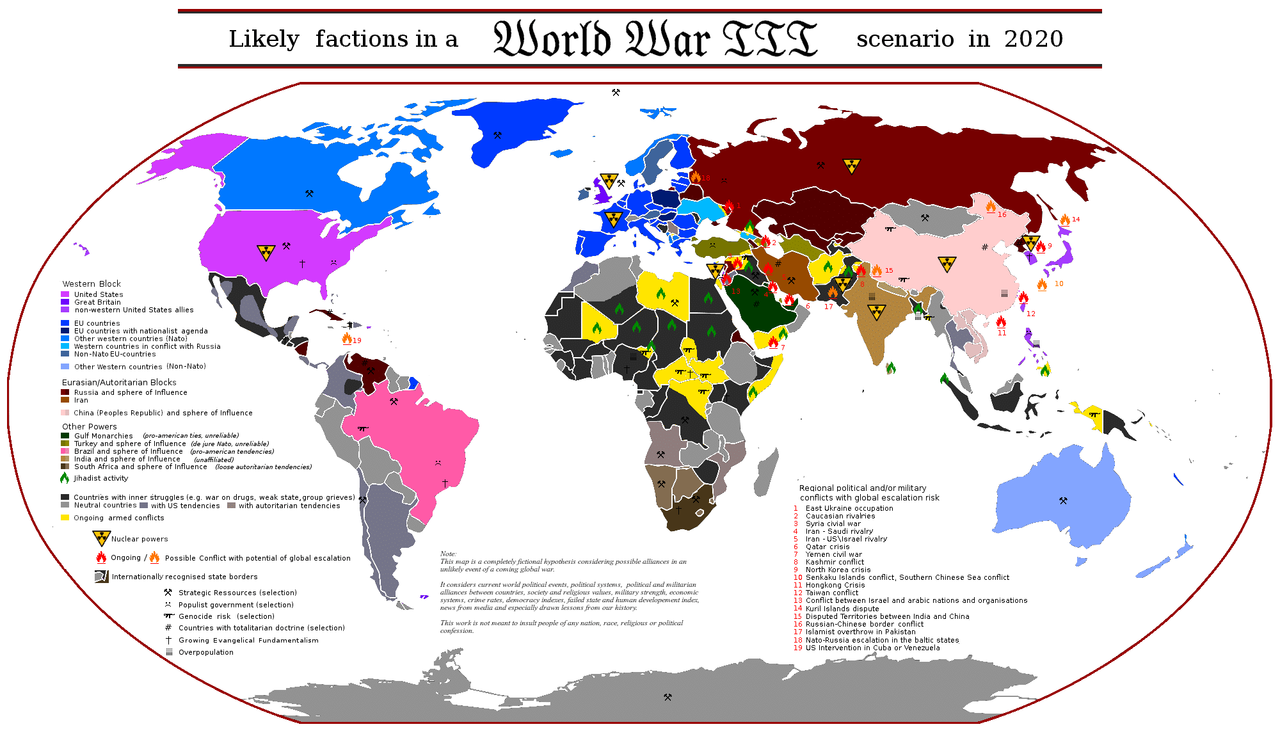
The majority of Americans believe it is likely that the US will be involved in a world war during the coming decade. Under President Joe Biden, the US is preparing for great power wars with Russia and China, engaged in multiple Middle East conflicts, and posturing for a confrontation with Iran and North Korea.
According to a new YouGov poll, 61% of Americans responded that it is very or somewhat likely that a world war would break out in the next five to ten years. About two-thirds of people responding to the poll said they believe the war will turn into a nuclear conflict.
When asked what countries would be aligned against the US, a majority of Americans said that North Korea, Iran, Iraq, Russia, and China. Americans identified NATO members such as France and the UK, as well as Israel and Ukraine, as allies in the coming world war.
Americans are not overly optimistic about the potential conflict. A slight majority believe the US and its allies would defeat Russia. While under half of respondents said the US would lose a war with Russia or against an alliance between Moscow and Beijing.
While most Americans believe a global conflict is on the horizon, they are not interested in fighting the war. More than twice as many respondents said they would refuse service even if drafted than stated, they would volunteer if the war broke out. Americans responded that they were more likely to serve in non-combat roles or if the homeland was threatened.
The survey was conducted as President Biden embroiled the US in multiple conflicts, putting America on the brink of war across various global hot spots. The White House is fighting a proxy war against Russia in Ukraine. That conflict has escalated in recent weeks as Ukraine is losing territory and lashing out with attacks on Russia. In response, Moscow has launched more attacks on Ukrainian cities and devastated energy infrastructure with a missile barrage last week.
In the Middle East, Biden withdrew from Afghanistan, but in October, he followed Israel into a massive regional war. Washington is shipping thousands of bombs to Tel Aviv. The US is also bombing Yemen, Iraq, and Syria. Three American soldiers were killed in Jordan earlier this year. Even within the halls of the White House, US officials are concerned Biden’s Middle East policy could lead to a broader war with Iran and Hezbollah in Lebanon.
President Biden has also continued a military buildup in the Asia-Pacific, stoking tensions with North Korea and China. North Korean leader Kim Jong-un has responded with a rash of missile tests and fiery rhetoric. Beijing has increasingly pushed back against Washington’s support for Taipei and Manila with military drills in the Taiwan Strait, South, and East China Seas.
A growing divide in the world economy is further adding to global tensions. A rising number of countries, including Russia, China, Iran, North Korea, Cuba, Venezuela, Nicaragua, Syria, Yemen, and Zimbabwe, face significant US sanctions. Economic warfare has led to a growing number of countries forming blocs outside of Washington’s control.