Israel Angrily Halts Delegation To D.C. After US Allows UN Ceasefire Resolution To Pass

Israel Angrily Halts Delegation To D.C. After US Allows UN Ceasefire Resolution To Pass

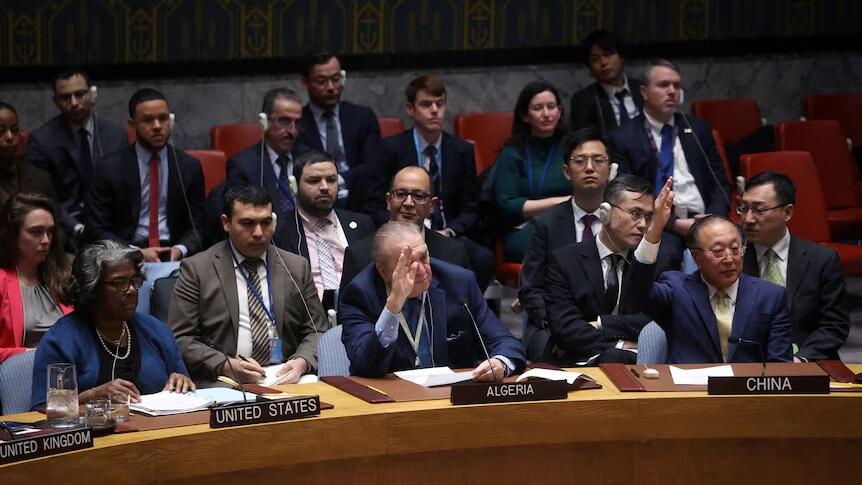
In a Monday vote, the United Nations Security Council (UNSC) adopted for the first time a resolution that calls for an immediate ceasefire in Gaza. It was put forward by the council’s non-permanent members, and fourteen countries backed the resolution, while the US abstained.

The resolution “demands an immediate ceasefire for the month of Ramadan respected by all parties leading to a permanent sustainable ceasefire, and also demands the immediate and unconditional release of all hostages.”

Via Reuters

The language was reportedly meticulously crafted towards avoiding a Washington veto, which occurred in several prior attempted ceasefire votes. The US has thus far vetoed no less that four previous drafts. However, last Friday saw Russia and China veto a draft resolution, as they charged that the language essentially allowed a greenlight for Israel to go into Rafah.

The Monday resolution was brought forward by the following non-permanent members of the security council: Algeria, Ecuador, Guyana, Japan, Malta, Mozambique, Sierra Leone, Slovenia, South Korea and Switzerland. It also expressed concern “about the catastrophic humanitarian situation in the Gaza Strip” and condemned acts of terrorism and hostage-taking, but fell short of identifying Hamas by name.

On the question of the controversial move by the US to not veto it even though the Biden admin wanted to see specific language condemning Hamas, Al Jazeera writes:

This time, the US let this pass; they negotiated it, they tried to change it a bit, and they were not happy with the fact that it did not condemn Hamas.

Two diplomatic sources said that un the run-up to the vote, the US was proposing its own amendment to put in a line condemning Hamas, but they decided not to.

This illustrates that the Biden administration finds itself more and more on the defensive regarding Israel’s growing international isolation, after the reported Palestinian death toll has soared well past 30,000.

The French ambassador to the UN, Nicolas de Riviere, hailed the resolution’s adoption as showing the UNSC can “still act when all of its members make the necessary effort to discharge their mandate.” He told the session: “The Security Council’s silence on Gaza was becoming deafening, it is high time now for the council to finally contribute to finding a solution.”

China too took the opportunity to chastise Washington: “After repeated vetoes of the council’s actions, the United States finally decided to stop obstructing the council’s demands for an immediate ceasefire. Despite all this, the US still tried to find all kinds of excuses and made accusations against China,” China’s envoy Zhang Jun said. And Russia said it is an important “vote in favor of peace.”

Israel is not happy, also seeing in this an example of the Biden White House essentially caving to pro-Palestinian demands. Later in the morning on Monday it is being widely reported that PM Netanyahu has halted a planned visit to Washington by an Israeli delegation. The two allies were expected to discuss current tensions surrounding a Rafah ground offensive at the White House.

“The delegation, originally travelling to the US at the invitation of President Joe Biden’s White House, was meant to meet with US officials on Israel’s planned invasion of Rafah,” regional media details. The White House in response said it is “very disappointed that the Israelis won’t be coming” while also stressing official US policy toward Israel hasn’t changed despite the passage of the UN resolution.

Netanyahu’s office explained the drastic move thusly, “The US retreated from its consistent position in the Security Council linking a ceasefire with the release of the hostages.”

Tyler Durden
Mon, 03/25/2024 – 20:00

via ZeroHedge News https://ift.tt/xKCPZaR Tyler Durden

From Riot To Insurrection To Terrorism: January 6th Continues To Be A Tragedy In The Eye Of The Beholder

From Riot To Insurrection To Terrorism: January 6th Continues To Be A Tragedy In The Eye Of The Beholder

Authored by Jonathan Turley,

For years, I have maintained that January 6th was a disgraceful riot but not an insurrection.

That issue came to a head with the litigation over disqualifying former president Donald Trump and similar calls to block dozens of Republican incumbents from ballots.

Now, the protest that became a riot has been elevated from an insurrection to a terrorist attack. 

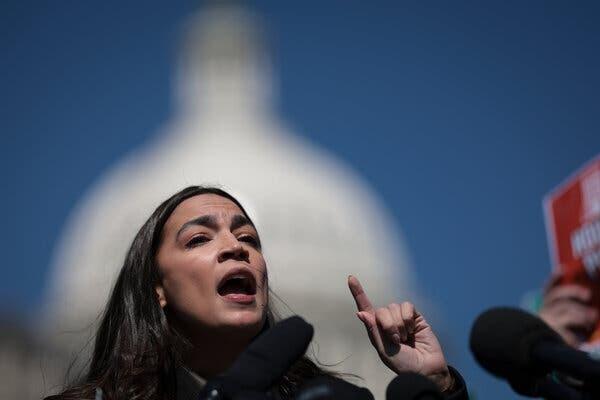
Rep. Alexandria Ocasio-Cortez (D-NY) and other democrats are using the description despite no one being charged with insurrection or terrorism.

On Sunday, Ocasio-Cortez declared to CNN host Jake Tapper that “We’re talking about an individual who ordered essentially a terrorist attack on the Capital of the United States in order to retain power.”

In fairness to Ocasio-Cortez, she is not alone in such characterizations.

For example, many of us were surprised when FBI Director Christopher Wray condemned the January riot at the U.S. Capitol as “domestic terrorism.” From a strictly legal basis, it was wildly inaccurate, in my view.

Liberal publications like Politico have railed against the Justice Department for not charging terrorism. That has been supported by some law professors.

Those charged for their role in the attack that day are largely facing trespass and other less serious charges — rather than insurrection or sedition. While the FBI launched a massive national investigation, it did not find evidence of an insurrection. While a few were charged with seditious conspiracy, no one was charged with insurrection. Trump has never been charged with either incitement or insurrection.

The media has fueled these claims. One year after the riot, CBS News mostly downplayed and ignored the result of its own poll showing that 76 percent viewed it for what it was, as a “protest gone too far.”

They argue that this riot could simply be treated as “calculated to influence or affect the conduct of government by intimidation or coercion, or to retaliate against government conduct.” However, so could other protests that result in property damage and criminal acts.  We have seen other legislative proceedings shutdown by protesters with members removed from the floor. The question is where to draw the line to avoid the arbitrary classification of some protests as terrorism and others as unlawful access or trespass.

Nancy Pelosi called protesters at her home Russian plants. Politicians called a protest on the Tennessee House floor “an insurrection.” Such rhetoric excess easily inflames the public, but it creates lasting erroneous views of the law. That in turn can pose a real threat to free speech as the line between demonstrations and terrorism are blurred.

Ocasio-Cortez’s view of what constitutes the crime of terrorism is dubious for many, particularly after she declared that racketeering is not a crime.

However, there is pressure to ramp up rhetoric as we approach the 2024 elections.

To start to call opponents or critics terrorists has long been a problem on both ends of the political spectrum.

Tyler Durden
Mon, 03/25/2024 – 19:40

via ZeroHedge News https://ift.tt/vx0IOkz Tyler Durden

“It’s A Far Deeper Recession Than Publicized…” Dallas Fed Manufacturing Survey Screams Stagflation

“It’s A Far Deeper Recession Than Publicized…” Dallas Fed Manufacturing Survey Screams Stagflation

“Many good things may happen, but the actual occurrence remains to be seen…”

That’s about as rosy a picture as one could glean from the respondents to today’s Dallas Fed Manufacturing survey.

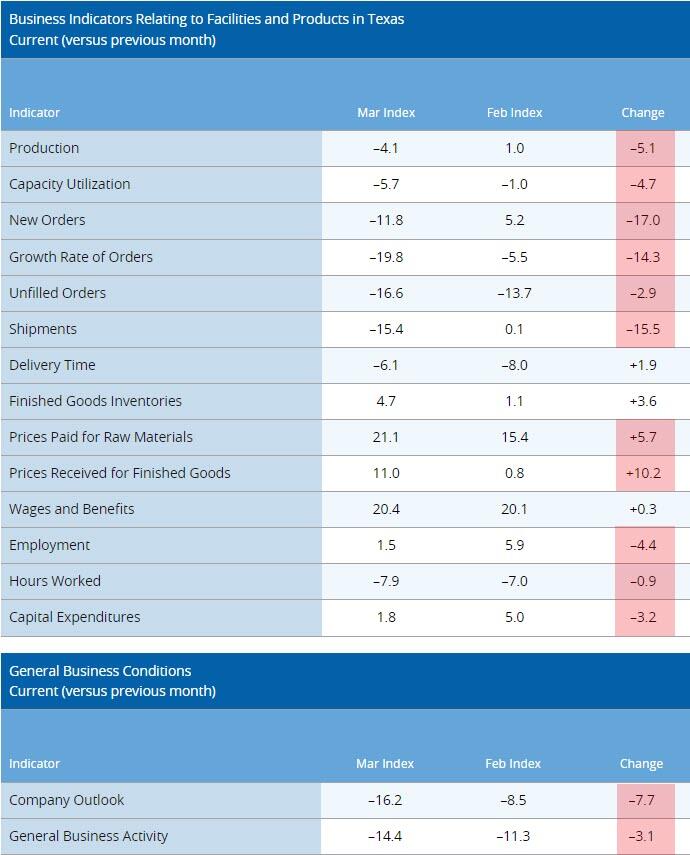
Against expectations of a small improvement from -11.3 to -10.0, the headline sentiment gauge dropped to -14.4 (the lowest end of analysts’ forecasts).

Furthermore, the production index, a key measure of state manufacturing conditions, fell five points to -4.1, a reading that suggests a slight decline in output month over month.

Other measures of manufacturing activity also indicated declines this month.

The new orders index – a key measure of demand – dropped 17 points to -11.8 after briefly turning positive last month.

The capacity utilization index edged down five points to -5.7, and the shipments index plunged from 0.1 to -15.4.

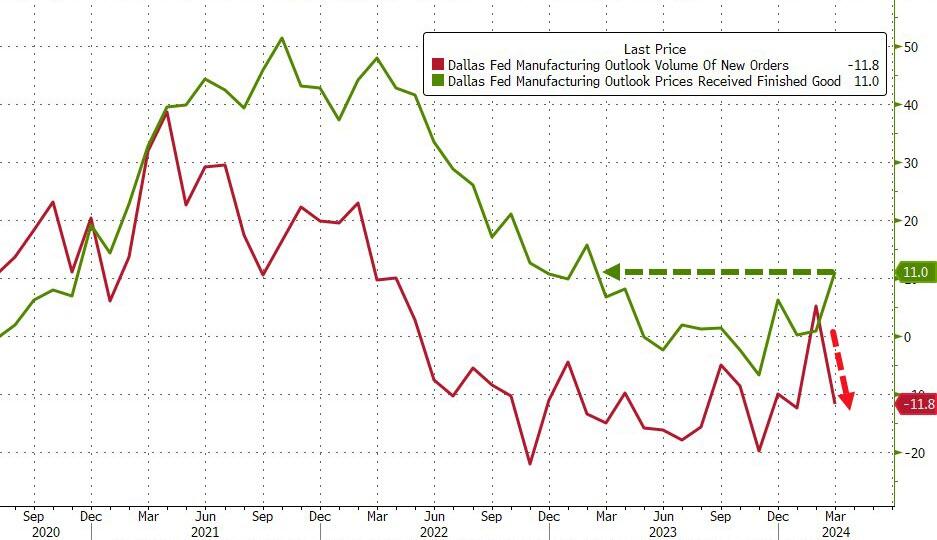
The decline in new orders came alongside a surge in prices as raw materials costs rose to 13-month highs…

Source: Bloomberg

That has the stench of stagflation lathered all over it.

It’s notr a pretty picture at all under the hood…

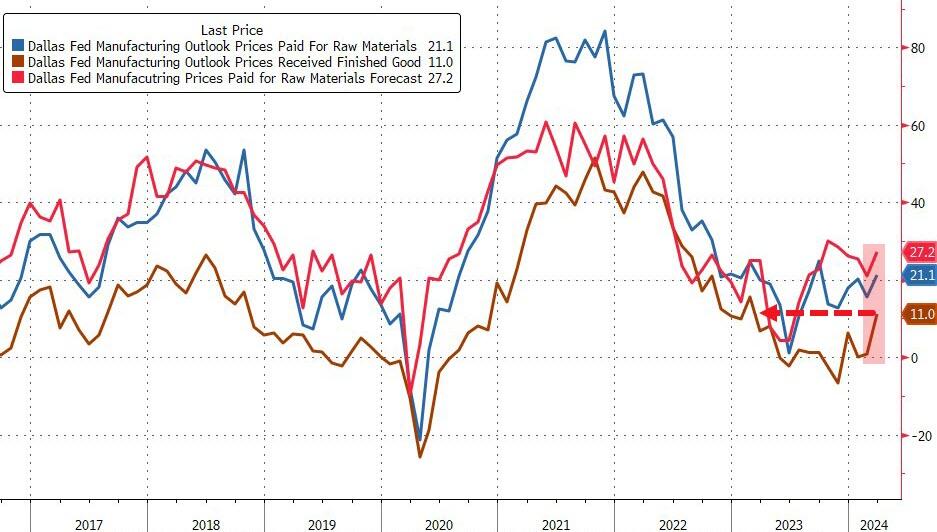
And worse still, the prices passed on to end-users is rising and expectations for future price-hikes are also rising…

Source: Bloomberg

But it was the respondents comments that perhaps signal the reality that so many Americans are facing…

There’s a lot of uncertainty:

  • Election, energy and interest rate uncertainty makes business planning difficult.

  • We kept thinking orders would pick up in the first quarter, but they have not. In fact, they’ve gotten even fewer and farther apart. Is it election uncertainly, a lack of peace overseas, money still being too expensive, or is it just a wet blanket over the entire economy? We don’t know, but we’re anxious to get some momentum going into the second half of the year.

  • Will the consumer continue to spend enough to promote growth? This is the question I cannot answer confidently.

  • We are seeing general business activity slowing and competition increasing. We generally see this trend as business slows and our competitors become more hungry.

But some are more vocal about the real state of the union…

  • Only time will tell the true underlying health of the labor market. While there are no disclosures we’re in a recession, ask any manufacturer on the globe and they will tell you we are deep into it. The backbone manufacturing of this country isn’t looking good at all. What is clear is that economic risks abound, and a soft landing is far from the truth out here. I have never seen it this bad in the capital equipment industry in the last 30 years.

  • A business is only as good as its customers’ business and is completely dependent upon its customers’ demand – and demand is weak. It’s a far stronger, deeper recession than publicized.

And finally, a direct shot at the Democratic Party agenda:

  • Political discussions about taxes are extremely dishonest, and future proposed increases to taxes will further reduce U.S. manufacturing competitiveness globally. I find it very insulting and disingenuous when medium-sized companies are called out as not paying “our fair share” of taxes. Currently, if you look at our total tax paid versus our total profit, we are taxed at over 60 percent as a medium-sized manufacturing company. We can’t expand employment, technology and innovation to compete with China with higher taxes.

But, hey Joe, keep on telling Americans just how good they’ve got it!! See how that’s working out for you…

Can the Democrats really gaslight their way to getting re-elected… again? With a little help from Powell, maybe.

Tyler Durden
Mon, 03/25/2024 – 19:20

via ZeroHedge News https://ift.tt/kuAHDK9 Tyler Durden

Will DEI End America… Or America End DEI?

Will DEI End America… Or America End DEI?

Authored by Victor Davis Hanson via American Greatness,

At the nexus of most of America’s current crises, the diversity/equity/inclusion dogma can be found. The southern border has been destroyed because the Democratic Party wanted the poor of the southern hemisphere to be counted in the census, to vote if possible in poorly audited mail-in elections, and to build upon constituencies that demand government help. Opposition to such cynicism and the de facto destruction of enforcement of U.S. immigration law is written off as “racism,” “nativism,” and “xenophobia.”

The military is short more than 40,000 soldiers. The Pentagon may fault youth gangs, drug use, or a tight labor market. But the real shortfall is mostly due inordinately to reluctant white males who have been smeared by some of the military elite as suspected “white supremacists,” despite dying at twice their demographics in Iraq and Afghanistan. And they are now passing on joining up despite their families’ often multigenerational combat service.

The nexus between critical race theory and critical legal theory has been, inter alia, defunding the police, Soros-funded district attorneys exempting criminals from punishment, the legitimization of mass looting, squatters’ rights, and general lawlessness across big-city America.

The recent epidemic of anti-Semitism was in part birthed by woke/DEI faculty and students on elite campuses, who declared Hamas a victim of “white settler” victimizing Israel and thus contextualized their Jewish hatred by claiming that as “victims,” they cannot be bigots.

There is a historic, malevolent role of states adjudicating political purity, substituting racial, sex, class, and tribal criteria for meritocracy.

They define success or failure not based on actual outcomes but on the degree of orthodox zealotry. Once governments enter that realm of the surreal, the result is always an utter disaster.

After a series of disastrous military catastrophes in 1941 and 1942, Soviet strongman and arch-communist Joseph Stalin ended the Soviet commissar system in October 1942. He reversed course to give absolute tactical authority to his ground commanders rather than to the communist overseers, as was customary.

Stalin really had no choice since Marxist-Leninist ideology overriding military logic and efficacy had ensured that the Soviet Union was surprised by a massive Nazi invasion in June 1941. The Russians in the first 12 months of war subsequently lost nearly 5 million in vast encirclements—largely because foolhardy, ideologically driven directives curtailed the generals’ operational control of the army. After the commissars were disbanded and commanders given greater autonomy, the landmark victory at Stalingrad followed, and with it, the rebound of the Red Army.

One reason why the dictator Napoleon ran wild in Europe for nearly 18 years was that his marshals of France were neither selected only by the old Bourbon standards of aristocratic birth and wealth nor by new ideological revolutionary criteria, but by more meritocratic means than those of his rival nations.

Mao’s decade-long cultural revolution (1966–76) ruined China. It was predicated on Maoist revolutionary dogma overruling economic, social, cultural, and military realities. An entire meritocracy was deemed corrupted by the West and reactionary—and thus either liquidated or rendered inert.

In their place, incompetent zealots competed to destroy all prior standards as “bourgeois” and “counter-revolutionary.” It is no surprise that the current “people’s liberation army,” for all its talk of communist dogma, does not function entirely on Mao’s principles.

Muammar Gaddafi wrecked Libya by reordering an once oil-rich nation on Gaddafi’s crackpot rules of his “Green Book.” At times, the unhinged ideologue, in lunatic fashion, required all Libyans to raise chickens or to destroy all the violins in the nation. I once asked a Libyan why the oil-rich country appeared to me utterly wrecked, and he answered, “We first hire our first cousins—and usually the worst.”

There were many reasons why the King-Cotton, slave-owning Old South lagged far behind the North in population, productivity, and infrastructure. But the chief factor was the capital and effort invested in the amoral as well as uneconomic institution of slavery.

After the Civil War, persistent segregationist ideology demanded vast amounts of time, labor, and money in defining race down to the “one drop” rule—while establishing a labyrinth of segregation laws and refusing to draw on the talents of millions of black citizens.

Yet here we are in 2024, ignoring the baleful past as the woke diversity/equity/inclusion commissars war on merit. Institutions from United Airlines and the Federal Aviation Administration to the Pentagon and elite universities have been reformulated in the post-George Floyd woke hysteria. And to the delight of competitors and enemies abroad, they are now using criteria other than merit to hire, promote, evaluate, and retain.

The greatest problem historically with hiring and promoting based on DEI-like dogma is that anti-meritocratic criteria mark the beginning, not the end, of eroding vital standards. If one does not qualify for a position or slot by accepted standards, then a series of further remedial interventions are needed to sustain the woke project, from providing exceptions and exemptions, changing rules and requirements, and misleading the nation that a more “diverse” math, or more “inclusive” engineering, or more “equity” in chemistry can supplant mastery of critical knowledge that transcends gender, race, or ideology.

But planes either fly or crash due to proper operation, not the appearance or politics of the operator. All soldiers either hit or miss targets, and engineers either make bridges that stand or collapse on the basis of mastering ancient scientific canons and acquired skills, training, and aptitude that have nothing to do with superficial appearance, or tribal affinities, or religion, or doctrine.

The common denominator of critical theories, from critical legal theory to critical social theory, is toxic nihilism, which claims there are no absolute standards, only arbitrary rules and regulations set up by a privileged, powerful class to exploit “the other.” Yet, not punishing looting has nothing to do with race or class, but everything with corroding timeless deterrence that always has and always will prevent the bullying strong from preying on the weak and vulnerable.

Defunding the police sent a message to any criminally minded that in a cost-to-benefit risk assessment, the odds were now on the side of the criminal not being caught for his crimes—and so crime soared and the vulnerable of the inner city became easy prey.

Another danger of DEI is the subordination of the individual to the collective. We are currently witnessing an epidemic of DEI racism in which commissars talk nonstop of white supremacy/rage/privilege without any notion of enormous differences among 230 million individual Polish-, Greek-, Dutch-, Basque-, or Armenian-Americans, or the class, political, and cultural abyss that separates those in Martha’s Vineyard from their antitheses in East Palestine, Ohio.

Moreover, what is “whiteness” in an increasingly intermarried and multiracial society? Oddly, something akin to the old one-drop rules of the South is now updated to determine victims and victimizers—to the point of absurdity. Who is white—someone one half-Irish, one half Mexican—who is black—someone one quarter Jamaican, three-quarters German? To find answers, DEI czars must look to paradigms of the racist past for answers.

Moreover, once any group is exempted and not held to collective standards by virtue of its superficial appearance, then the nation naturally witnesses an increase in racism and bigotry—on the theory that it is not racist to racially stigmatize a supposedly “racist” collective. And we are already seeing an uptake in racially motivated interracial violence as criminals interpret the trickle-down theory of reparatory justice as providing exemption for opportunistic violence.

Throughout history, it has always been the most mediocre and opportunistic would-be commissars that appear to come forth when meritocracy vanishes. If there was not a Harvard President and plagiarist like Claudine Gay to trumpet and leverage her DEI credentials, she would have to be invented. If there was not a brilliant, non-DEI economist like Roland Fryer to be hounded and punished by her, he would have to be invented.

The DEI conglomerate has little idea of the landmines it is planting daily by reducing differences in talent, character, and morality into a boring blueprint of racial stereotypes. Punctuality is now “white time” and supposedly pernicious. The SAT, designed to give the less privileged a meritocratic pathway to college admissions, is deemed racist and either discarded or warped.

In its absence, universities are quietly now “reimaging” their curriculum to make it more “relevant to today’s students” and, of course, “more inclusive and more diverse.” Translated from the language of Oceania, that means after admitting tens of thousands to the nation’s elite schools who did not meet the universities’ own prior standards that they themselves once established and apprehensive about terminating such students, higher education is now euphemistically lowering the work load in classes, introducing new less rigorous classes, and inflating grades. In their virtue-signaling, they have little clue that inevitably their once prized and supposedly prestigious degrees will be rendered less valued as employers discover a Harvard, Stanford, or Princeton BA or BS is not a guarantee of academic excellence or mastery of vital skill sets.

Toxic tribalism is also, unfortunately, like nuclear proliferation. Once one group goes full tribal, others may as well, if for no reason than their own self-survival in a balkanized, Hobbesian world of bellum omnium contra omnes. If our popular culture is to be defined by the racist hosts of The View, or the racist anchorwoman Joy Reid, or members of the Congressman “Squad,” or entire studies departments in our universities that constantly bleat out the racialist mantra, then logically one of two developments will follow.

  • One, so-called whites in minority-majority states like California will copy the tribal affinities of others that transcend their class and cultural differences, again in response to other blocs that do the same for careerist advantage and perceived survival.

  • Or two, racism will be redefined empirically so that any careerist elites who espouse ad nauseam racial chauvinism—on the assurance they cannot be deemed racists—will be discredited and exposed for what they’ve become, and thus the content of our character will triumph over the color of our skin.

Finally, do we ever ask how a country of immigrants like the United States – vastly smaller than India and China, less materially rich than the vast expanse of Russia, without the strategic geography of the Middle East, or without the long investment and infrastructure of Europe – emerged out of nowhere to dominate the world economically, financially, militarily, and educationally for nearly two centuries?

The answer is easy: it was the most meritocratic land of opportunity in the world, where millions emigrated (legally) on the assurance that their class, politics, religion, ethnicity, and yes, race, would be far less a drawback than anywhere else in the world.

The degree to which the U.S. survives DEI depends on either how quickly it is discarded or whether America’s existential enemies in the Middle East, China, Russia, and Iran have even worse DEI-anti-meritocratic criteria of their own in hiring, promotion, and admissions—whether defined by institutionalized hatred of the West, or loyalty oaths to the communist party, or demonstrable obsequiousness to the Putin regime, or lethal religious intolerance.

Unfortunately, our illiberal enemies, China especially, at least in matters of money and arms, are now emulating the meritocracy of the old America. Meanwhile, we are hellbent on following their former destructive habits of using politics instead of merit to staff our universities, government, corporations, and military.

Our future hinges on how quickly we discard DEI orthodoxy and simply make empirical decisions to stop printing money, deter enemies abroad, enforce our laws, punish criminals, secure the border, reboot the military, regain energy independence, and judge citizens on their character and talent and not their appearance and politics—at least if it is not already too late.

Tyler Durden
Mon, 03/25/2024 – 19:00

via ZeroHedge News https://ift.tt/zaZfSHk Tyler Durden

Another Silly Progressive Idea: New Green Deal For Public Housing

Another Silly Progressive Idea: New Green Deal For Public Housing

Authored by Mike Shedlock via MishTalk.com,

Progressive nonsense is incessant. My hoot of the day is AOC and Bernie Sanders have teamed up for a new green housing deal. I explain where we are and what’s on deck.

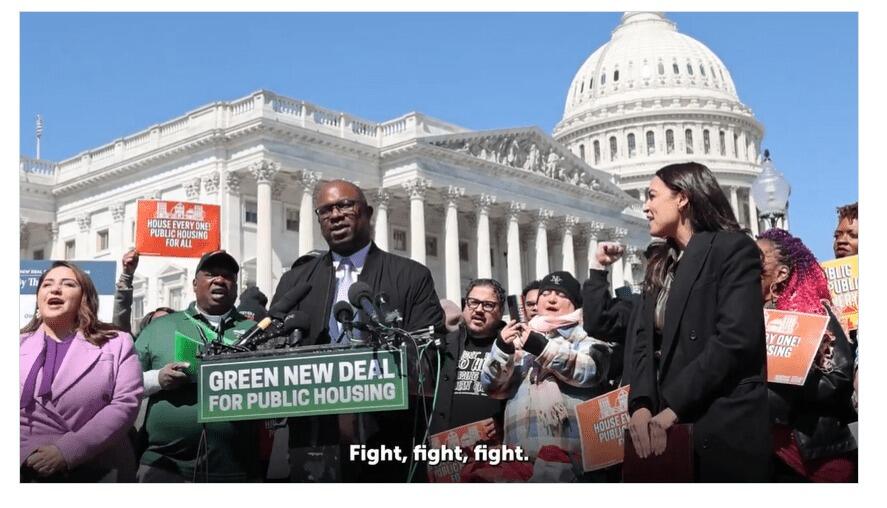
Common Dreams is out with another economically insane idea. Please consider AOC, Sanders Renew Fight for Green New Deal for Public Housing.

Backed by dozens of progressive groups and congressional Democrats, U.S. Rep. Alexandria Ocasio-Cortez and Sen. Bernie Sanders on Thursday reintroduced legislation designed to tackle both the affordable housing crisis and the climate emergency.

The New York Democrat and Vermont Independent are leading the renewed fight for the Green New Deal for Public Housing Act, which would invest up to $234 billion over a decade into “weatherizing, electrifying, and modernizing our public housing so that it may serve as a model of efficiency, sustainability, and resiliency for the rest of the nation.”

Joining the pair in backing the bill are 55 other House Democrats and Sens. Richard Blumenthal (D-Conn.), Cory Booker (D-N.J.), Ed Markey (D-Mass.), Jeff Merkley (D-Ore.), Alex Padilla (D-Calif.), Elizabeth Warren (D-Mass.), and Peter Welch (D-Vt.).

Markey, who has spearheaded the broader battle for a Green New Deal with Ocasio-Cortez, said that “in the five years since its introduction, Green New Deal advocacy has catapulted environmental justice to the top of the national agenda, helped deliver historic victories, and charted a course for a better future.”

Green Housing Deal Summary

  • Expand federal programs to provide residents with meaningful work investing in their communities, to own and operate resident businesses, to move toward financial independence, and to participate in the management of public housing;

  • Expand resident councils so that public housing residents have a seat at the table for important decisions regarding their homes; and

  • Replenish the public housing capital backlog and repeal the Faircloth Amendment, which limits the construction of new public housing developments.

  • The legislation would also create two grant programs for deep energy retrofits; community workforce development; upgrades to energy efficiency, building electrification, and water quality; community renewable energy generation; recycling; resiliency and sustainability; and climate adaptation and emergency disaster response.

How Much Would This Cost?

AOC says the bill would invest up to $234 billion over a decade into “weatherizing, electrifying, and modernizing our public housing”.

The real goal is everyone has a right to affordable housing.

Don’t kid yourself, the whole policy would cost many trillions of dollars of which $234 billion is not even a down payment.

Once you issue guarantees with government involved costs soar out of sight.

Even most Democrats recognize this. The bill is so idiotic that it only gathered support 7 Senate advocates and 42 House advocates.

Faircloth Amendment

The real threat is not that the above insanity passes in one fell swoop, but that its starts with a repeal of the Faircloth Amendment, which limits the construction of new public housing developments.

The Faircloth Amendment was a provision of the Quality Housing and Work Responsibility Act of 1998. It amended the Housing Act of 1937, which authorized federal financial assistance to help states and housing authorities provide housing for low-income people. The amendment says, “a public housing agency may not use any of the amounts allocated for the agency from the Capital Fund or Operating Fund for the purpose of constructing any public housing unit, if such construction would result in a net increase from the number of public housing units owned, assisted, or operated by the public housing agency on October 1, 1999, including any public housing units demolished as part of any revitalization effort.” In other words, the amendment prevents housing authorities from ever maintaining more public housing units than they had in 1999.

The amendment was named for its sponsor, Republican Senator Lauch Faircloth, a successful hog farmer from South Carolina who served one term in the Senate, from 1993-1999.

The Faircloth Amendment, and the rest of the Quality Housing and Work Responsibility Act, were enacted amid a broader movement for welfare reform that was pushed by Congressional Republicans and co-signed by the Clinton White House in the 1990s. The movement was grounded in a belief that public assistance programs were detrimental to people’s ability to achieve economic independence, and that welfare recipients themselves were either overly dependent on the government or outright abusers of taxpayer money. Most lawmakers saw public housing complexes as crime-infested, unhealthy places that kept people trapped in poverty. Running against Clinton in 1996, former Republican Senator Bob Dole, said that public housing was “one of the last bastions of socialism in the world,” and called for its elimination.

“It was essentially viewed as a failed program,” says Susan J. Popkin, director of the Urban Institute’s Housing Opportunities and Services Together (HOST) Initiative and author of a series of books about public housing in Chicago and around the country.

Since the 1980s, the restriction of federal funding has had a much bigger impact on public housing than the Faircloth Amendment. The National Low Income Housing Coalition estimates that the U.S. loses around 10,000 public-housing units a year to demolition or disposition because of accumulated maintenance issues.

As Jenny Schuetz argued in her recent post on the Brookings Institution website, the Faircloth Amendment is only a paper obstacle to an expansion of public housing. Other obstacles include the availability of land zoning rules that prevent the development of any new housing in many areas, and existing housing authorities’ relative ineffectiveness as real estate developers, she wrote.

But the biggest challenge to expanding public housing is a lack of federal funding. The Green New Deal for Public Housing, a proposal introduced in Congress in 2019 by Ocasio-Cortez and Senator Bernie Sanders, calls for the federal government to spend $180 billion repairing and retrofitting every existing public housing unit in the U.S. Restoring the 200,000 public-housing units that have been lost would require billions in federal spending and an abrupt departure from the trend of pulling away from publicly owned housing, even without repealing the Faircloth Amendment. Politically, though, repealing the amendment could be powerfully symbolic. As Ross Barkan wrote in the New York Times, “repeal would be a vital signal that America is back in the business of expanding public housing.”

Urban Institute Research

The Faircloth Amendment is one the best amendments in history. Thank you Senator Lauch Faircloth!

Yet, the amendment is somewhat symbolic.

According to research from the Urban Institute, there were 2,156,625 people living in 1,067,387 public housing units as of 2016, and Popkin says the U.S. has around 200,000 fewer public-housing units than it did in the mid-1990s. Many housing authorities have un-funded maintenance and rehabilitation needs, including the New York City Housing Authority, which needs to spend an estimated $45.2 billion in the next twenty years just to keep its existing units habitable. 

The Philadelphia Housing Authority is limited to 20,133 units but only owns around 14,000 units. The Chicago Housing Authority is limited to 35,453 units but maintains fewer than 21,000. The Housing Authority of the City of Atlanta owns 3,500 units out of an allowed 11,965.

Government is the Problem

We do not need the government back in the public housing business. The costs of government programs soars out of sight.

New York with its damn rent control legislation needs to spend $45.2 billion in the next twenty years just to keep its existing units habitable. 

Let New York and Chicago fix their own self-made problems. Federal and sate governments are the problem, not the solution to any alleged housing crisis.

Congratulations to NY, IL, and CA

Meanwhile, congratulations are owed to anyone voting with their feet to get out of socialist hellholes.

For discussion, please see Congratulations to NY, IL, LA, and CA for Losing the Most Population

Absolute Basis Losers

  • New York: -631,104

  • California: -573,019

  • Illinois: -263,780

Tyler Durden
Mon, 03/25/2024 – 18:20

via ZeroHedge News https://ift.tt/aFHi39r Tyler Durden

Former Defense Secretary Says Jan. 6 Committee Issued “Latent Threat” To Keep Quiet

Former Defense Secretary Says Jan. 6 Committee Issued “Latent Threat” To Keep Quiet

Authored by Jack Phillips via The Epoch Times (emphasis ours),

A former Trump secretary of defense revealed that he was pressured by the House Jan. 6 committee into staying silent about claims that then-President Donald Trump authorized the deployment of National Guard troops before the breach at the U.S. Capitol on Jan. 6, 2021.

Acting U.S. Secretary of Defense Christopher Miller speaks during a meeting at the Pentagon, in Arlington, Va., on Nov. 13, 2020. (Alex Wong/Getty Images)

Speaking to the Daily Mail on March 23, former acting Secretary of Defense Chris Miller, who was only on the job for about two months, said that members of the Democrat-led panel used “aggressive” tactics after he spoke to several media outlets about the Trump authorization. The final report from the Jan. 6 subcommittee, which was dissolved after the current Congress took over, claimed that President Trump did not authorize the deployment of the National Guard.

In 2022, Mr. Miller appeared on a Fox News segment along with former Trump national security official Kash Patel in an interview that he said “hit a nerve.”

“The two of us were on [the Fox News show] and the next day my lawyer got a call from the Jan. 6 staff director. … I forgot exactly who it was, but basically saying, very legalistic, ‘Well, if your client has additional information he wants to share, we’d be happy to have him re-interviewed,’” Mr. Miller told the Mail.

It was more that latent threat of, ‘If you want to keep going on TV, we’re gonna drag you in here again for additional hours of hearing testimony.’ So that was the nature of that whole thing. It was the latent threat of the government continuing to intrude into my life.”

The former defense secretary added that he did not have the “resources to continue the battle” with the Jan. 6 committee and didn’t want to face any more depositions. Instead, he kept to himself and did not discuss how the panel allegedly targeted him.

I didn’t talk about it with anybody else because of the fear or the concern,” he told the outlet. “I wasn’t communicating with anybody, because I knew any interactions I had on it would result in me having to … acknowledge that I’d been in communications with other people. And then that just sort of opens up a whole can of worms with the investigators that I just didn’t want to do.”

The former secretary said, “It was much easier just to not be involved with anybody or talk to anybody about this stuff because it was going to cause conflict and difficulties with the investigating team.”

Mr. Miller added that it was clear that former Rep. Liz Cheney (R-Wyo.) was running the Jan. 6 panel even though she was one of only two Republicans on the committee. He said that he believed that Ms. Cheney, who lost the 2022 Wyoming Republican primary to the pro-Trump Harriet Hageman, was not happy with the “optics” of Mr. Miller’s appearing on television and going against the panel’s anti-Trump narrative.

Ms. Cheney and other members of the Jan. 6 panel will likely attempt to downplay his claims about the National Guard authorization, Mr. Miller said, adding that the committee was engaging in “political theater.”

But his recent remarks contradicted statements he made in 2022 when he told the Jan. 6 panel that President Trump did not order the 10,000 National Guard troops before Jan. 6.

I was never given any direction or order or knew of any plans of that nature,” Mr. Miller said at the time. “There was no order from the president.

“We obviously had plans for activating more folks, but that was not anything more than contingency planning. There was no official message traffic or anything of that nature.”

The Epoch Times contacted Ms. Cheney for comment on March 23 but received no response by press time.

New Report Released

The former acting secretary of defense’s claims come as House Republicans released a transcript that the Jan. 6 panel kept hidden from the public.

Anthony Ornato, who was the White House deputy chief of staff during the breach, told the committee that he overheard Mark Meadows, who was then chief of staff, on the phone with Washington Mayor Muriel Bowser. According to the transcript, Mr. Meadows wanted to ensure Ms. Bowser “had everything she needed.”

Mr. Meadows “wanted to know if she [needed] any more guardsmen,” Mr. Ornato testified, according to the transcript.

“And I remember the number 10,000 coming up of, ‘The president wants to make sure that you have enough,’“ he said. ”You know, ‘He is willing to ask for 10,000.’ I remember that number. Now that you said it, it reminded me of it.”

But the committee said in its final report that it “found no evidence” supporting the idea that President Trump ordered 10,000 National Guard troops to be ready for Jan. 6.

“The former J6 Select Committee apparently withheld Mr. Ornato’s critical witness testimony from the American people because it contradicted their pre-determined narrative,” Rep. Barry Loudermilk (R-Ga.), who released the transcript, said in a statement this month.

After the report was released, Ms. Cheney wrote that people should read the committee’s report, which included the 2022 Miller interview in which he denied that President Trump ordered the troops.

Zachary Stieber contributed to this report.

Tyler Durden
Mon, 03/25/2024 – 17:40

via ZeroHedge News https://ift.tt/Ca4q7G2 Tyler Durden

Diddy Do It? Sean Combs Homes In LA, Miami Simultaneously Raided By Homeland Security

Diddy Do It? Sean Combs Homes In LA, Miami Simultaneously Raided By Homeland Security

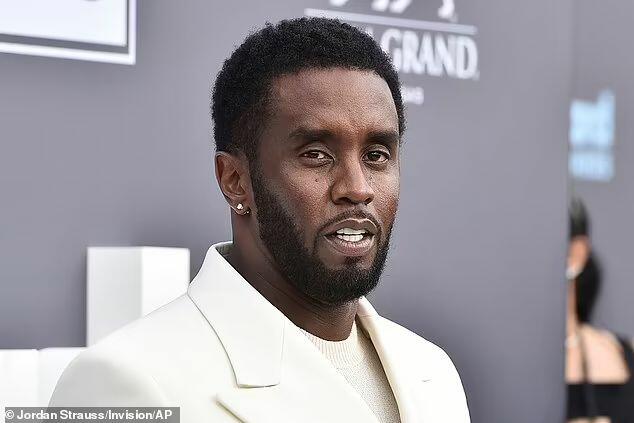
Two homes located in Los Angeles and Miami owned by Sean “Diddy” Combs were raided by Homeland Security Monday in connection with a federal investigation into sex trafficking, sexual assault, and the solicitation and distribution of illegal narcotics and firearms.

In video circulating online, law enforcement officers can be seen walking through the LA home with guns drawn and people being questioned in front of the home. It is unknown if Diddy, 54, was one of them.

The LA raid took place in the lavish Holmby Hills neighborhood. Sources confirmed to TMZ that Homeland Security was “in the middle” or raiding the musician’s properties.

Combs has been accused of several crimes, including one lodged by an anonymous woman who claims that he and two friends sexually assaulted her when she was 17. Combs has filed a motion to have the case thrown out.

Three other women have accused Combs of sexual assault after his ex, a singer known by Cassie, sued him last November. The most recent accuser claims that after being supplied with “copious amounts of drugs and alcohol,” Diddy and two pals took turns violently raping the teen as she drifted in and out of consciousness, leaving her in so much pain that she could barely stand – nor remember how she got home, the Daily Mail reports, citing her complaint.

In harrowing detail, she described in her suit how Combs allegedly demanded that she pinch his nipples throughout the attack to help him ‘get off,’ before pulling up a chair to watch her being raped and choked by his associates.

She says she suffered in silence for 20 years until the R&B singer Cassie sued Combs, her former mentor and ex-boyfriend, for allegedly subjecting her to savage beatings, drug-addled hotel orgies and rape. -Daily Mail

Cassie, meanwhile, said that “Combs physically abused her and forced her to have sex with male prostitutes while he masturbated and recorded the encounters,” according to NBC News. Her case was settled the day after it was filed.

In February, Combs was accused of sexual misconduct by a male music producer, Rodley “Lil Rod” Jones, who sued him over allegations that “Combs grabbed his genitals without consent, and that he also tried to “groom” Mr. Jones into having sex with another man, telling him it was “a normal practice in the music industry,” the NY Times reported last month.

According to Mr. Jones’s complaint, at a listening party in July 2023 at Mr. Combs’s home in California, he was forced to drink shots of tequila laced with drugs, though the legal papers do not specify who offered him the shots or how he was forced. In the suit, Mr. Jones says that after he had the drink, he passed out and awoke “at 4 a.m. the following morning naked with a sex worker sleeping next to him.”

According to the suit, Mr. Combs also forced Mr. Jones to “solicit sex workers and perform sex acts to the pleasure of Mr. Combs.” To induce him, Mr. Jones says, Mr. Combs offered him money and also threatened him with violence.

Combs has denied the claims.

Meanwhile…

Shot:

Chaser:

Tyler Durden
Mon, 03/25/2024 – 17:20

via ZeroHedge News https://ift.tt/7rtDqbi Tyler Durden

The Norwegian Illusion: EVs Are Not More Energy Efficient

The Norwegian Illusion: EVs Are Not More Energy Efficient

Via Goehring & Rozencwajg,

“Electric vehicles (EVs) are pilling up on lots across the country as the green revolution hits a speed bump, data show.”
~ USA Today, November 14, 2023

“Hertz Global Holdings announced Thursday it planned to cut one-third of its global EV fleet over the year. Following the announcement, Hertz CEO Stephen Scherr suggested the road to electrification could be bumpier than anticipated.”
~ Bloomberg, January 11, 2024

Starting mid-point last decade, the investment community became convinced EV adoption would quickly surge.  EV penetrations would become so great that global oil consumption would imminently peak, or so consensus opinion widely believed.   2019 was repeatedly referenced as the year that oil demand would peak and then decline. In retrospect, these concerns were misplaced. Despite the massive COVID-19 disruption,  oil demand in 2024  should reach 103 m b/d – 2.3 m b/d greater than 2019. Undeterred by the surprising surge in demand, many analysts remain convinced that “peak oil demand” is still imminent.  

The investment community’s belief that EVs will displace the internal combustion engine remains as strong as ever.  

We vigorously disagree.

In our last letter, we predicted that global energy demand would consistently exceed expectations for the next twenty years. Never before have so many people been simultaneously in their period of energy-intensive economic development. Our essay focused broadly on total energy demand and specifically avoided oil consumption. Our choice was deliberate: we wanted to highlight the critical drivers of total energy demand and avoid getting distracted by the debate on EV penetration. Today’s essay focuses on oil and explains why we believe demand will surprise the upside for years to come.

Our research shows that EVs will struggle to achieve widespread adoption despite massive subsidies and the growing threat of outright internal combustion engine (ICE) bans. After carefully studying the history of energy, we have yet to find an example where a new technology with inferior energy efficiency has replaced an existing, more efficient one. Despite claims to the contrary, our research suggests EVs are less energy efficient than internal combustion engine automobiles. As a result, they will fail to gain widespread adoption.

Our claim is controversial; most pundits insist EVs are far more efficient. We believe the ICE is clearly the winner once the energetic costs of both the battery and the renewable power required to make “carbon-free” EVs are considered.

Although governments can encourage EVs through either subsidies or ICE bans, these measures will likely fail, as consumers will ultimately refuse to embrace a new technology that sports inferior energy efficiency.  Better examples couldn’t exist than Ford and Hertz dramatically scaling back their EV initiatives due to lower-than-expected consumer interest.

Mitigating carbon emissions is central to the case for electric vehicles. Advocates argue that displacing fossil fuels is essential to curbing global warming. We disagree.   Replacing  ICEs with  EVs will materially increase carbon emissions and may worsen the problem. Manufacturing an electric vehicle consumes far more energy than an ICE. Most of this additional energy is spent mining the materials for and manufacturing an EV’s giant lithium-ion battery. Mining companies use energy-intensive trucks, crushers, and mills to extract each battery’s nickel, cobalt, lithium, and copper. The manufacturing process consumes vast amounts of energy as well. Many analysts eagerly tout the carbon savings from displaced fossil fuels without adequately accounting for the battery’s increased energy consumption. Once these adjustments are made, most, if not all, of the EV’s carbon advantage disappears.

If our models are correct, EVs will fail on two fronts: they are less energy efficient than the ICEs they are trying to replace and their adoption will do little to mitigate carbon emissions.

Policymakers often tout Norway as the ultimate EV success story. Thanks to massive subsidies, EVs made up 80% of all Norwegian new car sales in 2022 and currently account for 20% of the total car fleet. Policymakers hope all developed countries will ultimately adopt Norway’s model. However, upon closer inspection, Norway’s experience does more to warn of EVs’ shortcomings than advocate for their adoption.

The first problem is financial.

The Norwegian government offers consumers massive subsidies to purchase an EV. New vehicles are exempt from several onerous taxes and the 25% VAT. On average, a large new ICE would be subject to $27,000 in various taxes; an equivalent EV would pay none. Next, Norway exempts EVs from any road or ferry tolls and allows them to use bus lanes, offers free parking and charging in municipal areas, and ensures “charging rights” in apartment buildings. Although Norway rolled back some of these operating subsidies starting in 2017, an Oslo resident can still expect these benefits to total $8,000 annually.

Norway is one of the wealthiest countries in the world, with a per capita GDP of $106,000 in 2022. Despite its impressive wealth, the government must still financially incentivize its citizens to purchase EVs.

The benefits are starting to take their toll on Norway’s finances. At nearly $4 billion annually, Norway spends as much on EV subsidies as on total highway and public infrastructure maintenance. The program has also raised significant issues around equality in Norway. EV subsidies favor high-income urban citizens, who take advantage of free tolls, parking, and charging and avoid the onerous tax on larger luxury vehicles. Several populist-leaning political groups in Norway have made so-called “elitist” EV subsidies a focal point of their platform.

Amid growing scrutiny, the government has actively sought to reduce several subsidies. Municipal parking is no longer free, and passengers (although not the vehicles themselves) are subject to certain tolls. The government also introduced a partial purchase tax on new EVs. Proponents have warned that any rollback of subsidies will surely harm EV penetration and offer Sweden as a case study, where, in 2022, the elimination of several subsidies precipitated a 20% drop in EV sales.

More important, EVs in Norway have not affected fossil fuel demand or carbon emissions as expected. Although oil demand and carbon emissions have fallen by 15% since 2010, most of this is unrelated to EV sales. Over the period, total oil demand fell by only 34,000 b/d, with gasoline and diesel making up a mere 10% of the decline. Most of the decline came from heating, lighting, and petrochemical demand, which we estimate collapsed by more than a third. Despite 20% of all vehicles on the road now being electric, Norway’s gasoline and diesel demand fell by a mere 4%.

Our data suggests that Norwegians are reluctant to give up their ICE vehicles, even after purchasing an EV. We calculate that two-thirds of Norway’s EV households own at least one ICE vehicle. From 2010 to 2022, Norway added 550,000 EVs, but the number of ICE vehicles on the road, rather than falling,   increased by 32,630. While the population grew by 11%, the total number of passenger cars grew by 25%. When an EV household prefers to avoid a road or ferry toll, have access to free parking or charging, or avoid congestion by using bus lanes, they use their EV. When they visit their hytte in the mountains, they use their ICE. The impact has been so material that advocates have lobbied for a government-funded ICE scrappage program,- another veiled EV subsidy.

Unsurprisingly, electricity demand has surged  as Norway shifted from fossil fuels to electricity for transportation, heating, and lighting. Since 2010, Norwegian electricity demand rose an impressive  20%. Total primary demand for all forms of energy increased by 5%. The data suggests that a widespread shift to EVs did little to reduce overall energy consumption despite claims they are far more efficient.

The shift from fossil fuels to electricity has reduced Norway’s CO2 by an impressive 16%, an achievement lauded in the press. Far less discussed, however, is how the US lowered its emissions by 16% over the same period, by switching from coal to natural gas in its power generation.

Using Norway as a model for CO2 reduction would be a mistake. Far more than any other country in the world, Norway benefits from its vast hydrological potential which generates nearly 92% of all electricity carbon-free. Therefore, a move from fossil fuels towards electricity will significantly impact Norway’s carbon emissions more than anywhere else on Earth.

Furthermore, Norway imports all domestic EVs. As we discussed, EV manufacturing is incredibly energy-intensive,  mainly to build the battery. In Norway’s case, none of this additional energy is reflected in their domestic demand figures. China manufactures most lithium-ion batteries and 80% of all EVs. Coal accounts for 60% of their total energy supply.

We estimate an average EV consumes 60 MWh to manufacture, of which the battery represents half. Therefore, manufacturing Norway’s 579,000 EVs (all the EVs on the road today in Norway) requires 35 twh, equivalent to 25% of the total annual Norwegian electricity demand. Given that China emits 600 grams of CO2 per kwh (China is where almost all of Noway’s EV batteries are manufactured), we calculate Norway’s EV fleet would emit 21 mm tonnes of CO2. Norway’s gasoline and diesel consumption fell by a meager 3,200 barrels per day or 50 mm gallons per year. Assuming 9 kg of CO2 per gallon of gasoline or diesel, Norway’s entire EV fleet mitigates a mere 450,000 tonnes of CO2 per year, compared with an upfront emission of 21 mm tonnes. In other words, it would take forty-five years of CO2 savings from reduced gasoline and diesel consumption to offset the initial emissions from the manufacturing of the vehicles. Since an EV battery has a useful life of only ten to fifteen years, it is clear that Norway’s EV rollout has increased total lifecycle CO2 emissions dramatically. Incredibly, this is true despite Norway having the lowest carbon hydroelectricity in the world. Even if China were to reach its overly ambitious targets for wind, solar, and nuclear power by 2035, we calculate that the carbon “payback” would still exceed twenty years. Realistically, the only way for EVs to reduce lifecycle carbon emissions would be with a widespread move to carbon-free energy in EV manufacturing. Most EV advocates hope renewable energy will be the solution. Unfortunately, we do not believe this will prove feasible due to their inferior energy efficiency.

Instead of serving as a model, Norway’s program should warn of the unintended consequences of large-scale EV penetration, particularly when consumers purchase an EV in addition to an ICE. Countless articles claim EVs are far more energy efficient than ICE vehicles. Moreover, these authors argue   EVs will be more efficient and more carbon-free once renewables replace coal and natural gas. Our analysis, unpopular and controversial, suggests the opposite.

Most articles list EVs as anywhere between two and three times more energy efficient than the ICEs they replace.  

The basis for this claim is that internal combustion engines are only 40% efficient and that nearly 60% of the energy contained in gasoline or diesel fuel is “wasted,” –mainly in the form of heat and friction. On the other hand, an electric motor transfers nearly 90% of its electrical energy directly to the wheels. The difference leads many to erroneously conclude that an EV is almost three times as “efficient” as an ICE.

This common argument is fundamentally flawed for three reasons.

First, it fails to capture the energy needed to make the battery;

second, it fails to distinguish between thermal and electric energy;

and third, it fails to account for the poor energy efficiency of renewable energy.

An EV uses 32 kWh of electricity per 100 miles traveled. The vehicle’s battery, meanwhile, consumes an incredible 24 MWh in its manufacturing. Assuming a useful life of 120,000 miles, the battery pack consumes 20 kWh per 100 miles traveled, two-thirds as much as the direct electricity itself. Most analysts we have read fail to include this onerous energy burden when touting the EV’s superior efficiency.

Next, most efficiency arguments fail to distinguish between thermal and electrical energy.

While most of us have been taught that energy is fungible, several distinct forms of energy have differing degrees of usefulness. Although it is beyond the scope of this essay, the distinction surrounds the randomness, or entropy, of the energy carrier. The more entropic an energy source, the less useful work it can perform. Burning fuels of any kind always has high entropy. Electricity, on the other hand, with its orderly string of moving electrons, has extremely low entropy. Upgrading from thermal to electric energy always introduces predictable inefficiencies based on the fundamental laws of thermodynamics.

When pundits claim an EV is three times more efficient than an ICE, they fail to make this distinction.  In a combustion engine, the driver converts gasoline (high entropy) into forward motion with approximately 40% efficiency. Electricity (low entropy) drives a motor with approximately 90% efficiency in an electric vehicle. However, electricity does not exist in nature but instead must be generated. Burning natural gas (high entropy) to generate electricity (low entropy) is only 40-50% efficient. The EV is not inherently more efficient; instead, the inefficient “upgrade” from thermal to electric energy occurs off-stage and is conveniently omitted by most analysts.

Last, most efficiency arguments fail to account for energy generation in the first place.

For example, as we saw with Norway, the only way to lower automotive carbon emissions is by converting to renewable energy for both the manufacturing and powering of the vehicle. Unfortunately, renewable power is prohibitively inefficient. This may be surprising. After all, neither wind nor solar “burn” fuel, and so are not subjected to the inefficiency of moving from thermal to electric energy discussed earlier. However, wind and solar suffer from incredibly low energy density (consider the heat from a gas stove compared to a stiff breeze). To capture useful quantities of power, windmills must stand 300 m tall, and solar farms must spread out over thousands of acres. These large installations require raw materials like steel, cement, copper, silver, and polysilicon. These materials, in turn, consume vast quantities of energy to both mine and process. By comparison, oil and gas extraction is highly efficient.

We study the total energy required to produce various forms of energy, a metric known as energy return on investment  (EROI). While a single unit of invested energy might generate fifty units of (thermal) energy over the life of a productive oil well, it will only generate ten units of (electrical) energy with wind or less than six from a solar panel. Furthermore, wind and solar power must be buffered by grid-level battery storage to avoid intermittency, which requires far more energy. Fully buffered wind likely has an EROI of six to seven, while solar may be as low as three. Claiming a renewable-powered EV is efficient because its motor operates at 90% fails to account for the poor upstream efficiency.

Instead, we have taken a completely different approach when calculating automotive efficiency: assuming 100 kWh of available thermal energy, how far can a driver expect to travel in an ICE compared with an EV. We prefer this methodology, as it aligns with our intuitive understanding of “efficiency:”: how much can we get out of a single unit of energy. Using this approach, the race isn’t even close –the ICE wins “hands down.”  

An efficient ICE can expect to achieve 37 miles per gallon of gasoline or 98 kWh of thermal energy per 100 miles. The vehicle components require 20 MWh, or 15 kWh per 100 miles, when amortized over a useful life of 170,000 miles—according to Argon Labs. The ICE can expect to consume 112 kWh per 100 miles, of which 90% represents thermal energy in the form of gasoline. Oil extraction benefits from a very high EROI of 60:1 at the wellhead. In other words, 60 units of thermal energy, in the form of crude, comes up the wellbore for every unit of energy invested. Transportation and refining consume approximately 15% of the energy contained in the crude, lowering the EROI to 50. To be conservative, we are assuming an ultimate EROI of 45. Therefore, investing one kWh of thermal energy will create 45 kWh of thermal energy, propelling the ICE 41 miles.

A modern EV consumes 32 kWh of direct electrical energy per 100 miles. The battery requires an additional 24 MWh, which over the vehicle’s useful life of 120,000 miles equals 20 kWh per 100 miles. The remaining vehicle components consume 27 kWh per 100 miles. The EV can expect to consume 80 kWh per 100 miles, of which 95% is electricity.

Assuming the electricity is generated in a natural gas-fired power plant, the EROI is approximately 25 once transmission line losses are considered. Starting again with one kWh of thermal energy, we would expect to generate 25 kWh of electricity. The EV would, therefore, travel 32 miles – 20% less than the ICE. If electricity is generated using a mixture of unbuffered wind and solar, the EROI could be as low as 13. Therefore, one kWh of energy would only generate 13 kWh of electricity, propelling the EV a mere 16 miles – over 60% less than the ICE.

Never in history has a less efficient “prime mover” displaced a more efficient one. We believe this time will be no different. While governments may try to coerce drivers into buying EVs or even ban ICE altogether, these policies will ultimately fail as consumers insist on keeping their more efficient vehicles. A new battery breakthrough would help make EVs more energy efficient, and we are studying the space very closely. In particular, we are impressed with the work being done by the team at PureLithium, in which we have made a small private investment. However, we cannot identify any battery technology that would materially change this analysis. Until then, we expect internal combustion engines will continue to dominate, and EV penetration will disappoint. 

Intrigued? We invite you to download or revisit our entire Q4 2023 research letter, available below.   
Tyler Durden
Mon, 03/25/2024 – 17:00

via ZeroHedge News https://ift.tt/b6HTRNd Tyler Durden

Not-So ‘Broke’ Don: Trump Net Worth Tops $6.4 Billion On SPAC Deal

Not-So ‘Broke’ Don: Trump Net Worth Tops $6.4 Billion On SPAC Deal

Former President Donald Trump’s net worth has topped $6.4 billion on Monday following the completion of a 29-month-long SPAC deal involving his social media company, Trump Media & Technology Group, as well as the reduction of the bond due in his NY civil fraud trial in order to appeal a $454 million verdict.

And while Trump’s gains on the SPAC deal with Digital World Acquisition Corp may just be on paper (and any meaningful sales when his six-month lockup expires would likely tank the price), the $4 billion boost was enough to include Trump in the Bloomberg Billionaires Index, which tracks the top 500 wealthiest people in the world.

Earlier on Monday, Trump was granted a vastly reduced bond requirement of $175 million in order to appeal his NY civil trial over his real estate. In response, Trump quickly said he would post it.

The completion of the SPAC merger came despite last-minute lawsuits from investors and executives, as well as a settlement with the SEC.

The timing couldn’t be worse for Democrats – as the 2024 Biden campaign picked this moment in time to copy Trump’s name-calling strategy, dubbing the former president “Broke Don.” While that was based on a recent campaign finance report showing that Biden out-raised Trump in February, it seems that Biden’s campaign staff – which even former President Barack Obama essentially admitted are total morons, need to go back to the drawing board.

Or not… as long as curbside voting and uncreased 2am ballot drops that nobody is supposed to discuss are a thing.

Tyler Durden
Mon, 03/25/2024 – 16:40

via ZeroHedge News https://ift.tt/9nWrLJ5 Tyler Durden

In Blob We Trust

In Blob We Trust

Authored by James Howard Kunstler via Kunstler.com,

“In terms of the Moscow terror attack, the fact that those who carried out the attack were captured is now causing a huge headache for those who were ultimately responsible.”

– The Sirius Report on “X”

You’ve got to ask yourself: really, who seems to hanker more for a red-hot World War Three, “Joe Biden” or Vlad Putin? Since “Joe Biden” is only a figment of American politics, first you’d have to ask: a figment of what? Answer: A figment of our greater intel blob, led, of course, by the Central Intelligence Agency. Which is to say, the blob is our government now; there is no government except the blob. We are the United Blob of America!

 In Blob We Trust should be printed on our money.

That being the case, blob policy rules. And since deception is one of the blob’s chief duties, we mere sniveling citizens should expect to be deceived at every turn about everything. So, when the blob’s news cut-out, The New York Times, serves up a comprehensive history of the gang known as ISIS-K Monday morning after the Moscow Crocus Concert Hall Massacre, you might suspect that some deception is afoot.

ISIS-K immediately took credit for the Crocus Massacre. K stands for Khorasan, a set of provinces in eastern Iran, leaking over into Afghanistan and Pakistan. ISIS-K supposedly evolved out of the original ISIS that sought to establish an Islamic caliphate out of Iraq and Syria. After Mr. Trump broke it up in 2019, the gang regrouped in K-land, deeper in central Asia. Curiously, this ISIS-K has carried out attacks against Iran, where it lives. Go figure. . . . Its progenitor, the plain old ISIS-no-K was responsible for the horrific Bataclan Theater massacre in Paris, 2015 and the suicide bombing of the Ariana Grande concert at the Manchester Arena, UK, 2017. They’re sort of the Concert-Massacres-R-Us of terror orgs — you really couldn’t find a better patsy for the Crocus op.

Is it as simple as that? Not if you consider Scott Ritter’s theory that the first ISIS was a creation of the CIA, with the mission of ousting Syrian President Bashar al-Assad, considered by the blob to be an uber-bad dude, largely for enlisting Russia’s help in ending Syria’s civil war. And if you can actually figure out what Syria’s civil war was about, other than a US blob op to gain control of Syria and its oil, you could win a MacArthur Genius Prize. But you might also ask: did the United Blob of America hire ISIS-K to slaughter 137 Russian civilians Saturday night? And also: did it do so directly or indirectly, through cut-outs?

One blob weakness is that it can’t resist the impulse to telegraph its plans ahead of some dastardly act. Both “Joe Biden” and State Department war-hawk Victoria Nuland verbally signaled the op to blow-up the Nord Stream gas pipelines well before the act. Before “retiring” (or getting cashiered) from State this month, Ms. Nuland warned Russia to expect “some nasty surprises” in the days ahead. Was she fired for opening her big mouth? Now, a photograph has surfaced of one of the captured Crocus perps, Shamsidin Fariduni, posing in the Crocus concert hall date-stamped March 7. A set-up? A deep fake?

In any case, on March 8 the United Blob State Department issued a warning to Russia’s foreign ministry that something wicked was coming their way, and likewise warned our diplomatic personnel to steer clear of concert halls and other public venues. Was the Crocus op already well in motion? And was the blob trying to cover for Ms. Nuland’s big mouth by warning about something that was too late to stop?

Whatever else you think about the Russians, they are not dumb bunnies. You can be sure they are carefully putting together the puzzle pieces, having already been careful to take the suspects alive. They were, incidentally, all in one car driving toward the Ukraine border when apprehended by Russian police. That is being considered “a clue” as to who their handlers are. But then, who is Ukraine’s handler? (Cue: thinking music.)

Shooter Shamsidin Fariduni

At least one of them — Fariduni — confessed that his gang received all their instructions over a Telegram social media channel. The gang, by the way, were all natives of Tajikistan, a former Soviet republic. Its population is 98 percent Muslim, around 97 percent of them Sunni and 3 percent Shia. Neighboring Iran is militantly Shia, for what it’s worth. The four Crocus perps were living as immigrant workers in Russia. How hard would it be to track who was the proprietor of the alleged Telegram messaging site that offered payment and sent orders to the perps? I’m guessing that would not be so difficult.

The United Blob sent lavish condolences to President Putin on Sunday. We’re so sorry. . . boo-hoo. . . . The directorate of the CIA was awash in crocodile tears, I’m sure. Russia was already busy answering Ukraine’s attempted Belgorod incursion of the previous week by turning off the lights in Kharkov. Meanwhile, Polish, French, and German regular army troops have moved directly by rail and air inside Ukraine to Cherkassy, south of Kiev. The mental defectives running Poland, France, and Germany seem avid for NATO to jump with both feet into ground action in Ukraine, that is, go directly to war with Russia. It’s hard to imagine an act with a potentially worse outcome for NATO, for Europe, and, by extension, for Western Civ. Despite all their posturing, Euroland’s armies could not be less prepared to go up against Russia on the Ukraine battlefield, and are therefore begging for an epic ass-kicking. They’ve already sacrificed their industrial economies at the United Blob’s bidding, so why not just get Europe’s ticket punched for an express trip back to the 11th century?

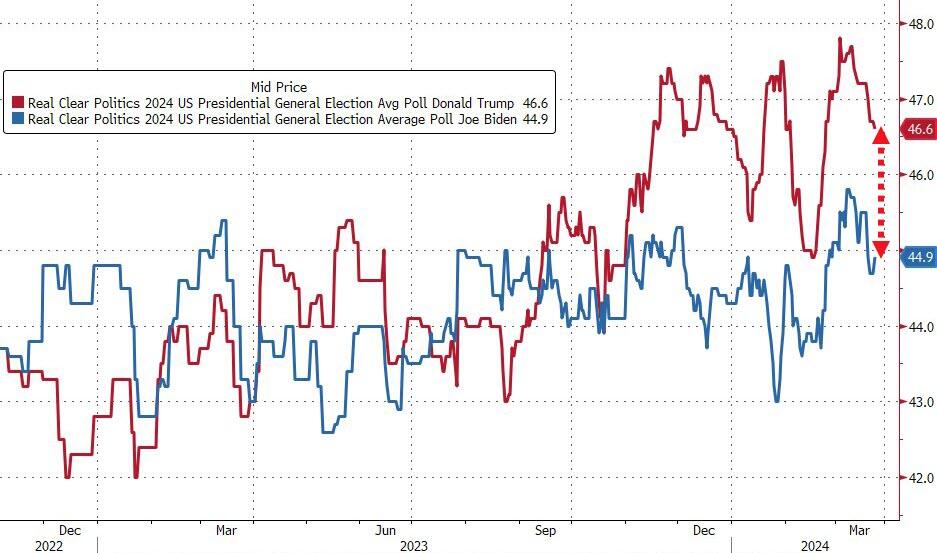
How about “Joe Biden,” front-man for the United Blob of America? What’s in it for “him?” We might surmise that the “Joe Biden” re-election campaign seeks a big, fat, juicy major distraction from its so-far pathetic effort to keep a near-mummy in the White House. Well, how about that World War they’ve been itchin’ for? Plus, they probably calculate, it’d be great for business! Besides, considering the poll numbers, this might just be the blob’s last stand, since they know as soon as Mr. Trump gets back in the White House (if the blob can’t manage to kill him first) the words “You’re fired!” will echo so thunderously between Foggy Bottom and Judiciary Square that every last critter in the DC Swamp will light out for the territories to avoid the prosecutions sure to follow.

*  *  *

Support his blog by visiting Jim’s Patreon Page or Substack

Tyler Durden
Mon, 03/25/2024 – 16:20

via ZeroHedge News https://ift.tt/vlTqgwB Tyler Durden