Iran-Aligned Houthis Sanction US Oil Majors

Iran-Aligned Houthis Sanction US Oil Majors

By Charles Kennedy of OIlPrice.com

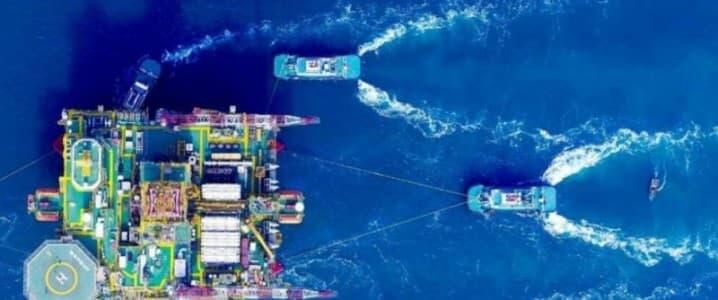
Major U.S. oil companies and their top managers were targeted by sanctions by a Yemeni body affiliated with the Iran-aligned Houthi rebels, for what they say is violating a Houthi embargo.

The Humanitarian Operations Coordination Center (HOCC), a Houthi-affiliated body created last year to liaise between the Houthis and commercial shipping operators, sanctioned 13 U.S. oil companies, nine executives, and two assets linked to the U.S.

“The HOCC will employ all available means and instruments to confront any hostile measures taken by any State or group against the Republic of Yemen, in accordance with the applicable laws and relevant regulations,” according to the executive director of the HOCC.

Units of ExxonMobil, Chevron, ConocoPhillips, Phillips 66, Marathon Petroleum, Valero, and Occidental are among the companies designated by the Houthi-aligned entity, as are their top executives including Exxon CEO Darren Woods, Chevron CEO Mike Wirth, and ConocoPhillips CEO Ryan Lance.

“It remains unclear whether these sanctions signal that the Houthis will begin targeting vessels linked to the sanctioned organizations, companies, and individuals — a move that would risk violating the ceasefire agreement with the Trump administration, facilitated by Oman,” Middle East analyst Mohammed Al-Basha posted on LinkedIn.

“Why now? The Houthis say this action is taken under the principle of reciprocity, a response to U.S. sanctions — despite Oman’s May 6, 2025 announcement of a de-escalation and ceasefire between the U.S. and them,” Al-Basha wrote.

The Houthi sanctions come as the Middle East is again the focus of geopolitical events this week, with the ongoing Israeli offensive in Gaza, the 20-point peace plan for Gaza unveiled by U.S. President Donald Trump and accepted by Israeli Prime Minister Benjamin Netanyahu, and the snapback of the United Nations sanctions on Iran.

Moreover, the Houthis on Wednesday claimed responsibility for an attack on a Netherlands-flagged cargo ship earlier this week. The Monday attack on the Minervagracht left the vessel ablaze and adrift in the Gulf of Aden.

Tyler Durden
Wed, 10/01/2025 – 22:15

via ZeroHedge News https://ift.tt/gfU71e5 Tyler Durden
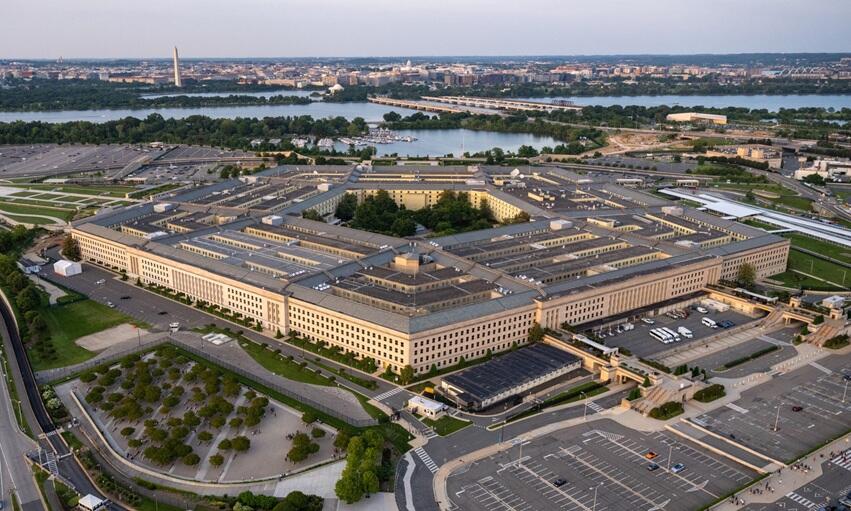
Hegseth Plans Widespread Random Polygraphs, NDAs Amid Leak Fears

Hegseth Plans Widespread Random Polygraphs, NDAs Amid Leak Fears

First there was a short-notice all generals and admirals meeting at Quantico Tuesday, following a summer of some top command firings and reshufflings, and on Wednesday The Washington Post is reporting that polygraph testing will commence for some high-placed Pentagon commanders.

This is reportedly to prevent leaks to the press, amid a climate of perceived ‘disloyalty’ and dissent against Defense Secretary (or War Secretary) Pete Hegseth. Polygraphs are typically used in the military or intelligence community in cases of suspected foreign espionage or instances of suspicion of handing off classified information. Hegseth has already greatly narrowed his trusted inner-circle.

“All military service members, civilian employees and contract workers within the office of the defense secretary and the Joint Staff, estimated to be more than 5,000 personnel, would be required to sign a nondisclosure agreement,” WaPo says.

USAF image

The agreement “prohibits the release of non-public information without approval or through a defined process” – which is spelled out in a draft memo from Deputy Defense Secretary Steve Feinberg.

There is an additional directive from Feinberg which establishes a random polygraph program for said officials, but it’s unclear if there’s any limit to the scope – suggesting that even four-star generals and admirals could be subject.

While there already exist laws and policies covering unauthorized disclosure of classified, restricted, or sensitive information, this is clearly part of a broader push to tighten up leaks.

One legal critic cited by the Post dubs this an “overboard NDA” which will be used to intimidate:

“This seems to be far more directed at ensuring loyalty to DOD [the Department of Defense] and the Trump administration leadership rather than countering any foreign espionage,” said Mark Zaid, a lawyer who has represented multiple whistleblowers and government officials targeted by the Trump administration.

“There are reasons why individuals were not required to take polygraphs before. And I would question why now the polygraph, and an overbroad NDA is being required other than to intimidate the workforce and ensure tighter control.”

Apparently Pentagon leadership under the Trump administration has in the recent past already conducted such random polygraph tests in some limited cases, in prior leaks to the news media. 

This certainly isn’t the first major controversy to emerge under Hegseth regarding distrust, disunity, and threats of hunting down internal leakers. The Wall Street Journal wrote back in April:

Word had leaked that he was planning a classified briefing for Elon Musk on China, a revelation that infuriated President Trump and raised alarms inside the Pentagon given Musk’s business ties to Beijing.

“I’ll hook you up to a f—ing polygraph!” Hegseth shouted at Adm. Christopher Grady, the then-acting chairman of the Joint Chiefs of Staff, according to two people familiar with the exchange. Hegseth demanded proof that Grady hadn’t leaked news of the March 21 briefing.

Grady was never subjected to a polygraph, and Hegseth would go on to accuse a number of other people for the leak, including Lt. Gen. Doug Sims, the Joint Staff director, whom Hegseth also threatened with a polygraph test.

But for Hegseth, the episode marked a turning point in an already rocky tenure. Coming just days after revelations that the former Fox News host had shared sensitive military information in unsecured group chats on Signal, the leaks deepened his frustrations and eroded his trust in his close circle of advisers, the officials say.

However, White House staffers have pushed back when such polygraph threats spilled over into their domain, and President Trump reportedly intervened to temporarily halt it, prior reports say.

The controversy ensued into the summer, though some cast doubt on the media reports…

The reality too is that leaks to the media are a fairly standard part of any administration, going back through American history. Trump likely knows this, but is naturally leery of any further efforts of deep state operatives sabotaging his administration and its policies.

*  *  *

Tyler Durden
Wed, 10/01/2025 – 21:50

via ZeroHedge News https://ift.tt/WmF2R38 Tyler Durden

Asia-West Coast Container Rates Plummet; Demand Seen Waning Through Year-End

Asia-West Coast Container Rates Plummet; Demand Seen Waning Through Year-End

By Stuart Chirls of FreightWaves

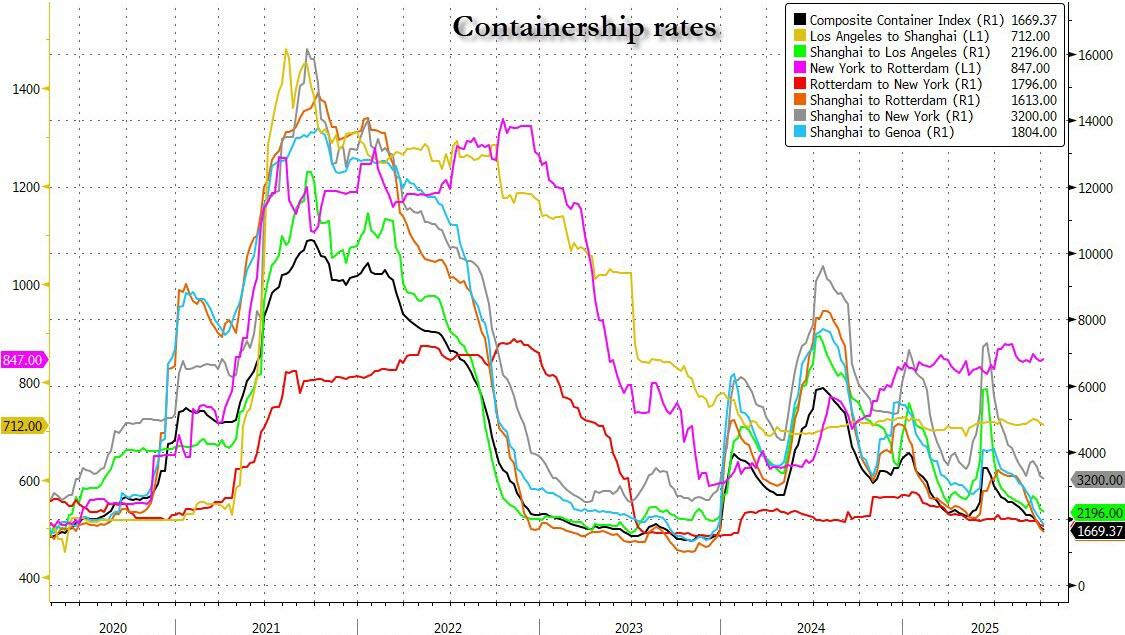
Container rates on the eastbound trans-Pacific continued their plunge as ocean lines increase blank sailings amid weak demand that’s expected to persist through the end of this year.

The SONAR Inbound Ocean TEUs Volume Index for Oct. 1 was down less than 1% from the previous week, but off 14.58% year-on-year. 

Demand got a small bump from frontloading ahead of China’s Golden Week holiday, but nothing substantial enough to shore up falling rates.

Forecasts cite consumer concerns over rising prices, tariff concerns and trade shifts for a muted outlook through the end of the year. 

The second pause of retaliatory China tariffs announced by the Trump administration in August has so far failed to generate sustained improvement in the busiest Asia-U.S. trade lane. On Tuesday U.S. Trade Representative Jamieson Greer termed a “good status quo” China tariffs of around 55% as the two countries continue to seek a mutually beneficial trade agreement.

But absent a deal or another pause, tariffs on Nov. 14 would boomerang back to around 145% on Chinese goods and 125% for U.S. shipments entering China, which all but shut down trade between the countries earlier this year.

Further complicating matters, China this week said it could levy costly port fees and bar some ships from its ports, in retaliation for punitive U.S. charges on China-linked ships set to take effect Oct. 14.

Asia-U.S. West Coast rates fell 15% to $1,853 per fort foot equivalent unit last week, according to the Freightos Baltic Index, while Asia-U.S. East Coast prices increased 16% to $3,967 per FEU.

The last time West Coast prices were this low was around December 2023, when spot rates dipped to approximately $1,744 per FEU.

Carriers have blanked, or withdrawn, about 13% of scheduled sailings on the trans-Pacific, as of Oct. 5, according to Sea-Intelligence. But  that’s less than a year ago, which saw a 15.4% capacity reduction for the West Coast and 11.9% for the East Coast during Golden Week, against just 3.8% and 4.8% reductions planned for 2025.

Tyler Durden
Wed, 10/01/2025 – 21:25

via ZeroHedge News https://ift.tt/dDTwsLz Tyler Durden

Kremlin Highly Doubtful Trump Will Authorize Tomahawks For Ukraine

Kremlin Highly Doubtful Trump Will Authorize Tomahawks For Ukraine

Earlier this week Vice President J.D. Vance raised eyebrows amid possible major escalation with Russia in acknowledging that the US administration is “looking at” supplying Ukraine with Tomahawk long range missiles, at the request of the Europeans.

Interestingly, the Kremlin has openly voiced that it is highly doubtful that President Trump would do such a thing. Russian Foreign Minister Sergey Lavrov in Tuesday remarks that he does not believe the Trump administration has made a final decision, but that ultimately he would be “surprised” if the US went through with it.

“I think this is primarily the result of European pressure on Washington, and Washington wants to show that it takes into account the opinions of its allies. I don’t think we have seen the final decision,” Lavrov told reporters at the Valdai Discussion Club in Moscow.

“The Americans don’t supply Tomahawks to everyone,” he explained. “Among Europeans, if I’m not mistaken, they supply them to Spain and the Netherlands; they’re somewhat wary of the rest.”

And he followed with: “If they believe that Ukraine is a responsible nation that will use them responsibly, that would be surprising to me.”

Instead, the Zelensky government has shown itself ready and willing to mount long-range attacks even on Moscow, and in the past, the Kremlin complex itself, with drones.

Drones can only do limited amounts of damage, but a Tomahawk with an immense range of 1,500+ miles – capable of reaching Moscow – could unleash serious destruction.

Still, on Monday Kremlin spokesman Dmitry Peskov had downplayed the Tomahawks as any kind of ‘game-changer’. “No magical weapons exist, and Tomahawk or other missiles simply won’t be a game changer,” he said.

Regardless, if the US does give the greenlight, it would be flirting with WW3, given Ukraine could turn around and begin targeting Moscow’s own decision-making centers.

Yet some influential officials in the Trump administration are still pushing the idea hard, including Keith Kellogg…

Hopefully Trump resists the fanaticism of these hawks on what could prove crucial ‘red line’ for Putin, and instead does more to pursue de-escalation.

Tyler Durden
Wed, 10/01/2025 – 21:00

via ZeroHedge News https://ift.tt/PzNvjOu Tyler Durden

Trump Keeps Oil Permits Flowing In Shutdown, Some Renewables On Hold

Trump Keeps Oil Permits Flowing In Shutdown, Some Renewables On Hold

By Charles Kennedy of OilPrice.com

The Trump administration will keep oil and gas permitting moving unhindered, despite the federal government shutdown that began on Wednesday, while approvals for renewable energy projects will halt, according to Interior Department plans seen by industry media. 

Staff at the Bureau of Land Management, which oversees 245 million acres of public land, have been exempted from furloughs to continue processing leases and drilling permits. The Bureau of Ocean Energy Management (BOEM) said it will use carryover funds to maintain work on “priority conventional energy projects,” including offshore drilling in the Gulf of Mexico and Alaska, even as more than 70% of its staff are furloughed. Dozens of oil and gas lease auctions remain on schedule.

Renewable projects will not receive the same protection. BOEM confirmed that offshore wind and other non-fossil approvals will pause until government funding is restored. The approach follows President Donald Trump’s earlier declaration of a national energy emergency, which gave the Department of Interior discretion to sustain fossil fuel development during a shutdown, according to transportation industry source TTNews

The shutdown, which began October 1, has left hundreds of thousands of federal employees on furlough, and the energy sector could be impacted from the loss of regular government data releases. A prolonged shutdown could disrupt statistics essential for oil and gas trading, with delayed reports on inventories, production, and exports reducing transparency and adding volatility to markets.

Trump made similar choices during the 2018-2019 shutdown, the most significant of shutdowns, as it lasted for 35 days. During this time, Trump ensured that drilling permits were processed. By contrast, Barack Obama’s administration suspended auctions and halted drilling approvals during the 2013 shutdown. 

Tyler Durden
Wed, 10/01/2025 – 20:35

via ZeroHedge News https://ift.tt/Vk08H6N Tyler Durden

Opting for the Minimum Payment Changed My Life (For The Worse)

Opting for the Minimum Payment Changed My Life (For The Worse)

Authored by Mary Hunt via The Epoch Times (emphasis ours),

At the time, it seemed like a good idea. But going for the minimum payment option “just this one time” turned out to be the worst mistake of my life. The day I opened that door and walked through it, I altered the course of my life.

Make purchases with a plan to pay the money back. shisu_ka/Shutterstock

I reasoned that I didn’t have enough money to pay the credit card balances in full, so what was I supposed to do (oh, hear me whine)? I’d catch up next month and pay everything down to $0 before my husband found out. All I needed was a little breathing room.

And with that, I made a 180-degree turn and headed down the road to financial devastation.

What was an option the first time I made only the minimum payments soon became my only choice. I deceived myself into believing that even though I didn’t have enough money to pay for things now, somehow I’d have enough to pay for them later. I believed that banks and department stores wouldn’t lend me this much money if they didn’t know that I could afford it—and wasn’t that a nice surprise.

It took 12 years to ruin my life, putting me in danger of losing my marriage, my family, and my home. The only thing that stopped me was that I ran out of credit.

With both of us unemployed and having just received notice that our home was scheduled to go into foreclosure, I arrived at the end of myself.

I owed more than $100,000 on all of my handy credit accounts—and all of them in default—so there was no more credit. No more options. I was out of hope with nowhere to turn. It was in the darkness of fear and despair that I realized what I’d done to myself, my husband, and my family.

Through my remorse and pain, I turned to God and made this promise: I would pay back all of the debt no matter how long it took or what I had to do, if I could only keep my family and my home.

For the next 10 years, I did exactly that. I never worked so hard in my life. Overnight I turned into a cheapskate—frugal beyond the legal limit, I’m sure. I worked every kind of job I could get my hands on. I developed a payback plan. I became a giver and a saver even while deeply in debt. After 10 years and $88,000 repaid, I was restless. This was taking too long. So, as just another way to raise funds, I decided to try my hand at writing a subscription newsletter with the goal to help others do what we were doing. That was in 1992. It wasn’t an overnight success, but almost. And in the process, I developed a passion to learn all I could about personal money management.

Here’s an example: My very first step was to make a vow that I would only buy groceries that I could pay for with cash (no checkbook, no plastic allowed). Wow, that was like throwing a bucket of cold water in my face. I had a new awareness of what things really cost. I had to keep track of what I was putting in my grocery cart. The next step came quickly: I had to find a way to spend less to buy what we needed so I could walk out with cash in my pocket.

Finding ways to do that put a big smile on my face and gave me the confidence and the desire to take another step. And another and another.

It took 13 years to pay back a whopping credit card debt of more than $100,000 (an amount that would be closer to $300,000 in 2022 dollars), but we did it—one cost-cutting hack or tip at a time. For years now we have been completely debt-free. What joy and financial freedom we now enjoy! Debt-free truly is the way to be.

Tyler Durden
Wed, 10/01/2025 – 19:45

via ZeroHedge News https://ift.tt/AIhdO7y Tyler Durden

ANTIFA By Night, NGOs By Day: Left-Wing Political Machine Runs 24/7 Outside Portland ICE Facility

ANTIFA By Night, NGOs By Day: Left-Wing Political Machine Runs 24/7 Outside Portland ICE Facility

Real America’s Voice correspondent Ben Bergquam visited the ICE facility in South Portland, exposing how the left-wing political machine operates, from Antifa attacks on the building at night to dark-money–funded NGOs providing support to illegal aliens by day. Together, this paints the picture of how the left’s machine works to subvert the nation, and in extension, national security

Let’s begin with Bergquam’s late-night reporting outside the ICE facility in Portland that shows the federal government personnel countering Antifa warriors who attempted to undermine the Trump administration’s deportation program of criminal illegals.

By early morning, Antifa cells scatter like ants, only to be replaced by workers from leftist NGOs, according to Bergquam, who spoke with Steve Bannon. He noted that these NGO workers are “aiding and abetting illegal aliens” outside the courthouse in Portland. 

Bergquam added, “These leftist NGOs are also part of the networks of telling these illegals when ICE is coming to their communities – it’s all a coordinated effort.” 

To simplify for readers, Bergquam is merely presenting Antifa and leftist NGOs as two arms of the same left-wing machine – one uses color revolution-style street tactics, the other institutional support, all in an effort with one goal: to obstruct President Trump’s deportations of criminal illegal aliens. 

Tyler Durden
Wed, 10/01/2025 – 19:20

via ZeroHedge News https://ift.tt/Bli3XFN Tyler Durden

Trump’s Economic Statecraft Now Covers Trade, Capital And “Other”

Trump’s Economic Statecraft Now Covers Trade, Capital And “Other”

By Michael Every of Rabobank

What, no payrolls Friday?

Most in markets will be focusing on the US government shutdown –the first in seven years– that just started. For example, if it isn’t reversed quickly we won’t get the US payrolls report this Friday. The same data series that’s just been wildly revised, again, and which some see as full of methodological holes as a Swiss cheese in capturing the reality of the US economy, might not be there for people to all speculate on at the pre-arranged time. The horror!

Meanwhile, the White House has withdrawn its nominee to lead the BLS Bureau of Labor Statistics and that for chair of the Commodity Futures Trading Commission, so who knows when the data will mean anything again anyway.

To say there is a lot else going apart from “What, no payrolls Friday?” is again a staggering understatement.

If we are talking shutdowns, how about the Taliban shutting down the internet and mobile phone networks in Afghanistan to prevent “vice” – and all flights in and out having been grounded as a result? It may not add a lot to world GDP, but that’s an entire country that just dropped off the 21st century map. But ‘no payrolls’.

In the Middle East, Trump said Hamas has “three or four days” to respond to his 20-point Gaza plan or it will “pay in hell”, as the Qatari PM seemed to backtrack and say the plan still needs “clarification and discussion”, and Turkey’s spy chief arrived in Doha to hold talks with the designated terror group. The BBC has reported Hamas is likely to reject the deal, which regional experts think could presage an explosion of military action before it is then finally agreed the hard way – but nothing there is clear.

In Europe, the EU is to meet to discuss setting up a drone wall, no easy task, if it can be done at all, with Germany and the pro-EU UK Guardian newspaper both noting the EU isn’t set up for these kind of military crises and something needs to change: logically, either more power has to be centralized or delegated back to the member states. Both would imply massive changes in how politics, economies, and markets would operate over time. Or, neither happens and things like drone walls don’t either. Which has its own implications. That’s as Denmark’s PM again warns that Russia’s hybrid war is “only the beginning”, while Bloomberg talks of Europe’s east wrestling with a hybrid war “of drones and migrants.”

The Trump admin notified Congress of a major expansion to an existing arms sale to Estonia, quadrupling its planned long-range ATACMS munitions and doubling HIMARS launchers, which Russia will obviously see as a huge provocation.

In Latin America, Venezuela strengthened its alliance with Russia through the approval of a Strategic Partnership Treaty: the sides are clear and the geographical flashpoints are too.

Moreover, Secretary of Defence/War Hegseth told US generals, in the Wall Street Journal’s words, to do things his way or quit – and lose weight, as Trump told them that the US military could be used to fight the “enemy within”, where some US cities are so dangerous that they could become training grounds for them.

Meanwhile, International Criminal Court staff are reportedly printing files and preparing for a blackout as US sanctions against them loom.

In parallel geoeconomics:

  • The US vowed it will maintain tariffs even if the Supreme Court rules against it – and it does have other legislative tool available to do so if needed.
  • The South China Morning Post asked ‘Has Lutnick signalled the end of Taiwan’s ‘Silicon Shield’ against Beijing?’ where the “Trump administration is pressuring Taiwan to shift 50% of chip production to the US or risk losing US protection against China” – a demand which Taiwan has responded to with a ‘No’.
  • The US government is to take a stake in Lithium Americas to boost its Nevada project, as once again the state steps into critical supply chains.
  • China halted purchases of Australian BHP’s iron ore after price talks broke down, where some market participants said it reflected both a push for lower prices and a shift to CNY-denominated contracts – a staggeringly important development which I have long flagged would be logically inevitable. What does Australia do in response?
  • The answer could be Canberra reportedly floating allowing allies, such as the US and UK, to access its critical minerals that will be developed through its own new state-backed fund. That doesn’t help with iron ore unless the US starts making steel again on a vast scale: remind me what US tariffs are supposed to be for again?
  • Elsewhere, a $1.4bn Tazara rail deal will see China’s state-owned CCECC refurbish and operate the ageing Tanzania-Zambia railway, securing Africa’s copper belt direct access to vital shipping links that then head to China. If I recall correctly, Europe is talking about setting up a committee with an acronym to discuss similar things perhaps happening at some point in the future.

In a different space, yesterday saw the White House unveil ‘TrumpRx’, a drug-buying website alongside a related Pfizer pricing deal, where the company gained a three-year grace period exempting it from national-security-related pharma tariffs, while US consumers can buy cheap drugs via the government. Lowering the cost of key goods so consumers have the purchasing power to buy more expensive made-at-home products in other categories is a statecraft tool as old as the hills. Indeed, the above shows how US economic statecraft covers: Trade (US-centric system with no large US trade deficits); Capital (Money must flow where it ‘needs to’ – i.e., Lithium and rare earths); and Other (Whatever else it takes, wherever it takes it to achieve the other two).

And in the background, gold is close to another record high –and the most overbought in a very long time– while US equities are also at record highs as if none of the above matters at all.

Perhaps the real threat of ‘no payrolls Friday!’ is it leaves Mr Market with too much free time to focus on more worrying issues and questions than ‘Buy all the things!’ and ‘How do I play the higher/lower than game this month?’ 

Tyler Durden
Wed, 10/01/2025 – 18:55

via ZeroHedge News https://ift.tt/MuZ9BJ0 Tyler Durden

OpenAI Readies TikTok-Style App Powered Only By AI Videos

OpenAI Readies TikTok-Style App Powered Only By AI Videos

OpenAI is preparing a standalone social app powered by its Sora 2 video model, according to Wired. The app “closely resembles” TikTok with a vertical video feed and swipe-to-scroll, but only features AI-generated clips — users can’t upload from their camera roll.

Wired reported that Sora 2 will generate clips of 10 seconds or less inside the app, though limits outside the app are unclear. TikTok, which started with a 15-second cap, now allows 10-minute uploads. The app will also offer identity verification, letting Sora 2 use a person’s likeness in generated videos. Others can tag or remix that likeness, but OpenAI will notify users whenever it’s used — even if the video isn’t posted.

Wired adds the software will refuse some videos due to copyright, but protections may be weak. The Wall Street Journal reports rights holders must opt out to keep their content from appearing in Sora 2’s outputs.

OpenAI is alerting talent agencies and studios to the opt-out system, which doesn’t allow blanket exclusions across all of a creator’s work. Instead, agencies can flag violations. “Our general approach has been to treat likeness and copyright distinctly,” said Jason Kwon, OpenAI’s chief strategy officer.

The Journal notes OpenAI has struck deals with some studios and that its new tools echo ChatGPT’s image generator, which quickly filled the internet with Studio Ghibli-style memes. “Given the intense competition in the space, I think they think, ‘maybe we will ask for forgiveness instead of asking for permission,’” said Georgetown Law’s Kristelia García.

OpenAI’s move comes as Hollywood pushes for stronger consent and compensation rules, and as courts weigh whether training on copyrighted content is “fair use.” The company is also seeking approval from California and Delaware attorneys general for a corporate restructuring that could affect investor funding, the Journal reports.

“For so many in the AI space, this move validates longstanding fears and underscores why we need guardrails,” said Dan Neely, CEO of Vermillio.

By launching a social platform around Sora 2, Wired suggests OpenAI is not only chasing TikTok’s momentum but also trying to lock users into its ecosystem. Building a community around AI-only content could make switching to rival tools less appealing.

Tyler Durden
Wed, 10/01/2025 – 18:30

via ZeroHedge News https://ift.tt/uaHOJBk Tyler Durden

Freight Expected To Roll On During Shutdown

Freight Expected To Roll On During Shutdown

By John Gallagher of FreightWaves

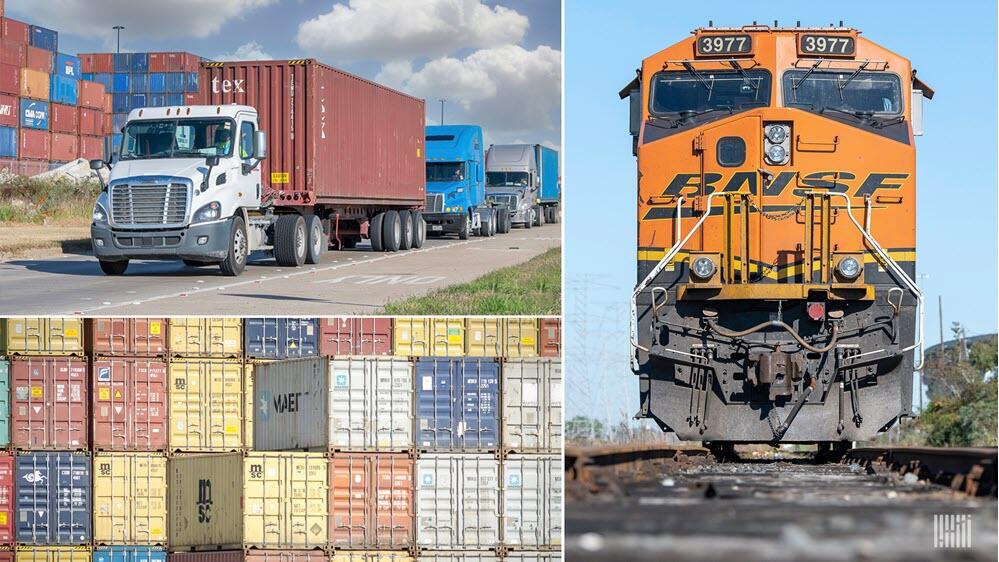
After the federal government shut down at midnight Tuesday, freight supply chains, in the short term, should be largely unaffected.

In most cases, federal agencies that run the programs and services affecting goods movement are either funded by mechanisms like the Highway Trust Fund – which are separate from the annual appropriations process – or their employees are deemed essential and will therefore continue to work during a funding lapse.

This year, however, the Trump administration has threatened to use a shutdown as justification for additional federal workforce reductions, but it’s unclear how government employees will be affected, including those working at agencies within the U.S. Department of Transportation.

“DOT modal agencies are largely charged with safety functions, so anytime you cut from that you run the risk of decreasing safety,” Jameson Rice, a transportation lawyer and partner with the law firm Holland & Knight. “It may not be felt immediately, but you will in the long term.”

In the short term, however, safety functions related to domestic goods movement, such as roadside inspections carried out by the Federal Motor Carrier Safety Administration, and rail accident investigations and safety advisories under the Federal Railroad Administration, would continue, according to DOT’s most recent funding lapse shut-down plans.

At the U.S. Maritime Administration, where approximately 25% of its workforce is expected to be furloughed, vessel security and port infrastructure programs would continue using “carry forward balances” as would staff needed to oversee those programs and services.

Cargo inspection of imports through land borders and seaports would also continue, according to the U.S. Customs and Border Protection. Roughly 93% of the agency’s 68,000-person workforce are expected to be retained and continue to work during a funding lapse, the Department of Homeland Security’s latest contingency plan notes.

However, while most CBP employees are considered essential, that may not necessarily be the case at other agencies that have inspection oversight of cargo shipments, such as the Food and Drug Administration, the Environmental Protection Agency, the Department of Agriculture, and the Consumer Product Safety Commission.

For example, during a lapse in appropriations, activities at CPSC such as field investigations, product testing, and recalls could cease during a lapse, according to recent contingency plans, which potentially could disrupt cross-border trade and supply chains.

“What sometimes is not considered essential are additional reviews of cargo shipments that might be required and are conducted by government agencies other than CBP,” Cindy Allen, an international trade consultant and a former CBP executive director, told FreightWaves.

“So products subject to government oversight that may require additional review or testing might be impacted, which means potentially slowing freight flows.”

Other government agencies that affect freight markets, and the effect a shutdown could have on operations (based on their most recent contingency plans), include:

Federal Maritime Commission

Because most of the FMC’s employees are funded by annual appropriations, the commission, which regulates the U.S. international container trades, will be hit hard by a shutdown.

All work will cease “that furthers the agency’s mission to ensure a competitive and reliable international ocean transportation supply system that supports the U.S. economy and protects the public from unfair and deceptive practices,” according to the agency’s most recent shutdown plan.

Surface Transportation Board

Activities at the STB having to do with case processing, regulatory filings, and most litigation will likely be suspended in the case of funding lapse. That includes procedural schedules, oral arguments and voting conferences, data collection and analysis, and staff meetings with stakeholders will all be suspended.

Depending on how long the shutdown lasts, STB’s schedule for reviewing Union Pacific’s $85 billion acquisition of Norfolk Southern could be affected.

U.S. Coast Guard

Approximately 95% of the U.S. Coast Guard’s 52,377 active duty and civilian workforce will be retained in the case of a shutdown, according to DHS, which means inspections of U.S.- and foreign-flag vessels entering U.S. ports, waterfront facility security, and container inspection enforcement will continue.

Tyler Durden
Wed, 10/01/2025 – 18:05

via ZeroHedge News https://ift.tt/VUW206B Tyler Durden