Time To Curb The Violence

Time To Curb The Violence

Authored by Mark Penn & Andrew Stein via RealClearPolitics,

Even back to the days of Charles Manson, a violent cult leader, there were pockets of people who cheered and reveled in violence. But all too common today are the groupies who adulate the CEO killer, the social media maven who praises the assassination of Charlie Kirk, or the miscreant who says they wish presidential assassins had been successful.
In today’s social-media fueled world, every heinous act of violence spawns a great majority of people of condemn it and a smaller counter-reaction of people who cheer it and call for more. Maybe this was always the case, but those who supported such violence could not as easily band together as they can today. Social media allows the violence lovers to find like-minded individuals, legitimizing their response, further encouraging future violence.

Kirk held no elected office. His only weapons were words and open debate. Despite this, nearly one in five Americans shockingly declared in surveys that his assassination was justified, according to a Harvard CAPS Harris poll. The path to such thoughts is clear. The opposition on the left characterized Kirk’s positions as “hate” despite his willingness to debate anyone anywhere. Once his speech was then characterized as violence – the resultant deadly violence became justified.  

Almost 3 in 4 voters (72%) decry today’s polarizing political rhetoric as a cause of contemporary violence, and over 4 in 5 state it is unacceptable for their own political party to use violence to achieve its aims.  

Notably, though, 74% of GOP voters see Democrats’ rhetoric as too extreme, compared to just the 27% who call their own party extreme. The effect is mirrored on the other side of the aisle, with 84% of Democrats calling the GOP too extreme, but a mere 33% saying the same of their own party. This drive of the parties to polarize the electorate rather than convince swing voters is reflected in the current pointless government shutdown. The political coin of the realm these days is in satisfying the base with increasingly incendiary words and actions.

That said, voters from all sides agree on the destructive role of social media, with 64% stating that social media encourages violent behavior.   

A solid 85% agreed that talking heads in the media celebrating Charies Kirk’s death were inappropriate. At the same time, though, voters are strong believers in the First Amendment. Of the same group, 54% stated that Jimmy Kimmel’s late-night show should not have been suspended over Kimmel’s comments about Kirk’s death, and 58% even supported his return to late-night television.  

And that’s the thing about the First Amendment – it requires some level of self-restraint and responsibility, or it becomes the amendment that allows society to destroy itself. Or it allows the forces who want to destroy society to masquerade as merely those who would question it. It requires vigilance in allowing political debate but also in finding fair limits.

The Jay Jones scandal is a case in point. He called for the killing of his political opponents and appeared to be quite serious about it. Predictably, he called them Hitler and said that it should be done with two bullets to the head. Despite these inflammatory sentiments, Jones remains committed to his bid for – of all jobs – attorney general of Virginia. It’s difficult for us to understand how someone willing to threaten killing his political opponents remains an appropriate candidate for attorney general.

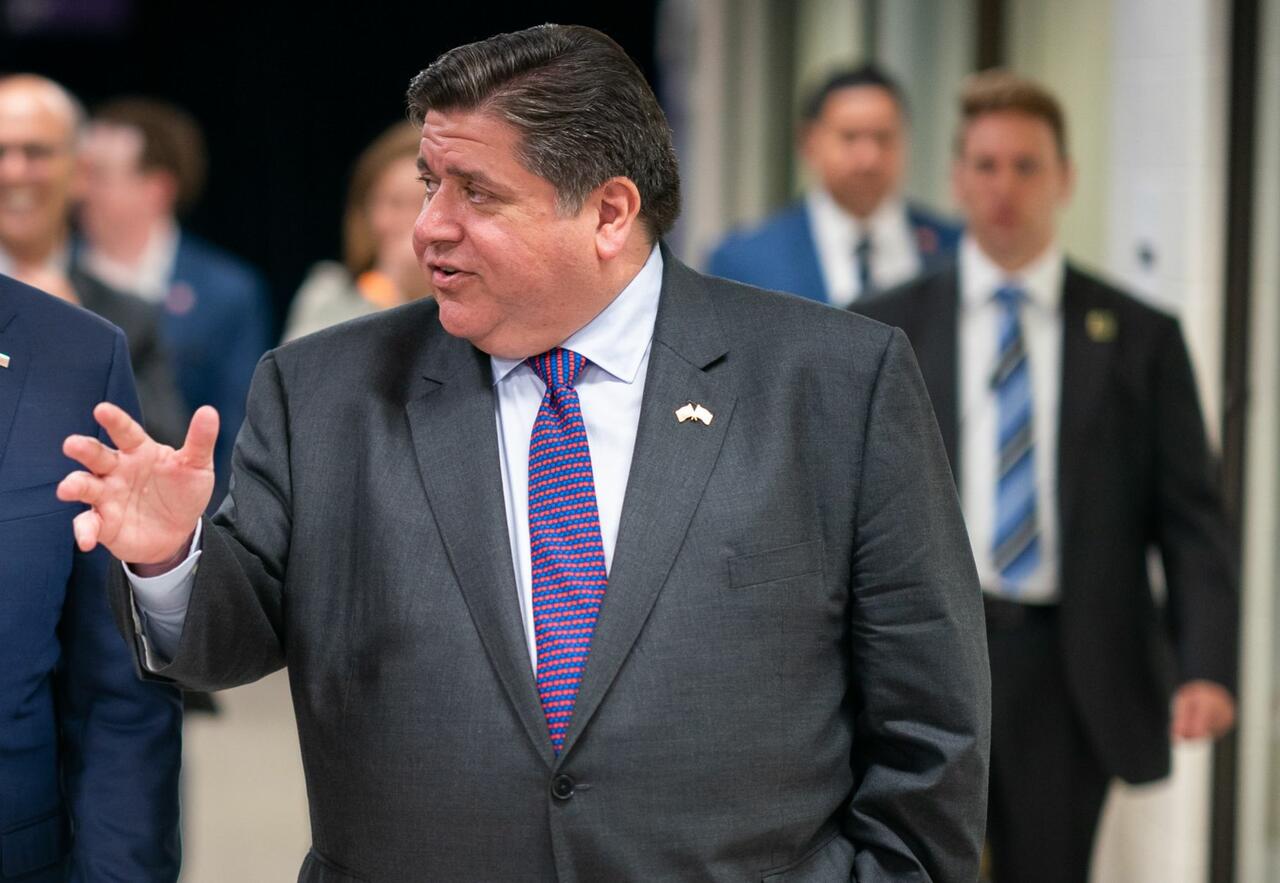
Gov. JB Pritzker of Illinois and others are villainizing the ICE agents in dire language that is an open invitation to violence. On ICE agents, Pritzker claimed “They were going after a few gang members, and instead, they broke windows, they broke down doors, they ransacked the place … They are the ones that are making it a war zone.” ICE agents are being accused essentially of kidnapping people randomly on the street based on racial profiling and “disappearing” them as was done by the Argentine junta, and the result is encouraging violence against federal officials. 

It’s easy to condemn violence, but harder to do something about it. For starters, we need a bipartisan group of lawmakers to come together and stand clearly and unequivocally for bringing down the political temperature. They should agree on a set of basic principles outlining the bounds of attack language, which must include no longer calling opponents “Hitler” and other names that function to justify violence. They should condemn the recent political assassinations and attempted murders unequivocally – without exceptions or thinly veiled justifications. Finally, these lawmakers should call on the remainder of Congress to sign on to these principles as a clear rebuke of political violence and extreme rhetoric.  

Second, they need to draft legislation that makes social media responsible for hosting and spreading calls for violence. Section 230 needs to be rewritten to give social media platforms an explicit obligation to promptly remove content that calls for violence. That won’t cure the problem, but it will put the social media channels on notice that they need to be vigilant about removing at least the most extreme rhetoric within 24 to 48 hours. 

And third, the White House should establish a serious bipartisan, anti-political violence commission to probe the recent rise in political violence more deeply and attempt to explain to Americans how we cannot let our political differences degenerate into chaos. It should explore the violence-based underworlds on both the right and the left.  

The Kerner Commission’s 1968 report painted an image of two Americas – one white and one black – that had a profound impact on the country at the time. And yet today, there are once again two Americas – one red and one blue. We need to make a good faith effort to bridge the gaps in ways that preserve and promote the ballot as the answer, not the bullet.â?¯The test will be whether such a commission could ever agree on one joint and final report. 

Tyler Durden
Fri, 10/31/2025 – 22:35

via ZeroHedge News https://ift.tt/QVMJOad Tyler Durden

Maduro Urgently Seeks Military Aid From Russia & China With US Bulls-Eye On Venezuela

Maduro Urgently Seeks Military Aid From Russia & China With US Bulls-Eye On Venezuela

President Trump said on Friday that he’s yet to make a final decision on launching a military attack on Venezuela, but President Nicolás Maduro is not waiting around while taking the US leader’s word on it.

Maduro is reportedly urgently reaching out to Russia, China, and Iran for any possible military aid, including defense items which may have already been negotiated or are in the works. The Washington Post says it’s obtained internal documents showing such recent and high-stakes requests.

Sputnik via AP

“Amid a buildup of American forces in the Caribbean, Venezuela’s President Nicolás Maduro is reaching out to Russia, China and Iran to enhance its worn military capabilities and solicit assistance, requesting defensive radars, aircraft repairs and potentially missiles, according to internal U.S. government documents obtained by The Washington Post,” the publication reports.

“The requests to Moscow were made in the form of a letter meant for Russian President Vladimir Putin and was intended to be delivered during a visit to the Russian capital by a senior aide this month,” WaPo continues.

And separately, Maduro is said to have sent a formal letter to Chinese President Xi Jinping seeking “expanded military cooperation” between the two countries in order to counter “the escalation between the U.S. and Venezuela.”

Maduro in it seeks to expedite Chinese companies’ production of radar detection systems based on prior deals, in cooperation between Caracas and Beijing which has long been an open secret.

“In the missive, Maduro emphasized the seriousness of perceived U.S. aggression in the Caribbean, framing U.S. military action against Venezuela as action against China due to their shared ideology,” the documents state according to the Post.

Transport Minister Ramón Celestino Velásquez is also reported to have sought military equipment from the Islamic Republic of Iran. He conveyed that his country needs

  • “passive detection equipment”
  • “GPS scramblers”
  • “drones with 1,000 km [600 mile] range”

Meanwhile the growing list of US naval assets that Maduro is facing in the Caribbean region…

But the reality is that despite obvious cooperation over the years – including Russian, Chinese, and Iranian military assets and personnel showing up at the occasional Venezuela military parade or state ceremony – these countries have their own problems to worry about, and are unlikely to want to poke Donald Trump at this sensitive moment in America’s “own backyard”.

With US sanctions on, and prior examples of interdictions on the high seas, even if Russia or China wanted to quickly assist Maduro as he’s under the US bullseye it could prove logistically impossible.

Tyler Durden
Fri, 10/31/2025 – 22:10

via ZeroHedge News https://ift.tt/vfenRq2 Tyler Durden

Drug Smuggling Surges On Amazon Waterways, Driving Brazil–U.S. Tensions

Drug Smuggling Surges On Amazon Waterways, Driving Brazil–U.S. Tensions

Brazilian authorities are seizing record amounts of cocaine moving through the Amazon as traffickers exploit expanding commercial river routes for oil and crop exports, according to Bloomberg.

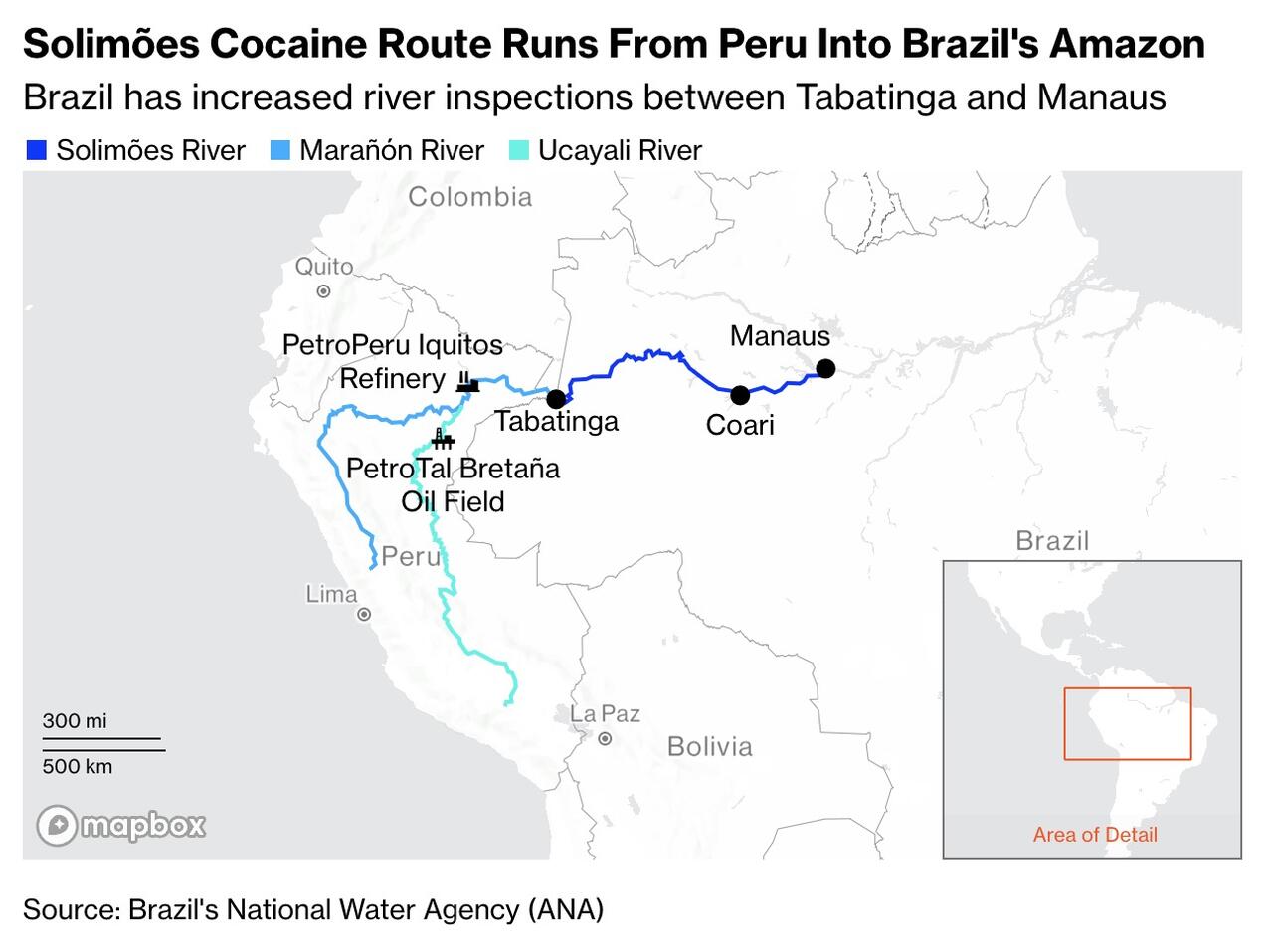
In April, police chief Murilo Sampaio intercepted barges traveling from Peru’s Bretaña oil field, operated by PetroTal Corp. Drug-sniffing dogs detected a hidden compartment: “Everything was fine up until then,” Sampaio said. “But when the dogs came on board, they were able to identify a scent.” More than half a ton of cocaine was recovered and six crew members were arrested.

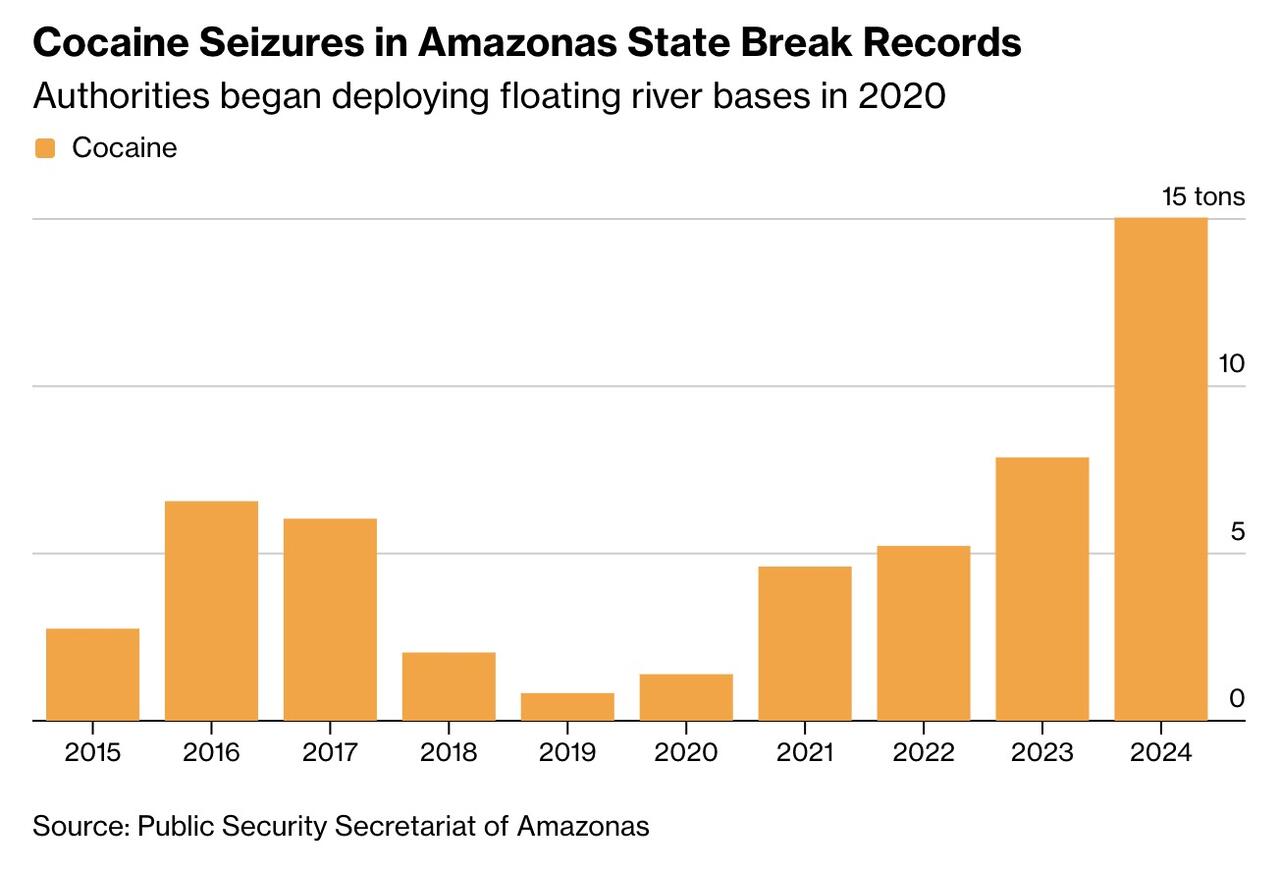
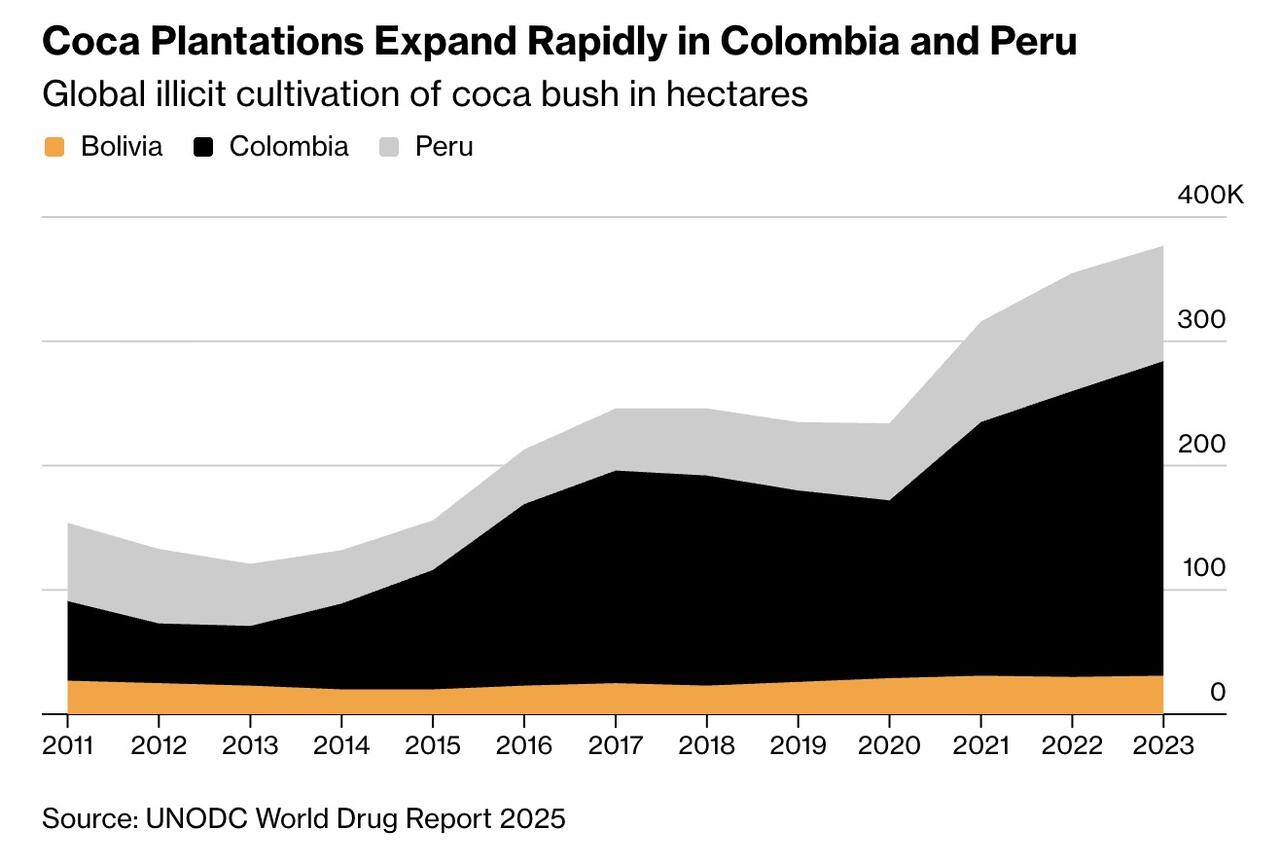
State data show cocaine seizures in Amazonas have roughly tripled in two years, reaching 15 tons in 2023. Security forces say that represents only a fraction of the narcotics moving east along the Solimões Route — the river network that delivers cocaine from Peru and Colombia to Brazil’s Atlantic ports and onward to Europe and Asia, as well as Brazil’s growing domestic market.

Increasing barge traffic tied to soy and oil exports has given traffickers more cover. Police say at least three major busts since mid-2023 involved barges carrying crude from the Bretaña field. PetroTal and energy trader Novum Energy say they enforce strict compliance and have “zero tolerance” for illegal activity, and authorities have not accused the companies of wrongdoing.

Bloomberg writes that gangs including the Red Command dominate much of the waterway and are expanding into remote communities, bringing violence, poaching and illegal land use. “We’re talking about hundreds of rivers,” said military police lieutenant João Maciel Rosa. “Only between 3% and 5% of the border lands… is policed.”

The surge is emerging as a diplomatic flashpoint. President Trump has made aggressive counternarcotics operations a centerpiece of his Latin America strategy, including military strikes on alleged drug boats and pressure on regional governments. Analysts say Brazil’s rising role in the cocaine trade could become leverage in other disputes, from tariffs to political disagreements. A State Department spokesperson said the U.S. is assisting Brazil “to more effectively detect and interdict these illicit activities along Brazil’s major waterways.”

As Brazil prepares to host the COP30 climate summit near the mouth of the Amazon, officials warn traffickers are embedding deeper into legitimate industries — from shipping and ports to ranching and mining. Expanded patrols and floating river bases have not stopped smugglers, who now use commercial barges, armed speedboats and semi-submersibles to avoid detection.

“It’s not tactically or operationally possible to win the war on drugs,” said analyst Andrés Preciado. “The evidence that we have after five decades is that the state doesn’t win.”

Tyler Durden
Fri, 10/31/2025 – 21:20

via ZeroHedge News https://ift.tt/eMp7QrO Tyler Durden

Waste Of The Day: Taxpayers Fund Mayor’s Wife’s Charity

Waste Of The Day: Taxpayers Fund Mayor’s Wife’s Charity

Authored by Jeremy Portnoy via RealClearInvestigations,

Topline: The City of Baltimore gave $62,500 to a nonprofit that employs the mayor’s wife, according to tax filings reviewed by the Baltimore Sun. Six members of City Council have introduced a bill that would make similar payments illegal — which the mayor opposes.

Key facts: The grant was paid in 2023 from the Baltimore Children and Youth Fund to the nonprofit Bmore Empowered, where Hana Scott is the director of operations. She is also Mayor Brandon Scott’s wife. The mayor’s office has a representative on the Youth Fund board who votes on which nonprofits receive grants.

It’s unknown whether Bmore Empowered received city funding in 2024 or 2025 because it did not file a Form 990 tax form. Britt Mittendorf, accounting school chair at Ohio State University, told the Baltimore Sun, “Regular filing of a 990 is essentially the bare minimum in terms of compliance.”

The Baltimore Sun asked the charity if they received more recent public funding, but there was no response. Hana Scott blocked reporters on LinkedIn after they messaged her with questions.

A bill currently in the City Council would place new oversight and transparency rules on the Youth Fund and has support from seven of the 15 council members. Mayor Scott opposes it because he believes it would limit funding to programs managed by his office, according to the Baltimore Sun. A spokesman from the Youth Fund claimed the increased transparency would “jeopardize” its work.

Background: Open the Books has been tracking transparency issues in Baltimore’s nonprofits for years.

Last year, 24 of the 100 nonprofits that received the most taxpayer funds from Baltimore had some issue with their state registration, including some that were legally closed. Nine of them were delinquent with the state, meaning they had not submitted proper paperwork and could not legally solicit donations.

Summary: Baltimore’s donation to Bmore Empowered is not illegal, but even the appearance of a conflict of interest can erode public trust in the management of taxpayer dollars.

The #WasteOfTheDay is brought to you by the forensic auditors at OpenTheBooks.com

Tyler Durden
Fri, 10/31/2025 – 20:55

via ZeroHedge News https://ift.tt/gzRNFrw Tyler Durden

Rep. Troy Balderson Is Right: Coal And Gas Drive Affordable, Reliable, And Clean Energy

Rep. Troy Balderson Is Right: Coal And Gas Drive Affordable, Reliable, And Clean Energy

Authored by Jude Clemente via RealClearEnergy,

The International Energy Agency (IEA) defines energy security as “The uninterrupted availability of energy sources at an affordable price.” In that context, no other energy sources in the world can stand against the combination of American coal and natural gas. And coming soon, utilities expect Small Modular Reactors starting as soon as 2030. 

Congressman Troy Balderson (R-OH) recently introducedThe Affordable, Reliable, Clean Energy Security Act” to ensure U.S. energy dominance and protect baseload generation with coal, natural gas, and nuclear. His ARC bill guarantees America’s most important dispatchable electricity sources remain central to the mix – a requirement to provide affordable and reliable energy for American families and businesses, all becoming more essential as the AI and data center build-out is set to explode, in a world where China is deploying domestic, low-cost coal to accomplish the exact same national security imperative. No wonder why President Trump is prioritizing dispatchable power: the data centers driving our digital economy demand constant flows of electricity, namely without interruption to prevent data loss, service disruption, and equipment damage. 

Baseload power plants serve on an around-the-clock basis, producing electricity at a consistent rate and thereby maximizing efficiency and minimizing costs. Coal and natural gas are classic baseload fuels characterized by abundance, availability, accessibility and established production, distribution and utilization systems. For example, dispatchable generation from coal and gas can be adjusted by system operators to match supply with electricity needs. Wind and solar, on the other hand, as defined by Rep. Balderson, have “intermittent availability” and are weather dependent sources whose production is contigent on the availability of the resource – the wind and the sun. The physical reality is that the U.S. Department of Energy has long defined wind and solar as, naturally, “non-dispatchable.” Moreover, there is solid evidence that once these renewables reach a certain proportion of the grid, reliability is at risk – e.g. the April 2025 widespread power outages in Spain and Portugal.

In an electricity system, “capacity value” refers to the estimated contribution of an energy resource to the system’s ability to meet peak demand and maintain reliability. Essentially, can installed capacity be counted on during times of peak demand? How much of a plant’s capacity is available when the system needs it most? Rolling and Orr have demonstrated how system planners recognize the capacity value limitations of wind and solar. As our largest power market serving 65 million Americans, PJM Planners, for example, assign an expected capacity value to coal at 80% and gas at about 75% through 2035. In sharp contrast, PJM sees the value of onshore wind declining from 41% in 2027 to only 19% in 2035 and solar never even reaching 10% in the next decade.

What this ultimately means is that wind and solar are more often “unavailable” than “available” to deploy and thus simply not possible to be the foundation for a PJM forecasting that from 2025 to 2045 winter peak power demand will soar by nearly 65%, with summer peak rising 50%. Our “greenest” state is California, having done all that it can to “get off fossil fuels” with renewables for decades, yet gas still generated nearly 60% of the state’s power on some days in September. Clearly more “supplemental” than “alternative,” PJM explains the intermittency problem and limited outlook for renewables: 

“The ratings for the two wind classes decrease significantly due to… winter historical performance patterns” … The ratings for the two solar classes remain stable at low values during the entire period.”  

Serving 45 million Americans, MISO is the electric grid operator for the central U.S., ensuring power flows reliably and affordably across 15 states and Manitoba. MISO system planners present a similar warning relating to the capacity value of wind and solar vis-a vis coal and natural gas: “dispatchable thermal resources, such as natural gas and coal, are forecast to provide a much larger fraction of the region’s total needed accredited capacity compared to wind and solar, which have significantly lower accreditation values due to their weather dependent nature.” 

Consider, for example, the 2025 Polar Vortex which pushed the U.S. power grid to unprecedented levels of demand. In response, grid operators relied heavily on dispatchable generation from coal and natural gas to ensure system reliability and stabilize supply. Wind and solar were challenged due to “unfavorable weather conditions.” On the peak day, wind and solar were only able to generate 3% and 0.2% of the incremental electricity needed. In contrast, coal and gas provided 66% of electricity during the Vortex. With climate change making our weather even less predictable, heavy reliance on weather dependent resources pose obvious problems. We continue to see the really bad consequences of retiring too much coal, too quickly, all as our power needs are starting to rise again. Experts at Power the Future warn of “a looming electricity affordability crisis,” and it is exactly why Rep. Balderson has also called for “Restoring American Coal Dominance.”

In terms of affordability, Rolling and Orr analyzed the cost of power from existing thermal power plants in the MISO region and found the cost of coal per Megawatt Hour as $37.45 and natural gas as $38.14. In comparison, the cost of New Wind is $46.30 and solar is $71.21. They note that these numbers should hardly be surprising. The existing coal and gas plants are more affordable because they have already paid off most of their initial capital costs, and utilities no longer earn much in the way of a rate of return on these depreciated assets. Thus, existing coal and gas plants are typically the most reliable and least expensive plants in the power system.  

Troy Balderson has proposed legislation which would provide American consumers with the affordable and reliable energy necessary for the nation to meet its electrification aspirations – especially in regard to data centers. As a reminder, electrification (i.e., much more electricity demand) itself is cited by green groups as critical to reducing emissions and fighting climate change. Flat really since 2008, annual U.S. electricity needs are set to rise by more than 50% over the next decade, to well over 6,000 terrawatt hours. While wind and solar surely offer good value in certain locations and at certain times, our required backbone for booming power needs remains obvious: dispatchable power from coal and gas provides consistent energy supply, supports grid stability, and enhances energy security. 

Jude Clemente is the Editor at RealClearEnergy.

Tyler Durden
Fri, 10/31/2025 – 20:05

via ZeroHedge News https://ift.tt/8l5AVP0 Tyler Durden

Deposit Insurance For Billionaires?

Deposit Insurance For Billionaires?

Authored by Stephen Moore via The Epoch Times (emphasis ours),

Commentary

Politicians in Washington have the shortest memories.

Maybe that’s why they so seldom learn from their sometimes catastrophic mistakes.

Giorgio Trovato/Unsplash.com

It was less than 20 years ago that the U.S. economy was flattened by the mortgage and banking crisis. Anyone remember?

The experts said that the odds were tiny that the housing market could crash; that the federal housing agencies Fannie Mae and Freddie Mac would never need a bailout; that mortgage-backed securities were as good as gold.

Then they crashed overnight spectacularly and devastatingly. Banks made riskier and riskier housing loans to subprime borrowers—and the government covered the bets with essentially 100 percent loan guarantees. The book “The Big Short” famously tells the story of strippers in Las Vegas playing the market and flipping houses by taking out three or four mortgages.

One reason depositors and investors were paying no attention to the big banks’ high-risk lending strategy is that everything was guaranteed.

By you and me.

Americans are still rightly infuriated by the taxpayer bailouts in the trillions of dollars. The media has swept it all under the rug as an example of the excesses of greed and get-rich-quick capitalism. These factors played a role in the meltdown, for sure, but their partner in crime was the government itself, which insured all the financial Hail Mary passes.

One contributing factor to this moral hazard is deposit insurance. Right now, accounts are insured up to $250,000, so most Americans don’t have to worry about the soundness of the bank where they store their hard-earned savings. We don’t want 1929-style bank runs, for sure. So this safety net, there for shock-absorbing systemic risks, makes sense for mom-and-pop savers and investors.

But now there is a proposal to raise that taxpayer-insured limit to—drum roll, please—$10 million.

Huh? How many Americans have $10 million to deposit in the bank? Well, let’s see: There’s Bill Gates, Elon Musk, and Taylor Swift, to name a few in the billionaire class. I’m the last person on earth to join Bernie Sanders in tearing down “the rich” when they earn it.

Supporters in both parties claim this will allow smaller community banks to more easily raise capital for lending and compete with the “Big Five” banks. That’s a good goal.

But we really should call this latest proposal “the Billionaire Insurance Act.”

A recent study from the Cato Institute found that fewer than 1 percent of deposit accounts exceed $250,000, the level at which Federal Deposit Insurance Corporation coverage currently ends. So to increase that amount to $10 million will mean taxpayer-supported insurance for the deposits of not the top 1 percent but the top 0.01 percent of Americans.

But who will be watching over the banks? It’s one thing to have the proverbial fox watching the henhouse, but with these kinds of limits, NO ONE is watching except the federal regulators who were asleep at the switch in 2006, ’07, and ’08. Think of how much larger the taxpayer losses would have been if this policy were in place 20 years ago.

There is another reason why lifting the deposit insurance limits is foolhardy. We don’t want to encourage investors to seek safe harbor in risk-free investments. The millionaires and the billionaires are the people we DO want to take risks with their fortunes. We want them to discover and seed-invest in the next Microsoft or Google or Walmart.

Risk-taking is a virtue—it’s what built this country.

But we want investors to make the big bets with their own money, not yours and mine.

Tyler Durden
Fri, 10/31/2025 – 19:15

via ZeroHedge News https://ift.tt/JX8wUzS Tyler Durden