Chevron, ConocoPhillips Warn About “Critical Shortages” Of Oil, Soaring Prices And Demand Destruction
This morning, most of the world’s energy giants including Exxon and Chevron, reported stellar earnings as surging oil prices more than offset curtailed output. They also issued several loud warnings about the ongoing Hormuz blockage which is no closer to resolution.
ConocoPhillips was first, warning of imminent “critical shortages” of oil for some nations as the Iran war that has crippled global energy flows enters its third month.
The supply crunch that already pushed Brent prices up more than 50% in just nine weeks and just 2 days ago hit a multi-year high, appears likely to significantly worsen as soon as June, Chief Financial Officer Andy O’Brien told analysts during a conference call Thursday.
“The biggest challenge we’re about to face is that the markets sort of had a bit of a grace period initially when the tankers that left the Persian Gulf in late February were still on the water; now all of those have reached their destination,” O’Brien said, touching on a topic we discussed at the start of April.
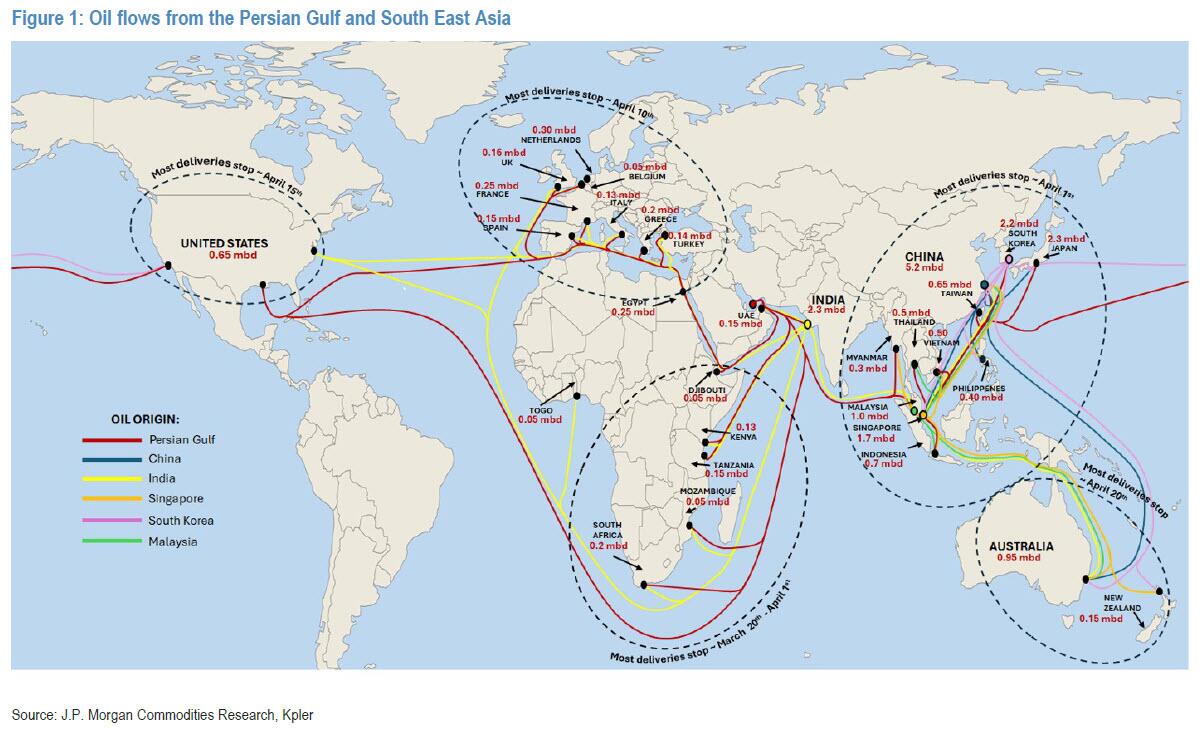
“We are going to start to see some import-dependent countries potentially start to face critical shortages as we get into the June-July time frame” at which point the dreaded “demand destruction” kicks in.
Oil refiners around the world have responded to the Iran war-driven drop Gulf oil shipments by curbing daily processing rates by roughly 8 million barrels, roughly the amount that has been blockaded by Iran, O’Brien noted. The knock-on effects of those cuts and the wider market disruption have included skyrocketing prices for everything from jet fuel and gasoline to fertilizer.
The ConocoPhillips executive’s comments represented some of the starkest yet from a US oil producer with a global footprint that stretches from Alaska to Australia. As for ConocoPhillips, the conflict that began with US-Israeli attacks on the Islamic Republic in late February prompted the company to reduce its full-year output forecast to the equivalent of 2.3 million barrels a day of oil, according to a statement. That figure, the midpoint of a forecast that includes a cut in supplies from Qatar, would be the lowest since the company’s 2024 takeover of Marathon Oil Corp. The energy giant on Thursday also raised spending guidance for the year by about 2% to $12.3 billion, based on the midpoint of the range, reflecting increased activity in the US Permian Basin, the most prolific oilfield in North America.
A second oil major to voice a warning this morning was Chevron, which echoed Conoco’s concerns and said it is worried that global oil supplies are running dry as the US-Israel war with Iran enters its third month.
“That’s certainly the scenario we’re concerned about,” Chief Executive Officer Mike Wirth said Friday in an interview on CNBC. “If we don’t get supply reestablished, demand will have to come down across different sectors of the economy. That’s the big concern that everybody has as we try to avoid a scenario where that becomes extreme.” And by demand destruction he, of course, means soaring prices, something which JPM also warned about – again – last night.
The conflict has already eroded oil demand, and crude traders have warned of a bigger hit to come. There’s no get-around with the effective closure of Hormuz, through which about 20% of the world’s oil and liquefied natural gas typically flows, Wirth added.
“The global energy system continues to be under extreme stress,” he said, and it will only get worse as the ongoing drain of global inventories pushes them to operational stress levels, and then, hit the operational floor.
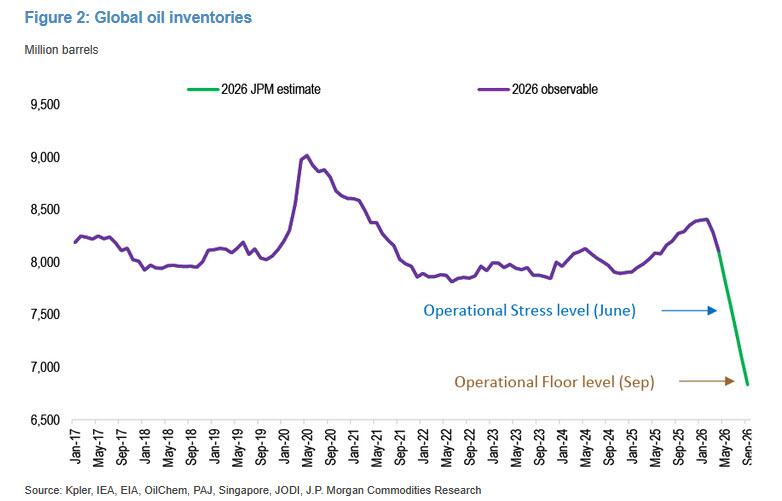
Wirth, who added that his company is speaking with the Trump administration on an “almost constant basis,” most recently this week when the White House spoke to the largest US companies about a prolonged blockade of Hormuz, was the latest US oil executive to share concerns that the world’s extra supply of oil stored on land and at sea could be running out if the Strait of Hormuz remains closed.
Tyler Durden
Fri, 05/01/2026 – 11:40
via ZeroHedge News https://ift.tt/d1URMh0 Tyler Durden