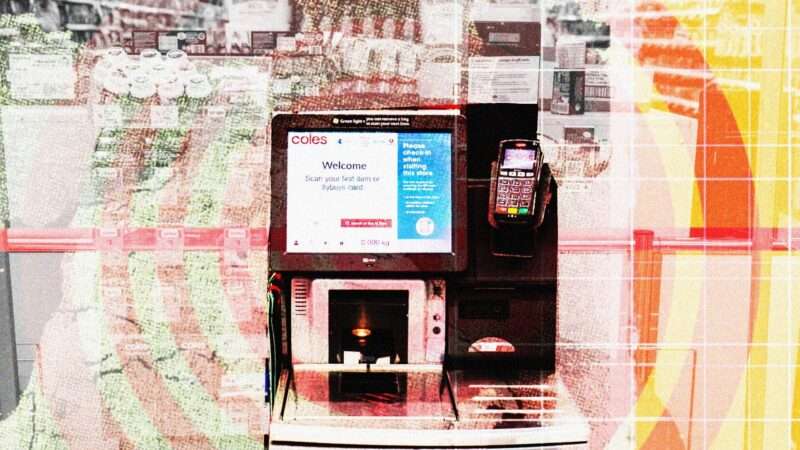
Self-checkout machines are in the crosshairs. In recent months, numerous states and localities have considered legislation to curtail the use of automated checkout in grocery stores. These bills are often positioned as part of an effort to cut down on retail theft, but it appears the driving force behind them is to create more unionized jobs.
According to USA Today, at least six states have considered rules that would restrict self-checkout machines. The states range from blue Connecticut to red Ohio, but it doesn’t stop there. Two cities in California already have self-checkout limits in place, while New York City is currently considering restrictions as well.
Self-checkout restrictions are often framed as a commonsense crime prevention measure that protects grocery store workers and cuts back against the recent uptick in retail theft nationwide. But when it comes to these bills, the fine print points toward a different motivation.
For instance, the Connecticut bill mandates that stores must have one employee for every two self-checkout machines, in addition to having one manual checkout station for every two automated lanes. Stores cannot go over eight self-checkout lanes total. And any employee designated with the task of supervising self-checkouts is barred from engaging in any other simultaneous duties that could interfere with such supervision.
The various bills percolating in other state capitals and city halls are all largely structured the same. A previous iteration of California’s self-checkout bill specified that any store seeking to implement technology that “significantly affects the essential job functions of its employees” or “eliminates jobs or functions” must conduct an “impact assessment” before doing so, underscoring the real impetus there.
In other words, in the name of reducing theft, these rules would functionally operate to increase the number of clerks that each store must employ at any given time. Given that the grocery industry has historically had higher unionization rates than other retail sectors, this would translate into more unionized jobs.
If any doubt remains, one need only look at the biggest supporters of these bills. In Connecticut, all the legislative testimony submitted in favor of restricting self-checkout came from labor unions, including representatives affiliated with AFL-CIO, Service Employees International Union (SEIU), and the United Food and Commercial Workers (UFCW), which is the largest grocery worker union in the U.S. A CalMatters summary of sponsors and opponents for California’s self-checkout bill likewise shows that the majority of the bill’s boosters are labor unions.
News articles published about these bills also frequently quote UFCW reps touting their virtues. The effort to restrict self-checkout dates back to at least 2019, when unions in Oregon pushed a state ballot measure that would have limited groceries to two self-checkout lanes per store.
To be sure, there is evidence that self-checkout machines can result in higher shoplifting rates. One frequently-cited study found that so-called inventory shrink at grocery stores was 16 times more likely with self-checkout than with traditional cashiers. A LendingTree survey reported that 27 percent of self-checkout users admit to intentionally stealing items in self-checkout lanes, with another 36 percent saying they took items inadvertently.
But unsurprisingly, stores themselves—who have a direct bottom-line incentive to prevent shoplifting—have proven more than capable of responding. Walmart and Target have garnered headlines for dropping or limiting self-checkout at various stores around the country, while Five Below and Dollar General have also curtailed automated checkout in recent years. Technology also offers promise, with various groceries now onboarding smart video and AI to crack down on shoplifting in the self-checkout lane.
In the end, no one wants to clamp down on retail theft more than grocery stores themselves. If that means cutting back on self-checkout, they will do so. But they don’t need the government, aided by unions, to decide for them—and to forcibly inflate their payrolls at the same time.
The post Self-Checkout Is Under Fire Across the Country. Is Theft Really the Reason? appeared first on Reason.com.
from Latest – Reason.com https://ift.tt/5g3mPac
via IFTTT