Alberta Separatists Say They Have Enough Signatures To Force Referendum On Leaving Canada
A group pushing for Alberta to break free from Canada announced Monday that it has submitted nearly double the number of signatures required to force a referendum — which could come as early as October. While Alberta Premier Danielle Smith opposes independence, she has assured Albertans that she will not try to thwart a referendum if the signature hurdle were cleared.
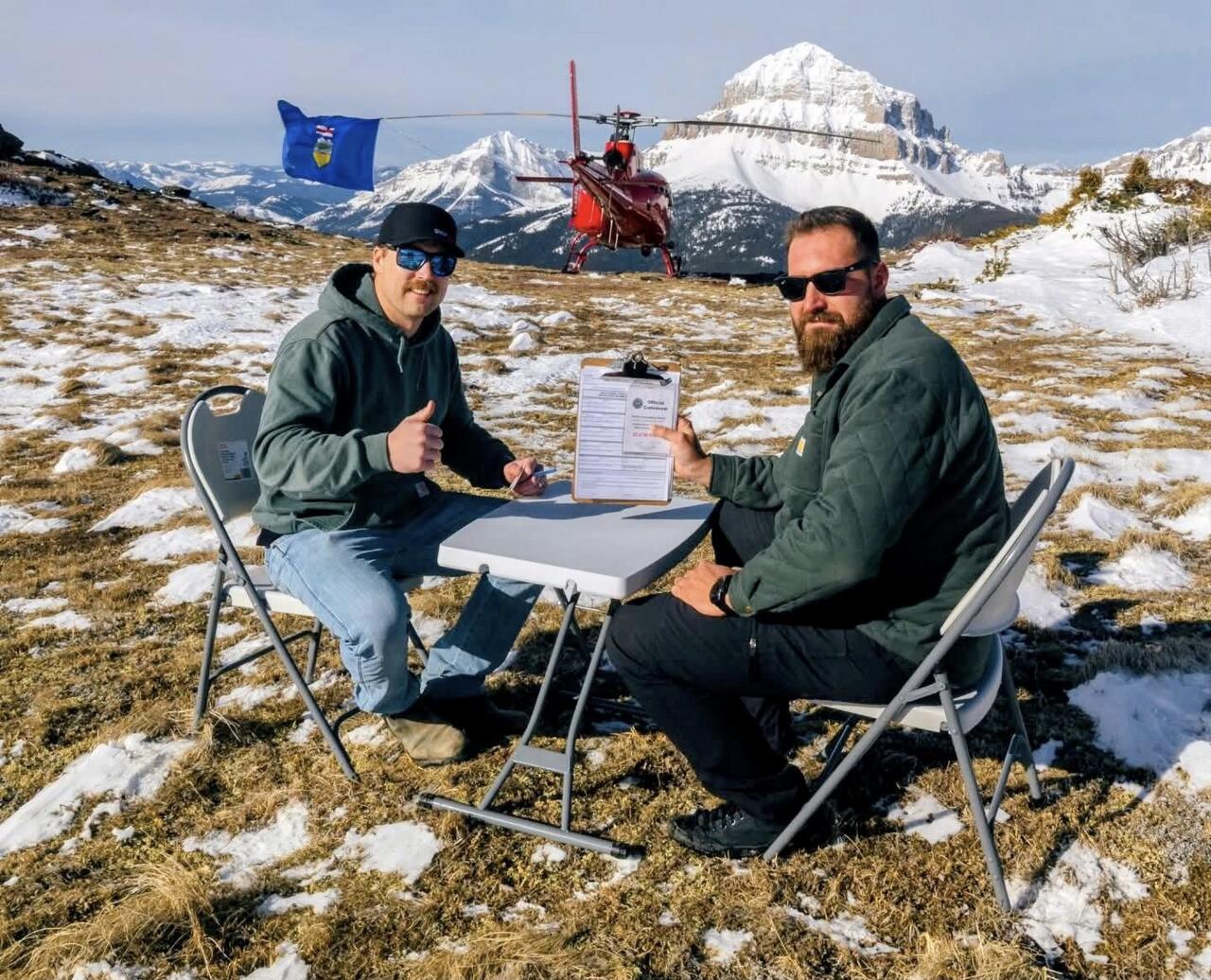
Triggering a referendum requires 178,000 signatures, but the separatist organization Stay Free Alberta says it amassed more than 301,000. As in the United States, referendum organizers usually aim to far overshoot the required number so as to survive challenges on the validity of individual signatures.
On Monday, the group’s leader, Mitch Sylvestre descended on Alberta’s election offices in Edmonton with the petitions, aboard a convoy seven trucks strong. Celebrating the accomplishment, he likened it to Canada’s favorite sport. “This day is historic in Alberta history,” he said. “It’s the first step to the next step — we’ve gotten by Round 3 and now we’re in the Stanley Cup final.”
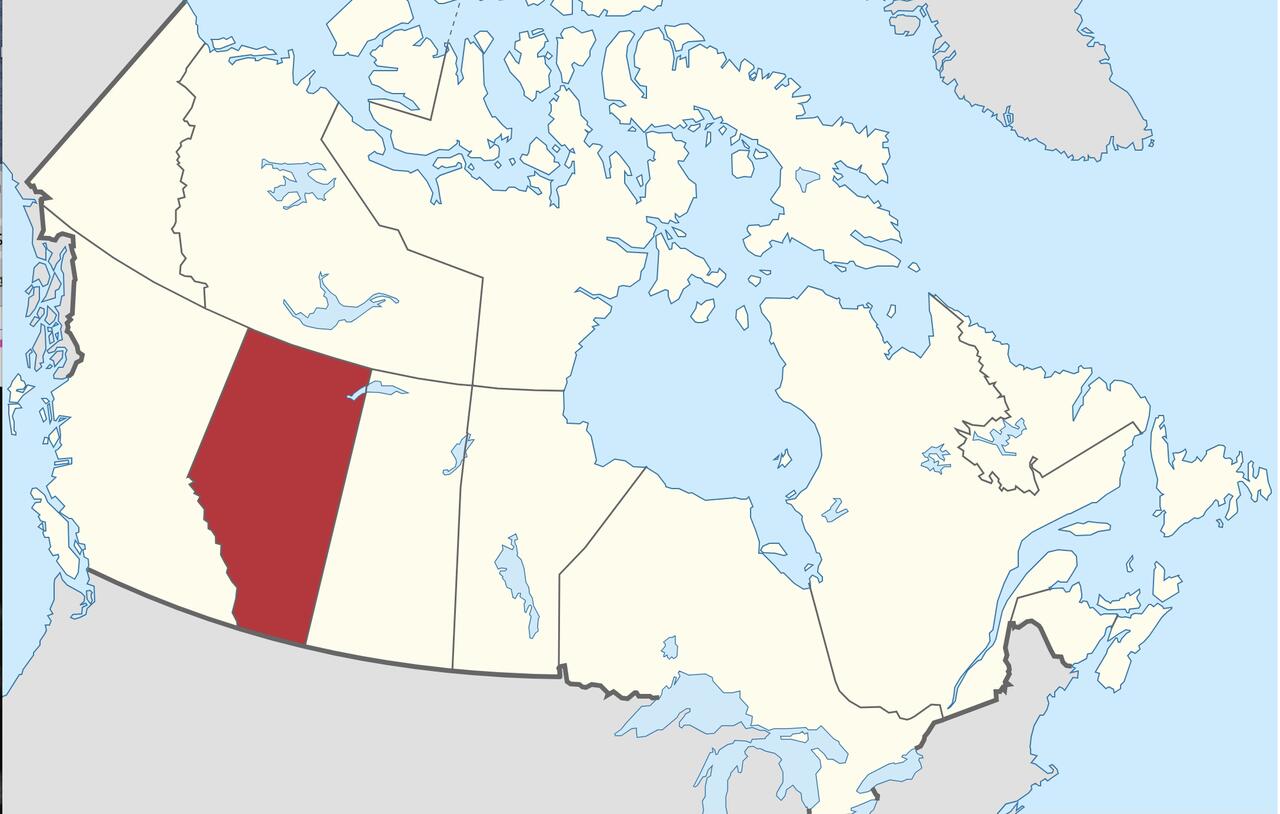
Despite Sylvestre’s triumphalism, the independence drive could hit a snag this week, as a judge may rule on a challenge of the referendum filed by a First Nations group. That term is used to describe indigenous people who are not Inuit or Métis. Their legal challenge centers on the claim that Albertan independence would deny them privileges afforded them by treaties. The verification of referendum-support signatures has been stayed pending the decision. However, Stay Free Alberta attorney Jeff Rath said these are mere speed bumps. “As far as we’re concerned, whatever the court does or whatever Elections Alberta does at this point is meaningless,” he told CBC, given the premier can’t ignore more than 300,000 signatures.
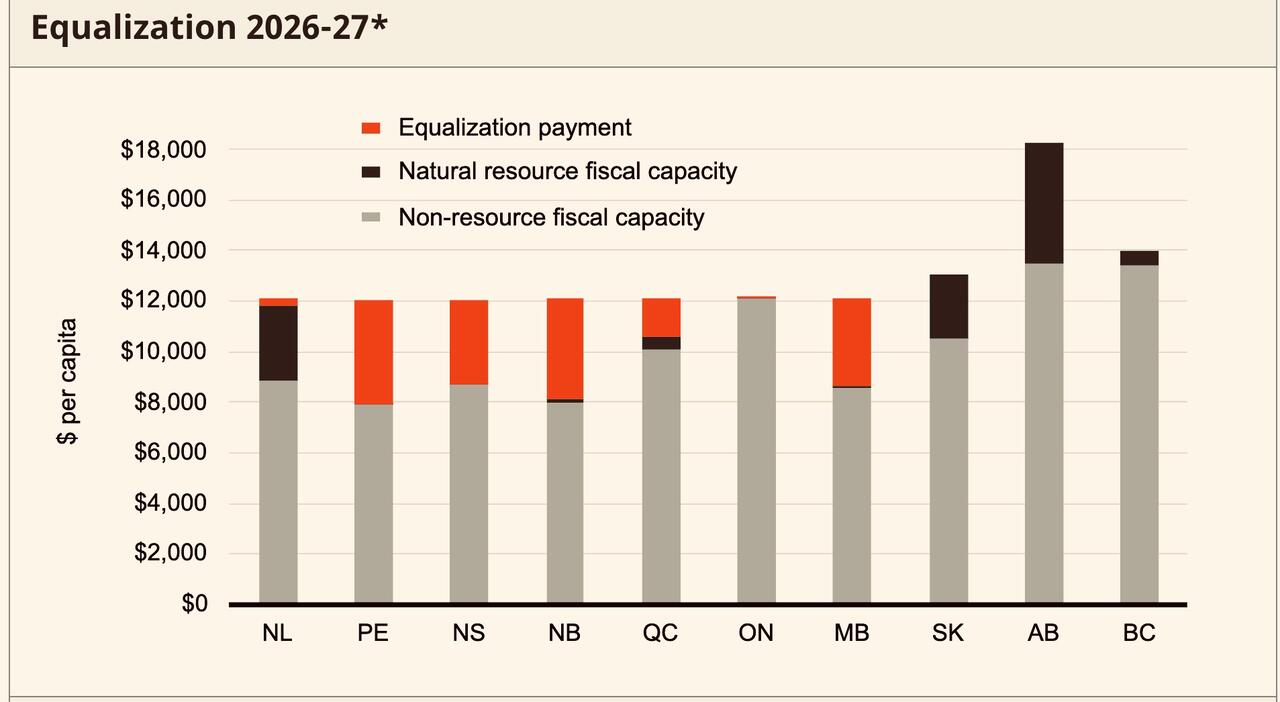
Alberta has been on the wrong end of a Canadian policy called “Equalization” — a more palatable term than what it should be called: “Wealth Redistribution.” According to the Canadian government’s official description, Equalization “address[es] fiscal disparities among provinces.” It does so by distributing the fiscal fruits of federal taxation to provinces in such a way that poorer provinces get more money than more-prosperous ones. Alberta is easily Canada’s best-off province on a per-capita basis.
A victory for the “yes” side of the referendum won’t guarantee independence, as more legal challenges will certainly sprout up, to say nothing of the thorny negotiations with the Canadian government that would be required — negotiations that could be slow-walked by Albertan leaders who aren’t enthused about breaking away.
For those and other reasons, some who support independence are wary of how the referendum will play out. For example, even if the pro-independence side prevails, the waters could be muddied by the results of concurrent referendum questions. Writing at the Brownstone Institute earlier this year, Bruce Pardy painted a picture:
If voters support independence but also other constitutional changes, what do they mean? Which should be pursued first? Which is the last resort? What if voters support independence but also support Alberta having the right to opt out of federal programs while retaining federal funding? Both of those things cannot happen. One requires that Alberta be a province, and the other requires that it not be. Any referendum result that requires interpretation is not clear.
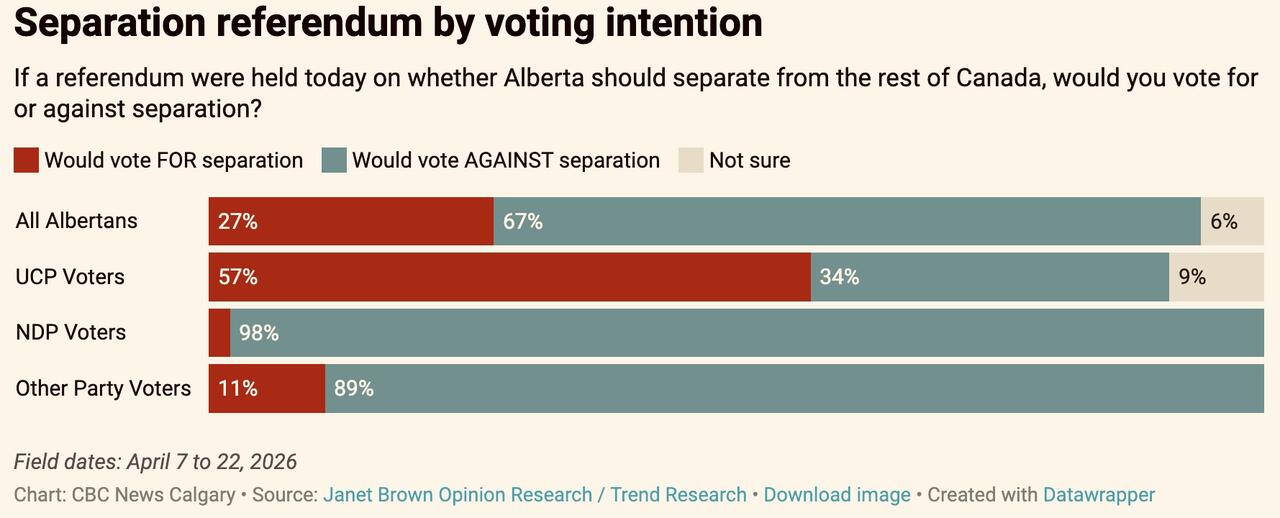
A pro-unity group called Forever Canadian has been active too, racking up more than 400,000 signatures on a petition that asked, “Do you agree that Alberta should remain within Canada?” Meanwhile, polls show an uphill climb for the separatists, with huge differences between United Conservative Party and New Democratic Party voters:
Tyler Durden
Tue, 05/05/2026 – 16:40
via ZeroHedge News https://ift.tt/yoCQVPh Tyler Durden