‘Impossible To Negotiate With Ukraine’ After School Dormitory Strike, Kremlin Informs UN
The last year of the Ukraine war has been marked by both warring sides remaining far from the negotiating table, instead opting for a battlefield solution, also as a deadly tit-for-tat drone and aerial war continues to unfold. This week things just got even worse concerning the distant prospect of restarting direct peace talks, something underscored by a fresh statement of Russia’s Ambassador to the United Nations.
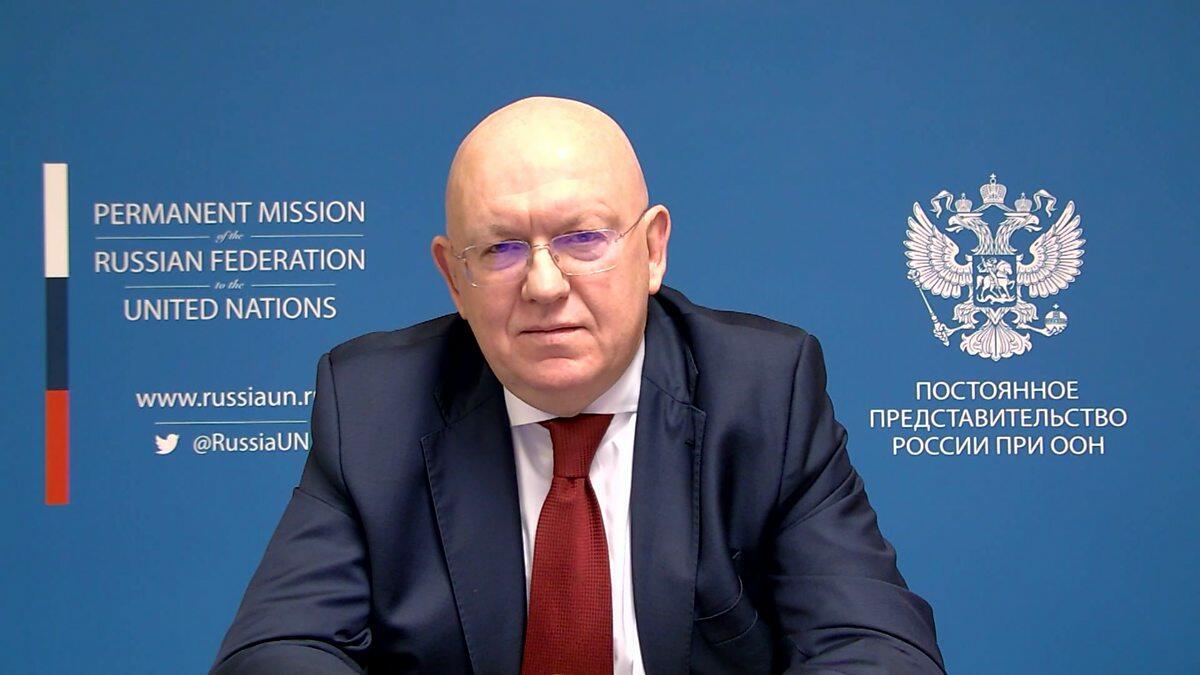
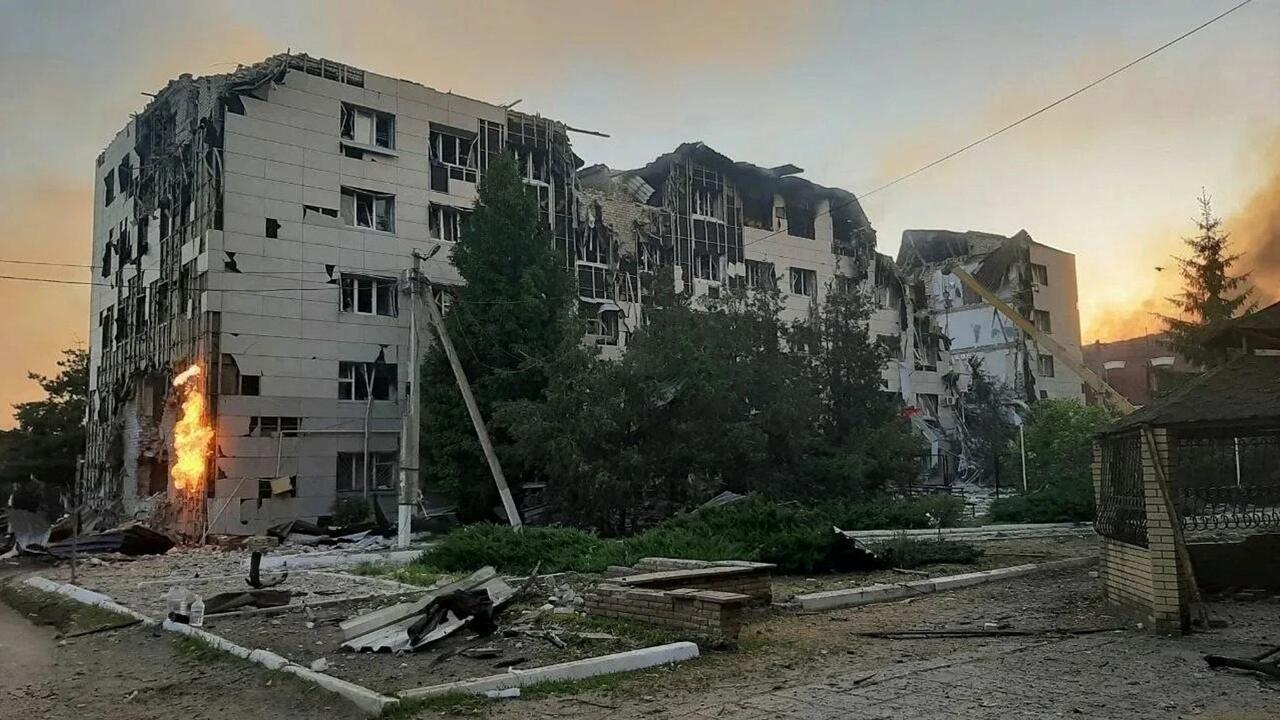
Russia’s UN Ambassador Vassily Nebenzia said Friday after a massive Ukrainian drone attack on a college in Starobelsk (Starobilsk) in the Lugansk People’s Republic that it’s now impossible to negotiate with Kiev.
“This clearly confirms the treachery and non-negotiability of Kiev, which, with the encouragement of its Western sponsors, is not only not committed to a peaceful settlement, but also openly sabotages it,” Nebenzia told a meeting of the UN Security Council.
“This deliberate attack on a civilian facility where children study and live, carried out at night when the dormitory was full, was clearly carried out with the aim of maximizing the number of victims,” the Russian envoy continued.
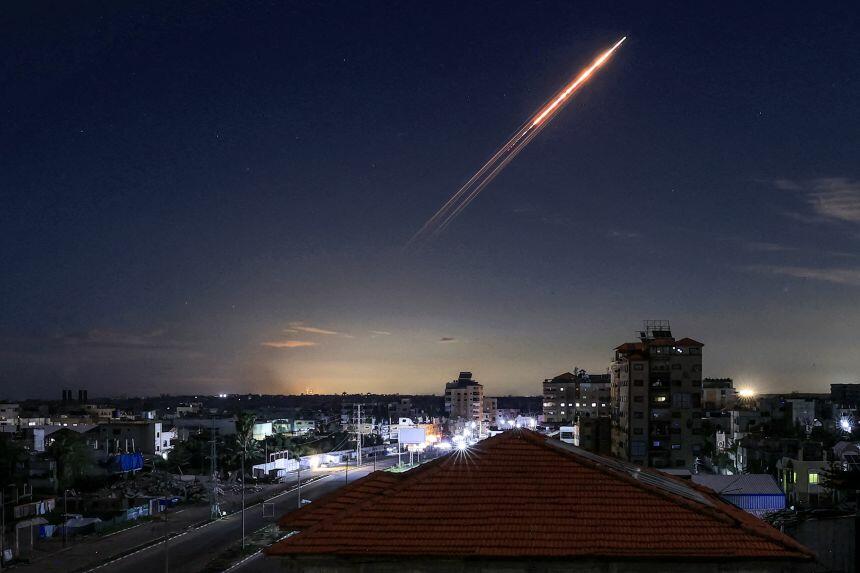
The death toll from the Thursday overnight into early Friday hours attack has risen to at least 18, amid a massive rescue effort which went through Friday. At least 39 were initially reported injured.
Large-scale destruction was observed at the academic building and dormitory of the Starobelsk Professional College, which teaches students aged 14 to 18. Over 80 students were at the complex at the time of the attack.
Additionally, Kremlin spokesman Dmitry Peskov said those responsible needed to be brought to justice, calling it “a monstrous crime” – given the “attack on an educational institution where children and young people are present.”
The assault also included multiple strikes and drones, ruling out the possibility of an ‘accidental’ targeting, Amb. Nebenzia continued in his remarks. He further blasted Ukraine’s western backers.
“Such strikes using long-range weapons provided to the Kiev regime by NATO countries, including drones, are being carried out with technical assistance being provided by foreign specialists from well-known NATO states,” Nebenzia added.
State media also underscored that “He argued that the attack demonstrates that negotiations with the current Ukrainian leadership are impossible.”
President Putin had on blasted the mass casualty incident as a “terrorist attack by the neo-Nazi regime” while vowing swift revenge. He has reportedly asked for input from the Defense Ministry, meaning that plans are in motion for a likely imminent, heavy aerial assault on Ukraine.
Nvidia CEO Urges Super Micro To “Enhance Compliance” Amid AI Chip-Smuggling Probe
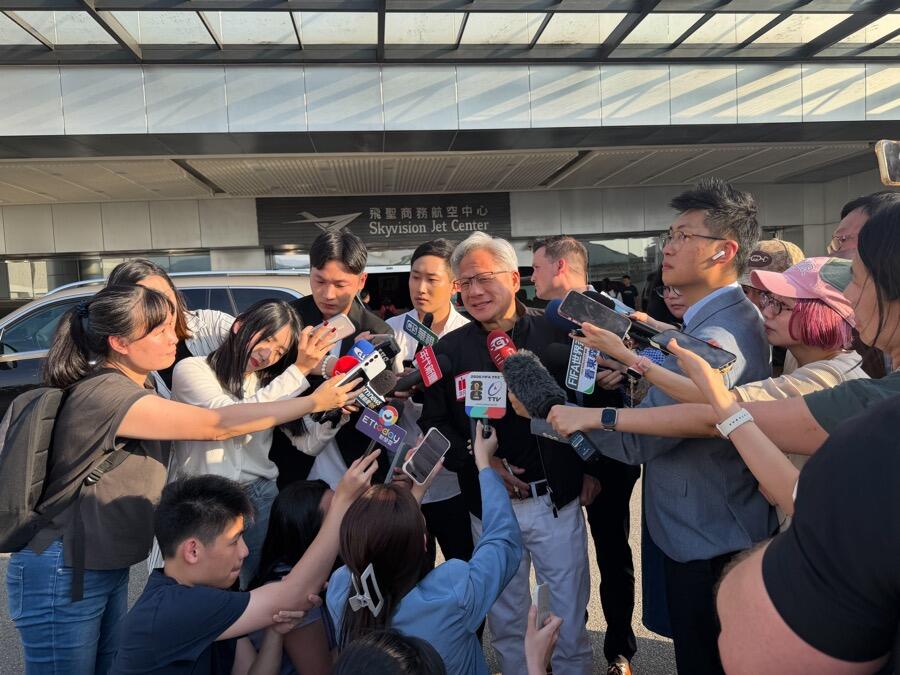
In a rare public comment that Nvidia is growing more sensitive to downstream risk, CEO Jensen Huang was quoted by Bloomberg News as saying Super Micro Computer must strengthen internal compliance controls after Taiwanese authorities detained three people accused of smuggling banned AI chips to China.
“Ultimately, Super Micro has to run its own company,” Huang told reporters on Saturday in response to the chip smuggling scheme. “I hope that they will enhance and improve their regulation compliance and avoid that from happening in the future.”
The U.S.-based server and data-center hardware company primarily builds high-performance servers, storage systems, networking gear, and complete AI/data-center racks for various customers, but most importantly for those working on edge computing and artificial intelligence workloads.
Huang said Nvidia is “rigorously” explaining the complex regulatory environment to all its partners to avert further downstream diversion risk.
Huang’s comments stem from federal prosecutors charging the co-founder of Super Micro and two associates with participating in a scheme to divert roughly $2.5 billion in Nvidia AI accelerators to China.
How the Alleged Scheme Worked:
The group used a company in Southeast Asia as a front buyer to place huge orders with a California-based U.S. manufacturer.
Once the servers arrived in Southeast Asia, they were quickly repackaged and secretly shipped to customers in China through a network of brokers.
Our view is that Huang’s comments suggest he is trying to insulate Nvidia from a widening chip-smuggling investigation while preserving access to highly scrutinized international markets.
Now that we’ve drained the aquifers of a stable society, the replacement form of “wealth” is a delusional credit-asset bubble that generates the illusion of “wealth.”
Let’s weave together two threads that look different: systemic unfairness and civilizational psychosis. As I often note, social species that organize themselves into hierarchies (i.e. primates, including humans) have an innate sensitivity to fairness, as this trait is essential to maintaining social stability, and therefore it has been selected as advantageous.
This sensitivity applies both to individual instances of unfairness / injustice and to systemic unfairness / injustice. If there is no redress when an individual is treated unfairly or abused, the social order is weakened. This is why early civilizations instituted legal codes and systems of redress as they expanded into nations / empires that needed bureaucracies to organize, manage and enforce the rules and responsibilities of every class.
If the mechanisms of redress have become empty shams, then the unfairness is systemic: it isn’t just some individuals who have been treated unfairly–everyone is being exploited and treated differently from what the system claims is the operative set of values and rules.
When there’s an external source of wealth to be exploited, the leadership has the luxury of becoming extractive and oppressive, because they have a source of wealth that’s external to their own populace. Consider the progression from a society of systemic fairness to a society of systemic unfairness.
Consider a fledgling nation that was a society with high levels of social trust and cohesion generated by a dutiful leadership, social mobility and a system in which social pressures meant members of each social class had to respect the same set of social rules.
This structure is the essential foundation of a functional society and economy, for if the resident populace is immiserated by an unfair system, they respond by either fleeing the system (i.e. opting out or leaving), resisting the unfairness / exploitation or revolting against the status quo.
If the nation transitions into an expansionist empire, the leadership can jettison fairness / redress because it can extract wealth via conquest or exploiting new resources. The bureaucracy is co-opted / bought off via the spoils of conquest and corruption, and as the imperium expands, it has sufficient wealth to buy off the citizenry class with bread and circuses or equivalent largesse.
In other words, systemic unfairness–what we now call a rigged casino–is accepted as long as the key social classes feel they’re getting ahead. The Roman state / empire is an example of these dynamics, but there are many others.
As long as there’s enough external wealth flowing in to enable people to feel they’re still getting ahead, social decay is tolerated as “the cost of progress.” In other words, who needs fairness if I have a seat in the rigged casino?
But this structure is inherently unstable, both economically and socially. External sources of wealth / resources are eventually depleted, and the largesse diminishes asymmetrically: the wealthiest few at the top continue amassing fortunes, the bureaucrats are squeezed, and the lower classes are now being taxed to cover the decline of external wealth extraction.
The systemic unfairness that was tolerated is no longer tolerable once the majority are no longer getting ahead. This presents the leadership class reaping the lion’s share of the wealth extraction with a problem: how to persuade the masses that 1) they’re still getting ahead, even as they visibly lose ground, and 2) how to mask the systemic unfairness, i.e. the rigged casino that stripmines the many to benefit the few.
The leadership’s “solution” is civilizational psychosis: the founding mythology of the state–so inspirational and lofty–is heavily promoted, even as this mythology (super-abundance, democracy, etc.) no longer maps the real world.
This widening divide generates civilizational psychosis as the masses are corralled into a state of denial that temporarily eases their anxiety at the recognition they’re no longer getting ahead and the ladders of upward mobility have all crumbled.
This state of inspirational delusion enables denial to take a superficially plausible inspirational form: Rome is eternal, so we don’t have to do anything but await an automatic return to greatness, AI will make us all rich, technological Progress is inevitable and automatically solves all our problems, and so on.
We fervently believe these delusions because the alternative is too painful to bear. The system is rotten to the core, it’s all artifice masquerading as authenticity, and not only are we no longer getting ahead, there are no pathways left to get ahead other than gambling, selling our blood or delusional aspirations to become one of the tiny handful of newly minted Tech Bro millionaires.
There is an emotional progression that parallels the progression from a stable society of dynamic equilibrium to civilizational psychosis: denial breaks down into anger, a volatile state with uncertain outcomes, which eventually transitions to bargaining (please let the stock market go back up so I can exit without losses) which leads to depression (it’s all lost) which once processed can move to acceptance (oh well, time to start over).
Both denial and civilizational psychosis are inherently unstable as they’re self-liquidating. So denial will blossom into anger whether we “like” it or not.
Now that we’ve drained the aquifers of a stable society, the replacement form of “wealth” is a catastrophically delusional credit-asset bubble that generates the illusion of “wealth.” Since the top 10% managerial / entrepreneurial / professional class the leadership needs to run the empire own 90% of the bubbling assets, inflating a credit-asset bubble is a painless way of generating the illusion in this class that they’re still getting ahead.
Until the bubble pops, of course, and all bubbles pop, even when we insist they’re not bubbles.
Bubbles masquerading as “wealth” is a manifestation of civilizational psychosis, and so these asset bubbles are equally unstable and self-liquidating: they implode not as a result of some external influence but as an inevitable consequence of their internal structure / nature.
Once the system’s transition to a rigged casino becomes undeniable, denial cracks wide open and is replaced by anger. The responses to systemic unfairness are flight, resistance and revolt: dropping out, laying flat, let it rot, opting out, booing toadies worshiping the new gods of AI and eventually, manifestations of revolt as political, economic and social redress are suppressed as needless by a delusional leadership class that has embraced civilizational psychosis.
The price of believing their own PR will be higher than anyone thought possible.
Ukraine Regained Territory After Cutting Russia’s Black Market Starlink Terminals
According to a newly declassified U.S. defense intelligence assessment first reported by Bloomberg, Moscow’s frontline command-and-control structures suffered a catastrophic blackout earlier this year due largely to coordinated crackdown that disabled thousands of black market Russian Starlink terminals.
The Pentagon document highlights just how deeply Russian forces had come to rely on Elon Musk’s commercial satellite terminals to patch over their own spotty military communication systems. For months, Russian units bypassed international sanctions via shadow supply networks to source the hardware.
The Friday Bloombergreport claims that a “Ukrainian offensive against Russia earlier this year retook about 400 square kilometers after thousands of portable Starlink internet terminals operated by Russian forces were deactivated,” citing analysis from the US Defense Intelligence Agency.
The document, authored jointly by the DIA and US European Command, states that “Russian military capabilities in Ukraine were temporarily yet significantly degraded following Ukrainian officials’ efforts in February to deactivate thousands of Starlink terminals that were illicitly used by Russian forces to coordinate movements and unmanned aircraft strikes in areas where communications were unreliable or easily jammed.”
Ukrainian forces then made their first territorial gains since 2023, after years of steady Russian gains, with Russia military comms now said to be “temporarily yet significantly degraded” due to the loss of the terminals.
The report further describes that Kiev forces working in tandem with SpaceX were able to deploy sweeping geographic restrictions that target-locked and deactivated unauthorized terminals operating inside the combat zone. This resulted in “instant” results.
What also didn’t help is the Kremlin’s own tightening restrictions on the use of Telegram by Russian forces, and so also the recent lack of this favored encrypted messaging platform among military units left frontline commanders totally isolated.
While US intelligence noted that Russia still maintains an overall structural advantage in raw combat functions, and of course manpower and firepower remains on Moscow’s side, the incident demonstrates that communications are still a vital backbone to any modern warfare and command system.
SpaceX has long sought to officially bar Russian consumers from using Starlink, due to long-running sanctions, and to prevent military use against Ukraine.
Highlights From 2nd Batch Of Declassified UFO Files Include A UAP Shootdown
The Pentagon’s second batch of declassified UFO files released on May 22 includes videos such as Unidentified Anomalous Phenomena (UAP) being shot down over the Great Lakes and audio of astronauts witnessing a series of unexplained phenomena.
Dozens of documents were cleared for release on Friday, adding to the previous document dump on May 8, which revealed that Apollo 11 astronauts reported seeing a “sizable” object near the moon.
The U.S. Air Force shot down a balloon-shaped UAP over Lake Huron, one of the Great Lakes located between the United States and Canada, on Feb. 12, 2023.
A U.S. Air Force Air National Guard F-16C shoots down a UAP over Lake Huron on Feb 12, 2023. Department of War
The video, which the War Department said was likely taken by an infrared sensor aboard a U.S. military platform, showed the UAP being struck and “fragmenting in a radial displacement pattern that suggests a high-energy event.”
Fragments fall from the UAP after it was shot. Department of War
The War Department did not reveal what fell from the object.
Officials did not share if any attempts were made to recover the fragments.
The Epoch Times reached out to the Department of War for additional information.
UAP Formation Caught on Camera
The Department of War released a video showing “four areas of contrast” seemingly making a formation, according to a video apparently filmed by an infrared sensor aboard a U.S. military platform.
A screenshot from a video titled “UAP USO Formation.” USO stands for unidentified submerged object. Department of War
The eight-minute clip, which was edited and digitally altered, showed four objects moving in a parallel direction as they became “increasingly indistinct over time as the video quality degrades.”
Four unexplained objects moving in the same direction in a screenshot from video. Department of War
The War Department did not share the date or location of the unexplained formation.
International Sightings
An infrared sensor spotted a UAP, described as “four areas of contrast,” zoom past what appeared to be ships in the U.S. Central Command area of responsibility in Iran on August 2022.
In a separate incident that year, video captured “multiple spherical UAP” near a submarine in March that were going “in and out of water.”
A UAP, or possibly more than one, appears on the lower left side of a classified video taken in Iran on August 2022. The red circle was added by The Epoch Times to clarify what the Department of War considered to be an unknown anomaly. Department of War
Additional videos showed UAP in Syria in 2021, a “spherical UAP over [Afghanistan] in and out of clouds” in November 2020, and a video that starts in color and shows a bright UAP over the water off the East Coast of the United States.
The latest document dump included a CIA intelligence information report from the Soviet Union that was recorded in the summer of 1973.
The decades-old report revealed that an unnamed source on the Sary Shagan Weapons Testing Range in Kazakhstan witnessed a “sharp, (bright) green circular object or mass in the sky.”
The source, who was identified as a former Soviet citizen, said the “green circle widened and within a brief period of time several green concentric circles formed around the mass.”
The witness did not hear any sounds associated with the phenomenon.
NASA Audio
The second batch of UFO-related files also included several audio clips released by NASA from its Mercury and Apollo missions.
An audio recording from Mercury-Atlas 7 on May 24, 1962, featured pilot Scott Carpenter describing reflective white particles that moved at “random” and appeared to “look exactly like snowflakes.”
He said the phenomena moved faster than his spacecraft.
Additional “little white objects” were also reported months later during the Mercury Atlas 8 mission.
On Oct. 3, 1962, pilot Walter M. “Wally” Schirra Jr. described “little white objects that tend to come from the capsule itself and drift off.”
Minutes later, Schirra reported a burst of light in his window.
“[I’m] getting a real burst of light in the window, and I really don’t know what it is,” Schirra said.
In December 1972 during the Apollo 17 mission, the 11th and final crewed mission in the Apollo program, Cmdr. Gene Cernan, Lunar Module Pilot Harrison Schmitt, and Command Module Pilot Ronald Evans reported “very bright particles or fragments of something” that drifted by outside the spacecraft as they transited to the moon.
Pentagon, Intelligence Community Preparing For Renewed Strikes On Iran This Weekend: CBS
CBS is reporting that the Trump administration, specifically the Pentagon – as well as intelligence community officials – are currently preparing for a new potential round of military strikes against Iran within the next three days.
However, like with much of the latest speculation and reporting regarding what comes next in the Iran war, the report included the important caveat that nothing is ultimately confirmed or final: “No final decision on strikes had been reached as of Friday afternoon.”
“Some members of the US military and intelligence community canceled their plans for the Memorial Day weekend in anticipation of possible strikes,” several sources said.
“Defense and intelligence officials began updating recall rosters for US installations overseas as tranches of troops stationed in the Middle East rotate out of theater, part of an effort to reduce the American military footprint in the region amid concern about possible Iranian retaliation,” CBS said.
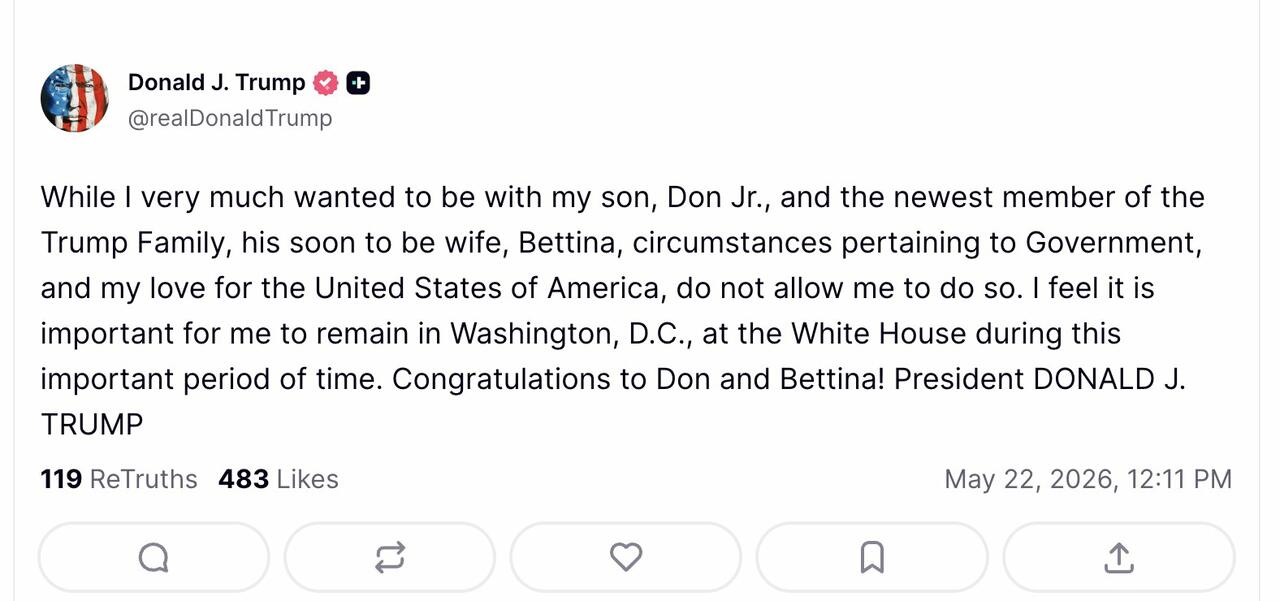
Additionally, Trump’s own Truth Social post about missing his son’s wedding has set off an avalanche of speculation that renewed attacks are imminent.
“Circumstances pertaining to Government” are keeping him from attending his son Donald Trump Jr.’s wedding this weekend, Trump wrote in the post.
“I feel it is important for me to remain in Washington, D.C., at the White House during this important period of time. Congratulations to Don and Bettina!” Trump said. The day prior he had been vague in answering reporters’ questions on the matter.
“He’d like me to go, but it’s going to be just a small little private affair, and I’m going to try and make it,” he had said.
A number of pundits noted the ease with which he frequently goes down to Florida to play golf, and that it’s strange that he would now miss his son’s wedding. However, the wedding is being held out of country, at a small island in the Bahamas, and so this does bring with it extra logistical and security planning and logistics.
As for potential new military action, it’s obvious that Trump has been growing increasingly impatient and frustrated about Iran’s lack of compromise when it comes to negotiations over several days and weeks.
The White House has made recovery of the country’s enriched uranium a top priority, while Tehran has repeatedly slammed the door on this as an option and has not budged. The Iranians aren’t even making the nuclear issue part of talks to achieve peace, and have made clear their view this would be for future, post-war negotiations.
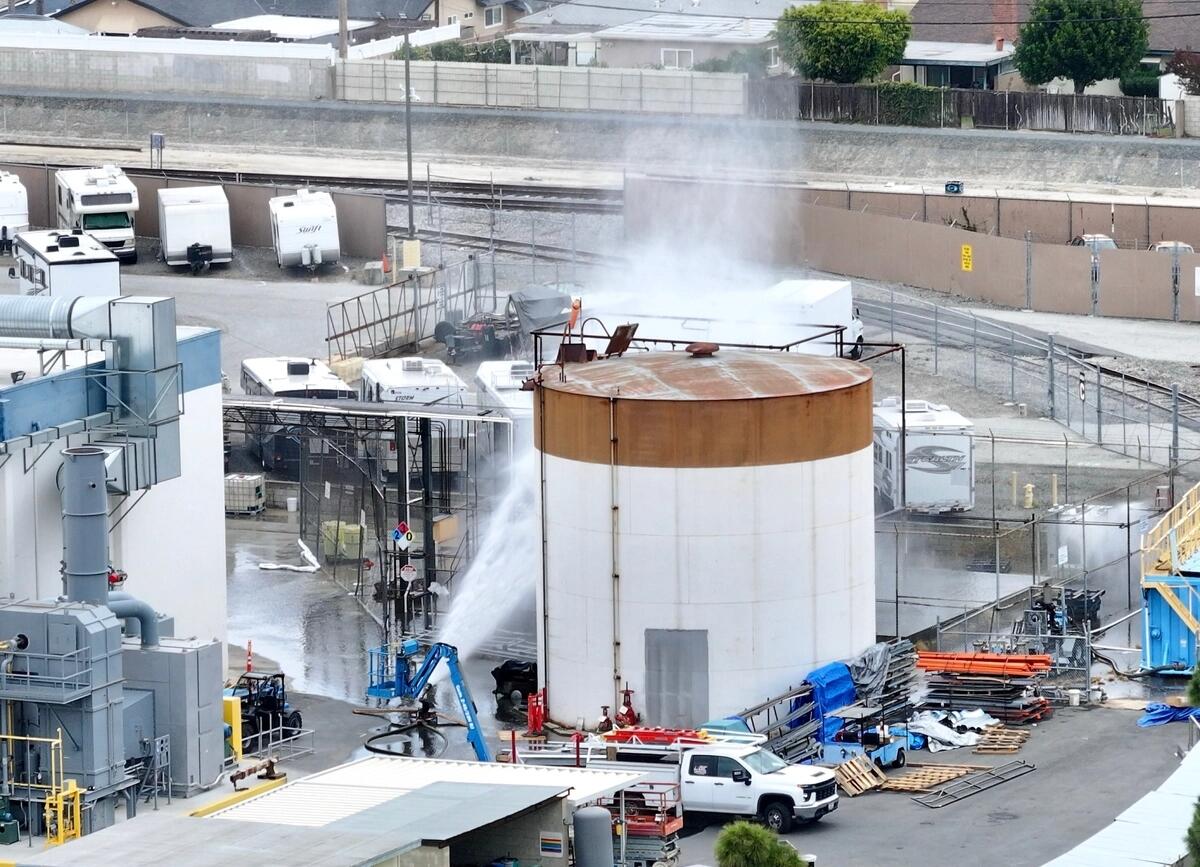
Roughly 40,000 people in Garden Grove, a Los Angeles suburb, were evacuated on Friday after a chemical storage tank was determined to be at risk of failing and spilling thousands of gallons of toxic material or exploding.
The malfunctioning tank holds methyl methacrylate, a flammable and volatile chemical used in plastics manufacturing for aerospace applications, igniting widespread worries over potential toxic vapor release.
The situation broke out Thursday, when the tank at a manufacturing facility started displaying signs of instability. By Friday, an update increased fears of an explosion, Orange County Fire Authority interim Chief TJ McGovern said.
On Friday, employees saw that the tank was bulging, a sign it was still “actively in crisis,” as one official described it.
The manufacturer said a valve had been damaged, preventing a controlled release.
Firefighters were working to cool the tanks with a mechanical device operated from a safe distance, stabilizing the temperature and buying critical time, officials said.
“I know I keep talking about we were handed this situation where there’s only two things that can happen: it could crack and leak, or it could blow up. That’s not acceptable to us,” Craig Covey, division chief of the Orange County Fire Authority, said in a video posted on social media.
Covey added in a later video, “I have an entire team actively working locally, regionally, across the state, and across the country, to try to figure out how to fix this.”
He said he is working to “get all these brilliant minds together to put a plan together, so that we don’t let this blow up.”
In an earlier announcement, Covey said the tank could fail and spill up to 7,000 gallons of toxic chemicals or explode and compromise neighboring tanks.
Garden Grove, which is home to 172,000 residents, is located approximately 30 miles south of Los Angeles. The evacuation zone affected neighborhoods in and around the city, and extends to nearby areas including parts of Anaheim, Cypress, Stanton, Buena Park, and Westminster.
Officials established three evacuation shelters in Garden Grove, Anaheim, and Cypress. Schools and roads in the affected areas were closed.
Garden Grove Police Chief Amir El-Farra said approximately 15 percent of those under evacuation orders were refusing to leave.
Health officials said that released vapor could prompt severe respiratory issues with prolonged exposure. Air quality monitors, however, had not detected any vapor as of Friday, said Dr. Regina Chinsio-Kwong of the Orange County Health Care Agency.
“You are safe as long as you are out of the zone that was determined to be an evacuation zone,” Chinsio-Kwong said.
Methyl methacrylate has a sharp, fruity odor. Some residents miles away reported smelling it amid the unfolding events.
The chemical is used in aerospace plastics manufacturing.
Trump Speaks With Qatar Emir As Pakistani-Led Iran Peace Push Intensifies
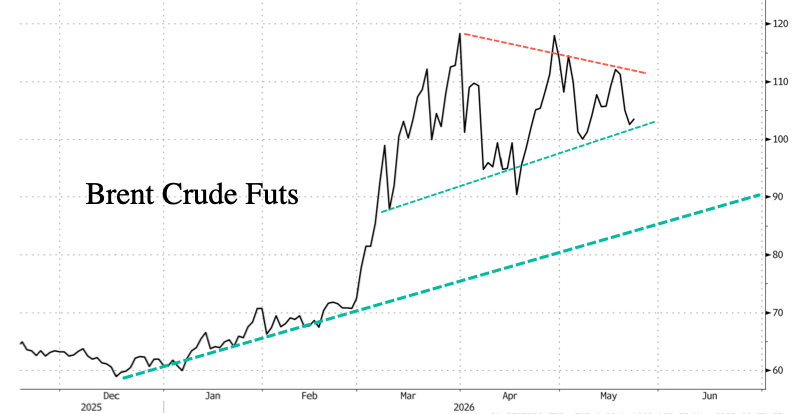
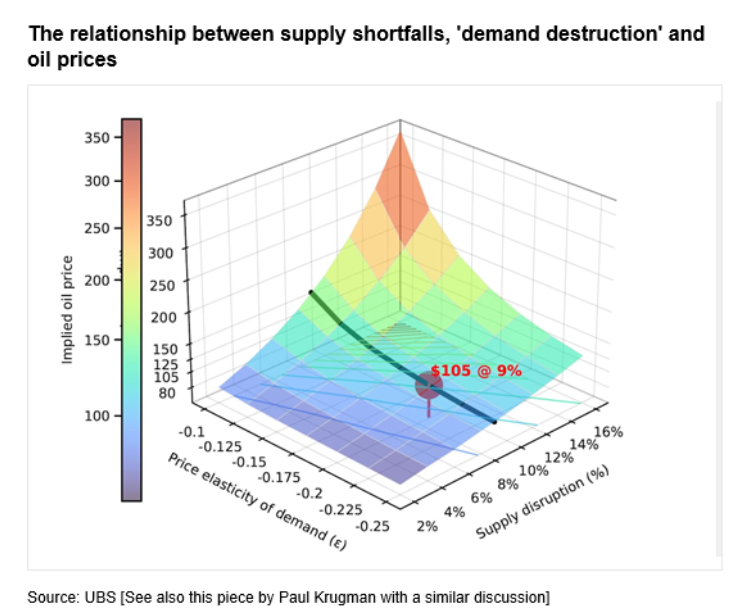
US-Iran de-escalation hopes drove crude oil and rates lower and put a bid in equities by the end of Friday’s trading day, amid speculation that President Trump would stay at the White House over Memorial Day weekend instead of attending Donald Trump Jr. and Bettina Anderson’s wedding celebrations in the Bahamas.
“As Iran/oil/rates pressure eased on de-escalation hopes, leadership rotated toward small caps, equal weight, housing, transports, discretionary, and selective defensive growth, with short covering in high short-interest/profitless tech and consumer cyclicals reinforcing the catch-up trade,” UBS analyst Torsten Sippel wrote in a note to clients late Friday.
Early Saturday morning, Bloomberg reports that President Trump held a phone call with Qatar’s Emir Sheikh Tamim bin Hamad Al Thani, regarding Pakistani-led efforts to de-escalate Gulf tensions and preserve the fragile US-Iran ceasefire.
Iran’s top negotiator and Parliament Speaker Mohammad Bagher Ghalibaf met Pakistani Army Chief Asim Munir in Tehran earlier today amid ongoing diplomatic efforts to bring the US and Iran to a peace deal, Reuters reported, citing Iranian state media.
Ghalibaf told Munir that Iran’s Armed Forces “have rebuilt themselves during the cease-fire in such a way that if Trump foolishly restarts the war, they will definitely be more crushing and bitter for the U.S. than on the first day of the war.”
The Iranian top negotiator also said, “We will not compromise on the rights of our nation and country.”
There was a series of headlines from Sky News Arabia, citing sources, indicating that a major push for regional diplomacy was underway earlier today, with officials from Iraq, Oman, Jordan, and Qatar working to mediate with Tehran to avert another flare-up in the conflict.
Sky News Arabia sources said Pakistan’s mediator helped break the deadlock over the Iranian nuclear file, though several major issues remain unresolved, including the conflict in Lebanon, sanctions on bank accounts, the status of Iranian ports, and the presence of U.S. military forces in the Gulf area.
Iran is reportedly demanding the lifting of restrictions on its ports and a U.S. military withdrawal from the region before reopening the Strait of Hormuz and entering a new round of talks within 30 days.
There is also a reported internal conflict between Iran’s government and the Revolutionary Guard over Tehran’s negotiating demands.
Latest negotiation headlines (via sources) from Sky News Arabia:
Iranian Foreign Ministry: Iraqi and the Omani Foreign Minister discuss in a phone call the ongoing diplomatic efforts to prevent escalation
The foreign ministers of Jordan and Qatar affirm the necessity of concerted efforts to ensure the success of mediation efforts with Iran to reach a sustainable solution that addresses all the roots of the crisis and prevents the renewal of escalation.
The Foreign Ministers of Jordan and Qatar affirm the continuation of coordination of efforts to support targeted mediation aimed at ending the escalation in the region and restoring security and stability.
Sources to Sky News Arabia: The Pakistani mediator has succeeded in overcoming the deadlock on the Iranian nuclear file.
Sources to Sky News Arabia: The issues that have not yet been resolved include stopping the war in Lebanon and lifting the ban on financial accounts.
Sources to Sky News Arabia: Iran demands the lifting of the siege on Iranian ports and the withdrawal of military forces from the region to open the Strait of Hormuz and proceed to a round of negotiations within a 30-day timeframe.
Sources to Sky News Arabia: There is a severe disagreement between the Iranian government and the Revolutionary Guard regarding Iran’s demands for negotiations.
Additional overnight headlines (courtesy of Bloomberg):
Economic Impact
The dollar ended the week nearly unchanged as risk assets got a boost from optimism around US-Iran peace talks [BN]
Germany’s business outlook improved for the first time since the Iran war began, with an expectations index rising to 83.8 in May [BN]
UK retail sales fell 1.3% as consumers made fewer car journeys amid the global energy shock from the Iran war [BN]
Qatar Airways will skip bonuses for almost 60,000 workers this year after the war forced cancellation of tens of thousands of flights [BN]
Military Readiness
The US halted arms sales to Taiwan to ensure sufficient munitions for the Iran war, according to Acting Navy Secretary Hung Cao [BN]
Director of National Intelligence Tulsi Gabbard resigned from her post, with her anti-war views having spurred tension with the White House [BN]
Trade Disruption
Japan is set to receive its first Persian Gulf oil shipment to transit the Strait of Hormuz since the war began, with the Idemitsu Maru carrying 2 million barrels of Saudi crude [BN]
Anglo American is redirecting Brazilian iron ore output to Asia as the near-closure of the Strait of Hormuz prevents shipments to Bahrain Steel [BN]
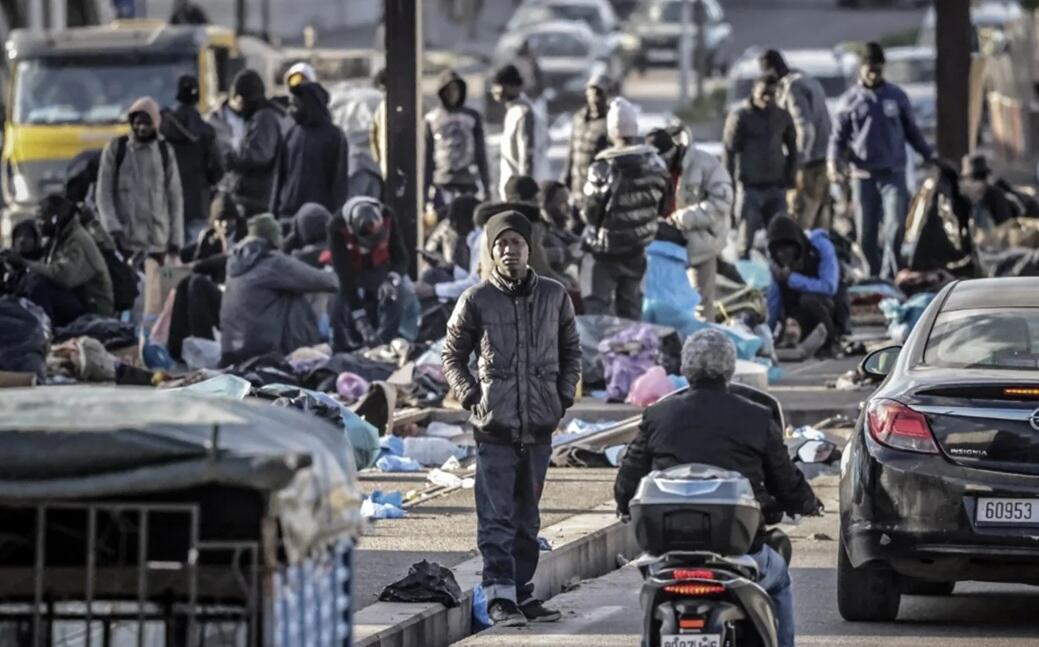
Since April 14, Morocco has been conducting large-scale deportation operations targeting sub-Saharan Africans migrating to Europe, reportedly arresting over 100 per day, local sources told Middle East Eye.
According to Moroccan human rights groups, around 800 people were detained during coordinated raids in the forests between Fnideq and Belyounech, in the northern tip of the North African state, where many were sheltering before attempting to reach Europe.
The operation is still ongoing, with authorities then moving their focus to operations in and around Tangier. Witnesses have described mass arrests, beatings, racist abuse and forced transfers toward the Algerian border.
Sudanese and Chadian detainees were bused south and abandoned near border zones, while people from countries including Senegal, Mali, Mauritania, Burkina Faso and Guinea were deported on flights departing Casablanca.
The crackdown comes as the European Union has intensified its cooperation with Morocco as part of its border externalization strategy, which is a key component of the bloc’s new Pact on Migration and Asylum set to take effect in June.
The EU increasingly outsources immigration enforcement to North African nations with poor human rights records, designating over €900 million within the bloc’s Global Europe development instrument to fund stricter migration control, border management and surveillance initiatives across the region.
“The EU wants to restrict people’s mobility as far down the route as possible – what officials describe as stopping migration downstream,” Frey Lindsay, a journalist on Statewatch’s Outsourcing Borders project, which tracks how the EU outsources migration control, told Middle East Eye. “It’s about exerting border control without getting your hands dirty, basically.”
Raids and expulsions
Morocco is a key transit country for sub-Saharan Africans en route to Europe. They sail across the Strait of Gibraltar or climb the towering razor wire fence that separates Morocco from Ceuta and Melilla, Spanish enclaves within the kingdom.
Over the years, Morocco has increased cooperation with Frontex, the European Border and Coast Guard Agency, to prevent migrants from departing the North African coast. In 2025, Moroccan authorities thwarted 73,640 irregular migration attempts toward Europe, according to a report from the interior ministry, a slight decline from 2024 – attributed to alternative migration routes.
In recent weeks, Moroccan security forces have stepped up their role as Europe’s de facto border enforcer, carrying out regular raids on makeshift forest camps and key transit points used by people trying to reach Spain. Attacks on migrant camps have long been pervasive, but have escalated since April 14, with operations concentrated in the north of the country. People who are not deported are typically exiled to the south in an effort to disrupt migration routes.
“According to migrants we have been in contact with, they were subjected to various forms of humiliation, insults and mistreatment by authorities,” Chad Boukhari, a journalist and member of Border Resistance, a grassroots collective that supports migrants across the Mediterranean, told MEE.
Some were abandoned near the Algerian border without food or water, where they were detained by Algerian forces. “The Algerian army allegedly tortured many of them. Some individuals also found the bodies of other migrants in the desert,” Boukhari added.
In 2025, Algeria expelled more than 30,000 migrants to Niger, abandoning many “deportation convoys” in the Sahara desert. Testimonies of abuse, torture and enslavement have been reported. MEE contacted the Algerian, Moroccan and EU authorities for comment but had not received a reply by the time of publication.
Sub-Sahara Africans often reach Morocco by crossing the Sahel, the arid perilous land belt stretching across the continent. They typically cross through Niger into Algeria or via Mauritania to enter Morocco. Many of the countries along these routes are plagued by chronic instability and rank among the lowest on the Human Development Index.
Once in Morocco, migrants can spend months to years sleeping in the country’s dense, dry woodlands. Humanitarian groups tend to know the whereabouts of informal encampments and provide modest assistance, but even these efforts are often thwarted by authorities.
Since 2014, Human Rights Watch has documented repeated incidents where Moroccan police beat migrants, deprived them of their few possessions, burned their shelters and expelled them from the country without due process.
“Oftentimes, the Red Cross would enter the forest and provide us with blankets and clothing. But we knew that was always a bad sign. Shortly after the Red Cross visits, Moroccan security forces would appear, as if they were watching,” Ousman Sow, a Guinean man who spent a year in Morocco before he was able to cross into Spain, told MEE.
“They burned all of our belongings before driving us far away and dropping us off in remote areas without any possessions,” added Sow, who now lives in Germany. The goal is to prevent migrants from reaching Ceuta and Melilla, the only European territories with a land border in Africa.
On 24 June 2022, at least 37 migrants, mostly from sub-Saharan Africa, were killed under unclear circumstances while attempting to climb the fence into Melilla. Another 70 people from that day remain missing, amid reports that Moroccan authorities were burying bodies in unmarked graves.
Externalizing control
Despite stricter enforcement, crossings from North Africa continue amid the war in Sudan and worsening instability across the Sahel. For many, the promise of Europe is still worth the risk.
“The more borders and walls you put up, the more dangerous ways people go around them,” Lindsay told MEE. “Securitization doesn’t change the reason why people want to leave; it just means more people will die.”
Rights groups also say the latest crackdown is a consequence of the EU’s new migration pact, which seeks to overhaul the bloc’s current immigration system, expediting asylum case proceedings and deportations. The new system expands biometric surveillance and increases rejections on the grounds that people passed through a designated “safe third country” before reaching the EU.
Morocco is included in the list of safe countries alongside other nations accused of human rights abuses, such as Egypt and Turkey. If migrants passed through any of these nations on the way to Europe, their deportation will be expedited.
Over 50 NGOs formally objected to the pact, arguing the new expedited procedures deny the right to a fair and thorough review of asylum cases. The EU has progressively blocked migrants before their asylum case can be filed by externalising immigration enforcement, collaborating with countries outside of Europe to prevent migrants from reaching EU soil.
Under the Emergency Trust Fund for Africa, it has poured hundreds of millions of euros into strengthening migration enforcement in Libya, Morocco, Tunisia, Egypt and Algeria.
FRANCE AND MOROCCO PREPARE MAJOR NEW TREATY
France and Morocco say they are preparing a first-of-its-kind agreement aimed at deepening cooperation between the 2 countries.
The move follows France recognizing Morocco’s sovereignty over Western Sahara last year.
The adoption of the Pact on Migration and Asylum has put political pressure on the European Commission, which must secure member state backing for a politically contentious overhaul of EU asylum rules. “The new migration pact is a really critical legislative package for [European Commission President] Ursula von der Leyen and her cabinet. They need this to be a success politically, and will do everything to ensure the pact doesn’t fall apart,” said Lindsay.
“Member states have made it very clear that they are unwilling to go along with the pact if the European Commission doesn’t do everything it can to make sure people don’t arrive – and to deport as many people as possible,” he added.
The new approach has drawn particular scrutiny in Libya, where EU-backed groups have been linked to systemic abuses. The EU directly funds, trains and equips Libya’s coastal authorities, which have been accused of collaborating with human trafficking networks to capture migrants, subjecting them to exploitation, physical and sexual violence, and even enslavement.
The EU is now in the process of funding a maritime control centre in Benghazi aimed at intercepting migrants at sea and forcibly returning them to Libya. This requires cooperation with General Khalifa Haftar, who controls eastern Libya in opposition to the UN-recognised government in the west and has been accused of war crimes.
Similar patterns of violent pushbacks have emerged across Europe’s eastern borders. Along the Balkans route, Croatian authorities have been documented violently pushing people back into Bosnia, effectively preventing them from accessing asylum procedures on EU territory.
The new pact also introduces the concept of “return hubs”, nations where rejected asylum seekers may be transferred to and detained while awaiting deportation to their home countries. Migrants will likely have no connections to the designated countries they are deported to; the EU has proposed options everywhere from Bangladesh to Rwanda.
Rights groups say the Pact on Migration and Asylum embodies a broader hardening of attitudes and policies toward migrants across the EU member states, with detrimental consequences for those trying to reach Europe. “Whenever the political climate changes in Europe, you can feel it in Morocco,” Sow told MEE. “If Europe wants immigrants, Morocco is okay. If not, it’s hostile there.”
Escobar: The Russia-China Spaceship Rushes Towards Planet Multipolar
Authored by Pepe Escobar,
The New Silk Roads/BRI and its derivations such as the Northern Sea Route/Arctic Silk Road remain alive and kicking
SHANGHAI – This is it.
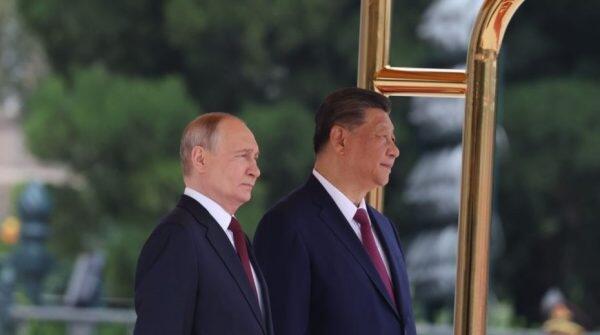
The Russia-China strategic partnership, the leaders in the process of Eurasia integration, the leaders of multipolar bodies BRICS and the SCO, have formally endorsed and boosted the drive towards multipolarity and a new system of international relations via a strategic joint declaration signed, sealed and delivered during President Putin’s visit to China this Wednesday.
This is one for the History books – in several more ways than one. I was privileged to follow the proceedings in Beijing during the whole day at the Aurora College, a top Shanghai private school and university, among a fabulous congregation of teachers and students.
So we had plenty of time to discuss the implications of how the Top Two Eurasia powers – and global powers – are establishing the lineaments of a new geopolitical future for most of mankind. The exceptions will be exceptionalist recalcitrants and vassals addicted to commit serial political suicide.
We all remember President Xi’s visit to Russia in 2023, when leaving the Kremlin, side by side with Putin, he voiced what he was already polishing for some time, in a very concise way: “Right now there are changes we have not seen in 100 years.” And then Xi and Putin agreed that now, “we are the ones driving these changes together”.
The practical result is the sharply focused Beijing joint statement, penned by unmistakable “civilizations with ancient history.”
Let’s go through some of the highlights.
The declaration minces no words and no concepts when it comes to offering a serious alternative to the current – dwindling – unilateral historic moment.
Polycentrism: “The attempts of a number of states to single-handedly manage global affairs, impose their interests on the entire world, and limit the sovereign development of other countries in the spirit of the colonial era have failed.” Russia-China will focus on establishing a “long-term state of polycentrism.”
The ”law of the jungle”: “Basic universally recognized norms of international law and international relations are regularly violated (…) there is a danger of fragmentation within the international community and a return to the ‘law of the jungle’.”
A new security architecture: “It is necessary to pay due attention to the rational concerns of all countries in the field of security, to focus on cooperation on security issues, to reject bloc confrontation and zero-sum game strategies, to oppose the expansion of military alliances, hybrid wars, and proxy wars, and to promote the creation of an updated, balanced, effective, and sustainable global and regional security architecture (…) It is unacceptable to force sovereign states to abandon their neutrality.”
This is exactly what Moscow proposed to Washington and NATO in December 2021: indivisibility of security. The non-response response precipitated the SMO in Ukraine two months later, as it became obvious to Moscow that NATO’s plan was a blitzkrieg in Donbass.
Hegemony: “Hegemony in the world is unacceptable and should be prohibited. No state or group of states should control international affairs, determine the fate of other countries, or monopolize opportunities for development.”
Global governance: that’s President Xi’s cherished concept, fully delienated in the SCO summit last year in Tianjin: “In global governance, which is an important tool for streamlining the system of international relations, it is necessary to adhere to the principles of sovereign equality, the rule of international law, multilateralism, human-centeredness, and results-oriented approach.”
The United Nations: it’s necessary to “strengthen the role of multilateralism as the primary tool for addressing the multifaceted and complex global challenges, and to prevent the weakening of the United Nations.” That should lead to “the reform of the United Nations”. Yet everyone knows that will definitely not happen under the current administration in the White House.
Point 4 of the declaration: global civilizational and value diversity. That may be the crux of the matter – inexorably burying any Exceptionalist pretensions: “The spiritual and moral system of any civilization cannot be considered exceptional or superior to others. All countries should advocate a view of civilizations based on equality, mutual exchange of experience, and dialogue, and should strengthen mutual respect, understanding, trust, and exchanges between different nationalities and civilizations, promote mutual understanding and friendship among the peoples of all countries, and protect the diversity of cultures and civilizations.”
Enter the new “indispensable nation”
The Russia-China declaration, as concisely as possible, delivers what amounts to much-needed hope for humanity to delve into the matrix of a civilizational past as the means to forge an auspicious, more egalitarian future.
It is by all means a humanist mini-manifesto that goes way beyond the set up of a new security architecture and forging key changes in the current system of international relations. Its credibility is supported by the backing of two Big Powers which also happen to be civilization-states, fully sovereign and fully independent.
I have called this process for quite a while “The Eurasia Century”. That is what this fateful May 20, 2026 in Beijing, within the scope of an official visit by President Putin to China, was celebrating.
The breath, scope and ambition of the joint statement clearly overshadows other aspects of Putin’s Beijing journey, although they are quite relevant by themselves.
Starting with the sealing of the new “indispensable nation”. Exit the Exceptionalists; enter China. The old order is being evicted – in real time. And yes, this is the most consequential shift in Great Power alignment since the end of the Cold War – complete with the Empire of Chaos that sanctioned Russia to death targeting its “isolation” and economic collapse inexorably out-maneuvered by the Russia-China strategic partnership.
The 25-year Treaty of Good Neighborliness between Russia and China was massively upgraded – featuring strategic energy corridors (the Power of Siberia 2 pipeline), very close military coordination and a shared civilizational/ideological framework.
Of course there will be no substantial leaks on what Xi and Putin discussed during their two-hour-long, informal tea time. The proxy war in Ukraine and the illegal war on Iran had to be on the menu, including Putin arguably briefing Xi on Russia’s possible next moves in an increasingly direct, toxic confrontation with NATO, and both evaluating the technicalities of the Russia-China support for Iran.
So in a nutshell the New Silk Roads/BRI and its derivations such as the Northern Sea Route/Arctic Silk Road remain alive and kicking; and the de-dollarization of the global economy – a reflection of the Russia-China trade balance, now advancing exclusively on yuan and rubles – is more than alive and kicking.
As for BRICS, destabilized by the U.S. from the inside via India and the UAE, it may eventually resurrect from its coma; this process will have to be led by Lavrov and Wang Yi. And the focus must change: BRICS must develop some sort of strategic coherence among the Global Majority for the multipolar transition to really work.
Then there’s the bright future of Power of Siberia 2. China, finally, may even forget the “Escape from Malacca” obsession, in effect since the early 2000s, and back to the limelight with the American faux blockade of the Strait of Hormuz and Iranian ports.
The leadership in Beijing has always been fully aware that blocking the Strait of Malacca is essential in the American strategy of containing and suffocating China. Power of Siberia 2 offers a solution completely outside of the thalassocratic Empire of Piracy, pumping gas directly to China from the Yamal peninsula through the Altai mountains and the Mongolia steppes.
There was a lovely touch at the Great Hall of the People, amidst so much drama: a TASS-Xinhua joint exhibition, “The Unbreakable Friendship of Great Nations, the Strategic Partnership of Great Powers”, with 26 photos documenting the Putin-Xi friendship over the years, in several G20, BRICS and SCO summits, the One Belt, One Road forum, Victory Day in Moscow, and the Beijing Olympics.
Putin and Xi visited the expo with two quite special tour guides: TASS CEO Andrey Kondrashov and Xinhua CEO Fu Hua.
Compounded with the tea ceremony, call it the human, all too human, deep bond, person-to-person touch indispensable to travel the long and winding road towards a geopolitical future of equanimity and mutual respect.
Views expressed in this article are opinions of the author and do not necessarily reflect the views of ZeroHedge.