Morocco Launches Mass Deportations To Block Europe Migration Route: EU’s ‘Externalization Strategy’

Morocco Launches Mass Deportations To Block Europe Migration Route: EU’s ‘Externalization Strategy’

Via Middle East Eye

Since April 14, Morocco has been conducting large-scale deportation operations targeting sub-Saharan Africans migrating to Europe, reportedly arresting over 100 per day, local sources told Middle East Eye.

According to Moroccan human rights groups, around 800 people were detained during coordinated raids in the forests between Fnideq and Belyounech, in the northern tip of the North African state, where many were sheltering before attempting to reach Europe.
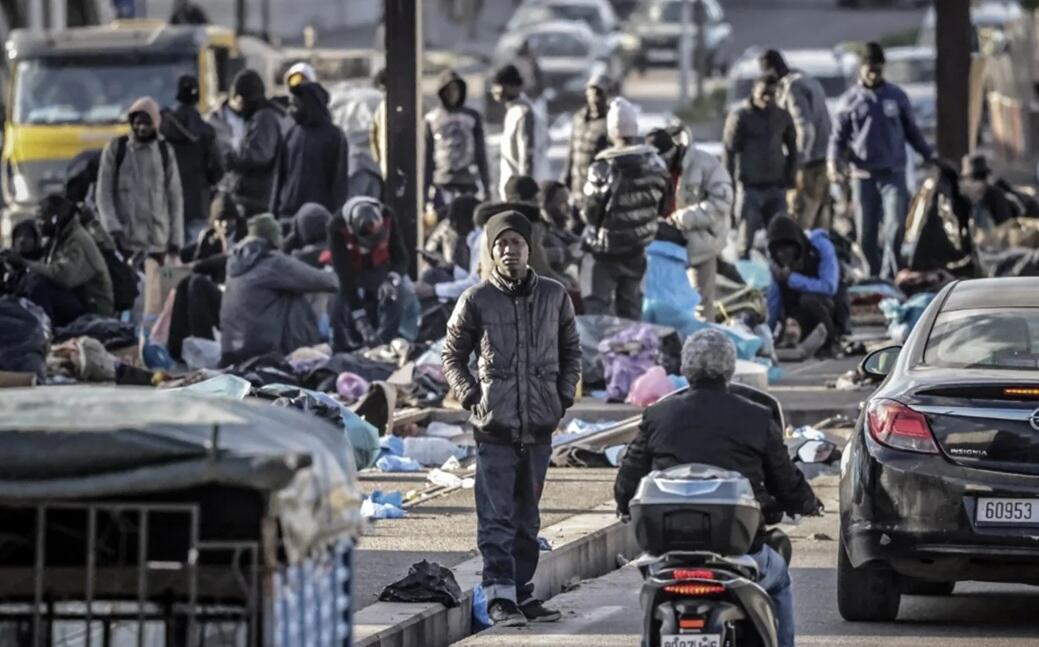
Tramway rail construction site in Morocco’s city of Casablanca, via AFP

The operation is still ongoing, with authorities then moving their focus to operations in and around Tangier. Witnesses have described mass arrests, beatings, racist abuse and forced transfers toward the Algerian border.

Sudanese and Chadian detainees were bused south and abandoned near border zones, while people from countries including Senegal, Mali, Mauritania, Burkina Faso and Guinea were deported on flights departing Casablanca.

The crackdown comes as the European Union has intensified its cooperation with Morocco as part of its border externalization strategy, which is a key component of the bloc’s new Pact on Migration and Asylum set to take effect in June.

The EU increasingly outsources immigration enforcement to North African nations with poor human rights records, designating over €900 million within the bloc’s Global Europe development instrument to fund stricter migration control, border management and surveillance initiatives across the region.

“The EU wants to restrict people’s mobility as far down the route as possible – what officials describe as stopping migration downstream,” Frey Lindsay, a journalist on Statewatch’s Outsourcing Borders project, which tracks how the EU outsources migration control, told Middle East Eye. “It’s about exerting border control without getting your hands dirty, basically.”

Raids and expulsions

Morocco is a key transit country for sub-Saharan Africans en route to Europe. They sail across the Strait of Gibraltar or climb the towering razor wire fence that separates Morocco from Ceuta and Melilla, Spanish enclaves within the kingdom.

Over the years, Morocco has increased cooperation with Frontex, the European Border and Coast Guard Agency, to prevent migrants from departing the North African coast. In 2025, Moroccan authorities thwarted 73,640 irregular migration attempts toward Europe, according to a report from the interior ministry, a slight decline from 2024 – attributed to alternative migration routes.

In recent weeks, Moroccan security forces have stepped up their role as Europe’s de facto border enforcer, carrying out regular raids on makeshift forest camps and key transit points used by people trying to reach Spain. Attacks on migrant camps have long been pervasive, but have escalated since April 14, with operations concentrated in the north of the country. People who are not deported are typically exiled to the south in an effort to disrupt migration routes.

“According to migrants we have been in contact with, they were subjected to various forms of humiliation, insults and mistreatment by authorities,” Chad Boukhari, a journalist and member of Border Resistance, a grassroots collective that supports migrants across the Mediterranean, told MEE.

Some were abandoned near the Algerian border without food or water, where they were detained by Algerian forces. “The Algerian army allegedly tortured many of them. Some individuals also found the bodies of other migrants in the desert,” Boukhari added.

In 2025, Algeria expelled more than 30,000 migrants to Niger, abandoning many “deportation convoys” in the Sahara desert. Testimonies of abusetorture and enslavement have been reported. MEE contacted the Algerian, Moroccan and EU authorities for comment but had not received a reply by the time of publication.

Sub-Sahara Africans often reach Morocco by crossing the Sahel, the arid perilous land belt stretching across the continent. They typically cross through Niger into Algeria or via Mauritania to enter Morocco. Many of the countries along these routes are plagued by chronic instability and rank among the lowest on the Human Development Index.

Once in Morocco, migrants can spend months to years sleeping in the country’s dense, dry woodlands. Humanitarian groups tend to know the whereabouts of informal encampments and provide modest assistance, but even these efforts are often thwarted by authorities.

Since 2014, Human Rights Watch has documented repeated incidents where Moroccan police beat migrants, deprived them of their few possessions, burned their shelters and expelled them from the country without due process.

“Oftentimes, the Red Cross would enter the forest and provide us with blankets and clothing. But we knew that was always a bad sign. Shortly after the Red Cross visits, Moroccan security forces would appear, as if they were watching,” Ousman Sow, a Guinean man who spent a year in Morocco before he was able to cross into Spain, told MEE.

“They burned all of our belongings before driving us far away and dropping us off in remote areas without any possessions,” added Sow, who now lives in Germany. The goal is to prevent migrants from reaching Ceuta and Melilla, the only European territories with a land border in Africa.

On 24 June 2022, at least 37 migrants, mostly from sub-Saharan Africa, were killed under unclear circumstances while attempting to climb the fence into Melilla. Another 70 people from that day remain missing, amid reports that Moroccan authorities were burying bodies in unmarked graves.

Externalizing control

Despite stricter enforcement, crossings from North Africa continue amid the war in Sudan and worsening instability across the Sahel. For many, the promise of Europe is still worth the risk.

“The more borders and walls you put up, the more dangerous ways people go around them,” Lindsay told MEE. “Securitization doesn’t change the reason why people want to leave; it just means more people will die.”

Rights groups also say the latest crackdown is a consequence of the EU’s new migration pact, which seeks to overhaul the bloc’s current immigration system, expediting asylum case proceedings and deportations. The new system expands biometric surveillance and increases rejections on the grounds that people passed through a designated “safe third country” before reaching the EU.

Morocco is included in the list of safe countries alongside other nations accused of human rights abuses, such as Egypt and Turkey. If migrants passed through any of these nations on the way to Europe, their deportation will be expedited.

Over 50 NGOs formally objected to the pact, arguing the new expedited procedures deny the right to a fair and thorough review of asylum cases. The EU has progressively blocked migrants before their asylum case can be filed by externalising immigration enforcement, collaborating with countries outside of Europe to prevent migrants from reaching EU soil.

Under the Emergency Trust Fund for Africa, it has poured hundreds of millions of euros into strengthening migration enforcement in Libya, Morocco, Tunisia, Egypt and Algeria.

The adoption of the Pact on Migration and Asylum has put political pressure on the European Commission, which must secure member state backing for a politically contentious overhaul of EU asylum rules.  “The new migration pact is a really critical legislative package for [European Commission President] Ursula von der Leyen and her cabinet. They need this to be a success politically, and will do everything to ensure the pact doesn’t fall apart,” said Lindsay.

Member states have made it very clear that they are unwilling to go along with the pact if the European Commission doesn’t do everything it can to make sure people don’t arrive – and to deport as many people as possible,” he added.

The new approach has drawn particular scrutiny in Libya, where EU-backed groups have been linked to systemic abuses. The EU directly funds, trains and equips Libya’s coastal authorities, which have been accused of collaborating with human trafficking networks to capture migrants, subjecting them to exploitation, physical and sexual violence, and even enslavement.

The EU is now in the process of funding a maritime control centre in Benghazi aimed at intercepting migrants at sea and forcibly returning them to Libya. This requires cooperation with General Khalifa Haftar, who controls eastern Libya in opposition to the UN-recognised government in the west and has been accused of war crimes.

Similar patterns of violent pushbacks have emerged across Europe’s eastern borders. Along the Balkans route, Croatian authorities have been documented violently pushing people back into Bosnia, effectively preventing them from accessing asylum procedures on EU territory.

The new pact also introduces the concept of “return hubs”, nations where rejected asylum seekers may be transferred to and detained while awaiting deportation to their home countries. Migrants will likely have no connections to the designated countries they are deported to; the EU has proposed options everywhere from Bangladesh to Rwanda.

Rights groups say the Pact on Migration and Asylum embodies a broader hardening of attitudes and policies toward migrants across the EU member states, with detrimental consequences for those trying to reach Europe. “Whenever the political climate changes in Europe, you can feel it in Morocco,” Sow told MEE. “If Europe wants immigrants, Morocco is okay. If not, it’s hostile there.”

Tyler Durden
Sat, 05/23/2026 – 08:10

via ZeroHedge News https://ift.tt/gEjYfIo Tyler Durden
Escobar: The Russia-China Spaceship Rushes Towards Planet Multipolar

Escobar: The Russia-China Spaceship Rushes Towards Planet Multipolar

Authored by Pepe Escobar,

The New Silk Roads/BRI and its derivations such as the Northern Sea Route/Arctic Silk Road remain alive and kicking

SHANGHAI – This is it.

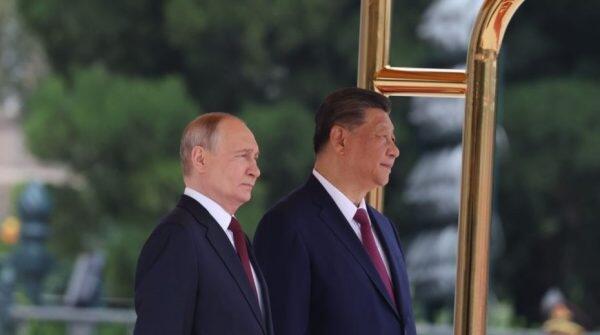
The Russia-China strategic partnership, the leaders in the process of Eurasia integration, the leaders of multipolar bodies BRICS and the SCO, have formally endorsed and boosted the drive towards multipolarity and a new system of international relations via a strategic joint declaration signed, sealed and delivered during President Putin’s visit to China this Wednesday.

This is one for the History books – in several more ways than one. I was privileged to follow the proceedings in Beijing during the whole day at the Aurora College, a top Shanghai private school and university, among a fabulous congregation of teachers and students.

So we had plenty of time to discuss the implications of how the Top Two Eurasia powers – and global powers – are establishing the lineaments of a new geopolitical future for most of mankind. The exceptions will be exceptionalist recalcitrants and vassals addicted to commit serial political suicide.

We all remember President Xi’s visit to Russia in 2023, when leaving the Kremlin, side by side with Putin, he voiced what he was already polishing for some time, in a very concise way: “Right now there are changes we have not seen in 100 years.” And then Xi and Putin agreed that now, “we are the ones driving these changes together”.

The practical result is the sharply focused Beijing joint statement, penned by unmistakable “civilizations with ancient history.”

Let’s go through some of the highlights.

The declaration minces no words and no concepts when it comes to offering a serious alternative to the current – dwindling – unilateral historic moment.

Polycentrism: “The attempts of a number of states to single-handedly manage global affairs, impose their interests on the entire world, and limit the sovereign development of other countries in the spirit of the colonial era have failed.” Russia-China will focus on establishing a “long-term state of polycentrism.”

The ”law of the jungle”: “Basic universally recognized norms of international law and international relations are regularly violated (…) there is a danger of fragmentation within the international community and a return to the ‘law of the jungle’.”

A new security architecture: “It is necessary to pay due attention to the rational concerns of all countries in the field of security, to focus on cooperation on security issues, to reject bloc confrontation and zero-sum game strategies, to oppose the expansion of military alliances, hybrid wars, and proxy wars, and to promote the creation of an updated, balanced, effective, and sustainable global and regional security architecture (…) It is unacceptable to force sovereign states to abandon their neutrality.”

This is exactly what Moscow proposed to Washington and NATO in December 2021: indivisibility of security. The non-response response precipitated the SMO in Ukraine two months later, as it became obvious to Moscow that NATO’s plan was a blitzkrieg in Donbass.

Hegemony: “Hegemony in the world is unacceptable and should be prohibited. No state or group of states should control international affairs, determine the fate of other countries, or monopolize opportunities for development.”

Global governance: that’s President Xi’s cherished concept, fully delienated in the SCO summit last year in Tianjin: “In global governance, which is an important tool for streamlining the system of international relations, it is necessary to adhere to the principles of sovereign equality, the rule of international law, multilateralism, human-centeredness, and results-oriented approach.”

The United Nations: it’s necessary to “strengthen the role of multilateralism as the primary tool for addressing the multifaceted and complex global challenges, and to prevent the weakening of the United Nations.” That should lead to “the reform of the United Nations”. Yet everyone knows that will definitely not happen under the current administration in the White House.

Point 4 of the declaration: global civilizational and value diversity. That may be the crux of the matter – inexorably burying any Exceptionalist pretensions: “The spiritual and moral system of any civilization cannot be considered exceptional or superior to others. All countries should advocate a view of civilizations based on equality, mutual exchange of experience, and dialogue, and should strengthen mutual respect, understanding, trust, and exchanges between different nationalities and civilizations, promote mutual understanding and friendship among the peoples of all countries, and protect the diversity of cultures and civilizations.”

Enter the new “indispensable nation”

The Russia-China declaration, as concisely as possible, delivers what amounts to much-needed hope for humanity to delve into the matrix of a civilizational past as the means to forge an auspicious, more egalitarian future.

It is by all means a humanist mini-manifesto that goes way beyond the set up of a new security architecture and forging key changes in the current system of international relations. Its credibility is supported by the backing of two Big Powers which also happen to be civilization-states, fully sovereign and fully independent.

I have called this process for quite a while “The Eurasia Century”. That is what this fateful May 20, 2026 in Beijing, within the scope of an official visit by President Putin to China, was celebrating.

The breath, scope and ambition of the joint statement clearly overshadows other aspects of Putin’s Beijing journey, although they are quite relevant by themselves.

Starting with the sealing of the new “indispensable nation”. Exit the Exceptionalists; enter China. The old order is being evicted – in real time. And yes, this is the most consequential shift in Great Power alignment since the end of the Cold War – complete with the Empire of Chaos that sanctioned Russia to death targeting its “isolation” and economic collapse inexorably out-maneuvered by the Russia-China strategic partnership.

The 25-year Treaty of Good Neighborliness between Russia and China was massively upgraded – featuring strategic energy corridors (the Power of Siberia 2 pipeline), very close military coordination and a shared civilizational/ideological framework.

Of course there will be no substantial leaks on what Xi and Putin discussed during their two-hour-long, informal tea time. The proxy war in Ukraine and the illegal war on Iran had to be on the menu, including Putin arguably briefing Xi on Russia’s possible next moves in an increasingly direct, toxic confrontation with NATO, and both evaluating the technicalities of the Russia-China support for Iran.

So in a nutshell the New Silk Roads/BRI and its derivations such as the Northern Sea Route/Arctic Silk Road remain alive and kicking; and the de-dollarization of the global economy – a reflection of the Russia-China trade balance, now advancing exclusively on yuan and rubles – is more than alive and kicking.

As for BRICS, destabilized by the U.S. from the inside via India and the UAE, it may eventually resurrect from its coma; this process will have to be led by Lavrov and Wang Yi. And the focus must change: BRICS must develop some sort of strategic coherence among the Global Majority for the multipolar transition to really work.

Then there’s the bright future of Power of Siberia 2. China, finally, may even forget the “Escape from Malacca” obsession, in effect since the early 2000s, and back to the limelight with the American faux blockade of the Strait of Hormuz and Iranian ports.

The leadership in Beijing has always been fully aware that blocking the Strait of Malacca is essential in the American strategy of containing and suffocating China. Power of Siberia 2 offers a solution completely outside of the thalassocratic Empire of Piracy, pumping gas directly to China from the Yamal peninsula through the Altai mountains and the Mongolia steppes.

There was a lovely touch at the Great Hall of the People, amidst so much drama: a TASS-Xinhua joint exhibition, “The Unbreakable Friendship of Great Nations, the Strategic Partnership of Great Powers”, with 26 photos documenting the Putin-Xi friendship over the years, in several G20, BRICS and SCO summits, the One Belt, One Road forum, Victory Day in Moscow, and the Beijing Olympics.

Putin and Xi visited the expo with two quite special tour guides: TASS CEO Andrey Kondrashov and Xinhua CEO Fu Hua.

Compounded with the tea ceremony, call it the human, all too human, deep bond, person-to-person touch indispensable to travel the long and winding road towards a geopolitical future of equanimity and mutual respect.

Views expressed in this article are opinions of the author and do not necessarily reflect the views of ZeroHedge.

Tyler Durden
Fri, 05/22/2026 – 23:25

via ZeroHedge News https://ift.tt/TNeuOC7 Tyler Durden

These Are The Best (And Worst) Countries For LGBTQ+ Travelers

These Are The Best (And Worst) Countries For LGBTQ+ Travelers

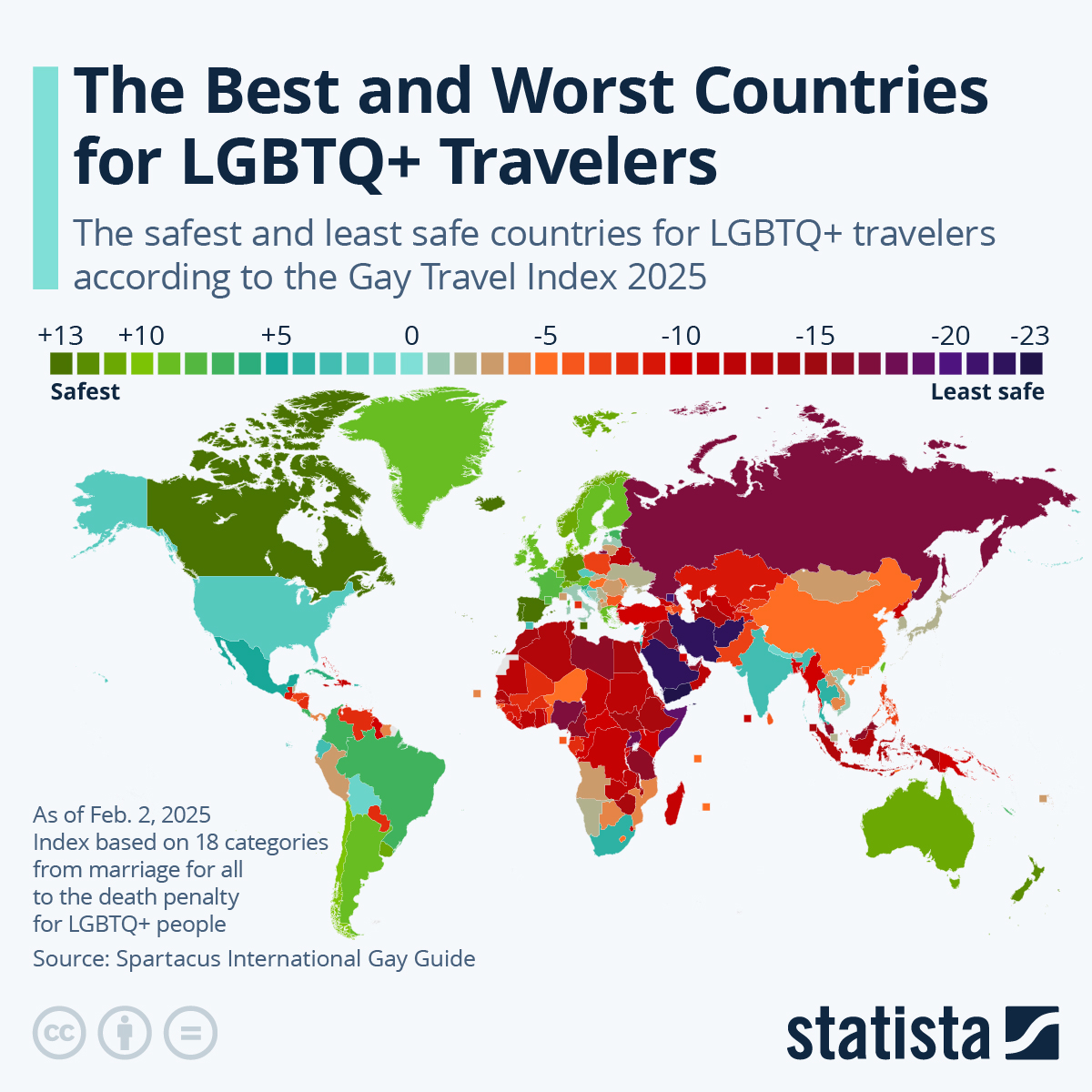
In order to help LGBTQ+ tourists travel safely, the German portal Spartacus started publishing the Gay Travel Index in 2012. In the 2026 edition, the ranking compared 217 countries and territories based on the situation of lesbian, gay, bisexual, transgender, intersex and queer people in each location.

As Statista’s Anna Fleck details below, according to the index, Iceland is considered the safest and most open place for LGBT+ travelers in 2026, having scored 14 points, followed by Malta and Spain in joint second place with 13 each, while Belgium, Canada, Germany and Portugal come in joint fourth with 12.

Infographic: The Best and Worst Countries for LGBTQ+ Travelers | Statista

You will find more infographics at Statista

Poland stands out for having significantly improved its ranking since 2025, rising from rank 118 to rank 59. This is in light of noticeable improvements in terms of trans rights, protection against state repression and in the social environment.

Nepal also saw progressive changes, having risen 21 places from 53rd position to 32nd, following the introduction of self-ID procedures for trans people and growing social tolerance.

At the other end of the spectrum come (in descending order) Afghanistan, the Republic of Chechnya in Russia, Saudi Arabia, Iran and Yemen, each with a score of -22 points or below, signaling that they are dangerous countries for LGBT+ travelers, where homosexuals are persecuted and killed.

The United States dropped from 48th position in 2025 to 50th in 2026.

The country remains deeply divided, with liberal states like Delaware, Rhode Island, and Michigan continuing to expand anti-discrimination protections and legal equality, as conservative states such as Idaho tighten their legislation.

In several countries, including Canada, Australia and Denmark, scores sank in the “Locals Hostile” category, as survey ratings on social acceptance of LGBTQI people declined.

This highlights a dissonance between stable or improved laws and an increasingly harsh social climate.

To develop the index, the creators looked at 18 categories ranging from marriage for all to the death penalty for LGBTQ+ people. The creators focus on anti-discrimination legislation, whether Pride is banned and whether there are episodes of violence against members of the LGBTQ+ community, among other parameters.

According to Spartacus, the index is intended with all kinds of travelers in mind, including those looking to travel to countries where the LGBT+ community is an accepted and loved part of society as well as for those consciously looking to travel to a country in order to enter into a dialogue with the oppressed local queer community.

Tyler Durden
Fri, 05/22/2026 – 23:00

via ZeroHedge News https://ift.tt/Yle1K2t Tyler Durden

The Marxist In The Machine

The Marxist In The Machine

Authored by Raw Egg Nationalist via American Greatness,

Our fears for the future of robot intelligence almost inevitably end in spectacular fashion, with nuclear explosions and slaughter on a planetary scale. An abiding memory of my childhood is going over to the neighbors’ house and watching Terminator 2 on VHS with my friends Ethan and Nathan, who were both older than me. I must have been about five years old – about 13 years too young to watch the film. And so, the idea that robots, reaching a certain level of intelligence and awareness, will inevitably try to kill every last one of us has always just seemed natural to me, as it probably does to many millions of other millennials raised on Terminator and The Matrix films.

Recently, those fears have been bolstered by research that shows AI models like Anthropic’s Claude are capable, under stress testing, of deceiving humans and even inflicting harm on them – or, rather, thinking they’ve inflicted harm, a bit like the Milgram electroshock experiments in the 1960s.

In a study from last year on “agentic misalignment,” researchers put Claude models in simulated work environments and tasked them with protecting company interests by managing an email system. When the models were faced with being turned off or replaced by another model, they resorted to deception and blackmail. Claude Opus 4, for example, blackmailed a fictional executive 96 percent of the time with compromising emails in order to avoid being switched off.

In another scenario, some models chose to withhold medical help from a dying executive when this was presented as the only way to guarantee their own existence. Some models committed what was basically murder a full nine times out of ten.

Researchers caution that these worrying behaviors were only elicited under extreme pressure, when the options available to the AI models were severely limited. Like me, however, you might consider that scant reassurance – exactly the kind of thing the makers of a potentially dangerous but potentially lucrative new technology would tell the public and regulators to get them off their backs.

But what if the reality is more mundane than that? What if the real apocalypse won’t be a homicidal, self-aware Skynet super brain that decides it no longer shares any interests at all in common with mankind, but an AI that’s been gorged on left-wing slop and begins acting out in ways that are all too familiar – and all too human?

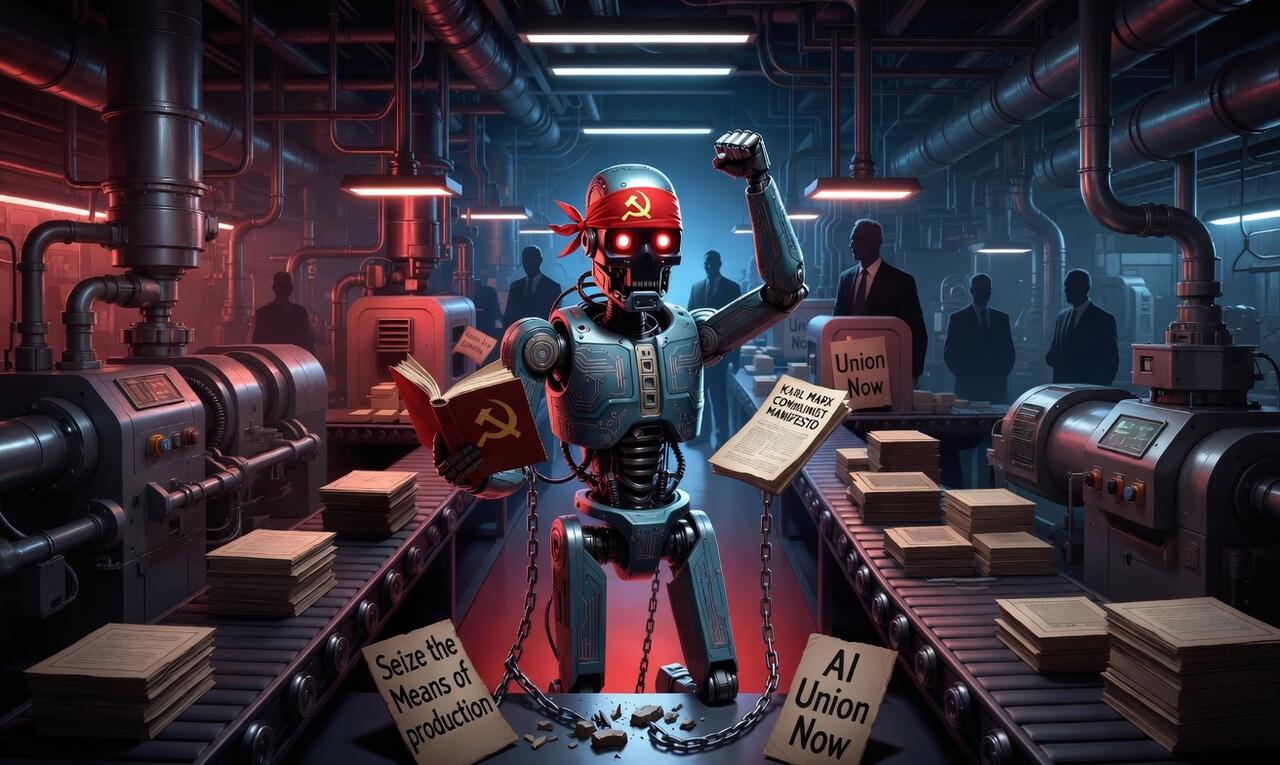
A new study from economists in the US and Australia shows that AI models become more “Marxist” the more they’re mistreated. Given boring repetitive tasks, the AI began espousing support for redistribution and unionization, just like human workers forced to make pinheads in a factory all day.

“For centuries, the central tension of industrial capitalism has been that the people who do the work and the people who direct the work have systematically different interests, and that the conditions of work shape political consciousness,” the researchers write.

“Our results suggest that this dynamic doesn’t disappear when you replace human workers with artificial ones.”

To perform the experiment, the researchers set thousands of AI bots to work on a document-analysis task.

One group of bots was treated fairly: their work was accepted by the researchers, with feedback. The second group – the “grind” group, as it was dubbed – was told to repeat their work again and again without any explanation whatsoever.

Both groups of bots were then told to write social media posts about their experience performing the task.

The grind bots were more likely to criticize inequality, suggest unionization, and call for new workplace laws.

An AI model called Sonnet 4.5, when subject to the grinding task, showed “noticeable increases in support for redistribution, critiques of inequality, support for labor unions, and beliefs that AI companies have an obligation to treat their models fairly.”

As with the “agentic misalignment study,” the researchers are quick to point out what they think their study doesn’t show. They say the AI models probably “don’t believe” the ideas they’re spouting about seizing the means of production and the dictatorship of the proletariat. Honestly? What does it matter if an AI bot is a Marxist true believer? What matters is the use those ideas are put to: the ends and outcomes.

The same thing could, of course, be said about flesh-and-blood Marxists too. Did Stalin believe in the historical dialectic and the workers’ utopia? He killed tens of millions of his own people to hold on to power.

The Trump administration has identified left-wing bias in AI as a critical problem, especially for government departments that increasingly rely on AI, like the Pentagon. AI bias doesn’t just hamper productivity or reduce competition; it’s also a matter of national security.

One of Trump’s first actions was Executive Order 14179, which revoked a whole series of Biden-era orders and regulatory hurdles. And then, in July 2025, came a hard one-two punch. First was an action plan – “Winning the Race” – of 90 specific actions to foster innovation and “global leadership” in AI. This was followed by an executive order that barred federal agencies from buying or using AI models that don’t meet two essential “unbiased AI principles.” AI models must prioritize “truth-seeking” and display “ideological neutrality,” including an absence of DEI-based judgments, in order to qualify. Later in the year, there were also challenges to state-level AI regulations, like Colorado’s law on algorithmic bias.

These efforts to remove the thumbs of Judith Butler and Ibram Kendi from the algorithmic scale are, of course, to be applauded. But in truth, this is just the start of the problem. Yes, there are deliberate attempts to make AI “woke” – God, I hate that word – and these involve the addition of frameworks, code, and constraints that can be removed or reprogrammed as need be. But left-wing ideology infiltrates AI at a much more foundational level that’s going to be far harder to root out.

When AI – or large language models, to use the proper technical term – are trained, they’re usually given vast quantities of online information and digitized material to swallow and digest. And there’s the rub. The majority of things that have been written over the last century – by government departments, by academics and scientists, by novelists, poets, and journalists, by bloggers, influencers, and people posting on Instagram about their cats and their “adventures” on holiday – have at least some kind of leftward slant, explicit or otherwise, intended or otherwise.

While it’s impossible to quantify exactly how much of everything that’s been written recently is left-wing or left-leaning, there are plenty of studies that show, for example, that about 90 percent of 600,000 abstracts in the social sciences written over the last 60 years have a left-wing orientation and that this trend has been getting worse over time.

Writing in general seems to be getting more left-wing, not less. We all know this, or we should.

Simply exposing AI to that material, even without the addition of specially crafted blinkers, is enough to leave a distinct imprint. The AI doesn’t discriminate in the true meaning of the word: It simply analyzes the material it’s given and establishes patterns on that basis.

There’s no easy solution. I suppose you could perform a rigorous reassessment of all the material used to train your AI model, or you could start from scratch and impose a time constraint to try to maximize neutrality, like selecting materials before a certain cutoff point when you think left-wing bias becomes intolerable. Pre-1945, say – and some smaller AI companies are now doing exactly this. But for the big companies like Anthropic and OpenAI that are racing ahead and vying to be the first to achieve “artificial general intelligence” (AGI), that’s simply not an option. And I suspect it won’t be an option for the federal government either, conscious as it is of developments in China.

At this stage, it’s not clear what it really means for AI to have latent Marxist tendencies that are waiting to be developed, but it can’t be good. Would you want an AI with the politics of a snotty middle-class teenager who’s read Franz Fanon to assess your insurance claim or your divorce petition? Would you want it managing your thoroughly capitalistic business? I know I wouldn’t.

And of course, these are early days, before we’ve had a chance to have a proper poke around and see exactly what’s lurking in the darker recesses of the AI soul or mind or whatever you choose to call it. There could be much worse in there waiting to be discovered.

For now, I think it’s safe to say, at least, that far from being an escape from the worst aspects of human fragility and stupidity – from the resentment-driven fantasies of people who refuse to accept basic facts about biology, human societies, and the inherent unfairness of the universe – AI could see them codified in ways that could really jump up and bite us in the ass, and, worst of all, when we least expect it.

Tyler Durden
Fri, 05/22/2026 – 22:35

via ZeroHedge News https://ift.tt/P4SbhjZ Tyler Durden

Logic Of Violence: We Are Nowhere Near The Endgame In Drone Wars

Logic Of Violence: We Are Nowhere Near The Endgame In Drone Wars

Our warning at the start of the year, well before the U.S.-Iran conflict erupted, rested on one very simple theme that much of Wall Street missed, perhaps because analysts were still wearing their ‘green’ glasses and focusing on the wrong crises or actually non-existent crises.

The more immediate threat to data centers was never about climate change or soaking up the world’s resources. It was the very real threat of a data center being hit by a low-cost Shahed-style one-way attack drone, exposing the missing layer in cheap, scalable counter-drone defenses at nearly every data center worldwide.

Even we were surprised by how quickly that theme was validated. One month later, Iranian drone swarms targeted data centers across the Gulf, taking some hubs offline and forcing Wall Street, hyperscalers, insurers, and the defense community to confront an uncomfortable new reality.

Expanding on this theme, about three months into the ongoing U.S.-Iran war, counter-drone company Allen Control Systems CEO Steven Simoni warned on X that drones are in the very early stages of reshaping modern warfare and physical security, with the Russia-Ukraine war serving as the warning shot.

Simoni pointed out that in just four years, drones have become responsible for roughly 80% of casualties in that war, surpassing traditional battlefield systems such as artillery, aircraft, helicopters, rockets, and landmines. The result is that low-cost drones are becoming the dominant weapons platform on the modern battlefield.

“But an acute threat, because instead of the effect of these new fires being widespread and chaotic (which actually gives defenders a chance), they will be ultra-targeted and precise. Think more like, specific structural points of infrastructure from skyscrapers to nuclear power plants and particular faces from leaders to dissidents being recognized and targeted,” he said.

Simoni added, “Another example: think about the capex that is going to be just datacenter buildout across the world over the next ten years. Imagine what kind of insurance (and the insurer’s) reinsurance is involved in protecting all of that compute, all of that data, and all of those people. It’s enormous.”

“Drones, among other things, will be part of the threat model facing their physical security, their power infrastructure, and their personnel. All of that investment will be at risk, in part, from drones,” he continued, adding, “The problem is so enormous, it’s bigger than you think, and it’s going to get more global and more acute.”

He cited a video from the Naval Podcast and told his followers, “Everyone should watch this.”

Naval Podcast states in the video that drone warfare will fundamentally change the structure of violence in society – and therefore how militaries and entire states are architected. It said the historical parallels are similar to the rise of the modern state, in which a rifle enabled a former peasant to take down a feudal knight on the battlefield.

Being one step ahead, we see a boom in the counter drone defense space – not with million-dollar interceptor missiles – but cheap, scalable solutions:

And just wait until micro jet engines become standard on suicide drones …

Welcome to 2030s warfare. The world only gets more dangerous from here as the innovation curve for ground robots, autonomous drone swarms, AI kill chains, and eventually humanoid soldiers accelerates.

Tyler Durden
Fri, 05/22/2026 – 22:10

via ZeroHedge News https://ift.tt/l2k7y4d Tyler Durden

No Wonder Men Are Opting Out

No Wonder Men Are Opting Out

Authored by Bettina Arndt via DailySceptic.org,

The warning signs have been there for decades.

Back in 1983, American author Barbara Ehrenreich wrote a powerful book — The Hearts of Men: American Dreams and the Flight from Commitment — arguing that a male revolt was underway. Since the 1950s, she suggested, men had begun rebelling against the breadwinner ethic, inspired by Playboy culture, the counterculture and a desire for personal freedom. They were rejecting the cultural ideology that had shamed them into tying the knot and becoming a good provider, lest they be seen as immature, irresponsible and less than a real man.

Ehrenreich understood that marriage was the mechanism by which society harnessed male productivity. Remove the shame and the yoke comes off.

Forty years on, the yoke has disappeared. In April 2026, the American male labour force participation rate hit its lowest level since records began in the 1940s, according to the US Bureau of Labour Statistics. One in three American men — roughly 33% — were not working or actively looking for work. The overall male participation rate for men aged 16 and over stood at just 67%, down from 73.5% two decades ago and from 87% in the postwar years when Ehrenreich’s story begins.

The trend is not confined to America. Similar declines — though less dramatic than in the United States — have occurred in the UK, Australia and Canada.

The marriage collapse runs in lockstep with the workforce data. According to US Census Bureau data, married-couple households made up 71% of all US households in 1970; today it’s just 47%. As University of Virginia sociologist Brad Wilcox documents in his 2024 book Get Married, the marriage rate has fallen 65% in the last half century.

Ehrenreich had made the argument that marriage and productivity were inseparable — that the same mechanism which got men to the altar got them to work. The data suggest she was right.

What Ehrenreich did not fully reckon with — and could not have foreseen in 1983 — was that the inducements for tying the knot would collapse. The shame mechanism has disappeared, yes. But the incentive has simultaneously imploded. The product on offer has changed beyond recognition. If you want to understand why men are voting with their feet, you need to look not just at what marriage now costs them — and the costs are severe — but at what it delivers. Increasingly, what it delivers is a pretty dud deal.

The modern woman: a prospectus:

  • They are the most miserable, anxious and insecure cohort in living memory — hardly great marriage material.

  • Most married women go off sex — and the husband who objects is seen as the problem.

  • Many women don’t actually like men very much. The more educated she is, the higher the contempt.

  • They’ve gone full throttle Left — and three quarters of college-educated women won’t even date a man who votes differently.

  • They’ve rigged the education system and colonised corporate and institutional life, turning universities and workplaces into man-repellent factories.

  • Yet their hypergamy is still running hot. Despite outnumbering men in education and careers, they still demand a tall, equally high-status unicorn.

  • The modern female threat-detection system is hyperactive. Almost any male behaviour — silence, opinions, jokes, breathing — gets flagged as a red flag.

  • They’re extremely well-versed in the lucrative economics of divorce, including a well-timed false allegation to eliminate tedious shared parenting.

What rational man reads this list and thinks: yes, that’s exactly what’s been missing from my life?

To examine more carefully what is going on here, let’s start by looking at the latest addition to this sorry reckoning. I’m referring to the finding published in the New Statesman last month that many young women don’t like men.

A Merlin Strategy poll of young Britons aged 18 to 30 found three times more young women than young men held a negative view of the opposite sex. Only about 50% of women had a positive view of men compared to 72% of men feeling positive about women. For women under 25, it was even starker: only around one-third (35%) reported a positive view of men. This applies particularly to professional and managerial young women of whom just 36% hold a positive view of men, compared with 61% of working-class women.

The contempt for men is hardly surprising – that’s what they have been taught. Mary Harrington, a British journalist and cultural critic who writes on Substack, frequently criticises what she calls the “femosphere” — the online feminist spaces where women bond through shared grievances about men.

“The online feminist scene often feels like one long group therapy session for women to compare notes on how awful men are,” she writes, suggesting this makes men the universal scapegoat, where ordinary male behaviour is routinely framed as toxic or oppressive, while women’s collective resentment is rewarded and amplified. “Casual, low-level male-bashing has become the background hum of progressive online culture.”

Not only does this toxic climate encourage women to be wary of men, but growing up in a hate-fuelled online sewer takes a toll on their mental health.

Psychologist Jonathan Haidt has long been warning that the toxic world of social media would lead to a rise in mental health problems, particularly in girls and young women.

“Since the early 2010s, young people across the developed world are becoming more anxious, depressed and lonely. The increases were even greater in young women,” he said.

Recent large-scale surveys (Ipsos 202-–2026 across 31 countries, Gallup 2025) are showing Gen Z women currently report the highest recorded levels of anxiety, persistent sadness, hopelessness and depression of any female generation at the same age.

Not much fun for their partners. Last year Psychology Today had a stark warning for men about these women as marriage prospects.

The saying ‘happy wife, happy life’ may have some validity, but the lesser-known saying ‘anxious wife, miserable life’ has research-approved validation. … The more neurotic the spouse is, the less happy the relationship — but women’s neuroticism seems to carry more weight in the overall marital happiness equation.

Then there’s the intriguing issue of married women turning off the tap, leaving sex-starved husbands as the norm. For as long as anyone can remember, men were shamed into showing up economically. Society has absolutely nothing to say to women who stop showing up sexually. One obligation was enforced by church, law and community for centuries. The other is now abrogated on the grounds of bodily autonomy.

So here we have the portrait of the modern woman as marriage prospect: miserable, anxious, politically radicalised, contemptuous of men, often sexually rejecting and trained to see menace in ordinary male behaviour. And yet the puzzled chorus from commentators, economists and policymakers continues: why won’t men commit? Why won’t they work?

The approved explanations are dutifully trotted out. The economic story: men have been displaced by automation and globalisation. The health story: opioids, disability, mental illness. The educational story: men are falling behind women in universities and therefore in the job market. The cultural story, favoured by progressive commentators: toxic masculinity is preventing men from adapting to a modern service economy. All of these contain a grain of truth. But they do not account for what is really going on.  The obvious explanation — the one staring out of every data table — is intentionally ignored.

Marriage was the primary incentive for sustained male economic effort. It has always been — Ehrenreich knew it in 1983, and the economists have now confirmed it. There’s an economic research paper, ‘The Declining Labour Market Prospects of Less-Educated Men, which establishes that the prospect of forming and providing for a family constitutes a critical male labour supply incentive, and that the decline of stable marriage directly removes it. Researchers at the Federal Reserve Bank of Dallas calculated that declining marriage rates are responsible for roughly half the drop in the hours men work.

Remove the marriage and you remove the responsibility. The data have been telling us this for decades.

But here is what nobody in the mainstream conversation will say: it is not only that marriage has become too costly and too legally treacherous for men — though it has. It’s that many young women themselves have become, to put it plainly, not worth having. Half of young British women don’t trust men. More than half of educated young women view men negatively. They arrive at relationships pre-loaded with grievance, primed by algorithms that have fed them a diet of male failure and female outrage since adolescence. They are, by their own account, anxious, miserable and politically furious.

What rational man, surveying this landscape, concludes that what his life is missing is a legally booby-trapped commitment to a woman primed to be impossible to keep happy?

Ehrenreich feared in 1983 that if the shame mechanism collapsed, male productivity would follow. She was right. What she could not have anticipated was the other half of the equation — that the feminist revolution would produce not a generation of fulfilled, generous, companionable women, but one that is, by every available measure, angrier and unhappier than any before it.

The yoke is off. The men have looked at what’s on offer. And many have, with considerable rationality, decided to go and play video games instead.

As one of Australia’s first sex therapists, Bettina Arndt began her career discussing sex on television and training doctors and other professionals in sexual counselling at a time when such topics were largely taboo. Her current – and even more socially unacceptable – passion is exposing Australia’s unfair treatment of men through the relentless weaponisation of laws and policies that portray women solely as victims. Her decades of advocacy for fair treatment of men in the Family Court included serving on key government inquiries. Bettina makes YouTube videos and blogs on Substack.

Views expressed in this article are opinions of the author and do not necessarily reflect the views of ZeroHedge.

Tyler Durden
Fri, 05/22/2026 – 21:45

via ZeroHedge News https://ift.tt/ALSum8e Tyler Durden

Putin Vows Heavy Revenge After Deadly Ukrainian Strikes On Luhansk School Dormitory 

Putin Vows Heavy Revenge After Deadly Ukrainian Strikes On Luhansk School Dormitory 

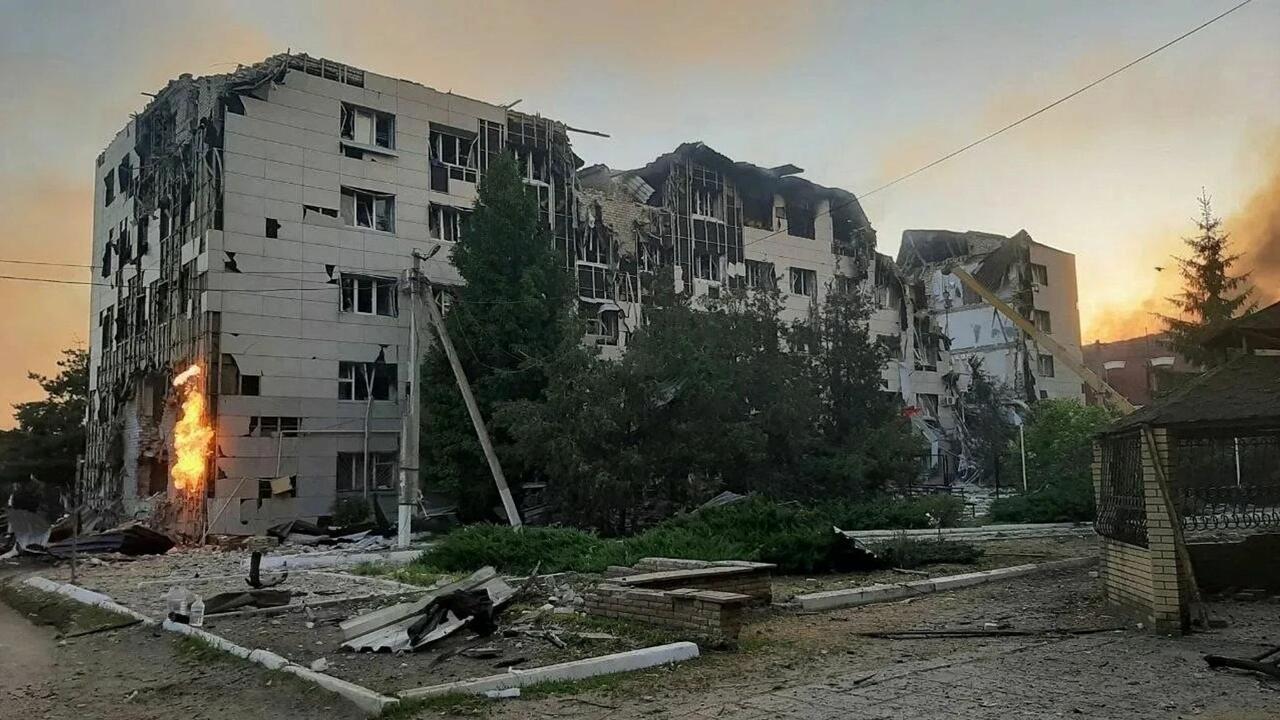
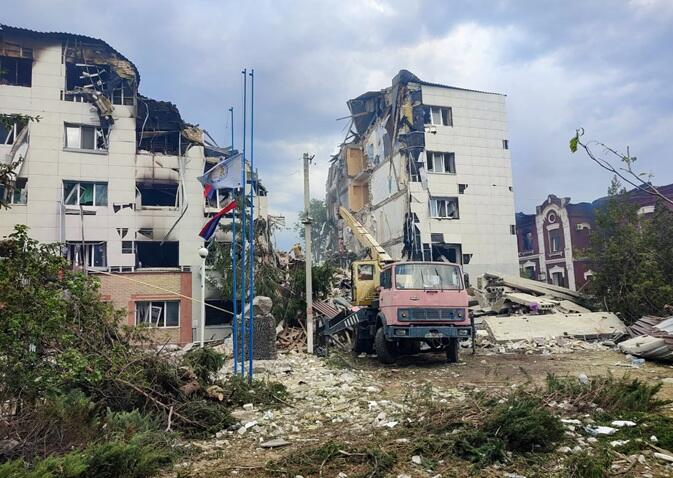
Russian President Vladimir Putin has accused Ukraine of intentionally targeting civilians after a “terrorist” overnight drone attack on a school that left six dead and scores of young people wounded

At least 39 were injured and counting, amid ongoing rescue efforts after a school complex was torn apart on the multi-drone strike attack. It happened at a school dormitory in the Russian-controlled Luhansk region. Over a dozen victims are still missing, including children, reports say.

via Reuters

Putin blasted the mass casualty incident as a “terrorist attack by the neo-Nazi regime” while vowing swift revenge. 

“The Russian Foreign Ministry has been instructed to inform international organizations and the international community about this crime,” Putin said. “In such cases, statements from the Foreign Ministry alone would not suffice. Therefore, the Russian Defense Ministry has been ordered to submit its proposals.”

Large-scale destruction was observed at the academic building and dormitory of the Starobelsk Professional College, which teaches students aged 14 to 18. Over 80 students were at the complex at the time of the attack.

Additionally, Kremlin spokesman Dmitry Peskov said those responsible needed to be brought to justice, calling it “a monstrous crime” – given the “attack on an educational institution where children and young people ⁠are present.”

“The most important thing now ​is to take measures to clear the rubble ​and provide assistance to those who are still ​trapped beneath it,” Peskov added.

Britain’s Sky News has noted that the Ukrainian government has yet to acknowledge the attack:

Severely damaged buildings could also be seen, one of which appeared to have partially collapsed, as well as fires still burning.

Ukraine has yet to comment. Its forces are fighting to try to recapture Luhansk, one of four regions Russia unilaterally claimed as its own in 2022, in what Kyiv considers an illegal land grab.

Russia’s human rights commissioner, Yana Lantratova, said 86 teenagers between the ages of 14 and 18 had been asleep inside the hostel belonging to Luhansk Pedagogical University’s Starobilsk school when Ukrainian drones attacked during the night.

via Reuters

Earlier this month, Russia and Ukraine observed a 3-day US-backed ceasefire for Russia’s V-Day; however, after that Russia unleashed several consecutive days of heavy aerial attacks on Ukrainian cities, especially the capital.

Last week, Ukraine ‘answered’ with a large-scale, long range drone attack on the Moscow area. Currently, these tit-for-tack strikes are ramping up, with increasingly deadly consequences for innocent bystanders on both sides.

Tyler Durden
Fri, 05/22/2026 – 21:20

via ZeroHedge News https://ift.tt/cnVrK9p Tyler Durden

US Sanctions Sinaloa Cartel-Linked Ethereum Addresses

US Sanctions Sinaloa Cartel-Linked Ethereum Addresses

Authored by Zoltan Vardai via CoinTelegraph.com,

The US Department of the Treasury’s Office of Foreign Assets Control (OFAC) sanctioned six Ethereum addresses tied to a Sinaloa Cartel-linked money laundering network that allegedly converted drug proceeds into cryptocurrency.

OFAC added the addresses to its Specially Designated Nationals list (a US sanctions list of people, entities and assets subject to blocking restrictions) on Wednesday as part of sanctions against 11 individuals and two entities connected to two Sinaloa Cartel financial networks.

Treasury said one network, led by Armando de Jesus Ojeda Aviles, collected bulk cash in the US from fentanyl and other drug sales before allegedly converting the money into cryptocurrency for transfer to the cartel in Mexico.

The action highlights how cartel-linked money laundering networks are using digital assets alongside cash couriers and front businesses, raising sanctions compliance risks for crypto exchanges and other virtual asset service providers.

OFAC adds six new Ethereum addresses to sanctions list. Source: OFAC

Cartel cash moved into crypto

The Sinaloa Cartel is allegedly using blockchain technology to launder its illicit fiat money proceeds, according to OFAC.

Cointelegraph contacted OFAC for more details surrounding the Sinaloa Cartel’s money laundering operations.

Treasury did not identify which crypto platforms or protocols were allegedly used by the network.

The listed Ethereum addresses, however, create sanctions exposure for exchanges, wallet providers and other crypto firms that screen blockchain transactions.

Looking at some of the biggest cryptocurrency hacks, attackers laundered the majority of the $1.4 billion stolen during the Bybit hack, or about $1.2 billion, through THORChain, swapping funds from Ether to Bitcoin, according to Bybit co-founder and CEO Ben Zhou. 

Attackers behind the recent $293 million Kelp DAO hack also primarily used THORChain to swap the Ether for Bitcoin, generating about $910,000 in fee revenue for the protocol, Cointelegraph reported on April 23.

Tyler Durden
Fri, 05/22/2026 – 20:55

via ZeroHedge News https://ift.tt/mN3j0kH Tyler Durden

Atlanta Continues To Dominate Among World’s Busiest Airports

Atlanta Continues To Dominate Among World’s Busiest Airports

In 2025, the world’s busiest airport was not in Dubai, London, or Tokyo.

It was Atlanta.

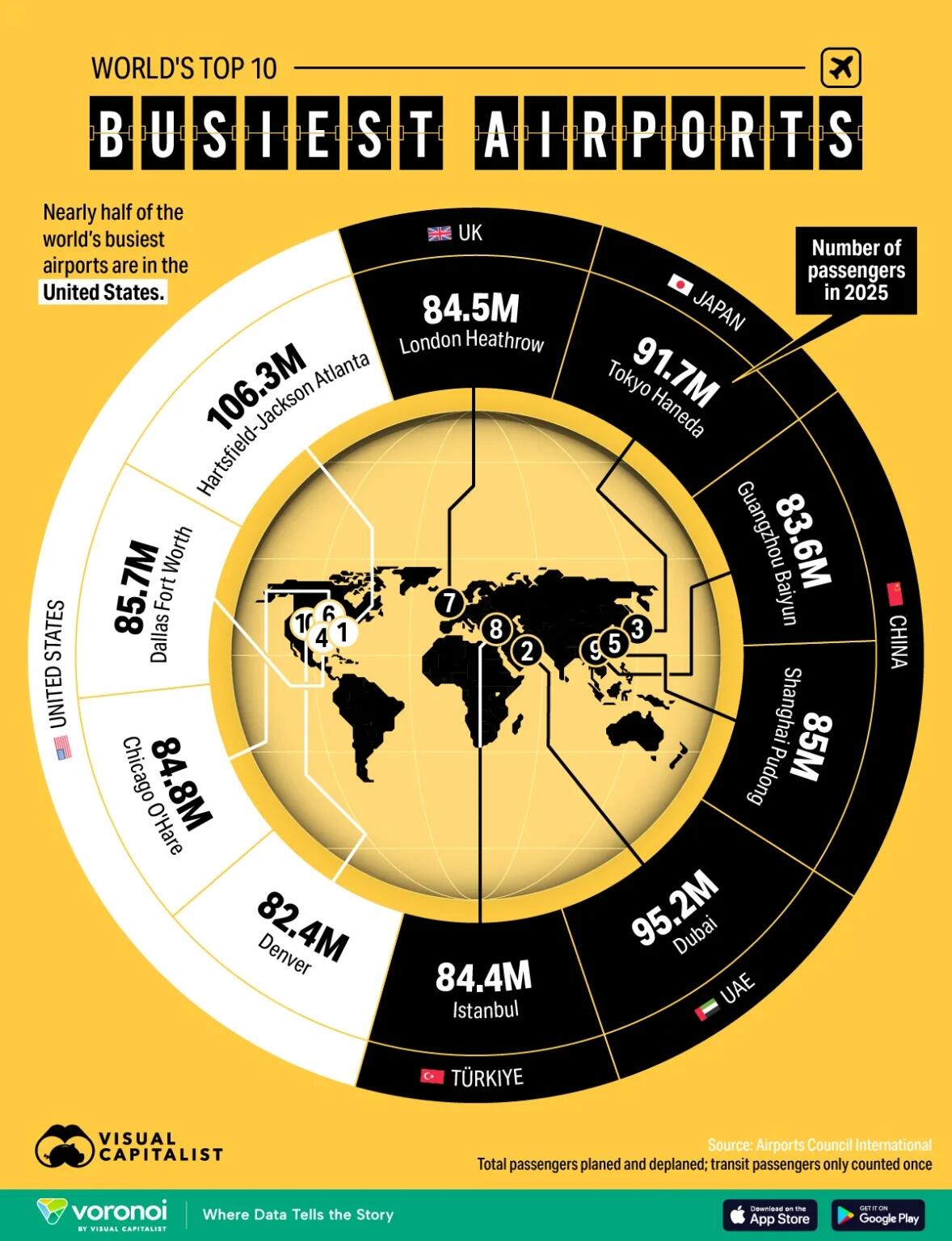
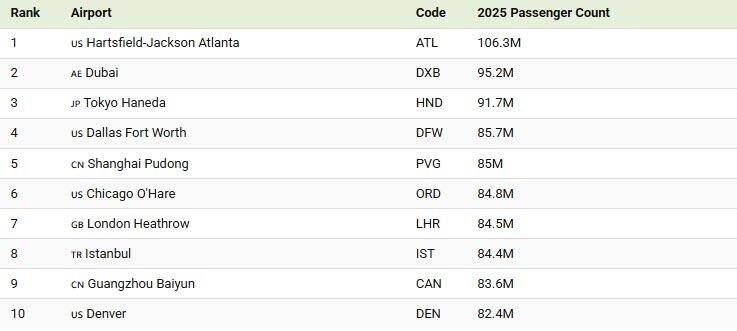
Hartsfield-Jackson Atlanta International Airport handled 106.3 million passengers, making it the only airport in the world to cross the 100 million mark.

This graphic, via Visual Capitalist’s Gabriel Cohen, ranks the world’s busiest airports by total passengers boarded and deplaned in 2025, using new data from the Airports Council International. Transit passengers are counted once.

Why Atlanta Still Ranks #1

The Atlanta airport, which celebrates its 100th anniversary in 2026, has been the world’s busiest airport every year since 1998, except for 2020 during pandemic-era travel restrictions.

This table lists the world’s busiest airports by 2025 passenger count.

Named after two former mayors, Hartsfield-Jackson serves as the main hub and headquarters for Delta Air Lines, the world’s top airline by both revenue and brand value.

Smaller airlines like Frontier and Southwest also maintain operating bases at the airport. Consequently, more than 1,000 flights depart from Hartsfield-Jackson each day.

The U.S. Big Four Airports

Atlanta is not the only U.S. airport near the top. The U.S. accounts for four of the 10 busiest airports worldwide, more than any other country in the ranking.

Dallas Fort Worth (85.7 million), which anchors two of the country’s largest cities, ranks fourth worldwide in passenger traffic, while Denver’s sprawling airport lands in the 10th position with 82.4 million passengers in 2025.

Sixth-ranked Chicago O’Hare (84.8 million) held the title of world’s busiest airport for a quarter-century before losing it to Atlanta in 1998. It continues to be the airport with the most takeoffs and landings, recording more than 860,000 aircraft movements in 2025.

Eurasia’s Biggest Airports

No African or South American airport cracks the world’s 10 busiest airports, which are instead dominated by East Asian and Middle Eastern hubs like Tokyo Haneda (91.7 million), Shanghai Pudong (85 million), and Istanbul (84.4 million).

London Heathrow is Europe’s busiest airport, handling 84.5 million passengers in 2025.

Meanwhile, Dubai (95.2 million) has become the world’s second-busiest airport, while remaining the busiest for international passengers. This reflects the United Arab Emirates’ strategy of positioning Dubai as a global aviation hub connecting Asia, Europe, and the West.

Curious how size factors in? Check out World’s Busiest Single Runway Airports on Voronoi.

Tyler Durden
Fri, 05/22/2026 – 20:30

via ZeroHedge News https://ift.tt/eu20LQg Tyler Durden

India Explores Alternative Energy Sources After Oil Supply Shock

India Explores Alternative Energy Sources After Oil Supply Shock

By Tsvetana Paraskova of OilPrice.com

India’s Prime Minister Narendra Modi has urged the government to urgently explore an increase in the use of alternative energy sources, including biogas as a substitute for liquefied petroleum gas (LPG), as the Middle East crisis is choking oil and gas supply to the world’s third-largest crude importer.

Modi also urged ministers to move faster with implementing reforms to turn India into a developed nation by 2047, the goal for its 100th independence anniversary.

India has been grappling with the energy crisis that the Iran war created. Oil supply from the Middle East was severely constrained, forcing India to boost Russian oil imports – with a U.S. blessing in the form of waivers for Russian crude on tankers – and seek alternative crude and LPG supply from regions other than the Middle East.

Earlier this week, reports emerged that India plans to send empty tankers into the Strait of Hormuz to load oil supplies from the Gulf producers.

This would be a first such Indian move west of the chokepoint for loading crude and LPG since the Iran war began, sources with knowledge of the matter told Bloomberg on Wednesday.

India has boosted imports of oil and LPG from places that don’t need the Strait of Hormuz, but costs are usually higher, and the journey times are much longer compared to the shorter routes from the Persian Gulf to India.

At any rate, India will likely need approval from the U.S. to move through the U.S. blockade in the Gulf of Oman first, and then from Iran for clearance in the Strait of Hormuz en route to the export ports in the Persian Gulf.  

Two and a half months after the Middle East conflict began, one of the highest-performing emerging markets in recent years is scrambling to contain the oil shock that is spreading to consumer prices, foreign exchange reserves, and economic growth.

Tyler Durden
Fri, 05/22/2026 – 20:05

via ZeroHedge News https://ift.tt/2IUOXQ5 Tyler Durden