Trump Administration Drops Effort to Deport Chinese Dissident Guan Heng to Uganda

Guan Heng
Guan Heng. (Illustration : Adani Samat Photo: Luo Yun)


recently wrote about the Trump Administration’s reprehensible effort to deport courageous Chinese dissident Guan Heng to Uganda, which country would likely transfer him back to China, where he would face imprisonment or death. So I am happy to be able to say that the administration has now apparently dropped this plan:

The U.S. on Friday dropped its effort to deport a Chinese national who helped document Beijing’s alleged abuses against Uyghur Muslims to Uganda, the man’s lawyer told Reuters.

Guan Heng, a Chinese citizen-journalist, fled the U.S. in 2021 after taking video of alleged concentration camps in China’s western Xinjiang region. He released the video after arriving in the U.S., where he applied for asylum….

“We just got a letter informing that DHS (Department of Homeland Security) will not seek to remove Mr. Guan to Uganda,” his lawyer Allen Chen told Reuters.

Chen said it was not clear if Washington would continue to pursue Guan’s removal, either to China or another country, but said sending such a “high-profile dissident” back to China would be unlikely.

Under Department of Homeland Security (DHS) policies, migrants may be deported to third countries if immigration authorities either have “credible” diplomatic assurances they will not be persecuted or tortured if sent there or have given the migrants as little as six hours of notice ahead of time that they are being sent to such a place.

Nonetheless, Chen said the withdrawal of the Uganda removal order was a positive development, adding that he expected Guan would have a bond hearing in coming weeks, though his asylum case could take several years.

As Guan’s lawyer notes, the administration could still potentially try to deport him directly to China. But they are unlikely to do after having dropped the attempt at a “third country” deportation, which probably had a better chance of success.

This reversal is likely the result of the widespread outcry against the attempt to deport Guan. It’s not likely that the administration suddenly had an epiphany about the legal issues involved (it was always obvious that Guan has a very strong case for asylum). Thus, this is a sign the administration is not immune to public resistance to its cruel and unjust deportation policies. Opponents should learn from this experience and keep up the pressure, and – where possible – increase it.

As noted in my previous post about Guan, the attempt to deport him is just part of a much broader policy of deporting dissidents and victims of persecution back to their oppressors:

Sadly, the effort to deport Guan is part of a broader pattern of Trump administration efforts to deport dissidents and victims of persecution back to the regimes that oppress them. These policies now include deporting Russian dissidents back to Vladimir Putin’s brutal dictatorship, refugees who fled oppression in Cuba and Venezuela, Iranian Christians who fled persecution by that country’s radical Islamist regime, and Afghans who fled the Taliban (including many who aided the US during the war). Such policies are obviously cruel and unjust. They are also strategically counterproductive.

A policy that essentially aids anti-American regimes in their persecution of dissidents undermines our position in the international war of ideas between these governments’ ideologies and ours, and deters future would-be dissidents and allies from working against those governments or aiding us. This isn’t making America Great Again. It’s making us simultaneously evil and stupid.

Ideally, these other cruel deportation policies should be met with the same widespread condemnation as that which resulted in the administration’s reversal on Guan Heng.

The post Trump Administration Drops Effort to Deport Chinese Dissident Guan Heng to Uganda appeared first on Reason.com.

from Latest – Reason.com https://ift.tt/ve48U7C
via IFTTT

Trump Administration Drops Effort to Deport Chinese Dissident Guan Heng to Uganda

Guan Heng
Guan Heng. (Illustration : Adani Samat Photo: Luo Yun)


recently wrote about the Trump Administration’s reprehensible effort to deport courageous Chinese dissident Guan Heng to Uganda, which country would likely transfer him back to China, where he would face imprisonment or death. So I am happy to be able to say that the administration has now apparently dropped this plan:

The U.S. on Friday dropped its effort to deport a Chinese national who helped document Beijing’s alleged abuses against Uyghur Muslims to Uganda, the man’s lawyer told Reuters.

Guan Heng, a Chinese citizen-journalist, fled the U.S. in 2021 after taking video of alleged concentration camps in China’s western Xinjiang region. He released the video after arriving in the U.S., where he applied for asylum….

“We just got a letter informing that DHS (Department of Homeland Security) will not seek to remove Mr. Guan to Uganda,” his lawyer Allen Chen told Reuters.

Chen said it was not clear if Washington would continue to pursue Guan’s removal, either to China or another country, but said sending such a “high-profile dissident” back to China would be unlikely.

Under Department of Homeland Security (DHS) policies, migrants may be deported to third countries if immigration authorities either have “credible” diplomatic assurances they will not be persecuted or tortured if sent there or have given the migrants as little as six hours of notice ahead of time that they are being sent to such a place.

Nonetheless, Chen said the withdrawal of the Uganda removal order was a positive development, adding that he expected Guan would have a bond hearing in coming weeks, though his asylum case could take several years.

As Guan’s lawyer notes, the administration could still potentially try to deport him directly to China. But they are unlikely to do after having dropped the attempt at a “third country” deportation, which probably had a better chance of success.

This reversal is likely the result of the widespread outcry against the attempt to deport Guan. It’s not likely that the administration suddenly had an epiphany about the legal issues involved (it was always obvious that Guan has a very strong case for asylum). Thus, this is a sign the administration is not immune to public resistance to its cruel and unjust deportation policies. Opponents should learn from this experience and keep up the pressure, and – where possible – increase it.

As noted in my previous post about Guan, the attempt to deport him is just part of a much broader policy of deporting dissidents and victims of persecution back to their oppressors:

Sadly, the effort to deport Guan is part of a broader pattern of Trump administration efforts to deport dissidents and victims of persecution back to the regimes that oppress them. These policies now include deporting Russian dissidents back to Vladimir Putin’s brutal dictatorship, refugees who fled oppression in Cuba and Venezuela, Iranian Christians who fled persecution by that country’s radical Islamist regime, and Afghans who fled the Taliban (including many who aided the US during the war). Such policies are obviously cruel and unjust. They are also strategically counterproductive.

A policy that essentially aids anti-American regimes in their persecution of dissidents undermines our position in the international war of ideas between these governments’ ideologies and ours, and deters future would-be dissidents and allies from working against those governments or aiding us. This isn’t making America Great Again. It’s making us simultaneously evil and stupid.

Ideally, these other cruel deportation policies should be met with the same widespread condemnation as that which resulted in the administration’s reversal on Guan Heng.

The post Trump Administration Drops Effort to Deport Chinese Dissident Guan Heng to Uganda appeared first on Reason.com.

from Latest – Reason.com https://ift.tt/ve48U7C
via IFTTT

A Russian-US ‘New Détente’ Could Revolutionize The Global Economic Architecture

A Russian-US ‘New Détente’ Could Revolutionize The Global Economic Architecture

Authored by Andrew Korybko via Substack,

It was explained in this analysis about “How A Rapprochement With Russia Helps The US Advance Its Goals Vis-à-vis China” that joint strategic resource investments after the end of the Ukrainian Conflict, particularly in energy and critical minerals, can assist the US in economically competing with China.

This vision aligns with the new National Security Strategy’s (NSS) focus on securing critical resource supply chains and can prospectively be expanded to aid the US’ allies with this for further advancing its goals.

After all, the bulk of the NSS’ Asian section isn’t about the US’ military competition with China (though a subsection details efforts to deter it in Taiwan and the South China Sea), but their economic competition and the ways in which the US’ allies can help the West keep pace with the People’s Republic. It even proposes joint cooperation “with regard to critical minerals in Africa” for gradually reducing and ultimately eliminating their collective dependence on China’s associated supply chains.

Given Russia’s richness in critical minerals deposits, the central role that their development is expected to play in the “New Détente”, and the importance of these investments for advancing the US’ NSS goals vis-à-vis China, it’s possible that associated projects could include the US’ Asian allies. This could take the form of the US providing sectoral secondary sanctions waivers to India, Japan, South Korea, Taiwan, and others as rewards for Russia’s compliance with a Ukrainian peace deal to incentivize joint investments.

Not only would this help the US and its Asian allies reduce their collective dependence on China’s critical minerals supply chains, but it would also help avert the scenario of Russia becoming disproportionately dependent on China, thus serving both sides’ interests vis-à-vis China. Furthermore, the proposed sectoral secondary sanctions waivers could expand to include energy and tech, which would unlock their access to Russia’s Arctic LNG 2 megaproject while also reducing Russia’s dependence on Chinese chips.

The resultant complex strategic interdependence would be mutually beneficial.

US pressure along Russia’s western (European), northern (Arctic), eastern (East Asian), and potentially also southern (South Caucasus and Central Asia as proposed here) flanks would be greatly reduced due to Russia’s newfound national security significance brought about by its irreplaceable strategic resource and associated supply chain roles.

Russia has wanted this for decades, and it might finally be within reach.

Likewise, Russia would be incentivized to comply with whatever Ukrainian peace deal the US brokers in order to maintain this outcome, which also averts the scenario of it becoming disproportionately dependent on China all while bringing tangible economic benefits.

The US and its Asian allies would essentially be paying Russia to comply with that deal and turn its de facto entente with China, in which it might one day become the junior partner, into just one of several near-equal strategic partnerships.

Through these means, the renascent Russian-US “New Détente” could revolutionize the global economic architecture by removing China’s centricity therein, which would help the US and its Asian allies better compete with it per their shared goal through the help that Russia would be providing.

Significantly, Russia would also move from the periphery of the existing global economic architecture towards its core due to the importance of its strategic resources in this paradigm, thus fulfilling its grand economic goal.

Tyler Durden
Fri, 12/19/2025 – 23:25

via ZeroHedge News https://ift.tt/B32Hfc5 Tyler Durden

Watch: US Naval Forces Now Have Suicide Drones

Watch: US Naval Forces Now Have Suicide Drones

U.S. Naval Forces Central Command and the 5th Fleet successfully tested a low-cost kamikaze drone from the deck of the USS Santa Barbara (LCS 32), an Independence-class littoral combat ship.  

The test of the Low-cost Unmanned Combat Attack System (LUCAS) was completed in the Arabian Gulf region and marks a “significant milestone in rapidly delivering affordable and effective unmanned capabilities to the warfighter,” Vice Adm. Curt Renshaw, commander of NAVCENT/C5F, wrote in a statement.

The sea-based test follows U.S. Central Command’s announcement of the U.S. military’s first one-way-attack drone squadron based in the Middle East…

Cheap kamikaze drones are reshaping the modern battlefield by dramatically reducing the cost of precision strikes. Equipped with low-cost warheads, these drones cost a fraction of cruise missiles while being capable of swarming overwhelming missile defense shields. Their effectiveness has been demonstrated repeatedly in Ukraine, where cheap, disposable drones have crippled air defenses, struck critical power grid infrastructure, and oil/gas tankers.

Tyler Durden
Fri, 12/19/2025 – 23:00

via ZeroHedge News https://ift.tt/7R4wPrn Tyler Durden

The Crisis Of Disability In America

The Crisis Of Disability In America

Authored by Jeffrey Tucker via The Epoch Times,

The Bureau of Labor Statistics has an ongoing household survey to provide a snapshot of where we are in jobs and the labor market generally. This survey has usually proven to be the most accurate measure. Part of the survey includes questions concerning disability. It’s not about claims; it’s about answers to the following questions.

  1. Are you deaf, or do you have serious difficulty hearing?

  2. Are you blind, or do you have serious difficulty seeing even when wearing glasses?

  3. Because of a physical, mental, or emotional condition, do you have serious difficulty concentrating, remembering, or making decisions?

  4. Do you have serious difficulty walking or climbing stairs?

  5. Do you have difficulty dressing or bathing?

  6. Because of a physical, mental, or emotional condition, do you have difficulty doing errands alone such as visiting a doctor’s office or shopping?

You can take issue with this questionnaire and observe that people might perhaps exaggerate. Who, for example, hasn’t navigated a long flight of stairs and found himself rather fatigued at the end? Chronic obesity would tip the scales. At some point in the aging process, we all become disabled.

But let’s say you run the same exact survey for 20 years. Even with inaccuracies in reporting, even with a tendency to exaggerate, the trend line would still be highly significant if only because the survey methods remain the same.

Here is where the news gets grim. The latest survey reports that 36.63 million Americans have a disability. That’s an increase of 7 million over the summer of 2020, at the time when we were supposed to be in the midst of a debilitating pandemic.

The disabilities began to soar only after the inoculation was pushed and sometimes forced on the public.

The upward trend began in February 2021 and has not stopped.

Edward Dowd, investment analyst and author of “Cause Unknown: The Epidemic of Sudden Deaths in 2021 & 2022,” comments:

“The November US BLS Disability data has been updated and it’s grim … new highs across the board. Disaster.”

It is not plausible to attribute all the increase to the COVID shot, which is now widely acknowledged to be neither safe and nor effective. At the same time, it would be naive not to attribute some or a substantial or even the dominant part of the reason to the debilitating effects of the supposed cure. This is surely one of the great failures in the history of pharmacology. And the data here tells the story.

Other factors aside from the vaccine gone wrong might be substance abuse, depression, lack of exercise, poor diet, and the chronic disease problem generally speaking. The ill health both physical and mental in the United States is breaking all records. That is impacting reporting on disability and also the way in which labor markets are handling disability.

In the backdrop of this is a long-broken system for dealing with the disabled. People injured by the shots, for example, have essentially no options for redress because the makers lobbied for and obtained a liability shield in 1986. Even with documented and obvious harms, the injured have nowhere to go. One hopes that this unjust system will be revisited completely at some point.

My very first assignment in journalism school was to track the progress of the Americans with Disabilities Act in 1990. I worked with a top lobbyist on the bill. The architects of the legislation were very well intentioned and wanted some federal attention on their plight. The bill banned discrimination, allocated vast new sums for benefits, and mandated all reasonable accommodation for the disabled, including physical upgrades of property.

As I looked at the legislation, and having many disabled friends myself, it became obvious to me that the legislation would certainly make a bad situation worse. It would turn a culture that was helpful toward the disabled into one that feared the liability associated with having them in the workforce. The mandates for physical improvements would be hard on business and breed resentment, and the jump in benefits would create a moral hazard that would increase the disabled population.

I explained all of this to the promoters of the legislation and begged them to back off, for the sake of the disabled population. They were aghast at my opinion and essentially told me to shut up. My report eventually was published (I wish I could find it) and warned of a coming disaster. That disaster did in fact come as unemployment among the disabled population grew for the rest of the decade. Business worried about liabilities and discrimination complaints worked on the margin to exclude these people from the workforce, and people began to resent rather than feel empathy toward the disabled population. None of this surprised me.

Sometimes the phrase “good intentions” gets thrown around too much. Not every government welfare program is rooted in good intentions. In the case of disability legislation, there is no question of the desire on the part of its promoters to advance the well-being of those with genuine issues and remove barriers.

Sadly, the Americans with Disabilities Act did exactly the opposite, which was easily predicted by anyone with a modicum of economic understanding.

Since those days, the problem has gotten worse. It is ever harder for the disabled population to be hired. Consider someone with severe autism, for example. The stipulations in the law make it difficult for them to be hired, and even working as volunteers can be looked at unfavorably by labor regulators. It is just much easier to exclude them from the workforce, thus avoiding liability risks and garnering extra attention from the law enforcers.

Now we see the problem getting much worse. With 36.63 million Americans reporting a debilitating disability, we see grave strains on health insurance and institutions that care for such people. With one in 31 children age 8 or younger identified as autistic, the problem is set to get much worse in the years ahead. Many of these people require full-time care, depending fundamentally on family. But when the family is not there, what happens? The institutions have to pick up the bill.

We have here the makings of a medical, social, and economic problem that no president or legislature is in a position to solve. It’s one that will vex national well-being for many decades during our lifetimes. Society aspires to care for such people and treat them with dignity but the regulations and laws have made that very difficult.

There is truth to the observation that societies should be judged by how they treat those least fortunate. America has generally done well but will it in the decades ahead?

Tyler Durden
Fri, 12/19/2025 – 22:35

via ZeroHedge News https://ift.tt/VubGJqR Tyler Durden

Malaysia’s Johor State Emerges As Magnet For AI Data Centers

Malaysia’s Johor State Emerges As Magnet For AI Data Centers

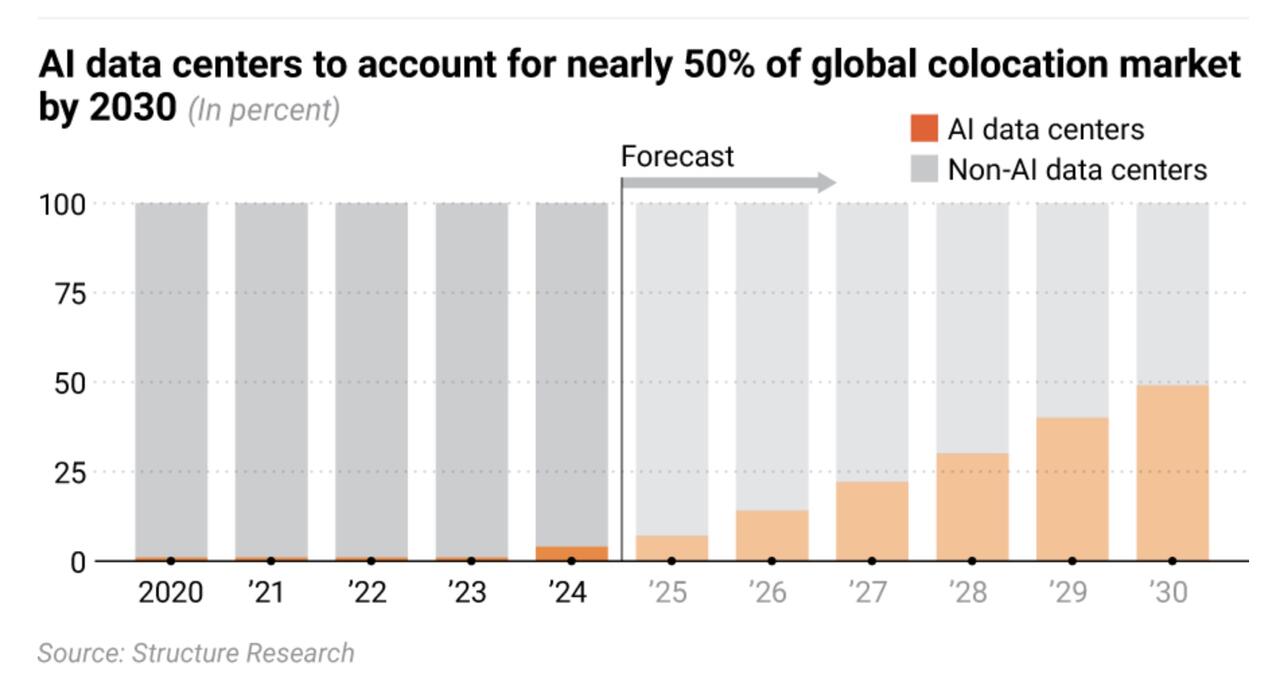
Johor, in southern Malaysia, has rapidly become a major destination for data center investment—driven by two big forces: companies diversifying supply chains amid geopolitical tension, and a post–late 2022 surge in compute demand from generative AI that’s reshaping where Asian capacity gets built, according to Nikkei.

What makes Johor especially attractive is its spillover link to Singapore. Singapore remains a connectivity hub, but land and power constraints there are pushing new builds across the border, where operators can still connect back terrestrially. A cross-border rail line expected to start operating at the end of next year, along with the Johor–Singapore Special Economic Zone launched in January, is intended to further reduce friction through incentives such as faster immigration clearance and streamlined customs procedures.

Nikkei writes that the scale-up has been fast. Analysts cited by Nikkei say Johor reached more than 900 megawatts of data center capacity in roughly three years—a pace that took Singapore more than a decade. Former industrial zones like Sedenak Tech Park have been transformed into large AI-compute campuses, backed by high-voltage power infrastructure and reclaimed water facilities. Major U.S. and Chinese tech firms, cloud providers and server manufacturers have established a presence, anchoring a growing regional ecosystem.

Malaysia as a whole has become one of Southeast Asia’s largest magnets for digital investment, attracting at least 210.4 billion ringgit in 2023 and 2024, according to government data. Johor has captured the bulk of that inflow, though Kuala Lumpur and Cyberjaya are also emerging as secondary hubs. Industry executives and policymakers argue that hosting large-scale computing clusters boosts strategic relevance, creating momentum that draws in network infrastructure such as submarine cables and strengthens regional connectivity.

The boom is also reshaping local labor markets. While data centers generate fewer jobs than manufacturing, the roles they do create—ranging from electrical engineering and telecommunications to network and cloud architecture—pay well above the national median. Central bank estimates cited by Nikkei suggest entry-level positions typically earn more than average Malaysian wages, with experienced specialists commanding significantly higher salaries.

At the same time, constraints are becoming more visible. Electricity and water are critical bottlenecks, particularly for AI facilities that rely on liquid cooling. Johor has begun rejecting new projects that depend on water-intensive cooling systems while it builds additional supply infrastructure, which officials say will take several years to come online. Analysts also point to geopolitical risk, especially uncertainty around access to advanced AI chips amid tightening export controls.

Finally, questions are emerging about oversupply. Unlike hyperscalers that build data centers to serve their own platforms, many carrier-neutral operators are betting on future tenant demand. Some projects have already been shelved, and analysts warn that Johor’s growth remains heavily dependent on foreign customers rather than domestic demand. Whether the state can sustain its rapid rise as an AI data center hub will depend on how effectively it balances infrastructure, regulation, geopolitics and long-term market demand.

Tyler Durden
Fri, 12/19/2025 – 22:10

via ZeroHedge News https://ift.tt/YuqsL1l Tyler Durden

Tennessee Governor Pardons Country Star Jelly Roll For Past Convictions

Tennessee Governor Pardons Country Star Jelly Roll For Past Convictions

Authored by Kimberley Hayek via The Epoch Times,

Tennessee Gov. Bill Lee granted a pardon Thursday to Grammy-nominated country artist Jelly Roll for his previous criminal convictions, noting the musician’s journey from incarceration to advocacy and stardom.

The pardon, one of 33 clemency actions granted by the Republican governor in light of the Christmas season, celebrates Jelly Roll’s personal growth.

Born as Jason Bradley DeFord on Dec. 4, 1984, the Nashville native spent much of his youth in juvenile facilities, including more than three years at the Davidson County Juvenile Detention Center beginning at age 14 and has been jailed around 40 times for offenses including aggravated robbery and drug possession. He earned a high school equivalency degree at 23 while incarcerated.

Jelly Roll’s most serious convictions include a 2002 robbery at age 17, when he and others, including an armed individual, stole $350 from victims in a home. He served one year in prison, as well as probation. In 2008, police discovered marijuana and crack cocaine in his vehicle, leading to eight years of court supervision.

Lee said Jelly Roll’s application underwent the same rigorous, months-long review as others, with the state parole board unanimously recommending approval in April.

“His story is remarkable, and it’s a redemptive, powerful story, which is what you look for and what you hope for,” Lee told reporters.

The governor first met Jelly Roll on Thursday at the Governor’s Residence, where they embraced one another amid holiday decorations. Unlike federal pardons that can enable an individual to avoid prison time, Tennessee’s pardons offer forgiveness post-sentence, sometimes restoring rights such as the right to vote with some limits. Jelly Roll has said a pardon would make international tours and missionary work easier, since he’d no longer have to do paperwork due to his criminal history.

In a June interview with “Interview Magazine,” he discussed issues he has faced with traveling.

“It’s funny, America has finally agreed to let me leave and give me a passport, but some countries won’t let me come because of my felonies,” he said. “We’re working on that. I think it’s going to work in my favor.”

Jelly Roll received support from peers and local leaders, including attorney David Raybin who worked on his pardon, and Davidson County Sheriff Daron Hall, who administered the jail where Jelly Roll experienced his transformation.

“I think he has a chance and is in the process of rehabilitating a generation, and that’s not just words,” Hall said. “I’m talking about what I see we need in our country, is people who accept responsibility, accept the fact that they make mistakes and accept the fact that they need help.”

Live Nation CEO Michael Rapino has highlighted Jelly Roll’s charitable donations from performances to at-risk youth programs.

Jelly Roll changed his ways in 2008 upon learning of his daughter Bailee Ann’s birth while imprisoned. He began selling mixtapes from his car, blending genres like country, hip-hop, and Southern rock. His professional breakthrough occurred with 2022’s “Son of a Sinner,” which climbed to the top of country radio, followed by hits including “Save Me” and “Need a Favor.”

His 2023 album “Whitsitt Chapel” marked a country pivot, earning multiple CMT Music Awards and a Country Music Association New Artist of the Year honor. He has garnered seven Grammy nominations across his career. Themes of adversity permeate songs like “Winning Streak,” about the first day of sobriety, and “I Am Not Okay.”

“When I first started doing this, I was just telling my story of my broken self,” Jelly Roll said. “By the time I got through it, I realized that my story was the story of many. So now I’m not telling my story anymore. I’m getting to pull it right from the crevices of the people whose [stories have] never been told.”

Jelly Roll has also been working on making amends.

“I’m rounding third on my amends list, and I think when I get there, I’ll feel a little better,” he said.

Jelly Roll said he found songwriting therapeutic while in custody, telling the parole board it had become a passion that “would end up changing my life in ways that I never dreamed imaginable.”

His advocacy has encompassed testifying before the U.S. Senate on the dangers of fentanyl, while admitting his past dealing of the drug.

“I was a part of the problem,” he said. “I am here now standing as a man that wants to be a part of the solution.”

He opened a music studio in February at the Nashville juvenile center where he was incarcerated, donating concert proceeds and partnering with The Beat of Life nonprofit for workshops.

He told the more than 30 songwriters gathered at the studio’s launch about what the studio and its opening meant to those behind bars.

“You wrote with some real kids that are going through the realest and hardest … moment of their entire life,” he said. “I beg y’all to come back and be patient with them. I beg you to love them. … Those kids got a small sliver of hope they’ve never had in their life today and the hope is the seed that grows into change.”

He reflected on his time in juvenile hall.

“When I was in juvenile, we never got a visitor. We never had a mentor, nobody ever came to see us. To be able to come back on these terms is a dream that I had and this is only the beginning.”

Tyler Durden
Fri, 12/19/2025 – 21:45

via ZeroHedge News https://ift.tt/aFK6Qyn Tyler Durden

China Says Region Closer To War Due To US Record Taiwan Arms Package

China Says Region Closer To War Due To US Record Taiwan Arms Package

China on Friday heaped more condemnation on Washington’s approving a record-setting $11.1 billion weapons package for Taiwan this week, warning that the deal risks turning the island into a “powder keg” and plunging the region into “military confrontation and war.”

A significant amount of medium to long-range missile systems are part of the planned transfer, including 82 HIMARS launchers with Army ATACMS missiles, allowing Taipei forces to hit targets across the Taiwan Strait. This aspect has further infuriated China.

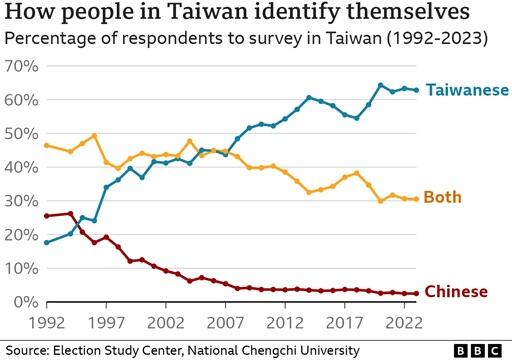
Beijing in the fresh comments accused Taiwan’s leadership of “seeking independence through force” and charged that the United States is using the island to “contain China”.

“The ‘Taiwan independence’ forces on the island seek independence through force and resist reunification through force, squandering the hard-earned money of the people to purchase weapons at the cost of turning Taiwan into a powder keg,” Foreign Ministry spokesperson Guo Jiakun said.

“This cannot save the doomed fate of ‘Taiwan independence’ but will only accelerate the push of the Taiwan Strait toward a dangerous situation of military confrontation and war. The U.S. support for ‘Taiwan Independence’ through arms will only end up backfiring. Using Taiwan to contain China will not succeed.”

The prior largest US arms sale to Taiwan occurred in 2019, when the first Trump administration authorized an $8 billion deal for 66 F-16V fighter jets.

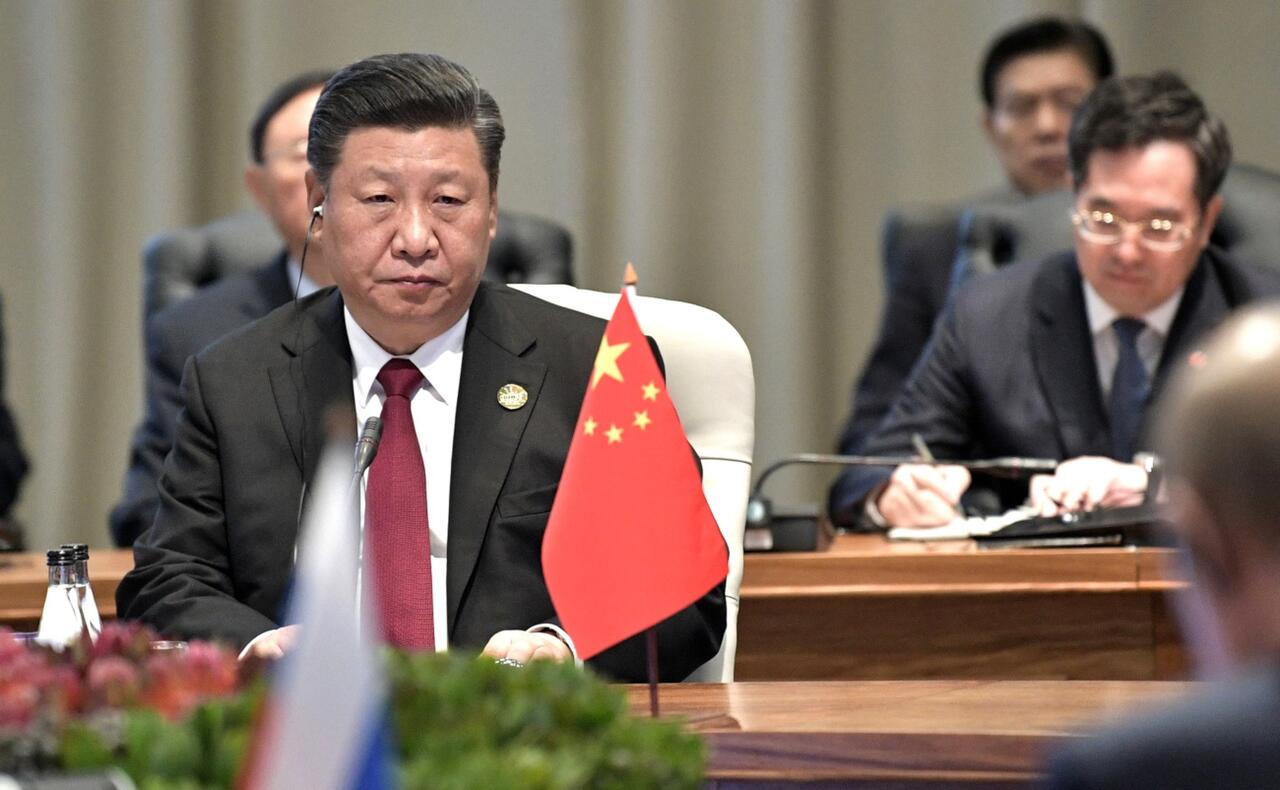
President Xi’s policy, at least in public, has been that reunification of Taiwan with the mainland will happen through peaceful, political means; however, hawks in Washington have never believed this.

From China’s point of view, the US continually arming Taiwan would be akin to China regularly pouring weapons in Cuba which could reach Florida.

Certainly US politicians would be outraged if Beijing or Moscow armed Cuba to the teeth and would likely act – and we even have precedents from Cold War history to demonstrate this.

The current Trump administration began its Taiwan arms sales last month, approving a $330 million package for aircraft components. All the while, Trump has softened his anti-China rhetoric and is seeking to improve bilateral relations, according to most media presentations. But this massive arms sign-off for Taiwan doesn’t point in the direction of ‘softening’ tensions with China.

Tyler Durden
Fri, 12/19/2025 – 21:20

via ZeroHedge News https://ift.tt/2Lr1vpg Tyler Durden