Paul Ryan's Poverty Plan: Why Are Liberals Ignoring the Criminal Justice Reform Aspect?

Type “Paul Ryan poverty” into Google and you’ll
turn up pages upon pages of recent news hits. The Republican
senator’s plan for “Expanding Opportunity in America” was released
July 24, and since then there have been no shortage of writers and
pundits both criticizing and praising Ryan’s proposals.
Conspicuously absent from critics’ responses, however, has been
much if any discussion of the plan’s criminal
justice reform elements

To me, these are by far the most exciting parts of Ryan’s
agenda. When is the last time an American politician brought up
criminal justice reform in the context of poverty policy proposals?
And yet a huge part of what keeps people poor is our draconian
criminal justice system. As of 2008, one
in every 100 people
 in America was in prison. We throw
people in jail for the most insane reasons—possessing pot, having
sex, street vending without proper paperwork—thereby already
putting them (and their families) in economic jeopardy. And then we
release them into a system where over-eager cops, parole officers,
and bureaucrats are on the ready to issue fines or haul them back
into prison should they fail to meet any number of labyrinthian
requirements. 

The link between poverty and over-aggressive incarceration in
the U.S. is undeniable. “During the past
decade, researchers have identified serious individual
and community-level harms attributable to rising incarceration,”

write Robert DeFina and Lance Hannon
, professors of criminology
and sociology at Villanova University,. 

Our own work offers evidence that
mass incarceration has, over time, significantly increased poverty.
In many ways, this finding is unsurprising. A criminal record, for
example, has been shown to decrease the likelihood of landing a job
and to reduce both the level and growth of wages. And in many
states, a criminal record means reduced access to the social safety
net and to licenses for certain types of professions. The economic
harm extends to offenders’ spouses and partners, who themselves
often have a harder time getting and holding a job, due to the
logistical difficulties of being in a relationship with someone in
prison or jail.

In a 2010 paper coordinated by the American Academy of Arts and
Sciences, a team of leading criminologists argued that mass
incarceration is highly linked to growing inequality
in the
United States. 

Obviously criminal justice reform alone won’t end poverty, but
it could help make a serious dent. And it could
theoretically draw much more bipartisan support than
hotly-contested ideas like reforming the tax code or social safety
net. Conservative and liberal legislators in Congress have already
been working together
to push for sentencing reform
.

Yet many Democratic politicians are strangely
quiet
on the subject, as were liberal critics of Ryan’s poverty
plan. To read many critiques, you might not even know
there was a criminal justice reform element to his
porposals. See: Jamelle
Bouie at Slate
,
Annie Lowrey at New York
,
E.J. Dionne Jr. at The Washington Post
,
John Nichols at The Nation
, and
Pat LaMarche at The Huffington Post
, to list just a
few examples.

I’m not expecting these people to fawn over Ryan’s poverty plan
or ignore areas of disagreement—there’s a lot to dislike in it,
from a progressive or
a libertarian perspective
. But let’s give credit where credit
is due. Would it have killed folks to highlight some ways Ryan may
have gotten it right? (Credit where credit is due: Nicole Flatow
at Think
Progress
 did just
this
.) 

Of course, maybe these folks don’t agree on the
criminal justice elements; maybe they’re opposed to sentencing
reform, or think our prison industrial complex has no bearing on
poverty in America. But if that’s the case, why not say so? Why not
condemn these reform ideas, too? The fact that they didn’t even
mention them—while tending to support criminal justice reform under
other circumstances—makes me think the omission isn’t innocent but
pure partisan posturing. 

And this is what infuriates me about hyper-partisans, be they
politicians, pundits, or your mom. At some point actual people have
to matter more than winning the news cycle. At some point you have
to demonstrate that you actually give a fuck about the people more
than the politics. And this is seen all too rarely, on either side
of the left-right divide. 

People like to talk about how libertarians are selfish. How we
all worship Ayn Rand and do the bidding of billionaires and want to
make the poor polish our monocles while we’re privatizing the
roads. There’s a myopic tendency to assume that just because we
don’t come to the same conclusions about how to help the poor (or
the world), we don’t care.

Take a look at the kinds of things Reason regularly covers:

police abuse
, criminal
justice reform
,
sex work
,
civil liberties
,
parents’ rights
stopping U.S. warmongering,
ending
regulations that
make it harder for
the poor
 and
middle-class
to make a living, opening
the borders
indiscriminately. We care. Take a look at the
guaranteed-basic-income supporting folks
at Bleeding Heart Libertarians
, the work
done by
people like Radley Balko
 and Maggie McNeill, the
crusaders at IJ and Families Against Mandatory Minimums. They
care. Take a look at Paul Ryan’s poverty plan. The criminal-justice
and occupational-liscening reform elements are ways of
caring. 

Does Paul Ryan really care? I have no idea. And I don’t
care about that. I will take action-oriented allies where I can get
them, no matter whether their motives are pure or we vehemently
disagree elsewhere. Because I’m not interested in writing
libertopian fan fic.
I’m interested in how we can actually
help people economically and actually make people more free, given
current realities and constraints. I’m not willing to overlook the
good in the favor of the perfect, and I wish I could say the same
for more people working on and covering Capitol Hill. 

from Hit & Run http://ift.tt/1Ay4Cjb
via IFTTT

Paul Ryan’s Poverty Plan: Why Are Liberals Ignoring the Criminal Justice Reform Aspect?

Type “Paul Ryan poverty” into Google and you’ll
turn up pages upon pages of recent news hits. The Republican
senator’s plan for “Expanding Opportunity in America” was released
July 24, and since then there have been no shortage of writers and
pundits both criticizing and praising Ryan’s proposals.
Conspicuously absent from critics’ responses, however, has been
much if any discussion of the plan’s criminal
justice reform elements

To me, these are by far the most exciting parts of Ryan’s
agenda. When is the last time an American politician brought up
criminal justice reform in the context of poverty policy proposals?
And yet a huge part of what keeps people poor is our draconian
criminal justice system. As of 2008, one
in every 100 people
 in America was in prison. We throw
people in jail for the most insane reasons—possessing pot, having
sex, street vending without proper paperwork—thereby already
putting them (and their families) in economic jeopardy. And then we
release them into a system where over-eager cops, parole officers,
and bureaucrats are on the ready to issue fines or haul them back
into prison should they fail to meet any number of labyrinthian
requirements. 

The link between poverty and over-aggressive incarceration in
the U.S. is undeniable. “During the past
decade, researchers have identified serious individual
and community-level harms attributable to rising incarceration,”

write Robert DeFina and Lance Hannon
, professors of criminology
and sociology at Villanova University,. 

Our own work offers evidence that
mass incarceration has, over time, significantly increased poverty.
In many ways, this finding is unsurprising. A criminal record, for
example, has been shown to decrease the likelihood of landing a job
and to reduce both the level and growth of wages. And in many
states, a criminal record means reduced access to the social safety
net and to licenses for certain types of professions. The economic
harm extends to offenders’ spouses and partners, who themselves
often have a harder time getting and holding a job, due to the
logistical difficulties of being in a relationship with someone in
prison or jail.

In a 2010 paper coordinated by the American Academy of Arts and
Sciences, a team of leading criminologists argued that mass
incarceration is highly linked to growing inequality
in the
United States. 

Obviously criminal justice reform alone won’t end poverty, but
it could help make a serious dent. And it could
theoretically draw much more bipartisan support than
hotly-contested ideas like reforming the tax code or social safety
net. Conservative and liberal legislators in Congress have already
been working together
to push for sentencing reform
.

Yet many Democratic politicians are strangely
quiet
on the subject, as were liberal critics of Ryan’s poverty
plan. To read many critiques, you might not even know
there was a criminal justice reform element to his
porposals. See: Jamelle
Bouie at Slate
,
Annie Lowrey at New York
,
E.J. Dionne Jr. at The Washington Post
,
John Nichols at The Nation
, and
Pat LaMarche at The Huffington Post
, to list just a
few examples.

I’m not expecting these people to fawn over Ryan’s poverty plan
or ignore areas of disagreement—there’s a lot to dislike in it,
from a progressive or
a libertarian perspective
. But let’s give credit where credit
is due. Would it have killed folks to highlight some ways Ryan may
have gotten it right? (Credit where credit is due: Nicole Flatow
at Think
Progress
 did just
this
.) 

Of course, maybe these folks don’t agree on the
criminal justice elements; maybe they’re opposed to sentencing
reform, or think our prison industrial complex has no bearing on
poverty in America. But if that’s the case, why not say so? Why not
condemn these reform ideas, too? The fact that they didn’t even
mention them—while tending to support criminal justice reform under
other circumstances—makes me think the omission isn’t innocent but
pure partisan posturing. 

And this is what infuriates me about hyper-partisans, be they
politicians, pundits, or your mom. At some point actual people have
to matter more than winning the news cycle. At some point you have
to demonstrate that you actually give a fuck about the people more
than the politics. And this is seen all too rarely, on either side
of the left-right divide. 

People like to talk about how libertarians are selfish. How we
all worship Ayn Rand and do the bidding of billionaires and want to
make the poor polish our monocles while we’re privatizing the
roads. There’s a myopic tendency to assume that just because we
don’t come to the same conclusions about how to help the poor (or
the world), we don’t care.

Take a look at the kinds of things Reason regularly covers:

police abuse
, criminal
justice reform
,
sex work
,
civil liberties
,
parents’ rights
stopping U.S. warmongering,
ending
regulations that
make it harder for
the poor
 and
middle-class
to make a living, opening
the borders
indiscriminately. We care. Take a look at the
guaranteed-basic-income supporting folks
at Bleeding Heart Libertarians
, the work
done by
people like Radley Balko
 and Maggie McNeill, the
crusaders at IJ and Families Against Mandatory Minimums. They
care. Take a look at Paul Ryan’s poverty plan. The criminal-justice
and occupational-liscening reform elements are ways of
caring. 

Does Paul Ryan really care? I have no idea. And I don’t
care about that. I will take action-oriented allies where I can get
them, no matter whether their motives are pure or we vehemently
disagree elsewhere. Because I’m not interested in writing
libertopian fan fic.
I’m interested in how we can actually
help people economically and actually make people more free, given
current realities and constraints. I’m not willing to overlook the
good in the favor of the perfect, and I wish I could say the same
for more people working on and covering Capitol Hill. 

from Hit & Run http://ift.tt/1Ay4Cjb
via IFTTT

Jacob Sullum on Rand Paul's Plan to Limit Legal Theft

In
2003 a Nebraska state trooper stopped Emiliano Gonzolez for
speeding on Interstate 80 and found $124,700 inside a cooler on the
back seat of the rented Ford Taurus he was driving. Gonzolez said
the money was intended to buy a refrigerated truck for a produce
business, but the cops figured all that cash must have something to
do with illegal drugs.

Although there was not much evidence to support that theory,
under federal forfeiture law the government managed to keep
Gonzolez’s money based on little more than a hunch. Jacob Sullum
says a bill introduced last week by Sen. Rand Paul
(R-Ky.) would make that sort of highway robbery harder to pull
off.

View this article.

from Hit & Run http://ift.tt/UKzvQk
via IFTTT

Jacob Sullum on Rand Paul’s Plan to Limit Legal Theft

In
2003 a Nebraska state trooper stopped Emiliano Gonzolez for
speeding on Interstate 80 and found $124,700 inside a cooler on the
back seat of the rented Ford Taurus he was driving. Gonzolez said
the money was intended to buy a refrigerated truck for a produce
business, but the cops figured all that cash must have something to
do with illegal drugs.

Although there was not much evidence to support that theory,
under federal forfeiture law the government managed to keep
Gonzolez’s money based on little more than a hunch. Jacob Sullum
says a bill introduced last week by Sen. Rand Paul
(R-Ky.) would make that sort of highway robbery harder to pull
off.

View this article.

from Hit & Run http://ift.tt/UKzvQk
via IFTTT

Brickbat: I Can't Hear You

Members of the Greene County,
Tennessee, Industrial Development Board weren’t using microphones.
And some of them had their backs
turned to people in the audience
, so it shouldn’t have
surprised them when people attending a recent meeting on a
wastewater plant kept asking them to speak up. But board members
apparently didn’t take well to the requests. County Mayor Alan
Broyles kept telling them audience to be quiet, and when Eddie
Overholt, a member of the audience, asked them again to speak up,
Broyles had him arrested for interfering with a public meeting.

from Hit & Run http://ift.tt/1nT857O
via IFTTT

Brickbat: I Can’t Hear You

Members of the Greene County,
Tennessee, Industrial Development Board weren’t using microphones.
And some of them had their backs
turned to people in the audience
, so it shouldn’t have
surprised them when people attending a recent meeting on a
wastewater plant kept asking them to speak up. But board members
apparently didn’t take well to the requests. County Mayor Alan
Broyles kept telling them audience to be quiet, and when Eddie
Overholt, a member of the audience, asked them again to speak up,
Broyles had him arrested for interfering with a public meeting.

from Hit & Run http://ift.tt/1nT857O
via IFTTT

Former Aide To Bill Clinton Speaks – "My Party Has Lost Its Soul"

Submitted by Mike Krieger of Liberty Blitzkrieg blog,

One reason we know voters will embrace populism is that they already have. It’s what they thought they were getting with Obama. In 2008 Obama said he’d bail out homeowners, not just banks. He vowed to fight for a public option, raise the minimum wage and clean up Washington. He called whistle-blowers heroes and said he’d bar lobbyists from his staff. He was critical of drones and wary of the use of force to advance American interests. He spoke eloquently of the threats posed to individual privacy by a runaway national security state.


He turned out to be something else altogether. To blame Republicans ignores a glaring truth: Obama’s record is worst where they had little or no role to play. It wasn’t Republicans who prosecuted all those whistle-blowers and hired all those lobbyists; who authorized drone strikes or kept the NSA chugging along; who reneged on the public option, the minimum wage and aid to homeowners. It wasn’t even Republicans who turned a blind eye to Wall Street corruption and excessive executive compensation. It was Obama.


A populist revolt among Democrats is unlikely absent their reappraisal of Obama, which itself seems unlikely. Not since Robert Kennedy have Democrats been so personally invested in a public figure. Liberals fell hardest so it’s especially hard for them to admit he’s just not that into them.


– From Bill Curry’s excellent article in SalonMy party has lost its soul: Bill Clinton, Barack Obama and the victory of Wall Street Democrats.

Bill Curry’s article published this past Sunday by Salon is simply extraordinary. One of the things I’ve felt has been lacking in America for some time is the ability for well-meaning people within the “power structure” to look inward and be honest with themselves about the immoral decay fellow members of their socio-economic class have wrought upon the nation via a singleminded pursuit of wealth and power. A perfect example of an ignorant, destructive oligarch completely devoid of self-awareness was put on full display earlier this year when Sam Zell appeared on Bloomberg TV and essentially said the poor just need to act more like the rich.

I started to become more encouraged recently when Nick Hanaeur wrote an incisive and introspective article, which I highlighted in the post: The Pitchforks are Coming…– A Dire Warning from a Member of the 0.01%. The chances of America getting through this current period with the least amount of chaos is greatly enhanced if members of the status quo look at their more insane counterparts running the show and forcefully and publicly condemn their insanity. It is in this vein that Bill Curry’s piece strikes a necessary chord.

He covers so many important topics in this article, which completely tosses a bucket of cold water on the false narrative Democrats like to tell themselves. From Bill Clinton’s total embrace of Wall Street and big business, to Obama’s litany of lies, deceit and oligarch coddling. He painfully admits that Republicans are further along in the introspective phase of politics than the Democrats, who haven’t even started to question how phony they are and instead continue to simply grab cash from any corner and crevice they can. He then tackles the topic of populism and highlights Ralph Nader’s new book, Unstoppable, which explains how a left-right activist alliance can and will usher in the reforms necessary to unravel the corporate-surveillance police state.

Whereas the mainstream media goes to great efforts to demonize the term “populism” in a manner similar to labeling someone a “conspiracy theorist,” Curry positions it in a more genuine and positive manner. He notes that:

All populists share common traits: love of small business; high standards of public ethics; concern for individuals, families and communities; suspicion of elites and of all economic trusts, combinations and cartels.

While I don’t agree with everything that Bill Curry or Nick Hanaeur have to say, they are to be strongly commended for truly looking inward and then saying what they see to be the truth. At this point, many of us are just shocked and pleasantly surprised to see a decent human from within the “elite” publicly criticizes the status quo and its seemingly endless cadre of unenlightened, greedy, predators.

Now without further ado, some excerpts from Mr. Curry’s piece:

In 1985 moderate Democrats including Bill Clinton and Al Gore founded the Democratic Leadership Council, which proposed innovative policies while forging ever closer ties to business. Clinton would be the first Democratic presidential nominee since FDR and probably ever to raise more money than his Republican opponent. (Even Barry Goldwater outraised Lyndon Johnson.) In 2008 Obama took the torch passed to Clinton and became the first Democratic nominee to outraise a GOP opponent on Wall Street. His 2-to-1 spending advantage over John McCain broke a record Richard Nixon set in his drubbing of George McGovern.


Throughout the 1980s Nader watched as erstwhile Democratic allies vanished or fell into the welcoming arms of big business.  By the mid-’90s the whole country was in a swoon over the new baby-faced titans of technology and global capital. If leading Democrats thought technology threatened anyone’s privacy or employment or that globalization threatened anyone’s wages, they kept it to themselves.  In his contempt for oligarchs of any vintage and rejection of the economic and political democratization myths of the new technology Nader seemed an anachronism.


His critics would later say Nader was desperate for attention. For certain he was desperate to reengage the nation in a debate over the concentration of wealth and power; desperate enough by 1992 to run for president. His first race was a sort of novelty campaign — he ran in New Hampshire’s Democratic and Republican primaries “as a stand in for none of the above.” But the experience proved habit-forming and he got more serious as he went along. In 1996 and 2000 he ran as the nominee of the Green Party and in 2004 and 2008 as an independent.


The campaigns defined him for a new generation, but he never stopped writing. His latest book, “Unstoppable,” argues for the existence and utility of an “emerging left-right alliance to dismantle the corporate state.” The book is vintage Nader and ranks with his best. The questions it poses should greatly interest progressives. The question is, will any read it.< /em>


The Democrats’ dismissal of Nader in 2000 was of a piece with our personality-driven politics: a curmudgeon on steroids; older now and grumpier; driven by ego and personal grievance. But Nader always hit hard; you don’t get to be the world’s most famous shopper by making allowances or pulling punches. The difference was that in 2000 Democrats as well as Republicans bore the brunt of his attacks. What had changed? It says a lot about the Democratic Party then and now that nobody bothered to ask the question, the answer to which is, a whole lot.


Between 1996 and 2000 the Wall Street Democrats who by then ruled the party’s upper roosts scored their first big legislative wins. Until then their impact was most visible in the quietude of Congress, which had not enacted any major social or economic reforms since the historic environmental laws of the early ’70s. It was the longest such stretch since the 19th century, but no one seemed to notice.


The Telecommunications Act subverted anti-trust principles traceable to Wilson. The financial services bill gutted Glass-Steagall, FDR’s historic banking reform. You’d think such reversals would spark intra-party debate but Democrats made barely a peep. Nader was a vocal critic of both bills. Democrats, he said, were betraying their heritage and, not incidentally, undoing his life’s work. No one wanted to hear it. When Democrats noticed him again in 2000 the only question they thought to ask was, what’s got into Ralph? Such is politics in the land of the lotus eaters.


Democrats today defend the triage liberalism of social service spending but limit their populism to hollow phrase mongering (fighting for working families, Main Street not Wall Street). The rank and file seem oblivious to the party’s long Wall Street tryst. Obama’s economic appointees are the most conservative of any Democratic president since Grover Cleveland but few Democrats seem to notice, or if they notice, to care.

I’m not so sure “conservative” is the proper word. Personally, I’d go with “status quo Wall Street cronies.”

Populism encompasses not just Bryan’s late 19th century agrarians but their close relations, the early 20th century urban progressives and countless descendants of each. Jefferson and Jackson are called fathers of both populism and the Democratic Party. Jackson and Bryan are the only Democrats other than FDR to be nominated three times for president. All populists share common traits: love of small business; high standards of public ethics; concern for individuals, families and communities; suspicion of elites and of all economic trusts, combinations and cartels.


Some recent populist talk is owing to the election of two liberals, Elizabeth Warren and Bill de Blasio. (Liberals taking Massachusetts or Manhattan didn’t used to be news.) It’s unclear how well they and other Democratic liberals can tap populist sentiment. In any case, Democrats are late to the populist dance. Mass protests of corrupt oligarchies have roiled global politics for a decade. In America the Tea Party has been crying crony capitalism since the Bush bailout and Obama stimulus. Income inequality’s so bad Mitt Romney wants to raise the minimum wage.


Meanwhile the populist revolt on the right persists. In 2010 the Tea Party declared open season on GOP incumbents. It has since bagged quite a few. But Republicans don’t just fight over offices, they fight over ideas. It’s hard to track all the players in their endless policy scrum: Heritage, American Enterprise, Focus on the Family, Club for Growth, etc. Rand Paul pilfers Democratic issues like a fox stealing chickens while dynasty star Jeb Bush grapples with such timeless questions as whether there can be such a thing as a conservative social program.


Democrats aren’t even having a debate. Their one think tank, the Center for American Progress, serves their establishment. (Its founder, John Podesta, once Clinton’s chief of staff, is now counselor to Obama.) The last real primary challenge to a Democratic senator was in 2006 when Ned Lamont took on Connecticut’s Joe Lieberman. They say the GOP picks presidents based on seniority. Two years out, Republicans seem headed for a bloody knife fight while Hillary Clinton may be headed for the most decorous, seniority-based succession in either party’s history. (If she loses this time it will be to herself.)

This is where he gets into the rapidly emerging and “unstoppable” left-right activist alliance. I have personally been pushing for such an alliance for quite some time. Most recently, I wrote about it in my article from last year: #StandwithRand: The Filibuster that United Libertarian and Progressive Activists. In retrospect, it appears that filibuster may have historically marked the beginnings of such an alliance in Washington.

I also think the following graphic makes the point perfectly:
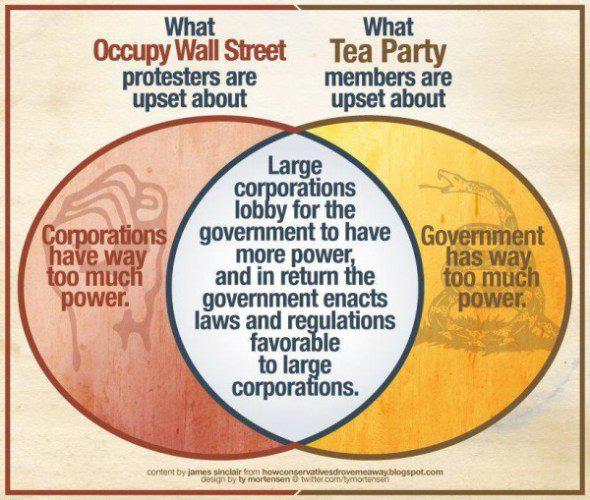
TyPic

Now back to Bill Curry…

Nader cites other issues, most culled from his own experience, on which left and right collaborated. He predicts convergence on topics ranging from civil liberties to defense, corporate welfare and open government. He assays 25 ideas he deems ripe for alliances and the strategies for forming them. He says all appeal to a growing populist movement. It’s this movement he calls unstoppable.


To many, Nader’s vision will seem naïve, as will the book’s very title. Surely a lesson of our time is that all progress is stoppable. Not long ago optimism was in vogue. Obama’s slogan then was “Yes we can.” Today it could be “It turns out we can’t.” His basic brief: “With an economy so broken, government so broke, politics so corrupt and Republicans so crazy, no one could do better, so quit whining: from now on, this is as good as it gets.” Better the Obama of 2008, or the Nader of today who insists “pessimism has no place in a democracy.”

Some of the ideas in “Unstoppable” may seem small bore: defending whistle-blowers, auditing defense budgets, loosening restrictions on standing to sue. Some need elaboration — encouraging community-based businesses, reforming government procurement — while others seem too long a reach: tying the minimum wage to inflation, getting Congress to do its constitutional duty on declaring war. But all relate to systemic reforms Democrats no longer espouse.


What agrarian populists did best was battle cartels and advocate for a kind of homegrown communitarian capitalism. They busted price fixing railroads and granaries, fought for rural free delivery and established cooperative banks that still provide a third of all credit to rural America. Most amazing, they did it all via Congress amid the venality of the first Gilded Age. Powerful trusts were turning farmers into wage slaves and the world’s greatest democracy into just another corrupt oligarchy when Populists and Progressives rose as if from nowhere to stop them.

If it happened in the Gilded Age, it can happen now. There’s no choice actually, it has to happen.

Parallels to our own time could hardly be clearer. Like invasive species destroying the biodiversity of a pond, today’s global trusts swallow up everything smaller than themselves.  The rules of global trade make organizing for higher wages next to impossible in developed and undeveloped countries alike. Fights for net neutrality and public Wi-Fi are exactly like the fight for rural free delivery.  Small businesses are as starved for credit as small farmers ever were. PACs are our Tammany Hall. What’s missing is a powerful, independent reform movement.


Republicans make their livings off the misappropriation of populism. Democrats by their silence assist them. Rand Paul is more forceful than any Democrat on privacy and the impulse to empire. The Tea Party rails loudest against big banks and corporate corruption. Even on cultural issues Democrats don’t really lead: Your average college student did more than your average Democratic congressman to advance gay marriage.


Mistaking the nature of the crisis, Obama mistook massive fraud for faulty computer modeling and a middle-class meltdown for a mere turn of the business cycle. Had he grasped his situation he’d have known the most he could do by priming the pump would be to reinflate the bubble. Contrast him to FDR, who saw the systemic nature of his crisis. To banks Roosevelt offered only reform; financial help went to customers whose bad mortgages he bought up and whose savings he insured. By buying into Bush’s bailout, Obama co-signed the biggest check ever cut by a government, made out to the culprits, not the victims. As for his stimulus, it didn’t cure the disease and hefty portions of it smelled like pork.


Liberals have spent the intervening years debating macroeconomic theory but macroeconomics can’t fathom this crisis. This isn’t just a slow recovery from a financial sector collapse, or damage done by debt overhang or Obama’s weak tea Keynesianism. We’re in crisis because of all our broken systems; because we still let big banks prey on homeowners, students, consumers and retailers; because our infrastructure is decrepit; because our tax code breeds inefficiency and inequality; because foreign interventions bled us dry. We’re in peril because our democracy is dying. Reviving it will take more than deficit spending and easy money. It will take reform, and before that, a whole new political debate.


Reading “Unstoppable” reminds one of Nader’s standing among the ’60s reformers who formed populism’s last great wave. The book is drenched in populist themes: distrust of big business and big government, faith in democracy and contempt for its corrupters, defense of all things small — towns, businesses, people — against the inevitable predations of all things big. Among its lessons for would be populists:


For things to improve Democrats must come up with better ideas and learn how to present them. So why don’t they?


One reason is that today’s Democrats think politics is all about marketing. While Republicans built think tanks Democrats built relationships with celebrity pollsters. When things go awry one pops up on TV to tell us how they “lost control of the narrative.” Asked to name a flaw, Obama invariably cites his failure to “tell our story.” Judging by his recent book, Tim Geithner thinks failing to tell his story was the only mistake he ever made. People don’t hate the bailout because Tim Geithner gives bad speeches. They hate it because their mortgages are still underwater.


Democrats think the power of money is greater than the power of ideas. Nader thinks that with the right ideas you can win even if outspent 100-to-1.  Every year Democrats further dilute their ideas to get the money they think they need to sell them. The weaker the ideas, the more ads they need, the more money it takes, the weaker the ideas. As you can tell from their ads, they’ve been at this a long time.

Absolutely brilliant and cutting observations.

One reason we know voters will embrace populism is that they already have. It’s what they thought they were getting with Obama. In 2008 Obama said he’d bail out homeowners, not just banks. He vowed to fight for a public option, raise the minimum wage and clean up Washington. He called whistle-blowers heroes and said he’d bar lobbyists from his staff. He was critical of drones and wary of the use of force to advance American interests. He spoke eloquently of the threats posed to individual privacy by a runaway national security state.


He turned out to be something else altogether. To blame Republicans ignores a glaring truth: Obama’s record is worst where they had little or no role to play. It wasn’t Republicans who prosecuted all those whistle-blowers and hired all those lobbyists; who authorized drone strikes or kept the NSA chugging along; who reneged on the public option, the minimum wage and aid to homeowners. It wasn’t even Republicans who turned a blind eye to Wall Street corruption and excessive executive compensation. It was Obama.


A populist revolt among Democrats is unlikely absent their reappraisal of Obama, which itself seems unlikely. Not since Robert Kennedy have Democrats been so personally invested in a public figure. Liberals fell hardest so it’s especially hard for them to admit he’s just not that into them.  If they could walk away they might resume their relationship with Nader. Of course that won’t be easy.


Populism isn’t just liberalism on steroids; it too demands compromise. After any defeat, a party’s base consoles itself with the notion that if its candidates were pure they’d have won. It’s never true; most voters differ with both parties. Still, liberals dream of retaking Congress as the Tea Party dreams of retaking the White House: by being pure. Democratic elites are always up for compromise, but on the wrong issues. Rather than back GOP culture wars, as some do, or foreign wars, as many do, or big business, as nearly all do, they should back libertarians on privacy, small business on credit and middle-class families on taxes.

Thank you Bill Curry. If there were more people like you in the establishment, we might not be in the current predicament.

Full article here.


via Zero Hedge http://ift.tt/1nGhRcp Tyler Durden

Former Aide To Bill Clinton Speaks – “My Party Has Lost Its Soul”

Submitted by Mike Krieger of Liberty Blitzkrieg blog,

One reason we know voters will embrace populism is that they already have. It’s what they thought they were getting with Obama. In 2008 Obama said he’d bail out homeowners, not just banks. He vowed to fight for a public option, raise the minimum wage and clean up Washington. He called whistle-blowers heroes and said he’d bar lobbyists from his staff. He was critical of drones and wary of the use of force to advance American interests. He spoke eloquently of the threats posed to individual privacy by a runaway national security state.


He turned out to be something else altogether. To blame Republicans ignores a glaring truth: Obama’s record is worst where they had little or no role to play. It wasn’t Republicans who prosecuted all those whistle-blowers and hired all those lobbyists; who authorized drone strikes or kept the NSA chugging along; who reneged on the public option, the minimum wage and aid to homeowners. It wasn’t even Republicans who turned a blind eye to Wall Street corruption and excessive executive compensation. It was Obama.


A populist revolt among Democrats is unlikely absent their reappraisal of Obama, which itself seems unlikely. Not since Robert Kennedy have Democrats been so personally invested in a public figure. Liberals fell hardest so it’s especially hard for them to admit he’s just not that into them.


– From Bill Curry’s excellent article in SalonMy party has lost its soul: Bill Clinton, Barack Obama and the victory of Wall Street Democrats.

Bill Curry’s article published this past Sunday by Salon is simply extraordinary. One of the things I’ve felt has been lacking in America for some time is the ability for well-meaning people within the “power structure” to look inward and be honest with themselves about the immoral decay fellow members of their socio-economic class have wrought upon the nation via a singleminded pursuit of wealth and power. A perfect example of an ignorant, destructive oligarch completely devoid of self-awareness was put on full display earlier this year when Sam Zell appeared on Bloomberg TV and essentially said the poor just need to act more like the rich.

I started to become more encouraged recently when Nick Hanaeur wrote an incisive and introspective article, which I highlighted in the post: The Pitchforks are Coming…– A Dire Warning from a Member of the 0.01%. The chances of America getting through this current period with the least amount of chaos is greatly enhanced if members of the status quo look at their more insane counterparts running the show and forcefully and publicly condemn their insanity. It is in this vein that Bill Curry’s piece strikes a necessary chord.

He covers so many important topics in this article, which completely tosses a bucket of cold water on the false narrative Democrats like to tell themselves. From Bill Clinton’s total embrace of Wall Street and big business, to Obama’s litany of lies, deceit and oligarch coddling. He painfully admits that Republicans are further along in the introspective phase of politics than the Democrats, who haven’t even started to question how phony they are and instead continue to simply grab cash from any corner and crevice they can. He then tackles the topic of populism and highlights Ralph Nader’s new book, Unstoppable, which explains how a left-right activist alliance can and will usher in the reforms necessary to unravel the corporate-surveillance police state.

Whereas the mainstream media goes to great efforts to demonize the term “populism” in a manner similar to labeling someone a “conspiracy theorist,” Curry positions it in a more genuine and positive manner. He notes that:

All populists share common traits: love of small business; high standards of public ethics; concern for individuals, families and communities; suspicion of elites and of all economic trusts, combinations and cartels.

While I don’t agree with everything that Bill Curry or Nick Hanaeur have to say, they are to be strongly commended for truly looking inward and then saying what they see to be the truth. At this point, many of us are just shocked and pleasantly surprised to see a decent human from within the “elite” publicly criticizes the status quo and its seemingly endless cadre of unenlightened, greedy, predators.

Now without further ado, some excerpts from Mr. Curry’s piece:

In 1985 moderate Democrats including Bill Clinton and Al Gore founded the Democratic Leadership Council, which proposed innovative policies while forging ever closer ties to business. Clinton would be the first Democratic presidential nominee since FDR and probably ever to raise more money than his Republican opponent. (Even Barry Goldwater outraised Lyndon Johnson.) In 2008 Obama took the torch passed to Clinton and became the first Democratic nominee to outraise a GOP opponent on Wall Street. His 2-to-1 spending advantage over John McCain broke a record Richard Nixon set in his drubbing of George McGovern.


Throughout the 1980s Nader watched as erstwhile Democratic allies vanished or fell into the welcoming arms of big business.  By the mid-’90s the whole country was in a swoon over the new baby-faced titans of technology and global capital. If leading Democrats thought technology threatened anyone’s privacy or employment or that globalization threatened anyone’s wages, they kept it to themselves.  In his contempt for oligarchs of any vintage and rejection of the economic and political democratization myths of the new technology Nader seemed an anachronism.


His critics would later say Nader was desperate for attention. For certain he was desperate to reengage the nation in a debate over the concentration of wealth and power; desperate enough by 1992 to run for president. His first race was a sort of novelty campaign — he ran in New Hampshire’s Democratic and Republican primaries “as a stand in for none of the above.” But the experience proved habit-forming and he got more serious as he went along. In 1996 and 2000 he ran as the nominee of the Green Party and in 2004 and 2008 as an independent.


The campaigns defined him for a new generation, but he never stopped writing. His latest book, “Unstoppable,” argues for the existence and utility of an “emerging left-right alliance to dismantle the corporate state.” The book is vintage Nader and ranks with his best. The questions it poses should greatly interest progressives. The question is, will any read it.


The Democrats’ dismissal of Nader in 2000 was of a piece with our personality-driven politics: a curmudgeon on steroids; older now and grumpier; driven by ego and personal grievance. But Nader always hit hard; you don’t get to be the world’s most famous shopper by making allowances or pulling punches. The difference was that in 2000 Democrats as well as Republicans bore the brunt of his attacks. What had changed? It says a lot about the Democratic Party then and now that nobody bothered to ask the question, the answer to which is, a whole lot.


Between 1996 and 2000 the Wall Street Democrats who by then ruled the party’s upper roosts scored their first big legislative wins. Until then their impact was most visible in the quietude of Congress, which had not enacted any major social or economic reforms since the historic environmental laws of the early ’70s. It was the longest such stretch since the 19th century, but no one seemed to notice.


The Telecommunications Act subverted anti-trust principles traceable to Wilson. The financial services bill gutted Glass-Steagall, FDR’s historic banking reform. You’d think such reversals would spark intra-party debate but Democrats made barely a peep. Nader was a vocal critic of both bills. Democrats, he said, were betraying their heritage and, not incidentally, undoing his life’s work. No one wanted to hear it. When Democrats noticed him again in 2000 the only question they thought to ask was, what’s got into Ralph? Such is politics in the land of the lotus eaters.


Democrats today defend the triage liberalism of social service spending but limit their populism to hollow phrase mongering (fighting for working families, Main Street not Wall Street). The rank and file seem oblivious to the party’s long Wall Street tryst. Obama’s economic appointees are the most conservative of any Democratic president since Grover Cleveland but few Democrats seem to notice, or if they notice, to care.

I’m not so sure “conservative” is the proper word. Personally, I’d go with “status quo Wall Street cronies.”

Populism encompasses not just Bryan’s late 19th century agrarians but their close relations, the early 20th century urban progressives and countless descendants of each. Jefferson and Jackson are called fathers of both populism and the Democratic Party. Jackson and Bryan are the only Democrats other than FDR to be nominated three times for president. All populists share common traits: love of small business; high standards of public ethics; concern for individuals, families and communities; suspicion of elites and of all economic trusts, combinations and cartels.


Some recent populist talk is owing to the election of two liberals, Elizabeth Warren and Bill de Blasio. (Liberals taking Massachusetts or Manhattan didn’t used to be news.) It’s unclear how well they and other Democratic liberals can tap populist sentiment. In any case, Democrats are late to the populist dance. Mass protests of corrupt oligarchies have roiled global politics for a decade. In America the Tea Party has been crying crony capitalism since the Bush bailout and Obama stimulus. Income inequality’s so bad Mitt Romney wants to raise the minimum wage.


Meanwhile the populist revolt on the right persists. In 2010 the Tea Party declared open season on GOP incumbents. It has since bagged quite a few. But Republicans don’t just fight over offices, they fight over ideas. It’s hard to track all the players in their endless policy scrum: Heritage, American Enterprise, Focus on the Family, Club for Growth, etc. Rand Paul pilfers Democratic issues like a fox stealing chickens while dynasty star Jeb Bush grapples with such timeless questions as whether there can be such a thing as a conservative social program.


Democrats aren’t even having a debate. Their one think tank, the Center for American Progress, serves their establishment. (Its founder, John Podesta, once Clinton’s chief of staff, is now counselor to Obama.) The last real primary challenge to a Democratic senator was in 2006 when Ned Lamont took on Connecticut’s Joe Lieberman. They say the GOP picks presidents based on seniority. Two years out, Republicans seem headed for a bloody knife fight while Hillary Clinton may be headed for the most decorous, seniority-based succession in either party’s history. (If she loses this time it will be to herself.)

This is where he gets into the rapidly emerging and “unstoppable” left-right activist alliance. I have personally been pushing for such an alliance for quite some time. Most recently, I wrote about it in my article from last year: #StandwithRand: The Filibuster that United Libertarian and Progressive Activists. In retrospect, it appears that filibuster may have historically marked the beginnings of such an alliance in Washington.

I also think the following graphic makes the point perfectly:

TyPic

Now back to Bill Curry…

Nader cites other issues, most culled from his own experience, on which left and right collaborated. He predicts convergence on topics ranging from civil liberties to defense, corporate welfare and open government. He assays 25 ideas he deems ripe for alliances and the strategies for forming them. He says all appeal to a growing populist movement. It’s this movement he calls unstoppable.


To many, Nader’s vision will seem naïve, as will the book’s very title. Surely a lesson of our time is that all progress is stoppable. Not long ago optimism was in vogue. Obama’s slogan then was “Yes we can.” Today it could be “It turns out we can’t.” His basic brief: “With an economy so broken, government so broke, politics so corrupt and Republicans so crazy, no one could do better, so quit whining: from now on, this is as good as it gets.” Better the Obama of 2008, or the Nader of today who insists “pessimism has no place in a democracy.”

Some of the ideas in “Unstoppable” may seem small bore: defending whistle-blowers, auditing defense budgets, loosening restrictions on standing to sue. Some need elaboration — encouraging community-based businesses, reforming government procurement — while others seem too long a reach: tying the minimum wage to inflation, getting Congress to do its constitutional duty on declaring war. But all relate to systemic reforms Democrats no longer espouse.


What agrarian populists did best was battle cartels and advocate for a kind of homegrown communitarian capitalism. They busted price fixing railroads and granaries, fought for rural free delivery and established cooperative banks that still provide a third of all credit to rural America. Most amazing, they did it all via Congress amid the venality of the first Gilded Age. Powerful trusts were turning farmers into wage slaves and the world’s greatest democracy into just another corrupt oligarchy when Populists and Progressives rose as if from nowhere to stop them.

If it happened in the Gilded Age, it can happen now. There’s no choice actually, it has to happen.

Parallels to our own time could hardly be clearer. Like invasive species destroying the biodiversity of a pond, today’s global trusts swallow up everything smaller than themselves.  The rules of global trade make organizing for higher wages next to impossible in developed and undeveloped countries alike. Fights for net neutrality and public Wi-Fi are exactly like the fight for rural free delivery.  Small businesses are as starved for credit as small farmers ever were. PACs are our Tammany Hall. What’s missing is a powerful, independent reform movement.


Republicans make their livings off the misappropriation of populism. Democrats by their silence assist them. Rand Paul is more forceful than any Democrat on privacy and the impulse to empire. The Tea Party rails loudest against big banks and corporate corruption. Even on cultural issues Democrats don’t really lead: Your average college student did more than your average Democratic congressman to advance gay marriage.


Mistaking the nature of the crisis, Obama mistook massive fraud for faulty computer modeling and a middle-class meltdown for a mere turn of the business cycle. Had he grasped his situation he’d have known the most he could do by priming the pump would be to reinflate the bubble. Contrast him to FDR, who saw the systemic nature of his crisis. To banks Roosevelt offered only reform; financial help went to customers whose bad mortgages he bought up and whose savings he insured. By buying into Bush’s bailout, Obama co-signed the biggest check ever cut by a government, made out to the culprits, not the victims. As for his stimulus, it didn’t cure the disease and hefty portions of it smelled like pork.


Liberals have spent the intervening years debating macroeconomic theory but macroeconomics can’t fathom this crisis. This isn’t just a slow recovery from a financial sector collapse, or damage done by debt overhang or Obama’s weak tea Keynesianism. We’re in crisis because of all our broken systems; because we still let big banks prey on homeowners, students, consumers and retailers; because our infrastructure is decrepit; because our tax code breeds inefficiency and inequality; because foreign interventions bled us dry. We’re in peril because our democracy is dying. Reviving it will take more than deficit spending and easy money. It will take reform, and before that, a whole new political debate.


Reading “Unstoppable” reminds one of Nader’s standing among the ’60s reformers who formed populism’s last great wave. The book is drenched in populist themes: distrust of big business and big government, faith in democracy and contempt for its corrupters, defense of all things small — towns, businesses, people — against the inevitable predations of all things big. Among its lessons for would be populists:


For things to improve Democrats must come up with better ideas and learn how to present them. So why don’t they?


One reason is that today’s Democrats think politics is all about marketing. While Republicans built think tanks Democrats built relationships with celebrity pollsters. When things go awry one pops up on TV to tell us how they “lost control of the narrative.” Asked to name a flaw, Obama invariably cites his failure to “tell our story.” Judging by his recent book, Tim Geithner thinks failing to tell his story was the only mistake he ever made. People don’t hate the bailout because Tim Geithner gives bad speeches. They hate it because their mortgages are still underwater.


Democrats think the power of money is greater than the power of ideas. Nader thinks that with the right ideas you can win even if outspent 100-to-1.  Every year Democrats further dilute their ideas to get the money they think they need to sell them. The weaker the ideas, the more ads they need, the more money it takes, the weaker the ideas. As you can tell from their ads, they’ve been at this a long time.

Absolutely brilliant and cutting observations.

One reason we know voters will embrace populism is that they already have. It’s what they thought they were getting with Obama. In 2008 Obama said he’d bail out homeowners, not just banks. He vowed to fight for a public option, raise the minimum wage and clean up Washington. He called whistle-blowers heroes and said he’d bar lobbyists from his staff. He was critical of drones and wary of the use of force to advance American interests. He spoke eloquently of the threats posed to individual privacy by a runaway national security state.


He turned out to be something else altogether. To blame Republicans ignores a glaring truth: Obama’s record is worst where they had little or no role to play. It wasn’t Republicans who prosecuted all those whistle-blowers and hired all those lobbyists; who authorized drone strikes or kept the NSA chugging along; who reneged on the public option, the minimum wage and aid to homeowners. It wasn’t even Republicans who turned a blind eye to Wall Street corruption and excessive executive compensation. It was Obama.


A populist revolt among Democrats is unlikely absent their reappraisal of Obama, which itself seems unlikely. Not since Robert Kennedy have Democrats been so personally invested in a public figure. Liberals fell hardest so it’s especially hard for them to admit he’s just not that into them.  If they could walk away they might resume their relationship with Nader. Of course that won’t be easy.


Populism isn’t just liberalism on steroids; it too demands compromise. After any defeat, a party’s base consoles itself with the notion that if its candidates were pure they’d have won. It’s never true; most voters differ with both parties. Still, liberals dream of retaking Congress as the Tea Party dreams of retaking the White House: by being pure. Democratic elites are always up for compromise, but on the wrong issues. Rather than back GOP culture wars, as some do, or foreign wars, as many do, or big business, as nearly all do, they should back libertarians on privacy, small business on credit and middle-class families on taxes.

Thank you Bill Curry. If there were more people like you in the establishment, we might not be in the current predicament.

Full article here.


via Zero Hedge http://ift.tt/1nGhRcp Tyler Durden

Chinese 'Fake' Trade Data Remains "A Bit Of A Mystery" Despite Clean-Up Efforts

Over a year ago we first brought China’s ‘fake’ trade data and abundant discrepancies to the public’s attention and in December China’s State Administration of Foreign Exchange (SAFE) began clamping down on trade-financing on fabricated deals after the first crackdown failed to eliminate the deception. Now over a year later, as Bloomberg reports, China’s data still does not add up. “It’s still a bit of a mystery,” said StanChart’s Stephen Green, the data “suggest that some of that is still going on.”


China’s exports have been overstated by Chinese data…


and still are… despite crackdowns… (as Bloomberg reports)

A discrepancy between Hong Kong and Chinese figures for bilateral trade remains even after a crackdown last year on Chinese companies’ use of fake export-invoicing to evade limits on importing foreign currency.


China recorded $1.31 of exports to Hong Kong in June for every $1 in imports Hong Kong tallied from China, for a $6.4 billion difference, based on government data compiled by Bloomberg News.


Any discrepancies make it tougher to gauge the impact of global demand on a Chinese economy that’s projected for the slowest growth in 24 years.


“It’s still a bit of a mystery,” said Stephen Green, head of Greater China research at Standard Chartered Plc in Hong Kong. Regarding fraudulent invoices, “the fact that the ratio is like that would suggest that some of that is still going on,” he said.


The initial crackdown may have failed to eliminate deception. SAFE said in December that it would boost scrutiny of trade financing and that banks should prevent companies from getting financing based on fabricated trade. The State Administration of Taxation said earlier this month that it found instances of fraudulent exports used to obtain tax rebates by some companies.


“You can’t exclude the possibility that capital flows are being disguised as exports” in the China-Hong Kong figures, said Yao Wei, China economist at Societe Generale SA in Paris. “As the capital account becomes more open, the flows will show up in the places they should.”

*  *  *
The question of course is which way do they converge? Is China’s data correct showing a more exuberant global trade or are the rest-of-the-world right showing trade flows slowing?


via Zero Hedge http://ift.tt/1nGhP4a Tyler Durden

Chinese ‘Fake’ Trade Data Remains “A Bit Of A Mystery” Despite Clean-Up Efforts

Over a year ago we first brought China’s ‘fake’ trade data and abundant discrepancies to the public’s attention and in December China’s State Administration of Foreign Exchange (SAFE) began clamping down on trade-financing on fabricated deals after the first crackdown failed to eliminate the deception. Now over a year later, as Bloomberg reports, China’s data still does not add up. “It’s still a bit of a mystery,” said StanChart’s Stephen Green, the data “suggest that some of that is still going on.”


China’s exports have been overstated by Chinese data…


and still are… despite crackdowns… (as Bloomberg reports)

A discrepancy between Hong Kong and Chinese figures for bilateral trade remains even after a crackdown last year on Chinese companies’ use of fake export-invoicing to evade limits on importing foreign currency.


China recorded $1.31 of exports to Hong Kong in June for every $1 in imports Hong Kong tallied from China, for a $6.4 billion difference, based on government data compiled by Bloomberg News.


Any discrepancies make it tougher to gauge the impact of global demand on a Chinese economy that’s projected for the slowest growth in 24 years.


“It’s still a bit of a mystery,” said Stephen Green, head of Greater China research at Standard Chartered Plc in Hong Kong. Regarding fraudulent invoices, “the fact that the ratio is like that would suggest that some of that is still going on,” he said.


The initial crackdown may have failed to eliminate deception. SAFE said in December that it would boost scrutiny of trade financing and that banks should prevent companies from getting financing based on fabricated trade. The State Administration of Taxation said earlier this month that it found instances of fraudulent exports used to obtain tax rebates by some companies.


“You can’t exclude the possibility that capital flows are being disguised as exports” in the China-Hong Kong figures, said Yao Wei, China economist at Societe Generale SA in Paris. “As the capital account becomes more open, the flows will show up in the places they should.”

*  *  *
The question of course is which way do they converge? Is China’s data correct showing a more exuberant global trade or are the rest-of-the-world right showing trade flows slowing?


via Zero Hedge http://ift.tt/1nGhP4a Tyler Durden