The “World’s Biggest Short Squeeze” Has Spread From ETFs To Stocks

Earlier this month we reported that the move higher from the February lows was not only the result of the biggest squeeze ever – something that had been known before – but that something surprising had emerged: according to JPM’s Prime Broker desk, it was only ETF covering that was driving the squeeze as recently as of the end of March.


To follow up on this, a massive short squeeze continues to prop up the market with yet another move higher throughout April.


Courtesy of the latest report by JPM’s Prime Brokerage, we now know two reasons why there was such a large move in April. Hedge funds accelerated the pace of ETF covering, only this time single stock names have also joined the party. In other words, ETF covering is removing hedges, and single stock covering is getting HF’s into a net long position.


JPM also notes that HF net long exposure is now above the 12 month average, and although the “smart money” is typically in the know on such things, it remains to be seen just what the catalyst will be that pushes markets higher, especially in the face of a dismal earnings season, especially when considering that the very same smart money is, according to Bank of America, selling stocks for a record 13 consecutive weeks..

via http://ift.tt/1SB8kPw Tyler Durden

Watch: Trailer Drops for Snowden Biopic

Joseph Gordon-Levitt may not look all that much like Edward Snowden, but he certainly sounds a lot like him in the trailer that dropped today for the upcoming Oliver Stone-helmed biopic Snowden. The movie, about the whistleblower’s life and decision to reveal the existence of mass federal surveillance on American citizens, is currently scheduled for release on Sept. 16.

Watch below. The intrigue and paranoia I was expecting. The sex scene, not so much. But it is Hollywood!

Reason’s writings on (and interview with) Edward Snowden can be accessed here.  

from Hit & Run http://ift.tt/1WSZ2DI
via IFTTT

“Hold Onto Your Hats”: A Chinese Commodity Is Now The Most Traded In The World, Surpassing Oil

Having abandoned its equity and credit bubbles, China recently opened the spigots on an unprecedented commodity bubble, as we explained in “Beware The Bubble In China’s Domestic Commodity Market” and “The Stunning Chart Showing Where All The Commodity Gains Have Come From.”

None of that however does justice to what is really taking place. So for an extended view we skimmed a piece by Citi released overnight, titled “Hold onto Your Hats – Explosion in Chinese Commodities Futures Brings Unprecedented Liquidity, Untested Volatility” in which we read the following stunning finding: “trading volumes in Chinese exchanges further spiked, with SHFE rebar and DCE iron ore futures becoming the No.1 and No.3 most-traded contracts around the world, and 11 of the top 20 traded futures contracts are on Chinese exchanges. On 21 April, a major contract of SHFE rebar “RB1610″ reached daily trading volume of US$93 billion, exceeding the total volumes of the Shanghai and Shenzhen stock exchanges combined.”

Putting this in context:

The fact that iron ore, responsible for a small fraction of daily trade in oil and far less important for the global economy than oil, has attracted massive fund inflows in China is an indication of the excesses of Chinese futures exchanges and the dangers that wanton trading on Chinese exchanges may destabilize global markets. Trading in Chinese futures on some irrelevant commodities including bitumen, polypropylene, and PVC have also soared during the past weeks.

The chart below shows this unprecedented explosion in volume in context:

Citi adds that “exploding trading volumes have created large price volatility on Chinese commodity exchanges, a sign of market overheating as perceived by regulators. All three exchanges have therefore attempted to cool down the market by shifting up daily upper and lower limits, raising margins and transaction fees, sending out risk alerts, and banning activities by high-frequency trading accounts.”


So aside from the generic explanation that this is merely the latest Chinese bubble, what has prompted this epic inflow in commodity trading. According to Citi, Chinese commodity futures volumes spiked since 2015 thanks to three factors: 1) domestic liquidity easing; 2) fund inflow from other asset classes, in particular from trading activities in stock index futures; 3) rise of producer hedging in the face of falling commodity prices and volatile RMB.

In other words all the things that prompted the credit bubble in late 2015 and the equity bubble last summer.

One other key factor was a massive short squeeze. “Short positions on iron ore, steel and base metals began to accumulate at the end of last year, accelerating in January as equity investors were prevented from shorting equities during the big China sell-off, partly due to a government crackdown on short-selling equities, and moved to short commodities as a way to profit from a slowing Chinese economy. Roughly after Chinese New Year, they went suddenly long, apparently showing more confidence in the Chinese economy but it was designed as well to lock in lower prices under the assumption that the RMB was weakening over the course of 2016, with higher-priced dollars implying significantly higher RMB prices for commodities in China.”

Citi adds that while the big picture of financialization in Chinese futures market still holds, the most recent rapid movements in Chinese futures market have been triggered by a few more specific factors. For industrial commodities, particularly steel, iron ore, coke and coking coal, an improvement of sentiments on real estate and infrastructure activities since early 2016 has boosted physical purchases of these commodities, leading to a tight physical market with low inventories and rapid surge of prices. More recently, positive sentiment was proved by better-than-expected real estate starts in March, prompting further speculative long positions, a decent proportion of which likely to be short-covering.

The euphoria has been broad based but mostly driven by institutions this time, not retail:

Agricultural products, most notably corn and cotton, also saw a surge of prices thanks primarily to higher-than-expected corn reserve purchase and a delayed schedule of cotton reserve sales.


A simultaneous surge of industrial and agricultural product prices has encouraged massive speculative longs in the futures market. Retail investors have also reported increased participation in futures markets, although we believe institutions are the major driver of the recent rally. However, it is worth noting that open interests in domestic futures market have surged to a much lesser extent than trading volumes for the past few months, indicating that most speculative trades have been conducted through high-frequency transactions, with average tenure of each contract reportedly lower than four hours.

However, while everyone enjoys the leg higher, the question is what happens when the inevitable rush for the exits begins: “When prices start to fall, investors may find it hard to speculate on the futures market by taking short positions, partly as Chinese exchanges require physical settlement for all commodity contracts.

Others are already looking forward to the inevitable leg lower: quoted by the FT, analysts at London’s Liberium said that “We’ve seen this kind of speculative frenzy before in China in both the real estate and equity markets and the heard mentality has now driven fast money to commodity speculation. Once the upward momentum inevitably runs out, and potentially already has done, the same speculative market forces will drive prices down.” they added. “The situation feels very similar to what played out last year after the Shanghai composite gained 61 per cent in the first half.

Citi’s conclusion – there are some pros in the recent unprecedented commodity action out of China…

“We believe potential opportunities should rise from the introduction of new contracts, growth of ETFs, and increasing producer hedging activities. We also identified risks to sustainable growth of Chinese futures markets, including physical settlement requirements in domestic futures markets, dangers in an expansion of commodity ETFs, uncertainties in futures market regulations, and limited opportunities for foreign participation.”

But one very large con – once the selling begging, not only are all bets off, but the collapse in commodity prices will reverberate across the entire world:

“all of this growth poses multiple dangers to global commodity pricing stability given how less regulated and therefore less protective the Chinese regimes are for investors, who are perhaps the most speculative in the world.

Which is why Cit’s warning is simple enough: “hold on to your hats.” In fact hold on tight because now that even Beijing is getting nervous and as reported before, has moved to not only increase trading costs – the Dalian exchange just doubled trading fees and hiked margins – but also reduced night time trading to try and deter some of the more speculative investors, prices have started to tumble.

Then again, a collapse in the commodity complex may be all the excuse that central banks need to try the direct “monetization” of commodities as a last ditch measure before that unleashing the final monetary assault also known as helicopter money.

via http://ift.tt/1QAOykW Tyler Durden

It took me a year to close this deal (but it was worth it)

After a mind-numbing, year-long process, one of the longest business deals I’ve ever been involved with in my entire life finally closed a few days ago.

I couldn’t be more excited.

Through Sovereign Man’s parent company, we purchased a wonderful, Australia-based business that’s been around for over 20 years and is a pretty iconic brand in the country.

Plus, it’s had a long history of profitability and zero debt, so it’s a safe, stable source of cashflow.

And given the price we negotiated, we’ve picked this business up at an extraordinary discount.

Just looking at the net assets of the business—its inventories, receivables, tax credits, property, etc., we paid far less than what the company is actually worth.

Moreover, we expect to make all of our money back in about one year.

These are two of my most important investment criteria: how much am I paying relative to what a company is worth (i.e. price relative to its ‘book value’)?

And how much am I paying relative to its annual profits (i.e. price relative to its ‘earnings’)?

The lower those ‘multiples,’ the better; we paid less than 1x book value, and roughly 1x earnings, so I know there’s a big margin of safety, and that we’ll quickly recoup our investment.

It’s difficult to find deals like this, and most of the time they’re only available with private companies.

In public markets where large companies’ stocks trade, these valuation metrics are just insane.

As I wrote yesterday, shares in Netflix sell for an absurd 18x book value, and 328x annual profits!

This is nuts. Clearly the Australian business we just bought is a much better bargain, and it’s why I prefer to buy private businesses rather than popular Wall Street mega-stocks.

I do recognize that it’s much more convenient for most people to buy stocks; you just click a few buttons and you own shares.

This is a lot easier than spending a year of your life and millions of dollars to acquire a private business.

But investors do pay a steep price for the convenience of buying stocks on major exchanges… namely, dramatically overpaying for the investment.

On rare occasions, however, the stock market does provide some ridiculous anomalies.

We talked about some of these yesterday– like when a high quality, well managed company’s stock trades for less than the amount of cash it has in the bank.

As an example, our Chief Investment Strategist recommended a company to our 4th Pillar subscribers last month that had a market cap of $301 million, yet an incredible $523 million cash in the bank.

In other words, the market was giving us $222 million for free. That’s an amazing deal, even better than the business that I bought…

And go figure, the stock price is already up 20% in just a few weeks.

This kind of anomaly does happen from time to time in the stock market, depending on WHERE you look.

The US market is wildly overvalued. But right now we are finding several of these incredible deals in Australia.

And that’s another major benefit, especially for US-dollar investors.

Right now the Australian dollar has been hovering near a multi-year low against the US dollar.

It’s been as high as USD $1.10 per Aussie dollar over the last few years. Today it’s about 76 cents. The long-term average is between 85 and 90 cents.

So not only can you make money when your investment generates profit and increases in value, but you can also benefit when the foreign currency appreciates.

Clearly this is volatile; currencies can go up or down. But you stand a greater chance of gain when you buy a foreign currency well below its long-term historic average…

… and when your own currency is incredibly overvalued.

That’s what’s happening right now, especially between the Australian dollar and the US dollar.

US dollars have been overvalued against most currencies around the world for more than a year.

And since Australia is a major mining country, the Aussie dollar has been hit particularly hard due to the worldwide slowdown in commodities.

This means that US dollar investors can trade their overvalued currency for cheap Australian dollars, and then buy shares of companies that are selling for less than the amount of cash they have in the bank.

So now you can actually make money in at least two different ways– from the company, AND from the currency.

This has been an incredible investment strategy– it’s a great way to generate independent income, and something that anyone can do.

Many of these undervalued companies’ stock prices are as low as $1. So even with a small portfolio, you can accumulate plenty of shares.

Plus, many of the major online brokerages offer international trading, including TD, Schwab, E*Trade, Fidelity, Interactive Brokers, etc.

(If you’re looking for greater international diversification and asset protection, you could open a brokerage account at Hong Kong-based Boom Securities– more on that another time…)

from Sovereign Man http://ift.tt/1VSC80m
via IFTTT
Watch Live: Donald Trump’s Teleprompted Foreign Policy Speech

In what will be a closely watched and even more closely scrutinized speech, today at noon Donald J. Trump will hold a speech on foreign policy at the Mayflower Hotel in Washington, DC.  In the speech Trump is poised to demonstrate just how “presidential” he can be, because as Reuters writes, “he is expected to set aside his bad-boy antics and, with the help of a teleprompter to keep him on message, outline what his foreign policies would be if he is elected U.S. president.” 

Reuters also adds that “governments alarmed at the prospect of a Trump presidency will be paying close attention.” The reason for their concern is Trump’s desire to make a U-turn on years of traditional US foreign policy, among which tone down the US role in NATO. “Many foreign policy and defense advisers say his views are worrying, mingling isolationism and protectionism, with calls to force U.S. allies to pay more for their defense and proposals to impose punitive tariffs on some imported goods.”

“Part of what I’m saying is we love our country and we love our allies, but our allies can no longer be taking advantage of this country,” Trump told reporters on Tuesday night in a speech preview.

Trump said he would focus on nuclear weapons as the single biggest threat in the world today. “I’m probably the last on the trigger,” Trump told ABC’s “Good Morning America” on Wednesday, citing his opposition to the Iraq war.

Trump, 69, said he agreed with President Barack Obama’s decision to send an additional 250 U.S. Special Forces into Syria but would not have made the decision public. “I would send them in quietly because right now they have a target on their back,” he told CNN. He also said his speech would focus on the economics of foreign policy “because we’re getting killed on economics.”

The billionaire businessman promises to temporarily ban Muslims from entering the United States and to build a wall to block off Mexico. His policies are popular with many voters who want change, but foreign policy elites are concerned.

“It’s a perfect storm of isolationism, muscular nationalism, with a dash of pragmatism and realism,” said Aaron David Miller, a foreign policy scholar who has worked in Republican and Democratic administrations.

The speech at a Washington hotel will address issues including global trade, economic and national security policies as well as building up the U.S. military, his campaign said.

Watch it live below at 12PM.

via http://ift.tt/1NAbkyR Tyler Durden

Stronger Border Enforcement Backfired

ImmigrationReasonPractically the first campaign promise that Republican presidential hopeful Donald Trump made was that he would deport all 11 million undocumented migrants living in the United States. An interesting new study looks at why so many migrants came and, but more crucially, also at why they chose to stay. Their conclusion: Ratcheted up border enforcement played a big role. The article, “Why Border Enforcment Backfired,” published in the American Journal of Sociology looks at how ever greater attempts to close down the border led to decisions by those who made it across to stay here rather than risk returning to their home countries.

The researchers argue that rising “border enforcement emerged as a policy response to a moral panic about the perceived threat of Latino immigration to the United States propounded by self-interested bureaucrats, politicians, and pundits who sought to mobilize political and material resources for their own benefit.” From 1986 to 2010, the U.S. government spent $35 billion on border enforcement. The result was to essentialy militarize the border, making it ever harder for migrants to travel back and forth. This policy unintentionally transformed “undocumented Mexican migration from a circular flow of male workers going to three states into an 11 million person population of settled families living in 50 states.”

“Greater enforcement raised the costs of undocumented border crossing, which required undocumented migrants to stay longer in the U.S. to make a trip profitable,” explained researcher Douglas Massey, a sociologist at Princeton University to Phys.org. “Greater enforcement also increased the risk of death and injury during border crossing. As the costs and risks rose, migrants naturally minimized border crossing—not by remaining in Mexico but by staying in the United States.”

Also over at Phys.org Harvard University sociologist Mary Waters (who was not involved in the research) further noted: “This is a very important article that looks at a long sweep of history and provides the very best data and analysis to lead to a conclusion that most Americans would find very counter-intuitive. Throwing money at militarizing the border led to the growth of undocumented immigration and if we had just done nothing, undocumented immigration would be much lower.”

As it happens the flow of undocumented migrants from Mexico has significantly slowed. Border enforcement may have played a role, but so did the lack of economic opportunities in the U.S. subsequent to the Great Recession, and even more significantly sharply falling Mexican fertility is producing a labor shortfall in that country.

Massey suggests that if the U.S. government were to grant some kind of legal status to the 11 million undocumented migrants lots of them would return home secure in the knowledge that they could come back.

Ultimately, Trump’s border wall is “solving” a “problem” that is well on its way to solving itself.

For more background, see my article, “Immigrants Are Less Criminal Than Native-Born Americans.”

from Hit & Run http://ift.tt/1pFyDMa
via IFTTT

Social Cons Boycott Target for Complying with Transgender Law Pushed by Social Cons

TargetMore than 850,000 people are saying they’re going to boycott Target stores for making a formal announcement over something that had probably already been an informal policy for some time now: Transgender customers (and employees) can use the restrooms appropriate for the sex that matches their appearance, not necessarily their birth sex.

Color me deeply, deeply skeptical that more than 850,000 people who have signed an online petition actually have any real intention of boycotting Target. Online petitions are about as credible as online polls. But it both feeds a culture war narrative and gives the conservative American Family Association, which has been struggling for any sort of relevance post-gay marriage, some media publicity. (One of their other campaigns, “One Million Moms,” is encouraging people to call TJ Maxx to get them to stop advertising on ABC’s Once Upon a Time because there was a lesbian kiss).

It just feels like a lot of “signaling” from both sides. Target had to make a big deal out of advertising this policy in the wake of the passage of some of this transgender bathroom legislation, and now religious conservatives have to make a big deal out of their opposition to it. There’s a lot of heat, but I suspect in a week or so we’ll discover little has changed. It is reminiscent of the failed boycott against Chick-fil-A that was launched because of its founder’s financial support of Christian conservative organizations that opposed same-sex marriage. Boycotts aren’t particularly good tools in the culture war because: one, they prompt the “other side” to rally to the side of those affected by the boycott to give them more business: and, two, they end up telling companies that in order to keep one set of customers, they must reject another set of customers, which puts the companies in an awkward position. If the aforementioned “rally” happens, why would they reject these customers?

In any event, there’s a bit of hypocrisy in this boycott, possibly based on the fact that people don’t quite understand what North Carolina’s transgender law actually does. The law requires that transgender people use the bathroom of the sex listed on their birth certificates—but only in government facilities and schools. The law makes it very clear that private businesses and companies are free to establish whatever policies they choose on how to accommodate transgender customers and workers. And that’s exactly what Target has done.

That is to say: Target’s announcement is that it is complying with the law that social conservatives pushed through in North Carolina. It is following both the letter and the spirit of the law. This is what supporters of the law asked for. This is how Gov. Pat McCrory defended the law. So it’s a bit rich that those who got exactly what they asked for are turning around and boycotting a business that used its right to accommodate customers in a way they didn’t like.

To be clear: I’m very much pro-boycott as a tool of cultural influence. I find it much preferable to the alternative of using laws and regulations as a solution (being both libertarian and gay, I’ve been on the wrong side of those laws and regulations too many times to count). But not only do I think these kinds of boycotts are not effective, these proponents are oblivious to the fact that this is pretty much an outcome of what they said they wanted.

from Hit & Run http://ift.tt/1rzKn4E
via IFTTT

FOMC Preview: The Fed Is “Scared To Death” & “The Knock-On Effects Could Be Spectacular”

Federal Reserve officials are virtually certain to hold interest rates steady when their meeting ends today but they could try to send a message to markets and outside observers about what likely comes next. With no press conference scheduled after this week’s meeting and no new economic forecasts to be released, all the attention will be focused on their words and the market is more aware than ever that the Fed doesn’t act in a vacuum. As Bloomberg's Richard Breslow notes, The Fed is hopeful (that their always-wrong forecasts come true this time) but they're also scared to death on the consequences.

Bloomberg's Mark Cudmore notes that while Fed monetary policy may not change today, any shift in wording from last month’s statement may have massive consequences.

The recent divergence of U.S. rates and the U.S. dollar implies the future path for global assets is increasingly binary.


U.S. financial conditions are now easier than they were at the time of the December rate hike and challenging the two- year trend of tightening. Any dovish signal today would provide yet another significant reflationary impulse to global asset prices


Emerging market assets have paused recently and may be the biggest beneficiaries of such an outcome


On the flip-side, if the statement (there’s no press conference scheduled today, so this is the only insight investors will be getting) indicates a summer rate rise is likely, the Bloomberg Dollar Index will smash the three- month downtrend and lead to a significant re-tightening of financial conditions.


The knock-on effects could be spectacular. Speculative positioning is now net short the dollar for the first time since July 2014, according to the most recent CFTC report. The Bloomberg Commodity Index is up 9% in the last three weeks alone


The market is more aware than ever that the Fed doesn’t act in a vacuum.

  1. There’s an argument that increased easing from the BOJ and ECB prevents tightening in the U.S. because excessive policy divergence will make the dollar too strong
  2. Alternatively, as other central banks provide more stimulus to the global economy, the impact of any Fed tightening outside the U.S. might be mitigated to some extent
  3. Perhaps there’s a third path? A Fed statement so dovish that it provides an inflationary boost strong enough to force the central bank into a summer rate hike

Deutsch Bank agrees that, with no press conference, all the focus will be on the tone of the associated statement.

The Fed will want to leave the door open for a June hike but it's hard to imagine that they'll dramatically change market pricing for it.


The futures contracts have nudged up to pricing a 22% probability of a June hike from as low as 14% mid-way through this month. How much this changes will likely hinge on what extent the Fed continues to acknowledge concerns about global growth and risks abroad. US data has been mixed of late. After getting back close to neutral at the start of April, economic surprise indices have trended steadily lower into negative territory as the month has passed.


On the positive side the weaker US Dollar should give the Fed some confidence. Since the March Fed meeting, the Dollar index has weakened just over 2%. That’s partly helped to support a near $8/bbl gain for WTI and 4% rally for the S&P 500 to YTD highs. We think much of the rebound in markets since early February has been due to the Fed's about turn and re-found dovishness.


This leaves them trapped in our opinion.

So, as Bloomberg's Richard Breslow writes, it’s best to just play it straight…

The Fed is hopeful. They’re also scared to death. The track record of official forecasts has been, shall we say, less than stellar, making “looking through data” a questionable strategy. And communication policy is still very much a work in progress.


An attempt at nuance could very well end up with the markets misinterpreting the intended message. And it won’t be helpful to get another set of speeches decrying that traders got it wrong


The numbers don’t argue for a hawkish statement. They also don’t worry over a rate volte face. They do suggest that the Fed should sit this statement out. Are all meetings live? Yes. It’s just another meaningless phrase


Employment growth has been strong. Not so much wages. Inflation remains below target. GDP and PCE deflator Friday are both expected to be sobering events, after a string of weak data


It’d be a hard sell to tell the country that the numbers are mostly rubbish but we need to get that jobs growth under control


A lot has been made of the recent “back-up” in Treasury yields. To where? Exactly the level they closed on the day of the very dovish March meeting.


It’s not a coincidence that a number of serious bond investors are initiating new longs here


I know they wish they could hike away. I get the frustration with the world being too much with us. But that’s reality


Japan’s in such a mess that analysts are seriously discussing what debt monetization would mean. China’s numbers have been unquestionably better but not without continued stimulus, which is proving to be necessary but not sufficient. After today’s negative CPI, Australia is firmly a rate cut candidate

It’s only weeks since Chair Yellen was incontrovertibly dovish. Equity bubbles can change that fast, but the global economy can’t.

via http://ift.tt/1rzIPYu Tyler Durden

Where It All Went Wrong

Submitted by Jeffrey Snider via Alhambra Investment Partners,

With the housing recovery, it is perhaps because it has been much more visible and earnest that the disparity is more easily appreciated and understood. Prices have surged in some places as much as the housing mania portion of the great bubble of the 2000’s, yet that has taken place despite levels of overall activity at only fractions of that prior period. Thus, it is what looks like recovery with all the characteristics in price and momentum yet suspiciously devoid of true depth that would really define the very idea of “recovery” itself.

That real estate void is a microcosm of the “recovery” in the full economy. In many ways, it has looked like recovery but it has also suffered from this shocking lack of broad participation. If we really want to understand what has happened in especially the past two years (where “overheating” that was supposed to occur has given way to contraction and even recessionary imbalance) it has to start with appreciation for the narrowness with which the recovery narrative was defined. It really started in the summer of 2014 in what was really confirmation bias bordering on a state of full circular logic:

Wall Street is smiling. Although the economy is getting better, the Federal Reserve is probably not going to raise interest rates until the summer of 2015 at the earliest. 


The Fed said Wednesday that it continues to believe rates should remain low for a “considerable time” after its bond buying program is complete — which should happen following its next meeting.


Investors were pleased. They sent the Dow to a record level in the afternoon — crossing 17,200 for the first time ever. The index closed at a new high of 17,157.

That article was written in the middle of September 2014 under the headline Thank Janet Yellen: Stocks Hit New Record. She was giving both the “market” and the economy what it supposedly wanted, which was both ultimate economic success coupled with no rush to prove it. Stocks were at new highs because the economy was getting better and “everyone” knew the economy was getting better because stocks at new highs said so.

Only a few weeks later, the “market” would be jarred by the “dollar” events that would culminate in the UST “buying panic” on October 15, 2014; and it was only a few months before that repo markets were rocked by a sudden and very sharp rise in repo fails (suggesting the combination of acute and systemic collateral shortage of the highest grade, one of the predicate conditions for a UST buying panic). Those credit and funding events were simply brushed aside in the afterglow of especially GDP and the burst in statistically conjured payrolls. Any disruption emanating from the financial and credit arena was believed wholeheartedly to be “transitory” because of the assumed economic strength.

Testifying to the Senate in February last year, Janet Yellen noted this jump in GDP as if it were meaningful.

At the same time that the labor market situation has improved, domestic spending and production have been increasing at a solid rate.


Real gross domestic product (GDP) is now estimated to have increased at a 3-3/4 percent annual rate during the second half of last year. While GDP growth is not anticipated to be sustained at that pace, it is expected to be strong enough to result in a further gradual decline in the unemployment rate. Consumer spending has been lifted by the improvement in the labor market as well as by the increase in household purchasing power resulting from the sharp drop in oil prices.

A lot of what she said then, and what is still just repeated now, had no basis in reality and was instead just recycled boilerplate “conventional wisdom.” The basis for cycle completion rested upon the idea “consumer spending has been lifted” by both what she believed the unemployment rate suggested but also how helpful the “sharp drop in oil prices” was supposed to be. By that time, there was already a significant body of data that strongly suggested this just wasn’t the case, including preliminary predicates that were already signaling that Q1 2015 would be very weak.

Even as the mainstream turned to “residual seasonality” as a scapegoat, it only obscured the full issue which was that GDP even with BEA reconfiguration was still suspiciously unstable – good quarters of high growth never seemed to last beyond short spurts and always gave way to “unexpected” mini-downturns. No matter all the factors that were supposedly going right, the economy still managed to seem wrong even in the places where it really should not have (GDP is constructed to be the most charitable view of the economy). From there, these points of “conventional wisdom” only started to further unravel rather than confirm what was in late 2014 unquestionable.

No matter how much everything would reverse throughout 2015, Yellen and economists continued to stick to the script. As late as December, she was still telling a Washington, DC, gathering that, “Job growth has bolstered household income, and lower energy prices have left consumers with more to spend on other goods and services.” Despite saying those words, there was nothing to be found of what those words suggested. Retail sales had dropped below 3% (including autos) and stayed that way as if only consistent with past recessions. And by December she knew that GDP was yet again ready for betrayal, not anywhere close to what she was saying about all those assumed positives.

GDP was the best shot for Janet Yellen to try to convince anyone that the Fed has it even slightly correct. It is, again, the most highly accommodating economic statistic toward presenting growth and it utterly failed in 2015. If LBJ gave up on Vietnam supposedly because he “lost” Walter Cronkite, might we see something similar here? In other words, if you can’t even get GDP on your side, then you’ve lost. Market prices start to make a lot more sense under that heading.

As of the current Atlanta Fed forecast for Q1 2016 that is barely positive (+0.4%), that weakness is only expected to continue in GDP (other estimates for Q2 are at best around 1%, potentially a third straight quarter at 1.5% or worse). Her statements about oil prices and the job market somehow never changed or wavered, but the rest of the economy did including GDP. These are not meaningful statements as any rational human would take them, she (as economists and the media) uses them almost as ritual incantations trying to conjure the very thing being spoken about:

Finally, interest rates for borrowers remain low, due in part to the FOMC’s accommodative monetary policy, and these low rates appear to have been especially relevant for consumers considering the purchase of durable goods. [emphasis added]

In other words, “stimulus” works because it works and she’ll keep claiming it works no matter how definitively it is shown not to have worked. As noted this morning, durable goods orders have been contracting going back to 2014, a condition that she must have been aware when she tried to claim that low rates have been good for durable goods. Worse for her, durable goods have been falling more so due to consumer-driven activity than the overall course. There is no ambiguity here, nor in the GDP version of durable goods spending, thus again raising the issue of what she was talking about – mere words repeated out of habit? Blissful ignorance in deference to blind recitation of past correlations?

ABOOK Apr 2016 Durable Goods SA Cons vs Total

Jobs and oil prices remained a staple of commentary and spoken assurances as if they would be true long after it was obvious they were not. The fact is, the difference at the outset, they should have known better all along. The recovery was never more than the same façade put together of housing (and stocks). It has been missing the only factor that matters all throughout, the lack of which completely tore apart all those wondrously hopeful inferences back in 2014. There has been no income.

ABOOK Apr 2016 Hollow Real Median HH ABOOK Apr 2016 Hollow Real DPI per Capita ABOOK Apr 2016 Hollow Wages Weekly Earnings

Economists and “markets” were projecting positive numbers as if they were meaningful, when the view from national income and especially earned income suggested very strongly otherwise. Thus, when GDP jumped in the middle of 2014 it was nothing more than this same variability and wasn’t in any way an appropriate foundation upon which to rest this expectation of “overheating” because it was never confirmed in the one place it should have been (which Yellen herself knew on some level, as she kept referring to wages and income as an element of caution). It was, again, hollow.

That much has been revealed already in the “unexpected” events of 2015 that were only unexpected because continued, persistent weakness in income was always dismissed as if the unemployment rate were just about to rectify the matter. No matter how low the unemployment rate pressed, however, income conditions never really changed. That is what all this is really about, as all economic interpretation is intended in only that one direction; GDP is meaningless unless it correlates with actual conditions of a high degree of fruitful circulation (earned income); the Establishment Survey can only supply one piece of inference that the imputed number of total employees is meaningful in determining the future course of spending via income.

Economists and policymakers knew well that income was the primary problem long before 2014. The difference was that in 2014 GDP in the middle turned up just enough (5% pre-revisions) along with the sudden (and questionable) appearance of the “best jobs market in decades” for them to see what they wanted to see out of “stimulus”; that despite all evidence (uninterrupted slowdown) elsewhere, it had to be working. They took a highly dubious anomaly in data and turned it around into projecting their own biases about QE so that GDP would to them suggest income was about to turn higher when in fact it was the continued lack of income that showed GDP (and the labor stats) was the illusion all along. Causation never reversed.

The recovery was always hollow or shallow, for a short time in 2014 it just came in a more appealing package; so appealing, the mainstream never looked beyond that cover. With 2015 a wreck and 2016 looking at best more of the same, they just keep right on reciting all the past cliches because to admit the actual circumstances is just too traumatic

via http://ift.tt/21fk53B Tyler Durden

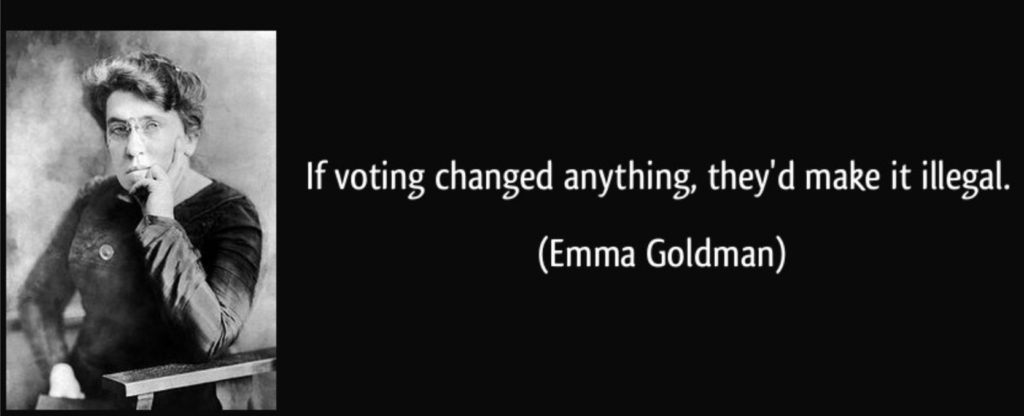
Reuters Poll Shows 51% of Americans Think Primary Process is “Rigged” – Here’s Why It Matters

Screen Shot 2016-04-19 at 10.41.08 AM

Reuters/Ipsos recently conducted a poll in which it asked Americans whether the primary process for choosing presidential candidates was rigged. Here’s what they found:

More than half of American voters believe that the system U.S. political parties use to pick their candidates for the White House is “rigged” and more than two-thirds want to see the process changed, according to a Reuters/Ipsos poll.

The results echo complaints from Republican front-runner Donald Trump and Democratic challenger Bernie Sanders that the system is stacked against them in favor of candidates with close ties to their parties – a critique that has triggered a nationwide debate over whether the process is fair.

Trump has repeatedly railed against the rules, at times calling them undemocratic. After the Colorado Republican Party awarded all its delegates to Ted Cruz, for example, Trump lashed out in a Wall Street Journal opinion piece, charging “the system is being rigged by party operatives with ‘double-agent’ delegates who reject the decision of voters.”

Republican National Committee Chairman Reince Priebus has dismissed Trump’s complaints as “rhetoric” and said the rules would not be changed before the Republican convention in July.

Some 51 percent of likely voters who responded to the April 21-26 online survey said they believed the primary system was “rigged” against some candidates. Some 71 percent of respondents said they would prefer to pick their party’s nominee with a direct vote, cutting out the use of delegates as intermediaries.

The results also showed 27 percent of likely voters did not understand how the primary process works and 44 percent did not understand why delegates were involved in the first place. The responses were about the same for Republicans and Democrats.

Many people will read this and say, so what? Everyone knows it’s rigged? To that I would say, not quite.

continue reading

from Liberty Blitzkrieg http://ift.tt/1WpZVTI
via IFTTT