Forbes Publishes First “Richest People In Crypto” List

The cryptocurrency market is currently mired in what certain evangelists of the technology would characterize as a gully, with bitcoin prices down more than 60% since the beginning of the year. After years of being wary of this new technology, governments in some of the world’s largest markets for crypto are finally beginning to impose their will, whether its an outright ban of all cryptocurrency-related activity – like in China – or the practical desire to regulate and reform markets whose opacity makes them rife with fraud and abuse. 

So perhaps its fitting that, in the midst of all this upheaval, Forbes has decided to release its first-ever list of the richest people in cryptocurrency.

The list ranges from the hardcore “hodlers” who had the temerity to place big bets on bitcoin, ethereum and other popular coins while their networks were still in their infancy, to crypto miners who profit by powering the distributed ledgers that allow systems like the bitcoin network to function.

Officially, Forbes divided its crypto rich list into five groups: idealists, builders, opportunists, infrastructure players and establishment investors. Many fit into more than one category.

Of course, given crypto’s volatile nature and the difficulty of tracing wealth, Forbes relied mostly on rough estimates – though a few provided proof in the form of post-tax profits from trading crypto-assets and stakes in crypto-related businesses. Forbes‘ figures are current as of Jan. 19, though, of course, the market has erased tens of billions of dollars in market capitalization since then.

Below are a few highlights from the Forbes list (all estimated net worth includes only crypto holdings):

* * *

Cameron & Tyler Winklevoss:

Estimated Net Worth: $900 million-$1.1 billion

After their portrayal as the antagonists to Facebook founder Mark Zuckerberg in the movie “The Social Network”, the Winklevii have staged a staggering comeback. They bought bitcoin in 2012 and held on – with their combined fortune at one point being estimated at over $1 billion. Their crypto exchange, Gemini, recently surpassed $300 million in daily transaction volume.

* * *

Mike Novogratz:

Estimated Net Worth: $700-$1 billion

Novogratz’ hedge fund was an early investor in crypto. After shelving plans for a dedicated crypto fund late last year, Novogratz today revealed that he has raised about $250 million for his cryptocurrency merchant bank during one of the biggest routs yet in Bitcoin, according to a person familiar with the deal.

* * *

Vitalik Buterin:

Estimated Net Worth: $400-$500 million

Buterin created ethereum – the first cryptocurrency that wasn’t a bitcoin clone a la Litecoin. With Ethereum, Buterin introducd the idea of smart contracts operating on a blockchain. These contracts are capable of automating if-this-then-that-type systems that could someday be used in finance, real-estate and beyond.

* * *

Barry Silbert:

Estimated Net Worth: $400-$600 million

Silbert made his name as the founder of SecondMarket, which helps facilitated trading in private company shares. His second act was founding Digital Currency Group, which owns Greyscale – the operator of the bitcoin investment trust – and CoinDesk, the bitcoin news website. Silbert invested $100,000+ during the early days of bitcoin and, according to a recent Reuters story, he “cheerleaded his way to…riches.”

* * *

Chris Larsen

Estimated Net Worth: $7.5 to $8 billion

For a brief period early last month, a short-lived rally in Ripple brought Larsen’s net worth to approximately $55 billion – more than Facebook founder Mark Zuckerberg.

Of course, that wealth existed solely on paper, and Ripple swiftly spiraled lower, and, like the rest of the space, is currently trading at less than half of its peak. Larsen founded Ripple as a payments network to help facilitate global payments. But though there have been some flirtations with the app Moneygram saying it would experiment with Ripple’s software (which is separate from the digital tokens) few others have followed suite.

* * *

Joseph Lubin

Estimated Net Worth: $1 billion to $5 billion

The former Goldman executive was one of the first people to join Buterin in helping to build the Ethereum network. He later went on to found Consensys, which has partnered with Microsoft to provide the building blocks for distributed systems through MSFT’s Azure platform.

* * *

Tim Draper

Estimated Net Worth: $350 – $500 million

A longtime Silicon Valley VC and founder of Draper Associates was an early investor in bitcoin. Though recently he has made some high-profile missteps, investing in Tezos and Bancor – two ICOs that are bedeviled with problems. Bancor’s tokens have plummeted in value, while Tezos hasn’t yet released the tokens it promised investors who participated in its crowdsale over the summer.

* * *

While they didn’t make the Forbes list, it’s important to remember that some of the original blocks of bitcoin are thought to be controlled by its mysterious creator, the pseudonymous Satoshi Nakamoto.

When bitcoin peaked at $20,000 last year, it was estimated that bitcoin in the accounts purportedly controlled by Satoshi were worth some $20 billion.

But nearly a decade after bitcoin’s creation, Satoshi’s identity remains a mystery.

Read Forbes’s full list – complete with interactive graphics – here

via Zero Hedge http://ift.tt/2G0zXSz Tyler Durden

Russia Officially Accuses The US Of Planning To Partition Syria

Authored by Middle East Monitor via TheAntiMedia.org,

Foreign Minister Sergey Lavrov on Wednesday accused the US of planning to partition Syria.

“Plans of de facto partition of Syria exist. We know about it and will ask our American colleagues how they do imagine all this,” Lavrov said during a speech at “Leaders of Russia” contest.

He also said Americans were changing their stance about the reason for their presence in Syria.

“Americans seem to have abandoned assurances given to us that the only purpose of their presence in Syria is to defeat terrorists.”

“Now they say this presence will remain until they are convinced that Syria has begun a sustainable process of political settlement, the result of which will be regime change,” he said.

Syria has been locked in a vicious civil war since early 2011 when the Bashar al-Assad regime cracked down on pro-democracy protests — which erupted as part of the “Arab Spring” uprisings — with unexpected ferocity.

Since then, more than a quarter of a million people have been killed and more than 10 million displaced across the war-battered country, according to the UN.

The Syrian Center for Policy Research, however, put the death toll from the conflict at more than 470,000 people.

*  *  *

Independent media is under attack — and we need your help to save it! Click here to become an Anti-Media patron.

via Zero Hedge http://ift.tt/2nO7f0W Tyler Durden

Rand Paul Is Single-Handedly Delaying the Awful Budget Deal in the Senate

Sen. Rand Paul (R-Ky.) took to the Senate floor on Thursday evening to slam Republican and Democratic leaders in Congress for “spending us into oblivion” in a firey speech that appears intended to postpone a budget vote until after midnight, thus triggering a government shutdown.

The three-week continuing resolution passed on January 18 will expire at midnight. Republican and Democratic leaders in the Senate were prepared to vote on a two-year budget that will annihiliate existing spending caps and increase the discretionary budget by about $400 billion, but Paul asked Senate GOP leaders for a chance to offer an amendment reinstating those spending caps. The nature of his speech on the Senate floor suggests that Paul’s request was denied.

Paul slammed Republicans and Democrats for agreeing to a budget that independent analysts say will result in a $1 trillion deficit.

“A country cannot go on forever spending money this way,” said Paul. “What you are seeing is recklessness being passed off as bipartisanship.”

The budget deal would remove limits on military spending imposed by the 2013 sequester would be removed, allowing the Pentagon to receive an additional $80 billion this year and $85 billion next year. Other lids on the discretionary budget would be similarly lifted, allowing for billions of new spending on infrastructure, public health, and disaster aid.

Paul lashed his own party’s leaders, saying that Repulicans “are the conservative party” only when Democrats are in power. “When Republicans are in power, there is no conservative party,” he added.

A spokesman for Paul did not give a clear indication if Paul’s speech was intended to run until, or past, the midnight deadline for passing the budget bill. It’s possible we are seeing a sequel to Paul’s 2013 filibuster against the re-appointment of John Brennan as CIA director. Paul said he was prepared to speak “until 3 in the morning,” if it would force a debate on the federal budget.

As of this moment, Paul is still speaking on the Senate floor. Watch it here.

from Hit & Run http://ift.tt/2nPyEPK
via IFTTT

3 Cheers for Capitalism: #MeToo Swimsuits, Girl Scout Cookies at Pot Shops, and Jimmy Buffet Not Begging For Food

Last fall, Katherine Mangu-Ward and I participated in a widely attended and watched debate about “capitalism” with the socialist editors of Jacobin magazine (you can watch it right here and you can listen as a podcast). Actually, to be fully accurate, I should say the Jacobin folks thought we were debating late capitalism.

That’s the preferred term to describe what the hard left believes are the final days of private property, free enterprise, wage labor, and all the epiphenomena related to what Marx capitalism. I first encountered late capitalism (the phrase, not the supposed objective reality) when I started graduate school for literary studies in 1988. Almost everyone assumed that the Cold War would be resolved in favor of the Soviets and communism. When that turned out to be way off, many academics switched to using advanced capitalism, which got most of the opprobrium across without betraying too much teleological optimism.

When the Great Recession hit, late capitalism came back into vogue. Finally, markets and economies were collapsing all around the globe, comrades! And yet…here we are, a decade or so later and capitalism is still doing pretty well. To be sure, it’s nowhere near perfect, but what economic historian (and Reason contributing editor) Deirdre McCloskey calls “the Great Enrichment” proceeds apace, with fewer and fewer people living in what the U.N. calls “extreme poverty.” As everyone except Pope Francis will tell you, that’s because of free-er trade and more (not fewer) markets. As Ronald Bailey has documented, higher levels of economic freedom correlate strongly with longer lives, less disease, better environmental indicators, and even higher rates of life satisfaction.

Communists, socialists, progressives, and critics ranging from Fredric Jameson to Bernie Sanders to Thomas Frank to Naomi Klein to Hans Magnus Enzenberger continue to marvel at and grouse about the ways in which capitalism “absorbs” economic and philosophical challenges, “commodifies” them, and then keeps on truckin’. Capitalism’s genius, it turns out, is a form of repressive tolerance that, as economist Joseph Schumpeter observed, brought more and more stuff to more and more people. “The capitalist achievement,” he wrote, “does not typically consist in providing more silk stockings for queens but in bringing them within reach of factory girls.”

Or, to put it in slightly different terms, capitalism allows more people to express themselves through work and live relatively high on the hog. Which brings to me three examples torn from today’s headlines that show why capitalism persists—and why that’s not a bad thing at all.

1. Sports Illustrated’s #MeToo Swimsuit issue. What do you do with a classically sexist excresence of capitalism such as Sports Illustrated‘s annual “swimsuit issue” in an era of heightened sensitivity? You commodify your dissent, even if that means devoting pages to women wearing no bathing suits at all:

2. “Girl Scout sells 300 boxes of cookies outside pot dispensary.” Well, of course she did! The nine-year-old entrepreneur, who isn’t being named, sold about 50 boxes an hour by showing up outside a San Diego pot store, according to her father. And to its credit, the Girl Scouts organization is cool with it all.

A post shared by Established Customs (@established_customs) on Feb 8, 2018 at 9:37am PST

FFS, even communists are getting with the program: Young Pioneer Tours, a company that takes its name from (mandatory) youth groups in Russia, China, Cuba, and elsewhere, markets its trips to the former Soviet Union, North Korea, and elsewhere as “group tours for people who hate groups.”

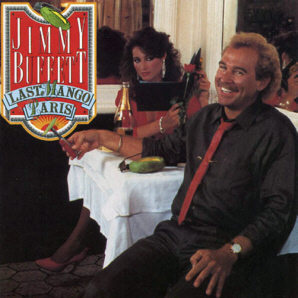
3. Awful musician Jimmy Buffett is not only not living hand-to-mouth, but is insanely wealthy. If you’re lucky, you only know one song by the bard of “parrotheads,” 1977’s ode to alcoholism, “Margaritaville.” Better yet, you know no songs by Buffett, whom, as Eric Cartman observes in a South Park episode, “nobody likes…except frat boys and alcoholic chicks from the South.” As The New York Times reports, though, Buffett is worth around $550 million and presides over a growing empire of bars and casinos, has a Broadway show based on his music, and owns more houses than he can keep track of (though it goes unmentioned, Buffett is also a prolific author). Under what other economic system could something like this happen without pillage and plunder? Although I call him an &tag=reasonmagazineA”awful musician” (hey, I’ve listened to Last Mango in Paris) one of the things that is great about capitalism is that my tastes (or yours, for that matter) don’t get to dictate anything other than what I consume. Capitalism is the application of classical liberal principles to economics, so pluralism and diversity are the rule, not the exception. People who like Jimmy Buffett can dine at Margaritaville restaurants, catch his show on Broadway, and read his books. And the rest of can avoid him like the plague. That’s an outcome all of us should be able and willing to live with.

So three cheers for capitalism, which enables free expression, social and commercial innovation, and generally rising standards of living. It’s not perfect, but it beats the alternatives.

from Hit & Run http://ift.tt/2BOrV1q
via IFTTT

Trump Approval Rating 4% Higher Than Obama This Far Into Presidency

Despite the mainstream media and a $40 million war chest David Brock’s network is using to wage a propaganda war against President Trump, the latest Rasmussen daily tracking poll reveals Trump’s approval rating to be 48% – four percent higher than President Obama’s rating at the same point in his presidency.

The Rasmussen Reports daily Presidential Tracking Poll for Wednesday shows that 48% of Likely U.S. Voters approve of President Trump’s job performance. Fifty-one percent (51%) disapprove.

The latest figures include 34% who Strongly Approve of the way the president is performing and 42% who Strongly Disapprove. This gives him a Presidential Approval Index rating of -8.

President Obama’s approval rating on February 7, 2010 was 44%, while 56% of likely voters disapproved. 

Further contributing to Trump’s achievement is the difference in market gains between the two presidents. The S&P 500 was up 32% at this point in Obama’s presidency (1/20/2009 – 2/7/2010) as it raced higher in a cocaine-fueled helicopter money rally off the March 2009 lows. As of yesterday, the S&P 500 is up just 18% for Trump over the same period (1/20/2017 – 2/7/2018).

Given Obama’s 44% approval / 56% disapproval compared to Trump’s 48% / 51% rating, one has to wonder what his rating would be without the full-court-press of hate by the MSM, FBI, DOJ, the Clinton network including David Brock, John McCain, Fusion GPS, Lisa Bloom, Silicon Valley, Snopes, and Ruth Bader Ginsburg.

via Zero Hedge http://ift.tt/2GZJ8nS Tyler Durden

Really Bad Ideas: Money That “Rots And Rusts”

Authored by John Rubino via DollarCollapse.com,

In the next downturn (which may have started last week, yee-haw), the world’s central banks will face a bit of poetic justice: To keep their previous policy mistakes from blowing up the world in 2008, they cut interest rates to historically – some would say unnaturally — low levels, which doesn’t leave the usual amount of room for further cuts.

Now they’re faced with an even bigger threat but are armed with even fewer effective weapons. What will they do? The responsible choice would be to simply let the overgrown forest of bad paper burn, setting the stage for real (that is, sustainable) growth going forward. But that’s unthinkable for today’s monetary authorities because they’ll be blamed for the short-term pain while getting zero credit for the long-term gain.

So instead they’ll go negative, cutting interest rates from near-zero to less than zero — maybe a lot less.

And their justifications will resemble the following, published by The Economist magazine last week.

Why sub-zero interest rates are neither unfair nor unnatural

When borrowers are scarce, it helps if money (like potatoes) rots.

DENMARK’S Maritime Museum in Elsinore includes one particularly unappetising exhibit: the world’s oldest ship’s biscuit, from a voyage in 1852. Known as hardtack, such biscuits were prized for their long shelf lives, making them a vital source of sustenance for sailors far from shore. They were also appreciated by a great economist, Irving Fisher, as a useful economic metaphor.

Imagine, Fisher wrote in “The Theory of Interest” in 1930, a group of sailors shipwrecked on a barren island with only their stores of hardtack to sustain them. On what terms would sailors borrow and lend biscuits among themselves? In this forlorn economy, what rate of interest would prevail?

One might think the answer depends on the character of the unfortunate sailors. Interest, in many people’s minds, is a reward for deferring gratification. That is one reason why low interest rates are widely perceived as unjust. If an abstemious sailor were prepared to lend a biscuit to his crewmate rather than eating it immediately himself, he would deserve more than one biscuit in repayment. The rate of interest should be positive—and the sharper the hunger of the sailors, the more positive it would be.

In fact, Fisher pointed out, the interest rate on his imagined island could only be zero. If it were positive, any sailor who borrowed an extra biscuit to eat would have to use more than one biscuit in the future to repay the loan. But no sailor would accept those terms because he could instead eat one more piece from his own supply, thereby reducing his future consumption by one, and only one, piece. (A sailor who had already depleted his supplies, leaving him with no additional hardtack of his own to eat today, would be in no position to repay borrowed biscuits either.)

That was bad news for thrifty seafarers. But worse scenarios were possible. If the sailors had washed ashore with perishable figs rather than imperishable hardtack, the rate of interest would have been steeply negative. “[T]here is no absolutely necessary reason inherent in the nature of man or things why the rate of interest in terms of any commodity standard should be positive rather than negative,” Fisher concluded.

Two years ago, when the Bank of Japan (BoJ) began charging financial institutions for adding to their reserves at the central bank, its negative-rate policy was harshly criticised for unsettling thrifty households, jeopardising bank profitability and killing growth with “monetary voodoo”. Behind this fear and criticism was perhaps a gut conviction that negative rates upended the natural order of things. Why should people pay to save money they had already earned? Earlier cuts below zero in Switzerland, Denmark, Sweden and the euro area were scarcely more popular.

But these monetary innovations would have struck some earlier economic thinkers as entirely natural. Indeed, “The Natural Economic Order” was the title that Silvio Gesell gave to his 1916 treatise in favour of negative interest rates on money. In it, he span his own shipwreck parable, in which a lone Robinson Crusoe tries to save three years’ worth of provisions to tide him over while he devotes his energies to digging a canal. In Gesell’s story, unlike Fisher’s, storing wealth requires considerable effort and ingenuity. Meat must be cured. Wheat must be covered and buried. The buckskin that will clothe him in the future must be protected from moths with the stink-glands of a skunk. Saving the fruits of Crusoe’s labour entails considerable labour in its own right.

Too many Crusoes
Even after this care and attention, Crusoe is doomed to earn a negative return on his saving. Mildew contaminates his wheat. Mice gnaw at his buckskin. “Rust, decay, breakage…dry-rot, ants, keep up a never-ending attack” on his other assets.

Salvation for Crusoe arrives in the form of a similarly shipwrecked “stranger”. The newcomer asks to borrow Crusoe’s food, leather and equipment while he cultivates a farm of his own. Once he is up and running, the stranger promises to repay Crusoe with freshly harvested grain and newly stitched clothing.

Crusoe realises that such a loan would serve as an unusually perfect preservative. By lending his belongings, he can, in effect, transport them “without expense, labour, loss or vexation” into the future, thereby eluding “the thousand destructive forces of nature”. He is, ultimately, happy to pay the stranger for this valuable service, lending him ten sacks of grain now in return for eight at the end of the year. That is a negative interest rate of -20%.

If the island had been full of such strangers, perhaps Crusoe could have driven a harder bargain, demanding a positive interest rate on his loan. But in the parable, Crusoe is as dependent on the lone stranger, and his willingness to borrow and invest, as the stranger is on him.

In Japan, too, borrowers are scarce. Private non-financial companies, which ought to play the role, have instead been lending to the rest of the economy, acquiring more financial claims each quarter than they incur. At the end of September 2017 they held ¥259trn ($2.4trn) in currency and deposits.

Gesell worried that hoarding money in this way perverted the natural economic order. It let savers preserve their purchasing power without any of the care required to prevent resources eroding or any of the ingenuity and entrepreneurialism required to make them grow. “Our goods rot, decay, break, rust,” he wrote, and workers lose a portion of their principal asset—the hours of labour they could sell— “with every beat of the pendulum”. Only if money depreciated at a similar pace would people be as anxious to spend it as suppliers were to sell their perishable commodities. To keep the economy moving, he wanted a money that “rots like potatoes” and “rusts like iron”.

The BoJ shuns such language (and, in the past, has at times seemed determined to keep the yen as hard as a ship’s biscuit). But in imposing a negative interest rate in 2016 and setting an inflation target three years before, it is in effect pursuing Gesell’s dream of a currency that rots and rusts, albeit by only 2% a year.

The “rot and rust” referred to here is of course inflation. And the economists proposing aggressive inflation as a desirable kind of public policy cite a lack of demand for borrowing as their rationale.

Which is wrong for a variety of reasons, including:

1) Most forms debt are soaring in most places, making the idea of a borrower shortage look kind of silly. Global debt has about doubled in the past two decades to $233 trillion, or a record 330% of GDP. And US per capita consumer credit – the proceeds from which are spent in large part on Japanese stuff — is rising at an apparently accelerating rate, which implies robust demand for credit.


2) The idea that a rapidly-depreciating currency is a force for stability is, well, crazy, because people aren’t stupid. When we see a currency losing value we naturally front-run the process by borrowing as much as possible and spending the money on stuff that we otherwise wouldn’t buy. This will indeed generate growth in the short term. But long-term it leads to an over-leveraged society that is vastly less stable than it was before the debt binge. Like today’s, in other words.

3) The assertion that “sound” money with an unchanging value leads to unacceptably low levels of economic activity can be disproved with a quick glance at the history of the Classical Gold Standard, a period of two centuries prior to World War I in which national currencies were simply names for different weights of gold. During this period of stable money, inflation was zero (actually slightly negative, meaning money got more rather than less valuable) and growth was robust. The next chart shows inflation since 1800. Note that the trouble began with the establishment of the Federal Reserve in 1913 and really got going with the 1971 breaking of the final link between gold and fiat currencies.


4) To the extent that anyone anywhere is reluctant to borrow it’s probably because past episodes of hyper-easy money have saddled them with so much debt that new debt is now somewhere between scary and inconceivable. The solution to this group’s problem can’t possibly be more borrowing.

5) To state point 2 in a slightly different way, encouraging people, corporations and governments to borrow rather than save leads to a society with no savings (duh!) and therefore no cushion against life’s vagaries. Here again, the result is a system lacking resilience and therefore more likely to collapse.

An alternative to pro-inflation Keynesian theory that’s consistent with 3,000 years of history (rather than Japan’s past couple of decades) is that money is the one thing that should never “rot, decay, break, rust” because it’s not a commodity that’s consumed.

Instead, it’s the store of value and communication medium that society uses to preserve wealth and express ideas of value. Changing it is like making “minutes” or “kilometers” different over time. The resulting dysfunction outweighs whatever benefits might accrue to the political class in the moment.

But of course in the panic of the next downturn these arguments will be ignored and interest rates will plunge to levels that seem shocking even by today’s loose standards. Whether that ignites an unstable boom or an immediate crash remains to be seen. Either way, a return to “normal” as that term used to apply is out of the question.

via Zero Hedge http://ift.tt/2nKnBYn Tyler Durden

Jeff Sessions’ Advice to Pain Patients: ‘Take Some Aspirin’ and ‘Tough It Out’

Attorney General Jeff Sessions is a well-known admirer of Nancy Reagan’s recommendation that kids “just say no” to drugs. It turns out he applies that advice not only to curious teenagers but also to people suffering from severe pain.

“I am operating on the assumption that this country prescribes too many opioids,” Sessions said during a speech at the U.S. Attorney’s Office in Tampa yesterday. “I mean, people need to take some aspirin sometimes and tough it out a little. That’s what Gen. Kelly—you know, he’s a Marine—[he] had surgery on his hands, painful surgery. [He said,] ‘I’m not taking any drugs!’ It did hurt, though. It did hurt. A lot of people—you can get through these things.”

While I’m sure we are all impressed by the White House chief of staff’s stoicism, his personal preferences have no bearing whatsoever on whether doctors should prescribe pain medication to people recovering from surgery or whether those people should take that medication rather than “tough[ing] it out.” Balancing the benefits of pain relief against the tiny risks of addiction or overdose, I think this is an easy call. But I am not a Marine. I see no moral or practical value in suffering pain that can be relieved safely and easily.

To this day, I resent the fact that I was given nothing but acetaminophen after an appendectomy when I was 10. I vividly remember the postsurgical pain (although it was not quite as bad as the presurgical pain). At the time, I did not realize that more effective treatment was possible, but in retrospect it pisses me off that none was offered, presumably because someone was worried about turning a fifth-grader into a heroin addict. That kind of irrational stinginess is pretty common, notwithstanding Jeff Sessions’ confidence that “the country prescribes too many opioids.”

If we extend the attorney general’s medical advice to people who suffer from severe chronic pain—people who need opioids to get out of bed in the morning and have something like a normal life, people who may be driven to suicide when they are denied adequate medication—his attitude is not merely cruel but downright barbaric. As a college student with Ehlers-Danlos syndrome told me when I interviewed him for an upcoming Reason feature story about opioids, the right kind of pain medication can be “the difference between wanting to put a bullet in your brain and enjoying life.”

Sessions’ “tough it out” recommendation is similar to remarks he made after a speech on Tuesday night at the Heritage Foundation. “Sometimes you just need to take two Bufferin or something and go to bed,” he said.

Bob Twillman, executive director of the Academy of Integrative Pain Management, says Sessions’ comments show he has no idea what he is talking about. “That remark reflects a failure to recognize the severity of pain of some patients,” Twillman told the Tampa Bay Times. “It’s an unconscionable remark. It further illustrates how out of touch parts of the administration are with opioids and pain management.”

from Hit & Run http://ift.tt/2seVntg
via IFTTT

LAPD Sends 3 Sex Assault Cases To District Attorney

The hammer may finally be coming down on disgraced studio executive Harvey Weinstein.

Barely a week after Actress Uma Thurman told the New York Times about being sexually assaulted by Weinstein, the Wrap is reporting that Los Angeles police have sent three sexual assault cases involving Weinstein to the DA’s office.

The escalation comes three months after the DA’s office announced the launch of a task force tackling sexual assault cases in Hollywood. The task force is focused on cases involving Weinstein and director James Toback.

Both men have been accused of assaulting, harassing and groping literally hundreds of women.

Weinstein

Since the New York Times first reported on Weinstein’s sordid history of settling with his victims in exchange for them signing NDAs, several law enforcement agencies opened investigations into the one-time mogul. The NYPD – which was close to charging Weinstein in 2015 before Manhattan Attorney Cyrus J Vance Jr. quashed the investigation – was investigating Weinstein, as was the Beverly Hills Police Department and Scotland Yard, reportedly.

According to the Wrap, details of the cases sent to the DA were not disclosed, though it had been reported that the department was investigating an incident from 2013 and accusations of “lewd acts” from 2015. California no longer has a statute of limitations for rape. Once reviewed, the cases will either be formally picked up by the DA – which would then need to secure an indictment from a grand jury – or they could be sent back to the LAPD for further investigation.

Weinstein has formally denied all accusations of non-consensual sex.


via Zero Hedge http://ift.tt/2EPtsTq Tyler Durden

Trump’s “Draining The Swamp” Is A Real-Life Game Of Thrones

Authored by Charles Ortel via Lifezette.com,

Mueller, Comey, Rosenstein and Wray gave the Clinton Foundation a pass during the Bush years, and now people are asking why…

Like Hercule Poirot, the ace detective in Agatha Christie’s mystery “Death on the Nile,” Donald Trump quickly grasped that the widespread conspiracy against his presidency was far more than random campaign felonies by political hacks.

Not lost in the weeds like obstructionists, candidate Trump must have suspected senior elements within the IRS, FBI and the Department of Justice (DOJ) would fear his candidacy more than any other.

Hillary Clinton, for certain, would never unpack the sordid history of scandals missed and covered up back to 1993, or even earlier — she was the “insurance policy” for the swamp.

So an investigation into her manifest mishandling of classified information on her private email server was bottled up, the primaries were rigged in her favor, and it was full speed ahead to the White House — until that did not happen, thanks to millions of forgotten men and women who made their votes count.

For those expecting an historic first Madam President and second President Clinton, events at polling places on Nov. 8, 2016, ushered in an unthinkable living hell.

Stopping the not-so-quiet coup. Early on Nov. 9, 2016, President-elect Trump likely understood that numerous suspects would plot against him, including some individuals he once might have thought were true allies.

So, a political “neophyte” (as if!) seems to have laid traps, even nominating Rod Rosenstein to take the powerful position of deputy attorney general, standing down as Rosenstein selected his mentor, Robert Mueller, to serve as special counsel investigating “Russian collusion,” even as Mueller packed his team with openly biased partisans.

Fortunately for Trump and unfortunately for his enemies, there are records and now the general public is coming to study these closely, even as Democrats and blinkered media elites refuse to see the obvious.

Now that appetizers are served — the Nunes memo and Democratic countermemo are mere morsels — Americans deserve to read as much as possible of Inspector General Michael Horowitz’s forthcoming report, so that all who choose to think for themselves can understand just how profoundly America’s justice system has been corrupted since 1992.

As Congress and the new digital media now do jobs abandoned by the formerly intrepid investigative journalists with mainstream outfits, Americans and the global audience are about to look behind the curtain into a real-life “Game of Thrones.”

Connecting the dots: the evidence that matters. For almost 18 years, Team Clinton, Team Bush, and Team Obama have allowed a small library project in Arkansas to mushroom into the largest set of international charity frauds ever attempted.

(Why is Team Bush included in that listing? Because even though Democrats lost the fateful 2000 presidential election, somehow the Clintons resisted prosecution for these crimes.)

Who shuttered investigations of these early Clinton felonies from 2001 through 2005? Starting in February 2001, the FBI, a U.S. attorney, and a grand jury began considering evidence of fraud and public corruption involving Bill Clinton and the Clinton Foundation. To see how we know this, visit the FBI Vault.

By Sept. 4, 2001, Robert Mueller was FBI director, a position he held for 12 long years, as the Clinton Foundation frauds ballooned globally in magnitude and negative consequence.

By January 2002, James Comey — then U.S. attorney for the Southern District of New York — led the “prosecution” against the Clinton Foundation and Bill Clinton until December 2003, when he was promoted to deputy attorney general, a position he held until August 2005.

From 2001 to 2005, Rod Rosenstein led DOJ’s efforts to ensure enforcement of tax cases such as the Clinton charity frauds. And from September 2003 through May 2005, Christopher Wray, the present FBI director, led DOJ’s criminal division, concentrating on fraud cases, including Enron.

The American people certainly deserve to understand how Mueller, Comey, Rosenstein, and Wray missed for so many years the multiple large and obvious frauds and corruption centrally involving the Clinton Foundation, its trustees, its professional advisers, and its significant advisers.

Unless these, too, have been “BleachBit,” all of the records of the first botched investigation into the Clinton Foundation need to be aired with we, the people.

Unless these, too, have been “BleachBit,” all of the records of the first botched investigation into the Clinton Foundation need to be aired with we, the people. When that happens, America will see just how badly the muddy waters in Arkansas filled the low ground along the Potomac River, making it the putrid swamp that desperately needs draining today.

In Washington, D.C., in state capitols, and in city halls, the punditry drives conservative Republicans from office whenever there are even the slightest appearances of impropriety. This same conga line of expert ethicists is only too happy to ignore criminal conspiracies perpetrated by Democrats and moderate Republicans.

Mueller, Comey, Rosenstein and Wray need to start answering pointed questions under oath. When they do, many heads will roll and the swamp may finally begin to recede.

via Zero Hedge http://ift.tt/2GZx4Tv Tyler Durden

Top Called: Apollo’s Josh Harris Sells $153 Million Stake

Investors in Apollo Global Management should take note: Co-founder Josh Harris just called the top.

Apollo Global Management LLC co-founder Josh Harris sold part of his stake in the alternative asset giant for about $153 million.

Apollo

Harris, 53, is one of a trio of billionaires who in 1990 founded New York-based Apollo, which oversees about $250 billion in private equity, credit and real estate assets. Apollo shares gained 85% last year, soundly beating the S&P 500.

Co-founder and Chief Executive Officer Leon Black, a 22.8 percent owner, hasn’t sold any of his shares. Marc Rowan, who owned the same size stake as Harris at the time of Apollo’s initial public offering, has shaved his holdings to 10.5 percent since the March 2011 offering.

Fortunately, even if the market continues to slide, Harris is diversified: He’s the principal owner of the New Jersey Devils and the Philadelphia 76ers – as well as owning a minority stake in the Crystal Palace English Premier League team.


via Zero Hedge http://ift.tt/2G0ljen Tyler Durden