The question is whether a life insurance “policy exclusion for deaths resulting from ‘intentionally self-inflicted injury'” applied to autoerotic asphyxiation:
The majority said yes, because the person intentionally inflicted partial strangulation on himself, and “partial strangulation … is still an ‘injury’ as the term is commonly understood” even when it’s not intended to lead to death: “For example, if [the person] had partially strangled another person, there would be no debate he had inflicted an injury.”
The dissent, joining the Second and Ninth Circuits, said no, because the “conduct was undoubtedly risky but was not inherently injurious,” since “when done correctly it can and does have a recreational purpose with no lasting health consequences.”
The Seventh Circuit has a sort of automatic pre-publication en-banc review (Local Rule 40(e)), under which an opinion that creates a circuit split is circulated to the whole court to see if a majority of the active judges want to take the case en banc. The panel opinion reports that a majority didn’t support review, though three judges did support it. In principle, the Supreme Court could now agree to hear the case, given the circuit split. But I doubt that it will:
As my research shows, the advent of digital repression is profoundly affecting the relationship between citizen and state. New technologies are arming governments with unprecedented capabilities to monitor, track and surveil individual people. Even governments in democracies with strong traditions of rule of law find themselves tempted to abuse these new abilities.
Its exploitation of these technologies presents a chilling model for fellow autocrats and poses a direct threat to open democratic societies. Although there’s no evidence that other governments have replicated this level of AI surveillance, Chinese companies are actively exporting the same underlying technologies across the world.
Increasing Reliance on AI Tools in the US
Artificial intelligence systems are everywhere in the modern world, helping run smartphones, internet search engines, digital voice assistants and Netflix movie queues. Many people fail to realize how quickly AI is expanding, thanks to ever-increasing amounts of data to be analyzed, improving algorithms and advanced computer chips.
Any time more information becomes available and analysis gets easier, governments are interested – and not just authoritarian ones. In the U.S., for instance, the 1970s saw revelations that government agencies – such as the FBI, CIA and NSA – had set up expansive domestic surveillance networks to monitor and harass civil rights protesters, political activists and Native American groups. These issues haven’t gone away: Digital technology today has deepened the ability of even more agencies to conduct even more intrusive surveillance.
How fairly do algorithms predict where police should be most focused? Arnout de Vries
In authoritarian countries, AI systems can directly abet domestic control and surveillance, helping internal security forces process massive amounts of information – including social media posts, text messages, emails and phone calls – more quickly and efficiently. The police can identify social trends and specific people who might threaten the regime based on the information uncovered by these systems.
For instance, the Chinese government has used AI in wide-scale crackdowns in regions that are home to ethnic minorities within China. Surveillance systems in Xinjiang and Tibet have been described as “Orwellian.” These efforts have included mandatory DNA samples, Wi-Fi network monitoring and widespread facial recognition cameras, all connected to integrated data analysis platforms. With the aid of these systems, Chinese authorities have, according to the U.S. State Department, “arbitrarily detained” between 1 and 2 million people.
My research looks at 90 countries around the world with government types ranging from closed authoritarian to flawed democracies, including Thailand, Turkey, Bangladesh and Kenya. I have found that Chinese companies are exporting AI surveillance technology to at least 54 of these countries. Frequently, this technology is packaged as part of China’s flagship Belt and Road Initiative, which is funding an extensive network of roads, railways, energy pipelines and telecommunications networks serving 60% of the world’s population and economies that generate 40% of global GDP.
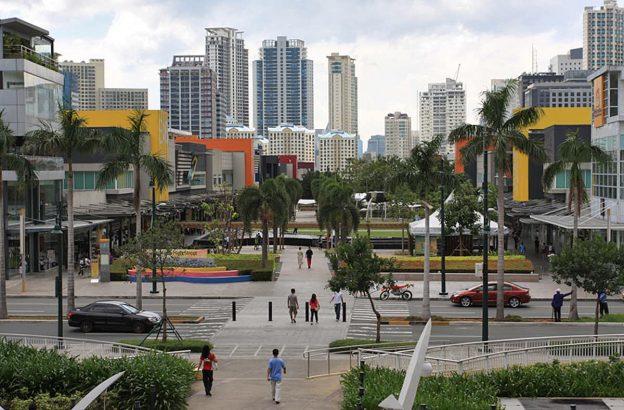
For instance, Chinese companies like Huawei and ZTE are constructing “smart cities” in Pakistan, the Philippinesand Kenya, featuring extensive built-in surveillance technology. For example, Huawei has outfitted Bonifacio Global City in the Philippines with high-definition internet-connected cameras that provide “24/7 intelligent security surveillance with data analytics to detect crime and help manage traffic.”
Bonifacio Global City in the Philippines has a lot of embedded surveillance equipment. alveo land/Wikimedia Commons
However, selling advanced equipment for profit is different than sharing technology with an express geopolitical purpose. These new capabilities may plant the seeds for global surveillance: As governments become increasingly dependent upon Chinese technology to manage their populations and maintain power, they will face greater pressure to align with China’s agenda. But for now it appears that China’s primary motive is to dominate the market for new technologies and make lots of money in the process.
AI and Disinformation
In addition to providing surveillance capabilities that are both sweeping and fine-grained, AI can help repressive governments manipulate available information and spread disinformation. These campaigns can be automated or automation-assisted, and deploy hyper-personalized messages directed at – or against – specific people or groups.
AI also underpins the technology commonly called “deepfake,” in which algorithms create realistic video and audio forgeries. Muddying the waters between truth and fiction may become useful in a tight election, when one candidate could create fake videos showing an opponent doing and saying things that never actually happened.
An early deepfake video shows some of the dangers of advanced technology.
In my view, policymakers in democracies should think carefully about the risks of AI systems to their own societies and to people living under authoritarian regimes around the world. A critical question is how many countries will adopt China’s model of digital surveillance. But it’s not just authoritarian countries feeling the pull. And it’s also not just Chinese companies spreading the technology: Many U.S. companies, Microsoft included, but IBM, Cisco and Thermo Fisher too, have provided sophisticated capabilities to nasty governments. The misuse of AI is not limited to autocratic states.
via ZeroHedge News http://bit.ly/2vtpJqQ Tyler Durden
Zerohedge readers have discovered that luxury real estate markets across the country in the last several years – have fallen into a slump. Our core focus has been Manhattan, Greenwich, and the Hamptons, along with West Coast cities.
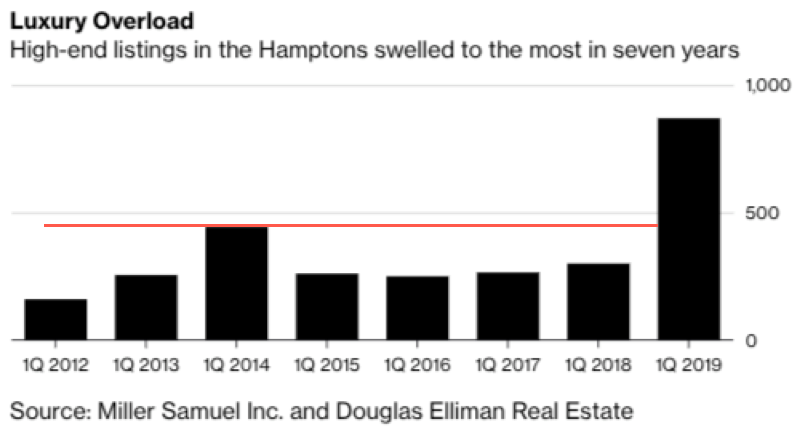
A new report by appraiser Miller Samuel Real Estate Appraisers & Consultants, confirms that lavish vacation homes in New York’s Hamptons remained under pressure as 1Q19 sales declined to their lowest level in years.
Demand for the most expensive properties (above $10 million) collapsed to a six-year low between January and March. However, demand picked up for the lower end market. About 59% of all 1Q19 Hamptons sales were from homes under $1 million.
Appraisers said the tax overhaul passed in 2017 soften demand by capping deductions for mortgage interest and property levies and made vacation homes more expensive on eastern Long Island’s South Fork.
“We are in the middle of this transition period post the new tax law, where the high end is struggling,” Jonathan Miller, president of Miller Samuel, told Bloomberg in an interview. “What’s actually selling is shifting much lower so there’s more inventory exposed.”
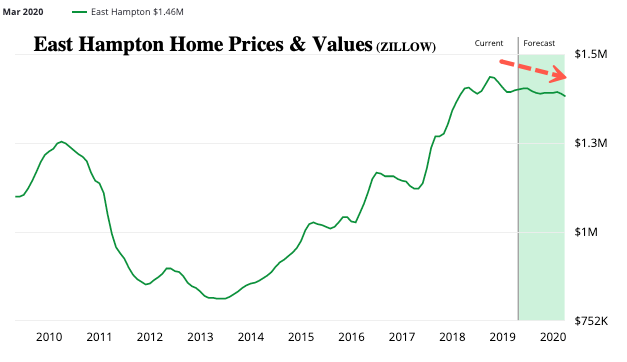
Across all price levels, sales in the Hamptons have declined five straight quarters. This has led to an overall decline in the median sale price of homes, down 5.5% versus the same period a year ago. About 300 homes changed hands in 1Q19 was the lowest sales transactions for the first quarter in seven years.
Unparalleled “A” class gated equestrian estate on over 5 manicured acres features superb riding amenities and a gracious, comfortable farmhouse.
The appraiser said the slump in activity would take nearly seven-and-a-half years to sell all mansions currently listed at the current pace of sales, the longest stretch in appraiser’s records.
Ernie Cervi, senior vice president at brokerage Corcoran Group, said home sales should increase in 2Q, now that tax season is complete, mortgage rates have dropped and volatility in financial markets has declined. The added supply is expected to push home prices lower as buyers gain the upper hand.
“Price adjustment is the trigger,” Cervi said. “That’s what brings people back into the market.”
“There is no means of avoiding the final collapse of a boom brought about by credit expansion. The alternative is only whether the crisis should come sooner as the result of a voluntary abandonment of further credit expansion, or later as a final and total catastrophe of the currency system involved.”
– Ludwig von Mises
The chart above only goes back to 1960, but its message is clear, nevertheless. The velocity of money has dropped below that which was necessary to maintain a productive economy in 2009 and has never recovered.
The velocity of money can be defined as, “the rate at which money circulates or is exchanged in an economy in a given period.” It’s generally measured as a ratio of gross national product (GNP) to a country’s total money supply.
No money turnover… no economy.
But, if that’s so – if the chart is correct and the money turnover is by far the lowest since 1970 – why did the economy recover after 2010 and why are we in a bull market? Surely, the quantitative easing programme initiated by the Fed corrected the problem and happy days are here again.
Well, actually, neither of those commonly-held assumptions is correct. Quantitative easing didn’t pump money back into the failing economy and, more to the point, it wasn’t intended to. Most of the money that was created through quantitative easing never actually hit the streets.
To back up a bit, in 1999, the Fed, then under Alan Greenspan, convinced the US government, then under President Bill Clinton, to repeal the Glass Steagall Act, an act created in 1933 to assure that banks would never again recklessly create loans to the public that could never be repaid. Mr. Greenspan argued that the Great Depression was long over and there would not be a reoccurrence but that, if the Clinton Administration would repeal Glass Steagall, it would usher in an era of investment of borrowed money that would create the greatest surge in business since World War II.
And he was correct in his argument. The repeal ushered in a period of reckless loans that accomplished two things – it allowed the Clinton Administration to end on a positive note – one in which the economy appeared to be vibrant. However, it also created a mammoth debt bubble.
As is always true, the creation of massive debt is like a shot of economic heroin in an economy. The euphoria is very real. Unfortunately, so is the withdrawal. This withdrawal kicked in with the real estate crash of 2007.
The Fed (which, if you remember, had created the bubble) recommended that, although the bankers had benefitted enormously through the creation of the debt, they were now in trouble. Rather than have them pay for their misdeeds, the Fed Chairman put forward the concept of quantitative easing (QE). Through QE, the government would pump money into the banks to bail them out. Therefore the banks benefitted hugely from the reckless loans, then benefitted hugely again, through the debt-funded QE.
The pretense was that QE would be used to pay off bad loans, re-energising the economy. And, interestingly, enough money was pumped into the banks through QE1, 2 and 3 to literally write off every mortgage in the country. Had that been done, those cleared of debt would indeed have had the ability to re-invest in the economy.
But that isn’t what happened. Very little of the money that was created actually hit the street. It was simply gobbled up by the banks.
A by-product of the crash is that it brought on the Greater Depression. Real income has not increased since 2007, but inflation has. Although the US government claims inflation to be at 1.52%, it’s actually far higher – over 5%.
Likewise, unemployment is claimed to be at 3.8%, yet the real unemployment rate (as calculated by John Williams’ Shadowstats) is over 21%.
By any of these measures, the US is unquestionably in a depression.
But, hang on, what about the markets? The stock market is booming. Yes, quite so. It has become the norm for companies to buy back their own stocks. Although, this is economically dangerous, it does temporarily inflate the apparent value of the stocks and politicians do point to the stock market boom as proof of their sound fiscal management.
And, of course, there’s the bond market. It’s at an all-time high.
But bonds are debt, plain and simple. And a bond is merely a promise to pay the lender back with interest on a future date. The more bonds in the market, the more debt.
And so, we see a boom in markets that’s a false-reading. It was created entirely through debt and that debt is now in a bubble of historic proportions.
All of the other indicators (if we use the correct figures, not the ones the government has helpfully ginned up) confirm that the US is decidedly in a depression.
But, if that’s so, why doesn’t it feel like a depression?
Well, the answer to that is, once again, the economic heroin. At this point, the regular injections of heroin are massive enough to provide a euphoric high. The only problem is that, when the heroin runs out, the withdrawal will be one for the record books.
Global debt has reached $100 trillion, up from $13 trillion in 1990. Debt now represents 57% of global financial assets. At $18.4 trillion, the US has the largest treasury debt in the world, close to 40% of the total.
Oh-oh.
What goes up must come down. And, if there remains any doubt as to whether, this time around, the Keynesian tooth fairies have some sort of pixie dust that will make the problem go away, we need only have a look at the chart above, which was produced by the Fed itself.
In the real world of Main Street, the velocity of money has declined dramatically since 2009 and has tanked in 2017, unable to recover.
Conditions overall could not be worse for a crash more massive than any the US has ever seen in its 243 year history.
At present, all that’s holding up the house of cards is the mistaken faith that the average citizen has that the false numbers are correct – that his country is bumping along nicely. When he figures out that that was a lie, it’s game over.
All that’s required to eliminate the notion and to send the economy into a tailspin is a black swan event.
Will it be the dumping of treasuries back into the US system, as is now on the increase? Will it be the full implementation of CIPS, the Chinese interbank payment system? Will it be the elimination of the dollar as the petrodollar, as is now underway?
Any one of these and perhaps another dozen other black swans are waiting in the wings. All that’s needed is for one of the swans to walk onto the world stage.
* * *
Clearly, there are many strange things afoot in the world. Distortions of markets, distortions of culture. It’s wise to wonder what’s going to happen, and to take advantage of growth while also being prepared for crisis. How will you protect yourself in the next crisis? See our PDF guide that will show you exactly how. Click here to download it now.
via ZeroHedge News http://bit.ly/2GHZWQL Tyler Durden
It’s 2019, over 15 years since the US invaded Iraq… so of course the racked with scandal mercenary group Blackwater is back in Iraq. Or rather, Erik Prince’s latest among many incarnations of the infamous private contractor firm is back, now Frontier Services Group (FSG), based in Hong Kong.
Dubai-based Frontier Logistics Consultancy DMCC, a subsidiary of Prince’s controversial FSG (given its coziness with the Chinese government and gulf monarchies), has been registered as a foreign company with Iraq’s Ministry of Trade, Buzzfeed reported based on new Iraq government documents it obtained.
He never goes away. In 2017 he pitched the idea to become “Viceroy” over a “privatized” war in Afghanistan in a WSJ op-ed.
And where else would the corporate mercenary foot soldiers of empire be based but Basra, located in Iraq’s oil-rich south? Notably it’s also close to the border with Iran, in a Shia heartland which last summer saw mass unrest due to electricity shortages and lack of services, blamed on government corruption and “foreign” presence of oil companies.
Blackwater had been previously banned from Iraq after contractors opened fire on and killed unarmed civilians in Baghdad in what became known as the Nisour Square massacre.
But according to the below document obtained by BuzzFeed, Prince is back, but under a different company name:
A Hong Kong-based security and logistics company founded by Erik Prince is working in the south of Iraq, according to documents obtained by BuzzFeed News https://t.co/eUJ7jB1QJT
The news comes after the controversial Blackwater founder told Al Jazeera a year ago that Iraq was among Middle East locations his company was considering setting up shop.
Prince has also been in headlines of late after pitching an idea to privatize the wars in Afghanistan and Syria to Trump administration officials, which has reportedly met with little progress.
Buzzfeed wrote after uncovering this latest bombshell, sure to result in serious pushback among the Iraqi population:
Rep. Jan Schakowsky, a Democrat from Illinois and a longtime critic of Prince and Blackwater, said the document was “troubling.”
“This should sound alarm bells for the Iraqi government, who expelled Blackwater from Iraq for deadly behavior,” she said.
FSG has not publicly stated it has operations in Iraq. The company’s latest annual report referred to new offices it had opened in the Middle East last year, but did not specify which countries.
The Nisour Square incident involved Blackwater contractors killing 17 unarmed Iraqi civilians as their humvees sped through a busy Baghdad intersection, which resulted in four of the contractors involved receiving 30 year prison sentences after a series of trials, with one receiving life.
Blackwater helicopter hovering over Baghdad in 2005. The firm was for years mired in multiple controversies involving misconduct and killings of civilians. AFP/Getty image.
Prince — the brother of billionaire Education Secretary Betsy DeVos — has over the past years since selling his mired-in-controversy Blackwater group (now Academi) revived his mercenary empire in China, in a market where Western firms of necessity find themselves working closely with Chinese state authorities.
He’s reportedly had success in securing security and logistics contracts in Africa and China, and has since at least 2017 lobbied both top US generals and Congressional leaders to consider massive privatization of current Pentagon deployments in the Middle East.
via ZeroHedge News http://bit.ly/2WhW2EU Tyler Durden
Chicago impounds thousands of people’s cars a year, including cars owned by people who have committed no crime, and forces them through an expensive, bureaucratic maze to get their car back. This process that violates residents’ constitutional rights, according to a new lawsuit filed against the city Monday evening.
The Institute for Justice filed a class-action lawsuit in Illinois state court alleging that Chicago’s impound program violates residents’ guarantee of due process, as well as protections against excessive fines and unreasonable seizures, under both the Illinois and U.S. constitutions.
“Owners find themselves in a labyrinthine impound system that is plagued by serious procedural flaws,” the suit says. “Even innocent owners get caught up in this system, facing hefty fines and fees when someone else used their car to commit a crime without the car owner’s knowledge.”
A Reasoninvestigation published last year described how Chicago’s punitive impound program soaks people in fines and fees and deprives them indefinitely of their transportation, whether or not they actually committed an offense, in an effort to reduce its massive annual budget deficits. It also operates independently from the state’s courts, meaning that even in cases where a defendant beats a criminal charge and/or a civil asset forfeiture case, they can still be found liable for thousands of dollars in fines and storage fees, and have their cars held until they pay or relinquish them to the city, by Chicago.
That’s exactly what happened to Spencer Byrd, a 51-year-old resident of Harvey, Illinois whose impound case was featured by Reason and is now a named plaintiff in the Institute for Justice lawsuit.
Byrd, a part-time auto mechanic says he was giving a client a lift in his 1996 Cadillac DeVille one evening in June, 2016, when he was pulled over by Chicago police and searched. Byrd was clean, but his passenger, a man he says he’d never met before, had heroin in his pocket.
The police released Byrd without charging him with a crime, but his car was seized and dually claimed by both the Cook County State Attorney’s Office and the city of Chicago. He’s been fighting for nearly three years to get it back.
A state judge ordered Byrd’s car released after he filed a financial hardship motion, but the city refused to return it, claiming he owed money under the city’s municipal code.
Even after a state judge declared Byrd innocent in the civil forfeiture case against his Cadillac in Illinois state court, he was still found liable for violating Chicago’s municipal code in the city’s administrative hearings court, which has a low standard of evidence and almost no procedural protections for defendants.
In the meantime, Byrd’s livelihood has suffered. His primary trade is carpentry, but his tools have been locked in his car since it was impounded. The city has refused to let him retrieve them, or his car, until he pays his accumulated fines and fees, which according to the lawsuit now stand at more than $17,000.
“If you do wrong, fine, but I didn’t do nothing wrong,” Byrd tells Reason. “I should have had my car released to me with no fines or anything—thank you, sorry for the inconvenience, and I’m on my merry way—instead of trying to get some type of revenue from me. I was proven innocent, and they still didn’t want to act right.”
Byrd is far from alone. A WBEZ analysis of Chicago’s massive impound program found that in 2017 alone, the city impounded more than 22,000 cars for violations of its municipal code, which includes dozens of impoundable offenses ranging from drug possession to drag racing to having illegal fireworks.
The fines for those violations are steep, ranging from $500 to $3,000, and that doesn’t include towing and storage fees, which accumulate at $20 a day for the first five days, and $35 a a day after that. Given that these cases can take weeks, if not months, to wind through the system, the fees can often exceed the fines themselves.
A Reason analysis of data from the Chicago Administrative Hearings Department showed Chicago fined motorists $17 million over a 12-month period between 2017 and 2018. About $10 million of those fines were for driving on a suspended license, and more than $3 million were for drug offenses like the one that resulted in the impoundment of Byrd’s car.
Chicago can hold seized cars indefinitely. There is also no statute of limitations on impound fines and fees in Chicago. The debt can follow someone for life.
Chicago’s impound racket is both easy to be ensnared in and hard to escape. There are only three narrow defenses for those whose cars are impounded for municipal violations in Chicago, and being an innocent owner isn’t one of them.
“You’re talking about a lot of money for something that you may not have been responsible for,” says Institute for Justice attorney Diana Simpson. “The lack of an innocent owner protection really violates two different kinds of constitutional protections: both the excessive fines and fees protection, as well as due process.”
Jerome Davis and Veronica Walker-Davis // Institute for Justice
The case of two of the other named plaintiffs in the Institute for Justice lawsuit, Jerome Davis and Veronica Walker-Davis, exemplify what critics say is the procedural nightmare people face when their cars are impounded in Chicago.
In May of last year, the couple dropped their 2006 Lexus off at a Chicago body shop following an accident. When the repairs dragged on for longer than expected, the shop first said it was waiting for parts, but eventually the couple learned the truth: An employee of the shop had driven their car on a suspended license and was pulled over. Their Lexus was now sitting at one of Chicago’s six impound lots.
The city had never informed the couple that their car had been impounded, according to the lawsuit, and Veronica Walker-Davis had to travel in person to the city’s administrative hearings building to request a hearing to fight the impoundment.
“I’m thinking that I’m just going to go and give a statement, show proof that my car wasn’t in my possession, and everything will be okay, but in fact it turned into a nightmare,” she says. “I felt like I was pretty much in The Twilight Zone.”
The Twilight Zone is Room 110 in Chicago’s administrative hearings building, a small courtroom where the city churns through its impound cases at a rate of roughly one every 10-15 minutes, five days a week.
Because the hearings are civil matters, not criminal, there is no right to a lawyer, and Walker-Davis found herself standing across from a lawyer for the city of Chicago. She tried to explain to the administrative hearing judge what had happened, but it made no difference. She was found liable for violating the city code and would have to pay nearly $2,500 to get their car out of impound.
“I felt like crap,” she says. “I felt like a criminal.”
In late March of this year, The couple managed to find a pro bono lawyer and negotiate their fine down to $1,170, but when they arrived with cash in hand, they were told the registration on their car had lapsed in the more than six months it had been sitting in an impound lot, and the city would not release it without a current registration.
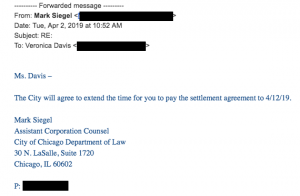
An email between a lawyer for Chicago and Veronica Walker-Davis. // Reason
Walker-Davis rushed the next day to get their registration renewed, which cost another $101, and got the city to agree to extend the deadline for the couple to pay their impound fines. In an email provided to Reason, a lawyer for Chicago’s law department wrote to the couple: “The City will agree to extend the time for you to pay the settlement agreement to 4/12/19.”
But when the couple showed up to retrieve their car on April 10, it was gone. The city had already sold it off. According to WBEZ, Chicago sells many of the cars it impounds for paltry amounts under $200, and almost all of them are sold to a single towing contractor.
The Institute for Justice is hoping that a recent Supreme Court case will bolster their claim that Chicago’s rapacious impound program fines people so much and affords them so few avenues of escape that it violates the Constitution.
The Supreme Court ruled earlier this year in Timbs v. Indiana—the case of an Indiana man whose $42,000 Land Rover was seized for a drug felony—that states are bound by the Eighth Amendment’s protections against excessive fines and fees. Although the Court did not define exactly what constitutes “excessive,” it opened the door for civil liberties groups to press the issue.
In 2017, the Ninth Circuit Court of Appeals struck down Los Angeles’ automatic 30-day impound law, ruling that it amounted to an unconstitutional seizure under the Fourth Amendment. While state and federal courts have repeatedly upheld Chicago’s impound program in the past, the Institute for Justice hopes that it can build on the recent Supreme Court decision, as well as other cases that have addressed the government’s use of fines and fees to generate revenue.
“We think we’ve got a really great chance, and we think the courts will agree with us that the system is just too much,” Simpson says. “It’s bringing in an entirely huge amount of money for the city of Chicago—there’s about 22,000 cars that go in through this system each year—and that’s not the role of the government.”
from Latest – Reason.com http://bit.ly/2VylxEJ
via IFTTT
Chicago impounds thousands of people’s cars a year, including cars owned by people who have committed no crime, and forces them through an expensive, bureaucratic maze to get their car back. This process that violates residents’ constitutional rights, according to a new lawsuit filed against the city Monday evening.
The Institute for Justice filed a class-action lawsuit in Illinois state court alleging that Chicago’s impound program violates residents’ guarantee of due process, as well as protections against excessive fines and unreasonable seizures, under both the Illinois and U.S. constitutions.
“Owners find themselves in a labyrinthine impound system that is plagued by serious procedural flaws,” the suit says. “Even innocent owners get caught up in this system, facing hefty fines and fees when someone else used their car to commit a crime without the car owner’s knowledge.”
A Reasoninvestigation published last year described how Chicago’s punitive impound program soaks people in fines and fees and deprives them indefinitely of their transportation, whether or not they actually committed an offense, in an effort to reduce its massive annual budget deficits. It also operates independently from the state’s courts, meaning that even in cases where a defendant beats a criminal charge and/or a civil asset forfeiture case, they can still be found liable for thousands of dollars in fines and storage fees, and have their cars held until they pay or relinquish them to the city, by Chicago.
That’s exactly what happened to Spencer Byrd, a 51-year-old resident of Harvey, Illinois whose impound case was featured by Reason and is now a named plaintiff in the Institute for Justice lawsuit.
Byrd, a part-time auto mechanic says he was giving a client a lift in his 1996 Cadillac DeVille one evening in June, 2016, when he was pulled over by Chicago police and searched. Byrd was clean, but his passenger, a man he says he’d never met before, had heroin in his pocket.
The police released Byrd without charging him with a crime, but his car was seized and dually claimed by both the Cook County State Attorney’s Office and the city of Chicago. He’s been fighting for nearly three years to get it back.
A state judge ordered Byrd’s car released after he filed a financial hardship motion, but the city refused to return it, claiming he owed money under the city’s municipal code.
Even after a state judge declared Byrd innocent in the civil forfeiture case against his Cadillac in Illinois state court, he was still found liable for violating Chicago’s municipal code in the city’s administrative hearings court, which has a low standard of evidence and almost no procedural protections for defendants.
In the meantime, Byrd’s livelihood has suffered. His primary trade is carpentry, but his tools have been locked in his car since it was impounded. The city has refused to let him retrieve them, or his car, until he pays his accumulated fines and fees, which according to the lawsuit now stand at more than $17,000.
“If you do wrong, fine, but I didn’t do nothing wrong,” Byrd tells Reason. “I should have had my car released to me with no fines or anything—thank you, sorry for the inconvenience, and I’m on my merry way—instead of trying to get some type of revenue from me. I was proven innocent, and they still didn’t want to act right.”
Byrd is far from alone. A WBEZ analysis of Chicago’s massive impound program found that in 2017 alone, the city impounded more than 22,000 cars for violations of its municipal code, which includes dozens of impoundable offenses ranging from drug possession to drag racing to having illegal fireworks.
The fines for those violations are steep, ranging from $500 to $3,000, and that doesn’t include towing and storage fees, which accumulate at $20 a day for the first five days, and $35 a a day after that. Given that these cases can take weeks, if not months, to wind through the system, the fees can often exceed the fines themselves.
A Reason analysis of data from the Chicago Administrative Hearings Department showed Chicago fined motorists $17 million over a 12-month period between 2017 and 2018. About $10 million of those fines were for driving on a suspended license, and more than $3 million were for drug offenses like the one that resulted in the impoundment of Byrd’s car.
Chicago can hold seized cars indefinitely. There is also no statute of limitations on impound fines and fees in Chicago. The debt can follow someone for life.
Chicago’s impound racket is both easy to be ensnared in and hard to escape. There are only three narrow defenses for those whose cars are impounded for municipal violations in Chicago, and being an innocent owner isn’t one of them.
“You’re talking about a lot of money for something that you may not have been responsible for,” says Institute for Justice attorney Diana Simpson. “The lack of an innocent owner protection really violates two different kinds of constitutional protections: both the excessive fines and fees protection, as well as due process.”
Jerome Davis and Veronica Walker-Davis // Institute for Justice
The case of two of the other named plaintiffs in the Institute for Justice lawsuit, Jerome Davis and Veronica Walker-Davis, exemplify what critics say is the procedural nightmare people face when their cars are impounded in Chicago.
In May of last year, the couple dropped their 2006 Lexus off at a Chicago body shop following an accident. When the repairs dragged on for longer than expected, the shop first said it was waiting for parts, but eventually the couple learned the truth: An employee of the shop had driven their car on a suspended license and was pulled over. Their Lexus was now sitting at one of Chicago’s six impound lots.
The city had never informed the couple that their car had been impounded, according to the lawsuit, and Veronica Walker-Davis had to travel in person to the city’s administrative hearings building to request a hearing to fight the impoundment.
“I’m thinking that I’m just going to go and give a statement, show proof that my car wasn’t in my possession, and everything will be okay, but in fact it turned into a nightmare,” she says. “I felt like I was pretty much in The Twilight Zone.”
The Twilight Zone is Room 110 in Chicago’s administrative hearings building, a small courtroom where the city churns through its impound cases at a rate of roughly one every 10-15 minutes, five days a week.
Because the hearings are civil matters, not criminal, there is no right to a lawyer, and Walker-Davis found herself standing across from a lawyer for the city of Chicago. She tried to explain to the administrative hearing judge what had happened, but it made no difference. She was found liable for violating the city code and would have to pay nearly $2,500 to get their car out of impound.
“I felt like crap,” she says. “I felt like a criminal.”
In late March of this year, The couple managed to find a pro bono lawyer and negotiate their fine down to $1,170, but when they arrived with cash in hand, they were told the registration on their car had lapsed in the more than six months it had been sitting in an impound lot, and the city would not release it without a current registration.
An email between a lawyer for Chicago and Veronica Walker-Davis. // Reason
Walker-Davis rushed the next day to get their registration renewed, which cost another $101, and got the city to agree to extend the deadline for the couple to pay their impound fines. In an email provided to Reason, a lawyer for Chicago’s law department wrote to the couple: “The City will agree to extend the time for you to pay the settlement agreement to 4/12/19.”
But when the couple showed up to retrieve their car on April 10, it was gone. The city had already sold it off. According to WBEZ, Chicago sells many of the cars it impounds for paltry amounts under $200, and almost all of them are sold to a single towing contractor.
The Institute for Justice is hoping that a recent Supreme Court case will bolster their claim that Chicago’s rapacious impound program fines people so much and affords them so few avenues of escape that it violates the Constitution.
The Supreme Court ruled earlier this year in Timbs v. Indiana—the case of an Indiana man whose $42,000 Land Rover was seized for a drug felony—that states are bound by the Eighth Amendment’s protections against excessive fines and fees. Although the Court did not define exactly what constitutes “excessive,” it opened the door for civil liberties groups to press the issue.
In 2017, the Ninth Circuit Court of Appeals struck down Los Angeles’ automatic 30-day impound law, ruling that it amounted to an unconstitutional seizure under the Fourth Amendment. While state and federal courts have repeatedly upheld Chicago’s impound program in the past, the Institute for Justice hopes that it can build on the recent Supreme Court decision, as well as other cases that have addressed the government’s use of fines and fees to generate revenue.
“We think we’ve got a really great chance, and we think the courts will agree with us that the system is just too much,” Simpson says. “It’s bringing in an entirely huge amount of money for the city of Chicago—there’s about 22,000 cars that go in through this system each year—and that’s not the role of the government.”
from Latest – Reason.com http://bit.ly/2VylxEJ
via IFTTT
Russian gun rights activist and graduate exchange student Maria Butina was sentenced to 18 months in prison last week for “conspiracy to act as a foreign agent without registering.” Her “crime” was to work to make connections among American gun rights activists in hopes of building up her organization, the Right to Bear Arms, when she returned to Russia.
She was not employed by the Russian government nor was she a lobbyist on Putin’s behalf. In fact the Putin Administration is hostile to Russian gun rights groups. Nevertheless the US mainstream media and Trump’s Justice Department are treating her as public enemy number one in a case that will no doubt set the dangerous precedent of criminalizing person-to-person diplomacy in the United States.
The Foreign Agent Registration Act (FARA) was passed in 1938 under pressure from the FDR Administration partly to silence opposition to the US entry into World War II. While a handful of cases were prosecuted during the war, between 1966 and 2015 the Justice Department only brought seven FARA cases for prosecution.
Though very few cases have been brought on FARA violations, one of them was against Samir Vincent, who was paid millions of dollars by Saddam Hussein to lobby for sanctions relief without registering. He got off with a fine and “community service.”
Millions of dollars in unregistered payments from Saddam Hussein gets no jail time, while Butina gets 18 months in prison for privately promoting a cause most Americans support! How is this justice?
The US Justice Department is not even as tough on illegals who commit capital crimes in the US!
Unfortunately Maria Butina was in the wrong place at the wrong time. With the rise of the “Russiagate” hysteria, Butina’s case was seen as a useful tool by Democrats to push the idea that President Trump was put into office by the Russians. Plus, many of them are also hostile to our Second Amendment and to the National Rifle Association. So it was a perfect storm for Butina.
Sadly, conservatives are mostly silent on this miscarriage of justice. They are also caught up in the idea that America can only be great if it goes abroad seeking monsters to destroy.
Also, a new Cold War is very profitable to the military industrial complex and Butina serves an important propaganda purpose. The media is an all-to-willing participant in this farce.
Even though Trump has been exonerated by a Mueller investigation that didn’t even view the Butina case as worth investigating, the President has been silent on her persecution. This is similar to his sudden silence on Wikileaks now that Julian Assange may be facing an eternity in a US supermax prison.
As author James Bamford wrote recently in an excellent New Republic article on the Butina case, the national security agencies are also eager to get another notch in their belts and the Russian gun activist was low-hanging fruit for their ambitions.
Non-interventionists believe strongly in citizen-to-citizen diplomacy as a way of avoiding war and conflict overseas. Exchange students, international business ventures, tourism, and just communicating with others is such an important way to thwart the plotting of the warmongers who lurk in all governments.
I am saddened to see that the United States has made such a hostile move toward peaceful foreign citizens seeking friendship with Americans. When citizens are no longer allowed to engage in diplomacy we are left with only the state. And the state loves war.
via ZeroHedge News http://bit.ly/2PAUqDH Tyler Durden
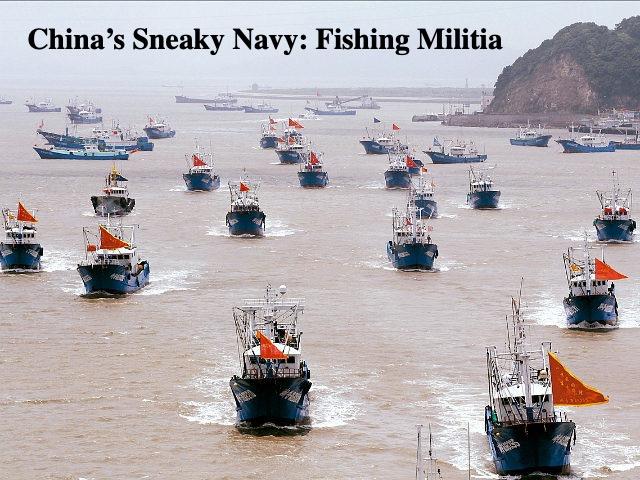
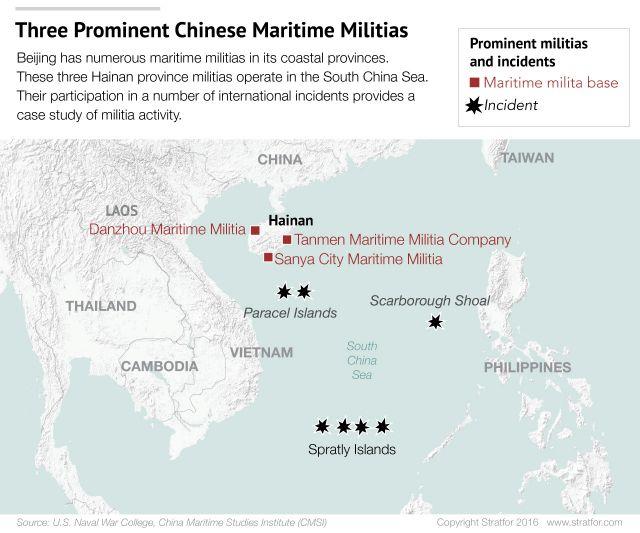
Earlier this month, we reported that 275 Chinese fishing militia and Coast Guard vessels surrounded the island of Thitu in the South China Sea, which is currently being occupied by the Philippines. The US recently delivered a stern message to Beijing about its aggression in the highly disputed body of water, announcing that Chinese fishing militia and Coast Guard ships would be treated as military vessels.
Admiral John Richardson, head of the US Navy, described how he told, vice-admiral Shen Jinlon of the Chinese People’s Liberation Army Navy (PLAN), back in January, that the Trump administration would label the Coast Guard and the maritime militia as military vessels.
“I made it very clear that the US navy will not be coerced and will continue to conduct routine and lawful operations around the world, in order to protect the rights, freedoms and lawful uses of sea and airspace guaranteed to all,” Admiral Richardson told the Financial Times.
China’s Coast Guard has more than doubled its feet to over 130 ships in the last decade, making it the largest coast guard in the world. Beijing trains and provides financial subsidies to the maritime militia, an armed reserve force of civilians and fishing boats, has significantly increased in size since 2015.
In its last annual report on the PLAN, the Pentagon said the fleet “plays a major role in coercive activities to achieve China’s political goals without fighting.”
In 2H17 through 1H18, the maritime militia sailed through the East China Sea with commercial grade laser pointers — striking low-flying American warplanes with damaging beams of light.
China has more frequently deployed the maritime militia in the East and South China sea because the US Navy is likely not to respond to aggression from small fishing boats. But that seems to be coming to an end, as the latest warning from Admiral Richardson could provoke a hot conflict.
James Stavridis, a retired US admiral, said Admiral Richardson’s warning is the latest move in the Pentagon to get tough on China.
“It is a warning shot across the bow of China, in effect saying we will not tolerate ‘grey zone’ or ‘hybrid’ operations at sea,” said Stavridis. “A combatant is a combatant is the message, and the CNO (Chief of Naval Operations) is in the right place to warn China early and often.”
Bonnie Glaser, a China specialist at CSIS, a Washington-based think-tank, said: “By injecting greater uncertainty about how the US will respond to China’s grey-zone coercion, the US hopes to deter Chinese destabilizing maritime behavior, including its reliance on coast guard and maritime militia vessels to intimidate its smaller neighbors.”
The warning from Admiral Richardson also affects the Chinese Coast Guard, said Dennis Wilder, a former head of China analysis at the CIA, adding that President Xi Jinping took control of the coast guard in 2018.
“By having both the navy and the coast guard under the Central Military Commission, it improves in wartime the co-ordination and control of maritime forces,” he said. “As China’s coast guard is heavily armed, it is a logical assumption that it would be incorporated into military plans and operations.”
The US Navy has been conducting Freedom of Navigation Operations through the South China Sea, near China’s militarized islands that are considered highly contested areas. Some have warned that labeling the militia and Coast Guard vessels as military vessels would be particularly challenging.
“If the US decides to interpret maritime militia vessels as military, that will lead to increased risk,” said William Choong of the International Institute for Strategic Studies. “With US destroyers in the South China Sea and the continuing Chinese maritime militia operations there, things could go bad very quickly.”
Several weeks ago, China’s Foreign Ministry spokesman Lu Kang said he hopes “non-regional forces don’t stir up troubles in the South China Sea,” after the US Navy amphibious assault ship USS Wasp, carried an unusually large number of Lockheed Martin F-35s, sailed through the South China Sea near the Scarborough Shoal.
China has overlapping economic claims in the South China Sea with Vietnam, Taiwan, Malaysia, the Philippines, and Brunei. While territory disputes remain unsolved, the region remains a flashpoint for the next conflict between the US and China.
via ZeroHedge News http://bit.ly/2XTI3Wf Tyler Durden
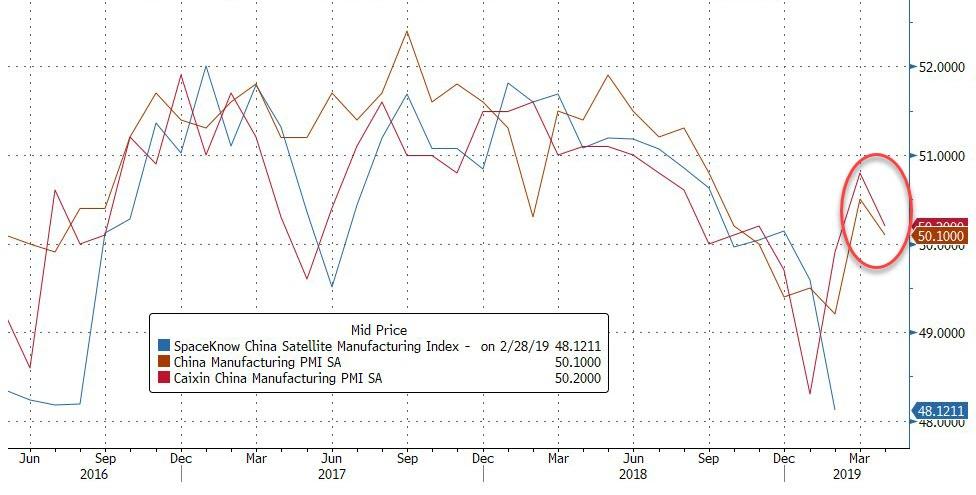
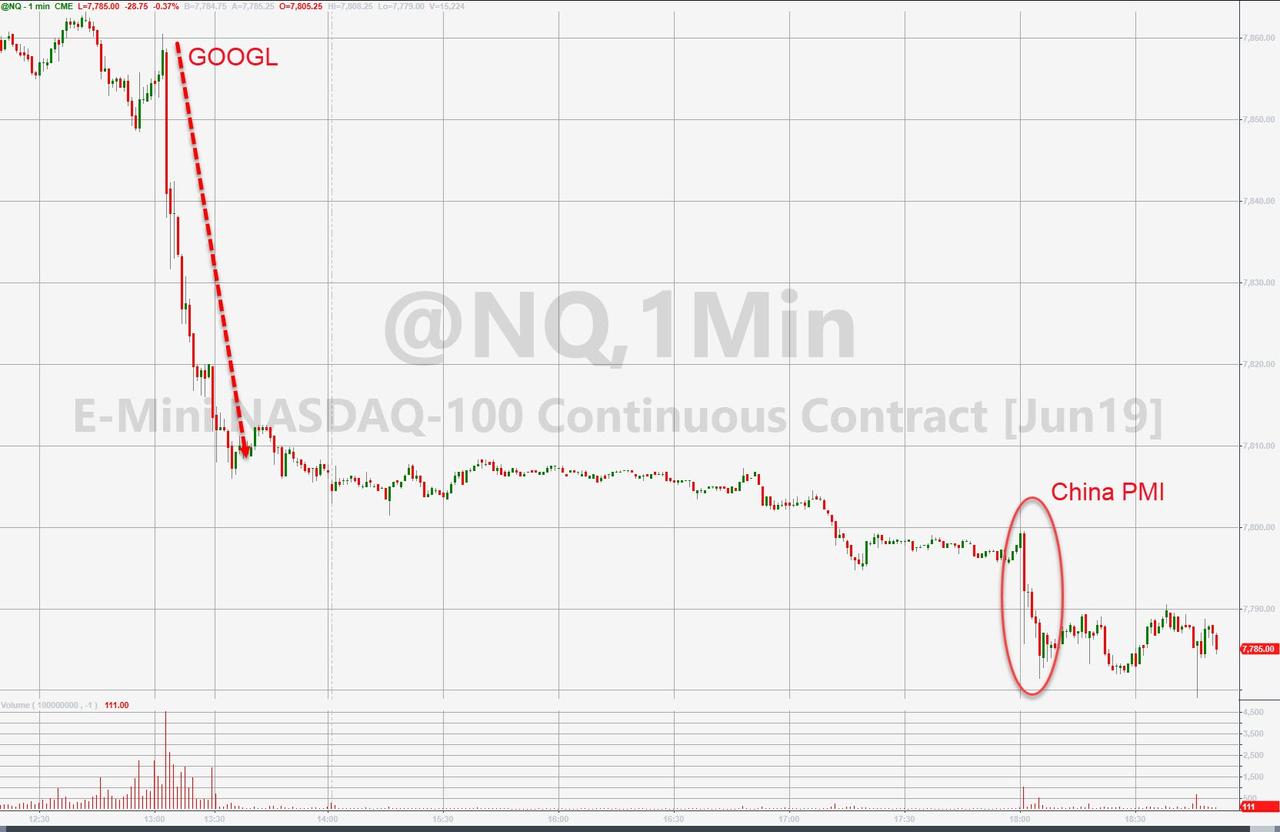
Nasdaq futures – already hammered by Google’s results – legged lower along with Yuan after China’s PMI prints for April disappointed the green-shoot-believers, slumping back towards contraction.
After all the excitement sparked by the March PMI bounce, China’s April data is big disappointment with China’s official manufacturing and non-manufacturing prints both sliding back (from 50.5 to 50.1 and from 54.8 to 54.3 respectively) with the Caixin China manufacturing PMI tumbling back to 50.2 from 50.8 (and 50.9 expected).
“The Caixin China General Manufacturing Purchasing Managers’ Index eased to 50.2 in April, down from a recent high of 50.8 in the previous month, indicating a slowing expansion in the manufacturing sector.
1) The subindex for new orders fell slightly despite remaining in expansionary territory. The gauge for new export orders returned to contractionary territory, suggesting cooling overseas demand.
2) The output subindex dropped. The employment subindex returned to negative territory after hitting a 74-month high in March. According to data from the National Bureau of Statistics, the surveyed urban unemployment rate remained at a relatively high level despite edging down in March, suggesting that pressure on the job market remained.
3) While the subindex for stocks of purchased items returned to contractionary territory, the measure for stocks of finished goods fell more markedly. The gauge for future output edged up, pointing to manufacturers’ desire to produce and stable product demand. The subindex for suppliers’ delivery times rose further despite staying in negative territory, implying improvement in manufacturers’ capital turnover.
4) Both gauges for output charges and input costs edged down. There were only small changes in upward pressure on industrial product prices. We predict that April’s producer price index is likely to remain basically unchanged from the previous month.
“In general, China’s economy showed good resilience in April, yet it stabilized on a weak foundation and is not coming to an upward turning point. The Politburo meeting signalled that in the first quarter of this year China had adjusted its countercyclical policy marginally. As pressure on the economy remains in the second quarter, we expect that there will be minor adjustments to the policy but not a turnaround.”
The reaction was a dip in yuan and leg lower in US futures…
via ZeroHedge News http://bit.ly/2LlVL2W Tyler Durden