Covid-19 Outbreak Meets Another Catastrophe Bond Trigger Condition 

Covid-19 Outbreak Meets Another Catastrophe Bond Trigger Condition 

The outbreak of Covid-19 in China, South Korea, Japan, Iran, Italy, and other parts of Europe and the Americas has likely “met another of the conditions within the trigger mechanism of the World Bank’s pandemic catastrophe bond transaction, raising the chance that noteholders face losses in the coming weeks,” reported Artemis, a market intelligence firm with the focus on catastrophe bonds. 

The World Bank’s $320 million IBRD CAR 111-112 pandemic catastrophe bond issue supports its Pandemic Emergency Financing Facility (PEF), is now at risk of default as the virus rapidly spreads across the world.

Artemis said pandemic cat bonds “can be triggered if the outbreak reaches pandemic levels and meets certain pre-defined trigger criteria, in terms of officially confirmed cases, growth rate, fatalities, and international spread.” 

Artemis notes that several conditions have already been met, which means the cat bonds could be triggered in the next couple of weeks: 

The first condition that was met was for the number of confirmed deaths occurring in China, the source country of the outbreak.

As deaths in China have continued to escalate, reaching some 2,744 as of today (Feb 27th), this trigger condition had already been met.

Now, Iran has reported deaths in the country from the coronavirus have reached 26, which is higher than the trigger condition concerning international spread of any outbreak, further heightening the risk of default to the pandemic catastrophe bond notes.

Artemis notes Iran’s confirmed cases and deaths must be reported through the WHO to become official:

We have to stress here that this is the Iranian government’s figure, not the official WHO reported number that would be used to determine whether any default or payout was due. So while the number has surpassed the point required by the trigger, it would still need to be reported as such by the WHO and also be subject to a calculation agent review as well, before it would be determined whether a payout came due.

But at 26 already it seems like we can consider that this second important trigger condition for the pandemic catastrophe bond will now be breached.

As a reminder, the World Bank facilitated pandemic cat bonds in two separate issues

The World Bank facilitated pandemic catastrophe bond is structured into two tranches, issued to investors as $225 million of Class A notes and $95 million of Class B notes, with both exposed to a coronavirus outbreak, but under different terms and reflecting different levels of risk.

The Class A notes require a coronavirus outbreak to result in over 2,500 deaths (already met in China alone), with at least 250 cases being confirmed on a rolling basis, as well as more than 20 deaths being seen in at least one country overseas (now met in Iran), for an initial 16.67% loss of principal to this tranche to occur.

Higher losses require higher numbers in all cases and there is a stepped payout mechanism for both tranche of notes.

The Class B notes are the more likely to face triggering under a qualifying outbreak event, as only more than 250 confirmed deaths are required, alongside the other factors, for a payout to be due.

The trigger criteria for the Class B notes is more complicated though, as different payout rates are applicable depending on how many countries outside of the originating country see more than 20 confirmed deaths each. Right now it looks like this is just one country so far, in Iran, although Italy has now seen 14 deaths and South Korea 13.

Alone this isn’t going to trigger the pandemic cat bonds, as other conditions also need to be met, as defined in the underlying insurance contract terms.

Artemis said, “there is no need for a pandemic to be declared by the WHO, or any other body, for the cat bond to trigger.” 

And here it’s is: “the earliest we could see any triggering of the pandemic catastrophe bond, at any percentage level of payout, will be after March 23rd and only if the growth rate is positive and meets the necessary terms of the trigger contract language as well.” 

As “two conditions of the trigger met” – Artemis warns: “The market will consider the risk heightened further for the pandemic catastrophe bond notes.” 

The World Health Organization’s (WHO) Dr. Michael Ryan was quoted on Friday as saying, “declaring a pandemic would be unhelpful.” As to why WHO officials continue to downplay the virus outbreak remains a mystery, or maybe not – perhaps declaring a pandemic is terrible for the cat bondholders and financial elites who run global financial markets. 


Tyler Durden

Fri, 02/28/2020 – 13:55

via ZeroHedge News https://ift.tt/2I187Jf Tyler Durden

Russia Blames Turkey For Its 33 Troops Killed Embedded With “Terrorists”; Turkey Vows To Escalate

Russia Blames Turkey For Its 33 Troops Killed Embedded With “Terrorists”; Turkey Vows To Escalate

“We have fought Russia 16 times in the past, and we will fight it again,” Turkish adviser to President Recep Tayyip Erdogan, Mesut Hakki Casin, has warned after Thursday’s dramatic escalation involving the deaths of some 33 Turkish soldiers in Idlib via airstrike, in the single deadliest day for Turkey in Syria throughout the entirety of the war.

NATO held an emergency meeting at Turkey’s request, while the Trump administration has vaguely responded that the US “stands with Turkey”, but it increasingly looks like Ankara will go it alone in terms of its adventurism inside Idlib, after NATO chief Jens Stoltenberg merely offered “condolences” and expressed “solidarity” with Turkey. Regardless, Turkey has vowed escalation, reports The Washington Post:

Turkey vowed Friday to escalate military actions in Syria’s Idlib province after 33 of its soldiers were killed in an airstrike it blamed on Syria, as the risk of a major military confrontation between Russia and Turkey in the region increased sharply.

Fighting in the Idlib town of Saraqeb, via AFP.

Widespread early reports said it was a Russian strike, but in a sign that Ankara doesn’t want to confront the more formidable Russian Air Force, it has blamed Syrian forces while restricting social media access to its own citizens, likely in an effort to allay domestic political pressure on Erdogon to “do something” to confront Russia.

Erdogan has even reportedly told President Trump that Syrian “regime forces” were behind that attack and that Turkey has responded. But Turkey’s defense minister did have this to say of Russia’s role: “This attack occurred even though the locations of our troops had been coordinated with Russian officials in the field,” yet stopping short of saying Russian jets were behind it.

Moscow for its part has remained unflinching after it appears to have set a clear ‘red line’ in Turkey: 

“Turkish soldiers were acting inside combat units of terrorist groups,” Russia’s Defense Ministry (MoD) said in a statement in response to Thursday’s events.

While Russian defense officials have stopped short of owning up to being behind the attack, they’ve defended the “right” to attack terrorists  whether or not Turkish troops are in the vicinity.

Russia’s foreign minister Sergey Lavrov underscored on Friday that “the Syria Army certainly has [the] full right to retaliate and suppress the terrorists.” 

He said further according to Russian media:

[Russia] cannot prohibit the Syrian Army from executing the demands written in the UNSC resolutions, which call for an uncompromising fight against terrorism in all its forms.

Meanwhile certain hawkish Congressional leaders like Senators Linsdey Graham and Tom Cotton have urged the administration to back Turkey militarily amid the Syrian-Russian offensive in Idlib. 

A number of media pundits and politicians have also begun to talk about Turkey invoking NATO’s Article 5, yet apparently ignorant to the fact that the collective defense treaty only applies to attacks on a NATO member’s soil — not as it is in this case protection while invading and occupying foreign soil.

For the time being, it appears Turkey will focus its “retaliation” only against the Syrian Army. This looks to have already begun, with Turkey claiming it’s taken out scores of Syrian soldiers and convoys in response.

Turkey’s communication director announced in the immediate aftermath of the Thursday strike on Turkish troops: “Turkey puts all known targets of Syrian regime under fire with air, ground fire support elements,” according to Anadolu Agency.


Tyler Durden

Fri, 02/28/2020 – 13:42

via ZeroHedge News https://ift.tt/2T94jvI Tyler Durden

The National Debt Is ‘Unsustainable’ and the Pentagon’s Finances Are a Total Mess, Federal Audit Says

The federal government’s books are in such bad shape that auditors can’t even do their jobs, and the national debt is growing at an “unsustainable” rate, the Government Accountability Office (GAO) warned in its annual comprehensive review of the government’s financial statements.

The GAO singled out the Pentagon—as it has every year since 1990, when federal auditors first started trying to peer into the black hole of military spending—for “serious financial management problems.” That includes more than 1,300 new issues raised during this year’s incomplete audit of the Defense Department. Despite those persistent financial problems, the Pentagon has seen a huge boost in spending under the Trump administration.

Of the 24 federal departments and agencies subject to annual audits under a 1990 law, only the Pentagon and the Department of Housing and Urban Development failed to get a clean review this year. Note that a clean review does not mean there was no wasteful spending—merely that auditors at least were able to see where the spending was going.

“Resolving the problems outlined in our audit report is of utmost importance given the federal government’s reported fiscal path,” wrote Gene L. Dodaro, U.S. comptroller general and the head of the GAO, in a letter to Congress and President Donald Trump. “Absent policy changes, the federal government continues to face an unsustainable long-term fiscal path.”

Measured as a share of the entire U.S. economy, the national debt has doubled in just 12 years and is on pace to grow to historical highs within the next decade. The federal government’s budget deficit—the gap between how much revenue it raises and how much money it spends—is expected to exceed $1 trillion this year.

“While the estimated magnitude of the fiscal gap is subject to a substantial amount of uncertainty, it is nevertheless nearly certain that current fiscal policies cannot be sustained indefinitely,” the GAO’s report concluded. The sooner the growth of the deficit and debt can be slowed or reversed, the less those policies are likely to affect economic growth.

But is anyone listening? Lawmakers from both major parties have worked together in recent years to pass budgets that exploded annual deficits and added to the debt. Democrats running for president are promising to hike federal spending by trillions of dollars to pay for free college, government-run health care, and the fight against climate change—and even though they are also promising to raise taxes, the math doesn’t add up. That means deficits will continue to grow. Meanwhile, President Donald Trump has abandoned any pretense of fiscal conservatism, and most of his party has followed suit.

But the report is right there for them to see. When the past decade’s fiscal recklessness hits the fan, they won’t be able to claim that no one saw this coming.

from Latest – Reason.com https://ift.tt/2Iha58x
via IFTTT

Police Use Coronavirus To Try To Trick Meth Users Into Getting Themselves Arrested

Cops around the country have been issuing fake public health warnings about coronavirus and drugs. In Merrill, Wisconsin, for example, the local police department posted an advisory to its Facebook page Wednesday telling meth users that their drugs might be contaminated with coronavirus and that they should contact an officer for testing:

P.S.AWARNING: If you have recently purchased Meth, it may be contaminated with the Corona Virus. Please take it to the …

Posted by Merrill Police Department on Wednesday, February 26, 2020

At a time when public health workers have been trying to spread actual information about a potential pandemic, it isn’t especially helpful for the authorities to spread false information about the disease. And no, you can’t assume that everyone will pick up that the police post is false. Indeed, local media elsewhere in the country have been known to repeat such warnings as straight news.

These posts also mark an unfortunate contrast with places that are trying to offer real help to drug users. Safe injection sites, for example, not only lead to safer drug use but give participants an opportunity to enroll in drug treatment programs. Unfortunately, many American officials have tried to stop such efforts, preferring the familiar, ineffective, and costly drug war.

One institution still attached to the drug war is the Merrill Police Department, which appears to believe it can arrest its way to recovery. On Thursday, the department tried to justify itself with an update to its Facebook post: “We will take those easy grabs at removing poison from our community whenever we can. That is our role which we un-apologetically must fulfill. It is our hope that an arrest would be the positive catalyst someone may need to start recovery. It is our hope that every drug arrest both works to hold offenders accountable for their deeds and provides them with a path toward treatment options. It is truly heart-warming when we see people succeed in such circumstances. It does happen!”

I assume they’re sincere, but they’re also fundamentally misguided. There are far more effective and compassionate ways to help addicts than by using a scary disease to try to trick people into an arrest.

from Latest – Reason.com https://ift.tt/2vsZswr
via IFTTT

Where Did Your Money Go?

Where Did Your Money Go?

Authored by MN Gordon via EconomicPrism.com,

It all seems so systematic, arranged, and orderly.  Almost a direct proof of deism.  Sixty seconds make a minute, 60 minutes make an hour, 24 hours make a day, and one day equals one complete rotation of the planet earth.

Roughly every 30 days the moon orbits the earth – which is one month.  Then every 12 months the earth orbits the sun – which is one year.

So far so good, right?

But here’s where the nice and neat order of it all breaks down.  Because if you try to measure one of earth’s orbits of the sun in days it’s not so divinely tidy.  For it takes 365 days plus an inconvenient 6 hours to fully complete the cycle.

But we don’t let these inconvenient 6 hours hamper our perfection.  We’re humans, after all.  We innovate, invent, and make the world in our image.  So when the numbers don’t jive, we do what must be done.  We fudge them.

We create an off balance account.  We concoct modern monetary theory.  We contrive negative interest rate policy.  And we invent leap year.

Tomorrow [Saturday] is the day the books must be reckoned.  Peering into our off balance account we find 24 accrued hours that must be tallied up and written off.

Consequently, we must have a day of reckoning for the disorder of the last four years.  We must resynchronize the calendar year with the astronomical year.  Moreover, we must reground our measuring system with its baseline – its reference point.

Without this resynchronization, what’s a year really measuring?

Perhaps, the calendar wouldn’t get too off kilter for a decade or two.  But in just 28-years the calendar would be off by an entire week.  Not long after that, the calendar would be debased to nothing more than etched lines inside a cave dwellers grotto.  Pointless and meaningless abstractions.

“A Technology, Called a Printing Press”

So goes the dollar – or any paper money – when it’s not backed by gold or some other commodity that can’t be created at will.  For without a stable base to hold its supply in check, what’s a dollar anyway?

It’s abstract, indefinite, and arbitrary.  It can be created out of thin air at the whims of the Federal Reserve.  A pocket full of dollars one day and you can buy the things you want and need.  On the next day these same dollars can revert to their intrinsic value – at par with bird cage liner.

Dollar convertibility to gold once limited U.S. Treasury budgets and the Federal Reserve’s credit creation machine.  But that was before Nixon severed the dollar’s link to gold and commenced the dollar reserve standard.  Prior to 1971, a foreign bank could exchange $35 with the U.S. Treasury for an ounce of gold.  After that, when foreign banks handed the U.S. Treasury $35, they received $35 in exchange.

At the G-10 Rome meeting held in late-1971, Treasury Secretary John Connally reduced the new dollar reserve standard to a bite-sized nugget for his European finance minister counterparts:

“The dollar is our currency, but it’s your problem.”

Unlike gold, which has no debt obligation or counterparty risk, dollars can expire worthless when their promissory obligation is defaulted on.  Alternatively, they can be inflated to nothing when a desperate Fed cranks up the printing press, and begins helicopter dropping suitcases of money over major urban centers.

If this helicopter drop concept is new to you let us assure you that it is no joke.  In fact, this is what former Federal Reserve Chairman, B.S. Bernanke, said the Fed would do in a time of financial crisis.  He laid it out very clearly in his November 21, 2002 speech, Deflation: Making Sure “It” Doesn’t Happen Here.

Then, as Federal Reserve Governor, Bernanke provided the following clarification…

“The U.S. Government has a technology, called a printing press (or, today, its electronic equivalent), that allows it to produce as many U.S. dollars as it wishes at essentially no cost.  By increasing the number of U.S. dollars in circulation, or even by credibly threatening to do so, the U.S. Government can also reduce the value of a dollar in terms of goods and services, which is equivalent to raising the price in dollars of those goods and services.”

Later in this same speech, Bernanke made reference to a “helicopter drop,” alluding to a central banker hovering in a helicopter and dropping suitcases full of money to William Jennings Bryan’s “struggling masses” below.

But even if the dollar isn’t worthless – yet – its continual variability is a continual problem.  How does one save and invest when the dollar’s monetary base is continuously inflated?

Where Did Your Money Go?

When a carpenter measures the length of a cabinet as being 3 feet, he’s certain that the length measured as 3 feet will always be 3 feet.  No more.  No less.

To the contrary, when a saver squirrels away $1, he has no assurance that the value of that dollar will be preserved.  For example, using the Bureau of Labor Statistics’ own CPI inflation calculator, $1 in 2020 has the same purchasing power that $0.15 had 1971 – the year the dollar’s last tie with gold was severed.  Where did the other $0.85 go?

In all truth, it was covertly stolen from savers and redistributed by the government.  This, no doubt, is a national disgrace.

Over several decades, the baseline – the dollar – used to measure the value of goods and services has been twisted and contorted like a politician’s spine.  The quantity of dollars in existence has increased.  Accordingly, the unit value of the dollar has decreased.

To be clear, prices of individual goods and services will fluctuate to account for natural changes in supply and demand.  But when money is anchored to a stable reference point, like during the classical gold standard of the 19th century, overall prices will by and large be stable.

With respect to recording the passage of time, leap year’s necessary, vital, and appropriate, for preserving the calendar year’s conformity with its baseline.  So, too, today’s money needs a stable base to derive its meaning and value from.

Without such a reference point, we’ll just continue to spin out of orbit.  Money will continue to accrue more zeros at the end of everything it measures.  Yet, what good’s a $100 dollar bill if it only buys you what a $1 dollar bill did before?

So enjoy your day of reckoning.  The time was there all along…it just needed to be reconciled.  Alas, we have a startling suspicion that reckoning the distortions of the dollar reserve standard will not be so amiable.  Though it’s necessary, all the same.


Tyler Durden

Fri, 02/28/2020 – 13:20

via ZeroHedge News https://ift.tt/3cekjUF Tyler Durden

Major Fire Erupts Near Central Paris Train Station

Major Fire Erupts Near Central Paris Train Station

A massive fire has broken out in southeastern Paris near the Gare de Lyon train station. The fire has prompted police to evacuate the area.

French police said the train station was evacuated and advised people to avoid the area. They didn’t elaborate on the cause of the fire. 

The UK’s Express suggests that the fire was started by a group of protestors voicing their opposition to a concert by Congolese singer Fally Ipupa. Twitter videos are emerging of streets around the train station engulfed in fire. 

Riot police are moving in to counter the protestors. 

Gare de Lyon train station is one of six mainline railway station terminals in Paris. It’s estimated that 90 million passengers use the rail station each year. The shutdown of it could mean rail transportation in the city will be disrupted heading into the weekend. 


Tyler Durden

Fri, 02/28/2020 – 13:09

via ZeroHedge News https://ift.tt/32zSBxj Tyler Durden

Police Use Coronavirus To Try To Trick Meth Users Into Getting Themselves Arrested

Cops around the country have been issuing fake public health warnings about coronavirus and drugs. In Merrill, Wisconsin, for example, the local police department posted an advisory to its Facebook page Wednesday telling meth users that their drugs might be contaminated with coronavirus and that they should contact an officer for testing:

P.S.AWARNING: If you have recently purchased Meth, it may be contaminated with the Corona Virus. Please take it to the …

Posted by Merrill Police Department on Wednesday, February 26, 2020

At a time when public health workers have been trying to spread actual information about a potential pandemic, it isn’t especially helpful for the authorities to spread false information about the disease. And no, you can’t assume that everyone will pick up that the police post is false. Indeed, local media elsewhere in the country have been known to repeat such warnings as straight news.

These posts also mark an unfortunate contrast with places that are trying to offer real help to drug users. Safe injection sites, for example, not only lead to safer drug use but give participants an opportunity to enroll in drug treatment programs. Unfortunately, many American officials have tried to stop such efforts, preferring the familiar, ineffective, and costly drug war.

One institution still attached to the drug war is the Merrill Police Department, which appears to believe it can arrest its way to recovery. On Thursday, the department tried to justify itself with an update to its Facebook post: “We will take those easy grabs at removing poison from our community whenever we can. That is our role which we un-apologetically must fulfill. It is our hope that an arrest would be the positive catalyst someone may need to start recovery. It is our hope that every drug arrest both works to hold offenders accountable for their deeds and provides them with a path toward treatment options. It is truly heart-warming when we see people succeed in such circumstances. It does happen!”

I assume they’re sincere, but they’re also fundamentally misguided. There are far more effective and compassionate ways to help addicts than by using a scary disease to try to trick people into an arrest.

from Latest – Reason.com https://ift.tt/2vsZswr
via IFTTT

Citadel Securities Is Trying To Corner The Market For Institutional Options Trading

Citadel Securities Is Trying To Corner The Market For Institutional Options Trading

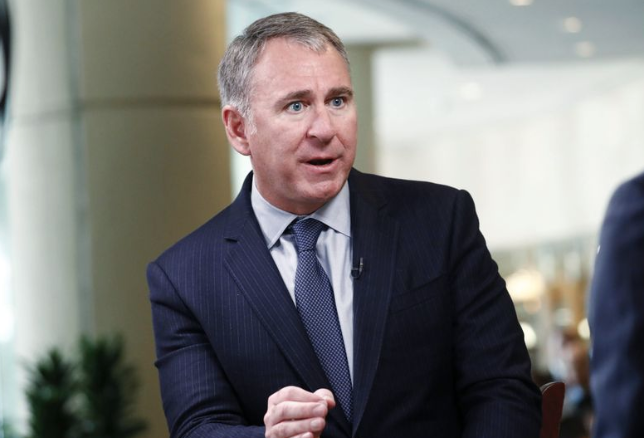
Ken Griffin has to pay for that 23,000 square foot, $238 million apartment in New York City he just bought somehow.

Perhaps that’s why Citadel Securities is now working vigilantly to secure more options order flow from institutional investors. And with major brokerage houses offering $0 commissions across the board now, order flow is most certainly for sale.

Griffin’s Citadel has put together a 7 person team tasked solely with trying to expand the company’s derivatives business. It launched the team in January and the company’s new venture buys and sells exchange traded options tied to stocks and indexes, according to Bloomberg

Citadel is already a major player in the industry, too. The firm claims it makes up for about a quarter of all options trading volume. Who knows what that number will advance to as Citadel’s move into options continues.

Former Deutsche Bank AG Managing Director David Silber, who heads up Citadel’s new team, said: “We are digging into every part of equity options execution and examining what we can do more efficiently to create a better experience for clients and improve market transparency.”

Photo: BBG

Citadel currently has over 1,200 institutional clients, but only 40 of them are “signed on” to trade equity options, according to Bloomberg. Citadel posted $3.5 billion in revenue in 2018 from making a market in stocks, treasuries and derivatives. 

And the company has been busy expanding in areas like global fixed income, currencies and commodities, as well. Bringing the company’s institutional clients into its new services has been a strategy that has proven to be successful for Griffin – he employed it with interest rate swaps in 2014. For currencies, the firms has been working closely with banks. 

It’s also a great time to be involved in options order flows, as trading of U.S. stock options, in volume, now nearly matches the volume of the underlying securities. It’s the highest option/underlying ratio in 14 years. 

Goldman Sachs wrote in a report this month: “This is a significant increase from 2016 when options volumes were only 30% of shares volumes.”

Silber concluded: “We have a strong track record of leveraging our core strengths in risk management, quantitative analytics and technology to improve execution quality and competition.” 


Tyler Durden

Fri, 02/28/2020 – 13:00

via ZeroHedge News https://ift.tt/2VuBDyX Tyler Durden

Could The Covid-19 Pandemic Collapse The U.S. Healthcare System?

Could The Covid-19 Pandemic Collapse The U.S. Healthcare System?

Authored by Charles Hugh Smith via OfTwoMinds blog,

Disregard these second-order effects at your own peril.

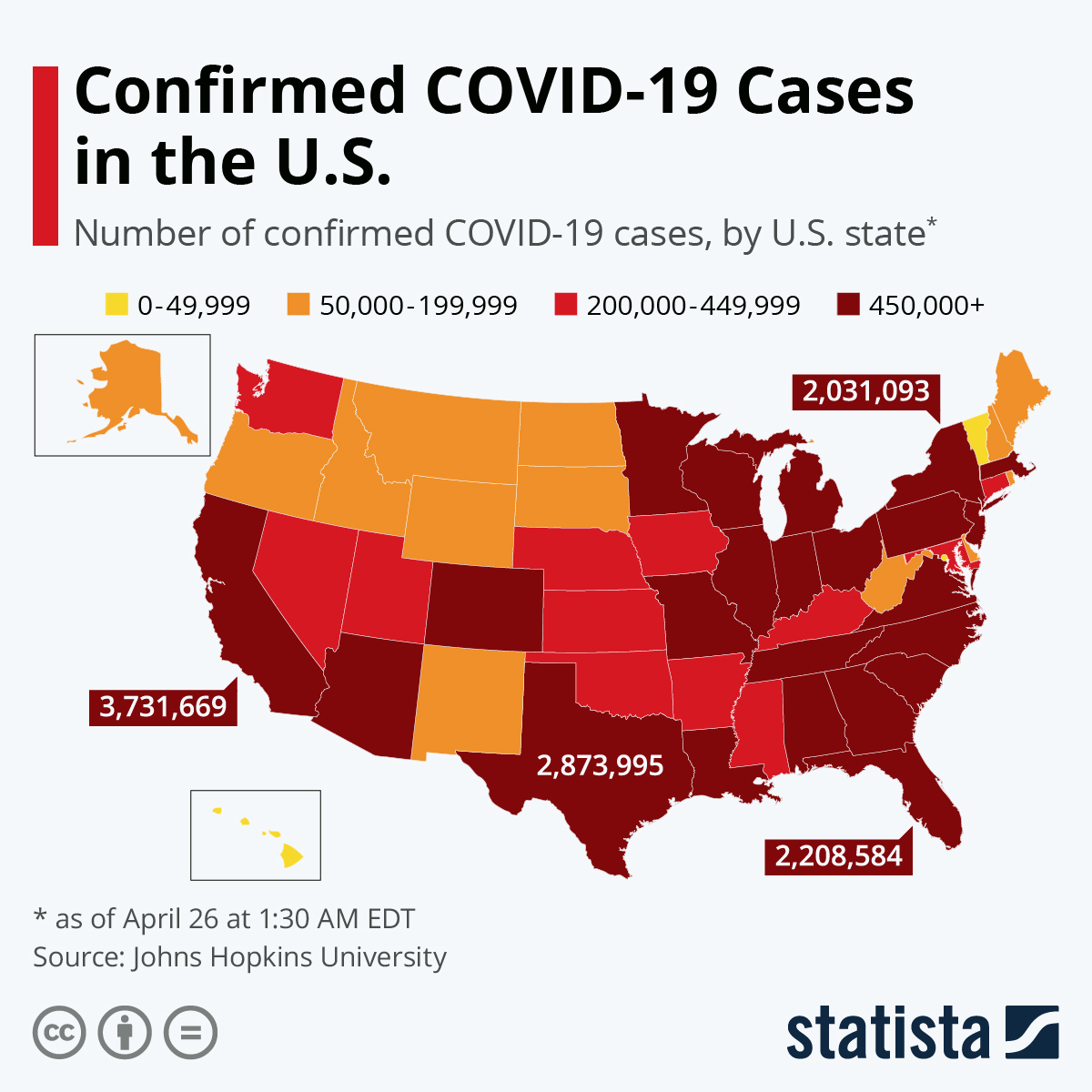
Infographic: Where COVID-19 Has Been Confirmed in the U.S. | Statista

You will find more infographics at Statista

A great many systems that are assumed to be robust are actually fragile. Exhibit #1 is the global financial system, of course, but Exhibit #2 may well be the healthcare system globally and in the U.S.

Observers have noted that the number of available beds in U.S. hospitals is modest compared to the potential demands of a pandemic, and others have wondered who will pay the astronomical bills that will be presented to those who are treated for severe cases of Covid-19, as the U.S. system routinely generates bills of $100,000 and up for a few days in a hospital. Costs of $250,000 or more per patient for weeks of intensive care treating Covid-19 cannot be dismissed as “impossible.”

Beyond the possibility that the logistics and costs of care will overwhelm the system, there are numerous and highly consequential second-order effects to consider. As you may recall from recent posts here: first order, every action has a consequence. Second order, every consequence has its own consequence.

Second-Order Effects: The Unexpectedly Slippery Path to Dow 10,000 January 31, 2020

Could the Coronavirus Epidemic Be the Tipping Point in the Supply Chain Leaving China? January 28, 2020

Second-order effects of the pandemic colliding with America’s dysfunctional healthcare system include:

1. People avoiding care because they can’t afford it. Academic studies have shown that high deductibles make patients reluctant to seek care, even when they need it.

This second-order effect will exacerbate the contagion and endanger those suffering from severe symptoms.

2. Potential shortages of medications due to an over-reliance on supply chains in China. The number of unknowns far exceeds the number of knowns in this situation, so complacent assumptions may be misplaced.

3. U.S. healthcare’s obsession with maximizing profits by any means available has transformed healthcare from a calling to just another burnout job in the Corporate America profit-maximizing grinder. A long time general practitioner (physician) recently explained the consequences of this transformation should the pandemic engulf the U.S.:

“The risk of wholesale healthcare system failure from a stress even a fraction of what is experienced in China is deeply, deeply under appreciated. The transition of medicine from calling to career is nearly complete– as is the removal of any mentors who might teach otherwise.

If Corona hit my community 20 years ago, at a time where all the administrators and most of the staff of our 200 bed hospital lived in town, my partners and would’ve sucked it up and did our best, even at the risk of our life. I’m not boasting or saying we’re heroes, it’s just that that was the way we were trained. White coats were only for the broadest shoulders. And you were taught that the risks of taking care of sick people was part of the deal.

Our patients were our neighbors. They counted on us. Such respect as we were given was due to the fact that we were their healthcare resource. The leadership and medical staff of the hospital would have done what we could to make it work. And yet here were a number of independent pharmacies and health supplies we could rely on if things got tough.

Then a combination of secondary effects and political influence purchased by deep pocketed competitors put most of the independent clinicians in an untenable place and all left or were absorbed.

Today, though the same organization owns the hospital, none of the management lives in town. Like most health systems, the owners are more is more interested in data collection and foot traffic than healthcare–and it shows. The inpatient doctors are all hospitalists who live far out of town. All the other docs in town now work for the same organization, but they haven’t been welcome in the hospital for years. Few of the nursing staff live nearby.

If a real pandemic hits, that hospital will well and truly fail–there’s no other word for it. Docs and nurses won’t show up. It’s not their friends or family or kid’s teacher or pastor at risk. While we wouldn’t have liked it, we would’ve risked our health for our community. These professionals are not going to risk their life for a job. The senior management will try to keep it together for the sake of their careers, but the next tier will quickly bag it. Again, it’s just a job. The corporate supply chain is so fragile and there are now so few community resources that the hospital as a care system will quickly break down.

As you have discussed, just because a thing is difficult to measure doesn’t mean it’s not important. The engagement of my partners and I with our community hospital was a critical loss–and that loss of ‘robustness’ won’t be fully understood until the system is stressed.

In my community at least, it won’t take much stress for the rot to be revealed.”

Disregard these second-order effects at your own peril. Just as unsustainable speculative bubbles burst, unsustainable systems break down once systemic stresses rise above very low levels.

My COVID-19 Pandemic Posts

*  *  *

My recent books:

Audiobook edition now available:
Will You Be Richer or Poorer?: Profit, Power, and AI in a Traumatized World ($13)
(Kindle $6.95, print $11.95) Read the first section for free (PDF).

Pathfinding our Destiny: Preventing the Final Fall of Our Democratic Republic ($6.95 (Kindle), $12 (print), $13.08 ( audiobook): Read the first section for free (PDF).

The Adventures of the Consulting Philosopher: The Disappearance of Drake $1.29 (Kindle), $8.95 (print); read the first chapters for free (PDF)

Money and Work Unchained $6.95 (Kindle), $15 (print) Read the first section for free (PDF).

*  *  *

If you found value in this content, please join me in seeking solutions by becoming a $1/month patron of my work via patreon.com.


Tyler Durden

Fri, 02/28/2020 – 12:40

via ZeroHedge News https://ift.tt/2Pw7OtO Tyler Durden

Angry Judge Orders Hunter Biden To Appear For Deposition In Child Support Case

Angry Judge Orders Hunter Biden To Appear For Deposition In Child Support Case

Hunter Biden must appear in Little Rock, Arkansas to give a deposition in his child support case, after a judge rejected his attempt to delay until after most of the key Democratic primary debates, according to the Arkansas Democrat-Gazette.

He needs to make himself available unless his hair is on fire,” said Circuit Court Judge Holly Meyer during a Wednesday conference call, denying Biden’s request to delay until April. Biden’s lawyer told the court this week that the former Ukrainian gas company board member was “too busy” to appear.

Biden has been ordered to show up on March 11 or March 12 to answer questions, said Meyer, while a pre-trial hearing is scheduled for March 13.

An April deposition would have meant the 50-year-old Biden’s potentially embarrassing appearance would have happened after several decisive state primaries – including next week’s Super Tuesday, in which his father will attempt to salvage his imperiled campaign.

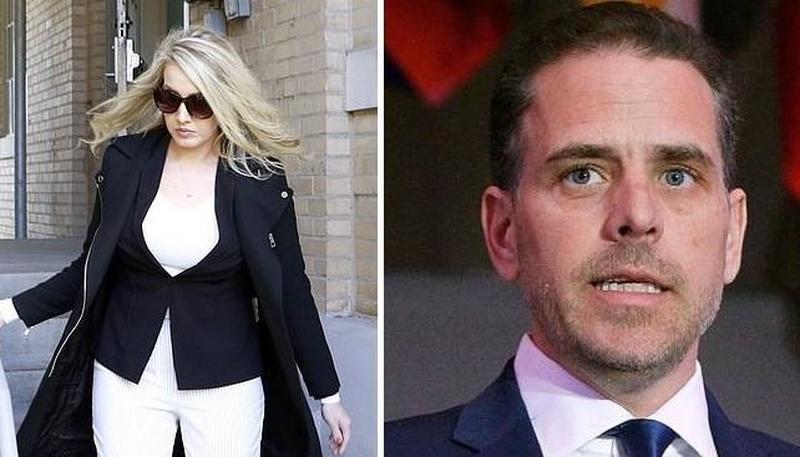
Hunter is being sued in the paternity case by former stripper Lunden Alexis Roberts, 28. The court determined last month that he was the father of the toddler identified as Baby Doe, after he claimed the child wasn’t his. 

“My client can be available April 1, 2020,” Biden’s lawyer Brett Langon told the court this week, adding “My client cannot be available prior to that date.”

Meyer shot back with some spice: “My questions to you is, why could your client not be available until after April 1?” she asked. “All the information I have is that he’s unemployed.”

It’s not good enough for him to just say, ‘I’m not available,’” she said. “I need to know why he’s not available or where he is or what could possibly be more important than what’s going in this case.


Tyler Durden

Fri, 02/28/2020 – 12:20

via ZeroHedge News https://ift.tt/2vqCcPt Tyler Durden