Don’t Sell Weapons to the UAE

The Pentagon

The proposed sale of F-35 stealth fighter jets and other weaponry to the United Arab Emirates has mainly drawn scrutiny for its potential effects on the new U.S.-brokered deal normalizing relations between the UAE and Israel. “We have a clear policy about maintaining our advantage and will protest any weaponry that might damage that advantage,” said Eli Cohen, Israel’s intelligence minister, shortly before the agreement was signed.

Cohen’s comments fueled fears of a Middle Eastern arms race should the sale go through. That possibility is troubling, but there’s a more immediate consequence to consider: The UAE is part of the U.S.-enabled, Saudi-led coalition intervening in Yemen’s civil war—and that coalition is responsible for the worst man-made humanitarian disaster in the world. Selling not merely arms but a whole weapons platform (with its implicit promise of additional future sales) to the UAE is a mistake. It does not contribute to U.S. security, and it risks further implicating our government in indefensible carelessness about civilian casualties.

Legal scholars already warn that Washington’s support for the Yemen intervention, which began during former President Barack Obama’s administration and has continued under President Donald Trump over broad congressional objection, could put U.S. officials at risk of war crime prosecution. The likelihood may seem low as the United States is not a party to the International Criminal Court (ICC), and the Trump administration has said it considers the ICC to have “no jurisdiction, no legitimacy, and no authority” where America is concerned. Still, as The New York Times reported, “some State Department officials who shepherd arms sales overseas are worried enough to consider retaining their own legal counsel and have discussed the possibility of being arrested while vacationing abroad.”

Though both the Obama and Trump administrations took some measures to mitigate harm to civilians, neither ended U.S. facilitation of coalition attacks, and Trump’s secretary of state, Mike Pompeo, resumed weapons sales to the UAE and Saudi Arabia after Congress blocked them for two years. Pompeo was able to bypass the congressional suspension with an emergency. Though subsequent internal review determined this move was legal, it found Pompeo’s State Department “did not fully assess risks and implement mitigation measures to reduce civilian casualties.” The declaration was also supposed to be a “one-time event,” in Pompeo’s words. A second emergency declaration to push through this UAE sale would make that a lie.

Most of the attention to the crisis in Yemen and the United States’ role therein has centered on the Saudi regime, whose air campaign has been responsible for high-profile airstrikes on civilian targets, like the school bus bombing (an attack conducted, incidentally, with an American bomb). But the “UAE served as the backbone of the coalition’s ground war in Yemen and was involved with allied Yemeni militias in running a series of secret torture facilities there,” notes the Center for International Policy’s William D. Hartung at The Washington Post. “It continues to arm, train, and pay the salaries of militias that have engaged in systematic human rights abuses.” Selling weapons to the UAE would again stamp all that brutality and extremism with American approval in contravention of everything the United States is supposed to represent.

But we do not have to make this sale. Like Saudi Arabia, the UAE is not a treaty ally of the United States. Its regime is oppressive at home and commits war crimes abroad. We do not owe the Emirati government this sale, nor does it make sense from any strategic or humanitarian perspective.

It will not make the United States safer, and it can only exacerbate the crisis in Yemen. It might even aid the Iran-linked Yemeni rebels Washington opposes, as past weapons transfers to the UAE have landed in the hands of extremist groups—those very rebels included. Though ostensibly a way to smooth the negotiating process, this sale could ultimately undermine the UAE-Israel deal while causing alarm among other regional powers, like Qatar. Arms race fears may prove justified, but even if they don’t, arming the UAE is no step toward peace.

from Latest – Reason.com https://ift.tt/346sa3z
via IFTTT

Third Parties: Barred From the Debates, Impacting Polls Only Marginally

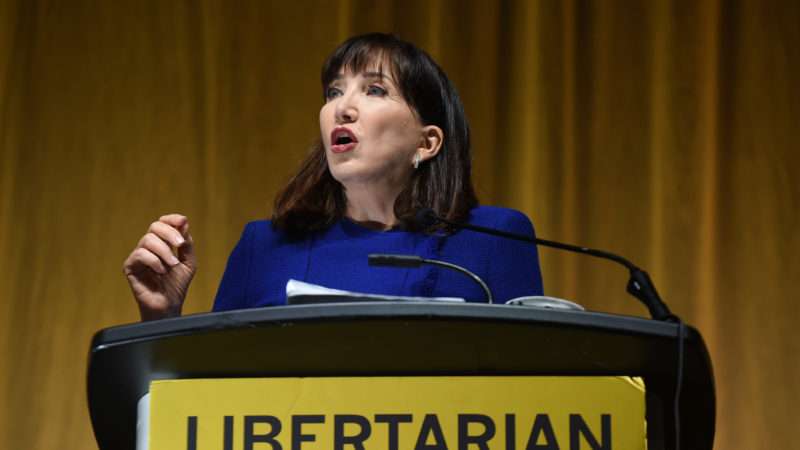
JoJorgensen

It’s late September in a presidential election year, just prior to the first debate, so that can mean only one thing: Any sign of third-party life must be extinguished, with prejudice.

“Green Party candidates in 2000 and 2016 fundamentally changed the course of the 21st century,” celebrity historian Douglas Brinkley warned the Associated Press, disregarding the work of serious journalists who have concluded the contrary from last cycle’s numbers. “Trump has a terrible electoral map right now. The math is leaning against him. A vital third-party candidate would likely help him tremendously.”

Presidentially, Two Parties Is Plenty,” declared the headline over a similarly fact-cavalier scolding by New York Times Op-Ed establishmentarian Gail Collins.

Luckily for the two-party enforcement squad, support for third parties in 2020 shows every sign of being drastically reduced. But is there polling evidence for the notion that the remaining nonconformists could, in Collins’ words, “screw things up for the person most voters would actually prefer in the real world”?

Not really, no. Over the past month, I count just nine polls that have asked the same set of respondents who they’d vote for with and without third-party and independent options. In three of those polls, the margin between Democratic nominee Joe Biden and Republican incumbent Donald Trump has remained the same. In four others, the margin changes by 1 lone percentage point (three pro-Biden, one pro-Trump). In one Kentucky survey, the inclusion of third parties extends Trump’s lead by 2 percentage points, and in one national poll, they decrease Biden’s advantage by 4.

Nine is a small number of polls, and the support for the Libertarian Party’s Jo Jorgensen and the Green Party’s Howie Hawkins is often lower than the margin of error, so one shouldn’t extrapolate overmuch from these results. But there are other ways of thinking about the question.

Third-party vote tallies after election day almost always undershoot preelection polls, by around one-third in normal years. There is ample reason to suspect that 2020 for third parties will resemble more the wipeout of the 2018 midterms rather than a typical cycle. With Jorgensen averaging around 2.8 percent nationally and Hawkins 1.3, that already small number of voters could still shrink further in a hurry.

Ah, but where will they go? This is how the above poll results can mislead. Late-deciding voters in 2016, like independents, disproportionately took a flyer on the outsider real estate mogul. As the Washington Post observed at the time, “The number of undecided and third-party-supporting voters who were still free agents in the final week was as many as 1 in 8 voters nationally—an uncharacteristically high number for the eve of an election.”

This year the number of undecideds is uncharacteristically low. As Ohio Northern University political scientist Robert Alexander recently told The Bulwark, “A number of polls in 2016 found that 13-15% were going into the last days of the election undecided or considering a third party. You just don’t see that this time around.”

Independents this time around prefer Biden by double digits. Voters who went third party in 2016 are backing the Democrat this year by even greater margins. Barring unforeseen circumstances in a race that has been unusually stable, it is hard to imagine that the combined 10 percent or so of current third-party and undecided voters will defect in large numbers at the last minute to the now-known incumbent.

The political air is thicker than ever with catastrophic claims that this election, damn it, will determine whether the republic can last, and so it doesn’t matter whether you even think that you live in a state whose presidential outcome is foreknown. Against that backdrop, here’s a thought for the Douglas Brinkleys and Gail Collinses of the world: Maybe the people who encounter your arguments 24 hours a day and still decide to vote Libertarian or Green are just…not Democrats or Republicans. Maybe the two parties need to do more than exist to earn votes.

from Latest – Reason.com https://ift.tt/30i2gc0
via IFTTT

Should You Be Able To Sue a Business for Exposing You to Coronavirus?

reason-mcconnell2

Negotiations over yet another coronavirus relief bill are picking up again. With them comes the possibility that Congress will pass legislation shielding businesses from civil lawsuits alleging they exposed consumers or workers to COVID-19.

Liability protections have long been a demand of the business community, which has said that, absent congressional action, a “litigation wave” could delay economic recovery.

Consumer advocates and Democrats are much more skeptical of liability protections, arguing that they would effectively allow businesses to get away with endangering the public.

In July, Sen. John Cornyn (R–Texas) introduced the Safeguarding America’s Frontline Employees To Offer Work Opportunities Required to Kickstart the Economy (SAFE TO WORK) Act. Under Cornyn’s bill, a plaintiff would have to show by “clear and convincing evidence” that a business was not making reasonable efforts to comply with the government’s coronavirus safety regulations and was engaged in gross negligence or willful misconduct.

Plaintiffs would also have to provide a factual basis for why they believed a particular business was responsible for exposing them to coronavirus, as well as a factual basis for why the other places and people the plaintiff visited or interacted with two weeks prior to experiencing symptoms were not the cause of their coronavirus-related injury.

Businesses that have written policy on mitigating the spread of coronavirus are presumed to have made reasonable efforts to comply with public health regulations unless plaintiffs can show they didn’t abide by their policy.

The bill also gives federal courts original jurisdiction over coronavirus-related lawsuits, allowing defendants to have lawsuits filed against them in state or tribal courts moved to U.S. District Courts.

The SAFE TO WORK Act also gives businesses protection from lawsuits and regulatory enforcement actions brought under labor and public accommodation laws, provided they are making good-faith efforts to comply with coronavirus safety regulations.

These are pretty sweeping legal protections for businesses. They’re also necessary protections, according to proponents of the law, given the risks that businesses face when reopening in the midst of the pandemic.

“As states gradually reopen their economies, frontline health care workers, small businesses, and schools face a second pandemic of frivolous lawsuits threatening to bankrupt them,” said Cornyn in a press release when his bill was introduced. “This legislation would protect those acting in good faith from being sued into oblivion while ensuring bad actors who willingly put their patients, employees, or customers in danger will still be held accountable.”

Remington Smith, an attorney with the progressive nonprofit advocacy group Public Citizen, counters that the standards set in the SAFE TO WORK Act are impossibly high for any plaintiffs to meet.

“They put in every single hurdle imaginable to try to prevent people from suing companies,” Smith tells Reason. 

He points specifically to the five-year liability shield the bill gives businesses, the onerous standards plaintiffs would have to meet showing they were exposed to coronavirus at a specific business, and giving original jurisdiction of coronavirus lawsuits to federal courts, which are viewed as friendlier to business.

For the industry, of course, imposing hurdles to lawsuits is the idea.

“Litigation is expensive. Many restaurants are closed,” Angelo Amador, a vice president with the National Restaurant Association, told Bloomberg Law back in June. “They can survive an inspection from [the Occupational Safety and Health Administration] OSHA or the department of health, but not all of them can survive expensive litigation. We want this liability threshold increased in order to stop lawsuits before they even happen.”

There’s a conceivable libertarian argument against coronavirus liability protections for businesses. On an individual level, lawsuits allow injured parties to vindicate their rights and receive compensation. Systemically, that system of liability would encourage businesses to do everything in their power to mitigate the spread of coronavirus without the need for uniform, micromanaging regulations.

Smith argues that the Trump administration’s deregulatory approach combined with the SAFE TO WORK Act’s liability protections means businesses have no incentive to try to protect customers and workers from infection.

“Our system is based on two pillars. The first is government enforcement, and the second pillar is the ability to hold people accountable in court,” he says. “If you remove the first pillar, and then you remove the second pillar, there is absolutely nothing to hold businesses accountable for doing the right thing and keeping people safe.”

It’s true that the federal government has issued few binding coronavirus regulations for businesses. States and localities, on the other hand, have not been shy about imposing detailed, onerous regulations on what kinds of businesses can open, and the safety protocols they must follow.

A third way between regulation and litigation, says Walter Olson, a legal expert with the Cato Institute, would be to allow for a system of contracts to sort out coronavirus liability.

“The answer to the uncertainty about who pays if you catch it at a movie theater or a restaurant,” would be for businesses to have customers sign waivers relinquishing their right to sue before they could eat their meal or watch a film, notes Olson.

Individuals would set their own standards for how much risk they want to assume when choosing which businesses to patronize. Firms would be left to balance the benefits of virus mitigation measures which would likely attract customers versus the costs of implementing those measures.

Protecting their brand and consumer goodwill would also motivate businesses to create safer environments, argues Olson.

“Whichever is the first theatre chain or whichever is the first chain of restaurants to be associated with an outbreak…that’s going to cost millions and millions of bad publicity, regardless of whether anyone sees a dime in litigation,” he says.

Over the past several decades, courts have become less willing to uphold liability waivers, however, Olson says. State legislation creating liability protections for businesses, he says, is a roundabout way of creating something close to what a system of contracts would look like.

According to an early August analysis from law firm Holland & Knight, nearly a dozen states have passed legislation offering businesses liability protection from coronavirus-related civil lawsuits. Several others have passed more targeted liability bills protecting healthcare workers or other specific professions from civil suits.

Business interests and Republican elected officials, including state officials, have instead endorsed the predictability and protection that would come with the minimum level of federal liability protection provided by the SAFE TO WORK Act. (The bill explicitly allows states to establish stricter liability protections of their own.)

The U.S. Chamber of Commerce, alongside a large coalition of business associations, has also endorsed the SAFE TO WORK Act. And in August, 22 Republican state attorneys general signed a letter endorsing the bill, writing that “states across the country have taken steps to address the need for timely, targeted and temporary civil liability protections in light of the pandemic, but the need for a uniform national baseline of liability protection still exists.”

Trying to provide liability protection on the national level, however, raises all sorts of constitutional red flags, argues Olson. Federalism gives state courts and state legislatures the primary power to hash out liability standards for civil lawsuits. “The federal government does not have carte blanche to second-guess the outcomes of state courts,” he says.

Lawsuits involving the wrongful death of employees have already been filed against large corporations including Safeway, Walmart, and Tyson Foods. A COVID-19 complaint tracker put out by the law firm Hunton Andrews Kurth finds that only about 20 lawsuits from consumers alleging personal injury from being exposed to coronavirus in a public establishment have been filed so far. A similar number have been filed by employees alleging unsafe working conditions.

Both Senate Republicans and the bipartisan, moderate Problem Solvers Caucus have included liability protections in their relief proposals. Democrats have voted down one Republican proposal that contained them, however that rejection was largely based on the (supposedly insufficient) size of the GOP bill.

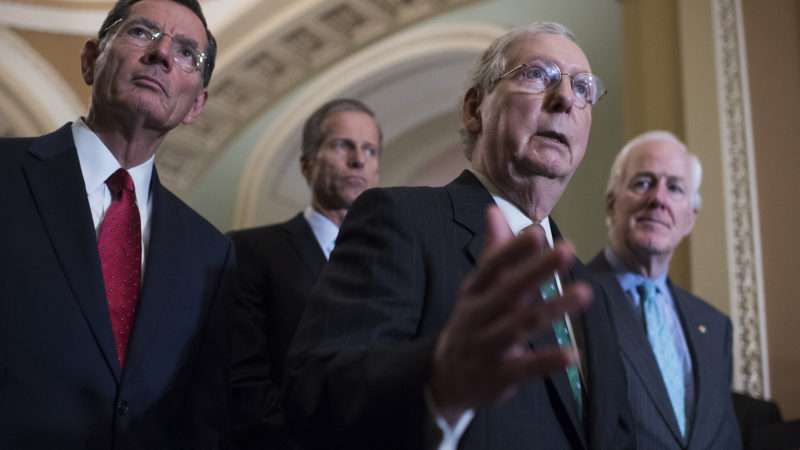
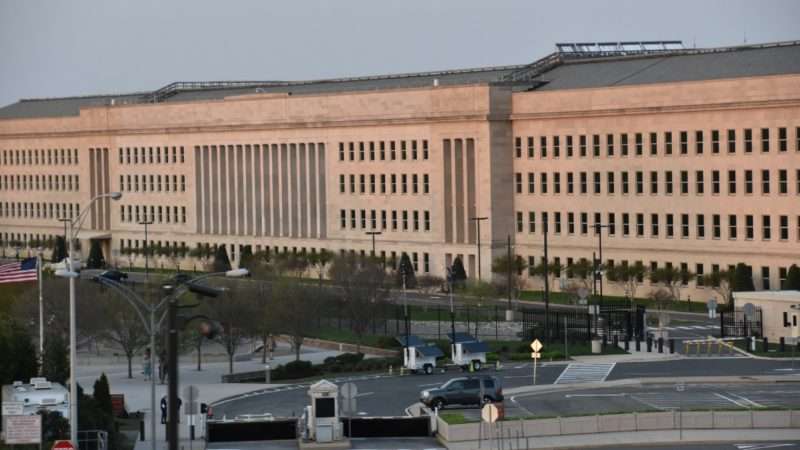
Senate Majority Leader Mitch McConnell has said liability protection is a non-negotiable item that must be included in any future relief package. With renewed wrangling over another relief bill beginning, we’ll see if he gets his way.

from Latest – Reason.com https://ift.tt/30jVlil
via IFTTT
Should You Be Able To Sue a Business for Exposing You to Coronavirus?

reason-mcconnell2

Negotiations over yet another coronavirus relief bill are picking up again. With them comes the possibility that Congress will pass legislation shielding businesses from civil lawsuits alleging they exposed consumers or workers to COVID-19.

Liability protections have long been a demand of the business community, which has said that, absent congressional action, a “litigation wave” could delay economic recovery.

Consumer advocates and Democrats are much more skeptical of liability protections, arguing that they would effectively allow businesses to get away with endangering the public.

In July, Sen. John Cornyn (R–Texas) introduced the Safeguarding America’s Frontline Employees To Offer Work Opportunities Required to Kickstart the Economy (SAFE TO WORK) Act. Under Cornyn’s bill, a plaintiff would have to show by “clear and convincing evidence” that a business was not making reasonable efforts to comply with the government’s coronavirus safety regulations and was engaged in gross negligence or willful misconduct.

Plaintiffs would also have to provide a factual basis for why they believed a particular business was responsible for exposing them to coronavirus, as well as a factual basis for why the other places and people the plaintiff visited or interacted with two weeks prior to experiencing symptoms were not the cause of their coronavirus-related injury.

Businesses that have written policy on mitigating the spread of coronavirus are presumed to have made reasonable efforts to comply with public health regulations unless plaintiffs can show they didn’t abide by their policy.

The bill also gives federal courts original jurisdiction over coronavirus-related lawsuits, allowing defendants to have lawsuits filed against them in state or tribal courts moved to U.S. District Courts.

The SAFE TO WORK Act also gives businesses protection from lawsuits and regulatory enforcement actions brought under labor and public accommodation laws, provided they are making good-faith efforts to comply with coronavirus safety regulations.

These are pretty sweeping legal protections for businesses. They’re also necessary protections, according to proponents of the law, given the risks that businesses face when reopening in the midst of the pandemic.

“As states gradually reopen their economies, frontline health care workers, small businesses, and schools face a second pandemic of frivolous lawsuits threatening to bankrupt them,” said Cornyn in a press release when his bill was introduced. “This legislation would protect those acting in good faith from being sued into oblivion while ensuring bad actors who willingly put their patients, employees, or customers in danger will still be held accountable.”

Remington Smith, an attorney with the progressive nonprofit advocacy group Public Citizen, counters that the standards set in the SAFE TO WORK Act are impossibly high for any plaintiffs to meet.

“They put in every single hurdle imaginable to try to prevent people from suing companies,” Smith tells Reason. 

He points specifically to the five-year liability shield the bill gives businesses, the onerous standards plaintiffs would have to meet showing they were exposed to coronavirus at a specific business, and giving original jurisdiction of coronavirus lawsuits to federal courts, which are viewed as friendlier to business.

For the industry, of course, imposing hurdles to lawsuits is the idea.

“Litigation is expensive. Many restaurants are closed,” Angelo Amador, a vice president with the National Restaurant Association, told Bloomberg Law back in June. “They can survive an inspection from [the Occupational Safety and Health Administration] OSHA or the department of health, but not all of them can survive expensive litigation. We want this liability threshold increased in order to stop lawsuits before they even happen.”

There’s a conceivable libertarian argument against coronavirus liability protections for businesses. On an individual level, lawsuits allow injured parties to vindicate their rights and receive compensation. Systemically, that system of liability would encourage businesses to do everything in their power to mitigate the spread of coronavirus without the need for uniform, micromanaging regulations.

Smith argues that the Trump administration’s deregulatory approach combined with the SAFE TO WORK Act’s liability protections means businesses have no incentive to try to protect customers and workers from infection.

“Our system is based on two pillars. The first is government enforcement, and the second pillar is the ability to hold people accountable in court,” he says. “If you remove the first pillar, and then you remove the second pillar, there is absolutely nothing to hold businesses accountable for doing the right thing and keeping people safe.”

It’s true that the federal government has issued few binding coronavirus regulations for businesses. States and localities, on the other hand, have not been shy about imposing detailed, onerous regulations on what kinds of businesses can open, and the safety protocols they must follow.

A third way between regulation and litigation, says Walter Olson, a legal expert with the Cato Institute, would be to allow for a system of contracts to sort out coronavirus liability.

“The answer to the uncertainty about who pays if you catch it at a movie theater or a restaurant,” would be for businesses to have customers sign waivers relinquishing their right to sue before they could eat their meal or watch a film, notes Olson.

Individuals would set their own standards for how much risk they want to assume when choosing which businesses to patronize. Firms would be left to balance the benefits of virus mitigation measures which would likely attract customers versus the costs of implementing those measures.

Protecting their brand and consumer goodwill would also motivate businesses to create safer environments, argues Olson.

“Whichever is the first theatre chain or whichever is the first chain of restaurants to be associated with an outbreak…that’s going to cost millions and millions of bad publicity, regardless of whether anyone sees a dime in litigation,” he says.

Over the past several decades, courts have become less willing to uphold liability waivers, however, Olson says. State legislation creating liability protections for businesses, he says, is a roundabout way of creating something close to what a system of contracts would look like.

According to an early August analysis from law firm Holland & Knight, nearly a dozen states have passed legislation offering businesses liability protection from coronavirus-related civil lawsuits. Several others have passed more targeted liability bills protecting healthcare workers or other specific professions from civil suits.

Business interests and Republican elected officials, including state officials, have instead endorsed the predictability and protection that would come with the minimum level of federal liability protection provided by the SAFE TO WORK Act. (The bill explicitly allows states to establish stricter liability protections of their own.)

The U.S. Chamber of Commerce, alongside a large coalition of business associations, has also endorsed the SAFE TO WORK Act. And in August, 22 Republican state attorneys general signed a letter endorsing the bill, writing that “states across the country have taken steps to address the need for timely, targeted and temporary civil liability protections in light of the pandemic, but the need for a uniform national baseline of liability protection still exists.”

Trying to provide liability protection on the national level, however, raises all sorts of constitutional red flags, argues Olson. Federalism gives state courts and state legislatures the primary power to hash out liability standards for civil lawsuits. “The federal government does not have carte blanche to second-guess the outcomes of state courts,” he says.

Lawsuits involving the wrongful death of employees have already been filed against large corporations including Safeway, Walmart, and Tyson Foods. A COVID-19 complaint tracker put out by the law firm Hunton Andrews Kurth finds that only about 20 lawsuits from consumers alleging personal injury from being exposed to coronavirus in a public establishment have been filed so far. A similar number have been filed by employees alleging unsafe working conditions.

Both Senate Republicans and the bipartisan, moderate Problem Solvers Caucus have included liability protections in their relief proposals. Democrats have voted down one Republican proposal that contained them, however that rejection was largely based on the (supposedly insufficient) size of the GOP bill.

Senate Majority Leader Mitch McConnell has said liability protection is a non-negotiable item that must be included in any future relief package. With renewed wrangling over another relief bill beginning, we’ll see if he gets his way.

from Latest – Reason.com https://ift.tt/30jVlil
via IFTTT
Satire or Not?

That’s my question about USA Today’s Fact check: Satirical claim that the 9th Circuit Court of Appeals overturned Ginsburg’s death:

The claim: The 9th Circuit Court of Appeals overturned the death of Supreme Court Justice Ruth Bader Ginsburg

The headline of an article published by satire website The Babylon Bee is a nod to the contentious history between the Trump administration and the U.S. Court of Appeals for the 9th Circuit. The Babylon Bee is “the world’s best satire site,” according to its website.

Supreme Court Justice Ruth Bader Ginsburg, who died of metastatic pancreatic cancer Sept. 18, is actually “alive,” the article suggests, because the 9th Circuit overturned her death….

Our rating: Satire

We rate this claim SATIRE, based on our research. A satirical article about the 9th Circuit “overturning” Supreme Court Justice Ruth Bader Ginsburg’s death has no basis in fact. It is true that the 9th Circuit has ruled against many Trump-era policies.

Other possible explanations for the USA Today piece: (1) Sabotage by secret enemy of USA Today. (2) Attempt to provide the Babylon Bee with free publicity, and with a straight man. (3) Actual outright product placement on the Babylon Bee’s part; maybe they have a budget for that. (4) ???

from Latest – Reason.com https://ift.tt/2GjL5Q2
via IFTTT

Satire or Not?

That’s my question about USA Today’s Fact check: Satirical claim that the 9th Circuit Court of Appeals overturned Ginsburg’s death:

The claim: The 9th Circuit Court of Appeals overturned the death of Supreme Court Justice Ruth Bader Ginsburg

The headline of an article published by satire website The Babylon Bee is a nod to the contentious history between the Trump administration and the U.S. Court of Appeals for the 9th Circuit. The Babylon Bee is “the world’s best satire site,” according to its website.

Supreme Court Justice Ruth Bader Ginsburg, who died of metastatic pancreatic cancer Sept. 18, is actually “alive,” the article suggests, because the 9th Circuit overturned her death….

Our rating: Satire

We rate this claim SATIRE, based on our research. A satirical article about the 9th Circuit “overturning” Supreme Court Justice Ruth Bader Ginsburg’s death has no basis in fact. It is true that the 9th Circuit has ruled against many Trump-era policies.

Other possible explanations for the USA Today piece: (1) Sabotage by secret enemy of USA Today. (2) Attempt to provide the Babylon Bee with free publicity, and with a straight man. (3) Actual outright product placement on the Babylon Bee’s part; maybe they have a budget for that. (4) ???

from Latest – Reason.com https://ift.tt/2GjL5Q2
via IFTTT

Tesla’s Nevada Gigafactory Has The County’s Highest COVID-19 Case-Count Since June

Tesla’s Nevada Gigafactory Has The County’s Highest COVID-19 Case-Count Since June

Tyler Durden

Tue, 09/29/2020 – 11:15

One of the biggest stories of 2020 for Tesla was the company’s constant ongoing battle with Alameda County, California, about its ability to re-open during the midst of the Covid-19 pandemic.

Tesla CEO Elon Musk famously went to war with what seemed like the entire state of California when he sought to re-open Tesla’s Fremont production facility, despite local regulations requiring otherwise. Musk threw a temper tantrum and threatened to move Tesla to California before the incident started to blow over.

Now, Tesla’s Nevada Gigafactory is being called into question, with the Reno Gazette Journal reporting that the job site has the highest number of Washoe County coronavirus cases since June. The Gigafactory beat out many of the largest casinos in Reno and Sparks – and Saint Mary’s Regional Hospital and the VA Hospital. 

The Gigafactory reported 117 cases, more than 5 times the local hospital and 6 times what the local VA hospital reported. The number of Washoe County coronavirus cases since June, listed by workplace, were as follows:

  • Gigafactory: 117
  • Renown: 104
  • Walmart: 41
  • UNR: 32
  • UPS: 27
  • Atlantis: 26
  • Peppermill: 26
  • Grand Sierra Resort: 25
  • Washoe County School District: 25
  • Silver Legacy: 24
  • Saint Mary’s Regional Medical Center: 22
  • Walkenhorst: 18
  • World Pack: 18
  • VA Hospital: 17


County spokesman Scott Oxarart said: “This data shows that COVID-19 is still prevalent in our community. People are frequenting places while infectious and are making it possible for future transmission. It’s important to remember that if you’re showing symptoms like fever, shortness of breath, coughing, or even symptoms such as sore throat, headaches, upset stomach, you should stay home and only go out to get a COVID-19 test or receive medical treatment.”

Back in July we noted that over 15% of Tesla employees had been affected by Covid after the company’s early re-opening. 

Weeks prior to that we had reported that Tesla’s head of safety was claiming that Covid-19 transmission weren’t taking place inside of the company’s Fremont factory and claimed that Tesla has “had zero COVID-19 workplace transmissions,” since restarting operations at Fremont in May. In other words, Tesla was blaming the transmission on what employees were doing outside of the workplace.

Now, in Nevada at least, that doesn’t look like the case.

In June, Governor Steve Sisolak had requested that individual counties begin compiling data on Covid-19 cases spreading within workplaces. He has said he wants to be more targeted in his approach to slowing the spread.

So, Steve, when do you shut down the Gigafactory?

via ZeroHedge News https://ift.tt/33cj2Lf Tyler Durden

NASA Doubles Down On Nuclear Fusion Ambitions

NASA Doubles Down On Nuclear Fusion Ambitions

Tyler Durden

Tue, 09/29/2020 – 10:58

Authored by Jon LeSage via OilPrice.com,

Energy analysts tend to agree that nuclear fusion will have to replace fission at power plants to bring back more support for nuclear as a clean energy source. The challenge here will be speeding up the development process and cutting down the huge costs for bringing fusion online as climate change mandates approach. A NASA research project may offer a pathway to making nuclear fusion commercial.

The space agency has been releasing results from testing “lattice confinement,” which could transform production scale and bring costs way down for much-anticipated nuclear fusion energy. It may be able to remove, or at least reduce, a key barrier that has kept fusion years away from being deployed. 

NASA’s lattice confinement method allows fusion-level kinetic energy to come together at room temperatures. Conditions sufficient for fusion are created within the metal lattice that’s held at ambient temperature. The metal lattice is loaded with deuterium fuel, and through the new lattice confinement method, it creates an energetic environment inside the lattice where atoms can gain equivalent fusion-level kinetic energies. 

One of the clear differences with magnetic fusion reaction — which is the main methodology gaining support in the fusion community — is that it’s dramatically more dense, which is how the reaction is triggered. A metal such as erbium can be loaded with deuterium atoms, packing the fuel a billion times denser than magnetic confinement (tokamak) fusion reactors. The new method ‘heats’ or accelerates deuterons sufficiently that when colliding with a neighboring deuteron, it causes D-D (deuterium-deuterium) fusion reactions. 

Lattice confinement fusion was reported earlier this year by a team of scientists based at NASA’s Glenn Research Center in Cleveland.

Most of the intensive nuclear r&d projects, such as the world’s largest ITER tokamak project in France, are based on using a magnetic fusion reaction. This method creates extraordinary heat used to combat atoms’ natural reaction forces and keep them confined in a plasma together. 

The plasma won’t even be ready in France until 2025, but another project underway in the UK could support ITER tokamak and speed up the process. The UK project was put on hold 23 years ago, but is getting ready to start up again in 2021. The ITER project is still under construction in the South of France. It’s a collaboration between 35 nations, decades in the making, claiming that they will achieve first plasma by 2025, and commercial nuclear fusion could follow right behind.

The race is on to be the first technology to clear safety standards and bring long-awaited nuclear fusion plants online — offering countries clean energy from a safe, efficient source.

It has advantages over renewable energy, led by wind and solar, offering utilities consistent, steady clean power that can overcome the impact of intermittent weather conditions affecting renewables. The smoke-intensive brush fires taking place in the western US recently showed the vulnerability of solar that needs clear, sunny skies to maximize energy generation. 

One of the competitors is dense plasma focus (DPF), which is being developed by LPPFusion, the working name of Middlesex, NJ-based Lawrenceville Plasma Physics, Inc. It could be a direct competitor with NASA’s lattice confinement method, and also promises a much faster and economically feasible strategy for taking fusion to the commercial level.

ITER and other reactor projects have been utilizing large-scale experimental facilities than DPF would need. That would take away costly systems such as ultra-high power lasers and microwave generators, particle beams, giant superconducting magnet systems, and other advanced technologies. Going this route also means that the testing phase will last several years longer than the new innovative technologies may provide.  

The cost has been quite high for fusion development. France’s ITER so far has had an estimated cost of over $40 billion. 

NASA’s interest in nuclear fusion has to do with its future strategy of traveling to Mars and other planets through its commercial partner alliances. Nuclear power could be the energy source offering much greater power and efficiency than rocket fuel. The agency is also interested in conducting mining and testing operations on planets and asteroids to extract water, metals, and minerals. 

Nuclear fusion could be the energy source opening up NASA’s potential for greater space exploration along with partners such as SpaceX, Boeing, and Blue Origin.

via ZeroHedge News https://ift.tt/3429hys Tyler Durden

Trump Campaign Releases “17 Questions Joe Biden Must Answer In The Debate”

Trump Campaign Releases “17 Questions Joe Biden Must Answer In The Debate”

Tyler Durden

Tue, 09/29/2020 – 10:40

If you were looking for a list of things President Trump is likely to hammer Joe Biden over during tonight’s debate, his campaign has published a list of 17 questions that “Joe Biden must answer in the debate.

They range from the $3.5 million wire transfer Hunter Biden received from a Russian billionaire who was married to the former mayor of Moscow, to Biden claiming he “got started” at Delaware State – a historically black college that says he never attended, to Supreme Court nominees and court-packing.

See the full list below:

  1. Your son Hunter Biden received a $3.5 million wire transfer from a Russian billionaire who was married to the former mayor of Moscow. He also had a joint bank account with a Chinese national that financed $100,000 in credit card purchases around the world. This all happened while you were Vice President. Why would people connected to the Russian and Chinese governments want to give your son millions of dollars?
     
  2. You recently said you “got started” at Delaware State University, an HBCU. The school says they have no record of you ever attending. What did you major in there?
     
  3. In June you said you were vetting your own potential Supreme Court picks and promised you would release your own list. Now you say you won’t release a list. Why go back on your pledge?
     
  4. Your running mate Kamala Harris said last year that she was open to adding as many as 4 seats to the Supreme Court. Now more leading Democrats are saying your party should pack the Supreme Court if they get the chance. Are you refusing to answer whether you will go along with this radical plan because you are too weak to stand up to it?
     
  5. In January 2017, you said that Democrats should not block President Trump’s nominees for the Supreme Court. You said you believe the Constitution “requires” the Senate “to give the nominee a hearing and a vote.” In 2016 you said “would go forward with the confirmation process” of a Supreme Court nominee “even a few months before a presidential election … just as the Constitution requires.” Now you say the Constitution requires the exact opposite. How do you reconcile that change?
     
  6. In 2008 you promised Americans that if they made less than $250,000 they would not pay a penny more in taxes. You broke that promise and imposed new taxes that directly impacted middle-class Americans. Now you’re claiming you won’t raise taxes on anyone making more than 400,000. Why should voters believe you now, especially since you’ve said you will reinstate the individual mandate tax?
     
  7. As Vice President, you oversaw the weakest economic recovery since the Great Depression. What would you do differently if you were elected?
     
  8. Your plan would raise the U.S. business tax rate higher than China’s rate. Won’t that make it more expensive for companies to do business in America and ultimately send jobs overseas?
     
  9. President Trump imposed restrictions on travel from China on January 31 to combat the spread of the coronavirus. Why did it take you two months to say you supported that decision?
     
  10. In 2008 you and Barack Obama promised to fully fund the federal COPS program, which provides resources to local law enforcement. But funding for this program was cut while you were vice president, despite your promise. Why did you fail to keep your word?
     
  11. Earlier this year your campaign staff donated money to the Minnesota Freedom Fund, an organization that bailed out of a jail a rioter who shot at police officers and other violent criminals and sexual predators. Your running mate Kamala Harris also urged people to donate to that organization and is still raising money for it. Do you condone that?
     
  12. You say if you’re elected you’ll push to give citizenship to the 11 million undocumented people in our country. Why do you believe they should receive Medicare and Social Security benefits?
     
  13. When you were running for president in 2007, both you and Obama pledged to renegotiate NAFTA, a promise you did not keep when you were in office. You recently blamed Republicans for this, saying they wouldn’t go along with it, but Democrats controlled Congress in 2009 when the Obama Administration announced it would not even try to change NAFTA. So why did you fail to keep your word?
     
  14. When you voted to give China “most favored nation” trade status in 2000, you said you did not foresee “the collapse of the American manufacturing economy” because of it. But by one estimate, it led to the loss of 1 million manufacturing jobs in the U.S. Do you acknowledge that your vote to give China most favored nation trade status was a mistake that hurt American workers?
     
  15. The 2009 H1N1 swine flu pandemic infected 60 million Americans when you were VP, and the federal government depleted its strategic stockpile of N95 masks in response. A fact check by USA Today found that your administration made no effort to replenish the stockpile of masks, despite warnings from experts. Do you accept responsibility for that failure, which left America unprepared for another pandemic?
     
  16. Your campaign says it is a “lie” that “the Biden-Harris ticket is the most radically pro-abortion” ticket “in U.S. history.” Are there any restrictions on abortion that you support, and if so, please be specific?  
     
  17. You said the N-word 13 times during a 1985 Senate nomination fight, when you were quoting something attributed to someone else. Do you think that was appropriate to do? Is that the only time you’ve said the N-word?

via ZeroHedge News https://ift.tt/34b7KX0 Tyler Durden

Turkey Rejects Armenian Defense Ministry Claim Its Jet Shot Down By Turkish F-16

Turkey Rejects Armenian Defense Ministry Claim Its Jet Shot Down By Turkish F-16

Tyler Durden

Tue, 09/29/2020 – 10:26

Turkey’s Defense Ministry has vehemently denied its F-16 fighter shot down an Armenian SU-25 fighter, as claimed earlier by the Armenian Defense Ministry.

Armenia’s Ministry of Defense (MoD) had earlier issued a shock announcement signaling massive escalation and alleged intervention by Turkey. The MoD had claimed Turkey’s F-16 shot down an Armenian Sukhoi Su-25 from Azerbaijni territory in support of Azeri forces.

A spokesman for Erdogan subsequently called reports that Turkey shot down an Armenian fighter jet “absolutely not true,” according to Bloomberg.

Turkish F-16 file, via Daily Sabah

But the allegation and initial claim out of Yerevan was still enough to momentarily send the Turkish lira crashing on the news to a new record low, already from previous historic lows this week.

“Armenia should withdraw from territories under its occupation instead of resorting to these cheap propaganda tricks,” the Turkish presidency’s office said.

Azerbaijan’s Defense Ministry also denied that any warplanes were shot down, according to RIA.

And further, as BBC reports, “Azerbaijan has repeatedly stated that its air force does not have F-16 fighter jets. However, Turkey does.”

via ZeroHedge News https://ift.tt/2HGelkO Tyler Durden