Bo Burnham: Inside


minisBoBurnham

It’s technically a Netflix comedy special. But Inside is far more unsettling than any true crime show. Bo Burnham’s latest foray into millennial musical comedy chronicles his crack-up over the course of a COVID year alone via punishingly catchy earworms.

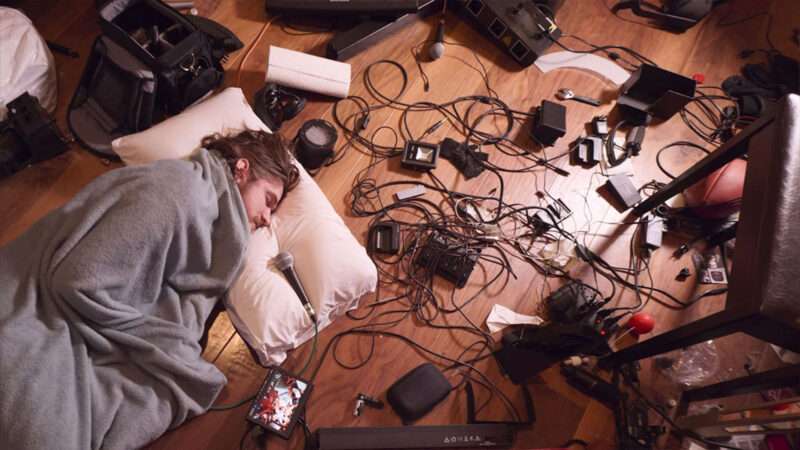
There’s one part where a puppet made of a sweatsock delivers an indictment of neoliberalism, only to be cowed by a genuinely unsettling threat of violence. There’s a moving passage about death in a song devoted mostly to mocking the consumerist clichés of white women’s Instagrams. Burnham turns 30 on camera and then sings about it in his underwear. Yeah, it’s weird.

The humor is omphaloskeptic. The politics are derivative. The aesthetics are low-budget. But Inside is also a compelling, coherent work of art about how utterly confused, extremely online, and grindingly lonely the last year and a half felt.

from Latest – Reason.com https://ift.tt/3gXJbnE
via IFTTT

“The End Of Abenomics” – Japan’s Struggling Prime Minister Suga Unexpectedly Steps Down

“The End Of Abenomics” – Japan’s Struggling Prime Minister Suga Unexpectedly Steps Down

Japan’s original doom loop – rotating prime ministers who stay on the job for about a year only to resign and leave the country in even worse shape – is back.

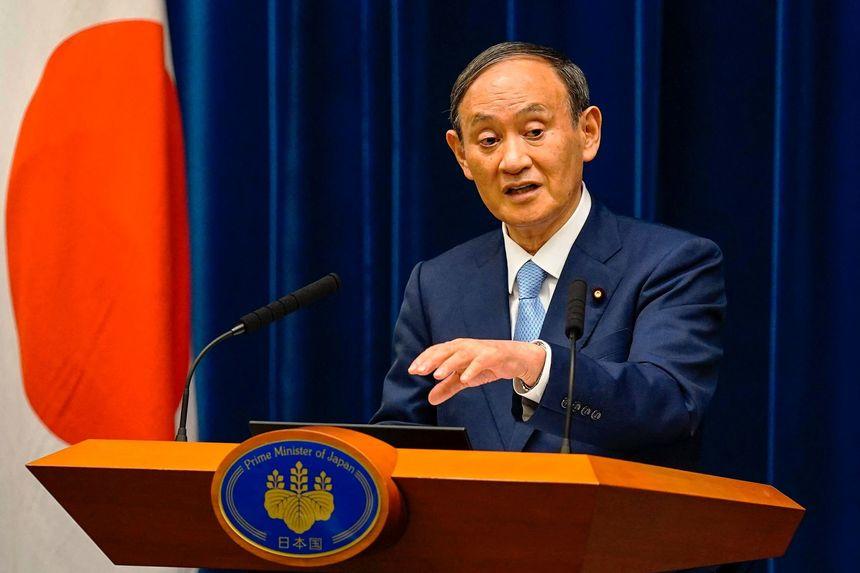
Less than a year after he was appointed to replace Shinzo Abe, Japanese Prime Minister Yoshihide Suga said in a surprise move on Friday he would step down, setting the stage for a new premier after a one-year tenure marred by an dismal and unpopular Covid response and sinking public support. Suga, who took over after Shinzo Abe – who resigned last September for the second time as prime minister citing ill health although this time it wasn’t diarrhea, unlike the reason cited for his first departure – had seen his approval ratings drop below 30% as the nation struggled with its worst wave of covid infections ahead of a general election this year (despite mandatory masks).
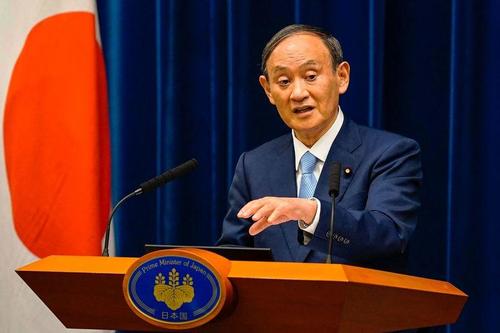
“I want to focus on coronavirus response, so I told the LDP executive meeting that I’ve decided not to run in the party leadership race,” Suga told reporters. “I judged that I cannot juggle both and I should concentrate on either of them.”

Suga did not capitalize on his last major “achievement” – hosting the Olympics, which were postponed months before he took office as coronavirus cases surged, and which proved to be highly unpopular with the population, merely saddling Japan with even more debt.

His decision not to seek reelection as ruling Liberal Democratic Party (LDP) president this month means the party will choose a new leader, who will become prime minister.

While there was no clear frontrunner, the popular minister in charge of Japan’s vaccination rollout, Taro Kono, intends to run, broadcaster TBS said on Friday without citing sources. Former foreign minister Fumio Kishida has already thrown his hat in the ring. Before Abe’s record eight-year tenure, the country had gone through six prime ministers in as many years, including Abe’s own troubled first one-year term.

Succession

Declaring himself a contender for Japan’s next leader, Kishida, a soft-spoken Hiroshima lawmaker, on Thursday criticised Suga’s coronavirus response and urged a stimulus package to combat the pandemic.

“Kishida is the top runner for the time being but that doesn’t mean his victory is assured,” said Koichi Nakano, political science professor at Sophia University. Nakano said Kono, Suga’s administrative reform minister, could run if he gets the backing of his faction leader in the party, Finance Minister Taro Aso.

Former defense minister Shigeru Ishiba, also popular with the public as a potential premier, said he was ready to run if the conditions and environment are right. He was a rare LDP critic of Abe during his time as prime minister.

Kono has led Japan’s rocky inoculation drive but remains high on the list of lawmakers voters want to see succeed Suga. Kono did not deny media reports but stopped short of declaring his candidacy, telling reporters he wanted to carefully consult with party colleagues first.

A former foreign and defense minister, Kono, 58, is popular with younger voters after building support through Twitter, where he has 2.3 million followers – a rarity in Japanese politics dominated by men who are older and less social media-savvy.

Abe’s stance will also be closely watched given his influence inside the two largest factions of the LDP and among conservative MPs, experts say.

LDP Fate

The LDP-led coalition is not expected to lose its majority in the lower house, but forecasts suggest the party could lose the majority that it holds on its own, an outcome that would weaken whoever leads the party next. “Stock prices are rising based on a view that the chance of LDP’s defeat in the general election has diminished because anyone other than Suga will be able to regain popularity,” said senior economist at Daiwa Securities Toru Suehiro.

Suga’s image as a shrewd political operator capable of pushing through reforms and taking on the stodgy bureaucracy propelled his support to 74% when he took office.

He initially won applause for populist promises such as lower mobile phone rates and insurance for fertility treatments. But removing scholars critical of the government from an advisory panel and compromising with a junior coalition partner on policy for healthcare costs for the elderly drew criticism.

His delay in halting a domestic travel program – which experts say may have helped spread coronavirus around Japan – hit hard, while the public grew weary of states of emergency that hurt businesses.

Market Reaction

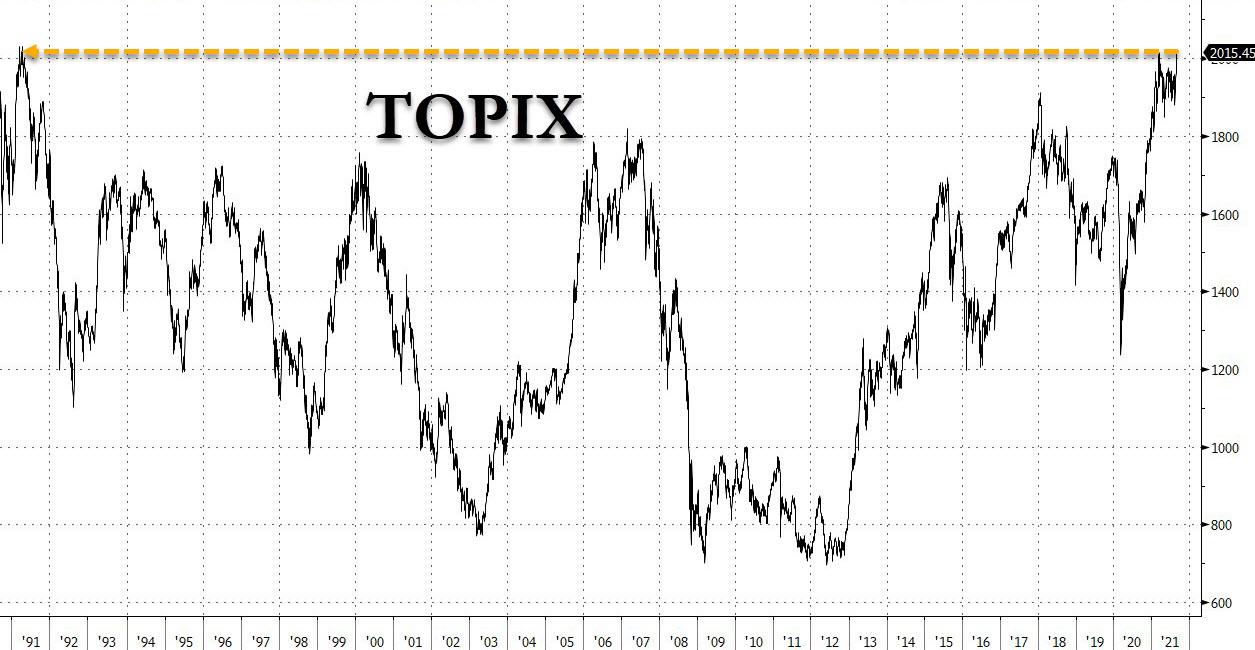
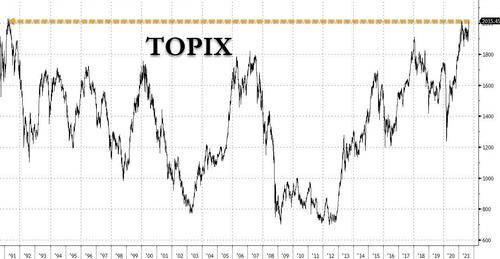
Tokyo stocks jumped on news of Suga’s decision, a move that investors say could serve as an inflection point for local stocks, with the benchmark Nikkei rising 2% and the broader Topix hitting its highest levels since 1991. The nation’s equities have been largely range-bound for months amid uncertainty over the upcoming election and concern over the latest wave of coronavirus cases, as Japan’s vaccination campaign and reopening lagged those of the U.S. and Europe.  While it’s not unclear who will replace Suga, many said that regardless of who becomes the next prime minister, a large economic stimulus is likely. Others cheered the possibility of political stability, as prospects for a more comprehensive victory for the ruling Liberal Democratic Party in the upcoming election increase. 
At the same time, Japanese government bonds fell, led by super-long maturities, as traders weighed the risk of more stimulus spending with a change in the nation’s leadership. The yen weakened after stocks rallied. JGB futures ended day session down 0.08 at 151.98 with the benchmark 10- year yield rising 0.5bp to 0.035, the highest since Aug. 11. Yields on maturities above 10 years also climbed, with that on 20-year notes up 1bp to 0.415%

The market reaction to Suga reflects wariness about more debt issuance next year as his successor is likely to resort to fiscal stimulus to limit the damage from the outbreak, said Naoya Oshikubo, a senior economist at Sumitomo Mitsui Trust Asset Management in Tokyo

Suga’s abrupt resignation ended a rollercoaster week in which Suga pulled out all the stops to save his job, including suggestions he would sack his long-term party ally, as well as plans to dissolve parliament and reshuffle party executive and his cabinet. He is expected to stay on until his successor is chosen in the party election slated for Sept. 29. The winner, assured of being premier due to the LDP’s majority in the lower house of parliament, must call the general election by Nov. 28.

In response to the resignation news, views differed from the bullish, as this one from BBG’s Yoshiaki Nohara…

Japanese Prime Minister Suga’s decision to step aside is only going to intensify calls for a big stimulus package. Whoever comes to power next will want to woo a pandemic-frustrated public, and the promise for extra dollops of cash will be welcome news for Tokyo’s equity bulls. The economy has managed to avoid a double-dip recession, there are signs that companies are looking past the virus and there was plenty left over from last year’s stimulus spending plan. But a national election is due soon, and so politics, not economics, will require another round of spending

… to the skeptical as this one from Bloomberg’s Gearoid Reidy:

The shock effective resignation of PM Yoshihide Suga, who most expected to lead the ruling LDP into a general election this fall, is pleasing equity investors –but caution is warranted. While Suga was deeply unpopular and widely criticized for his handling of the pandemic, there are dangers here for markets. Suga, whose premiership represented a continuation of Shinzo Abe’s exit, could effectively mark the end of nearly a decade of Abenomics. And while the lure of Fumio Kishida’s promise of “tens of trillions of yen” of spending to control the pandemic may sound appealing to investors, don’t forget what Japanese politics was like before the Abe-Suga era. The biggest fear of many analysts is that a premature Suga exit could represent a return to the revolving-door premierships of the late 2000s, when successive prime ministers, each with only fractional control of the ruling party, lasted only a year. That wasn’t enough time to put any of their pet economic projects into action, and contributed to leaving Japan’s economy and market languishing. While the Topix is rallying today, a return to that era would not be good news for stocks.

Here’s what other analysts across asset classes are saying:

Mitsubishi UFJ Morgan Stanley Securities (Norihiro Fujito)

  • “If the LDP were to win the general election soundly, the rally in Japanese stocks could continue. Foreign investors could revisit Japanese equities as valuations have been very cheap to begin with. The Nikkei 225 could climb back up to 30,000.”
  • “Investors and consumers will expect policies under a fresh new leadership, and people assume that the LDP won’t lose so badly in the upcoming general election.”
  • “Investors and consumers are expecting some ground-breaking stimulus, regardless of who might take over.”

Shinkin Asset (Naoki Fujiwara)

  • “This is a plus for equities — with a new person leading, there will be expectations over policy steps.” Suga’s decision to resign might be a “turning point” for local equities.
  • “The cloud may be gradually lifting for Japanese equities in terms of the overall environment.”
  • “The virus situation is calming down, while we could see political risks easing from here, compared to before.”

T&D Asset (Hiroshi Namioka)

  • Suga’s decision could help Japanese stocks “get out of a range.”
  • His low approval rating has weighed on Japanese equities, and “for the stock market, it could be important to see the LDP regain its approval rating and not lose a majority during the general election.”

JP Morgan Asset (Shogo Maekawa)

  • With Suga’s resignation, the LDP can head for the general election with a “slightly better support rate.”
  • The risk that the ruling party might see a big loss of seats in the election, which would destabilize the administration, has been reduced. “Lowering those risks is something that local stocks would welcome.”
  • The move will also boost expectations over economy- boosting measures, as well as progress on steps to get more people vaccinated and gradually prepping for “normalization” of the economy.

Asymmetric Advisors (Amir Anvarzadeh)

  • “Logic prevails as LDP was bound to lose many seats in the Lower House if Suga continued after his monumental failure on betting on Olympics and acting too slow on vaccines.”
  • “Suga’s departure will be viewed as positively, at least for now given his shortcomings. Question is will LDP yield to the will of the nation and allow” the popular Taro Kono to become prime minister

Gaitame.com Research Institute (Takuya Kanda)

  • Yen may stay pressured despite the news; regardless of who becomes LDP leader and thus next premier, there won’t likely be a major shift in Japan’s economic and monetary policy
  • Markets have seen Suga as a reason for falling support rating for the government and the ruling Liberal Democratic Party, so his departure probably could give a sense of relief; this may add to global risk-on
  • Currency market players aren’t likely to use Japanese politics to make bets on yen
  • As long as stocks are rising, expectations for united and stable LDP will be a yen weakness factor

Mitsubishi UFJ Morgan Stanley Securities (Naomi Muguruma)

  • “The risk of a bigger economic stimulus package may be weighing on Japan’s bonds.”
  • “A new leader for the ruling Liberal Democratic Party would face a lower house election soon and that may pressure the new leader to boost stimulus, which is positive for stocks but a source of concern for bonds.”

Oanda (Jeffrey Halley)  

  • Given Nikkei 225’s rally, “it is clear that domestically they feel that Suga’s resignation will add more political stability ahead of the October election, and will prompt more stimulus from either the government or the BOJ, or both.”
  • “Given the complete debacle of Japan’s Covid-19 response, it seemed inevitable that he had become a political liability, although I expected him to go after, and not before the election.”
  • “Of course, who PM Suga will be replaced by will be the critical development. Will the LDP go back to the future and insert another ‘aged establishment’ leader, or will they seize the opportunity to reinvigorate the leadership.”
  • “I know which my money is on, and on that basis, I do not see the rally of today continuing with the same momentum, although I would love to be pleasantly surprised and proven wrong.”
Tyler Durden
Fri, 09/03/2021 – 06:59

via ZeroHedge News https://ift.tt/3BvpPOG Tyler Durden

Bo Burnham: Inside


minisBoBurnham

It’s technically a Netflix comedy special. But Inside is far more unsettling than any true crime show. Bo Burnham’s latest foray into millennial musical comedy chronicles his crack-up over the course of a COVID year alone via punishingly catchy earworms.

There’s one part where a puppet made of a sweatsock delivers an indictment of neoliberalism, only to be cowed by a genuinely unsettling threat of violence. There’s a moving passage about death in a song devoted mostly to mocking the consumerist clichés of white women’s Instagrams. Burnham turns 30 on camera and then sings about it in his underwear. Yeah, it’s weird.

The humor is omphaloskeptic. The politics are derivative. The aesthetics are low-budget. But Inside is also a compelling, coherent work of art about how utterly confused, extremely online, and grindingly lonely the last year and a half felt.

from Latest – Reason.com https://ift.tt/3gXJbnE
via IFTTT

Beijing Plans To Place Didi Under State Control: BBG

Beijing Plans To Place Didi Under State Control: BBG

More rumors about a potential state takeover of Didi Chuxing, the troubled Chinese ride-share giant which remains embroiled in a government investigation into its handling of sensitive personal data belonging to its riders, emerged Friday morning when a Bloomberg reporter tweeted about a plan for the city of Beijing to take Didi “under state control.”

It’s not clear exactly what the arrangement would look like, or how Didi’s shareholders might fit into it, and it’s still possible that Didi might deny the report, as it has denied several other rumors about its post-IPO plans that have surfaced in the American press (like a rumor about the firm taking itself private first reported by WSJ that sent Didi shares surging in premarket trading).

But according to Bloomberg’s Tom Mackenzie, some of the details might include handing a stake to Shouqi, a competing ride-share firm that’s part of Beijing Tourism Group. The new “golden share” consortium would have veto power, along with options for board seats.

It’s still not clear whether this plan has been approved by government officials.

As we await more details, let’s quickly recap all the changes Beijing has made in President Xi’s crackdown on Chinese business over the past year: Beijing cut IPO of Ant Financial, suspended Didi’s apps from the app store just days after its IPO, fined Alibaba, then forced it to contribute billions more to its “common prosperity” shakedown, created new data and algo rules for companies, practically shut down the private tutoring sector and banned foreign textbooks, declared war on celebrities and celebrity fandoms. And limited kids to 3 hours of video games per week.

Sounds to us like they’re just getting started.

Tyler Durden
Fri, 09/03/2021 – 06:32

via ZeroHedge News https://ift.tt/3teM2gN Tyler Durden

In the Heights


minisheights

In the Heights, a movie musical based on the hit Broadway production by Hamilton mastermind Lin-Manuel Miranda, is set in the heavily Dominican New York City neighborhood of Washington Heights. At heart, it’s the story of an immigrant community coming together to determine its own future.

Sometimes that future is forged by fighting with a labyrinthine immigration bureaucracy and racist attitudes. (There’s an admittedly too on-the-nose subplot about DREAMers.) But politics are only part of the story.

By and large, In the Heights portrays immigration as an entrepreneurial act. So it is fitting that the community’s future is forged through commerce. The plot concerns a neighborhood bodega, but there’s also a salon run by two neighborhood women, a taxi dispatch run by another local, a friendly lawyer who handles tough immigration cases, and even a piragua cart run by a character played by Miranda.

These businesses are consistently portrayed as sources of both hard-earned personal wealth and valuable social connection, especially when the neighborhood faces a crisis—a power outage—late in the second act. Charging people money in exchange for useful services, and keeping those services going in tough times, is how the characters make their own lives better and how they help their neighbors.

The movie doesn’t quite bang you over the head with this message, but it’s not subtle, either: The final, post-credits scene shows Miranda’s street-cart shaved ice becoming a hot commodity with the block’s residents. In response to rising demand, he raises prices, and in the process he outcompetes the Mister Softee truck that had been his biggest rival. It’s an entrepreneurial immigrant success story and a fitting grace note for a movie that ebulliently celebrates the value of communities built on buying and selling.

from Latest – Reason.com https://ift.tt/3kV7WlP
via IFTTT

In the Heights


minisheights

In the Heights, a movie musical based on the hit Broadway production by Hamilton mastermind Lin-Manuel Miranda, is set in the heavily Dominican New York City neighborhood of Washington Heights. At heart, it’s the story of an immigrant community coming together to determine its own future.

Sometimes that future is forged by fighting with a labyrinthine immigration bureaucracy and racist attitudes. (There’s an admittedly too on-the-nose subplot about DREAMers.) But politics are only part of the story.

By and large, In the Heights portrays immigration as an entrepreneurial act. So it is fitting that the community’s future is forged through commerce. The plot concerns a neighborhood bodega, but there’s also a salon run by two neighborhood women, a taxi dispatch run by another local, a friendly lawyer who handles tough immigration cases, and even a piragua cart run by a character played by Miranda.

These businesses are consistently portrayed as sources of both hard-earned personal wealth and valuable social connection, especially when the neighborhood faces a crisis—a power outage—late in the second act. Charging people money in exchange for useful services, and keeping those services going in tough times, is how the characters make their own lives better and how they help their neighbors.

The movie doesn’t quite bang you over the head with this message, but it’s not subtle, either: The final, post-credits scene shows Miranda’s street-cart shaved ice becoming a hot commodity with the block’s residents. In response to rising demand, he raises prices, and in the process he outcompetes the Mister Softee truck that had been his biggest rival. It’s an entrepreneurial immigrant success story and a fitting grace note for a movie that ebulliently celebrates the value of communities built on buying and selling.

from Latest – Reason.com https://ift.tt/3kV7WlP
via IFTTT

German Companies Cannot Ask Employees About Covid Vaccination Status, Labor Minister Says

German Companies Cannot Ask Employees About Covid Vaccination Status, Labor Minister Says

There was a time when America was a land of the free (and home of the brave); this is not that time.

With the Biden administration forcing experimental injections upon the populace depriving them of a say (while paradoxically arguing that a woman’s right to choose is constitutional) and urging employers to fire those workers who refuse to be jabbed, it was Russia that unexpectedly emerged as a beacon of freedom this week after Putin said he opposes mandatory jabs, saying that people should get vaccinated without coercion. It gets better.

While Biden has been imploring corporations to make life miserable for all vaccine holdouts, if not fire them outright – lacking the guts to impose a federal vaccination mandate – Germany’s labor minister said companies will not have the right to ask staff to reveal their Covid vaccination status.

Speaking to broadcaster ARD on Wednesday, German Labor Minister Hubertus Heil shared that there will be no general right for employers to access information that discloses staff members’ Covid vaccination status, although he added that “pragmatic solutions” may be required for sectors deemed a higher risk for transmitting the virus.

“We must act according to the rule of law. Acting under the rule of law means that an employer is not entitled to information about health data…[and] is also not allowed to look at the medical records of an employee, because this is very personal data,” the minister said, pointing out something so obvious it is lost on the entire Biden administration.

Heil added, however, that he is “in favor of finding pragmatic solutions” for workplaces that are at a greater risk of transmitting Covid, namely prisons, hospitals, and care homes. This could mean requiring employees to show that they have either recovered from coronavirus, been vaccinated, or have tested negatively.

The labor minister’s remarks coincide with Germany’s cabinet ruling on the same day that companies must allow their staff to take time off work to get their coronavirus jabs, RT reported.

German bosses have recently been applying pressure on the government to grant them the power to ask workers whether they are inoculated or not. Thilo Brodtmann, the head of the German Engineering Federation, said on Tuesday that “employees must do everything they can to reduce the risk of infection to zero,” and “this includes at least an obligation to provide this information.”

Meanwhile, neighboring France has been riddled with weeks of protests against a government decree that will require workers from certain sectors – such as firefighters, medical workers, caregivers, and certain soldiers – to get vaccinated by September 15 or risk penalties.

Italy’s Green Pass, which shows a person’s inoculation or viral status, was extended last month to include teachers for when schools reopen in September. It has now also been extended to trains, planes, coaches, and ferries. The government is also considering widening this to include office and supermarket staff.

Just over 65% of Germany’s population have received their first dose of a coronavirus vaccine, while around 60% are fully vaccinated.

Tyler Durden
Fri, 09/03/2021 – 05:45

via ZeroHedge News https://ift.tt/3yBOwHr Tyler Durden

Victor Orbán: ‘Migration Must Be Stopped”

Victor Orbán: ‘Migration Must Be Stopped”

Authored by Paul Joseph Watson via Summit News,

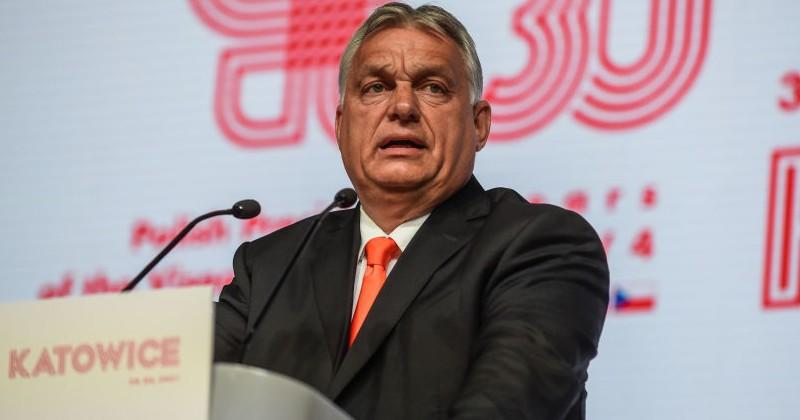
Hungarian Prime Minister Viktor Orbán told a forum of leaders in Slovenia that “migration must be stopped” in order to preserve Europe’s cultural heritage.

Speaking during a roundtable discussion at the International Strategy Forum (BSF) in Bled, Orbán asserted that mass migration from Muslim countries was not a reasonable solution to the continent’s demographic decline.

“We do not need outsiders, because they are changing the composition of European societies, the cultural image of Europe, the Christian, family-based system,” Orbán said, noting that the overwhelming majority of migrants were Muslim.

Highlighting how mass migration leads to social dislocation, rising crime and terrorism, Orbán stated plainly, “migration must be stopped.”

Orbán wants the European Union to hand more power back to sovereign states to control their own borders, arguing that a federalized approach to the issue would exacerbate the problem.

As we previously highlighted, as part of an effort to reduce reliance on migration, Hungary passed a policy in 2019 that rewarded married couples with a loan of €30,600 that was completely forgiven after they had three children.

Orbán has repeatedly warned that Europe’s native population decline is a “sickness” and that population replacement via mass migration represents “demographic suicide.”

The Hungarian leader also said during the forum that the takeover of Afghanistan by the Taliban means that another mass migration crisis is looming.

As we previously highlighted, a top diplomat in Kabul warned that “not even tanks” can stop a potentially large wave of Afghan refugees heading to the continent.

A report by the Center for Strategic and International Studies also cautioned that the 2021 Afghan refugee crisis could make the 2015 refugee crisis look like a “geopolitical walk in the park” in comparison.

*  *  *

Brand new merch now available! Get it at https://www.pjwshop.com/

In the age of mass Silicon Valley censorship It is crucial that we stay in touch. I need you to sign up for my free newsletter here.Support my sponsor – Turbo Force – a supercharged boost of clean energy without the comedown. Get early access, exclusive content and behinds the scenes stuff by following me on Locals.

Tyler Durden
Fri, 09/03/2021 – 05:00

via ZeroHedge News https://ift.tt/3h12RHr Tyler Durden

Brickbat: Deadly Squeeze


cuffed_1161x653

A jury has found former Boulder County, Colorado, sheriff’s deputies James O’Brien and Adam Lunn guilty of manslaughter in the death of Demetrius Shankling. The two took Shankling, who was handcuffed and intoxicated, to a detox center. They placed Shankling, who was 6 feet tall, stomach down in a van in a compartment that was less than 5 feet long. They pressed on the door to close it, forcing Shankling’s legs to wedge up against the door. When they arrived at the detox center, Shankling was not breathing.  An autopsy ruled that Shankling died of positional asphyxiation, with alcohol and amphetamine as contributing factors.

from Latest – Reason.com https://ift.tt/2YpJ91y
via IFTTT

Russia Sending Huge Arms Shipment, & “Maybe Even S-400s”, To Belarus: Lukashenko

Russia Sending Huge Arms Shipment, & “Maybe Even S-400s”, To Belarus: Lukashenko

Belarusian leader Alexander Lukashenko on Wednesday announced that Russia will soon deliver a major shipment of military hardware badly needed by the isolated country, which will include helicopters, aircraft and air defense systems.

“Russia in the near future … will supply us – I won’t say how much money or what – with dozens of planes, dozens of helicopters, the most important air defense weapons,” Lukashenko was quoted as saying in Belarusian state-run Belta news agency.

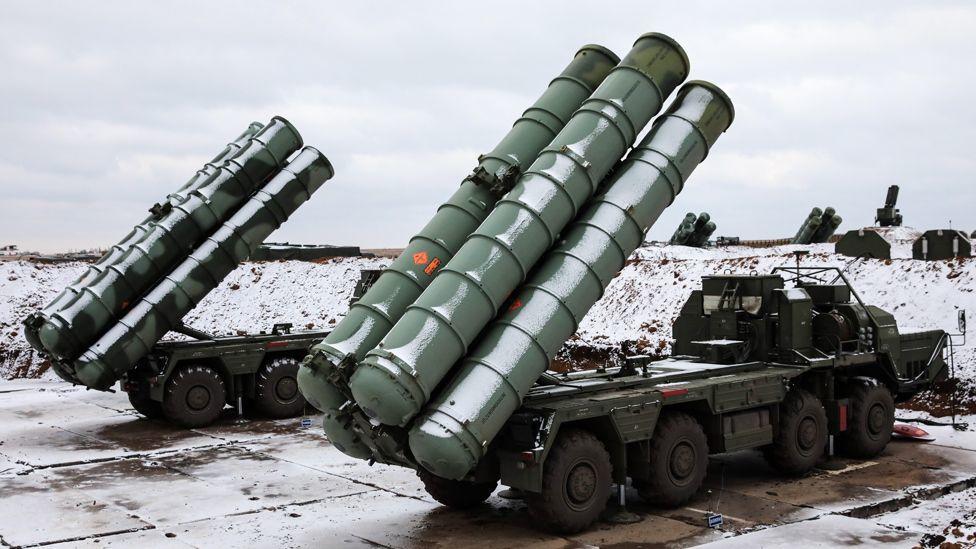
But the claim that’s sure to catch the attention of the West is what he said about the potential anti-air defense system. “Maybe even S-400s (surface-to-air missiles). We need them very much as I’ve said in the past,” he added.

Via Reuters

The claim is anything but certain, and was perhaps more of a plea to Moscow, given Lukashenko in the recent past has often been bold and out-front in his statements of assessing relations with Russia, while Putin has been seen as more cautious.

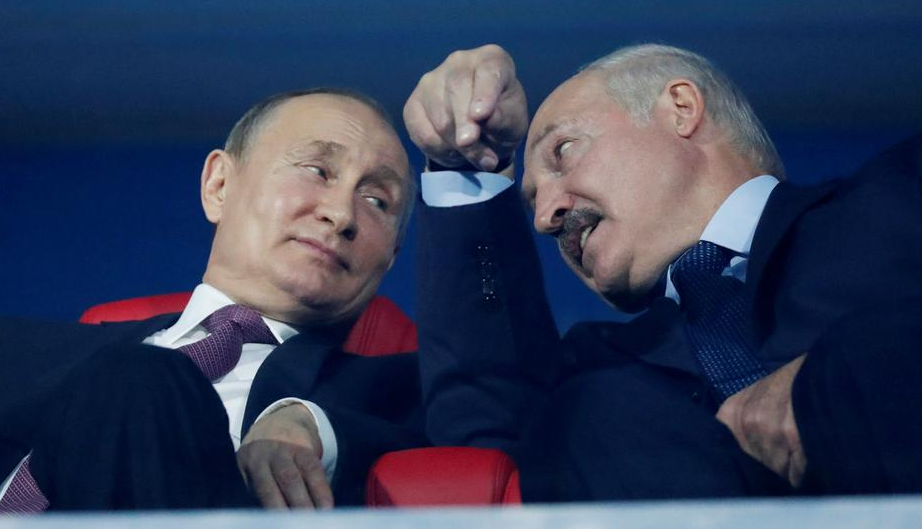
The two sides will hold largescale joint military exercises later in mid-September, dubbed ‘Zapad-2021’. Lukashenko addressed the upcoming war games in his statements:

In a word, the most modern equipment. We will equip ourselves. If we see during the exercise (Zapad-2021) that we need something else, then we will buy it from the Russian Federation and commission it.”

Putin and Lukashenko will hold talks on September 9, just before the exercises begin. In early August Lukashenko told journalists that Minsk had formally requested the S-400 system from Moscow, asking “for a special price, on credit” – according to Al Jazeera

Getty Images

Al Jazeera notes further that “The delivery is likely to be interpreted as a further sign of Moscow’s unwavering support for Lukashenko, who faced down the biggest opposition protests against his rule last year by overseeing a violent crackdown condemned by the West.”

Likely Washington’s response would be to ramp up further sanctions on both countries in a bid to further isolate especially Belarus.

Tyler Durden
Fri, 09/03/2021 – 04:15

via ZeroHedge News https://ift.tt/2YiqynT Tyler Durden