Visa, Mastercard Block Certain Russian Firms Due To Sanctions

Visa, Mastercard Block Certain Russian Firms Due To Sanctions

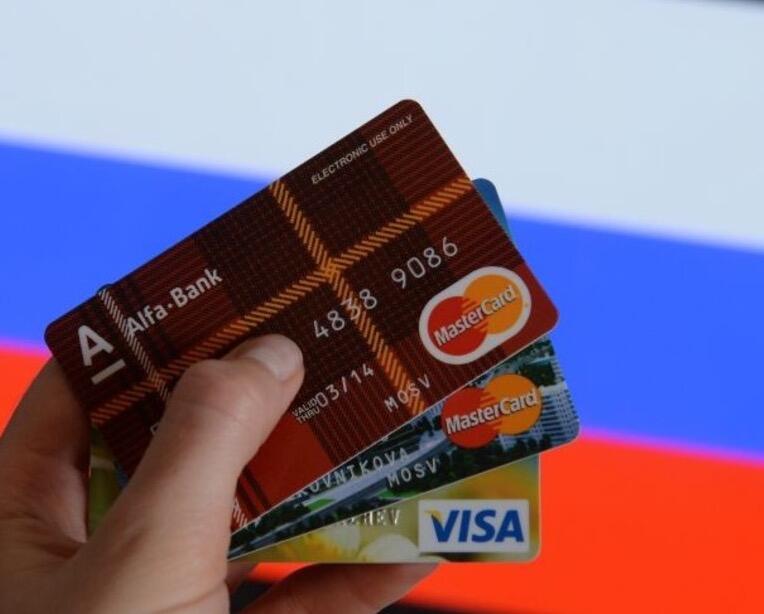
The Western world continues to obsess about using financial weapons to implode Russia’s economy. The latest is payment and credit card giants Visa and Mastercard blocked certain Russian financial institutions from their payment networks to comply with international sanctions, according to Bloomberg

On Monday, Mastercard said it had “blocked multiple financial institutions” from its payment network without naming names.

“We will continue to work with regulators in the days ahead to abide fully by our compliance obligations as they evolve,” Mastercard said.

“Visa is taking prompt action to ensure compliance with applicable sanctions, and is prepared to comply with additional sanctions that may be implemented,” the firm said in a statement Tuesday.

The move comes after European nations and the U.S. announced a series of sanctions to cut off Russia from the global financial system. One restrictive measure removed “selected Russian banks” from the SWIFT messaging system that will harm their ability to operate globally. Also, restrictive measures were placed on the Russian Central Bank from deploying its international reserves to support the ruble.

The U.S., European Union, and the U.K. also targeted Russian oligarchs to find and seize their assets. The trans-Atlantic task force will “identify, hunt down, and freeze the assets of sanctioned Russian companies and oligarchs,” said a senior Biden Administration official.

“We’ll go after their yachts, their luxury apartments, their money, and their ability to send their kids to fancy colleges in the West,” the official said. 

The wide-ranging sanctions were in response to Russia’s invasion of Ukraine five days ago. Russian forces are marching towards the Ukrainian capital of Kyiv, though they have made little progress over the past 24 hours due to logistical difficulties. It seems Western sanctions have yet to deter Russian President Putin from backing down. 

Tyler Durden
Tue, 03/01/2022 – 20:35

via ZeroHedge News https://ift.tt/kDQOXwM Tyler Durden

“Game Over?” – Russia To Be In Technical Default Within Hours

“Game Over?” – Russia To Be In Technical Default Within Hours

More than two decades ago, on August 17, 1998, Russia defaulted on its debt and devalued the ruble, sparking a political crisis that culminated with Vladimir Putin replacing Boris Yeltsin and which also eventually resulted in the spectacular implosion of a then little known hedge fund called Long Term Capital Management (which was staffed to the gills with “brilliant” Nobel Price winners) which after receiving a Fed-led Wall Street bailout, ushered in the era of too big to fail.

We bring this up because in just a few hours, Russia will be in another technical default.

Amid the flurry of capital controls imposed by Moscow today, the Russian central bank banned coupon payments to foreign owners of ruble bonds known as OFZs in what it said was a temporary step to shore up markets in the wake of international sanctions. What it really is, is a technical default on upcoming interest and maturity payments, with a trigger due as soon as tomorrow.

The Bank of Russia issued the instruction to depositaries and registries as part of a raft of measures announced this week that included a freeze on local security sales by foreigners. It could leave foreign investors who held almost 3 trillion rubles ($29 billion) in the debt at the start of February unable to collect income on their holdings, which are already blocked from sale by restrictions.

“Issuers have the right to make decisions on the payment of dividends and the making of other payments on securities and transfer them to the accounting system,” the central bank said in an emailed reply to questions. “However, the payments themselves will not be made by depositories and registrars to foreign clients. This also applies to OFZ.”

The decision by the central bank was taken to “avoid mass sales of Russian securities, the withdrawal of funds from the Russian financial market and to support financial stability,” it said.

With as much as half of its foreign reserves frozen abroad by sanctions aimed at punishing the Kremlin for invading Ukraine, the Bank of Russia said Monday it would harden capital controls with a ban on transferring foreign currency abroad. While initially it clarified that the step wasn’t aimed at stopping the servicing of debt, some investors and economists said the phrasing of the decree could amount to a default.

“Game over? I think they underestimated how far sanctions will go and now don’t have much left to do,” Viktor Szabo, a fund manager at Aberdeen Asset Management in London told Bloomberg. “All Russian markets have fallen apart.”

“This will likely be a technical default, we’ll see how long it goes on for,” said Nick Eisinger, co-head of emerging-markets active fixed income at Vanguard Asset Management in London. “We also see strong likelihood of technical default on Eurobonds at the sovereign level.”

The central bank didn’t specify how long the ban will last. On Monday, the Interfax news service reported the temporary suspension will be in effect for half a year unless the regulator lifts it ahead of time. The decision underscored how rapidly Russia’s free-market credentials have disintegrated since the Ukraine invasion.

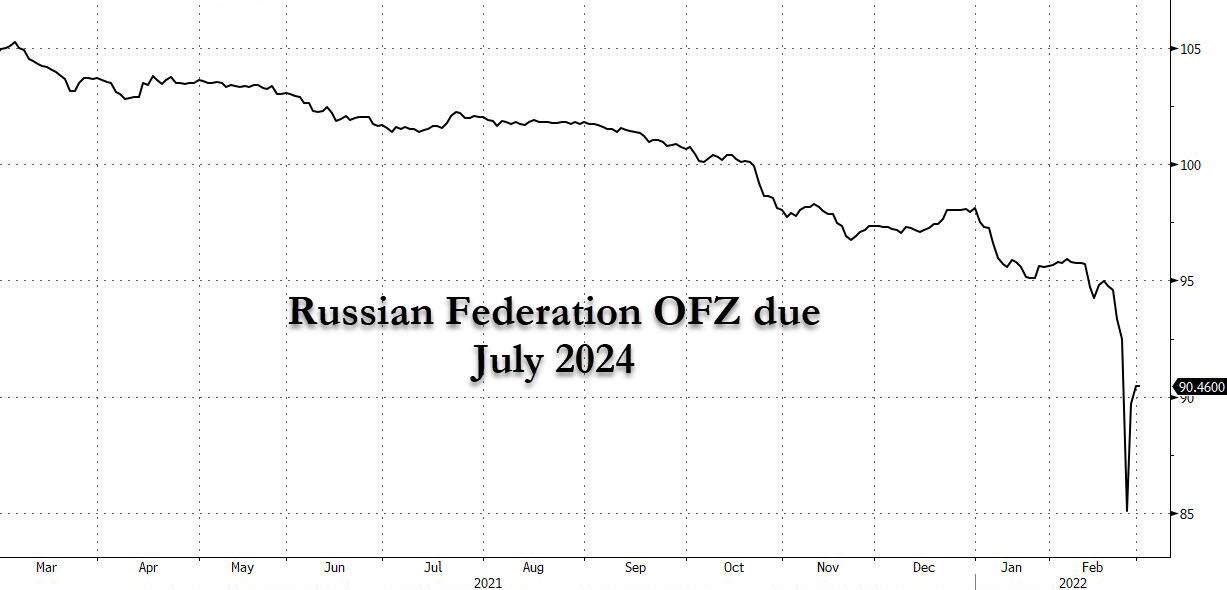
But it won’t matter: just a one ban day will be enough to push Russia into a technical default – the next coupon payment on OFZ bonds is due Wednesday on notes maturing in 2024, according to Bloomberg.

The news came shortly after we learned that the world’s biggest settlement systems Euroclear and Clearsteam are no longer handling Russian assets — reversing the much-heralded opening of the local debt market to international investors nine years ago.

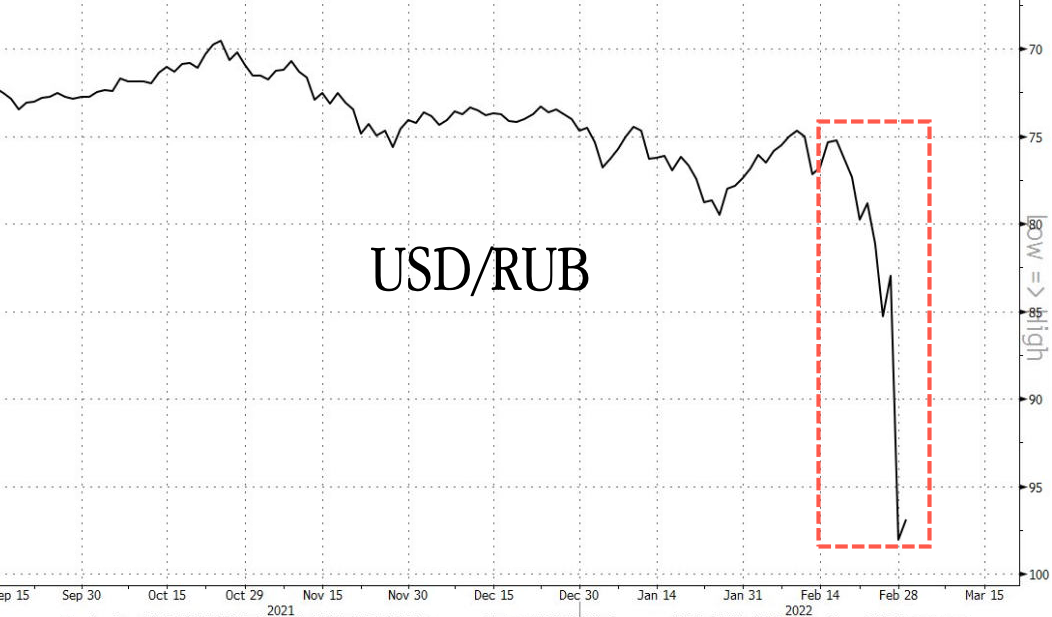
Russian sovereign bonds collapsed last week, sending the yield on the 10-year benchmark up 240 basis points to 12.28%. The ruble’s drop of more than 20% so far this year is the worst slump globally, prices compiled by Bloomberg show.

“A potentially weaker willingness on the part of the Russian government to service its debt on time and in full, raise the probability of more severe credit outcomes for foreign holders of Russian debt securities,” Moody’s Investors Service said in an statement.

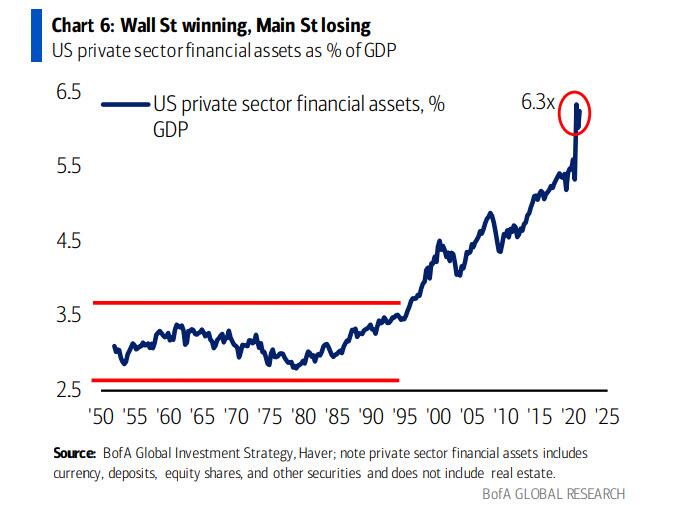
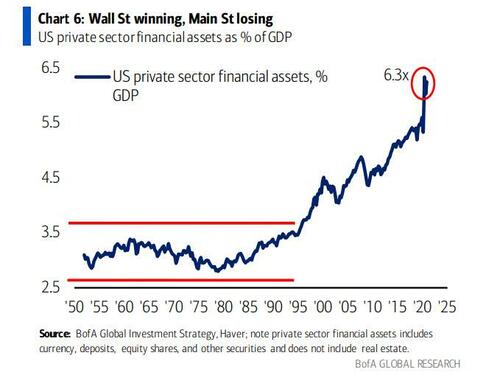
And while Russia is about to re-default – something it certainly has experience with – its economy devastated yet rich in natural resources, the question is how the US will handle the brutal, new reality where oil is now virtually assured to hit $150 if not $200 at a time when the main US output is hyperfinancialization, with the value of financial assets at last check some 6.3x times greater than GDP.
For the answer, please reread “Shades Of 2008 As Oil Decouples From Everything.”
Tyler Durden
Tue, 03/01/2022 – 20:15

via ZeroHedge News https://ift.tt/3sea5Bt Tyler Durden

Zuckerberg Election Funds Violated Wisconsin Bribery Laws, Special Counsel Finds

Zuckerberg Election Funds Violated Wisconsin Bribery Laws, Special Counsel Finds

Approximately $9 million directed to five Democratic strongholds in Wisconsin violated the state’s prohibition on bribery, according to The Federalist‘s Margot Cleveland, citing a report submitted on Tuesday by a special counsel appointed by the state.

Spearheaded by retired state Supreme Court Justice Michael Gableman who was tasked with investigating concerns over election integrity in 2020, the investigation which began last August has resulted in a 150-page report full of recommendations for the state’s legislative body which cited “numerous questionable and unlawful actions of various actors in the 2020 election.”

According to the report, the flow of Zuckerberg grant funds to five Wisconsin counties was the first ‘unlawful action’ noted. According to Gableman, the arrangement violated Wis. Stat. § 12.11, which prohibits election bribery by providing it is illegal to offer anything of value to or for any person in order to induce any elector to go to the polls or vote.

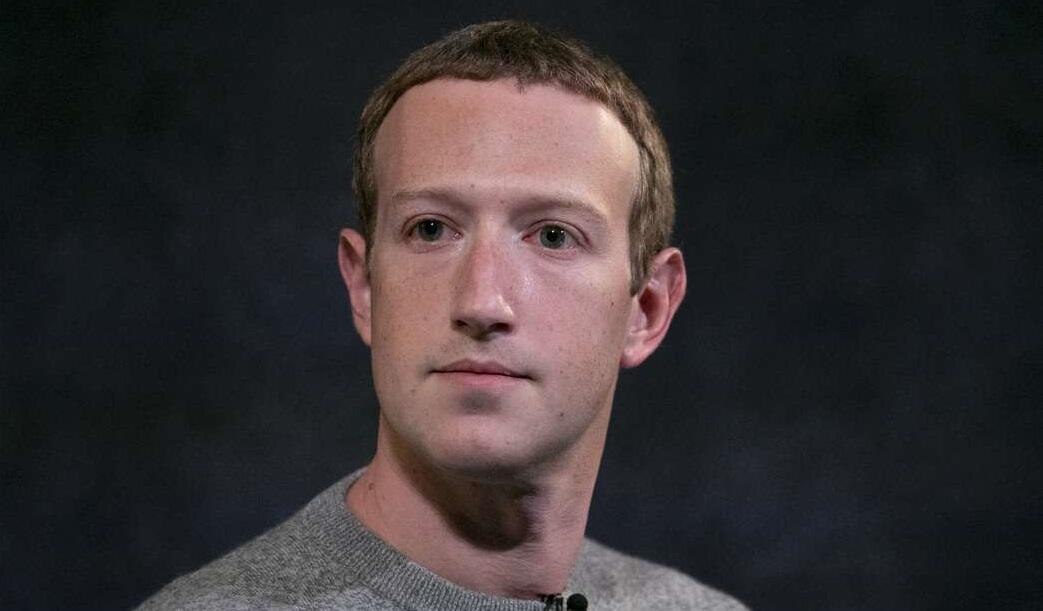
According to the report, Priscilla Chan and Mark Zuckerberg providing financing that allowed the Center for Tech and Civic Life to offer nearly $9 million in “Zuck Bucks” to Milwaukee, Madison, Racine, Kenosha and Green Bay counties. In exchange, the “Zuckerberg 5,” as the report called the counties, in effect, operated Democratic get-out-the-vote efforts. Those grant funds then paid for illegal drop boxes to be placed in Democratic voting strongholds.

The illegal use of drop boxes represented a second area of concern to the special counsel’s office. The report notes state election code limits the manner in which ballots may be cast, providing that an elector must personally mail or deliver his or her ballot to the municipal clerk, except where the law authorizes an agent to act on the behalf of the voter. –The Federalist

The report also claims that the “Zuckerberg 5” violated both federal and state constitutional guarantees of equal protection, as the grant money targeted specific voters for special voting privileges – to the disadvantage of similarly situated Wisconsin voters in other counties. What’s more, said counties allowed private groups working with the granting organization, the Center for Tech and Civic Life, to “unlawfully administer aspects of the election.” In one case, an organization was unlawfully ’embedded’ in local government election administration.

Also disturbing, the Wisconsin Election Commission (WEC) illegally told clerks to ignore the state election code governing voting in nursing homes – where 100% of registered voters allegedly cast ballots in the 2020 election, and unheard-of rate which the Federalist notes included many ineligible voters.

Meanwhile, Wisconsin illegally maintained non-citizens and incapacitated citizens on the state’s voting rolls according to the special counsel’s report.

Special Counsel Gableman detailed many other substantial problems with the 2020 election, but equally troubling to the widespread violations of election law established in the report were the attempts by government officials to impede the investigation. Both the Wisconsin Election Commission and the state attorney general “have refused to cooperate with the Legislature’s investigation and actively obstructed it,” according to the report, with a separate appendix detailing how the Office of Special Counsel and the state Assembly have been blocked from investigating portions of the Wisconsin government. -The Federalist

The special counsel recommends eliminating the Wisconsin Election Commission, among other remedies.

Tyler Durden
Tue, 03/01/2022 – 19:55

via ZeroHedge News https://ift.tt/JfhXEgQ Tyler Durden

Is COVID Policy Comedy, Tragedy, Or Both?

Is COVID Policy Comedy, Tragedy, Or Both?

Authored by Jeffrey Tucker via The Brownstone Institute,

The Saturday Night Live skit on Covid policy is a welcome relief, a cultural sign that rationality has started to return.

Yes, the segment is truly hilarious.

And it reveals so much about the present moment in which even highly politicized elites are realizing that the dissidents in the Covid wars had it right all along. 

At the same time, the skit speaks to a deeper truth about the last two years. For many in the professional Zoom class, the entire occasion tragically became an opportunity for signaling virtue, pontificating about politics, and tightening alliances with their class compatriots, even as billions around the world suffered at the hands of overlords who massively neglected the lessons of traditional public health in favor of a wild experiment in pointless compulsion. 

They shut down the “economy” (two weeks turned into two years) but for people in a certain class and age group, it was a welcome relief from the burdens of going to the office. The value of seeming to be part of a grand political mission outweighed the cost of not going out to eat. The lack of empathy for the workers who had no such luxury, church goers locked out of their houses of worship, and kids torn from their peers, to say nothing of millions who fell into poverty – and we could go on – was truly startling. 

No, there was nothing amusing about any of this. Not to be humorless here but this was an unprecedented catastrophe the world over. It should not be reduced to fodder for late-night amusement. It’s tragedy not comedy. Every family has a tragic story to tell. And it is far from over, for the collateral damage will be with us for a generation or two. 

Perhaps in the future we can treat the arrival of pathogens as a time for patients and doctors to work together to promote wellness. Perhaps researchers can focus on therapeutics. Perhaps public-health agencies can work on being truthful with the public. Perhaps we can be more careful about mandating injections for vast swaths of humanity that did not want them or had already earned their natural immunity. 

None of this will happen unless we can talk openly about it, without censorship, and do so seriously. The prevailing emotion right now as I type is the opposite: you can now laugh about how preposterously everyone behaved but don’t get serious about investigations or rethinking anything. 

For that matter, an interview I did with a world-class pathologist in Canada was just deleted by YouTube for “medical misinformation.” The censorship is as ruthless as ever! 

We will be fully over the political side of this mess when the following has become a political, social, and cultural consensus: 

1) Emergency powers were never justified. They were imposed in a panic, one deliberately generated in Congressional testimony by Anthony Fauci who manipulated the US president into believing that he could on his own “shut down” the economy to make a virus go away. The whole episode was pathetic and contradictory to the whole experience of public health. 

2) All “mitigation measures” deployed have not proven effective and certainly caused vast harm. The schools should never have been forced closed. The hospitals should have done business as usual. Doctors should have been free to treat patients. Travel should never have been stopped. Stay-at-home orders served no purpose. Hundreds of thousands of businesses were wrecked for no reason at all. Mandatory masks are not just pointless but inhumane, especially for kids. Testing the healthy, as track-and-trace theater, proved a waste. The vaccines should never have been mandated anywhere.

3) Even if C19 mutates in a worse way, or some new pathogen comes along, there is no public-health justification for shutting down society, dividing the social classes, canceling gatherings, limiting building capacity, restricting travel, or otherwise violating the rights of conscience and bodily autonomy. Contra the CDC, people should not have to wait breathlessly for the bureaucrats to look at the “science” to discover whether and to what extent we can exercise our human rights. 

4) All public-health interventions need to be limited to informing the public of all available information, seeking therapeutics, quarantine for the sick by choice, and otherwise allowing doctors to practice medicine. Yes, society might need to respond to new pathogens but society is fully capable of doing so without central direction from unelected bureaucrats on power trips. Everything on this page from the CDC has to go.

5) The science behind pandemic management needs to be decentralized and include genuine discussion and debate rather than allowing a small cabal to take full power while censoring everyone else. 

And for each of these points, there need to be iron-clad guarantees. No more discretionary power for unelected bureaucrats to impose horrible rules on anyone. The power of the CDC, and all their sister bureaucrats in the states, needs to be reined in, starting with the many documents posted on government websites that presume that in the event of a virus, this agency or that gets to become the central manager of society while ignoring all constitutional restraints on power. 

In short, we need freedom back, and a guarantee that nothing like this can ever happen again. Some degree of levity about the comedic qualities of the last two years is merited but it needs to be complemented by a serious commitment toward radical reform. We need a new way to think about how a good society can develop freely even in the presence of infectious disease. Freedom needs to be nonnegotiable. 

Tyler Durden
Tue, 03/01/2022 – 19:35

via ZeroHedge News https://ift.tt/jfk6B5Z Tyler Durden

Biden To Ban Russian Flights Over US Airspace As Boeing Suspends Support Service For Russian Airlines

Biden To Ban Russian Flights Over US Airspace As Boeing Suspends Support Service For Russian Airlines

Among the many things to be announced by Joe BIden in his SOTU speech tonight, one will be that the U.S. government will ban Russian aircraft from American airspace, broadening aviation restrictions as the West expands sanctions over the war in Ukraine.

  • PRESIDENT BIDEN PLANS TO ANNOUNCE ON TUESDAY THE UNITED STATES WILL BAN RUSSIAN FLIGHTS FROM U.S. AIRSPACE FOLLOWING EU AND CANADA – RTRS

This echoes a report from the WSJ which earlier noted that an order barring Russian-owned and -operated aircraft from U.S. airspace is expected to be issued as soon as within the next 24 hours.

The U.S. move would follow earlier prohibitions by European and Canadian authorities. The restrictions, which Russia has retaliated against by issuing a similar ban on European flights, have disrupted airline flight plans as Russia’s invasion of Ukraine escalates.

Meanwhile, in a potentially far more ominous development, Politico reporter Lee Hudson tweeted that Boeing has suspended aircraft maintenance and support services for Russian airlines,

“We have suspended major operations in Moscow and temporarily closed our office in Kyiv,” Hudson tweets, citing company statement.

In other words, going forward anyone flying in a Russian Boeing will do so knowing that the plane was not serviced and is a potential death trap, even more so than just flying in a 737 MAX, the airplane best known for being “designed by clowns, who in turn were supervised by monkeys.” Naturally, this means that all Russian commercial flights will be effectively grounded overnight.

Tyler Durden
Tue, 03/01/2022 – 19:32

via ZeroHedge News https://ift.tt/NrPaCWV Tyler Durden

Apple, Ford Lead Latest Round Of US Companies Cutting Russia Ties

Apple, Ford Lead Latest Round Of US Companies Cutting Russia Ties

As another market day comes to an end in the US, another flurry of American companies have announced plans to cut ties with Russian business partners, or simply stop selling their products in the Russian Federation. These companies include Apple, Nike, Ford and others, all of whom have released statements on Tuesday.

For starters, Apple has halted all product sales in Russia, while halting exports to Russia sales channels. It’s also pulling RT News and Sputnik News from App Stores outside of Russia, and is disabling traffic and live incidents in Apple Maps in Ukraine.

Here’s the full Apple statement on Russia, where it announced plans to limit Apple Pay and other services, while taking other steps to protect Ukrainians and their interests.

“We are deeply concerned about the Russian invasion of Ukraine and stand with all of the people who are suffering as a result of the violence. We are supporting humanitarian efforts, providing aid for the unfolding refugee crisis, and doing all we can to support our teams in the region. We have taken a number of actions in response to the invasion. We have paused all product sales in Russia. Last week, we stopped all exports into our sales channel in the country.”

“Apple Pay and other services have been limited. RT News and Sputnik News are no longer available for download from the App Store outside Russia. And we have disabled both traffic and live incidents in Apple Maps in Ukraine as a safety and precautionary measure for Ukrainian citizens. We will continue to evaluate the situation and are in communication with relevant governments on the actions we are taking. We join all those around the world who are calling for peace.”

Apple described the decision as an attempt to protect the “safety and precautionary measure” for citizens in Ukraine. However, as one Bloomberg presenter pointed out, the move is largely symbolic.

Moving on, like Shell and BP divesting their Russian assets, Ford also said it would “suspend” its joint venture in Russia and instead find ways to support “Ukrainian nationals”, in part by making a large ($100K) donation to “the Global Giving Ukraine Relief Fund”.

As part of the global community, Ford is deeply concerned about the invasion of Ukraine and the resultant threats to peace and stability. The situation has compelled us to reassess our operations in Russia. In recent years, Ford has significantly wound down its Russian operations, which now focus exclusively on commercial van manufacturing and Russian sales through a minority interest in the Sollers Ford joint venture. Given the situation, we have today informed our JV partners that we are suspending our operations in Russia, effective immediately, until further notice.

While we don’t have significant operations in Ukraine, we do have a strong contingent of Ukrainian nationals working at Ford around the world and we will continue to support them through this time.

Ford Fund is also making a $100,000 donation to the Global Giving Ukraine Relief Fund for humanitarian aid to assist Ukrainian citizens and families who have been displaced during this crisis.

Athletic wear juggernaut Nike has closed its online stores and said it won’t sell any new merchandise in Russia because it can no longer “guarantee” delivery.

Nike made the announcement on its Russian website. It wasn’t immediately clear if the change was a new corporate policy or the result of supply-chain difficulties following the nation’s invasion of neighboring Ukraine. Nike didn’t immediately respond to a request for comment, per Bloomberg.

Also on the tech front, Snap Inc., owner of Snapchat, the popular social media app, won’t be running any more Russian advertising.

Finally, social messaging and media app Snapchat, owned by parent company Snap Inc., said it had stopped running all advertising in Russia, Belarus and Ukraine and is halting ad sales to all Russian and Belarusian entities as part of “complying with all sanctions targeting Russian businesses and individuals.”

The company has continued to offer the app in Russia, Ukraine and Belarus because it “remains an important communications tool for family and friends.”

The company noted that Ukraine is the birthplace of Looksery, the company whose technology laid the foundation for Snap’s augmented reality platform, “and has been the home of more than 300 of Snap’s most creative and talented team members.” That includes both Snap employees currently based in Ukraine as well as those who are from Ukraine originally and now live elsewhere.

Google parent Alphabet and Facebook parent Meta are facing potential blowback from the Russian government after both companies cut off RT and other allegedly state-backed broadcasters from their platforms, angering the Kremlin, which has railed about the possibility of passing laws to punish these moves.

 But the real big question is: with all the US companies rushing to cut financial ties with Russia, does all this risk backfiring?

Tyler Durden
Tue, 03/01/2022 – 19:15

via ZeroHedge News https://ift.tt/Tj0HMsY Tyler Durden

New Yorkers Lash Out At ConEdison Over Soaring Electricity Bills

New Yorkers Lash Out At ConEdison Over Soaring Electricity Bills

By Leonard Hyman & William Tilles of OilPrice.com

  • New Yorkers blame distributor ConEdison for quickly rising electricity bills.

  • Some customers complain that their (energy) supply bill has tripled in past months.

  • The deregulated system may lower costs somewhat, but all of the fuel volatility risk is transferred directly to the consumer.

Sky-high electric bills on the front page. Europe? The U.K? No, just north of New York City, where local politicians criticized Consolidated Edison of NY, the local electric utility. And further, local business people noted that they had warned of this potential problem a decade ago when the last governor decided to close down the nearby nuclear power plant, Indian Point. Some customers complain that their supply bill (for their electricity usage, not the lines or wires) has tripled in past months. For the typical consumer this is a noticeable increase.

Con Edison—which in the past has taken the stand that it just delivers the electricity (they don’t actually produce it) so go complain somewhere else—announced that it “was reviewing our practices…” and will work out programs to help customers who are struggling to pay these rapidly escalating electricity bills. Meanwhile the staffer of a local member of Congress said, “At the end of the day, it is Con Edison that bills New Yorkers, and, therefore Con Ed that bears direct consumer responsibility for this egregious price hike…” Politicians have focused on how to help consumers pay their bills this winter, both here and in Europe. They don’t focus on the possibility that the existing wholesale electricity market, set up three decades ago to make electricity competitive, may bear responsibility for the mess as well.

Here is how it works. The local utility is a delivery mechanism. It delivers a product (electricity in this case) produced and marketed by somebody else. In theory, the delivery company should not care about the price or quality of the product. And most local delivery utilities do not. They are simple delivery vehicles (“like the milkman”, a former Con Ed executive explained)  that charge fixed costs for their regulated service. Which from a business point of view is not a great set up. High prices or poor service on the part of electricity producers encourages consumers to either go off the grid or cut back on consumption. The local distribution utility’s business and relationship with the customer depends on another company’s skills and probity. Is that a good business strategy? Doesn’t sound like a good one for Con Edison.

Now for the second issue, a little more technical. The unregulated electricity market sets prices on the basis of marginal cost. Generally speaking, natural gas is the marginal fuel and gas-fired generators frequently set the price for our region’s electricity. Remember that in a marginal cost market, every generator gets the same price regardless of production costs. So if the price of gas goes up the price of all electricity (not just that generated by gas) goes up equally as well. (In this instance low cost electricity producers like hydroelectric facilities reap a huge financial windfall). This differs from the old electricity pricing model which added up the prices of all fuels used to generate electricity and raised or lowered prices on the basis of their aggregate cost. In theory, prices go up quickly when marginal fuel price rises and falls just as quickly when the price drops. Although, in practice the price of electricity tends to fall a lot more slowly than the price of sometimes volatile fuel. Generators manage to keep the difference when that happens. 

The third issue is one of prudence. The market organizations that manage our electricity grid look for the lowest price electricity. They don’t require a mix of fuels to be on the safe side. They don’t pay generators to run facilities with more expensive fuels in order to maintain diversity. They go for the low price. So, there is not much extra supply to bring on line when the cheap fuel (in this case natural gas) suddenly becomes expensive. This is the literal price we pay for our partly deregulated energy system. The previously regulated system was financially incentivized to maintain redundancy and dampen overall price volatility. But—and this is key—the old regulated utility was designed to absorb the financial risk associated with volatile fuel expense and then settle up later with state regulators. A deregulated system may lower costs somewhat but all of the fuel volatility risk is transferred directly to the consumer. Some members of the public are discovering the true meaning of deregulated energy markets this winter. 

Does this sound like a discussion of European dependence on Russian gas rather than New York State power generation?  Well, in a way, utility deregulation almost always results in the same outcome. Go for the cheapest fuel source and assume nothing will go wrong. And when it does, let the consumers pay. The only thing we find remarkable here is that consumers continue to accept this.

Tyler Durden
Tue, 03/01/2022 – 18:55

via ZeroHedge News https://ift.tt/ZHjFOE1 Tyler Durden

Summers: Biden Needs To Pivot From COVID, Prepare America For ‘Struggle Ahead’

Summers: Biden Needs To Pivot From COVID, Prepare America For ‘Struggle Ahead’

During tonight’s State of the Union address, President Joe Biden needs to ditch the “usual laundry list of policy proposals,” and switch from “being the ‘protect the middle class from the pandemic’ president to being ‘prepare America for the struggle ahead’ president,” according to former Treasury Secretary and Democratic heavyweight Larry Summers, who spoke with Bloomberg TV on Friday.

“We are looking at an event of potentially vast significance and concern,” Summers said in a follow-up interview Monday – referring to Russia’s invasion of Ukraine and Moscow’s increasing alignment with Beijing.

“Our ability to meet these challenges depends on recognizing them for what they are.”

According to Summers, Biden will need to rally Americans to support the principles of democracy against authoritarianism.

“The United States faces far graver challenges to its security than anyone would have thought likely even several years ago,” said Summers, who served as head of the National Economic Council during the Obama administration.”That needs to have ramifications for almost every aspect of our national life.”

Summers, also a former director of the White House National Economic Council, likened the importance of the tightening bonds between Moscow and Beijing today to the realignment of China toward the U.S. that President Richard Nixon achieved in 1972.

American corporate leaders are among those that may need to rethink their approaches in the new environment, he said. “Anyone who thinks that is not a challenge to their ability to flourish and profit as a business is making an enormous mistake.” -Bloomberg

“There was a tendency for some CEOs to treat the United States as a kind of primitive loyalty, but to emphasize that they had to do what was best for their company — which could mean going anywhere and doing anything,” he said yesterday.

When it comes to China, Summers says that too much effort has been spent by US policymakers on corporate interests in that country – while Washington remains “underinvested” in US technological competitiveness.

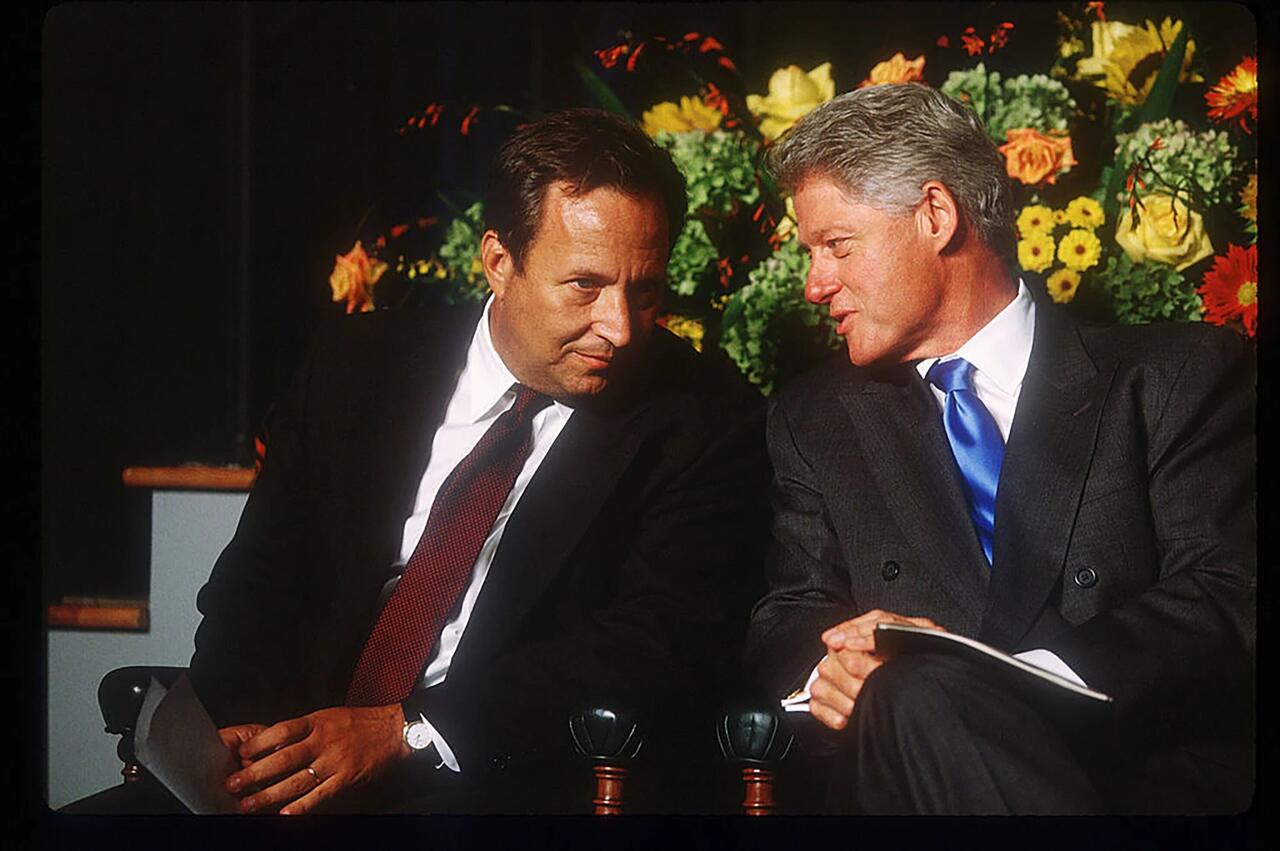
President Bill Clinton (right) and Treasury Secretary Larry Summers work on forgiving debt to small countries.
Dirck Halstead/Liaison

“When we see the dominant emphasis in the economic policies of many countries shift from international integration to self-reliance as a dominant economic value, we know we are headed into a much more dangerous world,” Summers added – while urging Biden to put “more emphasis on our stake in what’s happening globally” – particularly when it comes to challenges such as safeguarding the US Dollar as the global reserve by moving to contain inflation, resisting global aggression, and addressing semiconductor shortages.

Of note, in November Summers was critical of the Biden administration for being “behind the curve” on inflation ravaging the economy.

We are going to need to spend more on national defense and more on global security — in terms of not just military threats, but threats from climate change and threats from pandemics.”

Tyler Durden
Tue, 03/01/2022 – 18:35

via ZeroHedge News https://ift.tt/lh90J2D Tyler Durden

Whistleblower Sues Delaware Over Election Laws That Unconstitutionally Extend Voting Time

Whistleblower Sues Delaware Over Election Laws That Unconstitutionally Extend Voting Time

Authored by Matthew Vadum via The Epoch Times,

An election integrity group is representing a state government whistleblower who claims in a new lawsuit that Delaware is playing fast and loose with state election laws by enforcing statutes that violate the state’s constitution.

The Delaware General Assembly approved a law in 2019 that allows early voting in person at least 10 days before the day of a general election. The Delaware State Constitution stipulates that the general election must be held on one specific day only.

A Delaware statute also allows registrants to apply to the Department of Elections for something called “permanent absentee status,” even though the state constitution only allows absentee voting with strict restrictions on eligibility.

This law violates the constitution because it grants an individual the eligibility to vote by absentee ballot in perpetuity, without consideration of the applicant’s eligibility in each subsequent election, according to Michael Mennella, an inspector of elections who says he’s being forced to choose between enforcing the Constitution of Delaware or the unconstitutional statutes.

Mennella, a registered voter and resident of Newark, has served as an inspector of elections for the Delaware Department of Elections in at least eight elections during the past five to six years, according to court documents.

“Mennella is responsible for overseeing the election at his assigned polling place and administering the election in accordance with the Delaware Constitution, statutes, and other laws,” the documents read. “Mr. Mennella plans to serve as an inspector of elections at the 2022 General Election and at other future elections.”

Mennella stated in court documents that “when a Delaware statute conflicts with the Constitution of Delaware, the Constitution controls,” citing case law from 1925.

Having to enforce the constitutionally objectionable statutes would “harm Plaintiff Mennella because they require him to violate the oath he must take as an inspector of elections, his duties, and the Constitution of Delaware, and risk severe penalties and even prison time.”

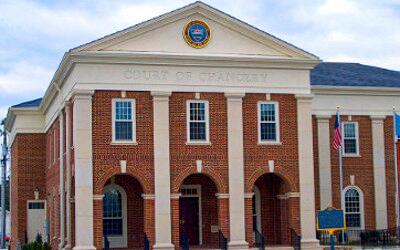
The legal complaint (pdf) in the case, Mennella v. Albence, court file 2022-0179, was filed on Feb. 24 with the Court of Chancery of the State of Delaware. The lead defendant is Anthony Albence, who’s being sued in his official capacity as the state election commissioner. Jane Brady of Brady Legal Group is serving as local counsel in the lawsuit.

“The early and absentee voting statutes clearly conflict with the state constitution,” said J. Christian Adams, president of the Public Interest Legal Foundation (PILF).

“Inspectors of elections are forced to choose between obeying the statutes or following the state constitution. States cannot pass election laws that conflict with their constitutions. We are confident that the court will uphold the rule of law and the state’s constitution.”

The Indianapolis-based PILF describes itself as “the nation’s only public interest law firm dedicated wholly to election integrity.” The nonprofit organization “exists to assist states and others to aid the cause of election integrity and fight against lawlessness in American elections.”

PILF stated that it won a similar lawsuit in Virginia. In 2020, it represented Thomas Reed, a local electoral board member, to stop Department of Elections guidance that required accepting absentee ballots without postmarks. The guidance was found to contravene Virginia law.

PILF also claimed victory in recent litigation in Pennsylvania aimed at making sure election law adheres to that state’s constitution. A court ruled that the state’s mail-in voting law was unconstitutional because the legislature didn’t have the authority to modify voting laws without amending the constitution.

The Office of the State Election Commissioner in Delaware didn’t respond to a request for comment by press time.

Tyler Durden
Tue, 03/01/2022 – 18:20

via ZeroHedge News https://ift.tt/xs0ZdS5 Tyler Durden

Whistleblower Sues Delaware Over Election Laws That Unconstitutionally Extend Voting Time

Whistleblower Sues Delaware Over Election Laws That Unconstitutionally Extend Voting Time

Authored by Matthew Vadum via The Epoch Times,

An election integrity group is representing a state government whistleblower who claims in a new lawsuit that Delaware is playing fast and loose with state election laws by enforcing statutes that violate the state’s constitution.

The Delaware General Assembly approved a law in 2019 that allows early voting in person at least 10 days before the day of a general election. The Delaware State Constitution stipulates that the general election must be held on one specific day only.

A Delaware statute also allows registrants to apply to the Department of Elections for something called “permanent absentee status,” even though the state constitution only allows absentee voting with strict restrictions on eligibility.

This law violates the constitution because it grants an individual the eligibility to vote by absentee ballot in perpetuity, without consideration of the applicant’s eligibility in each subsequent election, according to Michael Mennella, an inspector of elections who says he’s being forced to choose between enforcing the Constitution of Delaware or the unconstitutional statutes.

Mennella, a registered voter and resident of Newark, has served as an inspector of elections for the Delaware Department of Elections in at least eight elections during the past five to six years, according to court documents.

“Mennella is responsible for overseeing the election at his assigned polling place and administering the election in accordance with the Delaware Constitution, statutes, and other laws,” the documents read. “Mr. Mennella plans to serve as an inspector of elections at the 2022 General Election and at other future elections.”

Mennella stated in court documents that “when a Delaware statute conflicts with the Constitution of Delaware, the Constitution controls,” citing case law from 1925.

Having to enforce the constitutionally objectionable statutes would “harm Plaintiff Mennella because they require him to violate the oath he must take as an inspector of elections, his duties, and the Constitution of Delaware, and risk severe penalties and even prison time.”

The legal complaint (pdf) in the case, Mennella v. Albence, court file 2022-0179, was filed on Feb. 24 with the Court of Chancery of the State of Delaware. The lead defendant is Anthony Albence, who’s being sued in his official capacity as the state election commissioner. Jane Brady of Brady Legal Group is serving as local counsel in the lawsuit.

“The early and absentee voting statutes clearly conflict with the state constitution,” said J. Christian Adams, president of the Public Interest Legal Foundation (PILF).

“Inspectors of elections are forced to choose between obeying the statutes or following the state constitution. States cannot pass election laws that conflict with their constitutions. We are confident that the court will uphold the rule of law and the state’s constitution.”

The Indianapolis-based PILF describes itself as “the nation’s only public interest law firm dedicated wholly to election integrity.” The nonprofit organization “exists to assist states and others to aid the cause of election integrity and fight against lawlessness in American elections.”

PILF stated that it won a similar lawsuit in Virginia. In 2020, it represented Thomas Reed, a local electoral board member, to stop Department of Elections guidance that required accepting absentee ballots without postmarks. The guidance was found to contravene Virginia law.

PILF also claimed victory in recent litigation in Pennsylvania aimed at making sure election law adheres to that state’s constitution. A court ruled that the state’s mail-in voting law was unconstitutional because the legislature didn’t have the authority to modify voting laws without amending the constitution.

The Office of the State Election Commissioner in Delaware didn’t respond to a request for comment by press time.

Tyler Durden
Tue, 03/01/2022 – 18:20

via ZeroHedge News https://ift.tt/xs0ZdS5 Tyler Durden