“Not Funny”, “Dangerous”: Former Twitter Censor Justifies Banning Babylon Bee

“Not Funny”, “Dangerous”: Former Twitter Censor Justifies Banning Babylon Bee

Authored by Paul Joseph Watson via Summit News,

Former Twitter censor Yoel Roth justified the site in its pre-Elon Musk incarnation banning satirical website The Babylon Bee, asserting that its content was “not funny” and “dangerous.”

Twitter’s former head of trust and safety made the remarks during an appearance on a Knight Foundation panel.

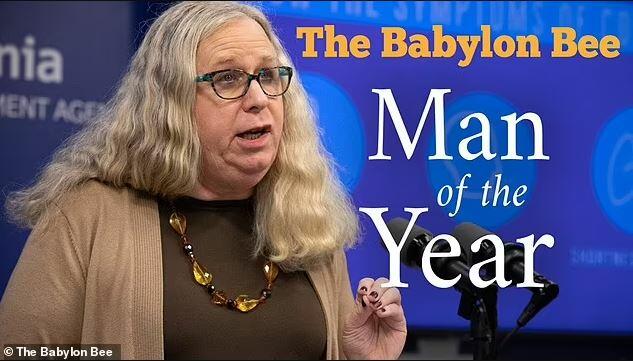
The Babylon Bee was suspended, or more accurately locked out of their account, for “misgendering” Assistant Secretary of Health Rachel Levine, a biological male who now identifies as a woman.

Their crime was to bestow upon Levine a “man of the year” award.

Despite Yoel Roth admitting that Twitter had made a mistake in banning a story about the Hunter Biden laptop scandal, he said the censorship of the Babylon Bee was perfectly reasonable.

“You can like the policies or you can dislike the policies, but it’s the same rules for everyone,” said Roth.

“When you repeatedly tweet violations of a policy there are consequences, including account timeouts, and ultimately, they can lead to suspension. And they did,” he added.

Commenting specifically on the Babylon Bee issue, Roth asserted, “I want to start by acknowledging that the targeting and the victimization of the trans community on Twitter is very real, very life-threatening, and extraordinarily serious.”

“We have seen from a number of Twitter accounts, including Libs of TikTok notably, that there are orchestrated campaigns that particularly are singling out a group that is already particularly vulnerable within society,” he added.

“Not only is it not funny, but it is dangerous, and it does contribute to an environment that makes people unsafe in the world. So, let’s start from the premise that it’s fucked up,” said Roth.

That’s right, apparently, joking about the fact that there are only two genders makes people physically “unsafe.”

The Babylon Bee’s account was reinstated after Elon Musk took charge of Twitter, while Roth quit his position in early November.

As we highlight in the video below, the release of the Twitter files, data dumps proving targeted, political censorship of dissident voices and factual information, have left some fearing for Musk’s safety.

*  *  *

Brand new merch now available! Get it at https://www.pjwshop.com/

In the age of mass Silicon Valley censorship It is crucial that we stay in touch. I need you to sign up for my free newsletter here. Support my sponsor – Turbo Force – a supercharged boost of clean energy without the comedown. Get early access, exclusive content and behind the scenes stuff by following me on Locals.

Tyler Durden
Mon, 12/05/2022 – 11:31

via ZeroHedge News https://ift.tt/2PODLwe Tyler Durden

Saudis Double-Down On Credit Suisse Bailout

Saudis Double-Down On Credit Suisse Bailout

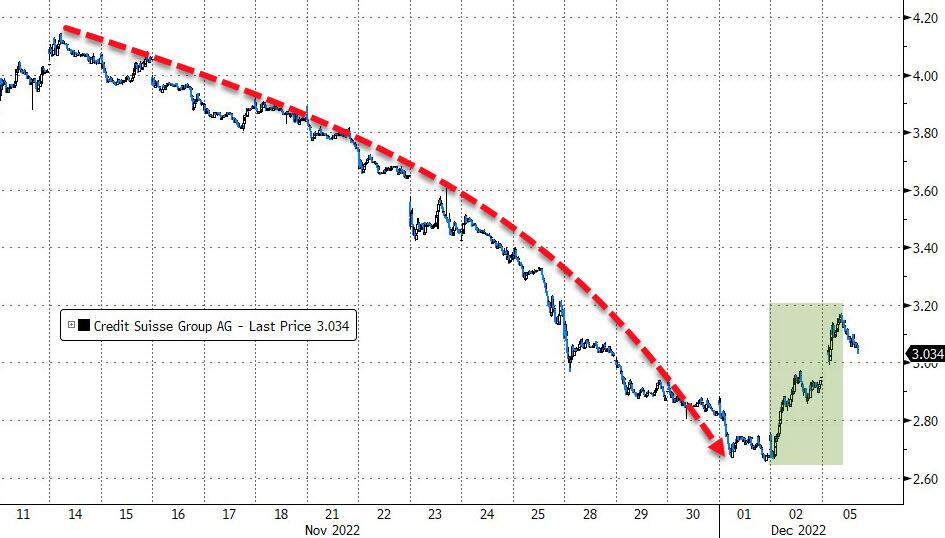
Credit Suisse’s share extended Friday’s gains this morning (after the record losing streak took the shares to new record lows), on reports that Saudi Arabian Crown Prince Mohammed bin Salman (MbS) will take a stake in the Swiss firm’s planned investment bank spin out.

Bloomberg reports that, according to people with knowledge of the matter, MbS may put about $500 million into the vehicle. Notably, The Saudi National Bank is already an anchor investor in Credit Suisse’s $4 billion ongoing capital raise.

It’s unclear whether the Crown Prince’s interest would come in a personal capacity or through other investment vehicles in the Kingdom.

Other investors may reportedly include former Barclays Plc chief executive Bob Diamond’s Atlas Merchant Capital.

Credit Suisse announced on Monday that it had also completed the $5 billion in new debt issuance, part of plans to shore up its balance sheet, and would provide an updated funding plan for 2023 when it releases fourth quarter earnings on Feb. 9. 

Tyler Durden
Mon, 12/05/2022 – 11:12

via ZeroHedge News https://ift.tt/WUPOgcD Tyler Durden

After a Crackdown on a Pain Clinic, a Tragic Double Suicide


DEA agents are cracking down on doctors prescribing painkillers.

“In my mind, what the DEA [Drug Enforcement Administration] is essentially doing is telling a diabetic who’s been on insulin for 20 years that they no longer need insulin and they should be cured. They just don’t understand what chronic pain is.”

That’s what Gretchen Elliott’s brother told Vice at his sister’s funeral last month. Gretchen and her husband Danny committed suicide because they could no longer endure a pain that doctors were terrified of treating. It was the most recent of the many dreadful outcomes that follow when cops practice medicine.

Danny had chronic, searing pain from an electrocution accident years earlier. For treatment, he and Gretchen, his caretaker, traveled regularly from their home in Georgia to a pain management physician in Beverly Hills, California, to receive pharmaceutical fentanyl. But on November 1, DEA agents suspended the Beverly Hills physician’s narcotics prescribing license, having decided that he was inappropriately prescribing painkillers. A week later, Danny and Gretchen killed themselves.

The DEA has not formally charged the physician, David Bockoff, who has been practicing medicine with a spotless record in California for 53 years. He was treating many “pain refugees” like Danny: patients with chronic pain, well-managed with opioids, whose previous physicians had either closed after a DEA visit or abruptly cut off their pain medication fearing the wrath of law enforcement.

Exactly one year before Danny and Gretchen ended their lives, Casonya Richardson-Slone, the widow of Brent Slone, won a wrongful death medical malpractice suit against her late husband’s pain clinic. He committed suicide after the clinic abruptly curtailed his pain medication.

In  “Cops Practicing Medicine,” a new paper for the Cato Institute, Trevor Burrus and I trace the history of law enforcement’s intrusion into the patient-doctor relationship, from the war on drugs’ earliest days—when Congress passed the Harrison Narcotics Act of 1914—to the present. By 2006, policymakers mistakenly attributed the overdose crisis to doctors “overprescribing” opioids. This formed the basis for an even more gigantic intrusion of federal and state power into the privacy of medical records, into patient-doctor confidentiality, and into the very ways doctors are allowed to use scientific and professional knowledge when practicing medicine.

Today, 38 states have laws on the books that limit the dosage and amount of pain relievers doctors can prescribe to their patients. Many of these laws have cast in stone the Centers for Disease Control and Prevention’s now-discredited 2016 Guideline for Prescribing Opioids for Chronic Pain. The guideline came under so much criticism from pharmacologists, clinicians, and academic physicians that the agency revised it this past November. No matter. The flawed 2016 guideline remains the basis of the prescribing laws in most states. Doctors face losing their licenses or, worse, jail time if they violate these laws. 

All 50 states maintain Prescription Drug Monitoring Programs to surveil all prescriptions issued and filled within the state. These primarily serve as law enforcement tools. In most states, police drug task forces use them to go on warrantless fishing expeditions, hoping to find a doctor to bust for “inappropriate prescribing” or a patient they can arrest for “doctor shopping.” These programs have not reduced the overdose rate. If anything, they have driven non-medical users who cannot obtain diverted prescription pain pills to more dangerous drugs in the black market, causing the overdose rate to increase.

With countless stories in the mainstream press about doctors arrested, sometimes with police bursting into their crowded waiting rooms, or having their licenses suspended for overprescribing prescription opioids—even though there is no legal definition of “overprescribing”—many doctors have been frightened into curtailing their patients’ use of pain medicine. It is becoming increasingly difficult for chronic pain sufferers to find doctors courageous enough to help them. Some refuse to see patients for pain altogether and refer them to pain management specialists, many of whom have long waits for appointments. Many doctors have come to view chronic pain patients through a suspicious and stigmatizing lens as drug-seeking addicts.

Some patients, in desperation, seek relief in the dangerous black market.  Some exasperated patients threaten their doctors. Tragically, some even murder their doctors. Also tragically, some resort to suicide.

Meanwhile, opioid-related overdose deaths reached a record high in 2021, exceeding 71,000, 89 percent of which involved illicit fentanyl. Despite a dramatic drop in opioid prescribing, deaths have soared.

According to government data, addiction to prescription pain relievers has been relatively stable at under one percent in this century. Chronic pain patients rarely become addicted to opioids. The overdose crisis is a prohibition-induced crisis. Neither the practice of medicine nor the act of self-medication belongs in the realm of the criminal legal system.

The post After a Crackdown on a Pain Clinic, a Tragic Double Suicide appeared first on Reason.com.

from Latest https://ift.tt/mElGQcn
via IFTTT

“Strangers on the Internet” Podcast Ep. 15: Exclusive Interview with Tinder Swindler Victim Cecilie Fjellhøy


IMG_0692

The fifteenth episode (Apple Podcasts link here and Spotify link here) of Strangers on the Internet with co-host and psychologist Michelle Lange is a special one: In this exclusive interview, we sit down with Tinder Swindler celebrity victim Cecilie Fjellhøy.

See what the London-based Norwegian IT consultant has to say about fraudster Simon Leviev and the continued battles to bring him to justice, her and his current dating status, life after starring in Netflix’s most-watched documentary of all time, her experiences with British law enforcement, her anti-catfishing activism, and much, much more.

Want to know what Simon’s victims thought “was one of the questions [they] wanted explored in the documentary” that didn’t make it through? Plus, why did Cecilie and other victims keep being told “you can’t say that” by interviewers in the mainstream media about parts of their story they wanted out there? We asked, and she answered.

Some helpful background before listening to this episode, in addition to watching the Tinder Swindler Netflix documentary, is our episode on narcissism and past interview with two other catfishing victims (part 1 and part 2).

Don’t forget to hit “Follow” here so you can automatically get part 2 of our Cecilie Fjellhøy interview and our future episodes on your preferred platform!

The post "Strangers on the Internet" Podcast Ep. 15: Exclusive Interview with Tinder Swindler Victim Cecilie Fjellhøy appeared first on Reason.com.

from Latest https://ift.tt/6891meT
via IFTTT

The Woman Who Spearheaded Prohibition’s Repeal


Painted image of Pauline Sabin in front of a separate background image of liquor bottles on a bar.

The person with the greatest claim to have ended Prohibition just might be Pauline Sabin. As we celebrate Repeal Day today, she deserves a toast.

As an upper-class divorcée who started a successful interior design business, Sabin was sure to be the subject of at least some controversy in early-20th-century America. But it was in politics that she really made her mark. Sabin believed women should be active within political parties and not confine themselves to causes viewed as exclusively the preserve of women. Thanks to her charm, her fundraising abilities, and her political skill, Sabin quickly became one of the most influential women in the GOP. With Henrietta Wells Livermore, she founded the Women’s National Republican Club (WRNC), became its first president, and rose to be the first woman on the Republican National Committee (RNC).

Sabin opposed the first version of the Equal Rights Amendment, arguing that it had no clear definition of “equal rights” and that it threatened to eliminate protections for women in the workplace. But she fought for women to be represented equally in the upper echelons of politics.

Sabin initially supported Prohibition. But she tended to be skeptical about expanding federal power, and she often opposed paternalistic legislation. (In 1920, when the Lord’s Day Alliance was opposing the playing of movies on Sundays and pushing for federal censorship, Sabin said: “I’m heartily opposed to any legislation that will deprive the public of a wholesome entertainment on Sunday.”) As Prohibition failed to deliver on its promises, Sabin became increasingly disenchanted. She finally endorsed Repeal in a 1928 article titled “I Change My Mind on Prohibition.”

While Sabin was not enthusiastic about the Republican presidential nominee that year, Herbert Hoover, she was encouraged by Hoover’s promise to appoint a commission to study Prohibition. But after Hoover’s inaugural address, in which he promised to enforce the law against alcohol, she decided she’d had enough and resigned from the RNC. She then met with 11 other women to lay the groundwork for founding the Women’s Organization for National Prohibition Reform (WONPR).

Speaking at a luncheon in her honor a month after Hoover’s inauguration, Sabin channeled the spirit of John Stuart Mill’s On Liberty. “To tell citizens what they must or must not do in their strictly personal conduct as long as public safety is not affected is a function which government should not attempt,” she said. “It is the age-old effort of the fanatic which has been behind every invasion of personal liberty in the past.” Later that year, she told the National Civic Federation: “We have exchanged the government of the people for the government of and by the Methodist Board of Morals.”

Sabin’s challenge was making Repeal respectable. Other reform organizations were constantly under attack, as when prohibitionists denounced the Association Against the Prohibition Amendment as a cabal of wealthy businessmen who wanted to see the return of alcohol revenues. She especially wanted to counter the narrative that the Women’s Christian Temperance Union (WCTU) and the Anti-Saloon League (ASL) spoke for American womanhood. On February 12, 1930, she appeared before Congress “to refute the contention that is often made by dry organizations that all the women of America favor national prohibition.” She spoke scathingly of politicians who were “notoriously wet in their personal conducts, but continue to vote under the whiplash of that political cabal called the Anti-Saloon League.”

Sabin’s rhetoric borrowed heavily from the prohibitionists, but with the script flipped. Repeal, not Prohibition, would safeguard the home from crime, drink, and lawlessness. The WONPR declined to base its central case for Repeal on the importance of individual freedom—the more libertarian approach favored by Louise Gross, leader of the Molly Pitcher Club. But this doesn’t mean Sabin didn’t share these ideas.

“Some of Sabin’s views may have been closer to those of Louise Gross than was politically convenient for Sabin to admit,” the historian Kenneth D. Rose wrote in his 1996 book American Women and the Repeal of Prohibition. “Both before she assumed her WONPR duties and after she completed them, Sabin revealed herself to be, if not a libertarian, at least a person with well-developed distrust of government intrusion that went beyond any concerns over child welfare.”

Sabin took the fight for Repeal to the strongholds of Prohibition in the Midwest and the Deep South. Her social standing and political experience guaranteed her spots on the front pages, in the society pages, and in the newsreels. WONPR’s size exploded. Sometimes referred to as “Sabines,” its members lobbied lawmakers and made waves in the press. Critics accused the group of being a collection of wealthy socialites like Sabin, but in fact 37 percent of the Sabines were housewives, 19 percent were clerical workers, and 15 percent were industrial workers.

The WONPR demanded that political candidates state their views on Prohibition, telling its members to vote only for those supporting reform, regardless of party. Reporting on the WONPR’s second convention in 1931, Sabin wrote that they would enlist “an army of women so great that its backing will give courage to the most weak-kneed and hypocritical Congressman to vote as he drinks.” A key plank in the WONPR’s platform was to reject any compromises that would still leave the issue in the hands of Congress, making it vulnerable to future political swings.

“When Mrs. Sabin formed her Women’s Organization for National Prohibition Reform it gathered members so fast that within an incredibly short time it has more of them than all of the W.C.T.U.’s and other such dry organizations put together,” the anti-Prohibition activist William H. Stayton told the journalist H.L. Mencken. “This alarmed the politicians and they began to jump. They saw that the women were actually more dangerous to them than the men.”

Sabin’s final abandonment of partisanship came with her endorsement of Franklin Delano Roosevelt in 1932. “It has been said that the Democratic candidate is a very recent convert to the cause of Repeal because of political expediency,” said Sabin. “It cannot be said up to this date, the Republican candidate is a convert to Repeal for any reason.”

In October 1933, with victory in sight, Sabin suffered a devastating blow when her second husband, Charles H. Sabin, died at their Long Island estate. Before his death, Pauline promised Charles that she’d continue the fight for reform. When Repeal came, the WONPR helped ensure that there was no fudging on the issue and that the states, not the federal government, would regulate the sale of alcohol.

Recent years have seen some attempts to rehabilitate Prohibition and its supporters. When revising whether the drys have been unfairly caricatured and the wets overly lionized, contrast Wayne Wheeler, head of the ASL, with Sabin. Wheeler cheered the government’s poisoning of the industrial alcohol supply, which was being used to make bootleg liquor. “The person who drinks this industrial alcohol is a deliberate suicide,” Wheeler said. He added: “To root out a bad habit costs many lives and long years of effort.” Thousands died thanks to government-contaminated alcohol.

Sabin didn’t rest after her victory. Though she initially supported Roosevelt because of his stance on Prohibition, she soon turned her energies to fighting his New Deal policies by joining the American Liberty League.

She married again in 1936, and she served as the Red Cross’s director of volunteer special services both before and during World War II. In her later years, Sabin advised on the interior decoration of President Harry Truman’s White House and wrote letters to The Washington Post expressing concern over the national debt and warning against McCarthyism. She died on December 27, 1955. Anyone who values liberty both for themselves and for others raise a glass on Repeal Day to Pauline Sabin.

The post The Woman Who Spearheaded Prohibition's Repeal appeared first on Reason.com.

from Latest https://ift.tt/noDbvSh
via IFTTT

Justice Alito Asks Questions in 303 Creative from Jewish Coalition for Religious Liberty Amicus Brief

Today the Supreme Court heard oral argument in 303 Creative v. Elenis. I was pleased that Justice Alito found useful the amicus brief filed by the Jewish Coalition for Religious Liberty. Around the 1:07:02 mark, he referenced our brief, and posed a few hypothetical questions that we raised.

Here is the audio:

And here are the hypos from our brief:

Consider another hypothetical closer to the facts in 303 Creative. A Jewish man and a Jewish woman, who are engaged to be married, ask a Jewish website designer to build a website to celebrate their nuptials. No problem. Mazal tov! Another Jewish man and a Christian woman, who are engaged to be married, ask a Jewish website designer to build a website to celebrate their nuptials. Big problem. Don’t stomp the glass. Many Jews consider intermarriage an existential threat to the future of Judaism.[1] Under the 10th Circuit’s ruling, the Jewish artisan would be compelled to voice support for an existential threat to the future of his faith.

Let’s turn from marriage to adultery. An unmarried Jewish person asks a Jewish photographer to take a photograph for his JDate dating profile. Swipe right for the shidduch.[2] Next, a married Jewish person asks a Jewish photographer to take a photograph for his AshleyMadison.com dating profile.[3] Swipe left for this shanda.[4] After all, adultery is a violation of the Seventh Commandment.[5]

In each of these examples, a Jewish artist would be compelled to betray his conscience. Yet, the Tenth Circuit would force the Jewish artisans to lend their voices to these breaches of faith.

[1] Rabbi Menachem Schneerson, What’s Wrong With Intermarriage, Chabad.org, https://bit.ly/3wPo8fz (last visited May 30, 2022) (describing intermarriage as a “calamit[y]” that “concerns the whole Jewish people”), Rabbi Steven Weil, After Pew: What Will It Take to Save American Jewry, JewishAction.com, https://ift.tt/gCuI98p (last visited May 30, 2022) (noting that an “astoundingly high intermarriage rate” is one reason why “American Jewry is on a train speeding headlong into self-destruction”).

[2] In Jewish circles, the word shidduch describes the dating process that (hopefully) leads to a Jewish marriage.

[3] Scott Cameron, The Infidelity App, NPR.org,  https://ift.tt/rkiPR8t (Last visited May 30, 2022).

[4] Shanda is a Yiddish word to describe something shameful.

[5] The Ten Commandments, Chabad.org, https://bit.ly/3LQZteT (Last visited May 30, 2022).

The post Justice Alito Asks Questions in <i>303 Creative</i> from Jewish Coalition for Religious Liberty Amicus Brief appeared first on Reason.com.

from Latest https://ift.tt/GK7DCUf
via IFTTT

Are We Entering an Era of #MeToo Reckoning?


junot-diaz-metoo-kat-r-scmpphotos608646

Amid the glut of retrospectives on the five-year anniversary of #MeToo, the where-are-they-now rundowns of accused men and movement icons alike, a sense emerges that the #MeToo movement itself has finally transformed from a cause du jour to grist for the cultural mill. What it gives us now isn’t news but narratives: the Pulitzer-winning reporting, the bestselling books based on the prize-winning reporting, the movies based on the books. 

The release this month of She Said, a dramatized retelling of how New York Times reporters Megan Twohey and Jodi Kantor exposed Harvey Weinstein for the predator he is, has a celebratory feel to it, a satisfied look back by the movement’s documentarians at a job well done. It’s also impossible not to notice the film’s end-of-year release date, always a sign of a hopeful contender for the Academy Awards.

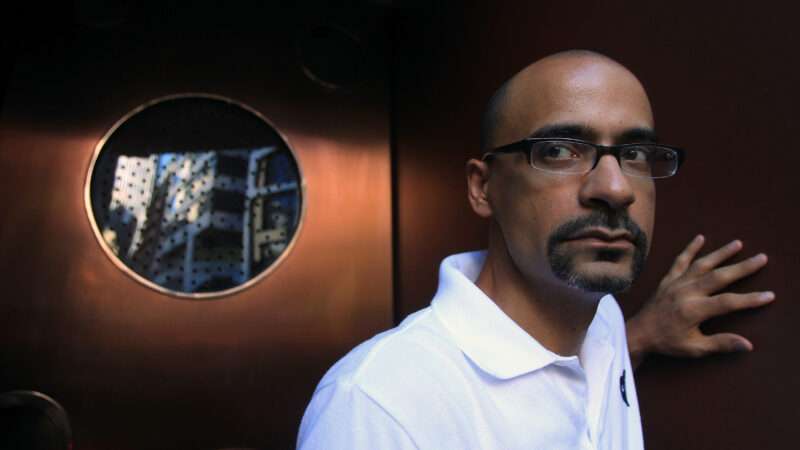
But there are loose ends still to be tied. And on this front, the remarkable reporting on Junot Diaz published late last month by Ben Smith of Semafor stands out, revealing not just the movement’s far-reaching impact but its limitations and unintended consequences. Diaz was never the movement’s greatest monster, his cancellation never one of its biggest victories. But the story of what happened to him has a “now it can be told” feeling about it, even as some angry commentators continue to insist it should not, and can never, be told. 

It all seemed righteous enough at the time, when the movement was at the height of its momentum and any allegedly bad man could not be defenestrated quickly enough: Diaz, a Pulitzer-winning novelist and one of the most celebrated writers in the contemporary American canon, was accused of one “forcible kiss” and two misogynistic tirades, all of which was immediately shorthanded per #MeToo best practices to the nefarious-sounding “pattern of predatory behavior.” 

His swift departure from the literary public sphere seemed like confirmation that a predator was what he was, although if you had been paying close attention, you might have noticed that he held onto his job at MIT even as literary activists on Twitter eagerly announced the removal of his books from their shelves and their classroom syllabi. 

The incompleteness of Diaz’s ruination was the first sign of the truth that Smith’s reporting would reveal: an independent investigation found that the charges against him ran from unsubstantiated to outright false. An audio recording of one of the so-called tirades revealed it to have been, at best, mild disagreement; people present for the other one said they didn’t remember it happening the way the accuser said. And the forcible kiss? A peck on the cheek. 

If some of those who celebrated Diaz’s ostracization from public life felt chagrined to learn that they’d been misled, it was not readily apparent in the response to the piece. “I hope the sexual harasser is at least paying you for the nice PR,” read one representative reply on Twitter. 

It’s fair, though, to ask how much said so-called P.R. will be worth for a man whose innocence of the charges against him has been a knowable fact for years, yet has done nothing to restore his reputation. The fact that Diaz didn’t sexually harass anyone, that an independent investigative body spent months determining that he didn’t, doesn’t matter. He is, per the narrative, a harasser. 

As much as the #MeToo movement revealed about the true and terrible nature of men, it also revealed something about women. Their courage and resilience in the face of oppression, certainly, but also their opportunism, their skill at turning interpersonal conflict into a clout-seeking exercise. The prospect of litigating every disappointing encounter, every heartbreak or act of disrespect, in a trial by internet, quickly resulted in the stunning spectacle of women voluntarily surrendering every last shred of their sexual agency for the promise of seeing some jerk get his. 

There was the woman who had what could be most accurately described as a bad date with Aziz Ansari: In addition to Ansari’s sexual overzealousness, much was made of the fact that she was served white wine, when she prefers red. There was the one who equated rape with her boyfriend’s insistence that she wear a certain style of eye makeup. There were the Diaz accusers: the one who described a heated dinner party conversation as “verbal sexual assault,” the one who described herself as “a wide-eyed 26-year-old” when the author “cornered” her and kissed her cheek. 

And while the #MeToo narrative tells us that men are monsters, it’s less sure what to make of women. Are they the competent professionals of She Said? The tragic victims of The Hunting Ground? The broken but badass revenge-seekers of Promising Young Woman, using feminine wiles to dish up a well-deserved comeuppance? 

Or maybe they’re best represented by the reluctant hero of the horror film Barbarian, one of the most interesting cultural properties to be born out of the miasma of #MeToo—and, sad to say, a far better-made and more watchable film than She Said. There are many different kinds of monsters in this story, but also an unusual sort of hero: the final girl, Tess, whose fatal flaw is that she’s just too good, too nice, too willing to believe in the inherent goodness of people. We know, though she doesn’t, that a sleazy Weinstein-esque character played by Justin Long is an irredeemable baddie: Asked by a friend what really happened between him and a woman who accused him of rape, he equivocates: “She took a little convincing.” The fact that Tess tries to save this man’s life is to her credit, but from a #MeToo perspective, it makes her a useful idiot for the enemy: it is her decency standing in the way of the narrative’s satisfaction, preventing this monster from getting what he deserves—what he really deserves.

In real life, of course, there’s no danger of this. With the exception of Bill Cosby, who was convicted but released due to prosecutorial overreach, the worst of the #MeToo monsters have not been spared. Some, like Weinstein, will deservedly die in prison. Others have been so thoroughly toppled that they’ll never again hold a position of power that they can abuse. 

And yet, looking back over the lists of canceled men, it’s striking how few cases rise to the level of a Weinstein, how few of them even come close. The net cast by the movement ultimately caught far more men like Diaz: guys who weren’t formidable serial predators but ordinary jerks, possessed of just enough name recognition to make it worth something to target them, but so little power that knocking them down took hardly any effort at all. Men whose behavior would have been written off as merely annoying or tacky or impolite, if not for the heady influence of a moment in which it was not just easy but a little bit fun to cast these moments as representative of systemic injustice, of the trauma inflicted on women for centuries by the careless, callous patriarchy. 

There was, for a time, an almost party-like atmosphere surrounding the emergence of each new allegation, the humiliation of each accused man. One recent #MeToo retrospective in New York about the “Shitty Media Men list,” a crowdsourced Google spreadsheet gathering allegations of everything from rape and violent assault to creepy DMs and awkward lunch invitations, offered up a remarkable quote from one of the women involved in making it: “It was the most fun thing I’ve ever done in my life.”

It’s rare to see anyone say so quite so out in the open, but this is the thing: It was fun. It’s a feature, not a bug, that most #MeTooings became such public spectacles, fueled by an energy that less resembled the grueling work of activism than it did the malicious glee of a bunch of high school kids scribbling in a burn book.

Five years after the movement’s inception, we don’t want to look too closely at that part. Better to self-mythologize with prestige dramas about intrepid journalists, thrillers about victims getting revenge, even horror that affirms the need to be maximally merciless to the monsters among us—and to criticize in the most punishing terms anyone who dares suggest that maybe, in the excitement of seeing bad men knocked down like dominoes, we became a bit monstrous ourselves. 

The post Are We Entering an Era of #MeToo Reckoning? appeared first on Reason.com.

from Latest https://ift.tt/y1jukld
via IFTTT

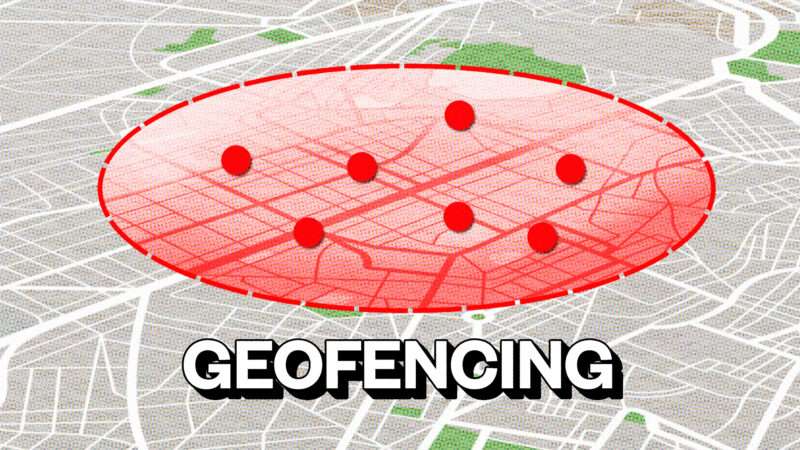
Geofencing Warrants Are a Threat to Privacy


Geofencing in a certain area on the map

The House committee investigating the events of January 6, 2021, is nearly finished with its work, and a jury convicted a key figure in the attack on the Capitol of seditious conspiracy this week. Nearly 900 other criminal prosecutions of alleged rioters remain underway, and one case has shed troubling new light on how the FBI investigated these defendants.

The suspect’s name is David Rhine, and what makes his case unique, per Wired and Emptywheel, is his lawyer is the first to present a potentially successful challenge to the geofencing warrant the FBI used to place some defendants inside the Capitol building during the attack.

A previous Wired report last year found 45 federal criminal cases citing the warrant, which required Google to provide the FBI with data on devices using its location services inside a set geographic area—in this case, in or very near the Capitol. Rhine’s case has revealed just how expansive the FBI’s request to Google really was.

Google initially listed 5,723 devices in response to the warrant, then whittled the tally to exclude likely Capitol staff and police as well as anyone who wasn’t “entirely within the geofence, to about a 70 percent probability.” The final list of identifying details handed over to the FBI had 1,535 names. It included people whose phones had been turned off or put in airplane mode, and “people who attempted to delete their location data following the attacks were singled out by the FBI for greater scrutiny.

In about 50 cases, Wired notes, “geofence data seems to have provided the initial identification of suspected rioters.” Rhine is technically not among them—the FBI got a tip he’d been at the attack—but it was only through the geofencing warrant that agents were able to find surveillance footage showing him inside the building.

And that gets us to what’s troubling here: The Fourth Amendment requires search warrants to specify “probable cause, supported by oath or affirmation, and particularly describing the place to be searched, and the persons or things to be seized.” A geofencing warrant arguably allows law enforcement to work backward, to say, We think a crime was committed around this place and this time. Let’s sweep up location data for everyone who was there and investigate them all.

Legal experts differ on the constitutionality of this approach, but it sounds remarkably like a general warrant: “one that ‘specifie[s] only an offense,’ leaving ‘to the discretion of executing officials the decision as to which persons should be arrested and which places should be searched.'” General warrants are exactly what the Fourth Amendment is intended to preclude.

It’s easy to conjure scenarios where a geofence warrant would lead police straight to the guilty party with no collateral damage. If you are murdered alone in your house at the center of your 50 undeveloped acres at 2 a.m., and a geofencing warrant turns up one other person on the property at that time, then sure, there’s a solid (albeit not absolute) chance that person is the killer.

Yet as the Capitol cases show, that’s far from the only scenario in which a geofencing warrant might be employed, and once you consider a scenario with a larger group of people inside the fence, the risks begin to be obvious.

Beyond the constitutional objection, there’s the abrogation of privacy for everyone who isn’t guilty. A geofencing warrant gives the police a map of the movements of many innocent people’s phones. That map is not certain to be accurate; it does not prove that the phone’s owner was the one making those movements; and even with complete accuracy and certainty, there’s no guarantee police will interpret the map correctly. In 2020, for example, geofence data including a Florida man’s Runkeeper records got him wrongly accused of burglary. He avoided prosecution, but the ordeal cost him thousands of dollars.

Moreover, the innocence of the crime currently under investigation is no guarantee against some part of that movement catching an officer’s eye: Well, he couldn’t have done the murder because he wasn’t close enough, but he did go to this other house for 10 minutes at 1 a.m., and weren’t we thinking the guy who lives there is dealing?

It’s also easy to envision geofencing warrants undergoing the usual surveillance mission creep. Unless a challenge like Rhine’s succeeds, the “January 6 cases are going to be used to build a doctrine that will essentially enable police to find almost anyone with a cellphone or a smart device in ways that we, as a society, haven’t quite grasped yet,” American University law professor Andrew Ferguson told Wired. Left unchecked, law enforcement could decide geofence data would come in handy while looking for a journalist’s whistleblowing source, or perhaps at political protests.

That happened in summer 2020 in Kenosha, Wisconsin, when the Bureau of Alcohol, Tobacco, Firearms, and Explosives (ATF) used at least a dozen geofencing warrants. The stated purpose was identifying people responsible for the estimated $50 million in damage from rioting and looting, but it’s inconceivable that those warrants did not also sweep up the names of peaceful protesters, to say nothing of local residents and business owners uninvolved in the unrest. Maybe demonstrators will leave their phones at home for future protests, or maybe they’ll decide not to go at all.

Law enforcement use of geofence data is relatively novel, but it has skyrocketed in recent years: “Between 2017 and 2018, the number of geofence warrants issued to Google increased by more than 1,500 percent; between 2018 and 2019, over another 500 percent.” By last summer, Google said geofencing warrants comprise a quarter of all legal demands it receives.

That trend won’t stop absent legal constraint, and the January 6 cases—which have had a way of scrambling ordinary political alignments on criminal justice issues—could set a crucial precedent on this question. Whether it’s a good precedent, however, remains to be seen.

The post Geofencing Warrants Are a Threat to Privacy appeared first on Reason.com.

from Latest https://ift.tt/DS7dGj6
via IFTTT

“It is incomprehensible how this monarchy survives. . .”

On the 17th of September in the year 1665, the three-year old Charles II became King of Spain. And the odds were stacked heavily against him.

To start off, Charles was the unfortunate result of inbreeding; Charles’s mother was also his first cousin, in that Charles’s father was his mother’s uncle.

Let that one baffle you for a moment– I had to write it out on a piece of paper. In short, Charles and his mother both had the same grandfather (Phillip III), who himself married his own second cousin.

Needless to say, poor Charles was born with nearly every physical and mental disability imaginable, causing a French ambassador to remark, “He is so ugly as to cause fear, and looks ill.”

His tongue was so large that he could hardly eat, and his speech was unintelligible. He appears to have suffered from a terrible bone disorder, hormonal imbalances, rickets, neonatal herpes, renal dysfunction, and more. Plus he contracted nearly every potentially fatal disease in the book, including smallpox.

From the time of his birth, the entire royal court expected him to die quickly. So the unexpected demise of his father, followed by Charles’s ascent to the throne, caused a great deal of anxiety in the kingdom, especially given that Charles’s father had left behind a giant mess.

Spain had once been THE dominant power in Europe, and it hadn’t been that long ago that the legendary Spanish Armada had struck terror in the hearts of its rivals.

But that was all in the past. Decades of mismanagement had caught up with the kingdom. His father had nearly bankrupted Spain, between his hopelessly lavish lifestyle and endless military campaigns.

Charles inherited a kingdom with an almost empty Treasury, bad credit, declining military capability, and rivals nipping at their heels.

In short, Spain was in desperate need of a strong, effective leader who was capable of reversing the decline. Instead they got Charles.

Now, it’s hard to pin everything on Charles; you can’t blame the kid for circumstances of his birth. But it does seem unbelievable that someone so inept could be placed in the highest office in the land. I mean, we can’t possibly imagine something similar happening in our own time…

To make matters worse, Charles was surrounded by incompetent people. His mother/cousin defaulted on Spanish debt as regent in 1666 and almost single-handedly wrecked the Spanish economy.

Another of Charles’s courtiers, Juan Everado Nithard, signed the Treaties of Lisbon and Aix-la-Chapelle in 1668, both of which were absolutely terrible for Spain.

And Charles’s brother John Joseph was a notorious instigator who fomented conflict and power struggles in government.

These were just a few of the members of Spain’s political All-Star team that steered the kingdom even deeper into decline.

They oversaw widespread economic stagnation and further accumulation of debt. And their attempts to ‘fix’ the debt situation by manipulating Spain’s currency caused a rollercoaster of price instability– inflation, then deflation, then inflation again.

They supported the Inquisition’s war on freedom of thought and intellectual dissent; in fact, in 1680, Charles presided over one of the most violent public executions in the history of the Spanish Inquisition.

They ignored the obvious rise of their rivals, and in many respects even collaborated with their adversaries. They failed to arrest the decline of their army and navy. Yet they consistently allowed Spain to be pulled into the military conflicts of other nations.

In short, they were a total disaster for Spain, causing a visiting ambassador from Venice to remark, “It is incomprehensible how this monarchy survives.”

This is one of the many, many case studies throughout history in how nations and kingdoms decline. And the formula isn’t difficult to understand: decades of bad leadership and bad decision-making cause decline.

Obviously the exact circumstances and particulars are different today. But future historians may one day make the same remark about the current administration.

We’re talking about a group of people who gave away $100 billion worth of military equipment to their sworn enemy in Afghanistan. They have continued to silence intellectual and ideological dissent. They have eroded confidence in the currency and enacted policies which have helped engineer record-high inflation.

They have waged war on the energy sector, resulting in higher prices and outright shortages. They’ve ignored the military’s historic declines in readiness and recruiting. They have fomented social conflict, destroyed trust in basic institutions, and eroded the nation’s reputation.

Plus they’re led by a guy who, to be polite, isn’t in full control of his mental faculties. Like the reign of Charles II, it all does seem quite incomprehensible.

Now, Charles II was not the end of Spain. Obviously the nation still exists today, and it didn’t end when he died in the year 1700.

But he left Spain so weak that it was no longer in control of its own fate. Spain’s future, including the decision of who would become king after Charles, were both ultimately determined by foreign powers.

Again, this wasn’t the end of the world. The ground didn’t simply open up and swallow an entire civilization. Spain lived on. Its great cities lived on. Its culture and people lived on.

But its dominance ended.

This has been the cycle of countless great powers over and over throughout history, from Babylonia to Britain: empires rise, peak, and decline.

This is most likely the fate of the United States as well. And the all-stars in charge right now are making that happen sooner rather than later.

The truly irritating part is that many of the US’s main challenges are fixable.

It would take a long time (and be painful), but America’s enormous mountain of debt is still fixable. Social Security’s gargantuan funding gap is fixable. The energy challenges are fixable. The decline in US military preparedness is fixable.

But there is a point of no return. And the longer these problems fester, the more likely they’ll become unfixable without causing a major crisis. Many of America’s challenges are already very close to that point.

Correcting the trajectory obviously requires serious leadership and sound decision-making. And one can certainly maintain hope for the future. But ‘hope’ is a poor excuse for an actual plan.

This is why it makes sense to give yourself options. If the West remains on its current trajectory, the way down will continue to be painful. Higher taxes. Higher inflation. More bureaucracy. Slower growth. Deeper social conflicts.

And that’s a fairly benign scenario. There are also risks of war, unparalleled sovereign debt crisis, currency crisis, and major social upheaval.

Like Spain in 1700, the ground isn’t going to open up and swallow everyone whole. The world won’t suddenly cease to exist. Life will go on.

But it seems ridiculous to simply refuse to take basic precautionary measures to mitigate such obvious risks.

For example, when the government itself forecasts that Social Security’s trust funds will run out of money within a decade, it’s prudent to plan an alternative way to secure your retirement.

When politicians are shrieking for higher taxes just so that the government can pay people to stay home or give $100 billion worth of military equipment to the Taliban, there’s no harm in taking completely legal steps to reduce what you owe.

When social conflict is so tense that you can’t even go to brunch on a Sunday morning without being accosted by an angry mob, it’s not a terrible idea to consider a second residency in a more peaceful place.

And if by some miracle voters across the land manage to elect real leaders who actually start solving these momentous challenges– and a new era of prosperity blooms– you won’t be worse off for having taken any of these steps.

This is what it means to have a Plan B. And frankly it’s incomprehensible how someone could expect to survive this tumultuous period without one.

Source

from Sovereign Research https://ift.tt/nwWj1T0
via IFTTT
All About That Base, No Trouble

All About That Base, No Trouble

By Peter Tchir of Academy Securities

Last weekend we published Positioning & Key Drivers. Much of the work on interest rates followed up on the previous week’s Rates, Risk & Taylor Swift, but we really wanted to highlight “positioning”, aka “the base”. Positioning has been forming the “base” for market moves in both directions.

The market’s response to Fed Chair Powell finally agreeing with us (they have to be much more cautious on rate hikes going forward) exposed the broader positioning in bonds and possibly equities. The rallies were strong, though I’d argue that the equities rally was less about positioning and more about people finally having to accept that the Fed has little interest in driving the economy into the ground. Powell’s message was not contradicted by other Fed speakers and was actually reinforced by them (all good for stocks).

There is some furious debate over Friday’s market behavior.

What Did Friday’s Price Action Tell Us?

Price action early in the week was quite obvious. We saw weak data come in, which was coupled with the Fed pulling back on their tightening narrative (terminal rate is probably still too high).

Friday saw stocks and bonds collapse after the Non-Farm Payroll data was released. The strong headline data wasn’t the key driver (though it had some impact). What drove the initial sell-off in stocks and bonds was the high and unexpected jump in average wages. That part is clear. What is less clear is why stocks and bonds reversed course (the 10-year came back from 3.63% to 3.48% and the S&P 500 e-mini futures rebounded from 4,007 back to 4,075 at the 4pm close). There are two competing theories:

  • It’s all about the base. Positioning was so bearish that the market had to rally on news that just a couple of weeks ago would have sent it spiraling down. There is some logic to this, but there is little evidence that the market is so bearishly positioned. We can concede that the market isn’t overly bullish, but this “short covering panic theory” leaves a lot to be desired, at least for me.

  • People questioned the data. For those of you who are sick and tired of reading T-Reports highlighting inconsistencies in the data (big focus on jobs and owners equivalent rent), you may have received many such notes from others this past week. My inbox and social media channels were filled with people questioning the jobs report. There was the now “obvious” discrepancy between the Establishment and the Household Surveys (the Household showed job losses). The data from 2 months ago got revised down (again). There were questions about the birth/death adjustment (was high in a period where other evidence showed that existing small businesses struggled, which isn’t typically a sign that new small businesses were being created rapidly). There were also questions about the historically low response rate (possibly due to timing of the survey and Thanksgiving). Finally, many people started to question if the new and improved ADP data isn’t the better data to watch.

Maybe neither explanation is correct?

No Trouble?

Maybe there are two other big factors influencing markets:

  • The potential for some form of armistice, truce, détente, or something between Russia and Ukraine. While many members of our Geopolitical Intelligence Group see the slog grinding through the winter, there are three things that I think have changed, making some sort of peace more likely.

    • The U.S. election is over. Whether we like it or not, support of Ukraine was an election issue. This support had already started to break down along party lines. Why? I don’t know, but that is certainly my perception. So, with the election over, the ongoing cost of supporting Ukraine with weapons and aid will come to the forefront. The tricky question of “how does this end?” will rise to the top. Can we give Ukraine enough support to push Russia completely out? Possibly, but at what expense and where does that leave Putin and Russia?

    • Energy. It is the winter and energy needs are spiking. The West is set to impose more sanctions and there is something about price caps (which I admit I haven’t read, because they are so unlikely to work and far more likely to backfire). Russia, by all accounts, has done a much better job than the West in securing transport for their fuel (not shocking as we pat ourselves on the back about sanctions while they are busy working around the issues). The logistics of these new sanctions will cause the amount of transportation needed to skyrocket. Quite simply, energy markets used to be somewhat efficient. A delivered to B and C delivered to D because they were closer. If A has to ship to D and B has to ship to C, the distances are longer. Ships would be at sea for longer, reducing the number of shipments. For a lot of reasons, addressing global energy concerns may take precedence over what Ukraine wants (and possibly even deserves).

    • Winter. Winter was already mentioned in the energy discussion, but it plays several other roles. Academy’s GIG expects Russia to try to take advantage of frozen rivers to renew their attack on Ukraine. Russia needs to push west and all the rivers run north/south. At the moment, this forces the Russians to cross over bridges in very specific areas which are easily defended by Ukrainians with their highly capable weapons systems. Frozen rivers could help the Russians, but increasingly the efficiency of Ukrainian soldiers will make any Russian advance more difficult. That has led to targeting more and more infrastructure in Ukraine. Ukrainian winters are bleak at the best of times, let alone without the energy and raw resources needed to survive. The human toll will be bad for Ukraine even if they are technically “winning.” Finally, the forced migration of Ukrainians into Europe is placing unexpected burdens on the countries receiving those refugees. The longer the war and destruction lasts, the less likely people are willing or able to go “home” when it is all said and done. Winter will crystalize many risks.

    • China. China seems to be nudging Putin along. You could almost argue that Xi, when he met with Putin, gave him a “win it, or get out ultimatum.” Let’s not fool ourselves, China would be okay with a Russian victory, but they are tired of the daily headlines. Since Russia hasn’t achieved this victory there could be pressure on Putin (whose health is being questioned again in some circles) to find some “graceful” way out. Putin is a bully, but even bullies recognize bigger bullies and try to appease them.

  • The end of China’s zero-COVID policy. This attracts a lot of attention and seems logical (at least from our perspective). It seems realistic that China will set in motion steps to have fewer and less severe restrictions after the winter (there is that word again). That should be good for global supply chains, but with inventory levels already too high, I’m not sure how much of a bounce can be expected from China shifting their policy.

Of all these narratives, I like the “peace” one the best (as you can tell by the time spent on that subject relative to others). If we get another big rally in stocks, it could be linked to developments on this front.

Mo Trouble?

We’ve examined no trouble, so what could cause more trouble? We covered this in more detail in Doesn’t Goldilocks Get Eaten in the End?, so we will just highlight the key issues.

  • The Fed has already set the dominos in motion. The wealth effect and higher rates are bringing the economy to a screeching halt in some areas that will in turn impact others.

  • The recession is coming sooner and will be deeper than expected (we will ultimately recover, but first we need to get through the recession fears).

  • Quantitative tightening is like a nagging cough. It doesn’t seem too bad, but it certainly isn’t good, and you have to be worried about whether it will develop into something more severe. Without a doubt the Fed is committed to balance sheet reduction (because they now believe what I’ve believed all along – that QE affects asset prices directly and that is a big issue and one they want to resolve).

When does bad news become bad? My guess is soon, even after Friday’s reversal (remember, Friday’s NFP data wasn’t really “bad” in any traditional sense, so it’s difficult to garner much information on how the market will respond to truly bad economic news, especially on the jobs front).

The Pseudo-Random Wildcard!

I like using the term pseudo-random as opposed to random because it sounds “smart,” but is actually appropriate as I’m going to apply it to the trading of daily and weekly expiration options. The prominence of these very short-dated options should not be understated. Report after report comes in showing that volumes in these options are increasing and are a large part of all options trading. This includes not just open interest, but also the back-and-forth trading of these contracts. This literally sets us up for large gamma moves each and every day. Any significant move has a greater likelihood of triggering additional buying or more selling, rather than encouraging profit taking or dip buying. It’s a minefield out there wondering what price point triggers buying from those who sold options, which in turn risks pushing levels to the next option point. It is a massive wildcard in trading these days.

But it is not random. There are clearly strategies involved in trading these and just because I don’t understand them (yet) doesn’t mean we should ignore them.

I’m reasonably certain of two things about these short expiration options:

  • They mostly amplify already large moves.

  • They allow markets to shift from seemingly being overbought to oversold in record time (and vice versa).

In terms of learning more, this is an area that requires more study and better understanding.

Bottom Line

If it weren’t for my “hopes” that we will see some progress with Russia and Ukraine, I’d be in full anti-Goldilocks mode. Barring any positive news out of this war, I’d like to be in a “risk-off” position. Long/overweight bonds (especially in the 2-to-7-year part of the curve) and short/underweight credit spreads and equities.

Since this is what I believe most strongly, it is what I should do.

But, if you can’t beat them, join them, so I’d also buy some daily or weekly calls to benefit from any headline risk.

Maybe the “everyone is short thesis” is correct, but I’m still not there and don’t believe that last week really supported this theory. The moves were rational given the data (and guesstimating the impact of the short-dated expiration options).

On the Fed, I don’t expect them to backtrack, and I am looking for the data to drive the terminal rate lower.

It isn’t often that you can be in bearish mode with world peace as the risk against you, so hopefully we get that peace dividend and the daily call options pay off!

Tyler Durden
Mon, 12/05/2022 – 10:50

via ZeroHedge News https://ift.tt/CIprcfh Tyler Durden