Large Israeli Missile Strike On Damascus Kills 4, Follows Lull In Attacks

Large Israeli Missile Strike On Damascus Kills 4, Follows Lull In Attacks

After weeks of relative quiet, the Syrian capital of Damascus was rocked by Israeli missile strikes in the early Monday morning hours, resulting in the deaths of four Syrian soldiers and several more wounded, according to state agency SANA.

The attack also caused unspecified “material damage” – while multiple inbound projectiles were reportedly intercepted by Syrian air defense. Videos which emerged in the aftermath appeared to show intercept explosions above the city in the overnight hours.

Illustrative file image of a 2019 Israeli attack on Damascus.

“At around 02:20 am on Monday, the Israeli enemy carried out an aerial act of aggression from the direction of occupied Syrian Golan, targeting some sites in Damascus,” SANA described.

“Our air defenses intercepted the missiles and shot down some of them, and the aggression resulted in the martyrdom of four army personnel and the injury of four others, in addition to causing some material damages,” the local report added.

The Associated Press cited an anti-government group based in the UK to claim that the fresh attack “targeted weapons and munitions warehouses and positions of Iran-backed militias around Damascus.” And yet, the Syrian government is saying only its soldiers were among the dead, not Iranians. 

Over the past couple of years these kinds of Israeli attacks have been semi-regular, often coming weekly, but lately have been less so.

For example, the last significant missile attack on Damascus was on July 19, and it killed three pro-government fighters and injured multiple others. There has been an estimated 20 Israel attacks on Syria so far this year alone.

The New York Times has detailed of the July attacks:

Last month, Israeli forces attacked seven targets in Damascus, according to Israeli reports. They were said to include warehouses used by Hezbollah, the Lebanese armed group, which, along with Iran, has supported the government of President Bashar al-Assad in the Syrian civil war.

Currently there are also rising tensions between the US and Russia in Syrian skies, given the recent dangerous aerial intercepts which have taken place, involving Russian fighter jets and American drones.

Militias described as ‘pro-Iranian’ groups have also been increasingly active in pressuring US occupation forces in the oil and gas rich northeast. US forces have been cutting Damascus (and the Syrian population) off from its own resources.

There are also early signs suggesting Syrian and Russian forces could be planning for a future major operation to liberate Idlib province in Syria’s northwest, which since 2015 has been in the hands of West-backed jihadists, including Al Qaeda groups. 

Washington has long maintained it is engaged in ‘counter-ISIS’ operations in Syria, but it was always really about weakening and cutting off the Tehran-Damascus-Hezbollah axis.

Tyler Durden
Mon, 08/07/2023 – 17:20

via ZeroHedge News https://ift.tt/YlJeMFh Tyler Durden

Most Americans Oppose More Spending On Ukraine War, Poll Finds

Most Americans Oppose More Spending On Ukraine War, Poll Finds

Authored by Dave DeCamp via AntiWar.com,

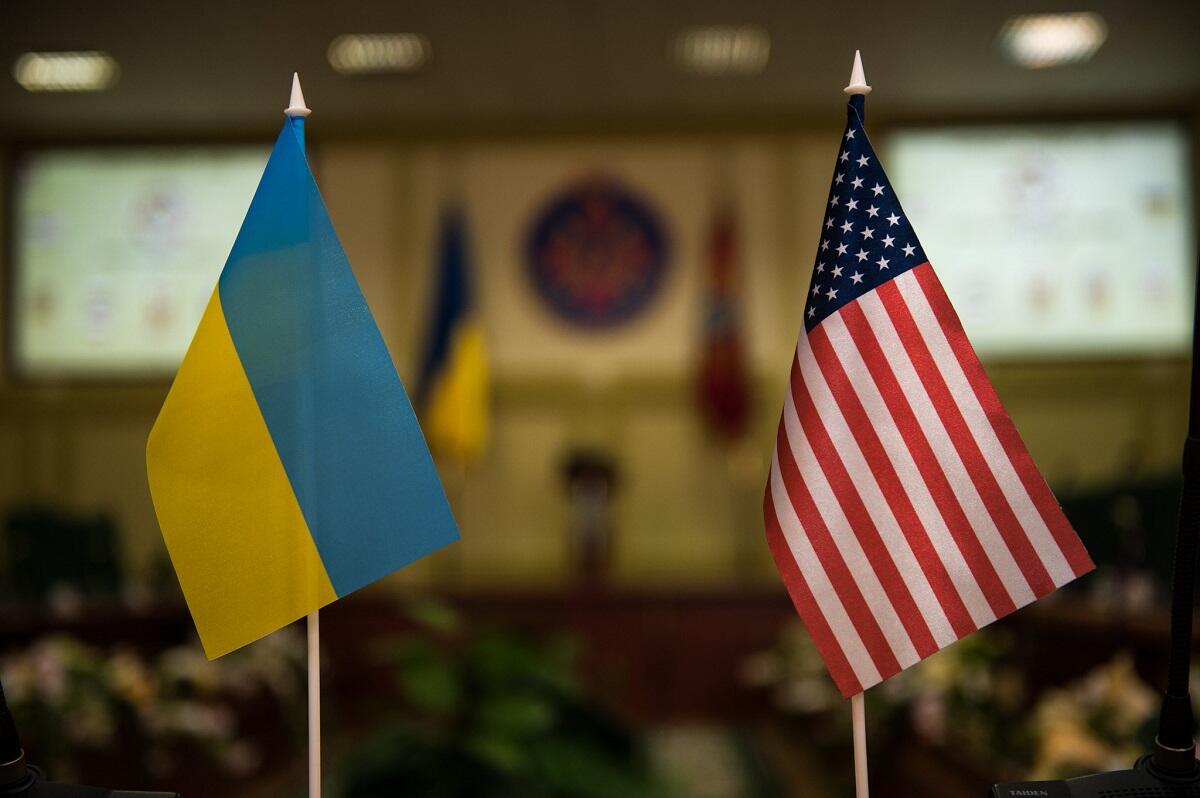
The majority of Americans oppose additional spending on the war in Ukraine, according to a CNN poll that was released on Friday.

The poll was conducted by SRSR from July 1-31, with a sample size of 1,279 respondents. It found that 55% of the respondents say Congress should not authorize more spending on the war in Ukraine, while 45% say more funds should be authorized.

When asked if the US has done enough to support Ukraine, 51% said yes, and 48% said more should be done. The results show how support for the policy of backing Ukraine against Russia has waned as the conflict has dragged on.

U.S. Army Europe, Flickr

A poll conducted when Russia first invaded in February 2022 found 62% of respondents thought the US wasn’t doing enough.

When asked about what type of support the US should provide Ukraine, only 17% of respondents favored sending in US troops for direct combat operations against Russia, which could quickly spiral into a nuclear war. The most popular type of support was assistance with intelligence gathering (63%), followed by military training (53%) and providing weapons (43%).

More Republicans oppose additional aid for Ukraine than Democrats, as has been the theme in polls throughout the war. The poll found that 71% of Republicans are against Congress authorizing more spending on the war, and 59% believe the US has done enough.

The majority of Democrats want the US to provide more support for Ukraine, with 62% in favor of new funding and 61% saying the US hasn’t done enough.

So far, Congress has authorized $113 billion in spending on the war in Ukraine. The poll comes as the White House is expected to ask Congress this month to approve another spending package for Ukraine.

According to Financial Times, President Biden wants to include military aid for Taiwan in the new Ukraine aid bill as the US is increasingly focused on preparing for a future conflict with China.

Tyler Durden
Mon, 08/07/2023 – 17:00

via ZeroHedge News https://ift.tt/h1BMONb Tyler Durden

Here Is Why Trump’s Lawyers Say His Post-Election Conduct Was Constitutionally Protected


Trump's First Amendment defense comes back to the question of whether he sincerely believed the election was stolen.

The indictment that Special Counsel Jack Smith unveiled last week portrays Donald Trump’s efforts to reverse Joe Biden’s victory in the 2020 election, including his appeals to state officials and Vice President Mike Pence, as a criminal conspiracy that violated three federal statutes. Trump attorney John Lauro, by contrast, argues that his client was merely exercising his First Amendment right to petition the government for redress of his grievances.

Lauro, who outlined the former president’s defense in interviews on ABC, CBS, NBC, CNN, and Fox News yesterday, said Trump believed then and still believes his grievances about the election were justified. And in pressing election officials, state legislative leaders, and Pence to act on his unsubstantiated fraud claims, Lauro maintains, Trump was pursuing remedies he reasonably believed to be legitimate. As Lauro sees it, Trump therefore lacked the criminal intent that federal prosecutors will have to prove beyond a reasonable doubt.

When Trump asked Georgia Secretary of State Brad Raffensperger to “find” the votes that would be necessary to award him that state’s 16 electoral votes, for example, he was not, according to Lauro, soliciting election fraud. To the contrary, he was asking Raffensperger to do his job by correcting election fraud. Likewise when Trump asked Republican legislators in states such as Arizona and Michigan to certify his electors instead of Biden’s.

What about the “alternate” electors who, at the urging of Trump’s lawyers, presented themselves as “duly elected and qualified” in seven states that Biden had officially won? “Alternate electors are used in every four-year cycle,” Lauro told Dana Bash on CNN. “The Senate parliamentarian acknowledged to Vice President Pence that they always receive protest alternate electors. None of those electors were counted. Vice President Pence was completely aware of the nature of the protest, of the nature of the right to speech.”

In public comments and in private conversations with Pence, Trump urged him to accept those “alternate” slates and/or reject Biden’s when he presided over the congressional tally of electoral votes on January 6, 2021. Had Pence done that under the scenario that Trump imagined, the Republican-controlled House of Representatives would have resolved the purported conflict. But Lauro emphasized that Trump “ultimately” asked Pence merely to “pause” the tally so that the relevant state legislatures would have an opportunity to reconsider which slates should be recognized.

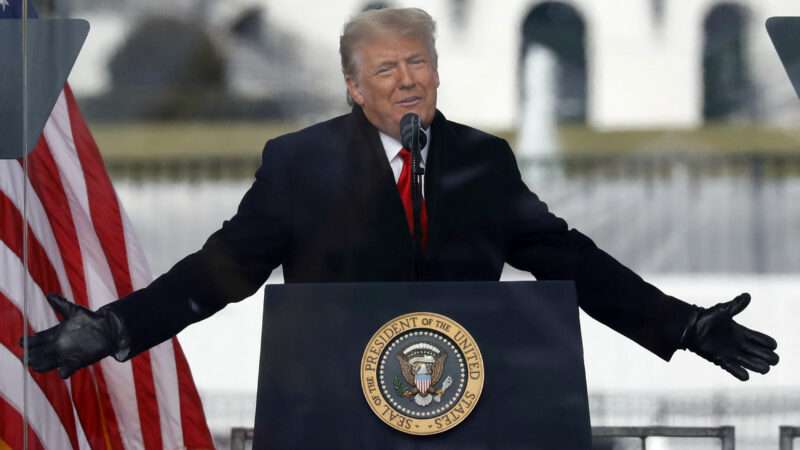
This was Trump’s “final ask,” Lauro said, as reflected in the speech he gave during the “Save America” rally at the Ellipse that preceded the Capitol riot. “If Mike Pence does the right thing, we win the election,” Trump told his supporters. “States want to revote. The states got defrauded. They were given false information. They voted on it. Now they want to recertify. They want it back. All Vice President Pence has to do is send it back to the states to recertify, and we become president, and you are the happiest people.”

As the indictment explains, it was not true that “the states got defrauded,” at least not in the sense that fraud was extensive enough to make a decisive difference—a claim that was repeatedly debunked by state and federal officials, including Republicans who had supported Trump’s reelection. Nor was it true that state legislatures “want[ed] to recertify”; to the contrary, the Republican legislative leaders to whom Trump appealed uniformly rejected that suggestion. But in making his “final ask,” Lauro says, Trump was relying on legal advice from John Eastman, a former dean of Chapman University’s law school and “an esteemed constitutional scholar.”

Eastman acknowledged that the “pause” he proposed would violate the Electoral Count Act. But that statute, he argued, was unconstitutional, so the course of action he recommended would be consistent with a higher law, although he also admitted it was likely that the Supreme Court would unanimously reject that claim.

Pence repeatedly refused to do what Trump wanted, saying it was not within his constitutional powers as vice president. But as Lauro tells it, this was a disagreement with colorable arguments on both sides, and Trump did not commit a crime simply because he favored the side that was consistent with his cause.

Pence has repeatedly condemned Trump for demanding that “I choose him over the Constitution.” He has described the advisers on whom Trump relied as “crank” and “crackpot” lawyers. But even Pence has expressed skepticism about whether Trump can be held criminally liable for listening to them.

The indictment describes Eastman as one of Trump’s co-conspirators. Civil rights attorney Harvey Silverglate, who is representing Eastman, argues that he did nothing to justify that characterization. “He acted in the highest traditions of the legal profession to advise his client, even if some of his theories were at the very boundary of the law,” Silverglate wrote in a letter to The Boston Globe. “There is nothing unlawful, much less criminal, about coming up with creative, boundary-pushing legal theories.”

While Pence rejected Eastman’s theories, Lauro says, he was sympathetic to some of Trump’s claims—in particular, his complaints about pandemic-inspired changes to election procedures. According to Lauro, Pence—who, like many others in Trump’s circle, did not buy his stolen-election fantasy—nevertheless agreed that it was appropriate for Congress to consider allegations of election irregularities, although he did not agree that they justified sending supposedly disputed slates “back to the states.”

While “people disagree about constitutional principles all the time,” Lauro said on NBC, “it never leads to a criminal charge.” Trump “acted under the advice of counsel when he petitioned” Pence, Lauro added, and that was protected “under the First Amendment.”

In short, Lauro says, the Justice Department is attempting to criminalize differences of opinion about an empirical question (whether systematic fraud delivered a phony victory to Biden) and legal questions such as the propriety of “alternate” electors and the constitutionality of the intervention that Pence rejected. The government’s case, he argues, is plainly inconsistent with the First Amendment, which protected Trump’s right to complain about the election and his right to solicit the assistance of state and federal officials in addressing his complaints.

George Washington University law professor Jonathan Turley has a similar take. Writing in The Hill, Turley notes that the First Amendment protects political speech even when it is false and even when the speaker knows it is false, as the indictment acknowledges: “The Defendant had a right, like every American, to speak publicly about the election and even to claim, falsely, that there had been outcome-determinative fraud during the election and that he had won.”

Yet the case against Trump, Turley argues, “sets up the federal government as the arbiter of truth” and “essentially charges Trump with not accepting the ‘truth.'” If Trump sincerely believed that the election was stolen, he says, “the indictment collapses,” because that means he did not have the criminal intent required by the government’s conspiracy charges.

“In an effort to demonstrate his knowledge, the indictment details how many people told Trump that he was wrong about the election and wrong about the law,” Turley writes. “I was one of those voices. Trump did not listen to me, most legal analysts or even his White House counsel. Instead, he listened to a small group of lawyers who assured him that a challenge might succeed and that there was evidence of massive election fraud. But Trump is allowed to seek out enablers who tell him what he wants to hear.”

George Mason law professor Ilya Somin thinks that’s wrong. “Even if Trump did manage to delude himself into believing he had actually won the election, his conduct was still culpable,” Somin writes in a Volokh Conspiracy post. “If I steal your valuable ring because I have persuaded myself (despite overwhelming evidence to the contrary) that I am its true owner, I am still guilty of theft. The same logic applies here. Trump had every reason and opportunity to learn he had lost. If instead he chose to indulge in self-delusion, which he then used to justify his scheme to overturn the election, he is guilty for much the same reasons as the thief who—without any justification—imagines himself to be the rightful owner of the object he steals.”

Nor does Somin think it makes a difference that Trump relied on legal advice from Eastman et al., any more than the imagined thief could escape conviction by citing “cr[a]ckpot lawyers” who “assured him he owned someone else’s property.” In any case, Somin says, Trump “had overwhelming evidence he lost [the] election and privately admitted he did.”

Smith clearly thinks evidence concerning what Trump “privately admitted,” which the indictment cites to show his claims were “knowingly false,” is important. But unlike the evidence regarding the election outcome, the evidence regarding what Trump actually believed, which is frequently contested or ambiguous, seems less than overwhelming.

As the Foundation for Individual Rights and Expression (FIRE) noted in a statement about the indictment, “fraud and speech integral to criminal conduct do not enjoy First Amendment protection.” But while “the government may, for example, criminalize lying on an insurance claim, or passing a note to a bank teller to commit bank robbery,” FIRE said, “these exceptions must remain narrow and well-defined in our laws and jurisprudence.” To convict Trump, it added, “a jury must hold DOJ to its burden of proving beyond a reasonable doubt that former President Trump (1) knew his election fraud claims were false but repeated them anyway—’corruptly’— in an attempt to (2) have others ignore their legal duties in order to (3) prevent certification of the electoral vote.”

Lauro thinks the government cannot possibly meet that test. Trump “believes he won, and the Biden administration will never be able to prove beyond a reasonable doubt that he didn’t,” he said on NBC. “What he’s being indicted for, ultimately, is following legal advice from an esteemed scholar, John Eastman, that he could petition his own vice president and ask his vice president to pause the voting on January 6th to give the states one last chance to certify or re-audit. That was the ultimate ask that President Trump made in his Ellipse speech. That’s clearly protected.”

The post Here Is Why Trump's Lawyers Say His Post-Election Conduct Was Constitutionally Protected appeared first on Reason.com.

from Latest https://ift.tt/Pi7tTp4
via IFTTT

Have We Lost Track of the Trump Indictments Yet?


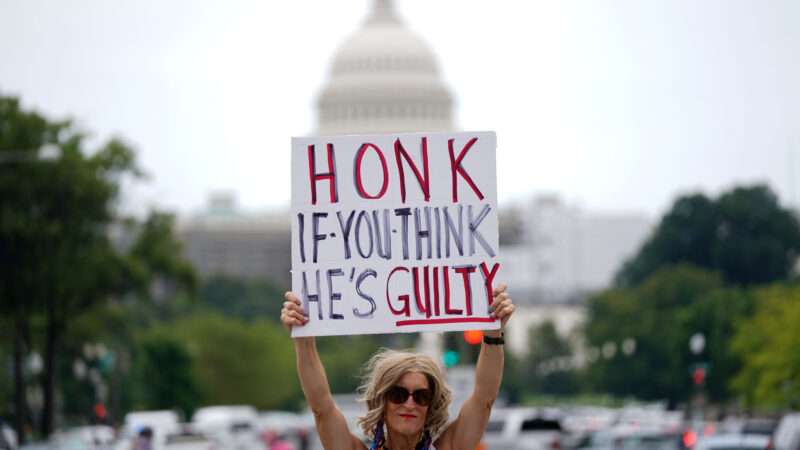
Protestor at US Capitol

In this week’s The Reason Roundtable, editors Matt Welch, Nick Gillespie, and Peter Suderman welcome special guest Elizabeth Nolan Brown as they unpack the latest indictment against former President Donald Trump. They also check in on the ongoing legal saga of the classified advertising site Backpage in the wake of founder James Larkin’s untimely death.

0:46: The latest Trump indictment

21:21: The legacy of free speech warrior James Larkin

46:25: Weekly Listener Question

53:27: This week’s cultural recommendations

Mentioned in this podcast:

Trump’s Prosecution Could Be Stymied by the Blurry Line Between Deceit and Self-Delusion,” by Jacob Sullum

Did Trump Really Believe the Election Was Stolen? Here Is Why It Matters.” by Jacob Sullum

2 Reasons It’s Not Clear That Trump ‘Corruptly’ Obstructed an Official Proceeding,” by Jacob Sullum

Should Trump go to prison?” by Zach Weissmueller and Nick Gillespie

Don’t Jail Trump for January 6,” by Robby Soave

Why the Press Conflates Prostitution with Sex Trafficking—and Why That’s a Threat To Free Speech,” by Nick Gillespie and Elizabeth Nolan Brown

FCC Head Ajit Pai on Section 230 and Free Speech,” by Nick Gillespie

Emails show CDC policed COVID speech on Facebook,” by Zach Weissmueller, Nick Gillespie, and Robby Soave

The 26 Words That ‘Created the Internet’—and Why They May Be on the Chopping Block,” by Nick Gillespie

Why the Government’s Legal Assault on Backpage.com Backfired,” by Nick Gillespie

The War on Backpage.com Is a War on Sex Workers,” by Paul Detrick

Politicians Want To Destroy Section 230, the Internet’s First Amendment,” by Paul Detrick and Elizabeth Nolan Brown

“‘Je suis Charlie’? No, You’re Not, or Else You Might Be Dead,” by Matt Welch

Send your questions to roundtable@reason.com. Be sure to include your social media handle and the correct pronunciation of your name.

Today’s sponsor:

  • Health insurance is broken. Premiums are increasing, deductibles are getting larger, and claims denials are becoming more common. The headache of health insurance is exactly why CrowdHealth was created. It’s not health insurance—it’s a better way to pay for health care through crowdfunding. CrowdHealth gives its members the freedom to efficiently and affordably break free from the antiquated insurance system and into a health care option that fits their needs. The insurance companies don’t give you the peace of mind you need. CrowdHealth does. That’s why your $50/month membership includes the tools and services you need to get the highest quality health care. You’ll get access to telemedicine visits, discounted prescriptions, and so much more, without doctors’ networks messing things up. Plus, you’ll have access to your own personal care advocate, who will help you navigate the complexities of health events and even negotiate bills on your behalf. And of course, you’ll join the Crowd—a group of members just like you who want to help pay for each other’s unexpected medical events. It’s time you opt out of restrictive health insurance plans and let CrowdHealth help fit your health care needs. Get started today for just $50 per month. Use code ROUNDTABLE to get the health care you deserve. CrowdHealth is not insurance. Learn more at joincrowdhealth.com, code ROUNDTABLE.

Audio production by Ian Keyser; assistant production by Hunt Beaty.

Music: “Angeline,” by The Brothers Steve

The post Have We Lost Track of the Trump Indictments Yet? appeared first on Reason.com.

from Latest https://ift.tt/6Zym1VB
via IFTTT

Yellow Corporation To Close, Lay Off 30,000 Employees, and Likely Default on $700 Million Pandemic Aid Loan


Trailers labeled with Yellow Corporation's logo.

Last month, Reason reported that Yellow Corporation, the trucking company formerly known as YRC Worldwide, was laying off employees and would soon file for bankruptcy.

In a Sunday night press release, the company confirmed that it had filed for Chapter 11 bankruptcy protection. It plans to “wind down” its business operations and lay off its 30,000 employees.

The majority of the press release blames the International Brotherhood of Teamsters (IBT) trucking union, of which 22,000 of the company’s 30,000 employees are members. Yellow CEO Darren Hawkins criticizes the union for “literally driving our company out of business” due to “nine months of union intransigence, bullying and deliberately destructive tactics.”

Yellow has spent much of the last year locked in contract disputes with IBT: The company claims that IBT leadership refused to sign off on Yellow’s restructuring and modernization plans, which it deemed “essential to the Company’s survival”; Yellow ultimately sued the Teamsters for $137 million. In internal messages seen by Reason in July, some employees blamed IBT for being laid off, with one writing “Thank you Teamster[s] for ruin[ing] our lives.”

IBT, meanwhile, called Yellow “humiliatingly mismanaged” and charged that the company was delinquent on “contractually obligated payments to sustain critical health and welfare and pension benefits for workers.” After news of the bankruptcy, Teamsters General President Sean O’Brien said, “Teamster families sacrificed billions of dollars in wages, benefits, and retirement security to rescue Yellow,” including pay cuts in 2010 and 2011.

But the situation is more complicated than a disagreement between a company’s management and its workers. In 2020, as countless companies struggled during the COVID-19 pandemic, Congress apportioned trillions of dollars to help both workers and companies survive the sudden economic blow. But hidden in that amount was a $17 billion fund under the Treasury Department’s sole control, to be disbursed to companies deemed necessary to national security.

In May 2020, Sen. Jerry Moran (R–Kan.) petitioned then-Treasury Secretary Steven Mnuchin for help on Yellow’s behalf; six weeks later, the company was approved for a $700 million loan, and in exchange, the government took a 29.6 percent stake in the company. The Treasury Department later explained that Yellow was “the leading transportation provider to the Department of Homeland Security and U.S. Customs and Border Protection.” But at the same time, the Department of Justice was suing Yellow over allegations that the company overcharged the government by inflating its freight volumes. (The company settled the case in March 2022 for $6.85 million.)

Pandemic aid programs were intended to help otherwise profitable companies survive an unforeseeable economic disruption. Yellow, on the other hand, had gone from a net income of $20.2 million in 2018 to a net loss of $104 million in 2019. By the time the loan was approved in July 2020, the company’s stock price had fallen 85 percent over the previous five years, including a 27 percent drop since the beginning of 2020. At the time, Yellow’s value was $70 million, meaning the federal government had given the company a loan worth 10 times its value.

With Yellow’s bankruptcy, it will likely default on the entire loan amount and then some. An audit earlier this year by the Office of the Special Inspector General for Pandemic Recovery found that Yellow had not even kept up with the interest on the $700 million loan: As of March 15, “Yellow had an outstanding loan balance of $729.2 million, made $54.8 million in interest payments, and repaid $230 in principal.” In late July, a company spokesperson told Reason that the company had since paid $59.6 million in “cash interest payments.”

The post Yellow Corporation To Close, Lay Off 30,000 Employees, and Likely Default on $700 Million Pandemic Aid Loan appeared first on Reason.com.

from Latest https://ift.tt/rK2wyUC
via IFTTT

Why the U.S. Hasn’t Declared a Coup in Niger


dreamstime_l_173475883

Niger, a key U.S. ally in Western Africa, is undergoing a political crisis that has raised questions about the United States’ role in fostering foreign militaries in the name of fighting terrorism.

On July 26, Niger’s presidential guards, headed by Gen. Abdourahmane Tchiani, detained Mohamed Bazoum, Niger’s democratically-elected president, and declared “an end to the regime that you know due to the deteriorating security situation and bad governance.” The new junta, officially titled the National Council for the Safeguard of the Homeland, consolidated its control by suspending the constitution, dissolving all government institutions, and closing Niger’s borders.

The move drew outrage from a plethora of nations. The Economic Community of West African States (ECOWAS) condemned the “attempted coup d’état” and called for the immediate reinstatement of Bazoum while also instituting sanctions and threatening military intervention.

“The EU condemns in the strongest possible terms the coup d’état in Niger. The past days’ events constitute a serious attack on stability and democracy in Niger,” the European Union wrote in a press release.

The U.S. struck a similar tune as ECOWAS and the E.U., condemning Bazoum’s overthrow and calling for the restoration of Niger’s democracy while also suspending partnered activities with the Nigerien military. “We strongly condemn any effort to detain or subvert the functioning of Niger’s democratically elected government, led by President Bazoum,” said U.S. National Security Adviser Jake Sullivan in a statement.

But unlike ECOWAS and the E.U., the U.S. has neglected to call the overthrow a “coup” to avoid the legal ramifications of that declaration. According to Section 7008 of the annual Department of State, Foreign Operations, and Related Programs Appropriations Act, the U.S. is prohibited from sending foreign aid “to the government of any country whose duly elected head of government is deposed by military coup d’état or decree,” with an exception if the aid “is in the national security interest of the United States.” 

“I think when the State Department hesitates in [declaring a coup], what it’s trying to do is just keep its options open so that we can dial back our security assistance, perhaps on a temporary measure in the hopes of being able to restore democracy in the country or some semblance of democracy, civilian rule and so that we can keep that security assistance going,” explained Cameron Hudson, a senior associate for the Africa program at the Center for Strategic and International Studies, in an interview with NPR.

The Biden administration’s reluctance to label the overthrow a coup is unsurprising considering the United States’ significant security commitment to Niger. Presently, Niger hosts 1,100 U.S. troops, an increase of 900 percent since 2013. Those troops train and support Nigerien soldiers and run a $110 million drone base, which the Nigerien junta has restricted. The U.S. has invested $158 million in arms sales and $122 million in security assistance to Niger since the Trump administration began.

“The U.S. has wanted to have a role in West Africa largely because of great power competition. Because of that, Niger is one of a few countries that receive a lot of U.S. military assistance,” says Jordan Cohen, a foreign policy analyst at the Cato Institute. “The U.S. is unlikely to call it a coup because once it does that, that assistance has to freeze.”

By maintaining this flexibility, the Biden administration can avoid reducing its military footprint in Niger, even as it repeats platitudes about democracy. This is a trend for the administration, which refused to label the 2021 transfer of power in Chad between the deceased president Idriss Déby and his son Mahamat a military coup so that it could continue providing security assistance to fight jihadists.

While the U.S. has temporarily suspended some of Niger’s aid, without the statutorily required cessation that comes with the coup label, the Biden administration is free to continue aid as it sees fit. Cutting off the flow will likely depend on factors other than democracy. 

“Maybe the new government tries to cozy up to China, in which case I think the U.S. probably does cut security aid, but if the military is going to continue working with the United States, everybody’s going to forget about this and the aid will continue,” suggests Cohen.

Egypt provides a model for a junta that remained in the good graces of the United States. After Egyptian President Mohamed Morsi was overthrown by the military in 2013 (which the U.S. never officially called a coup), the Obama administration suspended “only a couple hundred million dollars in U.S. military aid” while still maintaining the majority of the aid. In 2015, the administration restored Egypt’s aid to fight the Islamic State.

“The U.S. sees Niger as such a critical player in providing regional stability that it really wants to continue providing assistance to the country,” explains Stephanie Savell, co-director for the Costs of War project at Brown University. “There’s been precedent for this under the Obama administration as well, where there was a coup that was never labeled as such.”

It’s also not clear that U.S. security aid benefits regional security, given the tendency for the U.S. military to train future coup leaders. “The Niger coup marks yet another occasion in which U.S.-trained military personnel—the officers that we are educating and training—have sponsored or directly supported an antidemocratic coup,” noted Emma Ashford, a senior fellow with the Reimagining U.S. Grand Strategy program at the Stimson Center, in an interview with Foreign Policy. “These aren’t just low-level troops who’ve been trained in combat techniques. These are often coup leaders, the cream of the crop of foreign militaries, trained here in the United States at our top service academies.”

“Part of what the U.S. spending on security assistance has done is fund hundreds of billions into the security forces, and that has contributed to this balance of powers in these governments,” adds Savell. “They have essentially given both military and security forces more power and more clout in comparison to other parts of the government.”

If the U.S. wants to promote democracy, it should rightly call the military takeover in Niger a coup and re-evaluate its military commitments in the Sahel.

The post Why the U.S. Hasn't Declared a Coup in Niger appeared first on Reason.com.

from Latest https://ift.tt/Xf9GjHk
via IFTTT

CRE Turmoil Worsens As Office Delinquencies Accelerate

CRE Turmoil Worsens As Office Delinquencies Accelerate

Readers have been well informed about the deteriorating state of the commercial real estate sector, with reports from major banks showing a downturn amid high-interest rates and tightened credit, which has pushed up borrowing costs and forced a rise in defaults.

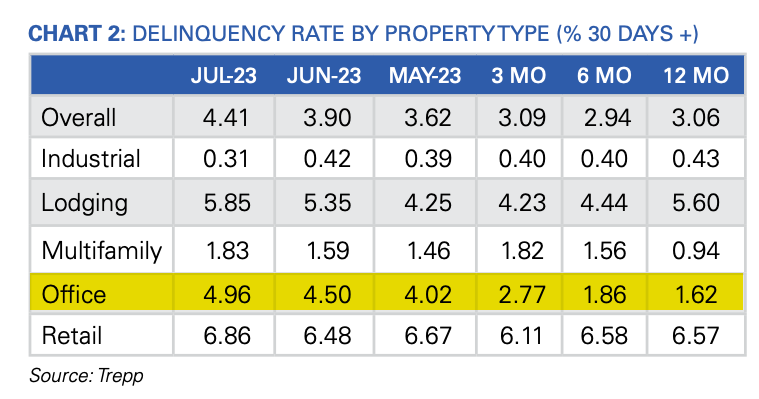
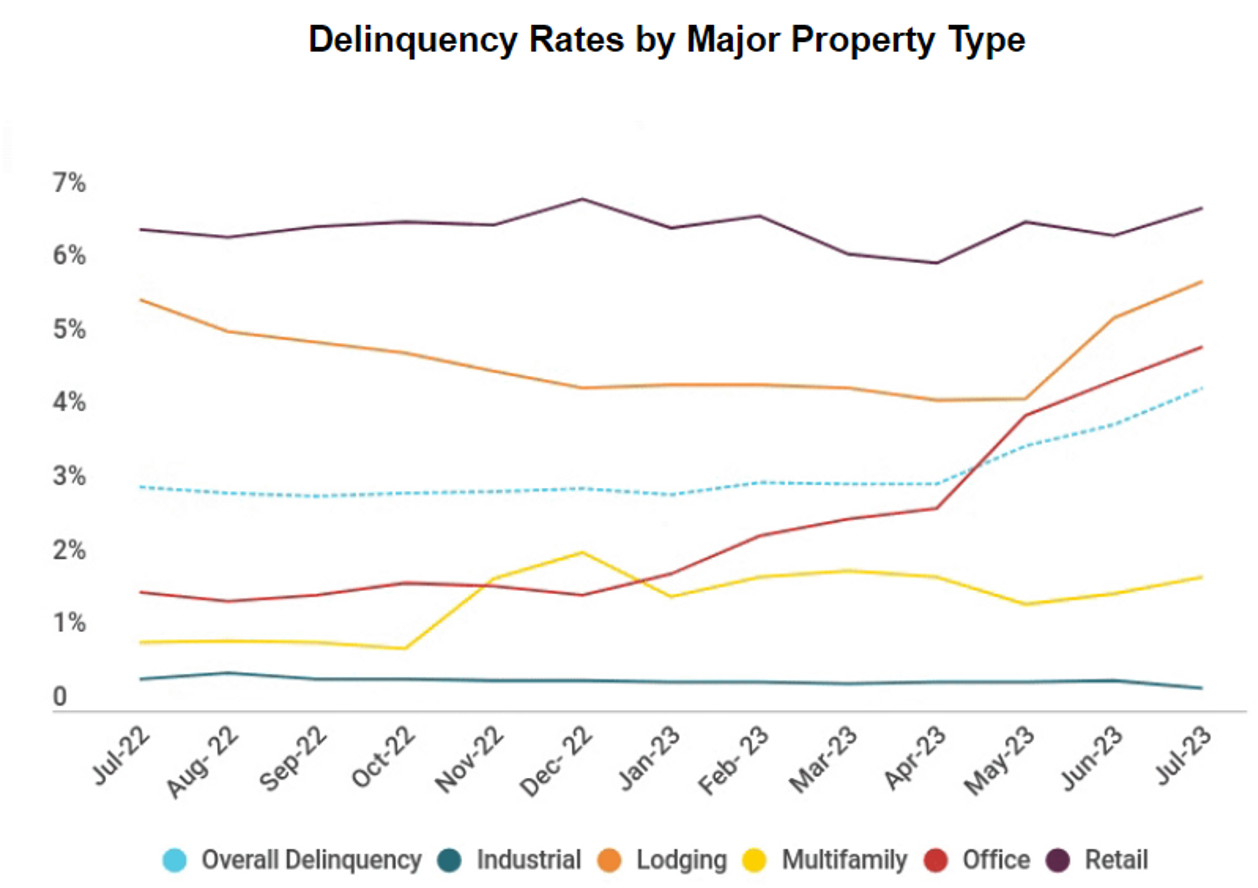
The latest data from Trepp, which tracks commercial mortgage-backed securities (CMBS) securities market data, shows the delinquency rate of commercial property loans packaged up by Wall Street jumped again in July, with four of the five major property segments posting increases. 

“While the rest of the US economy has seen relief in terms of higher equity prices, better-than-expected corporate earnings, and falling inflation numbers, the commercial real estate (CRE) market continues to be left behind,” Trepp wrote in the report. 

Trepp data found the delinquency rate rose 51 basis points to 4.41% last month — the highest level since December 2021. Office delinquencies increased by 46 basis points to 4.96% — up more than 350 basis points since the end of 2022. The deterioration in the office segment is intensifying at an alarmingly rapid pace. 

A broad overview of the US CMBS market shows the delinquency rate increased to 4.41%, a 51bps rise compared to the previous month, but still significantly lower than the 10.34% rate recorded in July 2012. The rate peaked at 10.32% in June 2020 during the government-forced Covid lockdowns. 

Here are more highlights from the report:

  • Year over year, the overall US CMBS delinquency rate is up 135 basis points.

  • Year to date, the rate is up 137 basis points.

  • The percentage of loans that are seriously delinquent (60+ days delinquent, in foreclosure, REO, or non-performing balloons) is now 3.92%, up 20 basis points for the month.

  • If defeased loans were taken out of the equation, the overall headline delinquency rate would be 4.64%, up 51 basis points from June.

  • One year ago, the US CMBS delinquency rate was 3.06%.

  • Six months ago, the US CMBS delinquency rate was 2.94%.

To better understand what might come next for the CRE market, Kiran Raichura, Capital Economics’ deputy chief property economist, recently warned in a note to clients that the office segment might experience a 35% plunge in values by the second half 2025 and “is unlikely to be recovered even by 2040.” 

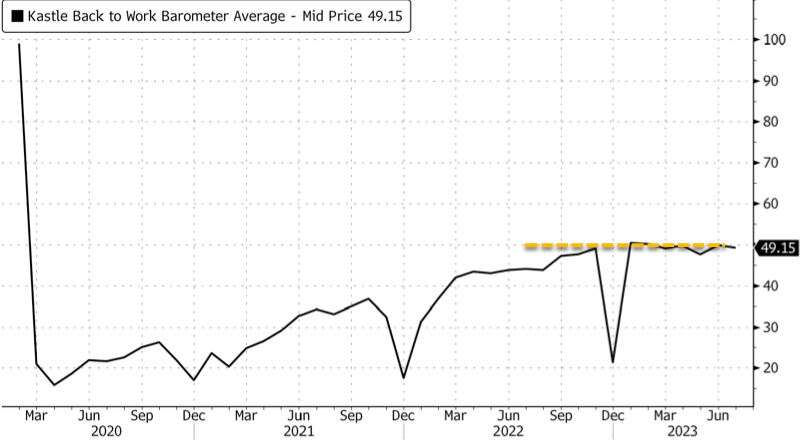
According to swipe data from Kastle Systems, the US office occupancy rate is less than 50%. The figure has plateaued since September, indicating a new reality of remote work. 

One major hurdle for CRE space is that “more than 50% of the $2.9 trillion in commercial mortgages will need to be renegotiated in the next 24 months when new lending rates are likely to be up by 350 to 450 basis points,” Lisa Shalett, chief investment officer for Morgan Stanley Wealth Management, wrote in a note to clients. 

Shalett expects a “peak-to-trough CRE price decline of as much as 40%, worse than in the Great Financial Crisis.” 

Bank of America analysts expect challenges in the CRE space but noted, “They are manageable and do not represent a systemic risk to the US economy.” 

Meanwhile, analysts at UBS warned: 

“About $1.3 billion of office mortgage loans are currently slated to mature over the next three years.

“It’s possible that some of these loans will need to be restructured, but the scope of the issue pales in comparison to the more than $2 trillion of bank equity capital. Office exposure for banks represents less than 5% of total loans and just 1.9% on average for large banks.” 

We’ve already seen major building owners returning their office towers and malls to lenders in California (here & here) and elsewhere (here). This will result in an uptick in CMBS delinquencies moving forward.  

… and remember what we wrote during the regional bank crisis earlier this year — the note was titled “Nowhere To Hide In CMBS”: CRE Nuke Goes Off With Small Banks Accounting For 70% Of Commercial Real Estate Loans. 

Tyler Durden
Mon, 08/07/2023 – 16:40

via ZeroHedge News https://ift.tt/wfW5ytP Tyler Durden

Dear America, Rest Up For What’s Coming When Normies Awake!

Dear America, Rest Up For What’s Coming When Normies Awake!

Authored by James Howard Kunstler via Kunstler.com,

Normies Awake!

“The West can’t do diplomacy in general, it can’t run its cities or countries except into the ground, its high-tech projects fail almost as a rule, its infrastructure is crumbling, its economies are crumbling, and all public policies seem to have a civilizational suicide as a final goal.”

– Gaius Baltar

So-called Normies might be musing, this month of approved mental languor, whether the mighty efforts to suppress news of all kinds, about everything, have concealed the true tendings of our wayward country – leading them to wonder whether it is even possible to be a Normie in such an abnormal time and place.

What news is suppressed?

That the USA is worse than dead broke.

That the people were poisoned, apparently on-purpose.

That the spectral “Joe Biden” sold out our country.

That the war we started in Ukraine, on purpose, for no good reason, is about to be lost, and with it our standing around world.

That there actually is such a criminal organism as the Blob at large in our government, responsible for the astounding abnormality immersing us.

But never mind all that… for now, just go see Barbie. Have a clam roll, a dip in the ocean, another margarita…. September will be here soon enough.

Eventually, the official perversion of money – especially of borrowing an awesome lot of it with no intention of ever repaying – leads to the unhappy circumstance of money disappearing until nobody has any money. And by such, the broke-ness of the government transmogrifies to a whole land full of broke people. Many banks go broke as well. Even the high-fliers who hoarded things that purport to represent money go broke. Then, nobody has the means to buy anything. Businesses that can’t sell anything stop being businesses. After a while, no activity is meaningful except grubbing in the soil to grow some food, or stealing it from those who grubbed and grew it. By then, you can barely even call it a society.

By September, we’ll have some idea where all that is heading. The bond market is wobbling because the government can’t stop increasing its spending. America issues more and more bonds to borrow ever more money, but to the world’s bond-buyers (a.k.a. lenders), what used to be considered virtually risk-free now looks like a bad bet. So, the enticement to buy, which is called the interest rate, has to go up. But as it goes up, the cash value of existing bonds goes down (who wants the older bonds when the newer ones pay more?)

The holders of bonds are mainly big institutions: banks, pension funds, insurance companies, sovereign wealth funds (other countries). They put their large holdings into bonds because in normal times they are safe and dependable investments. But these are abnormal times. When the value of their bonds goes down a lot, the value of their reserves goes down. And when those reserves get reduced too much in relation to the institutions’ liabilities (what they owe), the institutions go bankrupt. When that happens, the people who are vested in those institutions lose their money, too, and end up having to sell stocks and other property to meet their obligations. This ends up looking like what we call “a crash.” It will get Normies’ attention.

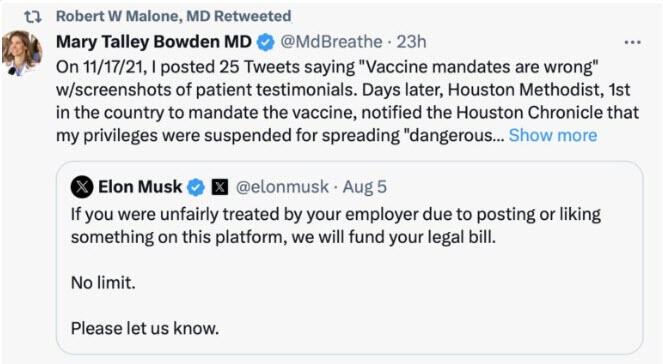
How’s it going with the poisoning of America? Since Elon Musk bought Twitter (now “X”), the app has developed a beefed-up immune system against censorship aimed at it by the FBI, CIA, DHS, and the White House. Twitter is once again a popular medium of information exchange, where news flows pretty freely these days. Even news of previous censorship and cancellation is getting out – and with interesting possibilities for consequences.

The many brave doctors who questioned the “vaccine” story, are being heard now. Other entrepreneurial analysts on Twitter — e.g., Edward Dowd, The Unity Project, “The Ethical Skeptic,” “Chief Nerd”— regularly publish data and charts showing America and the rest of the world just how much damage the mRNA shots did to millions of people, how many have been disabled and killed by them. By September, the awareness of what has been done, and the psychopathic degree of official lying about it, could pass that threshold beyond which everybody knows and the great crime is revealed. Expect a major American political attitude adjustment.

There is surely enough publicly-seen evidence to make an impeachment case against “Joe Biden.” The process seems to move slowly, given the traditional lassitude of Congress, but momentum is building as all these other national fiascos careen toward criticality due to abysmal executive leadership. That evidence shows the Biden Family engaged in an international racketeering scheme to peddle “JB’s” influence when he was vice-president. That’s bribery and the very word is in the short passage of our Constitution describing the grounds for sacking a high official.

Rep. Comer’s House Oversight Committee has already dug up voluminous suspicious activity reports in Biden family bank accounts and has promised more, including information of offshore hidden accounts. Jim Jordan’s preliminary impeachment inquiry has drawn up its first witness list which includes the shadowy “JB” aide Michael Carpenter, and the slippery Trump impeachment “whistleblower,” CIA agent Eric Ciaramella — who essentially accused Mr. Trump of attempting to look into the very bribery crimes of the Biden family lately exposed, a pungent irony. When the impeachment process gets underway in earnest this fall, I expect “Joe Biden” will resign, leaving Ms. Harris to be managed by the shadow-president Barack Obama. That in itself will become a crisis of its own.

Our country has vested its prestige and treasure — but not our blood, at least yet — in the preposterous Ukraine proxy war, completely misjudging every element of it. The Russiaphobia of so many Blob officials was amplified by their own dishonest efforts to blame Russia for all the self-created ills of our own national life. The dirty secret of the Ukraine war is that we are no longer in control of events. The Russians are going to settle things there and that poor palooka of a country will be wrested back into their traditional sphere-of-influence, no more to be a troublemaker. I doubt that our puppet, Mr. Zelensky will be in power by Halloween. NATO will cease to exist and each nation of Europe will then struggle to settle its own sovereign hash without much of an industrial economy left. Expect governments to fall.

In the meantime, enjoy the clam rolls, the surf, the corn-dogs at the fair, and all the other blessings of languorous August. Rest up for what’s coming when Normies awake!

*  *  *

Support his blog by visiting Jim’s Patreon Page

Tyler Durden
Mon, 08/07/2023 – 16:20

via ZeroHedge News https://ift.tt/BWAyG9N Tyler Durden

Stocks Up, Gold Down As Yield Curve Steepens Further

Stocks Up, Gold Down As Yield Curve Steepens Further

After the worst week in months, it’s perhaps no surprise that we got a little BTFD today in stocks, but bonds kept doing more of the same – bear-steepening – the max-pain trade for markets right now. As Goldman noted this morning:

It’s a trade that hurts real money both from a curve and level perspective.

The rates macro Hedge Fund community didn’t have it on as it’s still reeling from the March VaR shock.

It hurts anyone who had a conditional view, that is anyone in the bull steepening camp.

In 2022, we also saw a lot of banks move their mortgages into Held-to-Maturity portfolio as the Fed started hiking.

These moves will amplify the losses already accumulated.

Finally when you look at more recent MBS vintages, the negative convexity will be painful here. (Side note: older vintages have actually turned positive convexity so those MBSs should be much better off). 

The only cohorts that seem to have the right trade are cross over accounts that hedged against higher rates and CTAs – trend following Hedge Funds – that were picking the carry by shorting the frontend and selling the backend. 

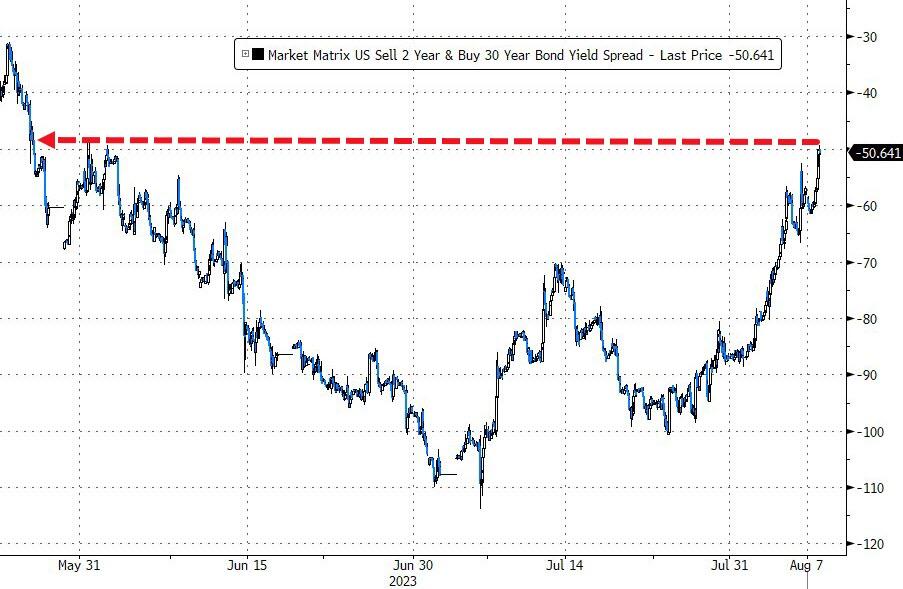
2s30s is back at its least inverted since May…

Source: Bloomberg

The short-end of the curve and stocks benefited from NYFed’s Williams dovish comments to NYT that the need for more rate hikes is “an open question,” … And if the inflation rate keeps falling, the central bank may need to lower interest rates in 2024 or 2025 to ensure that real interest rates don’t rise further.

“Monetary policy is in a good place – we’ve got the policy where we need to be,” Williams said in an Aug. 2 interview with the New York Times that was published Monday.

“Whether we need to adjust it in terms of that peak rate – but also how long we need to keep a restrictive stance —  is going to depend on the data.”

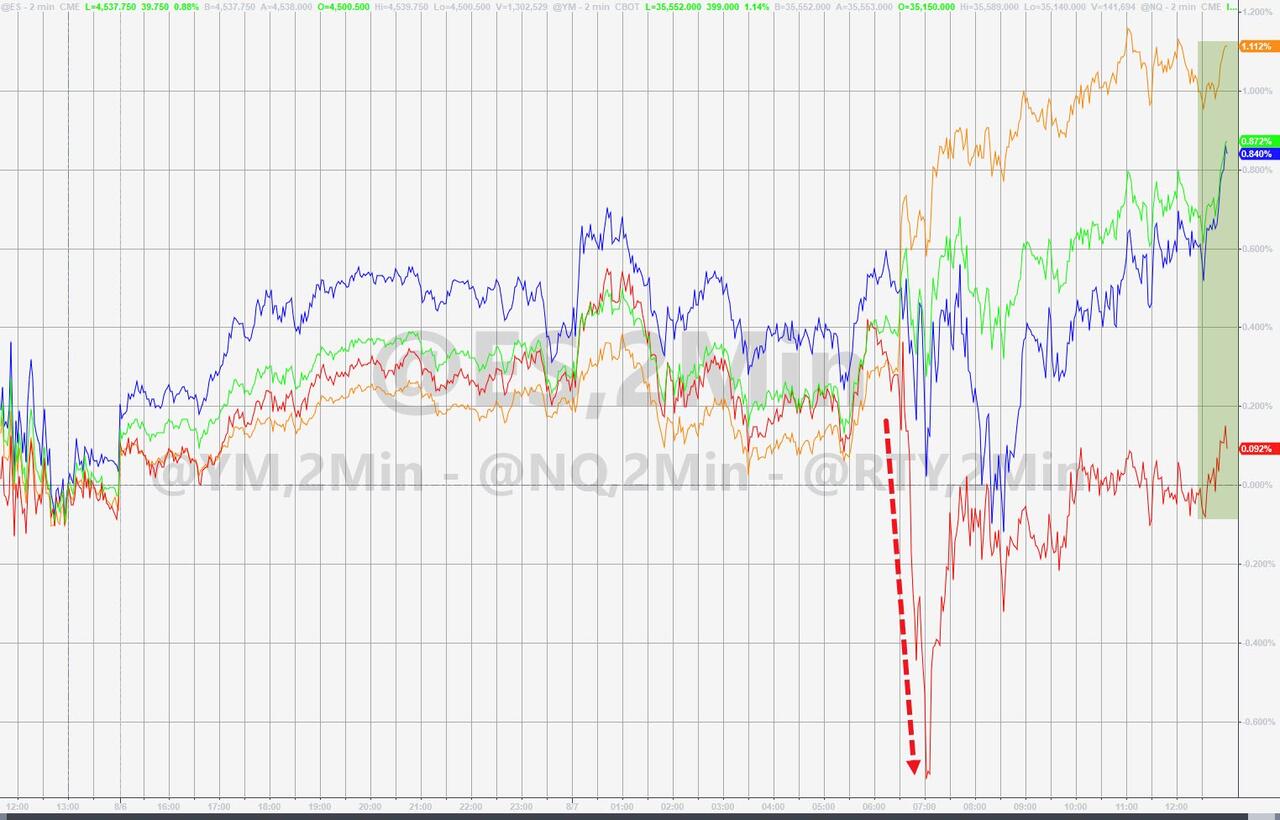
In equity-land, Small Caps were the day’s laggard (ending around unch) while The Dow led the gains…

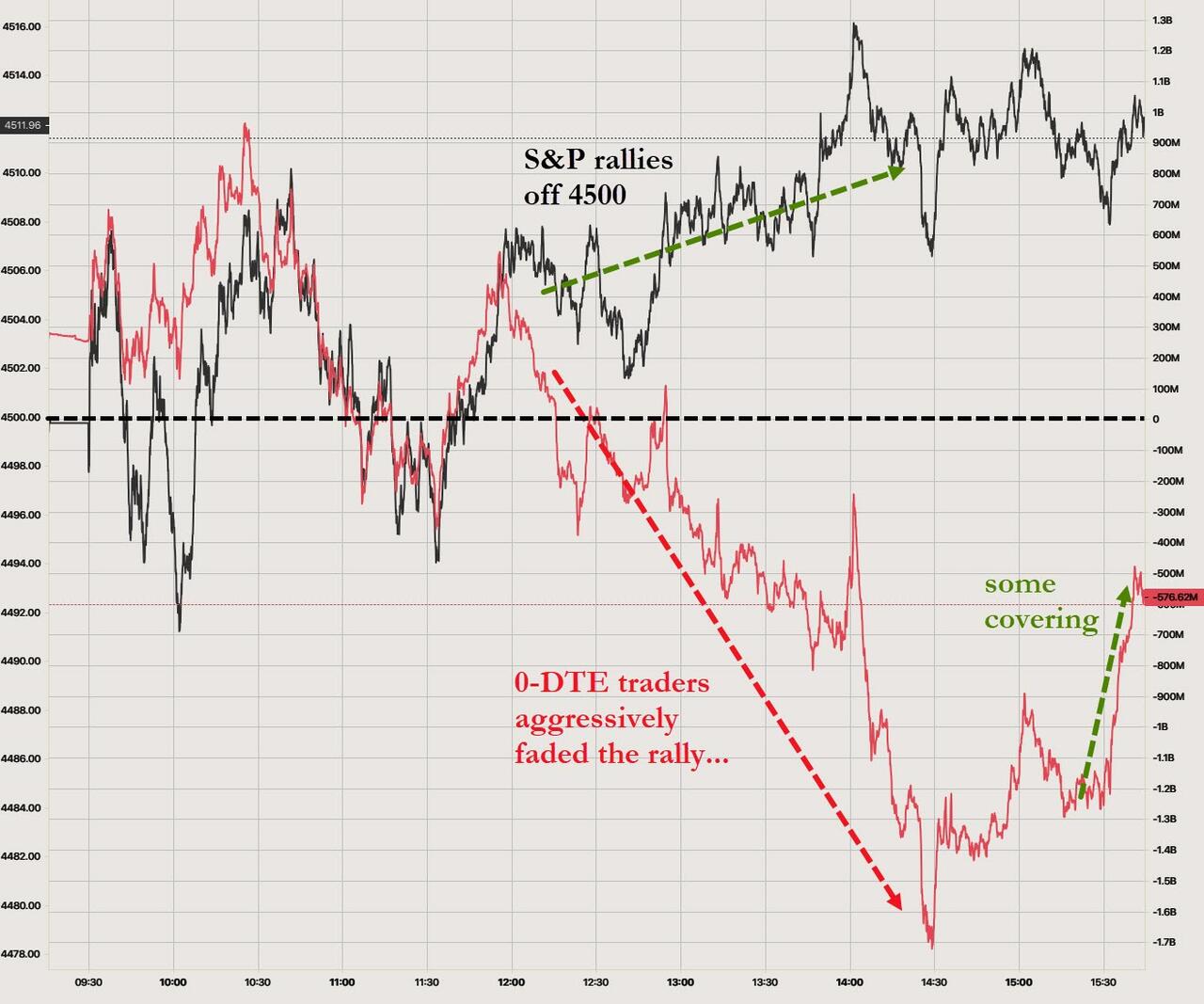
Notably, 0-DTE traders pushed back against the rebound in the S&P (buying Puts while Calls were flat)…

Source: SpotGamma

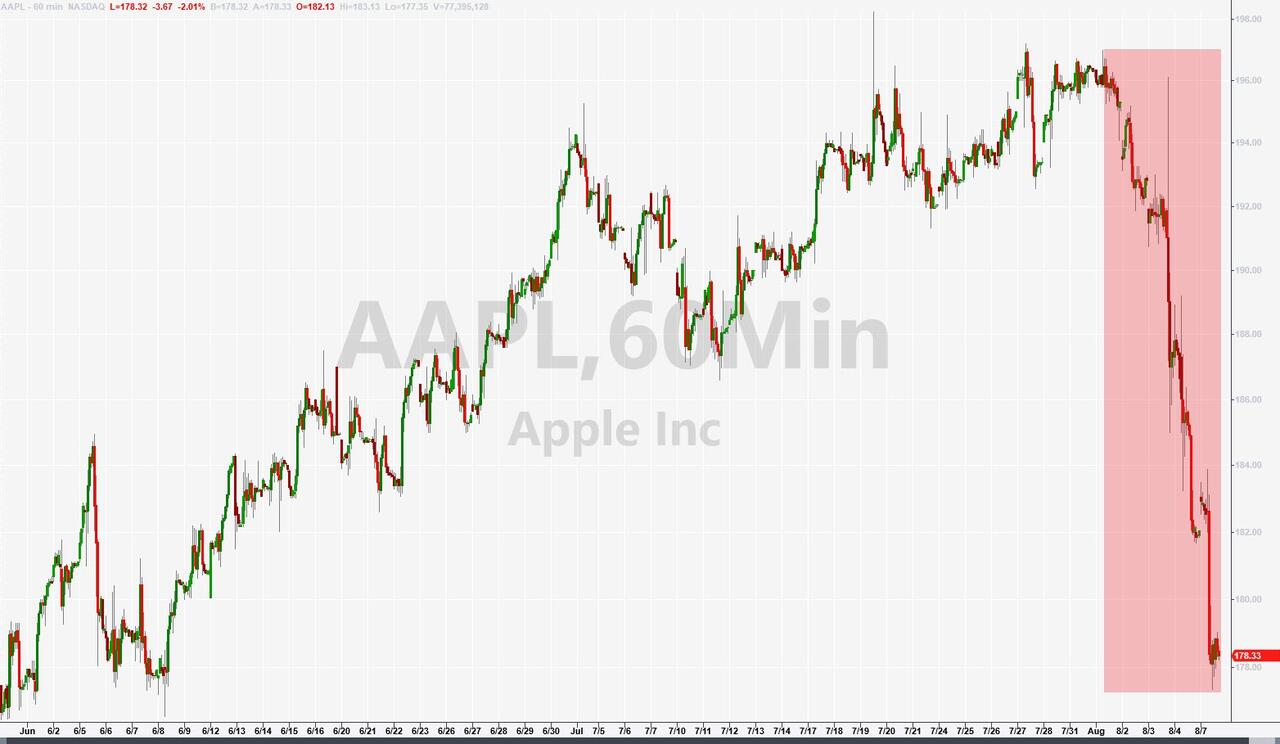
AAPL down for the 5th straight day – down around 10%, its biggest such drop since Nov 2022 (and back below the Jan 2022 prior record highs)…

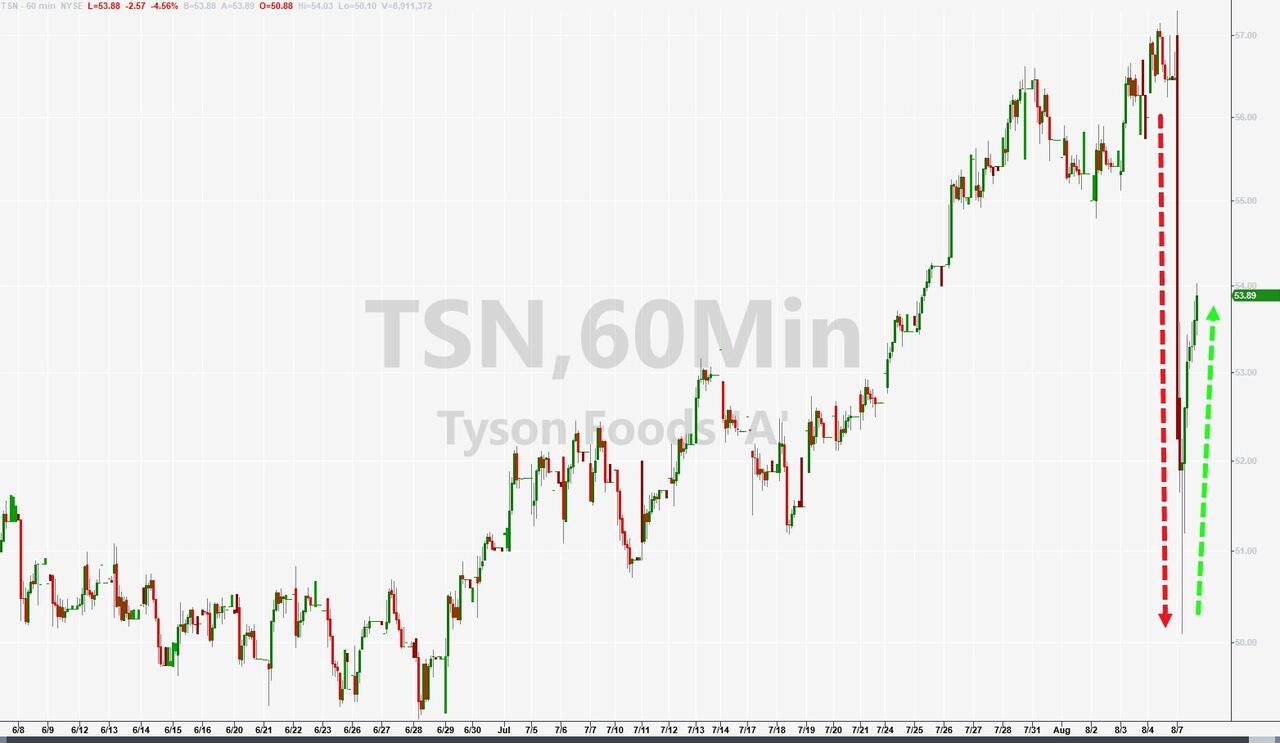
TSN also tumbled but dip-buyers put some lipstick on that pig…

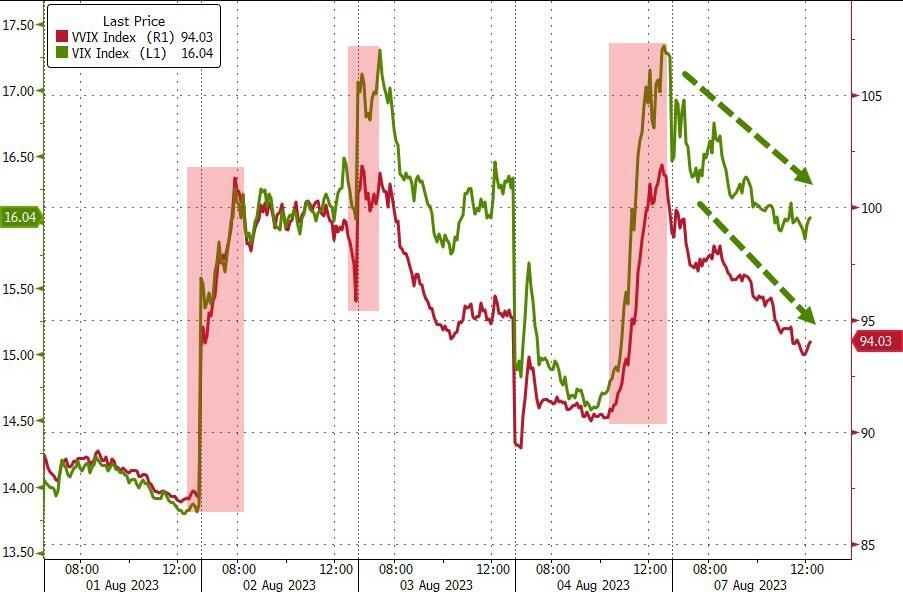
VIX (and VVIX) slid lower today (but remain elevated from last week’s lows)…

Source: Bloomberg

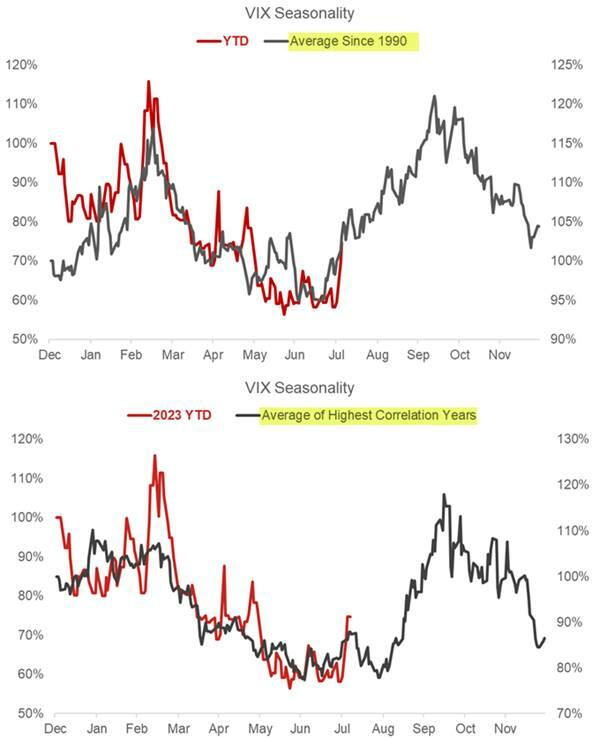
But bear in mind, VIX seasonality is not an equity bull’s friend…

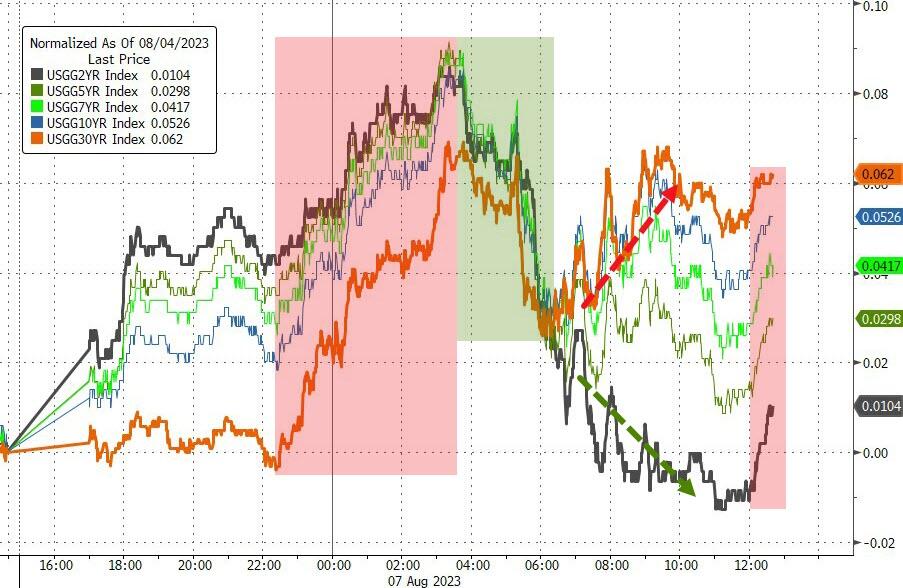
US Treasuries were mixed today with the short-end outperforming and long-end sold (2Y unch vs 30Y +6bps)

Source: Bloomberg

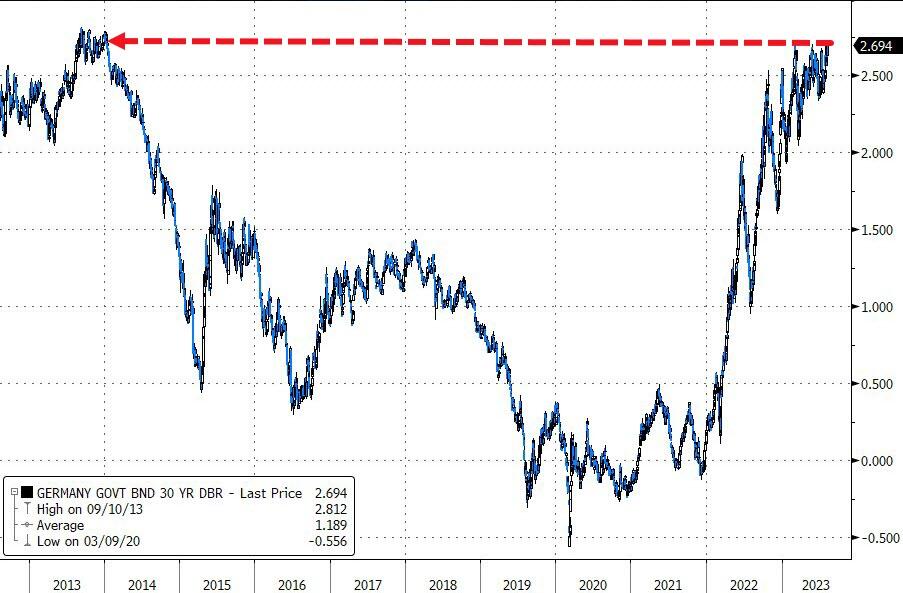
The yield on 30-year German bonds rose nine basis points to 2.72%, the highest since early 2014…

Source: Bloomberg

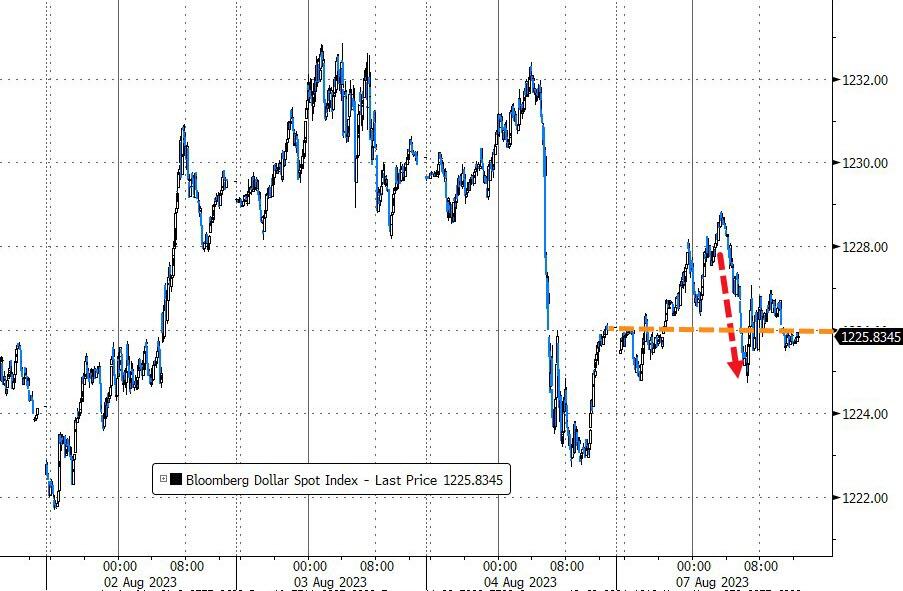
The dollar ended basically unchanged on the day, selling off vs its fiat peers during the US session after overnight gains…

Source: Bloomberg

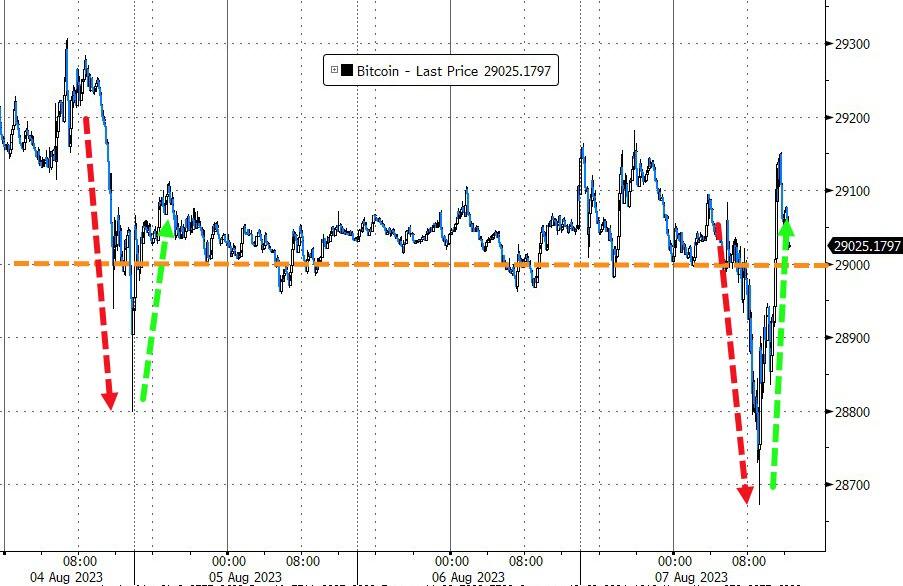
Bitcoin ended unchanged, bouncing back from morning weakness, back below $29,000…

Source: Bloomberg

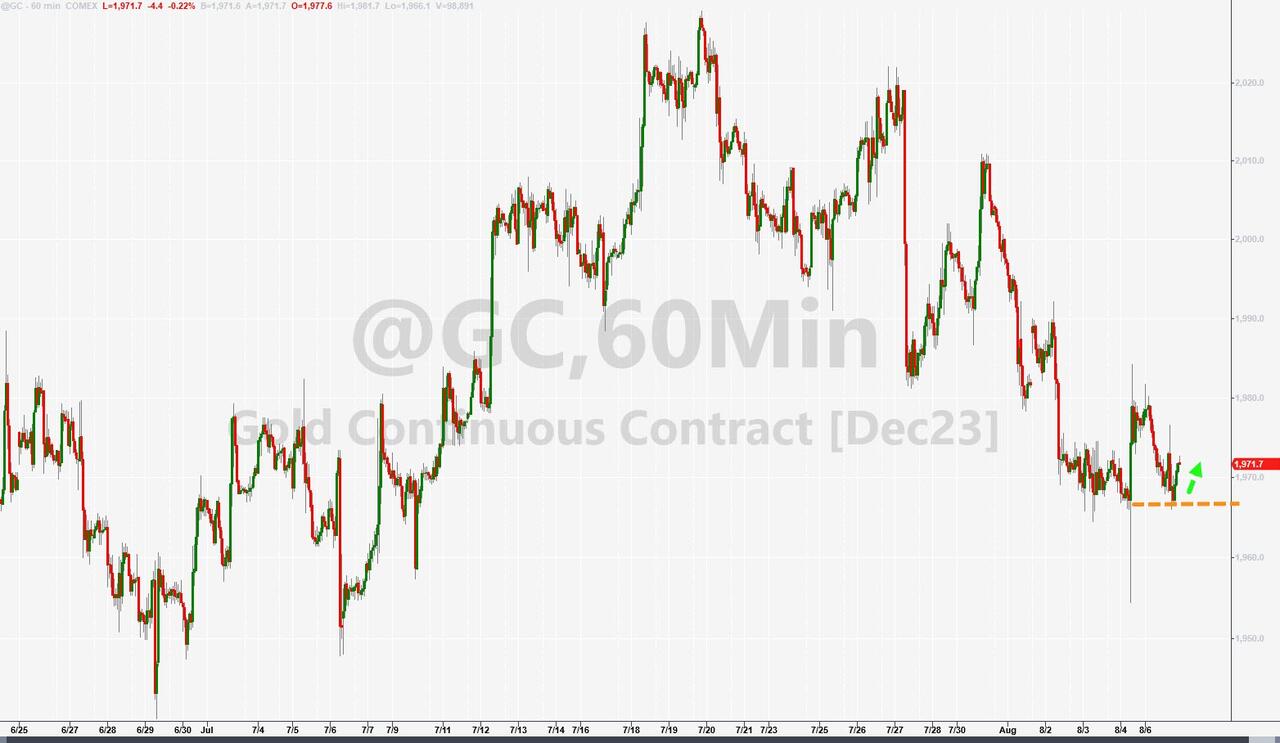
Gold ended the day marginally lower, bouncing off pre-payrolls levels from Friday…

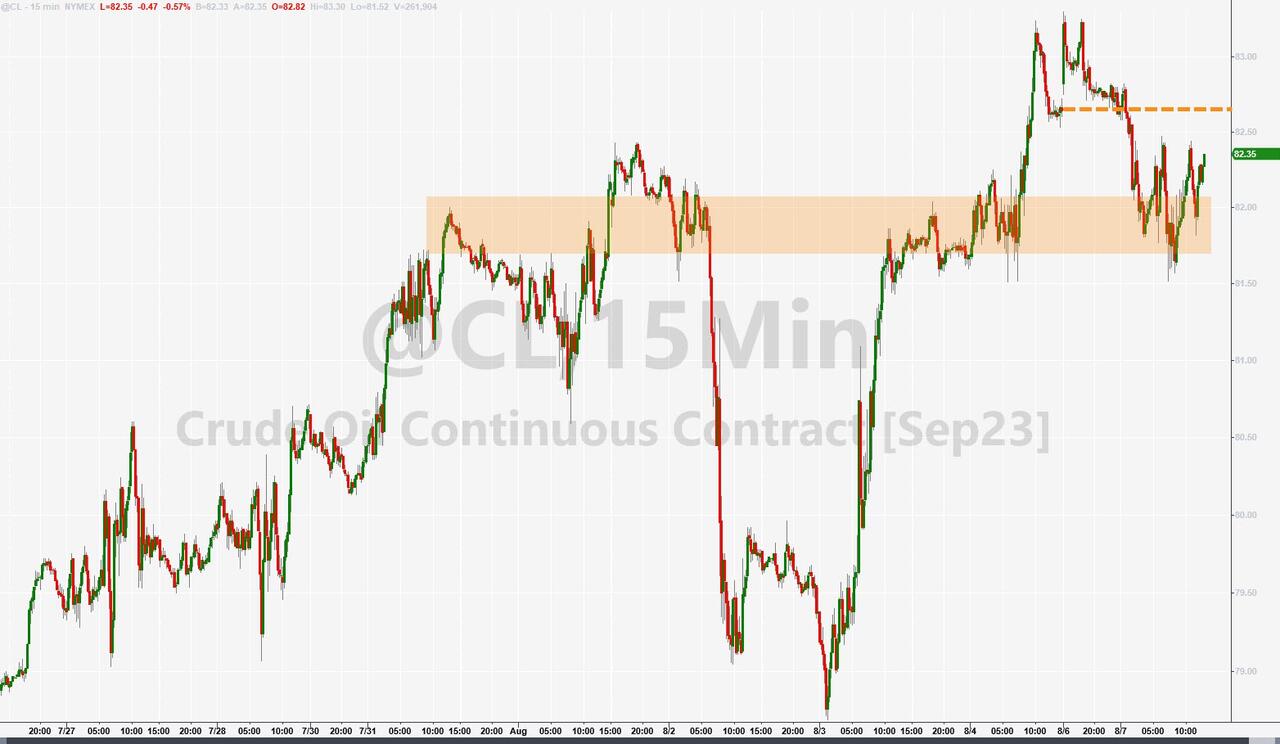
Oil also sank to pre-payrolls levels and bounced…

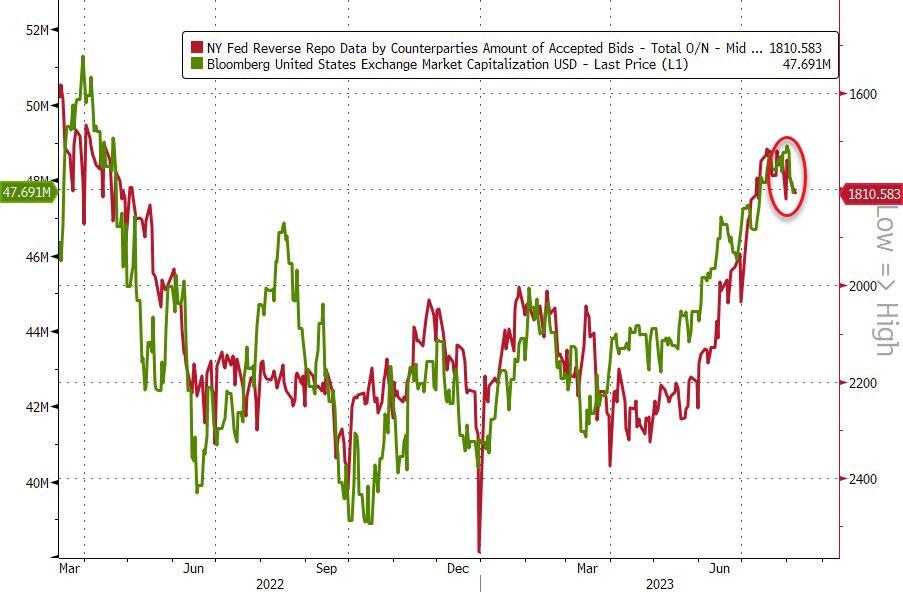
Finally, the rebound in Fed repo balances has stalled the Q2 meltup in stocks…

Source: Bloomberg

What happens next?

Tyler Durden
Mon, 08/07/2023 – 16:00

via ZeroHedge News https://ift.tt/7vJ5aUH Tyler Durden

Russian Soprano Sues The Metropolitan Opera Over Ukraine-Linked Termination

Russian Soprano Sues The Metropolitan Opera Over Ukraine-Linked Termination

Authored by Jonathan Turley,

When Russia invaded Ukraine, we discussed how various Russian artists, athletes, and performers were blacklisted or fired for not publicly condemning the invasion or Vladimir Putin. Artists and athletes turned on their colleagues and forced them to change their political views as a condition for singing, playing or writing.

Now, Soprano Anna Netrebko is suing the Metropolitan Opera and its general manager Peter Gelb for defamation, breach of contract and other violations linked to her termination.

Netrebko’s termination followed the invasion in 2022 after Gelb had demanded she repudiate Russia President Vladimir Putin.

If true, Gelb should himself be fired.

Conditioning performances on adhering to a political viewpoint is an outrageous denial of free speech and artistic freedom.

Indeed, it is precisely the type of abuses that define the authoritarianism of Putin and his regime. For centuries, artists have fought for the freedom to create regardless of their political viewpoints.

Gelb is accused of doing precisely what studios and companies did to socialists and communists in the 1950s in demanding that they renounce their political beliefs if they wanted to write, sing, or act.

None of this seems to matter to the Met’s loyal supporters in New York. The American Guild of Musical Artists filed a grievance on Netrebko’s behalf and the arbitrator found that the Met violated the union’s collective bargaining agreement when it canceled her contracts to appear in Verdi’s “Don Carlo” and “La Forza del Destino” and Giordano’s ”Andrea Chénier.” She was awarded  $209,103.48.

Yet, Gelb was retained as general manager of the Met.

Netrebko now alleges ”severe mental anguish and emotional distress” that included “depression, humiliation, embarrassment, stress and anxiety, and emotional pain and suffering.”

She says that she is being blackballed due to her refusal to adhere to the political viewpoints of Gelb and the Met. She alleges that  Gelb and the Met fueled protests against her and destroyed her reputation.

The loss is to the art world.

This not only bars a talented artist, but embraces the same intolerance from the Red Scare period. It is an all-too-familiar story as many on the left embrace censorship and blacklists to silence those with opposing views. They support one of the great artistic institutions in the world, but now effectively support a political litmus test for artists.

Tyler Durden
Mon, 08/07/2023 – 15:50

via ZeroHedge News https://ift.tt/5cG8iyF Tyler Durden