Three Ways To Restore Housing Affordability

Three Ways To Restore Housing Affordability

Authored by Charles Hugh Smith via OfTwoMinds blog,

The choice is simple: housing is either shelter for citizens, or it’s just another interchangeable speculative asset in the global financialization casino. It can’t be both.

We tend to think of housing becoming unaffordable as a matter of land prices, zoning and the cost of 2X4s, but it’s fundamentally a matter of values. Subscriber John summarized this in an insightful comment on Substack:

“For me, this issue is a reflection of the values of our culture.

1. Lack of value placed on community means that a house is primarily a financial asset, not a home.

2. Lack of valuing community, means that we have not supported local business / industry and allowed these to be centralized or outsourced.

3. Lack of valuing self-sufficiency means that the only way we can view a house as an asset is when it increases in value. How much income does your house generate every month? (even if you count that income in tomatoes).

Most of the housing being built is nothing more than boxes with a roof no matter how fancy the box. There is no awareness of how that housing is a part of the ecology that it is built in.”

This boils down to a simple choice: either housing is shelter for the citizenry, or it’s just another asset class to be snapped up for private profit / gain by global capital. Choose one. This is one of the many pernicious consequences of glorifying Financialization as the most important dynamic in our economy and society.

Once an economy has been financialized, everything becomes a commodity in the global marketplace to be bought and sold as an interchangeable asset. A flat in Bangkok, a flat in Barcelona, a flat in Miami: they’re all the same to global capital, which includes trillions of dollars of non-U.S. wealth sloshing around seeking profitable places to park surplus capital, and domestic wealth doing the same thing, moving wealth around interchangeable assets to maximize private gain.

This is the iron logic of Financialization and Globalization: housing is just another asset class to exploit. What effect the tsunami of wealth has on the communities being shredded is of zero interest to non-resident owners, corporations and speculators. Buying up houses to rent as short-term vacation rentals (STVRs), or simply left empty is just like buying a corporate bond: you move your capital around to maximize private gains, there’s no difference between housing, shares in a mining company, bonds or any other financial commodity.

This is how you end up with entire residential buildings having only a few residents, as 90+% of the owners don’t live there, they just own the flat or house as a place to safely park surplus capital or visit a few days of the year on vacation. This is a global reality that anyone can observe who cares to open their eyes.

Is housing shelter for citizens or is it a commodity asset one buys for profit as a mini-hotel? In popular tourist areas, consequential percentages of the housing has been snapped up by the wealthy as STVRs, short-term rental housing, the vast majority of which are owned not by hosts who live in the house as their sole residence but by absentee hosts who live half a world away and who have zero interest in the locale or community their interchangeable rental happens to be in.

Restrictions on new housing serve the self-serving interests profiting from locking down the status quo. Anything that might negatively affect valuations is resisted. This urge to pull the ladder up behind us is natural, but is it fair to the generations behind us? As for all the restrictions, regulations and permitting–has anyone looked at this mass of costs with fresh eyes, asking if it’s truly serving the citizenry? Or can much of it be stripped away as bureaucratic clutter or lobbying imposed by self-serving interests? We need to ask cui bono— to whose benefit?

Everyone is for solutions to housing unaffordability that don’t diminish the value of their house. But the price is the problem. As I explained in Housing: The Foundations of the Middle Class Are Crumbling, turning housing into just another table in the financialization casino has inflated a bubble of unprecedented proportions that has distorted not just affordability but the fabric of society.

Those who bought homes long ago are now wealthy not from genius but simply from timing. Buying in before the bubble inflated has generated generational and regional divides of the haves and the have-nots that are corrosive to the economy and society.

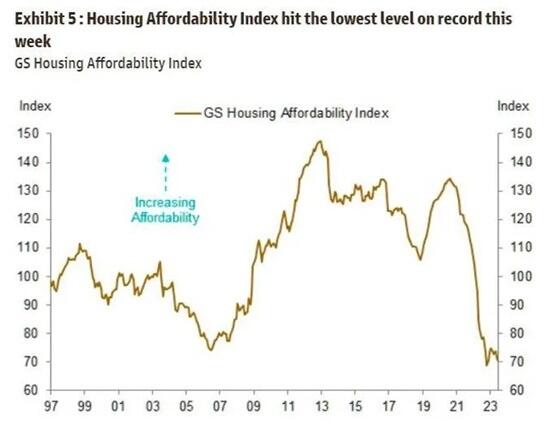
Let’s start with housing affordability. It’s in the basement.

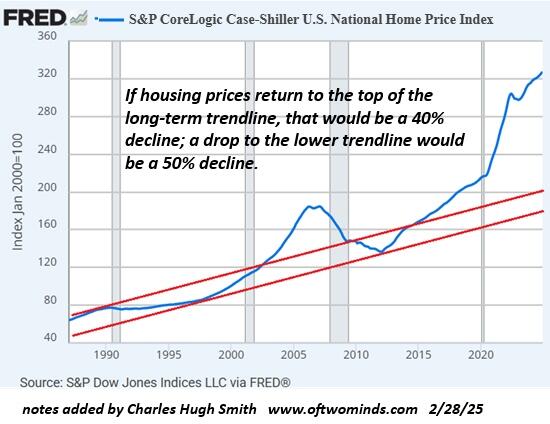
The generations who bought homes 25 or more years ago have accumulated most of the wealth. When houses increase in value ten-fold while wages rise by a third, this is the result:

Here’s the National Case Shiller Housing Index. I’ve added long-term trendlines to clarify the two housing bubbles inflated by rampant financialization. A return to the upper trendline would require a 40% drop in current valuations, and a return to the lower trendline would require a 50% decline.

Since financialization inflated housing to unaffordable heights, the only way to restore affordability is to eliminate the perverse incentives and distortions of financialization by taking these steps to return housing to sheltering the citizenry:

1. Impose a national ban on all short-term vacation rentals except those hosted by full-time owner-occupants. Those caught cheating would be fined $10,000 per violation (i.e. each rental to a new vacationer), with no upper limit.

I know all the rationalizations, hut here’s the thing: if you want to own and operate a mini-hotel, go build one in a resort / commercial zone. Residential housing is for residents, not a place for global capital to park surplus wealth or stripmine for private gain.

Those full-time owner-occupants who want to rent out a room in their house to vacationers, that’s fine.

2. Impose national limits on non-resident ownership of housing. An outright total ban on non-resident ownership of housing would be best, but if that’s politically impossible, then requirements for residency would be the next best thing: if the owner leaves the home empty for 6 months or longer, a $100,000 fee is imposed annually. Anyone caught cheating would be fined the current value of the home.

Once again, the choice is simple: housing is either shelter for citizens, or it’s just another interchangeable speculative asset in the global financialization casino. It can’t be both. Rationalizing excuses that it can serve both is why the few profiting from the rationalizations are so desperate to obscure this simple, fundamental choice.

The third solution is to open the locked doors of zoning, planning and industry standards to new types of housing that would be unconventional but affordable. Every locale will have to wrestle with the forces of keeping the status quo locked down and the need to loosen restrictions and free up experimentation in housing. There isn’t one-size-fits-all; every community will have to establish what works best for their economy and populace.

One system builds communities, another destroys them. Take your pick, but choose wisely.

*  *  *

Become a $3/month patron of my work via patreon.com.

Subscribe to my Substack for free

Tyler Durden
Sun, 03/02/2025 – 10:30

via ZeroHedge News https://ift.tt/idzOBXN Tyler Durden

110 Year Old Filmmaking Company Technicolor Shutting Down, Laying Off 217 Employees

110 Year Old Filmmaking Company Technicolor Shutting Down, Laying Off 217 Employees

Technicolor, the iconic 110-year-old company that transformed filmmaking, is reportedly shutting down. Known for classics like The Wizard of Oz and Singin’ in the Rain, the brand is closing operations, according to Variety and other sources, according to SFGate.

Technicolor Creative Services filed a WARN notice Monday, announcing the permanent closure of its Culver City location and the loss of 217 jobs, with broader impacts likely. Facing financial struggles and lacking new investment, the company has been in decline for some time.

A notice to employees read: “As we have communicated over the past months, Technicolor has been facing severe financial challenges. Despite exhaustive efforts—including restructuring initiatives, discussions with potential investors, and exploring acquisition opportunities—we have been unable to secure a viable path forward. Unfortunately, this leaves us with no alternative but acknowledging that the Company may be forced to foreclose.”

It continued: “In line with applicable state and federal legislation, please find attached a WARN Notice. If no viable solution is identified by the end of today, Friday, February 21, 2025, we will be required to cease our U.S. operations as early as Monday, February 24, 2025.”

The SF Gate report says that Technicolor’s decline stems from a mix of industry challenges, including the pandemic’s economic impact, the Hollywood writers’ strike, and the rise of AI in visual effects. The company’s collapse would affect thousands of jobs across California, Europe, Canada, and India.

Technicolor Group, the France-based parent company of multiple VFX and post-production firms, has entered receivership in Paris Commercial Court, according to The Verge.

Some employees voiced frustration online, with one user, “Screwed MPC,” commenting: “No pay for last few weeks work. No severance pay. The c-suite have disappeared without a trace and left middle managers to try and help and answer the questions of the 4500 laid off.”

This will likely lead to a cascade of further job cuts in the industry…

Tyler Durden
Sun, 03/02/2025 – 09:55

via ZeroHedge News https://ift.tt/ZvfxowN Tyler Durden

The Original Matrix – What They Don’t Teach You About Money

The Original Matrix – What They Don’t Teach You About Money

Via Santiago Capital,

“You take the blue pill – the story ends, you wake up in your bed and believe whatever you want to believe. You take the red pill – you stay in Wonderland and I show you how deep the rabbit hole goes.”

– Morpheus, The Matrix

What is Money?

Some things in life are so deeply ingrained in our daily existence that we rarely stop to question them.

They are simply there, operating in the background, so fundamental to our existence that they feel as natural as the air we breathe.

We use them, rely on them, and move through the world assuming they are exactly as they should be.

For example, everyone is familiar with the phrase “Money makes the world go ‘round.”

This is rarely questioned and is rather accepted as self-evident.

Every day, you wake up, pay your bills, go to work, and check your bank account,—believing that you understand the system you operate within.

But have you ever stopped to ask yourself: What is money, really?

Not the textbook definition.

Not the economic theory you learned in school.

But the truth.

Money is everywhere. It dictates who eats and who starves, who rises and who falls. It builds empires and crushes civilizations.

It has fueled revolutions, financed wars, and controlled the fate of entire nations.

It is arguably the most powerful force on Earth, yet most people never stop to question its origins, its purpose, or its true nature.

You use money every single day. You earn it, you spend it, you save it. You trade your time and energy for it. It determines where you live, what you own, and the opportunities available to you.

It is so deeply embedded in your life that questioning it feels absurd—like questioning gravity or the air you breathe.

But have you ever wondered who decided what money is? Who, or what, gave it value? Or who controls it?

And more importantly—what if you have been playing a game where the rules were rigged before you were even born?

For those who are willing to look beyond the surface, the answers may be surprising.

But be warned: once you start asking the right questions, there is no turning back.

Traditional Definitions of Money

Money is one of the most universally recognized yet least examined aspects of human civilization.

It influences every facet of our lives, dictating our economic opportunities, shaping global trade, and acting as a central force in ways few ever consider.

Yet, despite its ubiquity, money remains a concept that is deeply misunderstood.

While we all use money, few of us ever stop to truly evaluate what it is, how it functions, and whether it works the way we assume it does.

The goal here is not to convince anyone of a specific perspective but to think critically about money—what it really represents and whether the reality matches what we have been taught.

If you were to stop someone on the street and ask them whether they knew what money was, they would almost certainly respond with a confident yes.

However, if you pressed them further and asked them to give a proper definition, the response might not come quite as quickly. The initial certainty would likely give way to hesitation as they search for an answer.

Were you to push a little harder or direct the question toward someone well-versed in finance or economic theory, the answers would likely become more structured.

At this level, people might begin describing the attributes associated with a strong form of money—qualities that make it function effectively as a medium of exchange, store of value, and unit of account.

If the conversation were to then go even further, those thinking critically about the question might move past the attributes of money and instead focus on what money actually does.

They might start discussing its role in facilitating trade, its function in settling debts, or its importance in economic transactions.

Yet, even if all of these points are accepted as true, the core of the question still remains: What “IS” it?

At its most fundamental level, a medium of exchange must be some “thing.” And what are tangible things made of?

Commodities.

By this reasoning, money—when stripped to its most basic form—is a commodity.

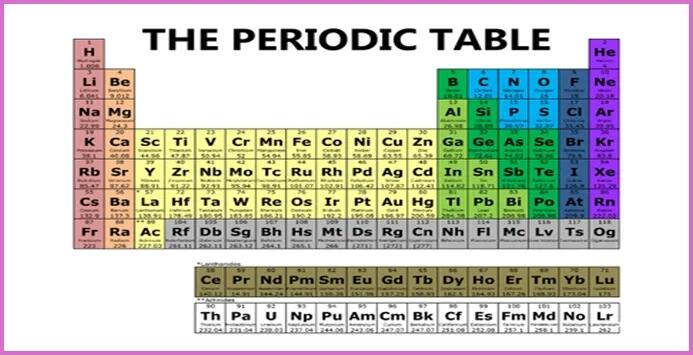
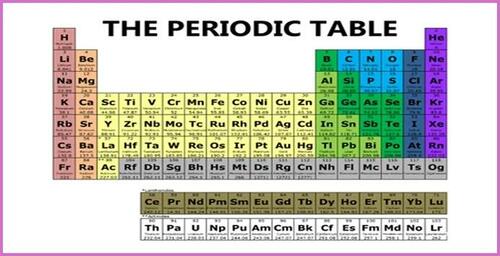
And commodities are made up of elements found on the Periodic Table. However, not just any commodity (or any element) can serve as money.

If a particular commodity is widely demanded and possesses some (or all) of the attributes that define strong money, then it ceases to be just a commodity and instead also transcends to become money itself.
At this point, it often becomes clear that money is the most marketable commodity, a good that serves as the final extinguisher of debt and that has been selected by free market forces over time.

This definition resonates with many who have studied the history of money and how different forms have evolved over time.

Taking this concept a step further, and recognizing that money is a commodity, and commodities are made up of elements from the Periodic Table, one might even evaluate the various elements to see which of them has the most attributes which would allow it to “ascend” to become money.

In doing so, one would realize that there in one commodity that has long been regarded as one of the strongest forms of money due to its unique set of attributes, which make it highly effective as a medium of exchange and store of value.

One of its most defining qualities is durability—unlike paper currency or other perishable goods, it does not corrode, tarnish, or degrade over time, ensuring that it retains its value across generations.

This durability allows it to function as a reliable form of wealth preservation, as it does not succumb to the forces of time or environmental conditions.

Another critical characteristic of this commodity is its divisibility.

Unlike other commodities, it can be melted down and divided into smaller units without losing its intrinsic value, allowing for transactions of varying sizes.

This makes it more practical as a medium of exchange compared to goods that cannot be easily broken down.

Additionally, it is fungible, meaning that each unit is identical to another unit of the same weight and purity. This interchangeability ensures that it can be exchanged without discrepancies in value, making it a highly efficient means of trade.

It is also prized for its portability.

Despite being a physical commodity, it possesses a high value-to-weight ratio, allowing individuals and institutions to transport significant amounts of wealth in a compact and convenient form.

This portability, combined with its recognizability, reinforces its status as a widely accepted and trusted form of money.

Across cultures and throughout history, it has been universally acknowledged as a store of value, and its distinct appearance and unique properties make it difficult to counterfeit.

Beyond these qualities, it also holds scarcity, a fundamental attribute that has preserved its value over time.

Its supply is naturally limited by the physical constraints of extraction and production.

This inherent scarcity prevents artificial inflation and ensures that it maintains its purchasing power over extended periods.

Lastly, its malleability adds to its utility, as it can be shaped into coins, bars, or intricate jewelry without losing its essential properties.

This adaptability makes it highly versatile, further cementing its place as one of the most effective and enduring forms of money.

We are, of course, talking about gold.
And indeed, throughout history, gold has embodied all the qualities of strong money—it is scarce, durable, divisible, portable, and widely recognized.

Its long-standing role in economic systems has led many to assert that it remains the ultimate form of money.

At this point, a show of hands might reveal broad agreement with this perspective.

But before reaching a final conclusion, it is worth pausing and asking: Has history always functioned under a free-market system?

More importantly, has money always been determined by the free market, or has another force been at play?

Money as a State-Controlled Construct

A common assumption that must be accepted when using the definition of money found above, is that markets operate freely, driven by voluntary exchange and competition.

But does this match with historical reality?

Has history always been characterized by a Free Market? Or, more importantly, has the world ever been truly governed by Free Market principles?

These questions are essential, but they require us to look at the world as it is, not as we wish it to be. Which leads to a broader discussion about the nature of money itself.

If we assume that money is simply a commodity chosen by free market forces, then we must reconcile this assumption with historical evidence.

And the simple fact is, there exists another perspective—one that challenges the traditional definition of money and forces us to reconsider whether money has ever been purely a market-driven phenomenon.

If history tells us anything, it is that the state has played a significant role in the shaping of history as a whole. The state has also played a significant role in the development of monetary systems.

So, if we are dealing with the world as it actually is, rather than how we want it to be, this simple fact cannot be ignored.

Throughout history, governments have issued various forms of fiat currency, not as a response to free market demand, but as a mechanism to facilitate trade, assert control, and support economic systems.

Ancient empires often minted coins made of base metals, stamping them with the images of rulers or state symbols, ensuring that their value was determined by decree rather than intrinsic worth.
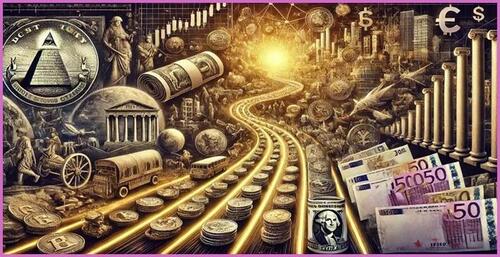
These early monetary systems established a precedent where the state, rather than market forces, dictated what functioned as money.

During the Renaissance and beyond, paper banknotes emerged as a widespread monetary tool. Initially, these notes were backed by precious metals, reinforcing their legitimacy and trust.

However, over time, they gradually evolved into pure fiat money, entirely detached from any physical commodity.

This transformation allowed governments and central banks to exert greater control over monetary systems, as they were no longer constrained by finite reserves of gold or silver.

Colonial governments also played a significant role in monetary history, issuing promissory notes as a means of managing trade and economic activity.

These notes functioned as early forms of government-backed currency, representing an obligation rather than a tangible store of value.

As time progressed, fiat currencies became the dominant form of money, with modern states embracing national currencies such as the dollar, euro, and yen.

Today, fiat money exists in both physical and digital forms, serving as a testament to the continued evolution of state-sponsored monetary systems.

If we accept this historical reality, then we must ask: Is money truly a product of free markets, or has it always been shaped and defined by those in power?

Or put another way: Is money really the most marketable commodity that is chosen by the free-thinking individuals, or is it a powerful tool that is dictated by the King?
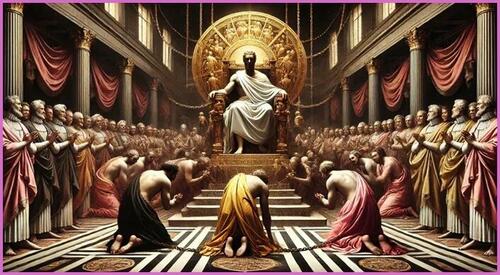
To answer these questions, it is first necessary to develop the skills needed to best understand one’s environment.

Situational Awareness

Situational Awareness is a fundamental skill that allows individuals to perceive, comprehend, and anticipate events in their surroundings, enabling them to make informed decisions and take effective action.

It consists of three essential components: first, the ability to perceive critical elements in the environment, such as people, objects, and unfolding events; second, the capacity to comprehend their meaning and potential impact; and third, the foresight to project future developments based on available information.

This skill is indispensable in high-stakes environments such as aviation, military operations, healthcare, and business, where the ability to recognize subtle cues and react accordingly can mean the difference between success and failure.

The same principle applies to portfolio allocation, where financial markets constantly shift, and a lack of awareness can lead to devastating losses.

Beyond professional fields, situational awareness plays a critical role in everyday life, enhancing personal safety, improving decision-making, and allowing individuals to navigate an ever-changing world effectively.

Without this skill, people risk being caught off guard, making poor choices, and suffering avoidable consequences.

Whether applied to personal security, financial decisions, or strategic thinking, situational awareness is a vital tool for optimizing outcomes in a world filled with uncertainty.

An example of applying situational awareness to our current topic at hand can be found in the below scenario.

The Prison Economy

As noted above; to optimize one’s circumstances, it is necessary to fully understand the environment in which one operates.

This principle is starkly illustrated in the closed ecosystem of prison economies, where traditional monetary systems do not exist.

In such environments, inmates rely on alternative forms of currency, selecting goods that are durable, widely accepted, and easily exchangeable.
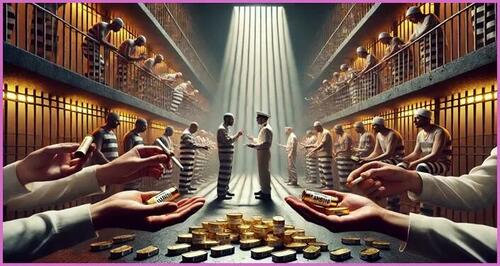
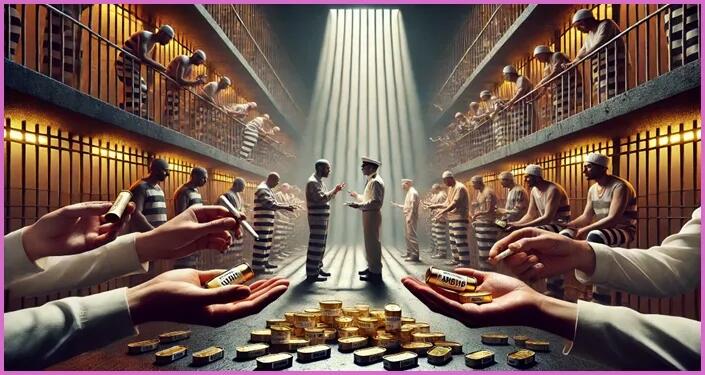
For example, cigarettes have historically functioned as an effective currency behind bars.

They are in high demand, easily divisible for small transactions, and widely recognized as a unit of exchange.

Cigarettes can be traded for food, services, or other necessities, creating a barter economy that mirrors traditional financial systems.

Similarly, cans of sardines have emerged as a valuable commodity in some prison settings.

Their non-perishable nature, combined with their nutritional value, makes them a reliable store of wealth that retains its usefulness over time.

In the absence of officially sanctioned money, these items take on the characteristics of a medium of exchange, a store of value, and a unit of account—the very principles that define money itself.

This informal economy within prisons serves as a microcosm of broader monetary systems, demonstrating that money is not defined by government decree alone, but by what people collectively recognize as having value.

The lessons from these controlled environments underscore the importance of adaptability, resourcefulness, and understanding economic forces, no matter where one operates.

Its also important to understand that while both cigarettes and sardines have become popular forms of money found in controlled environments, they have not become so solely due to the marketability of their intrinsic qualities.

Consider a scenario within a prison economy, where sardines are widely accepted as currency. In this system, they serve as a medium of exchange, a store of value, and a unit of account—fulfilling all the necessary functions of money.

However, what happens when an inmate is transferred to a different facility, where the power dynamics have changed?

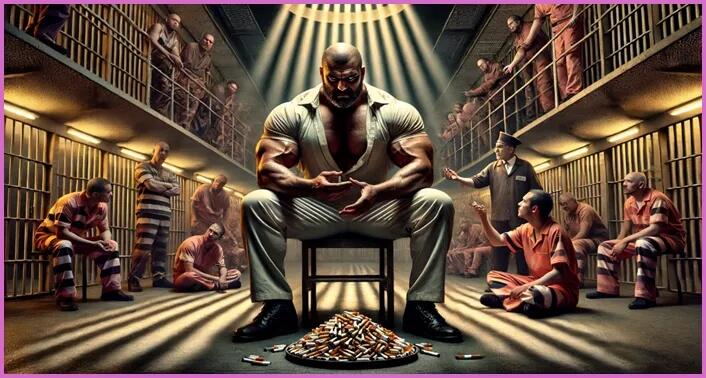
In this new prison, the dominant figure—the one who holds the most influence—hates sardines but loves cigarettes.

He has declared, by fiat, that cigarettes are now the required form of payment.

In such an environment, it no longer matters that sardines once held monetary value. The rules have changed, and the new authority figure has dictated a new system.
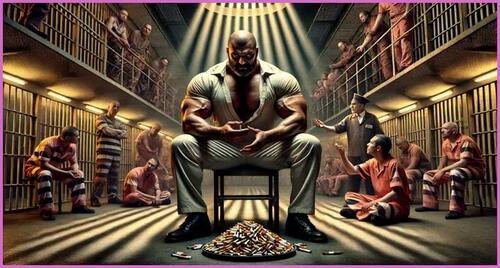
In this situation, would it make sense to insist that sardines are still money?

Or would the prisoner be forced to adapt to the new standard, recognizing that money is not determined by intrinsic qualities alone, but rather by the power structures that enforce its use?

Would you take it upon yourself to try and convince the dominant figure that he is wrong to demand cigarettes and that he should rely on free market principles rather than his own wants and desires?

This example raises a critical question: If given the choice, would we prefer a market-based form of money, determined organically by free exchange, or a system where money is dictated by a central authority that holds power over the participants?

Most people would instinctively lean toward the former, believing that free markets should determine the best form of money.

And because they believe that free markets would be better, they then believe that that is how markets developed throughout history.

However, there is a problem with this perspective—one that is rarely acknowledged.

Despite its widespread acceptance in economic textbooks and theoretical models, there is little historical evidence that large-scale barter and free exchange ever formed the foundation of monetary systems.

The assumption that markets naturally produce money without some form of imposed structure does not align with much of the historical record.

This challenges the idea that money evolved as a product of free markets and forces us to reconsider whether its origins are more closely tied to power, authority, and enforced rules rather than voluntary exchange.

Most people assume money has always been determined by free market forces. But history tells a different story—one where power, control, and coercion have shaped financial systems in ways few ever stop to consider.

So if money isn’t what we think it is, what does that mean for everything else?

Debt, Power, and the Evolution of Money Systems

The conventional narrative about the origins of money suggests that it naturally evolved from barter systems, where individuals directly exchanged goods and services.

However, David Graeber, in his book Debt: The First 5,000 Years, challenges this assumption, arguing that there is little historical evidence to support the idea that barter was ever the primary foundation of economic systems.

Traditional economics textbooks often depict early societies as engaging in barter before money was introduced, but Graeber’s research suggests otherwise.

Instead, he argues that debt—not barter—was the foundation of economic exchange.

In ancient societies, trade was often based on credit systems, where individuals exchanged goods and services based on mutual trust and obligations rather than immediate physical payment.

These systems did not require money in the traditional sense but instead relied on social contracts and informal agreements.

Over time, these credit systems became formalized into structured debt, eventually leading to the emergence of money as an institutionalized means of settling obligations.

Graeber traces the evolution of debt through history, illustrating how it became deeply embedded in economic and political systems, often serving as a means of control rather than mere facilitation of trade.

He critiques the ways in which debt has been used to enforce social hierarchies, shaping power dynamics, and limiting individual autonomy.

By reframing the history of money around debt, Graeber sheds light on the underlying social mechanisms that govern economic systems—mechanisms that have long been overlooked or misunderstood.

For example, it is well known that throughout history, rulers have exerted direct control over economic activity, using coercion, taxation, and structured debt to shape monetary systems.

In some cases, power was enforced through outright conscription, where the king would draft citizens into his army, demand their labor for infrastructure projects, or force them into servitude for state-building efforts.

There was little room for refusal—those who resisted often faced death or imprisonment.

In other cases, entire economies functioned under feudal systems, where peasants were forced to work the land, generating wealth that ultimately benefited the ruling class.

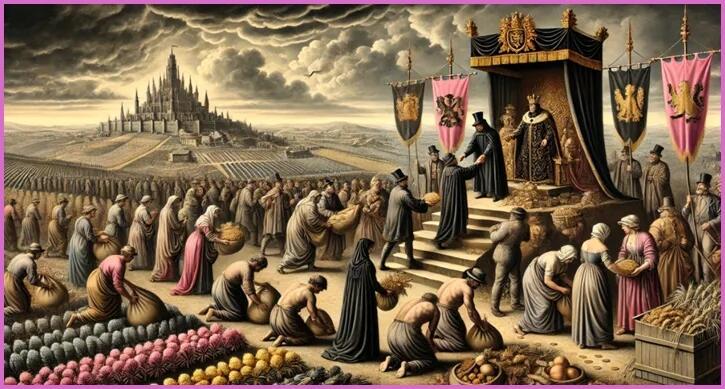
Under such systems, peasants were required to pay taxes “in kind,” meaning they surrendered a portion of their crops, livestock, or other goods directly to the monarchy.

After taxation, they were left with only what remained for their survival.

However, maintaining control through direct force has its limitations. It requires resources, effort, and an ever-present threat of violence.

A more efficient system would be one where control was maintained without constant enforcement—one where individuals voluntarily complied, believing they had agency in their economic decisions.

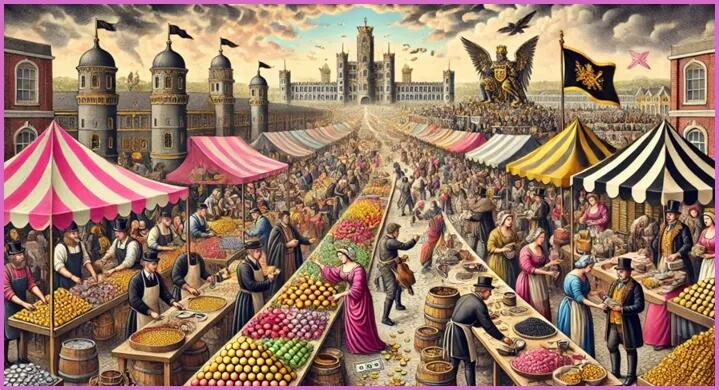
With that in mind, what if the king devised a system where, instead of demanding physical goods or direct labor, he issued a currency—a coin used to provision his kingdom?

What if, at the end of the season or the year, he required his citizens to pay back a portion of that currency as taxes?

Under this model, individuals would still be working to sustain the system, but instead of direct coercion, they would be compelled to participate in the economy to earn the issued currency.

The need to obtain coins to pay taxes would create demand for the currency itself, giving it value not because of intrinsic worth, but because it was the only way to satisfy obligations to the state.
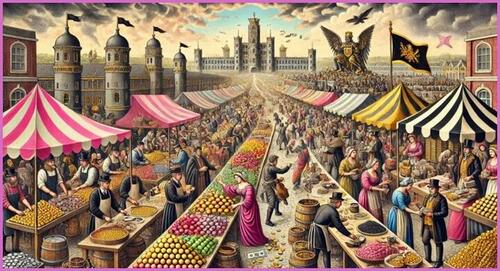
In effect, this would achieve the same result as forced labor or direct taxation, but in a manner that was subtler, more efficient, and easier to manage. The system of control would still exist—but now, it would feel voluntary.

Before dismissing this idea as implausible, it is worth reflecting on the words of Johann Wolfgang von Goethe, who once observed: “None are more hopelessly enslaved than those who falsely believe they are free.”

Debt, Control, and the Nature of Power

The concept of debt as a mechanism of control is powerfully illustrated in the film The International, where Umberto Calvini, a leading global weapons manufacturer, explains to money laundering investigators why a major European bank is brokering Chinese small arms to third-world conflicts.

The investigators assume that the bank is simply profiting from war, but Calvini clarifies that the true objective is not to control the conflict itself, but to control the debt that war creates.

He states:

“The IBBC is a bank. Their objective isn’t to control the conflict, it’s to control the debt that the conflict produces.

You see, the real value of a conflict—the true value—is in the debt that it creates.

You control the debt, you control everything. You find this upsetting, yes? But this is the very essence of the banking industry, to make us all, whether we be nations or individuals, slaves to debt.”

Watch the scene here

Calvini’s words underscore a chilling reality: war (and debt) is not just about land, resources, or ideology—it is a financial instrument.

By ensuring that governments and individuals remain indebted, financial institutions and those who control them can exert long-term influence over entire nations.

This shifts the focus from direct control through physical force to economic subjugation through perpetual debt cycles.

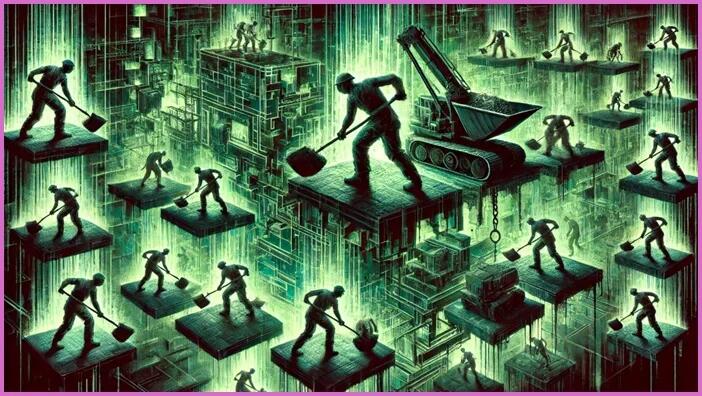
The idea that control extends beyond war and finance is further explored in the film The Matrix, where Morpheus reveals to Neo the unsettling truth about the world he lives in.

Neo, like everyone else, believes he exists in a reality where he makes his own choices.

But Morpheus exposes this as a fabricated illusion, designed to keep people enslaved without them realizing it.

When Neo asks what the Matrix is, Morpheus explains:

“The Matrix is a computer-generated dream world, built to keep people under control in order to change a human being into…this.”

At that moment, Morpheus holds up a battery, revealing the horrifying truth—humanity itself has been reduced to a power source for an unseen system.

Watch the scene here
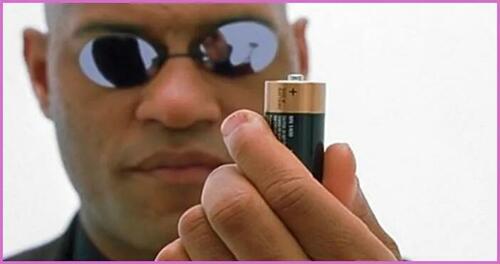
In the context of financial systems, this analogy is striking.

Just as the machines in The Matrix extract energy from humans, modern economic structures extract wealth, labor, and productivity from individuals, often without their conscious awareness.

Most people never question the system they are born into, just as Neo never questioned his world—until he was forced to confront an uncomfortable truth.

By drawing these connections, it becomes clear that debt, economic control, and systemic influence function in ways that extend far beyond what most people perceive.

The question then becomes: If the world we live in operates under a system we never consented to, and one that most don’t even understand, how much of our reality is truly our own?

The Monetary Matrix

After exploring various perspectives, we arrive back at the fundamental question: What is money?

But before we attempt to answer, consider this—are you ready to take the Red Pill?

What if, echoing the words of both Umberto Calvini in The International and Morpheus in The Matrix, money is not merely a tool for exchange, nor simply a product of free-market evolution?

What if money has never been neutral, but rather, it has always been a mechanism of control?

If this is the case, then money is not just an economic instrument—it is the original Matrix.

It has existed for as long as power structures have, shaping civilizations, ensuring compliance, and maintaining hierarchies thousands of years before modern financial systems were even conceived.

It did not emerge organically from free markets, but rather, it was implemented and imposed by those in power.

If this idea seems radical, consider the analogy: money is a government-created construct, built to keep people under control in the same way that the Matrix enslaved humanity—turning them into batteries for an unseen system.

Morpheus’ words about turning humans into a battery displays this concept perfectly.

But when Neo is confronted with this reality, his first reaction is horror and denial.

He recoils at the idea, rejecting it outright:

“I don’t believe it. It’s not possible.”

And perhaps, right now, you are having the same reaction.

Perhaps this notion seems too far-fetched—too extreme to be real.

And yet… can you be completely certain that it is wrong?

The challenge is not to accept or reject this idea outright. The challenge is to look at the world as it is, not as we want it to be.

If you can do that, then you must at least be willing to ask:

What if everything you thought you knew about money was an illusion?

But before we jump to a conclusion, let us take a closer look at some of the evidence. Evidence that we all have direct experience with.

The Evidence

From the moment we are born, we enter a controlled environment—one where registration is mandatory, where each individual is assigned an identification number.

This system is not referred to as a prison, but rather as a state or a country.

And yet, despite the different terminology, the structure bears an unsettling resemblance to an institution designed to manage and contain its inhabitants.

But unlike traditional prisons, this system is far more sophisticated. Here, you are not simply locked away—you are made to believe you are free.

You do not get to live in this system for free. There is a cost, a recurring obligation that must be met. They do not call these payments prison fees—they call them taxes.

Even though you are required to pay, you have little to no control over how the money is spent.

And to make matters worse, in order to obtain the money necessary to pay these taxes, you must first work within the system itself.

The economy is structured so that you must earn the state-sanctioned currency, which can then be used to pay the fees imposed on you.

There is no alternative. At least not one that does not involve the threat of imprisonment or violence.
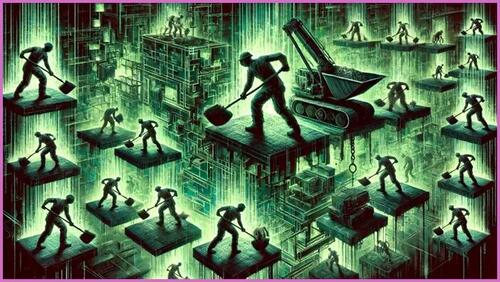
But it does not stop there.

The system does not just demand your labor—it also encourages you to take on debt.

It presents you with shiny new products, new luxuries, new promises, enticing you to borrow more, ensuring that you remain tied to the system, dependent on its currency, and locked in a cycle that is nearly impossible to escape.

Unlike a physical prison, where the boundaries are visible, this system’s walls are invisible—and that is what makes them so effective.

You may believe you are free to move, but try leaving without the required documentation—a passport, a visa, or an approval.

Your movements are tracked, monitored, and restricted.

In some cases, certain “facilities”—whether by nation, regulation, or economic constraint—do not allow you to leave at all.

And yet, the most effective form of control is not force, but distraction.

The state provides news, entertainment, and endless engagement, ensuring that most people never even realize that the walls exist.

In fact, they are so skilled at this that the vast majority of individuals will never take a step back, never pause long enough to recognize the structure for what it truly is.

The Cognitive Dissonance of it all

Now, some of you may be thinking: This is not really what money is. This is just that MMT mumbo jumbo. And others may believe that if this were true, the system would have collapsed already.

But remember, inevitable does not mean imminent. Systems do not crumble overnight. They endure for decades, centuries, even millennia before their inherent flaws bring them to their inevitable collapse.

So, after examining the evidence—after considering the nature of the system we exist within—have you changed your mind at all?

Do you see the pattern, but simply hate what it implies?

Breaking Free

Understanding money as a mechanism of control does not mean outright rejecting the idea of free markets or market-based money.

Instead, it demands situational awareness—the ability to recognize and navigate the structures that shape financial systems, rather than blindly accepting them as immutable truths.

Free markets and commodity-based money may indeed be ideal, but reality tells a different story—one where monetary systems are largely centralized, manipulated, and designed to maintain power structures.

Acknowledging this reality is not about conceding defeat; it is about understanding the game you are playing so that you can engage with it on your own terms rather than being a passive participant in a system that was never built for your benefit.

The nature of money is inherently dualistic.

Sometimes, it is a market-chosen commodity, emerging organically from the free exchange of goods and services.

Other times, it is a state-imposed token, demanded by sovereign powers as the exclusive means to settle obligations like taxes.

And, in many instances, it is both at the same time—a hybrid of state control and market-driven value, existing within a framework that few ever stop to question.

None of this is meant to disparage free markets or the enduring role of gold.

On the contrary, history has shown time and time again that gold and sound money principles provide a more stable, trustworthy foundation for trade and wealth preservation.

If given the choice, most would prefer a system where markets, rather than governments, determine what functions as money.

But that is not the world we live in today.

To ignore this fact is to remain blind to the forces that shape global finance, leaving oneself vulnerable to the shifting tides of monetary policy, economic intervention, and centralized control.

Now more than ever, dogmatic beliefs about what money should be must not cloud our understanding of what money actually is.

In the years ahead, the ability to think critically, adapt, and remain aware of evolving financial realities will not just be valuable—it will likely be essential for financial survival.

Rather than clinging to an ideological framework that no longer aligns with reality, we must cultivate a mindset that allows us to see the world as it is, not as we wish it to be.

And situational awareness is the ultimate superpower in volatile markets—one that, if mastered, can not only help you survive, but to also thrive in the years to come.
Tyler Durden
Sun, 03/02/2025 – 09:20

via ZeroHedge News https://ift.tt/yGqBdlU Tyler Durden

US Approves New Russian Ambassador As Major Reset Underway

US Approves New Russian Ambassador As Major Reset Underway

The two rounds of high level US-Russia talks in Riyadh and Istanbul in the last two weeks appear to already be bearing fruit, as Russia’s Foreign Ministry has announced it’s received approval from Washington to send Aleksandr Darchiev as Moscow’s new ambassador to the United States.

Current bilateral US-Russia dialogue has been focused on fully restoring relations and putting back in place all embassy staff in Washington and Moscow, respectively. There had been several rounds of hostile mutual booting of diplomats as relations deteriorated under Biden.

Aleksandr Darchiev, via Sputnik

According to Russian media, “Darchiev, a senior diplomat with more than 30 years of experience, currently heads the Foreign Ministry’s North Atlantic Department. He previously served as Russia’s ambassador to Canada from 2014 to 2021 and has held several high-ranking positions within the ministry, including deputy director of the North America Department and counselor at the Russian embassy in Washington.”

This is no doubt part of the “concrete initial steps” being taken by both sides toward resuming regular contacts and diplomatic engagement, with a higher aim of finding a permanent peace solution to the Ukraine war.

Darchiev’s predecessor, Anatoly Antonov, served as Russia’s ambassador to the US throughout much of the Ukraine crisis and the entirety of the war until now. He ran the Russian embassy in D.C. for seven years, and just recently returned to Moscow.

Just as Moscow is poised for a reset with the US under the new Trump administration, Washington relations with Ukraine are at a low point after Friday’s Zelensky fireworks in the Oval Office. Russian media has been busy hailing and welcoming these developments, which may soon result in the following:

US President Donald Trump’s administration is considering ending all ongoing shipments of military aid to UkraineThe Washington Post wrote citing sources.

Military supplies could be halted “in response to remarks” by Vladimir Zelensky at a meeting with Trump in the White House and “his perceived intransigence in the peace process,” according to the publication.

The decision, if made, would apply “to billions of dollars of radars, vehicles, ammunition and missiles awaiting shipment to Ukraine through the presidential drawdown authority,” an official, who spoke on the condition of anonymity to discuss a sensitive topic, was quoted as saying.

Ukraine frontlines have already been steadily collapsing, so without a future flow of American heavy weapons, this collapse will only accelerate, and the war would likely reach finality within a few months or less.

President Putin has meanwhile been touting the chance for “major” cooperative economic and diplomatic initiatives with the US under Trump, and as bilateral talks progress. Russia has even offered its own minerals access deal as a possibility of closer cooperation, and as Trump floats potentially dropping sanctions in the future. The next step may be the restoration of direct commercial flights between the two countries.

The Europeans have been cut out up to this point, and certainly the Ukrainians will continue to be sidelined, given what just took place with Zelensky at the White House. The Kremlin will no doubt jump at the opportunity to keep up this momentum of anti-Zelensky sentiment in Washington.

Tyler Durden
Sun, 03/02/2025 – 08:45

via ZeroHedge News https://ift.tt/d91YvFE Tyler Durden

US And UK To Forge New Trade Agreement

US And UK To Forge New Trade Agreement

Via OilPrice.com,

  • President Trump indicated a willingness to work on a new trade agreement with the UK and suggested that tariffs on British goods might not be necessary.

  • Prime Minister Starmer emphasized the balanced trade relationship between the UK and the US and expressed hope that tariffs would not be imposed.

  • The leaders discussed collaborating on a new technology-focused economic deal, with a particular emphasis on artificial intelligence.

The UK could be set to dodge US tariffs with work to begin on a new US-UK trade deal, it was revealed during Sir Keir Starmer’s visit to US President Donald Trump.

The Prime Minister flew to the States yesterday for a highly anticipated first meeting with President Trump since he reentered the White House in January.

And the visit, which came amid uncertainty over peace in Ukraine and the impact on European security, saw Trump outline his hopes for a “great trade agreement” with the UK.

Following discussions with Sir Keir, the President told a press conference on Thursday: “We’re going to have a great trade agreement, one way or another.

“We’re going to end up with a very good trade agreement for both countries and we are working on that as we speak.”

He added: “I think we’ll have something, maybe in terms of possibilities, agreed very shortly.

“We’ll see if we can do something pretty quickly. But we’re going to make some great trade agreements with the UK and with the Prime Minister, and it’ll happen very quickly.”

Asked if Starmer, who he also described as a “tough negotiator” and “terrific in our discussions” had convinced him not to impose trade tariffs on the UK, Trump said: “He tried.”

US tariffs on British steel imports are looming and the US president had previously hinted he could target the UK further, as well as suggesting he could impose 25 per cent tariffs on goods from the European Union (EU).

Trump said: “He was working hard, I’ll tell you that. He earned whatever the hell they pay him over there, but he tried.

“I think there’s a very good chance that in the case of these two great, friendly countries, I think we could very well end up with a real trade deal where the tariffs wouldn’t be necessary. We’ll see.”

The US President also told reporters that he uses tariffs to “even things up” on trade, adding: “We’ve been treated badly by a lot, we’re using tariffs and… it’s not about inflation, it’s about fairness, and the inflation for us has not existed. I don’t think it’s going to exist.”

But Starmer emphasised that the UK-US trade relationship is “fair”, as he signalled he hoped not to see tariffs imposed on Britain’s economy.

The Prime Minister said: “We have $1.5 trillion invested in each other’s economies, creating over 2.5m jobs across both economies, our trading relationship is not just strong. It’s fair, balanced and reciprocal.”

And Starmer earlier stressed: “Mr President, it’s no secret we’re from different political traditions, but there’s a lot that we have in common. We believe it’s not taking part that counts. What counts is winning.

“If you don’t win, you don’t deliver, and we’re determined to deliver for the working people of Britain and America who want and deserve to see their lives improve. 

“So, we’re both in a hurry to get things done, and that’s what the UK and US do when we work together: we win and we get things done.”

Starmer also revealed the UK would work with the US on a new technology-focused economic deal. Speaking of the countries’ hopes for artificial intelligence (AI), he said: “Instead of over-regulating new technologies, we’re seizing the opportunities they offer.”

He added: “We’ve decided today to go further to begin work on a new economic deal with advanced technology at its core.

“Look, our two nations together shaped the great technological innovations of the last century. We have a chance now to do the same for the 21st century.

“I mean, artificial intelligence could cure cancer. That could be a moonshot for our age, and that’s how we’ll keep delivering for our people.”

Following his comments on the EU, Trump also said he will “have to take a look” at whether there will be any trade sanctions on the UK.

The President said: “I can say that … we’re here for a different reason – we’re talking about a very different place. I have investments there, I own Turnberry, I own Aberdeen, and I own a great place called Doonbeg in Ireland. So, I have a great warm spot for your country.”

Starmer then said: “And our trade, obviously, is fair and balanced and, in fact, you’ve got a bit of surplus. So, we’re in a different position there – and obviously we contributed hugely in relation to Ukraine.”

Trump said: “It’s going to work out.” Asked if there will not be any sanctions on the UK, Mr Trump said: “Well, I have to take a look.”

Elsewhere, the US President Donald said the Chagos Islands deal did not “sound bad” when he suggested the US may accept the deal.

Answering questions in the White House, the US President said: “We’re going to have some discussions about that very soon and I have a feeling it’s going to work out very well.

“They’re talking about a very long-term, powerful lease, a very strong lease, about 140 years, actually. It’s a long time. I think we’ll be inclined to go along with your country.”

He added: “It’s a little bit early, we have to yet be given the details, but it doesn’t sound bad.”

Tyler Durden
Sun, 03/02/2025 – 08:10

via ZeroHedge News https://ift.tt/fQ9uPaw Tyler Durden

Armed Venezuelan Ship “Threatens” Exxon Mobile Vessel Off Guyana Coast

Armed Venezuelan Ship “Threatens” Exxon Mobile Vessel Off Guyana Coast

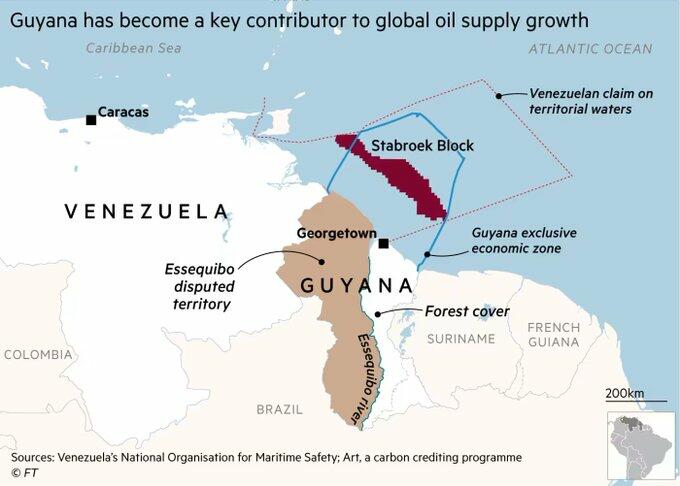
A Venezuelan military ship entered a major offshore oil and gas field off the coast of Guyana early Saturday, approaching an ExxonMobil contracted vessel, according to Bloomberg. This incident comes days after President Trump canceled a key oil deal with Nicolas Maduro’s Venezuela, citing its failure to repatriate an adequate number of illegal aliens from the US.

X user News Source Guyana posted a video showing the armed Venezuelan patrol boat probing the waters around the Exxon contracted ship in the Stabroek Block (Oil & Gas Field). 

The US State Department wrote on X the incident was unacceptable:

“Venezuelan naval vessels threatening ExxonMobil’s floating production, storage and offloading (FPSO) unit is unacceptable and a clear violation of Guyana’s internationally-recognized maritime territory. Further provocation will result in consequences for the Maduro regime. The United States reaffirms its support for Guyana’s territorial integrity and the 1899 arbitral award.”

Another video of the incident.

Exxon discovered Stabroek in 2015. It produces 650,000 barrels daily and is situated in heavily disputed waters with Venezuela.  

Guyana’s President, Irfaan Ali, stated that the Venezuelan military vessel radioed the Exxon-contracted ship, declaring that the area lies within disputed international waters.

“During this incursion, the Venezuelan vessel approached various assets in our exclusive waters, including FPSO Prosperity,” Ali said, referring to one of the Exxon-contracted vessels.

The Organization of American States stated, “Such acts of intimidation constitute a clear violation of international law, undermine regional stability, and threaten the principles of peaceful coexistence between nations,” adding it “unequivocally condemns the recent actions of Venezuelan naval vessels.”

The incident follows Trump’s decision to reverse the concessions of an oil transaction agreement dated Nov. 26, 2022, with Venezuela, citing Maduro’s failure to repatriate enough migrants.

Not a smart move, Maduro. 

Tyler Durden
Sun, 03/02/2025 – 07:35

via ZeroHedge News https://ift.tt/G7rSuom Tyler Durden

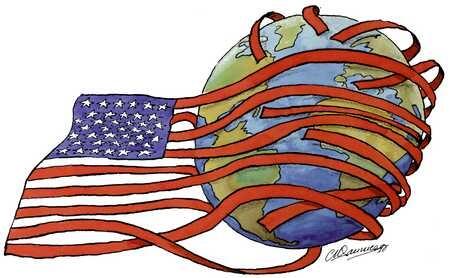
America As Republic, Not As Empire – Europe’s ‘Sound And Fury’ After Jaw-Dropping Pivots In US Policy

America As Republic, Not As Empire – Europe’s ‘Sound And Fury’ After Jaw-Dropping Pivots In US Policy

Authored by Alastair Crooke,

The bits are falling into a distinct pattern – a pre-prepared pattern.

Defence Secretary Hegseth at the Munich Security Conference gave us four ‘noes’: No to Ukraine in NATO; No to a return to pre-2014 borders; No to ‘Article 5’ peacekeeper backstops, and ‘No’ to U.S. troops in Ukraine. And in a final flourish, he added that U.S. troops in Europe are not ‘forever’ – and even placed a question mark over the continuity of NATO.

Pretty plain speaking! The U.S. clearly is cutting away from Ukraine. And they intend to normalise relations with Russia.

Then, Vice-President Vance threw his fire cracker amongst the gathered Euro-élites. He said that the élites had retreated from “shared” democratic values; they were overly reliant on repressing and censoring their peoples (prone to locking them up); and, above all, he excoriated the European Cordon Sanitaire (‘firewall’) by which European parties outside the Centre-Left are deemed non-grata politically: It’s a fake ‘threat’, he suggested. Of what are you really so frightened? Have you so little confidence in your ‘democracy’?

The U.S., he implied, will no longer support Europe if it continues to suppress political constituencies, arrest citizens for speech offenses, and particularly cancel elections as was done recently in Romania. “If you’re running in fear of your own voters”, Vance said, “there is nothing America can do for you”.

Ouch! Vance had hit them where it hurts.

It is difficult to say what specifically most triggered the catatonic European breakdown: Was it the fear of the U.S. and Russia joining together as a major power nexus – thus stripping Europe from ever again being able glide along on the back of American power, through the specious notion that any European state must have exceptional access to the Washington ‘ear’?

Or was it the ending of the Ukraine/Zelensky cult which was so prized amongst the Euro-élite as the ‘glue’ around which a faux European unity and identity could be enforced? Both probably contributed to the fury.

That the U.S. would in essence leave Europe to their own delusions would be a calamitous event for the Brussels technocracy.

Many may lazily assume that the U.S. double act at Munich was just another example of the well-known Trumpian fondness for dropping ‘wacky’ initiatives intended to both shock and kickover frozen paradigms. The Munich speeches did exactly that all right! Yet that does not make them accidental; but rather parts that fit into a bigger picture.

It is clear now that the Trump blitzkrieg across the American Administrative State could not have been mounted unless carefully pre-planned and prepared over the last four years.

Trump’s flurry of Presidential Executive Orders at the outset of his Presidency were not whimsical. Leading U.S. constitutional lawyer, Johnathan Turley, and other lawyers say that the Orders were well drafted legally and with the clear understanding that legal challenges would ensue. What’s more, that Trump Team welcome those challenges.

What is going on? The newly confirmed head of the Office of Budget Management (OBM), Russ Vought, says his Office will become the “on/off switch” for all Executive expenditure under the new Executive Orders. Vought calls the resulting whirlpool, the application of Constitutional radicalism. And Trump has now issued the Executive Order that reinstates the primacy of the Executive as the controlling mechanism of government.

Vaught, who was in OBM in Trump 01, is carefully selecting the ground for all-out financial war on the Deep State. It will be fought out firstly at the Supreme Court – which the Trump Team expect confidently to win (Trump has the 6-3 conservative majority). The new régime will then be applied across all agencies and departments of state. Expect shrieks of pain.

The point here is that the Administrative State – aloof from executive control – has taken to itself prerogatives such as immunity to dismissal and the self-awarded authority to shape policy – creating a dual state system, run by unelected technocrats, which, when implanted in departments such as Justice and the Pentagon, have evolved into the American Deep State.

Article Two of the Constitution however, says very bluntly: Executive power shall be vested in the U.S. President (with no ifs or buts at all.) Trump intends for his Administration to recover that lost Executive power. It was, in fact, lost long ago. Trump is re-claiming too, the Executive’s right to dismiss ‘servants of the State’, and to ‘switch off’ wasteful expenditure at his discretion, as part of a unitary executive prerequisite.

Of course, the Administrative State is fighting back. Turley’s article is headlined: They Are Taking Away Everything We Have: Democrats and Unions Launch Existential Fight. Their aim has been to cripple the Trump initiative through using politicised judges to issue restraint orders. Many mainstream lawyers believe Trump’s Unitary Executive claim to be illegal. The question is whether Congress can stand up Agencies designed to act independently of the President; and how does that square with the separation of powers and Article Two that vests unqualified executive power with one sole elected official – the U.S. President.

How did the Democrats not see this coming? Lawyer Robert Barnes essentially says that the ‘blitzkrieg’ was “exceptionally well-planned” and had been discussed in Trump circles since late 2020. The latter team had emerged from within a generational and cultural shift in the U.S.. This latter had given rise to a Libertarian/Populist wing with working class roots who often had served in the military, yet had come to despise the Neo-con lies (especially those of 9/11) that brought endless wars. They were animated more by the old John Adams adage that ‘America should not go abroad in search of monsters to slay’.

In short, they were not part of the WASP ‘Anglo’ world; they came from a different Culture that harked back to the theme of America as Republic, not as Empire. This is what you see with Vance and Hegseth – a reversion to the Republican precept that the U.S. should not become involved in European wars. Ukraine is not America’s war.

The Deep State, it seems, were not paying attention to what a posse of ‘populist’ outliers, tucked away from the rarefied Beltway talking shop, were up to: They (the outliers) were planning a concerted attack on the Federal expenditure spigot – identified as the weak spot about which a Constitutional challenge could be mounted that would derail – in its entirety – the expenditures of the Deep State.

It seems that one aspect to the surprise has been the Trump Team’s discipline: ‘no leaks’. And secondly, that those involved in the planning are not drawn from the preeminent Anglo-sphere, but rather from a strand of society that was offended by the Iraq war and which blames the ‘Anglo-sphere’ for ‘ruining’ America.

So Vance’s speech at Munich was not disruptive – merely for the sake of being disruptive; he was, in fact, encouraging the audience to recall early Republican Values. This was what is meant by his complaint that Europe had turned away from “our shared values” – i.e. the values that animated Americans seeking escape from the tyranny, prejudices and corruption of the Old World. Vance was (quite politely) chiding the Euro-élites for backsliding to old European vices.

Vance implicitly was hinting too, that European conservative libertarians should emulate Trump and act to slough-off their ‘Administrative States’, and recover control over executive power. Tear down the firewalls, he advised.

Why? Because he likely views the ‘Brussels’ Technocratic State as nothing other than a pure offshoot to the American Deep State – and therefore very likely to try to torpedo and sink Trump’s initiative to normalise relations with Moscow.

If these were Vance’s instincts, he was right. Macron almost immediately summoned an ‘emergency meeting’ of ‘the war party’ in Paris to consider how to frustrate the American initiative. It failed however, descending reportedly into quarrelling and acrimony.

It transpired that Europe could not gather a ‘sharp-end’ military force greater than 20,-000-30,000 men. Scholtz objected in principle to their involvement; Poland demurred as a close neighbour of Ukraine; and Italy stayed silent. Starmer, however, after Munich, immediately rang Zelensky to say that Britain saw Ukraine to be on an irrevocable path to NATO membership – thus directly contradicting U.S. policy and with no support from other states. Trump will not forget this, nor will he forget Britain’s former role in supporting the Russiagate slur during his first term in office.

The meeting did however, underline Europe’s divisions and impotence. Europe has been sidelined and their self-esteem is badly bruised. The U.S. would in essence leave Europe to their own delusions, which would be calamitous for the Brussels autocracy.

Yet, far more consequential than most of the happenings of the past few days was when Trump, speaking with Fox News,after attending Daytona, dismissed Zelensky’s canard of Russia wanting to invade NATO countries. “I don’t agree with that; not even a little bit”, Trump retorted.

Trump does not buy into the primary lie intended as the glue which holds this entire EU geo-political structure together. For, without the ‘Russia threat’; without the U.S. believing in the globalist linchpin lie, there can be no pretence of Europe needing to prepare for war with Russia. Europe ultimately will have to come to reconcile its future as a periphery in Eurasia.

Tyler Durden
Sun, 03/02/2025 – 07:00

via ZeroHedge News https://ift.tt/3vuCs64 Tyler Durden

Trump, Vance, & The New New World Order

Trump, Vance, & The New New World Order

Authored by Stephen Soukup via American Greatness,

This past week, the venerable Martin Wolf, chief economics commentator for The Financial Times, used his column to declare the Trump administration and, by extension, the United States “the enemy of the West.” “Today,” Wolf wrote, “autocracies [are] increasingly confident,” and “the United States is moving to their side.” According to the subhead on the column, “Washington has decided to abandon…its postwar role in the world.” Meanwhile, Wolf cites the (in his estimation) august Franklin Roosevelt, as he complains that the United States “has decided instead to become just another great power, indifferent to anything but its short-term interests.”

The ironies here—as well as the historical ignorance—abound.

To start, one would imagine that Wolf, an educated man with two degrees from Oxford, might know that it was his countryman (and two-time Prime Minister), Henry John Temple (i.e. Lord Palmerston), who declared in a speech in the House of Commons that “We have no eternal allies, and we have no perpetual enemies. Our interests are eternal and perpetual, and those interests it is our duty to follow.” Wolf might also be expected to know that this statement was repeated—more famously and more pithily—by Henry Kissinger, perhaps the quintessential American diplomat in the supposedly vaunted postwar order. Kissinger, like Palmerston and Trump (apparently) understood that a nation that pursues anything other than its interests is foolish, faithless, and, in time, doomed.

What bothers Wolf, it would seem, is that American interests are diverging from British and continental European interests. That is unfortunate, but it is also more than likely the case that this divergence is the result of Britain and Europe’s abandonment of the principles, values, and ambitions the allies once shared, rather than the other way around. For example, Wolf criticizes the speech given by J.D. Vance in which the vice president defended the traditional American dedication to free speech and attacked the British and European rejection of that principle. Yet again, Wolf might be expected to know that the American preoccupation with this and all other negative rights is something the nation’s Founders inherited from their British forefathers. If the two nations now differ on the importance of this fundamental right, then that’s hardly Vance’s, Trump’s, or any other American’s fault.

More ironies are found in Wolf’s praise of the now-dying postwar order and his citation of FDR as the architect of that order. While Wolf is correct that Roosevelt was one of two Americans most responsible for the creation of the postwar order, he is wrong in believing that the order was virtuous by design and that it played out precisely as Roosevelt intended. Indeed, he couldn’t be more wrong if he tried.

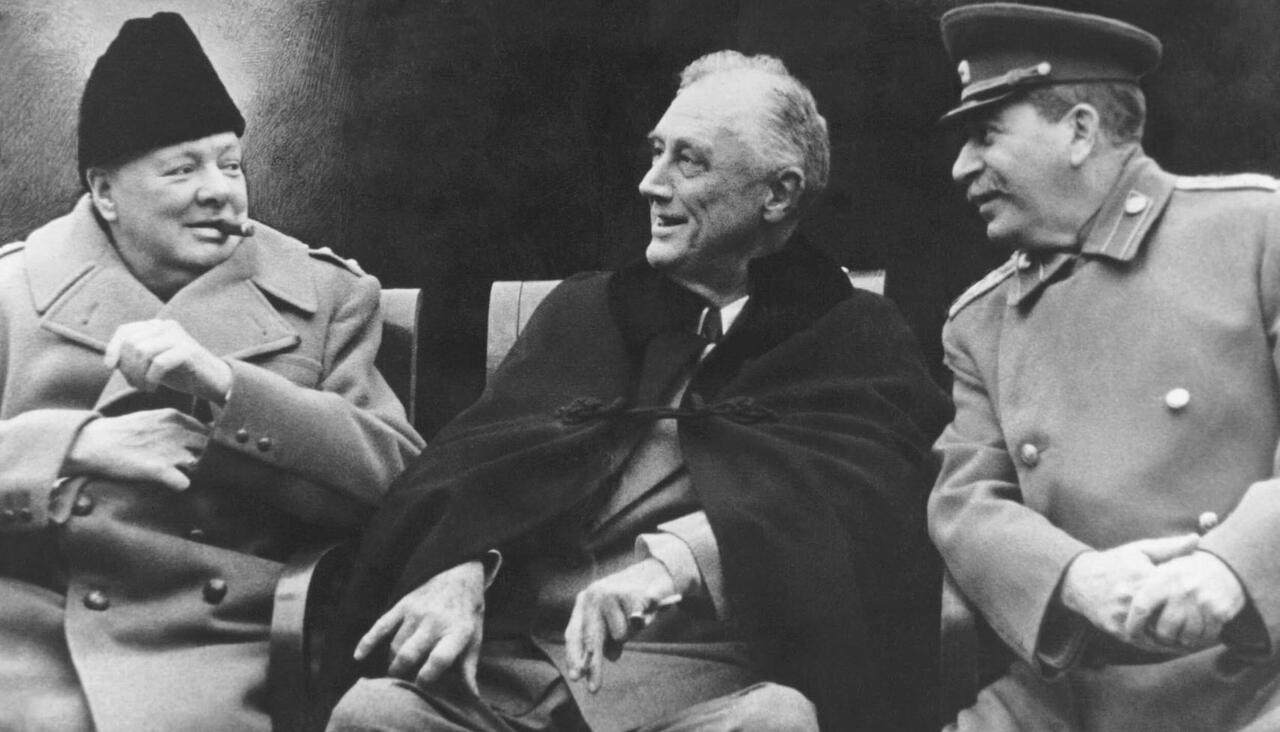
Almost from the moment the United States entered World War II, Roosevelt was planning how best to achieve the goal he inherited from his former boss and Progressive predecessor, Woodrow Wilson. Wilson’s goal, of course, was “global governance” under the League of Nations, a goal that the U.S. Senate, mercifully, denied him. Regrettably, Roosevelt shared Wilson’s dream. The political scientist and historian of the Cold War, Amos Perlmutter, wrote that Roosevelt’s “vision for a postwar world was neo-Wilsonian, totally at odds with reality. He would help create a new international order, presided over in an equal partnership by the two emerging superpowers, the United States and the USSR, and buttressed by the newly created world organization, the United Nations.” Like Wilson, Roosevelt sought to fix the world by bringing the whole of it under the control of a handful of its most benevolent and brilliant men—himself included, naturally.

The catch, of course, was that in order to believe that he could effectuate his plan for the postwar global order, Roosevelt also had to believe that it would be received positively by the man who turned out to be the most proficient mass murderer in the war, Josef Stalin. Remarkably, Roosevelt did, in fact, believe just that. He repeatedly told his staff and others that he was convinced that the man he affectionately called “Uncle Joe” would eagerly welcome his friendship and American entreaties to share governance of the world jointly. They would, he believed, be the closest of allies and the best of friends. In 1943, before ever even meeting Stalin, FDR told his first ambassador to the USSR, William Bullit, that “I have just a hunch that Stalin doesn’t want anything but security for his country, and I think that if I give him everything I possibly can and ask nothing from him in return, noblesse oblige, he won’t try to annex anything and will work for a world democracy and peace.”

Roosevelt approached the end of the war and Yalta in the same state of delusion. He went, hat in hand, to beg Stalin to join him in his plan to rule the world together as the benevolent co-victors and co-representatives of the triumphant political left. As history shows, Roosevelt gave Stalin everything he wanted at Yalta, in the vain hope that the two could be friends and work together. History also shows that FDR was never disabused of this fantasy and, as a result, set about trying to put it in place.

To this end, Roosevelt put his best men on the job of ensuring the creation—and the successful ratification by the Senate—of the United Nations. Among these best men were his Secretary of State Edward Stettinius, future Secretary of State John Foster Dulles, and an aide on whom Roosevelt relied heavily while at Yalta, the director of the Office of Special Political Affairs, a man named Alger Hiss.

Many years of work went into creating the United Nations and planning its charter, and many prominent Americans—including Stettinius and Dulles—had tremendous input into the documents.  In the end, though, it was Hiss, the Soviet spy, who ensured that the United Nations was born. Hiss was the primary author of the United Nations Charter and attended the United Nations Conference on International Organization in San Francisco as part of the official American delegation headed by Senator Arthur Vandenberg. Among other things, Hiss was tasked with ensuring Vandenberg’s support and compliance—both in endorsing the U.N. Charter at the conference in San Francisco and then shepherding it successfully through the Senate ratification process.

The United Nations was the most critical step in transforming the world at the end of the war. But it was only the first step. For the better part of a century, the leftist secular intellectuals and the Utopian pietists colluded to push the notion of “global governance” on an unwilling and uninterested globe. In 1945, however, with the Utopians victorious in the West and murderous but canny cynics victorious in the East, the Wilsonian-pietist dream at last became a reality. The entire postwar period—from Roosevelt’s attempts to court Stalin at Yalta and beyond to the establishment of the United Nations, the World Bank, and International Monetary Fund; from Truman’s speech on the Greek crisis to the formulation of the policy of containment; from the war in Korea to the Marshall Plan—is perhaps best understood as the story the American Left’s attempts to nurture and encourage world government, and to consolidate power under beneficent American leadership.

This world order—which inarguably produced the wars in Korea and Vietnam and arguably contributed to the wars in Afghanistan and Iraq—is the world order Trump and Vance are supposedly abandoning and which Martin Wolf wishes so desperately to preserve.

I can’t say with any degree of certainty that any new, new world order will be particularly grand, but I can say that the old, new world order was, at best, a happy accident that only nearly resulted in the nuclear destruction of the entire planet – and which might not be so lucky next time.

Tyler Durden
Sat, 03/01/2025 – 23:20

via ZeroHedge News https://ift.tt/RgTNwcY Tyler Durden

Federal Employees Hate DOGE Because They Fear Meritocracy

Federal Employees Hate DOGE Because They Fear Meritocracy

Not all people who are attracted to government employment are searching for a cushy job with limited work load and even less oversight, but most aren’t working for agencies like the IRS, ATF or USAID because of patriotic duty.  In reality, federal bureaucrats act as if they’ve found a cheat code to life.  And until the arrival of Elon Musk’s DOGE audits, that assumption was generally true.   

As Dan Aykroyd’s character Ray Stantz notes in the movie Ghostbusters: 

“Personally, I liked working for the university. They gave us money and facilities. We didn’t have to produce anything. You’ve never been out of college. You don’t know what it’s like out there! I’ve worked in the private sector … they expect results!”

For decades it’s been a running joke that government employees do very little while collecting a generous paycheck.  For American taxpayers, however, the joke’s not so funny.  DOGE audits have exposed considerable waste and fraud within the system.  Apologist in the media argue that most of this information was available to anyone willing to look, but this is a misrepresentation of the bigger problem. 

Until recently no one had collated spending data in way that is easy for the average American to reference and track.  In fact, digging up this information is made as frustrating as possible, likely to dissuade people from investigating for themselves.  The Government Accountability Office doesn’t do it; if anything they pretend to scrutinize various agencies while covering for their mismanagement.  When it comes to government waste the phrase that leaps to mind is “hidden in plain sight”.  

“Waste” and “fraud” are the only words to describe the situation with federal employment – In 2024 there were over 3 million workers, the most since 1994, collecting around $270 billion annually (including benefits).  Federal supervisors are incentivized to give average to outstanding employee performance reviews in order to avoid employee and union backlash, as well as negative attention for their department.  It is often noted that government work has bred a culture of “conflict avoidance”.  In other words, merit is not their top priority.

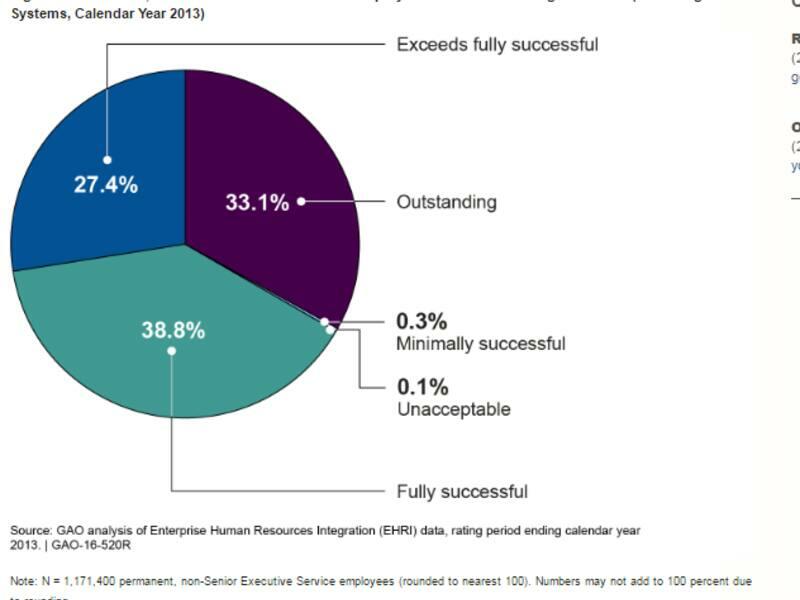
In the past various establishment media outlets have admitted to this trend.  The Washington Post in 2016 noted that only 0.1% of federal employees ever get a negative performance review.

In 2013 the Government Accountability Office was tasked to review federal performance management systems across the 24 CFO Act agencies. After reviewing OPM data for calendar year, the GAO reported that more than 99% of non-Senior Executive Service employees received a rating of fully successful or higher.  This is simply not credible.

If anything, federal workers should be subject to more scrutiny and should have to present tangible results on a regular basis.  The GAO’s data was ignored because that’s how the GAO works, and the easy security of federal employment continued without disruption.  This is why the actions of DOGE are triggering government workers so hard – They have never faced true meritocracy before. 

Many of them have never worked in the private sector and don’t understand that they are in fact subject to review and to firing if they don’t meet the standards of their employers (the American people).  They think they are untouchable.  They think performance reviews are tyranny.  They think they shouldn’t have to answer to anyone.

The level of panic and indignant behavior among fed workers over a simple email from DOGE asking “what they accomplished last week” tells us everything we need to know about the bureaucrat culture.  The email, which should take anyone 10 minutes to answer, is treated as “harassment” and a “distraction” from their work.

Keep in mind, the email was not necessarily meant to act as a performance indicator; it was a test to see who responds and who does not.  The people who refused to respond simply outed themselves as a potential problem to be removed later.  For those that are being fired for poor performance the claim of “outstanding reviews” under the previous administration don’t hold water.  As noted, it’s proven that the government maintains a participation trophy culture – Everyone is a winner no matter how incompetent. 

The concept of meritocracy is so alien to the federal system that basic job requirements common to almost every company in the country are seen as acts of abuse.  Add in the freak show of DEI hiring and you have a recipe for financial disaster. 

It’s not unfair to compare the waste within the government to the waste at the original Twitter.  Musk eliminated 80% of twitter staff after purchasing the platform and the company actually functioned better without them.  We will probably see the same results with the federal system over time. 


Tyler Durden
Sat, 03/01/2025 – 22:45

via ZeroHedge News https://ift.tt/2jKGP5z Tyler Durden

The Turnaround…

The Turnaround…

Authored by Robert Gore via StraightLineLogic.com,

The best way to understand Trump is also the simplest: he’s a businessman. From that perspective, little of what he’s doing is as inexplicable or surprising as many make it out to be. The inexplicability arises from general ignorance of business. Most Americans have little knowledge or understanding of how private American businesses work, although they generates the majority of the U.S.’s $29 trillion GDP and employ many of them.

Trump is now CEO of the federal government. That enterprise has over $36 trillion in direct liabilities and unfunded liabilities in the hundreds of trillions. Its cost of credit is rising and debt service is taking an ever-expanding share of its revenues. Self evidently, it cannot continue on its present course.

The common element of successful business turnarounds is that they don’t emerge from slow, incremental changes from within the system. Somebody comes in and administers shock therapy. Turnaround artists are never popular. Lots of people are fired, unprofitable operations discarded, finances tightened, business philosophies rethought, and the company’s direction radically reset. Because the company’s situation is dire, this all has to be done quickly, with shareholders howling and creditors pounding at the door.

It begins with the numbers. In failing enterprises, they often reek of falsification, self-dealing, and corruption. You analyze the numbers and you keep asking questions until you uncover the real answers. What Musk and DOGE are doing would be standard operating procedure in a comparable business situation; indeed Musk did the same thing when he took over Twitter. Applied to government, it’s considered revolutionary, but how many politicians or bureaucrats have ever run a business?

That the Department of Defense has never passed an audit and the Federal Reserve tenaciously resists one tells you all you need to know about the government’s numbers. Finding the “anomalies” is like shooting fish in a barrel. Resolving them invariably uncovers sordid secrets. Secrecy is the decaying dreck that feeds swamp corruption. Publicly, swamp creatures are screaming about “democracy” and DOGE access to the government’s sacred information. Privately, they’re checking into overseas bank accounts, defense attorneys, and realtors while updating their LinkedIn profiles.

There are valid security, cybersecurity, and legal, even Constitutional, concerns about the way DOGE is operating that would not be present in a business situation. DOGE’s victims can be counted on to litigate these issues and courts may well impose restrictions. There will also be pushback from within the bureaucracy, even from Trump appointees. Kash Patel has already told FBI employees not to file Musk’s what-I-did-last-week emails. Courts and pushback could derail the project, in which case, revolution would be the only avenue left to defeat the Blob.

At Twitter, Musk fired 80 percent of the workforce, reflecting business wisdom that 20 percent of any workforce does 80 percent of the work. For government, those figures should be revised to 10 and 90. However, is any of the work useful? It’s often counterproductive, producing results contrary to its stated purpose. Government-declared wars on poverty, drugs, and terror produced more impoverishment, drug-addiction, and terrorists, wasting billions. Those “war fighting” agencies and many others should be terminated.

Trump has decided that Operation Ukraine must be terminated. The sunk cost fallacy—throwing good money after bad—has cost the U.S. government trillions, particularly in its military endeavors. The fallacy justifies future spending, and in the case of the military, more destruction and death, on a failing project (like Afghanistan) by citing money already spent and lives already lost—sunk costs. Those costs are irrelevant in deciding whether to continue a project; only the probability of future success matters.

Businesspeople who throw good money after bad go bankrupt. They don’t have fiat money or tax dollars to perpetuate their mistakes. Trump’s not going to throw more money down the Ukrainian rathole. He’s talking about cutting the military budget in half, and the only way to do that is to forego these forever fiascos. The money already spent on Ukraine cries out for an illuminating line-by-line audit. If it happens, watch the cockroaches scatter, including the Bidens and the Clintons.

It appears that Trump and team have decided that unipolarity—the foreign affairs equivalent of monopoly—must give way to multipolarity—the foreign affairs equivalent of oligopoly. As a businessman, Trump undoubtedly prefers monopoly, but reality requires recognition of competitors who are too big to eliminate.

Trump now acknowledges Russia as a peer oligopolist, and obviously, so, too, is China (see “Russia and China Are Facts of Life,” SLL, 1/28/25). It’s always a risk trying to guess Trump’s thinking. However, he apparently wants to settle the ugly Ukraine business quickly and get on with the three-party oligopoly in which the oligopolists sometimes cooperate and sometimes compete—hopefully economically and diplomatically, not militarily. Blood, as businessman Virgil Sollozzo noted in The Godfather, is a big expense. Oligopoly may well have been Trump’s thinking back in his first term (see “The Eagle, the Dragon, and the Bear,” SLL, 6/21/18). However, the Russiagate hoax prevented him from even making overtures in that direction.

Everyone else, including Europe, will be second- or third-tier, although jockeying for markets and securing favorable arrangements for extracting resources will be important aspects of oligopolistic competition. Like many oligopolies, there will be a territorial dimension. Without admitting it, Trump will cede Eurasia to China and Russia while shoring up the U.S. base in North and South America. That may be the thinking behind Trump’s rhetoric concerning Greenland, Canada, and the Panama Canal. Africa and the poles will be open territory over which the oligopolists will compete.

The Middle East and Israel have bedeviled presidents since Truman. If it had no oil, the Middle East would be a desert backwater, an oxymoron. The U.S. has plenty of oil and natural gas. It could buy Middle East oil when prices were favorable and otherwise stay out of the region. However, there is the relationship with Israel, which gets far more from it than the U.S. That’s intolerable from a business perspective, but it’s a political necessity for Trump. The relationship could destroy Trump’s presidency if the two countries wage war on Iran. Given Iran’s ties with Russia and China, such a war could escalate to World War III.

While Trump’s business perspective brings fresh thinking and some honesty to government, there are times when it’s grossly inappropriate. Since 1948, Palestinians have been squeezed into ever-smaller areas in the land formerly known as Palestine, and it’s clear that Netanyahu and Trump want them completely evicted. Getting rid of them and turning Gaza into a luxury beach resort may have a cold-blooded business logic to it, but it’s a patently unjust solution for the Palestinian “problem.” The Trump Gaza video recently released on Truth Social is beyond grotesque.

Back at home, Trump and many Americans understand that the U.S. government is a rathole. Indeed, it’s been common knowledge since Roosevelt’s New Deal, which turned a recession into a Great Depression on the moronic mantras that government bureaucrats are omniscient and government spending is the key to prosperity. Unfortunately, the average American has no power to force the government to disclose information or change its ways. Turnarounds are top-down affairs, which is why so much hope rests on Trump, Musk, and DOGE.

You can’t cut costs to prosperity; successful turnarounds require new revenues. In the case of a government turnaround that doesn’t mean government finds new ways to soak the productive private economy. It means government gets out of the way and lets entrepreneurs, capitalism, and markets do their revenue- and wealth-generating thing. Laws, regulations, and bureaucratic extortion are barnacles encrusting the U.S.S. Economy, stopping it dead in the water. Neither inflation-adjusted private-sector incomes nor the real economy have grown in years. (The public sector has made out nicely, though.)

If Trump and Musk fire government employees, but thousands of laws and regulations aren’t blowtorched, their efforts will come to naught. Legislation drafted by the ignorant stifles industries they don’t understand. Many businesspeople have to “politely” explain to regulators the business they presume to regulate.

That their taxes pay the salaries of these parasites, often with additional “taxes” levied under the table, compounds the absurd injustice. Large, connected, crony-socialistic enterprises can absorb the costs, gaming the system to subsidize themselves and stifle the competition. Ultimately, it’s the much-heralded but much-abused entrepreneurs and small businesses who are crushed. Europe has snuffed out its innovation and economic dynamism almost entirely. The U.S. is well down the same path.

Unfortunately, Trump wants the government to “help” business instead of simply getting out of its way. Business will supposedly thrive behind tariff walls, but its going to be the large, crony-socialistic enterprises that benefit. Trump’s Stargate project will throw half a trillion dollars at well-heeled Silicon Valley outfits to develop AI. China’s DeepSeek and Musk’s latest iteration of Grok has made Stargate obsolete before it spends its first dollar. The one thing Trump and team can do that will help all business is slash spending, reducing the government’s drain on the economy and the national debt’s upward pressure on interest rates.

Honest, successful businesspeople—and the U.S. still has plenty—must deal with reality. They have to produce a good or service at a cost less than what the market will pay for it. The miracle of profit propels production and progress. Yet, it’s the villain in the unreal worlds of government, academia, and mainstream media and entertainment, none of which would survive a day if somebody out there wasn’t generating profit. America is built on profit, not politics. General recognition of that fact would restore some sanity in what’s loftily called the “national discourse.”

The business of America has been and must be business. Trump can’t elucidate an Ayn Rand-type defense for the morality of free enterprise, production, and profit. However, he realizes that the productive element of society is supporting its own parasitic destroyers. Nor can he elucidate a John Quincy Adams-type defense of a foreign policy in which America minds its own business. However, he apparently recognizes that the empire cannot be sustained.

It remains to be seen if Trump and team can turn around America at home and abroad. They’re taking on a powerful Overclass that produces far less than it takes, destroys far more than it creates, and will fight tooth-and-nail to preserve its sinecures. One thing is clear. Without recognition of hard realities and a dramatic turnaround, America’s government will go the way of other failing enterprises that couldn’t change course, sooner rather than later.

Tyler Durden
Sat, 03/01/2025 – 22:10

via ZeroHedge News https://ift.tt/a0KyLVP Tyler Durden