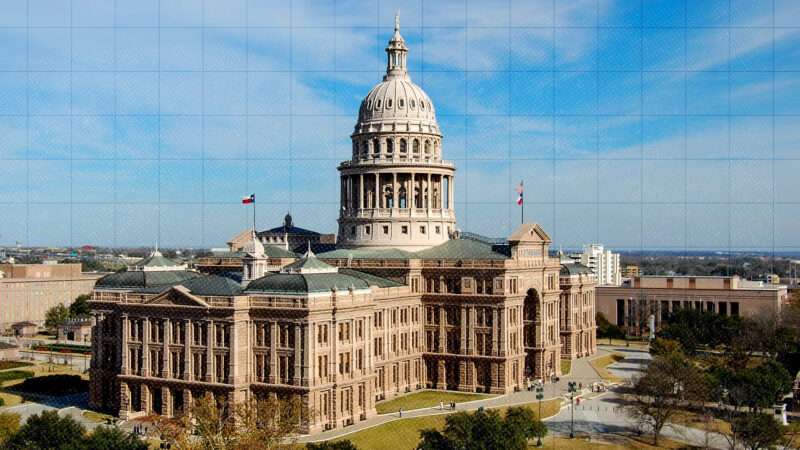
Can states force public schools to display the Ten Commandments in classrooms? The Supreme Court may soon decide this, after a federal appeals court upheld a controversial Texas law earlier this week.
On Tuesday, the 5th Circuit Court of Appeals upheld Senate Bill (S.B.) 10, requiring Texas public schools to display posters of the Ten Commandments in a “conspicuous place.” It also requires that the posters, which must be at least 16 inches wide and 20 inches tall, display a specific version of the commandments. Any classroom without a poster “may, but is not required to, purchase posters or copies that meet the requirements.” Classrooms also must accept any donated posters that comply with the law.
S.B. 10’s rollout has caused confusion and controversy throughout Texas. Some teachers have even resigned in protest, reported the Associated Press. Before Tuesday, two federal judges had found the law unconstitutional, blocking it from taking effect in 25 school districts, according to The Texas Tribune.
In one of the federal rulings blocking the law, U.S. District Judge Fred Biery found that S.B. 10, “crosses the line from exposure to coercion” and that there is “insufficient evidence of a broader tradition of using the Ten Commandments in public education.”
Tuesday’s ruling from the 5th Circuit Court of Appeals found that the law does “not violate either the Establishment Clause or the Free Exercise Clause” of the First Amendment. Furthermore, S.B. 10 “requires no religious exercise or observance,” as students are “neither catechized on the Commandments nor taught to adopt them. Nor are teachers commanded to proselytize students who ask about the displays or contradict students who disagree with them.” It adds, “To Plaintiffs, merely exposing children to religious language is enough to make the displays engines of coercive indoctrination. We disagree.”
But the state officials supporting the law appear to want the posters to symbolize more than historic texts; they want them to serve as moral guides as well.
In a June interview with Todd Starnes, the law’s author and sponsor, state Sen. Phil King (R–Weatherford) said, “We want every kid, K…through 12, every day in every classroom they sit in to look on the wall and read, ‘it’s wrong to kill, it’s wrong to steal, it’s wrong to lie.’…We want them to see those words that God says.” He added, “Because we want them to understand how important that those statements of God, those rules of God are, that they see them in their classrooms every single day of their public education.”
The organizations representing the plaintiffs challenging S.B. 10, which include the Texas chapter of the American Civil Liberties Union, said Tuesday’s ruling “goes against fundamental First Amendment principles and binding U.S. Supreme Court authority.” The groups “anticipate asking the Supreme Court to reverse this decision and uphold the religious-freedom rights of children and parents.”
If the case were to reach the Supreme Court, the Court would likely consider whether the law is consistent with the Establishment Clause from a historic perspective. From 1971 until recently, the Supreme Court has mostly applied the three-pronged Lemon test when ruling on Establishment Clause questions. But as constitutional law professor Josh Blackman noted in The Volokh Conspiracy, the “Court (effectively) overruled the Lemon test” in Kennedy v. Bremerton School District (2022), when it ruled that a high school football coach was allowed to pray at the 50-yard-line after games. Since then, the Court has analyzed cases using a “text, history, and tradition” approach. The federal appeals court also reaffirmed the abandonment of the Lemon test, writing, “In place of Lemon, courts now ask a question rooted in the past: Does the law at issue resemble a founding-era religious establishment? Answering that question requires delving into historical sources and scholarship.”
The answer to that question might be no, according to Michael A. Helfand, a law professor at Pepperdine University’s Caruso School of Law.
“The historical record provides evidence that when government acts to manipulate the religious preferences of its citizens, it violates the Establishment Clause,” Helfand told The Washington Post. “And requiring the Ten Commandments in every public school classroom should have been interpreted as an attempt to do just that.”
If the Supreme Court did hear this case, its ruling would not just affect Texas, but also Louisiana, Alabama, and Arkansas, which have passed laws requiring classrooms to display the Ten Commandments. Meanwhile, South Carolina, West Virginia, and Missouri have proposed similar bills.
Until the Supreme Court rules otherwise, Texas public school students will be left to state indoctrination, and many teachers may be left with the awkward task of explaining the biblical meaning of “adultery.”
The post Federal Appeals Court Says Texas' Ten Commandments Law Isn't Indoctrination appeared first on Reason.com.
from Latest – Reason.com https://ift.tt/PikvZDt
via IFTTT