The post Open Thread appeared first on Reason.com.
from Latest – Reason.com https://ift.tt/orAYGbi
via IFTTT
another site
The post Open Thread appeared first on Reason.com.
from Latest – Reason.com https://ift.tt/orAYGbi
via IFTTT
Congress Passes 45-Day Extension Of FISA Section 702, Sending It To Trump’s Desk
Authored by Joseph Lord via The Epoch Times (emphasis ours),
President Donald Trump on Thursday signed a bill to extend a spying authority of Section 702 of the Foreign Intelligence Surveillance Act (FISA) for 45 days as congressional debate on the controversial measure continues.
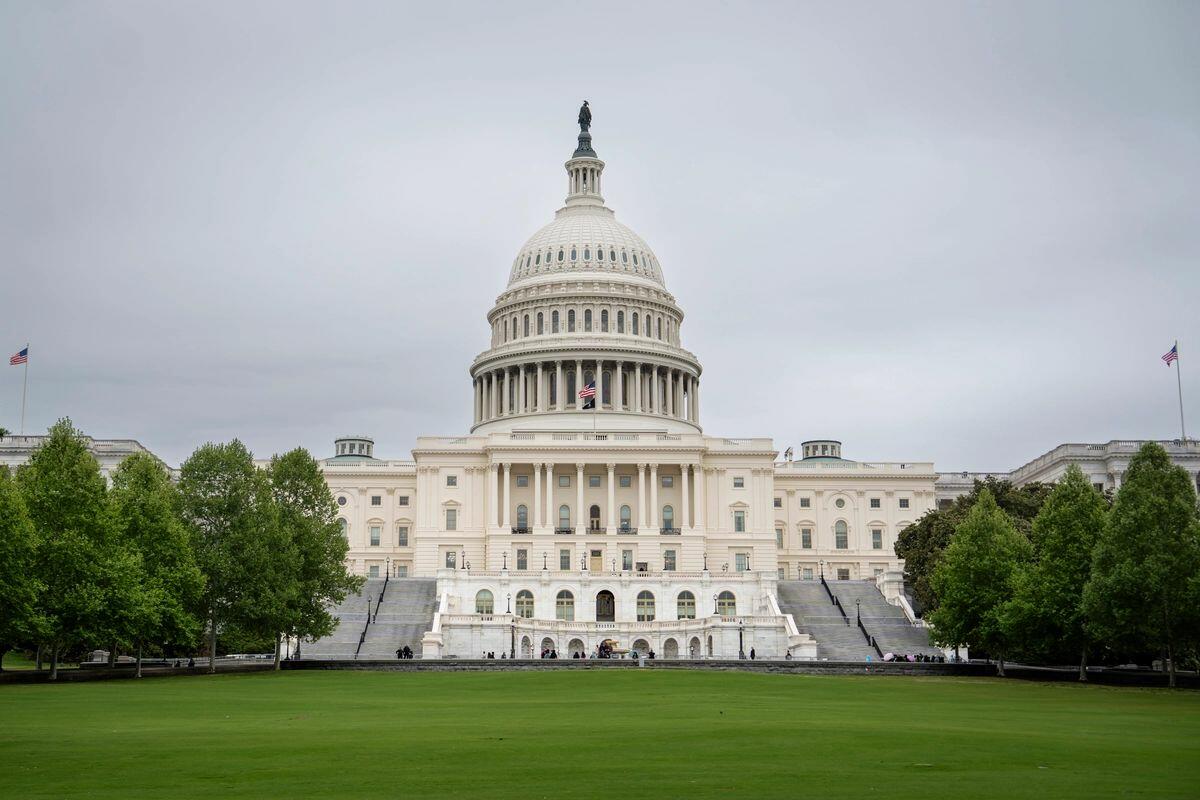
Both chambers of Congress raced to pass the short-term measure earlier Thursday after the Senate declined to take up a House-passed bill to extend the deadline until 2029.
The House passed the “clean” extension, without reforms, which punts the deadline from April 30 to June 12, in a 261–111 vote. It was passed under a suspension of the rules, meaning it relied on Democratic support to pass. However, opposition to the measure was also bipartisan, with 26 Republicans joining 85 Democrats in casting a “No” vote.
The measure’s passage and signature into law came just hours before the critical—but contentious—power was due to expire.
The 45-day extension was proposed and passed by the Senate earlier on Thursday after it became clear that a three-year extension passed by the House the night before couldn’t pass the Senate before the midnight deadline.
Section 702 allows U.S. intelligence agencies to collect emails, phone calls, texts, and other communications of foreign nationals located outside the United States for national security purposes, such as tracking terrorism, espionage, or weapons proliferation, without obtaining an individualized warrant.
However, the data of Americans who communicate with these foreign targets can be incidentally gathered and is available to U.S. intelligence without a warrant—a “backdoor search” loophole that has come under criticism by privacy advocates.
Trump, despite his current support for a clean reauthorization of the power, has acknowledged his experience with the law in the past.
In a post on Truth Social, he described it as “the worst and most illegal abuse of FISA in [U.S.] History,” referencing disclosures that revealed that the FBI had used Section 702 of FISA to spy on Trump’s 2016 presidential campaign as part of the Crossfire Hurricane operation.
Nevertheless, Trump has praised the intelligence utility of the authority when used appropriately.
However, some lawmakers in both chambers are disinclined to agree: Bipartisan concerns about Section 702’s effects on American civil liberties, particularly Fourth Amendment protections, are as old as the legislation itself.
Despite Trump’s calls for a clean reauthorization—calls that have won the support of House Judiciary Committee Chairman Jim Jordan (R-Ohio)—many of those congressional skeptics are among Trump’s closest allies, including lawmakers like Reps. Anna Paulina Luna (R-Fla.) and Ralph Norman (R-S.C.).
On Wednesday, the lower chamber also authorized a bill that would extend Section 702 of FISA for three years, but that measure included provisions that have been opposed by Senate Democrats.
Namely, the three-year extension bill would prohibit the Federal Reserve from issuing digital currency, an asset class known as central bank digital currency.
Senate Majority Leader John Thune (R-S.D.) has long warned that such a measure would struggle in the upper chamber, and urged the House against attaching it to the reauthorization measure.
Jackson Richman contributed to this report.
Tyler Durden
Thu, 04/30/2026 – 23:30
via ZeroHedge News https://ift.tt/BFq29bA Tyler Durden
Saudi Arabia Public Investment Fund To Stop Funding LIV Golf After 2026 Season
LIV Golf is preparing to inform players and staff that its main financial backer, Saudi Arabia’s Public Investment Fund, will stop funding the league after the 2026 season, according to Golfweek. The announcement—expected midweek—would open the door for CEO Scott O’Neil to pursue new investment to keep the tour running.
Since launching in 2022 as a challenger to the PGA Tour, the circuit has reportedly burned through more than $5 billion while failing to gain meaningful U.S. viewership. Broadcast deals with The CW Network and later Fox did little to improve ratings.
Uncertainty around funding has been building. In April, O’Neil acknowledged the league is only financed through this season, saying future survival depends on securing new backers—even as he publicly maintained LIV is in its best position yet.
Golfweek writes that the timing aligns with a broader shift by PIF, led by Yasir Al-Rumayyan, toward prioritizing domestic projects over global spending.

LIV did manage to lure big names like Phil Mickelson, Dustin Johnson, Bryson DeChambeau, and Jon Rahm with lucrative deals. Still, its team-based, no-cut format struggled to resonate broadly, despite pockets of success overseas and moments like Anthony Kim’s brief resurgence.
Efforts to align with the PGA Tour—including a 2023 framework agreement that followed LIV’s antitrust lawsuit—ultimately stalled, even with involvement from Donald Trump.
Recent player movement has added to the uncertainty, with figures such as Brooks Koepka and Patrick Reed stepping away from LIV competition.
With only a handful of events remaining this season, LIV Golf now faces mounting pressure to secure fresh funding—or risk folding after 2026.
Tyler Durden
Thu, 04/30/2026 – 23:00
via ZeroHedge News https://ift.tt/LZxHCA5 Tyler Durden
On Wednesday, the Supreme Court decided Callais. The last paragraph of the opinion stated:
The judgment of the District Court is affirmed, and thesecases are remanded for proceedings consistent with this opinion.
It is so ordered.
Well, it is not ordered right away. Under the Court’s rules, the remand does not happen immediately. In this 2020 post, I described the process by which judgments are actually entered. Conflicts over the timing of the judgments have arisen in high profile cases, including Bush v. Gore, Boumediene, Trump v. Vance, Trump v. Mazars, DHS v. Regents, Whole Woman’s Health v. Jackson, and others. Of course, after Obergefell was decided, jurisdictions outside the Sixth Circuit immediately issued marriage licenses to gay couples, even though they were bound by injunctions. Whatever, love won!
The private plaintiffs in Trump v. Callais have asked the Supreme Court to issue the judgment forthwith. Louisiana has taken no position on the request, because the issuance of the judgment is irrelevant:
The State notes that the Court’s May 15, 2024 Order also states that, “[i]n the event jurisdiction is noted or postponed, this order will remain in effect pending the sending down of the judgment of this Court.” That language can be read to conflict with the cited language above, which requires automatic termination of the Order if the lower court’s judgment is affirmed. That potential conflict, however, has no bearing here because, whether the Order is already terminated or will be terminated when this Court sends down the judgment, nothing prevents Louisiana from adopting a constitutional map and process consistent with this Court’s decision right now.
Louisiana is correct. The District Court did not issue an injunction. The Supreme Court affirmed the District Court’s judgment. Nothing prohibits Louisiana from following the Supreme Court’s decision as a precedent, even if there is no issued judgment. Moreover, once Louisiana adopts new maps in the next week or so, this entire dispute will be mooted.
The Supreme Court can safely do nothing here.
The post <i>Callais</i> Right Away! appeared first on Reason.com.
from Latest – Reason.com https://ift.tt/Nayx5V2
via IFTTT
On Wednesday, the Supreme Court decided Callais. The last paragraph of the opinion stated:
The judgment of the District Court is affirmed, and thesecases are remanded for proceedings consistent with this opinion.
It is so ordered.
Well, it is not ordered right away. Under the Court’s rules, the remand does not happen immediately. In this 2020 post, I described the process by which judgments are actually entered. Conflicts over the timing of the judgments have arisen in high profile cases, including Bush v. Gore, Boumediene, Trump v. Vance, Trump v. Mazars, DHS v. Regents, Whole Woman’s Health v. Jackson, and others. Of course, after Obergefell was decided, jurisdictions outside the Sixth Circuit immediately issued marriage licenses to gay couples, even though they were bound by injunctions. Whatever, love won!
The private plaintiffs in Trump v. Callais have asked the Supreme Court to issue the judgment forthwith. Louisiana has taken no position on the request, because the issuance of the judgment is irrelevant:
The State notes that the Court’s May 15, 2024 Order also states that, “[i]n the event jurisdiction is noted or postponed, this order will remain in effect pending the sending down of the judgment of this Court.” That language can be read to conflict with the cited language above, which requires automatic termination of the Order if the lower court’s judgment is affirmed. That potential conflict, however, has no bearing here because, whether the Order is already terminated or will be terminated when this Court sends down the judgment, nothing prevents Louisiana from adopting a constitutional map and process consistent with this Court’s decision right now.
Louisiana is correct. The District Court did not issue an injunction. The Supreme Court affirmed the District Court’s judgment. Nothing prohibits Louisiana from following the Supreme Court’s decision as a precedent, even if there is no issued judgment. Moreover, once Louisiana adopts new maps in the next week or so, this entire dispute will be mooted.
The Supreme Court can safely do nothing here.
The post <i>Callais</i> Right Away! appeared first on Reason.com.
from Latest – Reason.com https://ift.tt/Nayx5V2
via IFTTT
1 In 5 Americans Are Still Working From Home
The COVID-19 pandemic marked a dramatic shift in workplace dynamics, as working from home suddenly became the norm for millions of workers in the United States and across the globe.
As Statista’s Felix Richter notes, this transformation offered employees newfound flexibility, enabling them to manage their time more effectively, eliminate commutes, facilitate childcare and often achieve a better work-life balance. Remote work also allowed for a customized work environment, fostering comfort and productivity for many.

However, traditional office settings continue to hold unique advantages, which is why, six years later, more and more employers have called their workers back to the office for most days of the week. Offices facilitate in-person collaboration, spontaneous brainstorming and social interaction, all of which are challenging to replicate virtually. Additionally, the structured environment of an office can provide clearer boundaries between work and personal life, reducing distractions and helping employees switch off when at home.
According to Statista Consumer Insights, 1 in 5 American employees still worked from home regularly in 2025, while 43 percent of respondents regularly worked in a company office.

You will find more infographics at Statista
In many cases, hybrid models combining the benefits of both setups have emerged, catering to diverse employee preferences and living situations and striking a balance between the benefits and disadvantages of both working from home and in the office.
Tyler Durden
Thu, 04/30/2026 – 22:30
via ZeroHedge News https://ift.tt/7LB6PaE Tyler Durden
L3Harris’ Missile Business Files To Go Public As Trump’s War Economy Prepares For Launch
We have been diligently tracking the Trump administration’s war-economy mobilization across the homeland, from the rise of so-called “war unicorns” favored by the Department of War to Trump officials talking with GM, Ford, GE Aerospace, and Oshkosh about converting underused civilian industrial capacity into weapons production. The signal to investors is becoming hard to miss: the Trump administration is preparing to expand the defense industrial base at scale to refill depleted weapons stockpiles.
Whether through venture-backed defense startups, legacy defense primes, or redirected auto and heavy-manufacturing capacity, the White House’s war policies point toward a major weapons-production boom on the horizon.
With that in mind, L3Harris Technologies has confidentially filed a draft S-1 with the SEC for a proposed IPO of its Missile Solutions business, or MSL.
L3Harris is now preparing for an IPO, as the SEC privately reviews the draft registration statement and may send comments or request changes. This occurs before the IPO roadshow begins.
Last week, L3Harris announced it had closed a $1 billion investment from the DoW into MSL, which will be used to “accelerate research and development, and increase production capacity for critical national security technologies.”

“This strategic partnership with the Department of War is a testament to the critical role L3Harris plays in our national security,” L3Harris CEO Christopher Kubasik wrote in a statement.
Kubasik noted, “The investment will allow us to accelerate innovation and enhance our ability to deliver the advanced capabilities our warfighters need to deter and defeat emerging threats. We are proud to partner with the DoW to ensure the resilience of our defense industrial base for years to come.”
Related:
Race To Refill U.S. Weapons Stockpiles Will Supercharge War Economy
War Economy Returns: From Trucks To Tanks, Pentagon Looks To Automakers To Rebuild America’s Arsenal
MSL will be a direct play on the DoW ramping up orders for PAC-3, THAAD, Tomahawk, and Standard Missile systems, given that the two theaters of conflict across Eurasia, Ukraine-Russia and U.S.-Iran, are draining key missile stockpiles.
Tyler Durden
Thu, 04/30/2026 – 22:00
via ZeroHedge News https://ift.tt/98z7fMi Tyler Durden
Aircraft Carrier Strike Group To Leave Middle East, Reducing Footprint Amid Iran War
Currently there are three American aircraft carrier groups in Middle East waters and near Iran in the context of Operation Epic Fury. By comparison, at the height of the Bush-ordered US invasion of Iraq in 2003, there were six total carrier groups – which were responsible for most of the large tomahawk missile strikes on Baghdad.
Amid the current extended ceasefire between the US and Iran (and including Israel), there are indicators that Washington is not preparing for a ground invasion of the Islamic Republic anytime soon. First and foremost is that the USS Gerald R. Ford is set to return to the United States after nearly a year deployed in wartime operations – as it was previously in the Caribbean focused on Venezuela ops.
Defense officials have newly told The Washington Post the carrier will leave the Middle East in the coming days and head back to Naval Station Norfolk, Virginia.
The publication confirms, “The aircraft carrier USS Gerald R. Ford will depart the Middle East and begin the sail for home in coming days, multiple U.S. officials said, an expected relief for roughly 4,500 sailors who have been deployed for 10 months – but a loss of significant firepower as peace talks between the United States and Iran stagnate.”
Its departure will leave the USS George H.W. Bush and the USS Abraham Lincoln in the Arabian Sea as the US Navy continues efforts to enforce a blockade on Iranian ports. Recent operations have seen dozens of Iranian vessels intercepted, even as others breached the blockade, with CENTCOM in a recent update saying that over 40 vessels have been turned back or intercepted.
There’s still as yet no clear sign of imminent breakdown of the Iranian government or society, amid what’s turned into a prolonged economic siege war – even though President Trump declared days ago that the Islamic Republic is ‘fractured’ and ‘collapsing’.
The US retains additional carrier strike groups elsewhere, including the USS Dwight D. Eisenhower and the USS Theodore Roosevelt, which remain available for potential deployment later this year.
The longer the Iran conflict drags on, the more likely it is that additional carrier groups could head toward Mideast regional waters, including patrolling the Mediterranean, near Israel.
The Ford’s return follows a record deployment exceeding 300 days that spanned the Caribbean, Europe, and the Middle East. Most recently, it had to undergo significant repairs – first in Cyprus and then at port in Croatia, for what’s been described as a laundry room fire and persistent maintenance problems during its extended mission.
(Reuters) – A U.S. naval blockade of Iranian ports has shrunk Tehran’s oil exports, stranding a growing stockpile of crude on tankers as Iranian storage sites run out of space, shipping data showed and analysts said.
With some vessels switching off tracking systems and U.S.…
— Phil Stewart (@phildstewart) April 30, 2026
The crew has been described as overstretched and exhausted, while there are reports the carrier has come under Iranian attack – though which the Pentagon has repeatedly denied posed any real threat.
Tyler Durden
Thu, 04/30/2026 – 21:30
via ZeroHedge News https://ift.tt/kJy7xSv Tyler Durden
Massive Lithium Lode In Appalachia Could Power 130 Million EVs: USGS
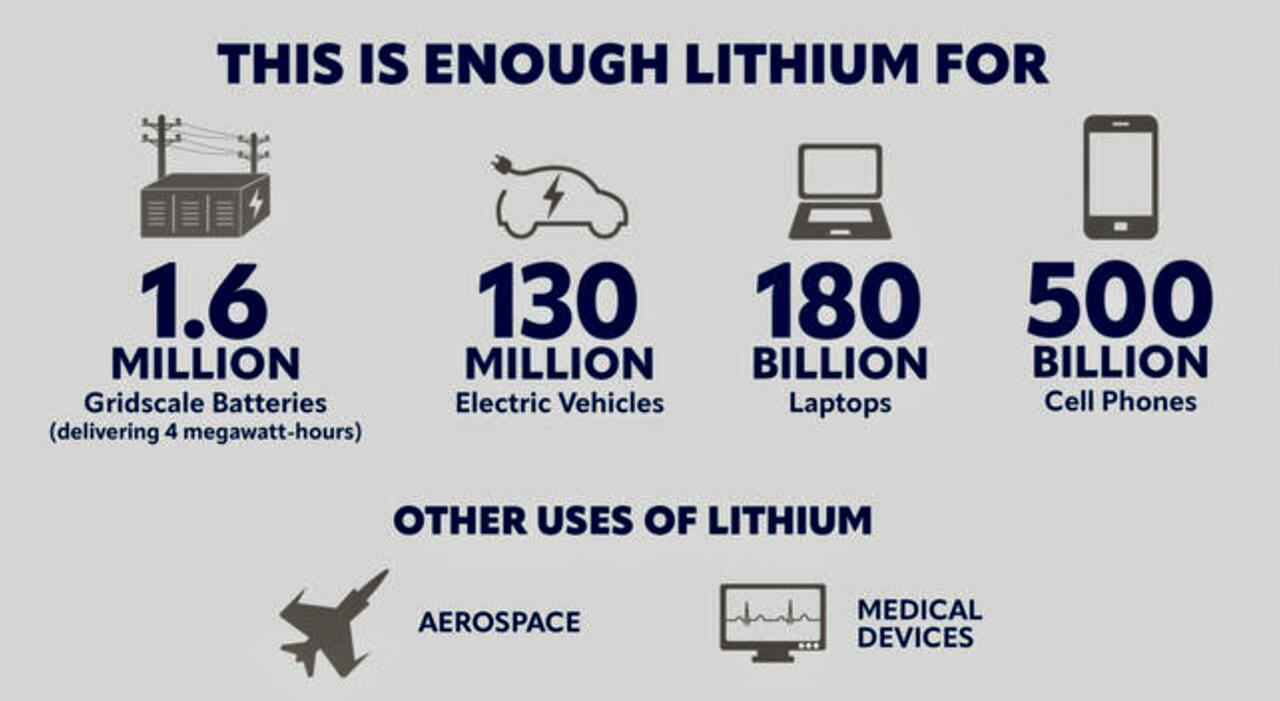
America’s worrisome dependency on foreign sources of lithium could become a thing of the past: About 328 years’ worth of last year’s lithium imports is buried in Appalachia, according to a new analysis published by the US Geological Survey (USGS). That’s about 2.3 million metric tons of undiscovered but economically recoverable lithium — aka “white gold.”
“This research shows that the Appalachians contain enough lithium to help meet the nation’s growing needs – a major contribution to U.S. mineral security, at a time when global lithium demand is rising rapidly,” said USGS Director Ned Mamula. “The United States was the dominant world producer of lithium three decades ago, and this research highlights the abundant potential to reclaim our mineral independence.” Today, Australia is the top producer, and China in second place — however, China boasts about 60% of the world’s lithium refining capacity for batteries.
The deposits are spread over a large swath of territory. The southern Appalachians — primarily the Carolinas — have about 1.43 million metric tons, while the northern Appalachians hold 900,000 metric tons, most of it in Maine, New Hampshire and Vermont, USGS says. Added up, it’s enough to put the requisite lithium in 130 million electric vehicles, or a thousand years worth of laptop production.
USGS project global lithium production capacity will double over the next three years. In April, Finland became the first European country to host the full continuum of lithium production, from an open-pit mine that produces battery-grade lithium hydroxide, to a refinery. “The €783 million project is operated by Keliber Oy, a Finnish mining and battery-materials company,” EuroNews reported.
Today, there’s only one operating lithium mine in America: the Albemarle Silver Peak Mine in Nevada. Earlier this week, environmentalists sued to stop exploratory drilling in Oregon near the Nevada border. The US Bureau of Land Management had given the green light for HiTech Minerals to set up 168 drill sites over five years, on a 7,200-acre expanse of public land. The plaintiffs include “Great Old Broads for Wilderness.” In a 2024 analysis, USGS concluded that brines in southwest Arkansas’ Smackover Formation hold 5 to 19 million metric tons of lithium, but didn’t determine what proportion is economically recoverable.
To say the more-promising Appalachian deposits were created a long time ago is an understatement. “Lithium-rich pegmatites in the northern Appalachians formed from the same geologic forces that built the mountains more than 250 million years ago,” explained the USGS, a Department of the Interior organization and the country’s largest water, earth and biological science mapping organization. “The high heat and pressure during the mountain-building caused some of the deeper crustal rocks to melt, and some of these magmas were rich in lithium.”
Tyler Durden
Thu, 04/30/2026 – 20:30
via ZeroHedge News https://ift.tt/OFh8VrH Tyler Durden
Hershey CEO Says GLP-1 Boom Fuels Demand For Gum And Mints
Hershey reported first-quarter sales and earnings that exceeded Bloomberg-tracked analyst expectations, driven by higher candy prices and resilient consumer demand.
Beyond the earnings report, CEO Kirk Tanner made one very notable comment in prepared remarks: demand for gum and mints remains strong, with the category benefiting from “functional snacking” tailwinds tied to GLP-1 adoption.
“We’ve also seen strong demand for gum and mint products as the category benefits from functional snacking tailwinds, including GLP-1 adoption,” Tanner said.

GLP-1 drugs suppress appetite and slow digestion, so it appears that many users who no longer want a full calorie-packed snack or meal are gravitating toward gum and mints instead.
That is an unexpected positive for Hershey, a company best known for Reese’s, Kit Kat in the U.S., Almond Joy, Mounds, York, Twizzlers, and other confectionery brands.
While weight-loss drugs have raised concerns about reduced calorie intake and lower food purchases, Hershey’s gum and mint portfolio appears to be benefiting from a shift toward lower-calorie gum and mints.
Tanner told analysts on the earnings call, “It is a treat, not a meal,” adding that the company is spending a lot of time researching the expanding use of GLP-1 drugs and incorporating that into its outlook. “The confection category is relatively insulated compared to other food categories.”
Tyler Durden
Thu, 04/30/2026 – 20:05
via ZeroHedge News https://ift.tt/VIEFtOS Tyler Durden