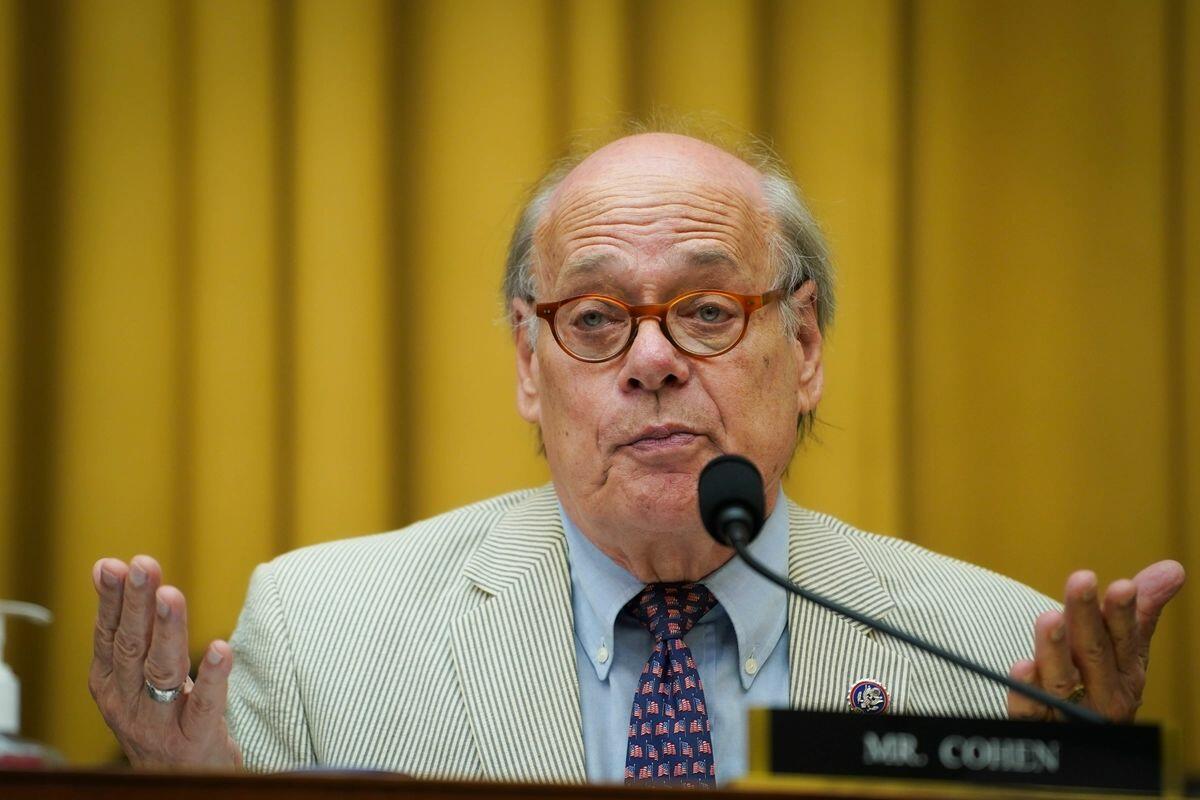
Rep. Steve Cohen Drops Reelection Bid After Tennessee Redistricting
On Friday Democratic Rep. Steve Cohen of Tennessee announced he is ending his bid for reelection to Congress, capping a nearly 20-year career in the U.S. House. The decision comes days after the Republican-controlled Tennessee legislature approved a new congressional map that dramatically reshapes – and effectively dismantles – his longtime majority-Black 9th District in Memphis.
Cohen, 76, described the moment as “by far the most difficult” in his career as an elected official. He formally requested removal from the ballot for the August primary and stated he would retire from public life at the end of his current term. “The 9th District that they have under these new lines is nothing like the 9th District that I’ve represented,” he said, noting that the redrawn district no longer resembles the community he has served since 2007.
Background on the Redistricting
Tennessee Republicans pushed through the new U.S. House map during a special session in early May 2026, following a recent Supreme Court ruling. The changes split the Memphis-based 9th District – long a Democratic stronghold with a majority African American population – across multiple Republican-leaning districts. Critics, including Democrats and civil rights advocates, called it gerrymandering aimed at diluting Black voting power and eliminating the state’s only Democratic congressional seat ahead of the 2026 midterms.
Cohen and others have filed lawsuits challenging the maps. A judge recently denied a temporary restraining order to block them. Cohen has described the process as a “gangster move” influenced by national Republican strategy under President Donald Trump.
Before redistricting, Cohen faced a competitive Democratic primary challenge from progressive state Rep. Justin Pearson. Pearson has indicated he will continue his campaign in the redrawn 9th District. Cohen’s Memphis residence now falls into the 5th District (currently held by Republican Rep. Andy Ogles), which some see as more competitive. Cohen has endorsed Columbia Mayor Chaz Molder, a Democrat running there.
With current events stirring up global energy prices, corn ethanol is again being dressed up as if it is a domestic energy source and agent of energy security. The truth is that corn ethanol is an energy sump, and that it takes more fossil fuel energy to make a gallon of corn ethanol than a gallon of gasoline. It is time to face this unpleasant truth and the other perverse outcomes achieved by twenty years of misguided policy.
In 2005 and 2007, Congress passed the Energy Policy and Energy Independence and Security Acts that together created the Renewable Fuel Standard (RFS) program. RFS had three stated objectives: to improve U.S. energy security, to reduce greenhouse gas (GHG) emissions, and to support rural economies and agricultural development. Instead, RFS has increased motor fuel prices, increased food prices, put millions of carbon-sequestering acres of land into intensive cultivation, increased GHG emissions and air pollution, and increased water consumption and pollution. As to energy security, the gallons of U.S. gasoline displaced by federal ethanol blending mandates are being exported to Mexico and other nations. The great success of RFS has been the hand of government transferring wealth from motorists to big ag corporations. It’s past time to stop the economic and chemical absurdity of forcing food to be fuel.
The government wanted biofuels bad, and it got them bad. Under Corn Belt lobbying pressure, Congress cynically waived the need for RFS to achieve actual GHG reductions for all existing corn ethanol biorefineries, plus all that could be built by the end of 2010. The bulk of the corn ethanol produced over the past 20 years and still today comes from these waivered plants. The EPA’s specious 2010 prediction that corn ethanol would achieve a 21% GHG reduction by 2022 was immediately challenged by the National Research Council for not properly counting land-use change and not realistically treating food competition and water use. This panel of experts from the National Academy of Sciences even questioned the viability of the entire concept of reducing GHG with biofuels. The most rigorous and honest estimate by a third party in testimony before Congress used the EPA’s own methodology to show that adding corn ethanol to gasoline has increased GHG emissions by 28% over the pure gasoline baseline with no trajectory to ever recover.
As to energy security, the goal was noble, but the method was irrational. Corn ethanol is critically dependent upon fossil fuels at every stage of production—tractor and truck fuel, fertilizer and pesticides, biorefinery energy and chemicals. Biofuels in general are just a way to put a green fig leaf on petroleum by inefficiently re-routing it through a farm field. While corn ethanol production has plateaued at 15-16 billion gallons for the past 10 years—not coincidentally matching the federal subsidy limit—domestic crude oil production has skyrocketed due to technological innovations that have opened up vast new geological formations to economic production. Despite a raft of federal policies and actions as negative for petroleum as they have been favorable for biofuels, the USA is once again energy self-sufficient and the world’s largest producer of crude oil and natural gas. In 2024, the USA exported 100 billion gallons of refined petroleum. Other countries are burning U.S. gasoline in their cars and producing the same CO2 emissions as if Americans were allowed to use it. The energy security objective for RFS is moot, and it was never achievable with fossil-fuel dependent corn ethanol.
On of the great ironies is that RFS was authorized under the Clean Air Act. The EPA’s own 2010 regulatory impact analysis showed it would increase net air pollution and cause up to 245 more U.S. deaths per year. The EPA also granted corn ethanol a perpetual vapor pressure waiver for smog-causing emissions that it has denied to petroleum. Perhaps worse, ethanol in gasoline enables the hydrocarbons to mix with water and thereby increase ground water and surface water contamination from fuel leaks to a far greater degree than the demonized MTBE it replaced as octane booster, yet EPA continues to ignore this risk completely.
A government program that has strayed so far from its objectives should be terminated. The federal agency in charge of protecting the nation’s environment should not be allowed to administer a program that increases air pollution and stresses on water, land, and climate. Fuel should be fuel and food should be food. Surely Congress can find a better way to genuinely promote U.S. energy security and boost rural economies without imposing the highly regressive tax of increased fuel prices, inflicting such harm to the nation’s air and water resources, and promoting global food insecurity.
India’s Trade Deficit Surges As Energy Import Prices Soar
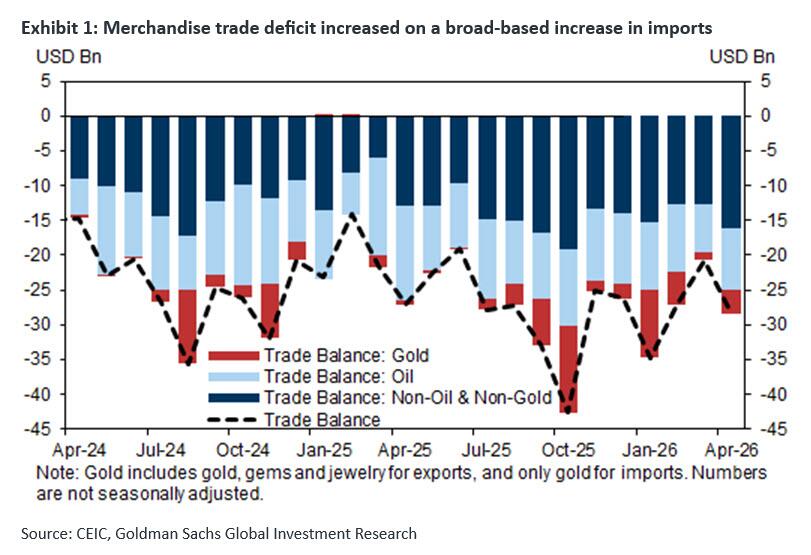
India’s trade deficit soared in April by more than analysts expected, as the surge in oil and gas prices hiked the Indian energy import bill.
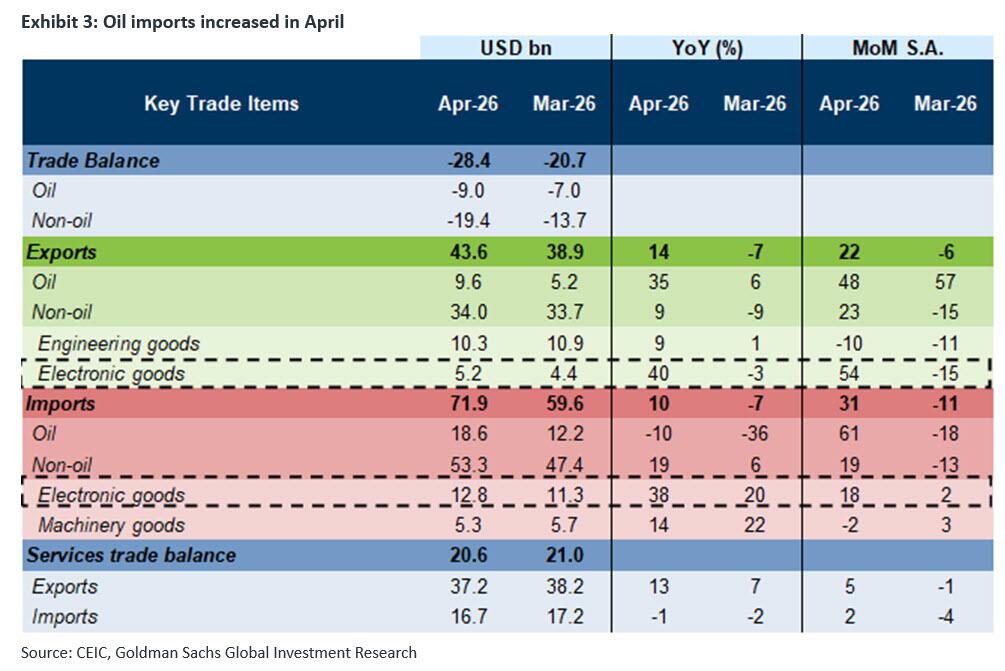
The trade deficit jumped by $8bn from $20.6bn in March to $28.38bn last month, higher than the $26 billion estimate, on a broad-based increase in imports. At the same time, total exports grew by 13.8% in April from a year earlier to hit $43.56 billion.
Oil imports sequentially rose by around 60% MoM likely driven by higher volumes in April (vs. March lows) and higher oil prices.
The value of imports soared as international oil and gas prices jumped amid the Middle East conflict that forced India and every other major crude oil importer to source more expensive supply from producers not dependent on the Strait of Hormuz, which remains closed to most tanker traffic two and a half months after the Iran war began. Meanwhile, petroleum product exports rose by around 48% mom s.a. likely driven by higher exports to Singapore. Gold imports rose sequentially likely driven by higher volume imports of semi-processed gold for refining and higher prices. However, gold imports (in volume terms) may likely decline in May following the government’s import duty hike to 15% from 6%.
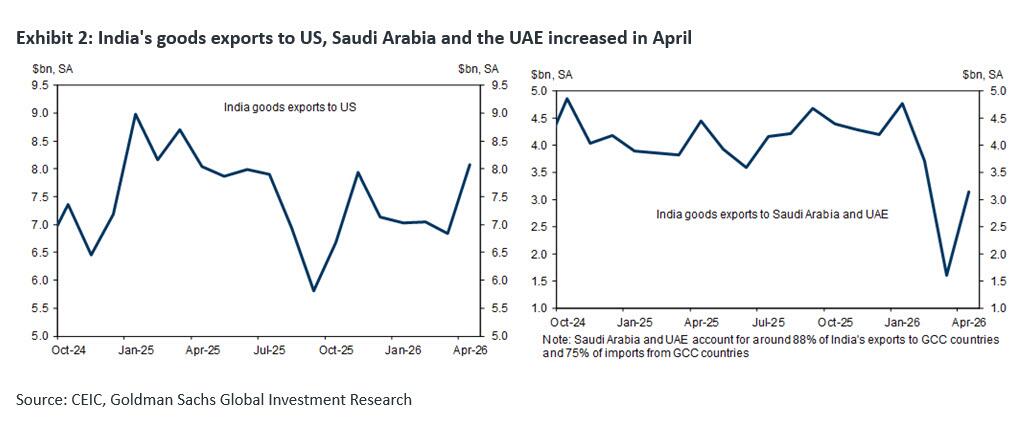
Overall non-oil exports remained strong, led by stronger electronics exports. Exports to Saudi Arabia and the UAE recovered in April from its March lows, but remained well below the last year’s levels, while exports to the US increased both sequentially and in year-over-year (yoy) terms. Services trade surplus remained strong at around $21bn, supported by robust services exports.
The widening trade deficit and the soaring energy import bill are pressuring the government’s current account and finances, as the oil supply crisis is already seeping through India’s economy. In the past week, India imposed draconian tariffs on gold imports to defend the currency which has plunged to a record low against the dollar.
Since the war began and cut off over 40% of India’s crude oil flows, those that passed through the Strait of Hormuz, one of the highest-flying economies in Asia has seen its oil import bill soar, investors fleeing the capital market, and the local currency plunging to an all-time low against the U.S. dollar.
Analysts have started to raise inflation estimates and reduce forecasts of this year’s economic growth in India, which is beginning to feel the oil supply shock well beyond the actual disruption of deliveries of oil, LNG, and liquefied petroleum gas (LPG), the primary cooking fuel in the world’s most populous country.
The oil shock that the war has created will weigh on India’s economic growth in the current fiscal year to March 2027. BMI, part of Fitch, expects India’s GDP growth to slow to 6.7% in the 2026/2027 fiscal year, down from 7.7% in 2025/2026, largely due to the oil price shock.
Defendant James O’Keefe is a conservative political activist whose organization, Defendant O’Keefe Media Group (“OMG”), frequently engages in “sting” operations in which its agents use false identities to arrange meetings with individuals affiliated with government, mainstream media, or progressive organizations, and surreptitiously record them with the goal of publishing the subject’s potentially unflattering or controversial statements so as to tarnish the reputations of the subject or their affiliated institution or, in OMG’s words, to “expos[e] corruption.” Plaintiff, a top secret-cleared information systems security consultant to government agencies, including the Central Intelligence Agency, the National Security Agency and the Office of Director of National Intelligence, fell prey to one such operation in April 2024, during what he thought were two romantic dates with “Jane Doe,” who unbeknownst to Plaintiff, was an OMG employee.
Jane Doe contacted Plaintiff via the Bumble dating app and, during both dates, represented herself as a liberal and pressed him for details on his work, including whether certain government agencies may have surveilled or withheld information from then-former President Donald Trump. In response to this questioning, Plaintiff stated, inter alia, that while “anything was possible” and he could not give Jane Doe a straight answer, he “believed” some information was withheld, and that NSA or CIA “could have” surveilled Trump. {The videos posted by OMG, which Defendants link to in their Motion and which the Court may consider as intrinsic to the Complaint, contain statements that are much more explicit than those alleged in the Complaint (and do not appear to be cut or deceptively edited).}
On the second date, Plaintiff noticed what he thought was a recording device in Jane Doe’s bag (which she had kept on the table during both dates) and asked her whether he was being recorded. In response, she denied that, but then repeatedly refused to allow him to inspect her bag and shortly left the restaurant. Despite this experience, Fseisi later agreed to meet Jane Doe again in the District of Columbia, where he was instead confronted by O’Keefe and a cameraman.
In early May, 2024, OMG made multiple posts on its website and social media accounts which included video footage from the first and second dates and the O’Keefe confrontation that included Plaintiff’s statements to Jane Doe that “we kept information from him [Trump]” (and that the “we” specifically included past CIA Directors Gina Haspel, Mike Pompeo and members of their executive staffs), and showed him responding affirmatively to Jane Doe’s question of whether “the intel community used FISA [the Foreign Intelligence Surveillance Act] to spy on Trump and his team.” The posts also included O’Keefe’s commentary on Plaintiff’s statements and other topics related to purported intelligence community activity.
Plaintiff alleges that he suffered various professional repercussions from these publications, chiefly that one or more federal agencies placed a “flag” on his security clearance on an unspecified date, and that he has been rejected from multiple jobs and/or projects on clearance-related grounds, resulting in eight months of unemployment. Plaintiff also alleges, inter alia, “severe emotional distress … [f]ear and terror resulting from death threats directed towards him … [and] damage to his personal and professional reputation.”
Plaintiff sued, but the court rejected his misrepresentation claim:
In Food Lion v. Capital Cities/ABC, Inc. (4th Cir. 1999), two ABC news reporters used false identities to obtain jobs at branches of Food Lion’s grocery store chain in order to investigate the chain’s labor and food handling practices, and after being hired based on misrepresented identities and experience, they used hidden cameras and microphones to gather footage which was aired on a television news broadcast…. [T]he Fourth Circuit … [held that] Food Lion could not recover “publication damages,” which it defined as all damages resulting from the news broadcast itself, because those damages were reputational in nature and thus represented an attempt to circumvent the Sullivan standard for defamation claims by public figures….
All of Plaintiff’s claimed damages arise out of OMG’s publications, however characterized, and are therefore barred under Food Lion. Here, as in Food Lion, OMG’s publications, whether defamatory or “a product of misrepresentation,” were clearly a form of expression (viz., what Plaintiff said and what OMG claimed he said) and did not constitute the breach of a promise as in Cowles…. [T]he Fourth Circuit held that Food Lion was not entitled to publication damages without meeting the Sullivan standard “to give adequate ‘breathing space’ to the freedoms protected by the First Amendment.” Plaintiff’s claims to recover damages, all of which arise out of OMG’s publications, are therefore foreclosed by the First Amendment….
And the court rejected plaintiff’s Federal Wiretap Act claim; the federal law (unlike the laws of some so-called “two-party consent” states) allows secret recording that’s consented to by one party to the communication unless the “communication is intercepted for the purpose of committing any criminal or tortious act in violation of” federal or state law, and the court held this exception doesn’t apply here:
Plaintiff alleges that the recordings were made for the tortious purpose of defaming him; but while he concedes that he does not allege a defamation claim or rely on any defamatory aspect of Defendants’ public statements, he argues that his misrepresentation and conspiracy allegations provide the tortious purpose for the recordings.
The Purpose Provision requires an intent to commit a future tortious act. Here, the relied-upon misrepresentations all occurred before the publication of the recordings (viz: chiefly during the Bumble dating app messaging between Plaintiff and Jane Doe) and were part and parcel of Defendants’ scheme to obtain the recordings, not the purpose for which the recordings were intended to be used. Because Plaintiff has not otherwise plausibly alleged that Defendants intercepted his oral communications with the purpose of committing a subsequent tort or criminal offense, his wiretapping claim must be dismissed.
Earl Neville Mayfield, III (Juris Day PLLC), Benjamin Thomas Barr and Stephen Klein (Barr & Klein PLLC), and Dan Backer (Chalmers, Adams, Backer & Kaufman LLC) represent defendants.
Our politics have been analogized to Veep. A more apt comparison some days is that we are living in a cartoon. Every good cartoon needs a supervillain or three. Our supervillains created millions of jobs, made goods cheaper and far easier to obtain, and revolutionized access to information, among other terrible, terrible things.
I am referring to billionaires. Reasonable people will debate, and disagree on, the best way to sketch out the tax code. Protestations to “tax the rich” have long been central to progressive politics. But last week’s Met Gala was a reminder that there is something else undergirding those calls: what seems like legitimate hatred or, at a minimum, disgust. Why?
The Met Gala, of course, is a convenient backdrop for this kind of criticism: a ludicrous event where many of the ultrarich gather together, hobnob in opulent costume, and, at least in one case, protest their own existence. This year, however, was even more convenient, because the gala was sponsored by our main cartoon villain: Jeff Bezos.
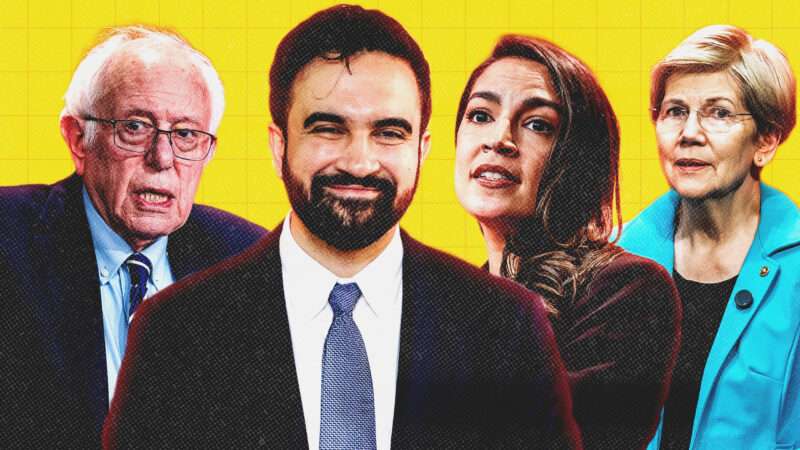
“If Jeff Bezos can drop $10 million to sponsor the Met Gala, he can afford to pay his fair share in taxes,” said Sen. Elizabeth Warren (D–Mass.) in one of the more civil criticisms offered. Sen. Bernie Sanders (I–Vt.) was more pointed:
The reality of American life today: Jeff Bezos, worth $290 billion, spent:
$10 million on the Met Gala $120 million on a penthouse $500 million on a yacht
Meanwhile, he’s planning to throw 600,000 Amazon workers out on the streets and replace them with robots.
Rep. Alexandria Ocasio-Cortez (D–N.Y.) went on to tell comedian Ilana Glazer, worth quite a bit of money herself, that it is simply not possible to earn a billion dollars. “You can get market power, you can break rules, you can abuse labor laws, you can pay people less than what they’re worth,” she said, “but you can’t earn that.”
The common theme here is that Bezos et al. are, in effect, not just subject to an unfair tax rate. It is that they are evil. He is not paying his “fair share,” he is throwing people out onto the streets, he and others must have abused the law.
Reason‘s Christian Britschgi explained last week why this general outlook betrays economic reality. But it’s also important to interrogate the basic idea that someone is evil because he is rich, which has become common wisdom in certain circles. There are certainly wealthy people who are rotten. Making a product that others want, though, does not make someone a bad egg. Amazon, founded by Bezos, allows people to get items much quicker and often for considerably less money. As of December of last year, the company employed 1.58 million people. He is our cartoon villain?
There are other examples. Sergey Brin and Larry Page gave the world near-unfettered access to information with Google. Maybe it’s even how you found this article. (Thanks.) Steve Jobs effectively put computers in our pockets, facilitating more intimate communication and connection with friends and loved ones near and far. Elon Musk, for all of his controversy, helped pioneer the modern electric vehicle and is investing in technology to help people with neural issues regain function. Why is this never a part of the story?
This ire is not constrained to the yearly Met Gala. Perhaps nothing captures it better than a video New York Mayor Zohran Mamdani filmed last month, standing on the street, sneering while he informed constituents that “today, we’re taxing the rich.” The proposal: a pied-á-terre tax on luxury units whose owners do not live full-time in the city. Why sneering? Because Mamdani was outside of one such unit. He pointed upward at the penthouse and named and shamed its owner, Ken Griffin. Perhaps there is a conversation to be had about an additional tax on high-end, part-time residences. A government leader expressing such revulsion for a constituent is another thing entirely. One of the two men has a lot of audacity, and it is not the private citizen.
Griffin, after all, is a major contributor to the New York economy, though he has reportedly begun scaling back in response to the video. He is also a major philanthropist, having given away billions of dollars. Bezos, meanwhile, recently gave a $100 million donation to a charity funding early childhood education in New York. Will Bernie Sanders add that to his list of Bezos expenditures?
On April 30, Maine’s Democratic Gov. Janet Mills dropped out of the race for a U.S. Senate seat.
In a statement about suspending her campaign, Mills was blunt:
“While I have the drive and passion, commitment and experience, and above all else—the fight—to continue on, I very simply do not have the one thing that political campaigns unfortunately require today: the financial resources.”
As Mills said, financial resources matter in today’s political environment as campaigns grow more expensive each cycle.
First-quarter financial reports filed in April with the Federal Election Commission (FEC) show where some of that money is going—and where it is not.
Democratic candidates across the country are raising large sums of money. Democratic Senate candidates, including Georgia Sen. Jon Ossoff, former North Carolina Gov. Roy Cooper, and former Ohio Sen. Sherrod Brown, are sitting on tens of millions of dollars with zero debt.
The party’s congressional campaign arms—the Democratic Senatorial Campaign Committee (DSCC) and the Democratic Congressional Campaign Committee (DCCC)—which work to elect Democrats to each chamber of Congress, carry zero debt and have tens of millions in cash.
On the Republican side, every major committee has a strong cash position.
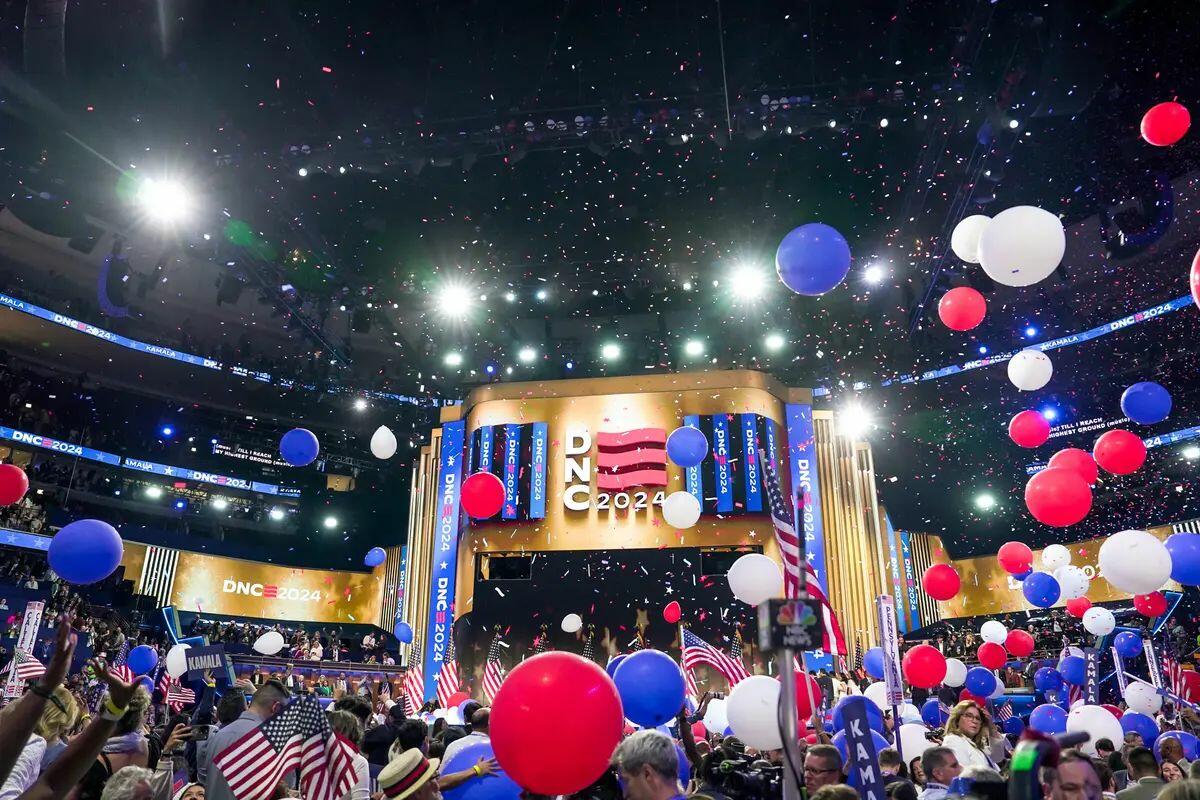
Meanwhile, the Democratic National Committee (DNC) is in debt.
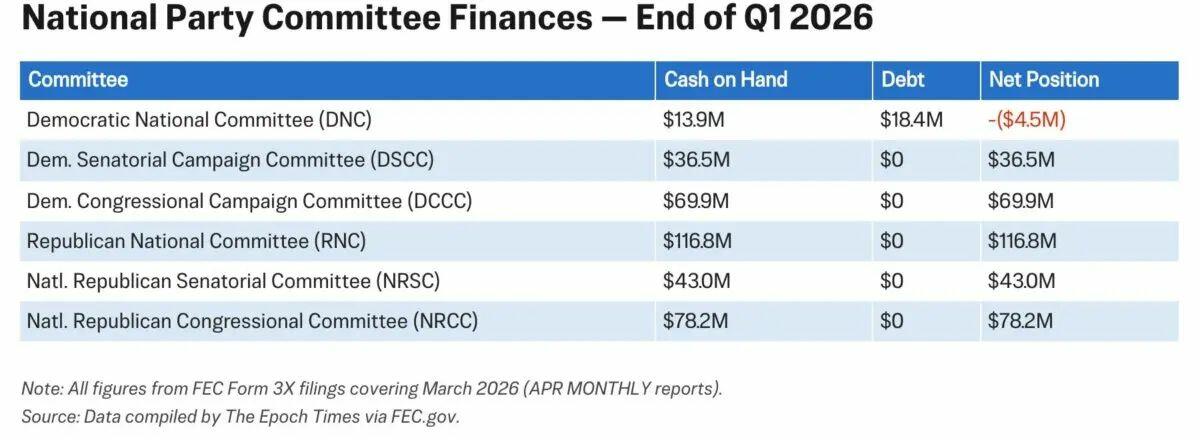
The federal filings lay out the numbers. The DNC reported $13.9 million in cash on hand at the end of March and $18.4 million in debt, putting the committee roughly $4.5 million underwater. It is the only national party committee on either side of the aisle carrying any debt at all.
The Republican National Committee, by contrast, holds $116.8 million in cash with zero debt. The National Republican Senatorial Committee (NRSC) has $43 million, and the National Republican Congressional Committee (NRCC) has $78.2 million. Neither carries debt.
On the Democratic side, the DSCC holds $36.5 million with zero debt. The DCCC holds $69.9 million with zero debt. Both are competitive with or ahead of their Republican counterparts.
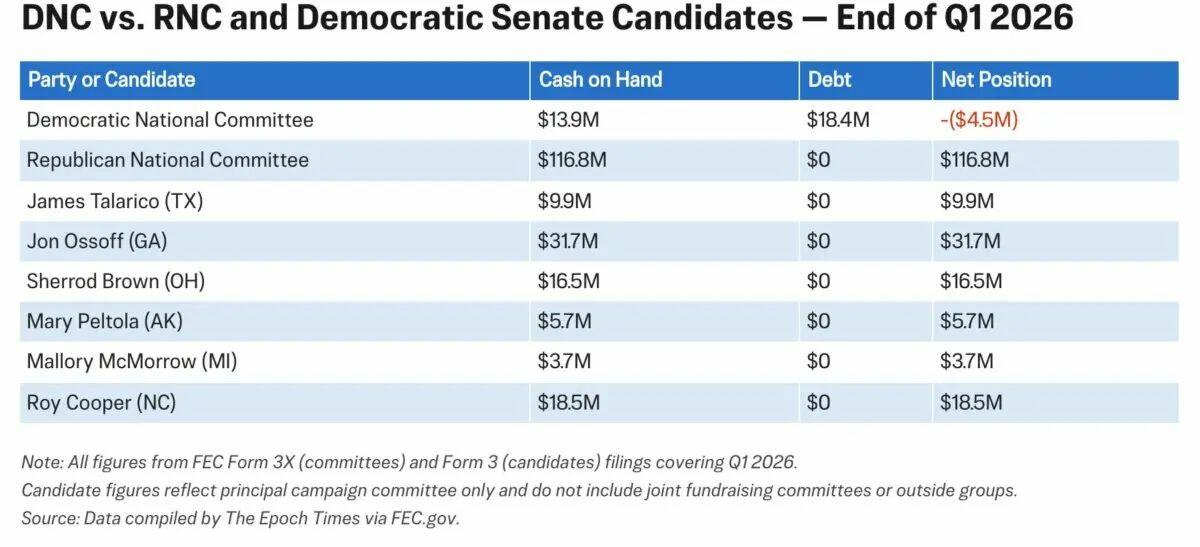
The gap widens further when individual candidates enter the picture. Six Democratic Senate candidates—Ossoff, Cooper, Brown, Texas state Rep. James Talarico, former Alaska Rep. Mary Peltola, and Michigan Sen. Mallory McMorrow—hold a combined roughly $86 million in cash on hand. Every one of them carries zero debt.
Ossoff alone has $31.7 million—more than double the DNC’s cash position and more than enough to cover the national committee’s entire debt.
‘A Severe Brand Problem’
Avis Jones-DeWeever, a political scientist and principal of progressive strategic communications firm Nouveaux Strategies, said the pattern points to something deeper than a typical post-election slump.
“The Democratic Party as a national entity has a severe brand problem,” Jones-DeWeever told The Epoch Times in an email. “Even in the midst of a historically unpopular president, they have managed to find a way to consistently garner lower favorability ratings than Donald Trump.
“There is still a sense that the Democratic Party writ large is not rising to this existential moment—that they continue to color within the lines of politics as normal, when we are far away from normal.”
The result, she said, is that donors are making a deliberate choice.
“Donors, it seems, have shifted their funds from supporting an institution they no longer trust to instead investing in individual candidates that have demonstrated strength in this moment,” Jones-DeWeever said.
“It’s not that Democratic donors are tired of giving. It’s just that they are being much more selective and targeted in their spend. They’re willing to fund a fight and are making investments in the specific fighters that they believe have the best chance at carrying them to victory in November.”
DNC Chair Ken Martin has argued the committee’s financial position is the result of a deliberate strategy—not a crisis.
In an April 28 interview on Pod Save America—one of the most listened to Democratic podcasts on all platforms—Martin said the debt traces to a loan the committee took out in 2025 to invest early in organizing, voter registration, and state party infrastructure.
“We do have debt, Jon, and that’s because I took out a loan last year to make sure we can make deep investments,” Martin told host Jon Favreau, a former speechwriter for President Barack Obama and one of the most prominent modern voices in Democratic politics.
The DNC has pointed to those investments in its own public communications. In April 2025, the committee announced what it called the largest monthly investment into state parties in its history: a state partnership program splitting more than $1 million per month between Democratic state and territory parties.
Under the program, each state party receives a baseline of $17,500 per month, with parties in Republican-controlled states receiving an additional $5,000 per month through a “Red State Fund.”
The committee has also launched voter registration programs, a national training initiative for campaign staff, and what it describes as year-round organizing in all 50 states—efforts Martin has summarized with the phrase “organize everywhere, win anywhere.”
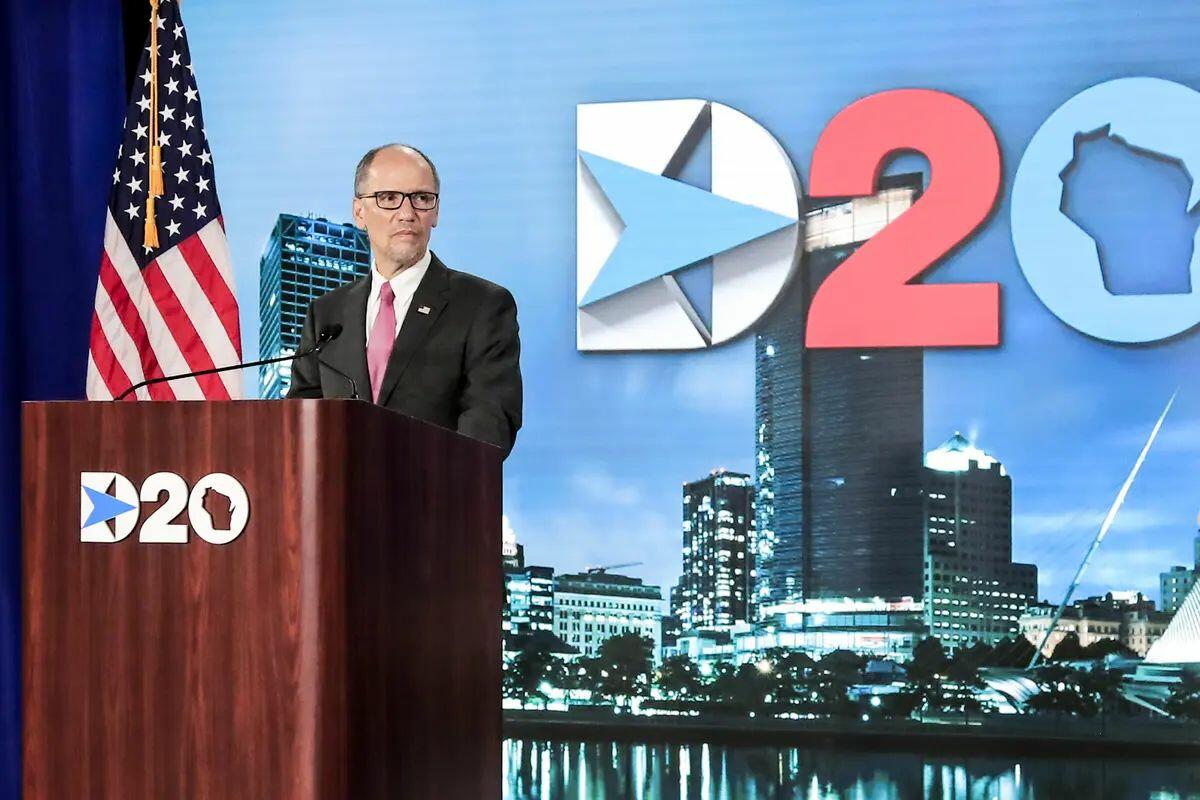
Martin pointed to the committee’s track record, saying the DNC raised $105 million in 2025—a record for a first-year chair—with $85 million of that coming from grassroots donors at an average contribution of $51. He said the DNC raised $32 million in the first quarter of 2026 and has more cash on hand than one of his predecessors, former DNC Chair Tom Perez, had at the same point after the party’s 2016 presidential loss.
He described the committee’s debt as manageable and strategically useful, arguing it allowed the party to spend early rather than wait until the final months before an election.
“We can pay that debt off whenever the hell we want,” Martin said. “I could hold that debt until the end of the year. So the reality is, there’s nothing that’s holding me back in terms of the cash I have, the cash on hand I have to spend it on elections.”
Martin pointed out that the committee funds infrastructure that every Democratic campaign depends on, including a voter file that costs more than $10 million a year to maintain.
“Our voter file and our organizing tools and our data, every candidate, whether they’re running for school board or president, relies on that,” he said. “Without the DNC, they would have to do that on their own.”
He also confirmed the DNC purchased the Harris campaign’s fundraising list for $6.5 million after the 2024 election, calling it “a great investment” that has “already paid for itself.”
The DNC did not respond to multiple requests for comment for this report.
‘An Issue Unique to the DNC’
Favreau pressed Martin directly on the contrast between the party’s national committees.
“You’re spending more than you have,” Favreau said. “I know it’s a tough environment for the party out of power, but the DSCC and the DCCC and the Senate candidates have plenty of money. They’re all doing great. So it seems like this is an issue unique to the DNC.”
Favreau pointed to the unreleased 2024 post-election review as a factor in donor reluctance. The review is commonly referred to as the “autopsy” of Kamala Harris’s loss, which Martin said would be made public when he ran for chair but has since said he would not release to instead focus on future races.
Favreau added: “I know the grassroots fundraising has been great. I know that. I concede that for sure. … I’ve talked to plenty of people about this, that a lot of the big donors still have not come off the sidelines, and part of the reason is that there’s a trust issue based partly on the autopsy.”
Martin disagreed. “I’m just not seeing that, Jon,” he said.
For voters unfamiliar with the mechanics of campaign finance, the distinction between a national party committee and an individual campaign may not be obvious. But the two serve different functions.
National party committees serve a different function than campaigns, at least as the law allows for today. While a Senate candidate raises money to win a single race, as Martin said in the podcast interview, the DNC is responsible for infrastructure that connects all Democratic campaigns together—the voter file that every candidate “from school board to president” relies on, voter registration drives, state party support, legal challenges, and the national get-out-the-vote operation.
Parties are currently restricted to spending only a small fraction of funds in direct coordination with campaigns.
Boris Heersink, an associate professor of political science at Fordham University who has studied national party committees extensively, has argued in his research that these organizations create “national party brands” that are “fundamental to mobilizing voters in elections”—especially “when the party is in the national minority.”
Whether individual candidates can compensate—or even need to—for a national committee carrying more debt than cash is an open question heading into November.
A pending Supreme Court ruling could change what national party committees are allowed to do with their money.
The court is expected to decide NRSC v. FEC by the end of June, and the case could strike down federal limits on how much national party committees can spend in direct coordination with their candidates.
Under current law, party committees can spend unlimited amounts independently—running ads and organizing without consulting the candidate. But the moment a committee wants to coordinate directly with a campaign—sharing strategy, co-creating ads, directing resources where the campaign wants them—federal law caps that spending.
For Senate races, those caps range from roughly $130,000 to $4 million depending on the state’s voting age population, according to the FEC’s latest coordinated party expenditure limits. For House races, the limits range from about $61,800 to $123,000. While it is a large sum of money, compared to the tens of millions it costs to run campaigns in 2026, it’s only a drop in the larger financial bucket.
The NRSC and NRCC—the Senate and House campaign arms of the Republican Party—are the plaintiffs in the case, arguing the limits violate the First Amendment. The Trump administration’s Department of Justice has declined to defend the law, agreeing the limits should be struck down. The DNC, DSCC, and DCCC have all intervened in the case to defend the existing restrictions.
“Send Us A Tip”: U.S. Dangles $15 Million Reward For New Intel On Iran’s Drone Network
There is little doubt that Iran’s Shahed drone threat has become a major concern, menacing surrounding Gulf states, commercial tanker traffic in the Strait of Hormuz, and U.S. bases across the region. This backdrop helps explain why the State Department’s Rewards for Justice program has now put up to $15 million for new information in connection with an already sanctioned Iranian drone-production network linked to the IRGC-Qods Force.
Rewards for Justice has named Kimia Part Sivan Company (KIPAS), which the State Department says serves as the drone-production arm of the IRGC-Qods Force. KIPAS has tested drones, supported drone transfers to Iraq, and procured foreign-made components for Iran’s drone program.
“The IRGC has financed numerous terrorist attacks and activities globally, including via its proxies outside Iran, such as Hamas, Hizballah, and Iran-backed militia groups in Iraq. The IRGC funds its international activities – in part – through sales of military equipment, including UAVs. Proceeds from Iran’s sale of weapons and UAVs, including to buyers in Russia, also benefit the Iranian military, including the IRGC-QF,” Rewards for Justice wrote on its website.
The U.S. Treasury’s OFAC already sanctions KIPAS and appears on the Specially Designated Nationals list. OFAC designated KIPAS on October 29, 2021, for materially assisting the IRGC with its drone program.
According to the State Department, six individuals are involved in the “testing, development, and supply of drones” linked to the IRGC.
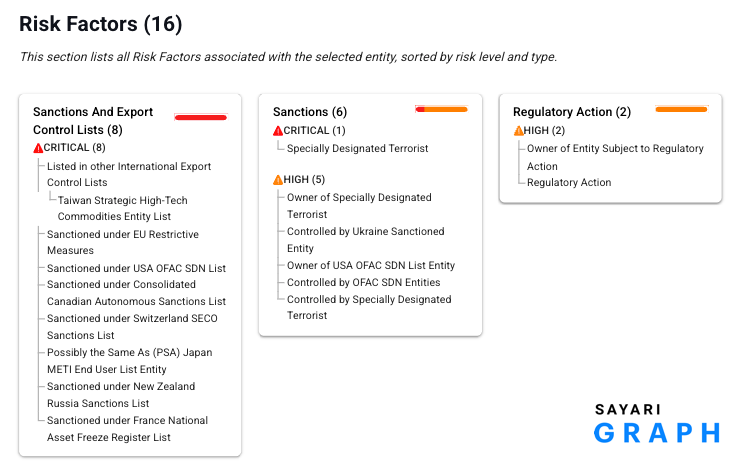
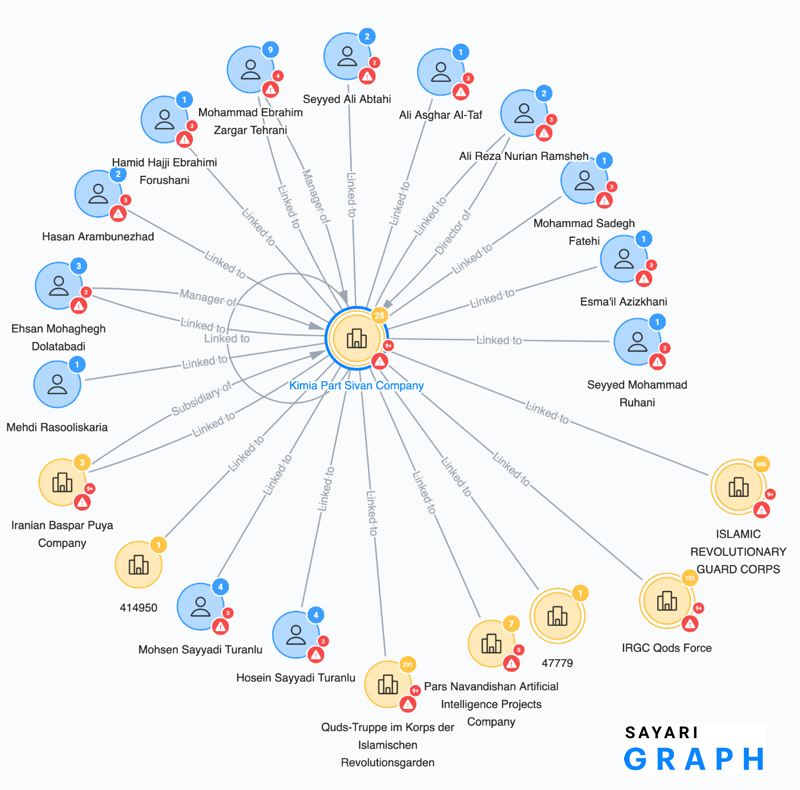
Commercial risk-intelligence and investigations platform Sayari has identified all known managers and links associated with KIPAS:
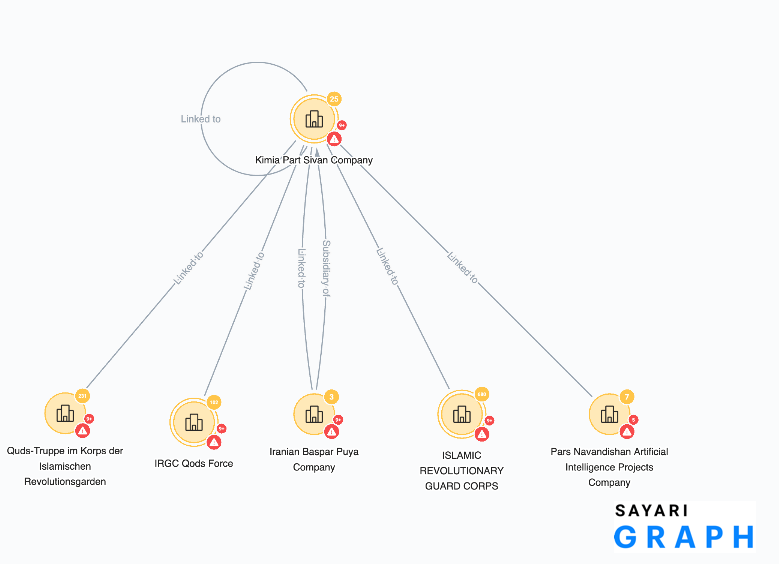
Further refining:
Follow the money and supply chains, and it appears the State Department wants to disrupt Iran’s drone industry.
A woman is suing Houston County in southeast Alabama for violating her constitutional rights after she was forced to give birth preterm with no medical assistance in the county jail.
The lawsuit, filed in federal court earlier this week, accuses the county, jail, and officers involved, in part, of deliberate indifference to serious medical needs and the denial of medical care in violation of the 14th Amendment.
Tiffany McElroy was 34 weeks pregnant with a history of preterm labor when she was arrested on May 23, 2024, on chemical endangerment charges, according to the complaint filed on McElroy’s behalf by the nonprofit Pregnancy Justice. The charge, which involves exposing children, including fetuses, to a controlled or chemical substance or drug paraphernalia, stemmed from allegations that McElroy had used substances during her pregnancy.
In the early hours of May 26, 2024, while in Houston County Jail, McElroy alerted the jail staff and officers that her water had broken, according to the suit. Considered a medical emergency when the water breaks before 37 weeks, McElroy and her child were at risk of serious infection, sepsis, and premature birth. But “despite her obvious signs of labor,” reads the complaint, “no one from the jail came to help.”
Instead, McElroy claims that for nearly 24 hours, she received no medical assistance for her preterm labor. Although she met with the jail’s physician assistant and nurse hours after her water had broken, McElroy was only given a diaper and ibuprofen, even though her fetus showed signs of an elevated heart rate. And her repeated pleas to go to the hospital were ignored.
Although pain in her abdomen continued to escalate, and her amniotic fluid continued to leak, McElroy was forced to attend her first court appearance and move about the jail without assistance, reads the complaint.
As McElroy’s labor progressed into the second night, “other women detained in the jail repeatedly alerted jail staff to the emergency…but jail staff rarely responded,” and “made no effort of any kind of emergency medical assessment or assistance,” according to the lawsuit. By the early morning on May 27, 2024, McElory was screaming in pain and began to feel the urge to start pushing.
Still, the jail staff did not act. Indeed, one officer said she was forbidden from calling 911 or assisting McElroy because “she and the jail could be held accountable if anything happened to [McElroy] or her baby,” the lawsuit alleges. And other detained women were threatened with tasing and other punishment for attempting to help McElroy deliver her baby. “Despite these threats,” other women in McElroy’s pod insisted on helping her deliver as her contractions slowed, according to the complaint.
When McElroy’s baby was born, “she was not crying or breathing,” but thanks to the quick thinking of one of the other women to “suction the baby’s mouth and nose three times and stimulat[e] the chest…the baby started breathing,” reads the complaint. It was only after the baby was delivered that officers took McElroy and her baby to the hospital, with one officer telling the women in the pod: “Y’all should’ve pushed that motherfucking baby back in.”
More than 24 hours after her water broke, her preterm baby was transferred to the neonatal intensive care unit, and McElroy was treated for a serious bacterial infection that can be brought on “when the amniotic sac is ruptured for a prolonged period of time,” according to Pregnancy Justice. McElroy also received a blood transfusion due to the amount of blood she lost during the delivery.
“I’m so grateful that my baby and I are here today, and I owe that to other women because the guards treated me like I was less than nothing,” McElroy said in a statement.
The state of Alabama jails more women for endangering their pregnancies than any other state, according to Karen Thompson, the legal director at Pregnancy Justice. “From June 2022 to June 2024…Alabama prosecuted 192 women on pregnancy-related charges, mostly on charges that they used drugs while pregnant,” reports AL.com. Alabama is followed by Oklahoma (112 prosecutions), South Carolina (62), and then Texas and Mississippi (both at just 9), according to an analysis by Pregnancy Justice.
Whether it is wise to use the criminal justice system to incarcerate pregnant women who allegedly ingest substances may be up for debate, but what happened to McElroy was an undeniable violation of her rights and dignity. She faces an unfortunately steep uphill battle to hold the government actors who denied her and her child adequate medical care accountable.
“Trump has done so much damage to libtardery that the Democrats will need a decade of uninterrupted power to undo it, which they’re not going to get.”
– Matt Forney on X
If you learned anything from this week’s extravaganza in Beijing, it is that Donald Trump is aggressively re-aligning world relations so that the USA does not end up one of the losers in the global resource scramble that lurks darkly behind all current events.
China does not intend to be an eventual loser, either, though it has lost a lot of traction lately.
The Eurolands are certainly the main losers, embracing loserdom as the old and sick long for death.
India and some of the BRICs countries, are looking a little loser-ish just now.
The primary resource all nations scramble for is oil. Without lavish supplies of oil, you can’t have an advanced techno-industrial economy and, as the feckless Eurolanders learned the hard way, there really isn’t an adequate substitute for oil. The flow of oil depends on economically producible reserves of oil country-by-country, but also on geographic advantage, as we are learning just now in the Hormuz crisis.
“Europe’s crude oil production started its permanent decline in 2001. Asia-Pacific’s production hit a maximum in 2010, and it has been declining since. Africa’s peak oil production took place in 2008, and it has been mostly declining since.”
Also, turns out, the peak oil story is still real, despite fifteen years of shale oil miracles.
The Persian Gulf states, including Saudi Arabia are probably past peak. American shale oil is in the peaking zone, too — the Permian Basin in Texas is running short of sweet spots. The Arctic National Wildlife Reserve (AMWR) is open for leasing, but it is expensive to drill and produce in the harsh arctic region and the US Geological Survey estimates recoverable reserves there between 7.7 – 10 billion barrels — America consumes roughly 7.5 billion barrels-a-year, so. . . .
There’s Canada, of course, and its tar sands, but the Great White North these days leans rather hostilely towards its neighbor to the south (us). Otherwise, North America is pretty fully explored oil-wise. There can’t be a whole lot of hidden, un-tapped “elephant” fields out there. On the plus side, America enjoys its geographic advantage, comfortably cushioned between the Atlantic and Pacific Oceans, far from the madding crowd of Eurasia.
We have lately trumpeted our supposed acquisition of Venezuela, but projected production of US companies there looking ahead several years would be under a million barrels-a-day while the US uses 20.5-million barrels a day. As for Venezuela’s jungle-bound oil sands, well, for now, fuggeddabowdit.
Russia’s Ministry of Natural Resources puts its commercially recoverable oil resources (with current technology and prices) at around 80-billion barrels, which is a lot, and leaves Russia in a theoretically favorable place for the short term, anyway. China uses about 17-million barrels-a-day and imports about 70-percent of that. Its imports of Iranian oil are substantial but obscured in official statistics due to the evasion of US sanctions. The Hormuz blockade has put a hurt on China.
Here’s how the global resource scramble translates into geopolitical behavior: As has been evident for some time, US interests are increasingly alienated from Euroland’s interests, and better aligned with Russia’s interests. Europe is demonstrably insane these days, roiling with loose talk as it whirls around the drain. Russia, under V. Putin, looks more like the adult in the room. Even Russia’s military operation in Ukraine looks rational if you consider how the EU and the CIA started the damn thing in the first place circa 2014 for the very purpose of provoking Russia.
Mr. Trump has yearned to normalize relations with Russia since he stepped on-stage in 2016, to the great consternation of America’s neocons, CIA shadow-meisters, and the born-again communists running the Democratic Party (who seem to resent Russia ditching Marxism-Leninism thirty-five years ago). This week, the US and China have mutually proposed becoming “partners” rather than rivals on the world scene. We will surely remain mutually wary, but apparently things have changed.
Most urgently, China would like its oil imports from the Persian Gulf restored, and the obvious way to make that happen would be for them to lean on Iran to stop screwing around and come to terms with the US — give up the enriched uranium and stop laying jihad on everybody near and far. We’ll know soon enough if China will do that for us, and we have some goodies promised for them, Nvidia chips, soybeans, and more.
Mr. Trump is rearranging the global game-board bigly, and the net result will be the sorting-out of winners and losers.
Iran is the poster boy for that. It could go either way for them, soon, and rather sharply.
If Iran’s jihad-happy leaders just quit FAFOing, they have the chance to re-enter the global community as an advanced modern economy with a comfortable standard of living.
Or, the US could just blow up what’s left there.
China will probably deliver that message forcefully in the days ahead.
There remains, however, the dirty business of America’s domestic enemies, of whom we learn more and more each week.
This week, it was the testimony of “whistleblower” CIA agent James Erdman that the CIA worked sedulously to conceal the true origins of Covid-19. It looks pretty much like what half of America has suspected all along: that Covid was a trip laid on the nation by its own Deep State (mainly the CIA), in concert with the rogue Democratic Party, for the express purpose of queering the 2020 election.
Related seditious operations apparently continue to this very hour. Former CIA Director John Brennan told MSNBC’s Nicolle Wallace this week: “There’s still a legion of professionals in the law enforcement environment, the Department of Justice, as well as the CIA and other places — the ones who are refusing to follow politically motivated prosecutions, those who are refusing to support any type of political activities on the part of the Trump administration. . . .” Did he just admit that the conspiracy he kicked off in 2016 is still ongoing? And that he is an active party to it? I think so. Do you think Joe DiGenova noticed that down in the DOJ’s Southern District of Florida?
Just as astoundingly, this week former FBI Director James Comey told CNN’s Kasie Hunt that he “still speaks regularly” to current FBI employees. Say, what. . . ? He palavers with the very agency that is investigating him for serious felonies, such as threatening the life of the US president? Sounds a little out-of-order, ya think? Does he long to spend the rest of his life as captain of the ping-pong team at the Lewisburg Federal Penitentiary?
Views expressed in this article are opinions of the author and do not necessarily reflect the views of ZeroHedge.
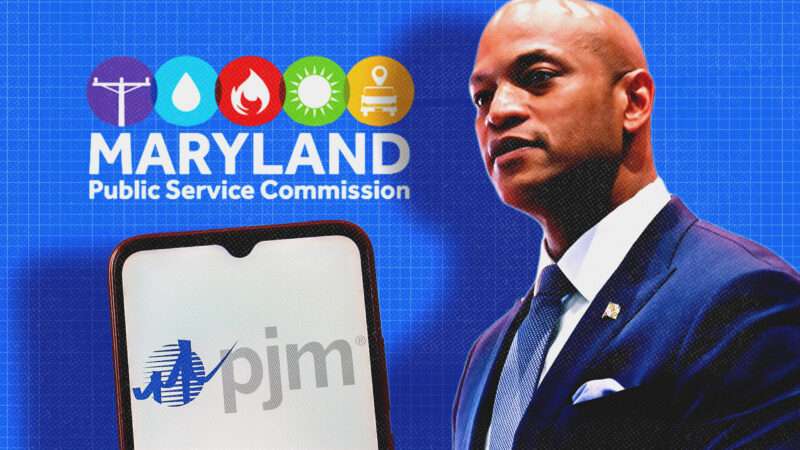
PJM Interconnection, the largest electricity grid operator in the nation, held its annual company meeting in Baltimore earlier this week. For Maryland Democratic Gov. Wes Moore, the event was an opportunity to voice grievances about rising energy costs.
“I am here to say plainly that PJM can—and must—do more for ratepayers,” Moore said, adding that PJM’s system “isn’t working.” Moore’s comments come as the price of residential electricity in the state has reached 22.4 cents per kilowatt-hour. This is 24 percent higher than the national average and 6.4 percent more than last year.
Maryland is not alone. Across the country, residential electricity prices rose by 7.4 percent from February 2025 to February 2026, the most recent month for which federal data are available. While data centers have become an easy scapegoat for rising wholesale prices, there are a range of factors behind these price hikes, including upgrades to aging grids, fluctuating natural gas prices, supply chain constraints, and growing demand that has simply outpaced supply.
As Jeffrey Shields, PJM’s senior manager of external communications, tells Reason, the operator is “working with relentless focus to accelerate the connection of new generation.” Any problems PJM faced with its interconnection process—pilloried by Moore—are a thing of the past, according to Shields.
Facing a backlog of new energy generation and storage projects, PJM closed its interconnection queue in 2022, revamping its process from first-come, first-served to what Shields calls a “cluster” approach, resulting in 811 new generation projects in its first cycle this year.
While Moore castigates PJM, he has consistently supported policies such as price caps and clean energy mandates that distort the market and increase costs for Maryland residents. This includes two bills recently signed by the governor that purport to “protect Maryland families from rising utility costs and make Maryland’s economy more business-friendly” but will likely have the opposite effect.
One of those bills, the Utility RELIEF Act, will allegedly save residents “at least $150 on their energy bills every year.” The law includes $100 million for refunds or credits to ratepayers drawn from the state’s Strategic Energy Investment Fund (SEIF). Another $100 million will go to the Maryland Energy Administration to “conduct a competitive, low-bid auction” for renewable energy projects.
Funded by “alternative compliance payments” from utilities, the SEIF has seen payments grow from $77 million in FY 2022 to $365 million by FY 2025, according to the state’s energy administration.
According to Josh Smith, a senior fellow at the Pacific Legal Foundation, actions like those spelled out in the RELIEF Act “tend to make things more expensive,” deterring suppliers from serving the market.
Another bill touted by the Moore administration, the DECADE Act, will reportedly improve Maryland’s ability to “attract, develop, and grow businesses” through a series of tax credits and carve-outs designed to counter the state’s 3 percent tech tax, which Moore signed into law last May. The bill’s major provisions—including economic development zones, film tax credits, job creation credits, and R&D credits—seem representative of a state government that believes it’s better at allocating capital than the market.
Max Gulker, managing director of technology policy at Reason Foundation, the nonprofit that publishes Reason, says Maryland’s problems require the state to consider expanding existing infrastructure and building new grids.
Easier said than done. The Piedmont Reliability Project, intended to increase the state’s transmission capacity, has faced regulatory and legal challenges from the state since it was first announced in 2024, according to local NBC affiliate WBALTV11. A decision by the state’s utility commission on the project’s viability isn’t expected until 2027.
Maryland has sought to streamline its permitting process for interconnection requests aligned with the state’s clean energy goals. Under the Next Generation Energy Act, eligible applicants can receive permits within 295 days. For a project to be eligible, its greenhouse gas emissions must be lower than those of coal or oil, and it must be capable of generating energy quickly during peak demand.
While this may appear to be a blatant example of the government picking energy winners and losers, such policies are common. As Maryland Public Service Commission Chairman Kumar Barve tells Reason, “all 50 states in the union have incentives for different kinds of energy….There’s not a single free market state in the union, not Texas, not Oklahoma, not anybody.”
And just as Maryland is not the only state to tilt the scales in favor of renewables, Moore is not the only governor to blame PJM for the price hikes from these policies.
In New Jersey—which has long subsidized renewables and, until recently, banned construction of nuclear power plants—Democratic Gov. Mikie Sherrill has frozen utility rate increases. “I’m going to crack down on PJM, get new energy hooked into the grid, and sue to prevent excessive rate hikes,” she said while on the campaign trail last year.