ECB Keeps Rates Unchanged (As Expected), Warns ‘Full Energy Inflationary Shock Yet To Come’
The European Central Bank kept its key deposit rate unchanged at 2.25 percent and said it was “closely monitoring” the inflationary impact of fresh conflict in the Middle East.
The ECB reiterated it won’t pre-commit but act one meeting at a time based on information as it arrives.
“Uncertainty remains high and the full inflationary impact of the energy shock has yet to play out,” the lender of last resort for the 21 countries that use the euro said.
“The Governing Council is therefore closely monitoring the intensity and duration of the shock.”
The ECB’s hawkish posture preserves its status at the vanguard of Group-of-Seven central banks after it last month became the first in that club to raise rates since the Iran war began.
Last month’s rate increase sparked discussions that the ECB might make a mistake similar to hikes in 2008 and 2011 which were quickly rolled back.
That debate persisted after peace talks between Washington and Tehran caused energy prices to drop sharply.
For all their sense of nervousness then however, the latest flare-up in fighting has emboldened policymakers in judging their recent hike to be fully justified.
“With today’s decision, the Governing Council remains well positioned to navigate the uncertainty caused by the conflict.”
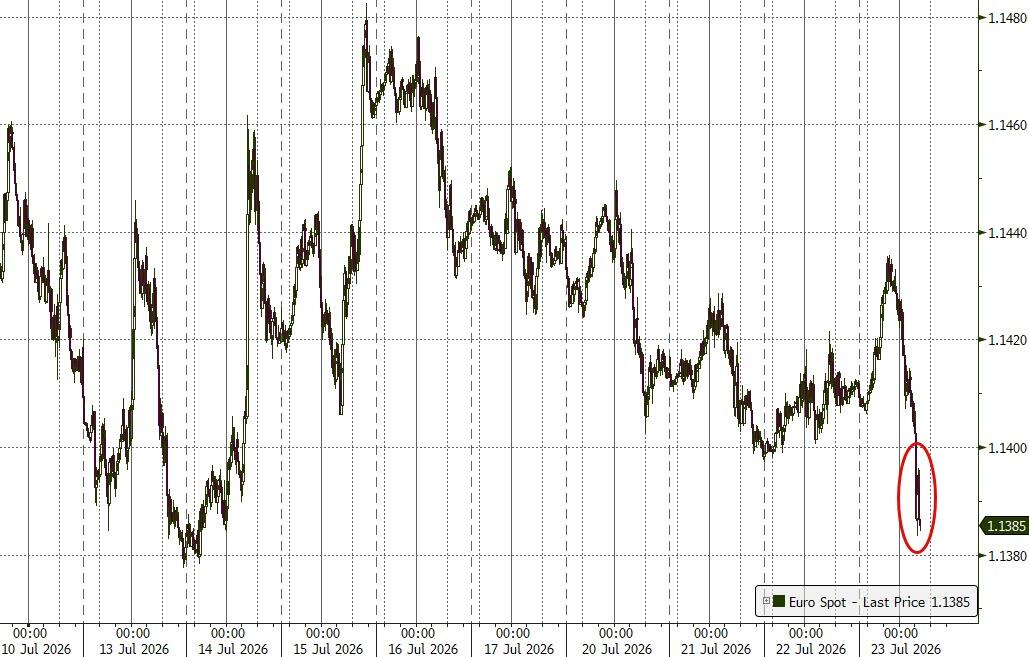
The euro extended its overnight weakness against the dollar…
…and Bund yields remained elevated…
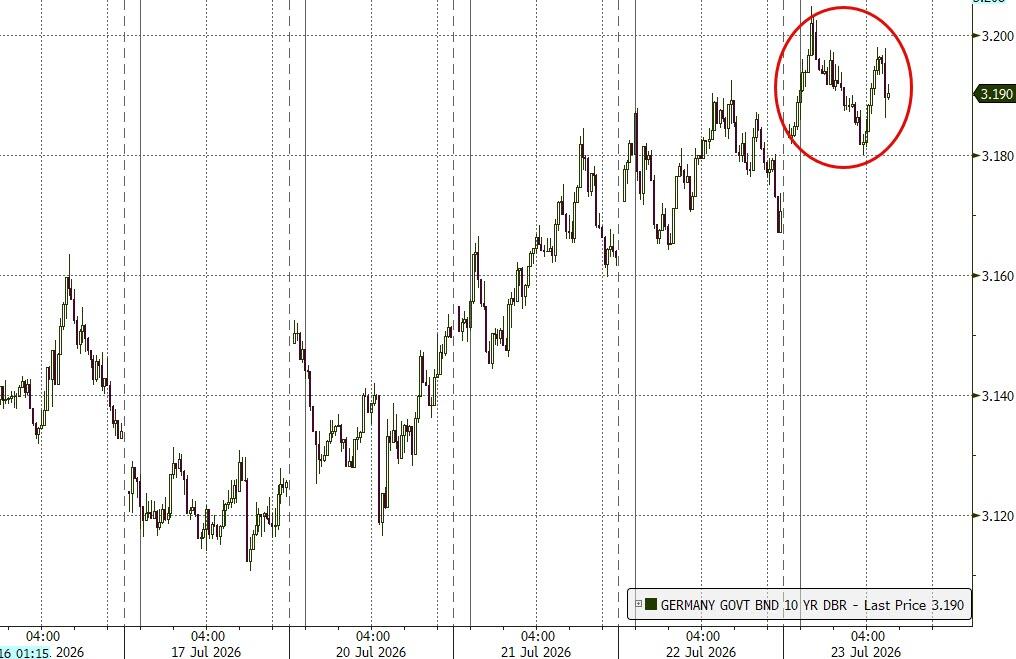
For now, traders are largely unmoved on the future ECB rate trajectory, holding around 48bps of hikes by year-end. As Bloomberg Economics’ David Powell noted:
“Even when oil prices were close to their lowest for the summer, President Christine Lagarde retained a hawkish tone. Buoyant commodity prices keep the Governing Council on track to raise borrowing costs again in September, when it’s armed with fresh forecasts from the staff economists, for a final time in this short tightening cycle.”
Deutsche Bank Chief European Economist Mark Wall says the ECB’s pause today shouldn’t be seen as hesitation. Rather, he says it’s a hold while the central bank updates forecasting before hiking in September.
“The only question is: will one more hike to 2.50% be enough to curb the inflation risks? The answer will depend on growth as much as it will on inflation.”
The September meeting is widely seen as a natural point to deliver such a move if required, backed by new quarterly staff forecasts, inflation prints for the two prior months and more economic data including several business surveys.
Tyler Durden
Thu, 07/23/2026 – 08:30
via ZeroHedge News https://ift.tt/giY1OEj Tyler Durden