Unitree IPO Finally Puts A Real Price On Profitable Humanoid Robots
Chinese robotics maker Unitree formally launched its IPO on Shanghai’s STAR Market on Thursday, opening the books on a deal that aims to raise about 4.2 billion yuan (roughly $618 million) at an implied valuation near 42 billion yuan ($5.9 billion). Once the shares start trading, the listing will put a real, daily market price on a profitable humanoid-robot maker operating at scale – the first the sector has had.
Until now, humanoid robotics companies have been raising capital based on numbers nobody could really challenge since nobody has had to actually clear a market. So far we have Figure AI sitting on a $39 billion private valuation, and a clutch of Chinese rivals each pushing past $3 billion in the primary market. A public listing swaps the euphoria of those private rounds for the discipline of a secondary one. Regulators approved the registration in early July after a review that took roughly 104 days from acceptance, one of the fastest STAR Market clearances on record. Observers have linked the speed directly to Beijing’s push to channel capital toward strategic robotics and AI champions. That said, Unitree has been designated a Chinese military company in the US, and Washington is weighing action against subsidized Chinese robotics imports even as the machines turn up for sale on Amazon.
A Rare Profitable Name in a Sea of Losses
Unitree makes an unusually clean test case because unlike most of its peers, it actually turns a profit. The company reported 2025 revenue of about 1.7 billion yuan and adjusted profit around 591 million yuan – a net margin north of 35 percent that, in a field defined by cash burn, is close to an anomaly. It shipped more than 5,500 humanoid robots last year, more than any other company globally, alongside cumulative quadruped sales above 33,000 units. Overseas revenue has consistently run past 40 percent of the total. Founder and chief executive Wang Xingxing controls roughly a third of the business. The prospectus earmarks the proceeds for robot “brains” and model research, robot bodies, new products, and a manufacturing base.
The rest of the field looks nothing like it. UBTech, which is pursuing its own A-share listing, has put its Walker S humanoid through more than 50,000 hours of training on BYD production lines but keeps running losses. It just launched a consumer-grade bionic robot priced as high as 990,000 yuan (about $146,000) in a bid to crack the home market. Overseas, Tesla’s Optimus is slated to reach mass production this year. Every player in the space has a demo reel and a private valuation nobody has to defend. Unitree is about to have a share price that trades every day and settles the argument in public.
Whatever Unitree prints when it debuts becomes the benchmark for the entire “embodied intelligence” trade.
President Donald Trump on Friday said that he still wants compensation for people he said were victimized by a weaponized federal government while acknowledging that a planned $1.776 billion anti-weaponization fund is “dead” after the Department of Justice walked it back amid congressional opposition and court rulings.
“It is dead,” Trump said at a Cabinet meeting on Friday.
“But I wish it weren’t, to be honest with you. I think people were horribly treated, horribly abused … and I’d like to see them compensated for their pain.
“Their families have been ruined. Many, many suicides—they’ve committed suicide,” he also said in the meeting, which was held at Camp David, the presidential retreat in Maryland.
“People that were very successful, that wanted to go to a rally or an event and ended up spending the rest of their lives in horror.
“And this fund, this fund was not for me,” he said.
“This fund was for those people.”
Earlier this year, the Justice Department announced the fund as part of a settlement agreement in a lawsuit where Trump had sued the Internal Revenue Service (IRS) to provide money for individuals who claimed to have been targeted by “weaponization and lawfare” under the previous administration. Trump’s lawsuit with the IRS was over a leak of his tax returns.
The fund, however, was met with legal setbacks as a federal judge blocked it from going into effect. That block was extended in mid-June.
Plaintiffs who sued to block the payouts argue that the government can’t legally divert taxpayer money into what they alleged was a slush fund for compensating Trump’s allies.
Also in June, acting Attorney General Todd Blanche told Congress that the government is scrapping its plans for the fund in the face of a bipartisan backlash, and government attorneys have argued that lawsuits challenging the fund are now moot.
During a House hearing on June 2, Blanche said, “We are not moving forward with the fund, period.”
Earlier on Friday, Trump wrote in a post on Truth Social that the fund was meant to defend “the great American Patriots who were hunted down like dogs and whose lives were unfairly and illegally destroyed” by the Biden administration.
The president added that regarding the alleged victims, “perhaps there has never been a group of people treated so badly in our Nation’s history.”
“They are suffering still, many ruined, and I felt that they should be given compensation for what has been done to them,” he said, adding that Blanche should also be approved as attorney general by the Republican-controlled Senate.
Friday’s meeting is the first televised Cabinet session ever conducted at Camp David. The Trump administration previously attempted to hold the meeting in May, but it was scrapped due to bad weather.
During his first term in office, Trump held a Cabinet meeting at the presidential retreat that was closed to the press.
The Strange Reason Scientists Still Need Pre-1945 Steel
The world’s most sensitive radiation detectors sometimes rely on low background steel produced before the first atomic bomb test in July 1945, according to a new report from SpaceDaily.
Steel manufactured before the nuclear age lacks the tiny traces of radioactive fallout that atmospheric weapons testing later introduced into the environment, making it valuable for experiments searching for extraordinarily rare particles and faint radiation signals.
The report says that this gave rise to the popular story that scientists depend on steel salvaged from pre war shipwrecks resting on the ocean floor. While there is some truth to that, the claim has been greatly exaggerated. Some laboratories have indeed used steel from old warships for shielding, but it is not true that nearly every sensitive detector depends on sunken ships or that science faces a crisis as this supply disappears.
The reason low background steel matters is that, in cutting edge physics experiments, even the detector’s own walls can generate enough background radiation to interfere with measurements. Facilities searching for dark matter, rare nuclear decays, or other elusive phenomena go to extraordinary lengths to eliminate every possible source of interference, often operating deep underground and surrounding detectors with multiple layers of carefully selected shielding materials.
Today, researchers no longer rely exclusively on pre 1945 steel. Advances in metallurgy allow laboratories to manufacture and rigorously screen modern stainless steel, titanium, copper, and other materials with extremely low levels of radioactivity. In many cases, these newly produced metals perform just as well as their pre war counterparts, making the finite supply of old ship steel far less important than popular accounts suggest.
The enduring lesson is not that modern science depends on scavenging sunken fleets, but that the atomic age permanently changed the way physicists design their experiments.
When scientists are trying to detect just a handful of events over the course of an entire year, even the manufacturing history of the steel surrounding an experiment can make the difference between finding a signal and measuring nothing but noise.
According to the latest Gallup poll, only 38% of U.S. adults have a “great deal” or “quite a lot” of confidence in higher education. One of the Gallup experts told Fox News that one of the key reasons for the continued slide in public trust is “the perception that there’s a political agenda being taught.” That perception is well documented after most departments purged their ranks of any republican, conservative, or libertarian faculty members. At the same time, many faculty oppose the long-standing principle of institutional neutrality for universities, the subject of a recent debate that I had with the President of the American Association of University Professors.
Gallup’s expert added that there is also a view that we are “not teaching people the right kinds of things they need to succeed in the job once they finish.”
As I have previously written, this generation of administrators and faculty has destroyed not just public trust in our institutions but their financial viability. Colleges are closing at an alarming rate as both tuition and revenue fall. Yet, faculty members would prefer to lose their jobs than their bias in hiring and teaching.
According to Gallup, roughly a third of polled individuals cited partisan bias or indoctrination on college campuses. Bias was the leading reason for given for the lack of trust, ahead of tuition costs. That is a large chunk of potential applicants and their families. Worse yet, they are not wrong.
Our campuses have been ideological echo chambers where collective orthodoxy is more prominent than academic inquiry. This group think has created an overtly hostile environment for more than half of this country that consider themselves conservatives or libertarians. As schools struggle to maintain financial stability, they are literally cutting away half of their potential applicant pool.
Currently, only 37% of Americans report having “some” confidence in the institution. In any other industry or area, that record of alienation and mistrust would prompt massive changes in management. In higher education, however, colleges and universities remain captive to administrators and faculty members who replicate their views and values to the exclusion of many others.
The result is evident in multiple surveys which reveal widespread self-censorship among students, particularly conservative students. When I confronted a Harvard Law professor in a debate at Harvard Law School with those surveys, he responded by calling these students “conservative snowflakes.”
It did not matter that only a third of Harvard students felt comfortable expressing their views in classes or on campus. Since Harvard has also shown the same bias in admissions, only roughly nine percent of the students identify as conservative. Thus, the vast majority of the students who are saying that they self-censor are liberals. This is the environment that the current generation of administrators and faculty have created.
As I have previously written, parents and students who value free speech must increasingly look to public universities where faculty are subject to constitutional guarantees. Public universities may be the final line of defense for free-speech advocates.
We now largely have two systems of higher education for those seeking education with a diversity of opinions and viewpoints. Except for outliers like the University of Chicago and other private universities holding the line on free speech, the orthodoxy found at private universities remains a barrier to many conservative and independent thinkers.
If we are to protect these bastions of free speech, legislatures will need to play a more active role in addressing the exclusion of both faculty candidates and speakers on public campuses. Too many faculty members continue to take the view that citizens are a captive audience expected to continue funding their departments, while excluding conservative or dissenting views held by many, if not most, citizens in a given state.
If faculty members want to continue maintaining echo chambers for their own viewpoints, they should have to seek private donors to sustain such intolerance and orthodoxy.
Legislatures can demand evidence that schools are maintaining intellectually diverse faculties in determining the level of continued support from citizens.
When some of us have argued for such campaigns, academics hypocritically claim that we are calling for political litmus tests or hiring based on political parties. It is an absurd argument that I have previously addressed, including in my book “The Indispensable Right: Free Speech in an Age of Rage.”
The call is for donors and legislators to withhold funding until they see real reforms, including greater diversity on faculties. They are not directing the hiring but looking at the results. The faculty members objecting to such calls have watched passively (or actively supported) the purging of conservative or libertarian faculty from universities and colleges.
When confronted by their own obvious ideological litmus tests, they shrug. Some acknowledge that their departments are overwhelmingly liberal, but insist that they just cannot find “competent” or “intellectually promising” conservatives. A few will admit that they do not believe that conservative views have a place in their departments.
It is impossible to deny the purging of faculties to create an academic echo chamber. If a large corporation effectively eliminated women or minorities while claiming no conscious discrimination, they would be trounced in court.
For years, I have raised concerns about the intolerance in higher education and surveys showing that many departments no longer have a single Republican as faculty members replicate their own views and values. There is no evidence that any faculty members (including those acknowledging the loss of virtually all faculty from the right of center) are honestly willing to reform their schools.
That ideological echo chamber is hardly an enticement for many facing rising tuition costs and relatively little hope of being taught by faculty with opposing views.
A Georgetown study recently found that only nine percent of law school professors identify as conservative at the top 50 law schools – almost identical to the percentage of Trump voters found in the new poll.
We are watching the demise of American higher education by its own hand. It will be up to legislators and donors to save these institutions from themselves.
US Withdraws Troops, Patriot Batteries From Northern Iraq Amid Iranian Attacks
There are new reports Friday of more US troop pullback initiatives in the wake of the last couple weeks of US-Iran fighting, and Iranian ballistic missile and drone strikes which have targeted American bases with increased regularity, especially in Jordan and Kuwait.
One regional media publication freshly reports, “The United States military has started to draw down its last remaining forces from Iraq stationed in the vicinity of Erbil’s airport in the Iraqi Kurdistan Region, well-placed sources with close knowledge of the process confirmed to Al-Monitor.”
Significant US anti-air defenses are also being pulled back, given they and their radar systems have increasingly been targeted.
“Patriot mobile air-to-surface air-defense systems that detect and shoot down incoming missiles, drones and other airborne enemy equipment have already been removed from the military compound, the sources said, without providing further details,” Al Monitor continues.
The pullback from the Iraqi Kurdistan region reportedly began last week and is still in progress, given all the heavy equipment has to be pulled out.
The missile batteries are expected to be ‘redeployed’ – but this could be further away from within the vicinity of Iran and the Persian Gulf, such as in Israel. Al Monitor notes:
Regional officials described the pullout as routine and in line with the US commitment to withdraw all its forces from Iraq by a Sept. 30 deadline that was agreed with Baghdad.
However, coming amid sustained attacks by Iran and its Shiite proxy militias, and on the Kurdistan Region of Iraq in particular, the withdrawal has left the Kurds feeling badly exposed.
It’s not just Iran which has targeted US personnel and assets in Iraq, but Iraqi Shia paramilitary units have at times targeted Erbil facilities going back years:
While the Patriot systems were deployed to protect US forces, the Kurds have benefited immensely from the security umbrella as well. Erbil’s airport has come under constant attack from Iran and Iran-backed militias since the start of the Iran conflict in February, including this week. US interceptors successfully deterred at least 95% of those attacks, the sources said.
The bulk of Iranian and militia attacks have targeted armed Iranian Kurdish opposition groups based in the Kurdistan Region. However, the Erbil compound has also been targeted multiple times. The Patriots have an operational range of between 60 to 100 miles (100-160 kilometers).
Iran’s strategy seems to focused on permanently pushing US forces back in the region, while expanding the scope of the war, in what some analysts have called ‘horizontal escalation’.
In contrast to the previous hot phase of the war, in which Iran targeted bases across the entire theater simultaneously, this wave started with the targets close to Iranian shores, and has progressed steadily to the Israeli border. After destroying much of the radar network protecting regional US Axis bases in the previous hot phase of the war, Iranian planners have prioritized targeting fuel storage, drone hangers, refueling tankers, and barracks. The American response has been to pull assets back ever further from Iran, to bases in Israel and Jordan. We’ll call this process debasification. Iran’s debasification strategy takes advantage of the inherent asymmetry between the vastly different force structure and capabilities of Iranian rocket forces and US Axis air forces.
Iraq’s north has long been a place where US forces can feal more at ease with ‘friendly’ Kurdish groups, rather than the dwindling presence in the rest of the country. But the Kurds have also come under immense pressure within the Iraq war, especially given headlines alleging they were ready to support an Iranian Kurdish uprising inside the Islamic Republic.
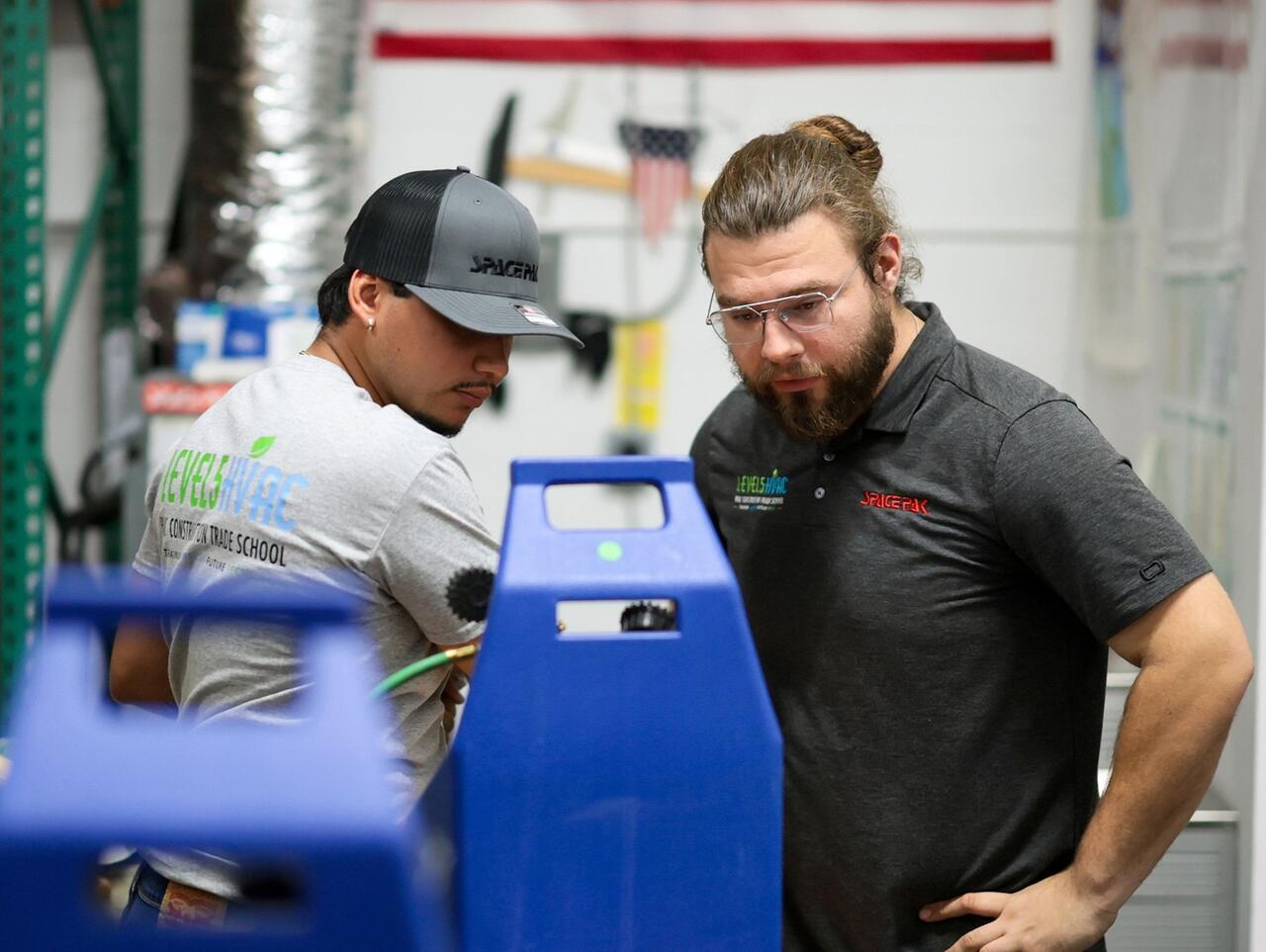
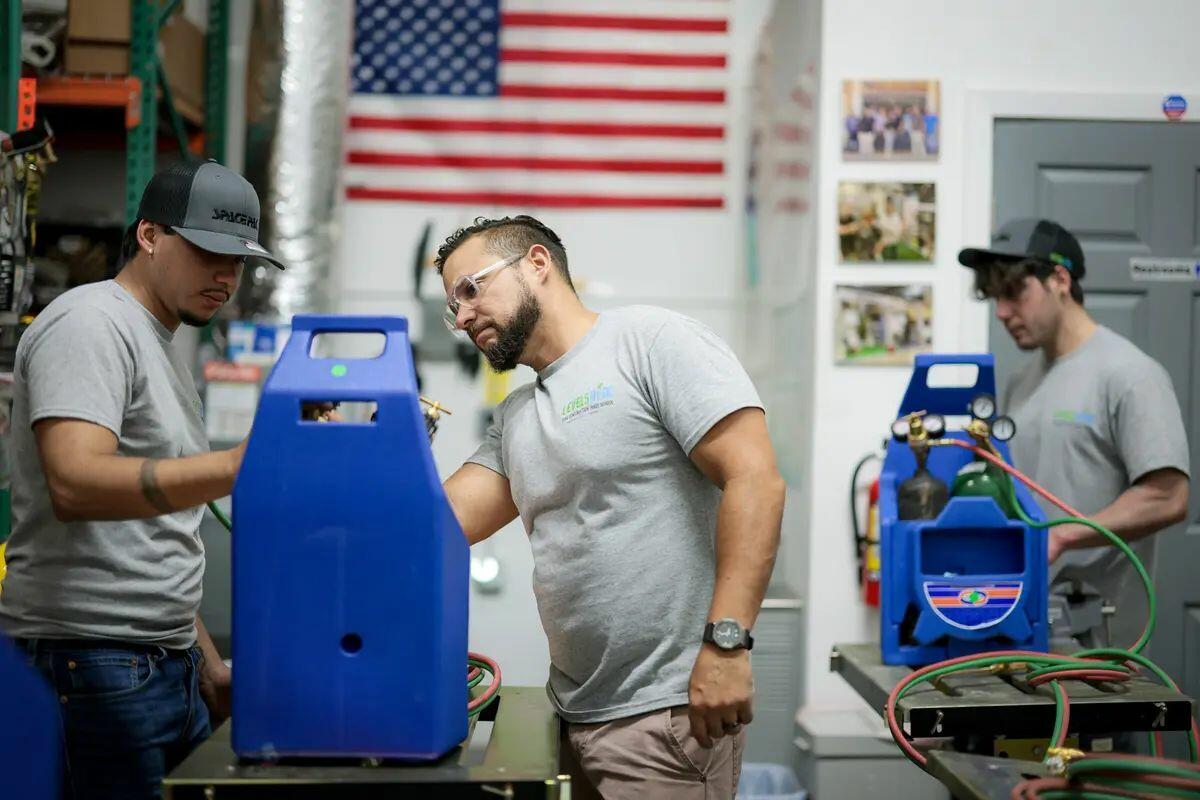
For years, students were told the future belonged to college graduates with a four-year degree. Now, some of the fastest-growing opportunities are in skilled trades, where there is an escalating demand for labor and a higher level of job security amid the rise of artificial intelligence.
Vocational schools and specialized training programs are seeing a surge of interest among Gen Z students and younger workers who are considering options beyond traditional higher education.
And the timing couldn’t be better. Major infrastructure projects and the rapid buildout of AI-related facilities are fueling demand for workers with hands-on technical skills. Workforce experts say the convergence of these trends could reshape how Americans think about education and career pathways going forward.
“The past couple of years, people have been flocking to things that are considered safe from AI, but then this tailwind came in where there’s also a lot of need for these roles to support the labor movement,” said Brady Colby, head of market research at Validated Insights, which analyzes trends in higher education and trade school.
He told The Epoch Times that while interest in vocational studies had seen slow, steady growth in recent years, it “really took off” in the past six months.
“It’s harder to recruit for some of these skilled trades than it is for computer programmers now,” he said.
Validated Insights noted in its June report that trade school revenue surpassed all expected growth in 2025, expanding 11.4 percent and surpassing $19 billion. That’s nearly double the original growth forecast.
The Philadelphia Technician Training Institute states on its website that many Gen Z members are choosing vocational colleges “because these institutions provide quick applied education that leads directly to rewarding professions with reliable salaries.”
Mike Nager, author of The Smart Student’s Guide to Smart Manufacturing and Industry 4.0, told The Epoch Times: “For decades, four-year degrees were seen as the only path for a safe future. Trades were seen as a fallback for those who couldn’t or wouldn’t go to college and get a degree.”
But now when it comes to choosing a four-year degree path as the default, “the payback just isn’t there anymore in many cases,” he said.
He also believes an interest in education alone won’t be enough to replenish the widening gap in America’s skilled talent pool.
“Kids have to be shown what the trades are, get some firsthand experience. This is where the industry needs to step up, create outreach programs to address the ‘awareness gap’ for trades,” he said.
The “awareness gap” is the disconnect between rising demand for skilled professionals and the public’s perception of these careers. For years, some say it fostered the societal stigma that vocational career paths led to either overly physical or just low-paying work. On the flip side, this perception created a favorable atmosphere for standard university education.
Changing the Narrative
Cyrus Kennedy, a behavioral analyst and CEO of The Ad Firm, said attitudes toward vocational careers are definitely changing.
“It’s a mix of a math problem and a psychological shift,” he told The Epoch Times. “Gen Z has watched older millennials drown in six-figure student debt for degrees that don’t guarantee a job.”
Kennedy said this trend toward vocational studies as higher education is happening at a time when there’s “growing fatigue with purely digital, screen-bound work.”
“Young people are realizing that specialized trades offer immediate earning potential, job security that AI can’t easily displace, and a clear path to entrepreneurship without the financial chokehold of a four-year degree,” he said.
Kennedy said another assumption being reexamined about working in skilled trades is the alleged cap on career growth and the risk of physical burnout.
“In reality, the trades are one of the fastest pipelines to business ownership,” he said. “An apprentice plumber or electrician doesn’t just learn how to fix a pipe; they learn a business model. Many transition into project managers, estimators, or business owners. It requires high-level cognitive problem-solving, customer psychology, and financial literacy.”
Steven Morgan, a licensed master plumber and certified HVAC technician at 24hr.Supply, agreed. However, he said there’s still a serious physical element involved in many trade professions that shouldn’t be taken lightly.
“The body takes a beating. You’re in attics in August, and the real money comes after years of licensing and hard experience,” he said. “What students overlook most is the ceiling – field tech, foreman, estimator, then running your own shop. The ones who see that from day one go furthest.”
He also doesn’t find the surge in interest surprising.
“Young people watched a generation take on serious debt for degrees that didn’t guarantee much, and they did the math,” he said. “An apprentice earns while learning instead of paying to learn. The work also can’t be shipped overseas or handed to software.
“Nobody’s replacing a licensed plumber with an app.”
Industries that have reported the highest number of skilled worker shortages in 2026 include electricians, welders, HVAC technicians, plumbers, and heavy equipment mechanics.
Meanwhile, the median pay in many of these professions now matches or exceeds that of many that require four-year degrees, according to Bureau of Labor Statistics data.
Growing interest in technical careers is also reflected in public polls. A Resume Templates survey of 1,250 Gen Z adults in January found that six out of 10 respondents planned to pursue “blue collar” work in 2026. The main reason cited was better long-term job security against possible AI-related job loss.
In May, Challenger, Grey & Christmas published research showing there were 38,579 planned job cuts due to AI – the highest monthly total they’d ever recorded for that specific reason. AI-related downsizing accounted for 40 percent of all announced cuts, up from just 7 percent in January and 26 percent in April.
One-Two Punch
When it comes to rebuilding America’s skilled labor force, there are two major factors converging. On one hand, there are millions of trade workers planning to retire through 2032.
On the other hand, there’s the ongoing U.S. data center and infrastructure buildout, which is driving a technician talent crisis.
Between now and 2032, 18.4 million workers between the ages of 55 and 64 with post-secondary education plan to retire. This drastically outpaces the 13.8 million workers between the ages of 16 and 24 who will enter the labor market with the same qualifications, according to a Georgetown University analysis.
Concurrently, a Randstad analysis showed the need for skilled labor in the United States is escalating due to the data center boom. Demand for robotics technicians is up 107 percent, HVAC professionals up 67 percent, and construction-related roles up 30 percent.
F-35 Stealth Jet Suffers “Mishap” At San Diego Airbase
A US Marine Corps F-35B assigned to the 3rd Marine Aircraft Wing suffered a “mishap” at MCAS Miramar in San Diego earlier today, according to Fox News.
Viral videos have circulated on X showing the $100 million fifth-generation fighter jet in flames.
BREAKING: Emergency crews are responding to an aircraft mishap appearing to involve an F-35 at Marine Corps Air Station Miramar in San Diego after the incident was reported earlier this morning.+
Authorities have not released details about what happened, and it remains unclear… pic.twitter.com/PqTBisE7Jo
Emergency personnel responded to what the Marine Corps described as an “aircraft mishap” on the flight line at about 10 a.m. local time involving an F-35 assigned to Marine Aircraft Group 11, said 1st Lt. Blake Starbuck. The aircraft was based at MCAS Miramar.
The incident was a “Class A mishap involving a Marine Corps F-35B in the vicinity of MCAS Miramar,” the U.S. Marines told Fox News. The pilot ejected and was recovered.
At least 14 F-35s have crashed or been written off in major accidents since 2018, including today’s Miramar crash. Only one F-35 crash has killed a pilot, involving a Japanese F-35A in 2019.
A journalist’s review of Committee of 100 (C100) records has renewed scrutiny of sponsor-paid trips that brought senior figures from major U.S. news organizations to Chinaand recorded changes in their views and professional plans.
In response to questions from The Epoch Times, C100 confirmed that it covered travel costs, selected the participants, set their itineraries, and chose whom they met.
The organization rejected journalist and media host Natalie Winters’s description of the trips as “pay-for-play,” saying no coverage was exchanged for the travel and participants retained editorial independence.
Winters published her review on Substack on July 28, characterizing the multiyear journalist delegation program as a “propaganda pipeline.” Her report drew attention to documents posted on C100’s website.
A 2012 trip report on the website marked “Internal Use” placed the cost of a nine-day delegation for five journalists at approximately $60,000.
The report said the program sought to improve perceptions of China and encourage participants to share their experiences with professional peers.
The five journalists represented The New York Times, The Atlantic, the Financial Times, Foreign Affairs, and WNYC. A page about the delegation on the C100 website says they traveled through Beijing, Shanghai, and Hangzhou from Nov. 25 through Dec. 3, 2012.
The trip report described lodging, meals, transportation, sightseeing, corporate and cultural visits, and about 20 arranged meetings with Chinese officials, academics, media representatives, students, and business executives.
C100 Recorded Changes in Views
Winnie O’Kelley, then-deputy business editor at The New York Times, said she would return from the trip with several story ideas and “shape my staff across Asia in some different ways,” according to the report.
Gary Silverman, then-U.S. news editor and deputy managing editor at the Financial Times, said he would not again “think or write about China” without reflecting on what he had learned.
WNYC host Brian Lehrer was described as saying his perception of China had changed “in 100 ways.”
Jonathan Tepperman, then-managing editor of Foreign Affairs, said the trip had given him a “much deeper, more subtle and more nuanced” sense of China and elite opinion in the country.
He said he had made contacts he intended to continue consulting and called it the best press trip he had attended.
Clive Crook, then-senior editor at The Atlantic, said the visit reinforced his view of China as a “huge and fascinating story” and told organizers to “keep it up.”
C100’s report highlighted two articles Crook published after the trip: “Why China and the U.S. Can Be Capitalist Comrades” and “China’s Ghost Towns Won’t Have a Hard Landing.”
C100’s delegation page links to those articles, another Crook article, three Lehrer broadcasts, and a Silverman column. The page says the visit gave participants information and perspectives for their later reporting.
Shen Dingli, a professor at Fudan University in Shanghai who met the delegation, responded to the participants’ assessments with a remark recorded in the trip report.
“You made the change!” Shen said.
Participants From Major Newsrooms
C100 began its journalist-delegation program in 2007 and told The Epoch Times that it continued through 2014.
Over that period, C100 records identify participants from The New York Times, The Washington Post, NPR, PBS, Politico, Time, Newsweek, The Atlantic, the Financial Times, Foreign Affairs, WNYC, The New Yorker, USA Today, and other outlets.
A C100 account of a gathering of 2011 and 2012 delegates described the program as an opportunity for American thought leaders to witness China’s development and challenges and meet officials, experts, journalists, businesspeople, artists, and students.
The 2012 trip report said the program sought to improve perceptions of China and expected participants to share their experiences with professional peers.
In a December 2012 message, then-C100 Executive Director Angie Tang wrote that the journalist and civic-leader delegations were “shaping the U.S.-China dialogue on the frontlines.”
The 2012 delegation met Cui Tiankai, then-Chinese vice foreign minister; CCTV executive producer Cheng Yue; Sinopec Chairman Fu Chengyu; Shanghai financial official Fang Xinghai; and academics, corporate leaders, students, and local journalists.
C100 also held discussions with Chinese officials during the same period.
Its account of those meetings says C100 leaders met Chinese Culture Minister Cai Wu, Hong Kong Chief Executive-Elect Leung Chun-ying, and C.H. Tung, chairman of the China-U.S. Exchange Foundation, a Hong Kong organization established in 2008.
C100 leaders also discussed possible collaboration on the organization’s teacher and journalist delegations to China with He Yafei, then-deputy director of the State Council’s Overseas Chinese Affairs Office.
C100 Defends the Program
“Committee of 100’s journalist delegation program was an open professional exchange that last ran in 2014, during a period when the two economies were rapidly integrating [and] expanded U.S.-China engagement was the stated policy of both American political parties,” C100 said in a statement to The Epoch Times.
The organization said the program was intended to give American editors direct exposure to a country often covered from a distance.
“The program’s purpose, described openly for years, was understanding through direct experience,” the statement said. “Participants disclosed their trips and retained full editorial independence. Nothing in the record shows anyone wrote or edited a story at anyone’s direction.”
C100 also confirmed that it independently selected the participants, set their itineraries, chose whom they met, and covered travel costs.
The organization did not respond to follow-up questions asking whether the claimed disclosures were made to employers, audiences, or both; requesting examples of those disclosures; and asking whether participants and their employers received advance materials describing the program’s aim of improving perceptions of China.
Newsrooms Asked About Approval, Disclosure
The New York Times, The Atlantic, the Financial Times, Foreign Affairs, and WNYC were asked by The Epoch Times whether they approved the 2012 travel, whether they paid or reimbursed any expenses, and what sponsored-travel and disclosure policies applied at the time.
They were also asked whether C100’s sponsorship was disclosed to readers or listeners in work connected to the trip.
O’Kelley, Silverman, Lehrer, Tepperman, and Crook were separately asked to verify the statements attributed to them and explain whether the trip affected any reporting, editing, staffing, sourcing, or broadcasting decision.
None of the participants or news organizations responded by publication time.
Arranged Access, Restricted Reporting
C100’s program emerged during an era when engagement with Beijing was mainstream U.S. policy. Chinese authorities, however, had long treated exchanges, hospitality, and managed access as tools for shaping foreign perceptions – a practice that continues even as U.S. policy toward Beijing has hardened.
On July 27, 19 media workers from Myanmar, Laos, Vietnam, and Bangladesh began a six-day visit to Baoshan in Yunnan Province under the guidance of the CCP’s Baoshan Municipal Propaganda Department, according to a Xinhua report.
The itinerary directed participants toward coffee production, historic towns, traditional crafts, cultural heritage, agriculture, tourism, and local-development projects.
Five days earlier, a Baoshan government account said authorities in Tengchong had trained more than 300 elementary school guides and university volunteers as local narrators tasked with carrying CCP theories and approved local accounts into communities and households.
Foreign correspondents trying to report outside official programs described a different experience in the Foreign Correspondents’ Club of China’s (FCCC’s) 2025 media-freedom report, titled “The New Abnormal.”
The survey found that 94 percent of respondents said reporting conditions in China did not usually, or almost never, meet international standards. Some 64 percent reported interference, harassment, or obstruction while reporting, while 77 percent said sources had declined or canceled interviews or required permission before speaking to foreign media.
Most respondents to the FCCC survey declined to be identified because they feared retaliation against themselves or their news organizations.
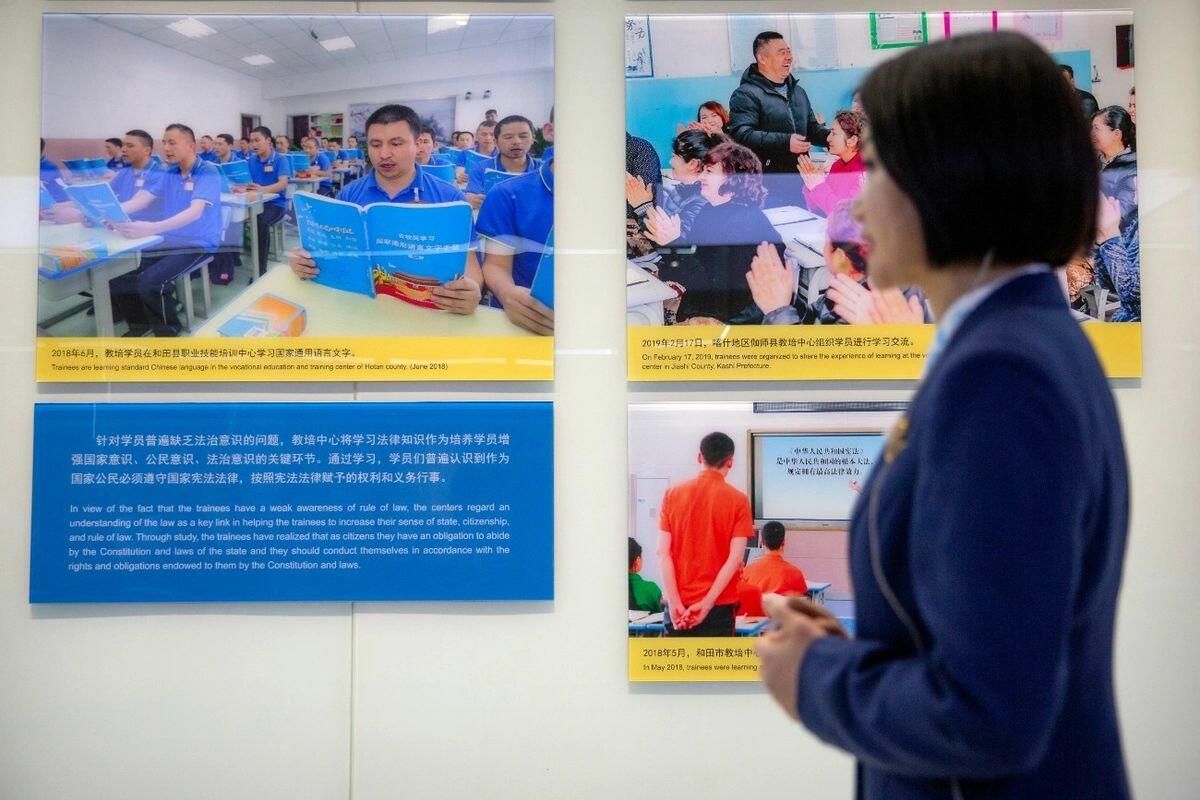
One unnamed European journalist said a Chinese Embassy invited the reporter on a government-organized trip to Xinjiang. After returning, the journalist was summoned by the Chinese Foreign Ministry and warned that subsequent reporting would be monitored to ensure it was “unbiased.”
Another unnamed European journalist said police surrounded a reporting team investigating detention sites and prisons in Xinjiang, examined its cameras and phones, copied footage, and deleted material.
The FCCC said government-organized tours were occasionally offered in Tibet, but journalists who joined them reported having no opportunity to work independently. No surveyed correspondent received permission to enter the Tibet Autonomous Region independently in 2025.
The survey also found that 40 percent of respondents said their Chinese colleagues had faced pressure, harassment, or intimidation from officials or while assisting with field reporting.
C100 said the journalists on its delegations disclosed their trips, but it did not provide examples or specify whether readers and listeners were told who financed the travel.
Argentina’s Milei Borrows Warren Buffett’s Idea To Punish Deficit-Spending Politicians
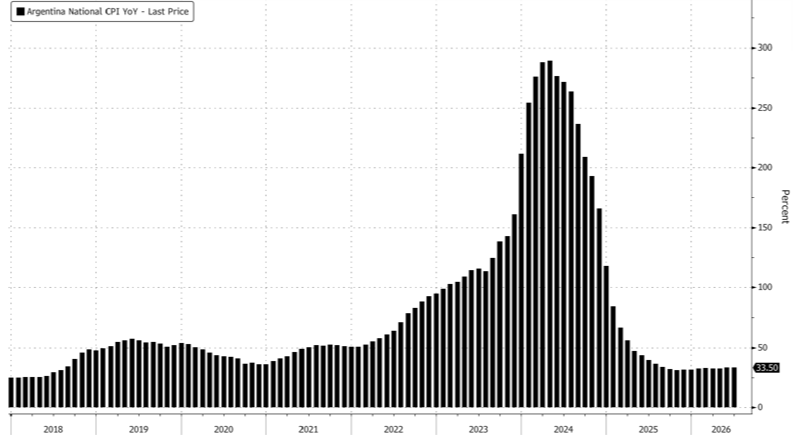
More than two years after campaigning to “blow up” Argentina’s central bank, President Javier Milei has announced his “Fiscal Shackle” bill – a permanent rule aimed at preventing Argentina from approving or maintaining budgets with fiscal deficits that could have consequences for politicians.
On Thursday, in a speech recorded at the Casa Rosada and broadcast nationwide, Milei proposed an overhaul that would restore the Central Bank of Argentina’s sole mandate of preserving the currency’s value, stop direct and indirect financing of the Treasury, provinces, and municipalities, and expose officials who violate the rules to criminal charges. “It will be considered fraud and illicit association,” he explained.
Milei said this is the “most important set of structural reforms in the last 91 years,” taking the year of the Central Bank’s founding, 1935, as the starting point for that period. He argued that the central bank has functioned as “a tool for theft” and indicated that his reform proposal seeks “to put an end to the scam of counterfeiting money to finance high-level politics, whose most evident manifestation is the inflation rate.”
The plan would also strengthen independence of central bank officials, making them more difficult for future administrations to remove. Milei said the reforms were an effort to end decades of deficit monetization, the primary source of Argentina’s recurring inflation and currency crises.
He said the “Fiscal Shackle” bill would impose an automatic shutdown mechanism if public accounts remain in deficit and Congress fails to restore balance. Nonessential government functions would halt, while new spending, hiring, and discretionary provincial transfers would be frozen. Top political officials would stop receiving salaries, although pensions, family benefits, unemployment insurance, health care, and security services would remain protected.
“The results of the Central Bank’s portfolio can only be transferred to the Treasury for debt cancellation. The scam of the Non-Transferable Letters will be eliminated… This will include the Fiscal Shackle: it will ensure that Argentina cannot sustain a deficit budget,” Milei said.
Remember, the Oracle of Omaha told CNBC’s Becky Quick in a 2011 interview that he “could end the deficit in five minutes.”
Warren Buffett explained, “You just pass a law that says that any time there’s a deficit of more than 3% of GDP, all sitting members of Congress are ineligible for re-election.”