We’ve Been Here Before
By Bas van Geffen, senior macro strategist at Rabobank
Phil Connors has woken up to another instance of the same day. The US, Iran and Oman are said to be close to a new deal to reopen the Strait of Hormuz. Axios reports that the US aims for an announcement today. So, Brent futures dropped to $79/barrel and equity markets rallied further, for the S&P 500 to set a fresh record high.
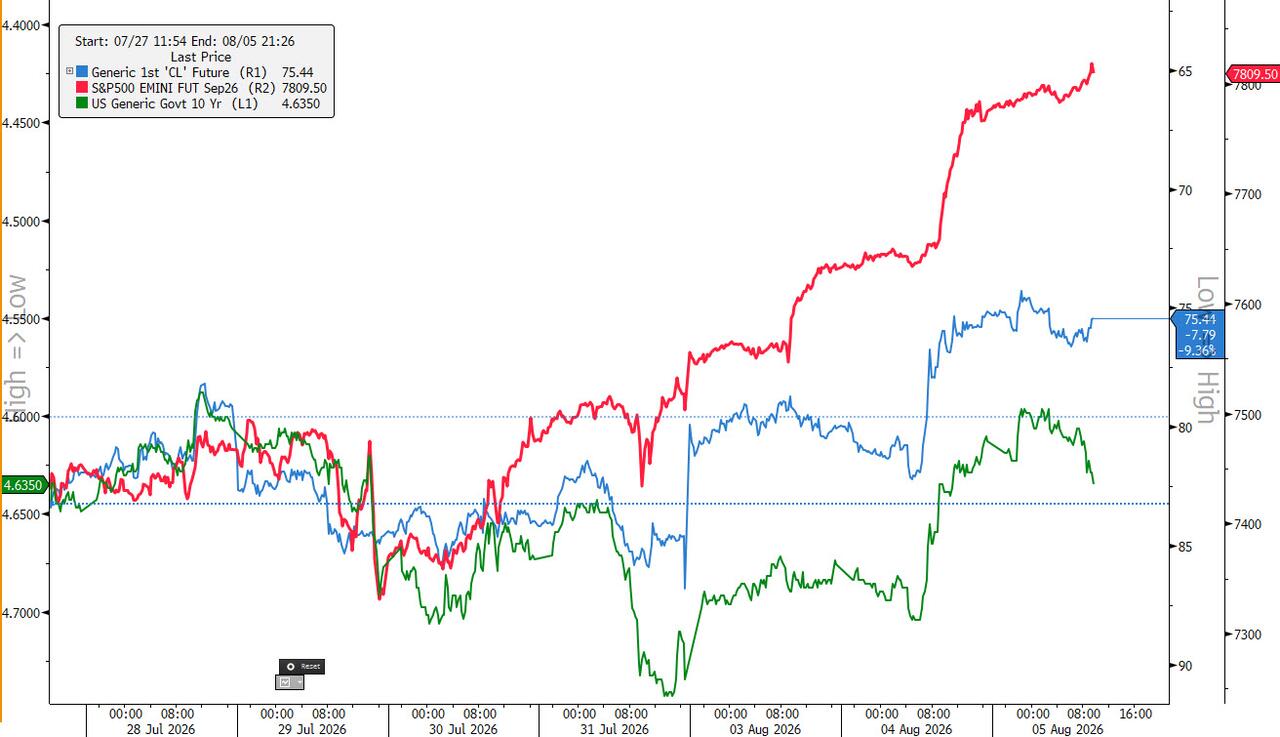
The reported deal could just as well have been written a couple of weeks ago. Axios prints that the deal includes an inbound shipping route through Iranian waters and outbound shipping via the Oman side, while parties work to clear mines from the middle of the strait. No tolls or fees would be charged for the 60-day period covered by this deal. That all looks very similar to the previous deal – that was torpedoed by renewed attacks on ships.
That wasn’t the only “agreement” in recent weeks that proved untenable (or completely non-existent). Will the groundhog see its shadow again today, or will the deal really hold this time?
Even if this deal isn’t immediately sunk by a drone or missile strike, there is a long and risky road ahead. Negotiations are currently clearly focused on preventing new escalation, and the temporary deal does not offer permanent solutions for the key sticking points.
For example, Reuters sources report that disagreement over transit fees after these 60 days persists. But that’s not the surprising part. Regional outlets suggest that the disagreement is over the amount charged. They claim that Iran demands a 7% fee, with exemptions for Chinese and Russian ships, whereas the US proposed 5%.
If this is even remotely true, that would mark a big shift from the US’ original stance that freedom of navigation is incompatible with any fees. Geopolitically, it would mark an even bigger defeat for the US. If the US cannot restore the status of the Strait of Hormuz, then surely Washington cannot expect to extract concessions on Iran’s nuclear programme.
So, President Trump may have to pick between a deal on Iran’s terms or escalating. That, in turn, suggests it could be matter of time before Trump expresses his frustration with the negotiations again, and we may be in for another few weeks of winter.
As we note in our Monthly Outlook yesterday, the danger is not repeatedly reliving the same trading day – in fact, that would make life a lot easier. The danger is that the cycle eventually breaks and the script changes. I would add that it may in part be up to traders whether that happens. As Phil realizes that he is reliving the same day over and over, he changes his behaviour – some days to the point of recklessness.
Notwithstanding the decline in Brent, diesel and petrol prices remain high enough for governments to extend support measures. The Italian government announced an extension of the diesel tax cut through August 25, and Prime Minister Meloni said that the country would consider further financial aid if fuel prices continue to rise.
High electricity prices add to the cost burden. The hot weather drives up demand for electricity while the drought forces Italy to substitute gas generation for hydropower (and various European countries have also temporarily shutdown nuclear power plants due to high cooling water temperatures.)
Accordingly, the Italian government has requested Brussels for leeway for its budget deficit today. EU rules include escape clauses for spending on defence and energy. Rome has indicated that it intends to use the full 0.3% allowance for energy measures and has requested 0.9% leeway for defence spending.
Elsewhere, the White House is reportedly drafting an import ban on Chinese transceivers, which are used to transmit data between servers within datacentres.
Slowing the ascent of Chinese AI and related sectors may be part of the rationale. Chinese manufacturers dominate the market for these fibre-optics transceivers; its AI models are competing with American models; and China’s chip manufacturing is also improving.
On top of supply chain security and protection for the domestic industry, cybersecurity may be another reason for this ban. The news follows a report from the House Committee that Chinese telecommunications companies remain connected to US datacentres, even though the FCC banned these companies from connecting directly to US networks. Experts warn that these components could potentially allow China to exfiltrate data or disrupt services.
Tyler Durden
Wed, 08/05/2026 – 10:15
via ZeroHedge News https://ift.tt/gnJvsAe Tyler Durden