Pittsburgh Thinks the NFL Draft Is Worth $19 Million of Taxpayer Money. Here’s What Past Draft Data Say.


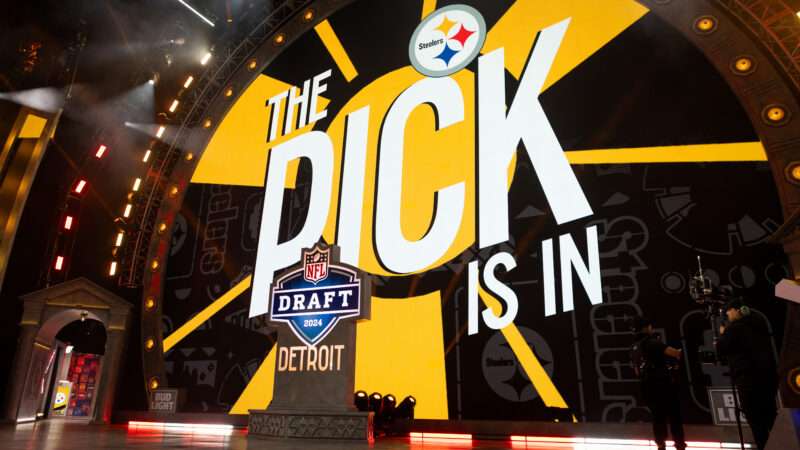
A giant screen with a yellow and black background and the Pittsburgh Steelers logo says "THE PICK IS IN," behind a lectern with a logo that says "NFL DRAFT 2024 DETROIT." | Photo: John Smolek/Icon Sportswire EDG/John Smolek/Icon Sportswire/Newscom

Hello and welcome to another edition of Free Agent! Don’t worry if you end up in a tough spot this week, everything will be alright.

If hosting the NFL draft or getting drafted seems like a great deal to you, I’m sorry to say those two things are not as glorious as they seem. Keep reading to find out why. We’ll close with some thoughts on the shockingly high prices being charged for transit and parking at the World Cup.

Locker Room Links

Pittsburgh’s Draft Debacle

If you believe the NFL and local authorities, hordes of football fans are about to descend on Pittsburgh from all over the country to spend gobs of money watching the NFL draft in person, forever altering the region’s economy for the better. As many as 700,000 fans might attend, they say, with the expected economic impact well within the range of “$120 million to upwards of $213 million.” (Don’t worry, the draft will also result in 500 new trees planted in Allegheny County, plus “400 hanging flower baskets and 420 yellow-and-black planters” installed downtown.) 

If you really think all that is going to happen, then spending a measly $19 million in taxpayer dollars to bring the draft to town seems well worth it. Pennsylvania is spending about $13 million of that, with the rest coming from county and city sources. It is mostly flowing to Pittsburgh’s tourism nonprofit, VisitPittsburgh, which has vaguely said it is spending $16 million on “essential services” (according to great reporting by Mia Hollie of Pittsburgh’s Public Source). The main intent of that spending is on tourist marketing, though.

The problem is that most draft attendees are not traveling from the farthest corners of the country—it’s mostly locals and day-trippers. The total attendance numbers and economic projections are overly rosy too. Once you realize that, the whole facade of the draft as an economic engine worth public subsidies starts to fall.

“The overwhelming majority of visitors are local residents or day-trippers and much of their spending is likely redirected from other local entertainment or dining options rather than being economic gains for the host cities,” economist E. Frank Stephenson from Berry College wrote in a paper last year. “The net gain in room rentals in the 2019-2024 host cities varies greatly from a decrease of nearly 20,000 room nights in Las Vegas to an increase of about 9,000 room nights in Nashville, but in all cases is a small fraction of the claimed number of people attending draft-related events.”

That $19 million in taxpayer spending on the event is just the floor, too. “Pennsylvania State Police said they, too, are coordinating security planning, traffic tactics, risk assessments and interagency exercises, while declining to provide an estimated cost for that work, citing security reasons,” writes Adam Annaccone with the University of Texas at Arlington. “That means the public cost of hosting the draft may be visible only in part.” The cost isn’t just financial, but time: Authorities have spent months training and preparing for the event instead of working on other priorities.

It’s not just law enforcement spending time on the draft, the city is also using in-kind staff time from at least nine city departments, “including, but not limited to: Office of the Mayor; Office of Management and Budget; Innovation and Performance; Finance; Permits, Licenses, and Inspections; Public Safety; Public Works; Parks and Recreation; Mobility and Infrastructure,” according to a 2024 city resolution.

Perhaps worst of all, the city’s public schools are switching to remote learning from Wednesday through Friday because of the draft—even though the draft doesn’t start until late Thursday night.

So overall, Pittsburgh hosting the draft is costing tens of millions of taxpayer dollars (largely spent on marketing), likely won’t meet its overly optimistic attendance and economic impact projections, involves spending a secret amount of money on security, takes up hours and hours of law enforcement and city government staff time, and also keeps kids out of schools for three days.

But hey, at least Pittsburgh is going to get some new trees and flowers out of it.

The Picks Are Screwed

I’m not trying to persuade you to skip watching the draft in person or on TV. If you’re into that, great! Since the Lions are a bit unpredictable with their draft strategy, I usually just wait until I get a phone notification that tells me who we got, and then I’ll read some grade reports afterward.

Either way, draft picks are going to be all smiles when they put on the hat for their new team this weekend. What they might not be thinking about is how much more money they could be earning if it weren’t for the league’s collective bargaining agreement with the players union.

Since 2011, drafted players have basically no negotiating power with their teams. Instead of arguing for their fair market value, they get a preset salary for four years (with a fifth-year option for first-rounders). Because the average career of a drafted player is roughly five or six seasons (though the data here is contested and murky), most NFL players don’t get paid their real market value for most of their career, especially considering the dampening effects of the salary cap. Even with inflation and league growth, the first overall draft pick in 2026 still won’t have a rookie contract as valuable as the first overall draft picks in 2009 and 2010 (partially because those picks, Matt Stafford and Sam Bradford, negotiated for longer deals).

It’s an odd quirk of the law that this arrangement—preset salaries and employers assigned by draft—is only legal because it’s been agreed on between the players union and NFL owners. “The system works out well for the league’s owners, who get to keep a below-market ceiling on a large portion of their player contracts,” as I wrote last year. “It works well for veteran players, who get to soak up a bigger portion of the salary-capped pie. It doesn’t work out for young draft picks—and it’s a surprise more of them don’t speak out about it.”

The Real Journey Is the Fares Paid Along the Way

As the World Cup gets closer, there was lots of discussion last week about some eye-popping public transit news: New Jersey is charging fans $150 for a round-trip regional train ticket to MetLife Stadium (far more than the usual $12.90).

Fortunately, C.C. Sabathia is here to help: He says you can park at his house for $75.

Similarly to New Jersey, Boston is charging $95 for a round-trip bus ticket or $80 for the train. Parking isn’t an easy alternative either: To park near MetLife it’ll cost you $225, and in Boston it’s at least $175. Both stadiums are largely sealed off from other access points because they’re surrounded by parking lots in the suburbs—it’s not like you can just park in a nearby garage with a competitive price and walk a little bit further. Even Uber and Lyft aren’t allowed within a mile of MetLife.

The economics at play here are interesting. Most fans have already paid hundreds of dollars, possibly thousands, for their match tickets—even more than the average price of an NFL game at these stadiums. They might grumble about adding an unexpectedly high transit cost to their expenses, but having already paid so much for tickets, they’ll almost certainly suck it up and pay.

What’s also interesting is the tightly controlled access to Gillette and MetLife stadiums. A bus service can’t just undercut the expensive options with a budget-friendly $20 fare—it would need approval from FIFA’s local organizers, the stadium operators, and the local governments if it wants access to stadiums past otherwise closed roads.

Basically, there’s high demand for transit to stadiums, and governments (with some help from FIFA) are artificially limiting competitive options that would bring prices down.

Ideally fans would have multiple private sector options competing on price and quality to choose from. But because FIFA promised huge economic benefits that are unlikely to pan out, some governments are starting to look for ways to make up the money they’re going to lose spending on security and other costs.

Fortunately, some cities have figured out ways to get private sector help: Fans leaving World Cup matches in Philadelphia can ride the subway for free, thanks to a sponsorship by Airbnb.

Replay of the Week

I’ve also never seen an indented center field wall like this.

That’s all for this week. Enjoy watching the real game of the week, the Sun Belt Women’s Golf Championship.

The post Pittsburgh Thinks the NFL Draft Is Worth $19 Million of Taxpayer Money. Here's What Past Draft Data Say. appeared first on Reason.com.

from Latest – Reason.com https://ift.tt/LHvqhzj
via IFTTT

Wheat Spread Blows Out As Drought Chaos Plagues America’s Breadbasket

Wheat Spread Blows Out As Drought Chaos Plagues America’s Breadbasket

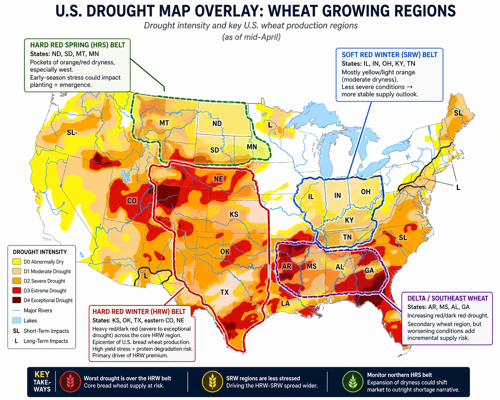
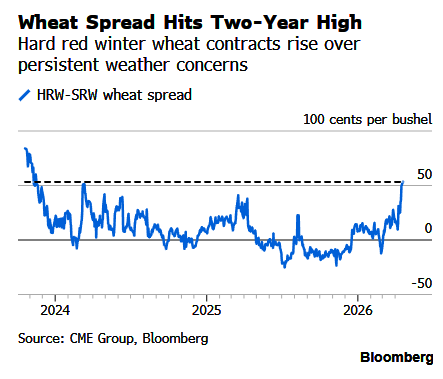
Hard red winter wheat (HRW) futures widened to their largest premium over soft red wheat (SRW) in more than two years as severe drought intensified across key breadbasket regions in the Great Plains and Midwest. This means traders are pricing in weather impacts and tightening expectations for higher-protein wheat supplies.

It is important to note that HRW is a more valuable protein and is primarily used in bread, rolls, and all-purpose flour. It is grown in the U.S. Plains (Kansas, Oklahoma, Texas), while SRW is used in cakes, cookies, crackers, and pastries, and is grown in the Eastern U.S. (Ohio Valley, Midwest, Southeast).

The blowout in the HRW-SRW spread, the biggest premium in two years, is mainly due to weather stress as drought grips the central U.S. The market is currently pricing in possible supply imbalances and quality concerns for HRW.

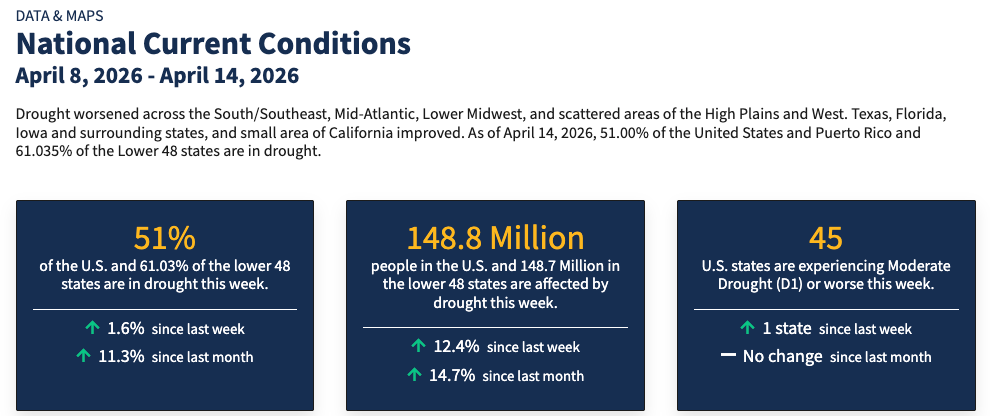
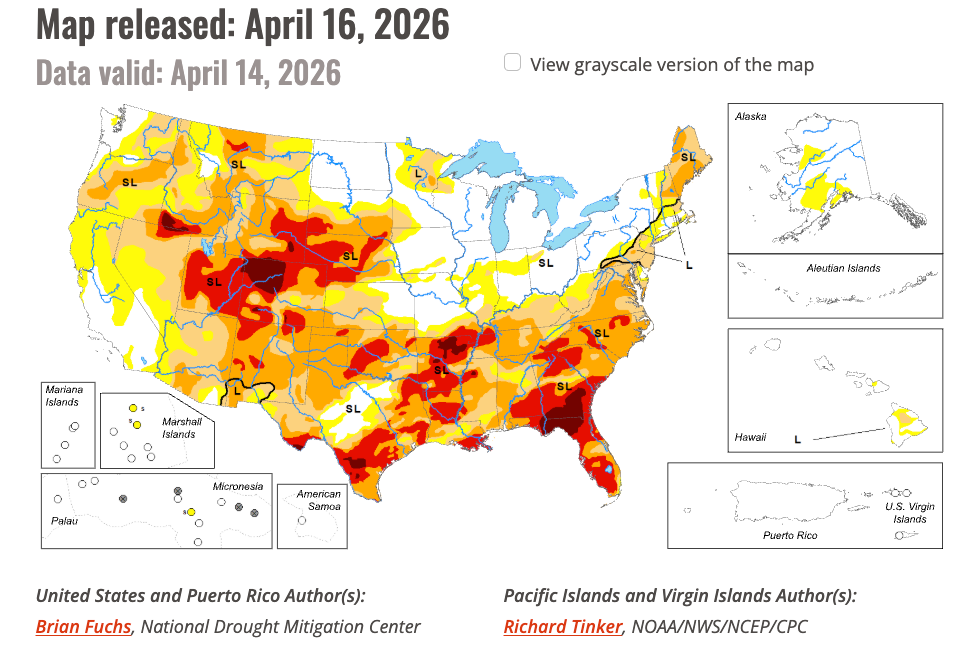
As of mid-April, 61% of the Lower 48 is in drought as the Northern Hemisphere growing season begins and farmers start plantings, according to NOAA. This equates to nearly 149 million people across the Lower 48 affected by drought. About 45 states were experiencing moderate drought conditions as of last week.

US Drought Map:

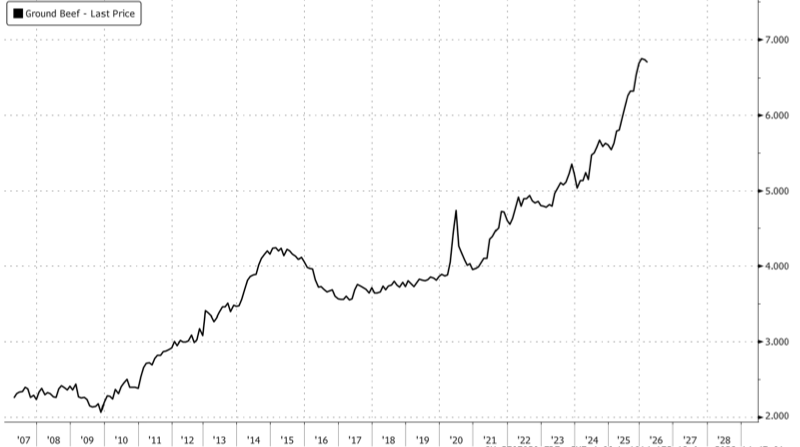
The drought also complicates matters for ranchers, as the nation’s cattle herd is already at its lowest level since the 1950s. As a result, some ranchers may further reduce their herds, which would only push USDA ground beef prices to new record highs.

Related:

The drought spreading across America’s breadbasket is colliding with a secondary effect sparked by the disruption of energy flows through the Strait of Hormuz, raising the risk of fertilizer shortages that could translate into lower crop yields later this year. Reuters has reported that the UN’s food agency warned a prolonged Hormuz crisis could destabilize fertilizer shipments and drive food inflation higher. Time to hedge with a backyard garden.

Tyler Durden
Tue, 04/21/2026 – 10:40

via ZeroHedge News https://ift.tt/KoltX7h Tyler Durden

The High Man In The Castle

The High Man In The Castle

By Michael Every of Rabobank

The world is again waiting to see what comes out of US-Iran peace talks in Pakistan as the two-week ceasefire deadline looms. Again, it’s a binary outcome: war, with threatened strikes on bridges and power plants in Iran, then perhaps regionally, and an extended closure of Hormuz; or peace, and energy and key goods flowing again.

The markets have decided peace will be the outcome. Because markets. Yes, there are times when bad news logically justifies a rally, e.g., in a real threat of nuclear war, go long: it may not happen, and it can’t hurt if it did. However, when the threat is painful and potentially long-lasting, but not existential, does that logic hold? If so, why bother with geopolitical analysis (and many market participants don’t)? Everything works out in the end, you can’t afford to be the only fund manager who misses the inevitable rally, so just ‘buy all the things.’

Philip K. Dick’s ‘The Man in the High Castle’ is set in a 1962 where the Axis won WW2 and an occupied-US underground shares that on another plane of existence, things worked out differently. They are led by the ancient Chinese Book of Changes, the ‘I Ching’; today, markets view all existence as led by ‘I kerching!’ Yet both views can be flawed. The ‘reality’ where the Axis lost WW2 is also not our world – rather, the British Empire under Churchill is gaining the upper hand in a global struggle with the US. Nobody knows what happens next with Iran.

Is Mr Market ‘The High Man in the Castle’ in thinking everything always works out for him? Is whomever the actual Iranian decision maker the same if thinking the US won’t pull the trigger again if there is no deal, and that Iran wins from that pummeling? Is President Trump if supposing the Iranians are rational rather than theological? We may not have long to find out.

For those who pay attention to geopolitics, there are some potentially optimistic signs. In the Middle East, China’s Xi held talks with Saudi’s MBS and made clear Hormuz needs to reopen. At the same time, Pakistan was told not to send a $1.5bn order of weapons to Sudan, which the Saudis were paying for, and a $4bn deal for the Libyan National Army is also on hold. Likewise, another round of Israel-Lebanon talks are set for Thursday to try to extend their ceasefire, which Iran links to its own, as Syria is cracking down on Hezbollah. Even the European envoy to the Gaza Board of Peace is publicly optimistic about Hamas disarmament talks.

In Europe, Ukraine may be seeing a ‘Second Miracle Year’ and “For the first time in years, outright victory seems possible” via its drone strikes. That’s as the EU hopes to realise its €90bn Ukraine loan within 48 hours following the new government in Budapest. However, the new pro-Russian Bulgarian PM may see things differently alongside the Czech and Slovak leaders, while Romania’s government looks about to fall.

Moreover, the EU is bracing for delays to promised US weapons shipments due to the Iran war, as The Times says the UK isn’t seizing Russian shadow fleet tankers in its waters because berthing and maintaining them could cost too much(!) Meanwhile, France and Germany are said to be considering proposals to give Ukraine only “symbolic” benefits during a normal EU accession process, without granting Kyiv access to the EU’s common budget or voting rights. In the same way there may be only symbolic weaponry if the US isn’t able to step up? That’s as the Wall Street Journal notes, ‘In Germany, Everyone Is a Defence Manufacturer Now’ as firms “scramble to reinvent themselves as military vendors to tap into the country’s accelerated rearmament.”

There are also further US-Europe tensions. The US just signed a military defense agreement with Morocco, which some suspect may soon host US military bases now located in Spain, which has been a loud anti-US voice under its current PM; that might suggest the US ability to threaten the Strait of Gibraltar in line with its other recent agreement with Indonesia vis-à-vis the Strait of Malacca. The White House is reportedly also looking at a report that backs Spain having to hand back Ceuta and Melilla, territories it holds in Morocco. German Chancellor Merz has also stated that Cuba poses no risk to third countries, and he does not see on what basis an intervention should take place – which will infuriate the Americans and do nothing to stop them if they intend to act on that front. (Which seems likely.)

There are tensions in the Americas with Canada too, whose PM just stated that close economic ties with US are “a weakness that must be corrected.” He is also talking about boosting his armed forces – though the scale of the imbalance there should be clear when a headline today boasts, “Canadian military beats recruitment target after 1,400 permanent residents sign up.”

By contrast, as Trump pushes a $1.5trn Pentagon budget, he just invoked the Cold War Defence Production Act to force the private sector to move on coal supply chains, domestic petroleum production, natural gas transmission and LNG capacity, and power grid infrastructure. None of that is a quick fix in this crisis, but it is a fix the market won’t provide by itself.

There are additional tensions in Asia as China sends warships to the Pacific while Japanese forces take part in exercises with the US and Philippines. Meanwhile, the crisis in Hormuz has seen Thailand’s government to push ahead with its Landbridge project to connect the Andaman Sea to the Gulf of Thailand via new ports on each side connected by a railway and highway, in order to circumvent the Strait of Malacca. The project is seen as making little economic sense by the logistics industry, but that doesn’t mean it might not make geopolitical sense to some players – and then draw the attention of others.

On the trade front, China has released new regulations to counter the “unjustified” extraterritorial use of foreign laws, aimed at protecting its interests. This is seen as clashing with the EU’s proposed regulations in this area, placing European firms in China in potential conflict with either one or the other. The European Chamber of Commerce in China has raised concern that the “broad scope, vague language and wide discretion” of the new Chinese rules goes far beyond similar statutes in the West.

Yet if you are all about Mr Market then none of the above matters; all that does is today’s Senate confirmation hearing for FOMC Chair nominee Kevin Warsh. Then again, once upon a time, these were dry affairs for dry men and women, but not in our present reality. Even the Financial Times is carrying an op-ed arguing that the Fed needs to reinvent itself and its mission; but they are thinking more along the lines of ‘how much dot plot’ rather than ‘how do you finance a $1.5 trillion Pentagon budget?’, ‘How do you force dollar stablecoins on the world to boost fiscal space?’, and ‘What are central banks *for*?’

More narrowly, Warsh’s finances, which he has lots of, are seen as a potential line of attack for those opposed to his appointment: it’s not so much that he’s very rich, which is the assumed norm for Fed Chairs, but that some of those holdings might be opaque. Because we couldn’t have any vested interests represented in Washington D.C., obviously. That would be unthinkable.

Ask yourself what the version of you would have thought of these headlines in April 2016. Then ask yourself what you think they will read like in April 2036. Only then decide what to do.

“Can anyone alter fate? All of us combined… or one great figure… or someone strategically placed, who happens to be in the right spot. Chance. Accident. And our lives, our world, hanging on it.” – The Man in the High Castle.

Tyler Durden
Tue, 04/21/2026 – 10:20

via ZeroHedge News https://ift.tt/1BSnTXF Tyler Durden

US Pending Home Sales Rebound Off Record Lows, Despite Rising Mortgage Rates

US Pending Home Sales Rebound Off Record Lows, Despite Rising Mortgage Rates

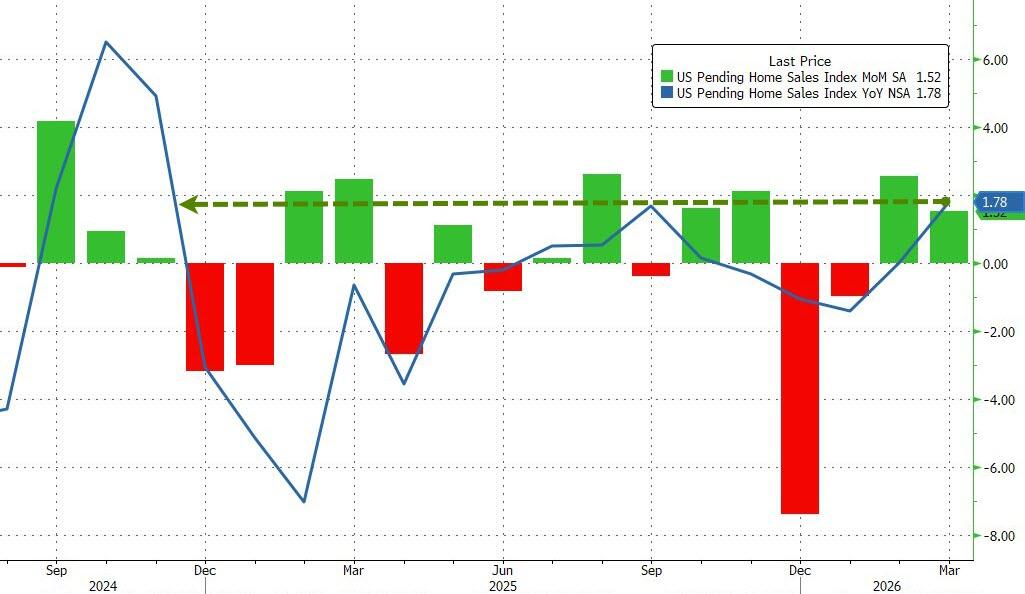
After rising in February, US Pending Home Sales were expected to continue to improve in March (+0.5% MoM) but – despite apparently rising mortgage rates – sales rose 1.5% MoM (even with February revised up to +2.5% MoM). This dragged pending home sales up to +1.8% YoY (to the highest level since Nov 2024)…

Source: Bloomberg

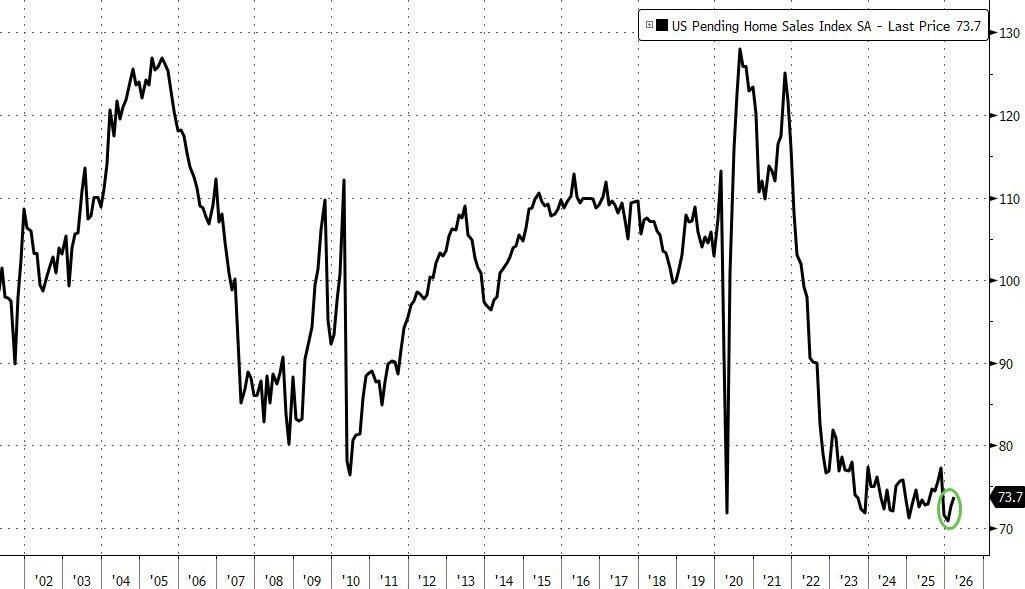
…extending its bounce off record lows…

Source: Bloomberg

“Contract signings rose in March despite higher mortgage rates, pointing to pent-up housing demand,” NAR Chief Economist Lawrence Yun said in a statement.

“A greater supply of inventory will help translate that demand into more home sales.”

Pending home sales in the South, the biggest home-selling region in the country, increased 3.9% in March.

They rose 4.4% in the Northeast but decreased in the Midwest and West.

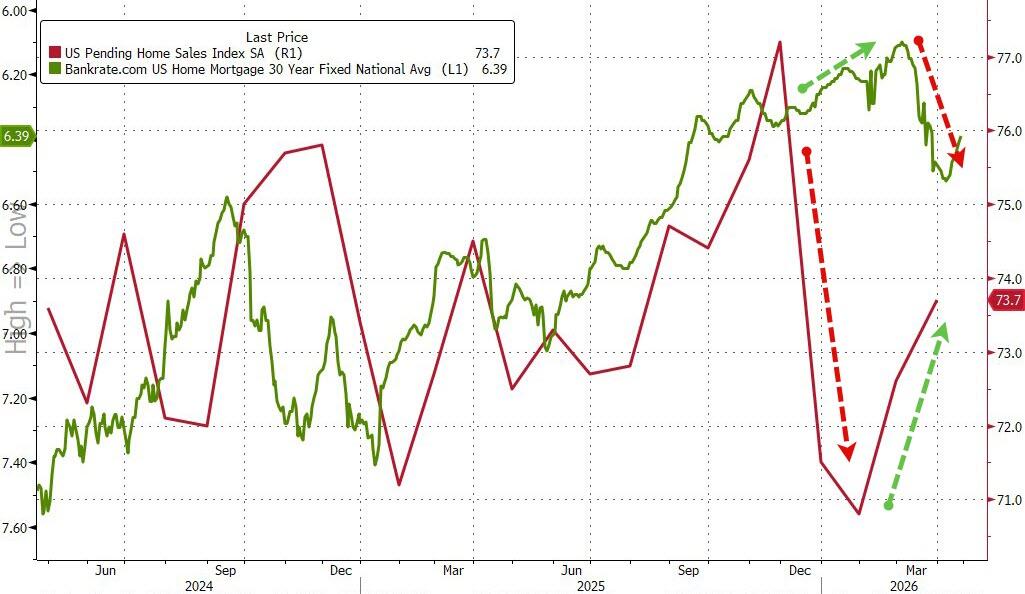
While mortgage rates did pick up at the start of March (Iran War), pending home sales have been disconnected from improving ‘affordability’ in recent months…

Source: Bloomberg

As a reminder, because houses typically go under contract a month or two before they’re sold, the pending home sales data tend to be a leading indicator of closings that are captured in the monthly previously owned home sales reports.

Tyler Durden
Tue, 04/21/2026 – 10:08

via ZeroHedge News https://ift.tt/NOkcyub Tyler Durden

The COVID Reckoning Doesn’t Go Far Enough


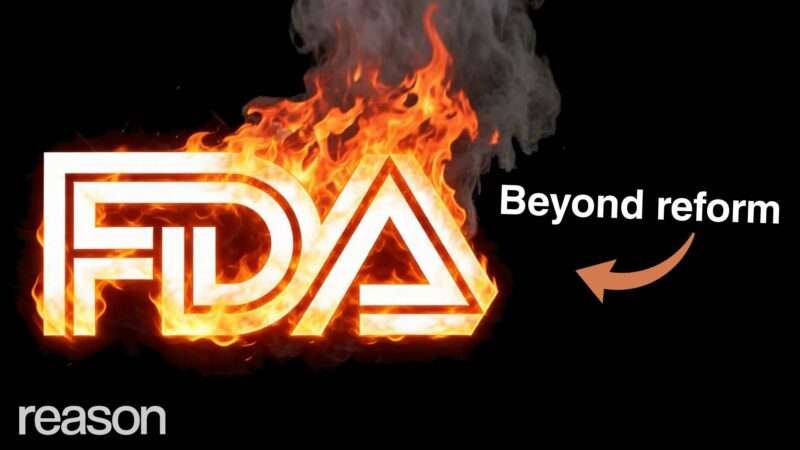
FDA logo on fire | Illustration: Lex Villena

The public health establishment lost America’s trust during the COVID-19 pandemic with its bureaucratic incompetence, “noble lies,” and authoritarian mandates. 

It was about time. Agencies like the National Institutes of Health (NIH) and the Centers for Disease Control and Prevention (CDC) have been failing the American public for decades. But the agency with the worst track record is the Food and Drug Administration (FDA), which, long before COVID, caused Americans to lose hundreds of thousands of life years by slowing down drug development. After COVID, the American public had finally started to catch on.

President Donald Trump put a new team in charge of the federal health apparatus, some of them truth-telling contrarians who risked their careers to expose the sins of the old guard. But it’s also a messy picture because the man in charge of Health and Human Services has controversial theories about the dangers of vaccination with little factual basis.

So where does that leave things? Is the public health apparatus finally being upended? Or are the inmates running the asylum?

Nobody, no matter their integrity or political persuasion, should have the power to decide what you or I put in our bodies. The only way to fix America’s regulatory health care apparatus is to dismantle it. A new guard has replaced the old. The COVID reckoning is here. But it hasn’t gone far enough.

The FDA Power Play

The story of an overreaching public health state doesn’t begin with Robert F. Kennedy Jr. or Dr. Anthony Fauci. It begins with a law passed in 1962.

The FDA didn’t always throw up as much red tape as it does today. In its early days, its only job was to sign off on safety. Drug makers would submit safety evidence, and if the agency didn’t object within 60 days, the drug could go to market and be sold right over the counter. Back then, it was the drug company that decided whether to require a doctor’s prescription or not based on liability concerns.

This voluntary arrangement between drug manufacturers, patients, and doctors worked fairly well, says Jeffrey Singer, a practicing surgeon and senior fellow in the Department of Health Policy Studies at the Cato Institute. 

“If [the drug manufacturer] thought that their drug was a little too risky and some people could have problems and they’ll get sued, they would say to the pharmacist, we only want our product to be sold to people who have a prescription,” he says.

It was a system based on informed consent and voluntary exchange.

But federal control over pharmaceuticals started expanding in 1951, when Congress passed the Durham-Humphrey Amendment, which limited which drugs could be sold over the counter and empowered the FDA to enforce the rule.

That was just the beginning. About a decade later, a sedative called thalidomide was on the market in Europe to help pregnant women alleviate their nausea. The drug turned out to cause severe birth defects. Many fetuses died in utero or shortly after birth.

FDA medical officer Frances Kelsey had blocked thalidomide’s approval in the U.S., earning her the President’s Award for Distinguished Federal Civilian Service.

Congress reacted by passing a new law that vastly increased the FDA’s power. The Kefauver-Harris Amendments empowered the agency to hold drugs off the market until it deemed them not only safe but also effective.

Why did thalidomide lead to this vast expansion of FDA power? After all, thalidomide was quite effective, just not at all safe for pregnant mothers. The FDA already had the power to regulate drugs on safety grounds. What happened is that the thalidomide episode created a new political reality, with federal health regulators like Kelsey cast as benevolent guardians of our health and well-being.

The Kefauver Amendment, which had been languishing in Congress, suddenly had broad support. Scientists would have to use randomized controlled trials to ensure that pharmaceuticals do what they say they do.

That all sounds reasonable. But, in practice, the law had some catastrophic unintended consequences.

Roadblocks to Medical Progress

In the 1960s, healthcare was primitive by today’s standards, but as drug innovation accelerated, the FDA became a major bottleneck in the development process, with regulatory compliance adding billions to the cost of bringing new drugs to market.

One researcher coined the phrase “Eroom’s Law” to describe the dramatically falling return on investment for pharma research over time—a backwards spelling of Moore’s Law that describes the exponentially improving efficiency of computing power.

The time it takes to move a drug from discovery to sale increased from eight years in 1960 to between 12 and 15 years by 2010. Research and development costs exploded from about $100 million per drug in 1975 to $1.3 billion by 2005. Pharmaceutical innovation stagnated.

The political incentive problem the FDA faces is that the public is outraged when a harmful drug slips through but tends not to notice when a life-saving drug is blocked.

The economist Milton Friedman described this phenomenon in a 1999 interview with the Hoover Institution. “The pressure on the FDA is always to be late in approving,” Friedman said, “and there is enormous evidence that they have caused more deaths by their late approvals than they have saved by their early approvals.”

FDA regulation is a classic case of the “seen and the unseen,” as the French economist Frédéric Bastiat put it. But just because something’s invisible doesn’t mean it isn’t tragic.

Cancer researchers calculated that a five-year delay in approving a lung cancer drug with a modest one-percent cure rate would cost 282,000 life-years, while stricter trial regulations would save only 16. University of Chicago economists found that when the FDA did speed up approvals in the early ’90s, faster access saved between 180,000 and 310,000 life-years, compared to 56,000 life-years lost to drugs eventually withdrawn for safety reasons.

But in some cases, the public did catch on.

In the 1980s, AIDS patients revolted against the agency for being slow to approve various drugs, including thalidomide, the drug that caused profound birth defects in the late 1950s. It turns out the drug is also an effective anti-inflammatory that’s safe to take if you’re not pregnant. But the FDA had never approved it for use by anyone.

Most of the FDA’s destructive policies don’t inspire much of a backlash, but its policies continue to impede access to chemicals beneficial to our health. In the early 1990s, the FDA prohibited food manufacturers from touting folic acid as a useful supplement to prevent birth defects despite robust scientific literature in its favor. The FDA eventually became so convinced of its beneficial effects that it mandated that it be included as a supplement in bread, once again flexing its monopoly power to ensure that what isn’t prohibited becomes mandatory.

“FDA is a monopoly,” says Singer. “And because it’s a monopoly, there’s no room for any debate or any competing ideas.”

If you were reading Reason magazine in the 1970s, ’80s, and ’90s, you might have been aware of the unintended consequences of FDA regulation. But it wasn’t until the pandemic that the general public started to wake up to the problem.

COVID and the Old Guard of Public Health

During COVID, public health agencies from the CDC down to county health commissioners gained unprecedented power to determine what types of gatherings were permitted, what sort of business could stay open, and whether or not you had to be vaccinated to hold a job. It enforced a six-foot social distance rule that turned out to be based on…nothing.

The FDA was part of the same fiasco. Early in the pandemic, COVID test kits manufactured by the CDC turned out to be flawed and needed to be recalled. Private labs began producing their own test kits, but the FDA blocked their use, and only 40 labs nationwide had approved tests two months into the pandemic. It took almost a year to authorize at-home test kits.

The FDA was supposed to be run by scientists strictly following the evidence, insulated from the hurry and strife of politics. That turned out not to be true.

Dr. Vinay Prasad, who was part of the new guard brought in to oversee vaccine approvals at the FDA as director of the Center for Biologics Evaluation and Research, believes that before he worked at the agency, the FDA colluded with Pfizer to slow-roll the initial approval of the first COVID vaccine in order to to prevent Trump from taking credit for it before the November 2020 election.

“If somebody wants to say, ‘When was the first moment that politics played a role in this [vaccine approval] process?’ I think it was the initial release date,” said Prasad during a July 2025 FDA press conference.

Pfizer had been on track to have the data from a 40,000-person trial by mid-October, but changed the study’s endpoint at the last minute. Prasad says there was no scientific or medical basis for the change. 

“Why was the initial statistical analysis plan changed?” he asks. “Was it changed for scientific reason, a medical reason, a statistical reason? As somebody who’s been a professor of epidemiology and in medicine for 20 years, I cannot see any scientific or medical basis to change the physical plan.”

Delaying the vaccine, Prasad says, led to unnecessary deaths from COVID. “That winter was a very terrible winter,” he says, “and had the vaccine been available five weeks sooner…I think a lot of people’s lives would have been saved. So we may be talking about tens of thousands of lives. So to me, this is the original sin…this moment in time.”

That’s not the only example of politics likely shaping FDA decision making. Seven months into his term, then-President Joe Biden announced that the FDA would be approving COVID boosters—before the FDA even had a chance to review the safety data. 

“President Biden got up to the microphone and said, as of September, one month hence, we are going to offer a third dose of SARS-CoV-2 vaccine,” says Dr. Paul Offit. “Based on what data?”

Offit was a member of the FDA’s vaccine advisory committee at the time and voted against the Biden administration’s booster timeline. There was already evidence that with the COVID vaccine, there was a risk of myocarditis, which is inflammation of the heart. Two senior FDA officials resigned following Biden’s announcement, with one of them, Philip Krause, later telling Congress that the political pressure to clear the way for mandates was overbearing. 

“There was some significant circumstantial evidence that a desire to implement mandates likely had something to do with the speeding up of the review timeline,” Krause testified to Congress in 2024. “Even the perception of political influence can undermine trust in the agency, especially during a pandemic…The system is set up to permit hierarchy to overrule science.”

What if the FDA had run safety tests but had zero involvement in vaccine approval? 

Some Americans might have chosen to accept the risk of getting the COVID vaccine early on in the pandemic, before it had been tested. Others might choose to wait years for better data on its effects to surface. We should be allowed to make our own medical decisions based on our risk tolerance, vulnerabilities, and individual health profiles.

Instead, the federal government prevented many of us from trying the vaccine, and then it attempted to coerce many of us into getting it.

The Biden administration mandated that all 84 million Americans working at companies regulated by the Occupational Safety and Health Administration (OSHA) be vaccinated. The Supreme Court eventually struck down that mandate, but only after many people had already gotten vaccinated out of fear they’d lose their jobs.

Americans were catching on. If thalidomide had made federal regulators seem like trustworthy guardians of our bodily health, COVID did the opposite. It showed their fallibility, intellectual corruption, and incompetence.

“We kind of lost the trust of the American public,” says Offit. “They didn’t trust us anymore. And hence, now we have RFK Jr.”

Public Health’s New Guard

Offit is right. But the new guard is also composed of some highly qualified scientists who bravely spoke out against the public health establishment during the pandemic.

Under Trump, Jay Bhattacharya, a critic of lockdowns and the NIH, became the new director of the NIH. Marty Makary, a longtime critic of the FDA for slowing down drug development, became head of the agency. And yet both men report to RFK Jr., who, rather than depoliticize FDA decision making, injected a different politics—his own.

Four months after becoming health secretary, Kennedy fired all 17 members of the committee that makes vaccine recommendations to the CDC, replacing them with researchers who share his skepticism. 

“No one in your job has ever fired every committee member all at once,” Sen. Michael Bennet (D–Colo.) told Kennedy at a Senate hearing. “You told the American people that you were going to bring great people onto the ACIP [Advisory Committee on Immunization Practices] panel, not anti-vaxxers.”

Among the “anti-vaxxers” whom Bennet was accusing Kennedy of appointing was Robert Malone, whom Bennet says “claimed that the commonly used mRNA vaccine causes a form of AIDS and can damage children’s brains, their heart, their immune system, and their ability to have children in the future.”

Kennedy also directed the CDC to change its “Vaccines and Autism” page, which previously declared studies found “no link” between vaccines and autism, to say that the claim “vaccines do not cause autism” is not evidence-based. 

“Technically, you can never prove something didn’t happen,” says Offit, a critic of Kennedy’s rhetoric about vaccines. “But there are 24 separate studies in three continents in seven different countries showing that there’s no association between getting MMR vaccine and having autism.”

Kennedy once told podcaster Lex Fridman that he didn’t trust a single vaccine. When Fridman asked him to name any vaccines he thought were good, Kennedy replied, “I think some of the live virus vaccines are probably averting more problems than they’re causing. There’s no vaccine that is safe and effective.”

The consequences of Americans’ increasing vaccine skepticism have been measurable. The U.S. saw more annual measles cases in 2025 than at any point since 1991—including almost 1,000 cases in South Carolina and 800 in Texas, where two children died.

Though Kennedy has since made public statements encouraging families to get the measles vaccine, he told Reason in 2023 that childhood diseases like measles were “self-limiting and harmless to almost all children” and that vaccines against them prevent kids from building “your immune response against all kinds of really bad disease.” 

When the American Academy of Pediatrics stepped in to offer its own vaccine guidance, RFK threatened doctors who went against the CDC’s new childhood vaccine recommendations with legal liability.

Kennedy railed against top-down government control of medicine when the other team was in power. Now he’s using it to impose his own preferences on other people.

On the upside, the new guard has deregulated health care to some degree. At the FDA, Makary has vowed to question old assumptions, especially on approval timelines. 

“Why does it take 10 to 12 years for a new drug to come to market?” he asked on an episode of the All-In Podcast. “We’ve become so lukewarm and passive accepting that horrible timeline that it’s just become the status quo. We’ve got to challenge these deeply held assumptions.”

He’s also signaled a shift toward Bayesian methods for evaluating drug effectiveness, in which the FDA acknowledges the limits of its own knowledge and acts more like a sports bettor, synthesizing information from many sources to wager on the likelihood that a treatment works for specific patients.

The FDA not only slows down drug development, but many of the studies that do lead to drug approvals are poorly designed or inconclusive. Before coming to the agency, Prasad was one of the most trenchant critics of the FDA’s approval process, and he sought to raise its standards before resigning in March.

Statistician Aaron Brown agrees with Prasad that many studies leading to FDA approval are poor or inconclusive. But Brown says even better clinical trials won’t tell us conclusively how a new drug will perform in the wild. The best approach is Bayesian—let doctors and patients try new drugs, and then we can gradually learn from their effects. 

“Frequentists look for decisions,” Brown explains. “Approve the drug, don’t approve the drug. Make everybody get the vaccine. Let nobody take the vaccine. Bayesians want to hand you a list of odds and say, ‘OK, if you take this pill, there’s a 10 percent chance you’ll get cured, a two percent chance it’ll kill you.’ The recent FDA action is primarily directed at Bayesian practice. They wanna bring more Bayesian tools into what is basically a frequentist FDA.” 

The Bayesian approach also takes into account the heterogeneity of human physiology. A drug that fails in a broad clinical trial, or that brings outsized risk for one class of patients, might be transformative—or at least worth trying—for another subset of the population.

Brown wonders whether a more Bayesian FDA might have avoided the pitfalls of the one-size-fits-all approach of COVID-era vaccine trials and recommendations.

“If the FDA were entirely Bayesian,” he says, “They’d say, ‘OK who needs this [COVID vaccine] the most?’ Old people with risk factors who have high exposure to COVID—they need it the most…it can have a lot of bad effects and it’s still a good deal for them. So we give it to a bunch of them and we watch them very carefully…We’re seeing, how do they feel? When did they take the vaccine? When did they get COVID if they got it? What symptoms did they have? And we do trial and error…We’d never make it mandatory. We just slowly move to [encouraging vaccination], and we let people make their own decision based on their own circumstances.”

If Makary makes the drug approval process less stringent, that would be progress, but who knows if the next administration will undo these reforms? He wouldn’t be the first FDA director to try and fail at slashing red tape.

That’s why the better outcome would be for the FDA close up shop and disappear.

Real Medical Freedom

Singer, author of the recent book Your Body, Your Health Care, says that before the government broadened its power, private organizations helped patients determine whether or not treatments were effective.

“The American Medical Association [AMA] had created its Council on Pharmacy and Chemistry,” he says. “Any pharmaceutical manufacturer that wanted to advertise in medical journals had to submit its product for testing by the AMA.”

Pharmaceutical companies still monitor safety and effectiveness today. 

“Kaiser Permanente—a vertically integrated, prepaid health care system—they have a vested interest in knowing whether certain medications cause complications,” Singer says, “because since you pay upfront for care, it’s going to cost them money if a drug is not safe.”

That’s why Kaiser Permanente partnered with the FDA to uncover the heart problems caused by the anti-inflammatory drug Vioxx, often prescribed to treat arthritis. The results led the manufacturer to pull it from the market, even though the FDA never mandated that they do so.

“[The manufacturers] were concerned about their liability,” says Singer. “So these things have a way of taking care of themselves without the FDA.”

The problem isn’t who’s in charge; it’s that anybody is in charge at all. Health care decisions are best left to patients and their doctors.

But the health care system is so complex and interdependent that the entire system needs to be unravelled. 

Ending the Medical Monopoly 

The FDA’s power derives, in part, from the fact that insurance companies, Medicare, and Medicaid are often compelled to cover the drugs that they approve. If a new treatment is highly experimental and unproven, patients should have the right to give it a try. But insurance companies and the government shouldn’t be required to foot the bill.

Brown says the FDA would do a lot less harm if it filled a purely advisory role, stripped of its power to keep drugs off the market.

“I would love the FDA to decide it was only an informational agency,” he says. “You have to change the goal of the FDA. The goal of FDA is no longer telling people what to do. It’s no longer saying these things are forbidden, these things are required.”

In this scenario, if you want to take drugs that have FDA approval, go right ahead. If you want to try drugs that don’t have FDA approval, have at it. It’s more likely you’d have to pay for them out of pocket, but nobody should have the right to stop you.

“The problem you have when you have a government monopoly,” says Singer, “is even if you have the best intended, smartest people whose hearts are in the right place, it shouldn’t be up to one regulator to decide what we adults are willing to take risks for—everyone has their own risk-benefit assessment.”

Meanwhile, medicine is becoming increasingly individualized, tailored to our unique bodily makeup, which makes the one-size-fits-all approach of FDA approval or denial even more outdated. That’s also nothing new—just look at how thalidomide both caused horrifying birth defects when taken by pregnant women and helped AIDS patients ameliorate their symptoms. Different bodies need different drugs.

We’re also seeing the melding of biology and computation, and the growing use of AI in medical research, which could produce a cascade of new health care breakthroughs. The danger of a sclerotic bureaucracy delaying a life-saving technology is more acute than ever before. 

“[With] cell and gene therapies and telemedicine and artificial intelligence, lighter touch regulation, more Bayesian approaches to things—we are going to see dramatic advances in healthcare and falling costs,” says Brown.

We can look forward to a much healthier future. But to achieve it, the COVID reckoning has to be about more than replacing one team with another. It must be about clearing the field and allowing us to reclaim full control over what we put in our own bodies.

The post The COVID Reckoning Doesn't Go Far Enough appeared first on Reason.com.

from Latest – Reason.com https://ift.tt/njhLs8x
via IFTTT
Texas Electricity Demand Could Quadruple Due To Soaring Data Center Demand: ERCOT

Texas Electricity Demand Could Quadruple Due To Soaring Data Center Demand: ERCOT

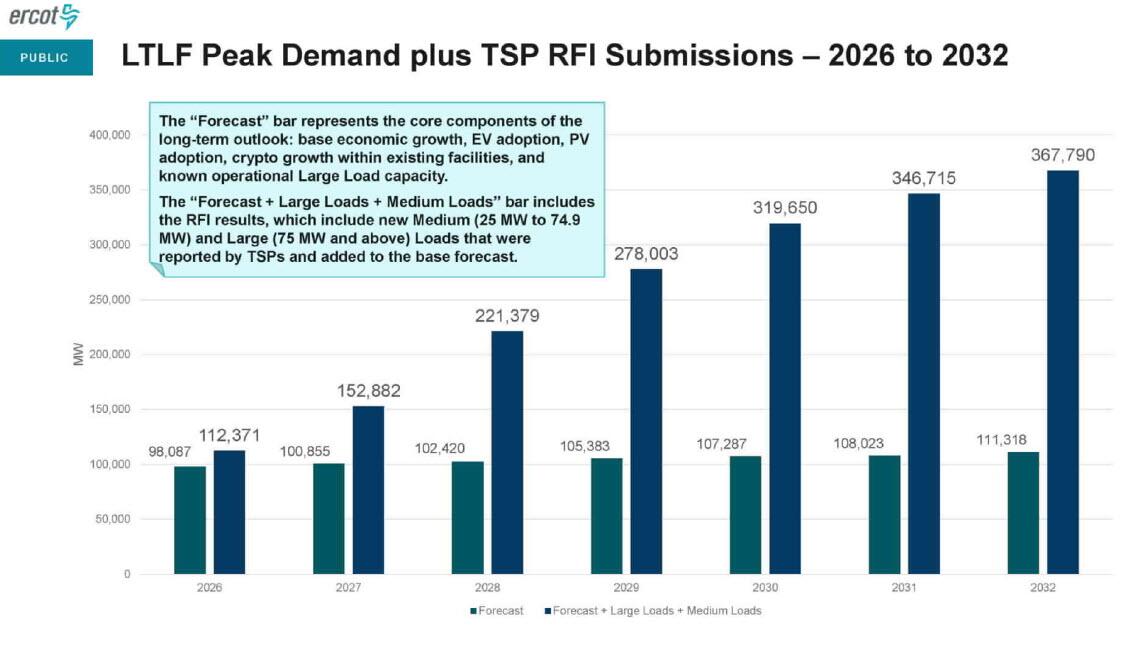
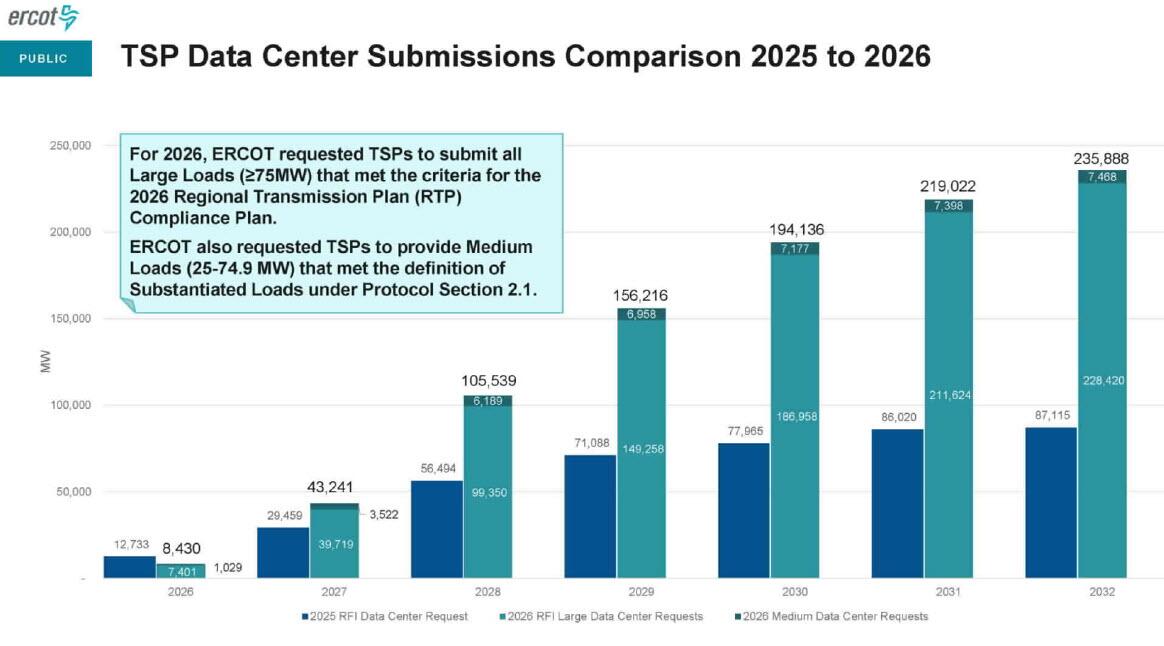
Peak demand in the Electric Reliability Council of Texas (ERCOT) territory could more than quadruple to 367,790 MW by 2032, driven primarily by data centers as well as other large load customers, the grid operator said in a preliminary forecast published Wednesday and noted by Utility Dive.

Source: ERCOT

ERCOT, which serves most of Texas, set its current peak demand record of 85,508 MW in August 2023. 

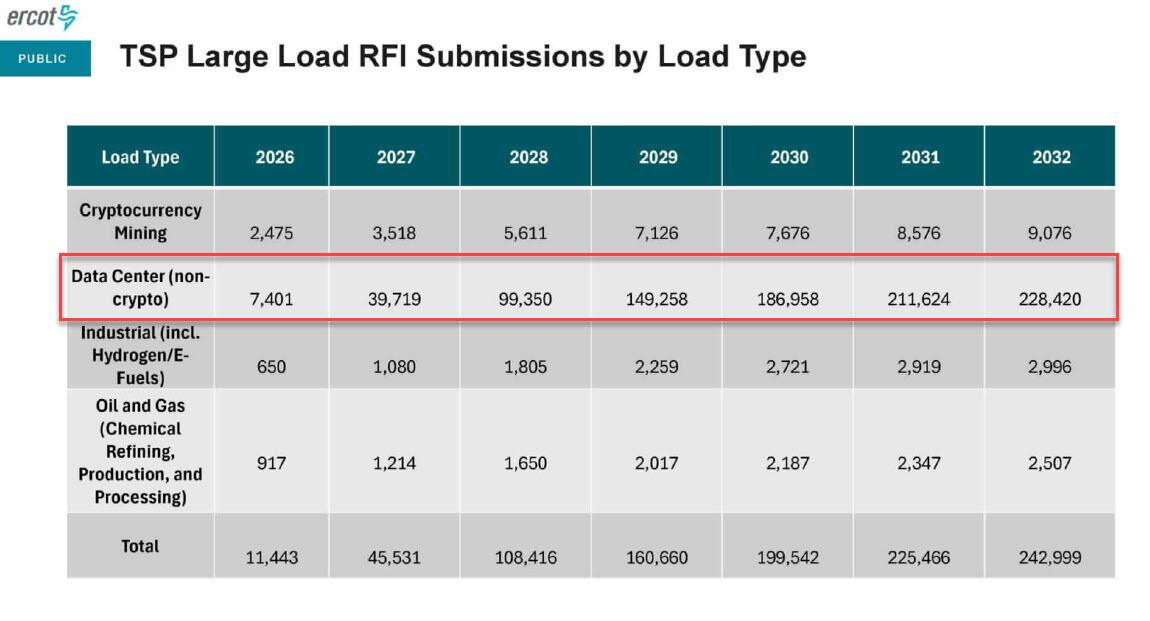
The forecast is based on ERCOT’s economic forecasts as well as information provided by utilities working with medium and large load customers, including data centers, cryptocurrency mining, industrial and oil and gas processes.

Large-load demand data from utilities was included at the direction of state lawmakers as part of SB 6, which was passed last year, but ERCOT officials told the Public Utility Commission of Texas that it may seek revisions to the forecast.

Source: ERCOT

The grid operator “has concerns with using the preliminary load forecast values for the Reliability Assessment and any other transmission and resource adequacy analysis,” Chad Seely, ERCOT senior vice president of regulatory policy, general counsel and chief compliance officer, told the PUCT in comments on the forecast filed Wednesday.

“ERCOT would prefer to consult with Commission Staff to evaluate whether it is appropriate to seek adjustment of the forecast.”

“Texas is experiencing exceptional growth and development, which is reshaping how large load demand is identified, verified, and incorporated into long-term planning,” ERCOT President and CEO Pablo Vegas said in a statement. “As a result of a changing landscape, we believe this forecast to be higher than expected future load growth.” 

Source: ERCOT

ERCOT’s comments on the forecast noted that the grid operator is currently projecting summer 2026 peak load to range between 90,500 MW and 98,000 MW — significantly more modest than the 112,000 MW forecasted peak demand in the preliminary long-term load forecast.

“We look forward to working with the PUCT on potential adjustments to refine how ERCOT ascertains the most accurate information for load forecasting and ensuring the system reliably and efficiently serves Texans,” Vegas said.

ERCOT staff will discuss the forecast at tomorrow’s PUCT open meeting and at the ERCOT board of directors meeting on April 21.

Tyler Durden
Tue, 04/21/2026 – 09:45

via ZeroHedge News https://ift.tt/2C0RkcK Tyler Durden

Scammers Demand Crypto From Stranded Ships In Strait Of Hormuz: Report

Scammers Demand Crypto From Stranded Ships In Strait Of Hormuz: Report

Authored by Amin Haqshanas via CoinTelegraph.com,

Fraudulent actors posing as Iranian authorities have reportedly sent messages to shipping companies whose vessels remain stranded west of the Strait of Hormuz, demanding payment in cryptocurrency for safe passage.

On Monday, maritime risk company Marisks issued a warning saying unknown groups had contacted shipowners claiming to represent Iranian security services and requesting transit “fees” in Bitcoin or USDt in exchange for clearance through the strait, according to Reuters.

“These specific messages are a scam,” Marisks reportedly said, adding that they do not originate from Iranian authorities. Tehran has not publicly commented on the claims.

The alerts come as the strategic waterway remains largely closed following the outbreak of conflict in the Middle East. The Strait of Hormuz, a critical chokepoint for global energy flows, previously handled around one-fifth of the world’s oil and liquefied natural gas exports before hostilities escalated in the region.

Earlier this month, reports said Iran was considering charging ships passing through the Strait of Hormuz a tariff payable in Bitcoin, with empty tankers allowed free passage while others could be charged around $1 per barrel of oil.

Crypto “transit fee” scam demands verification docs

The reported scam messages instruct recipients to submit documentation for verification before being assigned a “fee” payable in cryptocurrency, after which safe transit would allegedly be granted at a pre-agreed time.

In one example cited by Marisks, the message stated that Iranian security services would assess eligibility before determining payment in BTC or USDt, framing crypto transfers as a condition for unimpeded passage.

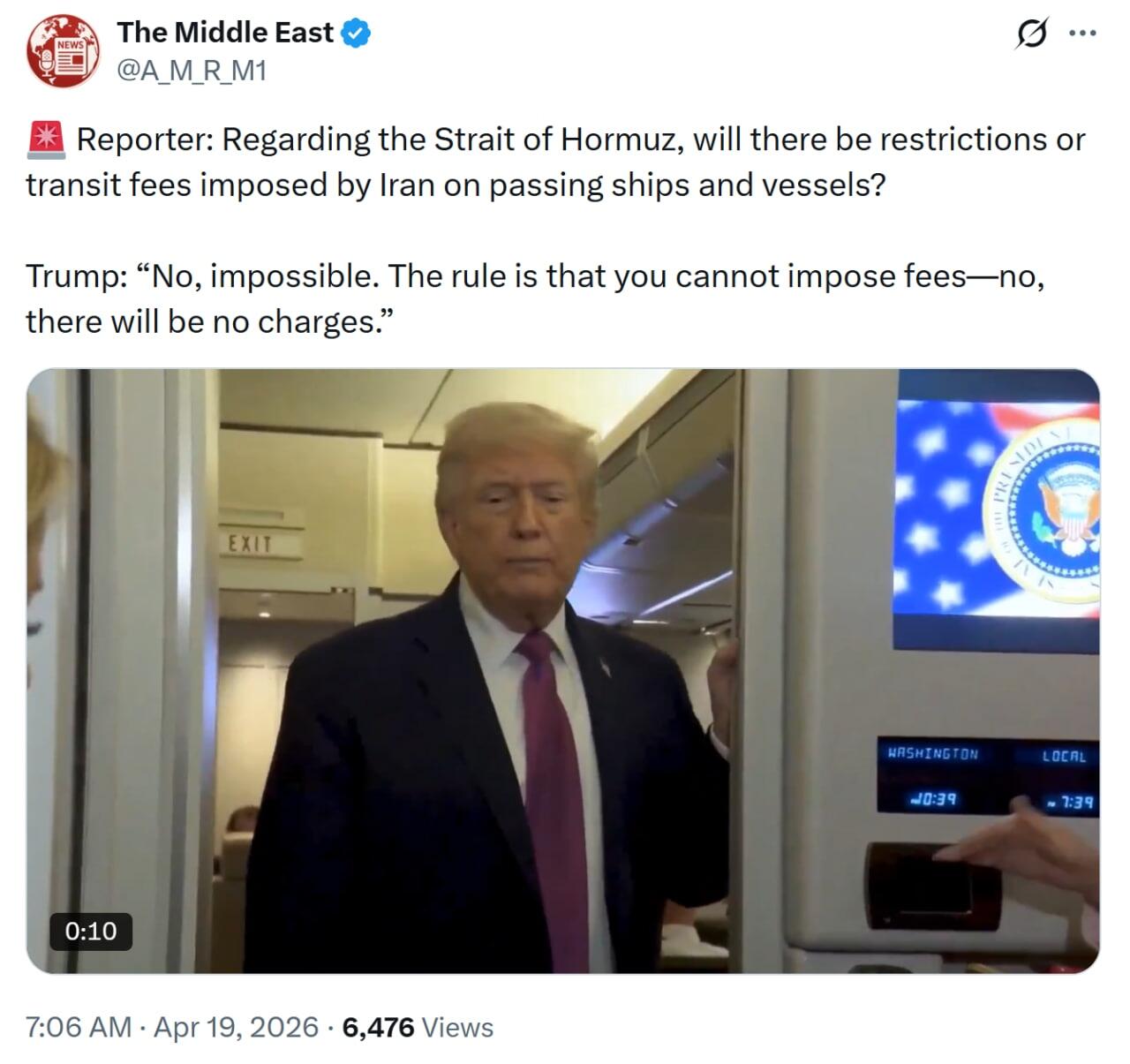
Trump says he won’t allow Iran to impose tolls on ships. Source: The Middle East

The company also suggested that at least one vessel recently targeted by gunfire while attempting to exit the strait may have received such fraudulent instructions, though the information has not been independently verified.

Cointelegraph reached out to Marisks for comment but did not receive an immediate response.

Crypto payments to Iran could trigger sanctions risks: Chainalysis

Shipping companies considering paying transit fees in cryptocurrency to Iran could face serious sanctions exposure, according to Chainalysis senior intelligence analyst Kaitlin Martin.

She told Cointelegraph that any payments linked to Iranian-controlled waterways could be treated as “material support,” potentially violating US and international sanctions targeting entities such as the Islamic Revolutionary Guard Corps.

Tyler Durden
Tue, 04/21/2026 – 09:30

via ZeroHedge News https://ift.tt/FJIPduK Tyler Durden

DHL CEO Warns Prolonged Energy Shock Could Push Global Economy To “Tipping Point”

DHL CEO Warns Prolonged Energy Shock Could Push Global Economy To “Tipping Point”

DHL Group CEO Tobias Meyer warned Bloomberg TV earlier this morning that a persistent Gulf energy shock could morph into broader trouble for the global economy.

“Well we have seen this before, that you have recognized by consumers as having an impact that sparks broader discussion, the real economic implications for people. Now, this hasn’t happened yet. We’re trying to prevent that from happening. The 10, 12 million barrels of crude oil per day, it will come to that tipping point. Solutions are needed and political momentum is building up to resolve the situation in the Strait of Hormuz,” Meyer said.

Meyer’s reference to the “tipping point” is clear: if Gulf oil losses of 10 to 12 million barrels per day are not offset soon, global energy and product prices will stay elevated, causing significant knock-on effects throughout the world economy.

DHL Group sits at the center of global trade. It operates parcel, express, air freight, ocean freight, and road freight, as well as supply chain services, across more than 220 countries and territories, suggesting that Meyer is a seasoned observer of what to look for ahead of inflection points in the global economy.

Meyer pointed out that the US-Iran conflict and the disruption of the Hormuz chokepoint are already affecting DHL operations, constraining transport routes, tightening freight markets, and pushing shipping rates higher, especially on Asia-Europe lanes.

He added that, with Western airlines avoiding Russian airspace and Gulf carriers operating below pre-war capacity, trade flows from India and Southeast Asia to Europe are becoming more strained.

Meyer is clear that failing to replace the loss of 10 million to 12 million barrels of crude oil per day in the Gulf would almost certainly push the global economy to a “tipping point” from which there is no return.

Separately, the International Energy Agency released a report early last week that stated, “The Iran war has thoroughly upended the global outlook for oil consumption. Demand destruction will spread as scarcity and higher prices persist.”

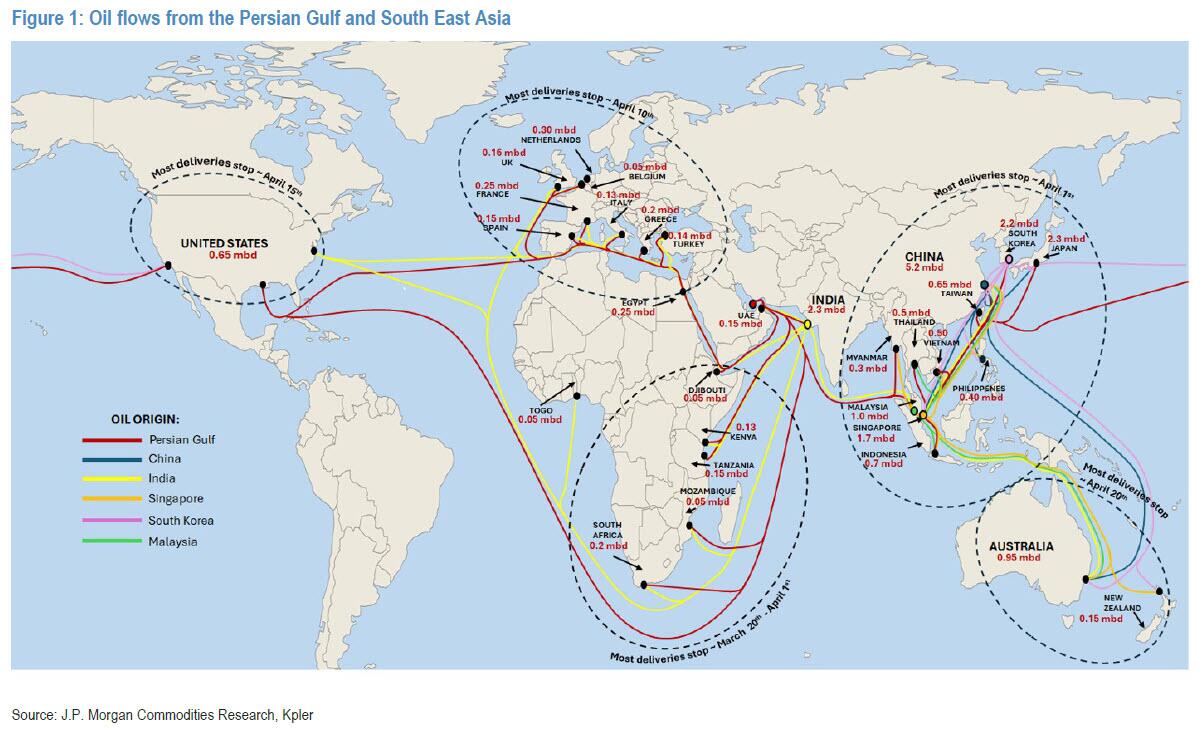
JPMorgan’s top commodity expert recently described how the demand destruction crisis would spread from the Gulf area, hitting Asia first, then Africa and Europe, before ultimately affecting the US, especially California.

Source

With the Strait of Hormuz still effectively shut by Iran, a U.S. naval blockade in place, and U.S.-Iran talks potentially set for later today ahead of Wednesday’s ceasefire deadline, even an immediate diplomatic breakthrough would not restore energy flows overnight. Gulf-area export hubs would still take months to return to normal.

This shows that the Gulf energy shock threatens to push the global economy dangerously close to the tipping point Meyer describes.

Tyler Durden
Tue, 04/21/2026 – 09:15

via ZeroHedge News https://ift.tt/OuWEvlz Tyler Durden

Trump Invokes Defense Production Act To Sign Energy-Related Directives

Trump Invokes Defense Production Act To Sign Energy-Related Directives

Authored by Aldgra Fredly via The Epoch Times,

President Donald Trump on April 20 invoked the Defense Production Act to issue a series of memorandums focused on strengthening coal supply chains, ​natural gas transmission, and ​liquefied natural gas capacity.

Trump also signed memos aimed at boosting domestic petroleum production, enhancing grid infrastructure, and expanding the deployment of “large-scale energy” and related infrastructure.

In a post on X, White House spokeswoman Taylor Rogers said the memos would allow the Energy Department to use funding from the One Big Beautiful Bill Act to strengthen the country’s “grid infrastructure and unleash reliable, affordable, secure energy.”

The Defense Production ​Act is ​a ⁠cold war-era legislation that grants the president authority to expand and expedite the supply of materials from the domestic industrial base for national security purposes.

In the memos, Trump cited his Jan. 20, 2025, executive order declaring a national energy emergency, noting that insufficient energy supply could expose the country to “hostile foreign actors” and risk national security.

“Consistent with that declaration, I find that ensuring the domestic capability for development, manufacturing, and deployment of large-scale energy and energy-related infrastructure is essential to United States national defense, yet due to financing risks, regulatory delays, and market barriers, these cannot be met in full under existing market conditions,” the president stated in one of his memos.

The memos direct the Energy Department to make “necessary purchases, commitments, and financial instruments” to support projects expanding oil production, coal supply chains, natural gas transmission, liquefied natural gas capacity, grid infrastructure, and other energy-related infrastructure.

The move came as the Trump administration worked to curb surging commodity prices fueled by the conflict with Iran, which has driven up oil ​and fertilizer costs.

Iran last week said it would open the Strait of Hormuz to all commercial vessels during a 10-day ceasefire between Israel and Lebanon, but started charging tolls and later reinstated “strict military oversight” over the strait due to the resulting U.S. naval blockade of Iranian ports. The United States then imposed a blockade against vessels visiting Iranian ports on April 13 after the United States said that Iran was not allowing free passage through the strait, which was a condition for the ceasefire.

The situation heightened market uncertainty and pushed oil prices higher on April 20, with crude trading at about $94.75 on April 20.

To ease pressure on oil markets and ensure adequate supply, the Trump administration on April 17 renewed a sanctions waiver that allows nations to buy Russian oil stranded at sea, extending it through May 16 after the previous license expired on April 11.

In February, the Treasury Department issued a general license authorizing the exploration, development, and production of oil and gas in Venezuela as part of an effort to boost oil supply chains.

Tyler Durden
Tue, 04/21/2026 – 09:01

via ZeroHedge News https://ift.tt/IQo8B92 Tyler Durden

“We’re On Borrowed Time”: Vitol LNG Chief Warns Of Coming Food Price Shock

“We’re On Borrowed Time”: Vitol LNG Chief Warns Of Coming Food Price Shock

Pablo Galante Escobar, the head of liquefied natural gas (LNG) at Vitol, warned the audience at the FT Commodities Summit earlier today that the “world is on borrowed time” and that the Gulf energy shock will develop into a food crisis unless LNG flows resume through the Hormuz chokepoint.

We are on borrowed time. Every day this trade remains closed and every day production does not come back, we are building a problem for the future, and we are building a problem that, as I said, will be transferred from the energy side into many different sectors, with the food sector being a very important one,” Escobar said, who works world’s biggest independent energy trader.

Escobar continued, “This is not sustainable, or the energy crisis will become a food crisis. Only gas can supply the feed for fertilizers. We are building a problem for the future.”

He added that even if the Hormuz chokepoint reopened today, it could still take three to five months for undamaged LNG production to fully recover.

Longer term, the Gulf market could lose about 20 million tons per year of global LNG supply growth in 2027 and 2028 because of damage to Qatari capacity and delays to new regional projects. 

Escobar is correct that the second- and third-order effects of Gulf-related LNG supply disruptions are already rippling through the global fertilizer chain, sending prices sharply higher and triggering shortages across critical agricultural belts.

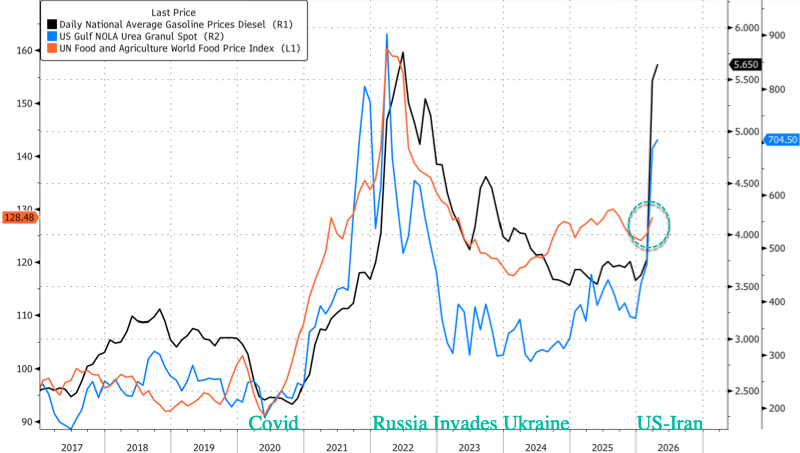
The downstream risk has been very clear: reduced fertilizer availability and higher input costs threaten to dent crop harvest yields later this year. In other words, this potentially sets the stage for a food price inflation spike: 

Global food prices vs. US diesel prices at pump vs. US urea spot prices  

Also at the FT Commodities Summit, Julien Bourdeau, global head of LNG at Mercuria, said the previously expected global LNG glut that was expected to swamp the world has been postponed, with the 2026 market getting shorter. 

One month ago, we asked a very simple question: Will QatarEnergy’s LNG Fiasco Derail Goldman’s Prewar View Of A Mega LNG Wave.”

Facing a possible food inflation spike later this year suggests one thing: hedge now. Plant a backyard garden, buy a chicken coop, and become more self-sufficient on your own land.

Tyler Durden
Tue, 04/21/2026 – 08:45

via ZeroHedge News https://ift.tt/UiE4TQ7 Tyler Durden