“Sotomayor Drops The Ball on Obamacare” And The Shadow Docket

When exactly did the shadow docket begin? People are now arguing about what was the first relevant shadow docket case, but those disagreements turn on stated and unstated assumptions. The answer depends on how you define the shadow docket. I need to give some more thought to exactly what the “shadow docket” is.

My colleague Stephanie Barclay suggests that the shadow docket actually began on New Year’s Eve 2013 when Circuit Justice Sotomayor granted emergency relief to the Little Sisters of the Poor.

I wrote about this moment at some length in Chapter 15 of my 2016 book, Unraveled: Obamacare, Religious Liberty, and Executive Power. I will include an excerpt of the book after the jump.

Here, I will offer a few reasons why the Little Sisters order can be distinguished from the Clean Power Plan order about two years later. This ruling may still qualify as the first shadow docket entry under certain assumptions, but I have some doubts.

First, the Little Sisters of the Poor were only seeking an exemption for themselves. Other litigation had been filed throughout the country by other religious non-profits. Almost all of those courts had granted emergency relief to the plaintiffs. Only two plaintiffs were denied relief: the Little Sisters of the Poor and Notre Dame University. Notre Dame did not file an emergency appeal to the Supreme Court. Instead, they caved and made coverage of emergency contraception available under their plan. The Little Sisters, represented by the Becket Fund, would file an emergency application with Circuit Justice Sotomayor. With modern emergency docket litigation, plaintiffs often seek universal relief, whether through nationwide injunctions, vacatur, certified classes, or broad associational standing. Outside death penalty cases, it is rare for the Supreme Court to grant emergency one-off relief. Mirabelli is one such case.

Second, the Clean Power Plan litigation was somewhat unique in that the case began at the D.C. Circuit. There were no district court proceedings. Moreover, the Supreme Court issued its stay of the executive action before the D.C. Circuit had an opportunity to rule. By contrast, for the contraception mandate, the District Court and the Tenth Circuit both denied relief after full briefing and consideration. Justice Sotomayor’s order in no way short-circuited the appellate process. Moreover, Sotomayor did what virtually every court had done at that point.

Third, on December 31, 2013, Justice Sotomayor granted what we would now call an administrative stay:

IT IS ORDERED that [the government is] temporarily enjoined from enforcing against [the Little Sisters of the Poor] the contraceptive coverage requirements imposed by the Patient Protection and Affordable Care Act, and related regulations pending the receipt of a response and further order of the undersigned or of the Court. The response to the application is due Friday, January 3, 2014, by 10 AM.

To be precise, if the shadow docket was born with the Little Sisters, the birth occurred twenty-one days later on January 24, 2014, when the full Court issued a one-paragraph order:

The application for an injunction having been submitted to Justice Sotomayor and by her referred to the Court, the Court orders: If the employer applicants inform the Secretary of Health and Human Services in writing that they are non-profit organizations that hold themselves out as religious and have religious objections to providing coverage for contraceptive services, the respondents are enjoined from enforcing against the applicants the challenged provisions of the Patient Protection and Affordable Care Act and related regulations pending final disposition of the appeal by the United States Court of Appeals for the Tenth Circuit. To meet the condition for injunction pending appeal, applicants need not use the form prescribed by the Government and need not send copies to third-party administrators. The Court issues this order based on all of the circumstances of the case, and this order should not be construed as an expression of the Court’s views on the merits.

A few things stand out here. The Court to did not enjoin the contraceptive mandate altogether. It granted relief to one party, and only one party. There was no suggestion at the time this ruling set a precedent, which other parties could rely on. Notre Dame, which did not appeal, did not benefit from this ruling. Instead, the Court effectively granted an accommodation to a single plaintiff. This sort of tailored remedy stands in stark contrast with the sweeping relief granted in the Clean Power Plan case. That ruling completely enjoined the policy nationwide.

Fourth, in the Clean Power Plan case, it is pretty clear the Obama Administration was trying to rush the policy to “bake it in” before the Supreme Court could review it. Will Baude suggested that the Chief Justice was “concern[ed] that the executive branch [was] openly circumventing the federal courts.” The Obama Administration was not trying to circumvent all federal court review. They were content to run out the clock in the favorable D.C. Circuit. DOJ was trying to avoid Supreme Court review.  There was some gamesmanship.

But I don’t think there was a similar gaming for the contraceptive mandate. The ACA statute provided that the employer mandate would go into effect on January 1, 2014 (though the statute itself said nothing at all about contraception coverage). You may recall that initially, the Obama Administration argued that the “penalty” enforcing the individual mandate was a tax, and since the tax would not be collected until 2014, the challenge to Obamacare in 2010 was not yet ripe in light of the Tax Anti-Injunction Act. This was a clever way of “baking in” Obamacare before the Supreme Court could review it. But DOJ abandoned this strategy once they realized they needed the taxing power argument to save the law. There is lots of gamesmanship and playing keep-away from SCOTUS

Fifth, there is another reason to distinguish the Clean Power Plan and the Little Sisters of the Poor. This reason is somewhat political, but not really. There were no recorded dissents for the nuns. The Justices all likely agreed that the District Court in Colorado committed a clear error, and the ex ante status quo had to be preserved. In other words, the claim for legal relief was clearly established. That would seem to be a very strong factor in favor of granting emergency relief. The Clean Power Plan case split hard by a 5-4 vote. Such a sharp disagreement is almost certain proof that the basis for legal relief is not clearly established. This is what Justice Kagan wrote in her memorandum, and in many subsequent published dissents.

For these reasons, and others, I think it is tough to view the Clean Power Plan and the Little Sisters of the Poor on the same wavelength. I spoke with several DOJ lawyers at the time. They were a “little bit surprised” by the Court’s ruling. But this reaction pales in comparison to the shock the Obama Administration had after the Clean Power Plan ruling, where the Justices bypassed the lower court altogether.

Here is an excerpt from Chapter 15, titled “New Year’s Resolution.” As I’ve noted in other contexts, I wrote this book behind the veil of ignorance. The shadow docket wasn’t even a glimmer in my eye at the time. Indeed, if memory serves, I wrote this chapter before the Clean Power Plan ruling. (The book was sent to the press circa June 2016.)

15.1. “Adhere to Their Religious Conviction”

In September 2013, as a government shutdown loomed, and with only three months before the contraceptive mandate went into effect, the Little Sisters of the Poor finally challenged Accommodation 2.0 in court. One of their attorneys told me that they were very late to file because the Little Sisters didn’t want to have anything to do with litigation. But as New Year’s Eve drew near, the order of nuns were left with no other options. Over the next three months their lawyers at the Becket Fund for Religious Liberty anxiously waited for a decision. “We kept calling, saying, ‘hey we have an emergency coming up,'” the lawyer told me. “We needed an answer.”

Finally, late in the afternoon on Friday, December 27, the district court ruled against the Little Sisters. Judge William J. Martínez did not question whether the mandate conflicts with their religious beliefs. However, Martínez did “analyze the challenged regulations to determine whether their implementation will cause the allegedly harmful act to in fact occur.”1 Despite the Little Sisters’ objection to filling out the form, the court concluded that “nothing on the face of the Form expressly authorizes [providing] contraceptive care.” Signing the form “does not authorize any organization to deliver contraceptive coverage to Little Sisters’ employees,” the court concluded. As a result, Accommodation 2.0 does “not substantially burden Plaintiffs’ religious beliefs,” and the Little Sisters are not actually “required to buy into a scheme that substantially burdens their religious beliefs.”

At that time, the overwhelming majority of courts had already granted interim relief to religious non-profits. One of the attorneys for the Little Sisters was shocked that the court ruled against them. “I would have thought that of all the clients in the country who were going to get relief from the lower courts, the one I don’t need to worry about is the Little Sisters of the Poor, because who’s really going to turn down Little Sisters of the Poor? They’re so obviously religious that it’s idiotic to not call them a religious employer.”

After an all-nighter, the very next day the Becket Fund lawyers requested an emergency injunction from the Tenth Circuit Court of Appeals in Denver. The twenty-one-page brief explained: “By midnight on New Year’s Eve, Mother Provincial Loraine Marie Maguire must decide whether the Little Sisters should adhere to their religious conviction that they cannot participate in the Mandate, or whether they should sacrifice that religious belief to spare their ministry from the government’s crushing fines.” This prayer for relief would also go unanswered.

Three days later, at noon on December 31, 2013 – as it had done a year earlier with Hobby Lobby – the Tenth Circuit denied the injunction. Judges Paul Joseph Kelly, Jr. and Carlos F. Lucero found that under the accommodation, stage is not warranted.”

Like the year before, the Tenth Circuit’s refusal to put the mandate on hold was at odds with virtually all other federal courts to consider the issue. In seventeen out of nineteen cases, the courts had granted an injunction for the religious non-profits before the December 31 deadline. Leading up to New Year’s Eve, only the Little Sisters and Notre Dame University were denied an injunction by the lower courts.2

In early December, Father Jenkins, who had invited Obama to speak at Notre Dame four years earlier, explained that succumbing to the mandate will lead us “down a path that ultimately will undermine those [religious] institutions.”3 However, with a decision that surprised many, Notre Dame acquiesced to the Seventh Circuit’s order. A spokesperson for the university announced on December 31, “Having been denied a stay, Notre Dame is advising employees that pursuant to the Affordable Care Act, our third party administrator is required to notify plan participants of coverage provided under its contraceptives payment program.”4 Coverage of emergency contraceptives such as Plan B and Ella would soon become available through Notre Dame’s insurance plan.

Many criticized the university for not having a strong enough commitment to fight the mandate all the way. Father Bill Miscamble, a professor of history at Notre Dame, told the National Catholic Register that he was disappointed “with the tepid way in which Notre Dame has acquiesced with the Obamacare provisions and authorized its health-insurance administrator to implement the HHS mandate.”5 Notre Dame did not seek an injunction from the Supreme Court. I asked one of the attorneys for the Little Sisters why Notre Dame did not request emergency relief from the Justices. He replied, “I don’t know, and you will never find out.” Notre Dame continued to challenge the mandate in the lower courts, but by that point it had already complied with the accommodation.

Later that month, Pope Francis spoke about Notre Dame, saying, “[I]t is my hope that the University of Notre Dame will continue to offer unambiguous testimony to this aspect of its foundational Catholic identity, especially in the face of efforts, from whatever quarter, to dilute that indispensable witness…. And this is important: its identity, as it was intended from the beginning. To defend it, to preserve it and to advance it!” Notre Dame Professor Carter Snead saw the Pope’s remarks as encouraging the university to continue its fight against the contraception mandate: “The Holy Father’s words strike me as a timely and profound encouragement to Notre Dame in its continuing efforts to defend its religious liberty in court.”6 Patrick Deneen, also a Professor at Notre Dame, told National Review that “[o]n the same day that Pope Francis’s statement was publicized, members of the university community were given notice that we would be receiving new health ID cards for ‘women’s preventive services.'”7

The Little Sisters of the Poor would not be so easily deterred. Mother Provincial Loraine joked with one of her attorneys, “Well, really, how many nuns can they put in jail?”

15.2. “Sotomayor Drops Ball on Obamacare”

With less than twelve hours till the new year, the contraceptive mandate was barreling toward the Little Sisters like an oncoming train. Justice Sonia Sotomayor – who at that very moment was riding Amtrak to New York City – would soon pull the emergency brake. The Bronx native was invited to push the button to start the New Year’s Eve ball drop. The president of the Times Square Alliance exclaimed, “Who better to join us in the crossroads of the world than one of New York’s own?”8 Sotomayor would receive notice of the Little Sisters’ emergency petition around 5:00 PM while she was on the northbound train from Union Station to Penn Station. Fortunately, Amtrak’s wireless Internet actually worked that evening.

The Little Sisters made their case: “Mother Loraine must make that decision by midnight tonight, unless relief is granted by this Court.” There was a strong sense of déjà vu to this appeal. The Becket Fund represented both Hobby Lobby and the Little Sisters. And just like the year before, the attorneys were forced to frantically file a last-minute appeal with Circuit Justice Sotomayor on December 31. The year before, Sotomayor rebuffed Hobby Lobby. Fortunately, should old acquaintance be forgot and never brought to mind, this prayer for extraordinary relief was answered.

Before Justice Sotomayor released the Waterford Crystal Ball over the Crossroads of the World, she would first release an injunction halting the contraceptive mandate. Or, as The Drudge Report more colorfully captioned it, “Sotomayor Drops Ball on Obamacare.”9 At 10:00 PM, Mark Rienzi’s phone rang. It was Danny Bickel, the Supreme Court’s Emergency Applications clerk. Capital defense lawyers have dubbed Bickel “the death clerk” because he handles the eleventh-hour requests to stay executions.10 But tonight, there was a far less somber call to make. Bickel told the Becket Fund attorney that the Court would soon issue an order, and he would send him a copy. Around 10:15 PM, as hundreds of thousands massed in Times Square, Sotomayor issued a one-paragraph order:

IT IS ORDERED that [the government is] temporarily enjoined from enforcing against [the Little Sisters of the Poor] the contraceptive coverage requirements imposed by the Patient Protection and Affordable Care Act, and related regulations pending the receipt of a response and further order of the undersigned or of the Court. The response to the application is due Friday, January 3, 2014, by 10 AM.

Success! But this was an ephemeral victory, and the nuns’ angst was not quite over. Sotomayor’s December 31 order was only temporary. That evening, Mark Rienzi called Mother Loraine, who had “been praying about what she was going to do tomorrow.” He told her, “[W]e at least have life for a little while.”

As the nuns hailed Mary, Miley Cyrus twerked away 2013 in Times Square.11 Fortunately, the New York Times observed, “Viewers should not expect to see Ms. Cyrus twerking near Justice Sotomayor.”12 The Justice had a private space to handle these more pressing matters.13

15.3. Accommodation 3.0

On Friday, the government submitted its reply, and urged the Court that the injunction should be denied. “Applicants claim a right to extraordinary relief,” the solicitor general wrote, “even though compliance with the procedure they challenge will not result in anyone else’s provision of the items and services to which applicants object.” Recall that under Accommodation 2.0, the nuns, would not have to pay for the contraceptives. The Becket Fund lawyers replied that same day in a plea to keep the injunction in place:

The temporary injunction issued Tuesday night saved Mother Provincial Loraine Marie Maguire from the choice of violating her faith by executing the government’s required form, or exposing the Little Sisters’ ministry to decimation by IRS penalties. She exercised her religion that night, and each day since, by acting in accordance with God’s will as she understands it. The temporary injunction protected, and continues to protect, that religious exercise. That injunction should remain in place.

Twenty-one days of silence from the Court would follow. Then on January 24, the Justices issued a one-paragraph order:

The application for an injunction having been submitted to Justice Sotomayor and by her referred to the Court, the Court orders: If the employer applicants inform the Secretary of Health and Human Services in writing that they are non-profit organizations that hold themselves out as religious and have religious objections to providing coverage for contraceptive services, the respondents are enjoined from enforcing against the applicants the challenged provisions of the Patient Protection and Affordable Care Act and related regulations pending final disposition of the appeal by the United States Court of Appeals for the Tenth Circuit. To meet the condition for injunction pending appeal, applicants need not use the form prescribed by the Government and need not send copies to third-party administrators. The Court issues this order based on all of the circumstances of the case, and this order should not be construed as an expression of the Court’s views on the merits.

Simply stated, if the Little Sisters notify the government in writing that they “have a religious objection to providing coverage for contraceptive service,” which they obviously do, they are exempted from the contraceptive mandate altogether. I will refer to this approach as Accommodation 3.0, although in effect it mirrors the exemption given to the houses of worship. Rather than having to certify a religious objection, which would serve as notice for the insurer to begin paying for contraceptive coverage, under Accommodation 3.0, the employees of the Little Sister would not receive the coverage at all. There was no need for the Little Sisters to use the form provided by the government. Critically, however, the Justices stressed that “this order should not be construed as an expression of the Court’s views on the merits.” With that order, the Little Sisters finally received the relief they needed.

There was no recorded dissent to the order, but that does not mean that all of the Justices in fact agreed. For example, when the court refuses to halt an execution, Justice Ginsburg has explained that the lack of dissent on a last-minute appeal does not mean everyone concurs: “When a stay [of execution] is denied,” she observed, “it doesn’t mean we are in fact unanimous.”14

A senior DOJ official told me that they “were a little bit surprised” by the claim of the Little Sisters of the Poor and other religious non-profits. In contrast with Hobby Lobby, where the position of the government was that there was no RFRA claim at all, for the Little Sisters, there had been this evolution of working to try to frame that accommodation that would work for religious non-profits, or at least the vast majority of them. He added that there had been a lot of discussions between the administration and representatives of religious organizations to try to find some common ground, to find some way to make it work. That resulted in these changes over time in the nature of accommodation. That is, the upgrade from Accommodation 1.0 to 2.0. The Justice Department, he explained, did think by the time we’ve gotten to the idea of the form, that it would be perceived that we had avoided a substantial burden on religion and come up with a system that really seemed fair and would work. He shrugged his shoulders, and said, “So I think we were a little surprised about the stay.”

The Little Sisters’ fight was far from over. The case would be sent back to the Tenth Circuit Court of Appeals for another round of litigation. But first, exactly two months later on March 25, 2014, the Supreme Court would hear oral arguments in Sebelius v. Hobby Lobby Stores.

The post "Sotomayor Drops The Ball on Obamacare" And The Shadow Docket appeared first on Reason.com.

from Latest – Reason.com https://ift.tt/1AYBEQs
via IFTTT

U.S. Deploys Ukrainian Acoustic Sensors, Interceptor Drones At Prince Sultan Air Base

U.S. Deploys Ukrainian Acoustic Sensors, Interceptor Drones At Prince Sultan Air Base

Last month’s Iranian drone strike on Prince Sultan Air Base in Saudi Arabia appears to have inflicted a costly toll on U.S. forces in the region. The attack destroyed a U.S. Air Force E-3 Sentry Airborne Warning and Control System aircraft and damaged multiple KC-135 refueling tankers, highlighting a major gap in U.S. air defenses against cheap attack drones.

Nearly a month after the drone strike on Prince Sultan Air Base, and following multiple reports that Ukrainian drone forces had been shifted into the region, Reuters confirmed Wednesday morning that the U.S. has deployed Ukrainian counter-drone technology to defend against Iranian-developed Shahed drones.

At the center of this new security effort to fortify the airspace above Prince Sultan Air Base against low-cost Iranian one-way attack drones is Sky Map, a Ukrainian command-and-control platform used to detect incoming drones. The coordinated response to Shaheds is the use of interceptor drones.

There have been longstanding gaps in U.S. air and missile defense coverage around the world,” said Timothy Walton, a senior fellow at the Washington-based Hudson Institute think tank. “This has been well understood. However, it hasn’t been addressed.”

Ukrainian drone experts reportedly traveled to the base in recent weeks to train U.S. personnel on Sky Map and the use of interceptor drones.

Sky Fortress, the Ukrainian company behind Sky Map, has been active extensively in the Eastern European theater, with more than 10,000 acoustic sensors deployed to detect Russian drone attacks.

The bigger story here is that Ukraine is emerging as a major dealer of the latest low-cost weapon technology forged through four years of war with Russia:

Our assessment is that, if we had to get granular, passive acoustic counter-drone detection will become a standard layer of air defense for U.S. military bases, data centers, critical U.S. infrastructure, and government buildings in the years ahead. As cheap attack drones proliferate, adopting passive acoustic sensing systems for early warning will help close the air-defense gap against them. Just wait until these early-detection systems are paired with ‘micro’ sentry guns and fully automated AI kill chains.

Tyler Durden
Wed, 04/22/2026 – 21:45

via ZeroHedge News https://ift.tt/fZ7qpsx Tyler Durden

Dr. Oz Says Anti-Fraud Effort Coming To ‘All 50 States’

Dr. Oz Says Anti-Fraud Effort Coming To ‘All 50 States’

Authored by Jack Phillips via The Epoch Times,

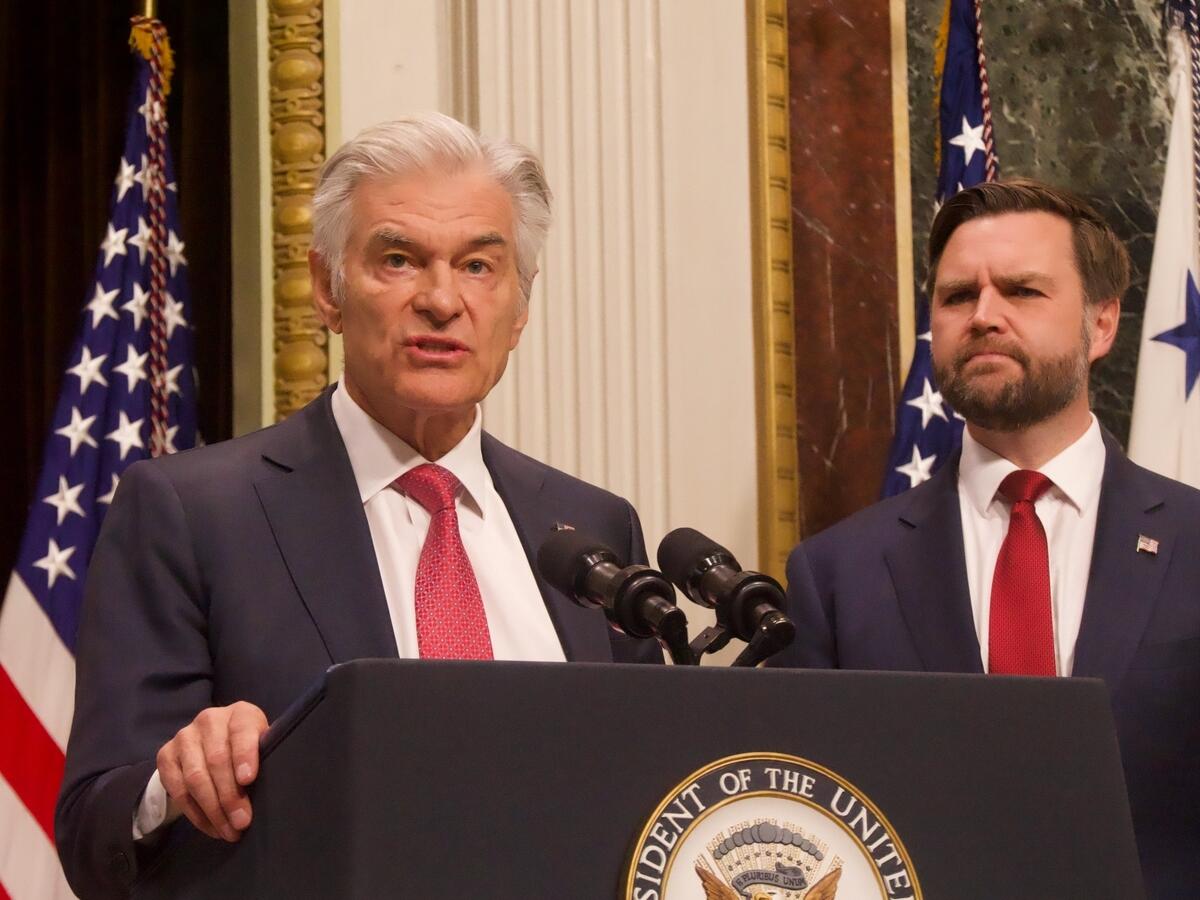
Dr. Mehmet Oz, the administrator of the agency overseeing Medicaid and Medicare, announced Tuesday that his agency’s anti-fraud effort will come to every state.

During an interview at a Politico-hosted event, Oz said that every U.S. state can expect anti-fraud activities involving funds received through the Centers for Medicare & Medicaid (CMS).

“We are going to announce this week that all 50 states are going to be requested to give us a plan over the next 30 days of how they’re going to re-validate providers in high-risk areas in their states,” Oz said.

Oz explained that it would involve proving whether individuals who are enrolled in CMS programs “really exist” or not, and whether the states “have a right to provide these services.”

“We’re asking the states to own that problem … red and blue, all of them,” he said, responding to a question from the Politico moderator about whether it involves every state.

He later added that if states “don’t take it seriously, it indicates to us that we might have to take the audits … more aggressively.”

When asked about a possible deadline, he said CMS is asking the states to provide the agency with a plan over the next month.

Oz, a medical doctor better known as the moniker Dr. Oz from when he was a television personality, oversees the nation’s largest health insurance programs as the administrator of CMS. To date, Oz has sent letters to California, Florida, Maine, and New York alleging fraud in the states’ Medicaid programs.

At the Tuesday event, the Politico interviewer mentioned CMS having issued a statement earlier this month to correct a comment made by Oz on social media that 5.1 million beneficiaries received personal care services, which include things like help with eating, bathing, and dressing.

However, the real number receiving services was about 450,000, the CMS spokesperson said.

Oz’s comment drew criticism from New York Gov. Kathy Hochul’s office, with a spokesperson saying that it was “patently false” and her office is “glad they now admit it.”

During the interview, Oz emphasized the Trump administration’s efforts to address fraud around the country, which federal officials say is needed to rein in runaway spending and protect taxpayers.

With many midterm voters concerned about the cost of living in the United States, President Donald Trump has ramped up efforts to address it, announcing last month that Vice President JD Vance would help balance the nation’s budget by spearheading a national “war on fraud.”

The Trump administration has sought to withhold funding from some Democrat-led states in recent months, citing fraud concerns. This has included child care subsidies and other social services programs in Minnesota, New York, and three other states and with the Supplemental Nutrition Assistance Program (SNAP) in 22 states that have declined to hand over data that the federal government says is needed to root out fraud.

Lawsuits have been filed in response to the he anti-fraud efforts led by the federal government. In several cases, judges have ruled that the federal money must continue to flow for the time being.

In California, Gov. Gavin Newsom’s office, in response to claims of widespread hospice fraud in Southern California, blamed the Trump administration, in part, for entitlement fraud in the state.

In January, Newsom’s office said in a statement the administration has “dismantled the federal government’s ability to prevent and address fraud.”

“California didn’t wait—we’ve identified and cracked down on hospice fraud for years, taking real action to protect patients and taxpayers,” Newsom said in a statement.

Tyler Durden
Wed, 04/22/2026 – 21:20

via ZeroHedge News https://ift.tt/UPLCHMF Tyler Durden

US Blocks Regular $500 Million Cash Pallets Flown To Iraq, Over Pro-Iran Militias

US Blocks Regular $500 Million Cash Pallets Flown To Iraq, Over Pro-Iran Militias

In confirmation of some early reporting we featured at the start of this week, The Wall Street Journal has verified something that Iraqi officials themselves were denying just days ago: the US is blocking Iraq’s regular dollar shipments in order to pressure it’s Iran-backed militias.

“The Trump administration has suspended U.S. dollar shipments to Iraq and frozen security cooperation programs with its military, escalating the pressure on Baghdad to dismantle powerful Iranian-backed militias,” said Iraqi and US officials interviewed in the report.

Pallets of cash and the Middle East should ring familiar, stretching from the Bush-Cheney years to even the Obama years (and Iran sanctions relief as part of the original nuclear deal). In this case, like with the Obama/Iran deal saga before, this is actually Iraq’s own oil revenue money.

Memory lane via CNBC: The New York Federal Reserve shipped billions of dollars in physical cash to Baghdad to pay for the reopening of the government & restoration of basic services. Much of it went missing.

In this latest case, a US military plane carrying a half-billion dollars has been delayed on its regularly scheduled delivery.

“A cargo-plane delivery of nearly $500 million in U.S. banknotes, the proceeds from Iraqi oil sales from Federal Reserve Bank of New York accounts, was blocked recently by Treasury Department officials because of U.S. concerns about the militias,” WSJ continues, citing the officials.

The publication details, “It was the second scheduled shipment of dollars to the Central Bank of Iraq delayed by the U.S. since the start of the Iran war in late February, the U.S. and Iraqi officials said.”

During the height of the March fighting between Iran and Israel, several American facilities across Iraq came under attack, even including the US Embassy in Baghdad’s Green Zone. Typically these were drones, or rocket fire, and Erbil and northern Iraq in particular came under heavy fire.

To review from the backgrounder we previously featured: since 2003, a decision issued by Coalition Provisional Authority (CPA) head Paul Bremer has required that all Iraqi oil revenues be paid into an account at the US Federal Reserve Bank of New York, giving the US the ability to control how many US dollars are returned to the CBI.

From that point until today, the Iraqi Ministry of Finance has had to submit funding requests to the US Treasury, which then approves or denies them based on its own criteria.

This monthly transfer of US dollarsflown into Baghdad in pallets of hard cash, determines Iraq’s ability to pay for basic needs such as salaries, food, and medicine.

Whenever Washington believes that Iraq is not aligned with US regional goals, including enforcing economic sanctions on Iran, Baghdad’s major trading partner and a source of natural gas for electricity production, these fund transfers can be delayed or reduced.

Currently the Coordination Framework (CF), which is the largest Iran-aligned parliamentary bloc of Shia parties, is racing to pick a new prime minister for the country – but reportedly neither of the two main candidates are acceptable to Washington.

There’s a huge lasting irony to the Iraq war and the Bush-Cheney legacy. The US overthrow of Baathist Sunni Saddam Hussein effectively handed the country over to pro-Tehran leadership. And the US has been dealing with the fallout in the region from the ‘Shia axis’ ever since.

Tyler Durden
Wed, 04/22/2026 – 20:55

via ZeroHedge News https://ift.tt/aOW6Kn3 Tyler Durden

Federal Appeals Court Rules In Favor Of Ten Commandments In Texas Classrooms

Federal Appeals Court Rules In Favor Of Ten Commandments In Texas Classrooms

Authored by Kimberley Hayek via The Epoch Times,

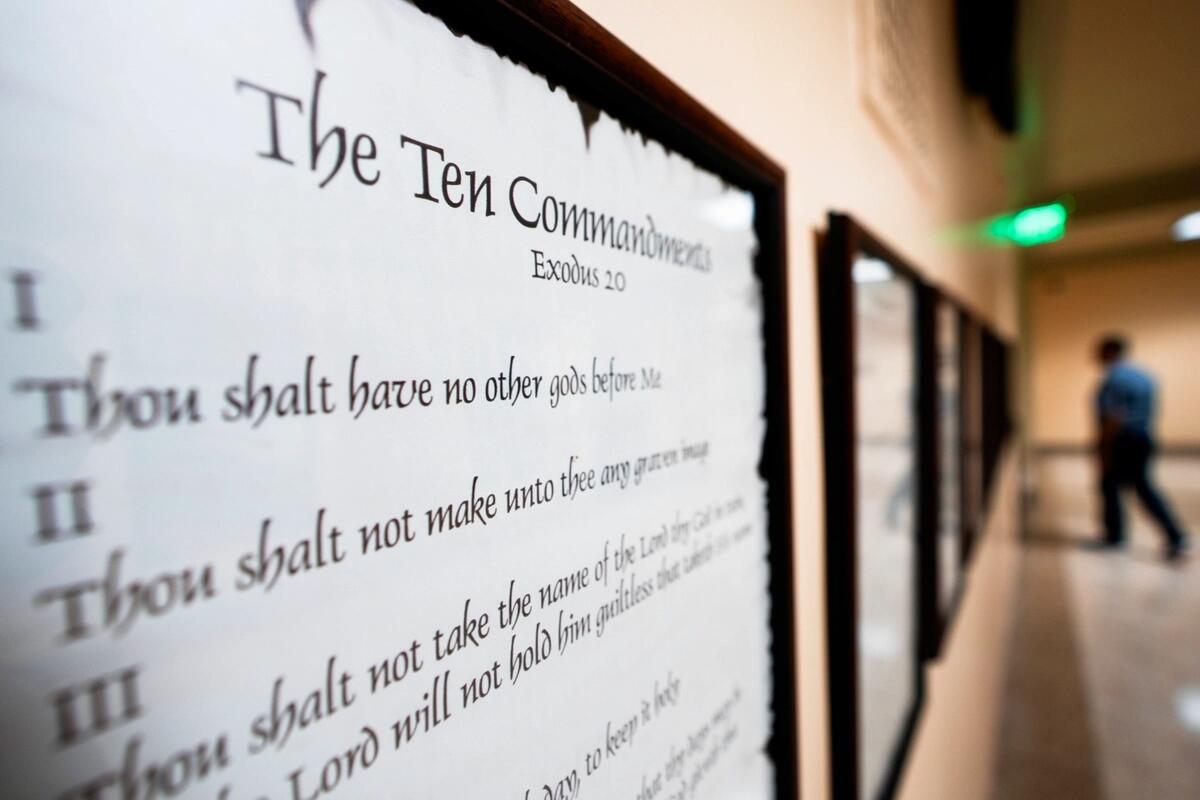
A federal appeals court ruled April 21 that the state of Texas may order every public school classroom to display the Ten Commandments, marking a victory to supporters of the law.

The U.S. Court of Appeals for the Fifth Circuit, which voted 9–8, upheld Texas Senate Bill 10, overturning a lower-court injunction that had barred the 2025 law from taking effect.

“We conclude the Texas law does not violate either the Establishment Clause or the Free Exercise Clause,” Judge Stuart Kyle Duncan wrote for the majority opinion.

Civil liberties groups for the plaintiffs, which included a coalition of 15 multi-faith Texas families, denounced the decision.

“We are extremely disappointed in today’s decision. The Court’s ruling goes against fundamental First Amendment principles and binding U.S. Supreme Court authority,” the American Civil Liberties Union, ACLU of Texas, Americans United for Separation of Church and State, and the Freedom From Religion Foundation, said in a joint statement.

“The First Amendment safeguards the separation of church and state, and the freedom of families to choose how, when and if to provide their children with religious instruction. This decision tramples those rights. We anticipate asking the Supreme Court to reverse this decision and uphold the religious-freedom rights of children and parents.”

The decision in Rabbi Nathan v. Alamo Heights Independent School District follows oral arguments made during the full 17-judge court hearing in January over both the Texas law and a parallel Louisiana mandate. The court permitted Louisiana’s law to proceed in February.

The Texas Legislature passed S.B. 10 in 2025, and Gov. Greg Abbott signed the measure into law that same year. It was set to take effect on Sept. 1, 2025, requiring every classroom to post a framed or mounted English translation of the Ten Commandments measuring at least 16 by 20 inches so as to be read from anywhere in the room. The displays had to be paid for by donations, not school budgets.

After S.B. 10 passed, 16 families, represented by a coalition that included the ACLU of Texas, filed a lawsuit against 11 school districts. U.S. District Judge Fred Biery of San Antonio issued a preliminary injunction Aug. 20, 2025, ruling the law was in violation of the First Amendment’s Establishment Clause. Texas Attorney General Ken Paxton appealed that ruling to the Fifth Circuit on Aug. 21, 2025.

Paxton issued a legal advisory warning schools to obey the new law, and went on to sue three districts, claiming they had not followed the law.

A second district judge, U.S. District Judge Orlando L. Garcia, granted an additional preliminary injunction Nov. 18, 2025, calling on several school districts to take down the displays and banned them from posting new ones.

Garcia had determined S.B. 10 “runs afoul of the Establishment Clause’s prohibition on government endorsement of religion.”

A hearing before the U.S. Supreme Court is now likely.

Tyler Durden
Wed, 04/22/2026 – 20:30

via ZeroHedge News https://ift.tt/yE5ISOv Tyler Durden

Navy Secretary John Phelan Abruptly Departs Trump Admin With No Explanation, “Effective Immediately”

Navy Secretary John Phelan Abruptly Departs Trump Admin With No Explanation, “Effective Immediately”

In a terse, one-paragraph statement released this afternoon, the Pentagon announced the immediate departure of Secretary of the Navy John C. Phelan, effective immediately.

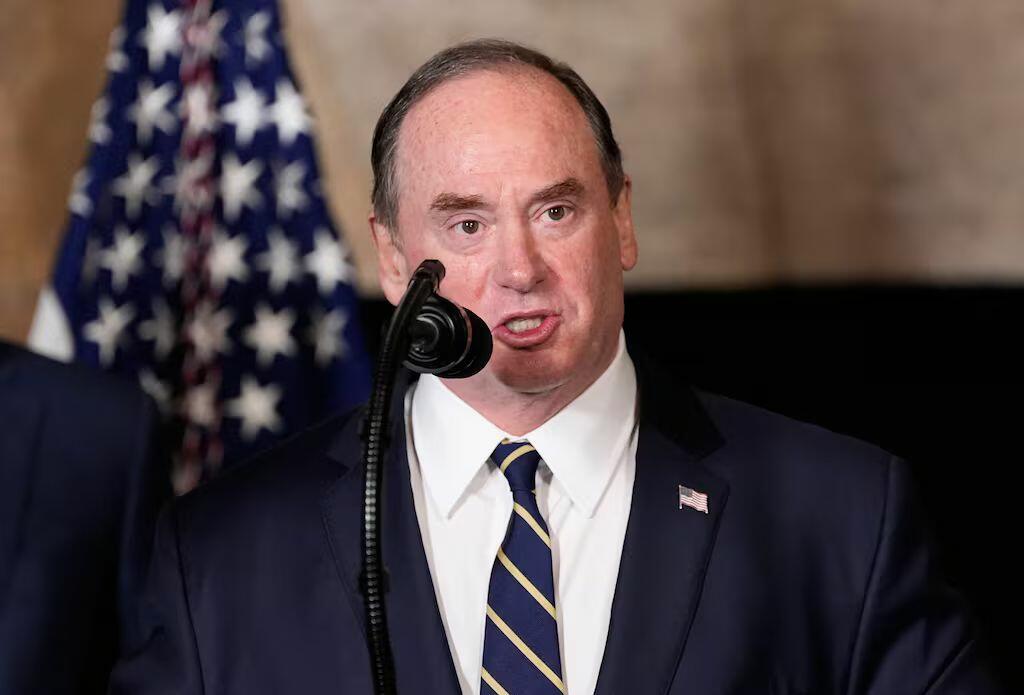
Navy Secretary John Phelan speaks at President Donald Trump’s Mar-a-Lago club on Dec. 22, 2025, in Palm Beach, Florida. (Alex Brandon/AP)

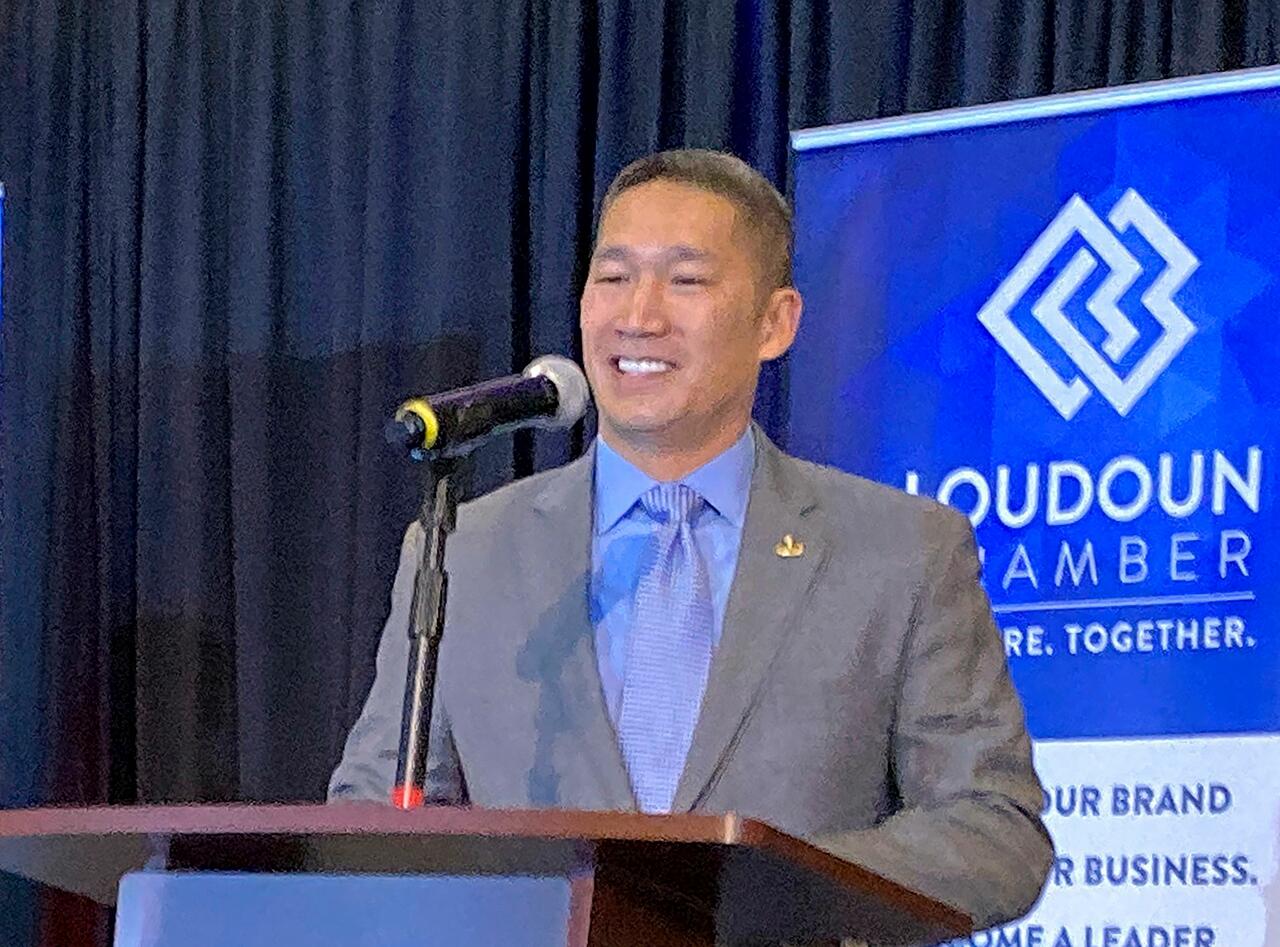
Undersecretary of the Navy Hung Cao has been elevated to Acting Secretary of the Navy. The announcement, issued by Chief Pentagon Spokesman Sean Parnell (Assistant to the Secretary of War for Public Affairs), offered no explanation for the move and simply thanked Phelan for his service “on behalf of Secretary of War Pete Hegseth and the Deputy.”

The timing of the firing could hardly be more dramatic. The United States remains engaged in active military operations against Iran following the launch of Operation Epic Fury on February 28 – a joint U.S.-Israel campaign targeting Iranian missile stockpiles, naval assets, and defense infrastructure. Although a ceasefire took effect around April 8, tensions remain extremely high. The U.S. Navy is currently enforcing a naval blockade of Iranian ports in and near the Strait of Hormuz, announced in mid-April after diplomatic talks collapsed. Recent incidents have included the seizure of Iranian-flagged vessels attempting to run the blockade, Iranian attacks on commercial shipping, and ongoing enforcement actions that continue to roil global oil markets and international shipping lanes.

Phelan, a Palm Beach-based private equity investor, art collector, and major Trump donor who had poured millions into supporting the president, had no prior military or Navy experience when he was nominated in late 2024. Despite criticism over his lack of relevant background and potential conflicts of interest stemming from investments in defense contractors such as Dell and Palantir, he was confirmed by the Senate. During his roughly thirteen-month tenure (March 2025–April 22, 2026), Phelan focused heavily on bureaucratic efficiency: he axed Biden-era climate and DEI contracts and grants, reportedly saving approximately $300 million. He also pushed aggressive initiatives to accelerate shipbuilding, increase lethality across the fleet, and deepen partnerships with private-sector technology firms like Palantir.

Just yesterday, Phelan had delivered remarks at the Navy’s annual conference. In February, reports surfaced that he had flown aboard Jeffrey Epstein’s plane in 2006—well before Epstein’s first arrest. Phelan maintained that he was invited by someone else, had no further contact with Epstein, and addressed the matter publicly at the time.

Stepping into the role is Hung Cao, a Navy Captain with more than 25 years of service.

A Naval Academy graduate and decorated combat veteran, Cao’s record includes extensive experience in explosive ordnance disposal (EOD), diving, special operations, and surface warfare. He fled Vietnam as a child refugee from communism, later balancing Navy budgets at the Pentagon and deploying multiple times. Cao ran for U.S. Senate in Virginia with President Trump’s endorsement and was confirmed as Under Secretary of the Navy in October 2025. Supporters have hailed him as a “badass” warrior with genuine operational credibility—the exact opposite profile of the donor-turned-political-appointee he is replacing.

Multiple outlets are already describing Phelan’s removal as a firing orchestrated by Secretary of War Pete Hegseth. The move fits a broader pattern of rapid turnover at the top of the defense establishment under the current administration, driven by demands for loyalty and warfighting readiness. Earlier this year, the Army’s top general was also removed.

Meanwhile, Democrats are pouncing. Sen. Lisa Blunt Rochester (D-DE), framed the sudden change as evidence that things are not going well inside the administration. 

As of this writing, no public explanation has emerged from the Pentagon or the White House. 

The Navy’s operational chain of command – Chief of Naval Operations, fleet commanders, and forward-deployed forces – remains unchanged and fully in control. Still, the abrupt leadership transition at the top of the Department of the Navy (now operating under the rebranded Department of War) during active combat operations is historic in its speed and opacity.

Tyler Durden
Wed, 04/22/2026 – 20:14

via ZeroHedge News https://ift.tt/ZBEgn6x Tyler Durden

After The Bombing, Tehran Confronts Widespread Ruin

After The Bombing, Tehran Confronts Widespread Ruin

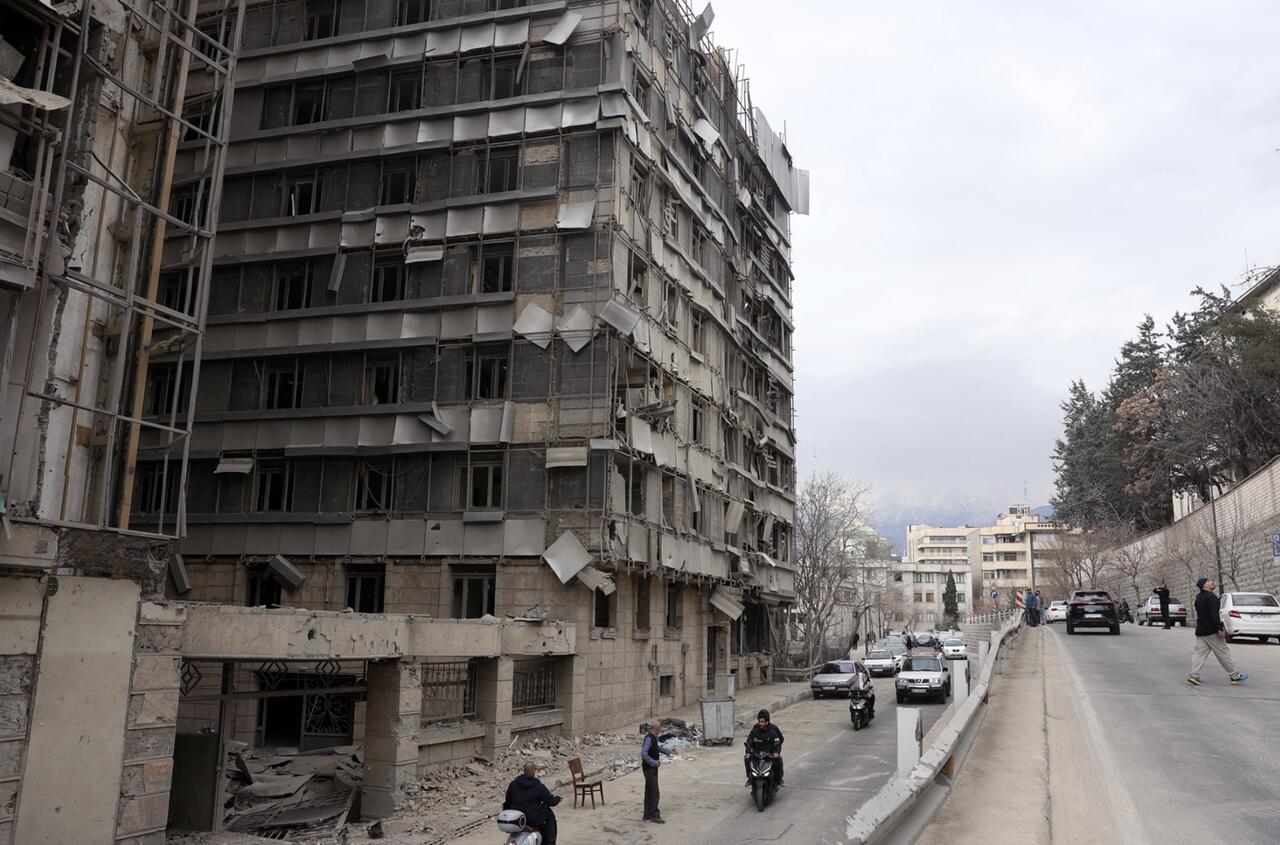
After more than a month of conflict, a fragile ceasefire has allowed people in Tehran to begin assessing the scale of destruction, according to a new Bloomberg report.

The city, home to around nine million people, now bears widespread signs of damage, from shattered buildings to entire blocks reduced to rubble.

Although the truce has been extended for now, talks between the US and Iran have stalled, with major disagreements still unresolved around nuclear activity, regional control, and military influence.

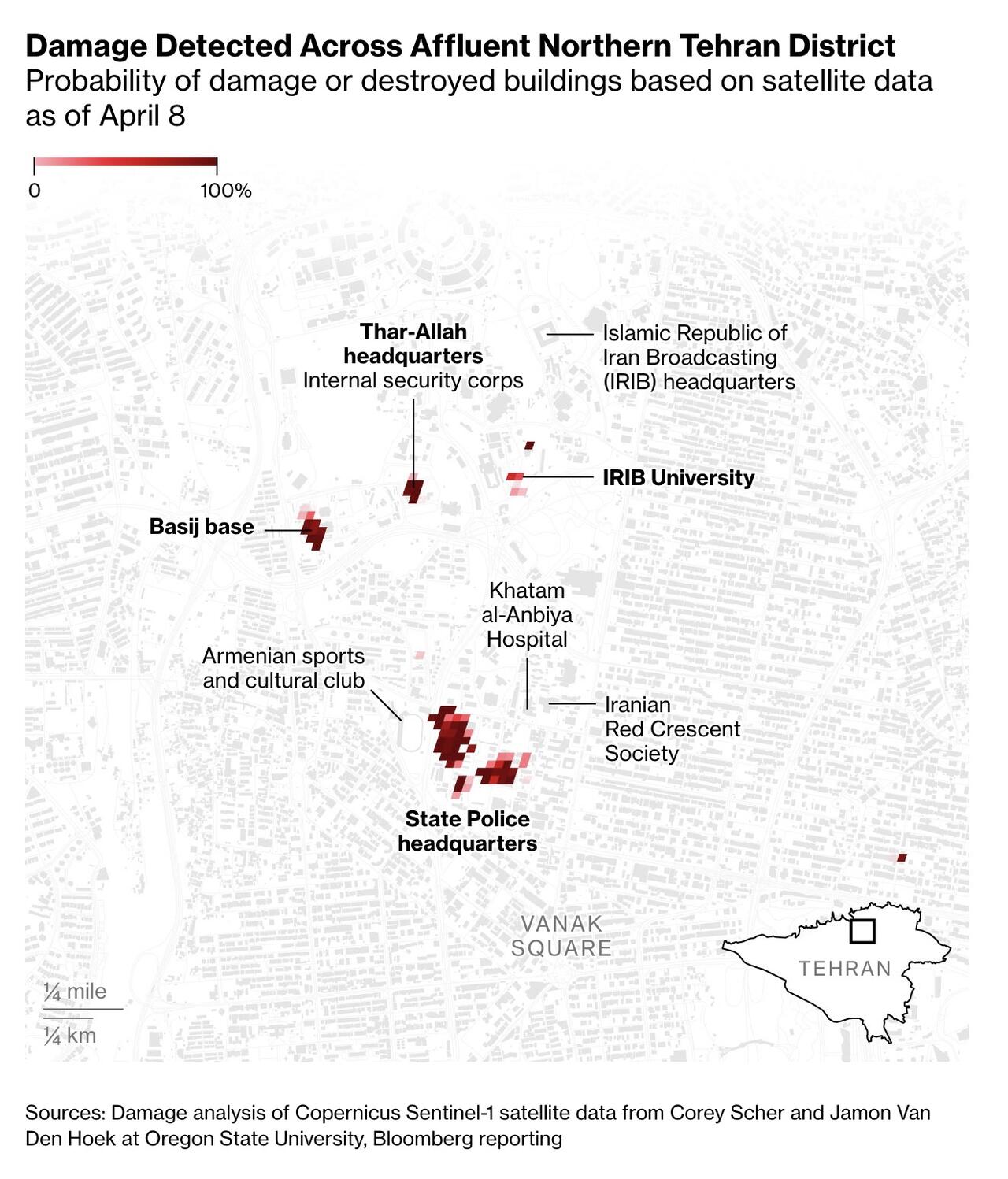
The Bloomberg piece notes that the toll has been severe. At least 3,300 people have been killed across Iran, including civilians, and the physical damage is extensive. Because of restrictions on imagery and reporting, the full picture is still unclear, but satellite-based analysis suggests more than 7,600 buildings nationwide have been damaged or destroyed.

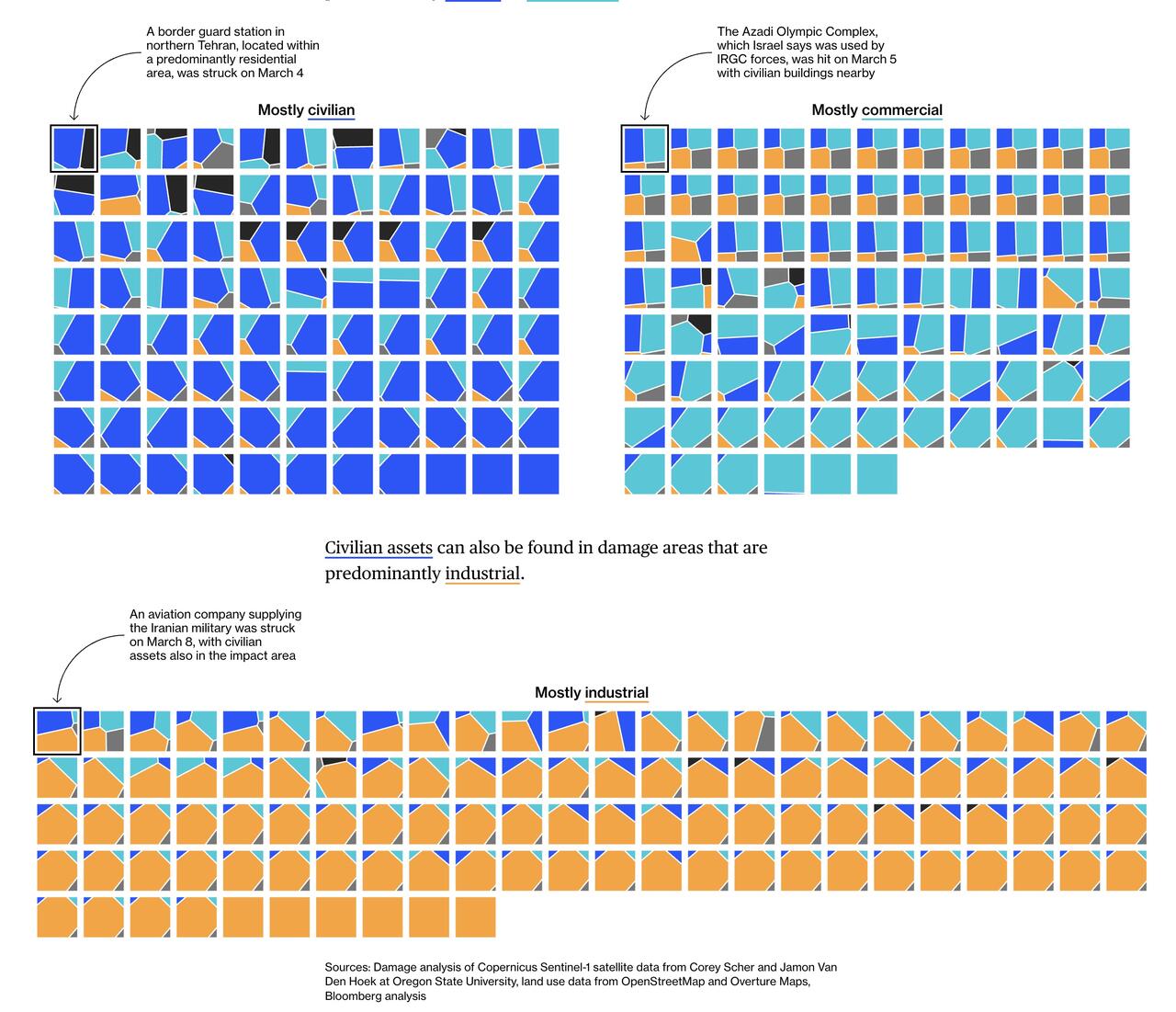
In Tehran alone, roughly 2,800 structures were hit. These include not just military or industrial sites, but also homes, businesses, and public facilities, reflecting how tightly intertwined different parts of the city are.

Experts note that even when strikes are intended to be precise, the reality in a dense urban environment is far messier. In Tehran, residential neighborhoods, commercial areas, and government facilities are often located side by side, making it difficult to isolate targets. As a result, the impact of attacks spreads beyond their intended focus, affecting civilian life in ways that are hard to contain.

The war has also deepened Iran’s existing economic and social pressures. Even before the conflict, the country was dealing with high inflation, environmental strain, and ongoing sanctions. Now, reconstruction costs are estimated at roughly $270 billion—close to the size of Iran’s entire economy—and inflation could climb above 70%.

Many businesses have shut down or are operating at reduced capacity, housing damage is widespread, and unemployment is expected to rise, increasing the risk of broader poverty.

Outside the capital, strikes have hit key industrial and energy hubs, disrupting supply chains and production. Damage to major steel plants and petrochemical facilities is already affecting other industries, from manufacturing to food packaging. These knock-on effects are likely to compound the economic strain in the months ahead.

Even if the ceasefire holds, rebuilding will take years, and the path forward remains uncertain as the country grapples with both physical destruction and deep structural challenges.

The uncertainty around what comes next is weighing heavily on residents and policymakers alike. While Iranian officials have floated ideas such as seeking reparations or leveraging control of key trade routes like the Strait of Hormuz to help fund reconstruction, any meaningful recovery will depend on political stability and the easing of international tensions.

Without that, access to capital, materials, and foreign investment will remain constrained, complicating efforts to rebuild critical infrastructure and restore economic activity.

There is also a broader question about how reconstruction will unfold. In past conflicts, rebuilding has sometimes helped drive recovery, but it can also deepen existing imbalances depending on how resources are allocated. As one expert put it, “damage does not only affect the structures that are hit, it also ripples out,” underscoring how the effects extend beyond physical destruction into the social and economic fabric of the city.

In Tehran, where housing, commerce, and public services are tightly interconnected, the challenge will be not just repairing what was lost, but restoring stability in a system already under strain.

Tyler Durden
Wed, 04/22/2026 – 20:05

via ZeroHedge News https://ift.tt/nQOvWEz Tyler Durden

China’s “National Team” Dumped ETFs In Q1 To Cool Overheating Market

China’s “National Team” Dumped ETFs In Q1 To Cool Overheating Market

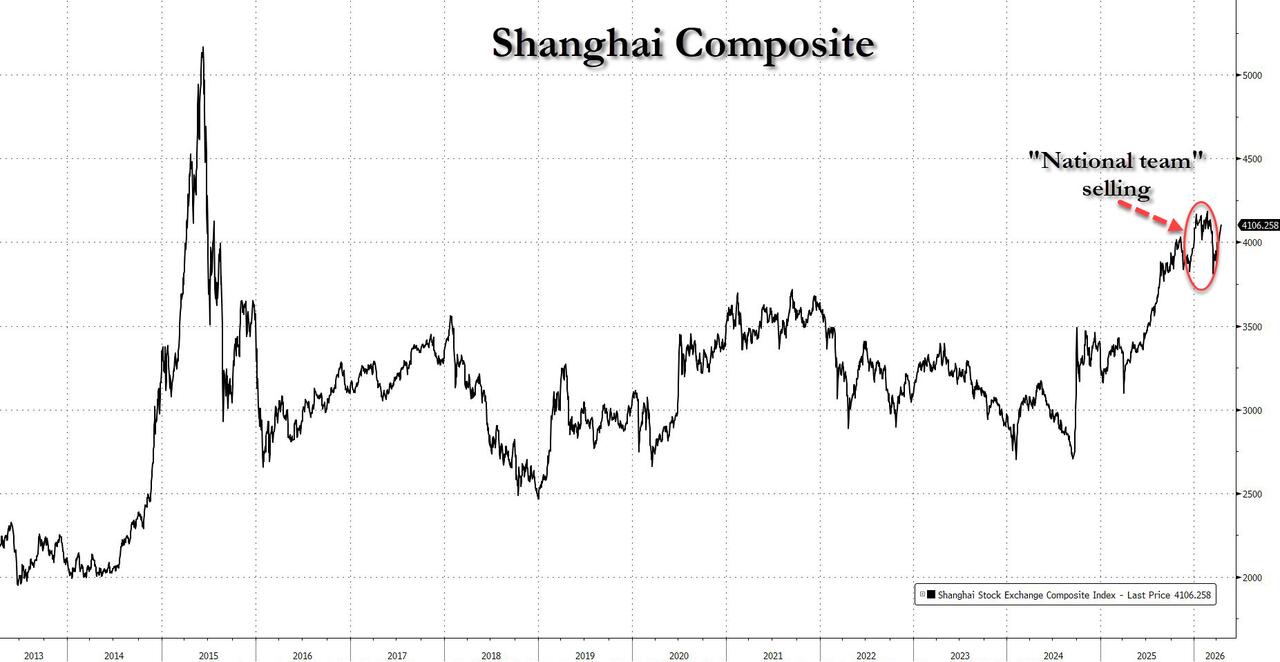
For years, and especially after the local stock bubble burst in spectacular fashion a little over a decade ago, China’s “National Team” – a polite euphemism for the country’s Plunge Protection Team – could be relied upon to step in and provide a lending hand – or rather buying hand – to stabilize stocks in the nick of time. Well, it may be time to rename it to the Surge Protection Team

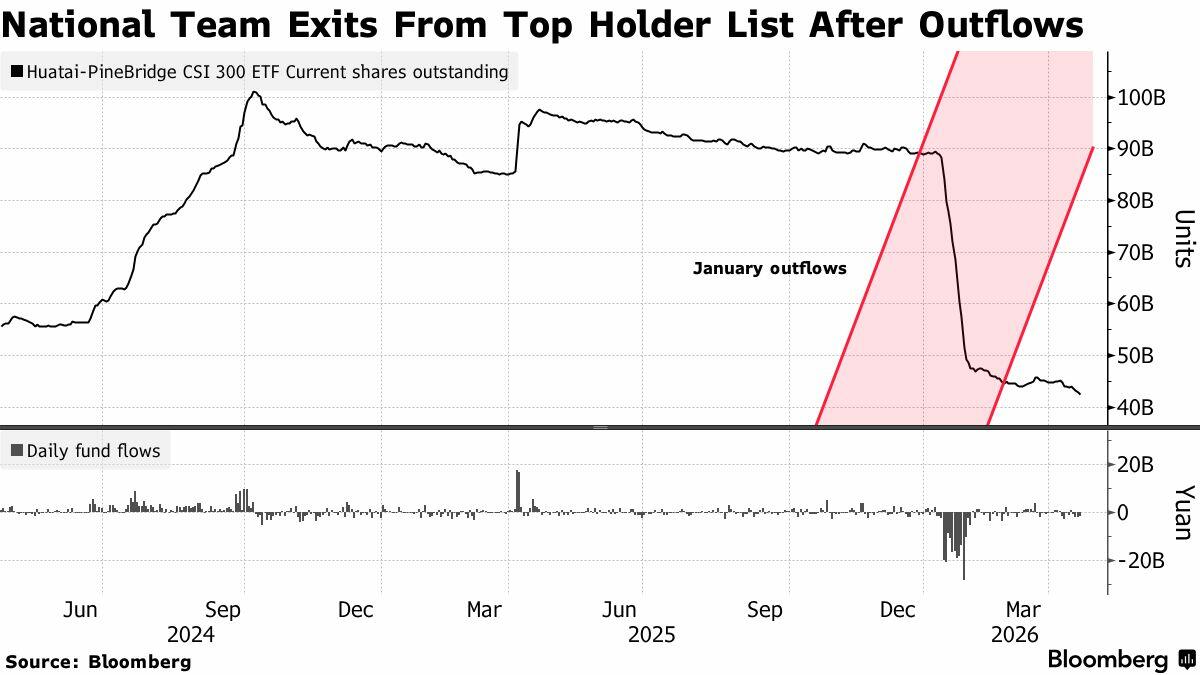
According to Bloomberg, China’s “national team” has stepped back from its dominant role in the country’s biggest stock ETFs, pointing to efforts to rein in an overheated rally earlier this year.

Central Huijin Investment Ltd – a core unit of China’s sovereign wealth fund that traditionally led a group of state-backed investors used to stabilize markets – cut its ownership in several key exchange‑traded funds to below the 20% disclosure threshold, according to first‑quarter filings. Its current stake is unclear and won’t be reported until sometime in the summer. 

The disclosures, according to Bloomberg, offer the clearest confirmation yet that the national team cut a substantial portion of its ETF holdings in January, as turnover hit a record and the rally turned increasingly speculative, particularly in parts of the technology sector. They also indicate Beijing is no longer just propping up the market, but is willing to drain speculative excess — a break from past rescue playbooks.

Central Huijin and its asset management arm may have reduced their holdings by at least half in flagship products such as the 200 billion yuan ($29.3 billion) Huatai-PineBridge CSI 300 ETF. The two entities held 42.6% and 40% respectively as of the end of last year.

Even smaller funds such as the HuaAn SSE 180 ETF, previously 92% owned by the national team, reported no single shareholder above the 20% threshold, indicating the stakes were cut across the board. 

Quarterly ETF filings only require disclosure of investors with holdings of 20% or more, a threshold Central Huijin had consistently met until local stocks erupted higher in Q1.

While ownership levels can fluctuate as others trade, the sharp decline in total ETF units outstanding during the period suggests the market’s dominant buyer until recently played a decisive role in the outflows.

Remarkably, some of the National Team sales might have locked in gains of around 50%, based on the rise of the CSI 300 Index from early‑2024 lows, when the national team began aggressively buying ETFs to stem a market meltdown, through January this year, when the selling likely took place. The exact returns would depend on the specific ETFs and the timing of those purchases.

The scale of the stake reductions may become clearer with first-half filings due in the third quarter, when the identities and holdings of the top 10 investors are revealed.

Morgan Stanley estimates the national team sold about $80 billion of positions in January and February. Analysts including Laura Wang expect the money to be used for investing in longer-term, more “strategic and thematic” ETFs.

“The fact that they have relinquished this dominant position in ETFs implies that they have much more potential to create upside in the market going forward, sitting on cash, while their power to create downside is now diminished,” said Cheng Hao, fund manager at Zhejiang Feiluo Assets Management.

And now that the National Team is mostly in cash, local stocks can drop again and the government will be there to prop them up again. Rinse. Repeat. 

Tyler Durden
Wed, 04/22/2026 – 19:15

via ZeroHedge News https://ift.tt/Gau02YU Tyler Durden

Injunction Against Publicly Identifying Pseudonymous Litigants Is Content-Based Prior Restraint,

Today’s decision by Fourth Circuit Judge Julius Richardson, joined by Chief Judge Albert Diaz, in Doe v. Mast involved a gag order on defendants: The order barred the defendants from “disclosing any information that directly or indirectly identifies Plaintiffs or their family members to any person … unless that person first executes a non-disclosure agreement.”

The court ultimately upheld the order, because of national security concerns that are only very rarely present in such pseudonymous claims (see this post for more, including more on the factual background). But in the process, the court held three things that will be significant in many more cases.

1. Such gag orders are content-based prior restraints on speech:

“Content-based restrictions target ‘particular speech because of the topic discussed or the idea or message expressed.'” Distinctions drawn “based on the message a speaker conveys,” whether they regulate speech “by particular subject matter” or “by its function or purpose,” are facially content based and presumptively unconstitutional….

[A]n order prohibiting “any extrajudicial statement … to any person or persons associated with any public communications media … relating to the trial, the parties or issues in th[e] case which could interfere with a fair trial or prejudice any plaintiff, the defendant, or the administration of justice” constituted a content-based restriction…. [I]n a similar way, the protective order at issue here is a content-based restriction on speech, because it facially singles out and restricts the Masts’ ability to speak extrajudicially “to any person” if their message functions to “directly or indirectly” reveal the Does’ or their family members’ identities.

As the order prohibits speech before it is expressed, it is also a prior restraint. {Even though the threatened sanction is not imposed until after the speech has occurred, practically, the protective order operates as an immediate restraint on the Masts’ speech.} “The term prior restraint is used ‘to describe administrative and judicial orders forbidding certain communications when issued in advance of the time that such communications are to occur.'” “[C]ourt orders that actually forbid speech activities are classic examples of prior restraints.”

2. Though courts have broad authority to limit the dissemination of what litigants learn through coercive court-ordered discovery, that authority can’t justify restricting litigants from saying what they learned independently:

[T]he order does not merely restrict the dissemination of information obtained through court-sanctioned discovery; it prevents the Masts from sharing information learned independently of this litigation. That distinction matters.

In Seattle Times Co. v. Rhinehart (1984), the Supreme Court held that an order limiting dissemination of information gained through discovery “is not the kind of classic prior restraint that requires exacting First Amendment scrutiny,” because the restricted party would never have possessed that information if not for the court’s coercion-backed processes. But “injunctions against parties revealing information that they already knew before filing the case” are classic prior restraints. Here, the Masts knew the Does’ true identities before this lawsuit was filed, so this knowledge was not “gained through the pretrial discovery process.” … So Seattle Times‘s more deferential “good cause” standard does not apply.

3. A court’s power to let litigants proceed pseudonymously in court doesn’t necessarily imply a power to gag their adversaries outside court:

The district court’s attempt to distinguish the order from a prior restraint by characterizing it as a necessary “corollary” to enforce the pseudonym order conflates two distinct inquiries, each designed to protect different rights….

[The test for when parties can proceed pseudonymously] balances a plaintiff’s privacy interests against the public’s right of access to judicial proceedings and a defendant’s right to fair process. It is not—and was never intended to be—a test for justifying a prior restraint on a party’s distinct First Amendment right to free speech outside the courthouse…. [The] test determines whether a plaintiff can shield their identity in the litigation; it does not grant the court license to censor the defendant’s right to speak about that identity in the public sphere.

The post Injunction Against Publicly Identifying Pseudonymous Litigants Is Content-Based Prior Restraint, appeared first on Reason.com.

from Latest – Reason.com https://ift.tt/QjrvBWU
via IFTTT

Fourth Circuit Upholds Injunction Against Disclosing Names of Perceived Afghan Collaborators

From Fourth Circuit Judge Julius Richardson, joined by Chief Judge Albert Diaz, in today’s Doe v. Mast:

To protect Plaintiffs and their family members living in Afghanistan, the district court issued a protective order that prohibited Defendants and their lawyers from “disclosing any information that directly or indirectly identifies Plaintiffs or their family members to any person … unless that person first executes a non-disclosure agreement.” …

Although the order constitutes a content-based prior restraint, it fits into one of the narrow exceptions in which prior restraints can be permissible, subject to strict scrutiny. And the order satisfies strict scrutiny: It is narrowly tailored to safeguard the government’s compelling interest in ensuring our Nation’s security, which often depends on ensuring the safety of foreign nationals who ally themselves with United States military and diplomatic efforts abroad.

Indeed, if such foreign nationals cannot rely on the United States’ assurances of their protection, our Nation’s ability to cultivate essential human assets abroad would be seriously undermined. In this case, the narrow protective order is the least restrictive means to safeguard this interest. Therefore, we affirm the district court’s protective order….

“The Government has a compelling interest in protecting” not only “the secrecy of information important to our national security” but also “the appearance of confidentiality so essential to the effective operation of our foreign intelligence service.” Snepp v. U.S. (1980). That includes protecting the identity of potential foreign collaborators…. [T]he government’s ability to provide credible assurances to potential collaborators that they and their family members will not be endangered by aiding the United States is directly tied to its compelling interest in ensuring the Nation’s security.

This interest necessarily encompasses protecting the confidentiality of those who are perceived as collaborators, regardless of whether they are actual collaborators. That’s because the government’s ability to credibly ensure the confidentiality of collaborators, and thus its ability to recruit and retain them, depends in part on avoiding publicly marking those seen as having assisted the U.S. government….

As the district court noted, the Does were evacuated from Afghanistan to the United States in late August 2021 and then housed at United States military bases. During this time, Operation Allies Refuge—as the name suggests—sought to support Afghans who worked alongside the United States in Afghanistan by bringing them to the United States. The circumstances and timing of the Does’ evacuation and resettlement would predictably (even if mistakenly) lead an outside observer as well as the Taliban to perceive the Does as American collaborators.

Indeed, “evidence readily showed the grave safety risks that … [the Does’] families in Afghanistan would face if [the Does’] identities became public.” The Taliban would likely “carry out violence against the Does’ families remaining in Afghanistan.” Nor is this mere conjecture, as the district court found that the “threat” to their families, if the Does’ “identities become known, is anything but speculative.” …

[And the] protective order—prohibiting “disclosing any information that directly or indirectly identifies Plaintiffs and their family members to any person … unless that person first executes a non-disclosure agreement”—is sufficiently narrowly tailored. It is limited to the Masts as participants in the litigation…. [And it] does not purport to control the Masts’ ability to speak generally about the litigation, about the Does’ claims, or about their own defenses….

More on the unusual factual and procedural background:

In September 2019, an Afghan infant (Baby Doe) was injured and orphaned during a joint U.S.-Afghan military operation in Afghanistan. U.S. Army Rangers then took Baby Doe to a U.S. military hospital for emergency care. Soon thereafter, Major Joshua Mast, who was serving in Afghanistan as a Marine Corps Judge Advocate, learned about Baby Doe. Mast and his wife, Stephanie Mast, began custody proceedings in Virginia. They obtained an interlocutory adoption order in November 2019, which was finalized in December 2020.

This led to a dispute over child custody with the Does, who were Baby Doe’s cousin and his wife; eventually the Virginia Supreme Court rejected the Does’ challenge.

In September 2022, the Does brought this federal suit against the Masts, Joshua’s brother Richard, and others who assisted the Masts. Along with their original complaint, the Does moved for a protective order that would prohibit Defendants from publicly disclosing the Does’ identities.

In support, John Doe submitted a sealed declaration explaining that he and Jane Doe would fear for their own safety—and that of their family in Afghanistan—if their presence in the United States or the circumstances surrounding their departure from Afghanistan were revealed. He expressed concern that if their location were revealed, then the Taliban would learn of it and harm their family members based on the false perception that Doe was a U.S. cooperator or spy. This fear is even more acute because the Does came to the United States during the evacuation of Afghanistan—at the same time as many genuine cooperators. He further explained that their family would be put at risk even if only their hometowns were publicly disclosed.

The district court agreed, issuing the gag order described in the opening paragraph above. The court held that “the protective order constitutes a content-based prior restraint,” because it enjoined the publication of specific information. But the court held that this was the “exceptional case[]” in which a content-based prior restraint is constitutionally permissible, because it’s narrowly tailored to the compelling government interest in national security:

Judge Robert King dissented on narrow appellate procedure grounds.

Kevin S. Elliker (Hunton Andrews Kurth LLP) argued the case on behalf of the Does.

The post Fourth Circuit Upholds Injunction Against Disclosing Names of Perceived Afghan Collaborators appeared first on Reason.com.

from Latest – Reason.com https://ift.tt/vVA2mMe
via IFTTT