Every Bond Bear’s Worst Nightmare In 1 Simple Chart

“Everyone” knows that yields have to rise when the Fed tightens, right? With yields so low, “everyone” knows that bonds are the worst investment if The Fed begins to hike rates, right? Wrong! As the following chart from Goldman Sachs shows – over the last 32 rate-hike cycles, 10Y bond yields have compressed after the rate-hike cycle begins… So be careful what you wish for on Fed tightening!

Post-hike, 10Y yields have dropped notably in the next few years of the cycle…


We know it’s annoying when ‘facts’ and ‘data’ get in the way of a narrative that everyone would love to come true… but history simply tells us that mainstream is simply misled and then squeezed on their short bond positions. Simply put, if rates haven’t lifted by the time the Fed raises rates (if that ever happens) then they never will and the ‘turning Japanese’ meme will be proven correct once again.


Chart: Goldman Sachs


via Zero Hedge http://feedproxy.google.com/~r/zerohedge/feed/~3/oU_BWZSFYzI/story01.htm Tyler Durden

After Escaping Chris Christie’s Clutches, Ebola-Negative Nurse Faces Detention by Her State’s Governor

Kaci Hickox, the nurse who escaped New Jersey
Gov. Chris Christie’s clutches on Monday, now faces a
threat
of confinement by Maine Gov. Paul LePage. On Friday, as
I note in my
column
today, Hickox became the first person to be forcibly
isolated under Christie’s new 21-day quarantine policy for health
care workers returning from Africa after treating Ebola patients.
Hickox has never shown symptoms of Ebola and repeatedly tested
negative for the disease while confined at University Hospital in
Newark over the weekend, which is why Christie, by his own account,
let her leave New Jersey for her home in Maine. LePage nevertheless
wants Hickox to remain at home until the 21-day quarantine period
ends in mid-November. Today she said she prefers not to, since she
is neither sick nor contagious. In response, LePage said he
will seek to compel her compliance.

“Upon learning the healthcare worker intends to defy the
protocols,” says a
statement
from LePage’s office, “the Office of the Governor has
been working collaboratively with the State health officials within
the Department of Health and Human Services to seek legal
authority to enforce the quarantine.” Meanwhile, “The Maine State
Police will monitor the residence in Fort Kent where the healthcare
worker is staying, for both her protection and the health of the
community.” That sounds like LePage is exercising a legal authority
he does not yet have by enforcing a quarantine that has not yet
been ordered. He explains why:

We hoped that the healthcare worker would voluntarily comply
with these protocols, but this individual has stated publicly she
will not abide by the protocols. We are very concerned about her
safety and health and that of the community. We are exploring all
of our options for protecting the health and well-being of the
healthcare worker, anyone who comes in contact with her, the Fort
Kent community and all of Maine. While we certainly respect the
rights of one individual, we must be vigilant in protecting 1.3
million Mainers, as well as anyone who visits our great state.

LePage, a Republican up for re-election next Tuesday, is right
that “1.3 million Mainers” (many of them voters!) deserve
protection from imminent threats to their health. But there is no
evidence that Hickox poses such a threat, and no reason to think
that daily monitoring for symptoms cannot provide adequate
protection in the event that Hickox does become ill, without the
need to detain her at gunpoint. Ebola is not airborne; it is

transmitted
through contact with the bodily fluids of people
who are infected, a risk that does not arise until fever and other
symptoms appear. As The New England Journal of
Medicine
 notes in an
editorial
published on Monday, “an asymptomatic health care
worker returning from treating patients with Ebola, even if he or
she were infected, would not be contagious,” and “fever
precedes the contagious stage.” Contrary to what LePage seems to
imagine, someone with a normal temperature who tests negative for
the virus will not suddenly become violently ill during a trip to
the grocery store and start vomiting on fellow shoppers.

Maine Health and Human Services Commissioner Mary Mayhew says a
quarantine policy based on such outlandish, scientifically
unfounded scenarios is “a reasonable, common-sense approach.”
The New England Journal of Medicine calls it “unfair and
unwise,” warning that it will “impede essential efforts to stop
these awful outbreaks of Ebola disease” by deterring medical
professionals like Hickox from volunteering their efforts. “These
responsible, skilled health care workers who are risking their
lives to help others are also helping by stemming the epidemic at
its source,” the journal says. “If we add barriers making it harder
for volunteers to return to their community, we are hurting
ourselves.”

Christie, desperate to justify what looks like an embarrassing
overreaction, keeps falsely claiming that Hickox was “obviously
ill” when she arrived at Newark Liberty International Airport on
Friday. According to
her account
, which as far as I know is uncontradicted, the only
evidence of illness at the airport was an erroneous reading from a
forehead thermometer indicating a temperature of 101, which she
attributes to the fact that she was “flushed and upset.” At the
hospital, a more-accurate oral thermometer indicated a normal
temperature of 98.6, while a forehead thermometer still registered
101. Hickox says a doctor told her: “There’s no way you have a
fever. Your face is just flushed.” Hickox did not display any other
symptoms, and she tested negative for Ebola, which is why she was
released from the hospital on Monday.

Here is how Christie
spun
this sequence of events yesterday:

She hadn’t had any symptoms for 24 hours. And she tested
negative for Ebola. So there was no reason to keep her. The reason
she was put into the hospital in the first place was because she
was running a high fever and was symptomatic.

If people are symptomatic they go into the hospital. If they
live in New Jersey, they get quarantined at home. If they don’t,
and they’re not symptomatic, then we set up quarantine for them out
of state. But if they are symptomatic, they’re going to the
hospital.

Even a temperature of 101
does not qualify
as “a high fever” in an adult, and even that
reading seems to have been erroneous. As Christie should know by
now, Hickox never had “a high fever” or any other symptoms. But
continuing to claim otherwise, he insinuates that she was sick but
got better, which suggests that she might get sick again at any
moment.

“I remain appalled by these home quarantine policies that have
been forced upon me, even though I am in perfectly good health and
feeling strong and have been this entire time completely symptom
free,” Hickox
said
on NBC’s Today show this morning. As I argue
in my
column
, which discusses the legal standards usually applied in
quarantine cases, the government does not have “clear and
convincing evidence” that Hickox poses a threat to the general
public, and home confinement is not the “least restrictive
alternative,” given the option of daily symptom monitoring.

from Hit & Run http://ift.tt/1rT9qJb
via IFTTT

Sororities Don’t Let Their Girls Drink in the House: Is That Wise?

The House BunnyThe Huffington Post
reports
that most sororities in the country are dry: They don’t
let girls have alcohol in the house at all. The national Greek
organization that oversees most sororities, the National
Panhellenic Conference, has apparently maintained that policy for
as long as anyone can remember—it’s a staple of a “more Victorian
era,” according to the organization. Fraternities, on the other
hand, have no such prohibition.

Perhaps more surprising: No one seems interested in changing
things.

“I hate to say it, but I don’t see that changing ever,” said
Julie Johnson, a committee chairwoman at the NPC.


According to a HuffPost poll
, 65 percent of women
and 50 percent of men agreed that sororities should remain dry:

Fifty-eight percent of respondents said they agreed that
“sorority houses should not be allowed to host parties that serve
alcohol.” Yet, only 50 percent of men in the poll agreed with the
statement, compared with 65 percent of women.

Just 16 percent of female respondents think sororities should be
allowed to host alcoholic parties, compared with 32 percent of men,
the poll found.

Technically speaking, most residents of both sorority and
fraternity houses are under 21 and can’t legally drink alcohol
anyway. And I’m sure this policy isn’t followed uniformly, and is
often flouted. But just like the drinking age, a stated no-alcohol
policy shifts students’ drinking habits—not by stopping them from
drinking, but by changing where and when they are more likely to
drink. Since sorority sisters aren’t supposed to drink at home, and
can’t host social events with alcohol, and are legally barred from
drinking at bars and restaurants, they are driven to parties—at
apartments, college town houses, and fraternities—when they want to
drink.

It’s easy to see why this
may not be a socially desirable result
. Drinking in a
stranger’s basement is inherently more dangerous than drinking in
the comfort of your own home, or a bar. It seems to me that the
kinds of misunderstandings, uncomfortable situations, and outright
assaults that befall college women are far more likely to occur
when drinking under such conditions. If college girls are going to
get drunk at parties no matter what the law says, shouldn’t more of
those parties be happening on their own turf—in an environment
controlled by women, where a potential rape victim is surrounded by
girls she knows and lives with?

The so-called “epidemic” of sexual assault on campus is
probably exaggerated
, given how
dubious the statistics are
. But campus rape does happen—and
when it does, it is almost always the result of blackout drinking.
Don’t both NPC’s alcohol policy and the current legal drinking
age incentivize sorority girls to binge drink in the dark, late at
night, in unfamiliar, male-dominated environments, away from their
sisters?

Some progressives think the best way to fix the problem is to
concentrate on what happens
right before a potential assault is committed
. They are
obsessed over the precise words leading up to an assault, and think
legislatures should force colleges to police the expression of
thoughts and feelings during intimate moments.

Instead of forcing students to say the right words to each other
under dangerous and incapacitating drinking conditions, why
don’t we simply remove the policies that encourage them to drink so
irresponsibly?

Read more about the libertarian answer to the campus rape crisis

here
.

from Hit & Run http://reason.com/blog/2014/10/29/sororities-dont-let-their-girls-drink-in
via IFTTT

Goldman Cuts 2015, 2016 EPS Forecasts On “Diminished Global GDP Growth” Just As Fed Surprises With Hawkish Outlook

It is perhaps the definition of irony that just two hours after the Fed issued a surprising statement that was so bullish on US growth it is as if the past month never happened, as if Williams and Bullard never threatened with QE4 just because the market almost entered a correction, and that made Goldman’s chief economist Jan Hatzius to a express “modest hawkish surprise” that the very same bank, Goldman, whose alum is in charge of the NY Fed (leading to hours of secret tapes exposing the white glove treatment Goldman gets at the Fed), just announced it was cutting its 2015 and 2016 EPS forecasts “diminished global GDP growth and lower crude prices.”

Here is how Goldman’s David Kostin puts it:

We trim our S&P 500 earnings forecasts to incorporate diminished global GDP growth and lower crude prices. Our revised EPS estimates equal $122 in 2015 and $131 in 2016, reflecting growth of 5% and 8%. Every 100 bp shift in US GDP growth translates into $6 per share, while a similar shift in world ex-US GDP growth is $3 per share. A $10 drop in next year’s Brent oil price from our $84 assumption would lift 2015 EPS by just $1 but raise 2016 EPS by $4. We forecast 2015 sales growth of 4% and net margins of 9.1%, both below consensus. A 50 bp shift in margins equals $5 in EPS.


We forecast S&P 500 EPS will rise from $116 in 2014 to $122 in 2015 and to $131 in 2016, implying annual growth of 5% in 2015 and 8% in 2016. Our estimates are below current bottom-up consensus EPS estimates of $129 in 2015 and $144 in 2016. Looking ahead, we expect S&P 500 EPS will rise by 8% to $141 in 2017 and by 6% to $150 in 2018. We revise down our near-term earnings forecasts to incorporate diminished global GDP growth and lower crude prices. We now expect S&P 500 EPS of $122 for 2015 and $131 for 2016, down from $125 and $132, respectively.


The largest gaps between our top-down sector earnings forecasts and bottom-up consensus occur in Energy, Health Care, and Information Technology. Exhibit 16 compares our sector earnings forecasts with the bottom-up consensus estimates.


We forecast S&P 500 sales excluding Financials and Utilities will grow by 4% in 2015 and 6% in 2016. Our sales estimates are roughly in line with consensus, 4% in both 2015 and 2016, but differ by sector composition (see Exhibit 17). Looking further ahead, we expect S&P 500 sales growth of 7% in 2017 and 6% in 2018.


We forecast trailing four quarter net margins will remain at the current historical high of 9.1% through 2015 before rising slightly to a new peak of 9.2% in 2016. The forces that influence margins are equally balanced between upside and downside. Firms remain focused on efficiency gains and cost controls, and commodity prices will remain controlled. Labor costs are a potential headwind for margins in the medium-term.


Margin expectations are the key difference between our forecast and consensus. Bottom-up consensus forecasts S&P 500 margins will reach a new peak level of 9.2% by the end of 2014. Consensus also expects aggressive margin expansion to 9.8% in 2015 and to 10.5% in 2016.


Our forecasts do not incorporate an explicit buyback assumption because the impact of buybacks on S&P 500 EPS is low. The index EPS calculation aggregates company earnings rather than EPS, so company share counts have less impact on the index.


What is the main driver of Goldman’s bout of gloom?

We assume Global GDP grows at an average annualized rate of 3.3% in 2015 and 3.8% in 2016. Our assumptions imply the world excluding the United States grows at 3.3% in 2015 and 4.0% in 2016. Both Global GDP growth assumptions are slightly below our economists’ current forecasts of 3.5% and 3.9%, respectively. Exhibit 6 shows the sensitivity of our EPS model to various US GDP growth rate and Global ex-US GDP growth rate assumptions.


So with global growth slowing, which is to be expected with the Chinese housing bubble rapidly deflating and Europe in a triple-dip recession, hooker and blow addbacks to pro-forma GDP aside, Goldman is basically expecting that the US will decouple from the entire world, and grow at the highest rate since before the Lehman collapse?

Exhibits 2 and 3 show the sensitivity of our EPS model to various US GDP growth rate assumptions. A 100 bp shift in 2015 US GDP growth translates into a $6 per share shift in 2015 EPS. The sensitivity of our 2016 EPS estimate to 2016 US GDP growth rates is similar. Our US GDP sensitivities incorporate both the change in US GDP and the consequential adjustment in Global GDP growth.


Even with a US economy expected to grow at 3% in the next few years, investors are concerned about a slowing world economy and the impact on S&P 500 EPS growth. Foreign sales accounted for 33% of aggregate revenue for the S&P 500 in 2013. However, that means 67% of revenues are earned domestically.


Our EPS model is more sensitive to US GDP growth assumptions than Global ex-US GDP growth. While a 100 bp adjustment in US GDP growth moves S&P 500 EPS by 5%, or $6 per share, the equivalent 100 bp adjustment to Global ex-US GDP growth changes EPS by less than 3%, or $3 a share. Sector sensitivities differ as some areas are more globally exposed than others.


Oh, and we forgot to mention: the US is expected to grow 3.1% as the Fed not only no longer injects the much needed flow to keep the market rising, but is also, supposedly, about to start hiking rates making the US economy encounter something it hasn’t seen in over 6 years?

Good luck.


via Zero Hedge http://ift.tt/1p2Zv8q Tyler Durden

College Wisely Acknowledges Game of Thrones Shirt Is Not a Violent Threat

Hodor.No, posting a
picture of your daughter doing yoga while wearing a T-shirt with a
quote from Game of Thrones on social media is not a threat
to do harm to anybody. Thank heavens the folks at Bergen Community
College in New Jersey have finally settled that little issue.

This case goes back to January, when a college professor did
what was just described above. He posted said picture on Google+. A
college executive director got an e-mail notification about the
picture post. He saw the picture of the girl, with her shirt that
read “I will take what is mine with fire & blood,” and thought
that this was an actual threat. They put Professor Francis Schmidt
on leave (without pay!) and ordered him to see a psychiatrist. More
details
here
.

Months later the college has realized the professor wasn’t the
one who had lost his mind. Today Eugene Volokh over at The
Washington Post
has a
letter from the college
admitting as such:

This letter acknowledges that Bergen Community College (“BCC”)
may have lacked basis to sanction you for your January 12, 2014
Google+ post of your daughter wearing a Game of Thrones t-shirt
(the “Incident”). By sanctioning you as it did, BCC may have
unintentionally erred and potentially violated your constitutional
rights, including under the First Amendment to the U.S.
Constitution.

Upon further reflection on this matter and in order to bring
this issue to closure, BCC will strike and remove from your
employment file any adverse record in connection with this
Incident. … Likewise, any penalty or restriction you may have
suffered in connection with this Incident, … is hereby rescinded
and acknowledged to be null and void. Part and parcel of this
acknowledgement, the Incident shall not be considered in any future
BCC decisions concerning your employment, including without
limitation any decisions relating to promotion, sabbatical,
compensation, or any future disciplinary proceeding. In sum, you
will be in good standing with BCC as if the Incident never
occurred, and BCC’s records shall so reflect.

from Hit & Run http://ift.tt/1wGChFE
via IFTTT

Martin Armstrong Rages “Government Is Corrupt & Rotten To The Core”

Submitted by Martin Armstrong via Armstrong Economics blog,

QUESTION: What is the best form of government? Will anything ever work?

Julian-II

ANSWER: There is no single form of government that will ever be perfect. Whatever its form, government will self-corrupt and both sides will fight eternally between the people and government perhaps eternally. The best form of government for brief periods of time are benevolent dictators, monarchs, or emperors, such as Julian II, who even decreed that whatever laws he passed must also apply to himself. Such individuals are rare indeed and once they are gone, the system will revert back to its corrupt state.

Another system that actually worked very well was Genoa. There the “Doge” (head of state) was selected each year from the head of a prominent family. The rich families ruled on a rotating basis annually. What made it work well was the short-term period. No family would ever pass something Draconian because it would apply to themselves the next year. The system was not one of rich v poor, but Genoa v Venice and Florence. The interests were furthered collectively rather than this philosophy of party politics. Therefore, each class benefited. It also lasted longer without corruption than Florence or Venice.

The best we can hope for is a hybrid between Democracy and a Republic that is restrained by a Positive Constitution rather than a Negative one as we have in the United States. In other words, if we have an everyday bureaucracy to run things that is subject to review by the people who rotate annually, there is some hope that it might last longer before it collapses. Much of the bureaucracy should be privatized where management will be proper and employee pensions will actually have to be there. When government is in charge, those in power just exempt themselves from the laws that apply to others – the first step in the corruption process.

With technology, each and every measure must be voted on by the people. There should be no Clean Water Act that has hidden some study on traffic flow in a city nobody ever heard of to line the pockets of someone’s family member. Voting can be done via your laptop and if each and every bill must be presented individually, that will stop the nonsense.

Judges CANNOT be appointed by anyone in government. They must be as Ben Franklin argued, nominated by the guild of lawyers. That way the best will rise to the top – not the most corrupt. Prosecution must also be independent and the people MUST actually indict meaning that they hear both sides in a grand jury. Plea bargaining must end and CONSPIRACY must end. Only those who are involved in a crime may be charged – no one else. No one charged with a crime may testify against another. Self-interest in prosecution must end.

While legal scholars tend to look at Article III of the US Constitution as based upon the English legal system modeled on Blackstone’s famous Commentaries on the Laws of England, Franklin argued for the Scottish System that was far superior. Indeed, the Scottish judicial system provided an important, but overlooked, model for the framing of Article III. Unlike the English system of overlapping original jurisdiction, the Scottish judiciary featured a hierarchical, appellate-style judiciary, with one supreme court sitting at the top and an array of inferior courts of original jurisdiction down below. What’s more, the Scottish judiciary operated within a constitutional framework — the so-called Acts of Union that combined England and Scotland into Great Britain in 1707 retained the independent legal structure of Scotland and prohibited the English courts from interfering with those of Scotland. The influence of the Scottish judiciary on the language and structure of the US Article III legal framework is clear where there is a Supreme Court with multiple inferior courts that are subordinate to, and subject to the supervisory oversight of, the sole supreme court. The Scottish model thus provides important historical support for the supremacy of the Supreme Court, however, the blending of this with the English system rendered the inferiority in Article III to operate as textual and structural limits on Congress’s jurisdiction-stripping authority from the courts. But the most dangerous flaw appears to be intentional – Congress appoints judges not lawyers. This allowed the English legal system to be politically manipulated whereas the Scottish System was really independent. This MUST be corrected to restore the rule of law.

Career politicians get bored and pass laws just to have something to do like in Utah you cannot drink before ordering dinner or in Europe regulating cow farting. This is why a representative form of government with career representatives is doomed to always fail. They can be bribed to enact particular laws to benefit some party. The only check and balance would be to rotate, as in Genoa, and to allow the people to vote online.

A raw unrestrained Democracy would devolve into mob rule. That we cannot tolerate either. There should be something that rotates as a Constitutional court as in France where each law passed MUST firs be ruled on as being Constitutional by a body of lawyers that rotates and MUST be trained in constitutional law which is significantly different from following statutory law. The former is structural design while the latter is following the letter of the law. This is a Positive Constitution that restrains government and is a real Bill of Rights. We have the negative form where government gets to do whatever it likes and we must prove we have any rights – very bad.

Debtor Prison


Prison should be outlawed for non-violent crimes. The ONLY reason a government has the right to restrain the liberty of an individual is to protect others from bodily harm – that is it. Every law passed by Congress states – “fine or imprisonment or both”. That must stop. Debtor’s Prison must end. The USA imprisons more people than the rest of the civilized world combined. Why are we so imprison happy when only about 4% of the people in prison are there for a violent crime? A woman was arrested and taken to jail for violating some statute that did not allow for imprisonment. A woman with children was taken to jail for not wearing a seat belt and the Supreme Court, being pro-government appointed by politicians, voted 5-4 that the police can imprison you for anything even if the crime does not call for jail time. We have a virtual 99% conviction rate because there is no way to win against pro-government judges.


Learning from the Past

There seems to be the potential to at least learn from the various political types of governments, how they functioned, how long did they last, and what was the impact upon the people. The advantages of Genoa was that the short terms restrained the Doge compared to Venice where the Doge was for life. Venice froze the estate upon the Doge’s death and only THEN reviewed all his actions to see if anything was gained illegally. Then the state would reclaim the “illegal” gains. That was closing the barn door after the horse ran away.
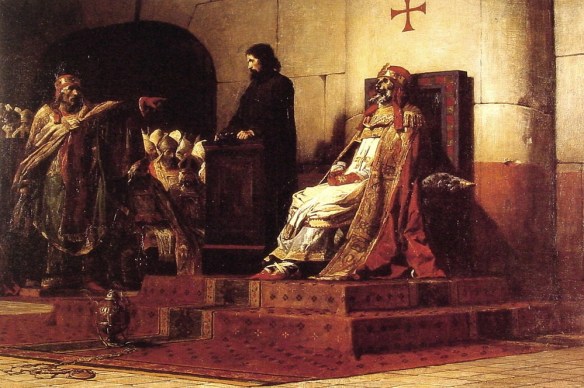
Formosus


Government is corrupt and rotten to the core – it is honorable only for brief shinning moments when the dark clouds leave a crack. One Pope Formosus (c. 816 – 4 April 896)  ruled against a Lord so the Lord rigged the game to become Pope and then put Formosus’ dead corpse on trial, had a friend answer for the dead Pope. Naturally, Formosus incriminated himself, who wouldn’t in such circumstances, and he was promptly found guilty, nullified all his decrees, and then claimed his property back. They will do anything – absolutely anything.

Cae-PontifMax


Julius Caesar (100-44BC) had to assume the role of high priest to create a calendar because the politicians were bribing the high priests to add days into the calendar to avoid elections. There is absolutely NOTHING those in power will not do to society for their own self-interest. Finding someone ethical who really cares is one in a billion.
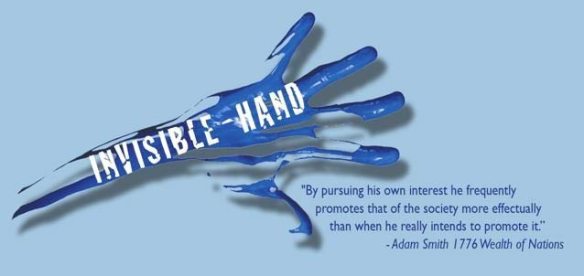
invisible-hand


The key is to review each form of government and take what worked and avoid what did not. We have to understand that no system will ever last forever. So the best we can do is design a system that has the best features and some internal mechanism of checks and balances. Nevertheless, whatever we can think of, will merely create the challenge for others to figure ways around. If we eliminate taxation and restrain government expenditure to what is required for natural expansion of the money supply to facilitate economic growth, then the majority of the lobbying will cease and therein lies the deepest cracks for corruption.


via Zero Hedge http://ift.tt/1p2WogD Tyler Durden

Buyers Focus On Dollars, 30 Year After Fed, Stocks Shrug

Stocks slid slowly lower into the FOMC statement, then tumbled as no matter how hard talking heads tried they could not find a silver lining in the hawkish tone reflected across near universal sell-side confirmation. Stocks tumbled, commodities tumbled, and the USDollar surged but the Treasury curve flattened dramatially as 30Y was well bid and the rest of the curve offered (2Y surged higher in yield). The last few minutes saw the ubiquitous levitation to VWAP which lifted Small Caps briefly into the green briefly and stocks all ended higheer from the FOMC statement. By the close, the USDollar was up notably, stocks lower, gold down 1.5%, oil up over $82, and the Treasury curve flattened dramatically (5Y +8bps, 30Y -2bps).


S&P ramped to VWAP…


"Off the highs" to start, dump'n'pump on FOMC, sellers resumed on hawkish tone then rescue bid lifted stocks back to unch…


Post-FOMC, stocks dumped and pumped…


Financials were the big winners post FOMC… homebuilders not so much…


Credit markets were not playing along with the equity exuberance in the last few minutes and financial stocks remains wildly optimistic compared to credit…


HY credit didnt bounce and is not buying it…


The USD surged on the FOMC statement…


The long-bond also rallied notably (30Y yields dropped 6bps on the FOMC) and flattened…


Quite a divergence post-FOMC in the Treasury Complex…


5s30s collapsed back to catch up with stocks in the oddest decoupling we have seen in a while…


Commodities all slumped after the FOMC, led by Gold…


Silver was the biggest loser post FOMC but all fell…


Charts: Bloomberg


via Zero Hedge http://ift.tt/13ermbv Tyler Durden

I Pledge Allegiance…

Screen Shot 2014-10-29 at 2.27.07 PMRemember those weird kids who didn’t say the Pledge of Allegiance in school? They either sat down or just stood up silently. I sure do. Most likely for religious reasons, but I remember thinking to myself as a kid that it was wrong not to say the pledge aloud with the rest of us. As I got older in my teenage years, I even felt that those kids were not being respectful.

Some adults may even give them the old, “well, if you don’t like it then you can leave” routine that is mentioned every time a minority opts out of the majority’s way of doing things.

Homeschooling my children will really make this a non-issue; however, my nieces were reciting the American Pledge of Allegiance the other day while playing with my children. In fact, here in Texas the kids recite both the American and Texas Pledge of Allegiance before class.

After hearing them recite it, and of course remembering the 2,500 or so times I said it in my lifetime, I started to think about the purpose and real meaning of this pledge that millions of school-aged children recite every morning Monday through Friday.

continue reading

from Liberty Blitzkrieg http://ift.tt/1nR0pns
via IFTTT

Elizabeth Nolan Brown on What Democrats Think Women Voters Want

With less than one week left until the 2014
elections, Democrats and Republicans are doubling down on the fight
for U.S. Senate seats in several key states. For Democrats, this
tends to mean ramping up rhetoric that paints GOP opponents as bad
for women’s health, livelihoods, and reproductive freedom. But are
female voters buying it? And, if so, will that actually translate
to wins for liberal candidates?

Elizabeth Nolan Brown takes a look at the poll numbers and finds
that “War on Women” rhetoric hasn’t been the golden ticket many
candidates—and the Democratic Senatorial Campaign Committee—hoped
it would be this election. Even (or perhaps especially) in races
where “women’s issues” have been a central focus, Democratic
candidates are seeing only modest leads among female voters.
Meanwhile, many of these candidates trail terribly among the male
electorate. 

View this article.

from Hit & Run http://ift.tt/1rAZGlK
via IFTTT