What’s new in blockchain regulation

In Episode 261, blockchain takes over the podcast again. We dive right into the recent activity from the SEC, namely, the Framework for “Investment Contract” Analysis of Digital Assets and the No-Action Letter issued to TurnKey Jet, Inc. (TurnKey) for a digital token. Gary Goldsholle noted this guidance has been eagerly anticipated since July 2017 when the SEC first applied the Howey Test to a digital token with the DAO report. The current framework focuses primarily on the reasonable expectation of profits and efforts of others prongs of the Howey Test. While the framework lays out a number of factors to consider when determining whether a token is a security, the practicality of those factors is still up for debate.

Will Turner explained that the TurnKey No-Action Letter was most useful for parties interested in structuring a private, permissioned, centralized blockchain, but believes the guidance in the Framework would allow for alternative structures. The key from the SEC’s perspective is that there is no expectation of profits for token holders, since the token is a stablecoin pegged to the value of USD and there is no use of the token outside of TurnKey’s network. Jeff Bandman noted the irony that the first No-Action Letter related to blockchain and cryptocurrency involves private jets, particularly since “Mr. and Ms. 401(k)“—the retail investors SEC Chairman Jay Clayton is focused on protecting—are not likely to become private jet users anytime soon.

Jeff emphasized the importance of network functionality and observed that the network for private jet use was already established. Alan Cohn highlighted this tension between the need for centralization to achieve functionality, and need for decentralization as a means to avoid meeting the “derived from the efforts of others” prong of the Howey Test.

Gary then turned to Blockstack’s Regulation A filing, the most comprehensive effort to register a token under Reg. A that we have seen to date. Blockstack is seeking to be a Tier 2 issuer, meaning they can raise up to $50 million in 12 months, which comes with heightened disclosure obligations and requires audited financials. While they seek to raise capital as a security today, their ultimate goal – and a central risk factor in their offering circular – is to achieve the requisite level of decentralization such that they no longer would meet the definition of a security.

Meanwhile, in Congress, the recently reintroduced Token Taxonomy Act of 2019 would exempt a newly defined category of digital tokens from the definition of a security, as well as provide some clarity on tax issues for cryptocurrency users and exchanges. Jeff observed that these amendments might contribute further to a gap in federal regulation over spot trading markets. While the CFTC has enforcement authority, they do not have the authority to directly supervise the bitcoin trading market.

Turning to the interview, Jeff describes how he co-founded Global Digital Finance (GDF), along with other co-founders in Europe, Asia, and the United States, in order to address the lack of international standards surrounding the blockchain industry – or even a general consensus of terminology. Jeff describes how GDF has a number of working groups focused on developing high-level principles and standards on a range of topics, including stablecoins, custody, tax, and security tokens. GDF is trying to fill in some of the gaps that appear when jurisdictions regulate cryptocurrencies and crypto-assets differently.  As an example of its work, GDF’s KYC/AML/CTF group recently commented on FATF’s standards, issuing two comments in October 2018 and April 2019.

Jeff is also in the process of launching a new transfer agent service, Block Agent, focused on enabling and supporting SEC-regulated issuances. As markets mature, it is increasingly important to have the necessary post-trade infrastructure, and he is committed to offering services that recognize the novel features and efficiencies around these new technologies.

For our listeners in the DC area, Steptoe is hosting a half-day complimentary regulatory symposium this Thursday, May 2, in our DC office. Our plenary speakers include current and former commissioners and high-level officials with agencies such as the Federal Energy Regulatory Commission, the Surface Transportation Board, and the Environmental Protection Agency. We will also have breakout panels focused on four separate topics: Deference, Globalization, Regulatory/Legislative Approach, and Preemption. To register, click here.

Download the 261st Episode (mp3).

You can subscribe to The Cyberlaw Podcast using iTunes, Google Play, Spotify, Pocket Casts, or our RSS feed!

As always, The Cyberlaw Podcast is open to feedback. Be sure to engage with @stewartbaker on Twitter. Send your questions, comments, and suggestions for topics or interviewees to CyberlawPodcast@steptoe.com. Remember: If your suggested guest appears on the show, we will send you a highly coveted Cyberlaw Podcast mug!

The views expressed in this podcast are those of the speakers and do not reflect the opinions of the firm.

from Latest – Reason.com http://bit.ly/2WeHeXs
via IFTTT

SEC Bars Hedge Fund Manager Who Lost 88% Of His Clients’ Money In Three Days

The SEC barred a “hedge” fund manager from Connecticut after it discovered that he lost $1.8 million of his client’s assets after participating in “risky investment practices”, which is a polite way of saying losing 88% of their money in about three days.

Matthew Rossi and Fairfield, Conn.-based SJL Capital defrauded clients by misleading them about the nature and performance of the fund’s investment strategy, according to a cease and desist order from the SEC. Rossi was the founder, managing partner and 80% majority owner of the fund. 

The SEC’s order said that Rossi told investors his fund would invest in a diversified portfolio of publicly traded equities. He also claimed that the fund had a highly successful proprietary algorithm, called MarketDNA, that had been refined over 20 years and included stop losses to limit downside risk.

Instead, the SEC alleges that Rossi “engaged in risky, unhedged options trading, which did not comport with the purported MarketDNA strategy and did not include any safety valves or stop loss limits.”

OptionSellers.com redux?

The strategy of unhedged options trading seemed to work out fine… at first. In June 2016, Rossi used the fund’s assets to buy a series of put options that wound up returning him 101% that month. The fund had additional gains of 15% in July and reached its peak valuation of more than $1.3 million at the end of the month.

But the fund’s success ran out in August 2016 when it lost 88% of its value in days due to the same options “strategies”.

On August 19, Rossi sold short dated Amazon calls that resulted in a loss of over $600,000. Within minutes of closing that position, Rossi bought Amazon call options, in addition to Priceline call options, and lost over $68,000 when he sold the Amazon options on August 22.

By November 2016, the fund had been completely wiped out.

Then, instead of making a long, drawn out video explaining the losses like the fine folks at OptionSellers.com did, Rossi hid the extent of the losses from investors by making fake account statements and tax documents that falsely described the fund’s assets and returns generated by the supposedly successful strategy.

The SEC claims that clients invested nearly $1.8 million with him and when they found out about the losses, Rossi made up a story that they were due to a “rogue trader” who had been making trades on his behalf while he was undergoing knee surgery and couldn’t work. As a result, the SEC has barred Rossi from association with any broker, dealer, investment adviser, municipal securities dealer, municipal advisor, transfer agent, or nationally recognized statistical rating organization.

via ZeroHedge News http://bit.ly/2Lb25Kn Tyler Durden

Sri Lanka Bans Burqas In Response To Easter Bombings

Authored by Areeb Ullah via MiddleEastEye.net,

Muslim women in Sri Lanka have been banned from wearing the face veil in response to the Easter Sunday attacks that killed at least 250 people and wounded hundreds more. 

Sri Lankan President Maithripala Sirisena introduced the face-covering ban on Monday and said it was part of an emergency law to ensure national security in the country. 

Sirisena’s office added that any face garment which “hindered identification” would be banned automatically.  

Critics of the ban, however, have said the ban disproportionately targets Muslim women in the South Asian country, where a small minority wear the face veil, or niqab.

Sinthujan Varatharajah, an analyst at the democracy advocacy group Open Society Foundation, said the ban made no sense as none of the Easter Sunday attackers wore face veils during the attacks. 

According to Varatharajah, the Sinhalese community, which makes up the majority of the Sri Lankan population, fear suicide bombers, who were used by the Tamil insurgency between 1980 and 2000.

“This is a shortcut response because practically speaking, none of the attackers wore a niqab,” Varatharajah told Middle East Eye. 

“Why would you criminalise the most obvious manifestation of Muslim identity? To calm the public. But this seeps into a bigger attempt by the state to control Muslim identity formation.”

Backlash feared

Following the Eastern Sunday attacks, security has been heightened across the country, as authorities fear further attacks will take place on the island. 

Analysts also fear a backlash could take place against Sri Lanka’s Muslim community in the wake of the attacks.

Varatharajah noted that in the last few years, Sri Lankan Muslims have been attacked by Sinhalese.

“There is a growing sense of tension towards Muslims being more outwardly Muslim, like wearing the hijab, which is quite a recent development,” Varatharajah said.

“This boils down to economic concerns and resentment from the Sinhalese community towards minorities. The anger geared towards Tamil businesses is now shifting towards Muslims.”

Last month, the Sri Lankan government declared a nationwide state of emergency to quell anti-Muslim riots that killed at least three people and damaged dozens of mosques and homes. 

via ZeroHedge News http://bit.ly/2Y1iVx1 Tyler Durden

License To Krill: Russian Black-Ops Spy Whale Found In Barents Sea

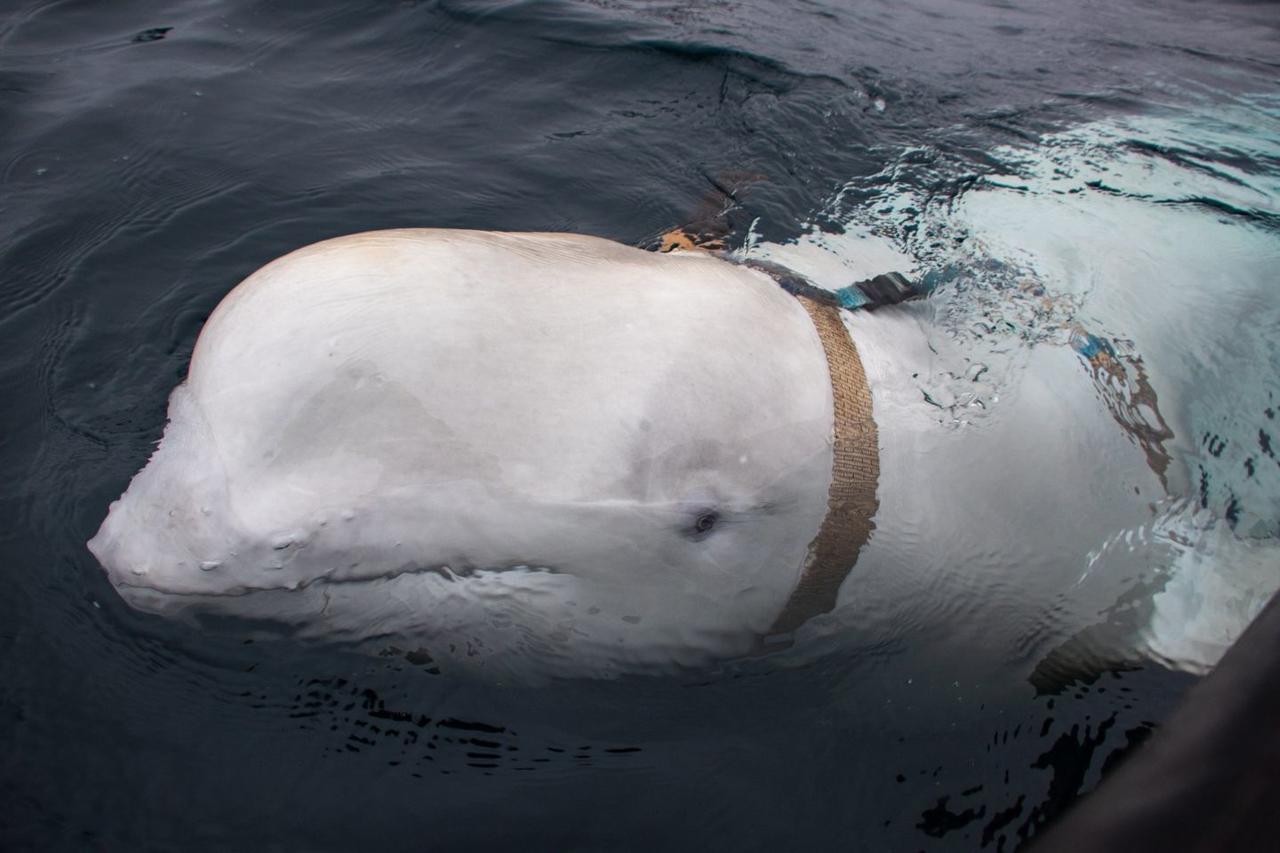
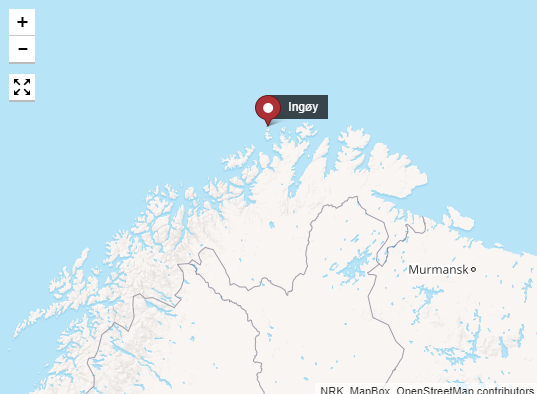
Norwegian fisherman encountered what appears to be a Russian-trained beluga whale in the Barents Sea off the northeast coast of Norway on April 25. 

Fitted with a camera harness that had Russian markings, the whale kept approaching the fishing boat and “rubbed up against it,” according to NRK and Ars Technica

The harness was reportedly marked with the label “Equipment St. Petersburg” and had an attachment point for a GoPro camera. Audun Rikardsen, a professor at the Norwegian Arctic University in Tromsø (UiT), told Norway’s VG that neither Norwegian nor Russian academic researchers put harnesses on whales. “I have been in contact with some Russian researchers,” Rikardsen said. “They can confirm that it is nothing they are doing. They tell me that most likely is the Russian Navy in Murmansk.” –Ars Technica

“We were going to put out our nets when we saw a whale whale swimming between the boats,” said fisherman Joar Heston, who added “It came over to us, and as it approached, we saw that it had some sort of harness on it.”

After several failed attempts to remove the harness themselves, the fisherman sent photos to Norway’s Directorate of Fisheries, and reported that the whale was in distress. A fisheries boat in the area responded, and noted that “after a little lure with cod fillets, and with the fisherman Joar Hesten getting into the water wearing a survival suit, the inspectors Jørgen Ree Wiig and Yngve Larsen from the Marine Service and the Horse managed to release the whale,” according to a post on Facebook. 

Military use of marine mammals goes back decades – with the United States’ program going back to at least the 1960s. 

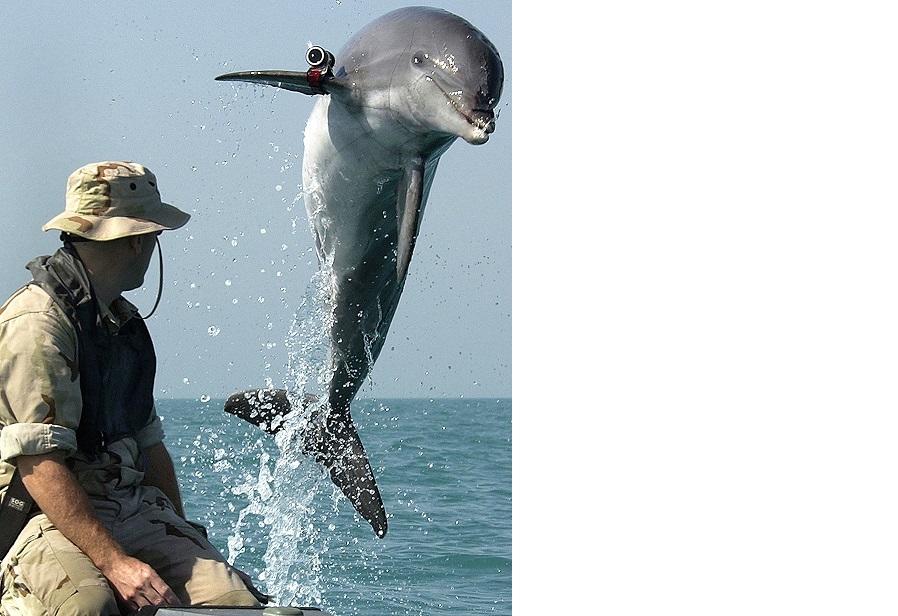
The Navy’s Marine Mammal Program began in 1960 with two goals. First, the Navy wanted to study the underwater sonar capabilities of dolphins and beluga whales to learn how to design more efficient methods of detecting objects underwater, and to improve the speed of their boats and submarines by researching how dolphins are able to swim so fast and dive so deep. In addition to this research component, the Navy also trained dolphins, beluga whales, sea lions and other marine mammals to perform various underwater tasks, including delivering equipment to divers underwater, locating and retrieving lost objects, guarding boats and submarines, and doing underwater surveillance using a camera held in their mouths.  –PBS

A timeline of research via PBS: 

1960’s    navy begins use of marine mammals

1965    sea lab II
In 1965, the Marine Mammal Program began its first military project: Sea Lab II. Working in the waters off La Jolla, California, a bottlenosed dolphin named Tuffy completed the first successful open ocean military exercise. He repeatedly dove 200 feet to the Sea Lab II installation, carrying mail and tools to navy personnel. He was also trained to guide lost divers to safety.

1965-75    dolphins used in vietnam
The Navy sent five dolphins to Cam Ranh Bay to perform underwater surveillance and guard military boats from enemy swimmers. Although during this era rumors circulated about a “swimmer nullification program” through which dolphins were trained to attack and kill enemy swimmer, the Navy denies such a program ever existed.

1975    introduction of sea lions and beluga whales
With the success of the dolphin program, the Navy began working with sea lions, training them to recover military hardware or weaponry fired and dropped in the ocean. The sea lions could dive and recover objects at depths of up to 650 feet.

The Navy also began exploring the use of beluga whales, which, like dolphins, use sonar to navigate. Beluga whales could operate at much colder temperatures and deeper depths than either dolphins or sea lions.

1965-75    navy builds up collection of dolphins
The Marine Mammal Program reached its heyday in the 1980’s, with an expanded budget and increased number of dolphins. In 1986, Congress partially repealed the 1972 Marine Mammal Protection Act by letting the Navy collect wild dolphins from for “national defense purposes.” The Navy planned to use the dolphins to expand its mine disposal units and to stock a breeding program.

1986-88    dolphins in the persian gulf
The navy sent six dolphins to the Persian Gulf, where they patrolled the harbor in Bahrain to protect US flagships from enemy swimmers and mines, and escorted Kuwaiti oil tankers through potentially dangerous waters. One of the dolphins, “Skippy,” died of a bacterial infection.

1986-88    missile guarding project in bangor abandoned
In the late 1980’s the Navy began a project through which dolphins would act as guards at the Bangor Washington Trident Missile Base. Animal activists opposed the project, and filed suit against the Navy under the National Environmental Protection Act claiming that the Navy must do an environmental evaluation to determine whether deployment in the cold northern waters off Bangor would harm dolphins originally captured in the Gulf of Mexico. A judge ruled that such a study must be completed before the project could continue. The Navy abandoned the project.

By 1994, the Navy policy on moving dolphins to environments with radically different water temperatures changed; a spokesperson said that in general, the Navy would only move dolphins between environments with a 20 degree difference in temperature, except in emergency situations.

1990s    downsizing, declassification, retirement
With the end of the Cold War, the Navy’s budget for the marine mammal program was drastically reduced, and all but one of its training centers were closed down. Of the 103 dolphins remaining in the program, the Navy decided it needed only 70 to maintain its downsized operations. Much of the project was declassified, although certain details remain protected.

This raised the question of what to do with the remaining dolphins. In the 1992 Defense Appropriations Act, Congress alloted a half million dollars to the Navy to “to develop training procedures which will allow mammals which are no longer required for this project to be released into their natural habitat.” The Navy held two conferences of researchers and experts and determined that a reintroduction program would not be cost effective.

In an attempt to downsize its dolphin troops, the Navy offered to give its surplus trained dolphins to marine parks. However, interest in the free dolphins was low because many marine parks by this time had developed successful in-house breeding programs. The Navy only got only four requests, but pledged to care for the unclaimed dolphins until their deaths.

Later in 1994, the Navy agreed to send three dolphins to Sugarloaf sanctuary, near Key West in Florida, a rehabilitation facility run by Ric O’Barry. O’Barry planned to reeducate the dolphins so they could be safely released into the wild, once the necessary federal permits were granted.

1996    illegal release of Luther and Buck
Two of the dolphins being held at the Sugarloaf Sanctuary, Luther and Buck, were being prepared for life in the wild while awaiting federal permits for their release. In May, before the permits had been issued, O’Barry released the dolphins into the Gulf of Mexico. He believed that the dolphins were ready for release and that the bureaucratric requirements for a permit were designed to prevent the release of the Navy dolphins. He thought that to wait any longer before letting them go would jeopardize their chances of successful adaptation to the wild.

read O’Barry’s defense of his actions, and criticism of the release from Naomi Rose

The dolphins were recaptured less than two weeks later and returned to the Navy. All three of these dolphins are now back with the Navy. One of them is still in Florida;the other two are back in San Diego in the Navy facility there.

1997    Ukrainian dolphins trained by the Soviet Navy for military operations are now being used for therapy with autistic and emotionally disturbed children.

***

And it looks like it didn’t end there. In 2000, it was reported that the Soviet Navy sold their killer dolphins to Iran – while in 2005, there were reports that some of the US military’s trained dolphins based on Lake Pontchartrain escaped during the Hurricane Katrina flooding. In 2007, the US Navy spent $14 million on marine animal weapons research

In 2014, it was reported that Russia stole Ukraine’s “killer dolphin army” during the annexation of Crimean naval bases. 

As you may have heard in the past, the Ukrainian navy has a group of around ten dolphins in Sevastopol that are on active military duty. The dolphins partake in “training exercises for counter-combat swimmer tasks in order to defend ships in port and on raids.” And how exactly do they defend ships? With the knives and pistols attached to their adorable dolphin heads, of course. –The Atlantic

In March of 2013, three of Russia’s killer dolphins allegedly escaped the military base in Sevastopol. According to former Soviet Naval anti-sabotage officer Yury Plyachenko, “there were repeatedly cases in the 1980s when control was lost over dolphins. If a male dolphin saw a female dolphin during the mating season, he would immediately set off after her and would no longer obey any commands. But in a week or so he’d come back.”

We wonder if the Beluga whale (which doesn’t eat Krill, by the way), was similarly looking for love?

Only one question remains; who was flipper working for?

via ZeroHedge News http://bit.ly/2PCbV6L Tyler Durden

Peter Schiff: The Bigger The Boom, The Bigger The Bust

Via SchiffGold.com,

During the New Orleans Investment Conference, Peter Schiff participated in a panel discussion with Ben Hunt and Mike Larson. They talked about bubbles, booms and busts.

Hunt called it the “bubble of everything.” But he said the “gravitational force” created by all of the assets central banks have purchased over the last year have changed the “bubble-popping process.” That makes it hard to predict when things will actually start to deflate. He said it will take something the undermines the market confidence that central banks can bail us out. Hunt said inflation was possibly the pin that could prick the bubble.

Larson called it the “uber-bubble,” and he said he already sees some of the background concerns that have been simmering for  a long time are starting to “bubble over.” (Pun intended.) He said the last two bubbles were high in amplitude, but limited to certain parts of the economy (dot-coms and housing). The current bubble isn’t as high in amplitude, but it’s broader-based. We see bubbles in stocks, high-yield bonds, housing (again), and commercial real estate, along with a lot of other assets you don’t hear as much about – such as art and comic books.

I think the process of unwinding this is already beginning.”

Peter focused in on the cause of the bubbles.

When you see rampant, wide-scale bad decisions, generally a central banker is behind it, and they have made a bad decision to create too much money and to artificially manipulate interest rates down.”

This creates distortions in the economy because interest rates are really nothing more than price signals.

And like all prices, they need to be determined by the free market.”

Whenever the government – and central banks are really an extension of governments – price fixes something, it creates big distortions and malinvestments.

We have had artificially low interest rates for an unprecedented number of years at an unprecedented low rate. So, the mistakes that have been made during this time period dwarf the mistakes that have ever been made in any bubble in the past because the bubble is so much bigger.

When a bubble finally bursts, it’s really just the free market trying to clean up the mess created by the intervention. The bigger the boom, the bigger the bust.

The problem now is that the boom is so big that the bust will be catastrophic. And what’s going to make this bust different is that there is no bailout. There is no stimulus. It is impossible to reflate this bubble, because, as has been said, this is a bubble of everything. They can’t make a bubble go someplace else. It already is everyplace.”

Peter said the only place there isn’t a bubble is in gold. That means there is also a bubble in complacency and optimism.

People are so drunk on all this cheap money, they think nothing can go wrong.”

As far as what pin will prick the bubble, Peter said there are all kinds of pins out there. The problem is that when you’re in a bubble, you can’t see the pins.

The panel goes on to discuss some of the specific manifestations of the bubbles and where they see trouble spots.

And Peter makes a pitch for gold, saying his 24 karat gold cufflinks will outperform the S&P 500 over the next five years. He pointed out that when they started popping the dot-com bubble, gold was under $300. It got as high as $1,900 in 2011.

This game is not over. The fat lady hasn’t sung yet. When this final bubble pops, gold is going through the roof –I do think that by the time this bubble has run its course, you’ll be able to buy the Dow Jones for an ounce of gold.”

via ZeroHedge News http://bit.ly/2vurfsN Tyler Durden

Injunction to Take Down Critical Sock Puppet Comments

From Actx, Inc. Dalan, a King County, Wash., trial court stipulated judgment (signed by Judge John R. Ruhl):

13. Kimberly Dalan authored and published the four reviews attached hereto … on the Glassdoor Website ….

14. The Reviews create the false impression that they were authored by four different
former employees of ActX, Inc.

15. Kimberly Dalan no longer possesses and cannot reasonably recover the login
credentials used to publish the reviews attached hereto as Exhibits A-C to the Glassdoor Website.

16. Kimberly Dalan shall use reasonable efforts to delete the Reviews on the Glassdoor
Website, including by presenting this Stipulated Judgment to Glassdoor, Inc. and requesting removal of the Reviews.

Most aspects of the reviews themselves were nonlibelous opinion; here, for instance, is the first review:

Pros
Location is great, friendly Colleagues
Cons
Unprofessional attitude of the founder. He knows everything, you knmv nothing.
Advice to Management
Let your employees do their job.

The Cons in the other reviews were:

Micromanagement: you do not get to make many decisions about how you do your
own work
Lack of Respect: you will be talked down to. regardless of your title and experience
No Human Resources Department means no recourse for grievances
Long hours: you are expected to be available after hours and on weekends …

You are micromanaged at every turn and it feels like there is no trust that you will do
your job well or correctly. It can be an incredibly demoralizing work environment when you can hear/see your coworkers get talked down to multiple times a day. While it is technically a startup, it’s very much a typical office environment with the lack of
attention to morale/lack of rewards for the constant (and expected) long …

– Old school office setting where the boss is always right, and the boss is a man old enough to be your father who wants to ensure you know your place in his world.
– Founder routinely made fun of me for NOT having an academic background comparable to his
— specifically that I did not attend medical school.
– Misogynistic business culture
– Zero professional growth opportunity
– Non-competitive benefits, salary, PTO
– No paid parental leave

But the theory of the judgment is that the falsehood was in the claim that four different people posted these reviews (and that the opinions were therefore shared by at least four people). And this theory might be sound, I think, even in the absence of a stipulation by both parties, though I think any nonstipulated injunction based on this sock-puppetry theory should require the removal of all but one reviews, rather than all reviews.

This also reminds me of New Directions for Young Adults, Inc. v. Davis, a 2014 Broward County, Fla., trial court opinion (written by Judge Carlos Rodriguez):

Plaintiffs, New Directions For Young Adults, Inc. and Dr. Andrew S Rubin[,] … [sued for] Defamation … [and] Tortious Interference with a Business Relationship. The Plaintiffs allege, in pertinent part, that Defendants, Kathy and Brian Davis, tortiously interfered with current and prospective clients of the Plaintiffs when they published on the world-wide-web certain derogatory statements concerning the Plaintiffs’ business and reputation….

1. Pursuant to the evidence presented, the Court finds that Defendants created a false impression of a group of negative reviewers about the Plaintiffs when in fact, there is no such group of negative reviewers-only the Defendants.

2. The Court finds that the act of falsifying multiple identities is the conduct to be enjoined.

3. Based on the above-referenced conduct of creating a false impression of a multitude of negative reviews, this Court finds there is a likelihood of irreparable harm to the Plaintiffs….

5. Based upon the factual findings and evidence presented by the Parties, the Court finds that there is a there is a likelihood of irreparable harm to the Plaintiffs and a substantial likelihood of success on the merits, not because the statements are false or true, but because the conduct of making up names of person[s] who do not exist to post fake comments by fake people to support Defendants’ position tortiously interferes with Plaintiffs’ business….

Defendants shall, at their own expense, remove or cause to be removed all postings creating the false impression that more person are commenting on the program the actually exist. Posting under false names as persons who participated in the program, or are connected to the program or are patients who in fact did not exist is the conduct which is enjoined….

[T]he comments of Kathy Davis or Brian Davis which do not create a false impression of fake patients or fake employees or fake persons connected to program (those posted under their respective names) are protected by [the federal and state constitutions].

Kathy Davis had admitted in discovery to using four separate names in her posts, Cheyanna, Kayla, Kathy D., and William P. (plus an email address); one post, for instance, written under the name Kathy D., began with “I agree totally with William P’s review.”

Continue reading “Injunction to Take Down Critical Sock Puppet Comments”

Injunction to Take Down Critical Sock Puppet Comments

From Actx, Inc. Dalan, a King County, Wash., trial court stipulated judgment (signed by Judge John R. Ruhl):

13. Kimberly Dalan authored and published the four reviews attached hereto … on the Glassdoor Website ….

14. The Reviews create the false impression that they were authored by four different
former employees of ActX, Inc.

15. Kimberly Dalan no longer possesses and cannot reasonably recover the login
credentials used to publish the reviews attached hereto as Exhibits A-C to the Glassdoor Website.

16. Kimberly Dalan shall use reasonable efforts to delete the Reviews on the Glassdoor
Website, including by presenting this Stipulated Judgment to Glassdoor, Inc. and requesting removal of the Reviews.

Most aspects of the reviews themselves were nonlibelous opinion; here, for instance, is the first review:

Pros
Location is great, friendly Colleagues
Cons
Unprofessional attitude of the founder. He knows everything, you knmv nothing.
Advice to Management
Let your employees do their job.

The Cons in the other reviews were:

Micromanagement: you do not get to make many decisions about how you do your
own work
Lack of Respect: you will be talked down to. regardless of your title and experience
No Human Resources Department means no recourse for grievances
Long hours: you are expected to be available after hours and on weekends …

You are micromanaged at every turn and it feels like there is no trust that you will do
your job well or correctly. It can be an incredibly demoralizing work environment when you can hear/see your coworkers get talked down to multiple times a day. While it is technically a startup, it’s very much a typical office environment with the lack of
attention to morale/lack of rewards for the constant (and expected) long …

– Old school office setting where the boss is always right, and the boss is a man old enough to be your father who wants to ensure you know your place in his world.
– Founder routinely made fun of me for NOT having an academic background comparable to his
— specifically that I did not attend medical school.
– Misogynistic business culture
– Zero professional growth opportunity
– Non-competitive benefits, salary, PTO
– No paid parental leave

But the theory of the judgment is that the falsehood was in the claim that four different people posted these reviews (and that the opinions were therefore shared by at least four people). And this theory might be sound, I think, even in the absence of a stipulation by both parties, though I think any nonstipulated injunction based on this sock-puppetry theory should require the removal of all but one reviews, rather than all reviews.

This also reminds me of New Directions for Young Adults, Inc. v. Davis, a 2014 Broward County, Fla., trial court opinion (written by Judge Carlos Rodriguez):

Plaintiffs, New Directions For Young Adults, Inc. and Dr. Andrew S Rubin[,] … [sued for] Defamation … [and] Tortious Interference with a Business Relationship. The Plaintiffs allege, in pertinent part, that Defendants, Kathy and Brian Davis, tortiously interfered with current and prospective clients of the Plaintiffs when they published on the world-wide-web certain derogatory statements concerning the Plaintiffs’ business and reputation….

1. Pursuant to the evidence presented, the Court finds that Defendants created a false impression of a group of negative reviewers about the Plaintiffs when in fact, there is no such group of negative reviewers-only the Defendants.

2. The Court finds that the act of falsifying multiple identities is the conduct to be enjoined.

3. Based on the above-referenced conduct of creating a false impression of a multitude of negative reviews, this Court finds there is a likelihood of irreparable harm to the Plaintiffs….

5. Based upon the factual findings and evidence presented by the Parties, the Court finds that there is a there is a likelihood of irreparable harm to the Plaintiffs and a substantial likelihood of success on the merits, not because the statements are false or true, but because the conduct of making up names of person[s] who do not exist to post fake comments by fake people to support Defendants’ position tortiously interferes with Plaintiffs’ business….

Defendants shall, at their own expense, remove or cause to be removed all postings creating the false impression that more person are commenting on the program the actually exist. Posting under false names as persons who participated in the program, or are connected to the program or are patients who in fact did not exist is the conduct which is enjoined….

[T]he comments of Kathy Davis or Brian Davis which do not create a false impression of fake patients or fake employees or fake persons connected to program (those posted under their respective names) are protected by [the federal and state constitutions].

Kathy Davis had admitted in discovery to using four separate names in her posts, Cheyanna, Kayla, Kathy D., and William P. (plus an email address); one post, for instance, written under the name Kathy D., began with “I agree totally with William P’s review.”

Continue reading “Injunction to Take Down Critical Sock Puppet Comments”

Sri Lankan Suicide Bomber Trained With ISIS In Syria, Investigators Say

Despite President Trump heralding the destruction of ISIS at the hands of US and Syrian forces, one of the justifications he cited for ordering US troops to leave Syria (though the administration quietly pivoted and decided to keep some troops on the ground after all), in the wake of the Easter Sunday suicide bombings in Sri Lanka, the group has made its presence felt once again – this time as a decentralized guerilla organization similar to Al Qaeda.

On Monday, the group released a video of its founder, Abu Bakr al-Baghdadi, who delivered a call-to-arms and declared the Sri Lankan bombings to be vengeance for the fall of the caliphate. Al-Baghdadi had reportedly been killed several times over the past few years, but intelligence officials were never able to confirm his demise, and apparently, those reports were all premature.

ISIS

And as Sri Lanka remains in a state of high alert following a gun-battle with terrorists on Friday that left 15 terrorists dead, the Wall Street Journal reported Monday afternoon that investigators have determined that at least one of the suicide bombers who carried out the Easter attacks had trained with ISIS in Syria. Others may have traveled to Syria, but are still being investigated.

At least one suicide bomber in the Easter attacks in Sri Lanka trained with Islamic State in Syria, people with knowledge of the investigations said, reflecting the extremist group’s continued reach even after the collapse of its self-declared caliphate.

Investigators said Jameel Mohammed Abdul Latheef had planned to blow himself up at a luxury hotel, Taj Samudra, in the capital Colombo around the same time Easter morning that other attackers detonated explosives strapped to their bodies at three other top-end hotels and three churches.

But they believe Mr. Latheef’s device malfunctioned. He blew himself up outside a small inn, killing himself and two other people.

As many as four bombers are being investigated for travels to Turkey, Syria or Iraq, where they are believed to have come into contact with Islamic State operatives, an adviser to the government who was briefed on the investigations said. They learned bomb-making and communications skills and were sent home to Sri Lanka to start local operations for the group, this person said.

Latheef is believed to have traveled to Syria in 2014, at the height of ISIS’s power. He is said to have trained with Mohammed Emwazi, the terrorist known as “Jihadi John” (before he was killed in a drone strike). But most unusually, Latheef is said to have studied abroad in the UK and Australia, and earned a degree in aeronautical engineering. He trained with ISIS for 3-6 months.

Mr. Latheef, who studied in the U.K. and Australia, earning a degree in aeronautical engineering, is believed to have trained with Islamic State for three to six months, the person said. He was then dispatched to Sri Lanka, his home country, to recruit others and carry out attacks.

Meanwhile, WSJ reported that the bombers had used encrypted chat apps to communicate with each other.

Investigators have found that the Sri Lanka bombers used encrypted messaging apps Telegram and Threema to communicate with one another and with their Islamic State points of contact, the adviser and an intelligence official in Sri Lanka said. They also used explosives made from TATP, or Triacetone Triperoxide, which Islamic State often utilizes and can be prepared with easily available substances like drain-cleaning liquid, nail-polish remover and ball bearings.

The determination of Latheef’s involvement is the latest in a troubling trend of wealthy young people in Sri Lanka joining jihadi groups. For example, two of the bombers were sons of a wealthy spice merchant. When police showed up at the family’s compound to detain their father, one of their wives blew herself, and two of her children, up, rather than surrender.

The bottom line: ISIS might have lost its territory in Syria, but it’s still recruiting and building cells around the world.

via ZeroHedge News http://bit.ly/2V6oOf6 Tyler Durden

Wisconsin Dairy Farmers Going Bankrupt In Record Numbers, Blame Trump Tariffs

Authored by Mike Shedlock via MishTalk,

A perfect storm hit Wisconsin dairy farms: Overproduction, Bad Decisions, Trump’s Tariffs

A trio of major errors hit Wisconsin dairy farmers, but the last one, Trump’s tariffs, was the final straw threw many Wisconsin farmers into bankruptcy.

Please consider Stung by Trump’s Trade Wars, Wisconsin’s Milk Farmers Face Extinction.

For decades, Denise and Tom Murray rose before 5 a.m. and shuffled through mud and snow to milk cows on the farm that has been in their family since 1939. This month, after years of falling milk prices and mounting debt, the Murrays sold their last milk cow, taking pictures while holding back tears as the final one was loaded onto a truck and taken away.

“It’s awful hard to see them go out the last time,” said Ms. Murray, 53. “It’s scary because you don’t know what your next paycheck is going to be.”

Over the past two years, nearly 1,200 of the state’s dairy farms have stopped milking cows and so far this year, another 212 have disappeared, with many shifting production to beef or vegetables. The total number of herds in Wisconsin is now below 8,000 — about half as many as 15 years ago. In 2018, 49 Wisconsin farms filed for bankruptcy — the highest of any state in the country, according to the American Farm Bureau Federation.

Short-Term Pain Nonsense

Trump pleads that it’s short-term pain for long-term gain. But it’s tough to see any long-term gain when the intermediate term is bankruptcy.

The Murray’s received all of $400 from Trump’s farm aid package. “In every aspect, it’s not worth it — it’s not worth the fight,” said Mr. Murray.

Price of Milk

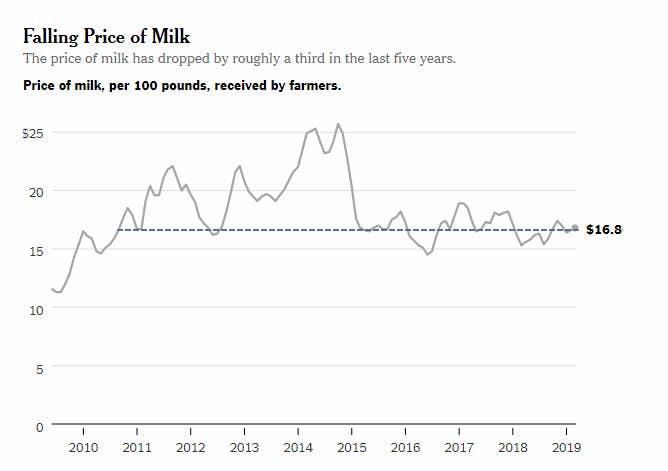
The price of milk is about where it was in mid-2010. The price has gone essentially nowhere since late-2014.

The price of new equipment and services and have gone up.

Final Straw

Trump’s the trade wars were the final straw.

  • The new North American trade deal, which is supposed to give dairy farmers more access to Canada’s tightly controlled market, has yet to be ratified by Congress and may never be approved given Democratic opposition.

  • Mr. Trump has yet to remove his metal tariffs on trading partners like Europe, Canada and Mexico, which refuse to lift their retaliatory tariffs [on agricultural goods] until those levies come off.

Overproduction

In 2012, Mr. Walker put into place a program to encourage dairy farmers to step up production with the goal of producing 30 billion pounds of milk a year by 2020. That was easily accomplished by 2016, but the oversupply crippled the industry.

“He wanted to put Wisconsin back into the lead in milk production over California,” said Joel Greeno, a dairy farmer and the president of the Wisconsin advocacy group Family Farm Defenders. “It was more an example of arrogance than practicality.”

Supply Management

Many farmers favor the idea of a supply management program for dairy like the one Canada uses, but the Trump administration has not supported such a program.

Stop the Meddling!

  1. Trump’s tariffs and the counter-tariffs have killed farmers. End the tariffs.

  2. Stop production goals.

  3. Stop worrying about which state is number one.

  4. Stop nonsense about supply management programs.

If some farmers still go under, well too bad.

Nobody guarantees programmers a job. Nobody should guarantee farmers a job either.

Let’s not turn the US into France in a misguided effort to save the family farm.

via ZeroHedge News http://bit.ly/2J0P7fu Tyler Durden

Deputy AG Rosenstein Submits Resignation Letter: “Our Nation Is Safer”

While long-expected, amid two chaos-ridden years as the Justice Department’s No.2, the day has finally come when Deputy Attorney General Rod Rosenstein has reportedly sent his resignation letter to President Donald Trump, will leave post May 11.

“I am grateful to you for the opportunity to serve; for the courtesy and humor you often display in our personal conversations; and for the goals you set in your inaugural address: patriotism, unity, safety, education and prosperity,” Mr. Rosenstein wrote in the letter, which was reviewed by The Wall Street Journal.

In his letter, Mr. Rosenstein cited the Justice Department’s progress in executing the Trump administration’s agenda: fighting violent crime, combating the nation’s drug abuse crisis, toughening immigration enforcement and supporting local law enforcement. “Productivity rose, and crime fell,” he wrote.

“Our nation is safer, our elections are more secure and our citizens are better informed about covert foreign efforts and schemes to commit fraud, steal intellectual property, and launch cyberattacks,” he wrote.

“We also pursued illegal leaks, investigated credible allegations of employee misconduct and accommodated congressional oversight without compromising law enforcement interests.”

Mr. Rosenstein made no mention of the special counsel in his resignation letter, but instead, as WSJ reports, wrote of the Justice Department’s responsibility to avoid partisanship.

“Political considerations may influence policy choices, but neutral principals must drive decisions about individual cases,” he wrote.

“We enforce the law without fear or favor because credible evidence is not partisan, and truth is not determined by opinion polls. We ignore fleeting distractions and focus our attention on the things that matter, because a republic that endures is not governed by the news cycle.”

On Monday Mr. Barr said he appreciated the opportunity to work closely with Mr. Rosenstein and wished him well.

Mr. Rosenstein’s successor, Jeffrey Rosen, currently the No. 2 official at the Transportation Department, is awaiting a likely confirmation by the Senate.

Developing…

via ZeroHedge News http://bit.ly/2PCWfA2 Tyler Durden