Elizabeth Warren Adopts Cory Booker’s Plan for a Better Presidential Clemency System

Sen. Cory Booker (D–N.J.) failed to make much of an impact in his Democratic presidential campaign, but he did have a really good plan to deal with clemency if he were elected. Now Sen. Elizabeth Warren (D–Mass.) is adopting his plan into her own criminal justice reform proposal.

Last summer, Booker proposed making it easier and quicker for nonviolent federal drug offenders to seek clemency by shifting the process from the Department of Justice to the White House and creating a clemency panel to oversee the process. In particular, Booker’s plan would reduce the power of federal prosecutors to determine which clemency applications make it to the president’s desk and whether they arrive with a recommendation for denial or approval.

Warren is also supporting Booker’s plan to prioritize clemency for older inmates incarcerated for longer terms, and his proposal to quickly identify and focus on prisoners who would have benefited retroactively from sentencing changes under the First Step Act and other reforms. This second aspect is important because legislative changes to statutory sentencing practices do not automatically apply to prisoners currently serving time. The Fair Sentencing Act of 2010, which reduced the sentencing disparity between crack and powder cocaine, is a prime example of a good reform that unfortunately lacked retroactive language.

Warren’s updated plan notes:

Research shows that people tend to age out of crime and are substantially less likely to recidivate, but today thousands of elderly people remain behind bars. And those serving sentences equivalent to life in prison are disproportionately black and brown, many serving time for nonviolent crimes or crimes committed as juveniles. We are not any safer as a nation for their incarceration, nor is equal justice being served.

It’s a change criminal justice reformers have been recommending for some time and one with bipartisan appeal. President Donald Trump’s administration is considering something similar.

from Latest – Reason.com https://ift.tt/32z5CqX
via IFTTT

Would a Presidential Pardon for Roger Stone Be Unconstitutional?

President Donald Trump has suggested he might pardon Roger Stone, a longtime crony who last week was sentenced to 40 months in federal prison for obstructing a congressional investigation, lying to a congressional committee, and tampering with a witness.

Not so fast, says Corey Brettschneider, a professor of political science at Brown University. Brettschneider argues that Trump does not have the power to save Stone from prison.

It’s a bold claim, given the president’s sweeping clemency powers under the Constitution. But Brettschneider notes that the “power to grant reprieves and pardons for offences against the United States” does not apply “in cases of impeachment.” That exception, he argues in a Politico essay published today, rules out a pardon for Stone. It is hard to see how.

Brettschneider suggests that “cases of impeachment” include criminal cases against people who conspired with the president in the commission of “high crimes and misdemeanors” for which the president was impeached. Many legal scholars disagree.

During the Watergate investigation, New York Times reporter John Crewdson looked into the question of whether Richard Nixon could pardon himself to avoid criminal prosecution after he resigned or was removed from office. Based on his interviews with “constitutional experts,” Crewdson flatly stated: “The exception [for ‘cases of impeachment’] means that [the president] cannot restore the standing of a Federal officer who has been impeached and removed from his position; it does not mean that a President cannot pardon himself before his own impeachment.”

After Bill Clinton was impeached, Slate considered the same issue and summarized the opinions of several experts. “The simplest interpretation,” it said, “is that the president can pardon any federal criminal offense, including his own, but cannot pardon an impeachment. In other words, Clinton is free to immunize himself from criminal prosecution, but has no power over Congress.”

If a president who has been impeached can avoid federal prosecution by pre-emptively pardoning himself, it seems clear that he also can pardon someone who was convicted of crimes related to that impeachment. But even assuming Brettschneider is right about that issue, there is another obvious problem with his argument: Stone’s crimes had nothing to do with the abuse of power described in the articles of impeachment against Trump, which alleged that he sought to discredit a political rival by pressuring the Ukrainian government to announce an investigation of him.

Stone, by contrast, was convicted of lying to a congressional committee about his attempts to help elect Trump by contacting WikiLeaks, which had obtained emails that Russian hackers stole from the Democratic National Committee and Hillary Clinton’s campaign chairman. He was convicted of witness tampering because he persistently pressured one of his WikiLeaks intermediaries to refrain from contradicting those lies.

“It is true that the Stone investigation concerned Russian involvement in the election and that the House charges focused on the more recent Ukraine accusation,” Brettschneider writes. “But the articles of impeachment focused on the accusation of ‘abuse of power,’ and it is that general high crime at play in Ukraine and elsewhere that links the impeachment and Stone.”

That is quite a stretch. By Brettschneider’s logic, any criminal case that arguably relates to a presidential abuse of power would count as a “case of impeachment,” regardless of whether the president actually was impeached for that abuse of power.

Nor is it clear how Stone’s crimes are even arguably related to crimes by Trump. There was nothing illegal about the actions Stone tried to conceal. Trying to assist the Trump campaign by seeking information about the purloined emails was not a crime, although it was potentially embarrassing for a president who has steadfastly denied that Russia helped him win the election. And Special Counsel Robert Mueller found no persuasive evidence that the Trump campaign illegally conspired with Russia in any way.

Trump has claimed many powers he does not actually have, including the power to “open up our libel laws,” the power to punish TV stations that irk him by revoking their broadcast licenses, the power to unilaterally ban firearm accessories, and the power to build a border wall that Congress never approved. But the list of Trump’s imaginary powers does not include the power to pardon Roger Stone.

from Latest – Reason.com https://ift.tt/3agSfhT
via IFTTT

Elizabeth Warren Adopts Cory Booker’s Plan for a Better Presidential Clemency System

Sen. Cory Booker (D–N.J.) failed to make much of an impact in his Democratic presidential campaign, but he did have a really good plan to deal with clemency if he were elected. Now Sen. Elizabeth Warren (D–Mass.) is adopting his plan into her own criminal justice reform proposal.

Last summer, Booker proposed making it easier and quicker for nonviolent federal drug offenders to seek clemency by shifting the process from the Department of Justice to the White House and creating a clemency panel to oversee the process. In particular, Booker’s plan would reduce the power of federal prosecutors to determine which clemency applications make it to the president’s desk and whether they arrive with a recommendation for denial or approval.

Warren is also supporting Booker’s plan to prioritize clemency for older inmates incarcerated for longer terms, and his proposal to quickly identify and focus on prisoners who would have benefited retroactively from sentencing changes under the First Step Act and other reforms. This second aspect is important because legislative changes to statutory sentencing practices do not automatically apply to prisoners currently serving time. The Fair Sentencing Act of 2010, which reduced the sentencing disparity between crack and powder cocaine, is a prime example of a good reform that unfortunately lacked retroactive language.

Warren’s updated plan notes:

Research shows that people tend to age out of crime and are substantially less likely to recidivate, but today thousands of elderly people remain behind bars. And those serving sentences equivalent to life in prison are disproportionately black and brown, many serving time for nonviolent crimes or crimes committed as juveniles. We are not any safer as a nation for their incarceration, nor is equal justice being served.

It’s a change criminal justice reformers have been recommending for some time and one with bipartisan appeal. President Donald Trump’s administration is considering something similar.

from Latest – Reason.com https://ift.tt/32z5CqX
via IFTTT

Would a Presidential Pardon for Roger Stone Be Unconstitutional?

President Donald Trump has suggested he might pardon Roger Stone, a longtime crony who last week was sentenced to 40 months in federal prison for obstructing a congressional investigation, lying to a congressional committee, and tampering with a witness.

Not so fast, says Corey Brettschneider, a professor of political science at Brown University. Brettschneider argues that Trump does not have the power to save Stone from prison.

It’s a bold claim, given the president’s sweeping clemency powers under the Constitution. But Brettschneider notes that the “power to grant reprieves and pardons for offences against the United States” does not apply “in cases of impeachment.” That exception, he argues in a Politico essay published today, rules out a pardon for Stone. It is hard to see how.

Brettschneider suggests that “cases of impeachment” include criminal cases against people who conspired with the president in the commission of “high crimes and misdemeanors” for which the president was impeached. Many legal scholars disagree.

During the Watergate investigation, New York Times reporter John Crewdson looked into the question of whether Richard Nixon could pardon himself to avoid criminal prosecution after he resigned or was removed from office. Based on his interviews with “constitutional experts,” Crewdson flatly stated: “The exception [for ‘cases of impeachment’] means that [the president] cannot restore the standing of a Federal officer who has been impeached and removed from his position; it does not mean that a President cannot pardon himself before his own impeachment.”

After Bill Clinton was impeached, Slate considered the same issue and summarized the opinions of several experts. “The simplest interpretation,” it said, “is that the president can pardon any federal criminal offense, including his own, but cannot pardon an impeachment. In other words, Clinton is free to immunize himself from criminal prosecution, but has no power over Congress.”

If a president who has been impeached can avoid federal prosecution by pre-emptively pardoning himself, it seems clear that he also can pardon someone who was convicted of crimes related to that impeachment. But even assuming Brettschneider is right about that issue, there is another obvious problem with his argument: Stone’s crimes had nothing to do with the abuse of power described in the articles of impeachment against Trump, which alleged that he sought to discredit a political rival by pressuring the Ukrainian government to announce an investigation of him.

Stone, by contrast, was convicted of lying to a congressional committee about his attempts to help elect Trump by contacting WikiLeaks, which had obtained emails that Russian hackers stole from the Democratic National Committee and Hillary Clinton’s campaign chairman. He was convicted of witness tampering because he persistently pressured one of his WikiLeaks intermediaries to refrain from contradicting those lies.

“It is true that the Stone investigation concerned Russian involvement in the election and that the House charges focused on the more recent Ukraine accusation,” Brettschneider writes. “But the articles of impeachment focused on the accusation of ‘abuse of power,’ and it is that general high crime at play in Ukraine and elsewhere that links the impeachment and Stone.”

That is quite a stretch. By Brettschneider’s logic, any criminal case that arguably relates to a presidential abuse of power would count as a “case of impeachment,” regardless of whether the president actually was impeached for that abuse of power.

Nor is it clear how Stone’s crimes are even arguably related to crimes by Trump. There was nothing illegal about the actions Stone tried to conceal. Trying to assist the Trump campaign by seeking information about the purloined emails was not a crime, although it was potentially embarrassing for a president who has steadfastly denied that Russia helped him win the election. And Special Counsel Robert Mueller found no persuasive evidence that the Trump campaign illegally conspired with Russia in any way.

Trump has claimed many powers he does not actually have, including the power to “open up our libel laws,” the power to punish TV stations that irk him by revoking their broadcast licenses, the power to unilaterally ban firearm accessories, and the power to build a border wall that Congress never approved. But the list of Trump’s imaginary powers does not include the power to pardon Roger Stone.

from Latest – Reason.com https://ift.tt/3agSfhT
via IFTTT

Sineneng-Smith and Outlawing Solicitation of Legal Conduct

United States v. Sineneng-Smith, which was just argued Tuesday, deals with, among other things, the “speech integral to criminal conduct” exception to the First Amendment (though perhaps it might best be viewed as an overarching principle that guides the Court in recognizing certain exceptions). Under that exception, some speech can be criminalized if it is sufficiently closely linked to a nonspeech crime, or a crime that involves already unprotected speech, such as distribution of child pornography. How close the link has to be is an important and not fully settled question; but the broader doctrine does exist, e.g.:

  1. The Court has held, in United States v. Williams (2008), that speech closely related to specific criminal behavior is punishable as a special case of “speech integral to criminal conduct.” “Offers to engage in illegal transactions are categorically excluded from First Amendment protection,” the Court held, citing Giboney v. Empire Storage & Ice Co. (the granddaddy of the “speech integral to criminal conduct” exception).
  2. In Williams, the Court concluded that “laws against conspiracy, incitement, and solicitation” should be treated the same way. The Government relies on the “speech integral to criminal conduct” principle in Sineneng-Smith (see pp. 31-32 of its brief).
  3. Threats of illegal behavior have historically been used as a classic example of speech integral to such behavior. (See, e.g., Ohralik v. Ohio State Bar Ass’n, 436 U.S. 447, 456 (1978), citing a labor threat case, NLRB v. Gissel Packing Co., 395 U.S. 575 (1969), as an example of the speech-integral-to-conduct doctrine.)
  4. Fighting words, which are restricted because of a danger that they can provoke criminal retaliation, have also at times been folded within this doctrine: Cox v. Louisiana, for instance, cites Chaplinsky v. New Hampshire (the leading fighting words case) alongside Giboney as an example of a situation where “conduct mixed with speech may be regulated or prohibited.”

As a post-Williams Seventh Circuit opinion put it, citing Williams, “Speech integral to criminal conduct, such as fighting words, threats, and solicitations, remain categorically outside [the First Amendment’s] protection.” United States v. White (7th Cir. 2010).

Likewise, the Court has also treated some speech as civilly actionable when it is integral to civilly actionable conduct. That was true in some of the threats cases, and the Court reaffirmed it in Rumsfeld v. FAIR, 547 U.S. 47, 62 (2006), suggesting that threats of public accommodation discrimination can themselves be made actionable under laws banning such discrimination. (For more all this, see my 2016 Cornell article that’s all about this exception.)

But, I argued in my Sineneng-Smith amicus brief, this principle can only justify treating solicitation as akin to the solicited conduct. Solicitation of civilly punishable conduct ought not be criminalizable consistently with the First Amendment, because that would go beyond treat­ing the solicitation as “integral to criminal conduct.” As Justice Gorsuch noted in the Sineneng-Smith oral argument,

Normally, in the criminal law … to avoid [First Amendment problems], we … don’t allow punishment for speech greater than the underlying conduct itself. That would seem to be a basic First Amendment value.

Likewise, as Justice Breyer noted, for “a solicitation of a crime statute is constitutional, … the first condition and most important is that what you are soliciting is a crime.” I would add that civil liability for solicitation would be constitutional if it focuses on soliciting conduct that is itself civilly actionable.

Now this position naturally leads to some difficult hypotheticals. For instance, Justice Alito asked in Sineneng-Smith,

There’s a teenager … who has been very seriously bullied and is very depressed and is thinking of committing suicide. The teenager has a gun in his hand. He calls up the one person he thinks is his friend and he says, I’m thinking of killing myself. And the person on the other end of the line says, you’ve said this before, I’m tired of hearing this from you, you never follow through, you’re a coward, why don’t you just do it, I encourage you to pull the trigger. Now is that protected by the First Amendment? Is that speech protected by the First Amendment? Attempting to commit suicide is not a crime.

Here’s my thinking: If such speech is constitutionally unprotected, it must be unprotected under some other theory. Speech integral to the commission of suicide can be many things, but it can’t be speech integral to criminal conduct, precisely because suicide isn’t criminal conduct. Likewise, it can’t be solicitation of crime, when there’s no crime being solicited. (Perhaps one can argue that restricting such speech in some situations is the very rare sort of content-based restriction that passes strict scrutiny, on the grounds that it is narrowly tailored to a compelling government interest; but that’s a different argument.)

Indeed, the Minnesota Supreme Court in State v. Melchert-Dinkel (2014) discussed this very scenario, in striking down a ban on encouraging suicide (but upholding, under strict scrutiny, a ban on speech that aids suicide):

Thus, the major challenge with applying the “speech integral to criminal conduct” exception is that suicide is not illegal in any of the jurisdictions at issue. The holding in Giboney specifically stated that the exception was for speech integral to conduct “in violation of a valid criminal statute,” and there is no valid statute criminalizing suicide here. Giboney (emphasis added). It is true, as the court of appeals noted, that “suicide, despite no longer being illegal in Minnesota, remains harmful conduct that the state opposes as a matter of public policy.” But the Supreme Court has never recognized an exception to the First Amendment for speech that is integral to merely harmful conduct, as opposed to illegal conduct.

Likewise, Justice Alito asked: What if a state decriminalizes some behavior (say, alcohol consumption) by people who are in a “vulnerable position”—for instance, because they are minors or have “diminished capacity”—but wants to criminalize encouraging such behavior? Well, sometimes, as Sineneng-Smith’s lawyer pointed out, the behavior remains criminal for one of the participants, for instance if the law doesn’t criminally punish children for buying alcohol or drugs, but criminally punishes sellers, or doesn’t criminally punish prostitutes but criminally punishes those who employ or patronize them. Specifically encouraging a child to transport drugs, for instance, is still integrally related to some responsible adult’s criminal drug transportation scheme.

But say some law genuinely targets harmful but noncriminal behavior, for instance encouraging children or mentally handicapped people to engage in legal but dangerous behavior (e.g., swimming in a place that the encourager knows is beyond the encouraged person’s skills). Perhaps that should be punishable, under some specialized exception justified by the listener’s diminished capacity: For instance, laws that bar distributing sexually themed material to children, even if it’s protected for adults, are sometimes justified on the theory that “a child … is not possessed of that full capacity for individual choice which is the presupposition of First Amendment guarantees.” Ginsberg v. New York (1968) (Stewart, J., concurring). The exception, though, should be specifically justified and delineated on that sort of theory—not because the speech is “solicitation” of legal conduct, or because it is “integral to criminal conduct” when there is no underlying criminal conduct.

In any case, that’s my idea about how this important but often opaque doctrine can be developed. We’ll see within a few months what the Court thinks.

from Latest – Reason.com https://ift.tt/3965xxp
via IFTTT
Sineneng-Smith and Outlawing Solicitation of Legal Conduct

United States v. Sineneng-Smith, which was just argued Tuesday, deals with, among other things, the “speech integral to criminal conduct” exception to the First Amendment (though perhaps it might best be viewed as an overarching principle that guides the Court in recognizing certain exceptions). Under that exception, some speech can be criminalized if it is sufficiently closely linked to a nonspeech crime, or a crime that involves already unprotected speech, such as distribution of child pornography. How close the link has to be is an important and not fully settled question; but the broader doctrine does exist, e.g.:

  1. The Court has held, in United States v. Williams (2008), that speech closely related to specific criminal behavior is punishable as a special case of “speech integral to criminal conduct.” “Offers to engage in illegal transactions are categorically excluded from First Amendment protection,” the Court held, citing Giboney v. Empire Storage & Ice Co. (the granddaddy of the “speech integral to criminal conduct” exception).
  2. In Williams, the Court concluded that “laws against conspiracy, incitement, and solicitation” should be treated the same way. The Government relies on the “speech integral to criminal conduct” principle in Sineneng-Smith (see pp. 31-32 of its brief).
  3. Threats of illegal behavior have historically been used as a classic example of speech integral to such behavior. (See, e.g., Ohralik v. Ohio State Bar Ass’n, 436 U.S. 447, 456 (1978), citing a labor threat case, NLRB v. Gissel Packing Co., 395 U.S. 575 (1969), as an example of the speech-integral-to-conduct doctrine.)
  4. Fighting words, which are restricted because of a danger that they can provoke criminal retaliation, have also at times been folded within this doctrine: Cox v. Louisiana, for instance, cites Chaplinsky v. New Hampshire (the leading fighting words case) alongside Giboney as an example of a situation where “conduct mixed with speech may be regulated or prohibited.”

As a post-Williams Seventh Circuit opinion put it, citing Williams, “Speech integral to criminal conduct, such as fighting words, threats, and solicitations, remain categorically outside [the First Amendment’s] protection.” United States v. White (7th Cir. 2010).

Likewise, the Court has also treated some speech as civilly actionable when it is integral to civilly actionable conduct. That was true in some of the threats cases, and the Court reaffirmed it in Rumsfeld v. FAIR, 547 U.S. 47, 62 (2006), suggesting that threats of public accommodation discrimination can themselves be made actionable under laws banning such discrimination. (For more all this, see my 2016 Cornell article that’s all about this exception.)

But, I argued in my Sineneng-Smith amicus brief, this principle can only justify treating solicitation as akin to the solicited conduct. Solicitation of civilly punishable conduct ought not be criminalizable consistently with the First Amendment, because that would go beyond treat­ing the solicitation as “integral to criminal conduct.” As Justice Gorsuch noted in the Sineneng-Smith oral argument,

Normally, in the criminal law … to avoid [First Amendment problems], we … don’t allow punishment for speech greater than the underlying conduct itself. That would seem to be a basic First Amendment value.

Likewise, as Justice Breyer noted, for “a solicitation of a crime statute is constitutional, … the first condition and most important is that what you are soliciting is a crime.” I would add that civil liability for solicitation would be constitutional if it focuses on soliciting conduct that is itself civilly actionable.

Now this position naturally leads to some difficult hypotheticals. For instance, Justice Alito asked in Sineneng-Smith,

There’s a teenager … who has been very seriously bullied and is very depressed and is thinking of committing suicide. The teenager has a gun in his hand. He calls up the one person he thinks is his friend and he says, I’m thinking of killing myself. And the person on the other end of the line says, you’ve said this before, I’m tired of hearing this from you, you never follow through, you’re a coward, why don’t you just do it, I encourage you to pull the trigger. Now is that protected by the First Amendment? Is that speech protected by the First Amendment? Attempting to commit suicide is not a crime.

Here’s my thinking: If such speech is constitutionally unprotected, it must be unprotected under some other theory. Speech integral to the commission of suicide can be many things, but it can’t be speech integral to criminal conduct, precisely because suicide isn’t criminal conduct. Likewise, it can’t be solicitation of crime, when there’s no crime being solicited. (Perhaps one can argue that restricting such speech in some situations is the very rare sort of content-based restriction that passes strict scrutiny, on the grounds that it is narrowly tailored to a compelling government interest; but that’s a different argument.)

Indeed, the Minnesota Supreme Court in State v. Melchert-Dinkel (2014) discussed this very scenario, in striking down a ban on encouraging suicide (but upholding, under strict scrutiny, a ban on speech that aids suicide):

Thus, the major challenge with applying the “speech integral to criminal conduct” exception is that suicide is not illegal in any of the jurisdictions at issue. The holding in Giboney specifically stated that the exception was for speech integral to conduct “in violation of a valid criminal statute,” and there is no valid statute criminalizing suicide here. Giboney (emphasis added). It is true, as the court of appeals noted, that “suicide, despite no longer being illegal in Minnesota, remains harmful conduct that the state opposes as a matter of public policy.” But the Supreme Court has never recognized an exception to the First Amendment for speech that is integral to merely harmful conduct, as opposed to illegal conduct.

Likewise, Justice Alito asked: What if a state decriminalizes some behavior (say, alcohol consumption) by people who are in a “vulnerable position”—for instance, because they are minors or have “diminished capacity”—but wants to criminalize encouraging such behavior? Well, sometimes, as Sineneng-Smith’s lawyer pointed out, the behavior remains criminal for one of the participants, for instance if the law doesn’t criminally punish children for buying alcohol or drugs, but criminally punishes sellers, or doesn’t criminally punish prostitutes but criminally punishes those who employ or patronize them. Specifically encouraging a child to transport drugs, for instance, is still integrally related to some responsible adult’s criminal drug transportation scheme.

But say some law genuinely targets harmful but noncriminal behavior, for instance encouraging children or mentally handicapped people to engage in legal but dangerous behavior (e.g., swimming in a place that the encourager knows is beyond the encouraged person’s skills). Perhaps that should be punishable, under some specialized exception justified by the listener’s diminished capacity: For instance, laws that bar distributing sexually themed material to children, even if it’s protected for adults, are sometimes justified on the theory that “a child … is not possessed of that full capacity for individual choice which is the presupposition of First Amendment guarantees.” Ginsberg v. New York (1968) (Stewart, J., concurring). The exception, though, should be specifically justified and delineated on that sort of theory—not because the speech is “solicitation” of legal conduct, or because it is “integral to criminal conduct” when there is no underlying criminal conduct.

In any case, that’s my idea about how this important but often opaque doctrine can be developed. We’ll see within a few months what the Court thinks.

from Latest – Reason.com https://ift.tt/3965xxp
via IFTTT

Political Opportunists Are Using Coronavirus Fears To Push Whatever Policies They Already Wanted

As politicians react to the coronavirus outbreak, more than a few seem to be following the old adage that you should never let a good crisis go to waste.

Since it is only a matter of time before Democrats and Republicans start accusing the other side of using a public health crisis for political gain, let’s be blunt about something: Both sides are going to use the crisis for political gain. Indeed, both already are.

Much of President Donald Trump’s briefing about the coronavirus on Wednesday night was incoherent, but he nevertheless managed to brag about how the stock market had risen after his election. More to the point, he repeatedly claimed that his administration had slowed the spread of the disease into America by cutting off air travel from China, and he suggested that further restrictions could be coming. That’s a natural response from an administration whose signature non-coronavirus policies have included travel bans, immigration restrictions, and a general hostility to the free movement of goods and people across national borders.

But building walls doesn’t stop the spread of disease. In fact, “travel restrictions can cause more harm than good by hindering info-sharing, medical supply chains and harming economies,” advised Tedros Adhanom Ghebreyesus, secretary-general of the World Health Organization, earlier this month. Slowing the spread of disease allows more time for hospitals to prepare, but historical evidence shows that travel bans don’t actually reduce the number of people who get sick during disease outbreaks.

China hawks are seizing on the outbreak too. Sen. Josh Hawley (R–Mo.) plans to introduce a bill requiring American medical device manufacturers to provide detailed information about their supply chains to the Food and Drug Administration. The agency would use that info to “assess the security of the U.S. medical product supply chain.”

While it is presented as a way for the government to ensure America is prepared for a public health crisis, Hawley’s bill is also a step toward greater central planning. It’s not difficult to see how Hawley or Trump could, sometime in the future, claim that America’s medical supply chain is too dependent on China—in the same way that Trump used a fictional “national security” risk to justify tariffs on steel and aluminum. Those tariffs haven’t worked, but Hawley—who believes Trump’s trade war is a long-term proposition—is barely disguising his attempt to lay the groundwork for more protectionism.

Democrats, too, are using the coronavirus as a new argument for old political objectives. Like defeating Trump, for example. While they offered little in the way of alternatives during Tuesday’s primary debate, each of the candidates onstage were happy to blast the president for bungling the response to the coronavirus—even though it’s still far too soon to conclude whether Trump’s responses, or lack thereof, have made the outbreak worse in America.

Specifically, former Vice President Joe Biden has ripped the current administration for making “draconian cuts” to the National Institutes of Health (NIH) and the Centers for Disease Control and Prevention (CDC). The Obama administration “increased the budget of the CDC. We increased the NIH budget,” Biden said Tuesday night. “He’s wiped all that out. He cut the funding for the entire effort.”

Except he didn’t. Trump has proposed budget cuts for the CDC and NIH in each of his budgets since taking office, but Congress never approved those proposals. That’s a pretty important distinction.

If the NIH and the CDC aren’t adequately prepared to handle a disease outbreak, it’s probably their own fault. There is always going to be a finite amount of money for any government agency to use, so it’s best not to waste your shares. Yet the CDC spent $15 billion during the Obama administration to nudge Americans towards healthier eating habits, and millions more on the creation of a “Hollywood liaison office” with funds that were supposed to be used to counter the threat of bioterrorism. Sure, it’s possible that more funding would result in greater preparedness to face new and deadly diseases. So would making better choices about the money you already have.

But that’s not going to stop Democrats from using the coronavirus outbreak to argue for spending more money that we don’t have—and heaven forbid we actually pay for emergency coronavirus funding with budget cuts elsewhere. Just like it won’t stop Republicans from using the disease to push their anti-trade agenda. No matter how bad the outbreak might turn out to be, you can bet that politicians will find a way to make it worse.

from Latest – Reason.com https://ift.tt/2uAOOTP
via IFTTT

Political Opportunists Are Using Coronavirus Fears To Push Whatever Policies They Already Wanted

As politicians react to the coronavirus outbreak, more than a few seem to be following the old adage that you should never let a good crisis go to waste.

Since it is only a matter of time before Democrats and Republicans start accusing the other side of using a public health crisis for political gain, let’s be blunt about something: Both sides are going to use the crisis for political gain. Indeed, both already are.

Much of President Donald Trump’s briefing about the coronavirus on Wednesday night was incoherent, but he nevertheless managed to brag about how the stock market had risen after his election. More to the point, he repeatedly claimed that his administration had slowed the spread of the disease into America by cutting off air travel from China, and he suggested that further restrictions could be coming. That’s a natural response from an administration whose signature non-coronavirus policies have included travel bans, immigration restrictions, and a general hostility to the free movement of goods and people across national borders.

But building walls doesn’t stop the spread of disease. In fact, “travel restrictions can cause more harm than good by hindering info-sharing, medical supply chains and harming economies,” advised Tedros Adhanom Ghebreyesus, secretary-general of the World Health Organization, earlier this month. Slowing the spread of disease allows more time for hospitals to prepare, but historical evidence shows that travel bans don’t actually reduce the number of people who get sick during disease outbreaks.

China hawks are seizing on the outbreak too. Sen. Josh Hawley (R–Mo.) plans to introduce a bill requiring American medical device manufacturers to provide detailed information about their supply chains to the Food and Drug Administration. The agency would use that info to “assess the security of the U.S. medical product supply chain.”

While it is presented as a way for the government to ensure America is prepared for a public health crisis, Hawley’s bill is also a step toward greater central planning. It’s not difficult to see how Hawley or Trump could, sometime in the future, claim that America’s medical supply chain is too dependent on China—in the same way that Trump used a fictional “national security” risk to justify tariffs on steel and aluminum. Those tariffs haven’t worked, but Hawley—who believes Trump’s trade war is a long-term proposition—is barely disguising his attempt to lay the groundwork for more protectionism.

Democrats, too, are using the coronavirus as a new argument for old political objectives. Like defeating Trump, for example. While they offered little in the way of alternatives during Tuesday’s primary debate, each of the candidates onstage were happy to blast the president for bungling the response to the coronavirus—even though it’s still far too soon to conclude whether Trump’s responses, or lack thereof, have made the outbreak worse in America.

Specifically, former Vice President Joe Biden has ripped the current administration for making “draconian cuts” to the National Institutes of Health (NIH) and the Centers for Disease Control and Prevention (CDC). The Obama administration “increased the budget of the CDC. We increased the NIH budget,” Biden said Tuesday night. “He’s wiped all that out. He cut the funding for the entire effort.”

Except he didn’t. Trump has proposed budget cuts for the CDC and NIH in each of his budgets since taking office, but Congress never approved those proposals. That’s a pretty important distinction.

If the NIH and the CDC aren’t adequately prepared to handle a disease outbreak, it’s probably their own fault. There is always going to be a finite amount of money for any government agency to use, so it’s best not to waste your shares. Yet the CDC spent $15 billion during the Obama administration to nudge Americans towards healthier eating habits, and millions more on the creation of a “Hollywood liaison office” with funds that were supposed to be used to counter the threat of bioterrorism. Sure, it’s possible that more funding would result in greater preparedness to face new and deadly diseases. So would making better choices about the money you already have.

But that’s not going to stop Democrats from using the coronavirus outbreak to argue for spending more money that we don’t have—and heaven forbid we actually pay for emergency coronavirus funding with budget cuts elsewhere. Just like it won’t stop Republicans from using the disease to push their anti-trade agenda. No matter how bad the outbreak might turn out to be, you can bet that politicians will find a way to make it worse.

from Latest – Reason.com https://ift.tt/2uAOOTP
via IFTTT

The Feds’ Bulk Collection of Our Data Records Has Been Expensive and Useless. But That Doesn’t Mean It’s Going to Stop.

The U.S. government spent $100 million collecting all our phone and text records for four years and got next to nothing out of it.

Try to contain your surprise. (I’m actually shocked it’s only $100 million.) This info comes from a newly declassified report from the federal Privacy and Civil Liberties Board. The report analyzes the call records program implemented by the USA Freedom Act in 2015, which formalized but also restrained the National Security Agency’s secret collection of Americans’ communications metadata.

Prior to the USA Freedom Act, the NSA had used the PATRIOT Act to justify collecting this data with neither the knowledge nor the consent of Americans, or even of Congress. Once Edward Snowden blew the whistle on this secret surveillance, the USA Freedom Act was hammered out as a compromise that gave the NSA much more limited access to collected metadata in order to pursue investigations using specific terms.

The USA Freedom Act sunsets in mid-March. We already know these searches haven’t been all that helpful, because the NSA has abandoned them. Part of the problem was repeated situations where attempts to collect records went awry and brought in far more private information than they were allowed to look at under the law.

This new report shows that the mass collection of Americans’ phone records turned out not to be a particularly good tool for tracking down terrorism. Its authors determined that the NSA wrote only 15 intelligence reports based on information from call records accessed through the law. Of those, 11 duplicated information that was already in FBI records. Two contained information that the FBI had received through other means. One led the FBI to vet an individual, but it ultimately decided not to open an investigation. So that just leaves just one case where the bureau received unique info that it decided to use to open a foreign intelligence investigation.

All that for $100 million!

A logical person would assume that letting these powers sunset would be the smartest choice. Why violate Americans’ privacy rights if even the government itself acknowledges the intrusions aren’t actually accomplishing anything? But logic means nothing next to institutional inertia. The government doesn’t like to give up any power or program, even when it’s not useful.

So now there’s a big congressional fight about renewing the USA Freedom Act. In January, a bipartisan pack of privacy-minded lawmakers introduced a bill that would formally end the bulk collection of Americans’ records and introduce other reforms to the secretive Foreign Intelligence Surveillance Amendment (FISA) Court to provide some more transparency and better protect Americans from unwarranted surveillance. Their bill has support of both the left-leaning tech activist group Demand Progress and the more conservative FreedomWorks.

But congressional leaders just want to push through a quick temporary renewal with some less modest fixes. Reps. Jerrold Nadler (D–N.Y.) and Adam Schiff (D–Calif.), chairs of the House Intelligence and Judiciary Committees, put together a reform bill of their own that would extend the USA Freedom Act until 2023. Nadler and Schiff’s bill would end the bulk data collection program but would extend the part of Section 215 of the Patriot Act that lets the FBI secretly collect business records it deems relevant to terrorism investigations. So the feds will be able to easily collect your data when it’s in the hands of a third party—and these days, that means most of your data.

Rep. Zoe Logren (D–Calif.), a strong privacy supporter who has previously teamed up with the likes of Reps. Justin Amash (I–Mich.) and Thomas Massie (R–Ky.) to try to limit the NSA and FBI’s warrantless snooping powers, was not happy about this weaker bill. She has announced plans to introduce amendments. Yesterday, rather than debating the merits of the proposal, Democratic leaders cancelled the hearing, apparently worried that stronger privacy protections could kill the Schiff-Nadler bill’s chances. Both FreedomWorks and Demand Progress have put out statements criticizing Schiff and Nadler for dodging the debate.

As Charlie Savage and Nicholas Fandos note at The New York Times, President Donald Trump is a wild card in this fight. Trump has railed against the FISA court and the surveillance state, due to the investigation of his presidential campaign. And some of his complaints were justified: Independent analysis have showed serious problems with how the FBI pursued its warrants to wiretap former Trump aide Carter Page, as well as a lack of openness and thoroughness with the FISA Court.

But the language the FBI used to justify snooping on Page is a completely different section of the law. And when Trump has been given opportunities to rein in federal surveillance of Americans not linked to Donald Trump, he did the exact opposite. Meanwhile, Attorney General William Barr has said he wants a “clean” reauthorization of the USA Freedom Act without any reforms at all, telling House Republicans that he can make administrative reforms to procedures. That’s the worst possible outcome, because it would give Barr the power to decide—in secret—whose privacy rights are protected and whose are not. It’s Congress’ job, not Barr’s, to put limits on the Justice Department’s surveillance authorities.

Trump, this morning, showed some support for FISA reforms, but again apparently connected to the belief that changes to the USA Freedom Act have any relevance to the investigation of his campaign. They don’t, but hey, if that’s what helps push through changes that better protect all our privacy, I’m not going to complain.

from Latest – Reason.com https://ift.tt/2T8cUPr
via IFTTT

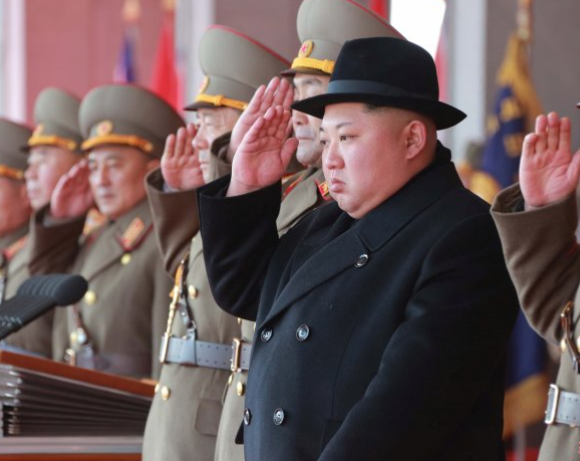
North Korea’s First Confirmed Coronavirus Patient Shot Dead

North Korea’s First Confirmed Coronavirus Patient Shot Dead

To loosely quote Stalin, “No Patient Zero, No Problem.”

For weeks, the outside world has speculated about the severity of the coronavirus outbreak in North Korea. And the entire time, North Korea has persisted in insisting that it doesn’t have a coronavirus problem, even growing furious at a public offer of assistance from the State Department.

For all we know about the North Korean virus response, the government might have simply brainwashed the North Korean people into believing that loyalty to the Workers Party and Supreme Leader Kim Jong Un grants immunity to the virus. However, there have been whispers.

A few weeks ago, there were whispers that one of the first coronavirus patients in the country was brutally killed by the regime after escaping from a (probably unimaginably brutal) quarantine. Moreover, according to the rumor, he was executed via the traditional North Korean punishment of extirpating criminals by shooting them with an anti-aircraft slug.

Now, IB Times, a shady English-language news website with a reputation for occasionally scooping its more cautious competitors, is reporting that Kim Jong Un allegedly ordered the execution of the country’s first coronavirus patient. IBT cited an anonymous twitter account called “Secret Beijing”, claiming it has a history of reporting accurately.

According to Secret Beijing, an anonymous social media commentator, who terms himself as an analyst on China affairs, the patient was shot dead. The story is still developing and there is still no clarity on the details of the patient executed by North Korea.

The account points out that such brutal tactics are in line with the regime’s reputation.

It had been suggested last week that the patient had left quarantine to visit a public bath, and was killed for doing so. The victim caught the virus in China, then brought it back to NK. Pyongyang reportedly told the WHO that it had tested 141 suspected cases of coronavirus, and that all came up negative.

The South Korean press has reported that several cases have been identified in the North, with some of them leading to death, mirroring what’s happening in Iran’s obviously overwhelmed health-care system.

It’s believed that fear of the virus has kept KJU from appearing in public over the past few weeks.


Tyler Durden

Thu, 02/27/2020 – 13:20

via ZeroHedge News https://ift.tt/2T5AYm3 Tyler Durden