“Enormous Uncerntainty.” That is how SimplyWise stated the situation in their latest “retirement confidence survey.” Such is despite a surging stock market from the March lows, trillions in liquidity support from the Fed, and a rebound in economic activity.
So, what’s the problem? Here is SimplyWise:
The current public heath, economic, and political reality in the United States has created enormous uncertainty for many Americans. A majority of citizens lack the savings to last them even three months. That savings gap is even more drastic when it comes to retirement. Indeed, the pandemic has wrought havoc on the retirement plans of many, driving some into early retirement and forcing others to postpone long-anticipated retirement plans. A majority of people today are more concerned than ever about retirement. According to the September 2020 SimplyWise Retirement Confidence Index, 58% of Americans are more concerned about retirement today compared to a year ago.” – SimplyWise September Index
Major Highlights
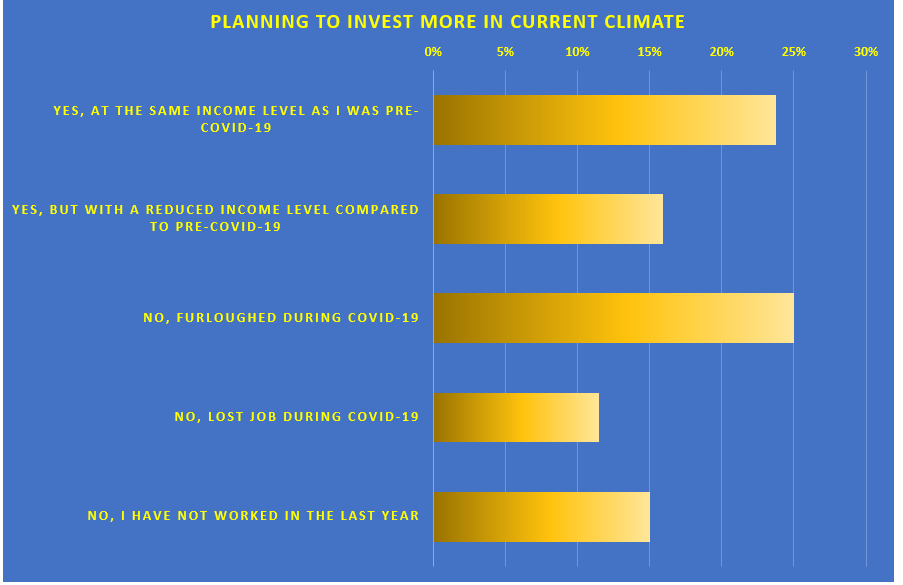
Given the current economic climate, only 19% of Americans plan to invest more in the stock market. However, only 34% of households with an income of more than $100k plan to invest more in stocks.
40% of respondents are planning to save more.
51% of Americans think the stock market will decline by 20% over the next 6-months. Only 5% believe it’s improbable.
36% believe the economy will worsen in the next 6-months, and 28% think it will get better.
63% of Americans are confident in the future of Social Security if Biden is elected versus only 44% if Trump is elected.
86% of Americans are concerned that the current payroll tax will hurt Social Security in the long term. (90% of Dems and 83% of Republicans).
There are several critical issues in the index which encapsulate the ongoing financial distress that existing before the pandemic, but have since markedly worsened.
Financial Insecurity
Here are some additional key findings as they relate to the financial insecurity of Americans today.
15% of people who lost their job due to COVID-19 are now planning to retire earlier than anticipated. Just 10% in their 50s and 60s are now planning to retire earlier than expected.
58% of people in their 50s are not confident they’ll maintain their same quality of life in retirement.
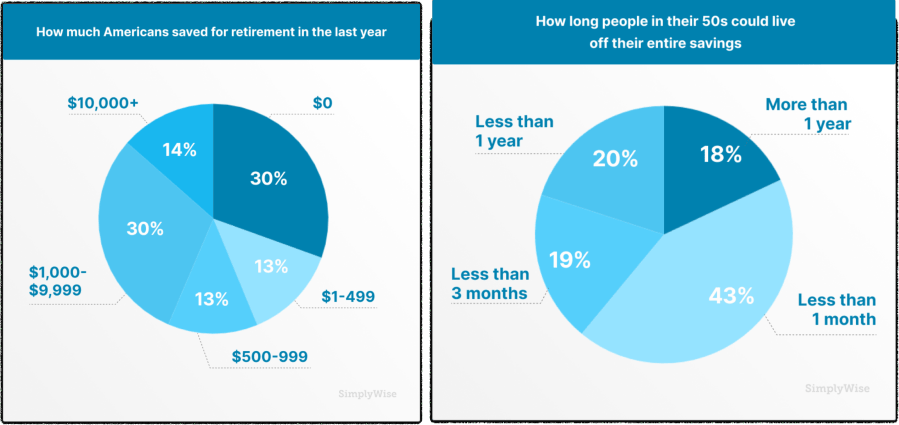
30% of people in their 50s saved $0 for retirement in the last year—and 43% of them couldn’t last more than a month on their savings.
27% of Americans are now considering tapping their 401(k)—a pandemic high.
45% of Hispanics, 39% of Black, and 34% of White Americans couldn’t last a month on their savings.
63% of Americans feel confident in the future of Social Security if Biden is elected. Only 44% feel optimistic with the re-election of President Trump.
These statistics, while stunning, importantly, NOT a result of the COVID-19 pandemic. The financial insecurity of Americans is an issue that has continued to grow over the last two decades. Such is an issue we discussed in “Boomers Are Facing A Financial Crisis.”
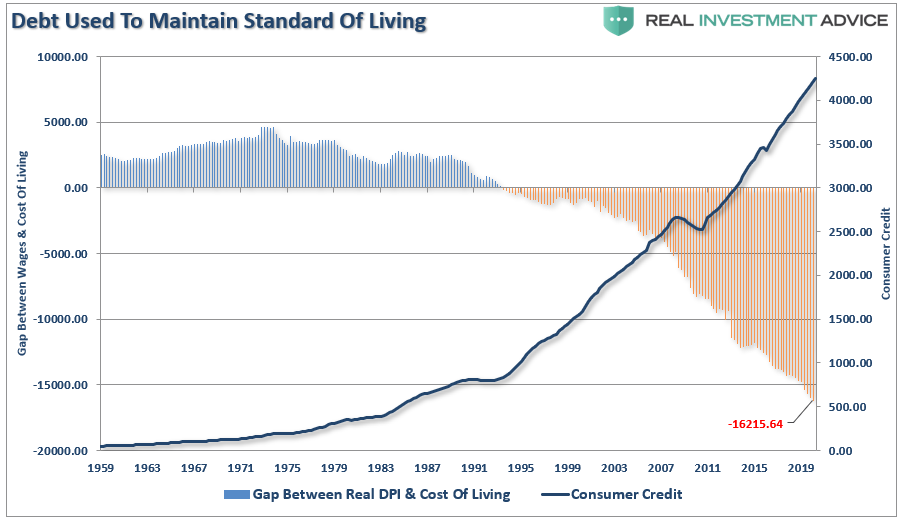
“The lack of savings, of course, is directly related to the rising cost of living versus the lack of wage growth over the last 35-years which led to a massive surge in debt to maintain the standard of living.”
Rising Concerns Across The Spectrum
Such an inability to fill the gap between the incomes and the “cost of living,” which is evident given the surge in debt, continues to give rise to financial and lifestyle concerns. As noted:
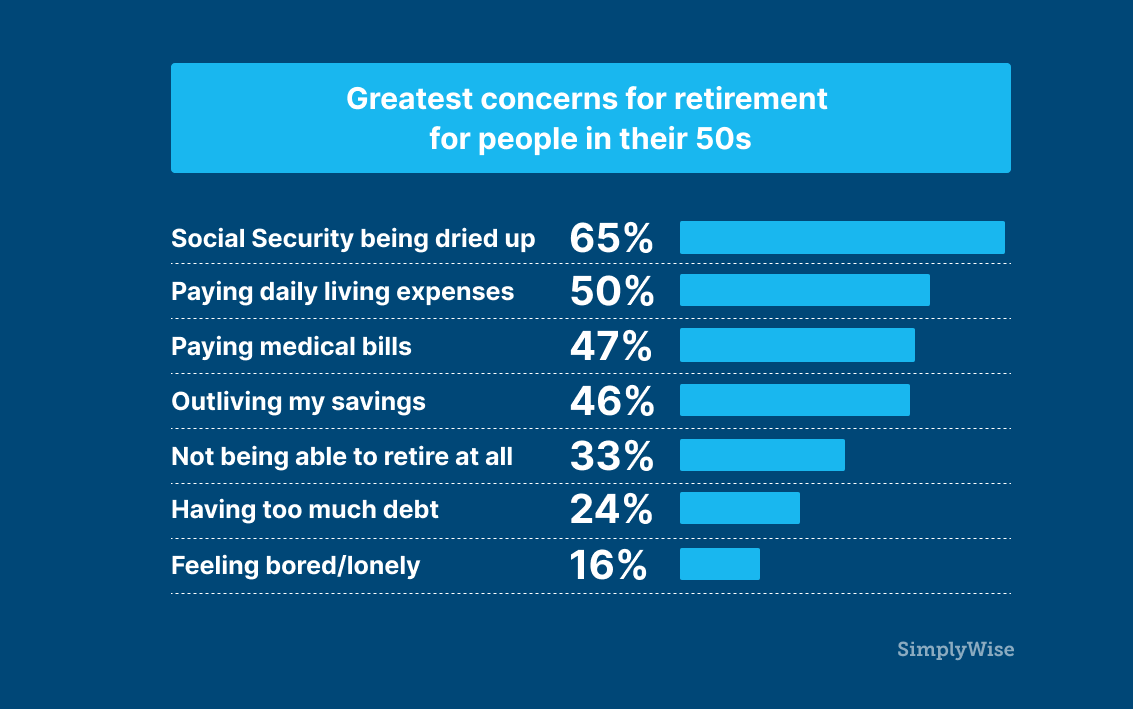
“For those not yet claiming Social Security benefits, financial concerns are among the highest anxieties around retirement. Fifty-seven percent worry about Social Security drying up, and 52% worry they will outlive their savings. For Americans who are currently on Social Security, 54% now worry about their benefits drying up—a significant increase from the 29% reported in July. Also, 47% are concerned about their ability to pay for medical bills in retirement. Another 47% are concerned about their ability to pay daily living expenses when they retire.” – SimplyWise
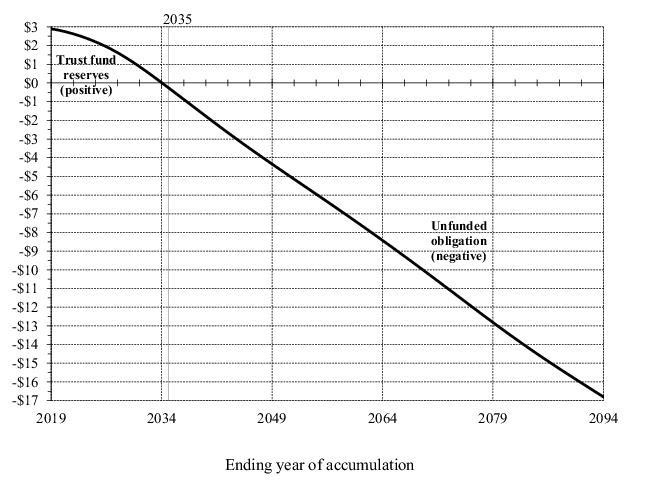
The reported problem was worst for those closest to retirement. Such is not surprising given the ongoing $70 Trillion unfunded liabilities for social welfare programs, which exacerbate each year.
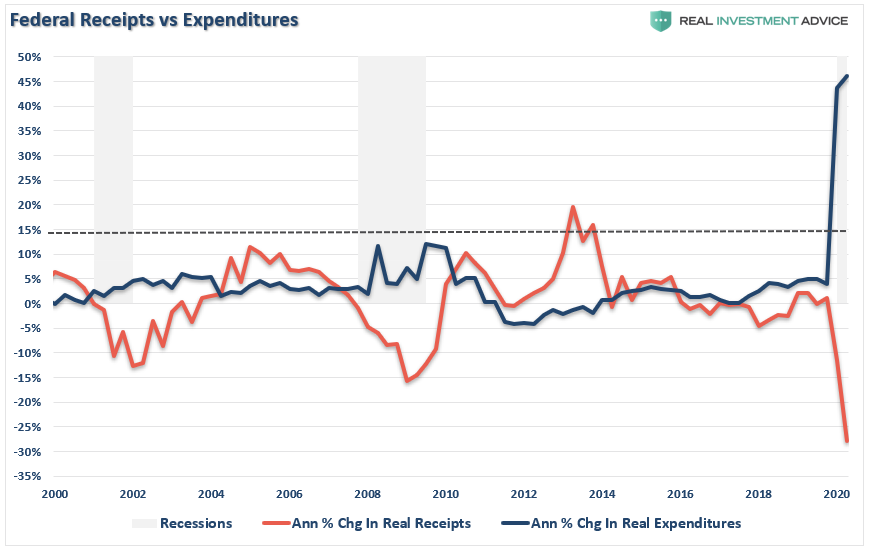
The collapse in economic growth has resulted in a collapse in Federal Tax revenue needed to pay for the massive social welfare schemes in the U.S.
It now requires over 100% of Federal tax receipts to meet the mandatory spending of social welfare and interest on the debt. In other words, we are now going into debt more to provide social assistance.
How Bad Is It?
It isn’t projected to get better.
“Steadily worsening annual balances and cumulative values toward the end of the 75-year period provide an indication of the additional change that will be needed by that time in order to maintain solvency beyond 75 years. Consideration of summary measures alone for a 75‑year period can lead to incorrect perceptions and to policy prescriptions that do not achieve sustainable solvency.” – SSI 2020 Report
“Under current law, the projected cost of Social Security increases faster than projected income through 2040 primarily because the ratio of workers paying taxes to beneficiaries receiving benefits will decline as the baby-boom generation ages and is replaced at working ages with subsequent lower birth-rate generations. While the effects of the aging baby boom and subsequent lower birth rates will have largely stabilized after 2040, annual cost will continue to grow faster than income, but to a lesser degree, reflecting continuing increases in life expectancy. Based on the Trustees’ intermediate assumptions, Social Security’s cost exceeds total income beginning in 2021, and throughout the remainder of the 75‑year projection period.” – SSA
Getting Worse
That report, dire in its warning already, was issued before the “Pandemic” and “economic shutdown.”
Meanwhile, demographics are blowing up the basic premise of the funding of Social Security. There were 2.8 workers for every Social Security recipient in 2017. That’s down from 3.3 in 2007, and that’s way down from the 5.1 workers per beneficiary in 1960.
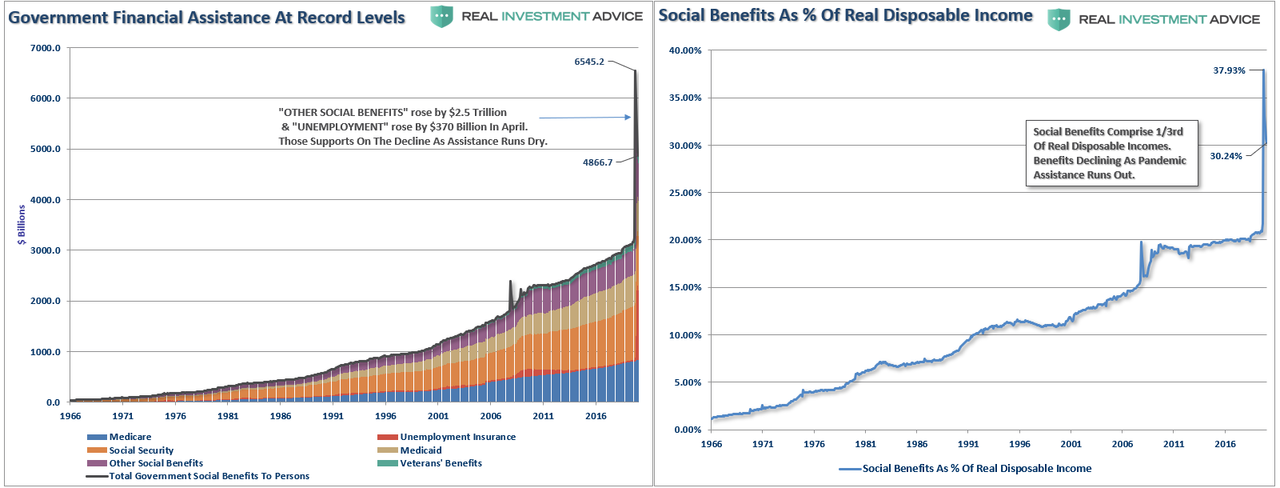
In April, welfare spiked to the highest percentage of disposable personal incomes in history as the Government responded with massive taxpayer funds subsidies. While those numbers have declined in recent months, as the fiscal support runs dry, welfare still comprises 1/3rd of total disposable personal incomes.
“During the ‘Great Depression,’ the economically devastated masses would form ‘breadlines.’ Today, those ‘breadlines’ form at the mailbox.”
Unfortunately, recycled tax dollars used for consumptive purposes has virtually no impact on increasing economic activity. However, given the rather dire statistics, you can understand why for Americans in their 50s, 65% are now worried that Social Security will dry up by the time they retire. Moreover, 50% of them are concerned about paying for daily living expenses in retirement.
The D.A.D. Plan
The lack of financial security, and concerns over the solvency and stability of social welfare, has led to an increasing number of Americans to adopt the D.A.D. retirement plan.(Die. At. Desk.)
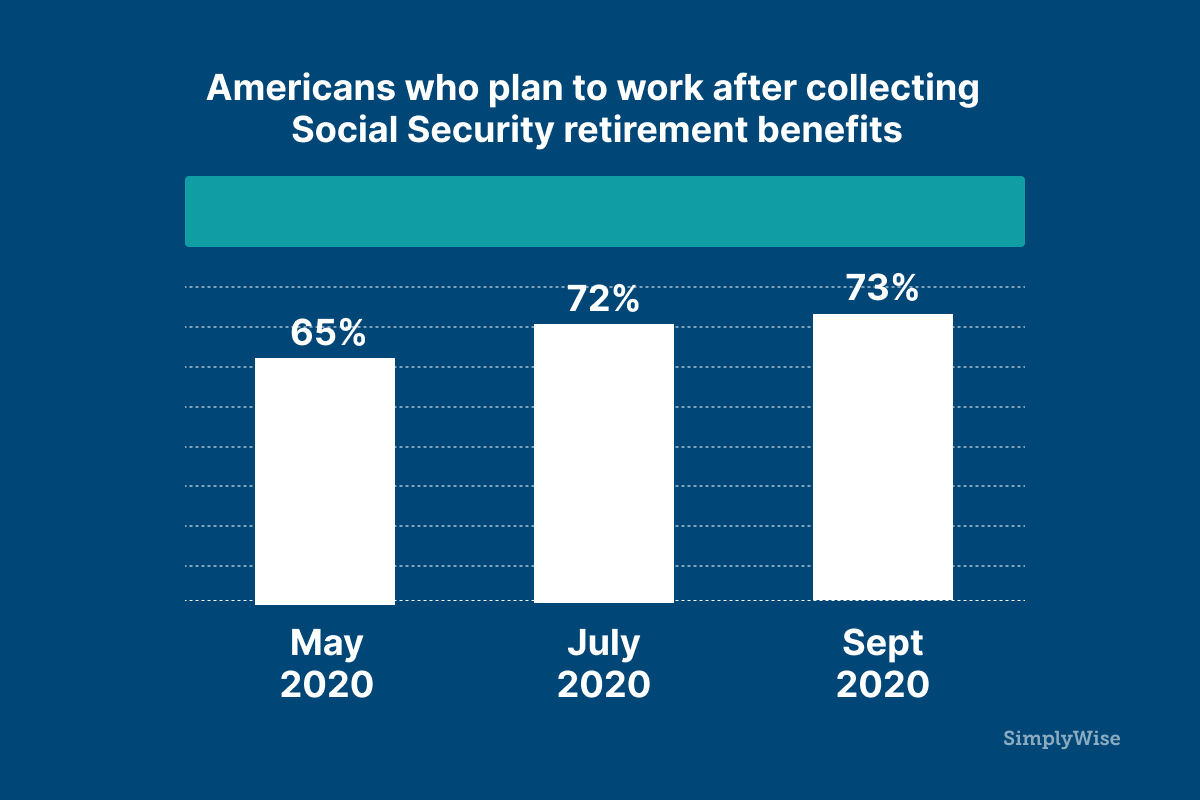
“The September Index found that more Americans than ever are planning to work into retirement. Today, 73% of workers plan to work after they claim Social Security retirement benefits. That is up from 67% this May and 72% in July. Delaying retirement may be attributed to the fact that only 63% of workers surveyed are making what they made prior to COVID-19.” – SimplyWise
We have discussed the lack of financial savings many times previously. Not surprisingly, SimplyWise noted the same in their survey.
“The September Index found that 30% of Americans saved nothing for retirement in the last year. In fact, the majority (56%) saved under $1,000 in the last year. The results were similar to those of May and July, when one in three Americans saved $0 for retirement.”
The statistics are even worse for older Americans.
“Of Americans in their 50s, 30% saved $0 for retirement in the last year. And 43% of people in their 50s couldn’t last more than a month off their savings.“
These statistics are not new. However, there are far-reaching consequences on both the fiscal solvency of social welfare and long-run economic growth.
The Savings Dilemma
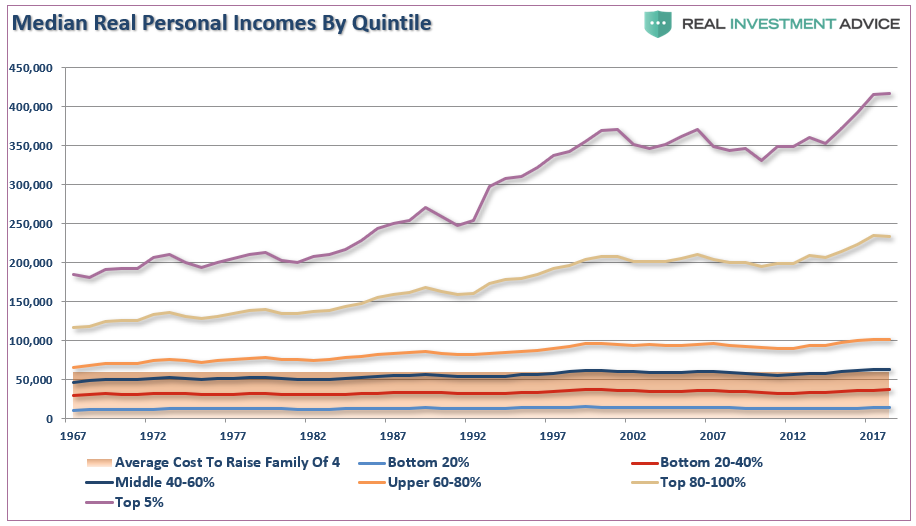
These are pretty depressing statistics when you think about it. However, for the bottom-80% of income earners whose income growth has been stagnant over the last two decades, the roadblocks to being “financially secure” for retirement shouldn’t be surprising.
In a survey from Kiplinger and Personal Capital, Americans said the biggest roadblocks to saving for retirement were:
The high cost of health insurance. “From 1999 to 2017, the cost of family health insurance coverage has more than doubled the amount of take-home pay it consumes.”
Disappointing investment performance. “Just under 30% of all respondents (29.4%) said that disappointing investment performance had stopped them from saving as much as they would have liked to for retirement.”
The amount of consumer debt they carried. “21.3% of Americans said that debt, not including student loans, kept them from saving for retirement combined with the increased costs of living.”
A Market For The Wealthy
The financial “insecurity” of most Americans has been the result of decades of financial mismanagement. Stagnant wage growth, combined with a consistent relaxation of lending standards, led to three generations of Americans living beyond their means.
The problem with “living for today,’ is that it leaves you with a financially depleted tomorrow. However, the financial media is full of “pundits” and “gurus,” suggesting that if you aggressively invest in the financial markets, all your problems will disappear.
However, the problem with the thesis is it hasn’t worked out that way. Repeated crashes in the stock market have destroyed both investor wealth and confidence. As SimplyWise noted, only a small fraction of respondents were planning to invest more in the financial markets due to changes in income levels.
No Trickle Down
While the Fed keeps inflating stock markets, the “trickle-down” effect has yet to occur. Even as noted in the SimplyWise survey, “disappointing investment returns” have stunted retirees saving plans.
However, after 4-decades of transferring wealth from the middle-class to the rich, it is the top-10% of income earners who own 88% of stock markets. Therefore, it should not be surprising that most individuals planning to invest more are in the top income brackets.
For the rest, two major bear markets, lack of wage growth, and surging costs of living have eroded any ability to build savings for retirement. Such is why most retirees will depend on social welfare for 50%, or more, of their retirement income.
The mirage of consumer wealth has not been a function of a broad-based increase in Americans’ net worth. Instead, it has been a division in the country between the Top 20% who have the wealth and the Bottom 80% dependent on increasing debt levels to sustain their current standard of living.
With the vast amount of individuals already vastly under-saved and dependent on social welfare, the current economic devastation will reveal the full extent of the “retirement crisis.”
Of course, this is also why the calls for more socialistic policies continue to rise.
via ZeroHedge News https://ift.tt/346TSNt Tyler Durden
I thought I’d repeat a post I wrote up about this case last year, when it was handed down; see also Jacob Sullum’s post from yesterday on this subject.
[* * *]
From Friday’s [June 28, 2019] Seventh Circuit decision in Doe v. Purdue Univ., written by Judge Amy Coney Barrett and joined by Judges Diane Sykes and Amy St. Eve:
After finding John Doe guilty of sexual violence against Jane Doe, Purdue University suspended him for an academic year and imposed conditions on his readmission. As a result of that decision, John was expelled from the Navy ROTC program, which terminated both his ROTC scholarship and plan to pursue a career in the Navy…. [We conclude that] John has adequately alleged violations of both the Fourteenth Amendment and Title IX.
The court concluded that, under Indiana law, university students have no property right in their continuing attendance at the university, and thus they can’t sue for deprivation of property without due process. (Federal courts disagree on this question: “The First, Sixth, and Tenth Circuits have recognized a generalized property interest in higher education. The Fifth and Eighth Circuits have assumed without deciding that such a property interest exists. The Second, Third, Fourth, Ninth, and Eleventh Circuits join [the Seventh Circuit] in making a state-specific inquiry to determine whether a property interest exists.”)
But the court held that Doe adequately alleged that he was being deprived of his liberty, on a so-called “stigma plus” theory: Purdue had been accusing him of a crime, and combining the stigma of this accusation with a one-year suspension, which led to his expulsion from the Navy ROTC program. (Mere alleged defamatory falsehoods aren’t seen as deprivations of liberty for Due Process Clause purposes, but alleged defamatory falsehoods coupled with tangible government action often are.) And, the court concluded, this deprivation of liberty was done without due process:
John’s circumstances entitled him to relatively formal procedures: he was suspended by a university rather than a high school, for sexual violence rather than academic failure, and for an academic year rather than a few days. Yet Purdue’s process fell short of what even a high school must provide to a student facing a days-long suspension.
“[D]ue process requires, in connection with a suspension of 10 days or less, that the student be given oral or written notice of the charges against him and, if he denies them, an explanation of the evidence the authorities have and an opportunity to present his side of the story.” John received notice of Jane’s allegations and denied them, but Purdue did not disclose its evidence to John. And withholding the evidence on which it relied in adjudicating his guilt was itself sufficient to render the process fundamentally unfair. “[F]airness can rarely be obtained by secret, one-sided determination of facts decisive of rights….”
John has adequately alleged that the process was deficient in other respects as well. To satisfy the Due Process Clause, “a hearing must be a real one, not a sham or pretense.” At John’s meeting with the Advisory Committee, two of the three panel members candidly admitted that they had not read the investigative report, which suggests that they decided that John was guilty based on the accusation rather than the evidence.
And in a case that boiled down to a “he said/she said,” it is particularly concerning that [Dean of Students Katherine] Sermersheim and the committee concluded that Jane was the more credible witness—in fact, that she was credible at all—without ever speaking to her in person. Indeed, they did not even receive a statement written by Jane herself, much less a sworn statement. It is unclear, to say the least, how Sermersheim and the committee could have evaluated Jane’s credibility.
Sermersheim and the Advisory Committee’s failure to make any attempt to examine Jane’s credibility is all the more troubling because John identified specific impeachment evidence. He said that Jane was depressed, had attempted suicide, and was angry at him for reporting the attempt. His roommate—with whom Sermersheim and the Advisory Committee refused to speak—maintained that he was present at the time of the alleged assault and that Jane’s rendition of events was false. And John insisted that Jane’s behavior after the alleged assault—including her texts, gifts, and continued romantic relationship with him—was inconsistent with her claim that he had committed sexual violence against her. Sermersheim and the Advisory Committee may have concluded in the end that John’s impeachment evidence did not undercut Jane’s credibility. But their failure to even question Jane or John’s roommate to probe whether this evidence was reason to disbelieve Jane was fundamentally unfair to John.
Another Horrific Chicago Weekend: 5-Year Old Girl Stabbed, 49 People Shot Tyler Durden
Mon, 09/28/2020 – 12:20
There’s been another horrific and bloody weekend in Chicago, after multiple weekends running of a surge in shootings and homicides. As of the start of Monday at least49 people had been shot, including seven fatally, based on police tallies and local reports.
Via Chicago Sun-Times
This past weekend was particularly tragic as it included the stabbing death of a 5-year old girl:
Saturday morning police got a call for a person stabbed on Fulton Boulevard near Kedzie Avenue in East Garfield Park.
Serenity had multiple stab wounds. Neighbors tried to help her before paramedics got there. Paramedics arrived and rushed her to Stroger Hospital of Cook County where she died minutes later.
It is not clear what led to the stabbing, but the suspect walked up to officers and was taken into custody at the scene. Detectives earlier said they were investigating to see if Austin has a history of mental illness.
Like in prior weekends of widespread violence, the victims of shootings and knifings were overwhelmingly young. Teenagers were among the latest shooting victims.
Seven people were killed, including two teenagers, and at least 42 others were wounded in shootings across Chicago this weekend. https://t.co/jp1TvquOUb
Fox News reviews some of the instances as follows:
The gun violence in the city began Friday night when a 19-year-old man reportedly was shot in the back and chest while walking in an alley. He later was pronounced dead at a local hospital.
The next morning, a 17-year-old reportedly was standing in an alley in a different part of the city and was approached by two men. He was shot in the upper torso at about 11:10 a.m. and pronounced dead at the scene, NBC Chicago reported.
In other shootings targeting teenagers, a 17-year-old male was critically wounded in a drive-by attack in Englewood Sunday morning, while a 15-year-old male was struck in the leg after being approached by a vehicle later that day in the South Shore, police told the Chicago Sun-Times.
On Sunday night, a 20-year-old was reported to have died after being dropped off at a hospital in Englewood with a gunshot wound to his head.
Chicago homicides up 52%, with vast majority of victims Black or Latino. So let’s focus on cops killing blacks and ignore. #BLM#Chicago#FOXhttps://t.co/kgHH3BXVjc
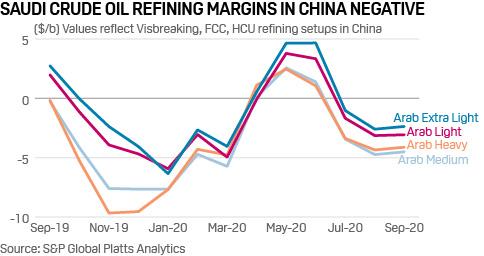
This week’s selection of key talking points from S&P Global Platts news editors looks at how Saudi Arabia faces ballooning crude stockpiles caused by poor demand in Asia. Meanwhile, the political saga surrounding the Nord Stream 2 pipeline shows no sign of abating, Asia’s aviation industry remains in the doldrums, UK gas plant margins are looking up, and the recovery in US LNG exports continues apace.
1. Saudi oil stocks near five-month high amid weak Asian refining margins
What’s happening? Saudi Arabia’s domestic crude oil stockpiles have climbed to their highest since the coronavirus pandemic hit the market hard in April, with analysts saying Asian refineries are struggling to keep up with term commitments. Saudi crude stockpiles were 78 million barrels as of Sept. 23, the highest since April 26, according to data analytics firm Kpler.
What’s next? Asia’s tepid oil demand may prompt Saudi Aramco to lower its official selling prices for its crude exports. But domestic consumption could see an uptick, as Saudi Arabia has announced it will gradually allow the resumption of the Umrah pilgrimage from Oct. 4.
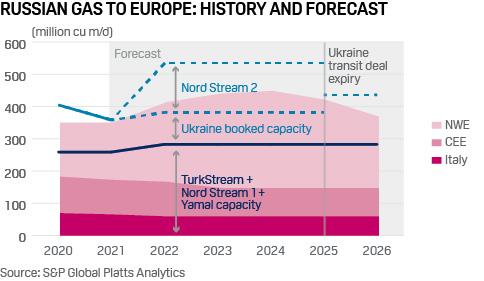
2. Nord Stream 2: Crawling to the finish
What’s happening? The completion and future operation of the 55 Bcm/year Nord Stream 2 pipeline has turned into a political saga that stretches well beyond its role of transporting gas from Russia to Germany. The threat of extra-territorial sanctions by members of the US Congress against a bevy of participants has left the project stuck at 95% complete since the end of 2019. The pipeline has become intertwined with potential sanctions tied to the poisoning of Russian politician Alexei Navalny, who is currently recovering in Germany.
What’s next? Platts Analytics has recently pushed back the commissioning date by one quarter to the second quarter of 2021. The pipeline delay will not limit Russia’s ability to export gas to Europe, although it may increase the cost to do so. Russia will potentially have to rely more heavily on Ukrainian transit, where its current contract limits its use to 40 Bcm/year. Additional volumes will trigger higher transit fees, which is why Russia will draw on its European storage prior to exceeding its Ukrainian contract volumes in 2021.
3. UK gas plant margins looking up after difficult COVID-hit period
What’s happening? Irish utility ESB has wiped GBP177 million off the book value of its 884 MW Carrington combined cycle gas plant in Manchester, noting poor margins for thermal power stations in the British market for the six months to end-June. Increased renewable generation and reduced demand had served to drive gas plant run times down. British projected thermal margins and captured spreads into the future had also fallen due to reduced demand and lower forecast peak prices, it said.
What’s next? S&P Global Platts calculations show much improved gas plant margins for Q4 in the UK, with CCGTs already running above the five-year average in September. Falling wind output and rising demand added support to gas burn in September, and while winter wind output will inevitably pick up, another delay to reactor returns at Hinkley Point B has reduced Platts forecast for December nuclear availability and offered support to spark spreads. However, let’s not get carried away. ESB’s Carrington predicament remains a decent indicator of thermal plant profitability. Gas plant clean spark spreads at or below Eur9/MWh are still modest levels, barely covering running costs ex-fuel and carbon.
4. Asian aviation industry facing further headwinds
What’s happening? A resurgence of the coronavirus has put a dark cloud over the recovery of the Asian aviation industry, with strict travel curbs still prevalent. India has extended a ban on international commercial flights to Sept. 30, and S&P Global Platts Analytics recently noted domestic flights are currently down 59% from pre-coronavirus levels. Spiraling infections in Myanmar triggered an extension of lockdown measures, forcing domestic airlines to suspend all flights through September. And Philippine president Rodrigo Duterte has announced Manila will remain under strict lockdown until Sept. 30.
What’s next? The industry is poised for further headwinds. The fear of illness is a major deterrent to air travel, with even ultra-low fares unlikely to revive the industry’s sagging fortunes. High infection rates, particularly in countries such as India, could send jet fuel prices into a tailspin once again, sources said. In the derivatives market, the front-month October/November timespread, for example, was assessed at minus 67 cents/b at the Asian close Sept. 23. The front-month timespread has been in a contango structure for most of the year and was last backwardated Jan. 31 at plus 48 cents/b.
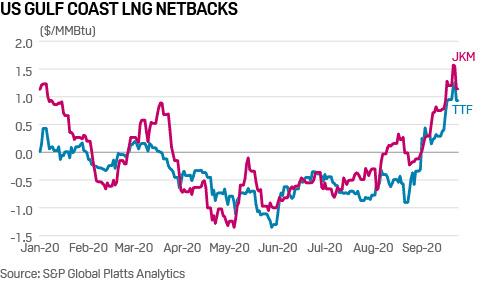
5. US LNG export recovery continues on price strength
What’s happening? Outagesat two US liquefaction terminals – one due to damage to power infrastructure from a hurricane and the other due to planned maintenance — have bolstered LNG spreads. The result has been improved netbacks from European and Asian markets.
What’s next? The trend could drive additional uncontracted export capacity to dispatch as LNG marketers vie for the limited remaining spot trading opportunities before the end of 2020, continuing a recovery from widespread cancellations of US cargoes over the summer.
via ZeroHedge News https://ift.tt/34a8dcd Tyler Durden
Pelosi Primes Democrats On Chance House Decides Presidency Tyler Durden
Mon, 09/28/2020 – 11:45
House Speaker Nancy Pelosi (D-CA) is preparing for the off-chance that neither President Trump nor Joe Biden will win an outright Electoral College victory – leaving the fate of the presidency to the House of Representatives.
In such a scenario – which hasn’t happened since 1876 – each state’s delegation would receive a single vote in the House. Per Politico:
Who receives that vote is determined by an internal tally of each lawmaker in the delegation. This means the presidency may not be decided by the party that controls the House itself but by the one that controls more state delegations in the chamber. And right now, Republicans control 26 delegations to Democrats’ 22, with Pennsylvania tied and Michigan a 7-6 plurality for Democrats, with a 14th seat held by independent Justin Amash.
In other words, if this long-shot scenario happens, the presidency could be decided by a single seat, while there would certainly be extended legal challenges over victors in House races, as national party leaders and their legal teams would be scrambling to determine the number of seats available to each party.
In a Sunday letter to House Democrats, Pelosi urged them to consider the scenario when determining where to focus resources on winning more seats in November. In typically red states such as Alaska and Montana, Democrats could focus efforts on races where Democrats have been competitive statewide. As Politico notes, “In these states, Democratic victories could flip an entire delegation with a single upset House victory.”
“The Constitution says that a candidate must receive a majority of the state delegations to win,” wrote Pelosi. “We must achieve that majority of delegations or keep the Republicans from doing so.”
Pelosi has also raised the issue repeatedly in recent weeks with her leadership team. Other senior House Democrats told POLITICO they’d heard about these concerns from colleagues in recent weeks.
According to Rep. Jamie Raskin (D-MD), “We’re trying to win every seat in America, but there are obviously some places where a congressional district is even more important than just getting the member into the U.S. House of Representatives.”
President Trump weighed in on the inevitable chaos surrounding mail-in ballots and the prospect of a deadlocked Electoral College, saying at a Saturday rally in Pennsylvania, “And I don’t want to end up in the Supreme Court and I don’t want to go back to Congress either, even though we have an advantage if we go back to Congress — does everyone understand that?”
“I think it’s 26 to 22 or something because it’s counted one vote per state, so we actually have an advantage. Oh, they’re going to be thrilled to hear that.”
Jo Jorgensen, the Libertarian Party’s nominee, is the only presidential candidate besides Donald Trump and Joe Biden who is on the ballot in all 50 states. One recent poll has her pulling 5 percent nationally, and another has her at 4 percent—perhaps enough to cover the spread between the president and his Democratic challenger.
Who is supporting the 63-year-old Clemson psychologist? Jorgensen tells Reason’s Nick Gillespie that she’s drawing “people who believe that they should be able to make their own decisions. People who believe that they should have a right to decide their child’s education, which health care they want and which health care they don’t want, [how] to control their retirement dollars, and that they should be able to make a choice of whether or not they wear a mask.” (Jorgensen herself masks up in public spaces and in businesses that request customers wear them.)
Jorgensen wants to cut the size and spending of government in half, bring overseas troops home, legalize drugs, and reform police and the criminal justice system. “If I could sit around the kitchen table of every American family in this country,” she says, “I would win by a landslide.”
Responding to the canard that voting for a third-party candidate is a wasted vote, Jorgensen says that voting for a major-party candidate out of tribal loyalty is the true missed opportunity. To Republicans, she says, “If you live in a solidly red state [and] and you don’t like what Donald Trump has been doing, if you don’t like the bigger government he’s given you, then voting for him is a wasted vote.” Her message to “Democrats, especially Democrats in California, in New York,” is similar: “Don’t vote for Joe Biden. If you want more war, if you want more of your rights taken away, if you think that you have a right to have access to marijuana, a vote for him as a wasted vote, because he’s not going to [give you] what you really want.”
Edited by John Osterhoudt. Additional Graphics by Lex Villena.
Photos: U.S. Secretary of Defense/Flickr; Dennis Brack/DanitaDelimont.com “Danita Delimont Photography”/Newscom; Dennis Brack / DanitaDelimont.com Danita Delimont Photography/Newscom; Pool/TNS/Newscom; Tom Williams/CQ Roll Call/Newscom; CARLOS BARRIA/REUTERS/Newscom; US Senate Television via CNP/Sip/Newscom; Paul Hennessy / SOPA Images/Sipa/Newscom; Paul Hennessy / SOPA Images/Sipa/Newscom; Paul Hennessy / SOPA Images/Sipa/Newscom; Adam Schultz/ZUMA Press/Newscom; Paul Hennessy/ZUMA Press/Newscom; Paul Hennessy/ZUMA Press/Newscom; Paul Hennessy/ZUMA Press/Newscom; Gage Skidmore/Flickr/Creative Commons; Gage Skidmore/Flickr/Creative Commons; Gage Skidmore/Flickr/Creative Commons; Gage Skidmore/Flickr/Creative Commons; Gage Skidmore/Flickr/Creative Commons; Gage Skidmore/Flickr/Creative Commons
from Latest – Reason.com https://ift.tt/3cEoji7
via IFTTT
A much-shared video of an Ohio mom getting tased and handcuffed at a middle-school football game should be a reminder that turning everything into a legal matter is just begging for violent conflict. Once a desire—or even a good idea—is turned into a mandate enforceable by the cops, violence is only one disagreement away.
In watching the video, it’s obvious that there was plenty of bad judgment going around in the open-air bleachers of Logan-Hocking School District that day. That goes for mask-resistant Alecia D. Kitts herself, rules-spewing school officials, and the Logan Police Department cops who escalated assertions of their authority over a minor dispute into a lightning ride.
Let’s start with Kitts. Video of the incident starts after the cops grab her, but apparently that came after a prolonged argument over her refusal to wear a mask while watching the game. She claimed to have asthma and so be exempted, but that didn’t satisfy the folks running the event who asked her to leave.
Here’s the thing: while there’s debate over the effectiveness of masks—the CDC is for them, while the World Health Organization remains lukewarm—that’s irrelevant when you’re in somebody else’s domain. It’s their property so they make the rules. If they want you to wear a face mask, or a propeller beanie, or to take off your shoes, you should comply or leave. That’s just good manners. Throwing a hissy fit because a host asks you to do something you don’t want to do in their facility isn’t an option.
Second in the bad-judgment parade are the school officials, who must know that there are huge tensions over mask-wearing, which has become a point of contention and a partisan divide. Should it be that big a deal? That doesn’t matter—it is. But there are constructive approaches for addressing controversial issues.
Cottonwood, Arizona—the town nearest me—settled on a workable compromise. The town has a mask mandate, which carries no enforcement provisions or penalties. Most stores post signs which are respected by the majority of patrons but ignored by a minority. There’s a measure of protection for mask-wearers and a measure of independence for mask-refusers. Nobody gets hot and bothered because face masks aren’t worth wrestling matches in the produce section.
Logan cops should have remembered that masks don’t rate personal combat before they tased an ill-mannered mom over her refusal to wear a cloth covering in uncrowded bleachers under an open sky. There was no reason for that, aside from resentment that anybody could refuse their commands.
Admittedly, Kitts wasn’t officially arrested for her mask-resistance; that was just the starting point. “It is important to note, the female was not arrested for failing to wear a mask, she was asked to leave the premises for continually violating school policy,” huffs the Logan Police Department. “Once she refused to leave the premises, she was advised she was under arrest for criminal trespassing, she resisted the arrest, which led to the use of force.”
But that’s always the case. Selling loose cigarettes, or hanging out, or a faulty brake light easily turns into a grab-bag of charges, usually including “resisting arrest.” Then we’re supposed to believe that the subsequent wrestling, beating, tasing, or shooting are perfectly justified, even though it all started with some minor violation.
“Undoubtedly, lawmakers have put too many crimes and civil violations on the books that can lead to police-initiated contact, a phenomenon broadly captured by the term overcriminalization,” Jonathan Blanks points out in a recent piece for Reason. “But every day, police officers routinely use personal and institutional discretion to ignore countless violations that range from jaywalking to not using a turn signal to public consumption of drugs and alcohol. Thus, the determination of how often and under what circumstances to make traffic or pedestrian stops is ultimately one of policy, not one of law.”
Blanks emphasizes that the multitude of rules on the books put enforcement discretion in the hands of police officers. They invariably give some people a pass while coming down hard on vulnerable groups, such as racial minorities, as well as individuals that authorities dislike.
“The police go armed to enforce the will of the state, and if you resist, they might kill you,” observed Yale Law School’s Stephen L. Carter in 2014 after New York City cops killed Eric Garner in a confrontation rooted in the illegal sale of loose cigarettes. “Fewer laws would mean fewer opportunities for official violence to get out of hand,” he added.
Face mask mandates are just another set of intrusions into our lives that set the ground for confrontations between armed enforcers and relatively powerless people. It’s all about making the hoi polloi do what they’re told.
That compliance and not health are the issue is obvious in the video of the Ohio incident in which School Resource Officer Chris Smith grapples with Kitts. That’s certainly higher risk for spreading disease than is leaving an unmasked woman to sit on a bench at a distance from other attendees.
You could say the same of the unmasked psalm-singing protesters arrested last week at the city hall parking lot in Moscow, Idaho for refusing to wear masks (and for add-on charges, of course). Putting hands on violators was riskier than letting them stand closer than social-distancing rules recommend.
It was the same in the past. During the Spanish flu pandemic, when mask mandates were as controversial as they are now, San Francisco authorities arrested 1,000 “mask slackers” in one day and jammed them into “standing room only” prisons—an environment ripe for virus transmission.
Let’s emphasize here that the effectiveness of masks is irrelevant. We could find definitive evidence tomorrow that masks help to reduce the spread of COVID-19, and that still wouldn’t add a gloss of brilliance to getting cops involved. Violent enforcement should be reserved for serious matters, not for failures of hygiene and good manners.
The same consideration goes for traffic rules, tax violations, loitering, and a host of other victimless or minor transgressions. The rules may involve policy preferences, or potentially helpful ideas, but making them enforceable by police action has very high costs of its own. There are remarkably few situations that are improved by introducing violent enforcement into the situation—especially when we know that some violators will get a pass and others will bear the full force of the law.
Wherever you stand on the mask debate, keep in mind that it’s just one of many disputes over how people should behave. And whatever your preferences, having the police shove them down people’s throats is unlikely to make the world a better place.
from Latest – Reason.com https://ift.tt/343i1Va
via IFTTT
Jo Jorgensen, the Libertarian Party’s nominee, is the only presidential candidate besides Donald Trump and Joe Biden who is on the ballot in all 50 states. One recent poll has her pulling 5 percent nationally, and another has her at 4 percent—perhaps enough to cover the spread between the president and his Democratic challenger.
Who is supporting the 63-year-old Clemson psychologist? Jorgensen tells Reason’s Nick Gillespie that she’s drawing “people who believe that they should be able to make their own decisions. People who believe that they should have a right to decide their child’s education, which health care they want and which health care they don’t want, [how] to control their retirement dollars, and that they should be able to make a choice of whether or not they wear a mask.” (Jorgensen herself masks up in public spaces and in businesses that request customers wear them.)
Jorgensen wants to cut the size and spending of government in half, bring overseas troops home, legalize drugs, and reform police and the criminal justice system. “If I could sit around the kitchen table of every American family in this country,” she says, “I would win by a landslide.”
Responding to the canard that voting for a third-party candidate is a wasted vote, Jorgensen says that voting for a major-party candidate out of tribal loyalty is the true missed opportunity. To Republicans, she says, “If you live in a solidly red state [and] and you don’t like what Donald Trump has been doing, if you don’t like the bigger government he’s given you, then voting for him is a wasted vote.” Her message to “Democrats, especially Democrats in California, in New York,” is similar: “Don’t vote for Joe Biden. If you want more war, if you want more of your rights taken away, if you think that you have a right to have access to marijuana, a vote for him as a wasted vote, because he’s not going to [give you] what you really want.”
Edited by John Osterhoudt. Additional Graphics by Lex Villena.
Photos: U.S. Secretary of Defense/Flickr; Dennis Brack/DanitaDelimont.com “Danita Delimont Photography”/Newscom; Dennis Brack / DanitaDelimont.com Danita Delimont Photography/Newscom; Pool/TNS/Newscom; Tom Williams/CQ Roll Call/Newscom; CARLOS BARRIA/REUTERS/Newscom; US Senate Television via CNP/Sip/Newscom; Paul Hennessy / SOPA Images/Sipa/Newscom; Paul Hennessy / SOPA Images/Sipa/Newscom; Paul Hennessy / SOPA Images/Sipa/Newscom; Adam Schultz/ZUMA Press/Newscom; Paul Hennessy/ZUMA Press/Newscom; Paul Hennessy/ZUMA Press/Newscom; Paul Hennessy/ZUMA Press/Newscom; Gage Skidmore/Flickr/Creative Commons; Gage Skidmore/Flickr/Creative Commons; Gage Skidmore/Flickr/Creative Commons; Gage Skidmore/Flickr/Creative Commons; Gage Skidmore/Flickr/Creative Commons; Gage Skidmore/Flickr/Creative Commons
from Latest – Reason.com https://ift.tt/3cEoji7
via IFTTT
2020 is a year when many things besides people have died, or at least placed on indefinite life support. Music and most arts and culture (at least audience-based), education, a person`s livelihood, social trust and interaction, common sense and common decency, debate, and we can include responsible journalism to the list.
In fact, responsible journalism was one of the first casualties of 2020 and bears responsibility for much of the rest.
My path to 2020 was unusual, to say the least, but it prepared me to deal with the events that have transpired.
Each step of my career as a scientist I chose a path which led me to 2020.
Here are some examples:
My two leading choices for the Ph.D. program in chemistry were at the University of Southern California (USC), where I had interviewed with Professor George A. Olah (Nobel Prize in Chemistry, 1992), and the University of California, Riverside (UCR). I chose UCR and Professor M. Mark Midland, who had earned his degree with Professor Herbert C. Brown (Nobel Prize in Chemistry, 1979) and was young, enthusiastic, and broad-based in his interests . If I had chosen and been able to study with Dr. Olah, my career would have been set but much more narrowly focused. I chose Dr. Midland and I have never regretted the choice.
With the Ph.D. in hand, I had a choice of academia (the expected route) or industry. I chose industry, specifically, the pharmaceutical industry since I had always been interested in medicinal applications and medicine in general.
In industry, I chose development over research based upon the unique challenges.
Later, I chose to move out of direct scientific work and into Quality Assurance. Part of this choice was the opportunity to learn new things.
Still later, I chose to move into Biopharmaceuticals and vaccines in particular. This afforded me a new opportunity at learning.
Finally, I moved into consulting to try and use my experience to assist others in the industry.
The last company I worked for was a vaccine company, as Director of QA. For those that do not understand, being responsible for Quality Assurance is an immense task. You have to be both an expert and a judge.
The company was founded in an attempt at development of an HIV vaccine. After 9/11, the company expanded into Biodefense and was pursuing the development of vaccines for anthrax and smallpox for the US National Stockpile as part of the newly formed Dept. of Homeland Security. I joined the company at that time and I became the project leader on a new smallpox vaccine being developed in collaboration with a Japanese company.
I had studied virology and infectious diseases in college, but I needed to expand my knowledge. So, it was immersion time. This also coincided with the original SARS outbreak in Hong Kong. In fact, I visited Hong Kong in 2003 during SARS (no lockdowns, distancing, etc.; some people wore masks but it was mainly because of the very poor air quality in Hong Kong, not due to SARS). I had become interested in Upper Respiratory Infections (URI) long before, mainly as a result of my occasional personal battles with the cold, flu, sinusitis, bronchitis, etc. but SARS was a new opportunity.
As a project leader for smallpox, I had the opportunity to meet and talk with Dr. D.A. Henderson, a leading person during the WHO smallpox eradication effort during the 1960s and 1970s and involved with the Dept. of Homeland Security on the Biodefense initiative under the G.W. Bush administration.
An hour or two with Dr. Henderson was worth a whole semester of classroom learning. I learned much about infectious disease control, strategy, management, etc. Of course, Dr. Henderson would be opposed, to put it mildly, to the current “policies” being used, such as lockdowns, closures, masking, etc.
However, at the time that I met him, much of the concern was directed towards the aging U.S. vaccine stockpile, particularly for infectious diseases that were being considered as possible bioterrorism weapons (e.g. anthrax and smallpox).
After “retiring”, I had hoped that I was “riding off into the sunset” on a Harley (figuratively, since I do not yet own one) as far as my career was concerned. But,as a scientist, with expertise in infectious diseases, PPE, antiviral medicines, vaccines, etc., this year thrust me back into thinking mode, instinctively at first. But, I soon discovered that we were in trouble, not from the virus but from ourselves.
As if a switch had been thrown, the light went out on responsible journalism EVERYWHERE! Power has not yet been restored.
I came upon an article recently on Yahoo from Zacks that caught my attention . The opening sentence really got me going and I quote it now (emphasis added):
Biotech firms and drugmakers across the globe are pumping in millions of dollars to develop a vaccine to wipe out the deadly coronavirus, with many already ramping up production of their vaccine candidates if one gets an approval.
With this one sentence and a simple phrase in it, the hammer was hit right on the head of irresponsible and misinformed journalism. Normal journalism would have written simply “…a vaccine for coronavirus…”; but hyperbole won out.
There are two aspects to that phrase that are worth examining, i.e. the idea of a vaccine wiping out a virus and the concept of a deadly virus. I have heard the term “wiping out” before (Nancy Pelosi?). But, I want to first deal with the deadly virus hyperbole and get to the vaccine part later.
How “deadly” is coronavirus? NOT VERY and that is based on data, medical reports, and general knowledge of URI.
It is interesting to review the first confirmed case in the US. Fortunately, this case history has been published. This person, a male in his 30s, had returned from Wuhan in mid-January after visiting family and had developed a cough and nausea. He was in a suburb north of Seattle, Washington.
As it so happened, I was visiting that area at the same time. He happened to have seen a CDC alert about Wuhan and went to a clinic. At the time, his main symptoms were cough and nausea and only intermittent low fever. His initial examination presented with no fever and his chest x-ray and lab tests were all normal. Even the clinicians recognized the implications as evidenced by the following statement from the case study:
These nonspecific signs and symptoms of mild illness early in the clinical course of 2019-nCoV infection may be indistinguishable clinically from many other common infectious diseases, particularly during the winter respiratory virus season.
He was admitted into isolation as he was being tested for the new strain of coronavirus (there have been 4 known strains prior to this: HKU1, NL63, 229E, and OC43). Once confirmed as having the new strain, he received only supportive care. It should be noted that besides nasal swabs containing virus, his feces also tested positive (which was tested since he was experiencing some gastrointestinal symptoms).
After several days, he developed pneumonia, which the staff feared was hospital-acquired pneumonia. This pneumonia is a serious problem because they tend to be antibiotic resistant strains. As a result, he was started on vancomycin (the only effective antibiotic against resistant strains) and also was given remdesivir. He recovered quickly and eventually was released.
The source of his infection was never traceable since he reported no contact with ill people while in Wuhan. It is not known if he picked up the virus while in Wuhan, or in transit, or even after returning to the US. At the end of the case study report, January 30, no secondary transmissions had been identified as known contacts had not yet become sick. This case does not mirror the panic that has been imposed concerning this disease.
After reading this, I have considered what would have happened had this person NOT reported to a clinic. It is hard to say. Eventually, there would have been a first confirmed case, but when and where? How many cases would have gone unnoticed in the meantime? Would this person’s disease have faded without experiencing pneumonia? He responded quickly to medical intervention, which was mainly to fight a BACTERIAL infection (pneumonia) that was possibly acquired in the hospital setting. He did quite well against the virus.
The media hype over this case at the time focused heavily on his Wuhan trip. How many people experienced the same symptoms and dismissed them because they had no Wuhan connection?
But, soon the media was all about the most serious symptoms, high fever, serious fatigue, difficulty breathing. If one went to the medical sites, as I did, you would find the same general advice, i.e. treat it like you would the flu but if it starts becoming worse, call or go see a doctor.
So, most people were probably paying attention to the media reports and not recognizing the actual medical reports. How many people were experiencing the mild form and dismissed it because it did not fit the serious symptoms reported by the media?
To this day, little has changed. The vast majority of people experience mild symptoms. Higher risk individuals sometimes experienced the more serious symptoms. Symptoms vary depending on the individual, their immune system, viral load, etc.
Meanwhile, around the world, more cases were becoming known as was the relatively benign nature of the virus by most people who experienced it. It was known early on in China that the high risk group for serious disease was the same as influenza; that is, elderly with serious health problems, but this was not being communicated. Even so, we had plenty of other data as well.
In February, the virus was discovered on a cruise ship in Japan. A ship mostly carrying retired, elderly people. It was an opportune situation to observe this virus. About half of the people on the ship tested positive (672 positive) and remained quarantined on the ship. There were a few deaths (13 in total), but most people experienced mild disease and eventually were released from the ship or hospital. Some Americans were returned to the US despite the travel bans. Still, it was clear that the virus was not deadly and it was clear who was at risk.
We all know what happened in March. The virus did not change nor did the data, bad modeling was pushed and governments panicked. There is little need to go into detail about the time since March.
So, now that several months have elapsed, what do we know about the mortality? First, it is becoming clearer that the mortality rate of Covid is consistent with influenza. There is nothing so different about it. This is based on serology studies to try and define a baseline number of people who have experienced the virus, not on testing since the testing numbers have little value. Far more people have experienced the disease than the numbers indicate. But the mortality is not so much due to the virus, but rather the susceptible population.
The national average on mortality rate, all causes, is running about 110-111% of expected. This number has actually risen over the last month or two even though the Covid death rate has declined. The top 5 highest values are for NYC (176%, note: the CDC reports NY state separately), New Jersey (134%), Arizona (124%), NY State (121%) and D.C (129%). There are seven states/territories that are below the 100% level (Puerto Rico, West Virginia, North Dakota, North Carolina, Montana, Hawaii, and Alaska). The Non-lockdown states are Arkansas (108%), Iowa (105%), Nebraska (102%), North Dakota (99%), South Dakota (100%), Utah (108%), and Wyoming (107%). A few other states worth noting are California (110%), Michigan (113%), Massachusetts (117%), Florida (114%), and Texas (115%).
What do these numbers mean? The CDC calculates expected mortality. They do this looking at the populations, age of population, health characteristics, recent historical trends, averages across various diseases and conditions, etc. Yes, it is computer modeling. People might expect that given the hype on Covid the mortality rates should be high. Well, let’s see.
The current number of reported deaths related to Covid is about 180,000, although that number is maybe meaningless because there is no consistency in reporting and we do not know how deaths are being recorded. Just because a person dies and maybe they have the virus does NOT mean that the virus or even a complication was the cause of death. Nationally, we know that deaths related to Covid have been accounting for about 5-6% of overall mortality and while that number was slightly higher earlier during lockdowns, it has been drifting downwards for some time. But, those deaths are probably not contributing significantly to the excess mortality figures.
Why? Because, the vast majority of deaths are in the elderly, age 70+, with serious health issues. These people have already been mostly calculated into 2020 mortality. In other words, they are at high risk of death from many things, not just coronavirus. They would experience the same outcome if it were influenza, maybe even rhinovirus. Certainly, bacterial infections would cause the outcome (and in the majority it has been pneumonia causing death, not Covid). Their life expectancy before coronavirus was already short – they were probably not expected to make it into 2021. That has been calculated into the expected mortality. Remember, the life expectancy in the US is about 78 years.
I know some people cringe when this kind of analysis is done. But, like a medical examiner doing an autopsy, in order to adequately understand what you are doing, you need to put aside the emotional aspects and focus on learning what you can learn. I especially feel for the elderly in care facilities and the poor in the inner cities who had this virus thrust upon them by horrible policies. They had no choice. Hopefully, by being honest with analysis, we can avoid the same mistakes in the future.
In fact it was the latter segment of society that may have an impact on the mortality number since the poorer communities were the ones to have been hit hard by the lockdown orders and virus. Minorities between the ages of 50-65 tend to have a higher death rate than would be normal course. Certainly, it is higher than their, shall we say, suburban counterparts.
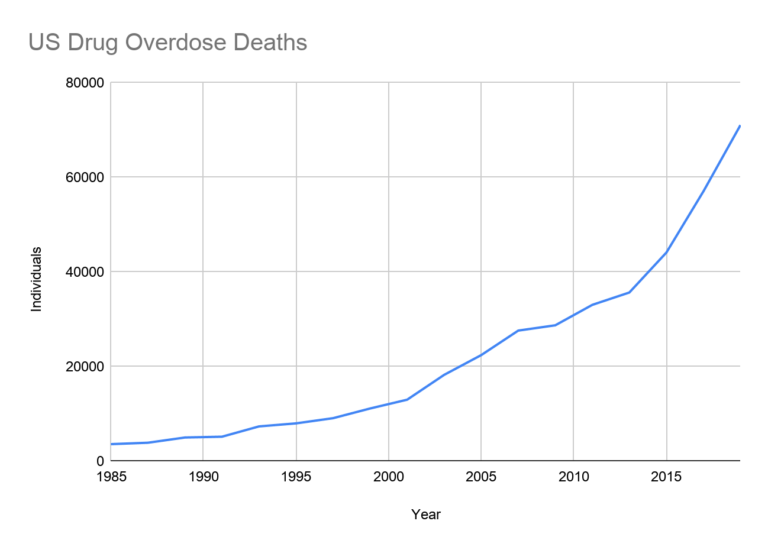
So, where do mortality increases actually come from? The news media is paying little attention to this question. One source is collateral damage from another war started by our government decades ago. The “War on Drugs” was started in the 1980s. The following chart shows deaths by overdose (OD) in the US since that time. In 2019, 71,000 people died from OD in the US.
Recently, the American Medical Association (AMA) issued an emergency alert for an alarming increase observed in OD deaths in over 40 states in 2020. They predicted 2020 was going to be worse than 2019! They consider it a state of National Emergency.
While the data is hard to find at this point, there are reports that suicides are also increasing in 2020. This should not be surprising given the huge emotional and mental strains imposed on people during 2020 by their governments.
OD and suicide deaths tend to be mostly in younger, healthier people under the age of 50 who ARE NOT calculated significantly into the mortality rate. OD and suicides are calculated into the expected mortality but based upon past history so if there are sudden surges upward, it will reflect in the overall mortality.
Other diseases are also contributing simply because of the restrictions placed on receiving medical care during the pandemic, something which violates the Hippocratic Oath. Pneumonia deaths with no connection to either influenza or coronavirus are more prevalent than pneumonia deaths related to either viral infection.
So, is coronavirus deadly? Not really; in fact, most viruses are not truly deadly. The outcome may be death, but that is different than actually being deadly. A bite from a black mamba snake is deadly due to the potent venom. Viruses are parasites, unlike bacteria. Viruses depend on the support of their host. If a virus is to survive, it needs the host to survive. What kills most people with viruses is their own immune system weakness, but sometimes the immune overreaction can kill. That weakness is taken advantage of by bacterial infections. Also, generally poor health conditions can lead to organ failure.
During this pandemic, the vast majority of deaths have occurred in elderly people with serious health issues. These people would experience the same result if they had acquired influenza. As a matter of fact, it is quite likely that they would have the same result if the virus was rhinovirus. They would likely have the same result if they had bronchitis, sinusitis, pancreatitis, gastritis, bladder infection, etc. Their system simply was not able to fight the disease. Period.
To the vast majority of people who have experienced this disease, it is not even close to “deadly.”
“A Vaccine to wipe out the deadly coronavirus”
Well, the coronavirus is not deadly. But, what about the “vaccine” part of the statement?
No vaccine “wipes” out a virus. Vaccines are not cures. Vaccines are not preventatives. Vaccines do not seek out and destroy. As an example, we have had vaccines for influenza for decades (since the 1940s) and each year influenza exacts a toll on humans, including sometimes those who have been vaccinated. Influenza is not even close to being “wiped out.” We manage it at best.
Here is a short list of infectious diseases that are a part of our natural existence and any of these have the potential to cause death in any given individual..
Many of these diseases have vaccines available, many do not. Some vaccines are more effective than others. But there has been only one that we have eradicated naturally, i.e. “wiped out,” and that is smallpox.
Smallpox has been known as long as human existence. There is evidence from archeological studies that ancient Egyptians suffered from smallpox based upon descriptions and artistry. Many historically famous people experienced smallpox and survived (Mozart and Lincoln are two notable examples). Finally, in the mid-20th century, it took a worldwide effort lasting over a decade to do it. Here are some of the main reasons why it was possible:
1. Smallpox was entirely a human disease. It did not “toggle” back and forth between other mammalian species.
2. The symptoms of smallpox were unique and quite recognizable. This meant that it was easy to identify a person who was sick with smallpox and quarantine them. It was just as easy to identify contacts and observe them.
3. The vaccine was quite effective. As far as vaccines go, it was very effective, probably because of #1 above. However, the vaccine also had serious side effects. A small percentage of people experienced these very bad effects, sometimes fatal. In fact, one of the reasons for the new initiative after 9/11 was the concern over the safety of the old vaccine. During the eradication effort, the safety profile was accepted against the goal of eradication. But, in today’s world, the serious side effect potential was considered too great. We could now do better.
4. A massive effort was undertaken to go to every place on Earth to try and eliminate the disease. This effort was started several years before the WHO eradication effort. The vaccine had been used in most non-third world countries and there was little incidence of the disease. Usually, the disease was brought back by an aid worker going into some part of a third world country where the virus was still prevalent.
What exactly does a vaccine do?
Under the best of circumstances, a vaccine acts as a primer to the immune system. That is, it “inspires” the immune system to respond as if a true infection has occurred, albeit at a reduced scale. That is, to produce antibodies specific to the virus or surrogate used in the vaccine (antigen). The idea is that if a person is exposed to the real virus (true antigen) at a later time, the immune system will recognize it and respond quicker and more efficiently than normal. This may allow the immune system to gain control of the viral load before it can go to a threshold where disease symptoms are exhibited.
The vaccine usually is some weakened form of the original virus, maybe even inactivated, or it may be a chemical or structural surrogate, i.e. similar in composition but not active.
It is not a preventative! The vaccine does not somehow block the entry of the virus into your body. The vaccine only acts to initiate maybe a quicker more efficient immune response once infection has occurred.
It does not wipe out the virus! In fact, it does nothing to directly interact with a virus either in or out of the body.
The vaccine does not actually do any damage to the virus in your body; it is not a therapy or “antiviral” medicine. If your body has produced antibodies that are effective, they will seek out the virus. The antibodies are your weapon. The vaccine does not play any direct role against the virus.
The vaccine does nothing to the virus molecule that exists outside of your body. You could spray vaccine everywhere in the environment and it would have ZERO effect. Disinfecting agents like bleach, UV radiation, low or high pH solutions, etc. will break the virus molecule down but not the vaccine.
After decades of vaccines for influenza, we have not been able to eradicate influenza, why? It goes to the reasons why we were able to eradicate smallpox. First, URI such as influenza and coronavirus are carried by other mammalian species besides humans. Birds, pigs, and even domestic cats can carry the virus. So, in order to eradicate the virus, we would have to start by eradicating all of the birds, pigs, and cats in the world, maybe all mammals because we maybe do not yet know all of the species that may be capable of carrying the virus. Maybe then we could begin to deplete the molecule and eventually eradicate it.
It is this very reason that we tend to have a low effectiveness of URI vaccines. For this, we need to make clear certain definitions. Let’s use influenza as an example (the same applies to coronavirus). When a person receives an influenza vaccination, given in the muscle of the tricep or back of the arm, within some period of time they usually experience swelling, tenderness, pain, maybe some redness, etc. This is usually an indication that the vaccine has elicited some form of immune response, or a “take”. With influenza vaccines, this has been typically around 90%. Sometimes a second injection will give a take, and sometimes it just doesn’t happen.
For people who may remember the smallpox vaccine, the vaccine was given by stabbing a series of small punctures on the skin of your arm. After a period of time, a sort of blister developed followed by a scab. This was a take of the smallpox vaccine. After the scab fell off, you had a dimpled scar. I still have a scar but it has almost faded out. Under certain conditions I can still see it.
When a vaccine is tested for approval, it cannot be actually tested against the virus. That is, medical ethics do not permit exposing a healthy person to a live virus. So, the logical experiment of giving a vaccine to people and then exposing them to the virus is not performed. In old times it was done that way. The original smallpox vaccine, derived from cowpox serum by William Jenner, was first used on a small boy who was intentionally exposed to smallpox. Fortunately for Jenner, the boy lived and did not develop the disease but that was over 200 years ago and the medical ethics then were nonexistent.
In modern times clinical signs are evaluated, such as take, and serological signs, such as antibodies (that are tested for). The presence of all of these is enough to accept the vaccine as “effective.” However, that does NOT mean that it actually will be effective under normal use.
The other consideration is safety. If the vaccine does not cause disease and does not cause serious side effects, it is considered safe. This can be tested on healthy volunteers.
If both of these are met, it will be approved for use.
Vaccine effectiveness can actually only be inferred after an infectious epidemic/pandemic season. It is determined based upon the number of individuals vaccinated, prevalence of disease, etc. It is a complicated evaluation but one which is performed each year by infectious disease agencies such as the CDC and WHO.
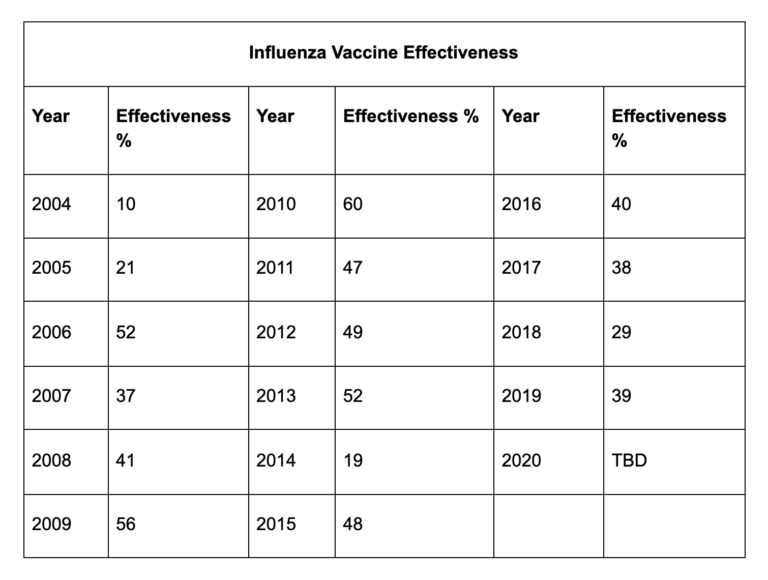
To use influenza as an example, while the influenza vaccine generally has a take rate of about 90%, the effectiveness rate can vary widely depending on the flu season and strain(s) for that season. The following table shows data since 2004 on the calculated “effectiveness” of influenza vaccine.
Most of the time, the effectiveness is below 50%. There are many factors which can determine the effective rate but the health of the individual is always the most important. In the elderly, it is recommended that a double dose be administered. But, there is no data that supports that this is actually beneficial.
What Determines Effectiveness?
The answer comes down to individuality. The factors that will determine the outcome of a person with a viral infection are:
1. General Health. The healthier the person and their immune system, the better.
2. Age. Elderly people, even if healthy, will experience weakening immune systems. It is questionable whether the vaccine even gives any boost to their immune system since it is already weakening due to age. To give a double dose when the immune system is not capable of responding to a single dose is maybe futile.
3. Viral Load. This goes to exposure. For any individual, the more virus you are exposed to and infected with initially, the more difficult the fight against the virus. A large initial viral load, even in a healthy person, could mean stronger symptoms. Conversely, elderly people may still be able to deal with a lighter initial viral load, even though they are old and even if they have health problems.
4. Genetics. Genetics plays a central role in health and immune response. Some people are just more disposed to suffer from infections than others. Just like some people are more prone to certain types of cancers.
5. Environment. Those who require hospitalization, while getting more constant care, also are in an environment of increasing danger, especially from acquired antibiotic resistant infections (as seen above with the first confirmed case). The environment can also come into play with viral load. With any person who is battling an infectious disease, trying to minimize other possible sources of infection is very important. It seems contradictory, but hospitals are oftentimes not the optimal place for treatment.
So, it is difficult to really evaluate how effective vaccines truly are with most diseases. However, if a vaccine is proven safe and it may do some good, it should be considered. Perhaps the vaccine can give enough of a boost to an individual’s immune system to prevent reaching a threshold of viral load that is dangerous.
On a personal note, and this is not meant to be an endorsement of vaccines, I choose to get the influenza vaccine each year. I believe that it is not really necessary as I tend to have a good immune system. However, my philosophy on the immune system is that it needs constant exercise to remain healthy, just like the rest of your body and mind. As long as the vaccine is safe, I reason it to be an additional exercise of my immune system. It maybe will have little effect if I encounter influenza, but, maybe the general strength of the immune system is more enhanced, ever so slightly. But, this is my personal choice; I cannot impose this choice on others.
Here is the flip side of the coin. This applies to anyone who has experienced disease.
1. People who have developed immunity do not need a vaccine. So, any person who experienced Covid in 2020 does not require a vaccine so soon (they also do not need to wear any face coverings).
2. These same people have demonstrated that their immune system is quite capable of handling the disease. That means for over 99% of the population, this virus is not deadly.
3. Even in the highest risk population, between 75-90% of those infected survived.
If coronavirus is like influenza, your naturally acquired immunity may not last if the virus mutates. We do not know enough yet to know if or when that may occur. The timing also varies from individual to individual. Still, it is important for people to keep a healthy immune system.
If a vaccine is developed and if a person has had this virus, they will have to make the decision for themselves whether a vaccine is appropriate, perhaps with their personal physician.
It is a personal health choice. The Government should not be making that decision.
Take Home Message
1. The coronavirus, SARS-COV-2, is not “deadly.” It can lead to death in very well-identified segments of the population, e.g. the infirmed elderly or poor, but it is very rarely death by the virus. It may be death by bacteria or other causes, yes, but very rarely, if ever, by virus. This is exactly the same as other URI and many other infectious diseases.
2. The mortality that is associated with Covid has little impact on the expected mortality rate since the population that was most at risk also had a very low life expectancy.
3. Increases in mortality in the US are more likely associated with increases in drug OD and suicides, which are collateral damage due to the policies imposed during 2020.
4. Any vaccine that may be developed and approved for coronavirus is at best a boost to the immune system. It will not prevent infection or wipe out the virus. The degree of effectiveness will only be determined over time.
5. People who have experienced Covid or are otherwise healthy do not need a vaccine. But it should be their choice, as it should be for all.
We have gone most of 2020 without responsible journalism, except in a few places that have refused to go the ugly route. Has it been lost forever or can we recover?
via ZeroHedge News https://ift.tt/30hx3Wp Tyler Durden