Outrage Grows Over Pentagon Funneling $1BN In COVID Relief To Defense Contractor Wish Lists

Outrage Grows Over Pentagon Funneling $1BN In COVID Relief To Defense Contractor Wish Lists

Tyler Durden

Sat, 09/26/2020 – 19:45

Authored by Jessica Corbett via CommonDreams.org,

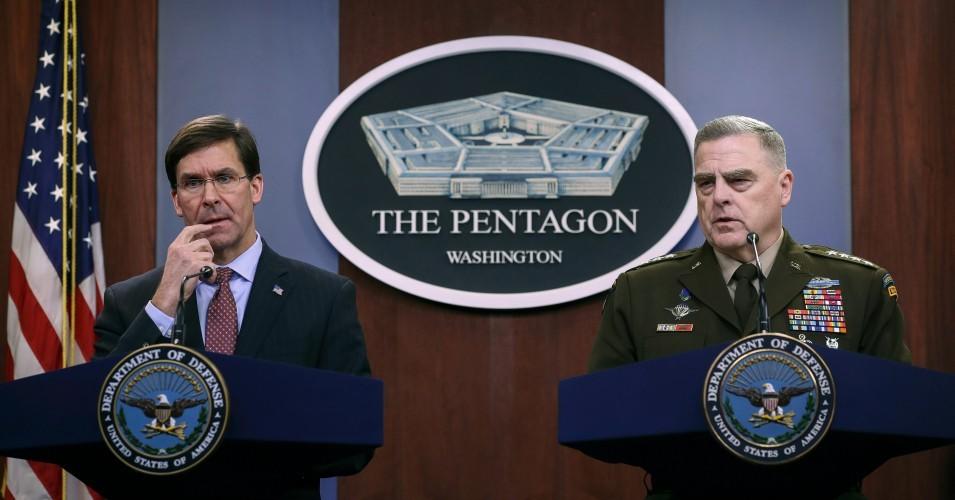
A coalition of 40 ideologically diverse organizations on Thursday demanded that federal lawmakers investigate allegations from earlier this week that the Pentagon misused much of $1 billion in congressionally appropriated Covid-19 relief funding for what one critic called “a colossal backdoor bailout for the defense industry.”

The groups’ call came in a letter (pdf) addressed to Reps. James E. Clyburn (D-S.C.) Steve Scalise (R-La.), leaders of the House Select Subcommittee on the Coronavirus Crisis. The push for a probe was prompted by Washington Post reporting that some tax dollars directed to the Defense Department in March for building up U.S. supplies of medical equipment have “instead been mostly funneled to defense contractors and used to make things such as jet engine parts, body armor, and dress uniforms.”
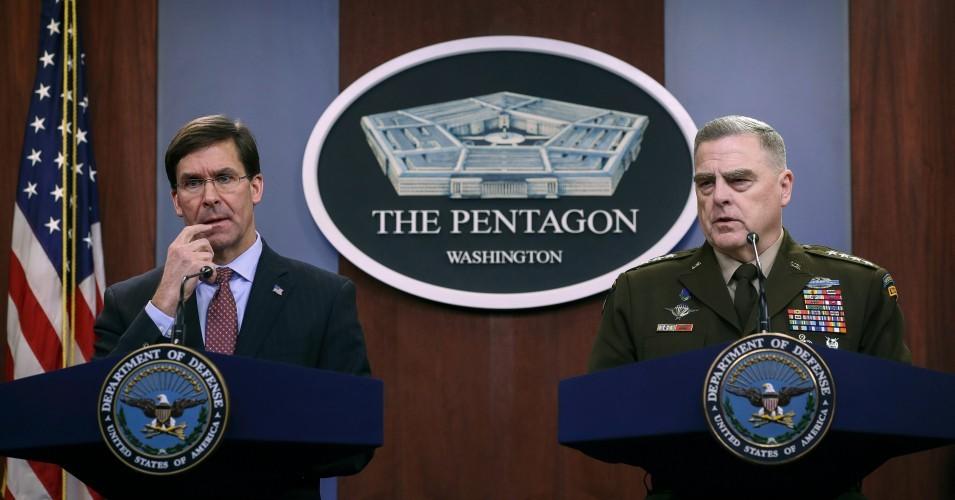
Getty Images

In addition to a probe, the National Taxpayers Union, the Project On Government Oversight (POGO), Win Without War, and 37 other groups urged Clyburn and Scalise to determine whether Congress should pass a bill suspending the Pentagon’s spending authority for the funds, arguing that the department’s decision-making “violates congressional intent at minimum, and represents a significant breach of trust with the taxpayers who fund the military’s budget and its emergency spending.”

Win Without War advocacy director Erica Fein said in a statement that “this gross misuse of Covid-19 relief funds provides yet another example of the Pentagon’s wasteful, unaccountable spending, which puts the corporate profits of the weapons industry over the lives and well-being of everyday people.”

“This scandal should be a wake-up call,” she added. “The greatest threats to human security cannot be addressed by funneling money into weapons of war. We must resist the corrupting influence of the military contracting industry, stop pouring our resources into the bloated, unaccountable Pentagon coffers, and instead invest in meeting our country’s, and the world’s, real human needs.”

The United States continued to lead the world in Covid-19 cases and deaths Friday afternoon. There have been more than seven million confirmed infections and over 203,000 deaths nationwide, according to Johns Hopkins University’s global tracker. President Donald Trump’s administration and Congress have come under fire for inadequately responding to the public health crisis.

As the letter the highlights, the Post reported that the Defense Department—which is run by former Raytheon lobbyist Mark Esper—gave at least $183 million to contractors “to maintain the shipbuilding industry” and $80 million to an “aircraft parts business suffering from the Boeing 737 Max grounding.”

Additionally, the Pentagon gave $25 million to a firm that also “received between $5 million and $10 million” from the Paycheck Protection Program (PPP); $3 million to a firm that also received between $150,000 and $350,000 from the PPP; and “$2 million for a domestic manufacturer of Army dress uniform fabric.”

Chief Pentagon spokesperson Jonathan Hoffman issued a lengthy statement Wednesday defending the spending and criticizing the Post piece. He said in part, “As indicated by recent reporting, there appears to be a misunderstanding by some about what the Coronavirus Aid, Relief, and Economic Security Act (“CARES Act”) did and did not do with respect to the Department of Defense.”

Hoffman added that the department has been “wholly transparent” in its decisions about the relief funds and claimed that “much of [the] useful context” it provided to the newspaper was “left out of the story leading some to misconstrue the expenditures when in fact they are wholly appropriate as directed by Congress.”

Although the Post acknowleged that Pentagon officials “contend that they have sought to strike a balance between boosting American medical production and supporting the defense industry, whose health they consider critical to national security,” critics at the groups behind the letter aren’t buying that argument.

“It’s unconscionable that the department would prioritize defense contractor wish lists over the health and safety of the American people,” declared Mandy Smithberger, director of POGO’s Center for Defense Information.

Arguing that Congress was clear it wanted the Pentagon to use its powers to address ongoing shortages of personal protective equipment (PPE), Smithberger said “the American people deserve better judgment from the agency entrusted with leading our national security and responses to unanticipated threats.”

Other signatories include Beyond the Bomb, Citizens for Responsibility and Ethics in Washington (CREW), Demand Progress, Greenpeace USA, Indivisible, the National Priorities Project at the Institute for Policy Studies, Peace Action, Physicians for Social Responsibility, Public Citizen, and the Union of Concerned Scientists.

On Friday, Sen. Elizabeth Warren (D-Mass.) and Rep. Ro Khanna (D-Calif.) requested that the department’s inspector general investigate reports about the Pentagon’s spending, writing that the alleged misuse of funds “meant for the response to the deadly pandemic plaguing our country is inconsistent with the will of Congress and may be illegal.”

That request and the groups’ collective call for a congressional investigation follow a similar letter that a pair of lawmakers sent Tuesday to Clyburn as well as Reps. Carolyn Maloney (D-N.Y.) and Adam Smith (D-Wash.). Maloney heads the House Oversight Committee while Smith chairs the chamber’s Armed Services Committee.

Writing as co-chairs of the Defense Spending Reduction Caucus, Reps. Mark Pocan (D-Wis.) and Barbara Lee (D-Calif.) condemned the Pentagon’s actions as “unacceptable.” They urged the trio to “review the legality of the Department of Defense’s spending decisions and every possible remedy.”

via ZeroHedge News https://ift.tt/36bUXGj Tyler Durden

What did Professor Amy Coney Barrett say about NFIB v. Sebelius?

In 2017, then-Professor Amy Coney Barrett wrote a review of Randy Barnett’s book, Our Republican Constitution. I encourage you to read the article in Constitutional Commentary. She articulates her vision of judicial philosophy quite cogently. Here, I want to draw attention to one passage about the Obamacare decision.

She begins by noting that Randy’s book was motivated, in part, by the Chief’s opinion in NFIB v. Sebelius.

Our Republican Constitution is animated in large part by Barnett’s frustration with what he regards as a misguided attachment to judicial restraint, particularly on the part of conservatives.51

FN51:  See p. 17 (asserting that with NFIB v. Sebelius, “[t]he chickens of the conservative commitment to judicial restraint had thus come home to roost.”); see also p. 81 (asserting that “the tragedy of the Supreme Court’s decision in the Obamacare case was made possible by modern-day ‘judicial conservatives’ accepting as valid the progressive attack on our Republican Constitution.”); p. 248 (“The visibility of our Obamacare challenge and the way a Republican-nominated, conservative chief justice snatched defeat from the jaws of victory, may prove to be a political inflection point.”).

Next, Barrett offers a brief characterization of the Chief’s controlling opinion that has been quoted repeatedly:

In NFIB v. Sebelius, the inspiration for Barnett’s book, Chief Justice Roberts pushed the Affordable Care Act beyond its plausible meaning to save the statute. He construed the penalty imposed on those without health insurance as a tax, which permitted him to sustain the statute as a valid exercise of the taxing power; had he treated the payment as the statute did—as a penalty—he would have had to invalidate the statute as lying beyond Congress’s commerce power.52

FN52: 52. See NFIB v. Sebelius, 132 S. Ct. 2566, 2593–2600 (2012) (characterizing the “penalty” imposed by the individual mandate as a “tax”). The other four justices in the majority on this issue would not have needed to construe the penalty as a tax to save the statute, because they thought that the Commerce Clause authorized Congress to impose the mandate. See id. at 2609 (Ginsburg, J., concurring in part, dissenting in part) (“Unlike the Chief Justice, however, I would hold, alternatively, that the Commerce Clause authorizes Congress to enact the minimum coverage provision.”). The four dissenting justices objected that “[w]e have never held that any exaction imposed for violation of the law is an exercise of Congress’ taxing power—even when the statute calls it a tax, much less when (as here) the statute repeatedly calls it a penalty.” See id. at 2651 (joint opinion of Scalia, J., Kennedy, J., Thomas, J., and Alito, J., dissenting).

As a threshold matter, Her recitation of NFIB  is accurate. She did not repeat the shibboleth that the Chief upheld the mandate as a tax. He construed the penalty as a tax, and that decision allowed him to uphold the statute (Section 5000A). I agree the Chief’s reading was not “plausible.”

Is this statement relevant to the pending challenge in California v. Texas? Critics will no doubt call on her to recuse. A few thoughts. First, Texas has not asked the Court to reverse, or reconsider NFIB. Indeed, the Plaintiffs are relying on the Chief’s saving construction to mount the challenge. Second I don’t know that calling a Supreme Court decision not “plausible” would warrant disqualification in all cases concerning that precedent. She did not prejudge how that precedent would affect a given controversy. Third, Supreme Court Justices tend to follow different standards for recusal than lower court judges, in order to avoid a short-handed Court. I am sure Judge Barrett will address this question during her hearing.

A personal note. I have been dithering about finishing my third book on the Obamacare litigation. I think the trilogy will be ready in 2021 or so.

from Latest – Reason.com https://ift.tt/369e8kj
via IFTTT

What did Professor Amy Coney Barrett say about NFIB v. Sebelius?

In 2017, then-Professor Amy Coney Barrett wrote a review of Randy Barnett’s book, Our Republican Constitution. I encourage you to read the article in Constitutional Commentary. She articulates her vision of judicial philosophy quite cogently. Here, I want to draw attention to one passage about the Obamacare decision.

She begins by noting that Randy’s book was motivated, in part, by the Chief’s opinion in NFIB v. Sebelius.

Our Republican Constitution is animated in large part by Barnett’s frustration with what he regards as a misguided attachment to judicial restraint, particularly on the part of conservatives.51

FN51:  See p. 17 (asserting that with NFIB v. Sebelius, “[t]he chickens of the conservative commitment to judicial restraint had thus come home to roost.”); see also p. 81 (asserting that “the tragedy of the Supreme Court’s decision in the Obamacare case was made possible by modern-day ‘judicial conservatives’ accepting as valid the progressive attack on our Republican Constitution.”); p. 248 (“The visibility of our Obamacare challenge and the way a Republican-nominated, conservative chief justice snatched defeat from the jaws of victory, may prove to be a political inflection point.”).

Next, Barrett offers a brief characterization of the Chief’s controlling opinion that has been quoted repeatedly:

In NFIB v. Sebelius, the inspiration for Barnett’s book, Chief Justice Roberts pushed the Affordable Care Act beyond its plausible meaning to save the statute. He construed the penalty imposed on those without health insurance as a tax, which permitted him to sustain the statute as a valid exercise of the taxing power; had he treated the payment as the statute did—as a penalty—he would have had to invalidate the statute as lying beyond Congress’s commerce power.52

FN52: 52. See NFIB v. Sebelius, 132 S. Ct. 2566, 2593–2600 (2012) (characterizing the “penalty” imposed by the individual mandate as a “tax”). The other four justices in the majority on this issue would not have needed to construe the penalty as a tax to save the statute, because they thought that the Commerce Clause authorized Congress to impose the mandate. See id. at 2609 (Ginsburg, J., concurring in part, dissenting in part) (“Unlike the Chief Justice, however, I would hold, alternatively, that the Commerce Clause authorizes Congress to enact the minimum coverage provision.”). The four dissenting justices objected that “[w]e have never held that any exaction imposed for violation of the law is an exercise of Congress’ taxing power—even when the statute calls it a tax, much less when (as here) the statute repeatedly calls it a penalty.” See id. at 2651 (joint opinion of Scalia, J., Kennedy, J., Thomas, J., and Alito, J., dissenting).

As a threshold matter, Her recitation of NFIB  is accurate. She did not repeat the shibboleth that the Chief upheld the mandate as a tax. He construed the penalty as a tax, and that decision allowed him to uphold the statute (Section 5000A). I agree the Chief’s reading was not “plausible.”

Is this statement relevant to the pending challenge in California v. Texas? Critics will no doubt call on her to recuse. A few thoughts. First, Texas has not asked the Court to reverse, or reconsider NFIB. Indeed, the Plaintiffs are relying on the Chief’s saving construction to mount the challenge. Second I don’t know that calling a Supreme Court decision not “plausible” would warrant disqualification in all cases concerning that precedent. She did not prejudge how that precedent would affect a given controversy. Third, Supreme Court Justices tend to follow different standards for recusal than lower court judges, in order to avoid a short-handed Court. I am sure Judge Barrett will address this question during her hearing.

A personal note. I have been dithering about finishing my third book on the Obamacare litigation. I think the trilogy will be ready in 2021 or so.

from Latest – Reason.com https://ift.tt/369e8kj
via IFTTT

New Research Explains Why Children Are Far Less Vulnerable To COVID-19 Than Adults

New Research Explains Why Children Are Far Less Vulnerable To COVID-19 Than Adults

Tyler Durden

Sat, 09/26/2020 – 19:20

For months, some scientists dismissed the lack of symptomatic COVID-19 infections in children as perhaps a factor of schools being cancelled before the pandemic entered its worst phases. But new research has emerged to suggest that children’s bodies really do process the virus differently than adults, in a way that makes them less susceptible to its most life-threatening excesses.

In a new study that was reported on by the New York Times yesterday, one reason for children’s relative good fortune is that a branch of their immune system that evolved to protect against unfamiliar pathogens rapidly destroys the coronavirus before the virus can do serious damage to its youthful host.

“The bottom line is, yes, children do respond differently immunologically to this virus, and it seems to be protecting the kids,” said Dr. Betsy Herold, a pediatric infectious disease expert at Albert Einstein College of Medicine who led the study. In adults, the body’s immune response to the virus is “much more muted”.

As the NYT explains, when the body encounters an unfamiliar pathogen, it responds within hours with a flurry of immune activity, called an innate immune response. The body’s defenders are quickly recruited to the fight and begin releasing signals calling for backup. Since children more frequently encounter viruses and other pathogens with which their bodies are unfamiliar, their immune responses are typically a lot harsher than adults’.

Over time, an individual’s immune system encounters so many of these biological invaders, that it builds up a large rolodex of frequent pests, then relies on more complicated systems of fighting off bodily threats. At the same time, this ‘innate response’ fades, leaving adults more susceptible to pathogens that are new to the entire population.

One study examining 60 adults and 65 children and young adults under the age of 24, all of whom were hospitalized at the Montefiore Medical Center in New York City from March 13 to May 17, found that children exhibited severe symptoms much less frequently than even the young adults.

The patients included 20 children with multisystem inflammatory syndrome, the severe and sometimes deadly immune overreaction linked to the coronavirus. Overall, the children were only mildly affected by the virus, compared with adults. The kids mostly reported gastrointestinal symptoms like diarrhea and a loss of taste or smell. Only five children needed mechanical ventilation, compared with 22 of the adults. Only two children died, compared with 17 adults.

To be sure, the coronavirus can be lethal for people of all ages, and there are many risk factors that put people with preexisting health issues at greater risk.

But these differences in immune system function between generations might not be the only reason why kids suffer from COVID-19 in much smaller numbers. Writing in the Blaze, Daniel Horowitz discusses some new research from Europe, which found that 3% of samples of a different coronavirus variety that causes the common cold (between 15% and 30% of colds are thought to be caused by coronaviruses of one type or another) tested positive for COVID-19.

That means a significant number of positive tests from schools and other places children congregate could be false positives. Keep in mind, when a child tests positive, not only are they quarantined for a week, but oftentimes, all children with whom they’ve been in contact – sometimes even their entire class – are also quarantined for 2 weeks.

But as the world’s understanding of the virus improves, maybe societies will learn to allocate resources in a different way that doesn’t place so much emphasis on testing and isolating the least vulnerable.

Scitranslmed.abd5487.Full by Zerohedge on Scribd

via ZeroHedge News https://ift.tt/3mTE6yb Tyler Durden

Why Are So Many Asteroids Having Close-Calls With Earth In 2020?

Why Are So Many Asteroids Having Close-Calls With Earth In 2020?

Tyler Durden

Sat, 09/26/2020 – 18:55

Authored by Michael Snyder via The End of The American Dream blog,

Have you noticed that it seems like stories about asteroids that are approaching the Earth are constantly in the news this year?  It wasn’t always this way.  In the old days, maybe there would be a story about an asteroid every once in a while, and those stories were never a big deal.  But now asteroids are zipping by our planet with frightening regularity, and several more very notable passes will happen over the next few weeks. 

For example, an asteroid that was just discovered on September 18th will come very, very close to the Earth on Thursday.  According to NASA, it will actually come closer to our planet than many of our weather satellites

An asteroid about the size of an RV or small school bus will zoom past the Earth on Thursday, NASA announced, passing within 13,000 miles of the Earth’s surface.

That’s much closer than the moon and is actually closer than some of our weather satellites.

This asteroid will speed by at more than 17,000 mph, but the good news is that it is so small that it would not be a serious threat even if it hit us.

But two other very large asteroids are also going to pass the Earth by the end of this month, and both of them are large enough to do an enormous amount of damage…

Two large asteroids will pass Earth in the next two weeks, with one measuring up to 426 feet in diameter and the other 656 feet—comparable in size to ancient Egypt’s Great Pyramid of Giza, which is 455 feet tall.

The first, smaller asteroid will pass by Earth on September 25 at a distance of 3.6 million miles, according to NASA’s Center for Near Earth Object Studies, which tracks and predicts asteroids and comets that will come close to Earth. The second larger asteroid will fly by on September 29 at a closer distance of 1.78 million miles.

The good news is that neither of them have a chance of hitting us this time around, but the fact that the Earth’s neighborhood has so much “traffic” these days is a major concern.

Any soldier will tell you that if enough bullets get fired at you there is a very good chance that eventually you will get hit.

Let me give you a couple more examples of “near Earth objects” that are headed our way in the near future…

In October, an “unknown object” is expected to enter our gravitational field and become a temporary “mini-moon”

An object known as 2020 SO is heading towards Earth, and from October, it will be a ‘mini-moon’, which could stay in orbit of our planet until May next year. While we have The Moon, Earth regularly gets many small asteroids and meteors which caught in its orbit, which astronomers call ‘mini-moons’.

And in November, we are being told that a small asteroid will come very close to our planet on the day before the election

An asteroid is projected to come close to the Earth on November 2, a day before the 2020 U.S. presidential election, the Center for Near Earth Objects Studies (CNEOS) at NASA’s Jet Propulsion Laboratory confirmed.

The asteroid known as 2018VP1, first identified at Palomar Observatory in San Diego County, California, has a diameter of 0.002 kilometers (over 6.5 feet), according to the data.

Scientists say that it is not likely that this asteroid will hit us, but they admit that they cannot claim this with 100 percent certainty

And that’s why the future of 2018 VP₁ is uncertain. It was observed 21 times over 13 days, which allows its orbit to be calculated fairly precisely. We know it takes 2 years (plus or minus 0.001314 years) to go around the Sun. In other words, our uncertainty in the asteroid’s orbital period is about 12 hours either way.

That’s actually pretty good, given how few observations were made – but it means we can’t be certain exactly where the asteroid will be on November 2 this year.

Fortunately, this particular asteroid is also too small to seriously hurt us, and we should be thankful for that.

But the fact that so many space rocks have been headed our way is definitely alarming.

Back in August, an asteroid the size of an SUV came extremely close to hitting our planet.  The following comes from NASA

Near Earth Asteroids, or NEAs, pass by our home planet all the time. But an SUV-size asteroid set the record this past weekend for coming closer to Earth than any other known NEA: It passed 1,830 miles (2,950 kilometers) above the southern Indian Ocean on Sunday, Aug. 16 at 12:08 a.m. EDT (Saturday, Aug. 15 at 9:08 p.m. PDT).

What made that incident so unsettling was the fact that NASA didn’t even see it until it had passed us

The flyby wasn’t expected and took many by surprise. In fact, the Palomar Observatory didn’t detect the zooming asteroid until about six hours after the object’s closest approach. “The asteroid approached undetected from the direction of the sun,” Paul Chodas, the director of NASA’s Center for Near Earth Object Studies, told Business Insider. “We didn’t see it coming.”

Unfortunately, the truth is that our scientists simply cannot see everything that is up there.

They are doing their best, but everyone agrees that our technology is limited.

But over the last 20 years our technology has definitely improved, and at this point the number of asteroids that our scientists have identified is far greater than it was a couple of decades ago

The animation maps out all known near-Earth asteroids (NEAs) — space rocks that get within about 30 million miles (50 million kilometers) of our planet’s orbit — from 1999 through January 2018, in roughly 10-year time steps.

The differences are stark. In 1999, identified NEAs speckled the inner solar system thinly, in a light dusting. Many more were discovered by 2009, and Earth’s neighborhood looks absolutely swamped in the present-day portion of the video.

Of course more giant space rocks are being discovered all the time, and unfortunately many of them are not identified until after they have had a close encounter with our planet.

If NASA couldn’t see the asteroid that almost hit us in August in advance, what else can’t they see?

And is it just our imagination that the number of close calls seems to be increasing, or are scientists just getting a whole lot better at detecting them?

At this moment we don’t have all the answers, but we should be thankful that our experts are trying to keep a close watch on the skies because scientists tell us that it is just a matter of time before we are hit by a giant asteroid.

In the movie Deep Impact, such a scenario was called an “extinction level event”.

As I write this article, there are thousands of giant space rocks floating around up there that could cause such a disaster, and NASA is working to catalog them all as rapidly as they can.

via ZeroHedge News https://ift.tt/3kTCUc2 Tyler Durden

A Visual History Of The Fed’s Forward Guidance

A Visual History Of The Fed’s Forward Guidance

Tyler Durden

Sat, 09/26/2020 – 18:30

Ten years after the Fed had steadfastly followed a monetary policy prescription based on the preachings of the Phillips model, late in August the Fed finally admitted that it had done everything wrong. As Fed vice chair Richard Clarida said when discussing the Fed’s new policy “framework” of Flexible Average Inflation Targeting (or no FAIT), this was “a robust evolution in the Federal Reserve’s policy framework and reflects the reality that econometric models of maximum employment, while essential inputs to monetary policy, can be and have been wrong.”

The immediate implication here is that had the Fed operated under inflation targeting in the 2012-2018 period, the Fed would have never started hiking rates. As Clarida explained “a decision to tighten monetary policy based solely on a model without any other evidence of excessive cost-push pressure that puts the price-stability mandate at risk” – such as what happened the last time the Fed tightened “is difficult to justify, given the significant cost to the economy if the model turns out to be wrong and given the ability of monetary policy to respond if the model were eventually to turn out to be right.” This has been interpreted to mean that the Fed’s tightening cycle of 2015, which some have suggested cost Hillary the election, would never have happened and that the Fed is taking Trump’s presidency quite personally.

But more to the point, it begs the question why should the Fed’s economic takes, views and analyses be taken seriously anymore? After all, if the Fed now admits it was operating under a “wrong” framework, what’s to say that inflation targeting isn’t wrong? Or that propping up stocks for the sake of avoiding collapse while blowing the biggest ever asset bubble isn’t wrong, and so on.

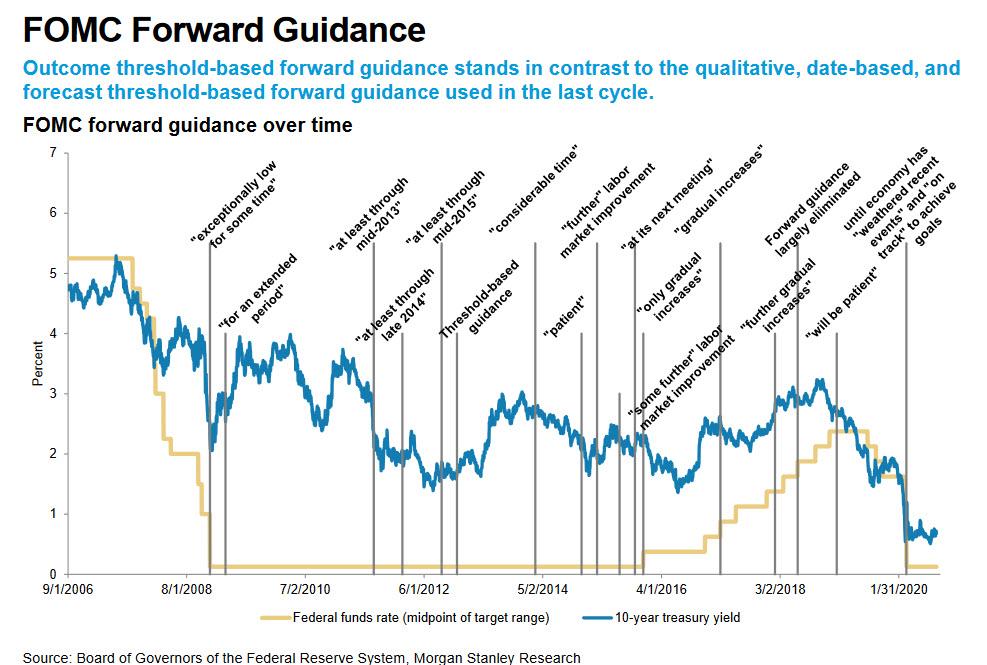
Frankly, we don’t know or care, but now that the Fed is once again in a corner and on the verge of launching both yield curve control (should the Democrats sweep in November), expanded QE (once the S&P drops a total of 20% from its all time high), and even more forward guidance (to the abyss), we decided to show readers the catastrophic history of the Fed’s projections even before it had admitted it had no clue what the relationship between labor and inflation is.

First, we look at the Fed’s laughable forward guidance history:

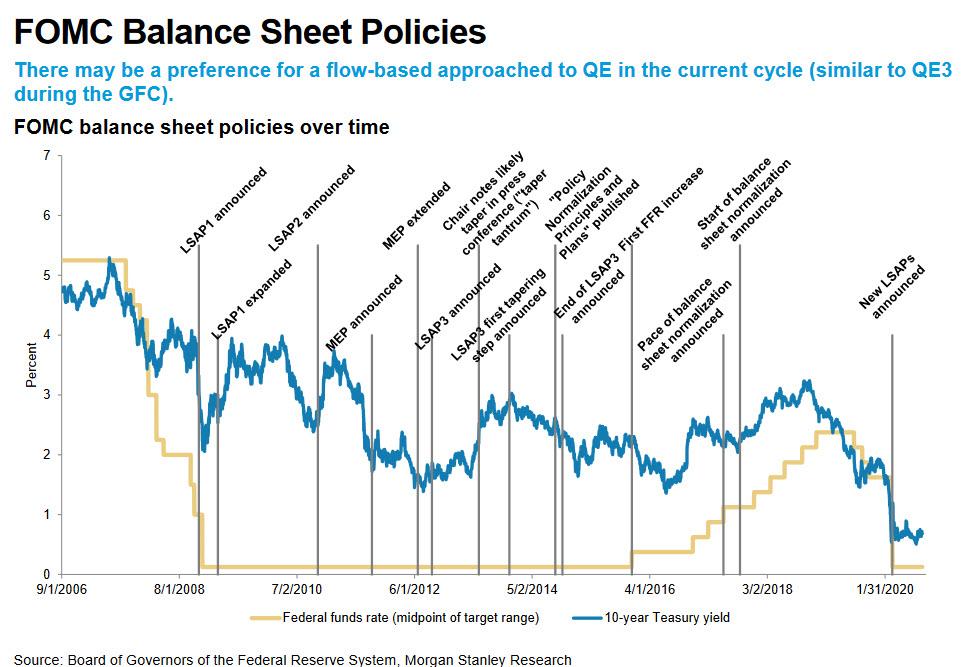
Next, a look at the FOMC’s balance sheet policies: this one is especially amusing in the context of the Fed’s dramatic reversal from “autopilot” to rate cuts as soon as stocks slumped in late 2018.

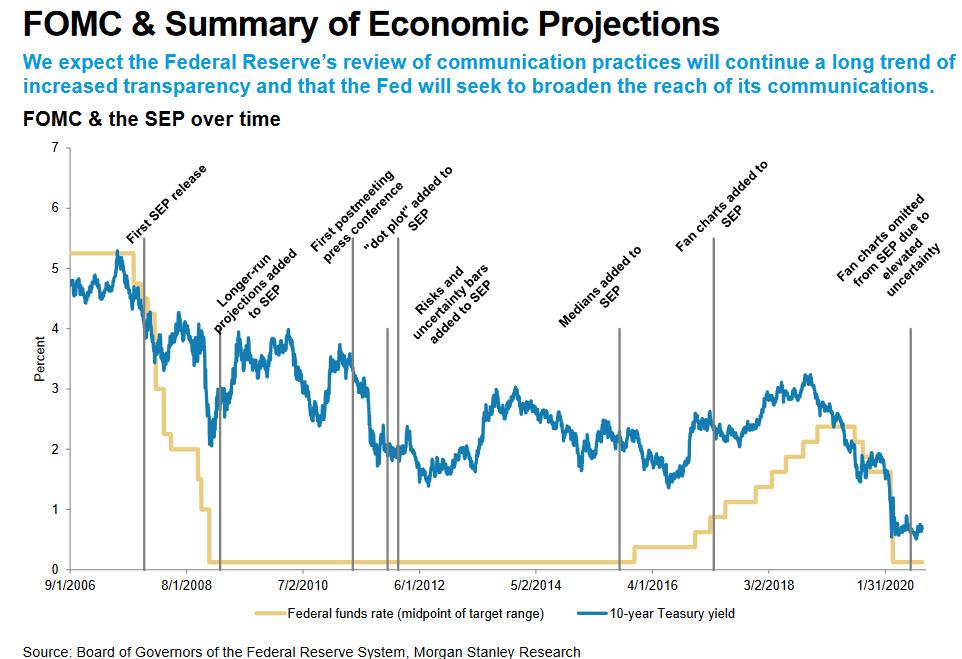
Finally here is a look at how the Fed’s economic projections policies have changed over time.

Source: Morgan Stanley

via ZeroHedge News https://ift.tt/36bcheE Tyler Durden

No Internet, No Problem. Venezuela Gets Bitcoin Satellite Node

No Internet, No Problem. Venezuela Gets Bitcoin Satellite Node

Tyler Durden

Sat, 09/26/2020 – 18:05

Authored by Jose Antonio Lanz via Decrypt.co,

In brief

  • Venezuela deployed its first Bitcoin satellite node.

  • It allows for a node on the ground to receive Bitcoin transaction details from a Blockstream satellite without internet.

  • Venezuela has poor internet connectivity.

Venezuela has its first Bitcoin satellite node capable of processing transactions without an internet connection.

The Venezuelan “space node” was set up in the country by Anibal Garrido and the Anibal Cripto team. It uses technology from Blockstream, which contracts satellites—in this case, EUTELSAT-113 – to broadcast data between points via offline connections. That’s huge in a country where internet infrastructure is lacking.

The idea came from Cryptobuyer, a Latin American startup focused on offering cryptocurrency-based payment solutions. 

“We started in Venezuela because of the obvious connectivity problems and Cryptobuyer is always looking for a way to be resilient to these kinds of problems by anticipating any possible contingency,” CEO Jorge Farias told Decrypt.

The node on the ground “receives the data packet via satellite, directly from the connection provided by Blockstream,” Anibal Garrido explained to Decrypt. Garrido added that he hopes to expand access by deploying something akin to a mesh network that can broadcast data between various devices.

The node antenna, deployed in Valencia, is the first of three. The other two will be deployed in the capital city, Caracas, and Puerto Ordaz. Cryptobuyer chose Valencia because it is an industrialized city but doesn’t have many tall buildings that could block the signal.

This would be the first stage of an ambitious project that could help increase Bitcoin’s usability in a country with below-average technological infrastructure. Internet speeds in Venezuela are some of the slowest on the continent. Electricity service has also been known to fail, leaving large chunks of the country without power.

Could this antenna make it possible to pay with Bitcoin in remote areas or in the event of an internet failure? Farias thinks so. He pointed out that that is why they are looking to deploy a mesh system that communicates with the Blockstream satellite:

“We use a P2P network that uses some USB devices that are already in Venezuela. Soon we will deploy these devices with coverage of about four kilometers each.” 

But beyond the pragmatism, Anibal considers Venezuela a breeding ground for actualizing Satoshi Nakamoto’s vision.

“This project seeks to demonstrate the character of the Bitcoin protocol: Open nature, without restrictions and without borders,” he said. “Consequently, Venezuela is a pioneer in Latin America and the world in the use and application of this type of technology that is not imposed by decree or force.”

Despite its political and economic problems, Venezuela ranks first among all Latin countries in cryptocurrency adoption. One can only imagine how much Bitcoin could grow now that it can bypass the internet.

via ZeroHedge News https://ift.tt/3mPf1V7 Tyler Durden

Bank of America Issues $2 Billion Bond To Fight “Race Inequality”

Bank of America Issues $2 Billion Bond To Fight “Race Inequality”

Tyler Durden

Sat, 09/26/2020 – 17:40

In our bizarro world in which the Fed, having failed at sparking wage inflation (and is now hiding behind the semantic construct of Average Inflation Targeting which gives it leeway to keep rates at zero for decades to come), has instead pivoted to levitating the stock market as the primary source of social wealth creation, is now seeking to combat climate change,  has become an expert epidemiologist and has even been tasked with ending racial inequality (which is delightfully paradoxical since it is the Fed that is behind the biggest wealth divide in history), it should probably come as no surprise that banks which are behind the biggest corporate debt bubble in history, are now selling debt under the absurd virtue-signaling guise of “fighting racial inequality.”

No really: last week Bank of America issued a $2 billion bond (on which it was also the sole bookrunner) which aims to advance racial equality, economic opportunity and environmental sustainability.

The initiative, backed by the high priests of all that is virtuous including BofA Vice Chairman Anne Finucane and Chief Operating Officer Tom Montag, is the company’s eighth environmental, social and governance (ESG) themed bond, bringing its total issuance in the category to $9.85 billion, the bank said in a statement .

The bond offering, which priced earlier in the week, has an explicit “social portion” for the use of proceeds which will be dedicated to “help reduce inequalities for Black and Hispanic-Latino borrowers and communities” including:

  • Mortgage lending, construction loans and other financing and investments relating to single or multi-family housing or affordable housing projects;

  • Financing for medical professionals to create or expand medical, veterinary and dental practices;

  • Supply chain finance loans to be offered directly to minority-owned business enterprises;

  • Deposits and equity investments in Black and Hispanic-Latino Minority Depository Institutions that are also Community Development Financial Institutions;

  • Equity investments in Black and Hispanic-Latino owned or operated businesses

“Our focus on sustainable finance is one of the ways we drive responsible growth. By addressing these critically important issues through ESG-themed securities, we are offering a way for fixed income investors to be part of social and environmental change, and drive solutions through the debt capital markets,” said vice chairman (shouldn’t that be chairwoman?) Anne Finucane, who leads the company’s ESG, sustainable finance, capital deployment and public policy efforts. “Our communities and the environment are inextricably linked, and Bank of America cares deeply about both and continues to explore innovative ways to enable investors to use their investments to help address these societal challenges.”

“We want to be an example for other issuers,” Karen Fang, the bank’s head of global sustainable finance, said in an interview with Bloomberg. “It doesn’t matter if it’s a bull year or a bear year, we need to be committed to these causes.”

What BofA really means is that it has tapped into a surging market where fellow virtue-signalers – in hopes of reducing the heat they are under from an increasingly angry public – buy the bonds to have a token claim that they too are among society’s most noble. Kinda like donating a small fraction of one’s income to charity each year in order to (hopefully) wash away far greater sins, something the Clinton foundation grasped decades ago.

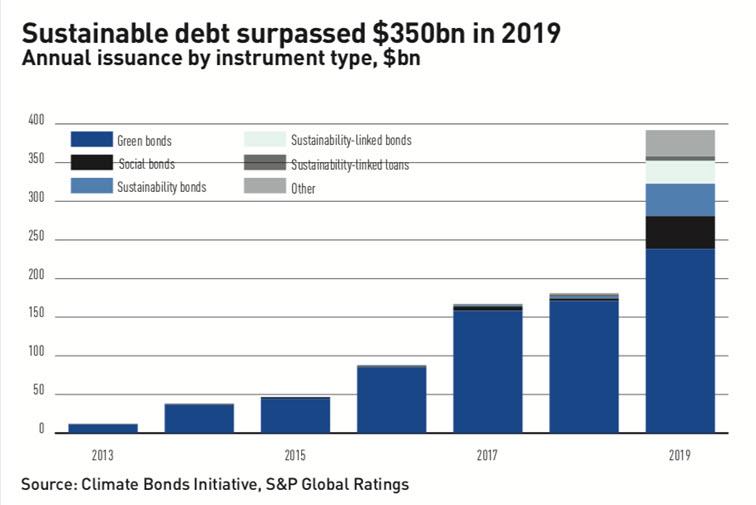
As a result, companies looking to fund ESG projects are tapping the green-bond market at the fastest monthly pace ever according to Bloomberg, with September’s global green-bond issuance already exceededing $30 billion, beating the prior record of $26 billion set in November 2018. And, as Bloomberg adds, “issuance is expected to remain brisk as companies see an opportunity to show their green credentials and potentially reduce funding costs while investors increasingly focus on sustainability.”

In short, investors hope to signal their virtue by buying green bonds – they certainly aren’t buying the bond for its generous coupons: the BofA bond will pay interest semi-annually at a fixed rate of 0.981% for the first four-years, and quarterly at a floating rate thereafter. At the same time issuers allocate a small portion of the proceeds to noble ESG causes, thus absolving them of all their non-ESG sins.

The virtue signaling doesn’t stop there: while BofA did not spent any money placing the bond as it itself underwrote it, it threw a few nickles at “minority-owned broker dealers” who served as joint lead managers, including Loop Capital Markets, Ramirez & Co., Inc. and Siebert Williams Shank.

“I don’t think that trend will diminish even in the face of market volatility,” said Andrew Karp, the bank’s head of global investment-grade capital markets. “ESG activity will no doubt grow in the months and years to come.”

Virtue signaling aside, what is the real story? Well, within a year, the bank said it would publish a report on the bond’s asset allocation, and it will be updated as long as the notes remain outstanding. We won’t be surprised to find that the “non-social portion” of the use of proceeds was somehow used to repurchase BofA’s non-ESG stock.

via ZeroHedge News https://ift.tt/341jITd Tyler Durden

It’s Official: Trump Nominates Judge Amy Coney Barrett to the Supreme Court

Webp.net-resizeimage (5)

President Donald Trump on Saturday announced the nomination of Amy Coney Barrett to fill the Supreme Court seat previously occupied by the late Ruth Bader Ginsburg, setting the stage for a heated confirmation battle as Republicans seek to cement a 6-3 conservative majority.

Barrett, currently a federal judge for the U.S. Court of Appeals for the Seventh Circuit, first achieved national attention during her 2017 confirmation hearing for that role. In reference to Barrett’s Catholic faith, Sen. Dianne Feinstein (D–Calif.) remarked to the judge that “the dogma lives loudly within you,” which was heavily criticized as an example of Democratic hostility toward religious liberty.

Barrett’s pro-life outlook will likely be the subject of scrutiny during her upcoming confirmation hearing. It’s worth noting, however, that even Ginsburg criticized Roe v. Wade, the landmark abortion rights case, as a decision that reached too far. 

The partisan nature of Barrett’s nomination is also sure to be a subject of intense debate. Senate Democrats have lamented Republicans’ willingness to move forward with a Supreme Court nomination during an election year after declining to consider former President Barack Obama’s 2016 nominee, Merrick Garland, following the death of Justice Antonin Scalia. 

“I want you to use my words against me,” Sen. Lindsey Graham (R–S.C.) said during a 2016 Senate hearing on the subject of the Supreme Court vacancy. “If there’s a Republican president in 2016 and a vacancy occurs in the last year of the first term, you can say Lindsey Graham said: Let’s let the next president, whoever it might be, make that nomination. And you could use my words against me and you’d be absolutely right.”

Sen. Chuck Grassley (R–Iowa) issued similar comments in July: “If I were chairman of the committee and this vacancy occurred, I would not have a hearing on it because that’s what I promised the people in 2016,” he said. In a statement following Ginsburg’s death, Grassley reversed course, explaining that the Senate should in fact vote on the nominee. “The circumstances are different in 2020, where the American people elected a Republican President and Senate in 2016 and expanded the Republican Senate majority in 2018,” the statement reads.

Sens. Lisa Murkowski (R–Alaska) and Susan Collins (R–Maine) are the only Republicans who announced their intention to not vote on a nominee before the presidential election, which still leaves Senate Republicans with enough votes to confirm Barrett should they decide to do so.

Some Senate Democrats have threatened to retaliate by packing the courts with additional justices in the event the Senate and White House go blue in the 2020 general election, though Democratic presidential nominee Joe Biden has said he would not support such a move as it would erode any veneer of judicial impartiality. Ruth Bader Ginsburg was similarly skeptical about packing the court.

Barrett’s judicial portfolio at this point is somewhat scant, as her appointment to the Seventh Circuit came after a career as an academic at George Washington University Law School and Notre Dame Law School. Thus far, the judge’s record is a mixed bag when it comes to criminal cases. Two of her opinions are somewhat encouraging: one in which she concluded that the Second Amendment does not allow a blanket prohibition on gun ownership for those with felony records, and another in which she gutted a qualified immunity defense used by a detective who allegedly framed someone for murder.

The Supreme Court has continuously shied away from the opportunity to reevaluate qualified immunity, the legal doctrine that makes it considerably more difficult to hold public officials—namely police officers—accountable when they violate your rights. After the high court recently declined to hear a spate of qualified immunity cases, Associate Justice Clarence Thomas was the lone judge to push back. If Barrett is confirmed, perhaps he will have some company. 

from Latest – Reason.com https://ift.tt/2G1gt60
via IFTTT

It’s Official: Trump Nominates Judge Amy Coney Barrett to the Supreme Court

Webp.net-resizeimage (5)

President Donald Trump on Saturday announced the nomination of Amy Coney Barrett to fill the Supreme Court seat previously occupied by the late Ruth Bader Ginsburg, setting the stage for a heated confirmation battle as Republicans seek to cement a 6-3 conservative majority.

Barrett, currently a federal judge for the U.S. Court of Appeals for the Seventh Circuit, first achieved national attention during her 2017 confirmation hearing for that role. In reference to Barrett’s Catholic faith, Sen. Dianne Feinstein (D–Calif.) remarked to the judge that “the dogma lives loudly within you,” which was heavily criticized as an example of Democratic hostility toward religious liberty.

Barrett’s pro-life outlook will likely be the subject of scrutiny during her upcoming confirmation hearing. It’s worth noting, however, that even Ginsburg criticized Roe v. Wade, the landmark abortion rights case, as a decision that reached too far. 

The partisan nature of Barrett’s nomination is also sure to be a subject of intense debate. Senate Democrats have lamented Republicans’ willingness to move forward with a Supreme Court nomination during an election year after declining to consider former President Barack Obama’s 2016 nominee, Merrick Garland, following the death of Justice Antonin Scalia. 

“I want you to use my words against me,” Sen. Lindsey Graham (R–S.C.) said during a 2016 Senate hearing on the subject of the Supreme Court vacancy. “If there’s a Republican president in 2016 and a vacancy occurs in the last year of the first term, you can say Lindsey Graham said: Let’s let the next president, whoever it might be, make that nomination. And you could use my words against me and you’d be absolutely right.”

Sen. Chuck Grassley (R–Iowa) issued similar comments in July: “If I were chairman of the committee and this vacancy occurred, I would not have a hearing on it because that’s what I promised the people in 2016,” he said. In a statement following Ginsburg’s death, Grassley reversed course, explaining that the Senate should in fact vote on the nominee. “The circumstances are different in 2020, where the American people elected a Republican President and Senate in 2016 and expanded the Republican Senate majority in 2018,” the statement reads.

Sens. Lisa Murkowski (R–Alaska) and Susan Collins (R–Maine) are the only Republicans who announced their intention to not vote on a nominee before the presidential election, which still leaves Senate Republicans with enough votes to confirm Barrett should they decide to do so.

Some Senate Democrats have threatened to retaliate by packing the courts with additional justices in the event the Senate and White House go blue in the 2020 general election, though Democratic presidential nominee Joe Biden has said he would not support such a move as it would erode any veneer of judicial impartiality. Ruth Bader Ginsburg was similarly skeptical about packing the court.

Barrett’s judicial portfolio at this point is somewhat scant, as her appointment to the Seventh Circuit came after a career as an academic at George Washington University Law School and Notre Dame Law School. Thus far, the judge’s record is a mixed bag when it comes to criminal cases. Two of her opinions are somewhat encouraging: one in which she concluded that the Second Amendment does not allow a blanket prohibition on gun ownership for those with felony records, and another in which she gutted a qualified immunity defense used by a detective who allegedly framed someone for murder.

The Supreme Court has continuously shied away from the opportunity to reevaluate qualified immunity, the legal doctrine that makes it considerably more difficult to hold public officials—namely police officers—accountable when they violate your rights. After the high court recently declined to hear a spate of qualified immunity cases, Associate Justice Clarence Thomas was the lone judge to push back. If Barrett is confirmed, perhaps he will have some company. 

from Latest – Reason.com https://ift.tt/2G1gt60
via IFTTT