The Supply Chain Is Broken And Food Shortages Are Here

The Supply Chain Is Broken And Food Shortages Are Here

Tyler Durden

Sat, 09/26/2020 – 17:15

Authored by Robert Wheeler via The Organic Prepper,

If you are a reader of this site, you might be more interested in the food supply chain than most, at least when things are good. So, if you have been paying attention recently, you might find that there have been some severe disturbances in that supply chain.

Several months ago, the immediate disruptions began at the beginning of the COVID-19 hysteria, when factories, distribution centers, and even farms shut down under the pretext of “flattening the curve.”

As a result, Americans found necessities were missing on the shelves for the first time in years. Items like hand sanitizer and Clorox wipes were, of course, out of stock.

Soon other items became noticeably missing as well.

People began to notice meat, and even canned vegetables and rice were soon missing from the shelves. Most of this was simply the result of mass panic buying, although “preppers” were blamed for “hoarding.” Therefore, people who had not been prepping all along and were suddenly caught with their pants down.

But that’s not the whole story.

Manufacturing and packaging facilities and slaughterhouses shut down due to intrusive totalitarian government reactions to an alleged pandemic. Combined with panic buying, those facilities’ ability to replace what was bought up was drastically reduced. As a result, consumers were forced to wait weeks before buying what they needed (or wanted) again. Even then, they had to show up in the morning.

We are still experiencing those shortages, though better hidden. As anyone who shops regularly can tell you, you can find what you need, but you may have to go to three stores to get it, where one would have done in the past. In this article, you’ll find some advice about dealing with the limited varieties of inventory that people are currently noticing at stores.

War launched on the economy by state governments put millions of Americans out of work.

Now, when most rational people would be happy to have a job at all amid such high unemployment, they were prepared to stop the machine’s wheels from working.

Workers suddenly started to organize, strike, and walk off the job conveniently when the food supply was already broken. Of course, these workers had not organized or initiated a strike at any time before when working conditions were bleak, and wages were low.

While extraordinary times beget extraordinary reactions, the timing of the newfound sense of workers’ resolve cannot go unnoticed.

At the same time, we witnessed farms dumping thousands of gallons of milk down the drain, meat producers slaughtering animals and burying them, and farmers destroying crops all over the country and the world.

The reason for this is two-fold.

First, many major producers would not want a glut of their product on the market and see their prices dropdown.

Second, with the totalitarian measures forcing the shut down of restaurants across the country, many farms and producers lost a massive part of their market, thus destroying it.

A government genuinely concerned with its people’s health would have bought that produce and either distributed it or freeze-dried and stored it for the coming apocalypse.

Indeed, the Trump administration attempted this with some very minor success and high cost. Food banks at least benefited. But the damage to the food supply was already done.

And then came the winds.

As time moved forward, we saw devastating straight-line winds blow across places like Iowa, destroying massive amounts of crops and farming infrastructure, effects rarely advertised on mainstream media outlets.

Following those winds, we saw massive wildfires along the West Coast’s entirety from Washington to California and as far east as Colorado, South Dakota, and Texas.

One need only take a look at the map at fires seemingly heading east, burning up prairies and farmland all along the way to see that the food chain will experience yet even more hiccups once the smoke has cleared.

But while leftists claim the fires are the natural result of “climate change” and conservatives blame lack of adequate forest management (which has some merit), both completely ignore the fact that close to ten people were arrested for setting these fires.

Repeatedly, arsonists are being arrested for starting blazes though the motive is unclear. Those of us who have studied history, however, can speculate with some certainty.

But these problems are not unique to the United States.

Countries all over the world are experiencing supply chain problems. Australia, for instance, is about to run out of its domestic rice supply by December entirely.

Now, here we are, with winter fast approaching and the food supply decimated. The world’s population is walking around masked and terrified of getting within six feet of another human, and the cities all across America are on fire with violent riots.

Communists and the inevitable response are clashing in the streets and threatening to turn in to a possible American Civil War 2.0. What role will hunger play in this scenario?

At the moment, we can’t say for sure.

But what we can say with certainty is that this will be a very long, very trying winter.

Food shortages are coming, and they aren’t too far away.

You do not have much time left before the items you can grab now are gone and gone for good. Here are some tips for shopping when there aren’t many supplies left on the shelves, and here’s a list of things that are usually imported from China that we haven’t been receiving in the same quantities (if at all) since the crisis began.

Many of the readers of this website will be prepared, no doubt, but others won’t. Not only do we advise you to prepare – but we also advise you to be ready for the unprepared.

via ZeroHedge News https://ift.tt/30aSPLq Tyler Durden

Amy Coney Barrett Picked By Trump As U.S. Supreme Court Nominee

Amy Coney Barrett Picked By Trump As U.S. Supreme Court Nominee

Tyler Durden

Sat, 09/26/2020 – 16:50

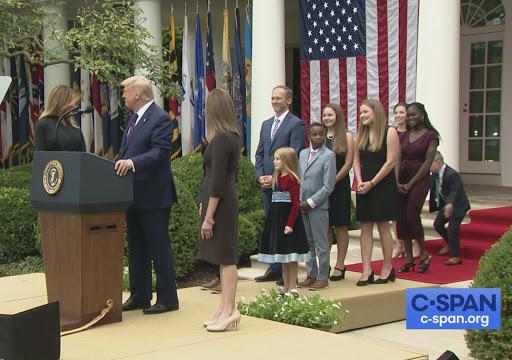
President Trump is set to announce his nominee for the Supreme Court seat left vacant by Justice Ruth Bader Ginsburg’s death last week. And, as previously reported, Trump has picked Amy Coney Barrett.

Barrett was considered a finalist for the Supreme Court vacancy left by the retirement of Justice Anthony Kennedy in 2018, but Justice Brett Kavanaugh was tapped by the president instead. Due to her religious beliefs, Barrett is feared by liberals even though some concede that she hasa topnotch legal mind.”

Barrett, known to be a devout Catholic who considers abortion “always immoral,” would fill the seat vacated by the death of Justice Ruth Bader Ginsburg. The loss of liberal icon Ginsburg and the confirmation of the conservative Barrett, 48, could cement the Supreme Court’s rightward shift for a generation.

While Joe Biden has said the winner of the presidential contest should fill Ginsburg’s seat, there’s little Democrats can do to delay a vote on Barrett, a former clerk for the late Justice Antonin Scalia, the high court’s former conservative standard-bearer. Needless to say, her appointment will play a dominant role in the final weeks of the presidential election.

Senate Majority Leader Mitch McConnell (R-Ky.) said after Ginsburg’s death on Sept. 18 that a vote will be held on the Senate floor for Trump’s nominee.

McConnell has not said yet whether the vote will take place before or after the Nov. 3 election. In a statement moments after the nomination, McConnell said that “Judge Amy Coney Barrett is an exceptionally impressive jurist and an exceedingly well-qualified nominee to the Supreme Court. A brilliant scholar. An exemplary judge. President Trump could not have made a better decision.”

The Senate Judiciary Committee must hold confirmation hearings with the nominee ahead of the confirmation vote by the full Senate. Although senators typically go home to campaign for reelection in October, members of the Judiciary Committee may have to remain in Washington for any hearings ahead of the election.

Late Friday, amid multiple media outlets, all citing anonymous sources, reporting that Trump was planning to nominate Barrett, Sen. John Cornyn (R-Texas) announced that the Senate was going to “begin a thorough review of Judge Barrett’s nomination.”

“I look forward to meeting with her in the coming days as the Judiciary Committee prepares for her confirmation hearing,” Cornyn announced.

This is the third justice nominated by Trump appointed to the Supreme Court. If appointed, Barrett would also expand the conservative majority on the court, widening it to 6 to 3.

Watch Live (Trump Address due to start at 5pmET):

*  *  *

So, who is Amy Coney Barrett?

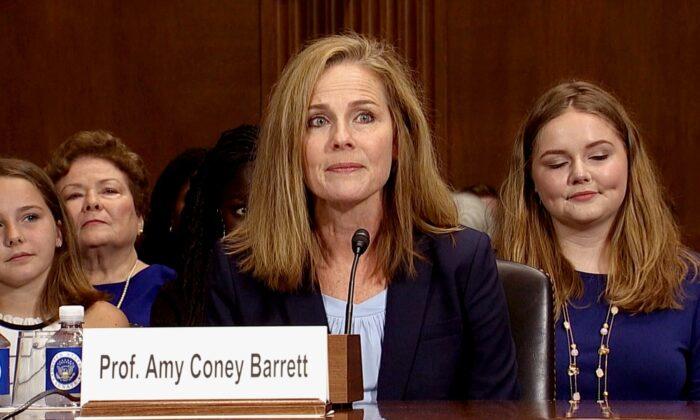
The Epoch Times’ Mimi Nguyen Ly explains Barrett, 48, who currently serves on the Chicago-based 7th Circuit Court of Appeals, earned her J.D. at Notre Dame Law School in 1997. She served as a clerk in 1997-1998 for Judge Laurence Silberman of the D.C. Circuit Court of Appeals and later as a clerk in 1998-1999 for the late Justice Antonin Scalia, who died in 2016.

After her clerkships, she was an associate at law firm Miller, Cassidy, Larroca & Lewin in Washington, D.C. for a year, and later moved to Texas-based firm Baker Botts in 2000, before leaving for academia.

In 2002, she became a professor at Notre Dame Law School, where she taught constitutional law, the federal courts, and statutory interpretation. She was named “distinguished professor of the year” three times, according to SCOTUSblog.

Barrett was appointed by Trump and confirmed by the Senate 55-43 to the 7th Circuit Court of Appeals in 2017. At the time, every full-time member of Notre Dame Law School’s faculty signed a strong letter of support (pdf) for her nomination, as did every law clerk who served a U.S. Supreme Court justice during the term that Barrett clerked for Scalia (pdf).

Barrett is a Roman Catholic. At her confirmation hearing, Democrats on the Senate Judiciary Committee questioned her over her Catholic faith in fulfilling the judicial role.

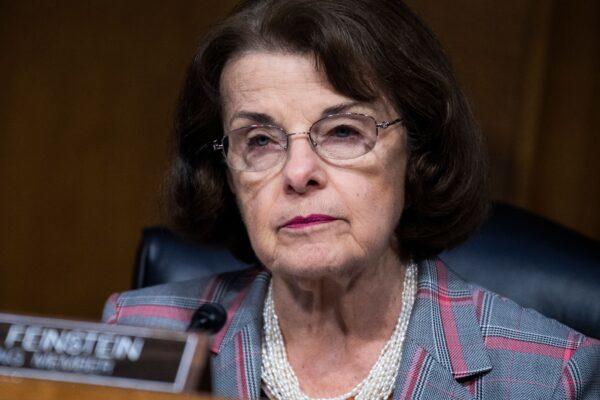
“The dogma lives loudly within you,” Sen. Dianne Feinstein (D-Calif.) said.

“And that’s of concern when you come to big issues that large numbers of people have fought for years in this country.”

Feinstein also indicated that she was worried that Barrett may ignore Supreme Court precedents on issues such as abortion.
Barrett said she would respect Supreme Court precedent.

When asked about the article, Barrett said, “It’s never appropriate for a judge to impose that judge’s personal convictions, whether they arise from faith or anywhere else, on the law.” She also said later at the hearing that her views on abortion “or any other question will have no bearing on the discharge of my duties as a judge.”

Finally, as we previously pointed out, Alan Dershowitz notes  under our Constitution, Senator Feinstein’s statement crossed the line. Ours was the first Constitution in history to provide that “no religious Test shall ever be required as a Qualification to any Office or public Trust under the United States.”

Although Feinstein did not explicitly impose a religious test, she suggested that personal religious views — which she called dogma — might disqualify a nominee from being confirmed.

That would clearly be unconstitutional.

Sen. Dianne Feinstein (D-Calif.) attends a Senate Judiciary Committee hearing on Capitol Hill in Washington on June 16, 2020. (Tom Williams/Pool/AFP via Getty Images)

A number of past cases and writings provide insight into Barrett’s stance on various issues, from the death penalty, to immigration, and gun rights.

For example, Barrett was questioned at her 7th Circuit confirmation hearing about an article she co-wrote in 1998, titled “Catholic Judges in Capital Cases.” The article discussed Catholics’ moral and legal obligations when asked to rule in a death penalty case. It stated, “The prohibitions against abortion and euthanasia (properly defined) are absolute; those against war and capital punishment are not.”

“There are two evident differences between the cases. First, abortion and euthanasia take away innocent life. This is not always so with war and punishment,” read the article, which Barrett wrote with former Notre Dame law professor John H. Garvey, who now is the president of the Catholic University of America in Washington, D.C.

“If one cannot in conscience affirm a death sentence the proper response is to recuse oneself,” the law review article also said.

“Catholic judges must answer some complex moral and legal questions in deciding whether to sit in death penalty cases. Sometimes (as with direct appeals of death sentences) the right answers are not obvious. But in a system that effectively leaves the decision up to the judge, these are questions that responsible Catholics must consider seriously,” the article concluded. “Judges cannot—nor should they try to—align our legal system with the Church’s moral teaching whenever the two diverge. They should, however, conform their own behavior to the Church’s standard. Perhaps their good example will have some effect.”

Barrett and her husband have seven children, two of whom are adopted from Haiti. Her husband, Jesse Barrett, serves as an assistant U.S. attorney for the Northern District of Indiana.

If Barrett is confirmed, she would join Trump appointees Gorsuch and Kavanaugh to form a 6-3 majority in the Supreme Court of justices who were appointed by Republican presidents.

Barring some unforeseen disaster, there appears little Democrats can do – despite the threats – to delay a vote on Barrett, solidifying a right-leaning shift to the court for a generation.

via ZeroHedge News https://ift.tt/3mWxHC7 Tyler Durden

DC Circuit Rules House of Representatives has Standing to Challenge Trump’s Diversion of Funds to Build his Border Wall

Border Wall 2

It may not get much media coverage, due to the furor over the Supreme Court nomination. But yesterday the US Court of Appeals for the DC Circuit issued an important decision holding that the Democratic-controlled House of Representatives has standing to challenge Donald Trump’s attempted diversion of military and other funds to build his border wall.

The ruling was written by senior Judge David Sentelle, a prominent conservative judge appointed by Ronald Reagan. Judge Sentelle is a highly distinguished jurist, and generally thought of as one of the two or three most conservative members of the DC Circuit. It’s hard to dismiss Sentelle as either a jurisprudential lightweight, or a liberal with an axe to grind against the right.

Perhaps more importantly, Judge Sentelle’s originalist and structural analysis of the issue at stake is very compelling, and might well carry the day in the Supreme Court, should they take up the case. As Sentelle emphasizes, the key reason why the House suffered a sufficient “injury” to qualify for standing is that the original meaning of the Constitution embodies the idea that it is essential that the power of the purse remain under the control of Congress, not the executive branch:

The separation between the Executive and the ability to appropriate funds was frequently cited during the founding era as the premier check on the President’s power. In fact, “the separation of purse and sword was the Federalists’ strongest rejoinder to Anti-Federalist fears of a tyrannical president.” Josh Chafetz, Congress’s Constitution, Legislative Authority and the Separation of Powers 57 (2017); see also 3 The Debates in the Several State Conventions on the Adoption of the Federal Constitution 367 (Jonathan Elliot ed., 2d ed. 1836)…. For example, James Madison, in the Federalist Papers, explained, “Th[e] power over the purse may in fact be regarded as the most compleat and effectual weapon with which any constitution can arm the immediate representatives of the people . . . .” The Federalist No. 58 at 394 (J. Madison) (Jacob E. Cooke ed., 1961). At the New York ratification convention, Alexander Hamilton reassured listeners, stating, “where the purse is lodged in one branch, and the sword in another, there can be no danger…”

As evidenced by the quotations above, a repeated theme in the founding era was the importance of putting the power of the purse specifically in the hands of the “representatives of the people.” The Federalist No. 58 at 394 (J. Madison) (Jacob E.
Cooke ed., 1961)….

[A]n early draft of the Constitution went as far as to require appropriations
bills originate in the House of Representatives, the representatives of the people. 2 Records 131. While the final text does not include that same origination provision and provides only that “[a]ll bills for raising Revenue shall originate in the House of Representatives,” U.S. Const. art. I, § 7, cl. 1, “[u]nder immemorial custom the general appropriations bills . . . originate in the House of Representatives.” Cannon’s Procedure in the House of Representatives 20, § 834 (4th ed. 1944). In fact, “the House has returned to the Senate a Senate bill or joint resolution appropriating money on the ground that it invaded the prerogatives of the House.” Wm. Holmes Brown, House Practice 71 (1996); see also 3 Deschler’s Precedents 336 (1976). The appropriations statute at issue in this case originated with the House, as is traditional. 165 Cong. Rec. H997 (daily ed. Jan. 22, 2019); 165 Cong. Rec. H1181–83 (daily ed. Jan. 24, 2019).

While custom cannot create an interest sufficient to establish standing, it can illustrate the interest of the House in its ability, as discussed above, to limit spending beyond the
shared ability of the Congress as a whole.

Judge Sentelle also offers a compelling explanation of why the House has standing to bring the case, even if the GOP-controlled Senate does not agree. For reasons he describes, case is thereby distinguishable from previous cases where the Supreme Court ruled that a single house cannot bring a lawsuit over separation of powers issues:

When the injury alleged is to the Congress as a whole, one chamber does not have standing to litigate. When the injury is to the distinct prerogatives of a single chamber, that chamber does have standing to assert the injury….

[T]he House is suing to remedy an institutional injury to its own institutional power to
prevent the expenditure of funds not authorized. Taking the allegations of the complaint as true and assuming at this stage that the House is correct on the merits of its legal position, the House is individually and distinctly injured because the Executive Branch has allegedly cut the House out of its constitutionally indispensable legislative role. More specifically, by spending funds that the House refused to allow, the Executive Branch has defied an express constitutional prohibition that protects each congressional chamber’s unilateral authority to prevent expenditures….

To put it simply, the Appropriations Clause requires two keys to unlock the Treasury, and the House holds one of those keys. The Executive Branch has, in a word, snatched the House’s key out of its hands. That is the injury over which the House is suing…

To hold that the House is not injured or that courts cannot recognize that injury would rewrite the Appropriations Clause. That Clause has long been understood to check the
power of the Executive Branch by allowing it to expend funds only as specifically authorized…

The ironclad constitutional rule is that the Executive Branch cannot spend until both the House and the Senate say so….

But under the defendants’ standing paradigm, the Executive Branch can freely spend Treasury funds as it wishes unless and until a veto-proof majority of both houses of
Congress forbids it. Even that might not be enough: Under the defendants’ standing theory, if the Executive Branch ignored that congressional override, the House would remain just as disabled to sue to protect its own institutional interests. That turns the constitutional order upside down.

As Judge Sentelle emphasizes, the stakes in this case go far beyond the specific policy issues raised by the border wall. If the president is free to reallocate federal funds without regards to congressional authorization, and Congress cannot challenge him without enacting new, veto-proof legislation, that would enable the executive to exercise sweeping control over the power of the purse that it could easily use on a broad range of issues. Conservatives who may like Trump’s border wall diversion are unlikely to be happy if a future Democratic president uses the same tactics to divert funds to the Green New Deal or some other left-wing project.

Judge Sentelle relies in part on the DC Circuit’s August ruling in Committee on the Judiciary v. McGahn, in which that court ruled that the House (acting without the support of the Senate) had standing to enforce a subpoena against former White House counsel Don McGahn. But, in the above-quoted parts of his ruling, he raises compelling considerations specific to the spending power.

When it comes to the legal battle over the border wall, the congressional standing issue has turned out to be more important than I initially thought, when I assessed the district court opinion the DC Circuit has just overruled. A number of lower court  decisions have ruled against the administration in border wall challenges brought by private parties and  local governments. But these decisions have been stayed on procedural grounds by the Supreme Court and the Fifth Circuit. These procedural concerns likely do not apply to the suit by the House of Representatives, assuming Judge Sentelle is correct about standing, and about the fact that the House has a cause of action under the Appropriations Clause of the Constitution, and thus is not vulnerable to arguments that it hasn’t suffered the right type of injury, or lacks a statutory cause of action.

Yesterday’s ruling is not a decision on the merits. It does not resolve the issue of whether Trump administration had the authority to divert the funds. The trial court and—eventually—the DC Circuit have yet to consider that issue. But the administration’s position on the merits is weak for a variety of reasons discussed in lower court rulings on the subject (see here, here, and here). I discussed some additional flaws in the administration’s position here.

The administration could potentially appeal the DC Circuit’s standing ruling to the Supreme Court. If the  Supreme Court decides to take the case, it might preclude the district court from addressing the merits until after the justices review the standing issue.  I hope and expect that Judge Sentelle’s analysis will appeal to the conservative originalists on the Court. If even two of the five conservatives (or six, if new Trump appointee Amy Coney Barrett gets confirmed) join with the five liberals, the DC Circuit ruling will be affirmed.

If Joe Biden wins the presidential election, the border wall cases might all become moot, because he has promised to end Trump’s border wall diversion. But even if that happens, the DC Circuit ruling will still be an important decision, because it sets a precedent for future congressional lawsuits challenging executive diversion of funds without congressional authorization.

from Latest – Reason.com https://ift.tt/2S46HT4
via IFTTT

DC Circuit Rules House of Representatives has Standing to Challenge Trump’s Diversion of Funds to Build his Border Wall

Border Wall 2

It may not get much media coverage, due to the furor over the Supreme Court nomination. But yesterday the US Court of Appeals for the DC Circuit issued an important decision holding that the Democratic-controlled House of Representatives has standing to challenge Donald Trump’s attempted diversion of military and other funds to build his border wall.

The ruling was written by senior Judge David Sentelle, a prominent conservative judge appointed by Ronald Reagan. Judge Sentelle is a highly distinguished jurist, and generally thought of as one of the two or three most conservative members of the DC Circuit. It’s hard to dismiss Sentelle as either a jurisprudential lightweight, or a liberal with an axe to grind against the right.

Perhaps more importantly, Judge Sentelle’s originalist and structural analysis of the issue at stake is very compelling, and might well carry the day in the Supreme Court, should they take up the case. As Sentelle emphasizes, the key reason why the House suffered a sufficient “injury” to qualify for standing is that the original meaning of the Constitution embodies the idea that it is essential that the power of the purse remain under the control of Congress, not the executive branch:

The separation between the Executive and the ability to appropriate funds was frequently cited during the founding era as the premier check on the President’s power. In fact, “the separation of purse and sword was the Federalists’ strongest rejoinder to Anti-Federalist fears of a tyrannical president.” Josh Chafetz, Congress’s Constitution, Legislative Authority and the Separation of Powers 57 (2017); see also 3 The Debates in the Several State Conventions on the Adoption of the Federal Constitution 367 (Jonathan Elliot ed., 2d ed. 1836)…. For example, James Madison, in the Federalist Papers, explained, “Th[e] power over the purse may in fact be regarded as the most compleat and effectual weapon with which any constitution can arm the immediate representatives of the people . . . .” The Federalist No. 58 at 394 (J. Madison) (Jacob E. Cooke ed., 1961). At the New York ratification convention, Alexander Hamilton reassured listeners, stating, “where the purse is lodged in one branch, and the sword in another, there can be no danger…”

As evidenced by the quotations above, a repeated theme in the founding era was the importance of putting the power of the purse specifically in the hands of the “representatives of the people.” The Federalist No. 58 at 394 (J. Madison) (Jacob E.
Cooke ed., 1961)….

[A]n early draft of the Constitution went as far as to require appropriations
bills originate in the House of Representatives, the representatives of the people. 2 Records 131. While the final text does not include that same origination provision and provides only that “[a]ll bills for raising Revenue shall originate in the House of Representatives,” U.S. Const. art. I, § 7, cl. 1, “[u]nder immemorial custom the general appropriations bills . . . originate in the House of Representatives.” Cannon’s Procedure in the House of Representatives 20, § 834 (4th ed. 1944). In fact, “the House has returned to the Senate a Senate bill or joint resolution appropriating money on the ground that it invaded the prerogatives of the House.” Wm. Holmes Brown, House Practice 71 (1996); see also 3 Deschler’s Precedents 336 (1976). The appropriations statute at issue in this case originated with the House, as is traditional. 165 Cong. Rec. H997 (daily ed. Jan. 22, 2019); 165 Cong. Rec. H1181–83 (daily ed. Jan. 24, 2019).

While custom cannot create an interest sufficient to establish standing, it can illustrate the interest of the House in its ability, as discussed above, to limit spending beyond the
shared ability of the Congress as a whole.

Judge Sentelle also offers a compelling explanation of why the House has standing to bring the case, even if the GOP-controlled Senate does not agree. For reasons he describes, case is thereby distinguishable from previous cases where the Supreme Court ruled that a single house cannot bring a lawsuit over separation of powers issues:

When the injury alleged is to the Congress as a whole, one chamber does not have standing to litigate. When the injury is to the distinct prerogatives of a single chamber, that chamber does have standing to assert the injury….

[T]he House is suing to remedy an institutional injury to its own institutional power to
prevent the expenditure of funds not authorized. Taking the allegations of the complaint as true and assuming at this stage that the House is correct on the merits of its legal position, the House is individually and distinctly injured because the Executive Branch has allegedly cut the House out of its constitutionally indispensable legislative role. More specifically, by spending funds that the House refused to allow, the Executive Branch has defied an express constitutional prohibition that protects each congressional chamber’s unilateral authority to prevent expenditures….

To put it simply, the Appropriations Clause requires two keys to unlock the Treasury, and the House holds one of those keys. The Executive Branch has, in a word, snatched the House’s key out of its hands. That is the injury over which the House is suing…

To hold that the House is not injured or that courts cannot recognize that injury would rewrite the Appropriations Clause. That Clause has long been understood to check the
power of the Executive Branch by allowing it to expend funds only as specifically authorized…

The ironclad constitutional rule is that the Executive Branch cannot spend until both the House and the Senate say so….

But under the defendants’ standing paradigm, the Executive Branch can freely spend Treasury funds as it wishes unless and until a veto-proof majority of both houses of
Congress forbids it. Even that might not be enough: Under the defendants’ standing theory, if the Executive Branch ignored that congressional override, the House would remain just as disabled to sue to protect its own institutional interests. That turns the constitutional order upside down.

As Judge Sentelle emphasizes, the stakes in this case go far beyond the specific policy issues raised by the border wall. If the president is free to reallocate federal funds without regards to congressional authorization, and Congress cannot challenge him without enacting new, veto-proof legislation, that would enable the executive to exercise sweeping control over the power of the purse that it could easily use on a broad range of issues. Conservatives who may like Trump’s border wall diversion are unlikely to be happy if a future Democratic president uses the same tactics to divert funds to the Green New Deal or some other left-wing project.

Judge Sentelle relies in part on the DC Circuit’s August ruling in Committee on the Judiciary v. McGahn, in which that court ruled that the House (acting without the support of the Senate) had standing to enforce a subpoena against former White House counsel Don McGahn. But, in the above-quoted parts of his ruling, he raises compelling considerations specific to the spending power.

When it comes to the legal battle over the border wall, the congressional standing issue has turned out to be more important than I initially thought, when I assessed the district court opinion the DC Circuit has just overruled. A number of lower court  decisions have ruled against the administration in border wall challenges brought by private parties and  local governments. But these decisions have been stayed on procedural grounds by the Supreme Court and the Fifth Circuit. These procedural concerns likely do not apply to the suit by the House of Representatives, assuming Judge Sentelle is correct about standing, and about the fact that the House has a cause of action under the Appropriations Clause of the Constitution, and thus is not vulnerable to arguments that it hasn’t suffered the right type of injury, or lacks a statutory cause of action.

Yesterday’s ruling is not a decision on the merits. It does not resolve the issue of whether Trump administration had the authority to divert the funds. The trial court and—eventually—the DC Circuit have yet to consider that issue. But the administration’s position on the merits is weak for a variety of reasons discussed in lower court rulings on the subject (see here, here, and here). I discussed some additional flaws in the administration’s position here.

The administration could potentially appeal the DC Circuit’s standing ruling to the Supreme Court. If the  Supreme Court decides to take the case, it might preclude the district court from addressing the merits until after the justices review the standing issue.  I hope and expect that Judge Sentelle’s analysis will appeal to the conservative originalists on the Court. If even two of the five conservatives (or six, if new Trump appointee Amy Coney Barrett gets confirmed) join with the five liberals, the DC Circuit ruling will be affirmed.

If Joe Biden wins the presidential election, the border wall cases might all become moot, because he has promised to end Trump’s border wall diversion. But even if that happens, the DC Circuit ruling will still be an important decision, because it sets a precedent for future congressional lawsuits challenging executive diversion of funds without congressional authorization.

from Latest – Reason.com https://ift.tt/2S46HT4
via IFTTT

The Originalist Context of Amy Coney Barrett

I did an extended interview with Dylan Matthews at Vox on current originalist theories and how Judge Amy Coney Barrett fits into that theoretical landscape. From his intro:

To better understand her academic writings, I reached out to Keith Whittington, a professor of politics at Princeton and a leading expert on originalism and constitutional interpretation. I wanted to get a better sense of what it means that Barrett is an originalist, how her variety of originalism works, and how to understand her most prominent academic papers.

You can read the whole thing here.

I expect to have more on Barrett’s originalism in coming days after I do more reading. I doubt I will completely agree with her opinions over time, but I expect she will be a thoughtful and capable justice and a valuable addition to the current Court. She will have to endure what will likely be an extraordinarily stressful and unpleasant experience in the coming days, and the commentary on social media and the press has already been very ugly. I do not envy her.


from Latest – Reason.com https://ift.tt/3j8YJUF
via IFTTT

Taibbi: Revenge Of The Money Launderers

Taibbi: Revenge Of The Money Launderers

Tyler Durden

Sat, 09/26/2020 – 16:20

Authored by Matt Taibbi via taibbi.substack.com,

On December 11, 2012, U.S. Justice Department officials called a press conference in Brooklyn. The key players were once and future bank lawyer Lanny Breuer (disguised at the time as Barack Obama’s Assistant Attorney General in charge of the DOJ’s Criminal Division), and Loretta Lynch, the U.S. Attorney for the Eastern District of New York, and future Attorney General. The duo revealed that HSBC, the largest bank in Europe, had agreed to a $1.9 billion settlement for years of money-laundering offenses.

An alphabet soup of regulatory agencies was represented that day, from the Justice Department, to Immigration and Customs Enforcement (ICE), the U.S. Treasury, the New York County District Attorney, and the Office of the Comptroller of the Currency, among others.

The regulators outlined a slew of admissions, with HSBC’s headline offense being the laundering of $881 million for Central and South American drug outfits, including the infamous Sinaloa cartel.

The laundering was so brazen, regulators said, the bank’s Mexican subsidiary had developed “specially shaped boxes” for cartels to pack with cash and slide through teller windows. The seemingly massive fine reflected serious offenses, including violations of the Bank Secrecy Act (BSA), the International Emergency Economic Powers Act (IEEPA) and the Trading with the Enemy Act (TWEA).

The next years would follow up with a flurry of similar settlements extracting sizable-sounding fees from other transnational banks for laundering money on behalf of terrorists, sanctioned businesses, mobsters, drug dealers, and other malefactors. Firms like JP Morgan Chase ($1.7 billion), Standard Chartered ($300 million), and Deutsche Bank ($258 million) were soon announcing settlements either for laundering, sanctions violations, or both.

Even seasoned financial reporters accustomed to seeing soft-touch settlements scratched their heads at some of the deals. In the case of HSBC, the stiffest penalty doled out to any individual for the biggest drug-money-laundering case in history — during which time HSBC had become the “preferred financial institution” of drug traffickers, according to the Justice Department — involved an agreement to “partially defer bonus compensation for its most senior executives.” If bankers can’t get time for washing money for people who put torture videos on the internet, what can they get time for?

Read the rest of the report here

via ZeroHedge News https://ift.tt/3mUHhpj Tyler Durden

NJ State Legislature Passes Ban On Paper Bags, Foam Food-Containers, And Plastic Straws

NJ State Legislature Passes Ban On Paper Bags, Foam Food-Containers, And Plastic Straws

Tyler Durden

Sat, 09/26/2020 – 15:55

In addition to joining New York in some type of weird social experiment to see how high taxes can get before you drive all of your state’s citizens elsewhere, New Jersey has also decided to now ban both paper and plastic bags in the state.

We guess the crippling effect of Covid 19 on local businesses wasn’t enough – but now also seems like a great time to weigh them down with further regulations and higher costs. 

The state’s assembly and Senate passed a bill Thursday that bans LDPE plastic film bags, like the kind you get at the grocery store. It also bans the alternative – paper bags – at markets that are over 2,500 sq. feet in an attempt to get shoppers to bring their own bags. The same bill also bans polystyrene clamshell food containers and makes plastic straws only available “upon request” at restaurants, according to NorthJersey.com.

We’re guessing there’s going to be a lot of “requests”. 

The bill passed mostly on party lines after a similar bill introduced in early March had to be amended slightly. Opponents to the bill claim the obvious: that it will hurt all types of businesses that are going to be forced to find costly alternatives.

Despite the fact that environmental groups were mostly pushing for a ban on plastic bags, the state needed to ban paper bags as well to get “an influential trade group for supermarkets to support the bill” – due to the fact that supplying paper bags would cost significantly more. 

The ban would take place 18 months after it is signed and any business violating the bill would get a warning upon first offense, followed by a $1,000 fine – and then a $5,000 fine for a third or subsequent offense. 

Linda Doherty, president of the New Jersey Food Council, said: “The ban on paper bags is critically important to the success of this legislation. Without a ban, consumers will simply move to paper single-use bags and we will not address the underlying goal of reducing our reliance on single-use products.”

Abigail Sztein, director of government affairs for the paper association, referred to the bill as “a solution in search of a problem.” Assemblywoman Holly Schepisi argued the bill would hurt NJ paper manufacturers as collateral damage. She called it “bad timing” and “bad policy”. 

EPA Regional Administrator Judith Enck called the bill “the single most comprehensive plastics and paper reduction bill in the nation.”

Cindy Zipf, executive director of Clean Ocean Action, said: “Now, we can all look forward to picking up less trash on our beaches. There will be less plastics in the ocean to cause harm and death to marine life.”

Many municipalities, specifically those near the Jersey Shore, had already banned plastics. 

via ZeroHedge News https://ift.tt/3jcPCm8 Tyler Durden

The Originalist Context of Amy Coney Barrett

I did an extended interview with Dylan Matthews at Vox on current originalist theories and how Judge Amy Coney Barrett fits into that theoretical landscape. From his intro:

To better understand her academic writings, I reached out to Keith Whittington, a professor of politics at Princeton and a leading expert on originalism and constitutional interpretation. I wanted to get a better sense of what it means that Barrett is an originalist, how her variety of originalism works, and how to understand her most prominent academic papers.

You can read the whole thing here.

I expect to have more on Barrett’s originalism in coming days after I do more reading. I doubt I will completely agree with her opinions over time, but I expect she will be a thoughtful and capable justice and a valuable addition to the current Court. She will have to endure what will likely be an extraordinarily stressful and unpleasant experience in the coming days, and the commentary on social media and the press has already been very ugly. I do not envy her.


from Latest – Reason.com https://ift.tt/3j8YJUF
via IFTTT

Should Billionaires Exist?

Should Billionaires Exist?

Tyler Durden

Sat, 09/26/2020 – 15:30

Authored by Bradley Thomas via The Mises Institute,

A mantra popularized by Bernie Sanders and like-minded progressives declares “billionaires should not exist.”

The statement serves as both a declaration of the “immorality” of wealth inequality as well as a justification for steep confiscatory taxes on wealth favored by the likes of Sanders and Elizabeth Warren.

While on the campaign trail last year, Sanders said, “I don’t think that billionaires should exist,” adding that his tax proposal “does not eliminate billionaires, but it eliminates a lot of the wealth that billionaires have, and I think that’s exactly what we should be doing.”

The goal, according to Sanders, is to “reduce the outrageous and grotesque and immoral level of income and wealth inequality.”

Reducing inequality starts with the state taxing away wealth from those in possession of an unacceptable amount, followed by redistribution to lower-wealth households. The wealthy will have less, but the rest will have more, goes the theory. Inequality reduced.

But as Ludwig von Mises pointed out in Human Action, confiscatory taxes on the wealthy may indeed cause billionaires to be slightly worse off, but the rest of us will be harmed more severely.

“A law that prohibits any individual from accumulating more than ten millions or from making more than one million a year restricts the activities of precisely those entrepreneurs who are most successful in filling the wants of consumers,” he wrote.

Under such confiscatory taxation, Mises continued, “many who are multimillionaires today would live in more modest circumstances. But all those new branches of industry which supply the masses with articles unheard of before would operate, if at all, on a much smaller scale, and their products would be beyond the reach of the common man.”

Why would this be the case? According to Mises, “The greater part of that portion of the higher incomes which is taxed away would have been used for the accumulation of additional capital.”

Greater productivity is made possible only through a greater investment of capital per capita, so when the accumulation of capital is stunted by confiscatory taxes, the amount of goods and services being brought to the market is smaller than it could otherwise be. As goods become more scarce, they become out of reach for average and lower-income households.

Common household items we take for granted, like air conditioning, internet connection, computers, and smartphones would remain luxury goods accessible only to the already rich.

And plans like Sanders’s would not only fail to improve the living standards of the common man, Mises warned; they would further shift power away from the citizens and into the hands of the government.

“Here again the issue is who should be supreme, the consumers or the government? In the unhampered market the behavior of consumers, their buying or abstention from buying, ultimately determines each individual’s income and wealth. Should one vest in the government the power to overrule the consumers’ choices?” Mises asked.

Such intervention into the functioning of the market economy, Mises added, would make society’s allocation of resources less efficient.

“He who serves the public best, makes the highest profits. In fighting profits governments deliberately sabotage the operation of the market economy,” he wrote.

A less efficient allocation of resources makes us all worse off, a result disproportionately harmful to the poor whom Sanders and company claim to be championing.

Finally, Mises points out that confiscatory taxation on wealth serves to protect the already wealthy entrepreneurs from competition.

“It is true,” Mises concedes, “the income tax prevents them [the already wealthy], too, from accumulating new capital. But what is more important for them is that it prevents the dangerous newcomer from accumulating any capital.”

In that regard, steep wealth taxes shield incumbent firms from competition, which stymies the dynamic aspect of a market economy.

“In this sense progressive taxation checks economic progress and makes for rigidity,” Mises concluded. “While under unhampered capitalism the ownership of capital is a liability forcing the owner to serve the consumers, modern methods of taxation transform it into a privilege.”

The desire by some to impose confiscatory taxes on the wealthy is driven largely by an envy that blinds them to the fact that such taxes would end up hurting the common man much more than the billionaires. Moreover, the taxes could serve to protect the already wealthy from competition and hamper economic progress.

It may be emotionally satisfying for many to favor sticking it to billionaires, but reason informs us that in so doing it is the poor who would end up paying the steepest price.

via ZeroHedge News https://ift.tt/3j7FMlp Tyler Durden

Why Are So Many American Voters Politically Homeless? 

Why Are So Many American Voters Politically Homeless? 

Tyler Durden

Sat, 09/26/2020 – 15:05

The Ron Paul Institute’s Daniel McAdams joined Peter Lavelle on the “The Gaggle” this week to discuss the questions: Why is it that so many Americans are completely disgusted with both political parties? What will it take to wake the US political class up? 

“It’s the two worse campaigns I’ve ever seen in my lifetime… What’s remarkably absent is policy,” they observed. “Is it they don’t really care? Because there’s no downside from not caring.”

“There really isn’t that much difference in policy between the two parties,” McAdams underscored, adding that both represent the Warfare-Welfare state.

“First of all the single largest voting block is not voting. The majority of people don’t vote in elections. And that tells you something about the alienation people have. That also tells us a lot of people feel politically homeless.”

They look at these major parties and first of all they don’t see a big choice as far as policy… look at the two conventions, no policy there.”

Murray Rothbard on Welfare-Warfare: “…enormous government spending and military-industrial pump priming, and the permanent cold war, and so we then have the plans for a permanent peacetime welfare-warfare state – a corporate state – pushed through of course by partnership of these powerful forces plus intellectuals, done by means of wartime crisis.”

“What is the choice being given to people, particularly when we are at the nexus of a crisis?” Lavelle questions.

Watch the full segment at The Ron Paul Institute for Peace and Prosperity.

via ZeroHedge News https://ift.tt/3365BNe Tyler Durden