The ‘Smartest Man In The Room’ Just Joined Sidney Powell’s Team

The ‘Smartest Man In The Room’ Just Joined Sidney Powell’s Team

Tyler Durden

Sun, 11/29/2020 – 11:25

Authored by Andrea Widburg via AmericanThinker.com,

In her Georgia complaint, Sidney Powell included the declaration of Navid Keshavarz-Nia, an expert witness who stated under oath that there was massive computer fraud in the 2020 election, all of it intended to secure a victory for Joe Biden.  Dr. Kershavarz-Nia’s name may not mean a lot to you, but it’s one of the weightiest names in the world when it comes to sniffing out cyber-security problems.

We know how important Dr. Kershavarz-Nia is because, just two and a half months ago, the New York Times ran one of its Sunday long-form articles about a massive, multi-million-dollar fraud that a talented grifter ran against the American intelligence and military communities.  Dr. Kershavarz-Nia is one of the few people who comes off looking good:

Navid Keshavarz-Nia, those who worked with him said, “was always the smartest person in the room.” In doing cybersecurity and technical counterintelligence work for the C.I.A., N.S.A. and F.B.I., he had spent decades connecting top-secret dots. After several months of working with Mr. Courtney, he began connecting those dots too. He did not like where they led.

Not only does Dr. Kershavarz-Nia have an innate intelligence, but he’s also got extraordinary academic and practical skills in cyber-fraud detection and analysis.  The reason we know about his qualifications is that it takes seven paragraphs for him to list them in the declaration he signed to support the Georgia complaint.

His qualifications include a B.A., M.A., and Ph.D. in various areas of electrical and computer engineering.  In addition, “I have advanced trained from the Defense Intelligence Agency (DIA), Central Intelligence Agency (CIA), National Security Agency (NSA), DHS office of Intelligence & Analysis (I&A) and Massachusetts Institution of Technology (MIT).”

Professionally, Dr. Kershavarz-Nia has spent his career as a cyber-security engineer.  

“My experience,” he attests,” spans 35 years performing technical assessment, mathematical modeling, cyber-attack pattern analysis, and security intelligence[.]”  

I will not belabor the point.  Take it as given that Dr. Kershavarz-Nia may know more about cyber-security than anyone else in America.

So what does the brilliant Dr. Kershavarz-Nia have to say?  This:

1. Hammer and Scorecard is real, not a hoax (as Democrats allege), and both are used to manipulate election outcomes.

2. Dominion, ES&S, Scytl, and Smartmatic are all vulnerable to fraud and vote manipulation — and the mainstream media reported on these vulnerabilities in the past.

3. Dominion has been used in other countries to “forge election results.”

4. Dominion’s corporate structure is deliberately confusing to hide relationships with Venezuela, China, and Cuba.

5. Dominion machines are easily hackable.

6. Dominion memory cards with cryptographic key access to the systems were stolen in 2019.

Although he had no access to the machines, Dr. Kershavarz has looked at available data about the election and the vote results.  Based on that information, he concluded

1. The counts in the disputed states (Pennsylvania, Wisconsin, Michigan, Arizona, Nevada, and Georgia) show electronic manipulation.

2. The simultaneous decision in Pennsylvania, Wisconsin, Arizona, Nevada, and Georgia to pretend to halt counting votes was unprecedented and demonstrated a coordinated effort to collude toward desired results.

3. One to two percent of votes were forged in Biden’s favor.

4. Optical scanners were set to accept unverified, un-validated ballots.

5. The scanners failed to keep records for audits, an outcome that must have been deliberately programmed.

6. The stolen cryptographic key, which applied to all voting systems, was used to alter vote counts.

7. The favorable votes pouring in after hours for Biden could not be accounted for by a Democrat preference for mailed in ballots.  They demonstrated manipulation.  For example, in Pennsylvania, it was physically impossible to feed 400,000 ballots into the machines within 2–3 hours.

8. Dominion used Chinese parts, and there’s reason to believe that China, Venezuela, Cuba interfered in the election.

9. There was a Hammer and Scorecard cyber-attack that altered votes in the battleground states, and then forwarded the results to Scytl servers in Frankfurt, Germany, to avoid detection.

10. The systems failed to produce any auditable results.

Based on the above findings, Dr. Keshavarz-Nia concluded with “high confidence that the election 2020 data were altered in all battleground states resulting in a [sic] hundreds of thousands of votes that were cast for President Trump to be transferred [sic] to Vice President Biden.”

This is going to be tough evidence for Democrats to counter.  Back when the naïve Democrats thought Trump would be the one to commit fraud, they held congressional hearings and wrote articles about the voting machines’ vulnerability.  And with the New York Times touting Dr. Keshavarz-Nia’s brilliance and his ability to sniff out fraud, they’ll struggle to that he’s not a reliable expert.  Things are getting fun.

via ZeroHedge News https://ift.tt/2VebT8L Tyler Durden
Sixth Circuit Reinstates Governor’s Closure of Kentucky Schools

From Kentucky ex rel. Danville Christian Academy, Inc. v. Beshear, decided today by Judges Karen Nelson Moore, John Rogers, and Helene White (see here for the District Court order which this reverses):

This is an appeal from a preliminary injunction, primarily based on the Free Exercise Clause of the First Amendment, against enforcement of a COVID-19-related executive order by Governor Andrew G. Beshear prohibiting in-person instruction at all public and private elementary and secondary schools in the Commonwealth…. The order excepts from its requirements “small group in-person targeted services” and “private schools conducted in a home solely for members of that household.” The order also excepts, by omission, both preschools and colleges or universities.

As the Governor explains, elementary and secondary schools pose unique problems for public health officials responding to the COVID-19 pandemic. Compliance with masking and social distancing requirements is difficult to maintain, and students receiving in-person instruction must in any event remove their facial coverings to eat. The Commonwealth is particularly vulnerable to these problems, as it “leads the nation in children living with relatives other than their parents—including grandparents and great-grandparents, who are especially vulnerable to the disease.” …

“The Free Exercise Clause of the First Amendment, which has been applied to the States through the Fourteenth Amendment, provides that ‘Congress shall make no law respecting an establishment of religion, or prohibiting the free exercise thereof ….'” Church of Lukumi Babalu Aye, Inc. v. Hialeah (1993) (alteration in original) (internal citation omitted). “On one side of the line, a generally applicable law that incidentally burdens religious practices usually will be upheld.” Roberts v. Neace (6th Cir. 2020) (citing Emp. Div. v. Smith (1990)). “On the other side of the line, a law that discriminates against religious practices usually will be invalidated because it is the rare law that can be ‘justified by a compelling interest and is narrowly tailored to advance that interest.'”

Executive Order 2020-969 applies to all public and private elementary and secondary schools in the Commonwealth, religious or otherwise; it is therefore neutral and of general applicability and need not be justified by a compelling governmental interest….

Recent binding and persuasive authority does not compel a contrary result. In Roman Catholic Diocese of Brooklyn v. Cuomo (2020), the challenged COVID-19 order restricted attendance at religious services. In Roberts and Maryville Baptist Church, Inc. v. Beshear (6th Cir. 2020), the challenged COVID-19 orders prohibited attendance at drive-in and in-person worship services. The orders at issue in those cases, applying specifically to houses of worship, are therefore distinguishable.

Moreover, the order at issue in Roman Catholic Diocese treated schools, factories, liquor stores, and bicycle repair shops, to name only a few, “less harshly” than houses of worship. Similarly, the orders at issue in Roberts and Maryville Baptist Church excepted from their requirements airlines, funeral homes, liquor stores, and gun shops, again to name only a few. No such comparable exceptions apply to Executive Order 2020-969. And the exceptions expressly provided for in the order—for “small group in-person targeted services” and “private schools conducted in a home”—are nothing like “the four pages of exceptions in the orders” addressed in Roberts. The contours of the order at issue here also in no way correlate to religion, and cannot be plausibly read to contain even a hint of hostility towards religion.

Justice Kavanaugh has reasoned that, under Smith, we should look “not [to] whether religious worship services are all alone in a disfavored category, but why they are in the disfavored category to begin with.” Here, religious schools are in the category of “K–12 schools” because the reasons for suspending in-person instruction apply precisely the same to them. Any burden on plaintiffs’ religious practices is “incidental” and therefore not subject to strict scrutiny. In Justice Kavanaugh’s concurrence in Roman Catholic Diocese, he emphasized that, “[i]n light of the devastating pandemic, … the State[ has the] authority to impose tailored restrictions—even very strict restrictions—on attendance at religious services and secular gatherings alike.” Executive Order 2020-969 does just that. Unlike in Roman Catholic Diocese, there is no evidence that the challenged restrictions were “targeted” or “gerrymandered” to ensure an impact on religious groups. In addition, while many of the houses of worship in Roman Catholic Diocese could seat well over 500 people, they were subject to attendance caps of ten or twenty-five persons, while retail businesses were not. There is no comparable harsh requirement aimed at religious institutions here….

We are not in a position to second-guess the Governor’s determination regarding the health and safety of the Commonwealth at this point in time. See Roman Catholic Diocese (“Members of this Court are not public health experts, and we should respect the judgment of those with special expertise and responsibility in this area.”). Because Executive Order 2020-969 is neutral and generally applicable, we also need not address the Governor’s argument that the order is in any event narrowly tailored to advance a compelling governmental interest. That requirement applies only if the challenged restriction is not neutral and generally applicable. In determining that plaintiffs are unlikely to succeed on the merits of their Free Exercise claim, we also have no need to rely upon either South Bay United Pentecostal Church v. Newsom (2020) (Roberts, C.J., concurring), or Jacobson v. Massachusetts (1905).

from Latest – Reason.com https://ift.tt/33tsZUp
via IFTTT

US, UK Say First COVID Vaccinations Expected Before Christmas As New Cases Slow: Live Updates

US, UK Say First COVID Vaccinations Expected Before Christmas As New Cases Slow: Live Updates

Tyler Durden

Sun, 11/29/2020 – 11:45

Summary:

  • Surgeon General says COVID vaccination to start in mid-December
  • UK officials say vaccinations to start before Christmas
  • China detects virus on seafood packaging
  • German authority warns virus isn’t slowing fast enough for Christmas
  • Colo. Gov tests positive
  • Czech Republic plans to ease lockdown
  • Poland sees jump in new cases
  • Iran sees drop in fatalities

* * *

More US government officials weighed in on the timing for COVID-19 vaccine rollout, which is expected to begin before the end of December, according to Surgeon General Jerome Adams and Dr. Anthony Fauci, the nation’s top infectious disease specialist.

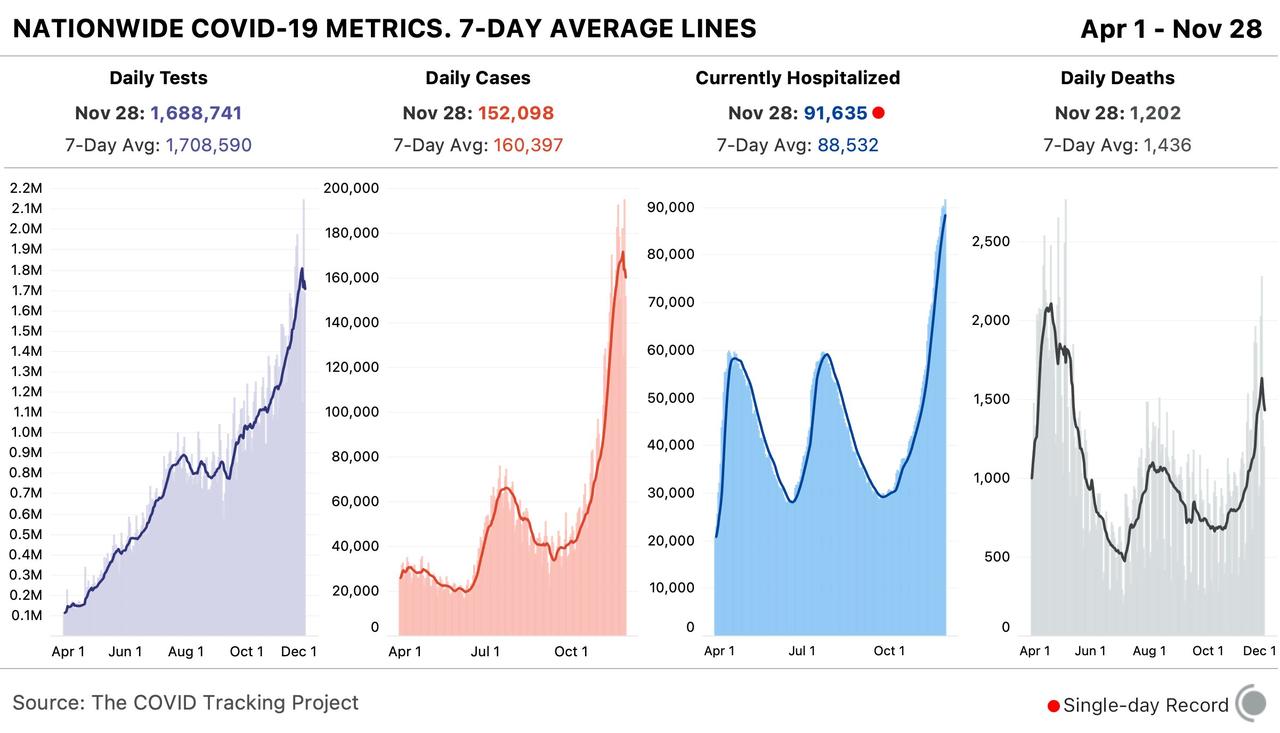
Across the US, 153,035 new infections and 1,175 deaths were reported on Saturday, according to data from Johns Hopkins University and Bloomberg. The US reported just over 150k new cases on Saturday, even as the number of currently hospitalized patients continued to climb.

Over on the West Coast, as LA County enters day 3 of its 3 week lockdown, San Francisco has been moved to the most restrictive tier by California following a jump in coronavirus cases, prompting a slew of new measures across the city. “I don’t know how to be more clear – this is the most dangerous time we’ve faced during this pandemic,” San Francisco Mayor London Breed warned.

The British government said it hopes to begin its vaccination program before Christmas so long as regulators approve all the shots in time, which regulators expect that they will.

In Germany, where Angela Merkel has warned that recent improvements in COVID-19 numbers simply haven’t been enough, the premier of North Rhine-Westphalia, Germany’s most populous state, said cases aren’t falling quickly enough to warrant dropping restrictions for the Christmas holiday.

Finally, China is revoking import applications from Chilean seafood producer Pesquera Isla Del Rey for one week after a nucleic acid test on the packaging of a batch of frozen crab turned up positive for COVID, according to the General Administration of Customs, who confirmed that in a statement on its website on Saturday. Of course, this isn’t the first time China has allegedly detected traces of the virus on packaging of imported sea food, part of Beijing’s “conspiracy theory” about the virus originating elsewhere – like, say, India (where a group of Chinese researchers claimed the virus actually originated).

Here’s some more COVID news from overnight and Sunday morning:

Iran’s daily fatalities from Covid-19 fell for a third day to 389, the lowest single-day death toll in four weeks. The number of daily new cases fell to 12,950 overnight from 13,402 yesterday. The country now has 47,875 deaths in 948,749 known infections (Source: Bloomberg).

The Czech Republic will significantly ease its lockdown restrictions on Thursday after the spread of the coronavirus slowed in the past two weeks. The decision, approved at an extraordinary government meeting on Sunday, will allow shops and restaurants to reopen, although limits on the number of customers and opening hours will remain. The cabinet also agreed to scrap the nighttime curfew on Dec. 3 (Source: Bloomberg).

Poland registered 11,483 new infections in the last 24 hours, the least since Oct. 26, taking the total number of cases in the country of 38 million to 985,075, the Health Ministry said on Sunday. It also reported 283 new deaths, with total Covid-19 fatalities exceeding 17,000. The government, which shut all schools and reduced traffic in shops earlier this month, allowed shopping malls and furniture stores to reopen as of Nov. 28 (Source: Bloomberg).

The governor of Colorado, where an estimated one in 41 of the state’s 5.7 million residents carried the Covid-19 virus over the past week, has tested positive and is resting at home. Governor Polis, an early advocate of masks, issued a statement Saturday night saying his partner was also infected. Earlier in the week, the governor of neighboring Wyoming tested positive (Source: Bloomberg).

via ZeroHedge News https://ift.tt/3ljM4hV Tyler Durden

Sixth Circuit Reinstates Governor’s Closure of Kentucky Schools

From Kentucky ex rel. Danville Christian Academy, Inc. v. Beshear, decided today by Judges Karen Nelson Moore, John Rogers, and Helene White:

This is an appeal from a preliminary injunction, primarily based on the Free Exercise Clause of the First Amendment, against enforcement of a COVID-19-related executive order by Governor Andrew G. Beshear prohibiting in-person instruction at all public and private elementary and secondary schools in the Commonwealth…. The order excepts from its requirements “small group in-person targeted services” and “private schools conducted in a home solely for members of that household.” The order also excepts, by omission, both preschools and colleges or universities.

As the Governor explains, elementary and secondary schools pose unique problems for public health officials responding to the COVID-19 pandemic. Compliance with masking and social distancing requirements is difficult to maintain, and students receiving in-person instruction must in any event remove their facial coverings to eat. The Commonwealth is particularly vulnerable to these problems, as it “leads the nation in children living with relatives other than their parents—including grandparents and great-grandparents, who are especially vulnerable to the disease.” …

“The Free Exercise Clause of the First Amendment, which has been applied to the States through the Fourteenth Amendment, provides that ‘Congress shall make no law respecting an establishment of religion, or prohibiting the free exercise thereof ….'” Church of Lukumi Babalu Aye, Inc. v. Hialeah (1993) (alteration in original) (internal citation omitted). “On one side of the line, a generally applicable law that incidentally burdens religious practices usually will be upheld.” Roberts v. Neace (6th Cir. 2020) (citing Emp. Div. v. Smith (1990)). “On the other side of the line, a law that discriminates against religious practices usually will be invalidated because it is the rare law that can be ‘justified by a compelling interest and is narrowly tailored to advance that interest.'”

Executive Order 2020-969 applies to all public and private elementary and secondary schools in the Commonwealth, religious or otherwise; it is therefore neutral and of general applicability and need not be justified by a compelling governmental interest….

Recent binding and persuasive authority does not compel a contrary result. In Roman Catholic Diocese of Brooklyn v. Cuomo (2020), the challenged COVID-19 order restricted attendance at religious services. In Roberts and Maryville Baptist Church, Inc. v. Beshear (6th Cir. 2020), the challenged COVID-19 orders prohibited attendance at drive-in and in-person worship services. The orders at issue in those cases, applying specifically to houses of worship, are therefore distinguishable.

Moreover, the order at issue in Roman Catholic Diocese treated schools, factories, liquor stores, and bicycle repair shops, to name only a few, “less harshly” than houses of worship. Similarly, the orders at issue in Roberts and Maryville Baptist Church excepted from their requirements airlines, funeral homes, liquor stores, and gun shops, again to name only a few. No such comparable exceptions apply to Executive Order 2020-969. And the exceptions expressly provided for in the order—for “small group in-person targeted services” and “private schools conducted in a home”—are nothing like “the four pages of exceptions in the orders” addressed in Roberts. The contours of the order at issue here also in no way correlate to religion, and cannot be plausibly read to contain even a hint of hostility towards religion.

Justice Kavanaugh has reasoned that, under Smith, we should look “not [to] whether religious worship services are all alone in a disfavored category, but why they are in the disfavored category to begin with.” Here, religious schools are in the category of “K–12 schools” because the reasons for suspending in-person instruction apply precisely the same to them. Any burden on plaintiffs’ religious practices is “incidental” and therefore not subject to strict scrutiny. In Justice Kavanaugh’s concurrence in Roman Catholic Diocese, he emphasized that, “[i]n light of the devastating pandemic, … the State[ has the] authority to impose tailored restrictions—even very strict restrictions—on attendance at religious services and secular gatherings alike.” Executive Order 2020-969 does just that. Unlike in Roman Catholic Diocese, there is no evidence that the challenged restrictions were “targeted” or “gerrymandered” to ensure an impact on religious groups. In addition, while many of the houses of worship in Roman Catholic Diocese could seat well over 500 people, they were subject to attendance caps of ten or twenty-five persons, while retail businesses were not. There is no comparable harsh requirement aimed at religious institutions here….

We are not in a position to second-guess the Governor’s determination regarding the health and safety of the Commonwealth at this point in time. See Roman Catholic Diocese (“Members of this Court are not public health experts, and we should respect the judgment of those with special expertise and responsibility in this area.”). Because Executive Order 2020-969 is neutral and generally applicable, we also need not address the Governor’s argument that the order is in any event narrowly tailored to advance a compelling governmental interest. That requirement applies only if the challenged restriction is not neutral and generally applicable. In determining that plaintiffs are unlikely to succeed on the merits of their Free Exercise claim, we also have no need to rely upon either South Bay United Pentecostal Church v. Newsom (2020) (Roberts, C.J., concurring), or Jacobson v. Massachusetts (1905).

from Latest – Reason.com https://ift.tt/33tsZUp
via IFTTT

Market Risk Elevated Heading Into Distribution Season

Market Risk Elevated Heading Into Distribution Season

Tyler Durden

Sun, 11/29/2020 – 11:20

Authored by Lance Roberts via RealInvestmentAdvice.com,

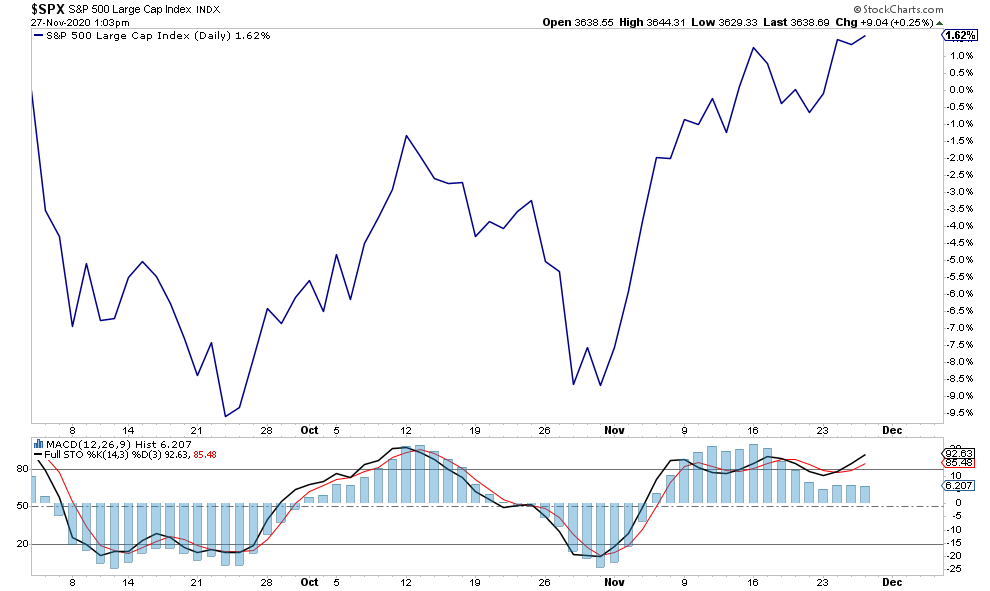
Despite three consecutive Monday announcements of “potential vaccines,” an agreement by President Trump to allow the “Biden Transition” to begin, and a holiday-shortened trading week that left the “inmates in charge of the asylum,” the market hasn’t done much with it. As of Friday, the market is only about 1.62% higher than it was three months ago.

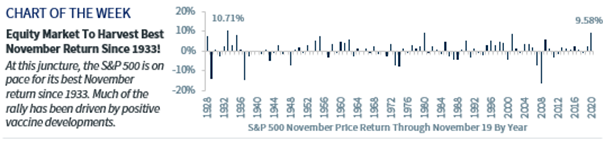
Unfortunately, as we will discuss in more detail momentarily, the surge in November, one of the largest monthly advances in history, consumed the entirety of the market’s oversold condition that existed before the election.

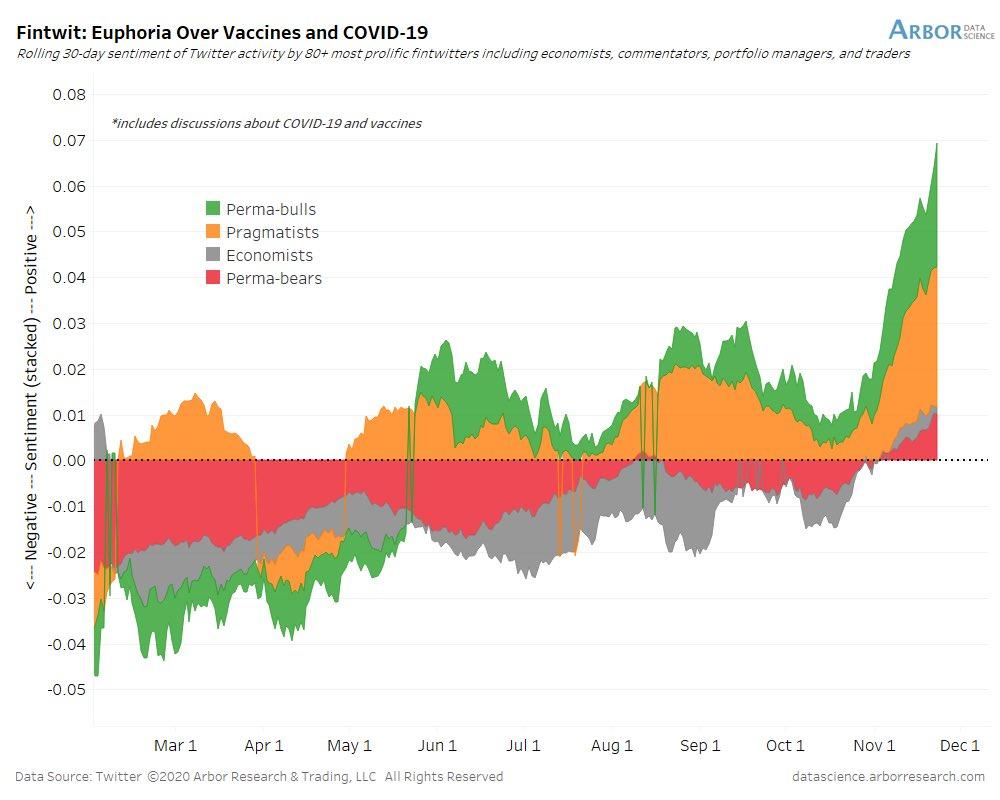
Furthermore, you have to wonder precisely how much “gas is left in the tank” when even “perma-bears” are now bullish.

Consequently, you will notice the previous peaks in perma-bull exuberance have coincided with short-term corrections.

Therefore, the question we should ask is “if everyone is in, who is left to buy?”

A Lack Of Buyers

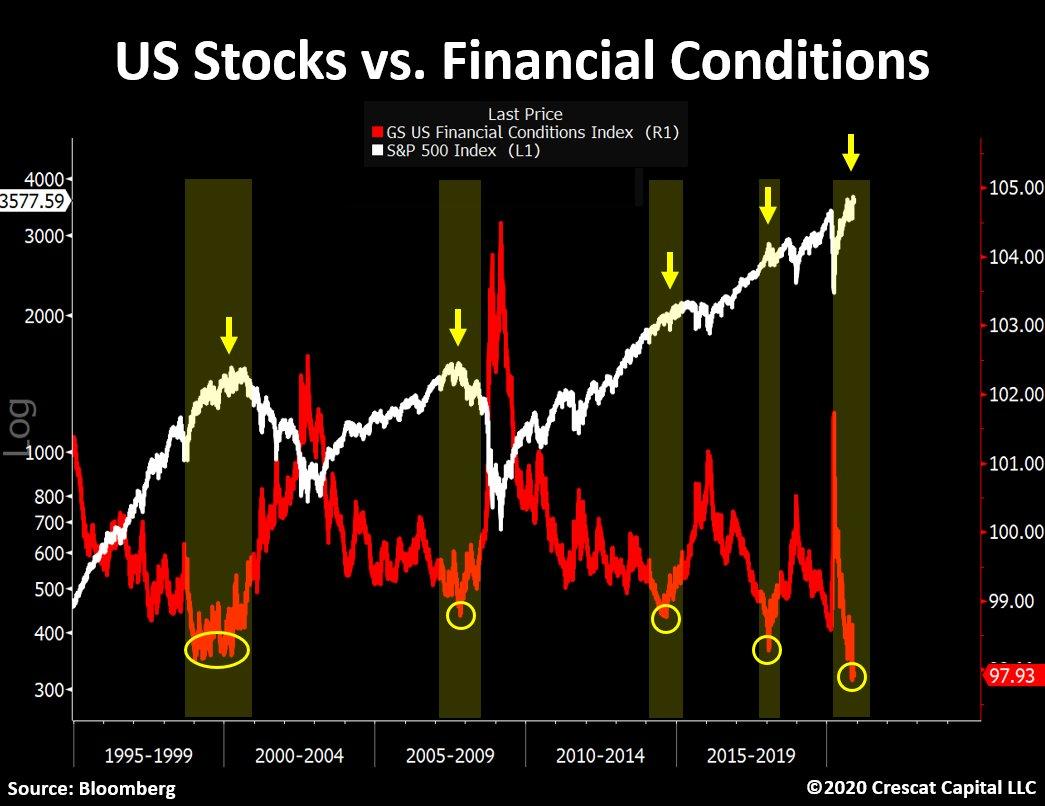
As I have noted previously, one of the primary drivers, unsurprisingly, is the extremely easy “financial conditions” caused by low-interest rates, fiscal and monetary policies. Consequently, easy financial conditions have historically also come with a “price tag” attached. (Chart courtesy of Tavi Costa of Crescat Capital)

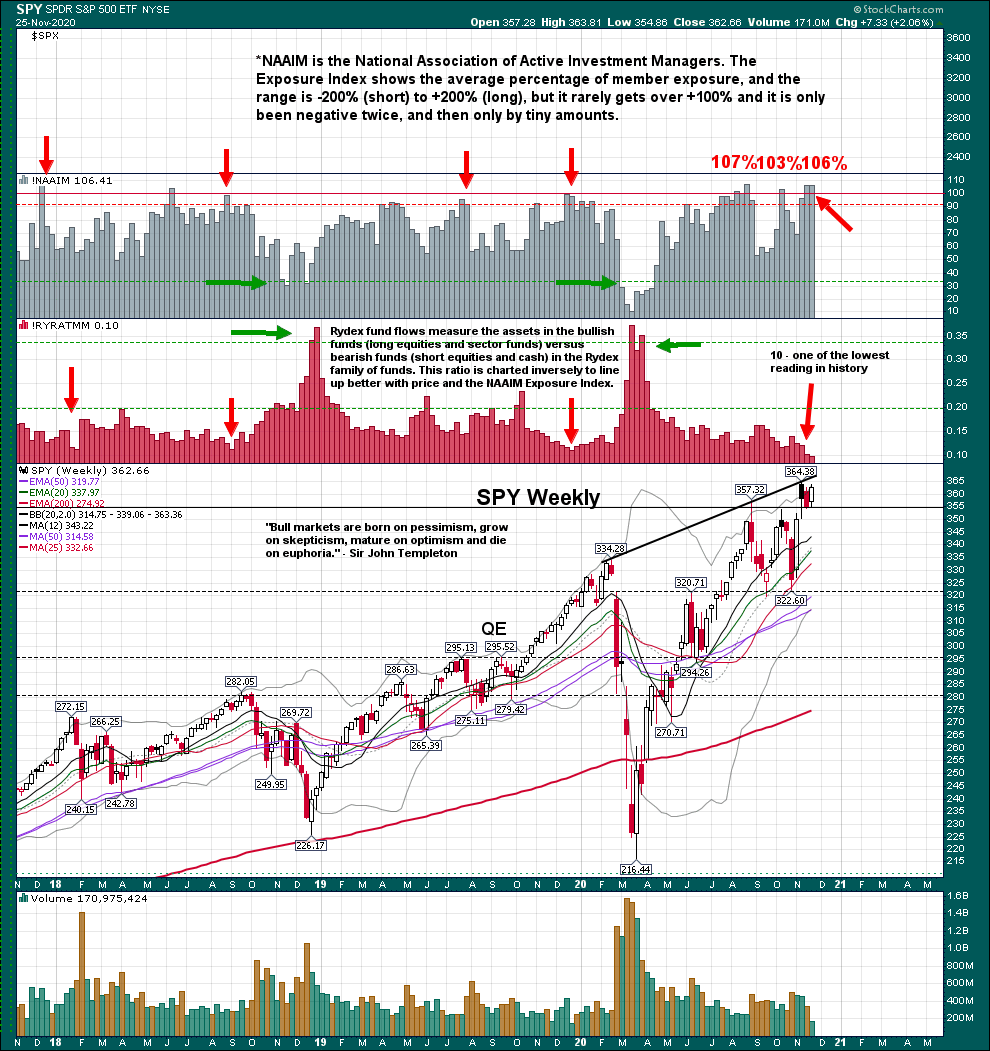
Furthermore, investors’ extreme bullishness, particularly post-election, has dragged buyers into the market. As David Larew of ThinkTankCharts notes, the National Associate Of Investment Managers is carrying above 100% exposure to stocks (leverage). Such levels of ownership have previously coincided with short- to intermediate-term corrections in the market.

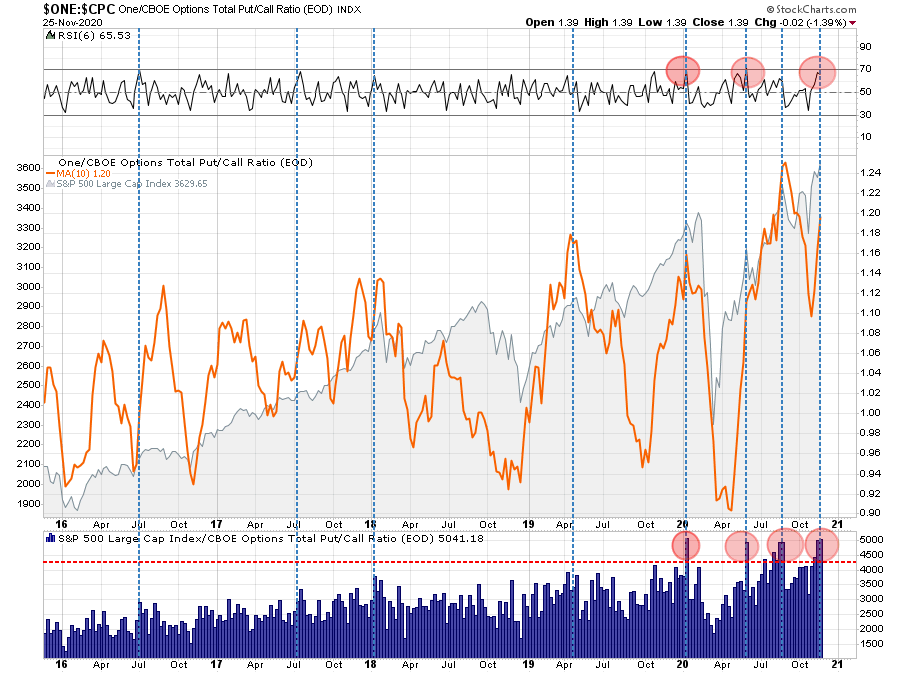
Correspondingly, the surge in buying has also pushed investors to give up hedging portfolios by buying “put options.” With the Put/Call ratio back to more extreme conditions, market corrections have generally been close by.

Deviations Are Extreme

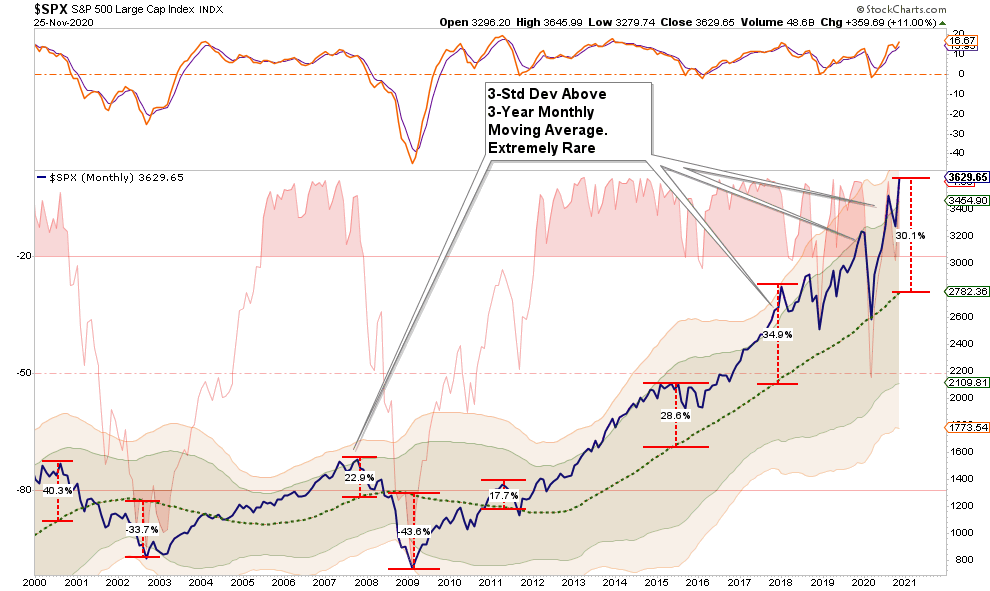
Lastly, the market’s monthly deviations from the 3-year moving average are pushing well into 3-standard deviation territory and trading more the 30% above its mean. Such deviations, as shown, have historically not worked out well for buyers.

The critical ingredient of a bullish advance is “confidence.”

Nothing Can Stop It?

The current consensus is with a vaccine coming and more stimulus, a surge in economic recovery will occur.

“When all experts agree, something else tends to happen.” – Bob Farrell

Previously, I discussed why it doesn’t take much of a catalyst to start a bout of “panic selling.” We quoted Doug Kass on a list of potential risks which few seem to be considering:

  • The virus mutates, rendering “vaccines” ineffective. 

  • There are unexpected manufacturing, distribution, and storage problems with delivering a Covid-19 virus.

  • With a delay and without a timely vaccine, the spread of Covid-19 intensifies.

  • As Covid spreads over the next month, there is an increase of state lockdowns, business, school closings, “stay at home orders,” and curfews enacted around the country.

  • The debated election results linger into 2021 as lawsuits multiply.

  • Global economic growth fails to reaccelerate in the second quarter of 2021.

  • Housing falls under the weight of higher home prices – affordability suffers. Housing’s economic multiplier effect moves into reverse.

  • Consumer and business confidence takes a downturn.

  • Bond spreads widen.

  • A divided and partisan House fails to deliver a sizeable and credible stimulus bill.

  • Investors realize that monetary policy can no longer foster or catalyze economic growth.

  • Deflationary conditions accelerate based on unexpected economic weakness.

  • A sizeable corporate fraud gets discovered – further deflating investor confidence.

In a market where investors are throwing money into “SPAC’s,” or shell companies that will try and find something to invest in, the potential for a massive corporate fraud to develop is not that far “out of the box.” 

Furthermore, when everyone is long equities and leveraged, it is an unexpected, exogenous event, which begins the rush for the exit.

Such is why you don’t wait for it to start raining to “build the ark.”

Portfolio Positioning Update

The idea of “building the ark” has continued to be our motto over the past week in our portfolios. Specifically, our primary focus is to adjust our allocations, capture profits, and protect capital when the “risk/reward” profile becomes unbalanced.

Therefore, given the ongoing extremes of the market, as discussed above, the imbalances suggest a more cautious approach to portfolios currently. As such, we continued reducing our equity exposure, adjusting our bond holdings, and raising our cash levels.

Earlier, I discussed in our “3-Minutes” video, the risk of selling pressure after the holiday as pension fund and institutional managers rebalance and mutual funds distribute capital gains.

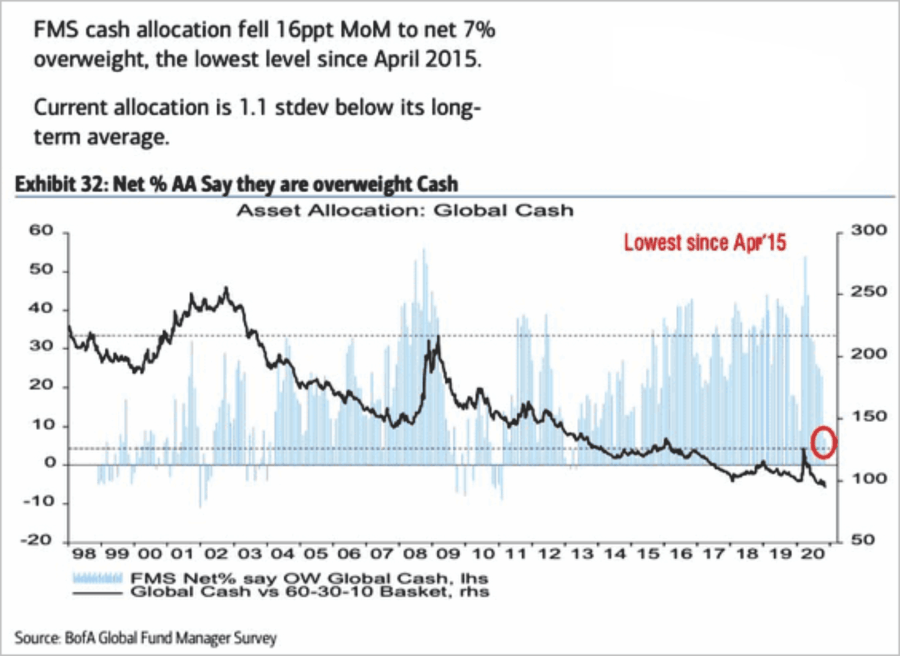
As shown below, with fund managers carrying some of the lowest cash balances on record, we could see selling pressure to make distributions. 

With the markets exceedingly exuberant on many fronts, caution is certainly warranted. With margin debt near peaks, stock prices at all-time highs, and “junk bond yields” near record lows, the bullish media continues to suggest there is no reason for concern.

Of course, such should not be a surprise. 

At market peaks – “everyone’s in the pool.”

“The investor’s chief problem – and even his worst enemy – is likely to be himself.” – Benjamin Graham

7-Impossible Trading Rules To Follow

In the “heat of the moment,” it is easy to get swept up into narratives as the “Fear Of Missing Out” overtakes our logical thought processes. As such, here are the 7-impossible trading rules to follow:

1) Sell Losers ShortLet Winners Run:

It seems like a simple thing to do, but the average investor sells their winners and keeps their losers, hoping they will eventually return to even.

2) Buy Cheap And Sell Expensive: 

If an investment isn’t “cheap, – it isn’t. Don’t make excuses to justify overpaying for an investment. In the long run, overpaying always reduces returns.

3) This Time Is Never Different:

As much as our emotions and psychology always want to hope for the best – this time is never different. History may not repeat exactly, but it generally rhymes.

4) Be Patient:

There is never a rush to invest. There is also NOTHING WRONG with sitting on cash until a real opportunity comes along. Being patient is an excellent way to keep yourself out of trouble.

5) Turn Off The Television: 

The only thing you achieve by watching the television from one minute to the next is increasing your blood pressure.

6) Risk Is Not Equal To Your Return: 

Risk only relates to the loss of capital incurred when an investment goes wrong. Invest conservatively and grow your money over time with the least amount of risk possible.

7) Go Against The Herd: 

When everyone agrees on the market’s direction due to any given set of reasons – generally, something else happens. Such also cedes to points 2) and 4). To buy something cheap or to sell expensive, you are buying when everyone is selling and selling when everyone is buying.

via ZeroHedge News https://ift.tt/3miE1TS Tyler Durden

Macron “Very Shocked” Over Filmed Police Beating Of Black Man For Not Wearing Mask

Macron “Very Shocked” Over Filmed Police Beating Of Black Man For Not Wearing Mask

Tyler Durden

Sun, 11/29/2020 – 10:55

French President Emmanuel Macron has expressed that he’s “very shocked” over what he called the “shameful aggression” of four Paris police officers who beat a black man inside his own business merely for not wearing a mask.

The officers didn’t know they were being filmed, according to French media, and it was uploaded to the internet Thursday, after which Macron summoned his interior minister, Gérald Darmanin, to the Elysée to demand “firm punishment” for those police involved. 

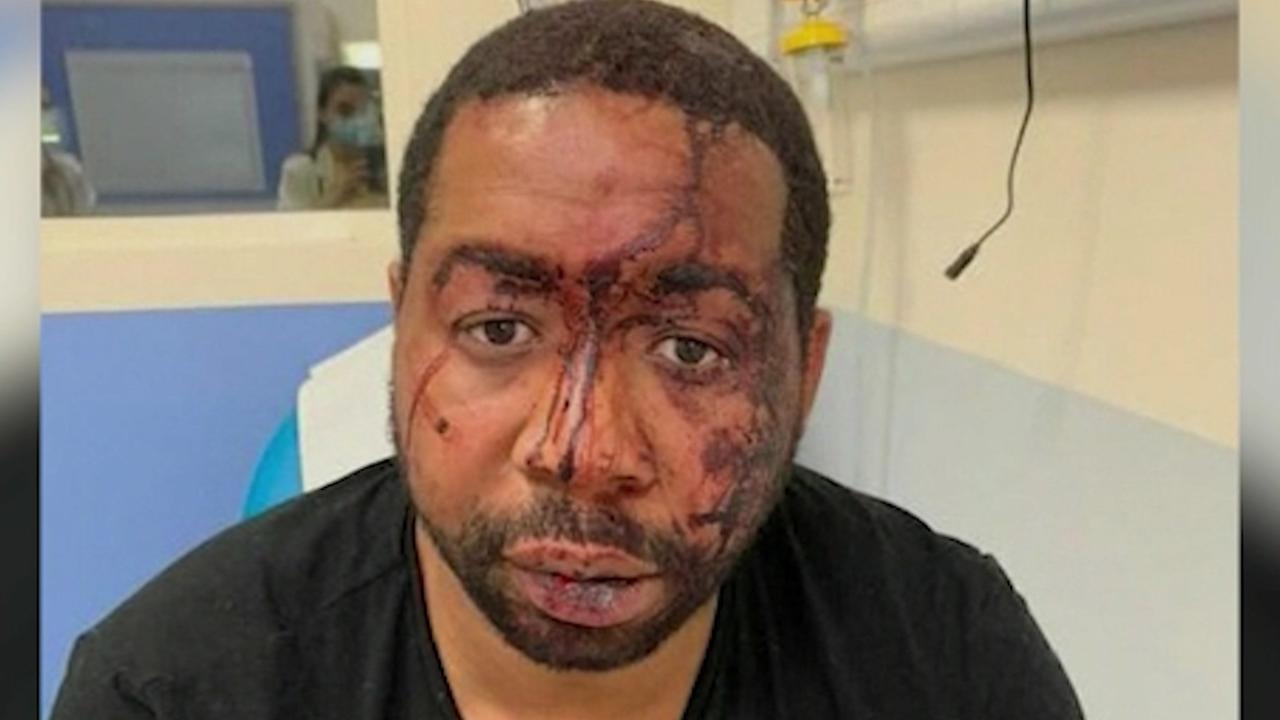
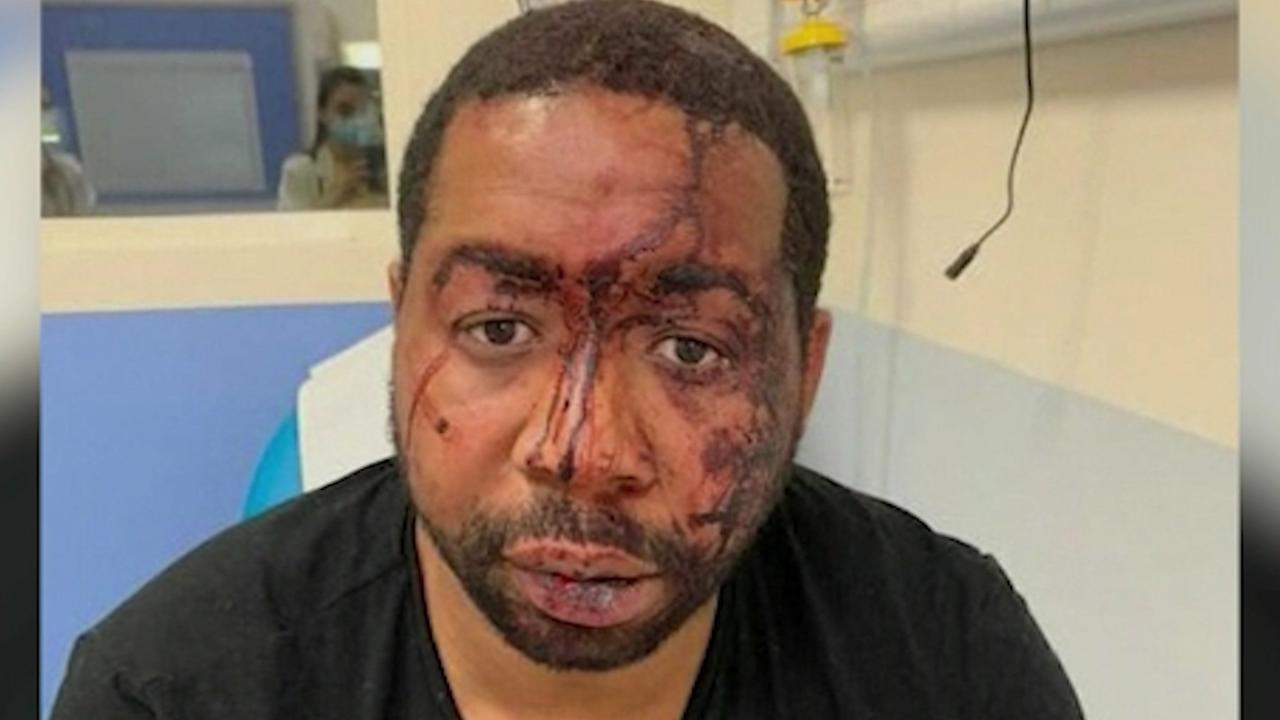
Aftermath of the brutal police beating of Michel Zecler, via EN24 News.

The police brutality incident has driven international headlines at the end of this past week following prior months of Black Lives Matter and George Floyd-related protests in the United States.

Here’s now NPR summarized what happened:

Michel Zecler, a 41-year-old music producer, was not wearing a face mask — required under current COVID-19 measures — when police officers saw him walking in Paris last Saturday. As he tried to enter his music studio, the police officers pushed him through the doorway and pummeled him repeatedly with their fists and a billy club.

The beating stopped when others in the building came to Zecler’s aid, though police later threw a tear-gas canister through the window to force him to leave his studio and arrested Zecler and others.

“The images we have all seen of the aggression against Michel Zecler are unacceptable, they are shameful for all of us. France should never allow violence or brutality, no matter who it comes from. France should never let hate or racism prosper,” Macron said in a statement posted to Facebook

“Those whose job it is to apply the law should respect the law,” he added. 

In a rare move, authorities apprehended the four police officers Friday and held them for questioning. They face charges of “deliberate violence in a group with weapons and of a racist nature.”

Macron has reportedly demanded “very clear sanctions” against the officers from his interior minister.

Zecler described that the police officers used racial slurs while the attack ensued. 

At various moments in the chilling footage police were seen grasphing at Zecler’s neck.

Prior to the video hitting the web Zecler spent up to 48 hours in jail after the police made what appear to be false statements staying he had initially attacked them and tried to grab their weapons

“If we didn’t have the videos, my client might be in prison right now,” his lawyer said in a press briefing. 

Zecler himself later described to journalists: “These people were supposed to protect me. I didn’t do anything to deserve that. I want these people punished by the law. Of course I was afraid… it’s lucky I have the videos to protect me. This shouldn’t happen.”

via ZeroHedge News https://ift.tt/39qtLoY Tyler Durden

Iran’s ‘Retaliation’ Begins: Parliament Votes To Raise Uranium Enrichment To 20%

Iran’s ‘Retaliation’ Begins: Parliament Votes To Raise Uranium Enrichment To 20%

Tyler Durden

Sun, 11/29/2020 – 10:30

Via AlMasdarNews.com,

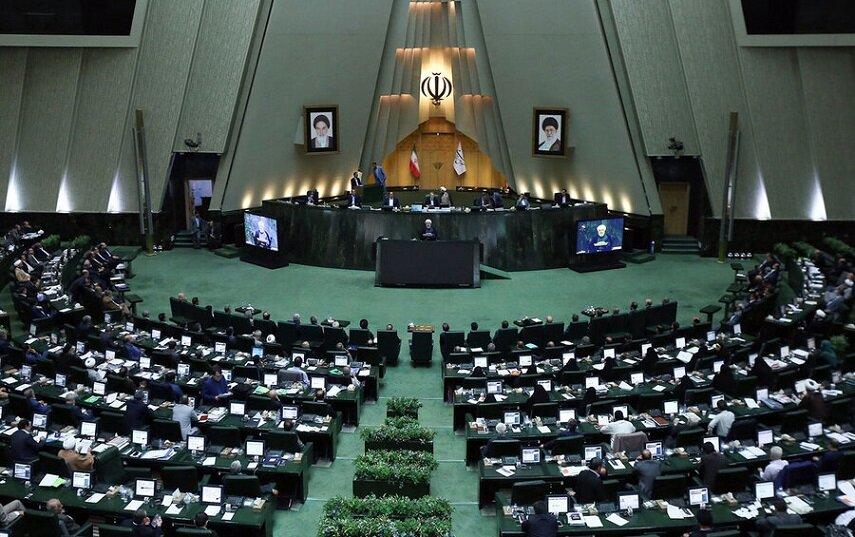
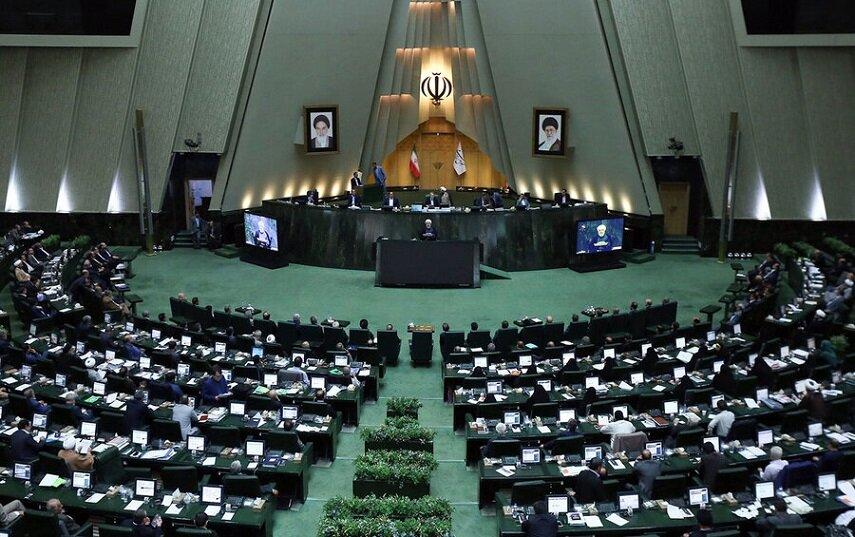
On Sunday, the Iranian parliament voted by an overwhelming majority on the draft law about “strategic measures to abolish sanctions,” which includes raising uranium enrichment to 20%.

The law includes restoring the old design of the Arak heavy water reactor. The parliamentary meeting was attended by 232 deputies out of 246, and they voted in favor of the resolution.

Iranian Parliament, via Tehran Times

The Iranian Parliament Speaker, Muhammad Baqer Qalibaf, also affirmed that “the draft law on strategic measures to lift the sanctions will limit the terrorist acts waged by the enemy against Iran.”

This move comes in response to the events on November 27, in which the head of the Research and Technology Center at the Ministry of Defense, Mohsen Fakhrizadeh, was killed in an assassination operation.

According to Tehran Times, the bill has been in preparation through this past week and this month, but gained special urgency after the Friday high profile assassination:

The Iranian Parliament’s National Security and Foreign Policy Committee discussed on Tuesday a plan to significantly increase Iran’s nuclear activities, including uranium enrichment level.

The plan is part of a broader strategy that aims to lift the United States sanctions on Iran. Iranian lawmakers had put forward a “strategic bill to lift sanctions” in early November that aims to force the U.S. into lifting sanctions on Iran through doubling down on nuclear activities.

In a statement, the Ministry of Defense said that “armed terrorist elements attacked a car carrying Mohsen Fakhrizadeh, head of the Research and Technology Center at the Ministry of Defense, on Friday afternoon.”

Fakhrizadeh’s vehicle was abruptly stopped by a pick-up before being fired upon repeatedly by the armed assailants.

A fierce clash would ensue between Fakhrizadeh’s bodyguards and the assailants, resulting in the death of two people.

Fakhrizadeh was rushed to the hospital shortly after the firefight, but was declared dead following failed attempts to revive the nuclear scientist.

via ZeroHedge News https://ift.tt/3qa3yRy Tyler Durden

Pennsylvania Supreme Court Dismisses GOP-Trump Win; Next Stop, US Supreme Court

Pennsylvania Supreme Court Dismisses GOP-Trump Win; Next Stop, US Supreme Court

Tyler Durden

Sun, 11/29/2020 – 10:00

The Pennsylvania Supreme Court on Saturday evening dismissed a lawsuit brought by Republicans who seek to invalidate the state’s mail-in ballots, with five of the court’s seven judges arguing that the case should be dismissed because the challenge had come too late, according to the Financial Times.

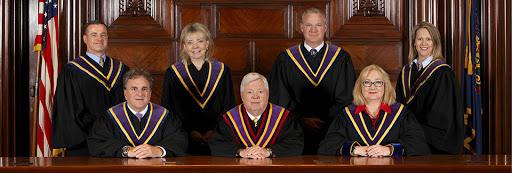
Pennsylvania Supreme Court

The latest Pennsylvania lawsuit, led by Republican congressman Mike Kelly, was unanimously rejected by the state’s Supreme Court judges, who described it as an “extraordinary proposition that the court disenfranchise 6.9 million Pennsylvanians who voted in the general election”.

The court’s decision overturns an earlier hold on the state’s certification process made by Commonwealth Court judge Patricia McCullough. –FT

Saturday evening’s ruling was dismissed with prejudice, meaning it cannot be refiled. We expect the plaintiffs to follow the same course as Trump’s legal team, which has vowed to take their various cases to the Supreme Court.

What happens next? (from John M. Reeves via uncoveredc.com)

If other lawsuit litigation is any predictor, Parnell and the other voters will now seek an expedited petition for a writ of certiorari. They will most likely also apply to Justice Alito—as Circuit Justice for the Third Circuit—for an emergency injunction barring the Pennsylvania Secretary of State from certifying the results of the election pending resolution of the cert petition. To obtain the Court’s review, Parnell and the other voters must show that the Pennsylvania Supreme Court’s decision somehow violates federal law. While the Pennsylvania Supreme Court’s decision is rooted in state law, a good argument can be made that it involves a federal question.

In interpreting the legislative power within the context of selecting Presidential Electors, the Supreme Court of the United States has held, “What is forbidden or required to be done by a state is forbidden or required of the legislative power under the state constitutions as they exist.” McPherson v. Blacker, 146 U.S. 1, 25 (1892). In other words, the “legislative power” to select Presidential Electors includes those limitations that state constitutions place on its legislatures—in this case, the Pennsylvania state constitution’s limiting of absentee voting to the above five situations. [(1) work; (2) illness; (3) physical disability; (4) the election occurring on a religious holiday; or (5) a person’s election-day duties themselves preventing the person from voting in person.] This may constitute a viable federal question for the Supreme Court of the United States to intervene. And while McPherson dates from 1892, its rationale is sound, and the Court has cited it as recently as 2015. See Ariz. State Legislature v. Ariz. Indep. Redistricting Comm’n, 576 U.S. 787, 839 (2015).

The other question is what weight, if any, the Supreme Court of the United States will give to Parnell’s supposed delay in bringing the lawsuit. I will admit that this is an area I have not examined much, and so I will refrain from commenting on it for the time being. But this much, at least, seems clear to me: the Pennsylvania mail-in voting law is unconstitutional.

*  *  *

Saturday’s ruling is the latest ‘setback’ for Republicans in Pennsylvania – however reaching the US Supreme Court has always been the goal, achieved through appeals of lower court decisions such as Saturday’s.

Last weekend, Republicans were dealt a blow in their efforts to overturn the election results after Judge Matthew Brann dismissed a lawsuit seeking to block certification of Joe Biden’s win in the state – calling the case unconstitutional and lacking evidence.

The Trump Campaign’s appeal of Brann’s decision was then dismissed on Friday by a panel of Republican-appointed judges.

Free, fair elections are the lifeblood of our democracy. Charges of unfairness are serious. But calling an election unfair does not make it so. Charges require specific allegations and then proof. We have neither here,” wrote Third Circuit Court of Appeals Judge Stephanos Bibas, a Trump appointee.

via ZeroHedge News https://ift.tt/2Vh6CwU Tyler Durden

1 In 13 Of All US Nursing Home Residents Have Died Of COVID-19

1 In 13 Of All US Nursing Home Residents Have Died Of COVID-19

Tyler Durden

Sun, 11/29/2020 – 09:20

Authored by Kenny Stancil via CommonDreams.org,

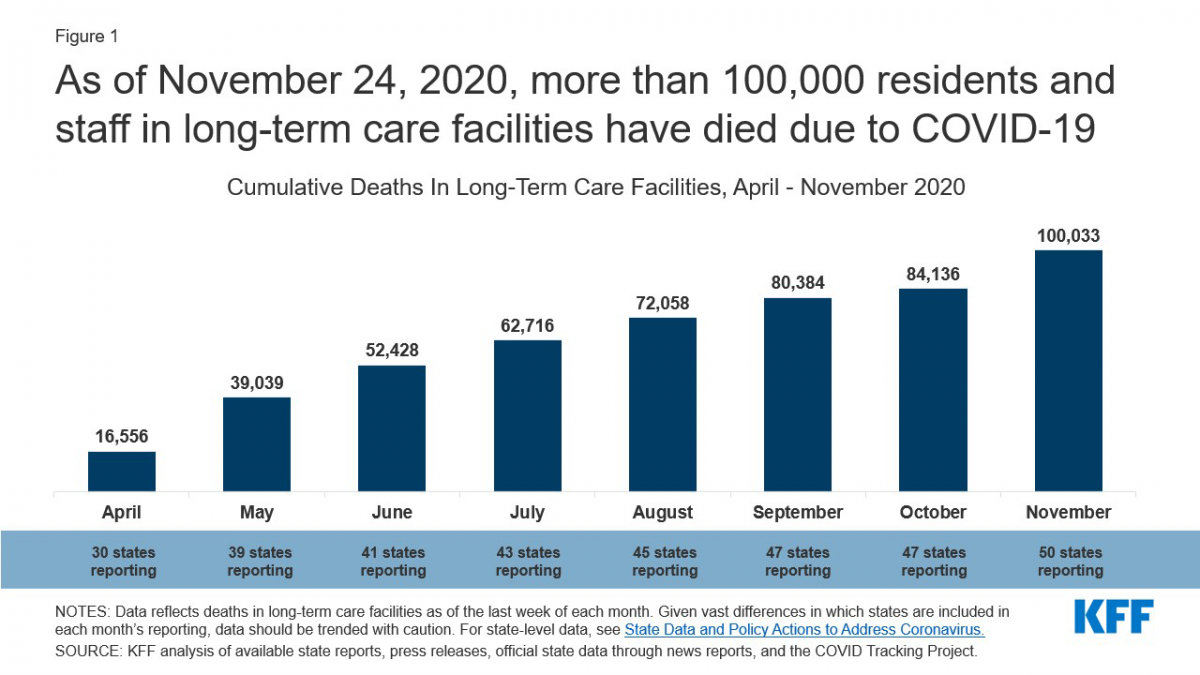
As of the last week of November, Covid-19 has claimed the lives of more than 100,000 people who live and work in long-term care facilities in the United Statesaccording to the Kaiser Family Foundation’s latest analysis of state-reported data.

The following chart depicts the growth in Covid-19 deaths among nursing home residents and staff in the U.S. since April. According to the Kaiser Family Foundation (KFF), 40% of the nation’s Covid-19 deaths have occurred in long-term care facilities

“While early action to prevent the spread of coronavirus in long-term care facilities led to strict protocols related to testing, personal protective equipment, and visitor restrictions,” KFF pointed out that “several of these measures have been reversed in recent months, and some long-term care facilities continue to report shortages of PPE and staff.” 

According to physician and public health expert Michael Barnett, 7.7% of the nation’s nursing home residents, or one in 13, have now died as a result of Covid-19. “Things have never really gotten better,” he tweeted. “Testing is a struggle, PPE and staff are daily challenges.”

Soon after reaching the “bleak milestone” of 100,000 pandemic deaths in long-term care facilities, which happened on Tuesday, the U.S. on Thursday experienced a new record-high number of coronavirus-related hospitalizations, as Common Dreams reported earlier Friday. 

Millions of Americans have passed through airports in the past week, despite the Centers for Disease Control and Prevention’s recommendation against traveling for Thanksgiving. Dr. Anthony Fauci, the nation’s top infectious disease expert, does not expect conditions to improve by Christmas and the New Year. 

As KFF explained, the predicted “surge in cases after holiday gatherings and increased time indoors due to winter weather… will have ripple effects on hospitals and nursing homes, given the close relationship between community spread and cases in congregate care settings.”

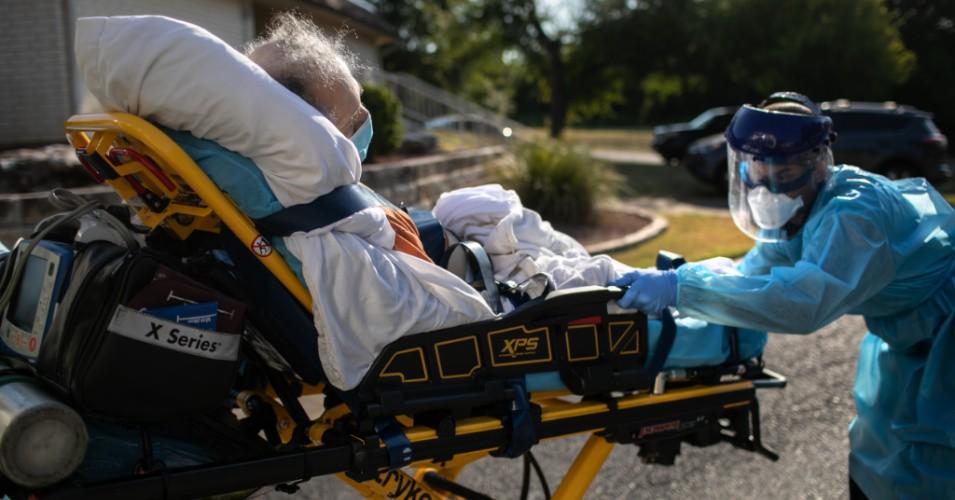
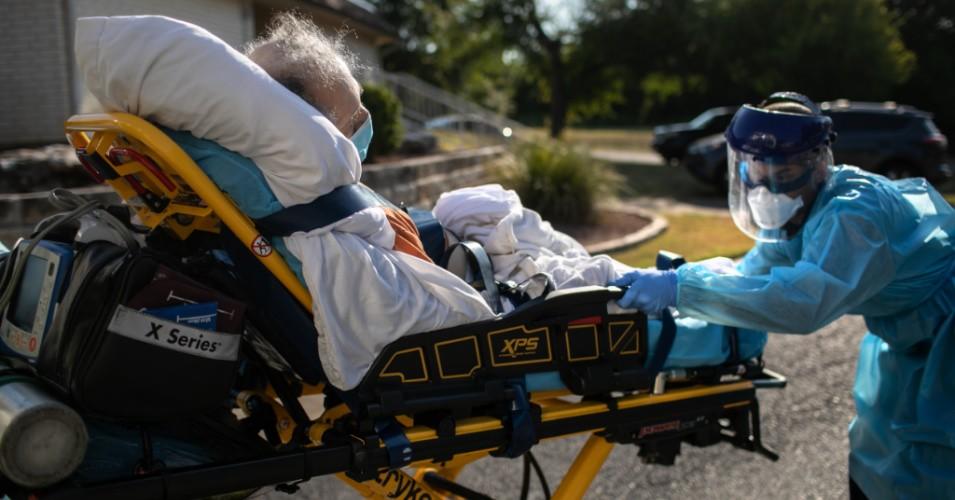
A medic loads a sick nursing home resident with Covid-19 symptoms into an ambulance on August 5, 2020 in Austin, Texas. (Photo: John Moore/Getty Images)

The country’s Covid-19 death toll surpassed 264,000 on Friday. Meanwhile, Thanksgiving marked the 24th consecutive day of more than 100,000 new daily cases in the U.S.

Given the pandemic’s disproportionate impact on the high-risk populations who live and work in long-term care facilities, even more nursing home residents, employees, and their families are expected to be negatively affected by coronavirus as long as the number of infections continues to grow. 

“Post-Thanksgiving surges in cases are unlikely to spare this community and will likely lead to an even higher death toll in long-term care facilities,” KFF said, “raising questions about whether nursing homes and other facilities are able to protect their residents and, if not, what actions can be taken to mitigate the threat posed by the virus.”

As the New York Times reported in June, when the Covid-19 death toll in long-term care facilities was just over 50,000, some critics have argued that the profit-driven nature of the private nursing home industry is the underlying problem, since treating elder care as a commodity rather than a public good can incentivize cost-cutting or money-making measures that put people in harm’s way

An investigation of long-term care facilities in Connecticut, the results of which were published in August, lent credence to that hypothesis. According to the study, “For-profit nursing homes had about 60% more cases and deaths per licensed bed than nonprofit ones,” while “larger facilities were hit harder than smaller ones, and… homes serving as part of a chain had worse outcomes,” as Reuters reported at the time. 

Sen. Sheldon Whitehouse (D-R.I.) noted this week that he and Sen. Bob Casey (D-Pa.) “have a bill to help nursing homes protect their residents and workers from Covid-19.” According to Whitehouse, “It’s time to pass it.”

via ZeroHedge News https://ift.tt/37hn461 Tyler Durden

“Trust Me I’m A Doctor” – Britain’s Most (& Least) Respected Professions

“Trust Me I’m A Doctor” – Britain’s Most (& Least) Respected Professions

Tyler Durden

Sun, 11/29/2020 – 08:45

“Trust me, I’m a doctor…”

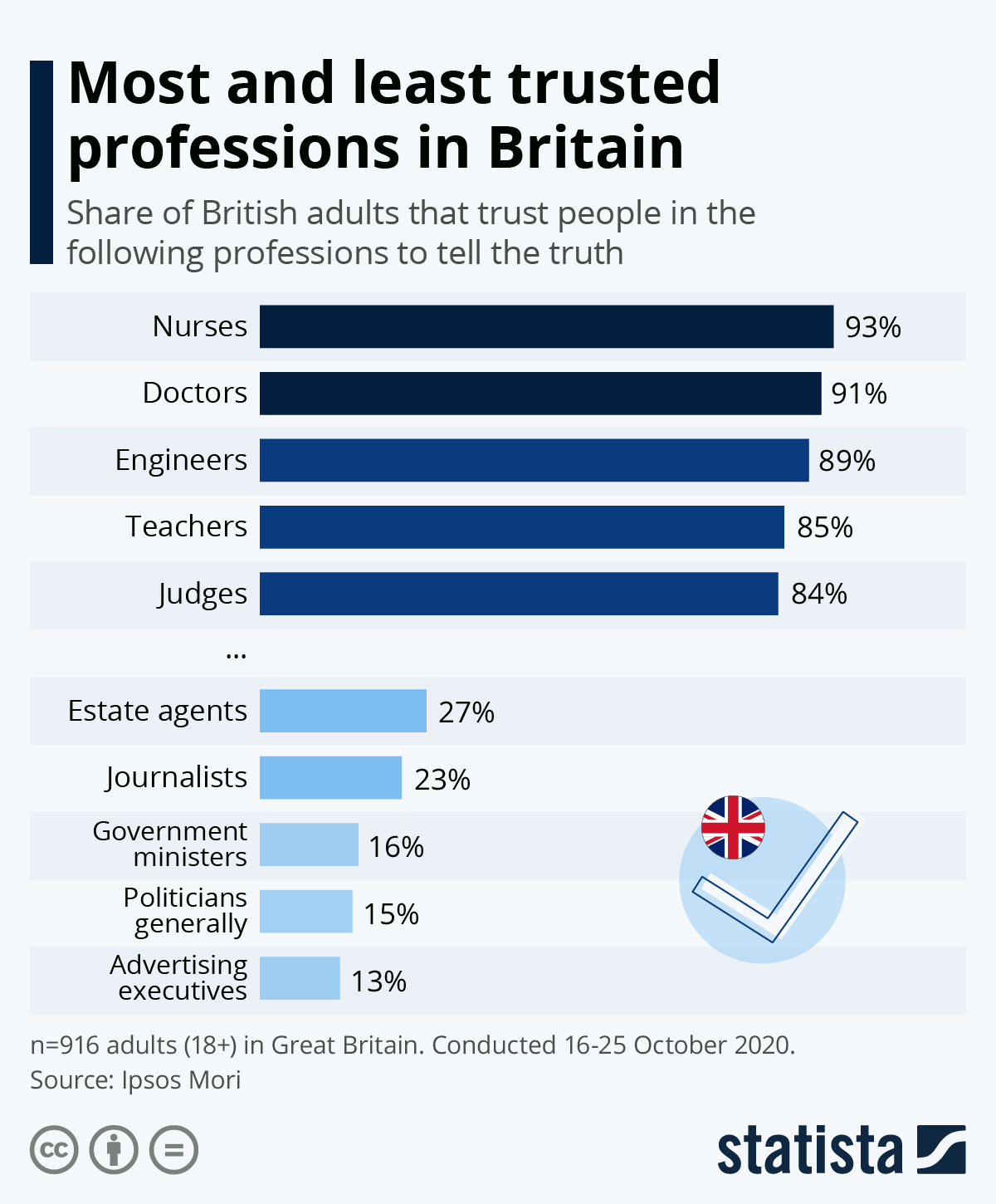
So goes the well-worn phrase, and as survey by Ipsos MORI reveals, medical professionals are indeed the most trusted group in Britain. A convincing 93 percent said they think nurses are trustworthy, followed by doctors with 91 percent and engineers with 89 percent.

But, as Statista’s Martin Armstrong points out, at the bottom of the pile are advertising executives who enjoy the trust of only 13 percent of the population – outdoing even politicians in terms of distrust.

Infographic: Most and least trusted professions in Britain | Statista

You will find more infographics at Statista

In the era of so-called ‘fake news’, journalists also make an appearance at the latter end of the list with a score of just 23 percent.

via ZeroHedge News https://ift.tt/37fHvQV Tyler Durden