Was Wednesday A Super Spreader Event, One Bank Asks

Was Wednesday A Super Spreader Event, One Bank Asks

Tyler Durden

Fri, 11/27/2020 – 17:14

From DB’s Jim Reid

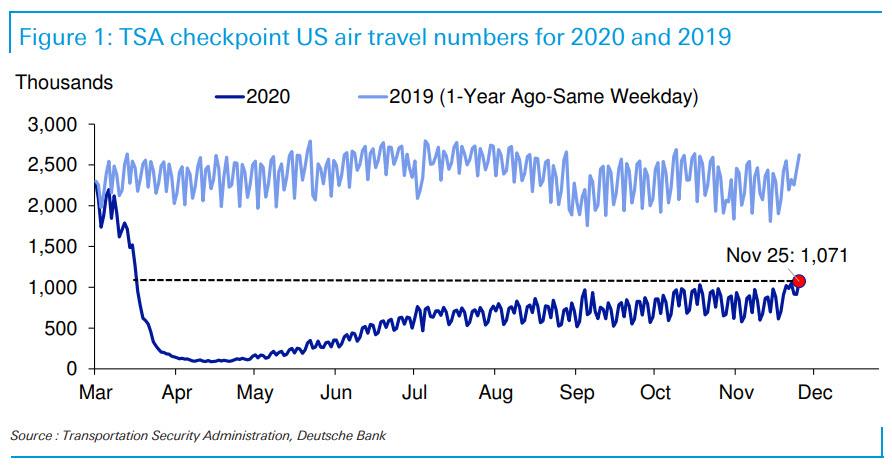
Wednesday was the busiest day at US airports since the pandemic began. The Transportation Security Administration screened  more than 1.07 million people at US airports on Thanksgiving eve. For context this number was still down 41% on the same Wednesday last year.

We are very positive about the chance of a return to normal life in 2021, especially from Q2 onwards. However it is quite clear that Thanksgiving and Christmas pose Covid super spreader event risk in various countries. Canada held Thanksgiving on October 12th and many public health officials there have blamed this for the recent spike in cases.

If the US follows this pattern, tighter restrictions and weaker activity could still dominate in the near term before the positive trends of vaccines and mass testing kick in across the globe as we go through Q1.

via ZeroHedge News https://ift.tt/2KLPUUC Tyler Durden

Paul Krugman Thinks Holding Religious Services During the COVID-19 Pandemic Is Like ‘Dumping Neurotoxins Into Public Reservoirs’

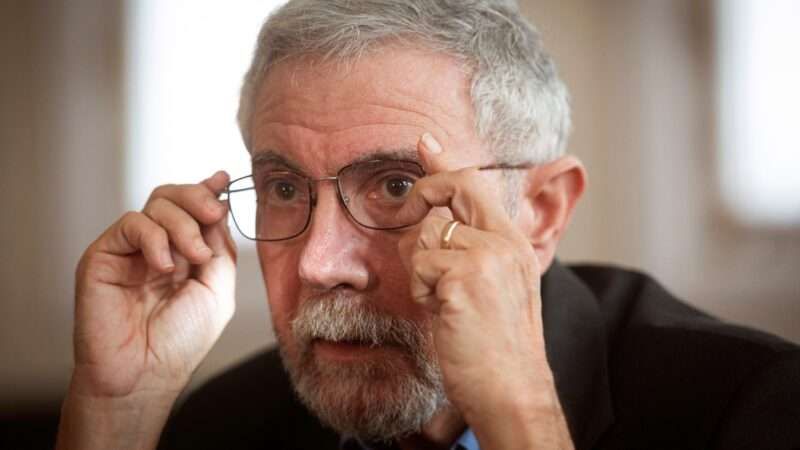
Paul-Krugman-Newscom

When the Supreme Court blocked New York Gov. Andrew Cuomo’s restrictions on religious services this week, it was the first time the justices had enforced constitutional limits on government responses to the COVID-19 pandemic. The decision predictably provoked hyperbolic reactions from critics who seem to think politicians should be free to do whatever they consider appropriate during a public health crisis.

Describing the Court’s emergency injunction in Roman Catholic Diocese of Brooklyn v. Cuomo as “the first major decision from the Trump-packed court,” New York Times columnist Paul Krugman warned that “it will kill people.” He added: “The bad logic is obvious. Suppose I adhere to a religion whose rituals include dumping neurotoxins into public reservoirs. Does the principle of religious freedom give me the right to do that?” Krugman averred that “freedom of belief” does not include “the right to hurt other people in tangible ways—which large gatherings in a pandemic definitely do.”

There are several problems with Krugman’s gloss on the case, starting with his understanding of the constitutional right at stake. The Court was applying the First Amendment’s ban on laws “prohibiting the free exercise” of religion, which includes conduct as well as belief. Krugman, of course, is right that the Free Exercise Clause is not a license for “dumping neurotoxins into public reservoirs”—or, to take a more familiar example, conducting human sacrifices. But it is hard to take seriously his suggestion that holding a religious service during the COVID-19 pandemic, regardless of the safeguards observed, is tantamount to poisoning millions of people’s drinking water.

Under Cuomo’s rules, “houses of worship” in state-designated “red” zones were not allowed to admit more than 10 people; the cap in “orange” zones was 25. Those restrictions applied regardless of a building’s capacity. A 1,000-seat church, for example, would be limited to 1 percent of its capacity in a red zone and 2.5 percent of its capacity in an orange zone.

Cuomo’s restrictions on religious gatherings were much more onerous than the rules for myriad secular activities that pose similar risks of virus transmission. That point was crucial because the Court has held that laws are presumptively unconstitutional when they discriminate against religion. At the same time, it has said the Free Exercise Clause does not require religious exemptions from neutral, generally applicable laws, which obviously would include statutes that prohibit mass poisoning or murder.

It is undisputed that both the Brooklyn diocese and Agudath Israel, which sued Cuomo on behalf of the Orthodox synagogues it represents, were following strict COVID-19 safety protocols, including masks and physical distancing. It is also undisputed that no disease clusters have been tied to their institutions since they reopened. The plaintiffs were not asking to carry on as if COVID-19 did not exist. They were instead arguing that Cuomo’s policy singled out houses of worship for especially harsh treatment and was not “narrowly tailored” to serve the “compelling state interest” of curtailing the epidemic.

After these organizations filed their lawsuits but before the Supreme Court considered their request for an emergency injunction, Cuomo changed the color coding of the neighborhoods where their churches and synagogues are located. “None of the houses of worship identified in the applications is now subject to any fixed numerical restrictions,” Chief Justice John Roberts noted in his dissenting opinion. “At these locations, the applicants can hold services with up to 50% of capacity, which is at least as favorable as the relief they currently seek.”

In other words, Cuomo suddenly increased the effective occupancy cap for a 1,000- seat church 50-fold in formerly red zones and 20-fold in formerly orange zones. By Krugman’s logic, the governor is now allowing behavior as reckless as “dumping neurotoxins into public reservoirs.” Yet this is the same man whose judgment on these matters Krugman thinks we should trust without question.

“The scary thing is that 5 members of the court appear to think they’re living in the Fox cinematic universe, where actual facts about things like disease transmission don’t matter,” Krugman says. If so, Cuomo himself seems to have succumbed to the same propaganda, since he concluded that his original rules were far more restrictive than necessary.

New York Times reporter Adam Liptak suggests that the 5-to-4 decision in this case, which hinged on the replacement of Ruth Bader Ginsburg with the recently confirmed Amy Coney Barrett, reflects a new conservative majority driven by political considerations. “Chief Justice Roberts is fundamentally conservative, and his liberal votes have been rare,” Liptak writes. “But they reinforced his frequent statements that the court is not a political body. The court’s new and solid conservative majority may send a different message.”

Yet the six opinions issued on Wednesday night, no matter their conclusions, do not simply express policy preferences or partisan allegiances. They show the justices grappling with constitutional issues, as they are supposed to do.

Was Cuomo’s policy neutral and generally applicable? The five justices in the majority did not think so. Justices Sonia Sotomayor and Elena Kagan disagreed, arguing that houses of worship are not fundamentally similar to the many businesses that Cuomo allowed to operate without occupancy limits. Roberts, while arguing that an injunction was unnecessary in light of Cuomo’s sudden reclassification of the relevant neighborhoods, nevertheless conceded that “numerical capacity limits of 10 and 25 people, depending on the applicable zone, do seem unduly restrictive,” and “it may well be that such restrictions violate the Free Exercise Clause.”

Justice Stephen Breyer split the difference. “Whether, in present circumstances, those low numbers violate the Constitution’s Free Exercise Clause is far from clear,” he wrote, “and, in my view, the applicants must make such a showing here to show that they are entitled to ‘the extraordinary remedy of injunction.'”

In other words, while only five justices agreed that an emergency injunction was appropriate, seven were prepared to at least entertain the possibility that Cuomo’s restrictions were unconstitutional. Perhaps that proposition is not as outlandish as critics like Krugman think.

Leaving aside the specific legal issues raised by this case, the broader question is whether a public health emergency makes constitutional constraints optional. COVID-19 lockdowns that blocked access to abortion by classifying it as a nonessential medical service, for example, have been successfully challenged in several states. Does Krugman think those courts should have shown the same deference to politicians he believes is appropriate when restrictions on religious freedom are challenged?

In a Harvard Law Review Forum essay published last July, American University law professor Lindsay Wiley and University of Texas at Austin law professor Stephen Vladeck present a forceful argument against suspending the usual standards of judicial review during a crisis like the COVID-19 epidemic. They note that “the suspension principle is inextricably linked with the idea that a crisis is of finite—and brief—duration”; it is therefore “ill-suited for long-term and open-ended emergencies like the one in which we currently find ourselves.” They add that “the suspension model is based upon the oft-unsubstantiated assertion that ‘ordinary’ judicial review will be too harsh on government actions in a crisis”—a notion that seems misguided given that “the principles of proportionality and balancing driving most modern constitutional standards permit greater incursions into civil liberties in times of greater communal need.”

Wiley and Vladeck emphasize “the importance of an independent judiciary in a crisis—’as perhaps the only institution that is in any structural position to push back against potential overreaching by the local, state, or federal political branches.'” They quote George Mason law professor (and Volokh Conspiracy blogger) Ilya Somin’s observation that “imposing normal judicial review on emergency measures can help reduce the risk that the emergency will be used as a pretext to undermine constitutional rights and weaken constraints on government power even in ways that are not really necessary to address the crisis.” Without such review, Wiley and Vladeck warn, “we risk ending up with decisions like Korematsu v. United States,” the notorious 1944 ruling that upheld the detention of Japanese Americans during World War II. The risk of excessive deference, they note, is that courts will “sustain gross violations of civil rights because they are either unwilling or unable to meaningfully look behind the government’s purported claims of exigency.”

Justice Neil Gorsuch’s concurring opinion in Roman Catholic Diocese of Brooklyn v. Cuomo amplifies that point. “Even if the Constitution has taken a holiday during this pandemic, it cannot become a sabbatical,” he writes. “We may not shelter in place when the Constitution is under attack. Things never go well when we do.”

from Latest – Reason.com https://ift.tt/37ezYlh
via IFTTT
Paul Krugman Thinks Holding Religious Services During the COVID-19 Pandemic Is Like ‘Dumping Neurotoxins Into Public Reservoirs’

Paul-Krugman-Newscom

When the Supreme Court blocked New York Gov. Andrew Cuomo’s restrictions on religious services this week, it was the first time the justices had enforced constitutional limits on government responses to the COVID-19 pandemic. The decision predictably provoked hyperbolic reactions from critics who seem to think politicians should be free to do whatever they consider appropriate during a public health crisis.

Describing the Court’s emergency injunction in Roman Catholic Diocese of Brooklyn v. Cuomo as “the first major decision from the Trump-packed court,” New York Times columnist Paul Krugman warned that “it will kill people.” He added: “The bad logic is obvious. Suppose I adhere to a religion whose rituals include dumping neurotoxins into public reservoirs. Does the principle of religious freedom give me the right to do that?” Krugman averred that “freedom of belief” does not include “the right to hurt other people in tangible ways—which large gatherings in a pandemic definitely do.”

There are several problems with Krugman’s gloss on the case, starting with his understanding of the constitutional right at stake. The Court was applying the First Amendment’s ban on laws “prohibiting the free exercise” of religion, which includes conduct as well as belief. Krugman, of course, is right that the Free Exercise Clause is not a license for “dumping neurotoxins into public reservoirs”—or, to take a more familiar example, conducting human sacrifices. But it is hard to take seriously his suggestion that holding a religious service during the COVID-19 pandemic, regardless of the safeguards observed, is tantamount to poisoning millions of people’s drinking water.

Under Cuomo’s rules, “houses of worship” in state-designated “red” zones were not allowed to admit more than 10 people; the cap in “orange” zones was 25. Those restrictions applied regardless of a building’s capacity. A 1,000-seat church, for example, would be limited to 1 percent of its capacity in a red zone and 2.5 percent of its capacity in an orange zone.

Cuomo’s restrictions on religious gatherings were much more onerous than the rules for myriad secular activities that pose similar risks of virus transmission. That point was crucial because the Court has held that laws are presumptively unconstitutional when they discriminate against religion. At the same time, it has said the Free Exercise Clause does not require religious exemptions from neutral, generally applicable laws, which obviously would include statutes that prohibit mass poisoning or murder.

It is undisputed that both the Brooklyn diocese and Agudath Israel, which sued Cuomo on behalf of the Orthodox synagogues it represents, were following strict COVID-19 safety protocols, including masks and physical distancing. It is also undisputed that no disease clusters have been tied to their institutions since they reopened. The plaintiffs were not asking to carry on as if COVID-19 did not exist. They were instead arguing that Cuomo’s policy singled out houses of worship for especially harsh treatment and was not “narrowly tailored” to serve the “compelling state interest” of curtailing the epidemic.

After these organizations filed their lawsuits but before the Supreme Court considered their request for an emergency injunction, Cuomo changed the color coding of the neighborhoods where their churches and synagogues are located. “None of the houses of worship identified in the applications is now subject to any fixed numerical restrictions,” Chief Justice John Roberts noted in his dissenting opinion. “At these locations, the applicants can hold services with up to 50% of capacity, which is at least as favorable as the relief they currently seek.”

In other words, Cuomo suddenly increased the effective occupancy cap for a 1,000- seat church 50-fold in formerly red zones and 20-fold in formerly orange zones. By Krugman’s logic, the governor is now allowing behavior as reckless as “dumping neurotoxins into public reservoirs.” Yet this is the same man whose judgment on these matters Krugman thinks we should trust without question.

“The scary thing is that 5 members of the court appear to think they’re living in the Fox cinematic universe, where actual facts about things like disease transmission don’t matter,” Krugman says. If so, Cuomo himself seems to have succumbed to the same propaganda, since he concluded that his original rules were far more restrictive than necessary.

New York Times reporter Adam Liptak suggests that the 5-to-4 decision in this case, which hinged on the replacement of Ruth Bader Ginsburg with the recently confirmed Amy Coney Barrett, reflects a new conservative majority driven by political considerations. “Chief Justice Roberts is fundamentally conservative, and his liberal votes have been rare,” Liptak writes. “But they reinforced his frequent statements that the court is not a political body. The court’s new and solid conservative majority may send a different message.”

Yet the six opinions issued on Wednesday night, no matter their conclusions, do not simply express policy preferences or partisan allegiances. They show the justices grappling with constitutional issues, as they are supposed to do.

Was Cuomo’s policy neutral and generally applicable? The five justices in the majority did not think so. Justices Sonia Sotomayor and Elena Kagan disagreed, arguing that houses of worship are not fundamentally similar to the many businesses that Cuomo allowed to operate without occupancy limits. Roberts, while arguing that an injunction was unnecessary in light of Cuomo’s sudden reclassification of the relevant neighborhoods, nevertheless conceded that “numerical capacity limits of 10 and 25 people, depending on the applicable zone, do seem unduly restrictive,” and “it may well be that such restrictions violate the Free Exercise Clause.”

Justice Stephen Breyer split the difference. “Whether, in present circumstances, those low numbers violate the Constitution’s Free Exercise Clause is far from clear,” he wrote, “and, in my view, the applicants must make such a showing here to show that they are entitled to ‘the extraordinary remedy of injunction.'”

In other words, while only five justices agreed that an emergency injunction was appropriate, seven were prepared to at least entertain the possibility that Cuomo’s restrictions were unconstitutional. Perhaps that proposition is not as outlandish as critics like Krugman think.

Leaving aside the specific legal issues raised by this case, the broader question is whether a public health emergency makes constitutional constraints optional. COVID-19 lockdowns that blocked access to abortion by classifying it as a nonessential medical service, for example, have been successfully challenged in several states. Does Krugman think those courts should have shown the same deference to politicians he believes is appropriate when restrictions on religious freedom are challenged?

In a Harvard Law Review Forum essay published last July, American University law professor Lindsay Wiley and University of Texas at Austin law professor Stephen Vladeck present a forceful argument against suspending the usual standards of constitutional review during a crisis like the COVID-19 epidemic. They note that “the suspension principle is inextricably linked with the idea that a crisis is of finite—and brief—duration”; it is therefore “ill-suited for long-term and open-ended emergencies like the one in which we currently find ourselves.” They add that “the suspension model is based upon the oft-unsubstantiated assertion that ‘ordinary’ judicial review will be too harsh on government actions in a crisis”—a notion that seems misguided given that “the principles of proportionality and balancing driving most modern constitutional standards permit greater incursions into civil liberties in times of greater communal need.”

Wiley and Vladeck emphasize “the importance of an independent judiciary in a crisis—’as perhaps the only institution that is in any structural position to push back against potential overreaching by the local, state, or federal political branches.'” They quote George Mason law professor (and Volokh Conspiracy blogger) Ilya Somin’s observation that “imposing normal judicial review on emergency measures can help reduce the risk that the emergency will be used as a pretext to undermine constitutional rights and weaken constraints on government power even in ways that are not really necessary to address the crisis.” Without such review, Wiley and Vladeck warn, “we risk ending up with decisions like Korematsu v. United States,” the notorious 1944 ruling that upheld the detention of Japanese Americans during World War II. The risk of excessive deference, they note, is that courts will “sustain gross violations of civil rights because they are either unwilling or unable to meaningfully look behind the government’s purported claims of exigency.”

Justice Neil Gorsuch’s concurring opinion in Roman Catholic Diocese of Brooklyn v. Cuomo amplifies that point. “Even if the Constitution has taken a holiday during this pandemic, it cannot become a sabbatical,” he writes. “We may not shelter in place when the Constitution is under attack. Things never go well when we do.”

from Latest – Reason.com https://ift.tt/37ezYlh
via IFTTT
The “I’m for Legal Immigration” Dodge

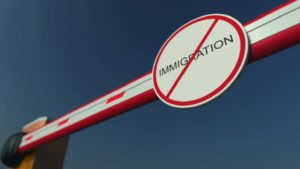
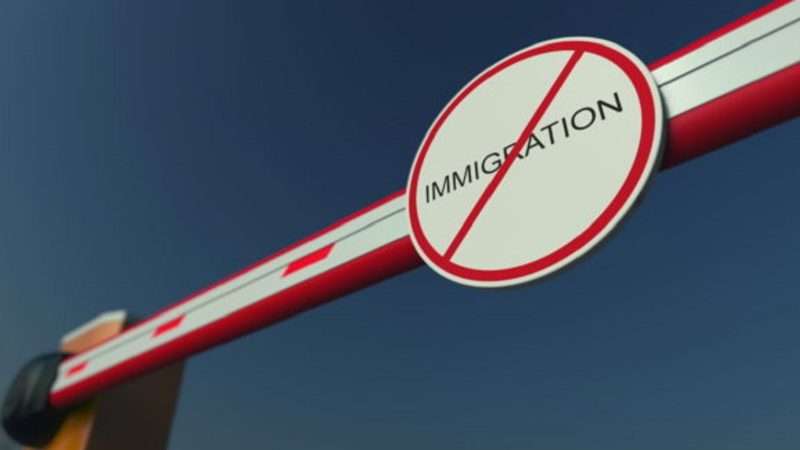
Immigration Closed

Imagine a debate about marijuana legalization. One participant avows that “I’m for legal marijuana. I’m only against the illegal kind.” Most people will readily see that he is evading the issue: the whole point under discussion is whether existing laws banning the sale and possession of marijuana should be liberalized, or perhaps abolished entirely.

Along the same lines, imagine a debate over racial segregation circa 1960. One participant says: “I’m for legal integration. But I’m against the illegal kind.” Here too, it’s obvious that the person who said that is missing the point. The question at issue was whether existing segregation laws should be abolished (or at least severely curtailed). If she wants to argue that segregation laws are fine in some states (those that had them at the time), but wrong in others (those that did not), she needs to provide some explanation for why segregation is right and just in the former locations, but wrong elsewhere.

The same goes for almost every other context where there is a debate about liberalizing laws restricting some activity. Everyone who follows such questions recognizes that “I’m for legal X” is an evasion of the real issue, one that does nothing to advance the discussion.

The big exception is immigration policy. There, we routinely hear variants of “I’m for legal immigration, but against the illegal kind.” And many see this is as a serious argument.

In reality, it is no more valid than similar statements in the context of segregation, the War on Drugs, or anything else. The whole point at issue in discussions of immigration policy is whether various types of immigration should be legal. Saying “I’m for legal immigration” does nothing to address that question.

If the idea is that you support currently legal immigration but oppose any that is not currently legal, than you need to explain how and why status quo policy draws the right line—much like the person who supported segregation in some states but not others in the example given above had to explain what the difference between the two types of states is. Saying “I’m for legal immigration” does nothing to refute arguments to the effect that current immigration restrictions are unjust, cause enormous economic harm, and threaten the liberty of natives as well as would-be immigrants.

If the claim here is that people have a moral duty to obey immigration restrictions until such time as they are properly repealed by Congress, that still isn’t a response to claims that some or all of those restrictions should be abolished. Indeed, the greater the obligation we might have to obey even unjust and harmful laws, the greater the moral imperative of repealing such laws as quickly as possible.

Even on its own terms, the duty-to-obey-the-law theory has to confront arguments to the effect that many immigration restrictions are so severely unjust that migrants do not have a duty to obey them. That challenge is especially hard to meet if you, like many Americans, accept the idea that it’s perfectly fine to routinely disobey a wide range of less onerous laws, such as speed limits and various petty economic regulations. Regardless, the issue of whether people have a duty to obey a given law is conceptually separate from the issue of whether that law should exist in the first place. Most debates over immigration policy are actually about the latter issue.

Similarly, if your objection to currently illegal immigration is that it undermines respect for the rule of law, then that’s a great justification for legalizing it! That would solve the problem far more thoroughly than any crackdown possibly could. If you think that illegal immigration undermines the rule of law in ways that the lawbreaking most of us engage in on a routine basis does not (most adult Americans have violated federal criminal law at some point in their lives), then you must explain what it is that makes immigration law special.

Finally, if you really do support all currently legal immigration, and oppose only the illegal kind, then you should oppose Donald Trump’s and some other Republicans’ efforts to severely truncate currently legal immigration. If you are indifferent to such plans or actually back them, then you are not for currently legal immigration. You’re for massively cutting it, and you should defend that position.

There are plenty of intellectually serious arguments for restricting immigration, including some for cutting it below current levels. I address a wide range of such claims in my recent book Free to Move: Foot Voting, Migration, and Political Freedom. But the “I’m for legal immigration” trope is not a serious contribution to the discussion. The sooner we can retire it, the sooner we can focus on the real issues at stake in debates over immigration policy.


from Latest – Reason.com https://ift.tt/3q33D9P
via IFTTT

Here Is Who Will Get The COVID Vaccine First According To Goldman

Here Is Who Will Get The COVID Vaccine First According To Goldman

Tyler Durden

Fri, 11/27/2020 – 17:00

Last week, Moncef Slaoui, the head of Washington’s “Operation Warp Speed”, laid out the ‘official’ timeline for vaccinating the American population, culminating in the extremely optimistic projection that the American population would reach 70% vaccination threshold – supposedly enough to achieve ‘herd immunity’ in May. The first doses, on the other hand, are expected to be administered on Dec. 11 and Dec. 12, Slaoui said.

Now, according to a team of analysts at Goldman Sachs, most major developed-market economies aren’t expecting to make meaningful progress in inoculating their populations until later into the second half of Q2.

Looking ahead, the FDA has already set up Pfizer’s and Moderna’s vaccines to receive emergency-use approval perhaps as soon as next week, while based on comments from European Commission President Ursula von der Leyen, the European Medicines Agency (EMA) is likely to authorize the three leading vaccines by year’s end.

With investors already shifting their focus to actual distribution, Goldman’s team has published projections for six major advanced economies in five steps:

1. Global vaccine production: We use monthly global production projections from our health care equity analysts for Pfizer-BioNTech, Moderna, AstraZeneca, Novavax, and Johnson & Johnson. The projections assume that production gradually rises in early 2021 and achieves the announced targets.

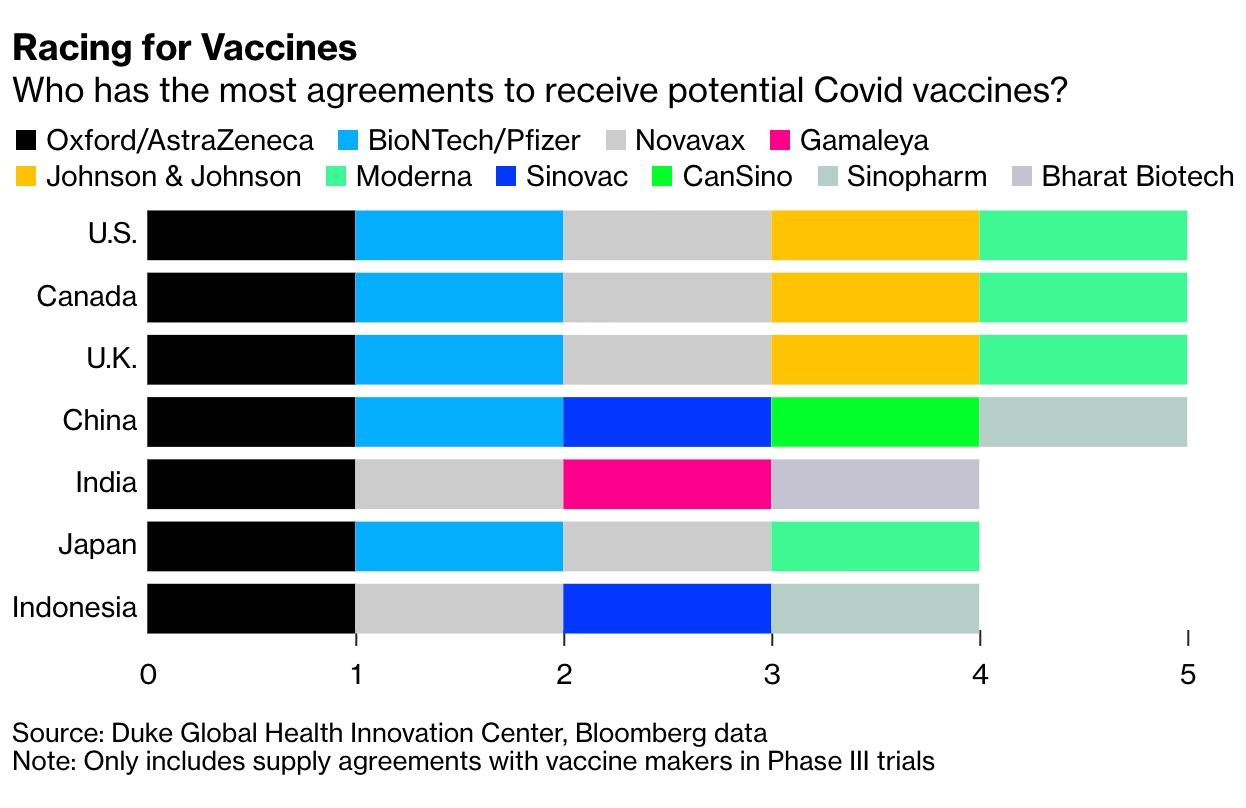
2. Country vaccine supply: To allocate production across countries, we use data on agreements of purchases and purchase options, shown in the left panel of Exhibit 1, and data on initial deliveries. We assume the production share a country receives from a developer rises in the country’s initial deliveries, confirmed purchases, optional purchases, and population but falls to zero when contracted and optional purchases are delivered or when cumulative deliveries across the five developers exceed 90% of the population.2

3. Country vaccine demand: We use responses to the global Ipsos survey question of “From when a vaccine is available, when would you become vaccinated?” (Exhibit 1, right). This survey suggests that most people expect to wait some time before taking it, consistent with wanting to learn more about safety, side effects, and effectiveness. We also assume that demand will be more elevated and front-loaded than reported in the October Ipsos survey, which preceded recent trial results and upcoming public vaccination campaigns. Based on the expected timing of trials for children, we assume vaccinations for children under age 12 start globally in October 2021.

4. Vaccine distribution capacity: We assume a speed limit on distribution that rises from 10% of the population in December to 20% of the population from February 2021 onwards based on the peak speed of the flu vaccine US distribution this year, corresponding to 20% of the population per month.

5. Country vaccinations: We estimate monthly vaccination as the minimum of supply, demand, and distribution capacity Exhibit 2 illustrates the estimates of supply (light blue), demand (dark blue), and actual vaccinations (dotted green line) for the US and Canada. In both countries, vaccination is initially significantly limited by scarce supply, until additional capacity allows supply to exceed slowing demand in April. In Canada, the speed limit on distribution binds briefly in April. Demand drives vaccination from April in the US and May in Canada, rises gradually over the summer based on survey estimates, increases significantly with child vaccinations in the fall, and jumps past 70% in October in both countries.

Exhibit 3 shows our expected timeline for actual US vaccinations by tiering phase. High-risk groups, mostly health care workers and individuals with comorbid conditions, will likely receive the first available doses from mid-December, likely leading to significant public health benefits from Q1 onwards, followed by widespread vaccination from early April.

Looking more broadly, our baseline forecast is that large shares of the population are vaccinated by the end of Q2 in all major DMs (Exhibit 4). The UK is expected to vaccinate 50% of its population in March with the US and Canada following in April. We forecast that the EU, Japan, and Australia reach this 50% threshold in May. As production becomes abundant by mid-Q2, vaccination rises gradually with demand and surpasses 70% across all DMs in the fall when children become eligible.

We next explore a downside scenario. This scenario assumes that (1) the AstraZeneca and Johnson & Johnson vaccines, which are both viral vector vaccines, do not succeed (perhaps reflecting safety events), and (2) vaccine demand measures fall back to October 2020 Ipsos survey levels. In this scenario, supply rises much more slowly in the EU, reflecting a larger reliance on both developers. In the medium run, vaccination levels are the lowest in the EU (assuming no new contracts are signed) but also the US and Japan, where the decline in demand leaves vaccination at relatively low long-term levels. In contrast, Australia and Canada are more resilient, benefiting from diversified supply contracts and relatively strong vaccine demand measures.

* * *

Source: Goldman Sachs

While various governments have released comprehensive and detailed timelines for when their populations will have achieved ‘herd immunity’, Goldman’s analysts warned that European countries are skewed toward “the later timeline” since AstraZeneca and Johnson and Johnson are lagging behind Pfizer and Moderna.

Canadian Prime Minister Justin Trudeau held a press briefing on Friday to explain the official Canadian vaccination timeline. The PM said he expects most Canadians will be vaccinated by September. The announcement follows Trudeau’s remarks from earlier this week that Canada “won’t be first in line” for a vaccine since it hadn’t struck any major deals with suppliers.

But Canada is in much better shape than the vast majority of countries, which have no deals at all. They will need to rely on the kindness of strangers – either the WHO and Bill Gates’s (who are trying via their “Covax” project to raise enough money to vaccinate the whole world) or President Xi and Beijing

via ZeroHedge News https://ift.tt/2JfrOkD Tyler Durden

The “I’m for Legal Immigration” Dodge

Immigration Closed

Imagine a debate about marijuana legalization. One participant avows that “I’m for legal marijuana. I’m only against the illegal kind.” Most people will readily see that he is evading the issue: the whole point under discussion is whether existing laws banning the sale and possession of marijuana should be liberalized, or perhaps abolished entirely.

Along the same lines, imagine a debate over racial segregation circa 1960. One participant says: “I’m for legal integration. But I’m against the illegal kind.” Here too, it’s obvious that the person who said that is missing the point. The question at issue was whether existing segregation laws should be abolished (or at least severely curtailed). If she wants to argue that segregation laws are fine in some states (those that had them at the time), but wrong in others (those that did not), she needs to provide some explanation for why segregation is right and just in the former locations, but wrong elsewhere.

The same goes for almost every other context where there is a debate about liberalizing laws restricting some activity. Everyone who follows such questions recognizes that “I’m for legal X” is an evasion of the real issue, one that does nothing to advance the discussion.

The big exception is immigration policy. There, we routinely hear variants of “I’m for legal immigration, but against the illegal kind.” And many see this is as a serious argument.

In reality, it is no more valid than similar statements in the context of segregation, the War on Drugs, or anything else. The whole point at issue in discussions of immigration policy is whether various types of immigration should be legal. Saying “I’m for legal immigration” does nothing to address that question.

If the idea is that you support currently legal immigration but oppose any that is not currently legal, than you need to explain how and why status quo policy draws the right line—much like the person who supported segregation in some states but not others in the example given above had to explain what the difference between the two types of states is. Saying “I’m for legal immigration” does nothing to refute arguments to the effect that current immigration restrictions are unjust, cause enormous economic harm, and threaten the liberty of natives as well as would-be immigrants.

If the claim here is that people have a moral duty to obey immigration restrictions until such time as they are properly repealed by Congress, that still isn’t a response to claims that some or all of those restrictions should be abolished. Indeed, the greater the obligation we might have to obey even unjust and harmful laws, the greater the moral imperative of repealing such laws as quickly as possible.

Even on its own terms, the duty-to-obey-the-law theory has to confront arguments to the effect that many immigration restrictions are so severely unjust that migrants do not have a duty to obey them. That challenge is especially hard to meet if you, like many Americans, accept the idea that it’s perfectly fine to routinely disobey a wide range of less onerous laws, such as speed limits and various petty economic regulations. Regardless, the issue of whether people have a duty to obey a given law is conceptually separate from the issue of whether that law should exist in the first place. Most debates over immigration policy are actually about the latter issue.

Similarly, if your objection to currently illegal immigration is that it undermines respect for the rule of law, then that’s a great justification for legalizing it! That would solve the problem far more thoroughly than any crackdown possibly could. If you think that illegal immigration undermines the rule of law in ways that the lawbreaking most of us engage in on a routine basis does not (most adult Americans have violated federal criminal law at some point in their lives), then you must explain what it is that makes immigration law special.

Finally, if you really do support all currently legal immigration, and oppose only the illegal kind, then you should oppose Donald Trump’s and some other Republicans’ efforts to severely truncate currently legal immigration. If you are indifferent to such plans or actually back them, then you are not for currently legal immigration. You’re for massively cutting it, and you should defend that position.

There are plenty of intellectually serious arguments for restricting immigration, including some for cutting it below current levels. I address a wide range of such claims in my recent book Free to Move: Foot Voting, Migration, and Political Freedom. But the “I’m for legal immigration” trope is not a serious contribution to the discussion. The sooner we can retire it, the sooner we can focus on the real issues at stake in debates over immigration policy.


from Latest – Reason.com https://ift.tt/3q33D9P
via IFTTT

Pope Francis Criticizes Anti-Lockdown Protesters In New Book 

Pope Francis Criticizes Anti-Lockdown Protesters In New Book 

Tyler Durden

Fri, 11/27/2020 – 16:30

While coronavirus lockdowns triggered widespread social unrest and resulted in the worst socio-economic implosion the world has ever seen – Pope Francis is set to reveal his thoughts on what transpired this year in a new book expected to be released next month, according to AP News

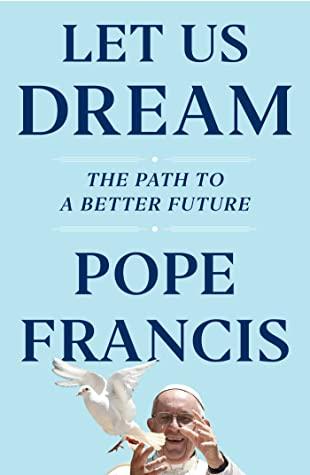
In “Let Us Dream: The Path to A Better Future,” ghostwritten by biographer Austen Ivereigh, Francis champions anti-racism protesters while demonizing anti-lockdown demonstrators. He said those around the world who demonstrated against lockdown restrictions reacted “as if measures that governments must impose for the good of their people constitute some political assault on autonomy or personal freedom!”

“You’ll never find such people protesting the death of George Floyd, or joining a demonstration because there are shantytowns where children lack water or education,” Francis wrote in the new 150-page book. “They turned into a cultural battle what was in truth an effort to ensure the protection of life.”

Francis touched on Floyd’s police killing that ignited social unrest across almost every US metro area for months. Francis said: “Abuse is a gross violation of human dignity that we cannot allow and which we must continue to struggle against.”

However, Francis condemned anti-racism protesters’ attempt to erase history by dismantling statues of Confederate leaders. He said there are better ways to create dialogue.

“Amputating history can make us lose our memory, which is one of the few remedies we have against repeating the mistakes of the past,” he wrote.

Francis criticized populist leaders who’ve created buzz among supporters at massive rallies and scapegoats others for their countries’ problems. He compared the populist movement of today to the ones from the 1930s. 

“Today, listening to some of the populist leaders we now have, I am reminded of the 1930s, when some democracies collapsed into dictatorships seemingly overnight,” he wrote. “We see it happening again now in rallies where populist leaders excite and harangue crowds, channeling their resentments and hatreds against imagined enemies to distract from the real problems.”

He also said the virus pandemic had become an opportunity for the world to reset. Not too long ago, Archibishop Carlo Maria Vigano warned about a global reset intended to undermine “God and humanity”.

Earlier this month, Francis’ latest Encyclical “Fratelli Tutti” (“Brothers All”) was published and seemed more of a political document than a spiritual guide to the catholic faith. He spoke for a more globalist political system and denounced the global capitalist free market economy.

In the most recent monthly prayer intention, he called all the good Catholics of the world to “pray that the progress of robotics and artificial intelligence may always serve humankind.”

via ZeroHedge News https://ift.tt/39n7o3G Tyler Durden

Controversy Intensifies Over Danish ‘Zombie Minks’ As Company Behind Botched Covid-Culling Identified

Controversy Intensifies Over Danish ‘Zombie Minks’ As Company Behind Botched Covid-Culling Identified

Tyler Durden

Fri, 11/27/2020 – 16:00

A Danish company behind a botched culling of 17 million minks which appeared to ‘rise from the dead’ has been identified.

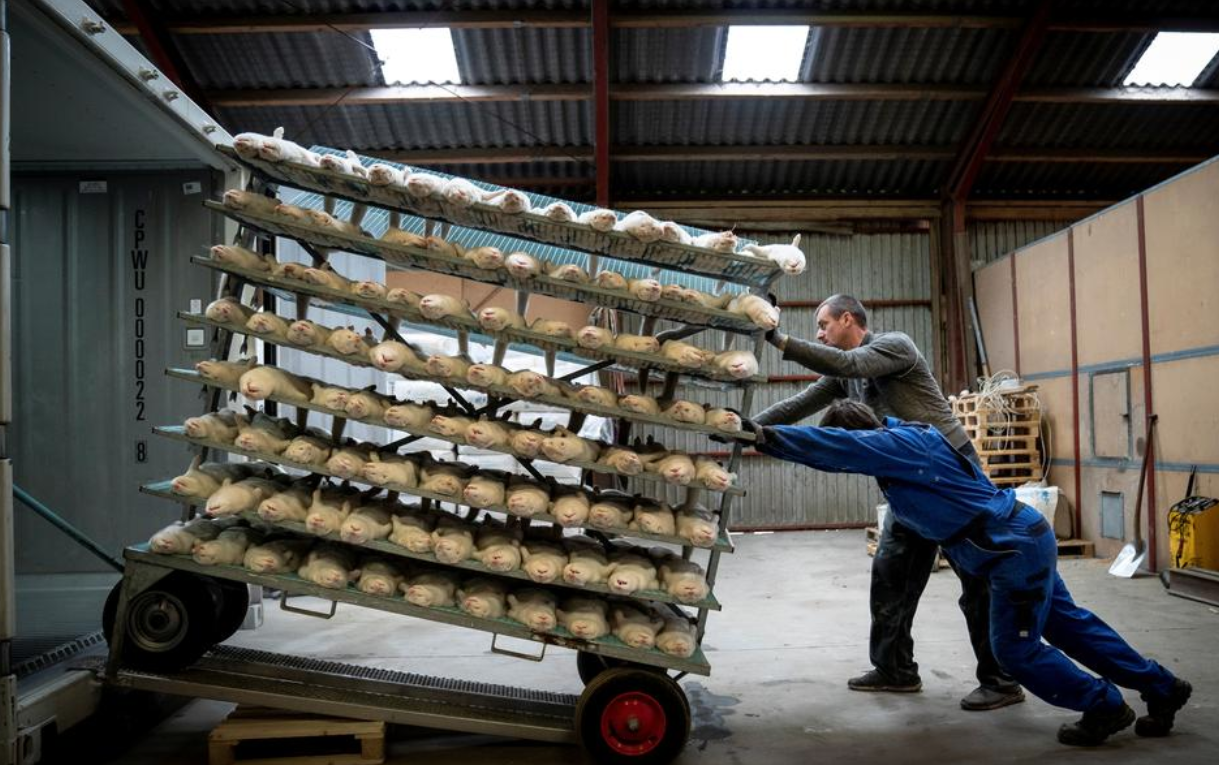
Copenhagen-based International Service System (ISS) was tasked with the mass burial of the culled minks, which were infected with a mutated form of COVID-19. Controversy erupted however after the minks appeared to rise from the dead – as locals reported mink-movement within the three-foot deep mass graves.

According to Bloomberg, ISS says it was contacted by the government to handle two specific mass graves located in Western Denmark – following instructions provided by the military and the Danish Veterinary and Food Administration.

“When the relevant authorities contacted us, we mobilized a full emergency response within 24 hours,” according to Senior ISS VP Simon Kaiser.
 

Due to the ‘zombie mink’ controversy, a majority of parties in Danish parliament want the minks exhumed because they believe they were buried too close to a lake which Danes occasionally use for swimming.

Dead mink were tipped into trenches at a military area in western Denmark and covered with two metres of soil. But hundreds have begun resurfacing, pushed out of the ground by what authorities say is gas from their decomposition. Newspapers have referred to them as the “zombie mink”.

Jensen’s replacement, Rasmus Prehn, said on Friday he supported the idea of digging up the animals and incinerating them. He said he had asked the environmental protection agency look into whether it could be done, and parliament would be briefed on the issue on Monday. –Reuters

Due to the ‘zombie mink’ controversy, a majority of parties in Danish parliament want the minks exhumed because they believe they were buried too close to a lake which Danes occasionally use for swimming.

After public outrage over the zombified members of the weasel family, Danish police spokesman Thomas Kristensen urged locals to remain calm – explaining that gasses in the decay process can cause the bodies to move.

“As the bodies decay, gases can be formed. This causes the whole thing to expand a little. In this way, in the worst cases, the mink get pushed out of the ground,” Kristensen said, according to the Guardian.

And as The Mind Unleashed notes: “another issue is the fact that the animals were placed in shallow graves because the process was rushed. The graves were just over three feet deep, which allowed some witnesses to see the movement. Now officials are planning to order the graves to be dug twice as deep.

“This is a natural process. Unfortunately, one metre of soil is not just one metre of soil –it depends on what type of soil it is. The problem is that the sandy soil in West Jutland is too light. So we have had to lay more soil on top,” Kristensen said.”

via ZeroHedge News https://ift.tt/36dRo21 Tyler Durden

Trump Imitates King Joffrey From “Game of Thrones”

King Joffrey
Jack Gleeson as King Joffrey in Game of Thrones (HBO).


In a recent outburst at a reporter who asked a question he didn’t like, President Trump angrily insisted that “I’m the President of the United States! Don’t ever talk to the president that way!” This is far from the worst Trump temper tantrum. But it caught my eye because of the similarity to a famous scene in Season 3 of Game of Thrones where King Joffrey throws a very similar tantrum and insists “I am the king!” As Joffrey’s grandfather Lord Tywin points out in response, “any man who must say ‘I am the king’ is no true king.” He then makes Joffrey go to bed.


Joffrey’s cruelty and total lack of self-control have often been analogized to Trump’s similar qualities, including by George R.R. Martin, author of the books on which the TV series is based, who noted that “they have the same level of emotional maturity.”

Trump is not the only politician who inspires Game of Thrones analogies. Last year, I critiqued Sen. Elizabeth Warren’s article praising Daenerys Targaryen and trying to analogize parts of her own political agenda to that of the Dragon Queen. Warren’s attempt to claim the mantle of Dragon Queen became even more problematic after what the latter did in episodes that aired a few weeks after the article was published (though, in my view, this plot twist was badly flawed).

Sadly, life imitates Game of Thrones all too often. Though they differ in various other ways, one thing Joffrey, Trump, Daenerys, and Warren all have in common is an aversion to structural limits on government power—especially when they themselves are the ones wielding it.

from Latest – Reason.com https://ift.tt/3fP7iDq
via IFTTT

Trump Imitates King Joffrey From “Game of Thrones”

King Joffrey
Jack Gleeson as King Joffrey in Game of Thrones (HBO).


In a recent outburst at a reporter who asked a question he didn’t like, President Trump angrily insisted that “I’m the President of the United States! Don’t ever talk to the president that way!” This is far from the worst Trump temper tantrum. But it caught my eye because of the similarity to a famous scene in Season 3 of Game of Thrones where King Joffrey throws a very similar tantrum and insists “I am the king!” As Joffrey’s grandfather Lord Tywin points out in response, “any man who must say ‘I am the king’ is no true king.” He then makes Joffrey go to bed.


Joffrey’s cruelty and total lack of self-control have often been analogized to Trump’s similar qualities, including by George R.R. Martin, author of the books on which the TV series is based, who noted that “they have the same level of emotional maturity.”

Trump is not the only politician who inspires Game of Thrones analogies. Last year, I critiqued Sen. Elizabeth Warren’s article praising Daenerys Targaryen and trying to analogize parts of her own political agenda to that of the Dragon Queen. Warren’s attempt to claim the mantle of Dragon Queen became even more problematic after what the latter did in episodes that aired a few weeks after the article was published (though, in my view, this plot twist was badly flawed).

Sadly, life imitates Game of Thrones all too often. Though they differ in various other ways, one thing Joffrey, Trump, Daenerys, and Warren all have in common is an aversion to structural limits on government power—especially when they themselves are the ones wielding it.

from Latest – Reason.com https://ift.tt/3fP7iDq
via IFTTT